Home Blog Page 2343

‘Obviously from Tinubu’s mercenaries’ … Kperogi responds to report scrutinising post-election tweets

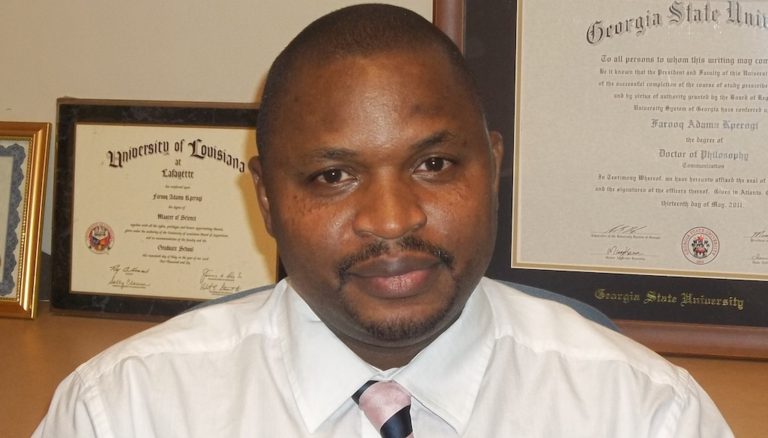
FAROOQ Kperogi, a columnist and associate professor of Journalism at Kennesaw State University, USA, has defended himself against a fact-check published by The ICIR, describing it as “obviously the Tinubu media team hit piece”. 

The fact-check, published on Monday, analysed five messages widely circulated on the social media around the period of the 2019 general election. Two of these social media messages were traced to Kperogi’s Twitter account.

In a rejoinder he shared with The ICIR on Wednesday, Kperogi tagged the report “a tendentious, poorly written, inaccurate screed”, having “crying factual poverty and malicious ignorance”. In another paragraph, he said the fact-check is “gratuitously abusive and opinionated”.

“The first so-called fake video I shared, which had already gone viral at the time I shared it, merely said INEC officials were mass thumb printing ballot papers,” he argued.

“And that was precisely what happened in the video. I didn’t mention the year this happened, and said nothing about what party was a beneficiary of the mass thumb printing because I couldn’t tell that with any certainty, although other people who shared it before me said it was during the 2019 election.

“The two ‘reporters’ needlessly tortuous analysis confirmed that the video indeed showed INEC officials thumb printing ballot papers except that they said it wasn’t during the 2019 election. But I never said it was. I merely wrote: ‘See shameless rigging by INEC officials: Thumb printing on an industrial scale.’ Nevertheless, the ‘reporters’ said I ‘implied’ it was during the 2019 election. What sort of ‘fact checking’ is that?”

Kperogi said he intentionally chose not to state expressly that the event in the video took place during the 2019 election, and that it is not fair for what is assumed to be on his mind to be fact-checked.

“The second so-called fake video they said I shared was real even by their own analysis,” he continued.

“They agreed that the video, which clearly showing rigging, was from the 2019 election… In any case, my tweet didn’t say INEC officials were thumb printing for APC, although that was what appeared to have happened in the video. So what was fake about my video and why was it the object of their ‘analysis’? Neither the video nor what I said about it was inaccurate by any stretch of the imagination.”

“Can’t Tinubu’s media team get smarter mercenaries for their hit jobs than these pitifully lowbrow vulgar buffoons?” he asked.

Kperogi also clarified details concerning his amount of followers on social media platforms. He said he had a little over 20,000 followers at the time the video was shared, and not 30,000 as stated in the fact-check.

The report earlier published by The ICIR fact-checked claims made by other social media users including Dino Melaye, a member of the Senate.

He had tweeted a picture of a dead man supposedly “killed in election-related violence that had erupted in Kano”; but the same picture was discovered to have first appeared in a 2017 article about a clash in Nairobi, Kenya.

President Buhari appoints alternate NNPC board chairman to replace Kachikwu

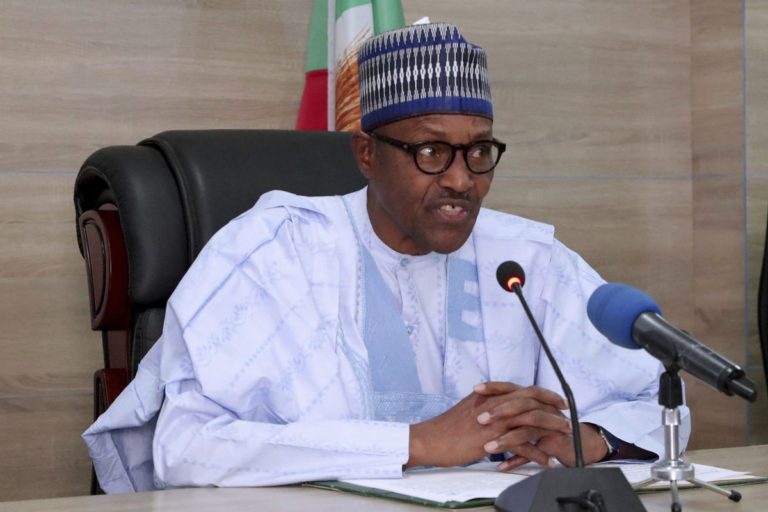
PRESIDENT Muhammadu Buhari has approved the appointment of Thomas John to act as alternate chairman of the Governing board of Nigerian National Petroleum Corporation, NNPC.

The announcement was made in a Twitter post signed by Maikanti Baru, the outgoing group managing director of the corporation.

In the statement, John, a former GMD of the corporation, will hold the position until a new minister of petroleum resources or minister of state for petroleum resources is appointed.

Ibe Kachikwu, the current minister of state for petroleum resources, was until John’s appointment, the chairman of the NNPC governing board.

The board is made up of nine members headed by the chairman and includes the GMD, the director-general of the ministry of finance and three persons appointed by the National Council of Ministers by virtue of their experience or wealth of knowledge of the oil industry.

Mahmoud Isa Dutse, permanent secretary of the federal ministry of finance and Abba Kyari, Buhari’s chief of staff, are two of the board members.

The statement said John will “assume the Chairmanship or Alternate Chairmanship position, respectively in line with Sections 1 (3) and 2 (1) of the NNPC Act” and the appointment is “with immediate effect.”

John who hails from Cross River state is a 1968 graduate of Chemical Engineering from Prague Institute of Chemical Technology, Czech Republic.

A commonwealth research fellow, he holds a PhD degree in Reaction Kinetics from Queen’s University Canada and is also a fellow of the Nigerian Society of Chemical Engineers.

He joined the NNPC in 1974 as a project engineer and spent 16 years supervising the design, engineering, construction and commissioning of the Warri and Kaduna refineries, as well as the three petrochemical plants in both states.

He was the first managing director of Eleme (Indorama) Petrochemical Company and was later appointed as NNPC GMD.

He voluntarily retired from the NNPC in 1992.

After his retirement, John served on the board of many companies including the United Bank for Africa (UBA).

He is the founder and chief executive officer of Hydropec Engineering Company Ltd.

Paradigm Initiative wants NCC to provide information on Nigeria’s surveillance regime

THE Paradigm Initiative has asked the Nigerian Communications Commission (NCC) to provide it with information on the Nigerian surveillance and interception regime.

Relying on the Freedom of Information Act 2011, the pan-African digital rights and digital Inclusion organisation is requesting information on the role the regulatory agency plays in enabling law enforcement in Nigeria to carry out communication surveillance and interception of communication in the discharge of their duties.

In a copy of the request sent to the Commission and seen by The ICIR, the organisation has, among other prayers, requested the Commission to disclose what measures it has in place to ensure that government does not abuse communication surveillance and interception of communication to target political opponents and critics.

It also asked the NCC to disclose the regulatory framework under which communication surveillance and interception of communication is being carried out in Nigeria.

Speaking on the request, Program Manager, Digital Rights, Anglophone Africa at Paradigm Initiative, Adeboye Adegoke, said, “this is not the first time Paradigm Initiative is engaging the Nigerian government on its communications surveillance and interception activities.

“Our goal remains to ensure that surveillance is accountable and transparent. We are equally excited by the prospects of technology to help law enforcement fight criminality, but we are at the same time wary of how such technology can serve as a tool in the hands of the incumbent to abuse citizens’ right to privacy, spy on the opposition and critics of government’’.

On what triggered this latest request, Paradigm Initiative’s Director of Programs, Tope Ogundipe, said, “In a bill recently signed into law by President Muhammadu Buhari, the Nigerian Government will henceforth allow foreign governments to spy on and intercept the communication of Nigerian citizens.”

The Mutual Assistance in Criminal Matters Law makes provision for Nigeria to assist the foreign governments to carry out surveillance and intercept communications of suspects during criminal investigations.

“The Nigerian government can no longer deny it has the capacity to carry out communications surveillance and interceptions, It will be great to see what safeguards are in place around this, given the dangerous dimensions it can take”, Ogundipe concluded.

NCC has seven days within which it must respond to the request according to the Freedom of Information Law 2011.

Over 35m people suffer from drug abuse globally – UN

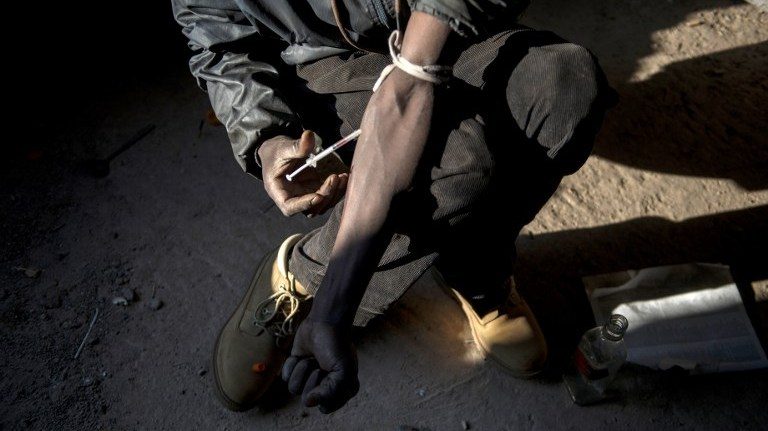
THE United Nations (UN) has raised alarm over the increasing abuse of drugs globally as well as the rising number of people suffering from drug use disorder.

“Globally, some 35 million people, up from an earlier estimate of 30.5 million, suffer from drug use disorders and require treatment services,” UN Office on Drugs and Crime (UNODC) said in a global report released on Wednesday to mark the 2019 International Day of Drug.

“The death toll is also higher: 585,000 people died as a result of drug use in 2017.”

The report said synthetic opioid use is booming globally.  “271 million people or 5.5 percent of the global population aged between 15 and 64 have used drugs in the previous year,” it said.

Executive Director of UNDOC, Yury Fedotov, said the findings of this year’s World Drug Report fill in and further complicate the global picture of drug challenges, underscoring the need for broader international cooperation to advance balanced and integrated health and criminal justice responses to drug supply and demand.

” With improved research and more precise data from India and Nigeria – both among the 10 most-populous countries in the world – we see that there are many more opioid users and people with drug use disorders than previously estimated,”  he said.

But Fedetov lamented that prevention and treatment continue to fall far short of needs in many parts of the world.

This, he said is particularly true in prisons, where those incarcerated are especially vulnerable to drug use and face higher risks of HIV and hepatitis C transmission.

“This gap represents a major impediment to achieving the Sustainable Development Goals and fulfilling the international community’s pledge to leave no one behind,” he said.

“Synthetic opioids continue to pose a serious threat to health, with overdose deaths rising in North America and trafficking in fentanyl and its analogues expanding in Europe and elsewhere.”

The UN Chief further stated that the opioid crisis that has featured in far fewer headlines but what requires equally urgent international attention is the non-medical use of the painkiller tramadol, particularly in Africa.

He indicated that the amount of tramadol seized globally reached a record 125 tons in 2017 noting that the limited data available indicate that the tramadol being used for non-medical purposes in Africa is being illicitly manufactured in South Asia and trafficked to the region, as well as to parts of the Middle East.

“The response to the misuse of tramadol illustrates the difficulties faced by countries in balancing necessary access for medical purposes while curbing abuse – with limited resources and health-care systems that are already struggling to cope – and at the same time clamping down on organized crime and trafficking.”

Opium production and cocaine manufacture, according to the report, remain at record levels.

The amounts intercepted are also higher than ever, with the amount of cocaine seized up 74 percent over the past decade, compared with a 50 percent rise in manufacture during the same period. This suggests that law enforcement efforts have become more effective and that strengthened international cooperation may be helping to increase interception rates.

Meanwhile, an estimated 10.6 million Nigerians had used cannabis in the previous year as disclosed in a survey conducted by the National Bureau of Statistics with the technical support of UNODC funded by the European Union.


EFCC closes case in N702m fraud suit against Okupe

THE Economic and Financial Crimes Commission, (EFCC) had ended its case on a 59-count charge, against former Senior Special Assistant to ex-President Goodluck Jonathan on Media, Doyin Okupe.

This was disclosed in a statement on Wednesday and signed by the Acting Head, Media and Publicity, EFCC, Tony Orilade.

The case presided over by Justice Ijeoma Ojukwu of the Federal High court sitting in Abuja, borders on money laundering and criminal diversion of funds to the tune of N702,000,000.

The statement read that the prosecution counsel, Ibrahim Audu presented his last and sixth witness, Shuaibu Salisu, former Director Administration and Finance in the Office of National Security Adviser (ONSA), presently working with the National Intelligence Agency, (NIA).

It noted that Salisu had informed the court, that in 2012, Okupe was at the office of the ONSA, of which after their discussion, he was directed to pay him a sum of N50 million.

Orilade stated that Salisu told the court he was further directed by the ONSA to consistently pay the sum of N10 million monthly to Okupe for a period of two years, which was later reduced to N5 million towards the end of 2014 due to scarcity of funds and also recalled he was instructed to pay a sum of N6 million at some point.

Accordingly, the witness added that in 2014, the then National Security Adviser, (NSA), Sambo Dasuki directed that he paid the sum of N35million to an account provided by Okupe and “also another N50 million at Dasuki directives,” the statement said.

Orilade said that the witness told the court he was only following orders and was unaware of what the monies were meant for.

The statement revealed that Salisu in showing evidence for his claims told the court he usually provided Okupe with payment vouchers signed by him.

“When also asked if all the payments were captured in payment vouchers, Salisu replied in the negative,” the statement said.

The paper noted that Salisu under cross-examination by Okupe’s counsel, Akinlabi Akinbade, told the court Okupe was not the only person that received payments from ONSA, adding that they only carried out payment based on instructions from the NSA.

Orilade disclosed that the witness had said, some of the payment instructions he carried out while working in the ONSA came verbally while some others came written, but that in the case of the payments to Okupe, all the instructions, he said, were verbal.

Tax dispute between Nigeria, MTN adjourned until October

THE case between the Nigerian government and South African telecommunication giant, MTN,  on Wednesday had been adjourned until October 19.

The case harps on the need to resolve a tax dispute of $2 billion being demanded by Nigeria’s attorney general, Abubakar Malami on behalf of the president.

Earlier in September, Malami had ordered MTN to pay back taxes of about $2 billion, following a demand by the Central Bank of Nigeria (CBN) that the telecommunication company should refund the sum of  $8.1 billion it repatriated as profit out of Nigeria based on “irregular certificates of capital importation”.

MTN had sued the CBN and the AGF, following the allegations and had said the AGF exceeded his powers in making such a demand which was without merit.

The telecommunications service is among the four Nigerian banks fined of N5.87 billion by CBN for allegedly “breaching Nigeria’s forex regulations on MTN’s illegal capital repatriation”.

Last December, MTN agreed to make about $53 million payment to resolve the dispute and clear itself of any wrongdoing, of which MTN Nigeria and the CBN had agreed it would pay a notional reversal of $52.6 million without admission of liability.

Reports say MTN’s shares had recovered from their biggest decline since October to close almost flat on the Johannesburg Stock Exchange. It also fell as much a 6.8 percent, the most since last October, before trimming losses to 0.1 percent by the close of trade.

Reports noted that  MTN’s share price had fallen over 19 per cent for over 12 months as at March, and dropped 16 percent since it was hit with the repatriation penalty in mid-2018.

Nigeria is MTN’s biggest market, with 58 million users in 2018 and it accounts for a third of the South African firm’s core profit, but it has proven problematic for the company in recent years.

Illegal oil dealer sentenced to 2 years in prison

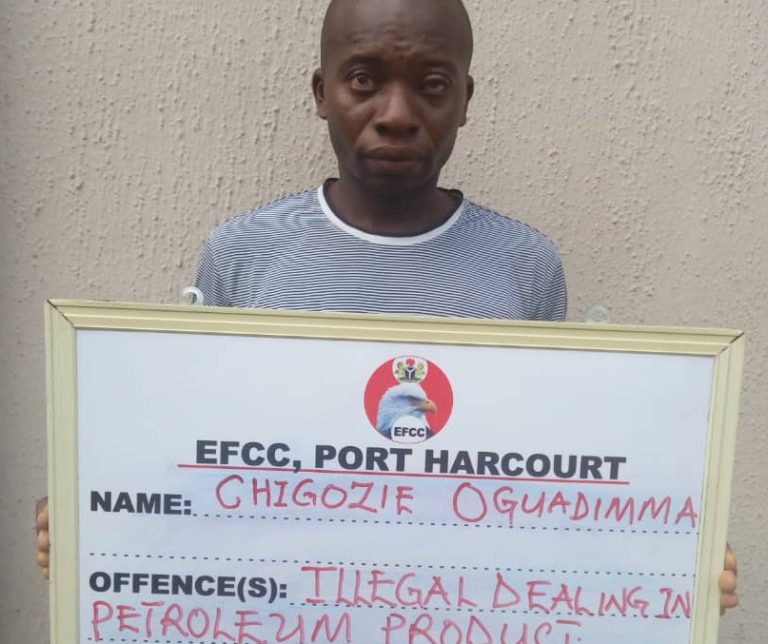
FOUND guilty of unlawfully dealing in petroleum products, Chigozie Oguadimma was on Tuesday sentenced to a two-year prison term by the Federal High Court in Port Harcourt, Rivers State.

The Economic and Financial Crimes Commission, EFCC, disclosed this after it secured the conviction in a press statement signed by its head of media and publicity, Tony Orilade.

Oguadimma pleaded guilty to a one-count charge that read: “That you Chigozie Oguadimma, sometime in September, 2018 in Port Harcourt, Rivers State, within the jurisdiction of this honourable court did distribute 20,000 liters of petroleum product (Automotive Gas Oil, diesel) without a licence and thereby committed an offence contrary to Section 4 (1) of the Petroleum Act, CAP P10 Laws of the Federation of Nigeria (LFN) 2004, and punishable under Section 4 (6) of the same Act.”

“Both the prosecution counsel, Samuel Chime, and the defence counsel, Eric Amadi, agreed on the convict’s guilty plea,” Orilade said.

“In view of Oguadimma’s plea of guilt, Chime applied that he be convicted accordingly. However, Amadi, the defence counsel, sued for a light sentence.”

Justice E.A. Obile sentenced Oguadimma to two years imprisonment with an option of paying a fine of N100,000.

He also ordered that 20,000 litres of diesel confiscated from the defendant should be auctioned and the proceeds thereafter deposited into the federal government’s Consolidated Revenue Account.


“Oguadimma’s journey to prison started when men of the Nigerian Army Anti-bunkering Operation Team intercepted him and a Mack truck with registration number: ZAR-997-ZC, loaded with 20,000 litres of suspected illegally refined diesel along Obigbo, Aba Road, Rivers State, sometime in September 2018,” the EFCC statement further stated.

He was then handed over to the law enforcement agency to be investigated and prosecuted. He had claimed the petroleum products originated from an authorised depot and provided a waybill to substantiate this, but investigations showed “neither the diesel nor the waybill emanated from the petroleum product depot he claimed”.

ICIR’s sponsored fake “fact-checking” about fake news

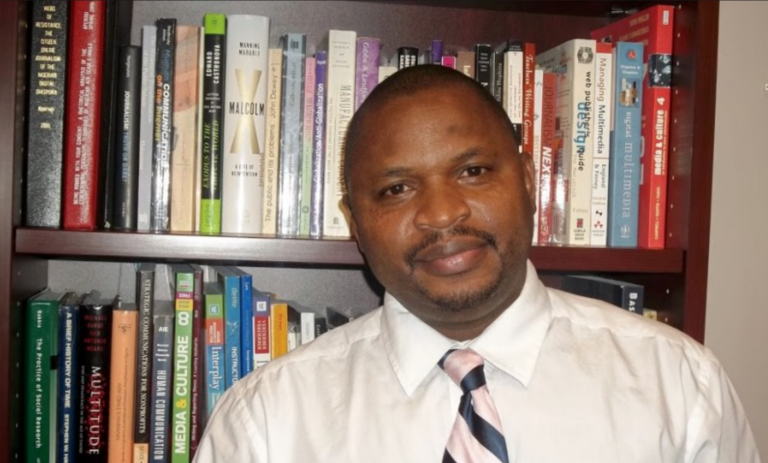
By Farooq A. Kperogi

SEVERAL weeks ago, someone from Lagos alerted me to what he said was a “hit piece” being hatched against me from Bola Tinubu’s media team in Lagos because of my consistently piercing scrutiny of the Buhari fascist monocracy and particularly because I’ve been in the forefront of efforts to call global attention to the unprecedented electoral fraud that birthed Buhari’s illegitimate “second term.” I told him I was already used to that. But he said, “This would be different.”

When, weeks later, a “Damilola” who said she was from “SaharaReporters” sent me a vacuous, grammatically challenged WhatsApp message about videos I shared on Twitter in February, I didn’t suspect anything. I should have. The questions weren’t just astonishingly illiterate, they were also curiously unprofessional. She wrote, “Sir, we would like to know how you got this information or maybe you even witnessed them.” Something told me the “reporter” was some two-bit mercenary scammer, so I sent a WhatsApp message to Sahara Reporters’ Omoyele Sowore to ask if he had any person by the name of “Damilola” in his reportorial corps.

I told him I was curious because Sahara Reporters built its fame on the strength of stories it wrote based on anonymous sources and on the protection of the confidentiality of its sources. Why would it have a reporter doing a story asking someone to reveal his sources? Sowore said he would find out who Damilola was and get back to me. He didn’t get round to doing that.

Weeks after this, a “Damilola Banjo,” along with a Shola Lawal, published a tendentious, poorly written, inaccurate screed on the “International Center for Investigative Reporting” (ICR) website that purports to be a “fact-check” of “social media influencers who shared fake news during the 2019 election.” All the pieces of the puzzles have now fallen into place. This is obviously the Tinubu media team hit piece that someone had alerted me to. By the way, how did a reporter for “SaharaReporters” end up on ICIR? Well, that’s irrelevant. Let’s look at the crying factual poverty and malicious ignorance in the “fact-check.”

So of the scores of videos I shared on Twitter during the 2019 election, the mercenary rube of a “reporter” that goes by the name “Damilola” found only two to be “fake.” The first so-called fake video I shared, which had already gone viral at the time I shared it, merely said INEC officials were mass thumb printing ballot papers. And that was precisely what happened in the video. I didn’t mention the year this happened, and said nothing about what party was a beneficiary of the mass thumb printing because I couldn’t tell that with any certainty, although other people who shared it before me said it was during the 2019 election.

The two “reporters’” needlessly tortuous analysis confirmed that the video indeed showed INEC officials thumb printing ballot papers except that they said it wasn’t during the 2019 election. But I never said it was. I merely wrote: “See shameless rigging by INEC officials: Thumb printing on an industrial scale.” Nevertheless, the “reporters” said I “implied” it was during the 2019 election. Was sort of “fact checking” is that?

You can’t fact-check what’s on my mind. That’s babalawo (or is it mamalawo) journalism! I am capable of saying it was during the 2019 election, but I didn’t. Others did. The fact of INEC officials furiously thumb printing ballot papers on a mass scale in support of a party, irrespective of when it happened, is worth sharing, particularly in light of similar things that went on at the time, which the second video confirmed, as I’ll show shortly. So the video wasn’t fake by any definition of the term. If anything, it’s the analysis of it by the venal, uneducated philistines masquerading as “reporters” that is fake.

The second so-called fake video they said I shared was real even by their own analysis. They confessed that they “set out to debunk many videos we believed to be old or not related to the elections. We were not prepared to deal with actual, blatant rigging, not with the PVCs and not with the improved vigilance that was supposed to be a key feature of the 2019 polls.” If you ignore the atrocious grammar, you will see their bias seeping out like fetid pus. They were disappointed to find the video to be “a recent case.” All I said about the video was: “Why would anyone accept the outcome of an election like this? Democracy is supposed to be one person, one vote.”

They agreed that the video, which clearly showed rigging, was from the 2019 election. Although they claimed they were on a “fact-finding” mission, they conceded that they “cannot emphatically state that those stamping and thumb printing the ballot papers are INEC officials” and that they “could not distinctly make out the party being thumb-printed.” What sort of idiotic “fact-checking” is that? That’s blatant partisan claptrap. They could “fact-check” the thought-processes that resided in the inner recesses of my mind, which I didn’t verbalize, but they couldn’t fact-check an obvious fraud in a video. In any case, my tweet didn’t say INEC officials were thumb printing for APC, although that was what appeared to have happened in the video. So what was fake about my video and why was it the object of their “analysis”? Neither the video nor what I said about it was inaccurate by any stretch of the imagination.

So, although they agreed that the second video is authentic, they went ahead nonetheless to throw juvenile insults at me, such as calling me a “professor of falsehood” and then this: “High profile Twitter account holders such as Mr. Kperogi and Senator Melaye are still active on social media and it is conceivable they will share more fake news in the future. That makes us worry. What will they post next?” What the heck is that? Can’t Tinubu’s media team get smarter mercenaries for their hit jobs than these pitifully lowbrow vulgar buffoons?

They also claimed I shared the videos with my 30,000 plus followers, even though at the time I shared the videos, I didn’t have that number of followers on Twitter. I had only a little over 20,000 then. You would think “fact-checkers” would know that. They also said I have 70,000 plus followers on social media. That’s inaccurate as well. If you add my Facebook fan page and my Facebook “like” page, I have a little over 100,000 followers, but thousands of people have way more social media following than that. In any case, I shared the videos only on Twitter, which were first shared by thousands of other Twitter users before I did. So it’s unclear why they chose to make reference to my social media following.

These nescient, mercenary ICIR “reporters” need an education more than anything else. Their sponsored hit piece purports to be a “fact-check,” but it is gratuitously abusive and opinionated, and is unmoored to even the most basic requirements of journalistic integrity. It imputed motives to me and divined motivations for my action. Fact-checks are usually, well, factual. They present information in a neutral, unemotional tone.

The “reporters” were not even smart enough to conceal their pro-regime biases. The only “fake” videos and photos from the 2019 election they found worthy of “fact-checking” are those that disfavor the Buhari regime. There were no pro-Buhari “fake” videos and photos, apparently. These disreputably illiterate hustlers obviously set out to not just discredit me in hopes of blunting my critical searchlight on the honchos of the fascist regime that hired them, they also want to legitimize Buhari’s universally discredited electoral robbery. In the process, they’re polluting journalism. Such a shame!

Kperogi teaches journalism at Kennesaw State University, Georgia, USA, blogs at www.farooqkperogi.com, and tweets from @farooqkperogi

Drug abuse: Helping school kids from making harmful decisions

WHILE  sharing her first experience with drug use by teenagers, a 16-year old female senior secondary school (SS2) student in Kaduna said one of her classmates was throwing a birthday party and invited her. Since it was an evening party, and she stayed with her mum, she had to ask permission to attend the party. But her mum declined. She then waited until her mum had retired into her room to sleep and sneaked out of the house.

The venue of the party was a small hotel and she found it was a drug party where everyone was smoking or snorting something! It was not long she arrived that law enforcement agents raided the hotel and took all of them into custody.

A one-week training workshop organized by Reclaiming Futures in Northern Nigeria (REFINN) has found that drug abuse education currently impacted in secondary schools in Kaduna State may be inadequate to help teenagers who constitute one of the most vulnerable groups to the scourge.

None of the 80 senior secondary school students selected from different schools in the state capital could explain properly the negative effects of drug abuse. And while most of them could define drug abuse, they had no clue about addiction and the dangers it poses, or how to fight motivation for drug use.

Students during the one-week training workshop organized by Reclaiming Futures in Northern Nigeria (REFINN)

Stella Danjuma, a final year student of Government Girls Secondary School, Kabala Costain, had never heard about the names of drugs commonly abused by youths and what the drugs do to the human body. She revealed that her school talks generally to the students on drug abuse occasionally during assembly time in the morning before classes begin.

Her counterpart at De Victory International School, Abubakar Kigo Road, Anaekwe Kenneth, said the school teaches drug abuse as part of Basic Science in the junior secondary school. “But we’ve never heard about the names of these drugs and their effects on the body, especially the brain,” he said.

REFINN, a project of four alumni of the United States sponsored International Visitors Leadership Programme (IVLP)-Ejikeme McBishop Ogueji, Tajudeen Suleiman, Marcus Ayuba and Yvonne Ichide, took the campaign against drug abuse to schools in the state. The training workshop focused on substance abuse awareness, motivation for drug use, how to make decisions and other life skills.

Apart from the four alumni team members, other facilitators at the workshop include Dr. Omeiza Beida, a Consultant Psychiatrist and Popoola Fatima Abiola of the National Drug Law Enforcement Agency (NDLEA) Kaduna State Command.

The workshop, According to McBishop Ogueji, coordinator of the project, is a preventive education programme to equip the teenagers with life skills required to deal with their vulnerabilities and avoid turning to drugs. “It is not enough to say No to drugs; they need to know why and how and be able to impact others to say No.”

REFINN has also carried the campaign to Gombe, Kano and the Federal Capital Territory and raised more than 150 ‘ambassadors’ to impact their schools, groups and communities. The project has focused on the dangers of addiction and how to avoid it traps and help others suffering from Drug Use Disorder.

In his presentation, Omeiza Beida, a Consultant Psychiatrist at the Federal Neuro-Psychiatrist Hospital, Kaduna emphasized why everyone is vulnerable to addiction and the dangers it poses to the wellbeing of the individual. “Addiction is not a character flaw, a personality disorder or moral failing. It is a health problem,” he explained.

Nearly a dozen illustrative games were used to make the sessions lively, interactive and to drive home the lessons of the training. By Day-5, the students had gained more confidence and were ready to become new ambassadors against drug abuse. When asked to talk about how they hoped to impact their schools and communities, many of them came up with innovative projects and asked whether they could get financial support.

Zuliat Mohammed of GGSS Independent Way said she planned to print leaflets explaining in bullet points why youths should avoid drugs and distribute in her school and neighborhood. Kenneth said he would organize a football match for youths in his neighborhood and use the opportunity to lecture them on the dangers of drug abuse. “After that, I will organize for other streets and do the same thing.”

Beatrice Olajide, a staff of the Kaduna-based House of Trust Empowerment and Opportunity, said the programme was commendable. “It is a very serious issue here in Kaduna because a lot of children have lost their school years due to drugs and substance use and had led many into anti-social behaviors and crime.”

For Glory Francis, who runs a rehabilitation centre for youths suffering from drug and substance addiction, it was important to take teenagers out of ignorance about the menace of addiction. She revealed that many of those she had helped to recover always said they regretted going into it. “Many of them would always say if they had known drug abuse was bad, they wouldn’t have gone into it.”

Although the Kaduna State Government may be doing a lot to discourage youths from going into drugs, the effort has had minimal impact because it is not comprehensive enough. Hassan Buba, a director at the state’s ministry of education said the state spent about N4.7 million on drug abuse education programmes for teachers and school career counselors in 2018. But this intervention was limited to only one out of 12 education zones in the state.

Buba admitted that funding is inadequate to cover all the school teachers and counsellors in the state, a project he suggested could require a minimum of one hundred and twenty million naira per year. He said the State’s drug education programme was focused on teachers and school counsellors because they are the ones who come in contact directly with the students and would be able to impact the education on them.

The teachers who attended the workshop were full of praise for the project and suggested all schools in the state should be given the opportunity to participate.

REFINN is sponsored by the Alumni Engagement Innovation Fund of the US Department of State with support from the US Embassy in Nigeria.

Nigerians call for prosecution of Amosun over illegal possession of ammunition

FOLLOWING a report about the former governor of Ogun State, Ibikunle Amosun’s declaration of possessing arms and ammunition worth millions of naira, Nigerians have clamoured for his immediate arrest and prosecution.

Citizens on social media have described possession of such quantity of ammunition as illegal and asked that Amosun should be investigated, and if found guilty, he should be made to face the law.

PREMIUM TIMES, in a report, stated that Amosun had earlier before the twilight of his administration confessed to the state’s commissioner of police, Bashir Makama, of his possession of arms and ammunition of “outrageous” quantity, stored at a secret armory in the government house, Ogun State.

According to the report, Amosun stockpiled 4 million bullets, 1,000 AK47 rifles, 1,000 bulletproof vests and one armoured personnel carrier at Oke Mosan government house for an extended period of time.

Authorities at Nigeria’s key security agencies said Amosun may have procured the arms and ammunition without securing End-User certificates from the office of the National Security Adviser (NSA).

End-User certificates are required to import controlled products into Nigeria.

A guideline by the NSA office stipulates that End-User Certificate requests for arms and ammunition must be made by approved security agencies on behalf of themselves or their qualified vendors.  Neither Mr Amosun nor his state is an approved security agency or qualified security equipment vendor,” PREMIUM TIMES reported.

The paper also stated, that Amosun in his conversation with Makama, had decided to hand over the ammunition to the police, in a bid to erase tracks of his activities before the resumption of the next administration.

Makama, however, received the weapons from Amosun on behalf of the police but never informed the Force Headquarters, the report stated.

“The manner with which Amosun turned in the arms has alarmed security officials, who saw the affair as damaging to national security,” PREMIUM TIMES noted.

It would be recalled that the Ogun state governorship election held on May 9, produced as winner Dapo Abiodun, a candidate of the All Progressive Congress(APC) party, contrary to Amosun’s choice of candidate, Adekunle Akinlade of a rival party.

Amosun would later win his own election as a senator representing Ogun Central under APC.