Home Blog Page 2346

NGO shares lessons from anti-trafficking project with stakeholders in Edo

A NON-GOVERNMENTAL organisation, ​Market Development in Niger Delta (MADE) II, has organised a stakeholders conference to share achievements as well as receive feedback from participants on projects aimed at tackling human trafficking and forced labour in Edo State. 

Themed ​“Strengthening Market-based Approaches to Stimulate Livelihood Opportunities,” the event took place on Tuesday in Benin, the Edo State capital. It was organised as part of the organisation’s Edo State Investment Portfolio (ESIP) Project.

Yinka Omorogbe, a professor of Energy Law and chairperson of the Edo Taskforce Against Human Trafficking and Irregular Migration (ETAHT) shared, during her lecture, the experience and successes of the state government in the fight against trafficking.

The chairperson, who is also the state’s Attorney-General, said the task force has received up to 4,769 returnees from various countries since its establishment in August 2017 and has, through partner support, successfully trained over 500 of those returnees.

“All the returnees received went through counselling and those identified to be seriously traumatised were referred to the Federal Neuropsychiatric Hospital or were given appointments to visit in-house social-workers for free treatment and follow-up,” she said.

Omorogbe said the task force has been acknowledged for its strong commitment “towards severing the connection of Edo with human trafficking and prostitution”.

“We are acknowledged as an implementing partner by the International Office of Migration. The Taskforce received favourable mentions and was clearly a contributory factor to the recent upgrade of Nigeria to a tier 2 country in the US Trafficking in Persons Report 2019,” she added.

“We are an example of best practice. NAPTIP [the National Agency for the Prohibition of Trafficking in Persons] openly advocates the Edo State model for other states and, as a result, Delta and Ondo now have Taskforces Against Human Trafficking.”

Noting that the task force is confronted with a lack of adequate financial resources, manpower, and equipment, Omorogbe said it welcomes partnerships in various aspects including rehabilitation, advocacy, research, investigation, and prosecution.

6 in 10 migrants travel for ‘economic reasons’

The ETAHT chairperson revealed that 59 per cent of interviewed returnees said they travelled for economic reasons, 13.7 per cent blamed family pressure, while others mentioned unemployment, frustration, peer pressure, among other factors.

The vast majority of the migrants, 72.5 per cent, are male, while the rest are female. Also, 43.3 per cent of them were found to be between the ages of 18 and 25.

Also, out of a total of 3911 returnees, 942 (24 per cent) had primary school leaving certificates, 2462 (63 per cent) were secondary school leavers, 330 had an OND, 61 and HND, and 117 were BSc holders.

A typical migrant intends to travel to Italy, but other top countries of destination include Germany, France, Austria, and Spain. 90 per cent of the returnees had economically viable skills before embarking on the journey. While welding, fashion designing and furniture making were common skills among the males, the women were often inclined towards hair styling, business, and tailoring.

ESIP hopes to raise income of 30,000 Edo residents

Also at the conference, Rufus Idris, who manages ESIP, provided an overview of the project. He explained that ESIP aims at reducing the incidents of human trafficking and irregular migration by increasing the state’s capacity to provide aspirational economic opportunities to raise the incomes of returnees and vulnerable persons.

The project especially focuses on such sectors as agribusiness, Information and Communication Technology (ICT), entertainment, trading, renewable energy, and fashion. Its objective is to facilitate investments and partnerships that will positively impact 40,000 persons and increase the earnings of 30,000 residents of the state.

Idris admitted that part of the lessons learned so far in the implementation of the project is that the market systems approach as a solution to human trafficking is relatively new and “it is often challenging to persuade profit-oriented private sector partners to target unskilled and less educated youth in skills development and job placement”.

The event on Tuesday also featured the screening of a documentary as well as two-panel sessions on aspirational job creation and the ease of doing business in Edo.

On the panel were Ukinebo Dare, Senior Special Adviser to the Edo governor on Skills Development and Jobs; Isimeme Whyte, founder of Genius Hub; Stephen Osawaru, Co-Founder of Ignite StartupX; Igbinoba Smart, chief executive officer of God Grace Multiple Fashion; and Kelvin Uwaibi, head of Edo State Investment Promotion Office.

Others were Victor Legogie, chief executive officer of Asanita Agricultural Processing Company; Edosa Eghobamien, chief executive officer of Amena Academy; and Ayo Arikawe from Partnerships and Technology (Thrive Agric.).

ESIP is a two-year project funded by the United Kingdom Department for International Development (UK Aid) that started in March 2018. It is an addition to the second phase of the Market Development in the Niger Delta project (MADE II) and targets the attraction of investments worth £10 million (N4.6 billion) into Edo state.

The state is infamous for its large population of victims of illegal migration. According to NAPTIP, 47 per cent of convicted traffickers and 98 per cent of victims rescued from external trafficking for sexual exploitation are from Edo.


West African nations, WHO, FAO meet over food safety, antimicrobial resistance

WEST African countries such as Nigeria, Ghana, Gambia, Liberia, Sierra Leone and others on Tuesday met in Abuja, over issues regarding food safety caused by abusive Antimicrobial usage (AMU) and antimicrobial resistance (AMR).

The event which had in attendance representatives from the World Health Organisation (WHO), World Organisation of Animal Health (OIE), West African Economic and Monetary Union (WAEMU), the European Union (EU) and other development partners was organised by the United Nations Food and Agriculture Organisation (FAO) to collectively design mitigation measures and better strategic approaches to increase awareness on AMR and related threats.

Speaking at the workshop, Suffyan Koroma, FAO Country Representative described AMR as global threat to human and animal health, capable of endangering modern human and veterinary medicines.

He said aside from undermining the efficacy of both human and animal medicines, the abuse of antibiotics also destroys the environment.

“The fact that human and veterinary health, food and feed production systems and agro-ecological environments all contribute to and are affected by AMR, is an indication that a crisis of this magnitude requires an effective one health approach involving coordination among national and international sectors and actors to curb its occurrence and impacts,” says Koroma.

In April, the WHO shared a report of the United Nations Interagency Coordination Group (IACG) on Antimicrobial Resistance where the group reported that drug-resistant diseases could cause 10 million deaths annually by 2050 and destroy the economy.

It states further that at least 700, 000 people die each year due to drug-resistant diseases.

“We are at a critical point in the fight to protect some of our most essential medicines,” Dr Tedros Adhanom Ghebreyesus, Director-General of the World Health Organization and Co-Chair of the IACG earlier stated at the report release. “This report makes concrete recommendations that could save thousands of lives every year.”

“The report’s recommendations recognize that antimicrobials are critical to safeguarding food production, safety and trade, as well as human and animal health, and it clearly promotes responsible use across sectors,” José Graziano da Silva, Director-General of the Food and Agriculture Organization of the United Nations (FAO) also stated in the report. “Countries can foster sustainable food systems and farming practices that reduce the risk of antimicrobial resistance by working together to promote viable alternatives to antimicrobial use, as laid out in the report’s recommendations.”

However, in order to address the problem, the FAO stated that it already rolled out an action plan, titled “Supporting the food and agriculture sectors in implementing the Global Action Plan on Antimicrobial Resistance to minimize the impact of antimicrobial resistance.”

It includes developing the capacity of AMR surveillance, monitoring and its use in food, agriculture, animal and human context; strengthen governance on antimicrobial use and promote good practices in food and agriculture, human and animal systems and prudent use of antimicrobials.

Koroma further advised participants from the West African countries to discourage their citizens from abusing antimicrobials including pest residues in agricultural products for human consumption.

Omotayo Hamzat, the WHO Focal Persons on AMR said addressing the menace would require concerted efforts of multiple stakeholders.

However, he applauded the Nigeria Centre for Disease Control (NCDC) for linking all government institutions and development partners to develop a national action plan to mitigate the effects of AMR in the country.

Other representatives are officials from the Federal Ministry of Health, Federal Ministry of Environment, Federal Ministry of Agriculture and Rural Developments

EFCC nabs suspected swindler over $12,000 romance scam

ON Tuesday, the Economic and Financial Crimes Commission, EFCC, Port Harcourt’s Zonal Office arraigned Aretuemhen Frank before the Port Harcourt’s Federal High Court on charges bordering on false pretences, impersonation and possession of scam documents.

Justice M. L Abubakar, the presiding judge obliged to the request of the counsels to the Economic and Financial Crimes Commission, EFCC, to adjourn the case to July 3, 2019, for the prosecuting team to have time to examine the available evidence.

Frank was alleged to have defrauded an American lady, Thorman Benson whom he promised to marry at the sum of $12, 000 in a series of online dating deals using false pretence contrary to Section 6 of the Advance Fee Fraud and other Related Offences Act 2006 and punishable under Section 1, subsection (3) of the same Act.

Using a couple of aliases which includes William Rodgers and Max Allen posing as an American with the United States Army, had succeeded in defrauding several people.

Operatives of the EFCC, acting on intelligence reports had raided his hideout where he was arrested, recovering an iPhone 6s plus during the operation.

One of the four – count charges  slammed against him reads as follows, ” That you Aretuemhen Frank, on or about December 2018, in Port Harcourt, Rivers State within the jurisdiction of this Honourable Court fraudulently impersonated one Max Allen, a United States of America soldier, with intent to gain advantage for yourself and thereby committed an offence contrary to Section 22 (3) (a) of the Cybercrimes (Prohibition, Prevention, etc) Act, 2015 and punishable under Section 22 (4) of the same Act.”

Frank pleaded not guilty to the four-count charge preferred against him.

Despite, Frank’s plea, prosecuting counsel, Samuel Chime applied for a trial date to open his case, while the defence counsel, P.O Nworah, asked the court of an application for bail for his client.

Justice Abubakar granted the applicant bail in the sum of N1 million and one surety in like sum who must be a civil servant residing within the jurisdiction of the court. While he directed that the applicant be remanded him in EFCC’s custody pending the time he fulfils his bail condition.

Whistleblower vs.NBET: Court declines application for stay of proceedings

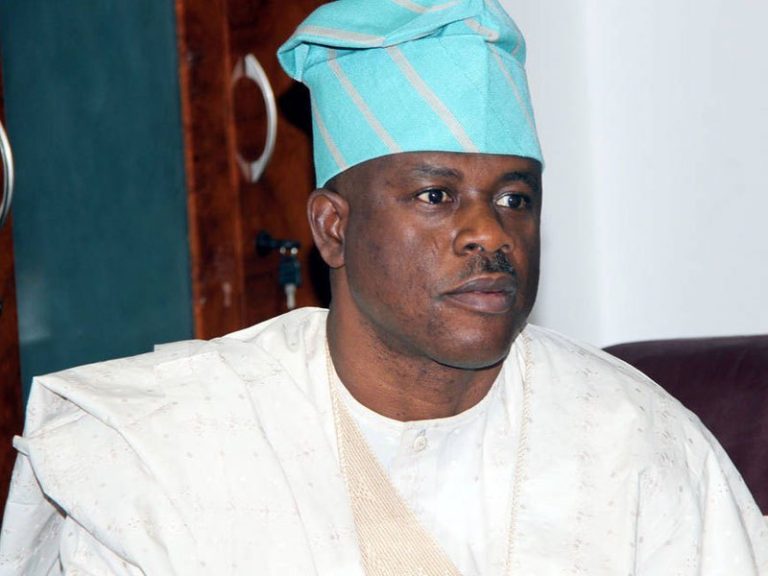
THE National Industrial Court sitting in Abuja, on Monday, has refused to grant an application for stay of proceedings in the case filed by a whistleblower, Abdullahi Sambo, against the Managing Director of Nigerian Bulk Electricity (NBET) Plc,  Marilyn Amobi, and four others.

Justice Kiyersohot Damulak refused the application brought by counsel representing Amobi and NBET in the suit filed by Sambo, its former Head of Internal Audit, seeking to stop plans towards his sack and continuous victimisation. The defendants had appealed an order by the judge asking both parties to maintain the status quo pending the determination of the trial.

However, in his ruling on the matter of stay of proceedings, the judge said the motion for a stay cannot be moved orally. He, therefore, ordered counsel for the defendants, Olayinka Arasi, to make a formal application to the court.

The case was adjourned till July 15.

Sambo had initially queried alleged fraudulent moves by Amobi, reasoning that transactions made by her on behalf of the organisation violate extant circulars, financial regulations and agreements duly executed by NBET.

He queried an alleged N7.5 million payment to one Engr. Achinaya, a monthly over-invoicing of N2 billion to Olorunsogo and Omotosho Power plants and N30 million to Azinge & Azinge, Aelex law firms, and others.

Angered by the Auditor’s queries, the NBET MD called for Sambo’s redeployment to another department and allegedly ensured his salaries are withheld since December 2017.

In a bid to challenge the continuous intimidation, the embattled whistleblower had approached the industrial court who ordered that both complainant and defendant maintain the status quo until the case is finally determined.

Amobi, who was appointed the substantive head of NBET in July 2016, was also involved in a series of corrupt acts such as subversion of board approvals and infraction of procurement laws, according to documents obtained by Leaks NG

Dasuki Loot: Another witness informs court of how N1.2b was handed to Obanikoro

ANOTHER witness of the Economic and Financial Crimes Commission (EFCC), Damola Otuyalo, has confirmed to the Federal High Court in Abuja that N1.2 billion in cash was handed to Musiliu Obanikoro.

Obanikoro, a former Minister of State for Defence, was alleged by the commission to have received N4.68billion from former National Security Adviser Sambo Dasuki and transferred N1.7 billion to Iyiola Omisore for his 2014 gubernatorial bid. The sums of N1.3 billion and $5 million were also said to have been given to Ayodele Fayose, in the build-up to Ekiti State elections in June 2014.

The EFCC released a press statement on Monday disclosing that Otuyalo, Diamond Bank’s former head of Cash and Transit, told the court that N1.2 billion was given to Obanikoro at the Murtala Muhammed Airport in Lagos.

“At the last trial, Abiodun Agbele, an aide of the former governor of Ekiti State, Ayodele Fayose, narrated how he coordinated the movement of N1.2 billion slush fund in the build-up to the Ekiti governorship election in 2014,” said Tony Orilade, EFCC’s acting head of media and publicity who signed the statement.

“At the court hearing today, the prosecution counsel, Wahab Shittu, presented Damola Otuyalo, who gave a vivid account of how the alleged sum was moved out of the local wing of the Lagos Airport and eventually handed over to Obanikoro.”

The witness said 65 “jumbo bags” filled with money were offloaded from the aircraft and he was instructed by his director, through a phone call, to hand over the bags to Obanikoro. The director’s instruction, Otuyalo added, may be found in exhibit AA13, which was already filed and admitted in evidence.

The former Diamond Bank employee made similar statements to the EFCC in 2016.

“We loaded the first aircraft with money and Obanikoro flew with his friends on the first flight. The second aircraft was loaded with money but it could not carry all the cash due to the size of the aircraft and the weight it could carry,” he had said.

“I recall that another aircraft was also used to move the final batch of the money from the bullion van. The second and third movements were supervised by Gbolahan [the former minister’s son] after Obanikoro had left with the first flight.”

Justice Nnamdi Dimgba, who is presiding over the trial, adjourned the proceedings to October 4.

Over 2million children, caregivers in need of psycho-social services in North East- Save the Children

MORE than two million girls, boys and caregivers are in need of psycho-social support services due to severe distress, hardship and displacement in North East Nigeria.

A new report by the Save the Children, ” Families Torn Apart: Protecting and Caring for Children Separated from their families by the conflict in North East Nigeria,” indicated that 770,000 children and care givers remain at risk of injury and loss of life from explosive remnants of war.

The report, one of the three unveiled in Abuja on Tuesday by Save the Children to mark its centenary anniversary quoted Humanitarian Needs Overview (HNO) as saying that there were 2.2million school-aged children and teachers in the North East who need immediate education emergency support.

Noting that education is a key concern in the conflict of North East, the report revealed that 867 schools primarily in Borno State are still non-functional mainly due to inaccessibility as a result of insecurity.

“The conflict has exposed children to different forms of violence making them vulnerable to abuse, violence, neglect, and exploitation,” it said.

“Violence continues to cause death, injury, forced displacement, abduction and conflict related psychological distress.”

Save the Children in the report said child protection concerns for unaccompanied and separated children in Borno State are vast, noting that the government, UN agencies and local as well as international humanitarian aid organisations are having to work in extremely difficult circumstances to address these concerns.

Benjamin Foot, Save the Children International, Nigeria Country Director, said the organisation would continue to fight for children every single day.

“We will do whatever it takes to make sure they survive, get protection when they are in danger and have the chance to learn because every child should be able to make their mark on their world and help to build better future for us all.”

Foot urged all actors to “renew their commitment and join forces to fight to create a conducive environment for children to learn, be protected and grow up healthy.”

He explained that this can be a reality when proper policies and strategies are in place and are coasted at the national and sub-national level and when families and communities start to treat boys and girls equally.

This, Foot also said would be a reality, when CSO, CBOs, government, and development partners are better coordinated and collaborated to accelerate change for children.

He said the Save the Children welcomed the bold step by the Nigerian government in ratifying the Safe School Declaration that will be instrumental to ensuring that the schools will be safe zones for children to study.

“We hope that a national policy to guide the implementation of the declaration will be in place soon,” Foot said.

Save the Children launched Global Childhood report and Stop the War on Children (SWOC) Flagship report at the event.

EFCC arraigns Albert Bassey, Akwa Ibom senator, for money laundering

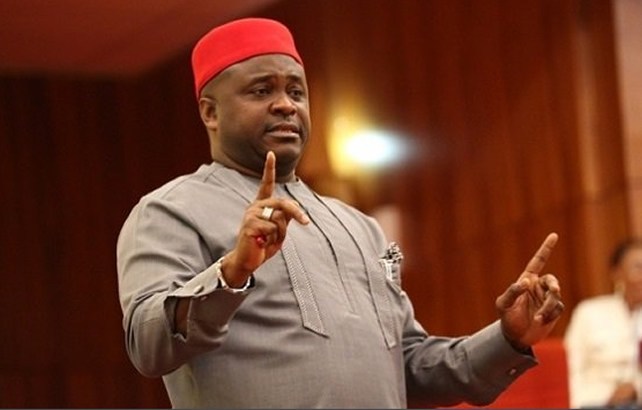
ALBERT Bassey, senator representing Akwa Ibom northeast district, was on Monday arraigned by the Economic and Financial Crimes Commission (EFCC) before the Federal High Court, in Uyo.

The EFCC disclosed this in a statement released to journalists on the same day and signed by Tony Orilade, the commission’s acting head of media and publicity. Preferred against the senator is a six-count charge bordering on money laundering.

The court had, last Monday, June 17, issued a bench warrant for his arrest following a breach of the bail conditions surrounding his release.

Bassey is accused of taking possession of six unlawfully obtained vehicles, valued at N204 million, from Olajide Omokore, a contractor working with the Akwa Ibom state government, thus violating the Money Laundering Act.

“Investigations revealed that the said vehicles were proceeds of crime and that he committed the offence while he doubled as the Commissioner for Finance, Akwa Ibom State and Chairman of Akwa Ibom State Inter-Ministerial Direct Labour Coordinating Committee, in December 2012,” Orilade said.

The senator pleaded not guilty to the counts, after which prosecuting counsel Mohammed Abubakar requested for a trial date for the EFCC to make its case.

Solomon Umoh, SAN, who represented the defendant moved that his client is granted bail in accordance with existing arrangements.

“The applicant in his application regretted the issuance of the bench warrant and explained his absence. The respondent has not disputed the fact that the applicant is on bail, granted him by the EFCC even as we speak,” he said.

Abubakar, however, opposed the bail application on the ground that the bail earlier granted was breached by Bassey.

Justice A.A. Okeke, presiding over the trial, discharged the bench warrant issued against the senator and granted him bail. He also adjourned the case to June 2 and 3 for the commencement of trial.

“The defendant is hereby granted bail in the sum of N20million and one surety in like sum. The surety must have a landed property within the jurisdiction of this Court which will be verified by the court registrar, and the court registrar shall file the report of verification,” the judge pronounced.

The defendant is to be held in custody pending the fulfilment of the conditions. Bassey was first elected into the Senate in 2015, and was re-elected into the house in February.

Buhari vs. Atiku: Tribunal rejects request to inspect INEC’s server

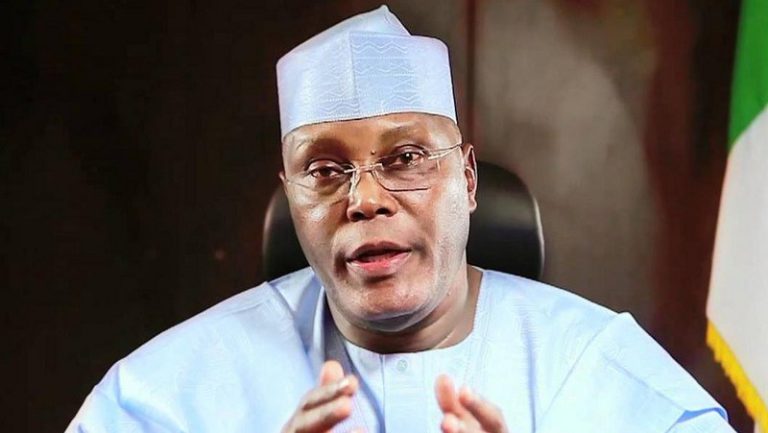
THE Presidential Election Tribunal has rejected the request made by the People’s Democratic Party (PDP) and Atiku Abubakar, its presidential candidate, to inspect the electronic server of the Independent National Electoral Commission (INEC) used for the 2019 presidential election.

In a ruling on Monday, the five-man panel unanimously dismissed the application, stating that the tribunal could not delve into the server issues at the interlocutory stage of the sitting, ChannelsTV reported.

The panel headed by Mohammed Garba said that the request was dismissed because issues have been joined by parties on the existence or otherwise of the servers.

Atiku and the PDP, through their lawyers led by Levy Uzoukwu, have prayed the court to order INEC to grant them access to scrutinise the electronics server and the smart card readers used during the February 23 election.

However, INEC through its counsel, Yunus Usman told the tribunal on June 13 to dismiss the application. He said the electoral umpire did not adopt electronic transmission for the collation of results.

“They are asking us to bring something we do not have,” Usman had denied the existence of server.

But a fact-check  by The ICIR revealed that INEC actually included in its budget, money for procurement and upgrade of servers. The over two billion naira was approved for INEC, and its utilisation has been reported in the document obtained from the budget office. Besides the budgetary report, some of the INEC top officials in different interviews before the election acknowledged the existence of the election server.

Atiku and his party’s petition to the tribunal claimed that he won the 2019 presidential election. The petition noted that Atiku defeated Muhammadu Buhari of the All Progressives Congress by 1.6 million votes. This claim, PDP said, was retrieved from INEC server.

With the purported server’ result, Atiku said he won with 18,356,732 votes against 16,741,430 votes of Buhari. But the result of the manual collation announced by INEC on February 27 declared Buhari the winner after securing a total of  15,191,847 votes against Abubakar’s 11, 262,978 votes.

Will Buhari take six months again to name his cabinet?

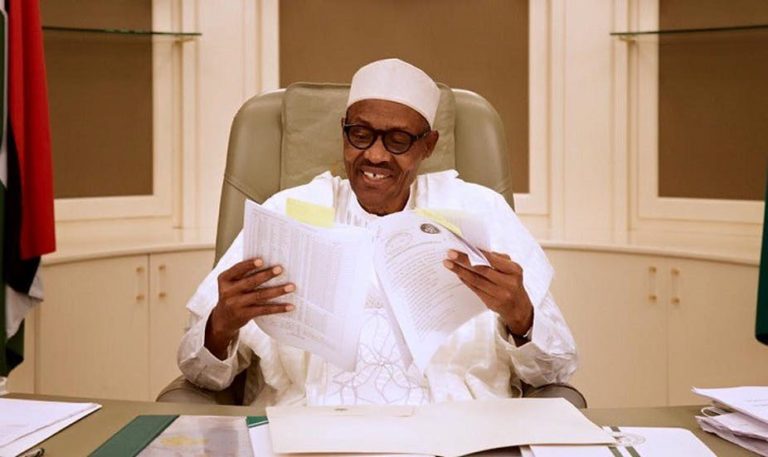
MORE than any of his elected predecessors, President Muhammadu Buhari is taking more time to name his cabinet for his second term despite high expectations from Nigerians.

It is getting to 30 days that he was sworn-in for another term of four years, yet the president has not submitted the list of his proposed ministers to the National Assembly, heightening speculations that he may again take a long time as he did in 2015.

This is despite assurance by his Special Adviser on Media and Publicity, Femi Adesina that the president would not delay in appointing ministers for the second term.

“The circumstances are no longer the same. So, there would be no delay. When you land in the mud of poor and delayed handover notes as happened in 2015, with a vandalised economy and a polity with different types of challenges, the delay would be understandable. But now, we have the good fortune of transition from government to government headed by the same President and Vice President, things can then be done more expeditiously,” Adesina was quoted as saying.

There are no clear signals from the presidency as to when the cabinet will be ready despite rumour that the president may send his list to the National Assembly in July as the new lawmakers are due for resumption on July 2 from their recess after the inauguration of the 9th Assembly.

The president has always attracted criticisms for his snail-speed approach to governance. The president also did not shuffle his cabinet once for the four-year period in his first term. He was reported to have said that “he was not in a hurry to do anything.”

His late formation of the cabinet was partly blamed for the country’s recession in August 2016.

Former presidents Olusegun Obasanjo, late Umaru Musa Yar’Adua and Goodluck Jonathan took less time to form their cabinets.

President Buhari after taking the oath of office in 2015 did not name his cabinet until November 11 —six months after his inauguration.

His spokesperson, Garba Shehu said then that the delay was to allow the president assemble credible ministers to lead his government. But many critics thought the delay was bad for business.

He was also defended by the former Minister of Power, Works and Housing, Babatunde Fashola, who argued that forming a cabinet was not an easy task.

“I think I must have taken about three months before I constituted my team. And it is a very painstaking process, first because of our constitution”, Fashola said.

How long did it take Obasanjo, Yar’Adua, Jonathan to form cabinet?

Former President Olusegun Obasanjo

In 1999, former president Obasanjo sworn-in his ministers on 1st July  – 47 of them.  That was just 32 days after he took the oath of office.  The ministerial nominees’ list was sent to the Senate shortly after May 29.

When he was inaugurated for his second term in 2003, he forwarded the list of his proposed ministers to the National Assembly in June.

Late Musa Yar’Adua formed his cabinet of 39 ministers on July 27, 2007 — exactly 58 days into the duration of his government. The late president who later took ill also named another cabinet on December 17, 2008, comprising 37 ministers before his eventual demise on May 5, 2010.

Goodluck Jonathan who first took over as acting president following the sickness of Yar’Adua also dissolved the cabinet on March 16, 2010, and named another one on April 16 same year after a pronouncement by a Federal Court and confirmation by the Senate as the acting president.

On July 11, 2011, Jonathan also unveiled his new cabinet having won an election as the substantive president of Nigeria. It was exactly 42 days after his swearing-in.

CBN to recapitalise Nigerian banks, eyes world top 500 in five years

GODWIN Emefiele, Governor of the Central Bank of Nigeria, on Monday unveiled the monetary policy roadmap for his 2019-2024 economic plan for the country, promising to recapitalise banks within the next five years to make them contribute significantly to economic growth and compete on a worldwide platform.

During a media briefing held at the apex bank headquarters in Abuja, Emefiele said he would work with Deposit Money Banks in the next five years to ensure financial system stability while boosting credit to the real sector as well as the creative and education sector.

“We will continue to improve our on-site and off-site supervision of all financial institutions, while leveraging on data analytics and our in-house experts across different sectors, to improve our ability to identify potential risks to the financial system as well as risks to individual banks.

“In the next five years, we intend to pursue a program of recapitalising the Banking Industry so as to position Nigerian banks among the top 500 in the world. Banks will, therefore, be required to maintain a higher level of capital, as well as liquid assets in order to reduce the impact of an economic crisis on the financial system.”

In mid-2008, the global financial crisis had an adverse effect on both the oil and gas sector and the Nigerian capital markets. A sharp deterioration in the quality of banks’ assets followed, which immediately led to liquidity constraints across all the banks.

Concerned about the state of some of the Nigerian banks and the overall stability of the financial system, the Central Bank of Nigeria (CBN), commissioned special examinations on all 24 banks in Nigeria.

The examination showed clearly that nine banks were in ‘grave situation’. They were Oceanic Bank International Nigeria Plc, Union Bank of Nigeria Plc, Intercontinental Bank Plc, Bank PHB Plc, Afribank Nigeria Plc, Finbank Plc, Equitorial Trust Bank Ltd, Spring Bank Plc and Wema Bank Plc. A tenth bank, Unity Bank, was not deemed to be in grave danger, but still declared to have insufficient capital and unacceptable levels of non-performing loans (NPLs).

Recapitalization which is the process of restructuring a company’s debt and equity mixture is often a measure taken make a company’s capital structure more stable.

Some of the proactive measures undertaken by CBN under the leadership of Sanusi Lamido Sanusi, former governor of the Apex bank were to prevent further deterioration instead of revoking licenses or handing the banks over to the Nigerian Deposit Insurance Corporation (NDIC). CBN injected  N620bn as a convertible loan that amounts to Tier II capital into the affected banks.

Second, it replaced the chief executives and executive directors of eight of the banks with competent managers with experience and integrity, and finally, introduced the guarantee of the local interbank market to ensure continued liquidity for all banks and guaranteed foreign creditors and correspondent banks’ credit lines to ensure confidence and maintain important correspondent banking relationships.

In addition to preserving domestic macroeconomic and financial stability, Emefiele also said the CBN would foster the development of a robust payments system infrastructure that will increase access to finance for all Nigerians, continue to work with the Deposit Money Banks to improve access to credit for not only smallholder farmers and MSMEs but also consumer credit and mortgage facilities for bank customers, grow the nation’s external reserves.

Lastly, CBN will support efforts at diversifying the economy through the various intervention programs in the agriculture and manufacturing sectors.

Click to read the full statement