Home Blog Page 2352

Nigeria, other African countries are slow in eliminating hepatitis -WHO

THE World Health Organisation has noted that Nigeria and 43 other African countries are lagging behind to eliminate viral hepatitis in the continent. 

Of the 47 countries in Africa only Rwanda, Uganda and Cabo Verde are on course to eliminate the disease that affects one in 15 persons in the region.

The information was contained in a press release of the WHO African region on Friday which gave some tips of a scorecard that examines hepatitis prevalence and response in Africa. The scorecard will be presented at the first African Hepatitis Summit to be held in Kampala, Uganda’s capital between June 18 and 20.

Dying of viral hepatitis in Africa is becoming a bigger threat than dying of AIDS, malaria or tuberculosis, said WHO. It said more than 200,000 people in Africa die from complications of hepatitis B and C annually. As it is a liver-related disease, complications include liver cancer, liver failure and scarring of the liver (cirrhosis).

The health agency estimated that 60 million people in the continent were living with chronic hepatitis B (HBV) infection in 2015, while about 4.8 million of them were children under five years old.  For hepatitis C, 10 million people are infected, “most likely due to unsafe injection practices within health facilities or by communities”.

Matshidiso Moeti, regional director, said the analysis was the first to track the countries and to access progress. “It was created as a guide for Member States on the implementation of the Global Health Sector Strategy on Viral Hepatitis, which calls for the elimination of the disease by 2030 (defined as a 90 percent reduction in new cases and 65 percent reduction in deaths),” she said

The analysis shows that only 7 of the 47 countries are leading prevention efforts with national coverage of both Hepatitis B birth dose and childhood pentavalent vaccination exceeding 90 per cent.

WHO said Rwanda is providing free treatment for both hepatitis B (HB) and C, Uganda only HB. “These two countries are championing the regional response and are on track to reach the 2020 Framework targets for testing and community awareness,” said WHO. 

“In Uganda, where more than 6 per cent of the population is infected, the commitment to end hepatitis infection was driven by civil society and strong political will with the result that it became one of the first African nations to fund domestic action against hepatitis B”.

Unlike HIV infection where there is no vaccine to prevent the disease, HB vaccination is available.

“Administration of the hepatitis B vaccination at birth and in early infancy is the most effective way to halt the transmission of the virus because 95 per cent of the burden of chronic disease is due to infections among children, acquired before their fifth birthday,” WHO reported.

But the health agency said only 11 countries could provide vaccination to children at a high rate. Only Cabo Verde was mentioned to have achieved 99 per cent vaccination coverage at birth.

High burden in Nigeria

According to WHO’s estimates, 11.2 per cent of the population is hepatitis B positive, while 2.0 per cent has the hepatitis C virus. The former figure indicates that 20 million Nigerians are living with viral infection.  And this represents that one in nine Nigerians has the disease.

Isaac Adewole, the former minister of health, had said during 2017 World Hepatitis Day that Nigeria is determined to eliminate hepatitis B infection by 2021.  Nigeria has also scheduled hepatitis B virus vaccination into the national immunisation for children since 2004.

However, WHO, in 2017, wrote that the screening and vaccination coverage among children and adults remains unsatisfactorily low in Nigeria due to a lack of awareness among the general populace.

A consultant gastroenterologist at the University of Abuja Teaching Hospital, Ojonugwa Ameh, told The ICIR in 2018 that the awareness of hepatitis B screening is not adequate in the country.

Most Nigerians do not know their status. Only when they come very sick, and most times at that stage, the damage has been done,” he said.

Nigeria’s profit from oil exports hits $236.2 bn in five years, as oil reserves slide

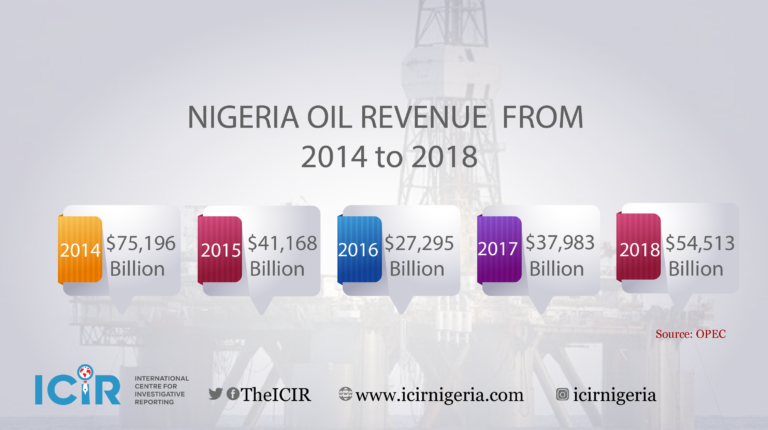
NIGERIA raked in $236.2 billion from the proceeds made from crude oil exports between 2014 to 2018,  according to the OPEC  latest report.

This was revealed in the 54th edition of the Annual Statistical Bulletin, ASB, released by OPEC, which ranks Nigeria in sixth place amongst  OPEC countries examined and the highest oil revenue earner in Africa in the five-year timeline.

Countries examined in the report include Nigeria, Saudi Arabia, Iraq, Kuwait, Congo, Ecuador, Equatorial Guinea, Gabon, the Islamic Republic of Iran, Iraq, Kuwait, Libya, Angola, Sudan, the United Arab Emirates and Venezuela.

Nigeria earned its highest revenue from oil exports for the period under review, receiving $75.196 billion in 2014, $54.513 billion in 2018 and $41.168bn in 2015 respectively.

Saudi Arabia sits on top of the table with the highest oil exports revenue with $194.4 billion followed by United Arab Emirates’ $74.9 billion, Iraq’s $68.2 billion, Iran’s $60.2 billion and Kuwait’s $58.4 billion.

The report assessed the OPEC member countries using economic indicators based on GDP growth and current account balance, which improved majorly in 2018.

However, the report also revealed that Nigeria’s proven oil reserves were on a steady decline due to exploratory activities leading to increased oil production and output expansions.

For the period under review, Nigeria’s oil reserves were pegged at 37,448 billion barrels in 2014 but dropped significantly to 36,972 billion barrels in 2018.

“With regard to countries with increasing oil production in 2018, output expansions were clearly driven by North America, notably by the United States. Oil supply in the US increased by around 2.3m barrels per day in the year 2018, representing almost 80 per cent of total non-OPEC supply growth,” the report states.

Also, the volume of crude oil exported, by OPEC member countries sold an average of 24.67 million barrels per day in 2018, a slight increase of about 14,000 barrels per day, which is about 0.1 per cent increase compared to 2017.

OPEC and Russia -led oil producing nations formed an alliance tagged OPEC+ which had agreed to cut down inventories and remove 1.2 million barrels per day of crude oil from global markets on January 1, in a bid to raise oil prices.

In April, OPEC members bound by the agreement achieved 132 per cent of pledged cuts, compared to 145 per cent in March, due to higher production in Nigeria which did not fulfill its OPEC benchmark and small increases in Saudi Arabia and Iraq.

The report states that 2018 witnessed a substantial global supply growth as total oil liquids production increased significantly by 2.60 million barrels per day, outpacing oil demand growth by more than one million barrels per day.

It also noted that member countries have successfully continued to improve the diversification of their economies and be less dependent on petroleum export revenues.

EFCC to clampdown on illegal use of POS machines


THE Economic and Financial Crimes Commission (EFCC) says it would start a clampdown on the fraudulent use of Point Of Sale (POS) machines in the country.

A statement issued in Abuja on Thursday by the acting Head of Media and Publicity at the EFCC, Tony Orilade said EFCC Chairman, Ibrahim Magu has asked banks across the country to to ensure proper monitoring and strict compliance by those to whom they issue POS machines.

Magu spoke through the Makurdi Zonal Head of  EFCC Johnson Babalola, in an interactive session with Regional Bank Managers in Makurdi, Benue State.

“We are having serious challenges with the banks giving POS machines to individuals with questionable characters and without proper documentation,” he said.

He pointed out that there was a need for some of the POS machines to be withdrawn from such individuals.

Magu also warned banks to adhere strictly to the Post-No-Debit (temporary freezing of account) order placed on banks found to be involved in suspicious transactions. “Default will not be tolerated,” he said.

He noted that it was unfortunate that some staff of banks were in the habit of giving prior notice to customers whose accounts were being placed on Post-No-Debit, thus “aiding and abetting crime and obstruction of justice, instead of assisting the Commission as stipulated by law”.

The EFCC chairman further urged the banks to “respond on time to the letters of investigations sent to them by the Commission”, stressing that prompt response will help speedy dispensation of cases.

“You need to always report any suspicious transactions as required by law,” he added.

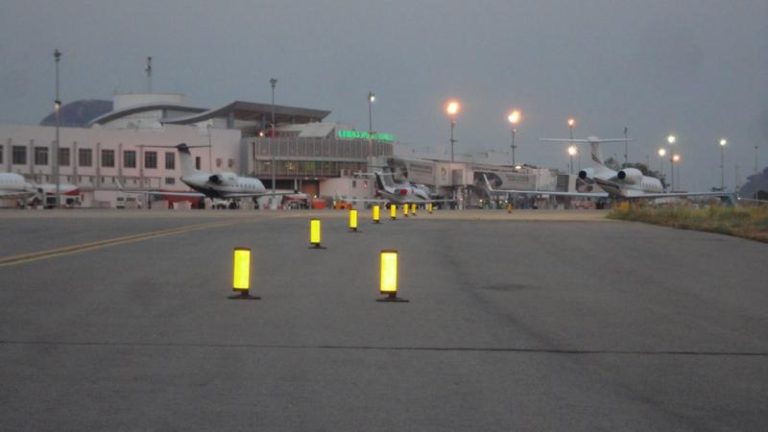
FG earmarks fresh 12bn for Abuja airport second runway

Three years after the Federal Government approved an initial sum of N18billion for the construction of the Nnamdi Azikwe International Airport (NAIA) Abuja second runway, work is yet to commence on the site.

Though the Federal Government has set aside another N12 billion in the 2019 Appropriation Act for the project, the start period of the project remains uncertain.

When completed, the second runway is expected to complement the first one repaired in 2017.

Then, the former Minister of State for Aviation, Hadi Sirika said repair of the second runway would be completed before the end of the first administration of President Muhammadu Buhari but the project is far from completion.

According to sources at the Abuja airport, actual construction is yet to commence. “They have not started work on the second runway. What they have is just the sketch, and drawings but the actual construction is yet to start.”

Another source at the Federal Airport Authority of Nigeria (FAAN) told The ICIR that though the federal government appeared serious about the project it has not commenced.

“I saw some paper works, so I think they are serious about it but they have not started.”  

While addressing the House of Representative Joint Committee on Land, Transport, Maritime Safety and Administration, Aviation, Port Harbours and Waterways, in 2017,  the Minister told the lawmakers that N63 billion would be required for the project contrary to the approved N18billion.

In the same year, N10 billion was approved in the ministry’s budget for the project. In 2018 and 2019 N8.32 billion and N12 were approved respectively.

 Though the actual release for the project in 2018 is unknown, N5 billion was reportedly released.

Meanwhile, the Federal Ministry of Transport got N82.4 billion as its total releases for the year out of the N194 billion approved as capital budget. The ministry utilised N81, 9 billion.

Stakeholders in the aviation industry had earlier called on the federal government to ensure repair of the second runway. They noted that temporary shutdown of the first runway cost the federal government about N20 billion losses.

The minister further justified the need to fix the second runway due to the air traffic, stressing that some air operators are mostly on the ground for about 30 minutes waiting for take-off or to land.

“I saw the need and called for it but it fell on deaf ears. At the time of Yar’Adua, the government saw the need but the project was condemned on the excuse that the money was too much.”

“There is a second runway in Kano, Lagos, and Port Harcourt. I think the focus of the government within the limited resources is to do a second runway in Abuja and if we need an additional runway, during the concessioning, the man, who would win it will do it,” he stated.

FAAN General Manager in charge of Corporate Affairs, Mrs. Henrietta Yakubu confirmed the project is yet to commence when contacted.

“No. it has not. I think they are still at the level of getting consultants…but work has not commenced,” Yakubu said.

WHO considers declaring global emergency on ebola spread

UGANDA has confirmed the death of two people to Ebola disease, one is a 50-year-old woman and her five-year-old grandson on Wednesday and Tuesday respectively.

They are the first two cases reported in the country since the World Health Organisation affirmed on Tuesday the existence of Ebola virus in the country. Uganda now has put 27 people in isolation fearing that they might be infected with the disease, according to the health ministry on Thursday.

The WHO will consider on Friday whether the outbreak should now be deemed a public health emergency, according to BBC.

The WHO reported that the grandmother and grandson arrived from DR Congo on Sunday, while the boy fell sick on Tuesday. Taking to Kagando hospital of Uganda, the health workers identified Ebola as a possible cause of illness. The child was transferred to an Ebola Treatment Unit for management where he later died that day. The following day, on Wednesday, the grandmother died.

Now five other family members of the deceased have been repatriated to DR Congo, while 27 people have been held in isolation while waiting to confirm their status with blood tests.

DR Congo has suffered an outbreak of Ebola since August 2018 where nearly 1,400 people have died, around 70 per cent of those infected, with increased cases in recent weeks.

Jeremy Farrar, the director of the Wellcome Trust, a UK-based biomedical research organisation said the current outbreak is “truly frightening”. He said the epidemic is the worst since 2016 and show no signs of stopping.

Experts will meet on Friday to consider whether to declare the Ebola epidemic in central Africa “a public health emergency of international concern”, said WHO.

Ebola is a virus that initially causes sudden fever, intense weakness, muscle pain, and a sore throat. It progresses to vomiting, diarrhoea and both internal and external bleeding. People are infected when they have direct contact through broken skin, or the mouth and nose, with the blood, vomit, faeces or bodily fluids of someone with Ebola. Patients tend to die from dehydration and multiple organ failure.

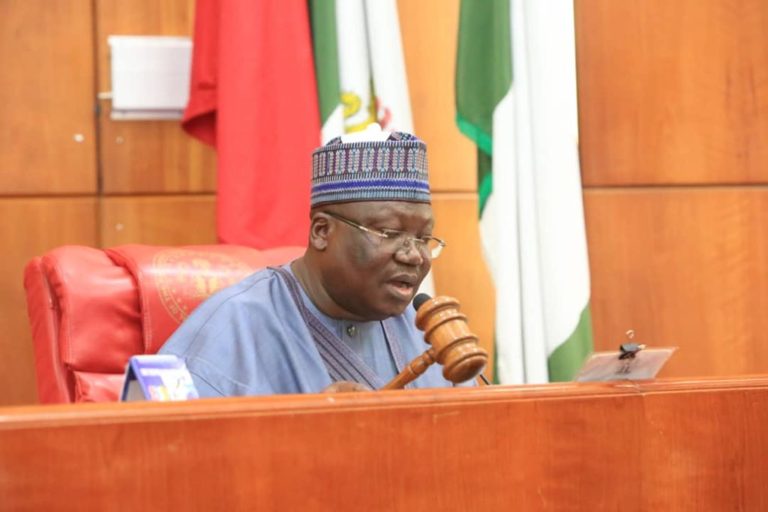
Senate President sets up 12-man ad-hoc committee on members’ welfare

SENATE President Ahmed Lawan on Thursday set up a 12-man Ad hoc committee to communicate the welfare of the senators with National Assembly management, headed by Senator Abu Kyari.

He noted that members of the committee were drawn from the six Geo-political zones, and had two weeks to submit its report.

He said they were expected to work with the Senate clerk, Nelson Ayewoh, to ensure seats and offices are allocated to all senators within the said time frame.

The Senate also adjourned the plenary to Tuesday, July second for allocation of seats and offices to senators.

The development was sequel to a motion by Deputy Senate President, Ovie Omo-Agege and supported by Philip Aduda after a closed-door session.

The ninth assembly of lawmakers was inaugurated on June 11, during which the Senate president and its deputy were elected and declared winner through a secret ballot election.

Lawan, representing Yobe North district had gathered 79 votes, against Ndume Ali representing Borno South district with 28 votes, with a total vote cast of 107.

Both candidates are from the All Progressive Congress, (APC).

Lawan in accepting his nomination had promised to collaborate with the lawmakers, in delivering interventions sustainable for societal growth and development.


Nine journalists killed in Nigeria between 2006 and 2019-UNESCO Report

AT least nine journalists were killed in Nigeria between 2006 and 2019, a report, UNESCO observatory of killed journalists has revealed.

The nine journalists, all of them male, still have circumstances surrounding their deaths unresolved till date, the report said.

UNESCO said the list was based on responses from member states. “Only those responses that Member States have agreed to make public are included here,” it said.

In general, the report said 1,327 journalists have been killed across the world since 1993.

They were Godwin Agbroko, chairman of This Day newspaper editorial board who was killed on December 22, 2006, by yet to be identified assailants. Agbroko was shot dead while he was driving home from work.

Paul Abayomi Ogundeji who was killed on August 17, 2008, in Idimu area of Lagos by suspected armed robbers. He was a journalist with The Comet, The Guardian, The Punch and was with ThisDay newspapers before his death.

Bayo Ohu who was killed in his home in Lagos on September 20, 2009, by unknown gunmen. He was the Assistant News Editor at the Guardian Newspaper.

Zakariya Isa, a staff of Nigeria Television Authority (NTA) was killed in his home in Maiduguri, Borno State by members of Boko Haram on October 22, 2011, over allegation of spying on the sect.

Nansok Sallah, an editor with Plateau State-owned FM radio station, Highland was murder in the capital city of Jos. His body was found lying face down in a shallow stream under a bridge in the central town of Jos, less than 200 meters (650 feet) from a military checkpoint, according to statements from the radio’s general manager. His death occurred on January 18, 2012. His assailants are yet unknown.

Enenche Akogwu died on January 20, 2012, in Kano during an attack coordinated by Boko Haram terrorists. The 31-year-old journalist was with the Channels Television when he was shot dead by an unknown gunman during the attacks.

Ikechukwu Udendu, editor of Anambra News, a monthly newspaper in Southeastern Anambra State was killed by unidentified gunmen, while he was returning home at night from a commercial printing press. He was shot in the hand and chest but his death is still unresolved.

Famous Giobaro, a journalist working with Radio Bayelsa, was shot dead by suspected gunmen who attacked his residential house at about 5 am on Sunday, April 16, 2017.

He was reportedly shot in the stomach while the attackers left without taking anything from the house, and without attacking any other person in the neighbourhood.

On November 15, 2017, police found Ikechukwu Onubogu, a cameraman with Anambra Broadcasting Service (ABS), dead with bullet wounds in the city of Onitsha, Anambra State.

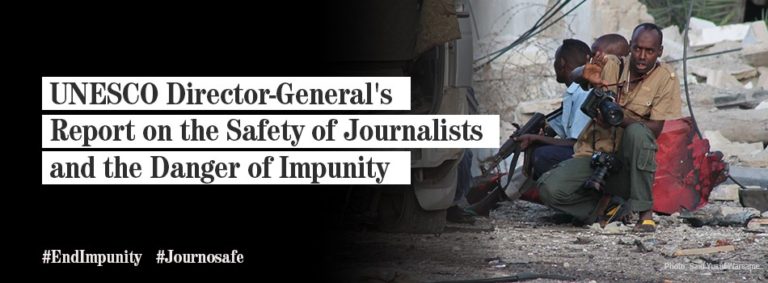
Meanwhile, the 2018 UNESCO Director-General Report on the Safety of Journalists and the Danger of Impunity provides an overview of data collected by UNESCO on killings of journalists that took place between 1 January 2016 and 31 December 2017 revealed that 182 journalists were killed in 2016-2017.

It further disclosed that 1,010 journalists killed in the last decade (2006-2017).

The full Report will be submitted on 21 November during the Intergovernmental Council of the International Programme for the Development of Communication (IPDC).

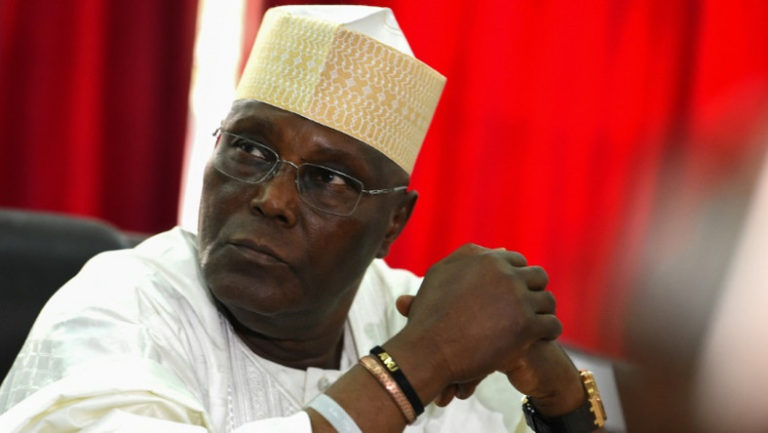
Atiku, PDP ask court to grant them access to INEC server

ABUBAKAR Atiku and his political party, The People’s Democratic Party have prayed the presidential tribunal on Thursday to order the Independent National Electoral Commission (INEC) to grant them access to inspect the commission’s electronic server.

The PDP also prayed the tribunal to give it permission to inspect other electronic like the smart card readers used by INEC during the February 23 presidential election, NAN reported.

Atiku, the presidential candidate of the PDP for the 2019 election and his party had dragged President Muhammadu Buhari, the All Progressives Congress (APC) and INEC  to court after the latter pronounced Buhari the winner of the 2019 presidential election that held on February 23.

Buhari after receiving a Certificate of Return on February 27 was inaugurated for a second term as the president on May 29.

However, the PDP had filed a petition to the presidential election tribunal seeking for Atiku to be declared the winner. It claimed that figures purportedly obtained from the server of INEC showed that Atiku polled the highest number of votes in the election.

Buhari on Tuesday prayed the five-man tribunal to strike out the petition filed by the PDP and Atiku.

But the tribunal rather fixed today, Thursday, for the hearing of the application for access to the electronic server of the electoral umpire filed by the party.

The five-man panel headed by Mohammed Garba, the presiding justice of the Lagos Division of the Court of Appeal, kickstarted the pre-hearing proceedings of the tribunal on Monday.

More than 1,689 litigation received over 2019 general election, says INEC

0

THE Independent National Electoral Commission (INEC) says it recorded over 1,689 court cases arising from the 2019 general election.

Mohammed Haruna, INEC National Electoral Commissioner in charge of Niger, Kogi, and Nasarawa states, said this on Thursday in Lafia during the state level post-election review retreat.

Haruna said more than 890 of the cases were pre-election matters arising from the conduct of political party primary elections, while 799 were election petitions at the various tribunals across the country.

According to him, the pre-election cases indicate that political parties need to put their acts together in order to deepen the nation’s democratic process.

He also said that the cases before the election petitions tribunals showed that much still needed to be done to improve on the electoral process.

“We are here to review what we did for this year’s general election with a view to improving on our subsequent outing. You will agree with me that any document is work in progress, you can never get it perfectly,” said Haruna.

He expressed optimism that from the review of the 2019 general election with inputs from the various stakeholders, subsequent elections would be better than the previous as noticeable pitfalls would be addressed.

Haruna cited the unprecedented number of political parties that participated in the 2019 general election as one of the challenges that the commission faced during the conduct of the polls.

In his remarks, Uthman Ajidagba, Resident Electoral Commissioner in the state, said that 26 cases were recorded in the state from the 2019 general election.

Ajidagba said two were pre-election litigations while 24 cases were at the election petition tribunals. He said that there were no much complain from the elections in the state given the minimal numbers of cases.

“That we have this small number means that there was a level of satisfaction but some people just want to prove points by going to the tribunal,” he said.

He maintained that the post-election review retreat was very crucial to enable the commission to correct identified lapses and consolidate on the successes recorded.

The News Agency of Nigeria (NAN) reports that the post-election review retreat had in attendance, Electoral officers from the 13 local government areas of the state, returning officers as well as collation officers.

(NAN)

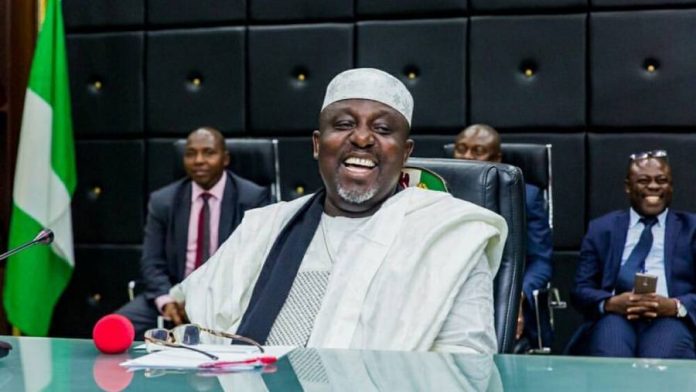
Okorocha sworn-in as Senator

THE former Governor of Imo State, Rocha Okorocha, on Thursday has been sworn in as Senator representing Imo West district.

He was sworn in by the newly elected Senate President, Ahmed Lawan.

Okorocha was earlier denied access into the National Assembly complex on Tuesday during the inauguration of senators, owing to a court order restraining the Independent Electoral Commission (INEC) from issuing a Certificate of Return to him.

He was alleged to have been declared winner under duress, a report quoting the returning officer.

The federal high court on Wednesday had given a final verdict on the case, asking the INEC to issue Okorocha a Certificate of Return as senator-elect representing Imo west.

Okorocha on his part, through his media aide, appreciated the INEC for issuing him the certificate at last. He also thanked the returning officer for declaring him a winner “under duress”, saying such an act has rather attracted to him public sympathy.