Home Blog Page 2356

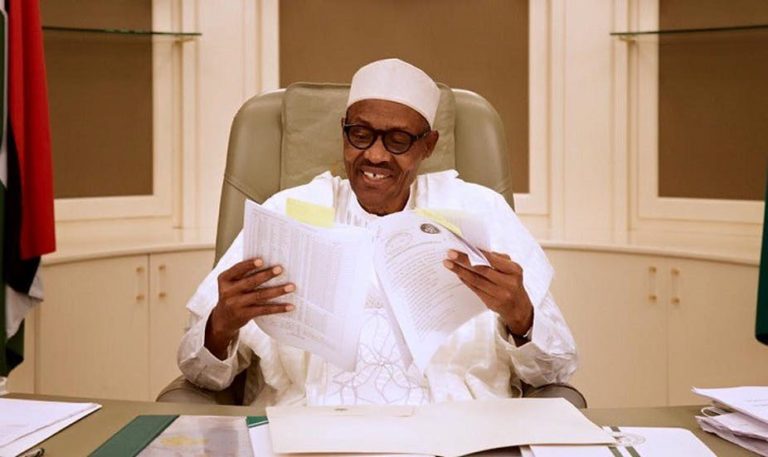
FULL SPEECH: Buhari’s assurances, remarks at Democracy Day celebration

All Praise is due to GOD Almighty Who spared our lives to be present at this great occasion. We give thanks also that the democratic process has been further entrenched and strengthened.

2.      Twenty years ago, a democratically elected government took over from the military in a historic transfer of political power for our country.

3.      Today, we are privileged to mark the longest period of unbroken democratic leadership and 5th peaceful transfer of power from one democratically elected government to another in Nigeria.

4.      Throughout the last four years, I respected the independence of INEC. I ensured that INEC got all the resources it needed for independent and impartial management of elections in the country.

5.      All interested parties are agreed that the recent elections, which except for pockets of unrest, were free, fair and peaceful.

6.      I thank all the people who worked for our party, who campaigned and who voted for us. I thank my fellow Nigerians, who, since 2003 have consistently voted for me.

7.      Victory is your greatest reward; peace, unity and greater prosperity will be our collective legacy.

Your Excellencies, Fellow Nigerians,

8.      I and Nigerians collectively must give adequate thanks to our Armed Forces, Police and other law enforcing agencies for working round the clock to protect us by putting themselves in harm’s way and defending our values and protecting our future.

9.      Terrorism and insecurity are worldwide phenomena and even the best policed countries are experiencing increasing incidents of unrest and are finding things hard to cope.

10.    The principal thrust of this new Administration is to consolidate on the achievements of the last four years, correct the lapses inevitable in all human endeavors and tackle the new challenges the country is faced with and chart a bold plan for transforming Nigeria.

11.     Fellow Nigerians, I have had the privilege of free education from Primary school to Staff College to War College.

12.    I received my formative education in Katsina and Kaduna and my higher education in England, India and the United States.

13.    I have worked and served in Kaduna, Lagos, Abeokuta, Makurdi, Port Harcourt, Maiduguri, Ibadan, Jos and finally here in Abuja. Throughout my adult life, I have been a public servant. I have no other career but public service. I know no service but public service.

14.    I was involved at close quarters in the struggle to keep Nigeria one. I can therefore do no more than dedicate the rest of my life to work for the unity of Nigeria and upliftment of Nigerians.

15.    In 2002-2003 campaigns and elections, I travelled by road to 34 of the 36 states of the Federation. This year I travelled by air to all 36 states of the Federation.

16.    Before and during my time in the Armed Forces and in government, I have interacted with Nigerians of all ages and persuasions and different shades of opinion over a period of more than fifty years.

17.    And my firm belief is that our people above all want to live in peace and harmony with their fellow Nigerians. They desire opportunity to better themselves in a safe environment.

18.    Most of the instances of inter-communal and inter-religious strife and violence were and are still as a result of sponsorship or incitements by ethnic, political or religious leaders hoping to benefit by exploiting our divisions and fault lines, thereby weakening our country.

19.    And our country Nigeria is a great country. According to United Nations estimates, our population will rise to 411 million by 2050, making us the third most populous nation on earth behind only China and India.

20.   We have water, arable land, forests, oil and gas and vast quantities of solid minerals. We are blessed with an equable climate. However, the bulk of our real wealth lies in Agriculture, Livestock, Forestry and Mining. We possess all the ingredients of a major economic power on the world stage.

21.    What we require is the will to get our acts together. And our strength is in our people – our youth, our culture, our resilience, our ability to succeed despite the odds.

22.    A huge responsibility therefore rests on this and succeeding Administrations to develop, harness and fulfil our enormous potential into a force to be reckoned with globally.

23.    Thus far, we Nigerians can be proud of our history since Independence in 1960. We have contributed to UN peace-keeping responsibilities all over the world; we have stabilised Liberia, Sierra Leone, Ivory Coast and two years ago we prevented the Gambia from degenerating into anarchy.

24.    Without Nigerian influence and resources, the liberation of Angola, Mozambique, Namibia, Zimbabwe and ultimately South Africa would have come at greater cost. This fact had been attested by none other than the late Nelson Mandela himself.

25.    Elsewhere, Nigeria is the Big Brother to our neighbours. We are the shock-absorber of the West African sub-region, the bulwark of ECOWAS and Lake Chad Basin Commission. We can therefore be proud to be Nigerians. We must continue to be Good Neighbours and Good Global Citizens.

26.    At home, we have been successful in forging a nation from different ethnicities and language groups: our evolution and integration into one nation continues apace.

27.    When, therefore we came to office in 2015 after a decade of struggle we identified three cardinal and existential challenges our country faced and made them our campaign focus, namely security, economy and fighting corruption.

28.   None but the most partisan will dispute that in the last four years we have made solid progress in addressing these challenges.

29.    When I took the oath of office on 29 May 2015, insecurity reigned. Apart from occupying 18 local governments in the North East, Boko Haram could at will attack any city including the Federal Capital, could threaten any institution including bombing the United Nations building and Police Headquarters in Abuja.

30.   Admittedly, some of the challenges still remain in kidnappings and banditry in some rural areas. The great difference between 2015 and today is that we are meeting these challenges with much greater support to the security forces in terms of money, equipment and improved local intelligence. We are meeting these challenges with superior strategy, firepower and resolve.

31.    In face of these challenges, our Government elected by the people in 2015 and re-elected in March has been mapping out policies, measures and laws to maintain our unity and at the same time lift the bulk of our people out of poverty and onto the road to prosperity.

32.    This task is by no means unattainable. China has done it. India has done it. Indonesia has done it. Nigeria can do it. These are all countries characterized by huge burdens of population.

33.    China and Indonesia succeeded under authoritarian regimes. India succeeded in a democratic setting. We can do it.

34.    With leadership and a sense of purpose, we can lift 100 million Nigerians out of poverty in 10 years.

35.    Following the 60 percent drop in oil prices between 2015 and 2016, through monetary and fiscal measures, we stimulated economic growth, curbed inflation and shored up our external reserves.

36.    We now have witnessed 8 quarters of positive growth in the economy and our GDP is expected to grow by 2.7 percent this year.

37.    Furthermore, our external reserves have risen to $45 billion enough to finance over 9 months of current import commitments.

38.   This Administration is laying the foundation and taking bold steps in transforming our country and liberating our people from the shackles of poverty.

39.    First, we will take steps to integrate rural economies to the national economic “grid” by extending access to small-scale credits and inputs to rural farmers, credit to rural micro-businesses and opening up many critical feeder roads.

40.   Secondly, for small-scale enterprises in towns and cities, we shall expand facilities currently available so that we continue to encourage and support domestic production of basic goods and reduce our reliance of imported goods as I will outline later.

41.    For the next four years, we will remain committed to improving the lives of people by consolidating efforts to address these key issues as well as emerging challenges of climate change, resettling displaced communities and dealing decisively with the new flashes of insecurity across the country, and the impacts on food scarcity and regional stability.

42.    We are not daunted by the enormity of the tasks ahead. Instead, we are revived by this new mandate to work collaboratively with State and Local Governments, Legislators, the Diplomatic Corps and all Nigerians to rebuild and reposition our country as the heartbeat and reference point for our continent.

43.    Fellow Nigerians, Your Excellencies, Ladies & Gentlemen:

a.          Despite the enormous resources pledged to infrastructure development these past four years, there remains the urgent need to modernize our roads and bridges, electricity grid, ports and rail systems.

b.          Whilst agriculture and industrial output have recovered since the recession, we are more committed than ever to work with the private sector to improve productivity and accelerate economic growth.

c.           The Manufacturing Purchasing Managers Index which is the gauge of manufacturing activity in the country has also risen for 26 consecutive months since March 2017 indicating continuous growth and expansion in our manufacturing sector.

d.          It still takes too long for goods to clear at our seaports and the roads leading to them are congested. It still takes too long for routine and regulatory approvals to be secured. These issues affect our productivity and we are committed to addressing them permanently.

e.           Our Government will continue work to reduce social and economic inequality through targeted social investment programs, education, technology and improved information.

f.            Our social intervention programs are a model for other nations. Together with state governments, we provide millions of school children with meals in primary schools, micro loans to traders and entrepreneurs, skills and knowledge acquisition support to graduates and of course, conditional cash transfers to the poorest and most vulnerable in our society.

g.          A database of poor and vulnerable households is being carefully built based on age, gender, disability, educational levels for proper planning in this Administration’s war against poverty.

h.         A database of unemployed but qualified youth has also been developed under the National Social Investment Programme which can be used by the public and private sectors for recruitment purposes. Cumulatively, nearly 2 million beneficiaries have received aid under this Programme apart from Anchors Borrowers Programme and School Feeding initiative each reaching 2 million recipients. And we will do more. Much more. 

44.    Fellow Nigerians, Your Excellencies, Ladies & Gentlemen, we know that there exists a strong correlation between economic inequality and insecurity.

45.    When economic inequality rises, insecurity rises. But when we actively reduce inequality through investments in social and hard infrastructure, insecurity reduces.

46.    The disturbing increase in rates of kidnapping, banditry and other criminal activities can be attributed to the decades of neglect and corruption in social investment, infrastructure development, education and healthcare.

47.    This issue is further compounded by the impact of our changing climate and ecology.

48.   The ECOWAS and Sahel regions, starting from Chad all the way to Mali, are also experiencing adverse impacts of drought and desertification, which have triggered waves of human displacement; conflicts between farmers and herdsmen; terrorism; and a fundamental socio-economic change to our way of life.

49.    These issues are regional and not unique to Nigeria alone. The problems call for increased regional and international cooperation in developing a sustainable solution.

50.    As Chairman of ECOWAS, I will be hosting a regional security summit of heads of states in the Sahel to develop a Joint Strategy to continue our efforts in addressing these issues.

51.    Fellow Nigerians, Your Excellencies, Ladies & Gentlemen, at the heart of inequality and insecurity, is pervasive corruption. When we took office we realised that if you fight corruption, corruption will fight back – and we have seen this at all levels.

52.    For Nigeria to progress, a collective resolution to address corruption and foster broad-based prosperity is required to create a country that is not only for a few privileged, but for all Nigerians.

53.    This charge is not only to Civil Servants, Ministers, Legislators and State Government functionaries, but also to Corporate leaders.

54.    We shall make greater investments in our rural economies. We shall aggressively source locally our raw materials.

55.    We have incentives for investments specifically made in rural communities.

56.    However, nationwide development cannot occur from Abuja alone; it must occur at States. And Government cannot do it alone.

57.    I therefore implore all State Governments, especially those with large rural economies, to aggressively solicit investments in your states. Invest in developing human capital, reducing bureaucracy and corruption, hosting and attending investment summits and improving the ease of doing business.

58.    At this point, I would like to express my sincere gratitude to the entrepreneurs, investors and venture capitalists who have built or are building agro-processing projects; petrochemical plants; crude oil and solid mineral refineries; energy exploration; software development projects; telecom infrastructure; health, education and manufacturing projects; and the like, across our country.

59.    I would like to make special mention to promoters of our small businesses that are proudly making goods and services for export and for local consumption. The Nigerian economy rises and falls on the strength of your investments and productivity.

60.   We will continue to listen to your ideas and plans not just about how we can secure more investment, but how your plans can help create a more equitable economy.

61.    I also thank the labour unions, farmer groups and associations, organized private sector and the civil society organisations for their support and cooperation with our government these last four years.

62.    We will continue to count on your support, guidance and understanding during the next four years.

63.    I especially thank our traditional leaders and congratulate re-elected and newly elected State Governors and members of the National Assembly. Our Government will continue to count on your support so that we can together move our country forward.

64.    Fellow Nigerians, Your Highnesses, Your Excellencies, Ladies & Gentlemen, despite the challenges over the last four years, my optimism about Nigeria’s future is unshaken and Nigeria’s role in the world as an emerging economic force is without a doubt.

65.    Over the next four years, we are committed to assembling a strong team of Nigerians, and allies, to implement our transformative plans and proposals.

a.       We will see significant focus, resource and, where necessary reform, in tertiary and technical education to reposition Nigeria’s workforce for the modern technological age.

b.       We will accelerate investments in primary, secondary and tertiary healthcare programs, interventions and infrastructure as well as in upgrading of our medical personnel to stem the flight of our best trained people.

c.        On food security, our farmers have made great strides in local production of rice, maize, cassava, poultry, fertilizer, fisheries and sesame. We remain resolute in supporting private sector in emphasizing backward integration and export expansion plans.

d.       Felling of trees to provide energy for domestic use is taking its toll on our rain forests, our ecology and our climate. Accordingly, we are taking steps to harness cleaner and more sustainable sources of electricity. We export over 2 million tons of cooking gas, yet we consume less than half a million tons.

e.       We will work to address this issue and support rural communities with challenges of safely switching from firewood to cooking gas.

f.         Dedicated agro-industrial processing zones will be developed on a PPP basis to increase farming yields, agricultural productivity and industrial output.

g.       Over 2,000 kilometers of ongoing Federal road and bridge projects across the country will be completed to reduce journey times and the cost of doing business. As I mentioned earlier, critical feeder roads will be built to facilitate easier transportation for people and goods from rural areas to major roads.

h.      We are at advanced stages of securing investments to modernize and expand our transmission and distribution infrastructure, ensuring that electricity is available and affordable for all Nigerians.

i.         Several rail, seaport and airport projects are at various stages of completion. We will open the arteries of transportation nationwide.

j.         It is a fact that Nigeria has more gas reserves than it has oil. Over the last four years, we have become a net exporter of urea, which is made from natural gas. We invite investors to develop more natural gas-based petrochemical projects.

k.       Fellow Nigerians, This Government will not tolerate actions by any individual or groups of individuals who seek to attack our way of life or those who seek to corruptly enrich themselves at the expense of the rest of us. We will crack down on those who incite ordinary innocent people to violence and unrest.

l.         We will ensure that such actions are met with the strong arm of the law. 

66.    Nation building takes time. But we must take solace in the knowledge that this country, our country, has everything we require to make Nigeria prosper.

67.    Fellow Nigerians, Your Highnesses, Your Excellencies, Ladies and Gentlemen, I invite you to join me in this journey of rebuilding our nation.

68.   Our focus will not be to help the privileged few but to ensure that Nigeria works for Nigerians of all persuasions. That is a more just arrangement.

69.    As we all know, correcting injustice is a pre-requisite for peace and unity. As part of the process of healing and reconciliation, I approved the recognition of June 12 as Democracy Day and invested the late Chief M.K.O. Abiola and Babagana Kingibe with National Honours, as I did with the late Chief Gani Fawehinmi. The purpose was to partially atone for the previous damage done in annulling the Presidential elections of that year.

70.    Today, I propose the re-naming of the Abuja National Stadium. Henceforth it will be called MOSHOOD ABIOLA NATIONAL STADIUM.

71.    In my first term, we put Nigeria back on its feet. We are working again despite a difficult environment in oil on which we depend too much for our exports. We encountered huge resistance from vested interests who do not want CHANGE, But CHANGE has come, we now must move to the NEXT LEVEL.

72.    By the Grace of God, I intend to keep the oath I have made today and to serve as President for all Nigerians.

73.    I thank you for attending this august occasion from far and near, and for all your best wishes to me, to our party and to Nigeria.

74.    God bless us all, and God bless the Federal Republic of Nigeria.
Port Authority, others refuse to provide information on $100m Warri Port concession agreement

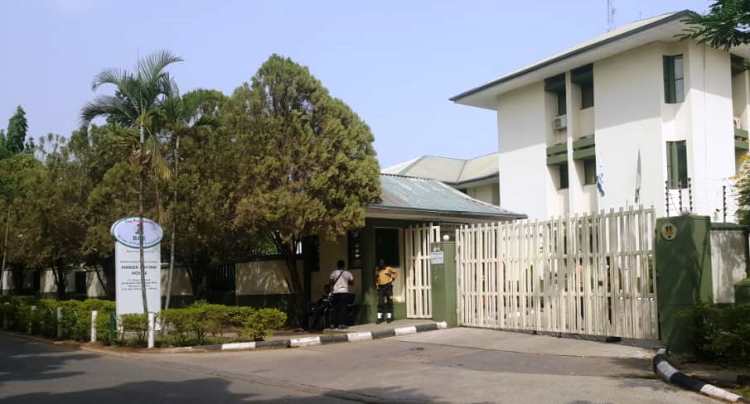
EFFORTS to unravel the detail of the $100million concessioning of Terminal ‘B’ Old Warri Port to Ocean and Cargoes Terminal Limited have been frustrated by the key agencies involved in the transaction.

The agencies are Bureau of Public Procurement (BPE), Nigerian Port Authority (NPA) and the Infrastructure Concession Regulatory Commission (ICRC), the three major government agencies involved in the concession deal.

The three agencies have on different occasions declined to respond to Freedom of Information Act (FOIA) requests sent by The ICIR asking for the details of the multimillion-dollar concession agreement with Ocean and Cargos – a company jointly owned by the Sifax Group, Blueche Lomado Shipping and Logistics Limited as well as the Creekline Nigeria Limited – a firm which belongs to Chief Edwin Clark, a Niger Delta leader.

While Sifax Group commenced preliminary works right after the agreement was signed by the BPE and NPA early this year, The ICRC is yet to access information on the the concession as it was excluded from its database of government’s facilities under concession.

Denial of FOI Requests

FOIA requests sent by The ICIR to the agencies have not produced useful information. Rather, both  NPA and ICRC kept shifting responsibility. On its part, the BPE, has completely ignored the requests for information on the concessioning.

The NPA and ICRC both claimed not to be in custody of the contractual agreement despite the fact that they were statutorily part of all the processes leading to the agreement.

In the letter sent to  NPA on the 5th April, Hadiza Usman, The ICIR specifically requested for

a copy of:

  1. Announcement and invitation of bidders documents
  2. A list of all bidders
  3. All bids submitted by bidders
  4. The concession agreement documents.

But NPA  instead referred The ICIR to the BPE, claiming that the facilitation of the concession of the terminal was undertaken by the Bureau.

“In the light of the foregoing, we advise that your request for access of the above documents should be directed to the BPE,” the letter reads.

NPA Response to The ICIR FOIA Request

Meanwhile, a similar FOIA request had been sent to the ICRC on 8th February. After a while, Mrs. Manji Yarling, the Acting Head of Media and Publicity told The ICIR that the agency was still expecting same agreement from the NPA – months after the agreement was signed and the preferred bidder selected.

“As regulators, we were following up with the NPA and they said they were giving it needed attention,” says Yarling.

Two months after, precisely on 24th April, a fresh FOIA request was submitted to the ICRC reminding the regulatory commission of its constitutional mandate based on the ICRC Act (2005) which states that the commission shall: “Take custody of every concession agreement made under this Act and monitor compliance with the terms and conditions of such agreement…”

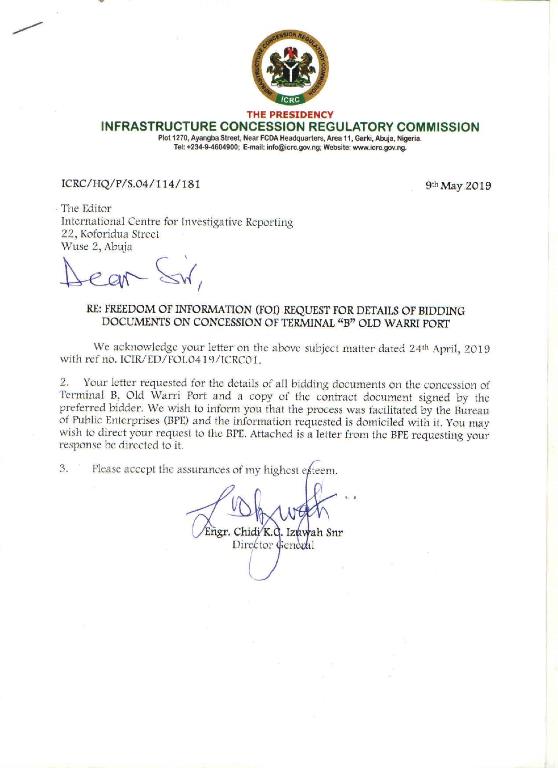
On the 9th May, more than two weeks after, ICRC  acknowledged the FOIA request in a letter with reference number ICRC/HQ/P/S.04/ 114/ 181, noting  that “…the process was facilitated by the BPE and the information requested is domiciled with it (BPE).”

ICRC Response to The ICIR Page 001

The agency directed The ICIR to send the request to the BPE in a  letter signed by Alex Okoh, DG BPE.

Apparently, Izuwa had forwarded to the BPE the FOIA request which The ICIR earlier sent separately to the agency on the 8th of February.

BPE Response to ICRC Page 002

Again, on the 9th of May, new FOIA request titled “Request for Details of Bidding Documents on Concession on ‘Terminal B’ Old Warri Port” was sent to the BPE. The agency received the letter and gave an acknowledged copy to The ICIR.

However, until the time of filing this report, the BPE neither made the documents available nor responded.

BPE acknowledgment to The ICIR second FOIA request

The BPE is notorious for denying FOIA requests. In an independent study conducted by the Public Private Development Centre (PPDC), the BPE has repeatedly failed to measure up in the annual survey.

In 2015, BPE ranked 116th among the list of Ministries Departments and Agencies (MDAs) under study. The following year the BPE ranked 86th while it ranked 75th and 56th in 2017 and 2018 respectively.

The ICIR has earlier reported how the MDAs flouted the FOI Act despite annual budgetary provision, citing an instance of a situation where only 73 out of 900 government institutions complied with the Act in 2017.

Commercialisation of government properties – the next big deal

For decades, the Warri Port Terminal B of the Nigerian Ports Authority (NPA) has functioned far below expectation due to inefficiency and operational challenges.

Aside from increasing overheads, the port infrastructures on a daily basis have been deteriorating. And the situation is not peculiar to the Delta Port Complex which accommodates the Warri Port but also, other five ports in the country – Lagos, Tin Can Island, Rivers, Onne and Calabar.

“The job was overwhelming and the NPA was not getting the result, except that the water is there. That was the only savings. There were lots of overheads and it was becoming a situation where the return on investments was not there,” says a top source in the NPA Delta Port office.

“You know the things about the government when it comes to buying equipment or materials; they will always buy obsolete ones that are not needed.”

In 2006, the Federal Government switched to the landlord model which allows private investors take-over ‘cargo operational obligations’ under a concession arrangement. Usually, it lasts for a period of between 10 to 25 years while the government retains ownership of the port infrastructures.

However, the new arrangement has led to the concession of 25 port terminals nationwide with over $2 billion investments. This has reportedly saved the country an annual sum of N30 billion yearly from port congestion and yielded more productivity.


This investigation was supported by the John D. and Catherine T. MacArthur Foundation and the International Centre for Investigative Reporting (ICIR)

Certificate of Return: Okorocha expresses satisfaction over Federal High court’s final verdict

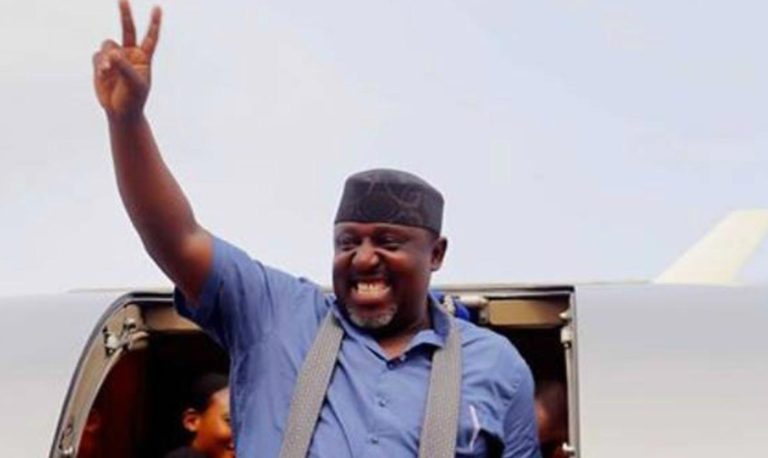
THE former Governor of Imo State, Rochas Okorocha has expressed happiness over the issuance of his Certificate of Return as senator-elect from Imo state.

In a statement by his media aide, Sam Onwuemedo, in Owerri, Okorocha commended the Independent National Electoral Commission (INEC) for issuing him a certificate of return.

He also appreciated the returning officer who had declared him winner under duress, saying that such, had attracted both national, international attention and public sympathy.

INEC had on Tuesday at the directive of a high court sitting in Imo state, presided by Ngozi Ukoha refused  Okorocha the Certificate of Return as senator-elect.

The election body expressed concern that, “If electoral impunity is allowed to flourish, any individual can harass, intimidate and put the Commission’s officers under duress, procure a favourable declaration and be rewarded with a Certificate of Return,” INEC said.

The INEC took the decision owing to reports that he was declared winner under duress, as stated by the returning officer.

The director of voter education and publicity, INEC, Festus Okoye, on Tuesday said the commission was reserved over the court directives because the final verdict relied on the federal high court, Abuja.

The  Abuja court has asked the INEC to issue Okorocha the certificate, and the election body has complied.


June 12 is now Democracy Day in Nigeria. Why it matters

By Damilola Agbalajobi

DEMOCRACY Day in Nigeria is being celebrated on the 12th of June this year. This is the first time the day has been marked on this date. And the change carries heavy symbolism for a country that’s known more years of being ruled by military men than by democratically elected leaders.

Until last year the date on which Nigeria commemorated the restoration of democracy was May 29. But last year President Muhammadu Buhari declared June 12 to be the new Democracy Day.

June 12 carries huge significance for older Nigerians. It was on this date in 1993 that presidential elections were held for the first time since the 1983 military coup. It was an event many observers have described as the most significant in Nigeria’s post-independence political history. It is still viewed as the freest, fairest and most peaceful election ever held in Nigeria.

On the day, an estimated 14 million Nigerians – irrespective of ethnic, religious, class, and regional affiliations, (in a period when religious acrimony and tension had reached its zenith) – defied bad weather to elect their president with the hope of ending eight years of military dictatorships.

The euphoria was short-lived. The results of the election were never released. But unofficial results gathered through the various polling stations by civil society groups across the country indicated broad national support for the presidential candidate of the Social Democratic Party, Chief Moshood Kashimawo Olawale Abiola.

Abiola was a businessman, publisher, politician and aristocrat of the Yoruba Egba clan. He made his fortune through various enterprises, including communication, oil and gas. He made his first, unsuccessful run at the presidency in 1983. By then, Nigeria had endured a great deal of political upheaval since its 1960 independence. It was a deeply divided nation, riven along ethnic, religious and regional lines. Political and military power was held by the north.

Then came Abiola, a man from the South. He brought a different perspective to the table and was able to connect with people across divides. Come 12 June 1993, he tried for the presidency again.

Despite his popularity, and the turnout, the elections stalled. The then military head of state, General Ibrahim Babangida, decided to annul the results of the election. He justified the annulment on the grounds that it was necessary to save the nation. He alleged that political activities preceding the election were inimical to peace and stability in Nigeria.

Some people however believe that the military underrated Abiola’s popularity. It also did not envisage the level of crisis after the annulment of the election result.

The June 12 election and subsequent annulment marked the beginning of a decade’s long struggle to see the election result restored and democracy rehabilitated.

The fallout

The annulment of the election result was not taken lightly in the south-Western part of the country. Civil violence in the South Western states provoked by electoral fraud and political exclusion previously contributed to the breakdown of the first and second republics. These ran from 1993 to 1999 when Nigeria had its return to democratic rule.

According to political scientist Professor Emmanuel Ojo, Southern resentment over Abiola’s rebuff also threatened to create fissures within the military. This in turn raised the spectre of wider civil conflicts and state collapse. In his official reaction to the annulment, Abiola was quoted as saying:

I might embark on the programme of civil disobedience in the country. If those who make the law disobey the law, why (should) I obey it? There is a limit to the authenticity one could expect from a military ruler who is obviously anxious to hang on to power.

Abiola’s statement threw the country into unprecedented crisis. The Campaign for Democracy spearheaded mass protests by calling for a five-day non-violent protest.

Protests later turned violent. At least 100 protesters were killed, shot by police. The violence prompted a mounting exodus from the major cities, as southern ethnic groups (most especially the Ibos), fearing a recurrence of the communal purges which had preceded the 1967 Civil War, fled to their home regions. Author B.O Nwabueze lucidly and graphically described the crisis like this:

The annulment of the June 12 presidential election plunged the country into what indisputably is the greatest political crisis in its 33-year life as an independent nation.

Never before, except during the murderous confrontation of 1966 to 1970, had the survival of Nigeria as one political entity been in more serious danger. The impasse created was certainly unequalled in the country’s history.

Push for change

Civil society groups pushed for the re-democratisation of Nigeria. Their first call was that the mandate be returned to Abiola. During this period there was a great deal of fear and insecurity in the country. But, as Ebenezer Babatope, in his book “The Abacha Regime and the June 12 crisis” notes, people mobilised to face the challenges of military leadership that had reneged on its promise to hand over power to democratically elected leaders.

Under tremendous pressure, the Abubakar administration arranged for elections to be held.

These took place – for state governorships, the Senate and local councils – over a few months from late 1998 to February 1999.

Finally, Abubakar’s transition reached the climax with the declaration of General Olusegun Obasanjo, who had retired from the military, as the president-elect in late February 1999. He was duly sworn in on 29 May 1999.

This explains why May 29 became the official public holiday on which Nigerians celebrated the country’s return to civilian rule.

During most of this time, Abiola was in jail. In 1994 he declared himself Nigeria’s lawful president after returning from a trip to win the support of the international community for his mandate. After declaring himself president he was accused of treason and arrested on the orders of then military President General Sani Abacha, who sent 200 police vehicles to bring him into custody.

Abiola died in suspicious circumstances on the day that he was due to be released, 7 July 1998.

Democracy today

Buhari’s decision to mark 12 June as Democracy Day should be viewed as an attempt to placate the South Western Nigerian State, which has always set aside the day to remember Abiola’s stolen mandate and an annulled election that many still view as the country’s freest and fairest in the history of Nigeria and democracy.The Conversation

Damilola Agbalajobi, Lecturer, Political Science, Obafemi Awolowo University

This article is republished from The Conversation under a Creative Commons license. Read the original article.

A Democracy Day primer – I

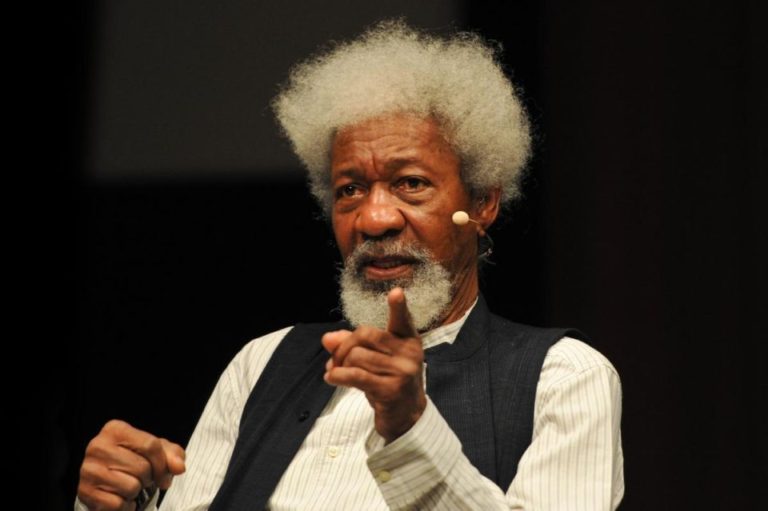
By Wole Soyinka

This year’s recall of an uplifting day in the year 1993 comes up against a background of its most shameful disavowal: the 2019 elections – still under judicial contestation – an event that would be more accurately described as an exercise in body count rather than ballot count.

The elections however merely reflected a pattern of savagery and abandonment of human sensibilities that have eaten away the sheerest sense of community in the nation. I have already described it as the final descent into the abyss of human degradation. The recent call – no matter how suspect the motivation — for what amounts to a national discourse on future directions was nothing new. The NIGERIA MOURNS movement, for instance, is only another expression of the same desperation. Input from someone who has exercised control over the nation’s affairs for a total of close to a dozen years, with shared responsibility for the very predicament in which the nation finds itself, reinforces the general anxieties that have become palpable in every corner of the nation — across class, political partisanship, religion and ethnicity. I wish to take the notion of a national ‘indaba’ even further, and urge a non-partisan, broad-based government. The now undeniable social crisis is beyond the capacity of any government built on accustomed partisan loyalties and regimented thought processes, with their debilitating baggage of sectarian interests. I am aware that such a call is unlikely to be heeded, but let it be made anyway, and let it stand to trouble those who discard any opportunity to turn a radical page in a nation’s history. As if the crisis were not sufficient in itself, we are constantly distracted by crude attempts to distort the role of the past in a nation’s unraveling.

So, let us first address Democracy Day itself, since we know that those same nihilist voices, even before the annunciation, were already primed to degrade it, ridicule what should be a potent signpost for future generations. Such voices even make desperate efforts to annul its very history, no different from the original act of annulling an event that was universally acknowledged as the fairest, the most orderly and peaceful elections ever conducted in Nigerian history, a chastening contrast to this recent of 2019. June 1993 recorded – just some quick reminders – an election in which the loser readily conceded defeat, having watched himself outclassed in his own state, his local government, his ward, and probably at his very polling booth. He was however prevailed upon to change his mind, thus smoothening the path for official military annulment, with dire consequences that continue to plague the nation even till today. Several of the players – directly, and supportive — in that inglorious history remain stubbornly in denial, but let no one attempt to shunt aside or obscure its potential for public re-orientation. It is now a near quarter of a century since that watershed, and a Restoration, albeit symbolic, has been promulgated – Welcome Democracy Day! Is there any value left to it? And is its formal, official recognition doomed to be nothing more than an exercise in superfluity?

For all those who were actively involved, no matter how tangentially, in the events that flowed from the annulment of June 12, 1993 – largely of blood and lamentations — the restoration of that date to a slot among the milestones of nation-building will evoke, side by side with a sense of elation, a mood of sobriety and reflection, especially when one recollects how many productive projects were derailed, how many lives destroyed, how many underwent torture and remain traumatized by that experience, how many paid the supreme price. Many have witnessed death at close quarters, survived, but remain severely damaged. I shall leave others to comment on how little appears to have been learnt from that monstrosity of democratic subversion. What is undeniable is that the wiles of opportunists, cynics, saboteurs and beneficiaries from the sacrifices of others, continue to haunt the nation. Hopefully also, it does haunt them spasmodically, those who thought to bury the message of that date and its faithful evocations.

Amnesia, the much-craved refuge of the battle weary, the ravaged psyche, or simply weak-minded, is not always to be despised. Where deliberately cultivated, even propagated however, it amounts to further cruelty against the violated. Forgiveness is a different matter. In most theologies, and even for non-believers, it is ranked among the loftiest attributes of humanity. For those of us who confess our inadequacy in that respect, we can only implore those who violate, contribute to, or profit from the mutilation of the very humanity of others, not to aggravate our mortal weakness by continuation of their past perfidy in any form. The orphan cries are still with us, so are the scars and trauma of survivors. Many remain impaired – physically and psychologically – for life.

I shall not participate in this year’s June 12 celebrations – from choice. It is part of my training exercises for withdrawing from public space, a resolution that I first half seriously injected into encounters over five years ago. That absence applies, not to the official celebration alone – of which I have never been a part anyway – but to the annual ritual by civic groups, a ritual of both tribute and defiance that has been unflaggingly observed till now. However, regarding the earlier Abuja ceremony that signaled the state’s reversion to June 12 as the most truthful expression of a people’s democratic will, I did attend, even at the cost of breaking a journey on the way to Brazil. That event, for some of us, represented closure – at least substantially. It was a reunion of sorts, a cauterization of many internal, invisible, and yet suppurating wounds, and private thanksgiving – for some of us – that the only route that appeared left for the recovery of a people’s dignity was abruptly, and ‘providentially’ closed by the timely demise of a singular human perversion. The nation was saved the anguish of the unknown. That sense of relief, on its own, is worth celebrating. The anonymous ones who acted on behalf of ‘providence’ remain unacknowledged, but we still owe them our gratitude.

One unforgettable extract from those dark days was the ease with which a people, accustomed to freedom as a natural bequest of humanity, can be thrown into a twentieth century enslavement, forced to endure a regimen of unprecedented brutality in the exercise of power. A nation of over a hundred and a half million slid into a condition of – not merely apathy and indifference, but servility, unctuousness, sustained by rationalization of – there is no other word for it – evil! Sheer evil. Fear reigned supreme. Whispers substituted for voice, even in homes. It is liberation from that miasma of civic subjugation that underpins the symbolism of a Democracy Day, very different in quality from, for instance, the euphoria – where it exists – of a day of National Independence. Now why does one find it necessary to state what, in good faith, should be obvious? The answer is painful: that occasion also served as a trigger for raking up embers of divisive history, for tarnishing memories and belittling even the meagre harvest of a watershed in history.

Don’t we all know it? Everything in this nation is fodder for controversy, often of the most pointless, mindless, simply adversarial kind – such has been this formal restoration of June 12th, 1993 to its rightful place on the podium of Nigerian history. Let us address some brutal truths. One comment regarding this formalization especially rankles, since its accompanying train of remarks indicated that it was not a mere aberrant individual, but revelation of group sentiment. It was sent to me through the usual internet link and was, undisguisedly – a mock lament, a condescending swipe at the Yoruba race – yes, directly indicted – for being so naive as to have fallen for an obvious vote gathering ploy. The conveyed message reminded me of the movement initiated by Charley Boy – Your mummu done do! – who, together with his fellow protesters, was severely mauled in Abuja by an incited mob. At least Charley Boy refused to go down as nothing more than an internet slob, berating everyone around but swallowing the bile of daily discontent. He embarked on remedial action – one that was manifested in the true spirit of June 12th.

There are several observations on that ‘social media’ posting, plus the predictable, bandwagon comments, often pre-arranged. It is necessary, indeed mandatory, to clean up this template of the past before proceeding. First, I was not aware that the Yoruba, acting as ethnic entity, ever made a statement that promised to reward the government with their votes in return for this alleged June 12th bribe. The serious, problematic bribe – the Minimum Wage concession – of course receives the scantiest of attention – beyond solidarity calls and insistence on implementation. Never mind that, North to South, East to West, numerous tiers of government are scrambling to find ways and means of ‘settling’ an agreement directed from the centre, with no corresponding consultation with states. From latest reports, even the Centre is taking to the sale of state assets – at disadvantaged prices – to fulfill a voter catchment commitment. This is the kind of consequential ‘bribe’, one would have thought, that merits critical attention. No matter, let us return to the monumental, non-material bribe. What does it consist of?

A wrong had long festered, no matter how invisibly. Restoration was made. The faithful of June 12 embraced the gesture, pronounced their appreciation at the ceremony, several even with barbed qualifiers. After all, others before had had the opportunity, but chose to ignore, even deride the very notion of recognition, even if through symbolic gestures. If a few in that Abuja assemblage got carried away – and some did, both Yoruba and non-Yoruba alike – heaped fulsome praises on the government, far beyond its deserving in my view, I found it unconscionable to seize the occasion as an opportunity to jeer at, and vilify an entire people. I have asked myself over and over again: to what end? Who profits from this?

Next, I found it equally lamentable that anyone should attempt to reduce the June 12 struggle to that of an ethnic project. It is a depressing travesty of the realities, a denial of the existence of a nation’s collective sense of justice and its tenacity in pursuit of that objective. No one denies that the immediate family of a victim of robbery feels the pangs of dispossession more keenly than others. The truth however remains that the entirety of the compound itself was violated, arrogantly and contemptuously dispossessed. In this case, its very aspiration to a unified identity was simply ground underfoot, compelling a return to the starting block, and even several milestones behind! Disenfranchisement is the ultimate stigma for any free people. Again, despite official hostility, corporate blackmail and even victimization of some adherents of that date, a number of state governments but, even more crucially, civil society – with members drawn from across the nation – did not await permission of any power or agency of the centre to gather and celebrate that date, and pay homage to the fallen. The June 12th movement never went into recess, and the current government merely jumped on a bandwagon that was already propelled by the people.

However, there is even more matter for discouragement, so we should not be surprised at the ethnic caviling. After the annulment, I recall that, when we tried to mobilize opposition to that sadistic impostor, fanatic voices of ethnic irredentism informed us bluntly, verbally and in print, that the Yoruba should go and solve their problems themselves, since we had let them down in the lead-up to the Biafran War of Secession, and should seek no collaboration from that side of the Niger. One recognizes, in today’s renewed voices of ethnic denigration, the same chant of a hate chorus, the fanning of divisive embers. It is gratifying therefore – and here we come to some cheering news! – that this tendency has become a source of concern to many of the leaders of that former secessionist state. It led to recent counter efforts under themes such as HANDS ACROSS THE NIGER, later followed by HANDS ACROSS THE NATION, encounters that have taken place both within the nation and outside her borders. It is crucial that those laudable initiatives continue in the same spirit of civic responsibility and nationally craved closure.

We must however sound warning: these high-minded efforts are increasingly vitiated by the fanatic and obnoxious voices of an irrepressible handful. No, we are not speaking here of organized protests and demonstrations to keep Biafra alive – for those of my school of thought, these are both legitimate expressions of the democratic will, and cannot be suppressed. We refer specifically however to abrasive, irrational, and irreverent diatribes of purveyors of unrelenting discord. Their innate proclivities are readily facilitated by that grossly polluted space – the so-called social network. Some have gone beyond recall, like the proverbial mongrel which no longer heeds the call of the hunter. They have become so blindsided that, almost under demonic possession, they heedlessly alienate sources of empathy and act against their own interests. This was prevalent in its most unfiltered density during, and after the 2019 elections.

Let the following be stated and re-stated as a personal, unwavering, socio-political conviction: The vision of a common homeland, rooted in commonality of ideas, values, culture, history and purpose, is as natural as breathing. However, the dream of such a state of collective desire is not realized by careers of deception and distortion of reality and history, any more than is the craving for a turn at the very pinnacle of governance within a polity which, for good or ill, still embraces all. On the contrary, both dreams fade, continue to recede, and may eventually remain unfulfilled in the lifetime of the purveyors of divisive filth. That would be poetic justice.

I am no believer in the juggling of scorecards in order to earn the accolade of equitable dealing – find fault on ‘A’ by all means, but be sure to balance with faults from ‘B’, deserved or not. However, the following retrogressive slump in the democratic quest is fortunately, and blatantly, in the public domain and demands its place in the Index of repudiations. First, it was a minister, soon followed by the deputy of the incumbent himself, then other voices at various times – all advocating support for the government on the basis of ensuring “our turn” at the next electoral roulette! That primitive appeal remains one of the most dispiriting of the twists and turns in numerous calculations of that same 2019 electoral exercise, a dismal complement of the self-positioning of the earlier mentioned secession fundamentalists. If anything, the latter now had even greater justification to jettison all other parameters of political choice in favour of their own even more uncompromising, ethnic positioning. I am Yoruba, and therefore felt sufficiently compromised as to intervene with some leaders demanding, ‘do you know what this portends?’ Is this wise? Progressive? It was gratifying to encounter other Yoruba voices – I especially recall one from Dr. Wale Adeniran – in forceful repudiation of such narrow chauvinism. And it resulted in personal disillusionment that sent me seeking solace from our man for all occasions, William Shakespeare in that cry of: A Plague on both your Houses!

There were other negative controlling manifestations, related to that very narrow social perspective, albeit sprung from a different malaise. The principal himself, formerly elected largely on the platform of corruption eradication, reinforced by the coy mantra of “I belong to all and belong to none”, presided over a growing degradation of advertised intent, a serial dereliction of the obvious imperative of any reformist agenda which should read: first, internal cleansing! One after another, scandals of escalating proportions from within the charmed circle of power, an apparent tolerance even in face of ‘in flagrante delecti’ captures on video! Clearly, this candidate had also done his arithmetic and could hardly afford to lose any treasure trove of numbers. The logo of the ruling party during those 2019 elections appeared to have been the three brass monkeys: Hear no evil, See no evil. Speak no evil.

Before any chortling of self- vindication is provoked among the ‘I told you so brigade’, let me quickly pause here, prodded by the strident opportunism of the corruption train and restate my position as follows: this does not invalidate the pass mark in this specific department that I conceded the government on a television programme – the anti-corruption fight. A pass mark is not the same as an A+, B or even C+, so that grudging grade stands, as shall be effortlessly demonstrated in ensuing parts of this primer. Some of us take a holistic, and comparative approach to the protean operations of corruption, not sensationalist ‘Rambo’ melodramas served up to titillate the public palate. We add, subtract, qualify, adjust, and only then – propose a grade. We shall venture later into that national bugbear, and in some detail, utilizing just one or two but representative voices of blanket dismissal that often read like commissioned pieces. We know what is at stake. Even as this is being written, guardian ‘sleepers’ of the Abacha and other hidden loot are being rumbled. They await moments of slackening in vigilance to pounce on temporarily ‘abandoned properties’ known only to them. Only this week, yet another sumptuous cache was unearthed in the Jersey islands. And there are many more awaiting exposure. No, we cannot afford to lower the nation’s guard, nor belittle the institutions that work towards eventual, across-the-board sanitation of society.

To sum up the contribution of the incumbent candidate and his handlers to the last electoral architecture, it was indeed numerology that triumphed over ethical rigour. We insist however that even political pragmatism has its own moral demands. Any other position leaves wide open the sluices of cynicism, pent-up frustrations, disillusionment, reducing democracy to the numerical count as the sole electoral victor. Will the projected June 11 Summit on Corruption compel the government itself to tackle its own record in this respect? I have received an invitation but will not be attending. I however recommend deep introspective attention to the second item on the suggested themes – NEXUS BETWEEN ELECTORAL SPENDING AND PUBLIC CORRUPTION.

And so, on looking back, our view encounters only the debris of a wobbly scaffolding of the 2019 democratic exercise that predictably crashed, a rickety podium of cynical improvisations on four temporal legs roughly identified as: (i) payback time (ii) our turn next time (iii) laissez-faire time, and (iv) the all-purpose ‘stomach infrastructure’ dinner bell. The unprecedented epidemic of the collapse of buildings all over the country has since struck me as a morbid analogy for the collapse of humane structures, burying so much hope of advance on 1993, a full quarter of a century later, in their rubble. One became quite fearful that the nation was trapped in the material actualization of an even more comprehensive advance on Shakespeare’s curse: A Plague on All your houses!

If only nothing more than the current political houses took a final tumble! Alas, the collapse is far more extensive than such mere contraption. We need only look around, or revert to those alarms that we echoed at the beginning. One may squirm at the verbal formulation but, truthfully, NIGERIA MOURNS! And so, towards the exorcising of that curse, the prescription of a government across partisan interests is not misplaced, and is not entirely starry-eyed. A day dedicated to democracy – as a compelling morality of social existence – is merely frivolous unless directed at the recognition of the telling, prevailing features of the last exercise, which throw in question the free, hopefully educated exertion of human choice. It brings us back to numerous considerations of what constitutes, as the democratic base of any human grouping, their rights and limitations, both of which are involved in the guarantee of a healthy societal survival. It must raise, pre-eminently, the very issue of the protocols of association – relation of the parts to one another, and the parts to the whole. Such protocols are of a fundamental, negotiable category for a basic reason – they deal with humanity, not abstractions or material resources. Above nations, we cannot help but place humanity, otherwise, we are mere idol worshippers – the idols of patriotic jingoism and pietistic abstractions (e.g. sovereign integrity and allied rhetoric).

Democracy Day deserves truthful confrontation with the socio-political conditions that we have brought into being to plague ourselves and thus, compels our acceptance of responsibility for whatever, and wherever roles are traceable to one and all in that process. It is not wrong to make political calculations – not for nothing is it claimed that politics is a game of numbers – one of those partial truths, but let it stand for now. However, when those calculations go wrong, it is cowardly to seek scapegoats and fabricate non-existent histories. D-Day should not pass shrouded under sentiment. At the same time, it should not be celebrated with groundless recriminations. It calls on hard-core values, yet remains open to mature and logical adjustments, deploying the rigorous blade of truth to cut through overgrown, self-proliferating brambles of deception, especially at the hands of past rulers. If the present demons of nation being are confronted, with brutal frankness where necessary, there is a chance that we may assist even this aspiring generation to sweep past the past, and target a far more salutary celebration in the coming year, that much touted magic number 20/20.

Says the ‘good book’ but, I am certain, echoed in numerous scriptures of Faith – Render unto Caesar what is Caesars’s etc. etc. We have rendered unto D-Day its dues, its pietisms and imperious mandates, and in as measured accents as can be mustered by any pained member of a polity under a ‘state of siege’. All that is left is to tackle, through a few illustrative samples, the hooded mercenaries who remain committed to the triumph of every imaginable shade of the anti-democratic agenda. They operate like the chameleon, adaptable to colour and texture of their immediate and appropriated environments. Forget the parable of never serving more than one master – they serve several, all interchangeable as readily as their wearing apparel. To them we are the mummu, they the lordly predators of the political jungle. In the interest of historic truths and self-preservation, it becomes a duty to seize every opportunity – fortunately mostly of their own providing – to dissect their proclamations, subject them to public scrutiny and take the trouble to probe deeply into their hidden briefs.

A hopeful Democracy Day to the electorate of June 12, 1993, and their political descendants, on whom the burden of the future unavoidably – falls.


Wole SOYINKA


The full text of this contribution and its follow-up are scheduled for publication in mid-July in the INTERVENTIONS series by BookCraft, under the sub-series, THE REPUBLIC OF LIARS.


We will be shaking table, says new Speaker Gbajabiamila

NEWLY elected Speaker of the House of Representatives, Femi Gbajabiamila, said the House under his leadership “would be shaking the table, just a little.”

He made this statement during his inaugural speech as the Speaker of the 9th Assembly.

Gbajabiamila, representing Surulere 1 Federal Constituency of Lagos State (APC), was elected and sworn in as the speaker after he secured a total of 281 votes against his rival, Mohammed Bago, representing Niger State’s Chanchaga constituency who had 76 votes.

The new Speaker said, together with his colleagues, various reforms will be introduced in the House.

“My honourable colleagues, it is going to be a House of reform or a reformed assembly. Therefore, It will not be business as usual but I will be shaking the table,  just a little,” he said.

“We will be introducing various reforms that will re-position institutions. But please rest assured that it will be for the good of all.”

He said the House ought to be reformed before the country could be reformed.

Gbajabiamila also announced as his chief of staff, Honourable Sanusi Rikiji, former Speaker of Zamfara State House of Assembly.

He encouraged all the elected lawmakers to step up to work.

“There is much work to be done and there is just a little time. Let’s get to work. Nigerians are waiting,” he said.

Gbajabiamila, Ahmed Idris elected Speaker, Deputy

FEMI Gbajabiamila, representing Surulere I Federal Constituency has been elected Speaker of the House of Representatives.

He polled a total of 281 votes and Mohammed Bago, representing Niger State’s Chanchaga constituency, got 76 votes in the election where 358 members-elect participated.

The election was moderated by the clerk of the National Assembly, Mohammed Sani-Omolori.

Both candidates are members of the All Progressives Congress (APC), but the party endorsed Gbajabiamila.

Abdulmumin Jibrin, director-general of Gbajabiamila Campaign Council, nominated him, while the motion was seconded by Lynda Chuba-Ikpeazu, member of the opposition People’s Democratic Party representing Onitsha North and South Federal Constituency.

Jibrin admiringly described Gbajabiamila as a complete gentleman, defender of the downtrodden, quintessential family man, unifying force, and man of integrity who “has spent almost two decades contributing to the building and moulding of this institution of the House of Representatives and National Assembly as a whole”.

“Mr. Clerk, I rise to nominate an astute lawyer, who ran a successful private legal practice and has contributed to the legal profession both in Nigerian and abroad,” he said.

“I rise to nominate a distinguished lawmaker, a legislator per excellence. I rise to nominate a man who rose to become the minority leader of this hallowed chamber and subsequently becoming the majority leader, a record only him holds in the history of parliamentary politics in Nigeria.

“I rise to nominate a reformist, a visionary, a courageous man who believes in the independence of the legislature and also the interdependence of the legislature. I rise to nominate a man who will meet the yearnings and aspirations of Nigerians, their dreams for the kind of house and legislature they have yearned for.

“I rise to nominate … our choice, the choice of all parties, the choice of the APC, the choice of other opposition parties, the choice of the president, the choice of stakeholders, the choice of the business community, the choice of the civil society, the choice of the youth, the choice of the women, the choice of the students.”

Like Ahmed Lawan in the eighth Senate, Gbajabiamila was the House Leader in the eighth House of Representatives.

He holds a Juris Doctorate from the John Marshall Law School and ran a law firm in Atlanta, Georgia, before returning to Nigeria. He has represented his constituency at the National Assembly since 2003.

Earlier in the day, Lawan and Ovie Omo-Agege were elected as the Senate President and Deputy Senate President respectively.

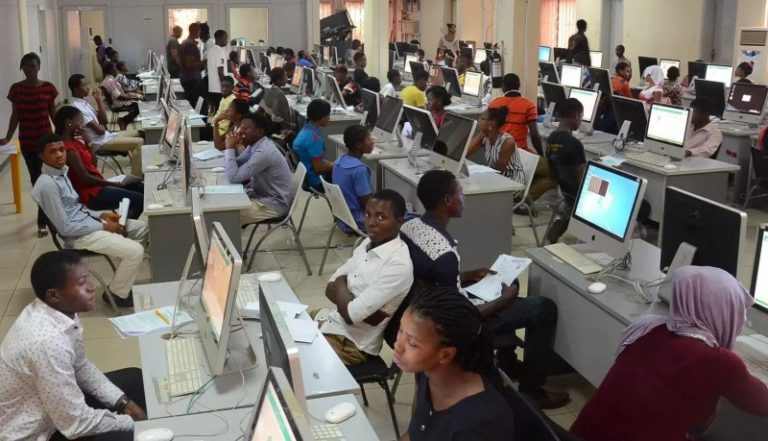
Cut-off marks: JAMB approves 160 for public universities,140 for private

THE Joint Admissions and Matriculation Board (JAMB) has approved 160 of 400 as the minimum score in securing admission into any government universities, but 140  was approved for private.

The cut off marks for the 2019/2020 admission exercise was announced during the 19th policy meeting on admissions to tertiary institutions on Tuesday in Osun State. The policy meeting was presided by Jamb registrar Isaq Oloyede, others present were vice chancellor of universities, rectors of polytechnics and provost of colleges of education.

During the meeting, the board also set 120 cut-off marks for public polytechnics and 110 for private polytechnics. For colleges of education, 100 was fixed as the cut-off marks.

Jamb also declared December 19 as the final day to end the issuance of admission into public universities. For private ones, Jamb approved February 15, 2020, for the close of admission.

Speaking on the decision, Oloyede said the fixed cut-off marks was a consensus between the institutions and stakeholders present at the meeting.

He added that admission into all universities would be conducted on the central admission processing system (CAPS). While he included that no institution should admit below the cut=off marks.

“Institutions cannot fix cut-off marks below what the stakeholders decided at the policy meeting, he said”.

Joel Ojo, Director of tertiary institutions of the Federal Ministry of Education said in his remarks that the outcome of a recent investigation of the UTME registration of candidates carried out by the JAMB Admissions was a pointer that the examination industry requires a review.

Ojo said JAMB Policy Meeting remains the acceptable forum where plans and programmes for admissions are discussed and approved to guide the placement of qualified candidates to tertiary institutions.

For the 2018/2019 admission exercise, the cutoff marks for all universities was pegged at 140 marks of a total of 400.

NAN

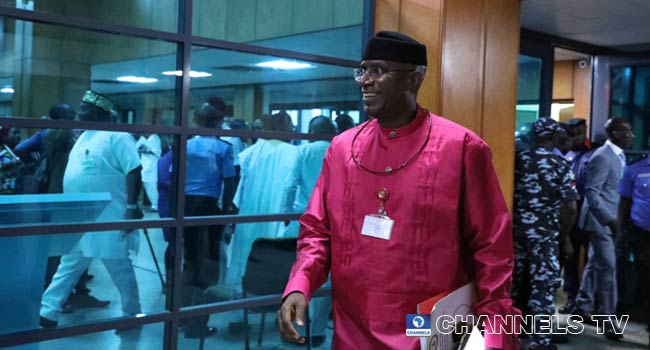
Indicted for mace theft but endorsed by APC, Omo-Agege emerges Deputy Senate President

OVIE Omo-Agege, senator-elect representing the Delta State central district and the candidate favoured by the ruling All Progressives Congress (APC), has emerged as the Deputy Senate President, despite allegations of leading hoodlums to steal the house’s mace in 2018.

He was elected and sworn-in on Tuesday at the ninth senate’s inaugural session, after the Senate presidency poll where Ahmed Lawan emerged victorious.

Omo-Agege polled a total of 68 votes, defeating former Deputy Senate President Ike Ekweremadu who got 39 votes. A total of 107 lawmakers voted.

Ahmed Baba Kaita, a senator-elect, representing Katsina North, has nominated Omo-Agege for the office, and his motion was seconded by Aliyu Sabi Abdullahi, senator-elect representing Niger North.“With charity and indeed with gratitude to all, and with malice towards none of my colleagues, with a heart full of humility,” Omo-Agege said in accepting the nomination, “I rise to accept the nomination to serve as the Deputy Senate President of the ninth Senate.

“A couple of minutes ago, we carried out our constitutional functions as provided for in section 50 of the Constitution to elect a Senate President. In the course of that, we’ve elected the president. I stand here today as one who is willing to assist the president we just elected to carry out the obligations of that office.”

Omo-Agege is infamous for leading thugs into the red chamber, and stealing the mace in April 2018. He was arrested by the police in connection to the unlawful action and, in July, a joint ad-hoc committee of the National Assembly recommended that the senator should be suspended for 180 legislative days and prosecuted.

Ekweremadu referred to the incident during his speech as he accepted his nomination.

“There is one point that I must note before I take my seat, and that is the fact that on a fateful day in this chamber, something unusual happened; and that was the day I was presiding here on your mandate,” he said.

“Some people came into this assembly, passing the first gate, second gate and passed through this entrance, came here and brutalised our staff, and eventually took away our mace. So distinguished colleagues, what we are doing today is appropriately a referendum on that conduct. So, I will like to appeal to our colleagues that this is an opportunity for us to decide what we want.”

Omo-Agege, a lawyer, was executive assistance to the Delta State governor between 2003 and 2005, commissioner on special duties to the state government between 2005 and 2007, secretary to the government in 2007.  He is also the chief executive officer of TechSprings Ltd, a Port-Harcourt-based dredging and oil services corporation.

On the platform of the Labour Party, he was elected a senator in 2015. He however defected to the APC in March 2017.

Ex-NDDC director asked me to pay N3.6 billion to pacify Niger Delta youths, witness tells court

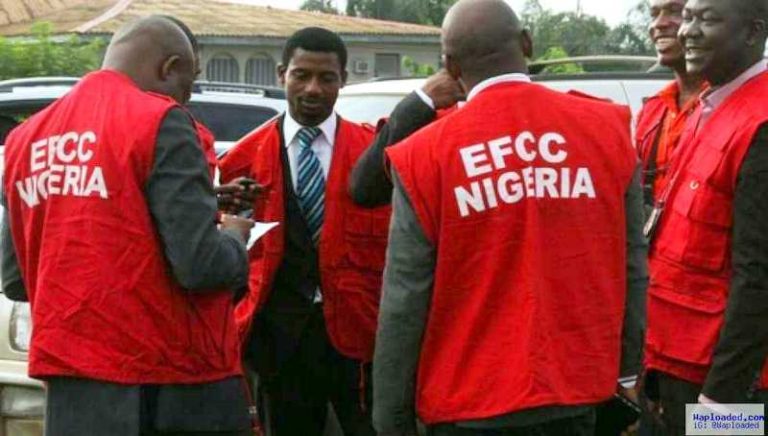
THE Federal High Court sitting in Ikoyi, Lagos, on Monday, adjourned the trial of Touyo Omatsuli, a former Executive Director on Projects of the Niger Delta Development Commission, NDDC, and three others for allegedly laundering funds belonging to the commission to the tune of N3.6 billion.

Tuoyo Omatsuli was arraigned alongside Francis Momoh and two companies, Don Parker Properties Ltd, and Building Associates Ltd to by the Economic and Financial Crimes Commission, EFCC, on 45 counts bordering on corruption, gratification, fraud and money laundering.

Justice Saliu Seidu, the presiding judge at the resumed hearing allowed the cross-examination of the prosecution witness.

A fourth prosecution witness, Ibinabo Micheal-West, told the court how the NDDC, recovered over N100 billion from International Oil companies, IOC, when he was awarded a contract with the commission, to recover the debt owed by the oil companies operating within the Niger Delta region.

“The oil companies were to remit a three per cent annual budget to the NDDC which they had not remitted in full rather they were doing it at will.the oil. I served them demand notices, and also wrote petitions against them to the National Assembly.

“After the meeting with the National Assembly, the oil companies started paying, each time an oil company paid, they would send us payment advice.

“I agreed to be paid 10 per cent of any amount that was recovered from the oil companies and I was given a four-year mandate.

“In total, I recovered over N100 billion and I was paid N12 billion as my commission,” he explained.

At the cross-examination, led by the  EFCC, prosecutor, Ekene Iheanacho, Micheal-West also explained to the court how he made payments through his company Starline Consultancy Ltd to Building Associate Limited, owned by the second defendant Francis Momoh, at the instruction of the first defendant, Touyo Omasuli to pacify restive youths in the area.

“I was approached by the then executive director finance, directing my attention to the harassment by the Niger Delta Youths, that they sometimes lock up their gates and made several demands, so he said in order to cushion the effects on them, each time I am paid, I should appreciate them, so they can reach out to the youths.

“A Diamond Bank account was sent to me belonging to Building Associate Limited and I transferred a total amount of N3.6 Billion Naira to that account in tranches,” he said.

While he stated that the third and fourth defendants were not involved in the recovery of the debts owed to NDDC, he admitted to transferring money to the third and fourth defendants amounting to over N1 billion.

The Sub Consultancy makeup letter, Offer of Contract Letter and Acceptance Letter was tendered by the prosecution counsel, Ekene Iheanacho, and admitted in evidence by the court.

During cross-examination by the first defendant’s counsel, Kehinde Aguda, SAN, he said the payments to the Niger Delta youths was not a proceed of crime also stating it wasn’t to bribe officials of the NDDC.

Norrison Quakers, counsel to the second, third and fourth defendants, during his cross-examination asked the witness whether he knew him.

Micheal-West told the court that he knew Quakers when they were invited to the EFCC office and were asked to look for a SAN to bail them.

“I, the first defendant and the third defendant were asked to bring a SAN to take us on bail, so I paid the SAN to take the third defendant on bail as I already had another SAN taking me on bail,” he said.

He further asked if he made a statement at the EFCC office. Ibinabo admitted that he made statements to the EFCC when he was invited by the Commission.

However, Justice Seidu admitted it in evidence and marked it exhibit ET 09 A & B.

According to the charge, the defendants were alleged to have committed the offence between August 2014 and September 2015.

The first defendant was alleged to have procured the third and fourth defendants Momoh and Building Associates, to utilise a total sum of N3.6 billion paid by Starline Consultancy Services Ltd into an account operated by the fourth defendant.

The prosecution inferred that they ought to have known that the said sums, formed part of the proceeds of their unlawful activities which included corruption and gratification.

The offence, the EFCC said, contravenes the provisions of Sections 15(1), 15(2), 15(3) and 18 of the Money Laundering Prohibition Act 2011, as amended by Act No 1 of 2012.

Justice Saidu adjourned the case until June 11 for the continuation of trial.