Home Blog Page 2355

Nigerians express mixed reactions over Democracy Day on social media

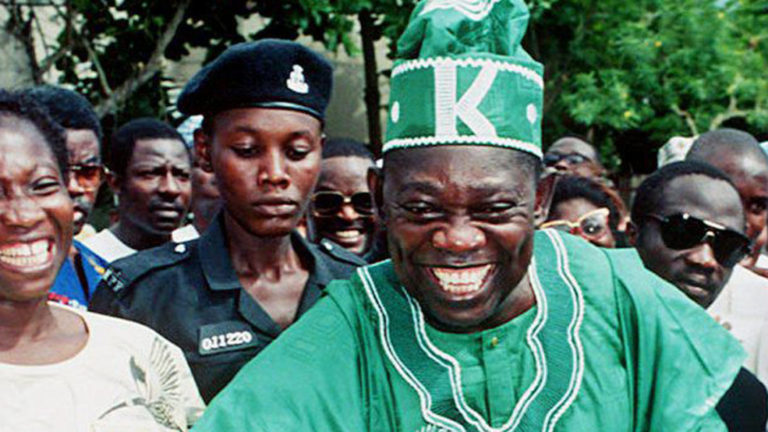
TWENTY-SIX years ago, Nigerians took to the polls on June 12, 1993, to participate in what has been described by many as the “freest and fairest” general elections in Nigerian history.

M.K.O Abiola was on the verge of being declared a winner before former Head of State Ibrahim Babangida annulled the elections, and handed over to an Interim National Government, ING.

On the first anniversary of the annulled elections, after he publicly declared himself Nigeria’s lawfully elected president, Moshood Abiola was arrested, and charged with treason by the late General Sani Abacha, the man who took over from ING headed by Earnest Shonekan.

After spending four years in detention, and the subsequent death of his wife Kudirat, Abiola died in mysterious circumstances on the day that he was due to be released.

President Muhammadu Buhari had earlier on Monday declared June 12, as a public holiday, to commemorate Nigeria’s National Democracy Day after previous leaders failed to immortalise the late MKO.

However, it’s been twenty years of unbroken democratic rule in Nigeria since May 1999. While many Nigerians view the democratic process as a work in progress which can get better, others disagree stating that the nation has failed in terms of democratic gains achieved so far.

The ICIR gleaned opinions of some Nigerians on Twitter about the democratic prospects of the country after 20 years of civil rule.

A Twitter user whose handle is @omoniyi_martins posted this text on his handle: “Happy Democracy day fellow Nigerians. Welcome to Nigeria, Home of corruption. Home of negligence. Grand Home and Bank of Poverty. Ambassador for terrorism and insurgency, with corruptible leaders. Happy Demonstration of craze Crazy Demonstration.”

In contrast, @KadariaAhmed expressed optimism in her tweet with the hopes that more grounds could still be covered.

At the time of filing this report, Kadaria’s tweet had been retweeted 118 times.

Below are more reactions from Nigerians on their thoughts on democracy day.

Former Senate President Bukola Saraki, in his tweet reflected on what democracy day should mean to Nigerians.


Businesses took advantage of the epochal event to advertise their products.


Find more tweets here.

After death of staff, union gives NIMC two-week ultimatum over welfare package

THE Association of Senior Civil Servants of Nigeria (ASCSN), National Identity Management Commission (NIMC) chapter has issued a two-week ultimatum to the management of the Commission to address the poor welfare package of the workers.

The union in a letter addressed to the Director General of the Commission titled “perceived refusal to address staff welfare in the commission,” and dated June 6, 2019, lamented that six workers died of curable ailments due to the poor handling of the staff welfare by the management.

The letter which was also copied to Office of the Secretary to the Government of the Federation was signed by Lucky Asekokhai and Odia Victor, Chairman and Secretary of the union respectively was sent to The ICIR.

The six staff of the Commission that died were those from  head office in Abuja and those in states such as Ondo, Anambra, Adamawa and Kano.

The union said it was worried that the NIMC management relegated to the background, the issues of staff welfare, especially in the area of dwindling staff salaries, non-payment of allowances and non-implementation of para-military salary scale.

It noted that the amount allocated to the payment of staff salaries and wages in the 2019 did not show any improvement, wondering what the NIMC management has been doing on issues like the implementation of the para-military salary scale, payment of allowance that was removed upon joining IPPIS, payment of first 28 days being owed staff that had been recruited since 2013 and payment of hazard allowances.

The union said it was left with no option than to issue the ultimatum after exploring all peaceful means to make the management yield failed.

“Having resolved to seek the way forward rather than continue to suffer in the midst of plenty, the union hereby requests the Director General and his management team to address all the contending issues as enumerated above, especially the staff welfare within two weeks ,”it said.

“Note that if by the end of June, nothing significant is done, union will have no option but to employ all available tools within its power to ensure that the above listed issues get the needed attention.”

The union further urged the management to heed its warning before “it is too late,” noting that it appreciates and works towards a peaceful work environment and prosperous commission for all.

NAF helicopter crash lands in Katsina, but no casualty

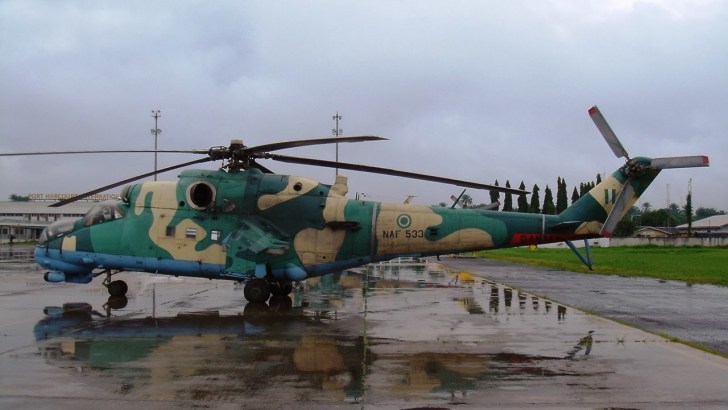
A NIGERIAN Air Force (NAF) Helicopter has crash landed while returning from an anti-armed banditry combat mission in the Northwest  under Operation Hadaran Daji.

According to a press release by the Nigeria Air Force on its verified Twitter handle @NigAirForce, the incident happened at the Katsina Airport at about 3.30pm today, 12 June.

The statement said details of the cause of the incident were still scanty.

It however, disclosed that there was no loss of life, either of persons on board the helicopter or on the ground.

The Chief of Air Staff (CAS), Sadique Abubakar, the statement added, has immediately directed the constitution of a Board of Inquiry to determine the exact cause of the incident.

“The NAF continues to solicit the understanding and support of the general public as it daily strives to ensure the security of Nigeria and Nigerians.”

The Nigeria Air Force in April joined forces in Katsina State to flush out kidnappers and armed bandits when it launched “Operation Tsaftar Daji” with the deployment of modern fighter jets.

Atiku advocates true dividends of democracy, says, ‘June 12 not enough’

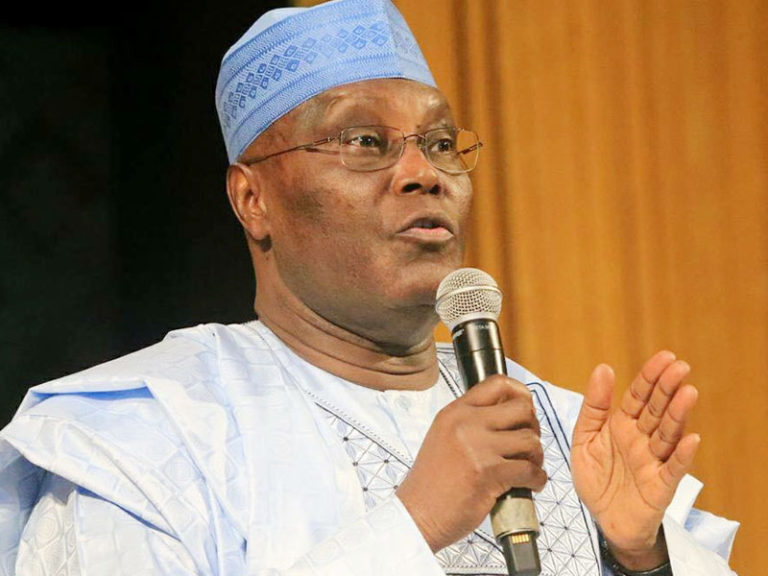
FORMER Vice President Atiku Abubakar has said that the declaration of June 12 to commemorate democracy in Nigeria does not echo the true dividends of democracy since inception.

This information was contained in a statement made available on Wednesday.

Abubakar said June 12, embodied something much bigger, but “a threshold moment in our national life that demands of us as democrats to do a soul searching and ask the salient question of all time: how better off are Nigerians?

“It is not enough to declare June 12 a Democracy Day when the government of the day is disrespectful of the rule of law and wantonly disregards court orders on issues that border on fundamental human rights.

“It is not enough to declare June 12 a work-free day when the ordinary people of Nigeria still don’t have the freedom to find a better life from the suffocating grip of poverty, when Nigeria is now the global headquarters of extreme poverty,” Abubakar said.

According to him, Chief Mishood Abiola’s campaign choice of ‘HOPE’, encapsulated in his slogan wasn’t to deceive Nigerians with the hope he could not deliver upon, and as such called on every June 12 convert to demand of those, either in government or in private lives, to deliver on the promises they made to the people.

“It is therefore not acceptable that an administration which had an opportunity of four years to deliver the promise of change to Nigerians, not only reneged on that promise but propelled the country into a near-comatose state will lay claims to being a true friend of the June 12 struggle.”

He noted that being a June 12 lover is far off believing in the common good of the people, but a concentration to rebuild the Nigeria economy, creating wealth and jobs for the unemployed masses.

He added it is about shared prosperity and not the inclination of shared pain.

He enjoined the masses to keep the HOPE alive as the struggle of June 12 continues.

“As we celebrate yet another episode of the June 12 struggle, the desire for hope is more preponderant today much as it was twenty-six years ago. So, for all true lovers of democracy, let us keep the ‘HOPE’ alive.”

Buhari had on June 6, 2018, declared that June 12 would be the new Democracy Day in commemoration of the presidential election of June 12, 1993, presumed to have been won by the late Chief MKO Abiola.

The president on Monday, June 10, signed into law the Public Holiday (Amendment) Bill which accommodates June 12 as the new Nigeria’s Democracy Day, replacing May 29,

Senator Ita Enang, the presidential aide noted that the newly amended law shifts the public holiday observed on May 29th to June 12, every year.


Borno governor suspends 42 teachers for absconding from duty

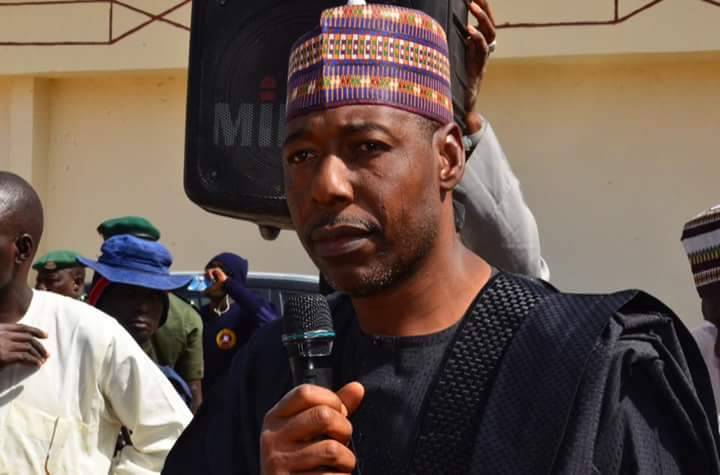
BABAGANA Umara Zulum, Borno State’ governor, on Wednesday recommended the suspension of 42 primary school teachers for allegedly “absconding” from their duty posts for two years in Gamboru Ngala local government area in the state.

Mr Umara, a former university teacher, made this known during the Democracy Day celebration at the Ramat Square in Maiduguri, the state capital.

He said during his tour of primary schools in Gamboru Ngala, he discovered that 62 teachers were registered in the nominal role whereas, only eleven of them were present.

“To my dismay, the headmaster said he has had only 11 teachers in the school in the last two years.

”This is very obnoxious and I have directed the suspension of the 42 teachers who were not on ground,” he said.

He said that he would not condone the culture of absenteeism, indolence, indiscipline and nepotism in the public service noting that prudent management of public funds, transparency and accountability must be the guiding principles.

Mr Zulum said proactive modalities would be put in place toward creating an institutional framework for basic service delivery, to address the high public expectations aimed at strengthening the confidence of the people of the system.

“We will address the issues of security, poverty, unemployment, quality education, infrastructure, health services among other things that will positively impact our lives. All these will invariably depend on good governance in a democracy,” he said.

In his reaction, Jubril Muhammed, the Borno Chairman of the Nigerian Union of Teachers (NUT), said the teachers’ action was not a deliberate act.

Mr Muhammed disclosed that teachers in the state usually worked on a two- week shifts agreement.

“The first set of teachers were deployed to liberated councils while those that are substituting them every two weeks are working in the Internally Displaced camps of the LGAs in the city of Maiduguri.


“It is not possible for all the teachers to be on the ground at the same time because of the current challenges. We also lack adequate teachers to cater for the educational services in both the LGAs and IDPs camps at the same time.

“Also, most of our teachers have lost everything including their means of livelihood, citing lack of accommodation in the LGAs as another challenge,” he said.

The chairman urged the governor to temper justice with mercy on his decision.

(NAN)

AFDB advocates regional integration to foster investment across Africa

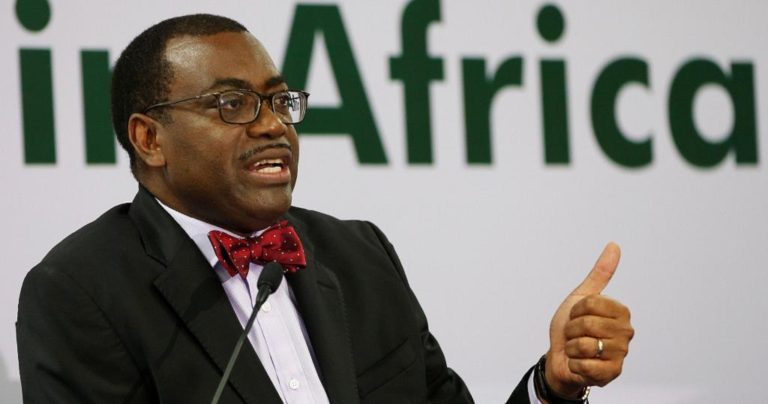
AKINWUMI Adesina, president of the African Development Bank Group on Wednesday said that free movement of people, especially labour mobility is crucial for promoting investments across the African continent.

At the AFDB Annual General meeting tagged Regional Integration held in Malabo, Equatorial Guinea, Adesina stressed the need for a united Africa.

“Regional integration is crucial for Africa’s accelerated development. We must connect landlocked countries to ports. We must allow the free movement of people. Investors must be able to invest beyond the borders of countries. And Africa must trade more with itself,”

“The newly minted Africa Continental Free Trade Area will make Africa the largest free trade zone in the world, with a combined GDP of over $3.3 trillion. Pulling down tariff barriers alone will spur trade by at least 53%, and with the elimination of non-tariff barriers, trade could potentially double.

“To integrate Africa, we should bring down all the walls,” he said.

Regional integration ranks the fourth priority area of the Bank’s High 5s and is considered as pivotal to boosting Africa’s economic development.

Adesina said the Bank has also supported the integration of financial markets across the continent, through its Africa Financial Markets Initiative, which is helping to link stock exchanges with a combined total market capitalization of $1 trillion. These include the Johannesburg, Nairobi, Casablanca, Windhoek, Lagos and Cairo stock exchanges.

In the area of infrastructure, he said the Bank helped to finance and complete numbers of major transformative projects citing the new international airport terminals in Ghana and Senegal, and the Regional Express Train of Senegal, as examples.

“We’ve provided $16 million to ECOWAS to support feasibility studies for the Lagos-Abidjan highway. Our investment in the 1,000 km Addis Ababa-Nairobi-Mombassa highway is transforming trade between Ethiopia and Kenya, which has risen by 400 per cent.

“Our investment to expand the Walvis Bay Port in Namibia is opening up trade connections to several landlocked countries in the SADC region, such as Botswana, Zimbabwe and Zambia, and expanding trading volumes from 300,000 to 1 million Twenty-Foot Equivalent Units,” he added.

In addition, Adesina said the effort of the Bank has helped connect about 16 million people to access electricity, 70 million people with access to agricultural technologies to achieve food security, nine million with access to finance from private sector companies, 57 million with access to improved transport, and 31 million people with access to improved water and sanitation services.


Mental disorder affects more people in areas affected by conflict─WHO report

A WORLD Health Organisation study has shown that there are more people living with mental disorders in areas affected by conflict.

The new study was published on The Lancet, an international science journal, on Tuesday. In the introductory part of the study, Nigeria was listed among countries currently suffering from conflict-induced humanitarian crises, others were Afganistan, Somalia and Yemen.

It estimated that one in five persons is living with some form of mental disorder, from mild depression to psychosis. And almost one in 10 is living with a severe mental disorder.

The finding is in contrast to data from the global burden of disease (GBD) of 2016 which suggest a mean global prevalence of one in 14 people.

“We estimated that approximately one in five people in post-conflict settings has depression, anxiety disorder, post-traumatic stress disorder, bipolar disorder, or schizophrenia.

“Our study shows that the impact of conflict on people’s mental health is higher than previous estimates suggest,” the report read.

WHO said the people need to be able to obtain treatment and care. It said “their disorders often impair their ability to function – so access to care isn’t just about improving mental health, it can be a matter of survival.

To curb the rising of mental disorder, WHO stated in the report to be working with countries affected by large-scale emergencies across the world including Nigeria, Iraq, Lebanon, Turkey, South Sudan, among others.

An earlier report by the Norwegian Refugee Council estimated that nearly 132 million people in 42 countries around the world will need humanitarian assistance resulting from conflict or disaster. Nigeria was declared to have over one million displaced people in 2018 as a result of conflict and disaster.

The health agency noted that ignorance about mental illness remains widespread in many countries of the world. It added that “the uptake of mental health care during the conflict and other emergencies, in countries where such support has been limited, can lead to the identification of people who are tied up, locked in cages, hidden from society.

“In many cases, it is this very support that helps dispel myths about mental illness and leads to treatment and care and a path towards a more dignified life. We have also learned that, when the political will exists, emergencies can be catalysts for building quality mental health services”.

The health agency called on countries affected by conflict, including Nigeria, to prioritise mental health care and implement scalable mental health interventions to address the burden

“All countries have an obligation to invest in mental health. But it is particularly important in conflict-affected populations where the rate of mental health conditions is more than double that of the general population,” said WHO.

In Nigeria, there is yet to be legislation guiding the mental health issues of the country. However, thousands continue to suffer afflictions due to violence and different insurgencies, particularly, the Boko Haram insurgency in the Northeastern part of the country. An investigation conducted by The ICIR revealed that Boko Haram violence has inflicted emotional injury on Nigerian children. It detailed how some children caught-up in the insurgency are now struggling with distressing memories and ongoing adversities – resulting in an upsurge of psychological trauma.

We’ll take 100m Nigerians out of poverty – Buhari

PRESIDENT Muhammadu Buhari has promised the APC government will take 100 million Nigerians from poverty to prosperity in the next 10 years.

Buhari disclosed this in his opening speech at the inaugural June 12, Democracy Day celebration on Wednesday in Abuja.

The President said that his administration would ensure rapid and positive growth in the economy to move Nigeria away from poverty.

“Our Gross Domestic Product (GDP) is expected to grow by 2.7 per cent this year.

“Our external reserve has risen to 45 billion dollars enough to finance over nine months of current equal commitments.

“This administration has laid a foundation of taking bold steps in transforming our country and delivering our people from shackles of poverty.

“First, we will take steps in integrating the rural economy to national economic grade by extending access to input to rural farmers as well as credit to rural micro businesses and opening up many critical feeder roads.

“Secondly, all small scale enterprises in towns and cities would share facilities currently available so that we can continue to encourage and support domestic production of basic goods to improve our lives,’’ he said.

The president added that in the next four years his administration would remain positive to improve the lives of people by consolidating on efforts to address many issues.

(NAN)

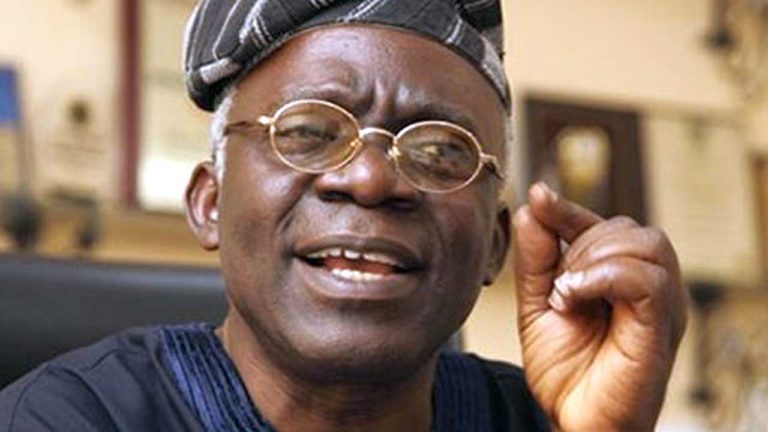
26 years after Abiola’s campaign to end poverty, hunger still on the rise, says Falana

LEGAL luminary and Human Rights Lawyer, Femi Falana on Wednesday said poverty is still on the rise 26 years after the late MKO Abiola campaign against the scourge.    

Falana who spoke on Sunrise Daily, on the topic – Strengthening Nigeria’s Democratic Governance noted that the challenge has culminated into all forms of insecurity such as killings and banditry.

According to him, the Late MKO was passionate about fighting poverty but as at date, the trend has exacerbated.

“Beyond the symbolism of the day, we must look at the significance of the June 12 mandate having regards to the fact that Abiola’s campaign was anchored on the farewell to poverty. Twenty-six years down the line, can we say our country has said farewell to poverty?

“On the contrary, poverty is exacerbating in our country and this is what has led to the reckless killings of people. There are bandits in the North West, insurgents in the northeast, kidnappers and armed robbers in all areas of the country.”

Meanwhile, the human rights lawyer tasked the Federal Government to identify other heroes of the June 12 mandate.

He also challenged members of the Civil Society Organisations and other individuals involved in the struggle but currently in government to realise ideals of the late politician.    

“My advice to the government, beyond recognising Chief MKO Abiola, beyond the national honour, well deserved, conferred on him, as well as Chief Gani Fawehinmi, we must also identify other heroes of that struggle from all over the country. This was not a NADECO and Afenifere affair,” Says Falana.

“The beauty of those who are coming from civil society who have found themselves either in the executive or the legislature is to ensure that those ideals are actualised and implemented in government, that is why June 12 is so significant.”

He further emphasised that after the elections, candidate of the National Republican Convention (NRC), Bashir Tofa, was under pressure to go to the tribunal and it was at that point the civil societies and trade unions began the struggle.

His words: “The point has been made abundantly clear, after that election, Bashir Tofa, the other candidate congratulated his opponent and that is what is done in any civilised society; he was under pressure to go to the tribunal but he said no.

“From that moment, the civil society came in, the progressive trade unions came in and made the country ungovernable for the dictators.

“They were waging the struggle when some of us were captured and taken to jail houses, they made it ungovernable for the military dictators to have their way, in the end, we won the battle for the restoration.”

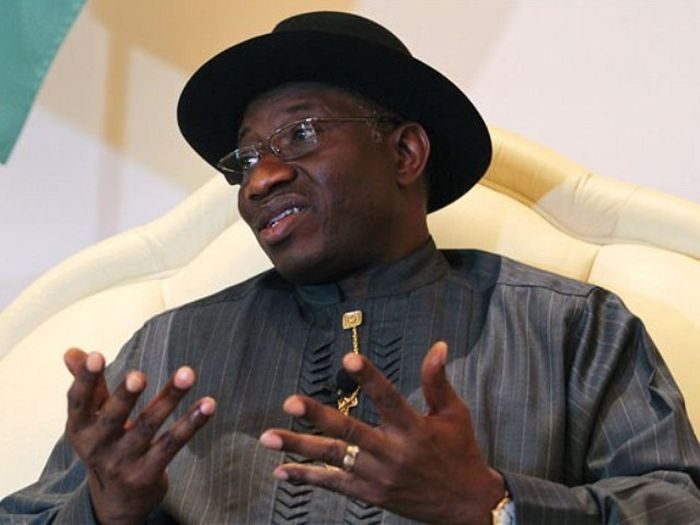
Atiku at liberty to challenge Buhari, says Jonathan

NIGERIA former President Goodluck Jonathan says Atiku Abubakar has a right, to challenge the victory of President Muhammadu Buhari if unsatisfied with the outcome of the 2019 presidential election.

Jonathan made this assertion in an exclusive interview with PREMIUM TIMES on its special magazine publication on the Fourth Republic 20th anniversary.

He condemned the comparison between the 2015 and 2019 electoral events, noting that the fundamentals of the 2015 election that made him the first incumbent leader to concede defeat, defers from the 2019 election.

“It is not right for anybody to compare Jonathan’s decision in 2015 with Abubakar position in 2019 because they are two different scenarios,” Jonathan said.

He said it would be deceitful to compare his decision to concede the 2015 presidential election to  Muhammadu Buhari and Abubakar’s lawsuit over the outcome of the February 23 poll.

“In 2015, I was a sitting president, Although INEC is an independent body and every structure of government still operates under the president one way or the other

“…INEC conducted the elections under my watch. Atiku was not a sitting president and if he or the party feels that things were not done right, of course, they are at liberty to challenge it in court,” Jonathan said.

Jonathan appraised his administration as exceptional, x-raying his achievements in office:

“Nigeria was the number one destination for foreign direct investment under my tenure. We were rated the biggest economy in Africa. We transformed the agricultural sector and brought the nation closer towards food self-sufficiency

“Our currency was stable and inflationary pressure was kept at a single digit. We may not have been comfortable with the exchange rate of less than N200 to the dollar at that time but I can tell you that the economy was stable.

“The stability we had ensured that business people and investors could plan because you were sure of the exchange rate and the cost of your goods at any point in time, whether you were exporting or importing. Economically you could say that Nigeria was stable and strong,” Jonathan said.

However, he recognised there were areas that needed improvement but such inadequacies were still capable of elevating the nation than what it is presently since he left the office.

The Buhari administration came to power for the second term following a victory over the People Democratic Party (PDP)’s Candidate Abubakar in the February 23, 2019, presidential elections.

The PDP had filed a petition on March 18, 2019, to challenge the Independent National Electoral Commission’s (INEC) declaration of Buhari and his party, the All Progressive Congress (APC) as the winner.

Conversely, the Human rights watch in its report, on June 10, said the 2019 election that gave President Muhammadu Buhari a second term was marred by political violence, which contributed to the general insecurity across the country in contrast to the relatively peaceful 2015 elections that brought Buhari into his first term in office.