Home Blog Page 2354

WHO considers declaring global emergency on ebola spread

UGANDA has confirmed the death of two people to Ebola disease, one is a 50-year-old woman and her five-year-old grandson on Wednesday and Tuesday respectively.

They are the first two cases reported in the country since the World Health Organisation affirmed on Tuesday the existence of Ebola virus in the country. Uganda now has put 27 people in isolation fearing that they might be infected with the disease, according to the health ministry on Thursday.

The WHO will consider on Friday whether the outbreak should now be deemed a public health emergency, according to BBC.

The WHO reported that the grandmother and grandson arrived from DR Congo on Sunday, while the boy fell sick on Tuesday. Taking to Kagando hospital of Uganda, the health workers identified Ebola as a possible cause of illness. The child was transferred to an Ebola Treatment Unit for management where he later died that day. The following day, on Wednesday, the grandmother died.

Now five other family members of the deceased have been repatriated to DR Congo, while 27 people have been held in isolation while waiting to confirm their status with blood tests.

DR Congo has suffered an outbreak of Ebola since August 2018 where nearly 1,400 people have died, around 70 per cent of those infected, with increased cases in recent weeks.

Jeremy Farrar, the director of the Wellcome Trust, a UK-based biomedical research organisation said the current outbreak is “truly frightening”. He said the epidemic is the worst since 2016 and show no signs of stopping.

Experts will meet on Friday to consider whether to declare the Ebola epidemic in central Africa “a public health emergency of international concern”, said WHO.

Ebola is a virus that initially causes sudden fever, intense weakness, muscle pain, and a sore throat. It progresses to vomiting, diarrhoea and both internal and external bleeding. People are infected when they have direct contact through broken skin, or the mouth and nose, with the blood, vomit, faeces or bodily fluids of someone with Ebola. Patients tend to die from dehydration and multiple organ failure.

Senate President sets up 12-man ad-hoc committee on members’ welfare

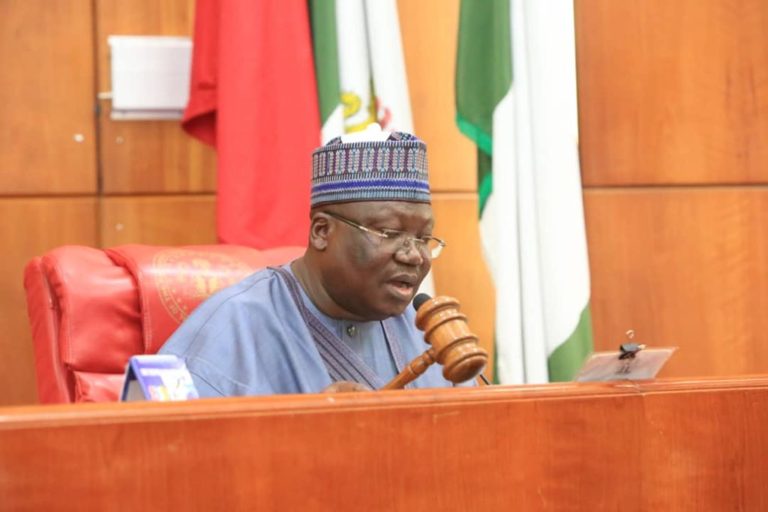
SENATE President Ahmed Lawan on Thursday set up a 12-man Ad hoc committee to communicate the welfare of the senators with National Assembly management, headed by Senator Abu Kyari.

He noted that members of the committee were drawn from the six Geo-political zones, and had two weeks to submit its report.

He said they were expected to work with the Senate clerk, Nelson Ayewoh, to ensure seats and offices are allocated to all senators within the said time frame.

The Senate also adjourned the plenary to Tuesday, July second for allocation of seats and offices to senators.

The development was sequel to a motion by Deputy Senate President, Ovie Omo-Agege and supported by Philip Aduda after a closed-door session.

The ninth assembly of lawmakers was inaugurated on June 11, during which the Senate president and its deputy were elected and declared winner through a secret ballot election.

Lawan, representing Yobe North district had gathered 79 votes, against Ndume Ali representing Borno South district with 28 votes, with a total vote cast of 107.

Both candidates are from the All Progressive Congress, (APC).

Lawan in accepting his nomination had promised to collaborate with the lawmakers, in delivering interventions sustainable for societal growth and development.


Nine journalists killed in Nigeria between 2006 and 2019-UNESCO Report

AT least nine journalists were killed in Nigeria between 2006 and 2019, a report, UNESCO observatory of killed journalists has revealed.

The nine journalists, all of them male, still have circumstances surrounding their deaths unresolved till date, the report said.

UNESCO said the list was based on responses from member states. “Only those responses that Member States have agreed to make public are included here,” it said.

In general, the report said 1,327 journalists have been killed across the world since 1993.

They were Godwin Agbroko, chairman of This Day newspaper editorial board who was killed on December 22, 2006, by yet to be identified assailants. Agbroko was shot dead while he was driving home from work.

Paul Abayomi Ogundeji who was killed on August 17, 2008, in Idimu area of Lagos by suspected armed robbers. He was a journalist with The Comet, The Guardian, The Punch and was with ThisDay newspapers before his death.

Bayo Ohu who was killed in his home in Lagos on September 20, 2009, by unknown gunmen. He was the Assistant News Editor at the Guardian Newspaper.

Zakariya Isa, a staff of Nigeria Television Authority (NTA) was killed in his home in Maiduguri, Borno State by members of Boko Haram on October 22, 2011, over allegation of spying on the sect.

Nansok Sallah, an editor with Plateau State-owned FM radio station, Highland was murder in the capital city of Jos. His body was found lying face down in a shallow stream under a bridge in the central town of Jos, less than 200 meters (650 feet) from a military checkpoint, according to statements from the radio’s general manager. His death occurred on January 18, 2012. His assailants are yet unknown.

Enenche Akogwu died on January 20, 2012, in Kano during an attack coordinated by Boko Haram terrorists. The 31-year-old journalist was with the Channels Television when he was shot dead by an unknown gunman during the attacks.

Ikechukwu Udendu, editor of Anambra News, a monthly newspaper in Southeastern Anambra State was killed by unidentified gunmen, while he was returning home at night from a commercial printing press. He was shot in the hand and chest but his death is still unresolved.

Famous Giobaro, a journalist working with Radio Bayelsa, was shot dead by suspected gunmen who attacked his residential house at about 5 am on Sunday, April 16, 2017.

He was reportedly shot in the stomach while the attackers left without taking anything from the house, and without attacking any other person in the neighbourhood.

On November 15, 2017, police found Ikechukwu Onubogu, a cameraman with Anambra Broadcasting Service (ABS), dead with bullet wounds in the city of Onitsha, Anambra State.

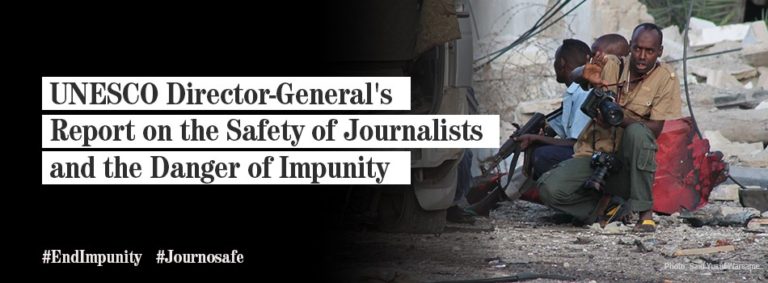
Meanwhile, the 2018 UNESCO Director-General Report on the Safety of Journalists and the Danger of Impunity provides an overview of data collected by UNESCO on killings of journalists that took place between 1 January 2016 and 31 December 2017 revealed that 182 journalists were killed in 2016-2017.

It further disclosed that 1,010 journalists killed in the last decade (2006-2017).

The full Report will be submitted on 21 November during the Intergovernmental Council of the International Programme for the Development of Communication (IPDC).

Atiku, PDP ask court to grant them access to INEC server

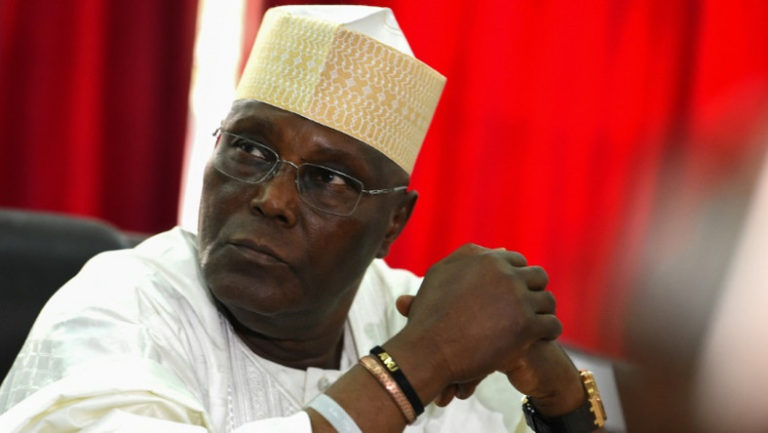
ABUBAKAR Atiku and his political party, The People’s Democratic Party have prayed the presidential tribunal on Thursday to order the Independent National Electoral Commission (INEC) to grant them access to inspect the commission’s electronic server.

The PDP also prayed the tribunal to give it permission to inspect other electronic like the smart card readers used by INEC during the February 23 presidential election, NAN reported.

Atiku, the presidential candidate of the PDP for the 2019 election and his party had dragged President Muhammadu Buhari, the All Progressives Congress (APC) and INEC  to court after the latter pronounced Buhari the winner of the 2019 presidential election that held on February 23.

Buhari after receiving a Certificate of Return on February 27 was inaugurated for a second term as the president on May 29.

However, the PDP had filed a petition to the presidential election tribunal seeking for Atiku to be declared the winner. It claimed that figures purportedly obtained from the server of INEC showed that Atiku polled the highest number of votes in the election.

Buhari on Tuesday prayed the five-man tribunal to strike out the petition filed by the PDP and Atiku.

But the tribunal rather fixed today, Thursday, for the hearing of the application for access to the electronic server of the electoral umpire filed by the party.

The five-man panel headed by Mohammed Garba, the presiding justice of the Lagos Division of the Court of Appeal, kickstarted the pre-hearing proceedings of the tribunal on Monday.

More than 1,689 litigation received over 2019 general election, says INEC

0

THE Independent National Electoral Commission (INEC) says it recorded over 1,689 court cases arising from the 2019 general election.

Mohammed Haruna, INEC National Electoral Commissioner in charge of Niger, Kogi, and Nasarawa states, said this on Thursday in Lafia during the state level post-election review retreat.

Haruna said more than 890 of the cases were pre-election matters arising from the conduct of political party primary elections, while 799 were election petitions at the various tribunals across the country.

According to him, the pre-election cases indicate that political parties need to put their acts together in order to deepen the nation’s democratic process.

He also said that the cases before the election petitions tribunals showed that much still needed to be done to improve on the electoral process.

“We are here to review what we did for this year’s general election with a view to improving on our subsequent outing. You will agree with me that any document is work in progress, you can never get it perfectly,” said Haruna.

He expressed optimism that from the review of the 2019 general election with inputs from the various stakeholders, subsequent elections would be better than the previous as noticeable pitfalls would be addressed.

Haruna cited the unprecedented number of political parties that participated in the 2019 general election as one of the challenges that the commission faced during the conduct of the polls.

In his remarks, Uthman Ajidagba, Resident Electoral Commissioner in the state, said that 26 cases were recorded in the state from the 2019 general election.

Ajidagba said two were pre-election litigations while 24 cases were at the election petition tribunals. He said that there were no much complain from the elections in the state given the minimal numbers of cases.

“That we have this small number means that there was a level of satisfaction but some people just want to prove points by going to the tribunal,” he said.

He maintained that the post-election review retreat was very crucial to enable the commission to correct identified lapses and consolidate on the successes recorded.

The News Agency of Nigeria (NAN) reports that the post-election review retreat had in attendance, Electoral officers from the 13 local government areas of the state, returning officers as well as collation officers.

(NAN)

Okorocha sworn-in as Senator

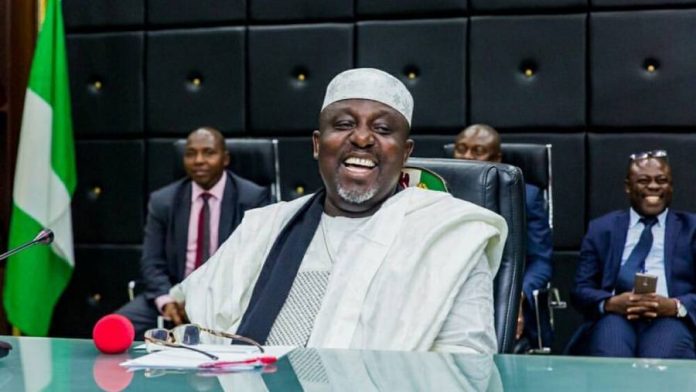
THE former Governor of Imo State, Rocha Okorocha, on Thursday has been sworn in as Senator representing Imo West district.

He was sworn in by the newly elected Senate President, Ahmed Lawan.

Okorocha was earlier denied access into the National Assembly complex on Tuesday during the inauguration of senators, owing to a court order restraining the Independent Electoral Commission (INEC) from issuing a Certificate of Return to him.

He was alleged to have been declared winner under duress, a report quoting the returning officer.

The federal high court on Wednesday had given a final verdict on the case, asking the INEC to issue Okorocha a Certificate of Return as senator-elect representing Imo west.

Okorocha on his part, through his media aide, appreciated the INEC for issuing him the certificate at last. He also thanked the returning officer for declaring him a winner “under duress”, saying such an act has rather attracted to him public sympathy.


Ezekwesili asks Buhari to tackle poverty in honour of Abiola

0

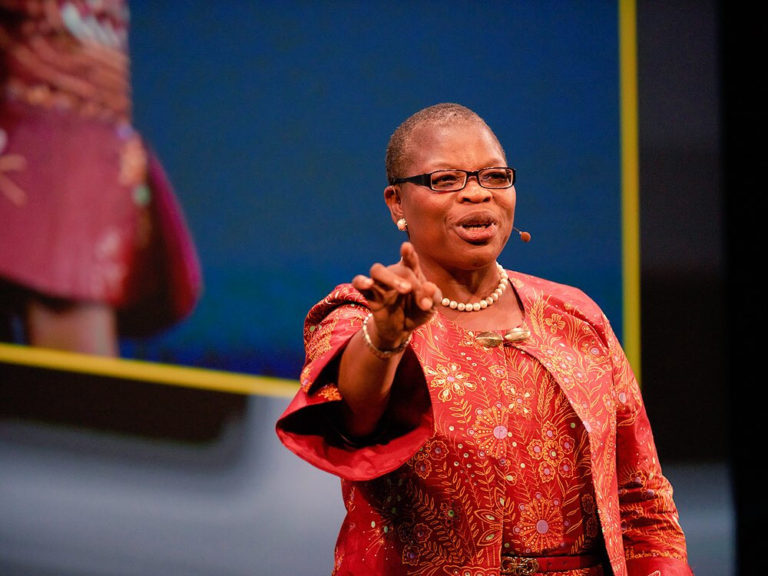
OBY Ezekwesili, former Minister of Education, has asked the President Muhammadu Buhari government to show it was easier and faster to tackle poverty in the 21st century “than it was when Moshood Abiola was alive”.

Ezekwesili made this known at an event organized by the Pro-Democracy Movement in Lagos to commemorate the Democracy Day on June 12, according to Punch.

She said since “democracy is government of the people, by the people and for the people”, those at the helms of affairs should be bothered about the high rate of poverty in Nigeria. According to her, that was the issue the late Moshood Abiola wanted to resolve before his mandate was stolen.

“What was the rate of poverty when Chief MKO Abiola enunciated a manifesto that talked about farewell to poverty? What you can see clearly from the indicators is that poverty has increased,” she said.

Ezekwesili said the greatest honor the government could give Abiola was to show that it was easier and faster to tackle poverty in the 21st century than it was when he was alive.

She noted that what has happened between 1993 and now is that “Nigeria has overtaken India, a nation that is about six times its population, by having the largest number of extremely poor people in its population”.

“If you have 93 million people living in poverty, then it means that you must focus the government on them”.

But what she said had happened in the government was the monopolizing of political and governance space, adding that citizens “whom the democracy should be for” were excluded. Ezekwesili said the political class has “weaponised poverty as an instrument of perpetual control”.

She noted that these 93 million people vote out of ignorance, if at all they did. “Unfortunately, some of the 93 million people don’t vote and when they have the power to vote, they don’t clearly know how to exercise that vote in their own interest. What do you then do when the excluded have a way of conspiring with a system that has excluded them to entrench the exclusion?

Sound policies, strong institutions, effective and efficient investment in public goods and services are what the government should provide the country to attain a height of productivity, lifting the people out of poverty, said Ezekwesili.

She also urged privileged Nigerians to use their positions to uplift the poor for a change in their orientation, as well as to improve their productivity.

Ezekwesili said Nigerians must also speak up against bad government such that what will guarantee progress in “perpetuity is the office of the citizens”. “Stop swallowing your voice. Stop being distracted by daily bread issues. We need a coalition of forces of citizens to say, ‘we can reclaim our land’, she chanted.

Adherence to the rule of law, participation, responsiveness, transparency, accountability, equity and equality are the concepts of good governance, Ezekwesili outlined. “But when you don’t see these, then you know there is no good governance,” she said.

NASA renames street for ‘hidden’ black women mathematicians

NASA has renamed the street outside its Washington headquarters to honor three black female mathematicians whose pioneering work on the agency’s early space program was chronicled in the film “Hidden Figures”.

Katherine Johnson, Dorothy Vaughan and Mary Jackson provided pivotal contributions to space flight research from the 1940s through to the 1960s, when the United States first sent men to orbit and then walk on the Moon.

Despite their achievements, all three had to confront the racial segregation of the era.

They were among dozens of African-Americans, both male and female, who worked as mathematicians and physicists for the US space program, even as they were forced to use separate bathrooms from whites, and were barred from the same restaurants and schools frequented by whites.

The trio’s work was largely forgotten until they were profiled in the book “Hidden Figures” decades later by author Margot Lee Shetterly, later adapted into the 2016 blockbuster of the same name.

Shetterly said the decision to ordain Hidden Figures Way honored “the contributions of unseen individuals who were there at the beginning of the story, and whose persistence and courage have delivered us to where we are today.”

“These female mathematicians were doing the heavy lifting in aeronautical research and many, many other fields long before those chunks of electronic circuitry became the defining feature of our life and work,” she said at a Wednesday ceremony outside NASA.

In 2015 US President Barack Obama gave Johnson, who is now 100, the Presidential Medal of Freedom, the highest civilian honor in the United States.

Jackson and Vaughan died in 2005 and 2008 respectively.

NASA will next month celebrate the 50th anniversary of the successful Apollo 11 mission and humanity’s first Moon landing.

The agency last month announced its plan to return astronauts to the Moon by 2024 through its “Artemis” program — named for the twin sister of Apollo in Greek mythology.

AFP

Can social media help anti-corruption drives? A Nigerian case study

Tolu Olarewaju, Staffordshire University

CORRUPTION can have a crippling effect on a country’s economy. This is why African businesses have described ending corruption as “priority number one”.

Take Nigeria, where the basic infrastructure deficit is huge but funds to improve its infrastructure always seem to end up missing or misallocated. In addition, projects are started and never finished. As a result the country’s roads, rail and ports are in a deplorable state.

Nigerians also suffer from persistent electricity shortages. They lack pipe-borne water and proper sanitation facilities. Housing provision is a problem too.

The country has spent billions of US dollars to resuscitate its power and transport sectors. But it has very little to show for it. Nigeria is not alone. Researchers often report that infrastructure spending is regularly used by public officers and government officials across the continent to misappropriate funds.

Tackling corruption is notoriously difficult. Once it’s embedded in a country’s systems it’s difficult to weed out. But a fresh approach is being pursued in Nigeria – with some startling results. Ordinary citizens are mobilising the use of technology and social media to produce evidence that’s used to hold officials to account.

Our research set out to discover whether the use of technology and social media by ordinary citizens to monitor infrastructure projects could result in more infrastructure projects being completed – and could also lessen corruption.

A version of this approach has been tried in countries like Peru and South Korea. Nigeria seems to be the first – at least on the African continent – to monitor infrastructure projects in this way.

Our research found, for example, that the camera feed showing the construction of the second river Niger bridge, and similar schemes by Tracka gave citizens the power to monitor infrastructure projects. It also increased transparency and could be used to hold the government and engineering firms that build infrastructure to account.

But we also found that there were challenges. For example, citizens needed data and power to monitor infrastructure projects. Neither was always available.

The approach

Monitoring projects has been used by firms and the government as a way to provide more transparency.

For example, research from Uganda shows that corrupt government officials were less able to siphon money for their own enrichment when citizens knew where money was supposed to go and could therefore monitor spending; the diversion of funds fell by 12% over six years.

Research from Kenya also showed that public monitoring of government projects reduced corruption by 20%.

In Nigeria, we investigated infrastructure projects that were monitored by citizens and compared these to infrastructure projects that weren’t monitored. We found that there was a positive link between citizens using technology and social media to monitor infrastructure projects and better completion rates and standards for the infrastructure projects.

Generally, when government officials and infrastructure building engineering firms knew that they were being monitored, they didn’t want to get caught out. In certain cases, citizens were able to engage with the ministry of works and their state governor and use social media to engage in discussions about the project.

By taking pictures of the proposed infrastructure sites and tagging their state governors or representatives in regular posts about the infrastructure projects, civic participation was encouraged. Although there was no often response in the first instance, the high visibility generated by social media and the threat of losing forthcoming elections often resulted in the infrastructure projects being completed. But this was only for projects that citizens could monitor – and there are too few of these. Even we struggled to find many.

Our investigations also revealed that frequent offline and online discussions created awareness about the infrastructure projects and helped citizens to suggest projects that would be useful for their communities.

Challenges to this approach

This approach is not without its challenges.

For example, citizens needed key information to monitor infrastructure projects properly. This included the type, cost, key stages and duration of the projects. Only then would they be able to compare what was actually happening before their eyes to what had been budgeted for so they could alert the relevant authorities as soon as there were discrepancies.

Mobile network technology and access to social media platforms are also needed to make this work.

There were also social and cultural issues. Some citizens didn’t want to engage with social media and technology for personal reasons. In addition, when evidence of corruption was reported by citizens, some saw this as a politically motivated attack. The result was that they lashed out instead of trying to solve the corruption being exposed.

Other challenges included:

  • a lack of clear penalties for individuals involved with monitored infrastructure projects that not completed, or not completed to a decent standard;
  • a lack of follow up by the relevant anti-corruption authorities; and
  • not enough being done when there were clear cases of standards not being met.

Implications

Technology and social media can be used as effective tools by citizens to monitor infrastructure projects. But this isn’t enough on its own. It can only be effective if budgets are also made fully visible.

This would enable citizens to know what they are monitoring and what to look for. Citizens would be wise to demand such transparency: honest governments will have nothing to fear.

This points to the need for a comprehensive approach to tackling corruption. This would need to include transparency and offline and online citizen engagement. In this context, technology and social media could be used as complementary tools.

If African governments and infrastructure building engineering firms on the continent are really concerned about corruption and want to show that they have nothing to hide, they can use this approach to gain more trust from the citizenry.

Tolu Olarewaju, Lecturer in Economics, Staffordshire University

This article is republished from The Conversation under a Creative Commons license. Read the original article.

Democracy Day speech: Buhari’s GDP growth rate contradicts figures from CBN, IMF, others

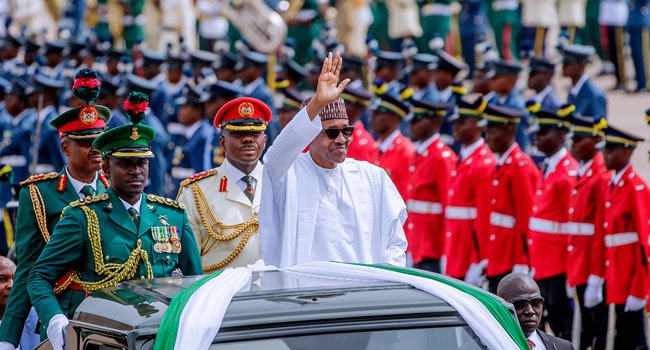
DELIVERING the customary annual speech on the occasion of Nigeria’s Democracy Day celebration on Wednesday, President Muhammadu Buhari said the country’s Gross Domestic Product (GDP) is expected to grow by 2.7 per cent in 2019. This projection has, however, been found to conflict with various other sources.

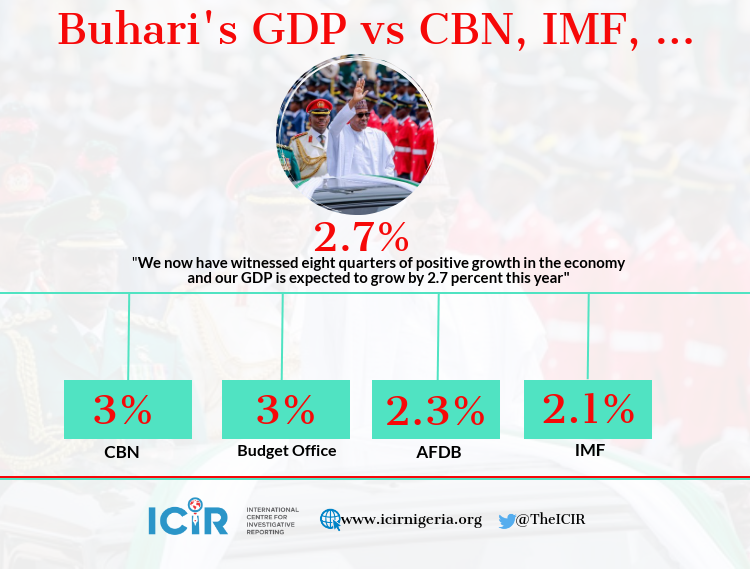
“We now have witnessed eight quarters of positive growth in the economy and our GDP is expected to grow by 2.7 percent this year,” Buhari said.

While it is true that Nigeria has witnessed positive economic growth for eight quarters, since it exited recession in the second quarter of 2017, The ICIR could not find a single authority backing the  claim that GDP will grow in the same measure as quoted by the president.

AfDB, CBN, others disagree

The African Development Bank (AfDB) in its Nigeria Economic Outlook states that the country’s real GDP is projected to grow by 2.3 per cent in 2019 and 2.4 per cent in 2020 “as implementation of the Economic Recovery and Growth Plan gains pace”.

Also, the International Monetary Fund (IMF) in its World Economic Outlook reports released in January and April stated that Nigeria’s economic growth rate is 2.1 per cent in 2019, and will be 2.5 per cent in 2020.

Its downward revision of the figure, the IMF explained, is as a result of the global “softening of oil prices”.

Former minister of budget and national planning, Udo Udoma, however disagreed with the international organisation’s forecast, insisting that the economy is expected to grow by 3.01 per cent this year.

Udoma’s figure was echoed in April by Ben Akabueze, Director-General of the Budget Office of the Federation.

Godwin Emefiele, governor of the Central Bank of Nigeria (CBN) likewise said the bank has made a forecast that the economy will pick up and grow by three per cent as recovery from the recent recession is becoming more self-sustaining.

Infographic by Damilola OJETUNDE

Conclusion

The president’s claim is inaccurate and cannot be substantiated relying on projection by experts. Meanwhile, two other claims made by the president were found to be correct.

He said: “According to United Nations estimates, our population will rise to 411 million by 2050, making us the third most populous nation on earth behind only China and India.” This is supported by the United Nations’ World Population Prospects of 2017.

He also said: “The Manufacturing Purchasing Managers Index which is the gauge of manufacturing activity in the country has also risen for 26 consecutive months since March 2017 indicating continuous growth and expansion in our manufacturing sector.”

Again, this claim is supported by the CBN’s monthly Purchasing Managers’ Index (PMI) Reports. Though the index points occasionally reduce compared to preceding months, the CBN explains that “a composite PMI above 50 points indicates that the manufacturing/non-manufacturing economy is generally expanding”.