Home Blog Page 2363

NYSC to blacklist institutions mobilising unqualified graduates

The National Youth Service Corps (NYSC) has promised to blacklist tertiary institutions that are involved in fraudulent mobilisation of unqualified graduates.

Shuaibu Ibrahim, director-general of the scheme warned tertiary institutions against unscrupulous actions that may truncate the mobilisation process.

He gave the warning while addressing participants at a workshop organised for data entry officers from tertiary institutions as well as deployment and relocation officers from NYSC in Abuja on Monday.

The workshop is done ahead of the forthcoming mobilization of another set of graduates in June.

Ibrahim said unqualified graduates should not be enrolled in the Batch B, next month mobilisation.  According to him, any institutions find doing so would be blacklisted while serving as a deterrent to other country’s institutions.

“Corps-producing institutions are warned not to enroll unqualified graduates into the mobilisation process of the scheme. I advise all of you, participants, not to fall into the temptation of unscrupulous elements that may want to truncate the mobilisation process,” he said.

“As leaders, do the right thing. Let us maintain good integrity and check your data correctly.”

NYSC, established in 1973, is a compulsory one-year service for graduates of tertiary institutions in Nigeria.

The corps members are currently earning N18,000. However, the finance minister, Zainab Ahmed has said earlier in May that the allowance would increase since a new minimum wage of N30,000 has been signed into law.

Online registration for the Batch ‘B’ prospective corps members is scheduled to begin on June 1 and end on June 12.

FG promises 20 million jobs in next four years

THE Federal government has planned to create about 20 million new jobs within the next four years in four sectors of the economy.

Okechukwu Enelamah, Minister of Industry, Trade and Investment,  disclosed this on Monday at a stakeholders’ meeting in Abuja, according to Punch report.

The strategy was focused on job creation in the agriculture, transportation, services and construction sectors of the economy.

Enelamah who was represented at the event by the Permanent Secretary of the ministry, Sunday Akpan said it had become imperative to come up with a pragmatic approach to creating jobs for Nigerian considering the level of unemployment in the country.

He added that the ministry had directed the Industrial Training Fund to come up with innovative solutions to create 20 million jobs in four sectors of the economy within the next four years.

Explaining why the ministry was targeting the four sectors, the minister said agriculture, transportation, services and construction sectors “hold the key to the diversification efforts of the federal government”.

“…With the huge contributions of these sectors to the Gross Domestic Product of the Nigerian economy, it had become imperative to explore their job creation potentials to reduce the level of unemployment in the country,” he said.

“In order to sustain and build on the successes recorded in this regard in the first tenure of  President Muhammad Buhari, we are articulating and strategising with a renewed impetus towards combating the twin evils of unemployment and insecurity.

“It is on this basis that the ministry charged the Industrial Training Fund to come up with revolutionary multi-faceted job and wealth creation strategies that would lead to a lasting solution to this hydra-headed problem.

From the ITF report, Enelamah said a pragmatic strategy has been proposed, stating that within the next four years, the government would generate about 20 million jobs from four key sectors of the Nigerian economy.

This is not the first time Buhari’s government would be promising millions of jobs for Nigerians. In 2015, he promised not less than 12 million new jobs.

But the Nigerian unemployment rate has been on the increase despite the promise.

According to the latest labour statistics published by the National Bureau Statistics,  the total number of people classified as unemployed increased from 17.6 million in the fourth quarter of 2017 to 20.9 million in the third quarter of 2018. That is, the per cent of unemployed Nigerians increased from 18.8 per cent to 23.1 per cent in just one year under the Buhari’s watch.

Why Buhari rejected over 30 bills in four years – Presidency

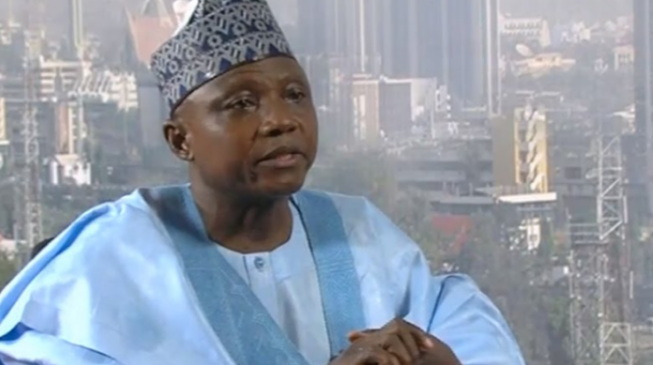
SENIOR Special Assistant to the President on Media & Publicity, Garba Shehu on Monday explained why President Muhammadu Buhari rejected over 30 bills submitted to him for assent in the past four years of his administration. 

The Presidential aide said the president was always thorough in his approach and thus, would not sign any ‘stupid’ bills into law.

He spoke Live on Monday during a popular television programme, Sunrise Daily, citing the Minimum Wage Bill, later passed into law as an instance.

“Let me say that the president is very methodical in dealing with matters such as this. A president could sit in that powerful office and act like he knows it all and I think in this country, we have had such presidents but President Buhari is different because whenever bills come for signature, he will ask that a long list of stakeholders be drawn up. For example, the minimum wage bill he signed.

“Prior to that, labour groups had been demanding that he sign immediately but he refused and identified all stakeholders, ministers and even the judiciary were made to sign off on it and when this process is on, it takes a lot of time,” says Shehu.

“Sometimes deadlines are issued and re-issued. However, the point is that at the end of it, a thorough job is done so that the president does not sign stupid documents and that is important for this country.”

Buhari is reported to have rejected 34 bills as at April, attributing several reasons for his rejection.

The bills among others include National Research and Innovation Council bill (2007), Stamp Duties (Amendment) Bill, National Institute of Hospitality and Tourism Establishment Bill (2018).

The presidential aide further blamed members of the 8th Assembly for frustrating the president, especially on the delayed 2018 budget.

Asked to react to claims that the 8th Assembly passed 306 bills, considered the highest number of bills approved by a legislative arm of government in Nigeria’s history while Buhari had the record for the highest number of rejected bills, he insisted that whatever action taken by the president on the delayed or rejected bills were for the benefit of the country.

“The delay which was experienced in 2018 in which the National Assembly held unto the budget for seven months is good enough for the Guinness Book of Records and the president lamented this,” he added.

Chidi Odinkalu invited by Police over allegations of inciting public disturbance by Kaduna govt

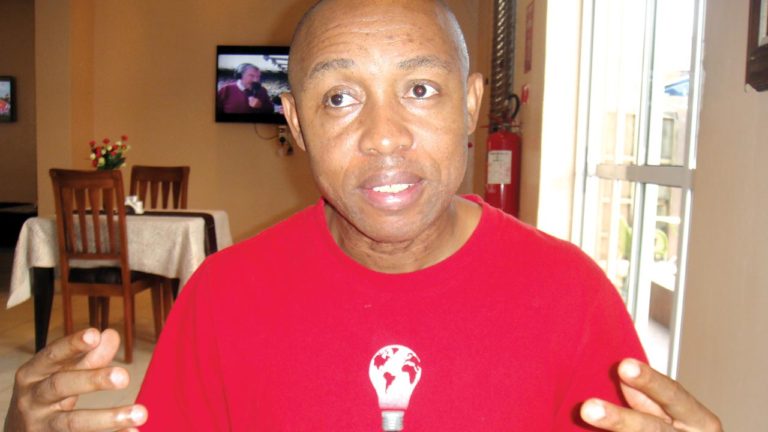
THE Police in Abuja on Monday invited for questioning Chidi Odinkalu, lawyer and human rights activist, in connection with a petition issued by the Kaduna State government over allegations of inciting public disturbance, among other charges.

The invitation was in connection with statements purportedly made by Odinkalu during an interview with a television station early in the year in which he questioned claims made by Kaduna State governor Nasir el Rufai that 66 persons were killed in the Kajuru crisis in the state.

Apparently, the Kaduna State government, through its Attorney General, Umma Hakima, had on April 4 petitioned the Inspector General of Police, IGP, transmitting the order of a Kaduna Magistrate Court to causing an investigation into some charges brought against Odinkalu by the Kaduna State government.


READ ALSO:

It was learnt that the government had applied, through an exparte application, that the Magistrate Court presided over by Hon Ibrahim Musa, order that the charges brought against the respondent be investigated by the police.

Specifically, the underlying allegation contained in the ex-parte application dated March 28, 2019, is that in a television interview on 16 February, Odinkalu stated:

“I keep coming back to this Kajuru story because we must never allow that story to get away. 66 Nigerians killed; that’s 66 too many. If anybody claims that 66 people were killed in Kajuru this week, including the Governor of Kaduna State, let us go and verify. I’m not willing to allow that story to go away. It is not true.”

According to the application by the state government, reinforced in its petition to the IGP, by making this statement Odinkalu committed the following offences:

“Furnishing false information punishable under s. 104 of the Penal Code, Laws of Kaduna State 2017;

injurious falsehood, punishable under s. 373 of the Penal Code, Laws of Kaduna State 2017;

public nuisance, punishable under s. 150 of the Penal Code, Laws of Kaduna State 2017; and

inciting disturbance, punishable under s. 77 of the Penal Code, Laws of Kaduna State 2017.

Odinkalu, who noted that he arrived at the Federal Criminal Investigation Department, FCID, Abuja around 3.30pm, said he was asked to write a statement based on the allegation and that he denied all of them.

“I was asked to make a statement on the stationery of the Police under caution. I did. My statement essentially affirmed my name, occupation and identity. I also affirmed the words stated above as mine but denied clearly that I had any intention to or was indeed capable of or had committed any of the offences alleged.

“In particular, I did say that in the circumstances of the facts, the conduct of the Governor of Kaduna State appeared to have been designed to preclude the Nigeria Police Force from doing its lawful duties of investigating or verifying his allegations.”

He said he was hearing of the case against him at the Magistrate Court for the first time during the police questioning although the Magistrate, from the document he was shown, made the order since March 22.

Odinkalu has since been let go by the Police although he had to be granted bail on self-recognition and can be invited on the matter again.


Friends, journalists, politicians testify to Dapo Olorunyomi’s courage at book launch

PUBLISHER of Premium Times, Dapo Olorunyomi, was the centre of attention as friends, journalists, activists, and political leaders paid tribute to him at the launch of Testimony To Courage, a compilation of essays written in his honour.

The well-attended event took place in Abuja on Monday and was chaired by Kabiru Yusuf, chief executive officer of Daily Trust Newspapers.

Chido Onumah, executive director of the African Centre for Media and Information Literacy, said in his welcome address that very few journalists have impacted journalism in the democratic space in Nigeria the way Olorunyomi has done in the last three decades, adding that he has proven his capacity, tenacity, and ingenuity.

“My team members and I put together this book to celebrate Dapo, to share his experience through the views of his teachers, relations, friends, colleagues, and mentees,” Onumah said.

“We hope current and future generations of journalists and public administrators will gain from the fountain of knowledge and experience that Dapo represents, so aptly captured in the over 90 essays that make up the book. If there is any time courage and integrity are needed in our country, it is now. Our dear nation stands at the crossroads and journalists and the media need to once again rise to the occasion the way Dapo and many in his generation did years ago.”

He added on a lighter note: “I’ve always teased Dapo about the limits of investigative journalism. Work on this project started in November 2017, when Dapo turned 60, and we ensured he wasn’t aware of it until a few weeks ago. I thank my co-conspirators for keeping the book a secret until we felt it was too far gone to be aborted by this self-effacing man.”

In his keynote address, Kayode Fayemi, Ekiti State governor, said Olorunyomi risked his freedom and life to ensure that Nigeria is a democratic state where the liberties of people are not trampled on. “That we still have a country to call ours”, the former minister of solid minerals development stated, “is owed in no small measure to the role played by people like Olorunyomi.”

Fayemi also emphasised that democratic rule will atrophy while periodic elections will become a hollow ritual without the media promoting truth and transparency.

“Most people will argue that intellect is the most important asset the media intellectual brings to the fore in his or her interventions in public life. I agree. However, I will add that as important as the intellect of a media intellectual is in the project in the project of public life and in the pursuit of the public good, equally important if not more important is the civil courage of the media intellectual.

“Few media intellectuals in contemporary Nigeria can claim to rival Dapo Olorunyomi in intellect and civil courage. Dapo, my boss, my teacher, my mentor, my friend, my comrade, thank you for deploying all of these tools both in the service of our fatherland and humanity,” he said.

Chidi Odinkalu, former chairman of the National Human Rights Commission who reviewed the book at the occasion, described it as representing the diversity of Nigeria and her voices owing to the broad range of the contributor’s backgrounds. He said there is a lot of wit, humour, and depth in the published work.

“It is not just a set of testimonials to a really nice guy,” he said. “It is really much more than that. It is phenomenally an important contribution to Nigeria’s political history.

“In a country where those who are least deserving get the largest accolades while some who are deserving get their recognition after death and those of us who are comrades are content to mourn them when they are no more, Testimony to Courage is evidence that the supplication for civic canonisation does not always have to await earthly mortality. Sometimes, a generation must acknowledge its best if only to encourage many more not to give up on virtue.”

Odinkalu advised there should be a second edition of the book to fix certain glitches and also allow other close associates of Olorunyomi, such as Babafemi Ojudu, Musikilu Mojeed and Ifeanyi Uddin, contribute to the collection.

The celebrator, Olorunyomi, thanked the organisers of the event and attributed his successes to his parents, teachers, friends, and colleagues.

He added: “It is impossible on a global scale to have a democracy that is striving and working without a good media. Regardless of how poor journalism is being practised today, the challenge is to make it a better profession; and he’s [Ojudu ]right with all the observations about the poverty of practice today but our challenge is to make it better except we don’t want a democracy.

“If we want a democracy, the two central pillars that underpin this institution will be the media and judiciary; and if these two are not working well, we cannot have a good democracy. If we are stuck with the idea of democracy, let’s know that we all have to collectively build a strong media.

“Our country is a work in progress and journalism has a role to play,” he concluded.

The dignitaries at the launch were Vice President Yemi Osinbajo represented by Babafemi Ojudu, special adviser to the president on political matters; Bola Tinubu represented by Sunday Dare, his chief of staff; Femi Falana, human rights activist and Senior Advocate of Nigeria; Rauf Aregbesola, former Osun State governor; as well as Nuhu Ribadu and Ibrahim Magu, former and acting chairman of the Economic and Financial Crimes Commission.

Others at the event were Chris Anyanwu, publisher and former senator; Ropo Sekoni, Professor of Literature in English; Ajayi Boroffice, senator for Ondo North representing senate leader Ahmed Lawan; Barau Jibrin, senator for Kano North; Bello Mandiya, senator-elect for Katsina South; and Kole Shettima, Director of the MacArthur Foundation’s Africa Office. Representatives of the Canadian High Commissioner and French Embassy in Nigeria also attended.

Chinese company finally shut down illegal charcoal production in Enugu after ICIR’s investigation

A CHINESE company, Kwo Chief Investment Limited, has finally shut down its illegal charcoal production at Obimo in Nsukka local government area of Enugu State.

The company’s termination of the operation comes after three months that The ICIR’s investigation exposed the unauthorised massive felling of trees for charcoal production.

At the time The ICIR conducted investigation into the environmental threats by the Chinese company, the National Environmental Standards and Regulations Enforcement Agency (NESREA) said it was unaware of the charcoal production, and would not act against the company without a petition, despite the fact the company was producing charcoal without obtaining the necessary permits as specified in official policy.

The exposure led to public outcry that forced the NESREA to move against the company. In a press release on May 8, NESREA claimed that the facility had been shut down.  The ICIR, however, obtained evidence the following day that the company was still in operation.

Aliyu Jauro, the director general of NESREA, had told The ICIR that the agency actually sealed off the facility in April but he was unaware that the company had continued the charcoal production. He thereafter assured that the agency would send enforcement team again to the charcoal factory.

On getting information about the pending visit by NESREA’s officials, the Chinese deserted the charcoal factory on May 16 and have not returned since then. NESREA’s officials subsequently visited the facility on May 23.

NESREA claimed that the operators of the illegal charcoal production would soon be prosecuted but findings by The ICIR showed that no Chinese has been yet arrested.

Daura emirate council suspends Sallah celebrations over security concerns

THE Daura Emirate Council in Katsina State says it has suspended all activities lined up to mark the forthcoming Eid-Al-Fitr Sallah celebrations scheduled to commence next week.

The Danejin Daura, Malam Abdulmumini Salihu, disclosed this on behalf of the emirate council in a statement issued in Daura on Monday.

Salihu said the suspension of the Sallah activities was due to the recent unfortunate security breaches bedeviling some parts of the state.

He said that the recent happenings which led to the kidnap and brutal killings of some innocent citizens of the state were saddening and unfortunate.

The emirate said it would use the period to commiserate with the government of the state, citizens and the victims’ relations over the unfortunate development.

It added that during the day, only two raka’at Eid prayers would be observed, after which marathon prayers and supplication would be conducted to invoke divine intervention over the precarious security challenges.

The council, however, directed all the 16 district heads, 245 village heads and ward heads to organise and supervise prayers in their areas of jurisdictions, with a view to achieving lasting peace and stability nationwide.

The News Agency of Nigeria reports that the district head of Daura, Musa Umar-Uba, was recently kidnapped at his residence in Daura by some unknown gunmen and since the incident, the abductors have not contacted his family, and the ancient town had been gloomy.

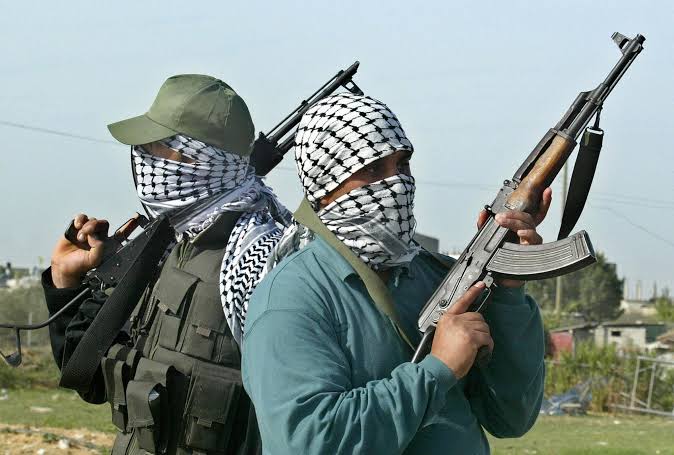
NAN also reports that 34 people were, last week, brutally murdered in some parts of the state by some unknown gunmen — an incident which made the state government to assent to a law that prescribed capital punishment for kidnapping, cattle rustling and armed robbery.

(NAN)

Good education, best legacy we’ll leave for them… Nigerian leaders on Children’s Day

POLITICAL leaders across various arms of government are unanimous in their belief that good and quality education remains the best legacy to leave for Nigerian children.

This theme is recurring in the respective messages by many of the top government officials on Monday in commemoration of the international children’s day which is celebrated every year on May 27.

Senate President Bukola Saraki, in his message, described Nigerian children as “our most important national treasure” hence the need for those in the position of authority to “recommit ourselves to ensuring that all Nigerian children are empowered to aspire to achieve greatness”.

“Over the last 4-years, the National Assembly has worked fervently towards ensuring the provision of basic primary healthcare and the domestication of the Childs Rights Act in all Nigerian states — so that young Nigerian Children can live healthy, violence-free lives,” Saraki wrote.

He also paid tribute to Leah Sharibu, the Dapchi schoolgirl that is still in Boko Haram’s captivity, as well as “all other Nigerian children who will be commemorating this important day without their loved ones. We commit them into our prayers, and continue to call for their unequivocal release”.

Former Vice President Abubakar Atiku, also shared a message of optimism, pointing out that “Nigerian children have been in the international headlines recently for exceptional achievements despite all odds”.

In a similar message, former deputy Speaker of the House of Representatives and the incoming Governor of Imo State, Emeka Ihedioha, promised not to play politics with the fate of the children of the state, as according to him, “The biggest legacy we can leave for our Children is quality education”.

Lagos State Governor-elect, Babajide Sanwo-Olu, in his own Children’s Day message described them as “our heritage… our pride, they are the future and they are the reason why we put our best in all that we do”. He promised that his government “will be dedicated to making sure that every child in Lagos has hope for a great future”.

Boboye Oyeyemi, the Corps Marshal of the Federal Road Safety Corps (FRSC), also pledged the commission’s commitment to ensuring the safety of Nigerian children on the road at all times.

“Children are the world’s most valuable resources and its best hope for the future. Child safety is our top priority,” he wrote.

Later on, the wife of the president, Aisha Buhari, will host some children to a Children’s Day party at the Aso Rock Presidential Villa, Abuja, as part of activities leading up to the second term inauguration of President Muhammadu Buhari.

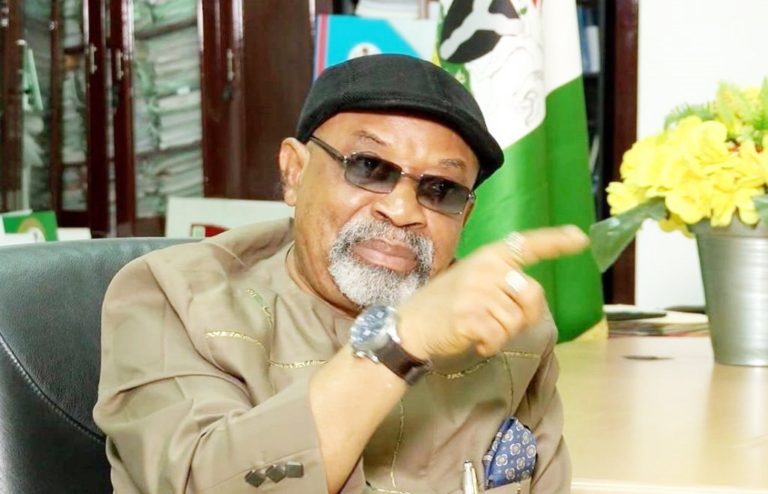
Ngige tasks state govt, employers on immediate payment of new minimum wage

CHRIS Ngige,  labour and employment minister has asked state government and all employers of labour to commence the implementation of the minimum wage with immediate effect.

He told journalists on Sunday that, “any state government that has not started implementation of the new minimum wage is automatically owing its workers, and any state that does percentage increase will put itself in a disadvantaged position as it will not be able to pay”.

Ngige said the new wage took effect from April 18, 2019, with the signing of the of the bill into law by the President Muhammadu Buhari, and all arrears would commence from its enactment into law.


READ ALSO:

“The minimum wage was one of the products of the technical committee that worked on the palliatives as a result of the increase in the pump price of PMS.

He noted his ministry anchored this development, alongside government delegation which comprises seven ministries, the national salaries and wages commission and the state government.

“We are now in a committee working out a new template with which we will adjust the consequential adjustment upstairs for those already earning above N30, 000.”

President Buhari had on April 18, assented to the new national minimum wage bill recently passed by the National Assembly, thus raising the national minimum wage from N18,000 to N30,000.

The Act makes it compulsory for all employers of labour to pay their workers a minimum wage of N30,000, excluding persons employing less than 25 workers or persons in other kinds of regulated employment.

The struggle for an increment in the national minimum wage has been on for a long time as the organised labour tried all within its power to make the government see the need to increase workers’ pay.

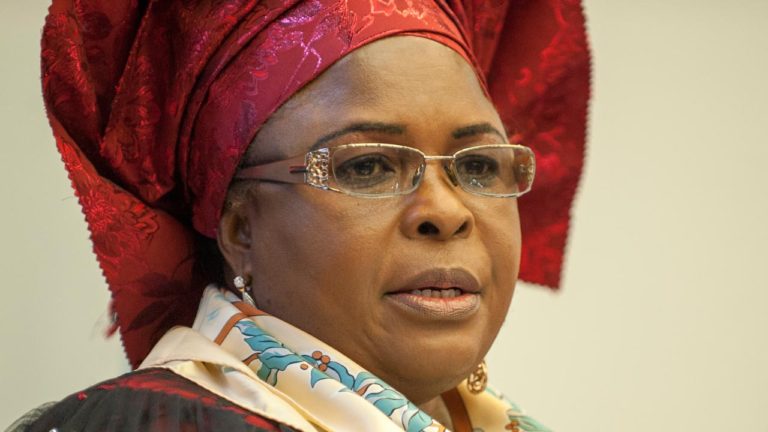
I earned my money legitimately, Patience Jonathan’s sister tells court

Esther Oba, a younger sister to Patience Jonathan, former Nigeria’s First Lady, has explained why the sum of $429,381. 87 which was traced to her account by the Economic and Financial Crimes Commission (EFCC) should not be forfeited to the federal government of Nigeria.

Oba gave the explanation before Justice Mojisola Olatoregun of the federal high court where the EFCC had asked the court for an injunction ordering the forfeiture of the money which it believes was part of proceeds of corrupt activities.

The case is a fallout of the EFCC’s investigation into alleged corrupt practices by the former First Lady from who a number of assets in cash and property have already been reportedly recovered.


READ ALSO:

Before the court, Oba said she earned the money from estacodes while working as a Special Assistant on Household Administration to former President Goodluck Jonathan, while some of them were gifts she received during her mother’s funeral, as well as the naming ceremony of her child.

Oba claimed she was entitled to $600 per night for official trips that took her outside the country.

“When I had my first child after 14 years of marriage without a child,  I got a lot of gifts. Some were hard currencies, land, cars;  anything anyone can give as a gift,” Oba told the court.

She said she opened the Skye Bank account to keep the gifts following the advice of Ibrahim Larmode, a former EFCC Chairman.

“When Lamorde came to visit her (Patience), he advised her to open a card account. I took the advice too and opened the Skye Bank account,” Oba said.

While being cross-examined, Oba said she has two signatures, which accounted for the disparity of signatures that was noticed on the said bank account.

The prosecution counsel, Rotimi Oyedepo, asked Oba to sign the two signatures on a sheet of paper, which she did, albeit after the objection raised by her lawyer, Ifedayo Adedipe, was overruled by the trial judge. The document was subsequently admitted in evidence by the court, after which the case was adjourned to June 27.