MEMBER States of the United Nations, including Nigeria, have agreed on a five-year global action plan to promote the health of refugees and migrants.
The plan was adopted during the 72nd world health assembly at Geneva. According to the World Health Organisation, the plan focuses on achieving the highest attainable standard of health for all people.
The action plan outlined twelve priorities which set to reduce mortality and morbidity among refugees and migrants through short and long-term public health interventions as well as to strengthen health monitoring and information systems and counter misperceptions about migrant and refugee health.
It also seeks to improve the continuity and quality of health services delivered to these sets of people.
“Continuity of care is at risk of interruption for refugees and migrants during their period of transit due to factors such as insufficient sustainability, economic and language barriers, administrative obstacles, detention, discrimination, exclusion, poor understanding of entitlements and underutilization of health services,” part of the plan read.
Thus to fulfill the objective, WHO encourages member states to provide for access to comprehensive primary health care on a continuing and long-term basis if required, while it should be supported with functioning referral processes to necessary secondary and tertiary care services.
It also calls for training of health care providers towards combatting stigmatisation and discrimination.
Globally, the number of international migrants has grown. According to WHO, between 2000–2017, the total number of international migrants rose from 173 million to 258 million, an increase of 49 percent. The number of refugees was put to 25.4 million. Ten million stateless people lack a nationality and access to basic rights such as education, health care, employment and freedom of movement.
Due to Insurgencies and violence in northern Nigeria, many have been forced to leave their birthplaces.
In March, UN refugee agency (UNHCR) said an estimated 35,000 Nigerians had fled across the north-eastern border into Cameroon in the last two weeks of January.
THE Minister of Environment, Surveyor Suleiman Zarma on Tuesday says the Federal Government is currently prosecuting Chinese firms identified for destroying the nation’s environments.
The Minister disclosed this during a valedictory ministerial briefing held in Abuja to showcase the ministry’s achievements in the past four years.
The ICIR had earlier reported stories on how Chinese firms arbitrarily destroy the environments, felling of trees without permit for charcoal production and a similar case in Ondo marble producing community where exploration is being carried out without due process.
Zarma said though Nigerians are also involved in degrading the environment, the federal government through the National Environmental Standards and Regulations Enforcement Agency (NESREA) is prosecuting those flouting the environmental laws stressing that some of the firms have been sealed off.
“We are also responsible for degrading our environment so we should not just pretend about it. We are also involved. The question to ask is what we are doing to remediate our environment?” says Zarma.
“We have NESREA. They are running after these people where they have been identified. Some of them are undergoing prosecution now; some of the sites are sealed and so on and so forth. NESREA is taking charge of that affair.”
Speaking on reoccurring cases of illegal trafficking of endangered species such as Pangolin, Minister categorically debunked the claims that the pangolin seizures originated from Nigeria.
Zarma said on the contrary, as believed by nations such as Singapore and Vietnam, Nigeria neither has pangolins nor make use of the endangered species in any form.
“Nigeria is not a pangolin nation. So Nigeria is just being used as a transit route. We have made efforts to even ask the authorities of where the seizures were made to give us the addresses of the agencies that transported the pangolin so that we can close in on them and find out who their sponsors are. But I tell you the fact, Nigeria is not a Pangolin nation, it’s just a transit route,” says Zarma.
The ICIR had also reported cases of trafficked pangolins having allegedly originated from the Apapa port in Lagos.
However, he disclosed on-going efforts to minimise the situation through partnerships with the Interpol, Nigerian Customs Service and Port Authorities.
“We are collaborating with all agencies and Interpol, port authorities, customs and so on to make sure that this thing is minimised.”
According to him, the Federal Executive Council (FEC) had to interject by procuring more sophisticated scanners for the NCS in order to check the trend.
“Lastly, two FEC meetings away, we sat to approve the procurement of bigger scanners for the Nigerian customs so that they can easily detect some of these scales. These scales are bigger than fish scales and difficult to see by physical inspection, especially if its night…..even though the number is high and depending on the packaging…… we don’t use it, we don’t have it so where does it come from?”
Listing some of the ministry’s achievements, he said the ministry was able to rake in N8 billion to the coffers of the federal government through sustainable management of wood exports and other products.
Also, he said the Ogoni clean-up has commenced with 21 companies partaking in the remediation exercise; the green bond as well as the afforestation programme in the 11 frontline states where livelihoods of affected communities are improved upon.
“The companies involved in Ogoni are 21. The 16 were earlier cleared to the site but the threshold had to go to the FEC so we have 16 and 5. We have 21 companies working now.”
The Almajiri Child Right Initiative, ACRI, on Tuesday called on Child rights advocates and stakeholders across the country to mark the second annual Almajiri Child Rights Day to draw attention to one of the world’s most abused sets of children.
In a press statement, by the team leader of the Almajiri children advocacy group, Mohammed Keana, he urged stakeholders to come up with a unified position on tackling the challenges associated with Almajiri children in Northern Nigeria.
“In May 2018, during the inaugural event, we pledged to engage critical stakeholders, especially
actors and benefactors, civil society, government at all levels, as well as the local and
international community towards developing and implementing the policy that offers a long-term
solution for returning dignity to the life of the Almajiri Child,” he said.
He stated that the introduction of the child destitution bill was a step in the right direction but the slow responses from civil society organisations, CSO, who ought to push for its passage had stalled the process.
“We have witnessed some level of change in the narrative and the National Child Destitution Bill at the 8th Assembly. But slow responses have delayed the urgency of the crisis.
“At our current pace, over 10 million Almajiri children will be part of those who have been failed by the rest of us. It is for this reason that the theme for 2019 is Almajiri Child Rights and the Sustainable Development Goals,” he said.
He urged the Nigerian Government to set up a multi-stakeholder task team to address the social, educational, nutritional, and security situation of the Almajiri Child including a medium-term enlightenment plan for building consensus with actors and benefactors.
“The Members of the 9th Assembly of the Nigerian Legislature should pick up where their predecessors
left and pursue an all-encompassing solution to child destitution in Nigeria. Children advocates in Nigeria and our friends across the international community should add their voices to the plight of the Almajiri Child by joining the 13 million signatures campaign to stop this menace,” he said.
PRESIDENT Muhammadu Buhari has hinted that he will be more forceful during his second term in office, especially in demanding higher efficiency from security agencies.
He talked tough during what was termed a “special interview” aired on Monday by the Nigerian Television Authority (NTA), and said all those who call him Baba Go Slow should wait to see whether he will be slow or fast. This was in response to a question about whether he will be more ruthless after he is sworn in again as president.
“It means that I will persuade the police and the judiciary to be hard,” the president continued, “and when I uncover that they are not hard I will try and trace who is responsible for the slowness in terms of commanders or, in the police, from the DPO upwards.”
He also said it is up to people who have run foul of the law to choose if they want to flee the country. “If they stay, they know what will happen to them. They either stay and behave themselves or they better run,” he said.
He urged Nigerians to expose the criminals in their neighbourhoods to help the government tackle insecurity and enable it attract foreign investment.
“You cannot accommodate criminals in your neighbourhood and start glibly blaming the government that nothing is being done. People are deliberately stopping the government from doing anything,” he said.
The president accused the federal lawmakers of not being patriotic, usurping powers belonging to the executives, and holding the country to ransom by not passing the budget for several months.
“I think culture was developed in the National Assembly that they should dictate the terms. I think it was wrong. It is the executive that dictates the terms and takes it before the legislature that will examine it and agree or disagree with it. But when they go around posing that they are the government and not the executive, then there is a problem,” he said.
“And I’m afraid, and spoke personally to the Senate President Saraki and the leader of the house, Dogara. They could not deny it. I asked them how do they feel to hold the country ransom for seven months, without passing the budget. I said personally they were not hurting me, they were hurting the country. So, really, in terms of patriotism, I think I rated them very very low indeed.”
While acknowledging his basic school teachers for bringing the best out of him, the president confessed to not being familiar with the educational structure currently in use by the country.
“I spent nine years in boarding school. Three years in primary and six in secondary school. Now I think they do five years, or four, I don’t know how many years.
He also said he is “fully qualified as a suffering Nigerian” considering that he was held in detention for three and a quarter years during the military era.
Buhari, at the end of the interview, lightheartedly thanked the presenter “for making it very hard for him”.
Since he was inaugurated in 2015, the president is noted to have granted very few extended interviews, especially with local press. His first and only media chat took place at the presidential villa in December, 2015. He also granted a pre-recorded interview session with Arise TV and live session with DariaMedia in the build-up to the 2019 general elections.
Nigerian police in Zamfara has confirmed the killing of 23 persons in Tunga and Kabaje villages, Kaura-Namoda Local Government Area by suspected bandits on Tuesday.
Muhammed Shehu, Police Public Relations Officer in the state, informed NAN of the attack at Gusau.
“It is true that the bandits killed 23 persons in the attack,” he said. Police said peace has been restored in the affected areas after the killings. He added that a combined team of mobile and regular police together with the army and air force are on surveillance in the villages.
Receiving situation report from the villagers, NAN learned through the chairman of the local government, Lawal Isa, that bandits numbering over 100 riding on motorcycles invaded the communities when residents were going to their farms.
He said all the slaughtered villagers had been buried according to Islamic rites.
Isa said that the bandits may have come for after the killing of one of their suspected informants whose name he gave as Anas.
That unknown Anas, he said, was trailed by local vigilantes when he picked a wife and child of a suspected bandit at Angwan Sarki village to take them to the man in the bush on his motorcycle.
“The vigilantes blocked the rider and killed all three instantly on Monday,” Isa said. “And at about 5 am on Tuesday, the gang invaded the villages and killed 23 residents,” he said.
Isa appealed to security agencies to consider going to the identified hideouts of the bandits, especially at Gidan na Zumbure village “which now harbours the bandits and serve as their base for launching attacks.”
Zamfara state has been experiencing violence attacks from unknown bandits for months which has resulted in deaths in hundreds of deaths and injuries.
AHEAD of the May 29 swearing-in ceremony, the federal government has declared the closure of the major roads in Abuja, Nigeria’s state capital, between 12 am and 3 pm on Wednesday.
At the Eagle Square of Abuja, President Muhammadu Buhari will be inaugurated for a second term as the democratic president of Nigeria in the next four years, together with Yemi Osinbajo as the Vice President.
The announcement of road closure released on Tuesday was signed by Boss Mustapha, Secretary to the Government of the Federation and Chairman, Presidential Inauguration Planning Committee.
It outlined the dedicated car parks for the inauguration as the Federal Capital Territory will welcome lots of visitors on the d-day.
Car parks at the Court of Appeal, Millenium Tower, Old Parade Ground at Area 10 and Millenium park will be reserved for guests with no gold cards. The Eagle Square park has been reserved for dignitaries with gold cards.
The swearing-in will be followed by the state banquet at the State House in the evening. The car pack at the Supreme Court has been dedicated for the evening event.
The Chairman of the inauguration committee said the route leading to the car parks would be closed.
“Route closure is from Midnight today (Tuesday) to 3 pm tomorrow (Wednesday),” he said.
The federal government has already declared Wednesday as work-free day to mark the president’s inauguration.
FEW weeks after MTN Nigeria went public on the Nigeria Stock Exchange, Airtel Africa Ltd, a subsidiary of Indian telecoms group Bharti Airtel Ltd, is considering a stock market flotation in London with plans to go public on the Nigeria Stock Exchange too.
The company on Tuesday said it was part of its efforts to expand its data and mobile money services across Africa, with plans to trade on the main market of the LSE and NSE.
Using its premium listing segment, which has more stringent rules than the European Union’s minimum requirements, Airtel intends to sell 25 per cent of new shares to reduce existing debt.
“The 14 countries where we operate offer strong GDP growth potential and have young and fast-growing populations, low customer and data penetration and inadequate banking infrastructure.
“These fast-growing markets provide us a great opportunity to grow both our telecom and payments businesses,” Raghunath Mandava, chief executive Airtel said in a statement.
The company is aiming to raise around $1 billion in a June equity offering, Reuters reported.
The cash injection from existing investors has already helped to reduce Airtel Africa’s net debt to $4 billion in March, compared to $7.7 billion in the previous year. Its net income reached $83 million in the year to March, compared to a net loss of $49 million a year earlier.
The telecom company operates in 14 African markets including Nigeria, Democratic Republic of the Congo, Kenya, Rwanda, Seychelles, Uganda and Zambia.
The company has appointed JP Morgan, Citigroup Inc, BofA Merrill Lynch, Absa Group Limited, Barclays Bank PLC, HSBC, BNP Paribas, Goldman Sachs International and Standard Bank Group Ltd as advisers if the flotation plans proceeds.
THE Economic and Financial Crimes Commission (EFCC) says its operatives have arrested the proprietor of a Yahoo Yahoo training school in Lagos, Frank Chinedu.
Chinedu, 22, was arrested alongside eight students of the unnamed training centre located at 14, Animashaun Street, Progressive Estate, Ojodu Berger, Lagos while receiving lectures in internet fraud activities.
This was contained in a statement issued in Abuja on Tuesday by Tony Orilade, Acting Head of Media and Publicity at EFCC.
Orilade gave the names of the students as Ahmed Musa, 24; Desmond Eze, 29; Preye Kingsley, 23; Benjamin Irabor, 21; Benjamin Opah, 19; Akapo Prosper, 22; Innocent Paul, 20 and Olamide Edun, 20.
He stated that the suspected internet fraudsters were arrested on May 22, 2019, following intelligence reports received by the Commission about their involvement in alleged criminal activities.
Orilade listed items recovered from the suspects at the point of arrest to include nine laptops, 16 mobile phones, an Airtel modem, Orange Wifi and one Toyota Camry with registration number EPE406FN.
He said they would be charged to court soon.
The ICIR had reported the arrest of Nigerian musician Afeez Fashola, popularly known as Naira Marley and four others in Lagos by the anti-corruption agency on May 10 on allegations of internet fraud. He is currently remanded in detention.
Only 2.8 million under-five children out of a population of 32 million in Nigeria have birth certificates. According to the law establishing the birth registration scheme in Nigeria, birth registration is free, and any child not registered legally does not exist. In the third part of the Birth Registration series, Jennifer UGWA reveals how officials of the Nigerian Population Commission (NPC) make birth registration difficult by extorting nursing mothers in Imo and Rivers States.
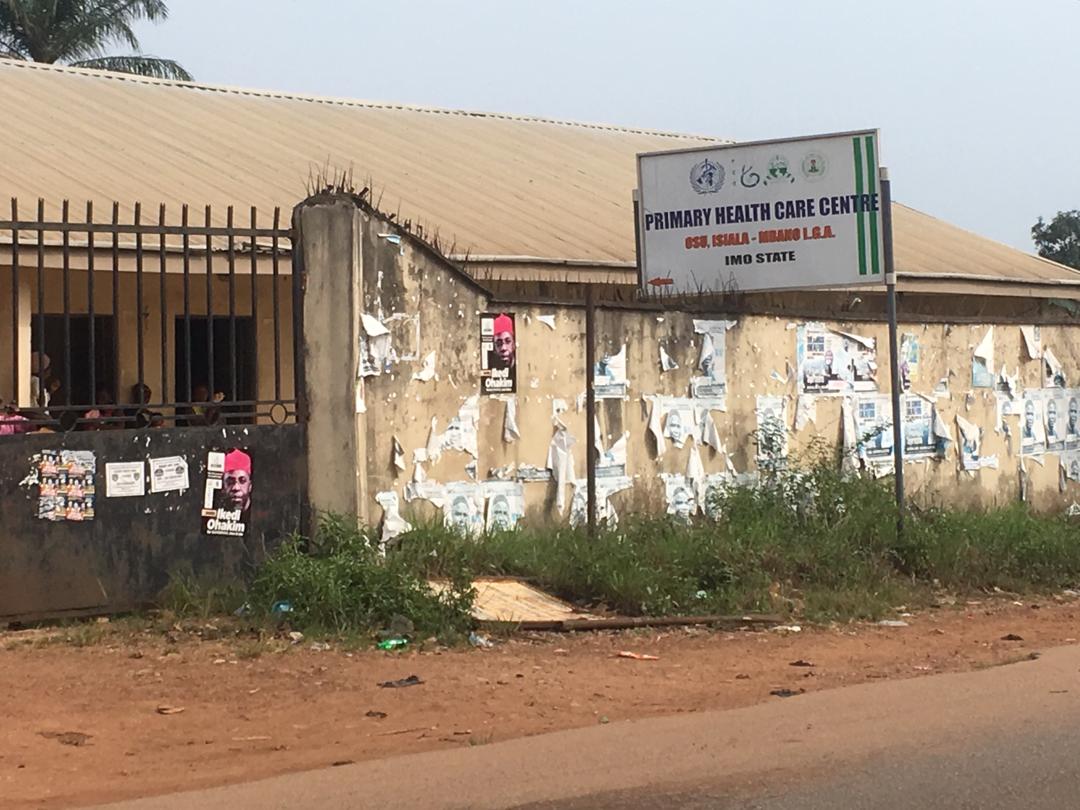
ON Thursday morning, at 8:00 am, March 14th, The ICIR reporter arrived at Isiala-Mbano Primary Health Care in Osu Isiala- Mbano Local Government of Imo State, the veranda of the health centre serves as the reception, with two long benches that had turned black with age. The centre was crowded with nursing mothers who came to immunise their babies.
The journalist struck up a conversation with one of the nursing mothers, Ngozika Wisdom, on how to get a birth certificate.
“Oh, that is easy, just meet Sister, she will give you, it does not take time,” she said, pointing at the entrance of the building.
Ten minutes later, the journalist was ushered in through a maternity hall leading towards the semi-detached office that served as the matron’s office. The cries of newly born babies filled the room, some barely a day old. They were held by their mothers who were surrounded by family or probably friends who cast questioning looks at the intruding journalist.
The matron, a soft-spoken lady, sat behind her desk in the small office stuffed with old files and medical equipment.
“The one I will give you does not have NPC logo, and it is N500, the NPC official that gives the official birth certificates is not here yet, but he will be here by 10 o’clock. That one will cost you the same amount or more, depending on the person,” she said.
But by 10 o’clock am, the NPC personnel was yet to arrive and the reporter was asked to visit the local government headquarters secretariat, a walking distance from the primary healthcare centre, to acquire the certificate.
Amongst the people waiting for the arrival of the registrar at the secretariat office was an elderly man who came to collect a birth certificate for his teenage daughter who just gained admission into the university. The father was surprised when he was told by others at the venue that he might have to pay to get the certificate.
“On my way to this place I lost N10, 000. The money I have with me is just the balance remaining from my transportation in my breast pocket. I don’t know anything thing about making a payment to the Local Government account,” he said, already frustrated by the news.
Isialla Mbano Primary Health care Centre
Vital or Civil Registrationis the system by which a government records the key events of its citizens and foreigners resident in the country. Vital Registration creates legal documents which may be used to establish and protect the civil rights of individuals, as well as providing a source of data which may be compiled to give vital statistics.
Generation 2030 United Nations Children’s Fund report in Child Demographics in Africa reveals that by 2050, a fifth (16 per cent) of children under 18 in Africa will be found in Nigeria.
In Nigerian schools, especially tertiary institutions, one is usually required to present one’s birth certificate as part of the registration process. Also, some employers also request a birth certificate from the newly employed staff and it is for this reason that the employees scramble to procure the certificate.
Back at the LGA headquarters, a light-skinned man drove in on a motorbike several minutes later and introduced himself as Martins Duru. Though Duru issued the reporter a birth certificate at N1,500, it did not have the NPC serial number or the logo.
“If you want the one from NPC, the person to talk to is Onyenawi Francis. He is the residing NPC official in the LG,” Martins said.
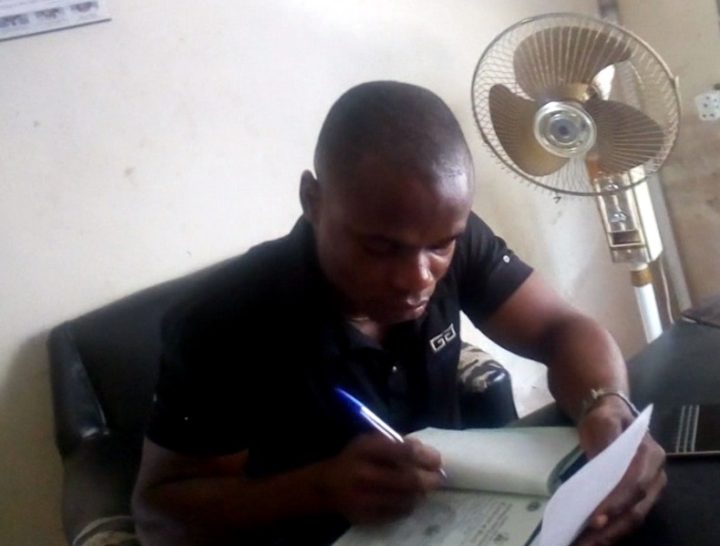
At Francis’ office, he did not hesitate to write a certificate for a child that was not presented before him. The reporter came up with phantom names: Name of Child – Ikechukwu Charles David; parents’ name – Ikechukwu Charles and Jennifer Ikechukwu both from Umuozu Ama Umuozu Isiala Mbano.
“Hope they know how much they are supposed to bring?” he asked Martins who had accompanied the journalist to the office darting a gaze at journalist simultaneously.
When the journalist insisted that the certificate should be free, a wide-eyed Francis wouldn’t hear of it.
“If you want the free one the procedures are different because I can tell you to fill that form and submit, and come back in six months’ time. Once you leave this office, I will just drop it somewhere.
“Look when I am returning this duplicates, the person that I will submit it to will ask for money too and they won’t believe I did not collect money to give it out. The government will tell you that it is free, but the same people saying that it is free are the ones that will ask for money.
“The person collecting these things from Abuja will even ask for money too but because you came with this my oga, give us N2,000,” Francis said
Finally, the deal was struck at N1,000 and the new certificate was acquired.
Wisdom who had earlier spoken to The ICIR, shared the experience of her difficulty in getting her three-week-old baby boy immunised because some of the healthcare centres use the certificate as a criterion for immunisation.
Some of the mothers said they have to pay between N200 and N500 to get a birth certificate.
“I just hope that the nurse will immunise us, maybe by next week I will pay, but for now I don’t have that money,” she said.
“Once you are coming to the hospital, just come with N500 and you will get it. It is easy like that,” another nursing mother who preferred to be identified as Mummy Chijindu, told The ICIR reporter.
Francis: NPC registrar
The first conscious effort to have a universal system of registration of births and deaths in Nigeria began in 1988 when the then Federal Military Government promulgated the Births and Deaths Compulsory Registration Decree 39 of 1979 which implied that any child whose birth is not registered does not exist. The authority to register these events is domiciled with the National Population Commission (NPC) and clearly states that the registration is free!
At the Imo State University Teaching Hospital (IMSUTH), Orlu, a 50-minute drive from Owerri the capital, The ICIR was given the contact details of Ohuakwanwa Sylvanus, the NPC registrar charged with the registration of births at the healthcare.
Sylvanus who had left the hospital by 1.10pm that afternoon asked to be met at the famous Orie Orlu Market also known as Orlu International Market.
At the market, Sylvanus a fair man clad in white brocade outfit walked the journalist briskly into a pharmacy shop where he was to issue the certificate.
Sylvanus started inputting the data of Ikechukwu Charles without asking for any proof of relation or immunisation card since the child was not present.
“You will give me N1000,” he blurted immediately he was done writing.“I am not even giving you a high price, you know this thing is urgent and I treated it so for you,” he said.
He wouldn’t budge and finally, the reporter gave him the sum of N1,000.
Extortion at National Population Commission and local council
The narrative is no different at the National Population Commission headquarters, Owerri, the Imo State capital.
“You said the certificate is for your sister’s child, right? Hope it is not a case of adoption because there are ways we will have to handle that one,” a registrar at the NPC asked the applicants.
She quickly filled out the original and duplicate copies of the birth certificate for Ikechukwu Charles–David which might join other duplicates stacked carelessly in the empty hall.
“Oyibo, (fair lady) you will give mummy something. You will drop small money for us, it’s not as if is by force but appreciate us for the work we are doing.Getting this thing did not even waste your time, so just do something,” the middle-aged woman said.
She received the N500 note handed out to her.
This style of subtle extortion in the name of “appreciation” was also observed at the local government secretariat.
At Orlu Local Government Secretariat, The ICIR meet Augusta Emeka an NPC official, who also demanded “appreciation” after the certificate was issued.
“You know it is to ensure that the office is moving so you have to appreciate. Because most of these things we use, we are the ones that make it available. The government is not helping us. We have to print the receipt ourselves,” Augusta said.
She too collected N500 “appreciation” fee.
Smith Ijeomah works for NPC at Azuabie Primary Healthcare in Port Harcourt. Although she initially asked for a proof of the relation between the reporter and the child she intends to register, she later gave the journalist the Form B1 to fill in the details of Ikechukwu Charles- David and commenced the registration, and after, he demanded N500 before he would hand the certificate over.
“No, it is not free. Are you trying to tell me that you don’t have N500? You are coming from Abuja, you have to give me oh,” the Smith insisted.
Contrary to what obtained in the PHCs visited by The ICIR, the United NationsConvention of the Right of Child, Article 7 and 8 stipulates that: “every child has the right to a legally registered name, officially recognised by the government, right to a nationality, and right to have an identity – an official record of who they are”.
At Rumuepirikom Primary Health Care in Obi-Akpor LGA of Rivers State, Priscilla Kogbo, who attended to women that came for immunisation and birth registration, decided to raise the bar.
“You said the person is 16 years old right? Fill out this form and bring your N3,000, the person is already matured,” she said tersely.
The ICIR observed that the mothers willingly paid for the certificates. Priscilla billed the mothers using her own discretion, ranging from the sum of N800 – N1, 000.
“This money I am collecting from you is even small. Go to other places you will pay higher than this.
“You people should keep this certificate very safe because if you come back to replace it, you will pay N10,000. And don’t laminate it,” she cautioned her audience.
One of the mothers claimed that her relative had paid as much as N13, 000 to get a birth certificate at another centre, saying that Priscilla was actually being considerate on the amount she charged.
Finally, Priscilla collected the sum of N2,500 from this reporterfor the certificate of a non-existing Ikechukwu Adaeze Lisa born on the 14th of February 2003.
Jumobaraye Daka, the Director of the National Population Commission, Port Harcourt, told The ICIR, that birth registration of persons between the ages of 0-17 years of age is free. He stressed that any form of extortion from the registrars is punishable under the laws guiding the birth registration processes in Nigeria.
However, it appears the act of demanding money for birth registration remains widespread in Rivers State, as checks by The ICIR at Rumueme PHC has shown.
Birth certificates obtained in Imo state
2
3
4
5
Birth certificates obtained in Rivers
2
3
4
NPC Owerri – We are underfunded
Agwu Innocent, the Imo State Head of Vital Registration, told The ICIR in an interview that the commission was underfunded and that lack of funds was responsible for the subtle extortion being experienced at the various PHCs.
He also said there was nothing new in officials requesting for some sort of appreciation after rendering a service.
“We generate a human index and the fund required to generate this kind of data is very huge, and we are hampered,” he said.
“If not for the support we are receiving from United Nations Children’s Fund (UNICEF), we would have closed shop.
“The materials for the registration comes from UNICEF, even the birth registration certificates form that we are using currently is printed and supplied to us by UNICEF.
“In terms of capacity building, that is also from UNICEF, they provide what is called counterpart contribution, then the commission is supposed to make their own counterpart contribution before you get the main budget, but the commission is forced to work with what comes from UNICEF alone,” Innocent lamented.
In Port Harcourt, Daka, the NPC Director, said funds and material to work with are not serious challenges for the NPC as UNICEF and the Federal Government make proper provisions.
He said the major challenge facing the commission is manpower, ignorance, and phobia on the part of parents.
“We do not have enough manpower and this puts a strain on the advocacy part of the commission which is important because most parents still do not want to register their children,” Daka said.
“They are ignorant to the impact that the birth registration of their children will do in the life of the child in terms of security and social necessities.”
Daka insisted that the issue of extortion by the registrars was not a factor limiting birth registration.
“It is not the issue of extortion. Most times, it is not even our staffs that collect money from these people,” he said.
“From monitoring, we discovered that some of them are health officials in the hospital and just because we gave them the certificate to issue in the absence of the NPC registrars, they use it as an avenue to extort people,” Daka said.
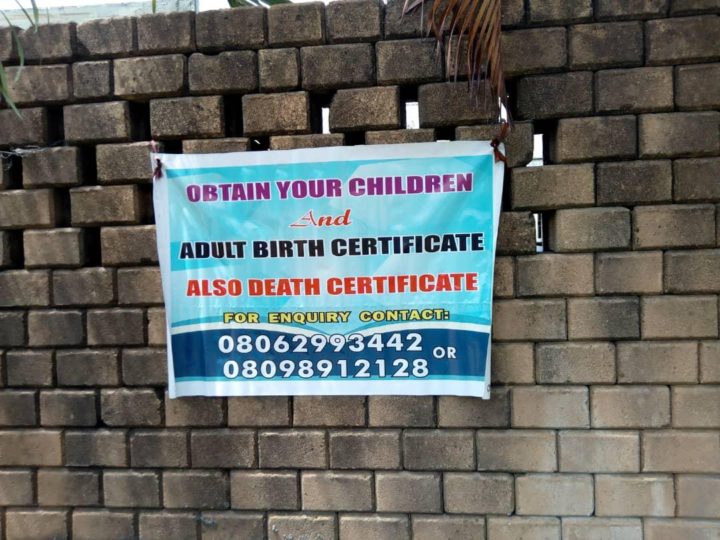
Birth registration advert on the street of Port Harcourt
Absence of birth registration equals zero planning
Chukwuedozie Ajaero, Director of Research and Capacity Building, School of Postgraduate Studies University of Nigeria Nsukka, said the importance of appropriate vital registration, especially birth registration, cannot be overemphasised if proper developmental planning in the country is to be put in place.
“For instance, when the federal government wants to provide healthcare facilities, some areas that do not need such structures are included and it is called under the federal character because there is no data to back up where they are supposed to erect such buildings,” Ajaero said in an interview with The ICIR.
However, the academic said extortion in the birth registration centres contributes only about 20 per cent to the problems of effective birth registration in Nigeria.
“The major problem is ignorance and the misunderstanding of the vital use of birth registration. Most people do not even know about it.
“Most people that get birth certificates do it when it becomes an absolute necessity. While some have very myopic view about it, they believe it is a way the government can keep tabs on them, know what they are doing at a particular time. It is a social-cultural problem.
“If we have the vital registration system working very well, even the census we spend lots of money to carry out will not be necessary.
Ajearo said it was the responsibility of the government to carry out proper advocacy and incorporate awareness for birth registration into the social syllabus to foster the exercise.
THE Federal High Court, sitting in Abuja on Tuesday, has granted an application for judicial review of the decision of the Code of Conduct Bureau (CCB) to decline access to asset declaration forms.
The International Centre for Investigative Reporting (ICIR), a non-profit news agency, had in January written a Freedom of Information (FOI) request to the CCB requesting for the “details of all asset declaration of all cabinet members in the present administration” as well as other key appointed officials.
In its response over two months after, the CCB however declined to provide the documents because the FOI Act “has exempted asset declarations of public officers from documents that can be accessed via reliance on the provisions”.
On February 19, The ICIR filed an ex-parte motion seeking a declaration that the bureau’s decision amounts to wrongful denial and a violation to the applicant’s right of access to information guaranteed by law.
Kingsley Nnajiaka, a legal officer at the Centre for Social Justice, represented the plaintiffs at the sitting on Tuesday.
Inyang Ekwo granted the ex-parte application for review “subject to an application for order of mandamus”. Judicial review is a process through which the court examines actions of other arms of government to determine whether they are in accordance with established laws.
“The process of judicial review is to be filed within fifteen days and the respondent is to be served at least seven days to the next hearing,” the honourable justice added.
The trial was adjourned by the court to Wednesday, June 26, at which time the CCB is expected to make an appearance for its defence.