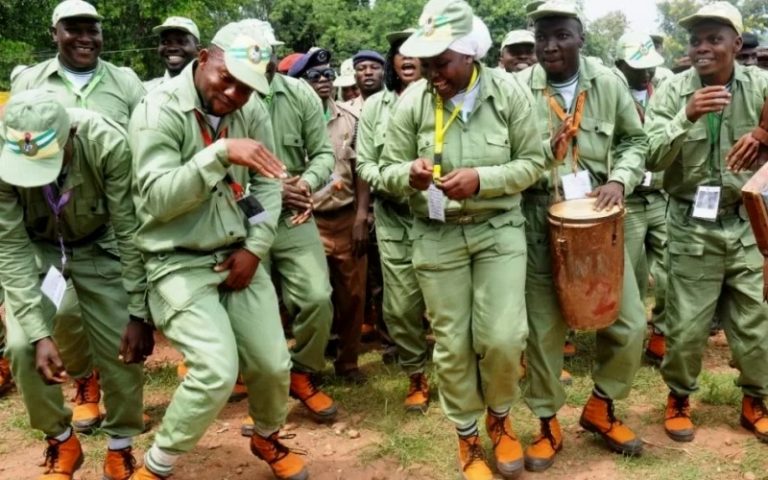
ZAINAB Ahmed, Nigeria’s Minister of Finance, has confirmed that members of the National Youth Service Corps (NYSC) will also benefit from the revised national minimum wage.
Ahmed gave the clarification while addressing a press conference at the headquarters of the Ministry of Finance on Thursday, saying that the committee set up by President Muhammadu Buhari to work out the modalities for the implementation of the new minimum wage took the NYSC into consideration.
Recall that it was based on the report of the Bismark Rewane-headed committee that Buhari signed the new minimum wage bill into law, thereby approving an increment from N18,000 to N30,000 for the least worker in Nigeria.
The finance minister, during the press conference, explained why the new minimum wage was yet to take effect, saying that a lot of other calculations were yet to be worked out with regards to the increments that would apply up the ladder of the federal civil service.
“Apart from the increase of the minimum wage from N18, 000 to N30, 000, there is also the consequential adjustment that we have to negotiate with the labour unions,” Ahmed explained.
“The total implication of that would be worked out only after the negotiations and that would involve determining how much increase every other staff that is above the minimum wage would get. It could be a flat amount or a proportion.
“The other aspect that is clear is that there would be an increase for the National Youth Service Corps (NYSC) as well because by the Act they should earn at least the minimum wage and the NYSC also has to increase to that N30, 000.
“So, because we have not done the negotiation with labour, I cannot give you the details of what we are projecting because it is simply on projections, at the end of the day, it is what we agree with labour that will be the amount that is due.”
NYSC members currently earn a monthly allowance of N19,800, which took effect from July 2011. Before then, they earned approximately N9,700.
There had been many rumours of an increment in corps members’ allowance over the years, with some saying it had been increased to N31,800 and others N49,800, but none of them had proven true.
THE hour was 1 pm on Wednesday, May 15, and power supply at the Radio House, Abuja, had just been cut. Ironically, the entire hallway on the ninth floor echoed with cheers of workers who seemed to be familiar with the power outage.
Five of them, seconds before then, were inside one of the building’s elevators going towards the top floor. Fortunately, just as the power went out, the elevator’s doors had opened to allow one or two exit. Fearing the worst and without a thought, everyone immediately rushed out and opted to use the stairs instead.
“It used to trap people o!” a guard on one of the lower floors told this reporter, referring to the elevator.
“Seriously!” he exclaimed dramatically. “Some may take up to 30 minutes inside. Like yesterday, there was no light. Everybody was following the staircase. Up and down, they were using the staircase till evening time. Kparam-kparam-kparam, come down … kparam-kparam-kparam, go up. No be small thing o.”
The elevator, which the reporter himself used prior to that conversation, is not properly ventilated. It also does not have a backup power source. And so whenever there is an outage and it is in use, the persons inside tend to feel uncomfortable due to excessive heat and lack of fresh air.
There are reports of people who fainted in the past as a result of suffocation and had to be rushed to the hospital. This was especially common during the heat wave of earlier months, one worker said.
Damilola Ojetunde, an Abuja-based journalist who was at the ministry on Thursday afternoon for accreditation, also narrated his difficult experience to The ICIR.
At the ground floor, the elevator’s floor counter indicated that it was on the third floor and descending. About ten persons queued to use the facility.
“All of a sudden, the elevator’s operator ran towards us screaming, ‘Nobody should enter, nobody should enter. It’s not going. It’s not going,” Ojetunde recalled, with a look of frustration.
“I asked him why we were not allowed to enter since the elevator was obviously working. He then replied that there is no light and they want to switch off the generator. Later, I had to go through the stairs to the ninth floor. When I finally got to the office, I had to sit for a good 10 to 15 minutes to catch my breath before I could do anything. I was exhausted.”
Ninth floor, Radio House, without power supply on Tuesday, May 14. Credit: Damilola OJETUNDE/The ICIR
It is not unusual for many of the floors on the 12-storey building, including those housing the Federal Ministry of Information, to be without power supply, especially in the past couple of weeks. Even with electricity supplied, light bulbs at the corridors have gone bad, leaving many floors without illumination.
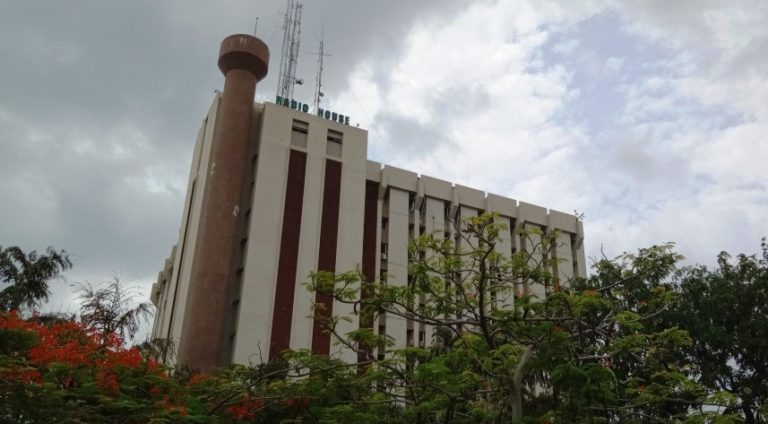
The Radio House is a giant brown structure situated at Herbert Macaulay Way, Area 10, Garki. For many years, it has housed various organisations: Kapital FM on the ground floor, Federal Radio Corporation of Nigeria (FRCN) on the first floor, and Voice of Nigeria on the sixth and seventh floors, while the ministry has offices on all other floors.
There are six elevators originally installed in the building, but only two have worked in a long time. Security posts have been placed directly in front of some of the elevator doors, signalling that they’ve been abandoned for a long period.
The information ministry’s powerhouse, containing huge generators, is another eyesore. The interior has become dusty and full of cobwebs, and the generators which are capable of powering the entire structure are hardly switched on. According to sources, they are only used on days when the power supply is not expected from the Abuja Electricity Distribution Company (AEDC). And, on those days too, they are only put on between the hours of 9 am and 2 pm, after which “everybody shuts down”. The powerhouse has, however, not been used at all recently.
“If you ask the people in charge of maintenance what the problem is, they will tell you ‘no diesel’,” a source told The ICIR.
“I feel it’s part of the power outage in Abuja that’s affecting everywhere because sometimes I will be in the office and a friend will call me from the secretariat to complain about outage and ask whether we still have light. So it is now becoming a norm. Even government offices don’t have a power supply, and then the substitute for power supply is not well utilised.”
The radio stations in the building, because of the need to constantly broadcast programmes, have independent means of generating power. It was learnt that the FRCN sometimes assists with powering one of the elevators whenever there is an outage to ease the movement of visitors and workers at the ministry.
People wait for the elevator on the poorly lit ground floor on Thursday, May 16, right before power outage. Credit: Damilola OJETUNDE/The ICIR
Minister, Perm. Sec. abandon offices
The information minister, Lai Mohammed, and the permanent secretary, Grace Isu-Gekpe, different sources say, are hardly seen within the premises. Before the present administration, the ministries of information and culture were separate, but President Muhammadu Buhari had them merged.
Edem Duke was Nigeria’s minister for culture and tourism under the previous government and, at the same time, Labaran Maku was information minister.
Consequently, Mohammed inherited two offices, one at the Radio House and the second at the federal secretariat where the ministry for culture and tourism used to be. His absence from his primary place of assignment has led to flippancy in how the infrastructural needs of the ministry are handled.
Isu-Gekpe also only shows up occasionally, especially for management meetings—which are sometimes held at the Press Centre on the ground floor rather than on the eighth floor where the minister’s office and board room are. The centre is meant to serve as a meeting point between government, journalists, and the public, and a venue for press briefings.
As a result of their constant unavailability, the one elevator labelled for the exclusive use of the “Honorable Minister and the Permanent Secretary” has become the most used by all, without discrimination.
The powerhouse, Federal Ministry of Information. Credit: ‘Kunle ADEBAJO/The ICIR
Workers discouraged, productivity drops
The frequent loss of power and unreliability of the elevators have hindered the ministry from getting the best out of its workers. For various reasons, including body size and health conditions, some find it difficult to use the stairs.
“It is affecting everything,” one employee said. “Some people cannot even work. There are people who will tell you pointblank they can’t climb the stairs, and it’s not their fault.
“There are some directors I know that once they come and the lifts are not working, they just go back or go to [the ministry of] culture because there will definitely be light there. Key offices like Human Resources Management, Procurement, and the rest have offices there too.”
Some workers, the employee also disclosed, often lounge at the mosque all day, and do not bother entering the main building. There are those who simply take their bags and leave when the power supply is cut.
It is believed that the bulk of the problems will be resolved if the information minister returns to operate from the ministry’s premises.
N655m budgeted for electricity, maintenance in 4 years
Figures from the approved budgets between the 2015 fiscal year and 2018 show that the Federal Ministry of Information and Culture budgeted up to N655 million in four years on electricity and maintenance related expenses at its Abuja headquarters.
Since the present administration came into power, the ministry has budgeted N94 million on electricity charges, N326 million on maintenance services (including maintenance of generators), and N43 million on generator fuel—all overhead (recurrent) expenses. It is believed that recurrent budgeted sums are invariably released by the finance ministry.
Also, as part of its capital expenditures in 2017, the ministry budgeted N68 million on the provision of inverters and solar power. In 2016, it budgeted N100 million on the purchase of new generators, N12 million on electricity-related repairs, and N12 million on the installation of inverters.
Calls placed to the information minister were not answered and a text sent to his phone to ask what he is doing about the ministry’s infrastructural challenges has also not been replied.
On two occasions that The ICIR called Joe Mutah, chief press secretary to the minister for comments, he said he is “on the road” and will return the call when he arrives, but declined to give a specific time.
FORMER Chairman of the Gombe State Board of Internal Revenue, Atiku Mu’azu, has pleaded guilty to a two-count charge of conspiracy and theft of state funds.
The Gombe Zonal office of the Economic and Financial Crimes Commission (EFCC) arraigned Mu’azu and three other officials of the state board of internal revenue before Justice Beatrice Ilya of the Gombe State High Court on Thursday.
The three others are Mohammed Adi, Chief Store Officer; Ibrahim Abubakar, Chief Accountant; and Abubakar Usman, a director. They were alleged to have committed the crime between January and June 2015.
According to Tony Orilade, EFCC’s spokesman, the convicts “conspired and stole the sum of N25,060,000 (Twenty Five Million and Sixty Thousand Naira) only, belonging to Gombe State Government”.
The offence was contrary to and punishable under Section 286 and 287 of the Penal Code Law, Laws of Northern Nigeria.
All the accused persons pleaded guilty to the charges.
The defence counsel, L.A. Haruna, pleaded with the trial judge to temper justice with mercy, saying that they were first-time offenders and had not wasted the court’s time but had pleaded guilty on the day of their arraignment.
Haruna also informed the court that his clients had made some restitution and are willing to fully restitute the whole amount.
In her judgement, Justice Ilya pronounced them guilty and ordered them to pay fine of N100,000 each following the pleading by the defence counsel.
The convicts were also ordered to pay back the remaining amount to the Gombe State Government within six months.
In a related development, the EFCC says it has arrested one Abdulgafar Ayinla, a member-elect of the Kwara State House of Assembly over an alleged N26 million property fraud.
Abdulgafar Ayinla
Orilade said the arrest followed a petition submitted to the EFCC by an America-based Nigerian citizen who alleged that she contacted Ayinla to help her in purchasing a property.
“The Lawmaker-elect sold to me another two plots of land with four bedroom bungalow at window level at Agric area of Ilorin. I paid N8,240, 000 (Eight Million Naira Two hundred and Forty Thousand Naira) commission of which Ayinla informed me that the seller had received his money but he never paid the money to the seller up till today, and never refunded the money to me,” Orilade quoted the petitioner as saying.
“The suspect disclosed that he diverted the money to his personal use and promised to pay back when he receives his wardrobe allowance from the Kwara State House of Assembly. He would soon be charged to court.”
This report is produced by a team of campus journalists: Taofeekat AJAYI, Yusuf AKINPELU, Enoch STEPHEN and Alfred OLUFEMI.
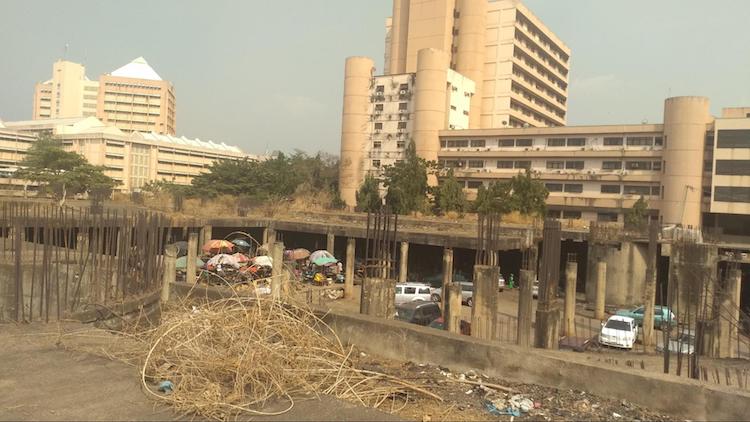
A DECREPIT uncompleted building at the Federal Capital Central Business District (CBD) Abuja is yet to get a face-lift, 36-years after the federal government property was first commissioned.
Over the years, the neglected infrastructure within the twin-complex Federal Secretariat has doubled as a home and commercial hub for some of the city homeless.
The complex accommodates prominent government establishments, including the federal ministries of finance, education and health, Nigeria Police Force Headquarters as well as a few private establishments.
It was built by the military regime of Ibrahim Babangida who ruled Nigeria between August 27, 1985, and August 27, 1993. Mr. Babangida relocated the seat of the federal government from Lagos to Abuja on December 12, 1991.
This building has remained abandoned under several military and civilian administrations, from that of Babangida who built the secretariat, to those of the late Sani Abacha, Abdulsalami Abubakar, Olusegun Obasanjo, the late Umar Yar’Adua, Goodluck Jonathan and now Muhammadu Buhari: A span of 36 years.
In 2017, a PREMIUM TIMES reporter who visited the area gathered that the building is originally part of Phase Three of the federal secretariat, but it was not allocated to any ministry or agency because it was uncompleted.
Workers, who declined to be identified for fear of victimisation by the government, said the illegal activities taking place in the abandoned building and the general lawlessness of its occupants are well known at the secretariat.
When contacted, the spokesperson of the Abuja Environmental Protection Board (AEPB), Muktar Ibrahim, denied such building existed, but investigations by this paper showed that his claim was false.
“The board is not aware of an abandoned building in the secretariat,” Mr. Ibrahim told the reporter. “Because apart from the waste, an abandoned building also has security implications. We would have done evacuation if we knew because we have an environmental monitoring unit.”
Meanwhile, when this team of reporters visited the site in April, the building still remained standing in its squalid state.
The pictures below mirror the daily lives of residents who use the edifice as relaxation spot, restaurant, smoking joint and for all kinds of trading activities.
The abandoned building tucked within the twin-complex Federal Secretariat at Central Business District, Abuja
One of the dwellers in the make-shift residence having a noon nap
All sort of items is up for sale in the market
The market is the major source of life to the area
Yet another dumpsite for butchered bones
Relaxation cum drinking joint
A wreck of a police van
A refuse dump close to where residents sleep
Another face of refuse site
Source of water for dwellers and food vendors
A local water seller (mai ruwa) packs his truck, awaiting his turn to fetch water
Laundry area of residents
An overhead view of the shanty building as it stands side-by-side with the big buildings that dot the CBD of the City
THE Securities and Exchange Commission (SEC) has warned the general public about the dangers of engaging in an online Ponzi scheme known as ‘Loom Money Nigeria’ that is currently making waves in the country.
Acting Director-General of the commission, Mary Uduk, said this during a press conference organised by the Ministry of Finance in Abuja on Thursday.
Uduk was represented at the press conference by Isyaku Tilde, the Acting Executive Commissioner, Operations of SEC, who warned that anyone engaging or investing money in the Loom Ponzi scheme, does so at his or her own risk.
“We are aware of the activities of an online investment scheme tagged ‘Loom Money Nigeria’,” Tilde was quoted as saying on Thursday by TheNation newspaper.
“The platform has embarked on an aggressive online media campaign on Facebook and Whatsapp to lure the investing public to participate by joining various Loom Whatsapp groups to invest as little as between N1000 and N13,000 and get as much as eight times the value of the investment in 48 hours.
“Unlike MMM that had a website and the promoter known, the people promoting Loom are not yet known and this pyramid scheme operates through closed groups mainly on Facebook and Whatsapp.
Acting Executive Commissioner SEC, Isyaku Tilde, Finance Minister Zainab Ahmed, and Comptroller-General of Customs, Hameed Ali, at the press conference held at the Ministry of Finance on Thursday. Photo credit: TheNation newspaper.
“If it were a local Ponzi scheme with known offices, it would be very easy for the Commission to seal their offices and freeze their accounts.
“We, therefore, wish to notify the investing public that the operation of this investment scheme has no tangible business model hence it’s a Ponzi scheme, where returns are paid from other people’s invested sum.
“Also, its operation is not registered by the Commission. Please note that anyone that subscribes to this illegal activity does so at their own risk.”
Tilde said that an inter-agency committee known as the Financial Services Regulation Coordinating Committee (FSRCC) is currently collaborating with security agencies on how to bringing the Loom platform down.
This recent warning by SEC is coming barely a week after the Central Bank Nigeria (CBN) also issued a similar warning urging Nigerians not to invest their money in the Loom scheme.
“Whether it is Gloom or Loom or MMM or whatever, the CBN has not licensed any of them,” Isaac Okorafor, CBN’s spokesman said.
“We can only speak about the ones that are licensed. We are warning Nigerians that any institution that collects deposit but is not licensed by the CBN nor insured by the NDIC (National Deposit Insurance Commission), is illegal.”
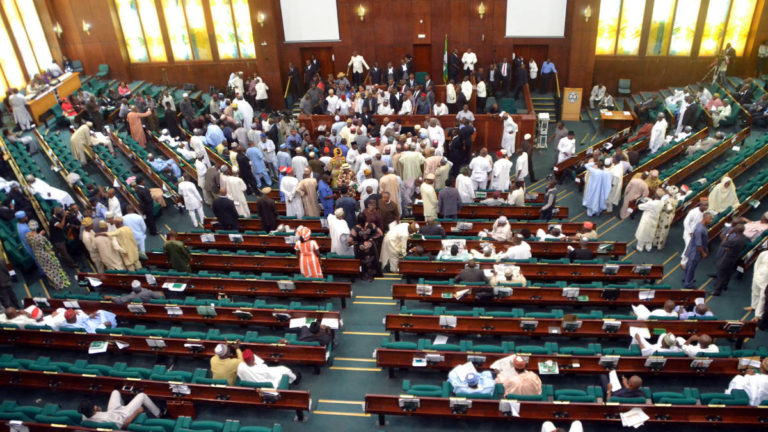
THE bill to establish the South East Development Commission (SEDC) has passed second reading at the House of Representatives on Thursday.
The bill which had been passedby the Senate in 2018, had been struck out by lower legislative chamber in May 2017, after it had also passed the first and second reading.
However, the bill was reintroduced at the House and came up again for consideration on Thursday.
Contributing to the debate, Chukwuma Ujam, from Enugu state called on his colleagues not to “ethnic sentiments” into the deliberation.
“The south-east is faced with environmental challenges,” Ujam said. “Other regions want development commissions (and) we have already canvassed for support.”
Another lawmaker from the South East region, Samuel Onuigbo, said asides the environmental challenges being faced in the region, the establishment of the South East Development Commission would bring about more unity in the country.
“At a time like this, we should build unity, this is not the time to exclude a certain region of the country,” Onuigbo said.
Also contributing to the discourse, Yakubu Bade and Abdulmumin Jibrin, from Kaduna and Kano States respectively, all spoke in support of the bill, saying that the SEDC, when established, will cushion the effects of the civil war in the South East.
“The war in the southeast was not conventional but guerrilla warfare; a lot of damage has been done to that area,” Bade said.
Jibrin agreed. “This is time to show this part of the country that they are part of the Federal Republic of Nigeria. If you kill this bill, it will come back to hunt you sooner or later. I call on our colleagues that we should rise now and show the south-eastern part of Nigeria that they are part of us.”
If the SEDC bill is eventually passed by the House of Representatives, a joint committee of the National Assembly would still need to harmonise the two versions of the bill passed by both chambers before presenting it to President Muhammadu Buhari for assent into law.
Following the creation of the Niger Delta Development Commission (NDDC) to cater for the Niger Delta region that has suffered devastation as a result of oil exploration activities in the area, other regions of the country have been clamouring to have a similar commission established in their areas.
Only recently, President Muhammadu Buhari signed into law a bill for the establishment of the North East Development Commission (NEDC) to oversee the rehabilitation and reconstruction of the region heavily affected by terrorist activities. The board of the NEDC has already been inaugurated.
Also, there is a bill currently before the Senate for the creation of a North West Development Commission. The bill was sponsored by Jibrin Barau, a Kano State Senator, and was read for the first time on the floor of the Senate on December 13, 2018.
HAD the Nigerian Financial Intelligent Unit (NFIU) been granted autonomy to operate for the past 10 years, with its new guidelines on financial autonomy to local governments, it would have helped the 774 local governments across the country access a whopping sum of N14.7 trillion without the intervention of the all-powerful state governors.
The NFIU had directed that as from June 1, 2019, local governments would have direct access to their statutory allocation, and no governor would be able to divert the fund into the state’s account.
The new measures, introduced by the present administration to restore local governments’ financial autonomy is coming less than a year after President Muhammadu Buhari signed the NFIU bill into law, thus separating the agency from the Economic and Financial Crimes Commission (EFCC).
According to data from the Office of the Accountant-General, N14,708,838,964,375.70 has been allocated to the 774 local governments between 2008 and 2018, and larger percentage of this allocation has been diverted by governors into the state account.
On state basis, the data reveals that local governments in Kano state have received the highest allocation amounting to N832.6 billion, followed by Lagos state – N829.6 billion, Katsina – N613.4 billion, Oyo state – 569.6 billion, and Kaduna state – N504.9 billion as the top five states with the highest amount of allocation to its local governments.
Least five states States whose local governments have received the lowest allocation in the past 10 years are Bayelsa – N167 billion, Gombe – N219.4 billion, FCT – 226.8 billion, Ebonyi – N230.9 billion, and Nasarawa – 240.4 billion.
The allocation sharing principle may not be far from the 2006 population figures that put Kano as the most populated state and followed by Lagos state. From the bottom, FCT had the lowest population figure and followed by Bayelsa state.
The population figures and the number of local governments in each state are important factors considered in the allocation of resources.
One interesting thing is that, of the first 100 local governments with the highest allocation, only eight local governments from the South-South region of the country made the list – the region where the country gets about 75 per cent of its earnings.
What the new NFIU guidelines say
The NFIU has banned banks, governors, financial institutions, public officers and other stakeholders from meddling with the statutory allocations of local governments beginning from next month.
The guidelines were said to have been prompted by threats by the international financial watchdog to sanction Nigeria because of abuse of financial abuse.
According to a report by the Cable Newspaper, Ahmed Dikko, NFIU spokesperson said the agency is committed to fighting money laundering, terrorism financing and proliferation of weapons.
The new guideline also limits cash transactions in the accounts of local governments to a daily maximum of N500,000 only while subsequent withdrawals must be by approved Cheques or electronic payment channels to promote registered transactions by all the local governments.
Ordeals of local government areas
Local governments as currently constituted, cannot deliver dividends of democracy to the people as long as state governors are in charge of the funds, said Ibrahim Khaleel, National President of the National Union of Local Government Employees (NULGE) at a press conference in support of the guidelines.
“It is no longer news that effectively from around 2003, state governors across all the political parties have converted Local Government funds coming from the Federations account into a source of funds which they dip their hands at will without any term of accountability because of their absolute control of the State Joint Local Government Account (SJLGA).”
Khaleel also said that local government finances have over the years been scandalously abused by state governors and their collaborators.
Also, Bobboi Kaigama, President of the Trade Union Congress had also said that cash transaction of state governments from the joint local government accounts is a threat to development at the grassroots and that it also fans the embers of insecurity and major crisis.
“The governors have made a mess of the Joint Account system and have deprived local governments of their development initiative in their local areas leading to bad leadership,” he said.
In states where the local government chairmen are elected — they lament how governors take all the monies meant for council from the federation account and sometimes, hand them a ‘chickenfeed’ or “the crumbs falling off the master’s table”, let alone states where local government caretaker chairmen are imposed by the governors.
Under the current sharing formula, the federal government takes the lion share of 52.68 per cent from the federation account. The 36 states take 26.72 per cent, while the balance of 20.60 per cent is given to the 774 local governments in the country.
Often time, local governments do not get to receive their 20.60 per cent as some governors ‘seize’ this percentage and may decide to give the local governments a fraction of their allocation.
Governors of states have over the years been the beneficiaries of the SJLGA. They decide what and what not is to be given to local governments, thereby, making them so powerful. Setting up caretakers committees to man affairs of the local council is another means of siphoning money because the committee members are not elected but chosen by governors to whom they are accountable.
Kaigama also said that for the guidelines to see the light of the day, the Central Bank of Nigeria (CBN), Independent Corrupt Practices Commission (ICPC), Economic and Financial Crimes Commission (EFCC) and others should provide the necessary support that will stop governors usurping the power of local government chairmen.
Senate approves, but Governors’ Forum keeps mum
The Senate in its approval to the guideline has called on the State Houses of Assembly yet to approve the constitution alteration bill geared towards granting full autonomy to local governments to do so before the expiration of the Eighth National Assembly.
In a motion sponsored by Aliyu Sabi Abdullahi, senator representing Niger North senatorial district, the Senate expressed concern at the continuous pillage of cash allocated to local councils across the states through the State Joint Local Government Accounts.
The Nigeria Governors Forum has, however, kept mum since the announcement of the new guidelines by the NFIU.
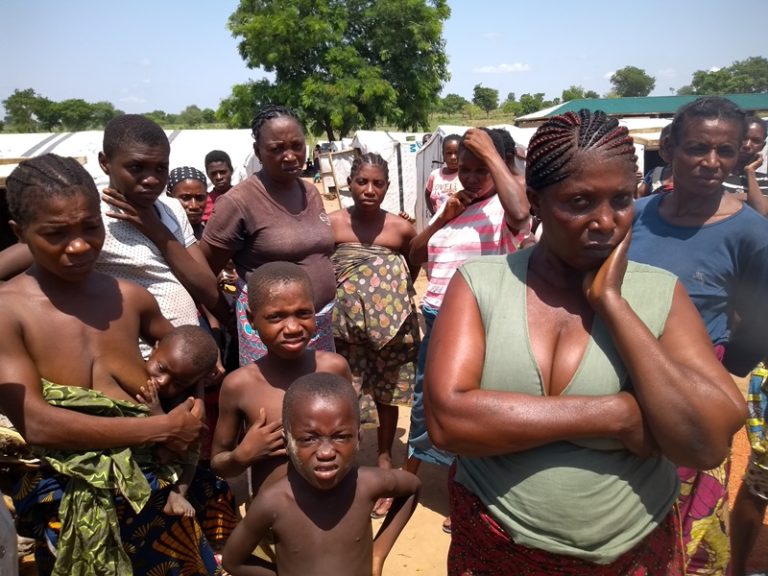
COMMUNITIES in the North East, especially the people living around the Lake Chad Basin area are grappling with hunger, rape and uncertain future for their children.
Their situation may get worse as adverse ecological changes, linked to climate change and poor water management, exacerbate.
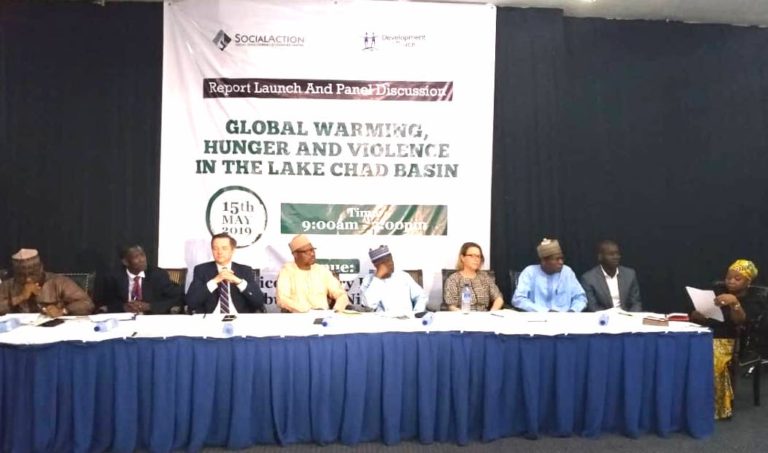
This is the finding of a 2019 report published by Social Action Development Centre (Social Action) and Development and Peace launched yesterday in Abuja.
Social Action is a local NGO that promotes resource democracy, social justice and human rights in the sectors of energy, mining, the environment and climate change, trade and public budgets, and its partner, Development and Peace offers social service to the poor and the oppressed across the world.
In the report, Boiling Over: Global Warming, hunger and Violence in the Lake Child Basin, the researchers found that climate change is responsible for decades of drought and desertification in the Sahel region, causing reductions in the pasture for livestock and fertile land for food production.
The ecological crisis, in turn, contributed to the violent conflict in the Lake Chad Basin, the report stated.
Another factor, such as total neglect of ecological restoration, manifested in the form of poor governance, the looting of public funds by government officials and contractors, has also been identified as contributory to the humanitarian crisis in that part of the country.
Dr. Isaac Osuoka, the Director of Social Action, said the goal of the study is therefore to improve the public awareness about the underlying causes and the ramifications of the conflict in the Lake Chad Basin, and the Northeast in general.
His organisation saw the similarities in various conflicts happening in the country over the years, and therefore “identified the need to promote a common civic understanding of the genesis of the problems, he said.
Genevive Talbot, a co-author of the report and programme officer at Africa Development and Peace reinforced the statement of Osuoka.
“This report talks about environmental security, about human right violation and poverty. The mix of these three ingredients gave rise to the conflict we are now witnessing.”
She urged all stakeholders to recognise the suffering of Nigerians trapped in the conflict in the Northeast and help them to find peace and justice.
“We need to work as one voice.”
The Director, MacArthur Foundation, Africa, Dr. Kole Shettima, said a regional response to the crisis in Lake Chad Basin is key to finding a permanent solution to the problems so that members can learn a lesson from each other.
He also said stakeholders must develop a new approach that questions the basis of the problem: The people.
“We seem to be offering the same solutions. We are not asking whether the solution we offer is yielding the desired result. We cannot continue to do the same thing and expect a different result. I challenge everyone to rethink development paradigm. For development is about people”
As part of mobilising support for the humanitarian crisis in Lake Chad Basin area, the Canadian High Commissioner to Nigeria, represented by Daniel Arsenault, Head of Cooperation, disclosed that Canada is delivering $2.65 billion in climate finance to developing countries, including Nigeria by 2020.
This contribution represents Canada’s largest climate finance contribution ever and will help developing countries, particularly the poorest and most vulnerable, the transition to low-carbon economies and build climate resilience.
Agencies of government such as the Northeast Development Commission and State Emergency Management Commission promised to work closely with state and non-state actors in order to end the suffering of the victims of the crisis in the northeast.
The leadership of the two agencies, Alkali Mohammed, NDC Chairman, and Hajiya Yabawa Kolo, SEMA Borno, were in attendance.
Meanwhile, the Managing Director, Chad Basin Development Authority, Modu Sulum commended effort and pledges of the stakeholders and urged them to carry the affected communities along in their activities.
“Have it in mind that whenever you are coming for any development program in the Lake Chad Basin area, the people of the communities need to be carried along,” he said.
Lake Chad Basin Commission comprises of Cameroon, Niger, Nigeria and Chad. The four countries signed the Fort Lamy (today N’Djamena) Convention on May 22, 1964, which created the Lake Chad Basin Commission. The Central African Republic joined in 1996, and Libya joined in 2008.
One year after the federal government pledged to rebuild communities and resettle locals displaced by herdsmen, a single house has not been built anywhere in Benue and Plateau states. Now, the displaced persons live in fear that they may never return to their ancestral land.
WITH four wives and 16 children, Hyacinth Neior thought he had achieved greatness until the first night of 2018 when coordinated attacks by herdsmen in nearby villages forced him to flee from his village.
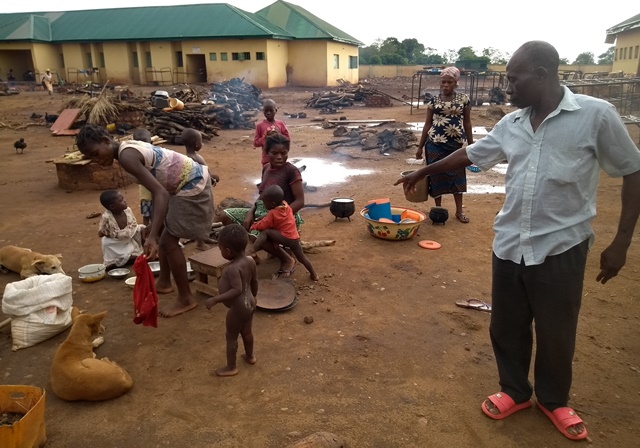
From that moment on, he has been living with his two wives and 12 children in a crammed classroom at abandoned public school buildings in Gbagimba, Guma Local Government Area of Benue State. The other two wives live with the remaining children in their parents’ homes, outside Guma.
“When I was in the village, having many children was not a problem,” says the 54-year-old. “It is this time that I now know that having many children is not easy.” Prior to running away from his village, he was a farmer, producing yam and other root crops.
Neior is one of tens of thousands of villagers in Benue State living in overcrowded camps after herdsmen killed about 73 people and burned their houses in January 2018. From that time, numerous other killings have occurred, including the murder of two Catholic priests and about 13 worshippers during an early morning prayer in a church.
In the first half of 2018, more than 1,300 people were killed in a crisis involving herdsmen and farmers across the country, according to a report by the International Crisis Group (ICG), a trans-national non-governmental organisation. This figure was about six times more than the number of civilians killed in the Boko Haram crisis during the same period.
In Benue, survivors of these mass murders face uncertain future as they have remained indefinitely in camps after fleeing from their communities.
“Once there is life, we feel it is better to stay here to save our lives,” says Neior who believes that he will be killed by herdsmen upon return to his village. “They have taken over our land and they will kill anyone who returns.”
Neior is the chairman of IDPs in Gbagimba camp, helping to coordinate 24,019 people in the camp with the state’s officials. The IDPs were initially housed in a primary school before they were relocated to an abandoned secondary school.
Living in the camp, Neior says, is useless because they are not doing anything and mostly depend on handouts from government and individuals. They need access to their land, to farm and feed their children as they had always done.
Hyacinth Neior points to his wife to clean the faeces on his baby’s buttock at Gbagimba camp in Guma, Benue State. Picture by The ICIR.
Here, more than 15 families are allocated a classroom with men, women and children sharing the space. Rickety mattresses line up the corridors during the day with some lying on them. Nude children play traditional games under the sun, chasing after themselves with sticks. Each family cooks their own food on firewood. In one corner, a daughter roasts two rats while the elderly father bends to help her turn around the meat. A younger child watches on.
One year ago, the federal government had promised to rebuild communities destroyed by the herdsmen and resettle displaced persons.
“I know that being in an IDP camp is not good for anybody at all, children have to go to school, adults have to go to their farms and others to their trades and it is our duty as a government to make sure that everyone is safe to do their work in peace and comfort,” Yemi Osinbajo, vice president, told IDPs last May.
“The reason we are meeting today is to look at how you will return home and be settled in safety,” said Osinbajo who had a meeting with the governors of Benue and Nasarawa during the visit.
But one year after, no house has been rebuilt and no displaced person has been resettled by government in Benue. The IDPs say if government can guarantee their security, they will return to rebuild their houses by themselves. But they cannot go back home because the herdsmen are still lurking around their communities.
Terry Enger, coordinator of Gbagimba camp tells The ICIR that government has not asked the IDPs to return home because the herdsmen have continued to attack vulnerable communities.
“They are willing to go but because of the recent attacks and the fear of being attacked, that is why they are still here,” Enger says, adding that for most of the IDPs, spending another farming season in camp is the nadir of their lives. “The way it is now, our government is trying but its effort is not enough. There is no place like home.”
The camp’s food store is empty and the usual weekly distribution of food items to families have not been done for more than a month. To survive, most of the IDPs say that they go out to scout for menial jobs around the host communities, earning so little that they are unable to feed their children. They complain that their children suffer bouts of diarrhoea and malaria.
“In a week, we record not less than 30 diarrhoea cases in under five children here,” says Godwin Gbawuan, the camp’s health officer. He attributes the widespread infection to unsafe water. “We’ve tested the water from the borehole and we found it is not safe but they still drink it.”
Humanitarian crisis arising from defending Benue valley
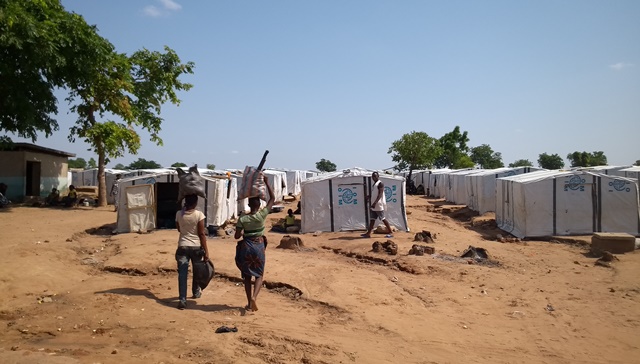
Daudu camp expands as more people seek shelter away from their unsafe villages. Picture by The ICIR
A giant bill board outside the Gbagimba camp proclaims Samuel Ortom, the governor of Benue State, “Defender of the Benue Valley”. Defending the Benue valley, IDPs say, means warding off the intruders contesting rights to land around River Benue in a state regarded as Nigeria’s agricultural powerhouse.
Access to this valley has been the cause of lingering crisis between Tiv crop farmers and nomadic Fulani herdsmen. The cycle of crisis often begins thus: cows stray into farms and eat up crops; farmers sometimes kill the misbehaving cows; and herdsmen retaliate by killing the farmers and their children. It is year-on-year crisis, not only in Benue but also across the middle belt and other parts of the country.
Benue State, led by Ortom who has won election for second term, enacted Open Grazing Prohibition and Ranches Establishment Law, with the aim of ending clashes between the nomadic livestock herders and crop farmers.
Rather than prevent the clashes – the law became effective from November 2017 amidst protest by the Fulani herdsmen – the state has faced its biggest humanitarian crisis ever since its creation in 1976.
“Since January 2018, they have never been to their villages even to go and look at things there,” says Alexander Chia, the coordinator of the camp at Daudu, Guma. When The ICIR visited the camp in April last year, it had 24,044 people but Chia says the population has increased to 30,777. Then the camp was just rows of blue painted modular housing blocks. Now, additional rows of tiny tents have been built to accommodate increasing number of IDPs.
Chia tells The ICIR that despite the ban on open grazing, the herdsmen have settled in the fringe villages and kill anyone who dares to return to those places to farm. “The Fulani herdsmen do not want the law,” he says. “They want to stay by force. That is why they are forcing farmers to leave the place for them.”
The IDPs say soldiers are supposed to stay on the border areas with Nasarawa State to stop the herdsmen from coming into the state but the security agents rather have their stations at the wards’ headquarters where they sometimes patrol to the villages.
Cosmas Yengev, displaced since last year, describes a scenario why he cannot go back to his village to start farming. “Like now, I am on the farm and they [soldiers] patrol and they leave the place and they [herdsmen] attack me. Before they [soldiers] will go back to that place now, maybe they [herdsmen] will disappear and you will be killed.”
For resettling, there is only condition that needs to be fulfilled. “We want the Fulani to leave our land,” says Alexander Pohor who has been living in the overcrowded camp with his wife and six children. “We want to go back to farm and eat.”
That may be a tall order, Pohor recognises, because the herdsmen do not want to give up the riverine areas that provide all-year-round lush grasses for their animals. “But a law is a law which government must enforce,” he maintains, adding that herdsmen must ranch their cattle as the anti-open grazing law stipulates.
The ICIR was unable to speak with the leaders of herdsmen in the state. Last year, when The ICIR spoke with Haruna Ubi, Benue State chairman of Miyetti Allah, the association of Fulani cattle breeders, he blamed Tiv farmers for the lingering crisis. He had insisted that the farmers often instigated the crisis by confiscating their cows, suggesting a peace accord between farmers and herdsmen.
But Justin Kpi, living in camp with three wives and 13 children, says the Fulani do not obey any agreement. He recalls that they once signed such agreement in 2014 with the herdsmen to stop cows trespassing to farms but the herders still led cattle to eat up their crops.
In much of the state, open grazing of cattle has been stopped. The problem, however, lies in communities close to Nasarawa State where there is no ban on open grazing. Most of the IDPs originally come from these border communities. They complain that the herders come to graze their cattle on their farms and go back across the borders where they live.
As long as the herdsmen still stroll into their farms across the invisible borders, IDPS say, returning to their villages is suicidal. “Life first before any other thing,” says Benedict Nyitor who married his wife in the camp. He dated her when he was a teacher in St. Monic Nursery and Primary in Taavaan, Guma. They now have a new born baby.
Nyitor gets a stipend for teaching children in the camp but his biggest worry is the unanswered question of when they will go back to their villages. “We think about it and we are not seeing anything government is doing to take us back.”
“Hunger is killing us”
Rebecca Tyro speaks for displaced women and children at Daudu camp. Picture by The ICIR
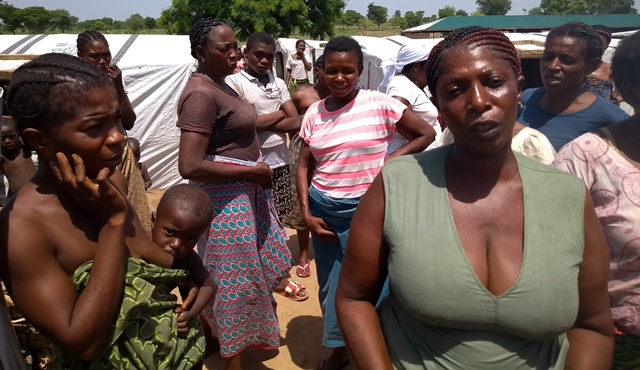
Women and children gather round The ICIR reporter at Daudu camp, coming out from their tiny tents. They have two demands. The first one: “we are hungry; hunger is killing us” says their spokesperson, Rebecca Tyro. “A Tiv man may not have money but not food,” adds James Lokoja who interprets for Tyro.
They have not received food items for over a month and they have not been receiving food as frequently as they used to. Not just that, the quantity has reduced and they have many mouths to feed.
Their second demand is that they want to go back to their villages. “Last year, our mind did not settle because we did not farm,” Tyro says. “Now, we are still in camp as this new farming season begins. We want to go back to work and feed our children.”
Emmanuel Shior, executive director of the Benue State Emergency Management Agency tells The ICIR that he just returned from a travel and would try to ensure that the IDPs get food.
Based on the latest update, Shior says, the state has 486, 692 IDPs in six official camps and 16 other camps, adding that the security situation has not improved for the IDPs to return to their villages. “Fulani herdsmen are still occupying some of the rural areas and they have come with their cattle. They are grazing feely. So you cannot have the IDPs return to such places.”
He is disappointed by the attitude of federal government towards the IDPs. “State government alone cannot shoulder the humanitarian situation,” Shior says. “We can’t understand why President Buhari cannot take proactive measures to address the plight of the displaced people in Benue and also to stop the killings.”
IDPs in Plateau want to return home after nearly one year in camps
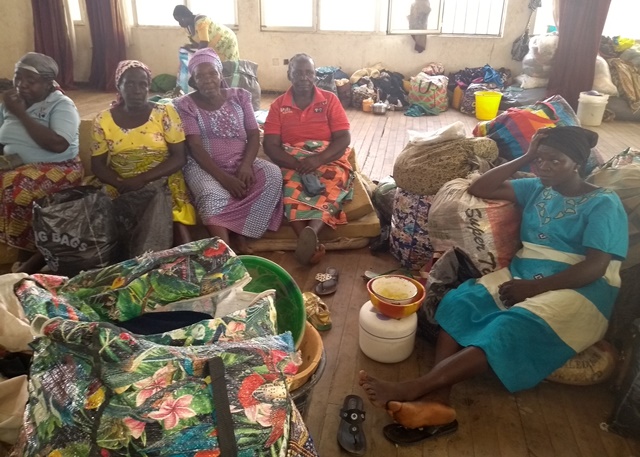
Anna Thomas, in blue dress, her mother-in-law, first from right and other women at Anguldi camp in Jos. Picture by The ICIR
On the night of June 24, 2018, Anna Thomas escaped from her village with her four sons but without her husband. As gunshots and ensuing commotion took hold that night, their house was burning and the husband was inside.
“Fulani herdsmen first came to the house my husband was sleeping. They killed him and put fire in the house,” she tells The ICIR, sitting with her back leaning on piles of bag at the hall of Nigerian Mining and Geosciences Society in Anguldi, Jos where she has taken refuge with her sons since the attack.
Her husband and her father-in-law were killed in their village Tissan in Gashish District in Barkin Ladi Local Government Area. In all, across other villages in the area, 85 people were killed in one day and their houses were burnt down.
Sitting across her mother-in-law and three other women in the camp, Thomas says that the coordinated attack was the worst they had ever faced in the lingering crisis between Berom farmers and Fulani herdsmen.
In July 2012, a serving senator representing the area in the Senate, Gyang Dalyop Datong, was murdered by herdsmen while attending a burial of about 50 people earlier killed by the herders.
“We did not know we would spend more than three days here,” says Thomas who is afraid that they may suffer the fate of Dogo, Masseh and Pwbiduu villages whose people, IDPs say, have not returned since the 2012 attack.
They say their hope of returning to their villages is farfetched. Most of the people that took refuge in the camp have deserted it, not that they returned to their villages but they have secured accommodation elsewhere. Those left behind, like Thomas and her family, have nowhere else to go except their villages whom they say are not safe anymore.
What they initially thought to be a few nights stay has stretched to nearly a year. They say they will return home once security is guaranteed and their houses are rebuilt.
However, the National Emergency Management Agency (NAMA) claims that IDPs from Gashish have been resettled.
“These people have now been integrated into their ancestral homes,” Eugene Nyelong, coordinator of NEMA North Central Zonal office, Jos, tells The ICIR, adding that the federal government has approved a police post in the area to respond swiftly to any attack.
After The ICIR told him that government has not built any house for the displaced persons, Nyelong says “we gave necessary assistance in terms of building materials.”
Displaced people from Gashish disagree with NAMA on resettlement. Dakab Alamba, community leader of Jos Branch of Gashish says out of the 18 communities that were affected by the crisis, only three have been returned. The three communities, he says, are Kakuruk, Kuzen and Kurra Falls where the herdsmen did not burn houses but the people ran off out of fear.
Alamba lists the building materials donated to Gashish district by the government in February to include, 180 bundles of zinc, 150 bags of cement, some roofing woods, and about 50 bags of nail. “Government gave those materials to see if the people can be resettled but we discovered that almost all the villages were affected” he says, adding that the building materials were not even enough to rebuild one village but they decided to share them across the villages.
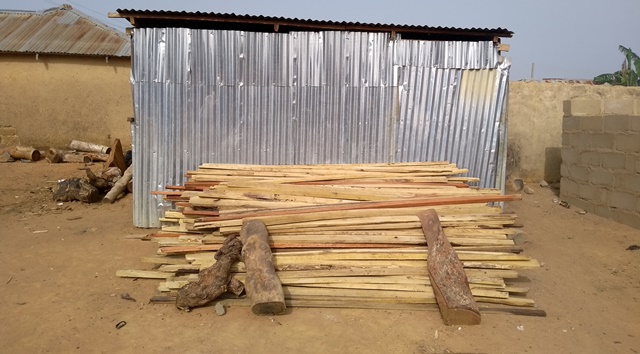
Some of the Woods donated by the government to IDPs in Heipang to rebuild their houses in the village. Picture by The ICIR
In Heipang, opposite Plateau State Polytechnic, where some of the IDPs from Gashish have been sheltered in a church and primary school, they say the building materials given to them are too small. Irmiye Magit, the camp leader tells The ICIR that three villages received 35 bundles of zinc and 600 pieces of wood, adding that the only people that have been resettled are villages that houses were not razed down by the herdsmen.
“People like us that suffer badly in that attack, none us have been returned home,” Magit says. “Our fear is that the attackers are still there. There is no way we will go back and start to do work without adequate security.”
As farming season has started, the IDPs are yearning to return to their villages, but they say they cannot pick up their lives without support from government in rebuilding their homes and providing adequate security.
Already, most of IDPs have left the camps and settled in their host communities, yet they face uncertain future.
“If we stay here, we do not know about our future. Where are we going to farm?” says Demafulu Mangai who lost his uncle and three children, as well as his houses and car to the herdsmen attack. He rented one room in Ban where he put seven members of his family and goes to his village to mine tin.
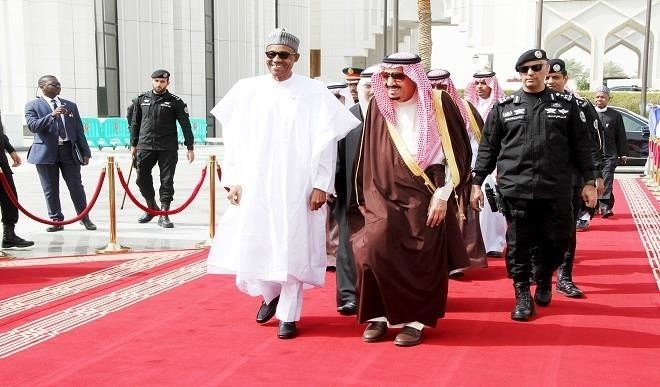
PRESIDENT Muhammadu Buhari will travel to Saudi Arabia on Thursday to perform Umrah, the lesser hajj.
Presidential spokesman Garba Shehu said on Wednesday that Buhari had been invited to perform the function by “King Salman Bin Abdulaziz, the ruler of Saudi Arabia and Custodian of the Two Holy Mosques to perform the Umrah (lesser pilgrimage) in the Kingdom”.
“To this effect, the president, accompanied by close personal aides, will embark on the journey on Thursday, 16th May. He is expected back in the country on Tuesday, 21st May,” Shehu stated.