FOLLOWING the controversial suspension of the former Chief Justice of Nigeria, Walter Onnoghen, by President Muhammadu Buhari, former Vice President Abubakar Atiku says the present administration “has set a new precedent…that has no equivalence in our history, not even in the darkest days of military dictatorship”.
Atiku, who is also running for the presidency in this year’s general election, on the platform of the Peoples Democratic Party (PDP), said this during what he described as a “state of the nation” address on Monday.
He said he was not against the fight against corruption, however, “no mission or goal, no matter how noble or well intended, should be used as a pretext for the subversion of our democracy and our democratic institutions”.
“To create a condition that allows the constitution and the rule of law to become secondary to any other agenda is to pave the way for tyranny. History is replete with odious dictators whose path to dictatorship started with statements of good intentions. We must, therefore, remain vigilant in defence of our democracy,” Atiku said.
Atiku insisted that as the final hope of the common man, the judicial arm of government must not only operate without hindrance from any other arm of government but must be perceived by the people as doing so.
“Our judiciary must not only be above suspicion but must also be seen to be manifestly above board,” he said. “The issue at stake is not whether the Chief Justice is guilty or not, but whether his removal from office has been done in accordance with the process specified in our constitution.
“We are all witnesses to how this government has serially assaulted the National Assembly, a separate arm of government that represents the bastion of our democracy. However, with this attack on the judiciary, General Buhari has set a new precedent in our democracy that has no equivalence in our history, not even in the darkest days of military dictatorship. This cannot be allowed to stand.”
Atiku reminded President Buhari that having been a beneficiary of a free and fair election in 2015, he must, as a matter of honour, “allow a political environment and process that gives confidence to everyone”.
“I believe this present challenge has imposed on us yet again, the duty to rise in peaceful defence of democracy, for which so many have laid down their lives. I also know that the surest weapon against tyranny is the democratic will of the people,” Atiku said.
Buhari’s removal of the head of Nigeria’s judiciary has been condemned by all except supporters and sympathisers of the president and his party, the APC.
The international community, including the United States of America, the United Kingdom, and the European Union, have all spoken against the move, expressing concern that it could affect the integrity of the forthcoming general elections.
In response, the presidency has warned that it would not tolerate any external interference in Nigeria’s internal affairs, as that would mean an affront to the country’s sovereignty.
NIGERIAN Bar Association, Civil Society Organisation and some interest groups are currently leading a protest in Abuja over the suspension of Walter Onnoghen, the Chief Justice of Nigeria (CJN).
The protest started at the premises of the Nigerian Bar Association Secretariat in Abuja on Monday morning, Punch reported.
Onnoghen was suspended by President Muhammadu Buhari on Friday over an accusation of false declaration case pending in the Code of Conduct Bureau.
Buhari had replaced him with Tanko Mohammed to be the new CJN, pending the determination of the Code of Conduct Tribunal on Onnoghen’s case. Onnoghen was accused of breaching the Code of Conduct by not declaring some of his bank accounts which, according to the federal government, contains huge amounts of money in both local and foreign currencies.
The interest groups include National Interest Defenders and Lawyers in Defense of Democracy. Placards and banners bearing messages of support for the suspended Chief Justice Onnoghen were displayed by the protesters.
Lawyers in Defence of Democracy group’s banner reads: “Tanko Mohammed stop parading yourself as CJN; on section 292 we stand.”
The section 292 of the Nigerian constitution quoted by the interest group addresses the issue of removal from office of a judicial officer. This section states that the Chief Justice of Nigeria is to be removed from office “by the President acting on an address supported by two-thirds majority of the Senate.
Another banner has read that the All Progressives Party and its members are the “brain behind Onnoghen trial.”
Since the suspension of Onnoghen on Friday, several groups have condemned the action, saying it overrides Nigeria’s constitution. The European Union, United States of America, Nigeria Bar Association and Civil Society Organisations were some of the national and international groups that have criticised Onnoghen’s suspension.
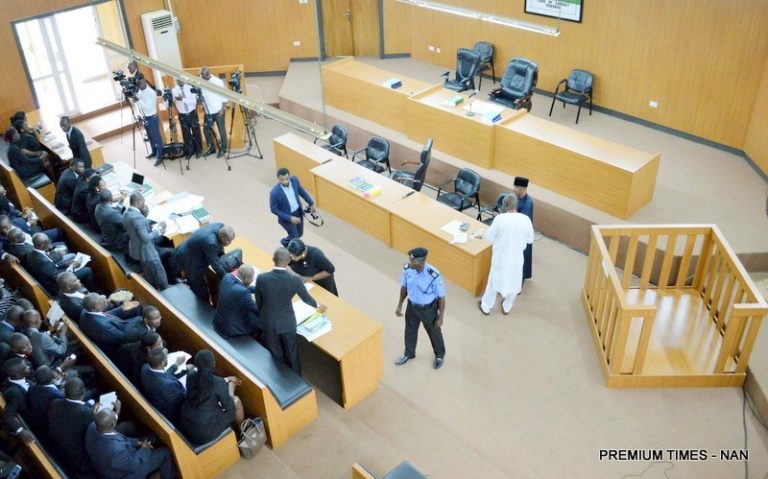
THE ongoing false assets declaration case at the Code of Conduct Tribunal (CCT) involving the former Chief Justice of Nigeria (CJN) Walter Onnoghen, has been postponed indefinitely.
Onnoghen, who was suspended from office by President Muhammadu Buhari on Friday, is accused of failing to declare some of his bank accounts, which according to the presidency, contained huge amounts of money.
There has been raging controversy over Onnoghen’s arraignment before the CCT, without having been investigated by the National Judicial Council (NJC) as requested by law. Onnoghen had refused to attend the first two hearings at the CCT; his lawyers argued that the CCT lacks the jurisdiction to try the head of the judiciary.
On Thursday, January 24, the Court of Appeal ruled that Onnoghen’s case at the CCT should be stayed pending the determination of an appeal filed before the court with regards to the issue.
However, on Friday, President Buhari said he suspended the CJN based on an ex parte order by the CCT on Wednesday. Buhari’s action has been described by many as an affront on the constitution, as the president has no powers under the constitution to remove the head of another independent arm of government.
When the case resumed on Monday at the CCT, Chairman of the tribunal, Danladi Umar, said the case was being adjourned indefinitely to allow the Court of Appeal decide on it.
“In view of the Court of Appeal (order) to stay the proceeding, I hereby adjourn the matter sine die pending the termination of the Court of Appeal,” Umar said.
Already, the Nigeria Bar Association has scheduled an emergency National Executive Council meeting on Monday. The meeting is expected to be attended by the NBA’s national officers, past presidents, past general secretaries, branch chairmen, branch secretaries, branch NEC representatives, and chairmen and secretaries of sections.
Similarly, the National Judicial Council have also convoked an extraordinary meeting to be held on Tuesday, January 29, to look into the CJN issue. Constitutionally, Onnoghen is the head of the NJC, but reports on Monday have it that he may not preside over Tuesday’s meeting, neither will Tanko Mohammed, who was appointed and sworn-in on Friday by Buhari as the Acting CJN.
UNTIL President Muhammadu Buhari infamously showed up on Friday to ‘remove’ Walter Onnoghen as Chief Justice of Nigeria (CJN) through the backdoor, an alternate party was on the verge of providing us with the biggest talking point of an entire week — for the first time in a long time.
Onnoghen’s suspension has no place in any democracy. Let’s not lie about it: the CJN — he still is — has a terrible case to answer. He has himself unwittingly admitted guilt, and senior lawyers whose opinions I trust have impugned his credibility in private. But even this doesn’t legitimize Onnoghen’s suspension in accordance with a privately-announced ex parte order by the Code of Conduct Tribunal (CCT), less than a day to the inauguration of 2019 election petition tribunal members, and while notable past and current members of the Buhari administration already indicted for corruption or sundry breaches of the law dating back to 2018 have not been charged to court.
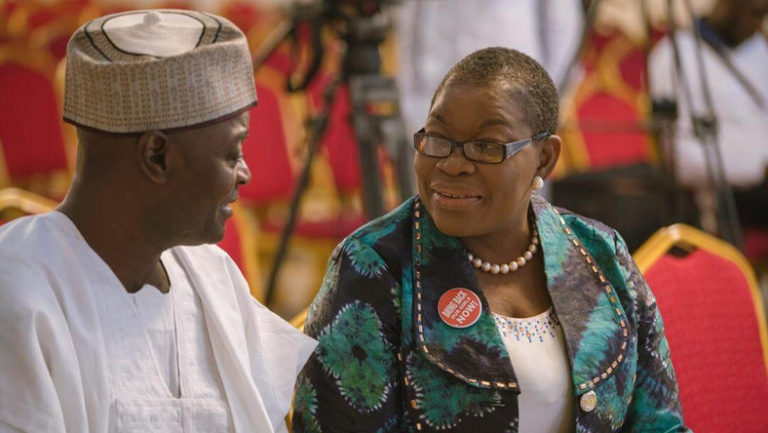
To the neutrals, it is such a bad news that the spotlight was so insanely snatched from the Allied Congress Party of Nigeria (ACPN), but this sentiment won’t be shared by Oby Ezekwesili, the fiery activist on whose account this party has gained considerable popularity among the elite. As expected, Ezekwesili was one of the first Nigerians to censure Buhari for the manner of Onnoghen’s removal, but perhaps deep down in her mind, she wouldn’t have minded any reprieve from the implosion of her party three weeks to the presidential election.
Followers of Nigerian politics must have been shocked to wake up on Thursday to the ‘breaking news’ of Ezekwesili’s sudden withdrawal from the presidential race. Of the many candidates considered as potential options to ending the stranglehold of the Peoples Democratic Party (PDP) and All Progressives Congress (APC) on power, there are three who were never going to step down. One is Kingsley Moghalu — because he is a technocrat, and technocrats usually arrive a race with their big egos, knowing they have answers, both practicable and illusory, to every question on the nation’s afflictions. The other two are Ezekwesili and Omoyele Sowore — because they’re activists.
By nature, activists are idealistic people. They’re on a permanent search for perfection that rarely exists; sometimes — just once in a blue moon — they succeed. But most times, they don’t. They are usually so consumed by their passion for a just and prosperous society that they focus on the end rather than the means to it; they usually concentrate all their attention on the prize, not the price. And that’s the one, perhaps only, 2019-election foible from which Ezekwesili cannot extricate herself.
Explains the ridiculousness of claims by Ganiyu Galadima, National Chairman of the ACPN and Ezekwesili’s then running mate, that she never wanted to be President but was only using the presidential ticket as a bargaining chip for the post of Finance Minister. Anyone who has followed Ezekwesili’s activism for a while should know that this can’t be true, neither can allegations of receiving millions of undeclared campaign funds in hard currency.
Since leaving office as Minister of Education in April 2007, Ezekwesili is privately known to have turned down ministerial offers from two presidents. She also has a track record of donating to charity, all funds accruing to her by virtue of her BringBackOurGirls activism. Ezekwesili is a philanthropist. Not just that, her philanthropy predates her political ambition. But this is hardly public knowledge because of her policy is to give without announcing it. Surely, Ezekwesili is not the kind of person to divert campaign funds. But all these don’t make her infallible, like every other human.
For instance, her exit was announced as solely motivated by the need to “focus on helping to build a veritable coalition to ensure a viable alternative to the #APCPDP in the forthcoming elections”. But that is not the full story. We didn’t know this before; but after Galadima’s press conference that ultimately culminated in the endorsement of President Muhammadu Buhari’s second-term bid, we now know that ACPN had indeed imploded.
We probably will never know the whole story, but we will know a bit more when Ezekwesili addresses her ‘world press conference’ later this week. Seeing how Galadima literally crawled to Ezekwesili in October 2018 to beg her to accept the party’s presidential ticket, and how he is suddenly emboldened to publicly ditch her for Buhari, there is no doubt that this has been a marriage of strange bedfellows.
There is no doubt that the original protagonists of ACPN are ideologically empty. Otherwise, there is no way a party that placed fourth in the 2015 presidential election and until last week prosecuted its campaign by first accentuating the flaws of the Buhari administration can suddenly rise to endorse the same administration. There is no doubt that the faces of ACPN were only hunting for their meal tickets. Incidentally, these are the same vices for which we blame the PDP and the APC. If for some reason ACPN found itself in power, wouldn’t we be dealing with the baggage of a President surrounded by an army of corrupt people, same thing we accuse Buhari of?
ACPN’s sudden implosion when it hasn’t even had a sniff of power weakens the hitherto sellable argument that breaking the PDP-APC hegemony is central to our progress as a nation. Perhaps a little probe into the other alternate parties may reveal some of the political shenanigans for which we loathe ‘APCPDP’ or their arrowheads ‘Butiku’, in Ezekwesili’s words. It may mean that while the idea of sacking PDP and APC is not entirely bad, it would be utopian to conclude that Nigeria would assume political sainthood once a fresh, supposedly untainted party comes to power. The ACPN’s implosion teaches us that the quality of our leadership cannot exceed the strength of the values that drive our individual lives. The search for Nigeria’s next crop of leaders will have to focus more on the individual rather than the party — because, as we have now seen, men of moral vacuity and ideological emptiness abound in our political space. It doesn’t matter whether the party is PDP, APC or ACPN.
Soyombo, former Editor of the TheCable and the International Centre for Investigative Reporting (ICIR), tweets @fisayosoyombo
THE Centre for Democracy and Development (CDD), a civil society organization, has urged President Muhammadu Buhari to reverse the suspension of the former Chief Justice of Nigeria, Walter Onnoghen and the subsequent appointment of an Acting CJN in the person of Tanko Mohammed.
The centre also wants Onnoghen to reconvene a meeting of the National Judicial Council (NJC) and then step aside to make room for an investigation into the allegations of corruption against him.
In a statement on Sunday, the Executive Director of CDD, Idayat Hassan, pointed out that Buhari’s unilateral removal of the CJN, based on a purported ex parte order by the Code of Conduct Tribunal is clearly unconstitutional because the CCT has no powers to issue such orders.
“The Constitution is clear that the powers of appointment and removal are shared powers which the President cannot exercise alone. It is also settled law that only the NJC is constitutionally vested with the authority of disciplinary control including that of suspension of an erring judicial officer. The removal of the CJN has created much concern with the way processes of court and law are flagrantly being abused,” Idayat stated
On the other hand, Idayat pointed out that “Onneghen had himself presided over the establishment of the jurisprudence for suspension of all judicial officers charged for wrongdoing. He, therefore, had an absolute responsibility to step down immediately and allow the National Judicial Council deliberate and take a decision on the matter”.
“We are less than three weeks away from the presidential elections, and Nigeria cannot afford a constitutional crisis at this time, or at any other time,” the statement reads in part.
Therefore, the CDD wants Buhari to “retrace his steps and withdraw the illegal appointment of Tanko Mohammed as Acting Chief Justice of Nigeria”, while Onnoghen, for his part, should “immediately step down and convene the National Judicial Council to meet and make a determination on the way forward”.
“The Buhari Administration must note that resort to jackboot tactics such as witnessed in the unfolding Justice Onnoghen matter is delegitimising the forthcoming 2019 general elections in the eyes of Nigerians and the comity of Nation.
“Nigerians are seriously concerned about the entrenched culture of corruption and impunity in the country. Therefore, it beholds on the National Judicial Council to ensure justice is not just done but seen to be done in the CJN matter. And importantly, the Nigerian government is reminded that it must tackle corruption in adherence to the spirit and letters of the Nigerian Constitution.”
BEFORE every election in Nigeria, there is always always always something stirring up emotions, inflaming passion and pushing us, as it were, to the precipice. We are never starved of tension. The polity is always sharply and bitterly divided. The suspension of Justice Water Onnoghen as the Chief Justice of Nigeria (CJN) by President Muhammadu Buhari and the swearing-in of Justice Tanko Ibrahim Muhammad in an acting position is probably the highest tension point as we head into the 2019 general election holding next month. I expect the temperature to keep rising in the weeks ahead. I just hope that at this rate, Nigeria will not catch fire.
I was more than shocked on Friday when I heard the news of the suspension of the CJN. My body became warm — as if I had a malaria attack. I was shaken. My heart skipped a bit. I never believed it was going to happen, partly because a court of appeal had asked the Code of Conduct Tribunal (CCT) to stay proceedings and partly because a CJN had never been suspended by a president in the history of our country. It was a most unexpected development. I was thinking all the litigations would be resolved before any further action would be taken. As a layman, I understand that when any case is in court, one of the parties is not expected to resort to self-help.
The court order relied upon by the president to suspend Onnoghen is one of the strangest in our legal history. The jurisdiction of the CCT was still being challenged. A superior court had, on January 24, asked the tribunal to stay proceedings. The following day, CCT ordered Buhari to suspend the CJN and swear in an acting CJN. Although the order was dated January 23 (to suggest that it was issued before the court of appeal asked the CCT to stay proceedings), there is reasonable suspicion that it was backdated to undermine the court of appeal. In fact, the CCT chairman, Mr. Danladi Umar, is said to have personally taken the papers to the ministry of justice on Friday, January 25.
I have read several legal opinions on who has the power to discipline the CJN. I prefer to leave the debate to legal experts. But an overwhelming majority of lawyers have described the suspension of Onnoghen as “illegal”. They have quoted several aspects of the law to support their position. They have made references to previous court pronouncements to advance their argument. I don’t know if they are right, legally speaking, but I am convinced beyond reasonable doubt that suspending Onnoghen is overly suspicious under the current circumstances. I doubt if the president has the power to discipline any judge, but even if he does, the undercurrents must never be lost on us.
Let us get some things clear. If Onnoghen made a false declaration of assets, he deserves to face the consequences. Some of the consequences are that he would be banned from holding public office and forced to forfeit those assets. It is immaterial whether or not he forgot to declare his assets — there is no such excuse known to law. I am very sure Onnoghen would not sit in judgment over a court case and set an accused person free on the basis that he forgot to do the right thing. Onnoghen’s failure to declare some of his assets, as alleged, is not defensible. Anyone trying to justify this is as blind as those justifying his suspension.
Also, if indeed Onnoghen is corrupt as alleged in media reports, he is not fit to be addressed as a justice, much less the chief justice of Nigeria. He deserves to be stripped of his exalted robe and sent to the courts to face justice. One of the worst things that can happen to a human society is injustice — especially when it is induced by corruption. If Onnoghen is found to be loaded beyond his means, it would be most unreasonable to say he should not be questioned. However, the moral argument for fighting corruption is that laid-down procedures were violated. But you would only be defeating your own argument by fighting corruption without also following laid-down procedures.
Meanwhile, I think it was improper for five south-south governors to have held an emergency meeting and called on Onnoghen to ignore the CCT summons. Again, that is an invitation to anarchy. Under no circumstance should we encourage anybody to ignore court summons. You do not fight one illegality with another illegality. If we are going to build a democratic society, we must allow the system to take care of itself. We must fight illegality from the position of law. The south-south governors added an unnecessary ethnic and regional dimension to the issue. They can actually oppose the treatment being meted out to Onnoghen without whipping up ethnic sentiments.
Finally, I think Buhari’s political strategists are working very hard to destroy him ahead of the general election. They are doing everything possible to set him against the whole world and set the whole world against him. I guess they are now getting the feedback. No matter how allegedly corrupt Onnoghen is, there is no way neutrals would not smell politics with the pace and haste being deployed to tackle him. We need to fight corruption in the judiciary, but everything must be done with decency and order. Only a shameless hypocrite would say that the Onnoghen case is less about politics and more about an attempt to fight corruption in the judiciary.
For if it were simply about cleansing the judiciary, the CCT chairman would not be sitting on that seat. There is a corruption case, filed by Buhari campaign spokesman, Mr. Festus Keyamo, dangling over Umar’s head. On the basis of morality, he should have been asked to step aside ages ago. Those asking Onnoghen to step aside on moral grounds are yet to extend this gesture to Umar. If it is sauce for Onnoghen, it should not be venom for Umar. Unfortunately, we are in the political season: the first thing that dies is reason. As long as your side of the bread is buttered, fairness and common sense can go to blazes. Nobody should promote this lopsided approach to the anti-graft war.
Where do I stand? One, from the position of constitutional development, I think we should allow the system to take care of itself. Despite the preponderance of criticism against the president’s move, there are legal experts arguing that there is nothing wrong with it. Let all these arguments be tested in the courts. That will allow for an organic development of the system. Some issues need to be settled in law once and for all, and I believe the Onnoghen case offers a good opportunity to resolve the role of the president in disciplining a judge. My position, though, is that the president does NOT have the power to suspend the CJN. But I am not a court of law and my opinion is irrelevant.
Two, the CCT, in my opinion, does not have the power to order the president to swear in an acting CJN. As a layman who can read and write, I have studied the law setting up the CCT and I can say there is nothing empowering it to do what it has just done. The brief of the tribunal is to try public officers who are in breach of the Code of Conduct Act. Where it finds an officer guilty, it can pronounce these punishments: vacation of office; disqualification from holding any public office for a period not exceeding ten years; and seizure and forfeiture of any property acquired in abuse or corruption of office. Even if the CJN is found guilty, he has a right of appeal. That is the law.
Three, the president has to be very sensitive about political realities in Nigeria, especially within the ethno-religious context. Even if his advisers are telling him not to give a damn, he has to realise that there is already a sticky allegation of “northernisation” against him. The word in town from day one is that he wanted to appoint a northerner as CJN and was never comfortable with Onnoghen, and the last thing someone in his position would want to do is keep feeding this perception. Critics say the CCT chairman, a northerner, is facing corruption charges and Buhari has never moved against him — but he has speedily suspended a southerner. Perception matters a great deal.
There is no doubt that errors have been committed by all sides. The CJN admitted that he did not declare all his assets. It is not as if he is being hounded because he did some good thing. We must never ignore this fact. Also, the federal government has gone in the wrong direction in trying to bring him to justice. As an optimist, though, I would argue that the Onnoghen saga has thrown up issues for us to tackle as a nation. We never imagined some of these issues before. Should all matters relating to judges be taken before the National Judicial Council (NJC)? What happens when the NJC chairman — that is the CJN — is involved? We need to think deeply about this.
Above all — and this is my key argument and conclusion today — we must not lose sight of the real issue at hand: corruption in the judiciary. When the Onnoghen dust has settled, we must begin to debate how the system can be properly cleansed. The judiciary must never become a law unto itself. We cannot have a whole branch of government shielding itself from scrutiny. While I believe that the NJC should continue to discipline judges when it comes to their conduct on the bench, issues of corruption and declaration of assets should never be subject to the whims of the body. We need to take a longer-term view of things — beyond the obvious politics of 2019 elections currently at play.
AND FOUR OTHER THINGS…
HOME TROUBLE
On Thursday, Ime Obi Ohanaeze Ndigbo — the highest organ of the Igbo socio-cultural organisation — endorsed Alhaji Atiku Abubakar, the presidential candidate of the Peoples Democratic Party (PDP). The following day, Chief Solo Chukwulobelu, secretary to the government of Anambra state, issued a statement to distance Anambra from the endorsement. “We regret that they do not reflect the position of the people and government of Anambra state,” he said. Given that Atiku’s running mate, Mr. Peter Obi, is from Anambra and was its governor for eight years, President Buhari must be rubbing his hands from a distance. Amusing.
OBLITERATRING OBY
Mrs Obiageli Ezekwesili caused a stir when she abruptly entered the presidential race in October 2018 and caused even a bigger stir when she abruptly withdrew three weeks to the election. Accusations have been freely traded — her Allied Congress Party of Nigeria (ACPN) accused her of being unserious and only targeting a ministerial position; she has, in kind, accused the party of not having the sort of values and vision dear to her. I find it very cruel, though, that anybody would suggest Oby went into the race for financial gain. You can ridicule her politics if you would, but to assail her integrity is beyond the pale. Uncharitable.
ZAMFARA ZIGZAG
In the midst of the crises rocking the Nigerian judiciary, the one that went under the radar were the opposite rulings on the Zamfara case by two courts of co-ordinate jurisdiction. In one instance, a federal high court in Abuja upheld the decision of the Independent National Electoral Commission (INEC) not to accept the list of candidates of the All Progressives Congress (APC) in the state. In another, a Zamfara state high court in Gusau asked INEC to recognise candidates of an APC faction led by Governor Abdulaziz Yari. No prize for guessing whom the state court was working for. The sad thing, however, is the way our judiciary is going into the abyss. Tragic.
AND FINALLY…
You must have heard this. Abdullahi Yada’u, from Kanam local government area of Plateau state, has sent his wife, Hafsat, packing because she insisted on voting for President Muhammadu Buhari again. “Both of us voted for Buhari in 2015 but this time, I feel disappointed with the administration and decided not to vote for him again. I told her that she must not vote for him but she insisted. This led to a quarrel which attracted the attention of our neighbours. I slapped her and told her to choose between voting for Buhari and staying with me. She ran away,” Yada’u told the BBC Hausa Service. Now, that is political rivalry taken to the next level. Gobsmacked.
Simon Kolawole is the founder and CEO of TheCable. He tweets @simonkolawole.
In July 2018, Mrs Emeka Jacinth lost her son, Wisdom at the tender age of 13.
The widow said her son may not have died of an enlarged spleen, popularly called ‘Apa-afo’ or ‘Nwapa’ among the Igbo, if she was able to afford medical care.
“I tried managing his deteriorating health traditionally until his body system could no longer fight this bloodsucking illness,” she bitterly flashed back, still mourning the young lad’s death after many weeks he had passed away.
Ironically, Mrs Emeka’s house is just a stone-throw to the Imo government’s uncompleted and abandoned Ezinihitte Specialist hospital located at Iho community in Ezinihitte Local Government.
If functional, the hospital could have given the family a ray of hope on the ailing boy before he died.
Bereaved of her husband since 2007, Mrs Emeka, a mother of four boys and one girl, and a peasant farmer, would have fought harder if a seer had told her she would later lose her first son after seven years of the father’s death.
To avert such fate, sixty-year-old Sylvania Nwoke in July 2018 resorted to spiritual help when her only daughter Stella started manifesting signs of illness in mid-year 2014.
Her face dimmed with distress, at the same time glowed with faith when this reporter met her and Stella at Living Faith Church in Amanze community, Obowo Local Government Area.
All hopes are now cast on the ‘great physician’ to cleanse her daughter as she could barely afford their feeding let alone pay medical bills.
Mama Sylvania and her sick daughter, Stella.
‘In 2014, I returned to the village (from Plateau state) with my sick daughter who has been suffering mental illness. I first thought she was possessed of Ogbanje (water goddess) and went to several churches in search of deliverance’, recounts the old woman.
“Someone invited me to this church where she was miraculously healed of the infirmity but there is still one thing left, my daughter wakes up in the night once every month, rolling and vibrating on the floor helplessly,” ’, she said, trying to resist tears.
Asked how she has been coping since July 2018, she said: “I only gather and sell bitter leaves to feed her and myself. I don’t have any money! I wish the government can help in any way possible.”
The Evangelist, who sheltered Mrs. Nwoke and her daughter said God has healed the young lady of mental illness but she needs ‘to be exposed to thorough medical check-up’ with regards to the recurrent epileptic seizures she usually suffers every first week of the month.
As in Iho community, the government hospital in Amanze community of Obowo Local Government is also uncompleted and abandoned.
The uncompleted Obowo Hospital, overgrown with weeds and now a pasture field for cattle.
These two edifices, both at Iho community, Ezinihitte LGA and Amanze community, Obowo LGA, are two of the 27 proposed general hospitals by the Imo state government in January 2013.
When this reporter visited these supposed hospitals in October 2018 both have been taken over by bushes.
The initiative and its implementation
In 2013, the Imo State Government launched a N20 billion project to construct 27 specialist hospitals in all the 27 local government areas of the state.
These hospitals were conceived to make free health services available to the people at the grassroots, as well as attending to complex cases such as tuberculosis, cancer, psychiatry, among others so that people of the state would not have to travel abroad again for medical services.
Governor Rochas Okorocha of Imo State.
Governor Okorocha – during his first tenure – got an approval of a bond from Securities and Exchange Commission (SEC) in January 2013 to change the use of the N18.5 billion bond proceeds (which was once floated by the former governor of the state, Ikedi Ohakim) for the “construction of 27 modern general hospitals in each of the 27 local government areas of the state as well as the construction of the 305 modern primary and secondary schools in all the 305 wards in Imo State.”
Five years after, none of the hospitals is functional, leaving many citizens of Imo State doubtful of the good intention of their governor. Of the 27 proposed hospitals, four have been completed but not accessible yet to the people.
Findings revealed that the hospital building at Owerri North LGA has been completed, equipped with furniture and has been handed over to the Nigeria Airforce. The Nigeria Army is to take possession of the hospital facility at Owerri West, while the one at Ngor-Okpala has been given to the Nigeria Navy. The Nigeria Police will own the one at Ideato South upon completion, making it the fourth for the security agencies. The agencies will be responsible for the management of laboratories’ equipment and other medical machinery. These facts were confirmed by the state’s commissioner of health, Mrs. Angela Uwakwem when she spoke with this reporter on December 22, 2018.
The completed fifth yet inaccessible to the poor
Another abandoned Hospital at Orsu LGA, Imo State.
The fifth hospital facility located at Ikeduru is still inaccessible to the people. Sources told this reporter that the Ikeduru Hospital has been partially privatized by the state government as it is now being managed by an American Company, International Healthcare Consulting, IHC.
Consequently, medical expenses at the Ikeduru hospital is quite high.
Austin Agbahiwe, the administrator of IHC earlier disclosed that the partnership would cost the foreign firm N1 billion.
“International Healthcare Consulting from the United States, being the owner of Imo International Health Systems Limited, agreed to take over hospitals belonging to the government of Imo State by providing necessary manpower, which includes medical doctors, nurses, para-medical workers and equipment to run the hospitals and at the end of the day, we have the understanding to pay rent to the government”, Agbahiwe was quoted by Independent Newspaper on May 7, 2018.
Ikeduru: the ‘no-go area’ hospital
Being the only general hospital completed and functional, the Ikeduru Hospital, specializing in Accident/Emergency cases and Cancer would have a soure of pride to the government, but the chrages at the hospital are beyond the reach of the general public .
Residents complain about the exorbitant cost of treatments even though the government promised that the medical facility would be free when completed.
Prince Chinedu, a building materials seller at the Amanwaozuzu Junction in Iho community quickly dismissed the expectation of getting anything free in the hospital. “Free kwa!“, exclaimed the man.
‘That place is a no-go area o…. my friend’s wife that had her child delivery there paid a sum of N90, 000. That hospital is very expensive. Just ask anyone around’, Chinedu complained.
At about noon on October 29th, 2018, this reporter went undercover to the medical facility to find out whether Chinedu’s claim is true or not. His request to see the Doctor for medical attention was turned down by Ms.Obiajunwa Nancy, a fair nurse at the reception.
‘Is this your first time of seeing him?’ she queried. ‘you will pay a token of N1,000 for Doctor’s consultation’.
After reluctantly withdrawing from the counter for few minutes, a peek on the template fixed at multiple places around the facility indicated that registration was free and that prompted the reporter to swiftly return for clarification.
‘Yes, registration is free’, she buttressed, drawing out the plastic card as she talks, ‘…but you will still have to pay that one thousand naira to see the Doctor.’
Pestering further, the reporter said he doesn’t have the money with him and he needs urgent medical attention.
The receptionist simply dismissed him. “I am very busy right now. When you come back, I will do everything for you together,” she said.
The experience of this reporter mirroring that of Iho residents is a sharp contrast to the promise of the governor.
The governor had earlier asserted while flagging off these projects in 2013 that although private firms will run the hospitals upon completion, patients would not be burdened in accessing any of the medical facilities but only made to pay a token of N200 for card registration.
The government’s scheme VS existing mess
Abandoned Hospital at Orsu LGA.
The overall projects across the twenty-seven Local Government Areas were earmarked to cost N20.2 billion, with an estimated average of 750 million to be spent at each Local Government site.
The Okorocha-led government birthed the idea of constructing these ‘world class hospitals’ in 2013 was because the existing general hospitals were old and could no longer serve the purpose of sound health system in the 21st century, as Governor Okorocha put in a press release signed by the then Chief Press Secretary, William Unadike on October 28th, 2013.
In an interview with this reporter in November, the Imo state chairman of Hospital Workers Welfare Association, Mr. Friday Mgbemere dismissed the initiative as white elephant project.
Mr. Mgbemere said all the hospitals were intended to be concessioned to a private firm, Messrs Lantech Solutions Company, a move the Labour kicked against.
“We kicked against the concession because the state government was reluctant towards abiding to the rules of concession. We demanded the payment of our workers’ entitlements, equipping of the hospitals among other salient proposals. Moreover, our workers were not assured of job security after the concession hence we failed to consent to the move.”
Since the concession was aborted, most of the hospital building projects remain abandoned till date.
Why projects are abandoned
Side-view of the abandoned Obowo Hospital.
Anthony Igwe, the Director of Medical Services at the state’s ministry of health, who was once the acting permanent secretary, hinted that the project suffered a setback due to a paucity of funds.
He noted that half-way through construction, the Okorocha-led administration became overburdened by the high cost to complete and equip the hospitals to topnotch standards, hence, the need to source alternative means of funding.
The government wooed volunteer contractors to continue the project and later reimburse them after completion. This, according to the top civil servant, still didn’t materialize because the government breached part of the agreement.
‘Before this project was birthed, the governor had passed circulars to all the health practitioners in the state to enquire of us what can be done to improve the health sector in the state.
“We advised that if the deteriorating conditions must be salvaged, the government should equip the hospitals as well as recruit more staff. Instead of yielding, he fell prey to the counsel of his liked minds within the cabinet who were also ready to gulp money.
“By the time the reality that they had bite more they could chew dawned on them, they started inviting volunteer contractors to come and finish up while they reimburse them later. These people too later ran away when they began to incur debts as the government failed to meet up with the agreement.
Absolutely referring to the Ikeduru General Hospital managed by IHC, he added that ‘the only one that survived was the one at Ikeduru and this is an exception because of the intervention of an international team who were ready to institute cancer healthcare there.’
The doctor said fund intended to be spent on each of the hospitals would have catered for the needs in all the existing hospitals as at then rather than venture into a pipe dream in the construction of twenty-seven general hospitals.
Meanwhile, 70 per cent of the construction at Obowo from January 2013 – the clearing of the expanse of land, foundation-laying up till the roofing level – was handled by Dom-Serina owned by Architect Eddie Ndukaire but the government disengaged the company from completing the project in 2014.
The same project was re-awarded to Gosh Projects Limited, an Abuja-based construction company.
From the last week of August 2018, their workers first erected dwarf wall, which temporarily curbed the periodic cattle grazing on the premises, and also continued with some other minor interior works after experiencing a short delay for almost one month. This latest development by a different firm was supervised by a man named Mr. Jonas Garfield in this same local government.
Further investigation also revealed that the Gosh Project was as the same time in-charge of the same project at Ihitte-Uboma LGA but that the progress of the work there is still behind.
According to their website, the construction firm is also in-charge of construction of the hospital in Obinze, Owerri West LGA.
The Public Relations Officer at the State Ministry of finance, who insisted that his name should not be published, explained that the Rescue Mission administration of Governor Okorocha runs a vertical system of governance. What he implied by this is that the award of contracts come directly from the state house while the ministry are handicapped.
‘On this project you are seeking information, it does not take more than ten minutes for anyone to roll out the details but we do not have any. We never issued certificate for contract award, supervised nor evaluated neither did we pay the contractors’, the PRO stressed.
Almost the same response was gathered from the Director of Planning, Research and Statistics at the state’s ministry of health when enquiries were made at her office.
The Director, whose name could not be ascertained affirmed that the reporter’s expectation to fetch relevant paper-works on the procuring the health facilities should be sought within their agency but they are unfortunately sidelined in the scheme of things.
She was also confident to excuse consulting the Permanent Secretary for same reason.
In spite of these revelations, it is arduous to establish there was no fraudulent practice as such as inflation of contracts and award of contracts to incompetent individuals and firms especially as the abandonment of projects are recorded in several sites.
Government’s angle…
Imo Health Commissioner, Angela Uwakwem.
Attempts to reach Sam Onwuemeodo, the Chief Press Secretary to Governor Rochas Okorocha was abortive. When our reporter visited the government house on December 5, the securities resisted any passage until he calls his host but Onwuemeodo had said he was in a meeting that day and therefore could not grant an interview.
In another telephone conversation that lasted less than a minute on December 20, he told this journalist that the network was crappy and suggested that a text message be sent as he promised to reply. No reply came from him since the time the message was sent.
The State Commissioner for Health Angela Uwakwem noted that not all the remaining projects can be completed at the same time.
She said the government is currently building ten more hospitals, a partnering with some foreign firms to equip the laboratories.
“Not all of these hospitals will even be fully functional because of the high volume of staff that will require. What the government wants to do is to ensure each local government area has access to a doctor’s care.
“Some of these hospitals will kick-off as specialists hospitals while some will not have facilities to admit patients for now.
“Growing needs in comparison with the services rendered at any of these locations will subsequently call for expansion in the capacity,” Uwakwem added.
She refuted claims by the director for planning, research and statistics that the ministry was not carried along in the process.
‘They are supposed to have information but maybe they are careful about divulging it because they didn’t take some sort of permission,’ she said.
On the procurement process and re-award of contract, she claimed not to have full knowledge of the project inception as she only became commissioner in 2017.
“I became commissioner for health in December 2017 and by that time the projects were far gone. I didn’t follow the projects from inception and but I will expect that they must have complied with some kind of procurement process. Besides, you know there are different procurement options, some go to the State’s Tenders Board’.
“I don’t know the exact option implemented but I wouldn’t expect these projects to be under the ministry because of the level,” the commissioner said.
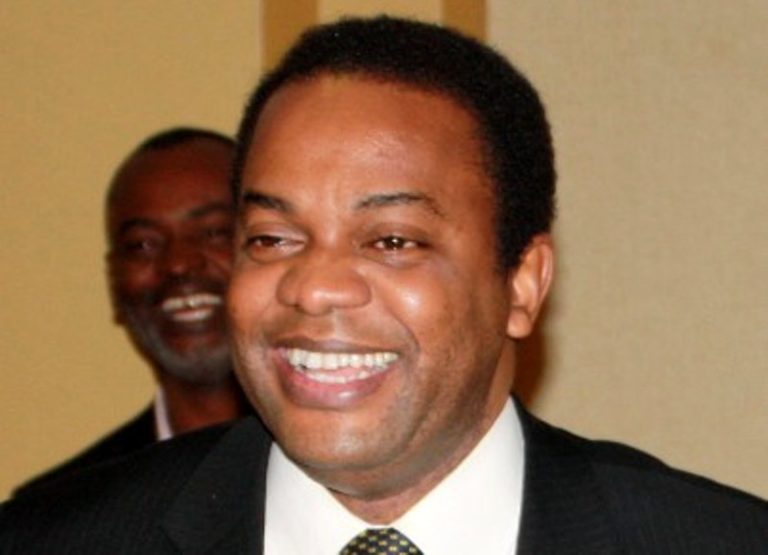
DONALD Duke, SDP presidential candidate in an interview with Channels television on Friday, January 25, after his court victory, said despite the party’s loss of campaign time, they would still project their ideas to gain Nigerians support.
CHANNELS: As at the time the first judgment came through, you were quoted severally as saying that you were sure that the appellate court was going to reach a decision that reinforces the levels of our constitution. What gave you the assurance that that was going to be the case?
DUKE: Our lawyer and this is basic strike laws that my constitutional rights cannot be abridged. What the law court did abridged my constitutional rights. The party has no right over constitutional offices. What the party could zone freely is its offices. For instance, a party could say that the chairman or the national chairman must come from a certain section of the country and so be it. If its rectified at the convention that’s fine but you cannot strike law. You cannot give what you don’t have. You cannot rule over or administer what is not yours and therefore the party cannot zone an office that is purely constitutional. The appeal court made that succinctly clear, yesterday.
CHANNELS: Can that be at best described as a political judgement?
DUKE: What happened at the law court could be described as a political judgement. What happened at the appeal court was the interpretation of the law.
CHANNELS: The way it is now, there are some reports in the dailies this morning that Mr. Gana may approach the Supreme Court. Well, he may have his right to do that but doesn’t that suggest to you that the fact that they approached the court in the first instance, that some people in the party don’t support your candidature?
Jerry Gana
DUKE: Oh that’s normal. You couldn’t get a 100 percent support. It’s left for me to show leadership to bring them on board, to reach out to professor Gana and appeal to him that we ought to come together seeing the larger picture which is our party and the nation. I am doing that. I did that on the 7thof October. I will do it again. Leadership is conciliatory, working together and building bridges. He made me hurt. He made a strong view of his own points but it gets to a point where pursuing your interest works contrary to the larger interest and I think we have gotten to that point. We have 23 days to the election, it’s hardly enough time to espouse to sell our views to the nation. So we need to put our egos behind and look at the larger picture. This is what I hope Professor Gana, to whom I have tremendous respect for would abide by.
CHANNELS: What exactly happened within the party that informed this confusion in the first place? There were primaries most certainly, so what exactly happened and how come some elements in the political party would come with this kind of confusion that has robbed the entire political structure of campaign time?
DUKE: Well, you know politicians read meanings or have a way of interpreting what they want to do. This is the summary of it all. We went for primaries, we were all screened. Professor Gana is of the opinion that there is a section in the party’s constitution he is referring to that states that where the president comes from a section of the country, the national chairman should come from the opposite section of the country. The court ruled that that constitution did not guide the party’s convention that produced me as its candidate. That’s one. Two, I am not the president. I am a presidential candidate and three, the party cannot zone offices. That was what Professor Gana relied on. Like I said, we can go on and over this and go to the Supreme Court and get it all adjudicated upon but where are we going with this? We need to pull back the breaks and look forward.
CHANNELS: We have very few days to the elections and you have lost campaign time. Your party has lost campaign time, you have lost campaign time. What happens now? What are your chances?
DUKE: Well, as good as any other. I think there is quite a large size of undecided voters out there. You are right we have to hit the ground running hard. We have lost time but you know it’s an interesting country. You have what we call the two larger parties which are different sides of the same coin but most Nigerians are ill at ease with these parties and are looking for an alternative to both of them. We don’t have time to sell the views as much as we would have loved to but it doesn’t stop us from getting across because I think the last statistical evidence we had thereabout almost 68 percent of the voters are yet undecided about who they are going to align with. So we have to reach out to them. I admit there is a lot of work to be done and very little time but it can be done and we ought to try.
CHANNELS: You literally took your party to the court. What of kind of support do you expect from this same political party going forward?
DUKE: I did not take my party to the court. Professor Jerry Gana took the party to the court. He took the party alongside myself to the court. He took the party to the court on grounds that the party produced me as its candidate. So the party alongside myself appealed the decision of the law court that declared Professor Gana the candidate. But you know, I don’t know if you have been following the news. Overwhelmingly, the party has been supportive and has stood by the decision it took on the 6th of October. That’s all behind us now. I don’t want to belabour that. I have work to do not only to heal internal wounds but also appeal to the larger Nigerian population. So it’s not a question of who is right or who is wrong, it wasn’t the victory at the court yesterday. I’m not celebrating it. As far as I’m concerned, it was a needless foray into the theatrics of the law court. We can do better. We need to come together, heal our wound and mend the fences and move forward. So if we win, it’s a collective victory. Jerry Gana and I will celebrate the victory. if we lose, we will be at a total loss.
CHANNELS: And so in recent history, before the ruling party won the elections they were in oppositions, they had to pull as many other political parties together to achieve this particular fit. In the context of your chances of winning, do you think that your party can do this, having seen that the PDP is going to have a coalition with the CUPP and SDP appears to be standalone? Do you think you can sail through?
DUKE: The coalition of the CUPP is a coalition of one party, that’s the PDP. I don’t see any other party in that coalition. When in 2015 the parties came together it was largely just two runners and Buhari and the APC appeared new to the scene. Now, know that the players are interwoven and intertwined. There is hardly any difference between the PDP and the APC, like I said earlier they are different sides of the same coin. We want to position ourselves as an alternative and a viable one too. If you run you might lose but if you don’t you are guaranteed to lose so we are going to give it a shot.
CHANNELS: Let me get your thoughts on the withdrawal of Dr. Oby Ezekwesili of another party who has pulled out from the presidential race, who says also that she is planning to form a coalition with some other parties, hopefully your party will be a part of that but considering how she pulled out, do you see for instance say an Oby Ezekwesili putting up steam and aiding an SDP candidate like you in the build-up to the elections?
DUKE: You know politics is an inclusive game. Wherever support comes from we admit it. I don’t have the details on why she pulled out in the first place but I will welcome her support. I will welcome the support of everyone including President Buhari. We need to appreciate that what we have before us as a nation is disaster looming. we are really literally at the brink of the precipice. Here you have a nation, 200 million people that are living in abject poverty. In another thirty years, our population will double to 400 million people. If we are going through crisis literally security, corruption which are all symptoms of distrait, I shudder to think of what will be in another thirty years which is really around the corner. I reminded an audience yesterday that 40 years ago, President Shagari as in charge, we were budgeting annually 25 billion dollars. Today, we are 200 million and we are budgeting 23.8 billion dollars. So this is a shrinking economy with a blossoming population. The government says for instance that we are out of recession because the economy is growing at 1.2 or 1.3 percent. That’s hogwash. Your population is growing at 3.2% or thereabouts and your economy is growing at 1.2percent, you are still in recession. For you to get out of recession, your economy must be growing faster than your population is. Let me say this, because of the years of retrogression and neglect, we need to grow our economy at almost 10-15% to recaliberate our economic situation. Nigeria ought to be a 2.5 trillion dollar economy not a 400 billion dollar economy. We are one of the least productive nations on the African continent if not in the world. That is why this is not a popularity contest. This is not a game. This is serious business.
CHANNELS: What do you take to the views of people who say yes you might have had some hitches here and there but you are back on track but you are coming too late still? How would you respond to these set of people who initially felt that perhaps you are the force they have been waiting for?
DUKE: This is one of those races and that’s politics for you. There are a huge number of people who are silently watching and there are people who stay out of the polls because they say “neither of the candidate is worth my time” but if they find a candidate that is inspiring enough, then they will take out the time, go to the polls and vote. I hope and I wish that I am that candidate that will make Nigerians go out to vote. Listen, most of the time we go out to the polls, not more than 30% turn out. That is poor. That is because people are disillusioned with the candidates that were put forward and that’s why we need to put our best forward. I am hoping that I am one of such that inspires the people to come out from their homes on the day of elections and vote and that’s why I’m out.
CHANNELS: With reference to the fact that the other time the APC though it was new at the time has subsumed its identity with that of other people from other political parties. Let’s say your party becomes that new force in the next administration and people from these other political parties join you. What makes you think your party will not become like the incumbent now.
DUKE: No. Party politics is a free game for everyone to join but if you have internal discipline, if you maintain a leadership structure that adheres to internal discipline and is not that which compromises at will, then we will get it right. You cannot stop anyone from joining your party. Its open to everyone, every Nigerian, but you must have a leadership that is firm and that will not compromise. What we find with the APC is a compromise. People join the APC so that they will not get persecuted or prosecuted by the law. That’s not right. The largest party in Nigeria probably doesn’t have more than a million registered voters as members, in a country that has about 84 million registered voters. So a lot of segment of the population are not registered members of any political party and they are watching all these musical cheers going on back and forth. You hear one term singing the praises of a party then a new party comes in you are being persecuted by the authorities and to get off the scale you join this party. This doesn’t augur well. It doesn’t create the hope for future Nigerians that we are getting it right and this is where maturity and proper administration comes in. You can’t stop anyone from joining a party but you can administer and have one rule that guides the process completely.
CHANNELS: Let’s go to the people that you expect to give you the job of President of Nigeria. How well do you see the entire voter education apparatus in the build-up to the February elections? What do you think about the voter awareness system that we have put up so far for this election?
DUKE: Clearly there is awareness. Nigerians know that they are going to the polls in a couple of days. What I’m not sure we have right now is the motivation because folks are saying okay if these are the players we have, what’s the difference? What’s the difference between A and B? So that’s the motivation factor but the awareness is there. I mean literally, everyone knows of the elections going on and it happens every four years. Even with all the awareness that we get, you find out that turn out is really this small, 30, 35 percent just a third of the registered voters coming out and that’s where the motivation factor comes in because they are not motivated to go through the strain of lining up for a couple of hours to vote for people they don’t believe in and this is what we’ve got to change. This is why it’s important and critical that we have new faces on the block. I think I’m on the brink of becoming an old face so we need to encourage the next generation. We need to prepare them for leadership and encourage them to come out. Nigerians are globally recognized as one of the most dynamic people but when it comes to leadership I’m afraid we put a poor show and this is quite embarrassing, not only to us as a people but literally to the continent
CHANNELS: Well, Mr. Duke I remember your comment some years ago when you spoke about how elections were rigged and it was really famous. You went viral at that point in time. So do you believe in the system now?
DUKE: I think you got that wrong. I was talking about how the system is compromised because the electoral body, INEC is not given the freedom to work as it ought to and not much is changed. It’s all last minute. Last minute the budget was passed. You know four years you’re gonna do this, so you have four years to prepare for it. You don’t put everything at the last budget just before the elections. That’s why there’s some skepticism on whether we can actually have this thing on the 16th of February. INEC should start preparing for the 2023 elections immediately the new administration comes in, that’s after the 29th of May.
Now if they don’t, they will be relying on external forces and this is my point in that statement, in this case state governments to seek support. Once you depend on state government then you are depending on the players to aid the referee. You can’t adjudge the system free and fair. This is what has been going on and I hope we learn the lessons from this but I’m not sure. We don’t start early enough. I was quite disappointed when we were asking for the budget of the elections just a month or two to the elections when we knew that the dates were fixed. This is a four years ritual and we never prepare for it. By now we should have a total electronic system so we know that very few hands are involved in the processes. Democracy is all over the world, we are not pioneers in this. There are nations that are larger than us. India, for instance, has almost a billion voters and they get it right. Why can’t we with 84 million people?
CHANNELS: So tell us now, why do you wana be President?
DUKE: Because I see a nation in distrait that seems to be quivering and not knowing what to do with itself and I think I have the answers to make it right and that’s really why I’m going for it. It’s not to put myself forward and try and make a name. No! I think I am blessed in that regard but I know that if we don’t get it right, not just me will suffer but all of us. All of us are at risk. We are all endangered species one way or the other. The poverty that prevails our nation, the insecurities which are symptoms of the poverty, someone has to step forward and do it. We can’t sit back and hope that it would happen. People make things happen, things don’t just happen. I had 8 years in Cross River state thankfully and we made it happen. We put together a team of young and determined people and I think we changed the trajectory of the state. The nation needs the same and the nation is blessed to do the same.
CHANNELS: What’s your plan for job creation?
DUKE: Well, there are four things I think we need to focus on: skills, health, infrastructure and we need to embrace technology. You need to look at our skill base. It’s poor. I would like a nation where its compulsory for every child between the ages of 4 and 18 to be in school and by the time you leave secondary school at 18, you have acquired a skill.
Two, we need to have a health system which is affordable and approachable. At least we have an NHIS scheme which is not working, of course, infrastructure and all that but let me take two critical sectors; credit availability. You cannot grow an economy where banks are charging between 25 percent to 30 percnt as the interest rate. That is a No No. So for instance, if you borrow N10, 000,000, the first year of operation you are going to have to pay back to the bank about N3, 000,000. That doesn’t work. It doesn’t encourage young people and entrepreneurship. That kills it.
The only beneficiaries in this system are the banks themselves and you can see the glorified lifestyles that they live. That’s one. Two, the other part of it is the dismal infrastructure, namely; energy. We’ve been doing the same thing over the years and then getting dismal results. Maybe we should try something different. Our nation flares about 2.5 billion cubic fit of gas daily, which is equivalent to 25 million litres of diesel. Now I have a policy. Anything that is essential must be local. So for instance, water that is essential to life must be localized. You can’t produce water in Lagos and pump it to Abuja for people in Abuja to survive on. The same thing with energy, in modern living electricity, is essential. So you cannot generate for instance from Afam and supply Sokoto. You need to generate locally, transmit and distribute within an ambit. So, what we are required to do is totally decentralize the fuel, which we have a preponderance of gas and generate locally. If we are able to do that we would provide electricity in a more stable manner than we have been doing. That’s one.
Two, let’s get our priorities right. This is literally a nation that imports all the fuel it uses and subsidizes what it imports but gas that we flare in abundance we charge international rates for local consumption. It doesn’t make sense. We spend more money subsidizing fuel than we spend on education, health, and repairing the roads that the cars will drive on. It just doesn’t make sense and no government, at least in recent times has had the political will to do the right thing. I would rather we subsidize gas and move the nation from fuel dependence to gas. I admit that due to the hardships that we have, we need some form of palliative to make life easier for people. If you are flaring gas that means you have an abundance of it. You can give it for next to nothing. That should be the subsidy that we give industry. If you had affordable credit, available and pretty cheap gas, the goods that you produce will be competitive within the sub-region, if not globally. It would attract foreign investment into the country. We keep talking of Foreign Direct Investment. Only fools thread where angels dread. If your own people don’t invest in the economy don’t expect foreigners to come in. Foreigners don’t just walk into our country and start investing, it’s the locals that attract them to bring them in. And so we need to look at the issues. I know the government talks about the ease of doing business. You can’t talk about the ease of doing business when you are not even a productive economy. We are mercantile, we are trading all the time and consuming. Let’s address the interest rate and the availability of funding and we can look at the energy conundrum that we find ourselves.
THE European Union and the United States government on Saturday have expressed worry at the timing and process that led to the recent suspension of the Chief Justice of Nigeria (CJN), Justice Walter Onnoghen.
The EU and US, in separate statements, said the action had caused tension among Nigerians, lawyers and Civil Society Organisations (CSOs).
These, they said could jeopardize the trust Nigerians have in the autonomy of the judiciary.
In a statement, the EU Election Observation Mission says “it is very concerned about the process and timing of the suspension of the Chief Justice of Nigeria, Honourable Justice Walter Onnoghen, on 25 January.
“With 20 days until the presidential and National Assembly elections, political parties, candidates and voters must be able to have confidence in the impartiality and independence of the judicial system.
“The decision to suspend the Chief Justice has led to many Nigerians, including lawyers and civil society observer groups, to question whether due process was followed.”
“The timing, just before the swearing in of justices for Electoral Tribunals and the hearing of election-related cases, has also raised concerns about the opportunity for electoral justice,” it stated further.
The EU election group called on all parties involved to obey, “the legal processes provided for the constitution and respond calmly to any concerns they may have”.
Similarly, the US government says it’s ‘deeply concerned‘ by the decision of the Executive arm of government, expressing worry that the move was made without input from the legislature.
In a statement posted on its verified account, it identified the inappropriate timing of the CJN’S removal, stressing its proximity to the general election.
These, it emphasised contradicted the initial promise of the current administration to ensure the 2019 poll is credible, free and fair.
“The Embassy of the United States is deeply concerned by the impact of the executive branch’s decision to suspend and replace the Chief Justice and head of the judicial branch without the support of the legislative branch on the eve of national and state elections.
“We note widespread Nigerian criticism that this decision is unconstitutional and that it undermines the independence of the judicial branch. That undercuts the stated determination of government, candidates, and political party leaders to ensure that the elections proceed in a way that is free, fair, transparent, and peaceful – leading to a credible result.
“We urge that the issues raised by this decision be resolved swiftly and peacefully in accordance with due process, full respect for the rule of law, and the spirit of the Constitution of Nigeria. Such action is needed urgently now to ensure that this decision does not cast a pall over the electoral process.”
Aside the international observers, prominent Nigerians and the Nigerian Bar Association also have expressed their displeasure over the development.
The Senate President Dr. Bukola Saraki and Speaker of the House of Representatives, Yakubu Dogara have both condemned the action describing it as an affront to the nation’s democracy.
Saraki expressed disappointment over the action of the President saying it already laid a bad precedent. He queried section of the Constitution that empowered Buhari to suspend the CJN.
His words: “The Constitution provides a clear process for the removal of the CJN and specifies the roles of the three arms of government, beginning from the National Judicial Council (NJC), the National Assembly and lastly, the Presidency — all have different roles to play in that process.
“Our Constitution makes no provision for the suspension of the nation’s highest judicial officer.
“I do not know where the president and his advisers got this idea of suspending the CJN on the so-called order of the Code of Conduct Tribunal but this is novel, disingenuous and alien to our laws.”
“The suspension is nothing but wrong and unconstitutional; any silence or neutrality on this is consenting to illegality. Shikenan,” Senator Shehu Sani, a serving lawmaker said.
Meanwhile, Minister of Information and Culture Lai Mohammed has described Peoples Democratic Party (PDP) to pull the breaks on its electioneering campaign as a face-saving measure.
Mohammed wondered if there was a pact between the opposition party and the suspended CJN.
In a statement issued by his media aide, Segun Adeyemi, in Ilorin, Kwara State capital, the Minister asked, ”Which Campaign?’ While responding to questions on the PDP’s action, he said the PDP campaign was over a long time ago. “There is nothing to suspend. We said it that their campaign had floundered.
You can now see. What they are doing now is looking for a face-saving way out of a dead and buried campaign.”
THE controversy over the legality or otherwise of his appointment is still raging, but the newly appointed Chief Justice of Nigeria (CJN), Tanko Mohammed, has started carrying out official duties with the swearing-in of the members of the 2019 elections petitions tribunal.
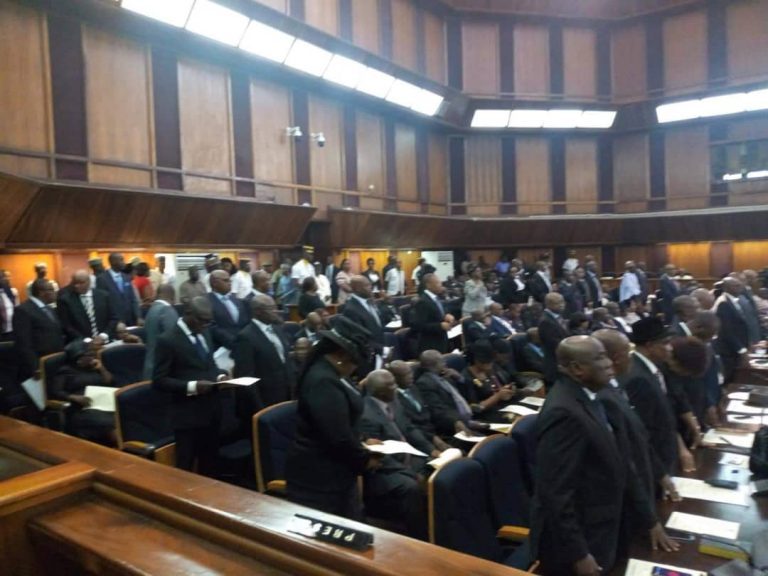
A total of 250 tribunal members were sworn in on Saturday at the Supreme Court premises, Abuja.
Speaking at the swearing-in of the members of the election tribunal on Saturday, Mohammed noted that this is a very trying period for Nigeria’s judiciary, therefore they “must stand to protect and uphold the integrity of this arm of government”.
“I encourage you to uphold and enhance the honour and standing of the judiciary and I pray that the Almighty God will bestow upon you strength, good health and wisdom in the performance of your duties,” TheCable quoted Mohammed as saying.
Out of the total number of 15 justices of the Supreme Court, only one, Sidi Bage, attended the swearing-in ceremony.
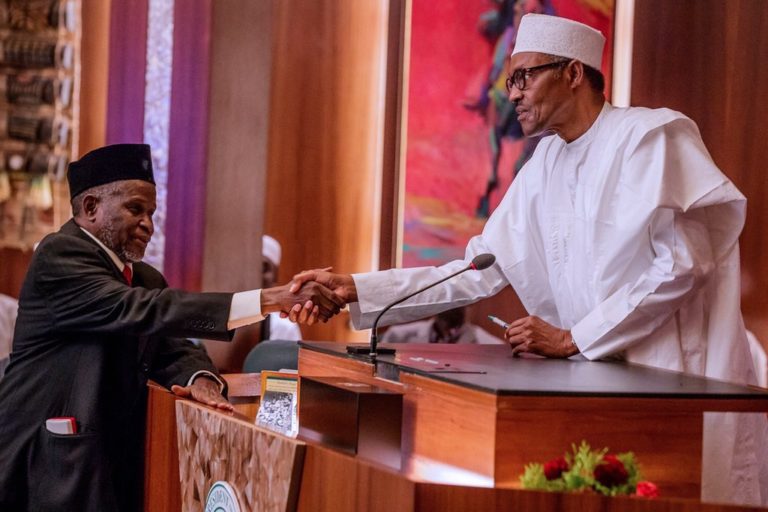
On Friday, former CJN, Walter Onnoghen, had announced through his media aide that members of the tribunal will be sworn in on Saturday, but he was controversially suspended by President Muhammadu Buhari, who immediately swore in Mohammed, a former justice of the Sharia Court, as his replacement.
Buhari based his actions on an ex-parte order obtained from the Code of Conduct Tribunal (CCT) which directed that Onnoghen should be suspended pending the determination of the corruption allegation against him.
Onnoghen was accused of breaching the Code of Conduct by not declaring some of his bank accounts which, according to FG, contains huge amounts of money in both local and foreign currencies.
However, on Thursday, January 24, the Court of Appeal gave a ruling that the CCT lacks the jurisdiction to try the CJN.
Meanwhile, there have been criticisms from several foreign partners of Nigeria, including the United States of America and the United Kingdom, over the removal of the CJN.
A statement issued on Saturday by the UK High Commission in Nigeria noted that that the timing of Buhari’s action, coming so close to national elections, “gives cause for concern” as “it risks affecting both domestic and international perceptions on the credibility of the forthcoming elections”.
Similarly, the US embassy in Nigeria also issued a statement condemning the removal of the CJN.
“We note widespread Nigerian criticism that this decision is unconstitutional and that it undermines the independence of the judicial branch. That undercuts the stated determination of government, candidates, and political party leaders to ensure that the elections proceed in a way that is free, fair, transparent, and peaceful – leading to a credible result,” the statement read in part.