A SHORT video clip has gone viral on the social media showing soldiers pushing an Armoured Personnel Carrier (APC), perhaps in an attempt to jumpstart the vehicle.
The 35-second video appeared to have been recorded by some Nigerian soldiers taking part in the counter-insurgency operations in the North East.
A narrator, ostensibly the man filming the incident, expressed disappointment at the development.
“See them o. They are pushing it o. Pushing APC by number,” the voice behind the camera was heard saying.
“Nigerian Army, there is problem, dem dey push o.”
“Manage, manage, manage, manage,” the narrator urged the soldiers pushing the APC.
Watch the video here as shared on Twitter by
See what our soldiers are facing in Borno. Buhari and his inept Government have abandoned these young men to suffer to death. Kai! pic.twitter.com/3eCzVqvFYa
The ICIR cannot independently verify the authenticity of the video clip nor the period when it was shot. A tweet sent to the official Twitter handle of the Nigeria Army, @HQNigerianArmy, is yet to be responded to as at the time of this report. Also, an enquiry sent to the army via its website has not been replied.
This is not the first time a video will be emerging on the social media showing Nigerian soldiers complaining about inadequate welfare in the North East.
In December 2016, a video of soldiers complaining of lack of water in Alagarno, one of the territories recovered from the Boko Haram, went viral on Youtube and Twitter. The video showed some of the soldiers lying on the floor gasping for air as a result of severe thirst.
In response, the army said the video was over six months old and was shot by some “mischievous and disgruntled elements”. Sani Usman, the army spokesman who responded to the development at the time said that the issue was investigated and “a borehole was subsequently drilled at the location and it is still serving both the military and adjoining communities”.
Usman is still the current spokesman of the army, having been re-appointed to the position late last year.
SOCIAL media company, Twitter, says it is testing a new tag that will make it easier to answer the question of who started a thread and helps fight the incidence of impersonation on the network.
Sara Haider, Twitter’s Director of Product Management, said in a statement that
“Twitter’s idea is to serve the public conversation.”
“As part of this work, we’re exploring adding more context to discussions by highlighting relevant
replies – like those from the original Tweeter,” she said
“This new tag is already popping out for some users.”
With this improvement, Haider explained that users would be able to easily trace posts to the original tweeter within a thread, addressing the issue of impersonation on the platform, as users will now be able to differentiate between real accounts and false accounts.
She said that the tag has been tested by a “small percentage” of iOS and Android users across
markets.
One unpleasant experience encountered by users of Twitter and other social media is the issue of false handles. Tweeter’s new tag will solve the problem of users having to read every character of a user’s handle to be able to decipher which is original and if the information shared is accurate.
This solution, by tagging “Original Tweeter” underneath a person’s handle simply helps users to identify the actual person who owns a tweet in a particular thread they are viewing.
Pope Francis of Argentina, in commemoration of the World Day of Social Communications, has vehemently condemned the trend of false information on social networks, which he described as “disinformation and manipulation of personal data”.
He further said that “We need to recognise how social networks, on the one hand, help us to better connect, rediscover, and assist one another, but on the other, lend themselves to the manipulation of personal data, aimed at obtaining political or economic advantages, without due respect for the person and his or her rights.”
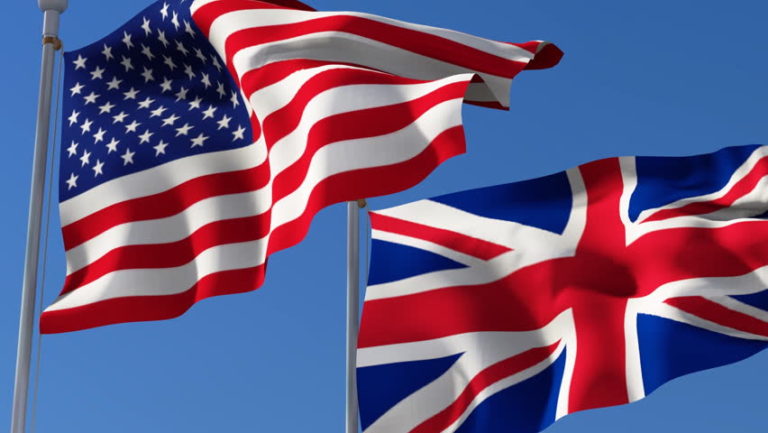
The United States and the United Kingdom on Thursday said they would take actions against anyone who interferes with the 2019 elections in Nigeria.
The two world powers said that there would be consequences, including visa restrictions, for any candidate or party member that interferes in the election processes or found instigating violence in the coming elections.
In a statement made on Thursday, both countries described the elections as very important to not just Nigeria but also to Africa.
The nations said their threat of a sanction against those who attempt to interrupt the electoral process is to ensure that the polls are as free and fair as is expected globally.
They both pledged to assist the Independent National Electoral Commission (INEC) to ensure that the elections are conducted successfully under close surveillance from the two nations.
The UK and US in their statements said that they have not endorsed any candidate or pledge allegiance to any political party or candidate.
Statement of the United Kingdom
“23 days to the Presidential and National Assembly elections and 37 days to the Gubernatorial and State Assembly elections, the British High Commission in Abuja would like to reaffirm our strong support for free, fair and peaceful elections in Nigeria.
“We and our international partners remain committed supporters of Nigeria’s democracy. We do not support any party or individual and believe that the Nigerian people should be able to choose their leaders in an environment free from hate speech and insecurity.
“We continue to provide significant support to Nigeria’s Independent National Electoral Commission and to Nigerian civil society to help them deliver credible elections.
“We also regularly engage with actors across the political spectrum to encourage them to respect electoral rules and maintain an atmosphere of peace and calm.
“We will be deploying an extensive observation mission for the forthcoming elections, including coordinating with the EU’s Election Observation Mission.
“Our monitors will, in particular, be looking out for any attempts to encourage or use violence to influence the elections, including on social media.
“We would like to remind all Nigerians that where the UK is aware of such attempts, this may have consequences for individuals. These could include their eligibility to travel to the UK, their ability to access UK based funds or lead to prosecution under international law.
“The UK is a friend and partner of Nigeria. We hope our continued support will play a role in helping Nigeria take a further step towards consolidating the progress made since democracy returned in 1999.”
Statement of The United States
The conduct of the upcoming elections in Nigeria is important not only for Nigeria but for the African continent.
“The United States government does not support any specific candidate or party in Nigeria’s upcoming elections. The United States supports the Nigerian democratic process itself.
“We support a genuinely free, fair, transparent, and peaceful electoral process.
“We and other democratic nations will be paying close attention to the actions of individuals who interfere in the democratic process or instigate violence against the civilian population before, during, or after the elections.
“We will not hesitate to consider consequences – including visa restrictions – for those found to be responsible for election-related violence or undermining the democratic process.
“Under U.S. immigration law, certain violations may also lead to restrictions on family members.
“We welcome the signing of peace pledges by Nigerian candidates and their commitment to a peaceful electoral process.”
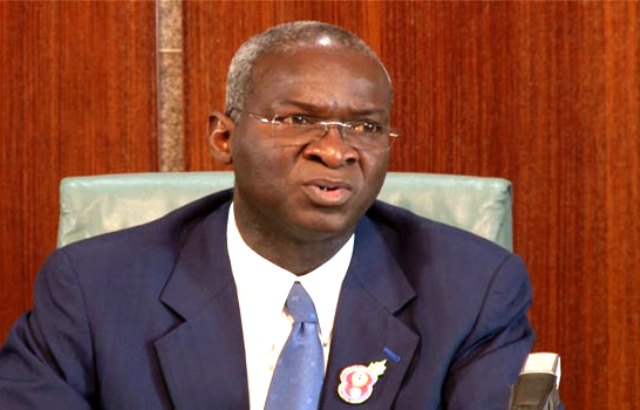
THE Minister of Power, Works and Housing, Babatunde Fashola, on Thursday, decried the Nigerian Electricity Supply Industry (NESI) for being ‘heavily dependent’ on foreigners and foreign equipment to fix power problems in the country.
Fashola expressed his concern in Abuja at the stakeholders’ workshop organised by the Nigerian Electricity Regulatory Commission (NERC), on the minimum specification of Nigerian content and requirement for labour the power sector.
NESI, which is being regulated by NERC has a structure comprising of the Federal Ministry of Power, NERC, Electricity Generation Companies (GenCos), Transmission Company of Nigeria (TCN), Electricity Distribution Companies(DisCos) and Nigerian Bulk Electricity Trading Plc.
Others are Gas Aggregator Company of Nigeria, Nigerian Electricity Management Service Agency (NEMSA) and other current 23 grids connected, generating plants supplying power in the country.
According to NERC, NESI has undergone fundamental changes over the past few years with the implementation of the government’s reform programme reputed to be one of the most ambitious privatisation exercises in the global power industry with a transaction cost of over three billion dollars ($3.0bn)
However, the Minister frowned at the already intensified trend such that most transactions in the power sector are carried out in foreign currencies, with clear impacts on foreign exchange.
Structure of the Nigerian Electricity Supply Industry (NESI) Picture Source: NERC
“The NESI is heavily dependent on imported human resources, material, equipment and services. It is consequently vulnerable to foreign exchange availability and rates, to the extent that contracts for gas and generation are denominated in foreign currency.
“It is time to systematically develop Nigerian capacity and content in the industry for its long term growth and stability,” Fashola, who was represented by the Ministry’s director of procurement, Ahmed Abu stated.
The event also doubled as a platform to exhibit local power products and services for the Nigerian electricity supply industry.
Meanwhile, NERC as an independent body, established by the Electric Power Sector Reform Act of 2005 is meant to undertake technical and economic regulation of the Nigerian electricity supply industry.
The Executive Order 5 signed by President Muhammadu Buhari on Monday, February 2018 is meant to increase local contents, especially in public procurement in areas of science, engineering and technology.
Aside, the Order is expected to promote the application of science, technology and innovation towards achieving national developmental goals across all sectors of the economy.
“The objective is to deliberate utilise Nigerian resources, goods, works and services in the industry. Opening up of the NESI at all levels of its complexity to involve Nigerian people and expertise, building capacities to support increased investment leveraging on existing and future investments to stimulate the growth of Nigerian and Nigeria –located enterprises among others,” said Fashola.
The Executive Order further prohibits the Ministry of Interior from issuing visas to foreign workers whose skills are readily available in the country.
Prominent Nigerians have also reacted to the Executive Orders especially Number Five with the emphasis of its potential to create jobs and restore the nation to the path of greatness.
The Minister of Science of Technology, Dr. Ogbonnaya Onu believed its full implementation would reduce poverty and unemployment.
Femi Falana, a prominent Nigerian lawyer shared similar view with the Minister applauding federal government’s recognition of the role of Science, Technology and Innovation in developing all sectors of the economy.
However, his concern was faithful and efficient implementation of the law.
In contrary, former President of the Nigerian Bar Association, Wole Olanipekun (SAN) said the Orders are in competition as a law with the constitution of the country while that of Order six, in particular, infringes on the fundamental human rights.
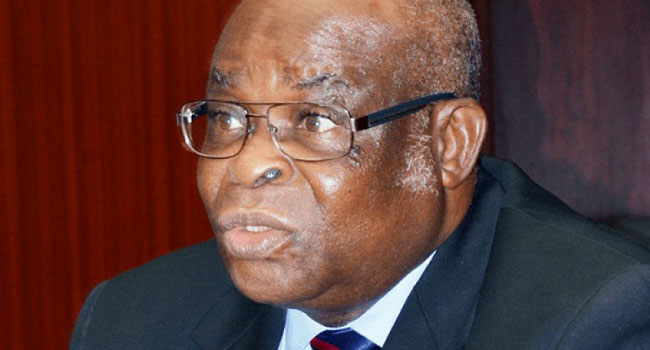
THE Court of Appeal on Thursday halted further hearing against the Chief Justice of Nigeria (CJN), Walter Onnoghen.
Onnoghen was being prosecuted at the Code of Conduct Tribunal (CCT) for false assets declaration.
Speaking at the proceeding in the Appeal Court, Abuja the defence counsel, Wole Olanipekun informed the court that the CCT refused to consider the rulings from other courts.
He frowned at the position of the Tribunal and its refusal to consider his arguments that the CCT lacks jurisdiction over the matter.
Olanipekun maintained that his positions were ignored by the Tribunal adding that if the application is not granted, it would affect the judiciary as a whole and also pose a threat to nation’s constitution in general.
In his reaction, the counsel to the Federal Government, Oye Koleosho argued before the Court that the decision whether to stay proceeding lies at the discretion of the Tribunal.
While challenging its jurisdiction, Kolesoho noted that the CCT had adjourned the hearing of the application which was at the instance of the defence counsel, Olanipekun.
Presiding over the case, Justice Abdul Aboki, after listening to arguments from both counsels ordered the CCT to stay proceeding pending the determination of the appeal court.
He adjourned the hearing to 30th January, 2019 to determine if the CCT has jurisdiction to hear the matter against Onnoghen or not.
The CJN has refused to honour the Tribunal at the two different sittings where he was meant to answer the charges filed against him on basis that the Tribunal lack jurisdiction over the case.
Counsel to the federal government, Aliyu Umar (SAN) on Tuesday had pleaded with the Tribunal asking the CJN to vacate his seat pending final ruling on the matter.
THE new minimum wage bill which seeks to increase the workers’ salary from 18000 to 27000 has passed the first and second readings at the Senate on Thursday.
President Muhammadu Buhari has transmitted the draft legislation to the senate earlier on Thursday. deputy senate president Ike Ekweremadu who read the president’s letter to the lawmakers called for legislative action on the amendment of the National Minimum Wage Amendment Act 2011 to raise the minimum wage from N18000 to N27000.
The national council of states approved the new minimum wage to be N27,000 on Tuesday at its first meeting in 2019, contrary to the N30,000 for all workers which was recommended by a tripartite committee formed by the representatives of the federal government, governors’ forum, organised private sector and organised federations of trade unions in Nigeria.
The Nigeria labour had rejected the 27,000 naira minimum for state workers, clamouring that all workers— both state and federal— be paid 30 thousand nairas.
Meanwhile, the new minimum wage bill read at the Senate today has not made an exemption to the collection of N27,000. The Senate said the bill made provision of N27,000 minimum to all workers, with no variation between federal and state workers.
“The federal executive council (FEC), National Executive Council, National Council of the state have all noted and approved this recommended amendment,” part of the letter read.
The amendment made an exemption for establishments employing less than 25 persons. It also gave the frequency of five years for a review of the minimum wage.
Mr Ekweremadu in his remarks appreciated his colleagues for the speedy consideration.
“This is possibly the first time in the 8th Senate that we have had cause to read executive communication, suspend our rules to take the first and second reading and be referring a bill to the committee all in one day,” he related.
“It shows how committed we are to a course of Nigerian workers. We are ever prepared to do more.”
He said the minimum wage proposed by the government for the legislative arm is N27,000, against previous reports of N27,000 for the states and N30,000 for the federal government.
“But what we have before us is a single National Minimum Wage of N27,000, no discrimination between the federal workers and the state workers, that point must be made clear,” Ekweremadu said.
He expressed concern to the exemption of organizations employing less than 25 people. The deputy senate president said if the bill becomes law that means many workers will be outside the minimum wage bracket, which included domestic servants. “In many other countries, minimum wage applies across the board whether you are employing one person or one million people,” he said.
Another concern raised by Ekweremadu at today’s legislative chamber was the ability of states to pay. “That means that they (states) may have to make sacrifices in some areas including cutting the overheads and once you have to step up the internally generated revenues and also make more efforts in collecting collectable taxes, not imposing more taxes. There must be a conscious effort to bridge the gap between the rich and the poor,” he added.
After many contributions, the house set up an ad hoc committee headed by the deputy speaker of the House of Representatives, Yussuff Lassun, for further legislative action on the bill.
The Speaker of the House, Mr Yakubu Dogara , in his ruling, mandated the committee to conduct a public hearing on Monday, January 28 and report to the House on Tuesday, January 29 for passage.
THE Court of Appeal in Abuja has affirmed former Governor of Cross River State, Donald Duke as the authentic presidential candidate of the Social Democratic Party (SDP), setting aside a former ruling by a Federal Capital Territory High Court which stopped Duke from parading himself as the SDP flagbearer.
The FCT High Court had declared Jerry Gana, a former Minister of Information, as the winner of the SDP presidential primary election, even though Duke scored the highest number of votes.
Gana had gone to court to challenge Duke’s victory, citing the constitution of the SDP which provides that the national chairman of the party and the presidential candidate cannot come from the same region of the country.
He argued that since Olu Falae, the SDP National Chairman is from the Southern region of Nigeria, the party’s presidential candidate ought to have come from the North.
Justice Baba-Yusuf of the FCT High Court had agreed with Gana and ruled that Duke’s emergence “is a clear violation of the party’s constitution”.
But following an appeal of the matter, a three-man panel of Appeal Court justices led by Abdul Aboki, struck out the judgement of the high court, saying that the matter ought not to have been entertained in the first place.
The panel held that Gana’s argument which is based on section 18 of the party’s amended constitution contravenes the Electoral Acts stipulation for the validity of a candidate in any election.
The court also observed that the amendment which Gana relied upon did not take effect until October 8, 2018, which was two days after its ratification and the election of Duke as the party’s candidate in line with section 222 of the Electoral Act.
THE Independent National Electoral Commission (INEC) says it is impossible for any candidate to withdraw from contesting any position in the coming general elections.
The chief press secretary to the INEC chairman, Rotimi Oyekanmi, said this on Thursday in reaction to the withdrawal of Oby Ezekwesili as the presidential candidate of the Allied Congress Party of Nigeria (ACPN).
Ezekwesili who declared her withdrawal a few hours earlier said she backed off so as to help form a coalition against the All Progressives Congress and the Peoples Democratic Party.
But INEC said it is too late for her to withdraw from the presidential race as indicated in the timetable and schedule of activities for the 2019 general elections.
According to INEC, November 17, 2018, was the last date for withdrawal. “It is impossible for any presidential candidate to withdraw from the race now,” Oyekanmi said.
“The last day for withdrawal by candidates or replacement of withdrawn candidates by political parties was 17th November 2018 for Presidential and National Assembly Elections.”
He said the deadline for Ezekwesili or any candidate in that category to withdraw or be replaced has passed.
Ezekwesili wasdisownedby her party ACPN, few hours after she announced her withdrawal. The party has pledged its full support for the second term bid of President Muhammadu Buhari of the All Progressives Congress.
But INEC said Ezekwesili’s withdrawal changes nothing as her party and name would still appear on the ballot.
“Her party will appear, her passport will appear and her name will appear. So it doesn’t change anything as far as we are concerned,” INEC chief press secretary said.
INEC supported its stance, quoting Section 35 of the electoral act, which states: “A candidate may withdraw his candidature by notice in writing signed by him and delivered by himself to the political party that nominated him for the election and the political party shall convey such withdrawal to the Commission not later than 45 days to the election.”
When The ICIR contacted Rotimi, the INEC spokesperson to know the penalty against the late withdrawal, 22 days to the election, he reiterated his earlier statement, saying it is impossible for Ezekwesili to withdraw at this time.
Checking through the electoral act of 2010, there is no part that specifies penalty to any presidential candidate that withdraws less than 45 days to the election.
IN climes where inclusion matters in governance, tax credits to fund the welfare of Persons Living With Disabilities(PLWDs) are being proposed, and policymakers are taking a long hard look at them.
North America first: Canada, years ago, introduced the Disability Tax Credit to shore up its disability welfare fund—for its 500,000 PLWDs—to above a billion dollars.
Even if it seemed a political move of the government at that time, Australia, too, proposed a disability tax in 2013. The policy meant to kick in by 2014 was expected to raise over $3 billion (Au)by increasing a compulsory health insurance levy from 1.5 per cent of personal income to 2 per cent.
The country has around 410,000 PLWDs.
But Nigeria, with no fewer than 20 million people damaged one way or the other, has yet to fully include this minority in its public spending—how much less floating a special tax regime to raise fund for their welfare.
Funding has always been the excuse. And the government will sing it out louder in these trying times as Nigeria’s oil fortunes dwindle, and its economic handlers flounder in uncertainty.
The world’s sixth largest oil exporter earned N207 billion from crude oil and gas export in the first half of 2018. This fell short of the N661.4 billion the federal government targeted.
These disappearing revenues threaten a lot of things, the most important being the Sustainable Development Goals. Its eighth goal, which covers minorities like the PLWDs, seeks to “promote sustained, inclusive and sustainable economic growth, full and productive employment and decent work for all.”
Tax revenue thus remains one of the sources to look to—in order to tide the nation’s 200 million-plus citizens over the storm.
Goal 17 of the SDG addresses this: Strengthening the means of implementation and revitalizing the Global Partnership for Sustainable Development. The first clause specifies the means: Strengthening domestic resource mobilization, including through international support to developing countries, to improve domestic capacity for tax and other revenue collection.
Across all development, economic, and financial institutions working to save the world’s poor, taxation has been identified as one reliable means to oil the wheel of the global development agenda.
“Funding the SDGs is an economic and ethical imperative with major implications for taxation. Countries themselves need to raise more revenue in an equitable way,” IMF Managing Director Christine Lagarde said during the February 2018 Organisation for Economic Co-operation and Development(OECD) meeting in New York.
“And the entire international community needs to eradicate tax evasion and tax avoidance.”
Tax avoidance and evasion plague developing economies where their tax-GDP ratio is low—compared to the developed economies.
In Nigeria, the ratio is 6.1 per cent, lower than Ghana’s and Egypt’s at 16 per cent, Morocco’s at 22 per cent and South Africa’s at 27 per cent. Norway’s, one of the OECD members, however, stands at 54 per cent.
In 2016, global consulting firm PwC said in the June edition of its ‘Tax Watch’ that Nigeria earned N5.5 trillion ($27 billion) from taxation in 2015.
“South Africa with a smaller economy and only about one-third the Nigeria’s population collected twice as much R808 billion (about US$57 bn) in taxes alone,” the report stated.
The difference is clear: 40 million, out of the 70million active citizens in Nigeria, said former Finance Minister Kemi Adeosun, pay taxes. And the 30 million tax dodgers cut across the rich and the poor.
This shenanigan mirrors the tax situation in Africa, a situation not exactly bad, some international tax watchers say.
“Governments committed to expanding revenue collection, including through income taxes, have sometimes seen large gains,” researchers from the International Centre for Tax and Development (ICTD) stated.
They cited the Rwanda and Ethiopia success stories. “In individual cases, governments have been able to mobilise popular support for new taxation by linking it more explicitly to benefits, for example in Sierra Leone and Nigeria.”
The Nigerian authorities won’t celebrate this research finding, though. The reality is starkly different. As at December 2017, only 943 Nigerians paid self-assessed taxes of less than N1 million, according to Vice President Yemi Osinbajo while addressing a gathering of members of the Chartered Institute of Taxation in Nigeria recently.
A partner with Deloitte & Touche Nigeria, Oluseye Arowolo, also revealed that of the 14 million registered personal income taxpayers, just 214 Nigerians pay up to N20 million as annual tax; 914 people pay up to N10 million. And according to the Corporate Affairs Commission (CAC), there are just 2.5 million tax-registered corporates out of the 30 million on the CAC list.
Worse, the 214in the tax upper crust live in Lagos where just five million of the taxable nine million pay taxes, the state internal revenue service said. Ninety per cent of the taxpayers are from the Organised Private Sector (OPS) and public servants while 10 per cent are from the informal sector in the state. The Joint Tax Board stated Lagos raked in 40 per cent of the N684 billion the 36 states of the federation took in in 2015.
At least 46 per cent of Nigeria’s 10-million registered personal-income taxpayers, said the National Bureau of Statistics, lived in the state.
But this is not in praises of the Lagos elite. They could have done more, and declared higher than N20 million each, annually, considering the sheer number of the rich cocooned in the most populated city on the continent.
Lagos also ranks the fourth wealthiest in Africa.
In a report by AfrAsia Bank and New World Wealth in 2017, Lagos warehouses$120 billion of Africa’s wealth. No fewer than four dollar-rich billionaires, 360 multi-millionaires, and 6,800 millionaires live in the city. Yet just over 200 of these moneybags remit about N20 million each, yearly, and just over 900 pay N1 million each every year.
It has actually been discovered the tax system is rigged against the poor in developing countries, thanks to the games the elite play in shaping the politics of tax and its collection.
In Africa, the ICTD says, taxation of the wealthy remains ineffective. “The overall collection of income and property taxes is a fraction of levies on the OECD countries,” the group’s findings reveal.
“Taxation of professional incomes and capital gains are often almost negligible; corporations benefit from poorly monitored tax exemptions, and so on.”
In Nigeria in particular, the wealthy declare just single sources of income, when they have streams of multiple incomes hidden from the tax man.
“They are only taxed through the PAYE,” said Adeosun. “Yet, they earn so much from part-time jobs, and extra businesses.” These artful dodgers include the nerds in online businesses, entrepreneurs, Nollywood’s big earners, and others.
In the enforcement, the injustice is also obvious. “There is growing evidence that much of the cost of poor enforcement of taxes on the rich falls on the poor,” the ICTD says.
That happens through fragmented subnational taxes, formal and informal user fees, reliance on community associations for services, and the broad reach of informal taxation—all borne by the have-nots, including the PLWDs.
The PLWDs are not grumbling about paying taxes, anyway. “There’s nothing wrong in paying taxes as disabled persons,” said Tunde Muhammed, chairman of the Nigeria Association of the Blind, Lagos.
“It helps any disabled person paying his tax to stand up and insist on exercising his rights.”
Muhammed’s only worry is what he sees as the fundamental problem in government approach to disability in Nigeria. And he believes this approach makes the minority objectives of the SDG a tall dream—tax or no tax.
“Local laws that should promote and protect the PLWD right to inclusive development are not there in the first place,” he said.
David Anyaele, Executive Director of the Centre for Citizens with Disabilities, also pays his tax, though he thinks the PLWDs should be shielded from tax because the government has no plan for their welfare. But he agrees with Muhammed on one point: The problem goes beyond tax justice.
David Anyaele, Executive Director of the Centre for Citizens with Disabilities.
“It is about deliberate state policy to include and ensure no one is left behind in development,” he said.
Lack of good tax policies actually spawns the problem of the rich gaming the tax system at the expense of the poor. And that laxity permits just any smart alec, including multinationals, to also bend the tax rule, says Adewale Adeduntan, Social Mobilization Manager at ActionAid Nigeria.
Adeduntan isn’t exactly wrong. Between 2005 and 2015, capital gains tax unremitted by some oil giants that bought the federal government assets stood at $270 million, according to a report.
The Impact of non-payment of Capital Gains Tax (CGT) and other Levies in the Oil and Gas Sector on the Socio-Economic Development of the Country, a report by the Socio-Economic Rights and Accountability Project (SERAP), reveals that this failure has bogged Nigerians deeper into poverty and under-development.
This perceived injustice is not without its effect. The informal sector, which the Central Bank of Nigeria says contributes 48 per cent of Nigeria’s over $500 billion GDP, has no trust in the tax system. And the 36 million mom-and-pops, (out of the 37 million businesses in Nigeria) employing over 60 million people, will do everything to blow off tax collectors.
And according to Adeduntan of the ActionAid Nigeria, it’s a loss that must be stopped in the effort to fund development.
The race for the SDG medals is actually spurring on responsible governments. No doubt, funds will determine how far a nation will go. But with shrinking government revenues in resource-dependent economies like Nigeria where oil generates 61 per cent of government revenues, attention has to shift to taxation.
And the administration of revenue so gleaned, just and equitable, will only create responsible taxpayers engaging an accountable government for an inclusive society.
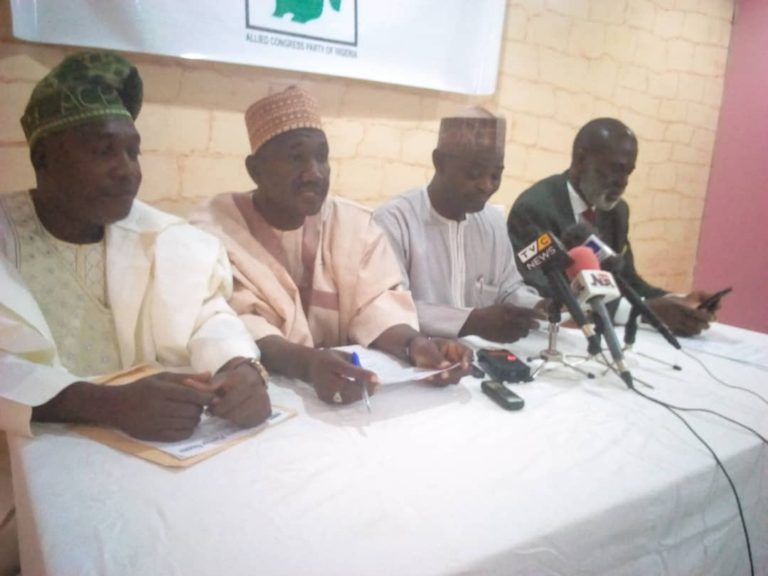
JUST moments after withdrawing from the presidential race, former Minister of Education, Obiageli Ezekwesili, has been disowned by her party, the Allied Congress Party of Nigeria (ACPN), which have now pledged to support President Muhammadu Buhari’s re-election bid.
National Chairman of the ACPN, Gani Galadima, made this known on Thursday, at a press conference in Abuja few hours after Ezekwesili’s withdrawal.
Ezekwesili had tweeted she was withdrawing from the presidential run so as to devote her time to building “a coalition to defeat the All Progressives Congress and the People’s Democratic Party in the February 16 presidential election.”
Galadima expressed his disappointment with Ezekwesili, saying that the former minister of education only wanted to use the platform of the ACPN to negotiate to be finance minister.
“The reason for calling this press conference is to let the world know about the presidential aspiration of Dr. Oby Ezekwesili, which in actual fact, is not the truth,” Galadima said.
“I have been put into confidence by one of her aides named Iyinoluwa Aboyeji that she only wanted to use the platform of the ACPN to negotiate to be Nigeria’s finance minister.”
The party’s chairman said Ezekwesili did not inform the party before she backed out from the presidential journey. He said from the inception Ezekwesili did not show seriousness in her campaign.
“If you observe, Dr. Oby Ezekwesili is the only presidential candidate who was so militant in her campaign without any tangible thing on ground to indicate any seriousness in the prosecution of her campaign,” Galadima said.
He added that the madam had no campaign secretariat, billboard or great commitment on ground to indicate any seriousness.
“It is on this ground that the ACPN is withdrawing support for her presidential aspiration and endorsing the second term bid of President Muhammadu Buhari to take Nigeria to the next level,” Galadima submitted. He also said the decision to endorse President Buhari was to allow for continuity of his development programmes.
The party’s chairman urged Ezekwesili to return to the party all the donations “from all over the world” because the party would have to account to the Independent National Electoral Commission (INEC) and other properties belonging to the party.
“We may take her to court. She was just using us to play,” he said.
According to the chairman, the party’s fee for expression of interest and nomination form is N10.5 million but she only offered N100,000.






 In Nigeria, the ratio is 6.1 per cent, lower than Ghana’s and Egypt’s at 16 per cent, Morocco’s at 22 per cent and South Africa’s at 27 per cent. Norway’s, one of the OECD members, however, stands at 54 per cent.
 It has actually been discovered the tax system is rigged against the poor in developing countries, thanks to the games the elite play in shaping the politics of tax and its collection.