Home Blog Page 2449

Amaechi was not arrested over corruption allegation

ROTIMI Chibuike Amaechi, minister of transportation and the director-general of the APC presidential campaign organisation was said to have been arrested by the police in his home on Wednesday, January 23 on allegations of corruption.

CrossCheck Nigeria, a collaboration of newsrooms in Nigeria which includes The ICIR, confirms that Amaechi was not arrested and that he was at the presidential rally of President Buhari in both Sokoto and Kebbi states yesterday, January 23.

The post, published on January 23, at 06:52 am by AIT News Nigeria, a Facebook page,  has garnered 488 likes, 571 comments, and 1,029 shares as at 6:02 pm, January 24.

Also, Happenings in Nigeria, another Facebook page, shared yesterday at 11:55 am. It has the traction of 101 likes and 157 shares as at 6:03 pm, January 24.

The Facebook page cannot be said to be owned by the African Independent Television (AIT) because there appears to be another page named, Africa Independent Television (A TV Channel) that is well updated with programmes aired on its television station and also with larger followership. While the TV channel has about 454,720  followers, AIT News Nigeria has 55,000 followers.

To verify this, CrossCheck Nigeria tracked the minister’s public appearance on said date. The presidential rally of the APC was in Sokoto and Kebbi on January 23. A NAN report confirmed the APC campaign DG was in attendance. Live coverage of the event by the NTA also showed Amaechi addressing the crowd at the rally.

The police, through the Rivers state commissioner, debunked the claimed and urged the general public to disregard it.

Investigated CrossCheck Nigeria

US, UK visa threat: Lai Mohammed says APC will win without rigging election

0

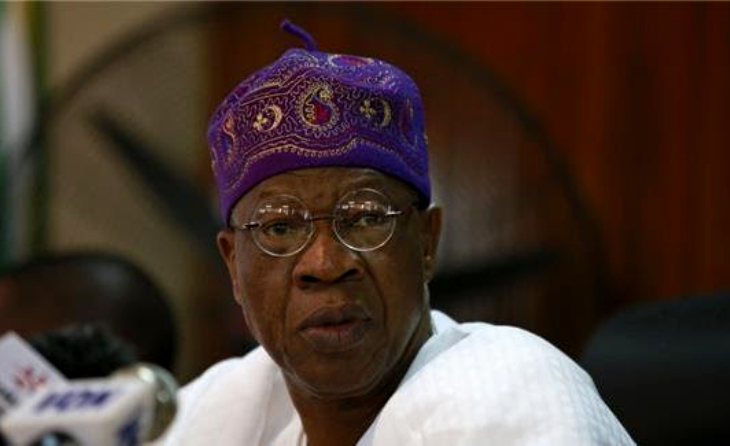
MINISTER of Information and Culture, Lai Mohammed, says the Federal Government has accepted the statements of the United Kingdom and the United States to restrict visas to defaulters during the 2019 elections.

He said the All Progressives Congress (APC) was confident of its emergence as the winners in the upcoming polls.

Mohammed made this known via a statement on Friday, saying that the warnings could not have been issued at a better time than now, especially following alerts that the opposition Peoples’ Democratic Party (PDP) were planning to rig the election through violent activities.

“A few days ago, we alerted the nation to the plot by the opposition to orchestrate widespread violence in the country, using insurgents and criminal elements within and outside the country,” Mohammed stated.


READ ALSO:

“Their plan is to scuttle the election and then push for an interim government, having realised they can’t win a free, fair, credible and peaceful election.

”The fact that those statements came after we issued our red alert, which is based on credible intelligence, shows that the international community is closely monitoring events ahead of the election.

“We urge them to keep a close tab on the desperate opposition, whose language, actions and undisguised threats are antithetical to the conduct of peaceful polls.”

Mohammed said the APC won the presidential election fair and square in 2015 without having to resort to manipulations or perpetrating violence.

He said considering the massive support that the APC enjoys from the citizens, the party is not jittery about going to the polls again.

Mohammed also urged the international community to monitor the opposition activities, which he believed were up to dubious strategies to rig the polls.


No evidence APC thugs attacked Mrs. Atiku in Ibadan

THE wife of PDP presidential candidate Atiku Abubakar, Mrs. Titi Atiku, was allegedly attacked by “APC thugs” outside the Sarkin Sasa house in Ibadan on Friday, 18 January, according to news reports.

While there are no pictures or videos from the attack online at the time of this verification, websites like Punch and PostNigeria quote PDP stakeholders in Oyo state who condemned the incident, while the state police command denied it happened.

Checks by CrossCheck Nigeria, a collaboration of newsrooms in Nigeria which includes The ICIR  have revealed that there is no visual or audio evidence to suggest the incident took place.

We investigated the claim by speaking with Atiku’s media aide, Paul Ibe, a spokesperson for the Oyo State Police, as well as other reporters covering politics in the state.

Ibe could not confirm the attack on Mrs. Atiku. “She was in Oyo on Saturday but I am not aware of the incident,” he said.

The Oyo State Police Command also denied the attack.

While Mrs Atiku was at the location on said day, there is no evidence that she was attacked by anyone.

Investigated CrossCheck Nigeria

How poor management of Nigerian forests led to exploitation by criminals

0

File 20181210 76956 1li564j.jpg?ixlib=rb 1.1
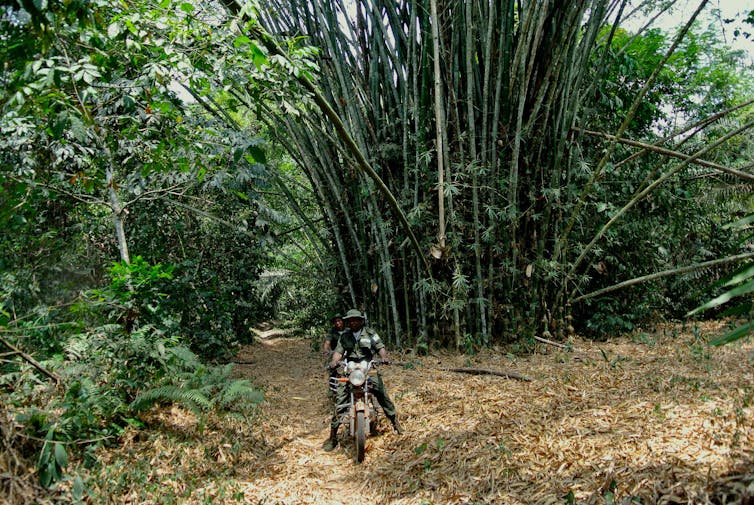
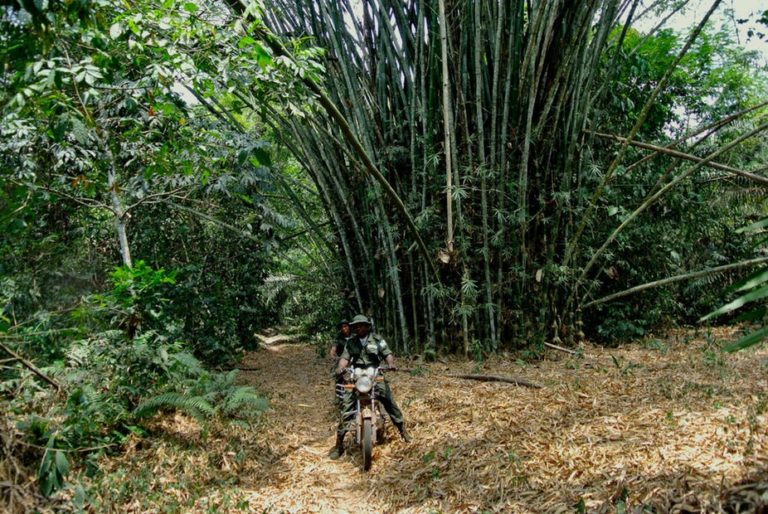
Across the world forests have been exploited as a source of cover from which to launch attacks.
Rettet den Regenwald/shutterstock

Azeez Olaniyan, Ekiti State University

Nigeria’s forests cover about 96,043 square km– that’s about 10% of the country’s landmass. But the presence of authorities in these sanctuaries is either non-existent or, at best, sporadic. This has led to forest areas being poorly managed, which in turn has led to them being exploited by criminals and posing a security threat.

Using the theory of ungoverned spaces as a foundation, I conducted a study to understand the major reasons for the invasion and use of forested landscape for criminal activities in Nigeria.

I found that the forests are used by terrorists, kidnappers, cannabis cultivators, cattle rustlers and robbers. This is because they offer shelter and have resources that can support militants – like food or illegal logging to finance their activities.


READ ALSO:

The phenomenon isn’t new. Across the world forests have been exploited as a source of cover from which to launch attacks and use in defence. At least half the violent conflicts of the 20th Century took place in forested areas, including Ethiopia, Colombia, the Democratic Republic of Congo, India and Mexico. In Ethiopia’s battle of Adwa for example, Ethiopian forces used the forests’ thick foliage and mists to hide them against the bombing campaigns of the Italians.

What makes the Nigerian situation problematic is that criminals have been able to exploit forests because of poor management. By law, forests fall under the government’s mandate, but the Nigerian government hasn’t been able to secure them because of their huge size, lack of personnel and poor surveillance technology.

Types of criminals

In addition to an extensive literature review, I conducted interviews with security operatives – including military personnel, police officers and operatives of national drug law enforcement agency – and with 10 communities who lived by some of the forests.

My research uncovered a range of illegal activities.

Terrorism: The violent activities of Boko Haram insurgents in northern Nigeria have led to the death of thousands of people, the displacement of millions and the massive destruction of infrastructure.

Through interviews I conducted security operatives and some victims of the insurgency, I found that the militant organisation operated from a number of forests in north-eastern Nigeria, including the Sambisa, Kala Balje, Balmo and Kagoro forests.

Sambisa Forest, for example, is meant to be a government protected area, and is rich in wildlife, but it’s overrun by militants. Boko Haram invaded the forest in 2013 and made it into one centre of their operations. It sprawls across across four states and extends into neighbouring Cameroon, Niger and Chad – an area the size of Belgium. Its vastness, rugged terrain, sparse population and dense tree cover make it an ideal hiding place.

Kidnapping: Kidnapping has become a major crime in Nigeria. It’s a national problem. In 2017, the three countries with the highest number of reported kidnappings were India, Nigeria and Pakistan.

Boko Haram’s kidnappings of schoolgirls, for example, is well-known. Forests are a useful hiding place for the group, particularly when the number of victims run into the hundreds.

Crime syndicates also use thick forestland between Abuja and Kaduna for their kidnapping activities. They abduct victims for ransom on highways and then hide them in forests. In some places the evidence of kidnappings is only revealed by mass graves that are discovered in the forests.

Ritual killings: For a long time, forest cover has also been used by members of cults to carry out murders. For instance, people are killed and their body parts are used as charms in the belief that they will bring wealth.

In a police raid on the Ogwugwu shrine, in Okija Forest, 50 decomposing bodies and 20 skulls were discovered.

Armed robbery: Armed robbery has been a major security challenge in Nigeria for a long time, and forests have played a role in its perpetuation.

The forest along the Benin City bypass has been dubbed an “evil forest” by locals as it’s a hideout for armed robbers who launch attacks on commercial busses using that road.

Idu and Gwagwa forests in Abuja and Kabakawa Forest in Kaduna have also been identified as notorious bases for criminals who regularly mount roadblocks to attack travellers and also rob people living in the areas that border the forests.

Cannabis cultivation: Nigeria is considered to be among the countries with the highest rate of cannabis consumption. It’s also producing a huge amount . I carried out interviews with operatives of the national drug law enforcement agency who revealed that a large proportion of cannabis cultivation is carried out deep inside the forests.

Cattle rustling: Cattle rustling has become a major security problem, claiming the lives of hundreds of herders and the theft of thousands of livestock. In just one year, cattle rustling resulted in the deaths of 322 herders and the theft of 60000 cattle in northern Nigeria.

Rustling commonly happens with the help of forest cover. In north-western Nigeria, most of the recorded cases take place in the Kamuku and Kuyanbana forests. Criminals have made a permanent home in the two forests, from which they launch attacks.

Lack of state presence

Forests are dense, isolated and vast. This makes make them hard to control and creating government bases in them is a challenge. This explains why there isn’t a state presence in many of them.

There have been attempts to bring the high level of criminality under control. Recently, raids were carried out to apprehend criminals. But these measures are sporadic and don’t create a permanent solution.

Forest spaces must be properly governed. Special security forces, trained to work in this terrain, must be deployed. The government must also invest in technology – like CCTV surveillance systems – to monitor criminal activity. Taking these basic steps will act as a deterrent, and perhaps put a stop, to some of this activity.

Azeez Olaniyan, Senior lecturer, Ekiti State University

This article is republished from The Conversation under a Creative Commons license. Read the original article.

How poor management of Nigerian forests led to exploitation by criminals

0
Across the world forests have been exploited as a source of cover from which to launch attacks.
Rettet den Regenwald/shutterstock

Azeez Olaniyan, Ekiti State University

Nigeria’s forests cover about 96,043 square km– that’s about 10 percent of the country’s landmass. But the presence of authorities in these sanctuaries is either non-existent or, at best, sporadic. This has led to forest areas being poorly managed, which in turn has led to them being exploited by criminals and posing a security threat.

Using the theory of ungoverned spaces as a foundation, I conducted a study to understand the major reasons for the invasion and use of forested landscape for criminal activities in Nigeria.

I found that the forests are used by terrorists, kidnappers, cannabis cultivators, cattle rustlers and robbers. This is because they offer shelter and have resources that can support militants – like food or illegal logging to finance their activities.

The phenomenon isn’t new. Across the world forests have been exploited as a source of cover from which to launch attacks and use in defence. At least half the violent conflicts of the 20th Century took place in forested areas, including Ethiopia, Colombia, the Democratic Republic of Congo, India and Mexico. In Ethiopia’s battle of Adwa for example, Ethiopian forces used the forests’ thick foliage and mists to hide them against the bombing campaigns of the Italians.

What makes the Nigerian situation problematic is that criminals have been able to exploit forests because of poor management. By law, forests fall under the government’s mandate, but the Nigerian government hasn’t been able to secure them because of their huge size, lack of personnel and poor surveillance technology.

Types of criminals

In addition to an extensive literature review, I conducted interviews with security operatives – including military personnel, police officers and operatives of national drug law enforcement agency – and with 10 communities who lived by some of the forests.

My research uncovered a range of illegal activities.

Terrorism: The violent activities of Boko Haram insurgents in northern Nigeria have led to the death of thousands of people, the displacement of millions and the massive destruction of infrastructure.

Through interviews I conducted security operatives and some victims of the insurgency, I found that the militant organisation operated from a number of forests in north-eastern Nigeria, including the Sambisa, Kala Balje, Balmo and Kagoro forests.

Sambisa Forest, for example, is meant to be a government protected area, and is rich in wildlife, but it’s overrun by militants. Boko Haram invaded the forest in 2013 and made it into one centre of their operations. It sprawls across across four states and extends into neighbouring Cameroon, Niger and Chad – an area the size of Belgium. Its vastness, rugged terrain, sparse population and dense tree cover make it an ideal hiding place.

Kidnapping: Kidnapping has become a major crime in Nigeria. It’s a national problem. In 2017, the three countries with the highest number of reported kidnappings were India, Nigeria and Pakistan.

Boko Haram’s kidnappings of schoolgirls, for example, is well-known. Forests are a useful hiding place for the group, particularly when the number of victims run into the hundreds.

Crime syndicates also use thick forestland between Abuja and Kaduna for their kidnapping activities. They abduct victims for ransom on highways and then hide them in forests. In some places the evidence of kidnappings is only revealed by mass graves that are discovered in the forests.

Ritual killings: For a long time, forest cover has also been used by members of cults to carry out murders. For instance, people are killed and their body parts are used as charms in the belief that they will bring wealth.

In a police raid on the Ogwugwu shrine, in Okija Forest, 50 decomposing bodies and 20 skulls were discovered.

Armed robbery: Armed robbery has been a major security challenge in Nigeria for a long time, and forests have played a role in its perpetuation.

The forest along the Benin City bypass has been dubbed an “evil forest” by locals as it’s a hideout for armed robbers who launch attacks on commercial busses using that road.

Idu and Gwagwa forests in Abuja and Kabakawa Forest in Kaduna have also been identified as notorious bases for criminals who regularly mount roadblocks to attack travellers and also rob people living in the areas that border the forests.

Cannabis cultivation: Nigeria is considered to be among the countries with the highest rate of cannabis consumption. It’s also producing a huge amount . I carried out interviews with operatives of the national drug law enforcement agency who revealed that a large proportion of cannabis cultivation is carried out deep inside the forests.

Cattle rustling: Cattle rustling has become a major security problem, claiming the lives of hundreds of herders and the theft of thousands of livestock. In just one year, cattle rustling resulted in the deaths of 322 herders and the theft of 60000 cattle in northern Nigeria.

Rustling commonly happens with the help of forest cover. In north-western Nigeria, most of the recorded cases take place in the Kamuku and Kuyanbana forests. Criminals have made a permanent home in the two forests, from which they launch attacks.

Lack of state presence

Forests are dense, isolated and vast. This makes make them hard to control and creating government bases in them is a challenge. This explains why there isn’t a state presence in many of them.

There have been attempts to bring the high level of criminality under control. Recently, raids were carried out to apprehend criminals. But these measures are sporadic and don’t create a permanent solution.

Forest spaces must be properly governed. Special security forces, trained to work in this terrain, must be deployed. The government must also invest in technology – like CCTV surveillance systems – to monitor criminal activity. Taking these basic steps will act as a deterrent, and perhaps put a stop, to some of this activity.

Azeez Olaniyan, Senior lecturer, Ekiti State University

This article is republished from The Conversation under a Creative Commons license. Read the original article.

Buhari and the enemies of Nigeria

0

By Ikechukwu Amaechi

“WE have been sinking into crisis, yet we hear no clear summons from the centre of power.”

Ted Kennedy said this in November 1979 in describing the administration of fellow Democrat, United States President Jimmy Carter.

Kennedy, then U.S. Senator for Massachusetts, made the statement when he officially launched his own bid for president.

A charge of incompetence was hanging over Carter’s head like the Sword of Damocles and Democrats who feared they would lose the election if Carter flew the party’s flag, his incumbency notwithstanding, challenged him in the primaries.

“Government falters. Fear spreads that our leaders have resigned themselves to retreat,” Kennedy said, almost poetically.

Though he lost the primaries to Carter, the obvious happened. The incumbent president lost the election to the Republican challenger, Ronald Reagan.

In recent times, I have been ruminating over Kennedy’s admonition to Americans almost 40 years ago.

Nigeria, like the U.S. of the Carter-era, has sunk into crisis without clear summons from the centre of power.

Americans pulled their country’s chestnuts out of fire by electing Reagan who restored the national pride. But the question that concentrates minds as the Nigerian presidential election on February 16 approaches is whether Nigerians can do the same.

For every well-meaning Nigerian, the goings-on right now are sobering. They make an unequivocal statement on the negative tendencies that stultify development.

The happenings bring to the fore our predicament and why it is almost impossible to realise the Nigerian dream.

President Muhammadu Buhari’s candidacy in the election bothers me. His mental and physical incapacitation is real, leaving us not only with a gravely hobbled administration but also a diminished Presidency.

In any other clime where premium is placed on capacity, a president in Buhari’s condition would head back home for a well-deserved rest rather than hustle for a second term.

There are two reasons for this.

One is enlightened self-interest. Buhari’s fragile frame cannot carry the burden the office of the president places on his shoulders.

While it is true that the office affords him the resources to hire the best medical doctors or to use the best medical facilities in the world, the fact remains that the demands of the office exacerbate his health crisis.

Two is patriotism. If he loves the country and truly wants it to become great, he can only be the Moses, pointing out the direction of the Promised Land. Nigerians will be grateful.

But it will be a disservice if Buhari insists, as he is doing, that he is the man to take us there knowing he does not have the capacity to lead the way on that tortuous and highly tasking journey.

However, it is apparent that Buhari won’t let go because the decision is not his. He is a puppet to a vicious, avaricious and capricious cabal.

Buhari, like many of his predecessors, is held hostage. The complexity of the problem is accentuated by the fact that right now, he does not get it.

A man who neither remembers the day of his inauguration nor the fact that he is the presidential candidate of his party, cannot be said to be in control.

But the political jobbers who see Buhari’s continued tenancy in Aso Rock as the only guarantee of their continued presence in the corridors of power brook no opposition. They don’t love. They don’t wish him well.

They are only out to exploit his predicament to maximum advantage.

In just one week of very poor performance on the campaign trail, Buhari’s infirmities were on full parade. What Aso Rock has been hiding for months became public knowledge; the man in whose hands the fate of almost 200 million Nigerians is placed is physically, mentally and psychologically fragile.

I am surprised that some Nigerians seem flabbergasted. The penchant of Buhari to go off tangent is not a recent phenomenon. That explains why the only media chat he has had in his almost four-year Presidency was three years ago – on December 30, 2015.

I hope people have not forgotten Buhari’s interview with Phil Gayle, the German Deutsche Welle television reporter, at the end of his state visit to Germany in October 2016.

The reporter asked: “One of your big election pledges was to tackle corruption and this strive has seen you jail judges, police chiefs and even your own former National Security Adviser; what was the problem as you saw it with corruption in Nigeria?

Buhari’s riposte was incredulous.

“Well, I think I will tell you what I clearly understand. The foreign companies especially, oil prospects and development companies, have been in Nigeria for about two generations – 40 years and above and so on.

“So, they know the environment, they stayed that long, they continue to invest because they know the potentialities Nigeria has in oil and gas and the capacity of the people to learn and work hard.

“That is why they are still prospecting in Nigeria and so on. But the thing that the Nigerian government will do is to secure the environment. If the environment is not secured, then unfortunately, the investments wouldn’t be coming in,” Buhari said.

It was a longwinded, incoherent, confused and rambling response.

With a smirk on his face, the interviewer must have told himself that Nigerians were in for it. It was the ‘some countries, indeed, have them’ kind of look. That was over two years ago. Buhari’s condition is a lot worse today.

Those bent on railroading him for a second term know that he lacks the capacity to function as president.

How do I know? Ask any of his most trenchant and vociferous supporters if Nigeria were to be their personal business in need of a turn-around manager, they would hire a man with his competences and capabilities and watch them keep mum.

It is bothersome that the same people who think that Buhari is not competent to run their private businesses insist when it comes to running Nigeria that he is the man for the job. Sheer hocus-pocus.

It is worse when Vice President Yemi Osinbajo tries to wheedle the unwary by blaming faulty microphone for the president’s underwhelming performance at last week’s two-hour town hall programme, tagged ‘The Candidates.’

And even more so when Osinbajo rationalises his principal’s inability to communicate meaningfully.

The issue is not whether Buhari has the gift of the gab. He doesn’t. We know. But he does not have to be an orator to understand questions and give intelligent answers.

Effective leadership is all about communication. We must stop lowering the leadership bar to accommodate Buhari’s embarrassing inadequacies.

His problem runs deeper than just lacking oratorical prowess. It is a medical condition. He needs help. Those using him as their ace on the political chessboard are neither fair to him nor to the country.

It is a shame that in 2019, some Nigerians are promoting Buhari’s candidacy. Electing him in 2015 can be excused. Four years later and knowing what we know now, it is unconscionable to insist on his Presidency for another four years.

Those who don’t want him to retire are exposing him to public ridicule. They hate him as much as those who wish him dead.

And they are all enemies of Nigeria.

This article was first published by TheNiche.

I am ready for coalition with Sowore, Moghalu, says Durotoye

FELA Durotoye, the Presidential Candidate for Alliance for New Nigeria (ANN) has said he is ready for a coalition with other two candidates: Omoyele Sowore of the Action Alliance Congress and Kingsley Moghalu of the Young Progressive Party.

Durotoye made this known on his official twitter handle (@feladurotoye) on Thursday hours after Oby Ezekwesili, the presidential candidate of the Allied Congress Party of Nigeria announced her withdrawal from the race.

Esekwesili had pulled out of the race on the note that she was ready to build a coalition to defeat the All Progressives Congress and the Peoples’ Democratic Party in the presidential election come February 16.

Fela commended Ezekwesili for leading the charge to form a viable coalition to presenting a consensus candidate for the 2019 presidential elections.

He said he had always believed that leadership is about sacrifice and service. Duroteye tweeted: “I am ready to come into coalition talks with my brothers Omoyele Sowore and Prof. Kingsley Moghalu,”

Durotoye declared to submit himself to any transparent process that will arrive at a selection of a consensus among the three parties—ANN, AAC and YPP.

He promised to support any of Moghalu and Sowore if he was not selected. “I am ready to support whoever the consensus candidate is and to do all I can to support the coalition to win the 2019 presidential elections for our generation,” Fela tweeted.

Durotoye said the coming together of the three presidential candidates was an opportunity seized to speak with one voice at the 2019 general elections.

Media organisations, CSOs reaffirm need for synergy at ICIR roundtable

SELECT media and civil society organisations have renewed their commitment to pooling together resources in the fight against human rights violations and general injustice in Nigeria.

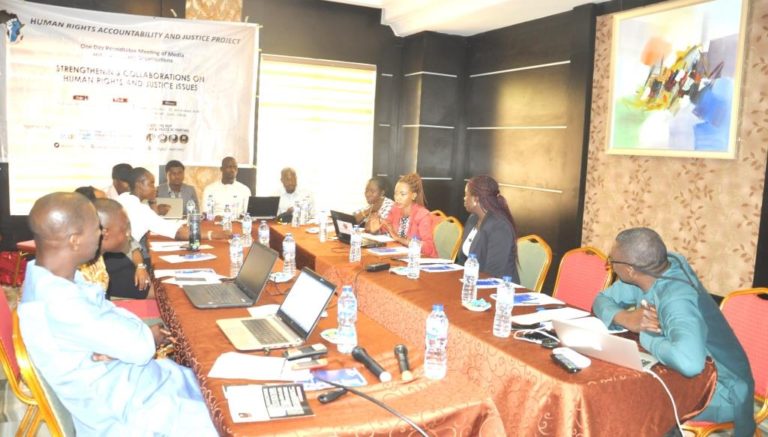
The third roundtable meeting was held on Thursday, in Abuja, by the International Centre for Investigative, ICIR, as part of a ‘Human Rights Accountability Reporting’ project organised in collaboration with the Institute for War and Peace Reporting.

Lekan Otufodunrin, Executive Director of Media Career Development Network and former Editor of Online and Special Publications at The Nation Newspapers, advised the participating organisations to share insights, experiences, and resources, an approach he assured will bring them closer to achieving their objectives.

“That kind of relationship will help on both sides,” he said, pointing out that while non-governmental organisations can help journalists with expertise and data, they also stand to benefit from the latter’s investigative skills and platforms for greater publicity.

Lekan Otufodunrin delivering a talk on “Media, CSO relationship: The missing link” at the roundtable. File credit: The ICIR

During his talk where he shed light on past examples of CSO-media collaboration, the Executive Director of The ICIR, Dayo Aiyetan, argued that such alliances are important as journalists and advocates have one basic goal: accountability.

“I am a journalist, not an advocate. But you do all your stories, they do not bring impact; so why shouldn’t you set in motion some kind of advocacy?,” he asked.

Chioma Agwuegbo, founder of TechHer and former programme manager at Reboot’s West Africa office, also spoke to the attendees about how the media can best be used in tackling rights abuse, and what the organisations need to note when reporting electoral issues.

She urged journalists to focus on communicating, rather than simply informing. This, she said, can be achieved by putting stories within contexts, dissecting relevant issues, and connecting historical dots. “We must revisit our roles as communicators and ask if we have passed across the message,” Agwuegbo said.

Joining two other CSOs and three investigative reporters, the Centre for Social Justice (CSJ) was announced at the event as one of the beneficiaries in the second batch of grants after its pitch was accepted having fulfilled the set requirements.

Beneficiaries under the first batch, announced in September, also provided progress updates to the group on their programmes and reports. Cynthia Ozioma Ifeanyi, a social worker at the Devatop Centre for Africa Development for instance, said her organisation has organised eight sessions of the ‘TALKAM’ radio show, through which it is creating awareness about and seeking solutions to human trafficking.

The thirty-minute show, which is aired by 10 am on Fridays, kicked off on November 16, 2018. The Sexual Offences Awareness and Victims Rehabilitation (SOAR) Initiative, represented by Njoku Chibuzor, also explained that it has used financial support from the project to sensitise school students and staffers about boy-child abuse.

In November, the SOAR Initiative organised training for male teachers, and others, from public and private schools in Abuja on the subject of sexual and gender-based violence.

The first and second roundtables were held in May and September, 2018. Journalists and civil society actors participating in the project have also been trained at separate workshops for successful investigations and advocacy campaigns.

Six key things you must know about Disability Act, 2018


PRESIDENT Muhammadu Buhari on Wednesday signed to law, the Discrimination Against Persons with Disabilities (Prohibition) Act, 2018, which among other things, will ensure that corporate entities, as well as public institutions, reserve at least five per cent employment opportunities for persons living with disabilities.

The signing of the Act followed the consideration and the passage of the Bill for an Act to Ensure Full Integration of Persons with Disabilities into the Society and Establish a National Commission and Vest it with Responsibilities for their Education, Healthcare, Social, Economic and Civil Rights, 2016 by the Senate and the House of Representatives.

The Bill was passed on Tuesday, November 22, 2016 by the Senate while the House of Representatives passed the Bill on Wednesday, May 18, 2016. A joint Conference Committee of the two Arms of National Assembly considered the final copy of the Act before it was sent to the President for his assent.

The signing of the Act opens a new chapter of hope for persons living with disability in the country who have over the years endured all forms of discrimination and unfriendly environment.

The Act, in its provisions explains opportunities and rights of persons living with disability as well as punishments for those who violate the provisions. Below are key aspects of the Act that every Nigerian must know.

Prohibits all forms discrimination

As a law, the Act prohibits all forms of discrimination on ground of disability and imposes fine of N1, 000, 000 for corporate bodies and N100, 000 for individuals or a term of six months imprisonment for violation concurrently.

It also guarantees right to maintain civil action for damage by the person injured against any defaulter.

Following this, the Act also saddles the Federal Ministry of information with the responsibility to make provisions for promotion of awareness regarding- the rights, respect and dignity of persons with disabilities. This must also include the capabilities, achievements and contributions of persons with disabilities to the society.

Public buildings and structures must be friendly to persons with disabilities  

Like it is in developed countries and some parts of Africa such as South Africa, all public buildings, structures must be accessible to persons living with disabilities.

The Act states that a person with disabilities shall have the right and necessary facilities to access the physical environment and buildings on an equal basis with others.

Road side-walk, pedestrian crossing and all other special facilities made for public use shall be made accessible to and useable by persons with disabilities including those on wheelchairs and the visually impaired.

It, therefore, provides for a five-year transitional period within which public buildings, structures or automobile are to be modified to be accessible to and usable by persons with disabilities, including those on wheelchairs.

No public building plan without recourse to physically challenged persons will be approved

Before erecting any public structure, its plan shall be scrutinised by the relevant authority to ensure that the plan conforms with the building code. The Act says no government or government agency or body or individual responsible for the approval of building plans shall approve the plan of a public building if the plan does not make provision for accessibility, facilities in line with the building code.

It stipulates that any officer or officers who approve(s) or direct(s) the approval of a building plan that contravenes the building code shall be liable to a fine of a minimum of N1, 000,000 or two years imprisonment or to both such fine and imprisonment.

It further stated that, in the event of existence of a state of inaccessibility or barrier to access of a person with disability to the environment that he or she has a right or duty to access, he may, without prejudice to his or her right to seek redress in court, notify the relevant authority in charge of the environment of the existence of the state of inaccessibility or barrier to accessibility of the environment, and it shall be the duty of the relevant authority in charge to take immediate and necessary steps to remove the barrier and make the environment accessible to the person with disability.

Public transportation

According to the Act, discrimination is prohibited in public transportation facilities and service providers are to make provision for the physically, visually and hearing impaired and all persons howsoever challenged. This applies to seaports, railways and airport facilities.

It says specifically that government transport providers shall make provisions for lifts, ramps and other accessibility aids to enhance the accessibility of their vehicles, parks and bus-stop to persons with disabilities including those on wheelchairs. It states that every public vehicle should have a functional audible and visual display of their destination within five years from the commencement of the Act. This is also applicable to airports and seaports across the country.

Right to first consideration in queues and in emergencies

In all situations of risk, including situations of violence, emergencies and the occurrences of natural disasters, the government shall take all necessary steps to ensure the safety and protection of persons with disabilities, taking cognizance of their peculiar vulnerability.

In queues, a person with disabilities shall be given first consideration,  and as much as possible should be attended to outside the queue. The Act indicates that any person in breach of this section shall be liable on conviction to six months imprisonment or fine of N50, 000.00 or both

 Access to social services

Every person with a disability shall have an unfettered right education without discrimination and they shall be entitled to free education to the secondary school level. The Commission shall provide educational assistive devices. All public school secondary or tertiary shall be run to be inclusive of and accessible to persons with disabilities, accordingly, every school shall have trained personnel and special facilities.  Their rights and privileges also include access to health care services.  And that all public organisations are to reserve at least five per cent of employment opportunities for these persons.