Home Blog Page 2496

How South Africa denies Nigerians entry through late issuance of visa

12

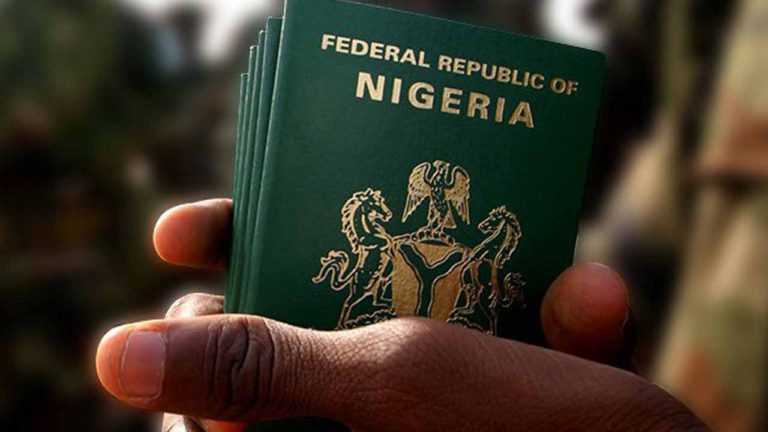
SOUTH African High Commission to Nigeria seems to have adopted a new tactic of denying Nigerians entry into its country by waiting for a long period of time to process their visa applications. By the time the visa is eventually issued, the purpose of the visit must have passed.

In its visa application form, the South Africa High Commission states that it takes between five to ten days to process visitor’s visa application. Also, the VFS Global, the company that receives visa applications on behalf of South Africa states on its website that “the timelines given by South African High Commission in Nigeria for the processing of each application is minimum 6 working days.”

But an applicant is told that it takes a minimum of 15 working days to process the application after paying N32, 671 non-refundable fees at the VFS Global.  Again, most applicants do not get any response from the High Commission even after the 15 working days.

South Africa High Commission requires Nigerian applicants to show verifiable return flight ticket and accommodation as part of the visa application requirements.

As applicants are not aware of the unstated minimum of 15 working days, they often purchase their flight tickets and book accommodation which they may never use because the period of processing their applications is overstretched.

The delay in visa issuance has prevented many Nigerians from participating in international conferences taking place in South Africa. An example is just the concluded African Investigative Journalism Conference that took place at the University of Witwatersrand in Johannesburg between October 28 and 31.

The South Africa High Commission is still holding the passports of the Nigerian journalists even when the conference has been concluded despite some of them applying for visa three weeks earlier before the conference was due to commence.

The passport of the former editor of The ICIR, Fisayo Soyombo, who was scheduled to speak at the conference, is still with South Africa High Commission even though he applied for visa on time.

Theophilus Abbah, a journalist and trainer did not participate in the conference because his passport is still with the High Commission.

This delay in issuing visa also affected Chikezie Omeje, The ICIR’s senior investigative and data reporter who won the best fact check prize in this year’s African Fact Checking Awards. He could not travel to receive the prize at the ceremony in Johannesburg on October 30 because his passport is still with the High Commission.

Omeje said he applied for the visa on October 11 and even followed up with a letter for expedited visa processing but still have not gotten any response from the High Commission.

Similarly, Ibrahim Alawode who was the runner-up in the student category of the award still has not seen his passport despite all his effort to reach out to the High Commission to get his visa to travel for the award ceremony.

A young journalist, based in Lagos, told The ICIR that she got her visa after two weeks that the workshop she intended to travel for had ended.

Many of the visa applicants who spoke to The ICIR on Thursday said the pattern of delay in issuing a visa is a new practice by the South Africa High Commission as they suggested that it could be a new tactic of preventing Nigerians from visiting South Africa.

A staff of the VFS Global told The ICIR that delays in processing visa application were caused by the absence of a consular officer at the High Commission for about a month.

He said a new consular officer was posted just Thursday last week and there was already a backlog of applications. He said during the period without a consular officer, only emergency visa applications were processed, like those going for medical treatment.

Several calls made by The ICIR to the South Africa High Commissions were not answered and The ICIR reporter who visited the High Commission was prevented from gaining access to the premises by a security agent.

George Edokpa, spokesperson of Ministry of Foreign Affairs told The ICIR on the phone that he was not aware of the maltreatment of Nigerians by the South Africa High Commission.  He, however, referred the reporter to the director of consular services in the ministry, whom he said would be in a better position to provide answers.

The reporter was told at the consular department that “the director was not on seat”.

It is unclear whether the unnecessary delay in processing visa applications by the South Africa High Commission is a deliberate policy or temporary issue occasioned by the alleged absence of a consular officer.

At a time that many African countries are implementing visa on arrival for Africans as a result of the push for free trade and movement of people in the continent, this maltreatment of Nigerians by the South Africa High Commission appears to be an insult.

South Africa, in fact, mostly closes her door to other Africans but more welcoming to the wider world, according to a BBC report.

“Citizens of only 15 African nations can travel to South Africa without a visa, yet holders of 28 different European passports can enter the country freely,” the BBC report says.

Drama as suspended NHIS boss drags health, justice ministers to court

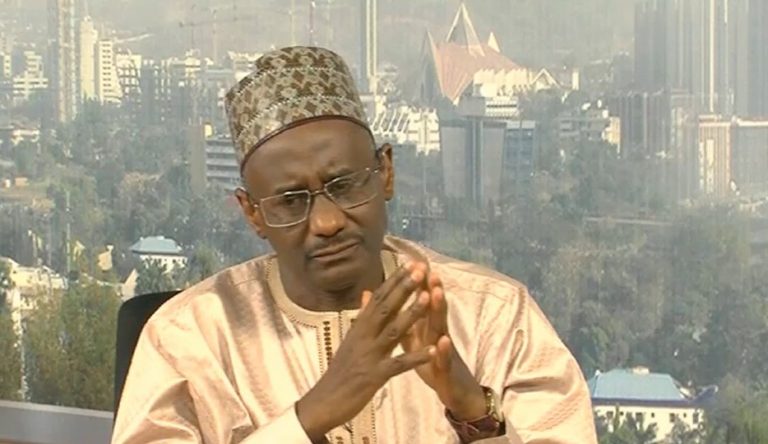
THE last may not have been heard about the internal crisis rocking the National Health Insurance Scheme (NHIS) as the suspended Executive Secretary of the agency, Usman Yusuf, filed a lawsuit against the Ministers of Health and Justice, Isaac Adewole and Abubakar Malami respectively.

This is coming barely 24 hours after President Muhammadu Buhari directed that Yusuf should proceed on administrative bail pending the determination of an investigation into allegations of corruption against him.

In the suit filed on his behalf by Uchechukwu Obi of Alliance Law Firm, Abuja, Yusuf is challenging his removal as the head of the NHIS, arguing that neither the Minister of Health nor the governing council of the agency can remove him from office.

The NHIS was also included as a defendant in the suit.

Yusuf asked the court to determine, among other things, “whether the Governing Council of the NHIS has the powers under the provision of the NHIS Act, particularly Sections 6 and 7 of the Act, to suspend or remove from office the plaintiff (Yusuf) who was appointed by the President”.

He also queried “whether the Governing Council of NHIS has the powers under the provision of NHIS Act to discipline the plaintiff or to investigate allegations made against him as purported by their internal memorandum dated Oct.19, 2018.

“Whether the Hon. Minister of Health under the NHIS Act Section 47 of the Act is equipped with the statutory powers to authorise the suspension from office of the ES of NHIS without the approval of the President.

“Whether the Governing Council can appoint the General Manager, Legal Department, or any other employee of the scheme to oversee the affairs of the scheme in acting capacity without the approval of the President.”

Yusuf, therefore, prayed the court to issue an order setting aside and cancelling his purported suspension as the Executive Secretary of the NHIS. He also asked the court to reinstate him to his former position, as well as grant “an order of perpetual injunction restraining the defendants, their members, servants, employees, agents, officers or any person from disturbing, obstructing the plaintiff from carrying on his official duties as the ES of the NHIS”.

It had been thought that Yusuf’s eventual removal from the NHIS would put an end to the face-off between the NHIS boss and the agency’s governing council. But this recent lawsuit means that the saga will continue a little longer.

The governing council had placed Yusuf on an indefinite suspension to allow for an independent investigation into the allegations against him, but he refused to obey the directive insisting that only the President has the powers to sanction him.

GANDUJEGATE: Kano assembly summons governor over bribery scandal

The investigative panel set up by the Kano State House of Assembly to look into the allegations of bribery against the state’s Governor, Abdullahi Ganduje, has asked him to appear before it on Friday.

Secretary of the probe panel, Mujtafah Adamu, said the letter inviting Ganduje to come and state his own side of the story was sent on Thursday, October 31, a day after another video of Ganduje purportedly receiving bribes from a contractor, was published on the social media.

The lawmakers asked Ganduje to attend the hearing alongside his lawyers if he so wishes, while a copy of the video was also sent to the governor alongside the letter of summons.

The letter was signed by the chairman of the committee, Baffa Danagundi.

An online newspaper, Daily Nigerian, had accused Ganduje of receiving kickbacks amounting to over five million dollars from contractors that work for the state government.

The paper then backed the allegations up with videos which showed  Ganduje collecting several wads of dollar bills from a man whose face was not shown, and stuffing them away in his flowing garment and in a brown manila envelope.

But Ganduje denied the allegations, saying the video was cloned and that it is a cheap piece of blackmail by his political opponents.

So far, three of such video clips have been released on the social media and on credible online newspapers, and the publisher of Daily Nigerian, Jafar Jafar, who himself has testified before the investigative panel, said the clips were 15 in total, nine of which clearly showed Ganduje’s receiving the bribes.

Jafar narrated to the lawmakers during his testimony that a friend of his who is also a contractor for the Kano State government agreed to attach clandestine cameras to his kaftan in order to capture the recordings.

He said the friend agreed to the plan because he was fed up by the incessant demand of the governor for a kickback ranging from 15 to 25 per cent for every project executed in the state.

Jafar maintained that the video clips were not cloned, saying that before his media outfit publishes stories, pictures or videos on its website, they undergo several levels of verification to establish their authenticity or otherwise.

Boko Haram burns Imam to death, kills 14 other in Borno

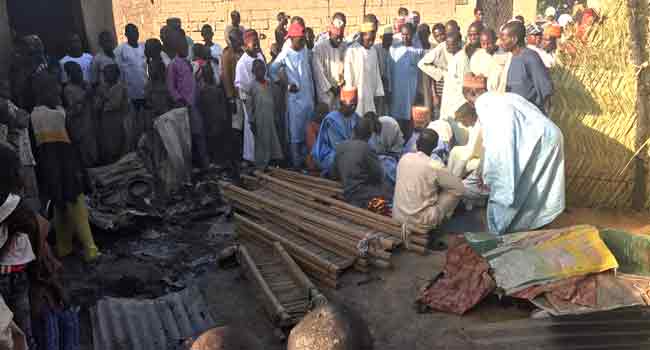
ABOUT 15 persons were killed Wednesday evening when Boko Haram terrorists attacked several villages in Konduga Local Government Area of Borno State, including an Imam who was burned to death alongside four members of his family.

Residents who survived the attack told Channels Television that they had to flee from their village – Kofa – when the insurgents attacked, but the Imam and his family stayed behind. Everything in the Imam’s compound, including livestock, were set alight.

Asides Kofa, the insurgents also attacked Abba Malumti, Gozari, and Dalori II Internally Displaced Persons (IDP) camp. Witnesses also said many others who fled the villages might have drowned in a river.

Channels Television reports that the insurgents came in large numbers and outnumbered the security operatives on the ground.

However, the Nigerian Army issued a statement on Saturday saying that its troops successfully foiled a terrorist attack in Kofa and Dalori IDP camp on Wednesday.

The statement said the terrorists gained access through a bush part behind the village in four vehicles and some motorcycles.

“They ransacked the market in front of the IDP camp (and) on sighting own troops that were mobilized to the area, they set some houses and the market ablaze and fled along Maiduguri-Bama Road,” the statement read.

The army said one civilian was found dead, and as at the time of issuing the statement, troops were “assisting the villagers who ran into the bush back to their homes while the Borno State Fire Service have contained the inferno”.

The army authorities said full details of the attack will be released later, but no update has been given as at the time of this report, more than 10 hours after the initial statement was issued.

Khashoggi was strangled to death, then his body dismembered, says chief prosecutor

0

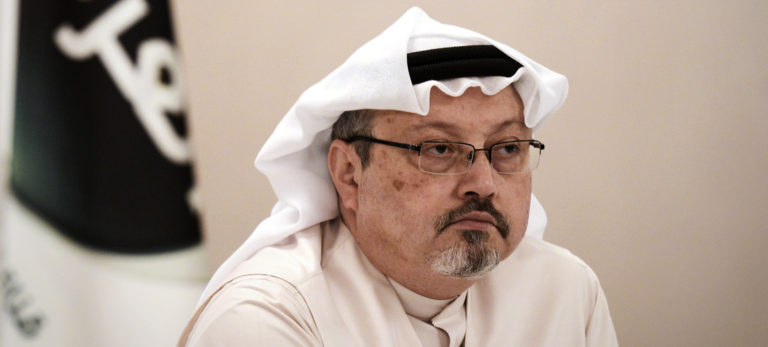
Contrary to the previous claim by the Saudi government that the late Jamal Khashoggi died in a rogue extradition operation, the Turkish prosecutor’s office has disclosed that the late Saudi journalist who entered Saudi consulate in Istanbul, Turkey on October 2,  was indeed strangled to death immediately he arrived the mission building before his body was cut into pieces.

“In accordance with plans made in advance, the victim, Jamal Khashoggi, was choked to death immediately after entering the Consulate General of Saudi Arabia in Istanbul on October 2,” the chief prosecutor, Irfan Fidan, said in a statement released on Wednesday.

“The victim’s body was dismembered and destroyed following his death by suffocation.”

The chief prosecutor also confirmed that Khashoggi’s death was premeditated. He made this known yesterday after the departure of the Saudi chief prosecutor, Saud al-Mojeb, from Istanbul after a two-day visit. 

But despite the fact that Saudi Arabia has admitted that the killing of the Saudi journalist was premeditated, it has not explained how.

Al-Mojeb, for instance, failed to answer the questions: “Where is Khashoggi’s body? Who was the alleged local collaborator that the Saudis say took part? What do the Saudis know about who planned the murder?”

The kingdom also has denied that the 15-man team that allegedly assassinated Khashoggi was acting with the knowledge or authorisation of the royal court.

Turkey’s statement on Wednesday undermined the insistence of Trump and his secretary of state, Mike Pompeo, that Turkey was satisfied with Saudi Arabia’s cooperation in the investigation to date, The UK Guardian has reported.

FG partners Oyo State, CSOs, private sector on SDGs

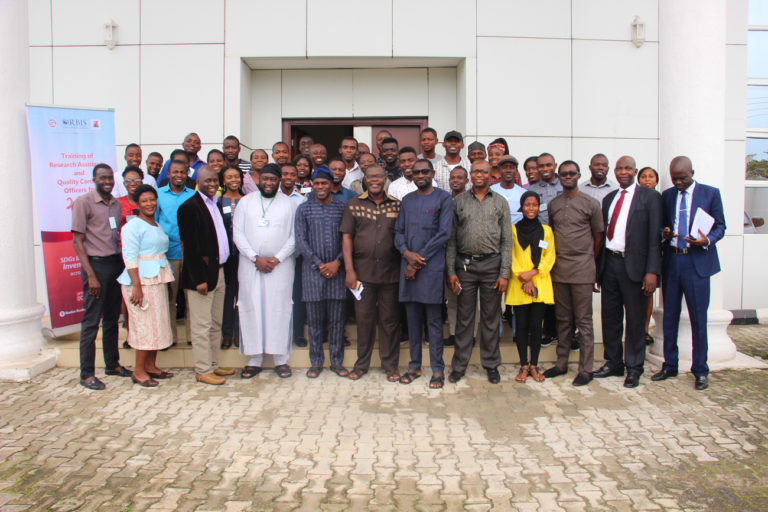
AS part of its efforts towards meeting the Sustainable Development Goals ( SDGs) target by 2030, the office of the senior special assistant to President Muhammadu Buhari on Sustainable Development Goals headed by Adejoke Orelope-Adefulire in collaboration with the Oyo state government has commenced training for the second batch of research assistants that will help in generating data to assist the state in carrying out relevant projects in the state.

The training was put together in partnership with a private firm, Orbis Consulting Limited to conduct a baseline inventory survey on Education, Water/Sanitation, Vocational Skills and Primary Healthcare.

Special Adviser to the Oyo State Governor on Sustainable Development Goals, Temitope Fajana, said: “The data obtained from the 15 local government areas in the first and second phases of the exercise will be used in designing policies and projects and also in making community development decisions across Oyo state”.

“The focus of the baseline survey is to achieve the Sustainable Development Goals by 2030,” Fajana said.

“The inventory taken by the research assistants is to help the government in identifying deficiencies, plan, and take the needed steps when and where necessary.”

Also speaking during the training exercise, the National Coordinator of the Civil Society Coalition on Sustainable Development in Nigeria, Tola Winjobi, commended the pacesetting role of Oyo state in the baseline survey.


READ ALSO:

The team lead of Orbis Consulting, Yakubu Gana, took participants through a presentation on what is expected of them with respect to the identification of facilities provided through the MDGs/SDGs Conditional Grants Scheme and other Paris Club Debt Relief Gains expenditure as a basis for further interventions.

Similarly, Sola Fagorusi of Onelife Initiative for Human Development, a non-governmental organisation that is also taking part in the project, shared insights on the data collection tool. He said the research assistants will be using the Open Data Kit for the field survey “to ensure that field findings are accurate and the geo points are properly captured”.

Fagorusi added that there would also be quality control officers who would supervise the work of the research assistants to ensure an error-free result.

Participants at the training exercise were selected from the 33 Local Government Areas in Oyo State.

Buhari buckles, removes NHIS boss temporarily as probe continues

PRESIDENT Muhammadu Buhari has finally approved the temporary removal of the embattled Executive Secretary of the National Health Insurance Scheme (NHIS), Usman Yusuf, pending the determination of the investigation into allegations of corruption against him.

The recent development was contained in a statement issued on Wednesday by Olusegun Adekunle, a Permanent Secretary (General Services Office) in the office of the Secretary to the Government of the Federation (SGF).

According to the statement, Yusuf has been ordered by President Buhari to proceeds on administrative leave with immediate effect in order to allow the investigative panel to carry out its task without interference.

Consequently, Ben Omogo, a director in the office of the Head of the Civil Service of the Federation, has been deployed as the Acting Executive Secretary of the NHIS.

The statement read: “The federal government has observed with deep concern the growing tension between boards and chief executives and their attendant implications for governance.

“For the avoidance of doubt, the government will neither tolerate acts of indiscipline from any appointee nor will it harbour any acts of corruption.

“Government will, however, ensure that due process is followed strictly in trying to maintain discipline and probity in public service.

“With specific reference to recent developments at the National Health Insurance Scheme, Mr. President has after due consideration approved the establishment of an independent fact-finding panel to investigate the alleged infractions by the executive secretary and report back within two weeks.”

This action by President Buhari has put an end to the face-off between the NHIS boss and the agency’s governing council.

The governing council had placed Yusuf on an indefinite suspension to allow for an independent investigation into the allegations against him, but he refused to obey the directive insisting that only the President has the powers to sanction him.

The development had split the workers at the NHIS into two factions with one supporting the Executive Secretary and the other against.

Security forces must be held accountable for killing Shi’a protesters – Amnesty International 

0

NOT fewer than 45 supporters of the Islamic Movement in Nigeria (MIN) have been killed by the Nigerian soldiers over two days, when the Shi’a Muslim group held a peaceful religious procession around Abuja, an independent investigation by Amnesty International has revealed.

The use of excessive force by soldiers and police led to the killing of MIN group members, the report says.

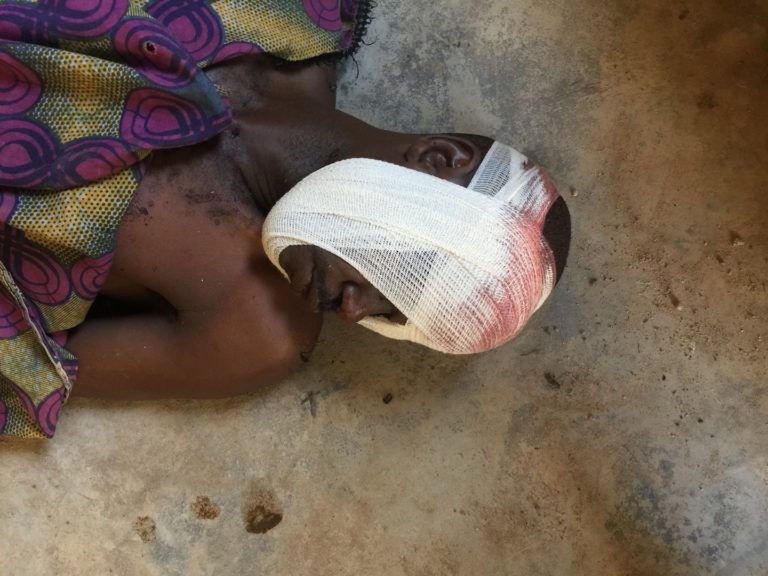
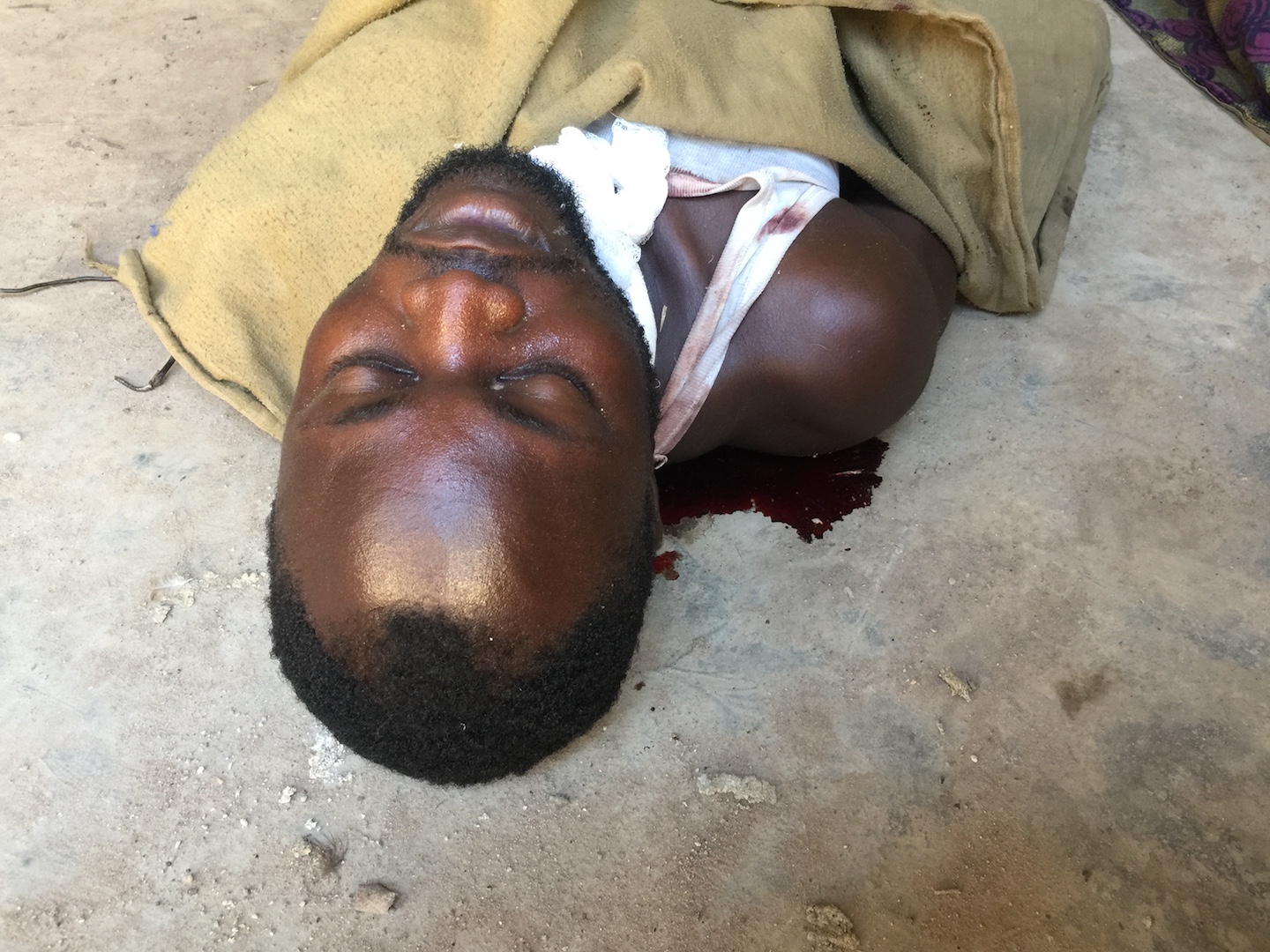
In a statement released on Wednesday by Isa Sanusi, the Media Manager of Amnesty International Nigeria, the researchers hired by the London-based non-governmental organization visited five different locations in Abuja and Nasarawa state where they discovered wounded IMN supporters receiving treatment, including two locations where bodies were deposited.

The researchers spoke with victims, eyewitnesses and medical practitioners, and analysed videos and photographs of those injured and killed during the protests, which took place on Saturday and Monday.

“We have seen a shocking and unconscionable use of deadly force by soldiers and police against IMN members. Video footage and eyewitness testimonies consistently show that the Nigerian military dispersed peaceful gatherings by firing live ammunition without warning, in clear violation of Nigerian and international law,” said Osai Ojigho, Director of Amnesty International Nigeria.

“Those injured were shot in different parts of the body – head, neck, back, chest, shoulder, legs, arms – and some of them had multiple gunshot wounds. This pattern clearly shows soldiers and police approached IMN processions not to restore public order, but to kill.”

Amnesty International says the military used automatic firearms during Monday’s protest, in which at least 122 protesters sustained gunshot wounds and at least 39 were killed, and  six others killed in protest on Saturday.

According to the organisation, the research team counted 24 bodies (23 male and one female) and trusted sources provided details of 21 others. Two of the bodies seen had their legs severed, which Amnesty International’s military and weapons expert analysed as consistent with injuries caused by a heavy fully-automatic machine gun such as a PKM or DShK.

“I was running with my friends when I realised I had been shot. We were running away from the big vehicle that was shooting. I don’t know how long the shooting lasted but it lasted for more than 30 minutes before I was shot. I came from Gombe a month ago to be part of this protest. My parents are in Gombe and I’m the only one from my family that came to Abuja. They are aware of my condition and said I should be careful and that this is God’s will,” a 15-year-old boy told the researchers.

An IMN member who witnessed the Monday attack said he did not expect soldiers to shoot at them again considering what happened on Saturday.

“We were marching to town and were very peaceful but before we realised what was happening, they opened fire on people. How could they use an APC on peaceful protesters? Are we Boko Haram? Does anybody deserve to be treated like this? Are we not Nigerians and don’t we have the right to protest? They did not even care that there were women children among us.”

A Shi’a member lay dead after sustaining a gun injury. CREDIT: Amnesty International


Another member expressed the group’s resolve to press on until their leader is released. “They seem not to realise that they can’t stop us. We have made up our minds that we won’t stop protesting and demanding the release of Sheikh [El-Zakzakky]

“The more they use force and try to stop us, the more our resolve. One thing that we will not do, however, is to be violent because Sheikh does not want that. Even if they kill Sheikh today, we won’t carry arms.”

Ojigho said the Nigerian military seemed determined using tactics designed to kill when dealing with IMN gatherings.

“Many of these shootings clearly amount to extrajudicial executions. This violent crackdown on IMN protesters is unjustified and unacceptable. They were perfectly within their rights to hold a religious procession and protest and there was no evidence they posed an imminent threat to life.”

Many injured IMN supporters have sought medical treatment in unofficial buildings due to fear of arrest if they go to the hospital.

One medical worker near Abuja told Amnesty International: “From yesterday (Monday) I attended to 57 people with gunshot wounds, most of them still having the bullets lodged in their bodies. We are only trying to stabilise them by arresting the flow of blood before sending them to the hospital. It is not an ideal situation because this is an uncompleted building, not a hospital. I am hoping that they get to the hospital today.”

Since a massacre of over 350 IMN supporters which took place in Zaria in 2015, the Nigerian authorities have consistently sent in the military to respond to IMN protests or marches.

This strategy is partly to be blamed for the bloodshed witnessed on Saturday and Monday, Amnesty says.

There are reports that stones were thrown by protesters as a response to the use of lethal force, to which security forces responded with tear gas and more gunfire.

“We are once again calling on the Nigerian authorities to impartially investigate and bring to justice those responsible for the extrajudicial execution killing of IMN supporters, including the commanders who gave the orders for live bullets to be used,” said Ojigho.

Another Shi’a protester receiving treatment after a gun wound. CREDIT: Amnesty International


“The continuous failure to investigate these gross human rights violations is fuelling a dangerous disdain for the sanctity of human life in Nigeria.”

International law prescribes that security forces policing demonstrations must not use firearms against protesters unless they pose an imminent threat of death or serious injury, and only if there is no lesser way to avert such threat. 

“They must never use firearms to disperse a demonstration, even if it turns violent. Firearms must never be used as a tactical tool for the management of demonstrations: they may only be used for the purpose of saving another life.

“The Nigerian authorities have an obligation under international law to ensure there is a full and independent investigation of deaths at the hands of security forces and that those responsible, including in the command structure of the security forces, are held accountable under the criminal law, says Ojigho.

The IMN is a Shi’a religious and political organisation whose leader, Ibraheem Yaqub El-Zakzaky, has been a proponent of Shi’a Islam in Nigeria since the 1980s. During protests on Saturday and Monday, IMN members demanded the release of  El Zakzaky, whose detention was described by a federal court in December 2016 as unlawful and unconstitutional. Between 12 and 14 December 2015, according to Amnesty International, more than 350 IMN members were killed by security forces in Zaria, Kaduna State.  


Combating human trafficking: Lessons from International Visitors Leadership Program

0

By Joseph OSUIGWE

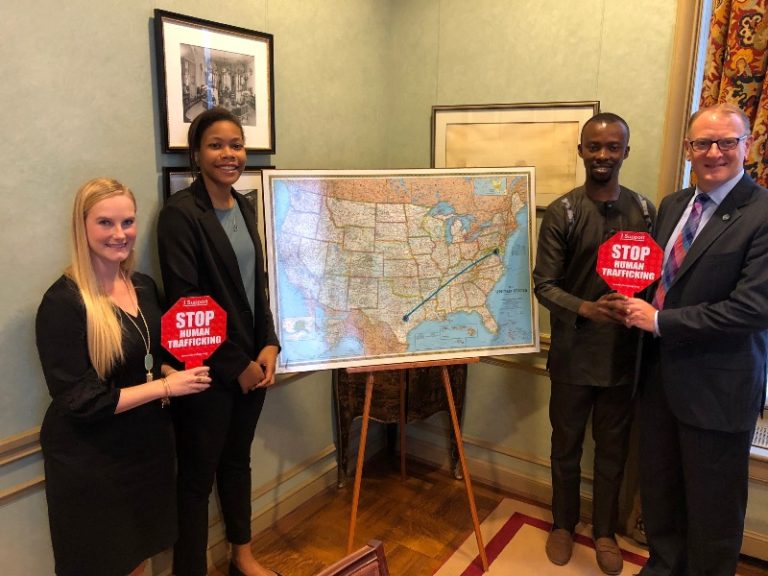
THE invitation to participate in the International Visitors Leadership Programme (IVLP) was a great opportunity and platform for me to explore best practices, innovative approaches and policies to tackling human trafficking.  I saw it as a platform to refuel my energy for the fight against human trafficking in Nigeria.

On arrival in Washington DC, I was anticipating the impact of the visit. I was imagining what it would be like being the only anti-human trafficking visitor to engage, learn, and exchange ideas with over 10 human trafficking organizations and government agencies.  Before we headed for the first meeting, Mr. Philip Brown- my liaison officer asked me, “Joseph, since this program was specifically designed for you, I hope you will be able to make the best use of it?” This triggered my heart the more to learn and share my experiences with the organizations and agencies.

On 24th September, 2018, I visited Meridian International Centre, Washington DC for an opening session of the International Visitors Leadership Program (IVLP), where Mr. Mark Rebstock, Vice President of Meridian Centre and Ms. Caitlin Betterdorf shared interesting details about IVLP and how to get the best from engaging different organizations and federal agencies. Thereafter, I had a two hour-interesting learning session with Dr. Lenneal J. Henderson (Adjunct Professor of Government College of William) on the overview of the U.S. system of government, its decentralized nature and the decision-making process that flows from the system.

Meetings with government agencies

During my meetings with the U.S Department of Health and Human Services and the U.S Department of States-Office to Combat Human Trafficking, I was amazed at the level of importance the U.S government attached to ending human trafficking. I saw a government that has demonstrated a strong political will to combating human trafficking, and stimulating virtually all the federal agencies to take strategic actions against human trafficking through the Presidential Inter-agency Taskforce Against Human Trafficking (PITF), which comprises: U.S Department of State, Department of Treasury, Department of Defense,  Department of Justice, Department of Interior, Department of Agriculture, Department of Labour, Department of Health and Human Services, Department of Transportation, Department of Homeland Security, and Department of Education.

Also, I noticed that the willingness and political will of U.S Government to combating human trafficking was demonstrated in many obvious ways, and one of which was yearly funding for anti-human trafficking projects through different federal agencies. This indicates that the U.S government has set a pace for other countries in fighting human trafficking. However, there is a need for U.S government to increase funding for prevention projects, and as well adjust its current approaches to identifying victims and minor among migrants at her border.

Apart from the federal government, my meeting with Mr. Todd Latiolais at the Office of Child Trafficking Team of Texas Government revealed that most state governments in the United States have state laws/policies and initiatives to tackle trafficking in persons. This was really what I expected from state governments in Nigeria.

Meetings with civil society organizations and associations:

I had an interesting and inspiring discussion with civil society organizations (CSOs) in Washington DC and Austin, Texas.  Each of my meetings with different CSOs offered a unique information and experience to me.  During my visit to Polaris Project team, I toured their building observing the flow of information of the U.S National Human Trafficking Hotline which they have been operating for more than three years. It was motivating to meet young people at Polaris Project championing one of the greatest campaigns and movement against human trafficking in the United States. Their expertise in using data to stimulate action against human trafficking was superb.

It was exciting meeting and sharing experiences with Vivian Huelgo of American Bar Association (ABA), and Ms. Claire Wilkinson of International Justice Missions. While discussing with Ms. Huelgo, I learnt different approaches to increasing the interest of lawyers in combating human trafficking, and after speaking with Ms. Wilkinson, Vice President, Africa programs of International Justice Mission, I felt the urgent need for religious groups in Nigeria, including Christian and Muslims, to be engaged in combating human trafficking.

At Austin, I had the privilege of participating in the meeting of Texas Coalition against Human Trafficking where I learnt and as well shared my anti-human trafficking experiences. Meeting them was an opportunity to inspire and network with my fellow “Warriors” in the fight against human trafficking.

During the concluding part of my stay in Austin, Texas, I visited Casa Marianella and Austin Safeplace to explore their facilities, learn how they are rehabilitating survivors, and meet with some of the survivors of human trafficking from Africa, North America and South America.

As the figure of the victims of human trafficking continues to rise in Nigeria, the federal government, through relevant agencies such as the National Agency for the Prohibition of Trafficking in Persons (NAPTIP), must as a matter of necessity and urgency, come up with robust policies and programmes to tackle the menace.

Joseph OSUIGWE is the founder and Executive Director of the Devatop Center for Africa Development, a nonprofit organization focused on combating human trafficking and gender-based violence.

Does Donald Duke earn N156 thousand per month as he claims?

DONALD Duke, former governor of Cross Rivers State and presidential candidate of the Social Democratic Party (SDP) has claimed he earns an average of N156 thousand in a month since 2015.

The presidential candidate, who promises to improve tax collection and compliance by deploying up-to-date technology if elected president, pays an average of N13 thousand tax per month.

The claims about his earnings were contained in tax certificate he submitted to the Independent National Electoral Commission (INEC).

The two-term ex-governor between 1999 and 2007 stated that he earned N1,763,157 in 2015, N1,894,736 in 2016 and N1,960,526 2017 from doing business.

He then paid tax of N150, 000 in 2015, N170, 000 in 2016 and N180, 000 in 2017.

However, Duke’s earnings and tax payments do not reflect his lifestyles. His extravagant black power bike at the 2016 Calabar carnival costs more than his combined earnings in three years.

But more telling is that Duke paid just a tax of N500,000 in three years despite his huge pension as a former governor.

He pointed out in the form he submitted to INEC that he had never been indicted for fraud by any judicial panel. He is also one of the ex-governors that had never been investigated by the Economic and Financial Crimes Commission (EFCC).

Duke who was born on 30 September 1961 graduated from Ahmadu Bello University in 1982. He later bagged LLM in Business Law and Admiralty from the University of Pennsylvania in 1984.

He became the Commissioner of Finance, Budget and Planning to the third republic civilian governor Clement Ebri and later the member of the National Economic Advisory and Intelligence Committee under the Abacha regime before he became a governor in 1999.