Home Blog Page 2497

903 foreign trained graduates take medical exam

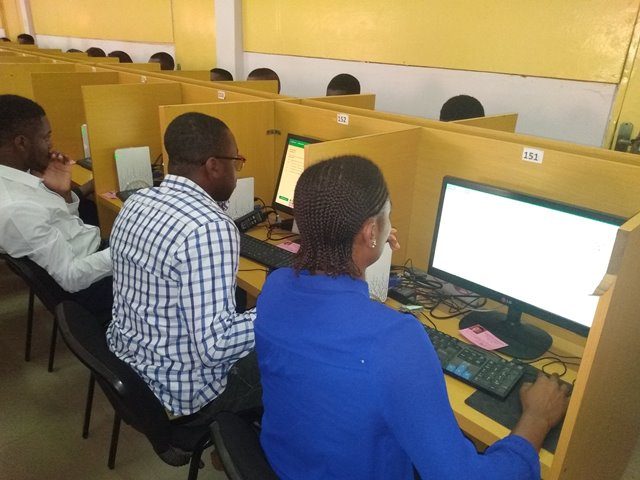
A total of 903 foreign-trained Medical and Dental graduates on Wednesday sat for an assessment examination organized by the Nigerian Medical and Dental Council to be qualified for medical practice in  Nigeria.

Explaining the reason behind the examination, Registrar of the Nigerian Medical and Dental Council, Tajudeen Sanusi said that the examination is a global practice that helps to ascertain the level of competency of medical and dental graduates trained outside their jurisdiction.

“Assessment exam for the foreign-trained medical and dental graduates is a global practice that if you trained in a jurisdiction other than yours and you go to another jurisdiction, they want to assess your level of competency so that you can be licensed to practice,” Sanusi said at the headquarters of Joint Admission and Matriculation Board (JAMB), Bwari, the venue of the examination

“Meaning that even those of us that were trained and fully registered in Nigeria, if we decide to go to Ghana, they have to sit for the assessment exam and pass before being licensed to practice in Ghana.”

Asked if how many of the graduates would be registered after the examination, he said though, Nigeria needs more doctors, “quantity cannot be taken for quality.”

“If all of them can pass, I would be fine because we need more doctors in Nigeria, but because we don’t have enough does not mean we should take quantity for quality.”

There is no accurate data on the number of medical doctors currently practicing in Nigeria

In 2015, Folashade Ogunsola , a professor of medicine and chairman, Association of Colleges of Medicine of Nigeria said Nigeria needed no fewer than 237,000 medical doctors to meet World Health Organisation (WHO) standard, and there are about 35,000 doctors working in the country today.

WHO’s ratio for any country to have enough doctors for its population is 1:600 (one doctor of every 600 persons, but it is estimated that at least 2,000 medical doctors leave Nigeria yearly for the United Kingdom, United States, Canada, Australia, United Arab Emirates (UAE), and South Africa.

Speaking about the incidence of quackery in medical practice, Sanusi remarked that quackery is a matter for law enforcement agencies to tackle.

“By our law, anybody that is not in our register list, we have nothing to do with that person. At the best, we can only come in as a prosecution witness when they are arraigned before any court of competent jurisdiction.”


Breaking: Body of missing army general found

THE body of Idris Alkali, the retired major general who got missing in September, has been found.

The remains of the retired general was discovered in Guchwet in Shen of Jos South LGA of Plateau State, five days after a shallow grave was discovered by the army search party, where his body was suspected to have been buried.

Alkali had been declared missing since September 3 when he set out from Abuja to Bauchi en route Jos. His vehicle was later found in a mining pond where three other vehicles were also discovered.

The leader of the Operation Search and Rescue, Umar Mohammed, a brigadier general, said a parade would be held for the retired officer.

Alkali was the Chief of Administration in the Nigerian Army headquarters, Abuja, before his retirement and eventual demise.

Dancing Senator, Adeleke arraigned for exam malpractice, granted bail

THE Nigerian Police has arraigned Osun State Senator, Ademola Adeleke, and four others before the Federal High Court, Abuja, on a four-count charge of examination malpractice.

On September 19, just days to the Osun State governorship election in which Adeleke contested as the candidate of the People Democratic Party (PDP), the Nigerian police issued a statement summoning Adeleke to report himself at any police station nearest to him, for allegedly conniving with the principal of a secondary school in Osun State to allow him to sit for the 2017  SSCE organised by the National Examination Council (NECO).

But President Muhammadu Buhari ordered the police to stay action on the matter until after the governorship election. Eventually, Adeleke lost the controversial election by a slim margin to the candidate of the All Progressives Congress (APC) Gboyega Oyetola.

The case first came up for hearing before Justice I.E Ikwo on October 15 but Adeleke was not in court to take his plea, prompting the trial judge to adjourn till October 31.

At the resumption of trial on Wednesday, Adeleke and his co-accused persons pleaded not guilty to the charges.

The other defendants in the case are Aregbesola Muftau, principal of Ojo-Aro community grammar school Osun state; Gbadamosi Ojo, registrar of the school; Dare Olutope, a teacher in the school, and Sikiru Adeleke, a cousin to the senator who was also alleged to have been involved in the malpractice.

Adeleke and his cousin Sikiru were said to have conspired with the other three accused persons to fraudulently register for the June/July 2017 Senior School Certificate Examination organised by the National Examination Council’s, as students of Ojo-aro community grammar school,  Osun State.

Having pleaded not guilty, the court granted bail to Adeleke and two of the other defendants who had filed their respective bail applications ahead of the arraignment. They were ordered to deposit their travelling documents passport with the court’s registrar as part of their bail conditions.

Minimum wage: We won’t accept anything below N30, 000- NLC replies Governors’ Forum

THE leadership of Nigeria Labour Congress (NLC) says it would not accept the N22, 500 minimum wage proposed by the Nigeria Governors’ Forum.

The governors’ forum had late Tuesday announced that states can only afford to raise the national minimum wage from N18, 000 to N22, 500 as against the N30, 000 being demanded by organised labour.

But the President of NLC, Ayuba Wabba while addressing a press conference in Abuja on Wednesday, said the Congress condemned “unequivocally the communique issued by the Nigeria Governors Forum on October 30, 2018″, describing it as an “attempt to undermine the authority of Mr. President.”

“This position should be equally condemned by all.”

This is coming after the Federal Government also said it was not in support of the N22,500 minimum wage proposed by the Nigeria Governors Forum.

The Minister of Labour and Productivity, Chris Ngige, made the stance of the Federal Government known on Channels Television’s Sunrise Daily.

“The governors have not even done enough. I told them that this N22, 500 was even rejected by the Federal Government,” he said.

Wabba at the press conference urged members of the Congress “to continue to mobilize in preparation for the commencement of an indefinite strike on the 6th of November if by then necessary steps have not been taken to adopt the recommendations of the Tripartite Committee.

“We wish to reiterate our position adopted at our National Executive Council (NEC) meeting of 23rd October 2018 that any figure below N30,000 will not be accepted by us,” the NLC president said.

He said that the Congress ‘ demand is that the constitutional, legal and morally right step to take is for the Chairman of the National Minimum Wage Tripartite Negotiating Committee to submit the report of the already concluded National Minimum Wage negotiations to President Muhammadu Buhari for transmission to the National Assembly for consideration and passage into law.

While noting that the Nigeria Governors Forum is not a negotiating body but merely a political organization for the convenience of state governors, Wabba said only 21 state governors sent in their memorandum quoting figures when the tripartite committee from inception sent letters to each state government to send in their memoranda as their contributions to the new national minimum wage negotiating process.

He added that the demand of organized labour was not N30,000 but N66,500.

“Our demand is N66,500. N30,000 is the compromise figure arrived at the end of negotiations by the tripartite partners – Government, Employers and Organized Labour. The new minimum wage was a product of intense negotiations that lasted for almost one year,” he said.

The Governors, he further explained had six representatives on the Tripartite Committee – one state governor represented each of the geopolitical zones.

“The representatives of the state governors were part and parcel of the work of the negotiating committee from beginning to the end. It is important to note that the National Minimum Wage is not an allocation to workers. It is a product of negotiation by the tripartite partners,” Wabba explained.

The unilateral pronouncement by governors of N22,500 Minimum Wage is an abuse of every known principle of industrial relations, labour laws, processes and international best practices.”


Lai Mohammed lied, we are still starving here, soldiers insist

NIGERIAN soldiers taking part in the counter insurgency operations in the North East have dismissed the claim by the federal government that there is no case of hunger or starvation or ill-treatment among the soldiers.

An investigative report sponsored by the ICIR  had revealed the sufferings of the soldiers taking part in Operation Lafiya Dole. They narrated how they had to beg for money for food as their allowances do not come regularly.

The soldiers also said that they had to buy their kits from their meagre and irregular allowances, and sometimes some of them whose booths are worn out have had to go to the front wearing slippers.

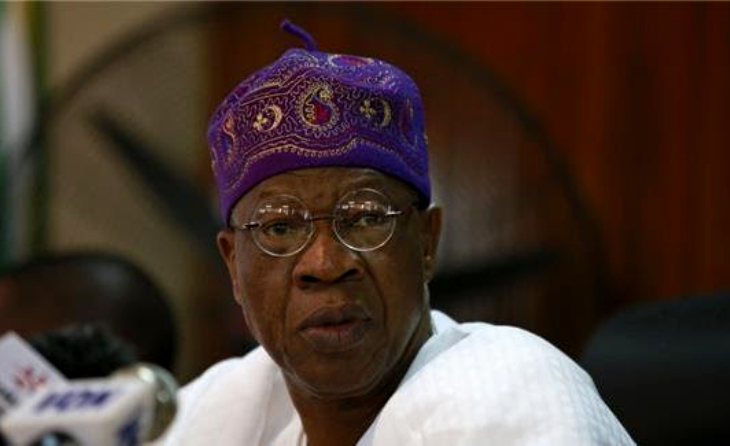
But on Tuesday, the Minister of Information and Culture, Lai Mohammed, addressed a press conference where he described the report as fake news and a downplay of the sacrifices the soldiers were making for the country.

Mohammed said that President Muhammadu Buhari had ordered an investigation into the allegations raised in the story and “the summary of the findings is that there is no case of hunger, starvation or begging among the troops fighting in the north-east, and in particular in the Armed Forces Special Forces Battalion that was referenced in the publication”.

“There is also no irregular/short payment of allowances, while claims of poor equipment, inadequate kitting and accommodation are found to be ill-conceived and unfounded,” Mohammed said.

“On the allegation of poor equipment and inadequate kitting, it was found that the inflow of logistics into the theatre in the past six months showed an enormous quantity of material was distributed to troops in the theatre.”

According to Mohammed, such reports of alleged abandonment of soldiers in the North East “amount to collaborating with fifth columnists and enemies of the nation to weaken the fighting spirit of our fighting forces”.

However, when TheCable contacted some of the soldiers in the North East, they said Mohammed’s claims were false as there had been no probe of any kind and that the situation is even worse now than it was when it was first reported.

One of the soldiers at Giwa Barracks, Borno State has many questions for the information Minister: “When did the presidency carry out a probe? How many of us did the probe committee members come to check his condition to conclude that we are living in good condition?” he queried.

“You know Nigerian army is hiding those things. Don’t mind them, they are all looking for money,” he continued. “Till now, soldiers have not got their allowance and salary, and that is why soldiers don’t want to fight.

“Let me tell you the truth, what they promised soldiers to pay N90,000 but they are not paying. And if a soldier dies, after one week, they will freeze his account. The family will not be paid anything. Everybody is running away from the bush.”

Another said: “If anybody from the presidency came, we would have been the one to provide escort for them. Nobody came. We didn’t see anybody.

“The feeding is even worse. Soldiers in the bush now eat once in a day. When they wake, they don’t eat until 12 noon. And they won’t eat again till 12 noon the following day.

“Soldiers are using their personal funds to buy gas and pots from the market. The commanders are not ready to feed soldiers. They are pocketing the money. How can soldiers be on the operational ground and be eating only beans? The situation is worse.”

A third soldier added that President Buhari should come down to the North East himself or send an independent panel to investigate the issue.

“Three months now, I’ve not seen my operational allowance. The president should get independent people to probe this matter,” he said.

This is not the first report that is detailing the sufferings of Nigerian soldiers fighting the Boko Haram insurgency in the North East. In 2016, a five-part series sponsored by the ICIR, titled “Forgotten Soldiers“, told the sorry stories of several soldiers who were abandoned by the Nigerian Army after sustaining injuries in the line of battle.

ICIR’s Chikezie Omeje wins Africa Check’s fact check award

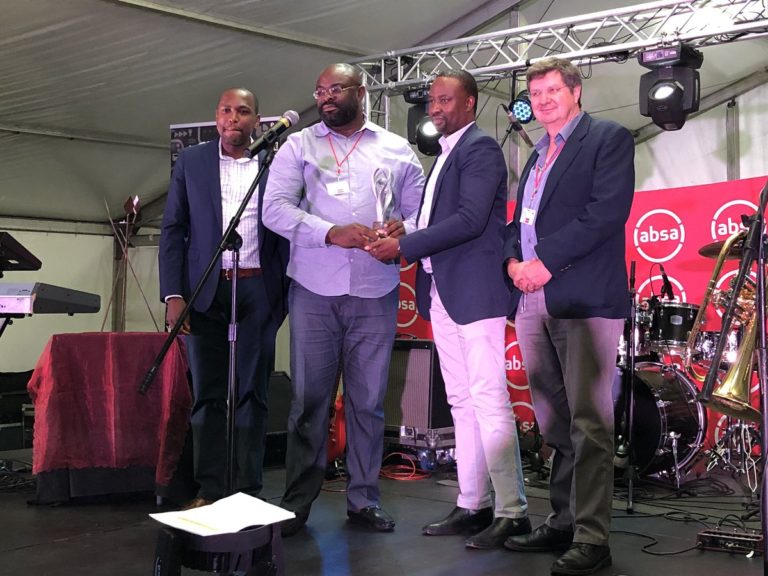
CHIKEZIE Omeje, a Senior Investigative Reporter with the International Centre for Investigative Reporting (ICIR), has emerged winner of the 2018 fact check award which was organised by Africa Check.

Omeje’s entry, a fact-check report on whether Nigeria actually recorded a decline in preschool enrolment, was adjudged as the best entry from the 150 entries that were received from more than 20 countries across Africa.

Eleven journalists had been shortlisted for the award, including reporters from Premium Times and TheCable.

“In general, there was some really good work,’ said the head of the jury for the awards, Franz Kruger, a professor. “We were particularly struck by the student entries, which were very strong. In some cases, they were well ahead of entries from professional journalists.”

The award was received on Omeje’s behalf by Cletus Ukpong, a reporter with Premium Times, as he could not make it to South Africa where the award ceremony held, despite having met all requirements to be granted a visa by the South African Embassy in Nigeria.

Entries to the awards are judged on the following four criteria: “The significance for wider society of the claim investigated, how the claim was tested against the available evidence, how well the piece presented the evidence for and against the claim, and the impact that the publication had on public debate on the topic.”


Chikezie Omeje at the newsroom of San Francisco Chronicle, September 2018.

Omeje’s winning article was able to prove, using available evidence, that the claim by the National Bureau of Statistics (NBS) that there was a reduction in the enrolment of preschool children in Nigeria in 2016, was false.

On the contrary, as Omeje’s clarified in his report, it is more likely that there has been a steady increase in enrolment since 2001.

The NBS pulled down the misleading data from its website after Omeje’s fact-check report was published.

Jason Norwood-Young, from South Africa, was named the runner-up for the award with his story on whether residents of Cape Town were conserving water or not.

SNOOPING ON TWITTER: Ezekwesili’s non-partisan #RedCardMovement dies after she joins presidential race

AMIDST the excitement of New Year resolution, Oby Ezekwesili gave a red card to Nigeria’s ruling party and the main opposition party.   

Her goal then was to ensure that neither the All Progressives Congress (APC) nor the Peoples Democratic Party (PDP) wins the 2019 general elections. She promised to mobilise the citizens to vote against APC and PDP.

She had tweeted on January 4, “I tweeted at the end of 2017 that one will commit a significant part of my 2018 to building the Political Consciousness of citizens to END the reign of the status quo Decadent Political Class. This for me is the #YearOfTheOfficeOfTheCitizen when all Citizens lift their RED CARD.”

By working against APC and PDP, Ezekwesili said she would campaign for other good candidates from other parties. That was the birth of the Red Card Movement. The movement was formally launched on April 18 in Abuja.

“I hope that my Political Agenda for 2018 is CLEAR ENOUGH to the twin parties of APC & PDP and their allies. It is the Agenda of an ordinary citizen of this country. Mock it. Attack it. Disdain it. Do whatever. YET IT SHALL PREVAIL. Why?  The UNIVERSE IS TIRED OF YOU,” Ezekwesili had tweeted on January 4.

The movement had a promising head-start, creating a website and social media accounts as well as launching the movement in some states.

But the presidential bid of Ezekwesili seemed to have quelled her ambitious New Year resolution. The movement whose Twitter handle is @RedCardMng has not tweeted since October 7, the day she announced that she has joined the 2019 presidential election.

The movement’s Twitter’s account which used to make an average of 11 tweets per day, has been dormant since October 7.

The movement has had a total of 3,841 tweets since the Twitter account was created in January this year with 8,578 followers so far. The movement’s 1,407 tweets had been retweeted and 1,398 of its tweets liked.

While the Red Card Movement has stopped tweeting, a new Twitter account (@RunObyRun), created after she announced her presidential candidacy, has been active.

Symbolically, the background picture of @RunObyRun shows Ezekwesili raising red card and dressed in green. The account has had 761 tweets with an average of 32 tweets per day. Out of the total tweets of the account, Ezekwesili had the highest retweets of 133.

The collapse of the Red Card Movement, which promised to mobilise up 30million Nigerians to register to vote, shows that Ezekwesili’s presidential ambition was an afterthought.  If she had made up her mind about contesting the presidential election, she would not have started the movement with a brief lifetime.

As early as January, Frederick Nwabufo, a journalist and political commentator, saw the movement for what it was. It lacks sensibility and purposeful mission, Nwabufo wrote. “Her amplification of the vapid “Red-Card Movement” makes me think she is on a relevance chase.”

How Nigerian women are using WhatsApp to chat, learn and earn

0

Salihu Ibrahim Dasuki, Sheffield Hallam University and Naima Hafiz Abubakar, Bayero University, Kano

MOBILE phones have become widespread all over the world, including in rural and low-income communities. As research shows, these devices have the potential to bring about significant societal change – a fact acknowledged in the United Nations’ Sustainable Development Goals.

But while the promising role that mobile phones and other Information and Communication Technologies could play in empowering women – particularly in Africa – has long been discussed, relatively little is known about how, when, and why this happens.

We conducted a study with women from the Nigerian city of Kano to see how they were using the mobile messaging service WhatsApp. We wanted to know whether the app had opened up opportunities and freedoms that contributed to empowering them.

Many women said that WhatsApp had allowed them to communicate better, particularly with local politicians. They felt empowered to talk about their concerns openly in WhatsApp discussion groups. And they had more access to information. Others joined religious study groups on WhatsApp, sharing questions and knowledge with other women.

Some women converted their access into opportunity. For instance, they advertised small businesses or services on WhatsApp groups, and earned money as a result.

The women in our study were able to use WhatsApp groups to push the barriers of societal norms that typecast them in gendered roles of mothers and housewives. Using this technology, they were able to become agents of their own change as well as make and exercise choices.

WhatsApp and the Women in Kano

Kano is a predominantly Muslim community. It is in Kano state, which has one of Nigeria’s highest smartphone densities – about 7.81 million of the country’s 60 million smartphone users live there.

First, we identified two women leaders in community groups to help us find participants for the study. These were selected based on how actively they were engaged in community groups. They also needed to own a smart mobile phone. We did interviews and focus groups with a diverse group of women, asking how they used WhatApp and what benefits they felt this had.

Some had become more politically empowered. Murja’atu*, a 34-year-old housewife, said:

Initially I always wondered on how to communicate with elected officers especially those of them located in Abuja. We only saw them during the election period but now this online group allows me to interact with them more frequently using the women leader as the intermediary.

Her experience was echoed by 28-year-old Safiya, a shop owner:

Our senator made some certain promises during his election campaign after some time we still had not heard from him. I posted it on the group and other members picked up on it, we kept at it till the woman leader passed on our message. Some of the issues have been addressed now.

The inexpensive and simple form of sharing information on the groups enhanced women’s ability to learn and get clarification about concepts that were unclear to them. In other cases they were able to get help with their children’s homework. This was mentioned repeatedly in the focus group session as one of the things women valued the most about being part of a WhatsApp group.

WhatsApp also proved to be a valuable source of information about health and safety. For example, 41-year-old Asabe, one of the community group leaders, shared this story:

A husband of one of our group members is a health worker, so she regularly posts information regarding health practices, during the last cholera outbreak, I learnt of it from the post she made. It includes preventive measures such as washing vegetables thoroughly, adding salt while washing and boiling water before drinking.

The focus groups participants repeatedly mentioned that WhatsApp groups made them feel like part of a community. There was a strong commitment to working together and solving problems.

Economic opportunities

The WhatsApp group forums have also enabled the women to conduct business sales by marketing their products and services. These entrepreneurs usually send photos of the products and services to prospective clients to have a precise image of what they are planning to buy. A customer is allowed to choose the method of payment and also the method of delivery.

These business women have also used WhatsApp to reach out to their customers on changes in prices. With the current economic situation in country, market prices fluctuate on a daily basis. The women use the forum as a platform where they can post and discuss changes in market prices.

The women now have greater access to customers all over Nigeria. One said:

I met a lady that lives in Yola (910 kms away from Kano) through WhatsApp and now she has become one of my most trusted and loyal customers, I send her products worth thousands of Naira and I have never met her physically before.

Postings about jobs and vacancies also formed part of the discussion in these WhatsApp groups. These jobs included household jobs, events and catering. Those who were interested usually contact the employers and interviews were arranged using WhatsApp voice and video calls.

Positive impacts

The findings of this study show that income generation, saving opportunities, expansion of businesses were all economic capabilities that were expanded and afforded to the women by the use of mobile phones.

The use of mobile phones also led to other capabilities that covered other aspects of human development and that have different impacts on the lives of these women and their communities.The Conversation

Salihu Ibrahim Dasuki, Lecturer in Information Systems, Sheffield Hallam University and Naima Hafiz Abubakar, Lecturer in Information Systems, Bayero University, Kano

This article is republished from The Conversation under a Creative Commons license. Read the original article.

Security agencies clash with Shiite protesters again despite promise of normalcy

0

Members of the Islamic Movement of Nigeria (IMN) has again clashed with security agencies, this time at the Wuse II area of Abuja, thus continuing a four-day violent protest across several parts of the Federal Capital Territory (FCT).

This is coming barely hours after the Nigerian army issued a statement saying that normalcy has returned to the FCT after a similar clash on Monday that led to the death of three protesters and a massive traffic gridlock along the Abuja-Keffi expressway.

The Shiite protests which started since Saturday at the Zuba axis of Abuja have led to the death of at least six members of the Shiite group while several others, including some soldiers, sustained various degrees of injuries. However, other reports including the CNN, have it that the number of casualties was higher.

Videos circulating on the social media on Tuesday afternoon showed the Shiite protesters hauling stones on the policemen who threw tear gas at them while shooting into the air to scare them away. The protesters were also alleged to have set a police patrol vehicle ablaze.

A police patrol vehicle allegedly set on fire by the protesting Shiite members at the Wuse II area of Abuja on Tuesday. Photo credit: ThePunch

Also, some residents said the Shiite members were sighted around the Karu-Nyanya axis where they had clashed with the army on Monday.

The Nigerian Army earlier today in a  press release said that the soldiers had to open fire on the protesters because they started attacking them first using crude weapons such as cutlasses, catapults and the likes.

“They fired weapons at our troops, throwing bottle canisters with fuel, large stones, catapults with dangerous items at troops causing bodily harm and stopping motorist movement, breaking their windscreen and causing heavy traffic,” the statement read.

Members of the Shiite movement have been holding protests in Abuja for some time now, demanding for the release of their leader, Ibrahim El-Zakzaky, who has been in the custody of the Department of State Services since the December of 2015.

El-Zakzaky was arrested after his members clashed with soldiers in Zaria during one of the group’s protests. More than 300 of the Shiite movement were killed in that clash, while the army lost one soldier, according to a panel of inquiry set up by the Kaduna State government.

A Federal High Court sitting in Abuja had awarded monetary damages against the federal government for continuing to detain El-Zakzaky without charging him. The court also ruled that El-Zakzaky should be released and that the government should provide an accommodation for him in any Northern State of his choice.

The judgement, which was delivered by Justice Gabriel Kolawole on December 2, 2016, is yet to be carried out.

Volume, language complexity are reasons Nigerians don’t comprehend constitution- Experts

PARTICIPANTS at the just concluded New Media, Citizens and Governance (NMCG) conference held in Abuja said volume and language complexity are key reasons many Nigerians have never gone through the 1999 Constitution to understand its contents.

Conversations on digital security, fake news and the integrity of elections in Africa dominated the conference, held between October 24 and 25.

The conference, hosted by Enough is Enough Nigeria (EiE), Paradigm Initiative and BudgIT, offered participants and speakers from seven African countries a platform to deliberate on the theme, “Government, New Media, and Civic Spaces.”

Adeolu Adekola, EiE’s Program Manager said part of the recommendations from the NMCG2016 conference was the need to bridge the knowledge gap of most Nigerian citizens about the 1999 Constitution.

He said, “Fundamentally, rights and responsibilities of citizens are contained in the constitution but unfortunately, most people have never gone through the constitution to understand its content due to its volume and language complexity.”

Adekola revealed that “Constitution 101 [a summary of the 1999 constitution] was thus conceptualized to improve citizens’ access to essential parts of the constitution.

“After the first two phases,  identification of the most essential sections of the constitution which is the third phase is ongoing and a 1st draft (for feedback and reviews) was launched after the Closing Civic spaces and Constitution 101 – What Every Citizen Should Know session at NMCG2018,” Adekola added.

Speaking at a session titled ‘Digital Security-Is Social Media Really Friendly,’ Facebook’s Public Affairs Manager for Africa, Akua Gyekye, said that the global technology firm was working hard to keep their platform safe and free of hate speech and fake news.

She urged users to take their digital security seriously while using any digital tools, and assured the audience that Facebook remains dedicated to safeguarding the data submitted to them by the users.

Ronald Kakembo, a digital security expert, urged users to consider digital security as digital safety.

“You need to protect your digital assets, your accounts, your passwords, the same way you secure your home. This is more of a process than tools, and you have to be deliberate about your security.”

When asked about the role of social media influencers and public relations agency in the 2019 general elections, the co-founder of Red Media, Adebola Williams, said it was the duty of every voter to do their research and vote for the candidates of their choice.

Williams added that it was important that voters hold their elected officials accountable instead of focusing on fellow citizens who campaigned for the officials.

The executive director of Penplusbytes, Kwami Ahiabenu, hailed the role social media has played in the elections in Africa, saying the medium enabled citizens to demand integrity of the 2016 elections in Ghana.

Ahiabenu added that it was important that citizens resist any attempt to ban social media during elections as Ghanaians did when the government broached the idea of banning social media during the 2016 elections in the country.

Commenting on the importance of social media, Farida Nobourema, a Togolese activist, lauded the medium as an important tool of mobilisation, education and a platform for resistance against government dominance.

Nobourema, said, “In Togo, where all institutions have been politicised, including the Supreme Court, and the social media remains an effective platform for citizens to fight back”

While speaking at the conference, the Director General of the National Orientation Agency (NOA), Garba Abari, commented on the vote-buying practice currently sweeping Nigeria, condemning it as “a big threat to our society and the quality of governance we get.”

He called on citizens to be actively engaged in the governance process.

Speakers at the conference include Hamzat Lawal, Olumide Babalola, Chioma Agwuegbo, Laila Johnson-Salami, Chris Ihidero and Megan Chapman. Others are Chizobam Ofoegbu, Oluwatoyin Bayegun (Woli Arole), Sani Michael (MC Lively) and Gabriel Okeowo.

NMCG, a biennial event last held in 2016 was supported by Facebook, MacArthur Foundation and Luminate & Palladium (through its ECP-PERL program). The conference will next hold on October 20 and 21, 2020.