Home Blog Page 2498

Trump: Coming to America to give birth will no longer secure babies’ citizenship

DONALD Trump, the United States President, has planned to sign an executive order ending birthright citizenship for babies of non-immigrants and unauthorized immigrants born on the U.S. soil.

This disclosure was made in a video footage of an interview released Tuesday by the Axios, a U.S. media outlet.

“We’re the only country in the world where a person comes in and has a baby, and the baby is essentially a citizen of the United State for 85 years, with all of those benefits,” Trump said in the interview.  “It’s ridiculous. And it has to end.”

The U.S. leader said that he has already run the idea of ending birthright citizenship by his counsel and plans to introduce an executive order ending the longstanding right.

He asserted that it would not take a constitutional amendment to rescind birthright citizenship from some people born in the U.S., a stance that would undoubtedly draw a legal challenge should he proceed.

He said that he had always been told “that you needed a constitutional amendment” to end birthright citizenship. “Guess what?” he said. “You don’t.”

President Trump’s plan, if approved, would prevent pregnant women from Nigeria and other nations who travel to America solely to give birth in order to acquire the American citizenship for their newborn babies.

Trump did not provide a specific timeline  he might seek to sign such an executive order, but he said that he had already discussed the idea with White House counsel, adding that efforts were “in the process.”

While Trump has made cracking down on immigration a central focus of his leadership, ending birthright citizenship would be one of his most dramatic efforts to actualise his hardline campaign promise.

The 14th Amendment to the U.S. Constitution spells out birthplace as an arbiter of citizenship, stating that, “All persons born or naturalized in the United States, and subject to the jurisdiction thereof, are citizens of the United States.” This constitutional right could bar Trump from having progress with the decision.

The 14th Amendment was adopted on July 9, 1868, following the American Civil War with the aim of guaranteeing the equal citizenship rights of freed slaves.

In reaction to the U.S leader decision, some Nigerians have welcomed the idea. Expressing their opinions on Twitter, a user said it would reduce the rate pregnant women travel to the United States for the sake of acquiring the citizenship for their babies.

According to Era Unuigbe, Trump’s plan to stop born-in-America syndrome is a bad news for Nigerians.

“…We may all hate trump for this move but understand that it’s an opportunity for you to self-develop as a country,” he tweeted.
Buhari meets Kaduna stakeholders over recent crisis, deaths in the state

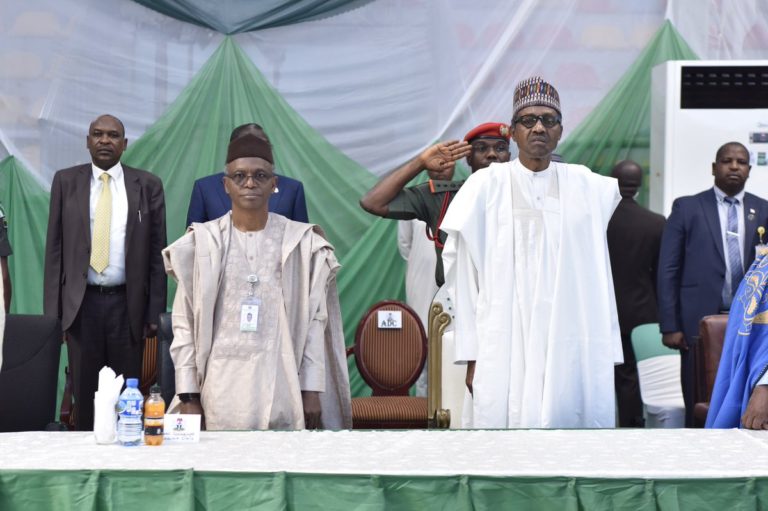
PRESIDENT Muhammadu Buhari has visited Kaduna State to hold talks with the stakeholders in the state over the recent violence that claimed dozens of lives.

The meeting which held at the popular Murtala Mohammed Square in Kaduna had many traditional and religious leaders in attendance.

The Governor of Kaduna State, Nasir El-Rufai, while appreciating Buhari for the visit, said his administration was battling with a “legacy of nearly 40 years of violence and impunity”, adding that the present administration “is persuaded that it has a solemn obligation to lead the state towards overcoming the tragic legacy of strife”.

“Kaduna State is not the only diverse place on this planet, and the people who live in it must not remain trapped in a whirl of hate and division.,” Elrufai said.

In his speech, President Buhari condoled with the people of Kaduna, especially the families that lost loved ones, adding that the violence anywhere in the country cannot be tolerated.


READ ALSO:


“It is unacceptable that criminal elements can visit on citizens the wanton killings recorded in the Kasuwan Magani incident of 18th October 2018, and the unrest around Kaduna metropolis a few days later,” he said.

“Let us respect each other, abide by the law, do our duty to uphold harmony and firmly reject division and violence!”

A moment of silence was observed in memory of the late traditional ruler who was murdered by his abductors.

A moment of silence was also observed for the late traditional ruler of Adara Kingdom, Maiwada Galadima, who died at the hands of his abductors in the early hours of Saturday, November 27.

Twice in the past week, the Kaduna State government imposed a 24-hour curfew on the city and its environs as a result of violent clashes among a cross-section of the residents which resulted in the death of at least 77 persons.

The curfew has since been relaxed as security agencies said relative peace had been restored to the affected areas.

Again Nigeria makes the list of 14 countries where journalists are murdered with impunity

FOR failing to bring murderers of journalists to justice, Nigeria is ranked 13 out of 14 countries in the 2018 Global Impunity Index released by the Committee to Protect Journalists (CPJ).

This is the sixth time that Nigeria is featured on the index since 2008 that CPJ began to compile the list.

Somalia tops the list, followed by Syria and Iraq. South Sudan takes the fourth place with Philippines and Afghanistan taking fifth and sixth positions.

Other countries on the list are Mexico, Colombia, Pakistan, Brazil, Russian, Bangladesh, Nigerian and India.

In arriving at the impunity index, CPJ calculates the number of unsolved murders over a 10-year period as a percentage of each country’s population. For this edition, CPJ analysed journalist murders in every nation that took place between September 1, 2008 and August 31, 2018.

According to CPJ, countries with five or more unsolved cases for the period are included.

Within the period of ranking, Nigeria has had five unresolved murders of journalists.  The five cases are: Bayo Ohu of The Guardian was killed on September 20, 2009, in Lagos; Enenche Akogwu of Channels TV killed on January 20, 2012 in Kano while covering Boko Haram crisis; Nathan S. Dabak, of The Light Bearer killed on April 24, 2010, in Jos; Sunday Gyang Bwede also The Light Bearer killed on April 24, 2010, in Jo; and Zakariya Isa of Nigeria Television Authority murdered on October 22, 2011.

So far, nobody has been brought to justice by the Nigerian authorities in the murder of these journalists who were killed in connection with their job.

CPJ pointed out that in the past decade, at least 324 journalists have been silenced through murder worldwide, and in 85 per cent of these cases, no perpetrators have been convicted.

The Impunity Index is published annually to mark the International Day to End Impunity for Crimes against Journalists on November 2. The Day was instituted after the UN General Assembly endorsed it in 2013.

The Resolution calls on UN member states to implement concrete measures to eradicate the culture of impunity against journalists. The date that was chosen commemorates the murder of French journalists Ghislaine Dupont and Claude Verlon in Mali on 2 November 2013.

In a report ahead of International Day to End Impunity for Crimes against Journalists, United Nations Education, Scientific and Cultural Organisation (UNESCO) said more than a thousand journalists were killed between 2006 and 2017.

According to the report, in 2016 and 2017, 182 journalists lost their lives in the line of duty and from January 2018 to today, 86 journalists were killed.

UNESCO pointed out that “local reporters investigating corruption, crime and politics, constitute the overwhelming majority of victims in the profession, 90 per cent in 2017. However, these murders generally receive far less media attention than is given to the death of foreign journalists and correspondents.”


Wasn’t Atiku corrupt when you worked for him?… Nigerians ask Garba Shehu

GARBA Shehu, the Senior Special Assistant to President Muhammadu Buhari on Media and Publicity has been put on the social media ‘hot seat’ following his unrelenting verbal attacks against the opposition Peoples Democratic Party (PDP).

Nigerians want Shehu to clarify why he suddenly believes that the PDP, together with its presidential candidate, Abubakar Atiku, is corrupt, after having worked for Atiku for nearly 12 years.

Shehu was the head of Atiku’s media office from 2003 until he was appointed to the Presidency in 2015 after the APC took over power. At the time, Atiku was a prominent member of the APC and, according to reports, had contributed significantly during the campaigns.

However, things have since taken a different turn, Atiku has fallen out with the APC, pulled out of the party, rejoined the PDP and has emerged the party’s presidential candidate. But contrary to the expectations of many, Shehu has opted to remain in Buhari’s camp rather than join Atiku out of the APC.

Late on Monday, Shehu took to the social media to once again disparage the PDP over the party’s threat to sue Buhari for insisting that his academic credentials were with the military authorities hence his inability to present them to the Independent National Electoral Commission (INEC) as required by law.

According to him, “it is clear to all at this time that the PDP, facing an imminent humiliating defeat wants to sow division and chaos by seeking the destruction of the institutional structures that support our young democracy”.

Shehu stated that the Buhari certificate issue has been settled by the court long ago and that the PDP was just trying to divert the attention of Nigerians from the grand corruption and atrocities that was rampant when the party was in power.

“No matter how honeyed their sweet words, don’t believe them,” Shehu tweeted, “their evil record can never be washed away. The PDP set a record of murdering opponents of government and corruption on a scale never seen anywhere before.”

This recent round of criticism prompted many to begin to ask Shehu to explain why he now label Atiku and the PDP as corrupt just because both of them have parted ways.

“Atiku was your mentor, so I ask you; When you were in his employ, was he corrupt?” queried one Ndamzi Kingsley Wali.

Another Twitter user, Eli Dangana, simply asked, “When are you decamping back to PDP and work with your boss Atiku?”

Some of the other tweets read as follows:

In an interview in 2013, Shehu narrated how the government of the United States of America cleared Atiku of all the corruption charges against him, including the case that later led to the jailing of a US Congressman, William Jefferson. He also told how former President Olusegun Obasanjo tried in vain to implicate Atiku in several corruption cases, including that of the Petroleum Trust Development Fund (PTDF).

Garba Shehu has also published a book about his works in the Atiku media office titled: “The Atiku Media: The Wars, The Victories”.

Jamal Khashoggi: His last words in print

0

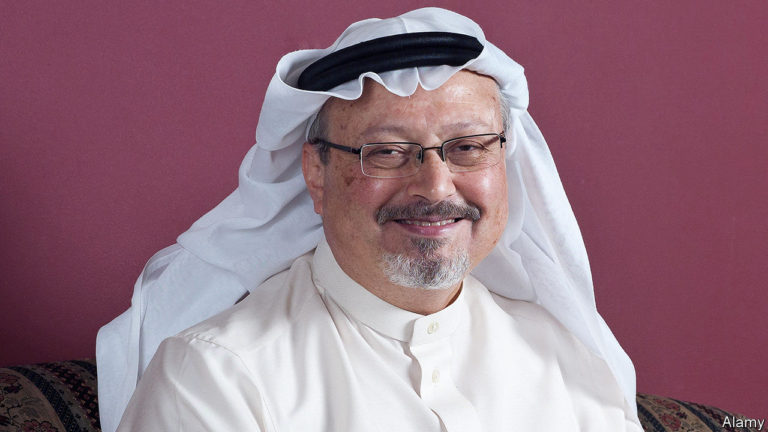
JAMAL Khashoggi, the Saudi journalist who was murdered by a 15-man gang allegedly acting on the order of the crown prince of Saudi Arabia, Mohammed bin Salman disappeared on October 2.

But before he made the final journey to the Saudi embassy in Istanbul, Turkey where he was gruesomely murdered, he had submitted his opinion piece to Karen Attiah, Global Opinions editor at The Washinton Post.

He had been contributing opinion articles to the Post since September 2017 till his death in  October 2018.

In his last article,  titled:  “What the Arab world needs most is free expression”, Khashoggi explained the kind of repression present in the Arab world, and how it is exacerbated by the government’s media censorship. 

He was concerned that citizens are not free in most countries in the Arab world, with the exception of Tunisia, according to the 2018 “Freedom in the World” report published by Freedom House.

Three other countries in the region that passed as “partly free” include JordanMorocco and Kuwait.

“As a result, Arabs living in these countries are either uninformed or misinformed. They are unable to adequately address, much less publicly discuss, matters that affect the region and their day-to-day lives. A state-run narrative dominates the public psyche, and while many do not believe it, a large majority of the population falls victim to this false narrative. Sadly, this situation is unlikely to change.”

He wrote that hopes activated by the Arab spring of 2011 were eventually shattered, and made Arab nations “either fell back to the old status quo or faced even harsher conditions than before.”

Khashoggi grieved about his friend Saleh al-Shehi who is currently “serving an unwarranted five-year prison sentence for supposed comments contrary to the Saudi establishment,” and lamented the Egyptian government’s seizure of al-Masry al Youm, a national newspaper in the country.

None of these acts of tyranny outraged journalists and citizens, he wrote.

“As a result, Arab governments have been given free rein to continue silencing the media at an increasing rate, ” a development that harms journalists and the media business.

He wrote that the expectation the Internet would liberate information from the censorship and control associated with print media has also been blocked by the government.

[Read Khashoggi’s last column for The Post before his disappearance in Arabic]

The late journalist, however, praised the effort of Qatar’s government that continues to support international news coverage, in contrast to its neighbors’ efforts to uphold the control of information to support the “old Arab order.”

 The Arab world is facing its own version of an Iron Curtain, imposed not by external actors but through domestic forces vying for power, he stated.

In his view, the Arabs need something similar to Radio Free Europe, which grew from Cold War years into a critical institution that played an important role in fostering and sustaining the hope of freedom.  

 “The Arab world needs a modern version of the old transnational media so citizens can be informed about global events. More important, we need to provide a platform for Arab voices. We suffer from poverty, mismanagement and poor education. Through the creation of an independent international forum, isolated from the influence of nationalist governments spreading hate through propaganda, ordinary people in the Arab world would be able to address the structural problems their societies face.”

In a recent tweet, his editor, Attiah wrote: “They may have silenced my friend [Khashoggi] but they cannot kill his words. “

Brain cancer: why killing the fastest growing cells may not be the only treatment

0

Brain cancers are fortunately rare tumours in adults. Nevertheless, the most common type of brain cancer, glioblastoma, is incurable and almost always lethal. Because of the lack of effective therapies, the average survival with glioblastoma is only 15 months. US senator, John McCain suffered from this form of tumour, as did former British MP Tessa Jowell, who was outspoken about the need for more experimental treatments.

Finding new and more effective therapies for glioblastoma is very difficult for many reasons. Glioblastoma cells can move far away from the main tumour into the healthy brain, which makes complete surgical removal of the cancer impossible. These cancers are typically also very resistant to current drugs and radiation therapy. As a result, glioblastomas usually regrow after treatment, and these “recurrent” tumours tend to resist all efforts to treat them and ultimately cause the patient’s demise.

The so-called “blood-brain barrier” prevents many anti-cancer drugs that work well in other organs from entering the brain in the first place. This severely limits the number of drugs that can be applied. Glioblastomas are also very dissimilar between patients, and no genes are known that are mutated in all glioblastomas. Even within a tumour in a single patient, there are large differences in the tumour cells themselves. It is these differences between tumour cells that we wanted to understand better.

Glioblastoma cells under a microscope.
Anna Durinikova/Shutterstock

Feeding on fats and sugars

In a recent study, we compared glioblastoma cells and how fast they divided. And we saw that there were remarkable differences in the division rate of these tumour cells.

This led us to classify glioblastoma cells into faster-dividing and slower-dividing cancer cells and we investigated these further. Intuitively, we expected faster-dividing cells to be more aggressive, as they cause a tumour to grow more rapidly. But surprisingly, we found that glioblastoma cells that are dividing slower were more likely to resist chemotherapy.

Likewise, slower cells were more likely to move away from the main tumour, making them harder to remove surgically. Genetic signatures of these slower cells resemble signatures of “recurrent” glioblastoma, which indicates that slower cells may in fact be the ones that cause tumours to regrow.

Interestingly, the genetic signatures of “recurrent” glioblastomas and slower dividing glioblastoma cells were similar and revealed an increased dependence on fats for energy consumption of these tumours.

Since the 1920s it has been hypothesised that cancers predominantly rely on a less effective way than normal cells of using sugars for their energy support. This is known as the Warburg effect.

Our research shows this to be true for faster-dividing cells, but not for slower cells, which mainly use fats as their source of energy. In experimental models, we could show that withholding sugars affects only the faster-dividing cells. Conversely, in experiments where we blocked the metabolism of slower-dividing cells, their faster counterparts continued to grow unchecked. When we combined treatments to stop both faster and slower dividing cells in experimental models, we found that this was most effective to stop the tumours from growing.

In our study, we also identified a certain transport protein for fatty acids that is specific to slower-dividing glioblastoma cells. An important question arising from our work is whether this transport protein carries specific types of fatty acids into these tumour cells, and if this can be stopped for future therapies of glioblastoma. We used an experimental drug to block this transport protein, which was effective in our models in combination with treatments targeting faster dividing cells.

It is too early to tell whether this drug could one day be effective in the clinic, but based on our findings,it seems a question that is worth exploring.The Conversation

Florian Siebzehnrubl, Research Fellow, European Cancer Stem Cell Research Institute, Cardiff University

This article is republished from The Conversation under a Creative Commons license. Read the original article.


Gridlock along Abuja – Keffi expressway as soldiers clash again with Shiite protesters

0

ON the heels of the Zuba military- Shitte face-off,  the Islamic group is involved in another confrontation with military men along the Abuja – Keffi expressway on Monday.

The road was blocked by Shiite protesters, calling for the release of their leader, Ibrahim El-Zakzaky who has been in detention for almost three years.

A similar clash on Saturday along the Zuba-Kaduna expressway in Abuja had led to the death of three of the protesters while many others sustained gunshot injuries.

The recent face-off has lead to traffic gridlock along the Abuja-Keffi expressway. Motorists, for fear of their lives, avoided the route, thus leaving commuters stranded at the various bus stops.

Road users were aggrieved that a protest that started peacefully has turned violent, upsetting the movement of passengers. “If they want to protest, they should go to one side of the road, we will still see them” said a stranded commuter.

“I left my office since 4.o’clock and I had to hitch a ride from Berger to Head of Police from there someone helped me to AY and since then, am yet to move another inch from where I am. The traffic is terrible and these military guys are just running around and we don’t know what is going on,” said Abiodun, another stranded commuter.

A resident of Nyanya, who gave her name simply as Felicita, said she came to town on an errand but is yet to get home as at 7:35 pm. She said she had to wait for hours before she could get a vehicle heading her way.

Video footages circulating on the social media show that there are casualties, but an official figure of the casualties is yet to be announced at the time of this publication. Two youths were seen carrying a young man soaked in blood in a video clip posted on Twitter. They were shouting, “Ina Lilahi Waina Ilehi rajiuna” as both ferried the wounded man to safety.

REPORT: More than 90 per cent of the world’s children breathe toxic air every day

0

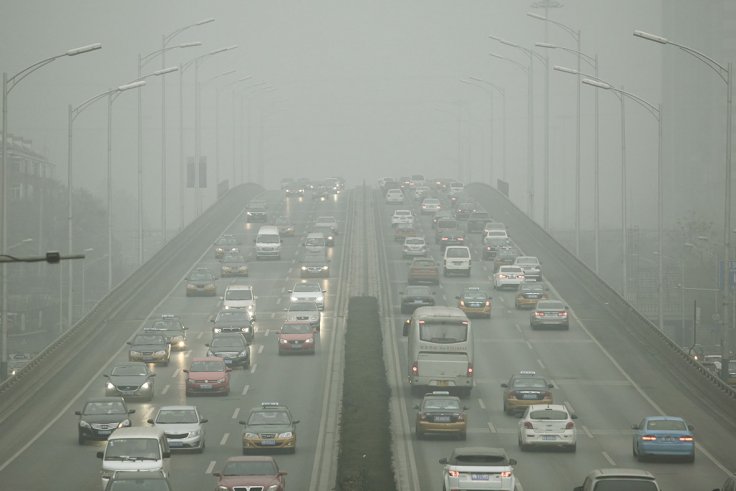
THE WHO has reported that every day around 93 per cent of the world’s children under the age of 15 years (1.8 billion children) breathe air that is so polluted it puts their health and development at serious risk.

Sadly, many of them die. WHO estimates that in 2016, 600,000 children died from acute lower respiratory infections caused by polluted air.

A new WHO report on Air Pollution and Child Health examines the heavy toll of both ambient (outside) and household air pollution on the health of the world’s children, particularly in low- and middle-income countries. The report is being launched on the eve of WHO’s first ever Global Conference on Air Pollution and Health.

According to the report,  when pregnant women are exposed to polluted air, they are more likely to give birth prematurely and have small, low birth-weight children. Air pollution also impacts neurodevelopment and cognitive ability and can trigger asthma, and childhood cancer. Children who have been exposed to high levels of air pollution may be at greater risk for chronic diseases such as cardiovascular disease later in life.

“Polluted air is poisoning millions of children and ruining their lives,” says Dr. Tedros Adhanom Ghebreyesus, WHO Director-General. “This is inexcusable. Every child should be able to breathe clean air so they can grow and fulfil their full potential.”


READ ALSO:

One reason why children are particularly vulnerable to the effects of air pollution is that they breathe more rapidly than adults and so absorb more pollutants, he says.

They also live close to the ground, where some pollutants reach peak concentrations – at a time when their brains and bodies are still developing.

Newborns and young children are also more susceptible to household air pollution in homes that regularly use polluting fuels and technologies for cooking, heating, and lighting

“Air Pollution is stunting our children’s brains, affecting their health in more ways than we suspected. But there are many straightforward ways to reduce emissions of dangerous pollutants,” says Dr. Maria Neira, Director, Department of Public Health, Environmental and Social Determinants of Health at WHO.

“WHO is supporting the implementation of health-wise policy measures like accelerating the switch to clean cooking and heating fuels and technologies, promoting the use of cleaner transport, energy-efficient housing and urban planning. We are preparing the ground for low emission power generation, cleaner, safer industrial technologies and better municipal waste management,” she added.

WHO Key findings:

  • Air pollution affects neurodevelopment, leading to lower cognitive test outcomes, negatively affecting mental and motor development.
  • Air pollution is damaging children’s lung function, even at lower levels of exposures
  • Globally, 93% of the world’s children under 15 years of age are exposed to ambient fine particulate matter (PM2.5) levels above WHO air quality guidelines, which include the 630 million of children under 5 years of age, and 1.8 billion of children under 15 years
  • In low- and middle-income countries around the world, 98% of all children under 5 are exposed to PM2.5 levels above WHO air quality guidelines. In comparison, in high-income countries, 52% of children under 5 are exposed to levels above WHO air quality guidelines.
  • More than 40% of the world’s population – which includes for 1 billion children under 15 – is exposed to high levels of household air pollution from mainly cooking with polluting technologies and fuels.
  • About 600’000 deaths in children under 15 years of age were attributed to the joint effects of ambient and household air pollution in 2016.
  • Together, household air pollution from cooking and ambient (outside) air pollution cause more than 50% of acute lower respiratory infections in children under 5 years of age in low- and middle-income countries.
  • Air pollution is one of the leading threats to child health, accounting for almost 1 in 10 deaths in children under five years of age.

WHO’s First Global Conference on Air Pollution and Health, which opens in Geneva on Tuesday 30 October will provide the opportunity for world leaders; ministers of health, energy, and environment; mayors; heads of intergovernmental organizations; scientists and others to commit to act against this serious health threat, which shortens the lives of around seven million people each year.

Ezekwesili: Buhari, Atiku are siamese twins of failure and destruction

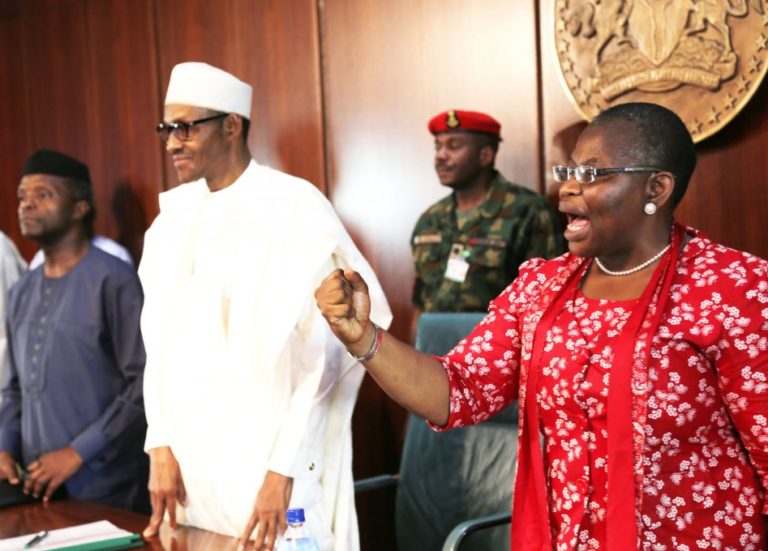
FORMER Minister of Education, Obiageli Ezekwesili, has described President Muhammadu Buhari and former Vice President Atiku Abubakar as one and the same, calling them “siamese twins of failure and destruction”.

Ezekwesili, who is also running for the post of the President in the 2019 general election on the platform of the Allied Congress Party of Nigeria (ACPN), said this on Monday during an event in Lagos where she unveiled her plans for the presidential contest.

“For those of you considering the PDP as an alternative, I really want to ask you: what is the thing that you see about them that is any different from the APC. Really? These people are the same: Siamese Twins of Failure,” Ezekwesili said.

“Fellow Nigerians, here is the truth of the matter: the APCPDP is not two parties. The APCPDP is one single party fielding one single candidate, and that candidate’s name is BuTiku. Yes, you heard me right – BuTiku.

“Buhari and Atiku are conjoined from head to toe as BuTiku. There is no lesser evil in BuTiku. BuTiku are members of the same party.

“Attempting to choose between these two is like asking one to choose between death by poison or death by gunshot. God forbid.

“We cannot reject one oppressor and hand over to another oppressor. We do not love bondage. We do not enjoy suffering. God in heaven forbid.

“The candidate of the PDP has over the past 14 years gone from PDP to AC, AC to PDP, PDP to APC and now back to PDP. These people are brothers and sisters of iniquity and impoverishment, merchants of failure and disappointment. Don’t believe that 419!

“They are both part of a political ruling class that has held us bound, manipulated and diminished us for decades. Now they are auditioning to extend their streak of failure for another four years? God really forbid!

“The real opponent that the Nigerian people have in 2019 is this old political order that takes and takes and takes, and never replenishes anything.”

Ezekwesili also criticised what she described as the Buhari administration’s so-called anti-corruption campaign, insisting that the administration is corrupt and so cannot claim to be fighting corruption.

“This president talks about fighting grand corruption. Please, please, give me a break! Can corruption fight corruption? Does he think we cannot see? A president that looks the other way while his friends and cronies suffocate and strangle our country?” Ezekwesili said.

“There is no shadow of doubt: President Buhari is the most parochial, most nepotistic and most partisan president that Nigeria has ever seen.”

On why Nigerians should vote for her come 2019, Ezekwesili said it is because she is “one of the very small tribes of Nigerians who have served in government but who have no allegation of corruption against them. I don’t mean court case o. I mean allegation. Zero. None. Not one”.

2019 Poll: Buhari again promises free and fair election

PRESIDENT Muhammadu Buhari says he is more concerned about the conduct of free and fair elections in the country at all times.

President Buhari made this statement on Monday when he hosted the Governor-General of Canada, Julie Payette, at the Presidential Villa, Abuja.

“I emphasise free and fair elections at all times,” presidential spokesman, Femi Adesina, in a statement quoted the President as saying.

The President’s comment came three months to the general elections and there are already apprehensions among the electorate that there may be no free and fair elections.

The apprehension followed the outcome of governorship elections in Ekiti and Osun states where irregularities reportedly marred the process.

He said Nigeria’s democracy was steadily improving with a deeper understanding of the democratic culture and tenet by the people.

President Buhari said he saw the evolving strength of democracy in the country by contesting for presidential elections three times before winning at the fourth trial in 2015.

The President told his guest that Nigeria had been learning from the mistakes of those who practised democracy for a longer period and by looking inward at its own peculiarities.

He added that the bilateral relations with Canada would continue to be improved considering the huge interest of the country in Nigeria and growing economic ties, with many Nigerians schooling and working in the country.

The President noted that Canada played a brotherly role in helping displaced persons in the North East, following Boko Haram insurgency.

Speaking during the visit, the Governor-General, Julie Payette, said Nigeria and Canada enjoyed a warm and strong partnership that has translated into ease of migration, large trade relations and cultural exchanges.

Payette, who is an astronaut, said it was important for nations to pool resources together to start exploring the benefits of space in providing solutions to some problems on earth.

The Governor-General noted that the world would achieve more by de-emphasising geographical differences and refocusing its energy on the commonality of humanity, pointing out that from space one can only see an earth without borders.

Payette said her visit was about showcasing “youth, innovation and technology,” adding that Canada would like to partner with Nigeria in the ongoing diversification of the economy.

“We wish you free and credible elections in 2019,” she said.