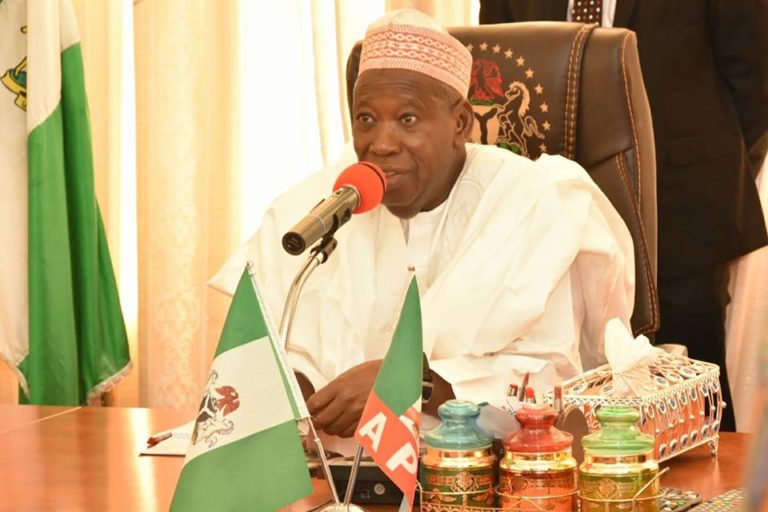
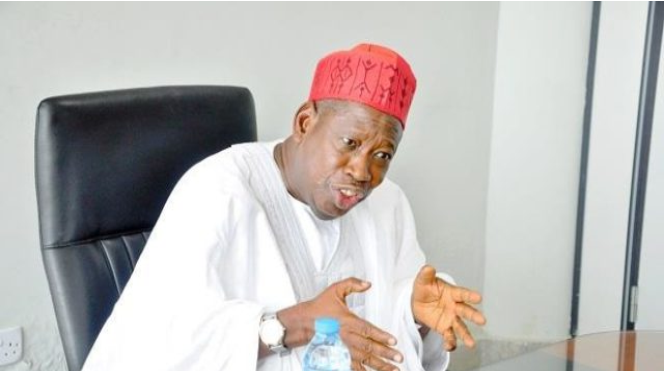
JAFAR Jafar, the Publisher of the Daily Nigerian online newspaper, has insisted that video footage published by the paper, which showed the Governor of Kano State collecting bribes in dollars from a contractor, were authentic and not manipulated in any way.
He said this during an investigative hearing into the allegations by the Kano State House of Assembly on Thursday.
After the videoswere published, the Kano State government issued a statement denying that Ganduje ever collected bribe from any contractor. The statement also described the videos as “cloned”, adding that the governor would explore every legal means of seeking redress.
Few days after the publication of the video clips, Ganduje told newsmen that he was not worried over the impact the video may have on him and that his blood pressure was normal as he is innocent of the accusations.
However, during Thursday’s hearing, Jafar, who attended the session alongside his lawyer, told the Kano lawmakers that the video was authentic and that Ganduje did collect the bribes as shown in the video.
Jafar said that the videos were captured by a friend of his who is a contractor with the Kano State government, and who had complained that the Ganduje receives kickbacks, ranging from 15 to 25 per cent for every project executed in the state.
He said that his friend agreed to use spy cameras attached to his kaftan to enable him to record the governor as he collected the bribes.
“He captured at least 15 clips, nine of which fully showed the governor’s face, body and hands collecting bundles of dollars,” Jafar said in a statement he submitted to the investigative panel.
“Before DAILY NIGERIAN publishes stories, pictures or videos on its website, the editors subject them to rigours of verification to establish their authenticity or otherwise.
“In the case of the video clips in question, our in-house technical expert, the editor-in-chief and editorial adviser certified that the videos were original and not doctored contents.
“Experts from Amnesty International Nigeria, BBC and Premium Times also watched the clips and certified their authenticity before we went to press.
“The first video was published on October 14, 2018, comprising two clips that occurred on two different dates as shown on the videos themselves.
“The video showed the governor receiving a bribe from a contractor in foreign currency specifically the monies were United States Dollar denominated. The video also showed his Excellency tucking these monies under his flowing gown and putting them inside an envelope.
“We are willing to share the content of the video without any form of editing to assist the committee in its investigation and to share the full clips of the others that were published to the Committee in the cause of the performance of their legislative function.”
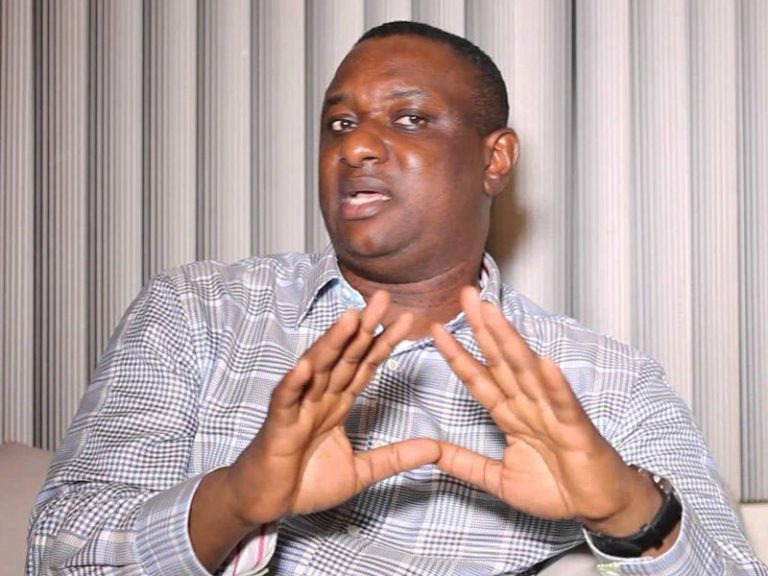
THE spokesperson for the Muhammadu Buhari Campaign Organisation, Festus Keyamo, has denied collecting money from the NNPC to run the publicity department of the organisation.
Mr Keyamo, who is also the campaign organisation’s Director of Strategic Communications, said on Thursday in Lagos that the organisation would not depend on the public purse to run its activities.
In a statement copied to the news agency, Mr Keyamo said: “Our attention has been drawn to fake news to the effect that I have received a large sum of money from the NNPC and submitted another budget to the same corporation to run the media and publicity department of the campaign.
“The story is a classic example of the many rots in the system that President Muhammadu Buhari is determined to address. Experience has taught that sharing of money does not win elections.
“We do not intend to go that route. We shall continue to showcase the achievements of President Muhammadu Buhari to convince Nigerians that he deserves a second term in office,” the spokesman said.
The senior advocate of Nigeria said that his participation in the campaign was part of his larger crusade for the enthronement of an accountable government and true democracy.
“To me, this is not just a campaign but a crusade; hence, I came out of my shell to make a full-blown participation in the process.
“I am determined to make my little contribution to prevent those who looted our treasury in the past to establish `big businesses’ from staging a comeback to power.
“In the process, my hard-earned integrity will be guarded jealously.
“I have not, and will not go near the public purse; the campaign organisation will not do so either. This is a pledge before the Nigerian people by which we shall stand,” he said.
The Nigeria Customs Service (NCS) said it seized contraband comprising rice and other items valued at N105.3 million in Benin, Edo, between Sept. 20 and Oct. 19.
The National Coordinator, Comptroller-General of Customs (CGC) Strike Force, Mr Abdullahi Kirawa, a Deputy Comptroller of Customs, disclosed this while briefing newsmen in Benin on Thursday.
Kirawa said that the impounded contraband were 2,185 bags of 50 kilogrammes of foreign par boiled rice valued at N52 million, 600 pieces of used tyres valued at N4.05 million.
Others, according to him, are 516 bales of used clothing valued at N33.35 million, 35 sacks of used shoes whose cost was N840, 000 and 100 cartons of vegetable oil valued at N3 million.
He added that 67 cartons of Tramadol tablets and Codeine syrups valued at N12.06 million and 538 bags of substance suspected to be cannabis sativa, with 10 kilogrammes in each bag, were also seized during the period.
Kirawa said that the seizure was mainly in the hinterland of the state and attributed the success recorded by the strike force to credible information from the public and Customs Intelligence Unit.
He appealed to the public to continue to avail the Service of useful information to ensure that smuggling in the country was reduced.
The coordinator, who handed the seized drugs and suspected substances to representatives of NAFDAC and NDLEA, respectively, said that the action was to show the level of synergy among security agencies.
Receiving the drugs, NAFDAC Controller in the state, Mrs Esther Itua, said that the Director-General of the agency was vigorously championing the war against illicit drugs, including Tramadol and Codeine.
Similarly, Mr Peter Ogar, Assistant Commander of NDLEA in Edo command, said that fighting illicit drug trafficking was a collective responsibility which required all hands to be on deck.
Zone ‘C’ of NCS comprises 11 states – Edo, Delta, Bayelsa, Rivers, Cross River, Akwa Ibom, Anambra, Enugu, Abia, Imo, and Ebonyi.
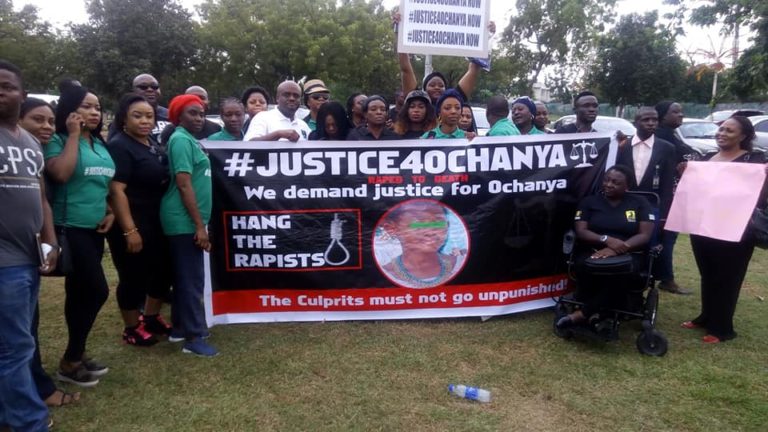
PROTESTERS on Thursday gathered at the Ministry of Justice headquarters in Abuja to express their grievance over the death of Ochanya Elizabeth Ogbanje, a 13-year-old girl allegedly raped by a father and son in Gboko, Benue State.
The protesters comprising a coalition of civil society groups, human rights activists and students, called on the minister of justice and attorney general of the federation to fish out the perpetrators of the heinous crime and bring them to book.
They blocked the main entrance into the ministry, carrying placards that call for justice for the late Ochanya.
Emmanuel Omonoho, director of litigation, who addressed the protesters, said the ministry would swing into action when the police conclude their investigations.
“The Minister of Justice is on assignment and is not in the office now. I want to assure you of one thing, if this incident took place in any state, let it be investigated and let the report of the investigation be made to the commissioner of police of the state.”
“I assure you on behalf of the attorney-general that once the report gets to the ministry of justice the matter must be prosecuted to a logical conclusion,” he said.
The protesters later proceeded to the National Human Rights Commission (NHRC) headquarters.
Before her death last week Wednesday at Benue State Teaching Hospital, Makurdi, the victim was a Junior Secondary School 1 student at the Federal Government College, Gboko, Benue State.
The girl, a cousin of the lecturer’s wife, was allegedly sexually abused by the suspects for about five years, while she lived with them, according to media reports.
Andrew Ogbuja, a staff at Benue State Polytechnic, Ugbokolo, and his son, Victor Inalegwu Ogbuja, a final-year student at the Federal University of Agriculture are said to have serially abused the 13-year-old Ochanya Ochiga since she joined their household at age eight.
While Mr Ogbuja was arrested by the police, arraigned before a Makurdi Upper Area Court in August and remanded in prison custody, his son had fled.
The rape victim died of Vesico Vaginal Fistula (VVF) and other health complications after being allegedly abused by the duo on several occasions.
Mrs Betty Abah, a co-convener of the protest, who is also the executive director of CEE-HOPE, a non-governmental organization advocating for the rights, welfare and development of vulnerable kids and girls in the country, called for the protest in a Facebook post on October 21.
She hoped the protest will push the government to provide answers and punish the perpetrators accordingly.
“As at the last hearing on Sept. 24, the accused was not in court. He had been released from prison without the knowledge of the victim’s family, even when he wasn’t granted bail at the earlier sitting. His co-accused son, Victor Ogbuja, a student at the Federal University of Agriculture, Makurdi, Benue State, remains on the run,”. Abah said in the post.
She was concerned that the accused was released from prison custody without being granted bail by the court without and without the knowledge girl’s family.
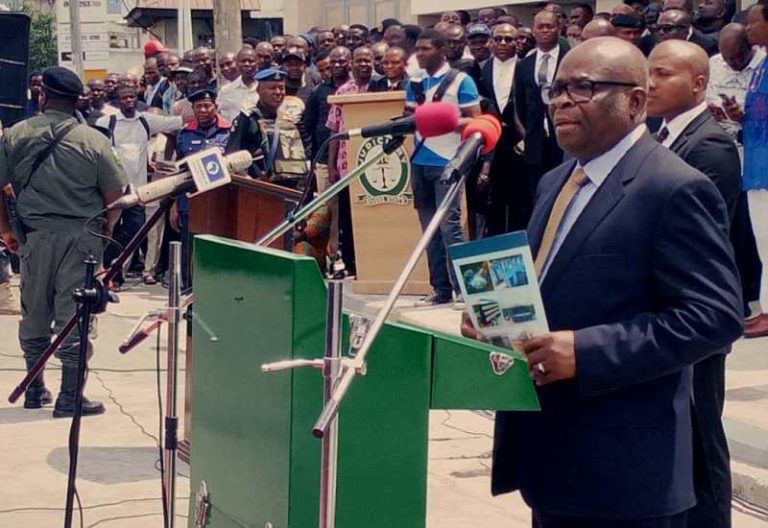
THE Chief Justice of Nigeria (CJN) Walter Onnoghen, has urged Nigerians to seek other ways of resolving civil disputes rather than taking them to the courts, adding that more lasting peace can be achieved through Alternative Dispute Resolution (ADR) than through the formal judicial system.
Onnoghen said this while addressing the members of the Nigerian chapter of the Chartered Institute of Arbitrators (CIArb) in Abuja, on Thursday, as part of the association’s 2018 annual conference.
“Having experienced both sides of a formal court system and the traditional arbitration, I can assure you and I want you to know that the judicial system is not designed to ensure peace. If you want peace, don’t go to courts,” Justice Onnoghen was quoted as saying.
He further explained that, in the formal courts, “You are either right or wrong. We determine the rights, liabilities and responsibilities of parties. It is not designed to ensure peace.”
The Nigeria Branch of the CIArb became functional in 1999 after it fulfilled the requirements to be granted Branch status by the parent body in the United Kingdom. It has over 1,137 members drawn from across all disciplines of human endeavour including practitioners in Law, Construction, Shipping, Engineering, Insurance, Banking, Accounting, Oil and Gas, among others.
The CIArb maintains close links with other professional arbitral bodies worldwide, and its major role is to apply Alternative Dispute Resolution methods in settling civil cases. The Institute is also recognized as the professional body for training and examination of those seeking to become qualified arbitrators, mediators and other ADR Practitioners.
The theme of the 2018 CIArb conference is: “Arbitration and ADR in Africa: Challenges Gains and Lessons for the Future.”
THE Kano State House of Assembly has commenced investigations into the allegations of bribery involving the State Governor, Umar Ganduje.
An online newspaper, Daily Nigerian, had published video clips showing Ganduje collecting several bundles of dollar bills from someone whom the newspaper claimed was a contractor working for the State.
Jafar Jafar, the publisher of the Daily Nigerian, who has reportedly been in hiding following alleged threats to his life since after publishing the videos, was at the Kano House of Assembly premises on Thursday to address the investigative panel.
According to the Daily Trust, Jafar arrived the Assembly premises in the company of his lawyers, with a copy of Qur’an hanged on his shoulders. Proceedings commenced immediately and is currently ongoing.
Jafar Jafar, Publisher of Daily Nigerian, the online newspaper that published videos of Ganduje collecting bribe in dollars, arriving the Kano Assembly chambers on Thursday.
Security was tight at the premises of the investigative hearing as men of the Nigeria Police, the Nigeria Security and Civil Defence Corps (NSCDC), and the Department of State Services (DSS) were positioned at strategic locations leading to and within the Assembly premises.
All roads leading to the Assembly complex were also barricaded by the security men and only accredited persons were allowed to enter the premises. Supporters of Governor Ganduje were prevented from making it to the hearing.
Children wielding placards in support of Governor Ganduje. They were not allowed into the Assembly premises.
The seven-man committee to investigate Ganduje’s bribery allegation was set up by the Speaker of the Kano State House of Assembly,Alhassan Rurum,on October 15, following a motion by Labaran Madari, member representing Warawa Constituency.
The seven-man investigative panel.
Members of the committee include: Baffa Dan’Agundi — Chairman; Labaran Madari, Garba Gafasa, Zubairu Masu, Ayuba Labaran, Abubakar Galadima, Garba Yau Gwarmai, and Mujtafa Amin — Secretary.
Watch the video of Ganduje’s alleged bribery below:
VIDEO: Journalist Releases Footage Of Kano State Governor Ganduje Allegedly Receiving Bribe.
DailyNigerian newspaper has released a video of the Kano State governor, Abdullahi Ganduje, allegedly receiving bribe, amounting to about $5million from contractors in the state. ???????? pic.twitter.com/mGpLu0K8jV
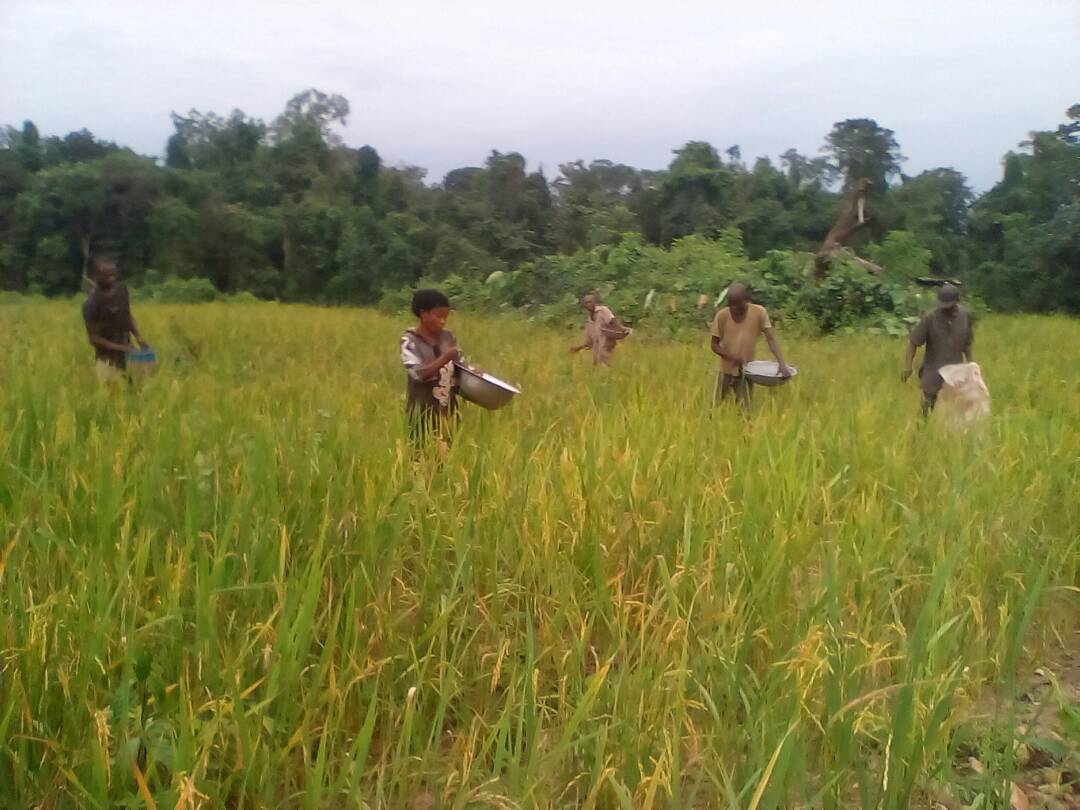
THE Anchor Borrowers Scheme, the federal government’s initiative to boost agriculture and stop the importation of rice is facing challenges in several states, including Cross River and Gombe, reports PUNARIMAM FEHINTOLA who visited the two states.
The scheme started in November 2015 shortly after President Muhammadu Buhari assumed office.
The initiative was conceived to help diversify the economy, create jobs, help farmers become more self-reliant through rice production, and generally to ensure food security.
Several states across the country benefited from the scheme, including Cross River where farmers are now crying foul. The scheme provides support in terms of loan and seedlings to farmers, which are disbursed through the Bank of Agriculture, BOA.
In Cross River, only 6,000 out of the estimated15,000 farmers in the state were enlisted in the scheme. This, according to the Commissioner for Agriculture and Natural Resources, Professor Egrinya Eneji, was becauseBOAlacked the capacity to deliver effectively.
Despite the shortfall in the number of farmers in the scheme, the loan disbursement has been anything but satisfactory. Several of the farmers have complained of inability to access the funds at the right time. Where funds were received, farmers complained of not receiving the actual amount.
Farmers allege being shortchanged
Umoren Udo,a farmer in Oban Akamkpa Local Government Area, said the rice on his farm was long overdue for harvest when the reporter visited him some months ago, but lack of funds prevented him from harvesting. He expressed fears that rodents could attack the farm if money was not released to him soon to harvest the rice. He lamented that the loans were unnecessarily being delayed.
Another beneficiary, James Umana, chairman of the Calabar Amalgamated Cooperative Society Limited, stated that the scheme was facing several challenges in the state. He, however, said the biggest challenge was the delay in funds disbursement.
“Money was given very late from the beginning of the scheme and the last tranche of the money for harvest is yet to be paid as well,” he said.
But this allegation was disproved by Professor Eneji who said the loan amount was not reduced. According to him, the entire loan was not supposed to be given out only in cash, but also as seedlings. “But the farmers were expecting everything in cash,” he said.
The chairman of the Rice Farmers Association of Nigeria (RIFAN) Cross River State Chapter, Barrister Fidel Egoro, however, observed thatthe program has not met the expectation of farmers because the seedlings supplied to them had expired while fertilizer also came late. He said the government ought to be mindful of the farming cycle and ensure seedlings and fertilizer were delivered at the right time.
The blame for this, he said, must go to the BOA and the Federal Ministry of Agriculture which supplied the seedlings and fertiliser.
But BOA denied the allegations. Takim Tawor, branch manager in Cross River state, said the farmers who complained were given some other seedlings as replacements for the bad once.
Responding to the allegations, the CBN’s Director of Finance Development in Calabar, Aniefiok Umorensaid, part of the problem was that many of the farmers lived in the rural areas and had a problem about bank’s BVN, which slowed down the process of loan disbursement. Also, he said, slow network affected the smooth running of the process.
Notwithstanding, Takimblamed the CBN for the delay of disbursement of funds. “ CBN withdrew all the money deposited for the scheme without consultation with stakeholders”.
Takim said the withdrawal caused unnecessary delay in funds disbursement and hindered the smooth operation of the scheme.
The same sad story in Gombe State
The situation in Gombe State is not different. According to the state Commissioner of Agriculture, Dahiru Biri, farmers in the state were not aware of the procedure to access the loan.
“Many people thought it is free money from the government so when we explained to them and later realised that some of them are not actual farmers who couldn’t identify with any cooperative, they had to opt out”.
He also admitted that some farmers had suffered huge losses as a result of draught but stated that this has been reported to the Bank of Agriculture which had tried to find ways to compensate those affected through NIEC, the insurance company in charge of the scheme.
The commissioner also identified the repayment of the loans as one of the major challenges. “The farmers are refusing to pay back these loans which is a huge concern with a nine per cent interest rate considering the market price as at when the loans were disbursed”.
On the other hand, Ibrahim Shehu, a farmer and beneficiary from Billeri local government area, complained that all the seedlings that were given to him had expired, so he did “not gain anything from this scheme”. He also complained that the scheme was ridden with corruption.
“The most annoying thing of all is even the fertiliser. We were given at N8,500 but N5,500 was written on the bags and the market price was going for N5,500 so it got all of us confused.”
Saidu Aliyu a farmer from Gidan Gari in Gombe State insisted that the scheme didn’t make any impact in the state, accusing the government of not following the due process in giving out the loan.
“I dare the government of Gombe State to publish names of beneficiaries and figures spent on this scheme. No farmer got anything from this scheme, I can’t say if Kebbi and other states got but not Gombe State”.
File Photo: Minister of Agriculture, Audu Ogbe
Not all farmers have a bad story to tell anyway. A farmer from Bajoga, Garba Sani, appreciated government efforts to make available loans to farmers. “With the loan, I can now farm rice in large quantity,” he said but stressed the need for urgent intervention on the last disbursement.
“The CBN should, please, conclude the good deed by giving us the remaining balance so we can harvest the rice at the due time,” he pleaded.
The Branch Manager of BOA in Gombe State, Adamu Idris, was asked to react to allegations of fraud by farmers but refused to comment on the issue.
“I need authorization from the head office to talk on this issue. Besides, I am not the spokesperson for the bank, I am sorry”, he told the reporter.
In 2017, there was a huge allegation of corruption in the loan disbursement by the All Lower Farmers Association of Nigeria (ALFAN), which pointed accusing fingers at Idris and the Gombe State Commissioner for Agriculture, Alhaji Dahiru Buba Biri, alleging that they were manipulating the process for personal gain.
The farmers accused the Gombe State Ministry of Agriculture and the BOA, of shady deals and denying them the funds provided by the Anchor Borrowers Scheme. But both men denied the allegations.
Secretary and spokesperson of the association, Malam Sani Idris, alleged that both BOA and the ministry have been introducing stringent conditions that are not in tune with what the CBN told them about the facility.
According to him, some of the illegal stringent measures they were allegedly made to go through were that the farmers were asked to form cooperative groups and register with N10, 000.00 and N20, 000.00 for consultancy and another N20, 000.00 for a surveyor to survey their farms.
And many of them did.
The association further alleged that BOA also demanded N3, 000. for the opening of individual accounts with the bank and then another N3, 000.00 for loan disbursement.
But when contacted, Idris said only the Commissioner of Agriculture who is the chairman of the Anchor Borrower Scheme in the state, has the authority to comment on the matter.
On his part, Biri explained that the initial proposal of N300,000 came down to N250,000 because the amount earmarked for water pumps meant for dry season farming was subtracted from source, adding that the surveying of the farms was to facilitate tracking beneficiaries’ farm and farming activities through the Global Positioning System (GPS), while registration is a precondition for the recognition of the cooperative society under which they could benefit.
According to him, the loan is given in both cash and inputs. He, however, denied any knowledge of the N71, 500 charged by BOA for land clearing and other services.
Biri also confirmed that credit facility attracted nine per cent interest and that it would be paid in a single instalment through the exchange of farm produce after harvest.
He said that to meet the condition of the loan, the state had to agree to pay Irrevocable Standing Payment Order (ISPO) to the CBN which needs the approval of the State Executive Council and the state House of Assembly but which was still pending.
What is the CBN doing?
It was learnt that following many complaints about the operation of the Anchor Borrowers Scheme, the CBN has launched a new system to tackle the problem of logistics. The apex bank has handed the next phase of the program to RIFAN headed by its national chairman Alhaji Aminu Goloyowhich, according to the bank, has a record of all members and the capacity to run the program more effectively.
The Special Assistant to the CBN Governor on Development Finance, Tunde Akande who provided this information, disclosed that the issue of bad seedlings has been channelled to NIEC, an insurance company engaged to deal with such cases.
“We are collaborating with RIFAN. CBN has graduated from government to private sector partnership and also digitalization where every member will be captured online and identified for effective implementation, ” he explained.
When asked why there was a delay in payment and why was the funds for the scheme withdrawn from BOA, he said CBN prefers working directly with farmers because it is more effective to do so since the farmers have received training and mentoring, were assisted with the right technology.
Spokesperson of the Central bank of Nigeria, Isaac Okorafor, was unavailable for comment despite the effort to query him on the allegation of fraud by BOA. Several calls and text messages to him, and to a senior staff of the corporate communications department, Isa Abdulmumuni, were either not answered or returned.
This investigation was supported by the John D. and Catherine T. MacArthur Foundation and the International Centre for Investigative Reporting (ICIR).
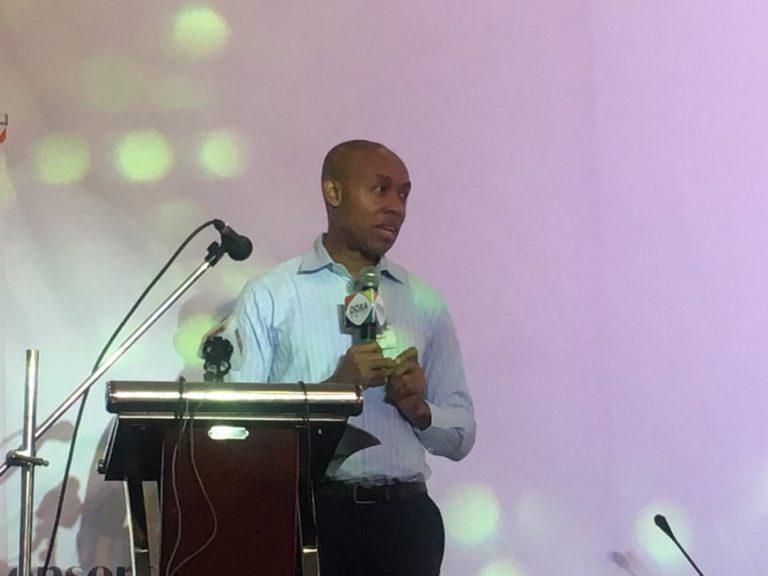
SOCIAL media is driving up violence and other vices in the country, and one of its major problem is “influence without responsibility,” says the former Chairman, National Human Rights Commission (NHRC), Chidi Odinkalu.
“I know some people who have almost been driven to suicide because of bullying that goes on online,” Odinkalu said on Wednesday in his keynote address at the opening of the New Media, Citizens and Governance (NMCG) conference in Abuja.
While admitting that social media can be a platform for transparency, he said it can also be a platform for falsification.
“People now open up to 100 handles to abuse you continuously,”Odinkalu said, adding that abuse and name-calling on social media mean that the one being abused is doing what is right.
“You must never give up on your convictions because people are abusing you. Abusing and calling you names is okay, it means you are doing something useful. Focus on what’s right.“
He advised his audience never to be afraid of disagreeing with the sycophants who do nothing but hail their principals.
He, however, remarked that the new media has played a tremendous role in entrenching democratic culture in Nigeria, particularly praising the role the new media has played in ensuring dissemination of information and demystifying the aura around power.
“The power of new media has made it easy to access the innermost corners of Nigeria’s capital city, Abuja. Places like the Presidential Villa where people are being barred from taking pictures already exist in Google Maps,” Odinkalu said.
Speaking during the session titled “Are Elections Won on the Timeline?”, Demola Olarewaju, a digital media expert and member of the People’s Democratic Party (PDP), considered digital tools as crucial to the success of Nigeria’s democracy, saying “by leveraging the tools of the internet, we can confront rigging and limit its impact on our elections.”
Sesugh Akume of the Abundant Nigeria Renewal Party (ANRP) said the Nigerian people can further use the social media to “counter the APC-PDP dichotomy that has dominated political discourse in Nigeria. If active Nigerians decide to expand the discussion beyond APC and PDP, they can easily do these with social media.”
Supported by Facebook, MacArthur Foundation, Luminate & Palladium, the NMCG is a biennial event that was last held in 2016.
The 2-day conference is hosted by Enough is Enough Nigeria (EiE), Paradigm Initiative and BudgIT to discuss the theme, “Government, New Media, and Civic Spaces.”
Tope Ogundipe, the Director of Programs at Paradigm Initiative, said the organisers were pleased with the turnout on the first day of the conference and hope “the conversations will help provide clarity to the issues raised here while also energising citizens to take their role in the democratic process more seriously.”
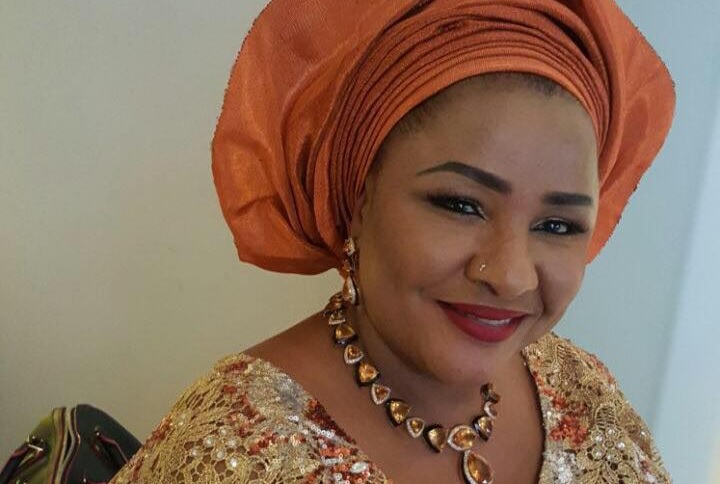
MAIMUNA Aliyu, one of the two persons whose nomination to the board of the Independent Corrupt Practices and other related Offences Commission (ICPC) was rejected, has again been invited to explain how she raised fund to buy property in Dubai.
Aliyu was picked up by ICPC operatives on Wednesday in Abuja, and is currently at the Commission’s headquarters, an insider told The ICIR.
On August 1 2017, then Acting President Yemi Osinbajo nominated Aliyu and Saadu Alanamu, former Chairman of the Governing Council of Kwara State Polytechnic, Ilorin, into the board of the ICPC, but following a report by The ICIR, their nominations were stepped down.
Aliyu, a former director with Aso Savings and Loans Plc, an Abuja-based microfinance bank, was later charged to courtby the ICPC, on a three-count charge of abuse of office, misappropriation of public funds and criminal breach of trust.
She was accused of defrauding Aso Savings and Loans to the tune of N57 million, but she pleaded not guilty to the charges and was granted bail in the sum of N10 million, with two sureties in like sum who must also be resident within the jurisdiction of the court.
The source told The ICIR that Aliyu was today re-arrested to explain how she raised fund to buy a Dubai house which was recently traced to her.
As at 18: 28 pm Aliyu was still in the custody of the ICPC.
INTERNATIONAL and local awards, as well as recognition, have trailed ICIR-trained journalists across newsrooms in Nigeria. The capacity training project supported by MacArthur Foundation has enabled journalists from newsrooms across Nigeria receive awards and nominations for their investigative work and contribution to investigative journalism.
Also, Kemi Busari and Oladeinde Olawoyin, both of Premium Times, got nominations in Anti-corruption and Business Reporting categories respectively as finalists among the 15 others.
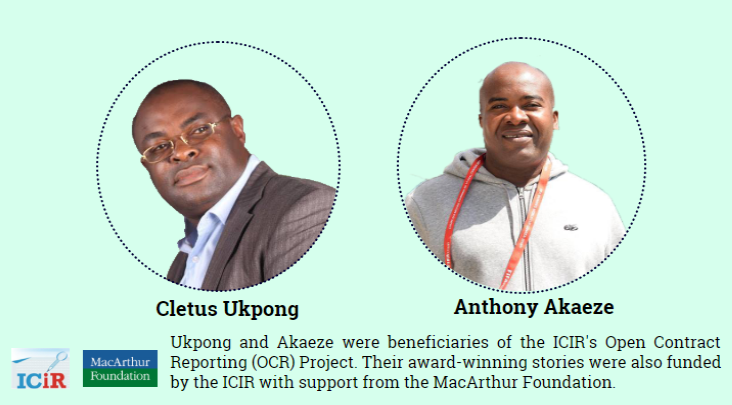
Manasseh Azuri Awuni of Ghana (who emerged the overall best journalist), Akaeze, and the other winners at the event received plaques, certificates and cash prizes.
All the finalists including Akaeze, Kemi Busari and Oladeinde Olawoyin will be inducted as fellows of the MFWA’s Journalism for Change Network, which goes with regular training opportunities within and outside Nigeria.
The West Africa Media Excellence Awards is an initiative of the MFWA to promote media excellence in the sub-region. The awards ceremony honours West African journalists who have produced compelling stories which have had a significant impact on society. The 2018 edition of the West Africa Media Excellence Awards held in Accra, Ghana.
In addition, Cletus Ukpong of the Premium Times received a fellowship award for his six–part series investigation on how corruption, poor budget planning and implementation, and outright neglect led to the near collapse of public education in Akwa Ibom, one of Nigeria’s richest states.
The fellowship which will be funded by MacArthur Foundation is an all-expense paid trip to attend the annual African Investigative Journalism Conference-AIJC. The African Investigative Journalism Conference (#AIJC18) is a gathering of African investigative journalists for skills training, networking, promoting, collaboration and in-depth accounts of major investigative stories.
The 2018 Edition will be hosted by the University of the Witwatersrand, Johannesburg from 28-31 October.
Omeje was announced the winner of the award at a ceremony in Johannesburg, South Africa, in late October.
Also, Adekunle Adebajo of the ICIR won the Best opinion piece award at the Campus Journalism Award named in honour of the late Alfred Opubor organized by The Premium Times Centre for Investigative Journalism –PTCIJ.
The MacArthur Foundation funded project aims to strengthen the capacity of the media to investigate and report on budgetary and procurement processes in Nigeria. The project seeks to enhance the capacity of the media to understand public procurement processes and report budgetary and procurement related corruption, with a view to promoting accountability, transparency, good governance and strengthening anti-corruption efforts.