AFTER more than one year that Donald Trump, the United States President, had announced the withdrawal of the US from the Paris climate agreement, Jerry Brown, the governor of California, is leading other states in the country to uphold the US commitment to the Paris Agreement.
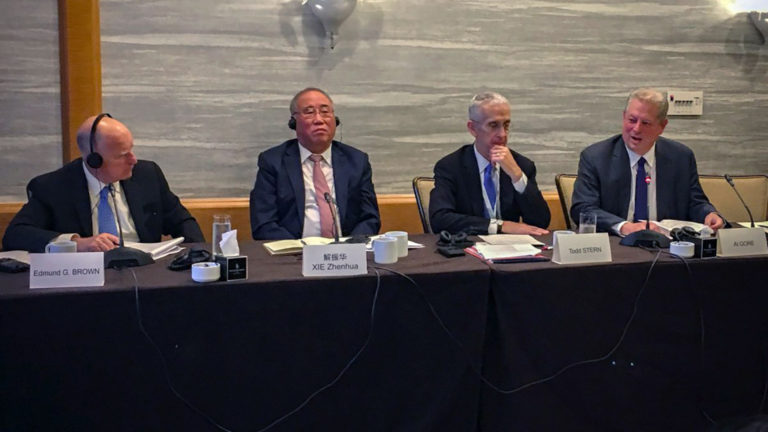
Speaking at the China Pavilion on Wednesday at the on-going Global Climate Action Summit in San Francisco, Brown said although California is just a state in the United States, its economy has placed it in a position to play a big role in combating climate change.
He said without California, United States will not be the largest economy in the world, adding that with an economy of 2.8 trillion dollars, the state is the fifth largest economy in the world.
“We’re not small potatoes. We’re big,” Brown said. “So what we do, counts.”
Brown, who is the longest serving governor of California, said he had already signed an executive order on Tuesday which commits the state to zero carbon emissions by 2045.
He said the whole world must collaborate on climate action because “we are equally threatened by climate change”.
It is not just California that is taking a different stand from the US government but also about 16 other states and more than 3,000 cities as well as businesses and other groups in the country. This movement to uphold the US commitment to the Paris Agreement is coming under an initiative known as the America’s Pledge. They are estimated to represent more than a half of the US population and form the third largest economy in the world.
While the America’s Pledge is forging ahead on cutting greenhouse emissions, it remains to be seen how they will fulfil the US commitment to the Green Climate Fund to help developing countries to invest in renewable energy and adapt to climate change.
Meanwhile, Xie Zhenhua, China’s Special Representative for Climate Change, said China has been active in global climate governance and has become a contributor as well as a leader in global action on climate change.
“After the Paris summit, we are witnessing actions taken by subnational governments and they have become a major force in climate action,” Zhehua said. “This Global Climate Action Summit, organised by California government has proved to us that subnational government can be the leader of climate change actions.”
JUSTICE Nnamdi Dimgba of the Federal High Court, Abuja, has awarded the sum of N10.5 million against the Department of State Services (DSS) over the illegal arrest and detention of Jones Abiri.
Abiri, a journalist based in Yenagoa, the capital of Bayelsa State, was arrested in July 2016 for alleged terrorism. He was detained at the DSS headquarters until July 2018, when the Service took him to court on charges of criminal intimidation.
He was briefly remanded at the Kuje prison in the Federal Capital Territory, Abuja, and was later released on bail.
However, while his case with the DSS is still ongoing at a magistrate court in the Wuse District of Abuja, Abiri filed a human rights enforcement suit at the Federal High Court, demanding that the DSS should pay him N200 million for violating his rights. The suit was filed on Abiri’s behalf by popular human rights lawyer, Femi Falana.
Delivering the judgement on Thursday, Justice Dimgba held that the DSS acted outside the provisions of the law regarding the terrorism prevention Act.
THE Catholic Pontiff, Pope Francis has summoned the Presidents of the Bishops Conference of every country to a meeting to brainstorm on how to prevent sexual abuses by priests and better protect children.
The Catholic church is currently embroiled in a series of scandals following reports that many acts of sexual abuse carried out by priests on children, were covered up by the church’s leadership.
“The Holy Father Francis, after hearing the Council of Cardinals, has decided to convene a meeting with the presidents of the Episcopal Conferences of the Catholic Church on the theme of the ‘protection of minors,’” the Vatican press office said in a statement on Wednesday.
The announcement comes just one day before Pope Francis is due to meet with US church leaders over a recent grand jury report which claimed 300 priests abused more than 1,000 children since the 1940s — and that a string of bishops in six dioceses covered up for them.
The meeting which will hold from February 21 to 24, 2019, is believed to be the first of its kind, and many say it represents an acknowledgment by the Church’s highest authority that clergy sex abuse is a global problem. Over 100 Bishops are expected to attend the meeting.
President of theCatholic Bishops Conference of the United States of America, Cardinal Daniel DiNardo,will preside over the meeting, alongside Cardinal Sean O’Malley, Pope Francis’ top sex abuse adviser.
Earlier this year, the Pope Francis admitted to “grave errors in judgment” over a sex abuse scandal in Chile, having made statements discrediting the alleged victims.
The pope also issued an unprecedented letterin August this year, in which he acknowledged “once more the suffering endured by many minors due to sexual abuse, the abuse of power and the abuse of conscience perpetrated by a significant number of clerics and consecrated persons”.
Apart from the available data, our mind eye observes that Nigeria’s income has been on the increase since the independence. As the income increases so does expenditure. And as expenditure is increasing, so is the budget deficit on the increase as well.
An unconstructive trend it seemsbut such appalling episode seems not limited to the public finance sector as a recent/widely circulated report on the state of the Global Air Report by Health Effects Institute (HEI) indicates that the burden ofpollutionon ournationhastranscended to a ‘word made flesh’ and now dwells among us.
Coming just a few days after the Department of Petroleum Resources (DPR) declaration that Nigeria has about 139 gas flare locations spread across the Niger Delta, The HEI described Nigeria as a country with the highest burden of fatalities from air pollution in Africa and 4th globally – with pollution now responsible for the death of 150 per 100,000 Nigerians; a position that barefacedly revealed that the nation’s environment is polluted and the ecosystem troubled.
Though an unhappy truth/painful revelation, but, the greatest of this liability is that the nation found itself in this condition and yet failed to develop a new attitude that the situation demands, thereby railroading us slowly but inevitably to what the future historians shall describe as a nation devastated by pollution – a fault both the corporate organizations and the government must share in its guilt.
The fear expressed by Nigerians, looking at commentaries is that the solution appears not to be in sight and the situation constituting a challenge to the accomplishment of the 2030 sustainable agenda.
While this probable fear pervades the nation’s wavelength, it is important to state categorically that the major factor fuelling this environmental crisis is that, nowhere in the world have environmental issues arguably caused so much federal–regional discord like in Nigeria.
Characteristically, a region in Nigeria such as the Niger Delta houses the crude oil deposits but lacks the constitutional power to sign, monitor or regulate the explorations as the land use act and other mineral laws in Nigeria exclusively vested such powers on the government at the centre which, unfortunately, lacks the interest, plan and the will to develop the regions while forgetting that the chapter two of the 1999 Constitution vested on them the responsibility to ensure equitable and efficient management of this resources/environment.
The situation becomes more worrying when one remembers that in case after case, successive administrations have at different times and places expressed more interest in promoting petroleum production and the mining industry in general, politicised the environmental protection process with the environment remaining vaguely prominent on the agenda, given a symbolic attention without any substantial action.
As we know, It was in a bid to compel the government’s response to glaring environmental injustice meted out to the people of Ogoni land and other Niger Delta communities that propelled the Social and Economic Rights Action Center (SERAC) in close collaboration with the New York-based Centre for Economic and Social Rights(CESR) to file a communication (Social and Economic Rights Action Center (SERAC) Vs Nigeria) with suit Number 155/96 before the African Commission on Human and Peoples’ Rights against the Federal Military Government of Nigeria asserting that the wild spread contamination of soil, water and air, the destruction of homes, and the climate of terror visited upon the Ogoni communities constituted a violation of their rights to health, a healthy environment, housing, and food.
As a response to the communication, the Commission in October 2001, gave a well-considered rule finding the Federal Republic of Nigeria in violations of 2, 4, 14, 16,18(1),21 and 24 of the African Charter on Human and Peoples’ (ACHPR), and therefore recommended a total clean up of the polluted Ogoni and other adjourning communities in addition to taking preventive remedial and compensatory measures to improve economic and social outcomes for the Ogoni community.
But guess what? Close to two decades after that judgment, the Ogoni and other communities are still waiting for the FG to implement the directive from the same commission that they are a signatory to; a development that is considered bad for morals.
While this is ongoing, the Oil Majors operating in the region on their part capitalises on these regulatory loopholes in their day-to-day interface with host communities and other state parties. They pursue policies chosen in advance of reason- policies designed to push the host communities further and farther away from getting involved in the management of their resources.
Regrettably, to the vast majority of these operators, Corporate Social Responsibility (CSR) is considered ‘a dangerous fiction created as an excuse to impose an unfair burden upon the wealthy and powerful’.
Supporting this position are different reports that have in the past indicted some of these operators with that of the United Nations Environment Programme (UNEP) and The Platform; a London-based Non-Organization (NGO) monitoring the oil and gas industry the world over as vivid examples.
As the masses watch the interplay, the world, generally and Nigeria, in particular, are again greeted with a silent but alarming threat of plastic pollution. Indeed, it is a pedestrian knowledge that plastic pollution has become endemic as recent reports revealed that about 500 billion plastic bags are produced every year, with more plastic produced in the last decade exceeding that of the last century.
Also frightening is the revelation that about 1 million plastic bottles are purchased every minute in addition to the world’s usage of 500 billion plastic bags each year, with at least 8million tonnes of plastics ending up in the ocean- an equivalent of a full garbage truck every minute.
Let’s make no mistake about it, an attempt to describe this frightening development as unfounded can only come at a heavy health and socio-economic cost as environmental experts have consistently warned that plastic pollution doesn’t just hurt marine species but also human, for as plastic debris floats in the seawater, it absorbs dangerous pollutants like PCBs, DDT, and PAH. These chemicals, according to health practitioners are highly toxic and have a wide range of chronic effects, including endocrine disruption and cancer-causing mutations.
Expectedly, the recent Livability report which ranked Lagos as the third worst city to live in narrates this story better. According to the latest ranking, Lagos only outperformed Dhaka in Bangladesh and Damascus in war-torn Syria. Out of an overall score of 100, Lagos has rated 38.5 points, and the ranking was chiefly based on – Social Stability, Healthcare, Education, Culture and Environment and Infrastructure
As an incentive, Nigerians with critical interest have argued that ‘since the planet is our life support system, we are essentially the crew of a largish space ship, interference with its functioning at this level and on this scale is highly significant. If you or I were a crew on a smaller spaceship, it will be unthinkable to interfere with the systems that provide us with air, water, fodder and climate control’.
In line with this table of ideology, it has become eminently desirable that Nigeria takes ‘a cue from countries like China, Germany, and Rwanda who are among the world’s leading recyclers of waste and cutting down the use of plastic. They must move from the open landfills in every state of the country that has become eyesores to generating wealth from the recycling of these wastes’.
Arresting these monster will also requires the Federal Government to, among other things, embrace, and work towards total remediation through ecological rehabilitation and environmental resuscitation of the Niger Delta region, adopt a coherent and friendly oil and gas policy that comprehensively enumerates oil companies responsibilities to the environment and host communities, focus on environmental protection and pollution control.
FORMER Plateau State Governor, Joshua Dariye, who is currently serving a 14-year jail term in Kuje Prison, in the FCT, will run for the Plateau Central senatorial seat in the 2019 general election.
There had been rumours that Dariye, who is the current senator representing Plateau Central, had purchased the All Progressives Congress (APC) expression of interest and nomination forms to run again for a third term in office. But the party’s acting spokesman, Yekini Nabena, dismissed the rumours, saying that he had reviewed the list of aspirants from Plateau State and Dariye’s name was not there.
“I have gone to the list for Plateau State, I did not see his name. But if somebody has managed to collect the form for him, he will be screened out. There is no way he can contest on our platform,” Nabena told journalists.
A copy of the N7 million APC senatorial nomination form, purportedly purchased by Dariye, who is currently serving prison sentence. Photo credit: Nairaland.
But the secretary of the Plateau State chapter of the APC, Bashir Sati, confirmed on Wednesday that Dariye purchased the relevant forms to enable him to run for another term in office come 2019. Sati said Dariye’s forms will be submitted on Thursday at the party’s national secretariat in Abuja.
Sati also said that Dariye would not be the first individual to contest for an elective position while in prison, citing Iyiola Omisore who, according to him, won a Senate seat in 2003, despite being in jail for alleged murder.
“The true position here is that Senator Dariye has bought the form and I have every course to believe that he has bought the form,” Premium Times quoted Sati as saying.
“Dariye is not the only person that was behind the bar and purchased electoral form to seek elective position. I could remember vividly well that Omisore, was in prison, contested and won a senatorial election.
“I don’t see Dariye’s case as an exceptional one. He has purchased the form and will submit it on Thursday.”
It is true that Omisore won the 2003 Osun senatorial election while in prison, but he was only remanded there while his trial for the alleged murder of former Attorney General of the Federation, Bola Ige.
Unlike Dariye, who was found guilty of two counts of corruption and subsequently sentenced to seven years imprisonment for each of the counts, Omisore was discharged and acquitted of the murder charge against him. He was never convicted.
The Nigerian constitution, as well the APC constitution does not allow an ex-convict to stand for any elective position.
It is not clear what is motivating Dariye to cough out N7 million to purchase nomination forms when it is clear he is no longer eligible to run for office in Nigeria, especially given that he had not appealed the initial court judgement sentencing him to seven years imprisonment each for two counts of corruption.
THE Governor of Osun State, Rauf Aregbesola, has approved the release of N19.8 billion for the payment of salary and pension arrears for the state’s civil servants and retirees. This is coming with just 11 days to the governorship election in the state.
Osun governorship election will hold on Saturday, September 22.
According to Bola Oyebamiji, Osun state Commissioner for Finance, the directive was a demonstration of Aregbesola’s commitment to the promise he made to workers in the state.
“In line with its agenda and fulfilment of its promise to the state workers regarding prioritisation of their welfare above others, the government of the state of Osun has commenced payment of full salary and arrears in line with available resources,” Oyebamiji stated on Tuesday.
“In line with labour unions’ demands and current financial position of the state, the government of the State of Osun led by Ogbeni Rauf Aregbesola has authorised payment of four months salary arrears and 2016 leave bonus to its workers.
“Also, Mr Governor has directed that going-forward, workers in the state should be paid their full salary as and when due to demonstrate his commitment to his earlier promises.
“With this, government of the state of Osun has commenced gradual disbursement of nineteen billion, eight hundred and one million, three hundred and twenty-eight thousand, two hundred and seventy-one naira, twenty-two kobo (19,801,328,271.22) as salaries and other entitlements to its workers.”
Before now, Osun State had been in the news for owing workers several months salary arrears. The state later adopted a payment model which meant that workers were paid percentages of their salaries according to their grade levels. Workers on grade level 13 and above were paid 50 per cent of their salaries; those on levels 8 to 12 received 75 per cent, while those on levels 7 and below were paid in full.
But as the date for the governorship election drew closer, the government announced that it was commencing full payments for all categories of workers, leaving many to wonder what changed in the state’s fortunes all of a sudden.
The opposition Peoples Democratic Party (PDP) had allegedthat the federal government illegally released the sum of N16.6 billion from the Paris Club refunds to Osun State, partly to bribe highly-placed politicians to support President Muhammadu Buhari’s re-election bid, and partly to finance the governorship election in the state.
Also, the federal government was criticised after Vice President Yemi Osinbajo went to Osun State to launch “trader moni”, a social intervention programme where local traders were given a collateral-free loan of N10,000 to support their small businesses. Many said the FG used the “trader moni” programme as a disguise to entice voters in Osun State with cash ahead of the governorship election.
Earlier on Tuesday, the Ministry of Finance had announcedthat states that still owe salary and pension arrears will not be eligible to benefit from the final tranche of the Paris Club refunds. Perhaps, many have argued, that is the reason for the decision by the Osun state government to clear its backlog of salary arrears.
Well over a million people live in the Toluwalase community of Oyo State, according to the residents. But the 2006 census, which forms the baseline for population estimates in Nigeria, did not capture this sprawling community. The people were however less worried about this markdown until it started manifesting bigger problems.
The ICIR’s Kunle Adebajo, who on Saturday, August 25 was shown around this neglected community, reports about the anguish, grievances, and prayers of the residents.
S.O. Fasina wears the look of frustration as he narrates the story of his people. He calls them the Bakassi, a reference to the famous peninsula whose inhabitants’ nationality was a subject of debate between Nigeria and Cameroon. The difference here is his people are not on the border between two countries; they are instead on the border between two local governments — and neither is fighting for them or willing to let them go. They are a forgotten people.
Fasina is the chairman of the landlords and landladies association of Toluwase, a sprawling community of houses, and thousands of inhabitants, but no government. He has told the same story of government negligence over and over in the past, using different platforms. But as no steps have been taken by administrations, past and present, he is excited about the opportunity to tell it again, hoping it triggers changes.
Toluwalase community is flanked by Ido and Akinyele Local Government areas in Oyo State, but neither belongs to nor has benefited from either. It has four regions (Believers’ Quarters, Osajin, Lakoto, and Masoke) all made up of thirteen zones.
Sitting in the company of peers along the Apete-Awotan road, the septuagenarian, Fasina, explains that the community has been abandoned for years by the local and state governments. During the census of 2006, he recalls, enumerators he brought from Apete and Ajibode told him his community is not on the map given to them and so could not be counted. As a result, they have been deprived of the benefits from the government.
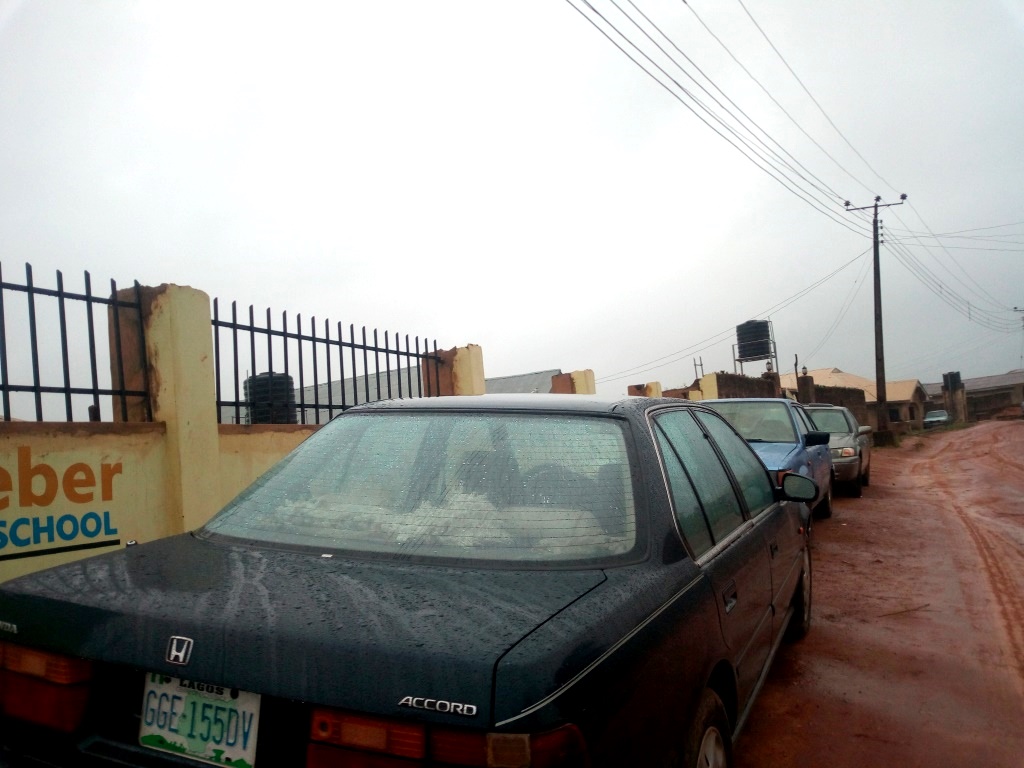
The roads are mostly untarred, the houses are without addresses and the community is without a healthcare centre. There are no public primary and secondary schools. No government-funded transformers or electric poles. No public infrastructure. No polling stations, and no voter registration centres. Residents are forced to register in neighbouring towns such as Akufo, while their votes are often counted under ward 7 of Akinyele Local Government. Toluewalase is a community without any trace of existence in the government record.
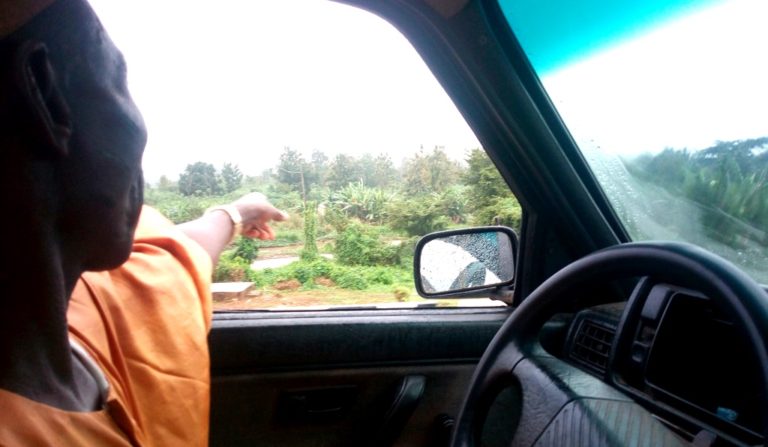
For over an hour, Fasina takes this reporter around various parts of Toluwalase in his cream, old-model Volkswagen wagon. “If the road isn’t in this condition, will our cars get damaged easily?” he asks rhetorically as he diverts away from the Apete road towards Idi-Oro. “Can we even say asphalt has been applied here?”
Five minutes later, we arrive at Transformer junction which leads to the University of Ibadan. Passing through the junction is a road, recently funded and reconstructed under the World Bank’s Ibadan Urban Flood Management Programme.
According to the Landlords Association Chairman, the contractors initially assured him that Saasa River was covered under the project’s second phase, as confirmed by the contract signpost. However, now that that phase has started, he says, they say it is no longer the case.
“They said we should write to the state government. We have done so, but they have not responded till this time,” he says.
Inside Toluwalase, an unrecognised community in Oyo State
We repair roads, create gutters by ourselves
Shortly after picking up other members of the association along the way, including a former chairman, Paul Oladeji, Fasina remarks that people of the community make their roads motorable by improvising with wood etc. They also dig all their gutters by themselves, with the quality depending on how much each house owner is able to afford.
Members of Ore-Ofe zone once had to raise N150,000 to create rainwater channels on the road in order to prevent erosion, one of the middle-aged arrivals say. Soon, we arrive at on ongoing repair site along an untarred road. That section of the road, residents say, was completely washed away by the river.
Cars were grounded at the spot for several months and could not proceed to their destinations. But earlier in 2018, money was raised to buy four truckloads of stones among other materials used in filling up the gap.
“That car that passed spent close to two months here before we started repairing,” says Fasina, pointing towards a red Toyota Camry that just zoomed past the group.
“It parked when it could no longer move. The people of this community, in fact, had to employ the services of a hunter exclusively to secure vehicles parked, so that thieves won’t remove valuable spare parts from them.”
Even without natural disasters, unavoidable vehicle parking is a common sight in this neighbourhood. People who live in more remote areas often park closer to the outskirts and then board commercial motorcycles to get to their homes.
Members of the Toluwalase at the recently split section of a road, which is undergoing repairFasina: “When it is night, the line of cars will be longer.”
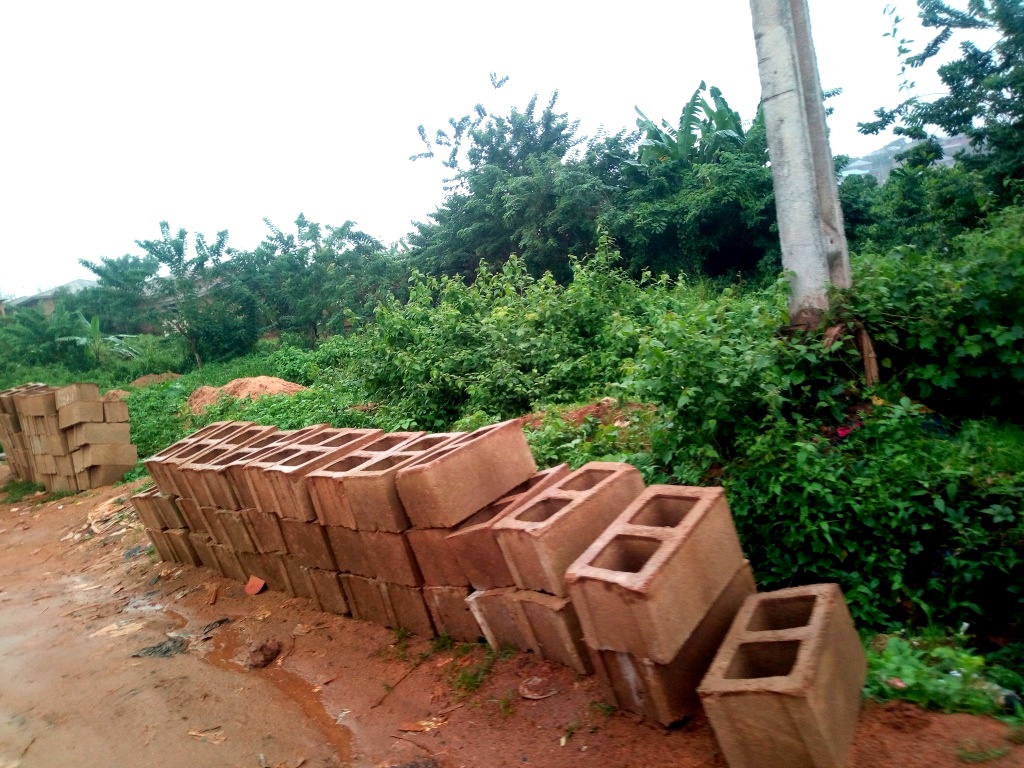
Cement blocks are piled at various parts of a road. According to Fasina, they are placed there temporarily to allow for the route to become drier and more drivable, after which they will be collected for further conveyance. He also reveals that electric wires and poles skirting the road were all bought by the people of the community. “We bought that transformer too,” he adds, pointing ahead.
After minutes of driving through Ifokanbale, one of the inner zones in Toluwalase Community, the car has to turn back due to a lack of passable road networks. Countless structures can still be seen stretching far into the horizon.
The association chairman could not help lamenting: “How are we supposed to know a government exists when it is not doing what it is supposed to do? And they say it is government by the people, for the people… It is a blatant lie. In a country where there are so many material resources, the people should be comfortable; but the reverse is the case. What they share among the people is affliction.”
Cement blocks temporarily kept by the roadside
The health centre and bridge that never were
Nigeria is reported to have at least 300,000 primary healthcare centres (PHCs), with 20 per cent of them (6000) functioning. However, for a community as large as Toluwalase, with an estimated population hovering between one and two million, there is no single PHC.
Seeing the need for a health facility, members of the community joined forces a decade ago to purchase half a plot of land at Osajin District for this purpose. Following this achievement, letters were written to the government for support. But while they have had people come around to survey the land, no support has been received ever since.
“After we got tired of cutting weeds, again and again, we decided to abandon it,” Fasina informs this reporter.
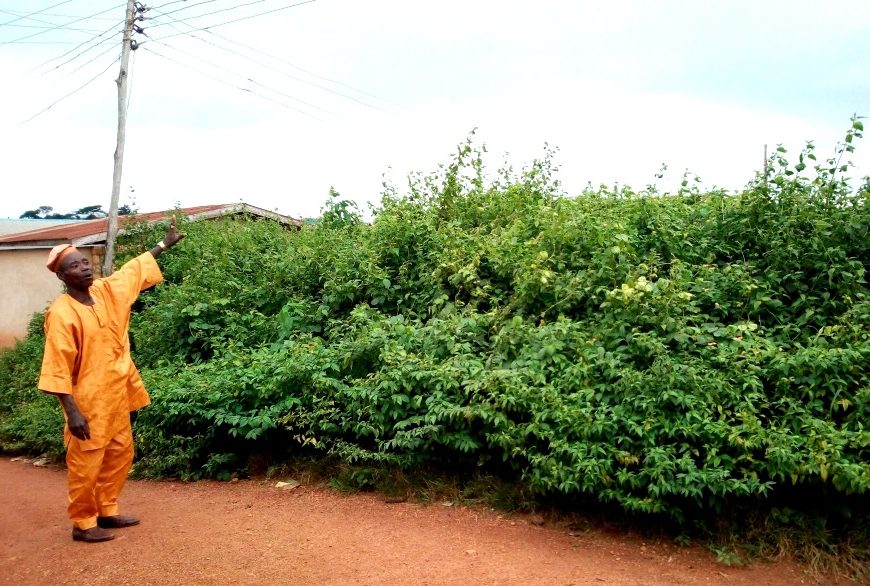
S.O. Fasina as he stands close to the proposed site for a PHC
A few metres away from the proposed site for the PHC is a huge gully marking the pathway of the Saasa River. The gully, which was originally a narrow gap, expands rapidly each time there is a downpour. We all watch as an elderly man attempts to cross to our side from the other end. He stands for minutes assessing his options before finally choosing his steps carefully.
“The man is a retired soldier who fought in the civil war. They want him to be swept away by water,” someone jokes.
An elderly man attempts to cross a huge gully at Osajin District
Taxing the exiles
Though they receive no benefits from the government, that is no guarantee they would be left alone either. Officials from both Ido and Akinyele Local Governments are reported to sometimes engage in physical combat when they meet in the community to tax shop owners.
“When they get to these shops to collect tenement rates, officials of Ido and Akinyele Local Government fight for dominance,” Fasina says. “Sometimes, they even cart away the contents of a shop if the owner is not around.”
The electricity distribution company is likewise guilty of levying the community despite abandonment. According to residents, they are responsible not only for erecting their own poles but repairing the lines if anything goes wrong. At a time, electricity was not supplied for over four months as a result of damaged poles. Notwithstanding, the company, they say, insisted they pay for the period of the blackout.
Long taken for granted
Every four years since 1999, when elections draw near, politicians visit the various communities in Toluwalase, promising heaven on earth while canvassing for votes. Rufai Tairu, secretary of the landlords association, told Tribune newspaper in 2014 that Abiodun Adigun Murphy, former Oyo State House of Assembly chief whip, confessed they usually got most votes from the community.
Politicians often promise boreholes and tarred roads. But, according to Tairu, no politician has fulfilled his promise following elections — none except Murphy who once donated a transformer to replace the one they bought themselves which got damaged. They, however, had to tax themselves to install it.
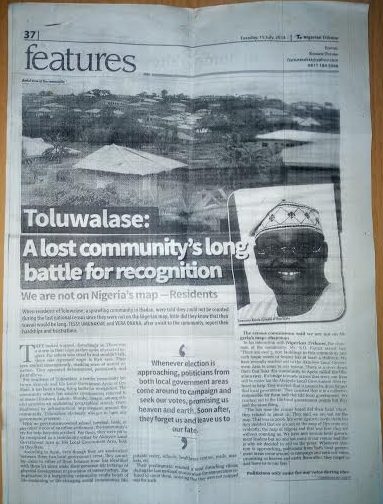
Copy of Tribune‘s two-page report of 2014: ‘Toluwalase: a lost community‘s long battle for recognition‘
A fruitless attempt towards resolution
In 2014, following a report by Tribune newspaper about the community’s plight, a meeting was held between executives of the landlords and landladies association; Adeniyi Olowofela, then chairman of Ido Local Government; Ope Salami, chairman of Akinyele Local Government; and Abdulfatai Buhari, Commissioner of Local Governments and Chieftaincy Matters, in the latter’s office.
“We were all at his office till past nine in the night,” Fasina recalls.
According to him, none of the chairmen could provide answers as to where the Toluwalase community truly belongs. Another executive who was present at the meeting chips in that they were asked to choose which of the local governments they prefer even though the government is supposed to have papers already establishing this.
The state is remapping its territories — Ido L.G. chairman
Wahab Oladejo, who is chairman of Ido Local Government, has said Oyo State Ministry of Land and Housing is presently remapping its geopolitical territories. He tells The ICIR the non-recognition of the communities in Toluwalase is not his fault, and urged residents to exercise patience till the new map is released.
“You know that they have already divided Ido into two: Omi-Apata Local Council Development Area (LCDA) and the original Ido,” he says.
“Presently, we learnt that Oke-Ibadan which is being created from Ibadan Northwest is now moving to Ajadi, an area very close to Ologun-Eru. The map to know the demarcation of every one of us is not ready. We can’t say this is our boundary. So, let’s wait till that time when the map is ready.”
Asked when the map will be ready, he says he is not in a position to know this. Meanwhile, Abimbola Kolade, Oyo State Commissioner for Local Government and Chieftaincy Matters, was not in his office on August 29 when The ICIR paid a visit. Also, enquiries sent to his official email address shortly after the visit, as well as that of Ajiboye Omodewu, Commissioner for Lands, Housing and Urban Development, has not been replied.
THE Global Climate Action Summit in San Francisco, United States, begins today, one of the global events to galvanise action towards saving the Earth. More than 4000 delegates from around the world are participating in the three-day summit to “Take Ambition to the Next Level” by decarbonising the global economy.
The San Francisco summit is significant in a historic sense. The United Nations Charter was drafted and signed in this city 73 years ago after humans fought two avoidable World Wars. Here again, three years into the Paris climate agreement, leaders and people are coming together from around the world to accelerate action to prevent dangerous climate change.
But it appears a golden opportunity to take drastic action on climate change was missed three decades ago. This was re-echoed by Nathaniel Rich, a journalist, who reported how the United States almost succeeded but failed in reaching a consensus on climate change between 1979 and 1989. At an event on Tuesday in San Francisco, Rich and Geoge Steinmetz, a photographer discussed the issues around “Losing Earth: The Decade We Almost Stopped Climate Change,” a 30,000-word article that revealed how almost everything that is known about climate change now was already known in the past three decades.
“There is time to avoid the worst if only we take action now,” Rich reiterated. But the question that still needs an answer is that if the United States and the world had failed in the past when it was probably easier to make headway, what is the guarantee now that the world will succeed even when the United States President, Donald Trump, had announced the country’s withdrawal from the Paris Agreement?
“What we still lack – even after the Paris Agreement – is the leadership and the ambition to do what is needed,” said António Guterres, UN Scretary General on his speech on Monday, ahead of the San Francisco summit.
Scientists already warned that implementing the Paris Agreement is the least that can be done to avoid the worst impacts of climate change. Countries had promised in Paris in 2015 to limit warming to below two degrees Celsius, relative to pre-industrial levels and also work to keep the rise in temperatures to 1.5 degrees. But the unenforceable and nonbinding nature of the agreement means the countries are not keeping to their promises. Rather, there is now an increase in greenhouse emissions.
Citing a UN study, Guterres said the commitments made so far by countries in the Paris Agreement represent just one-third of what is needed. “The mountain in front of us is very high,” he said. “But it is not insurmountable. We know how to scale it. Put simply, we need to put the brake on deadly greenhouse gas emissions and drive climate action.”
The harsh changes in the environment are being felt everywhere as the Earth is getting warmer. Heat waves and wildfires are becoming more intense. There are more floods as well as desertification. These noticeable changes in the environment are caused by the activities of mankind – the more humans generate greenhouse gases in the atmosphere, the more the Earth loses its capacity to sustain life. The solution to this slow pace to destruction sounds simple – stop the emissions – but it is very complex because much of the global economy is built on carbon.
Evidence, however, shows that investing in green energy is competitive to existing energy sources. Last week, a report by the Global Commission on the Economy and Climate Change revealed that taking climate action seriously by countries could deliver $26 trillion in economic benefits through to 2030.
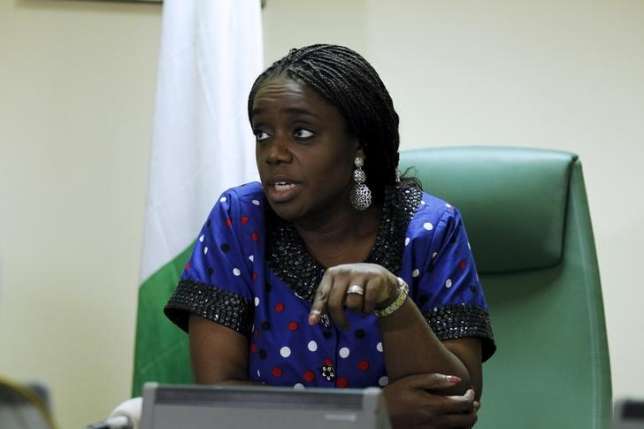
“One thing should be clear to us all and especially to those who will gather next week at the Global Climate Action Summit in San Francisco: we are all significantly underestimating the economic opportunity that can be gained from cleaner, climate-smart growth. A new analysis is finding that bold climate action could yield a direct economic gain of $US26 trillion through to 2030, compared with business-as-usual. And we know that these numbers are likely to be conservative,” said Ngozi Okonjo-Iweala, former Nigeria’s Minister of Finance and Co-Chair of the Commission.
As the Global Climate Action Summit opens today in San Francisco, The ICIR is on the ground to report major highlights of how sub-national governments, cities, businesses and investors are taking action on climate change.
THE Ministry of Finance says states owing workers’ salary arrears will not benefit from the final tranche of the Paris Club refund of $2.69 billion.
This was made known by the ministry’s Director of Information, Hassan Dodo, in a statement issued on Tuesday.
“The DMO led the reconciliation process under the supervision of the Federal Ministry of Finance. The final approval of 2.69 billion dollars is subject to some conditions,” Dodo stated.
“Salary and staff related arrears must be paid as a priority. Also, commitment to the commencement of the repayment of Budget Support Loans granted in 2016 must be made by all States.”
Dodo stated that states must clear their accounts with regards to the Presidential Fertiliser Initiative, as well as make a commitment to clear matching grants from the Universal Basic Education Commission (UBEC).
“This is in cases where some states have available funds which could be used to improve primary education and learning outcomes,” Dodo clarified.
Osun, Kogi and Benue are some of the states notorious for owing workers’ salaries. Others include Bayelsa, Ekiti, Imo, Oyo, Abia and others.
Brief background
The Paris Club, created in 1956, is a group of officials from major creditor countries whose provide coordinated and sustainable solutions to the payment difficulties experienced by debtor countries.
In 2005, the Club cancelled 60 per cent of Nigeria’s $30 billion debt, following what it considered as the federal government’s far-reaching and focused economic reforms. But before the debt cancellation, the FG had been making deductions from the allocations to state governments to enable it clear the debt.
So when the debt was cancelled, the states asked for a refund from the federal government. The federal government, in December 2016, eventually agreed to refund the states in three tranches.
The first and second tranches have been released, while the third tranche, according to the finance ministry, would soon be disbursed to states that met the criteria.
PRESIDENTMuhammadu Buhari said that the defectors from All Progressive Congress (APC) to other political parties were the weakest members who could not align with the vision of his administration.
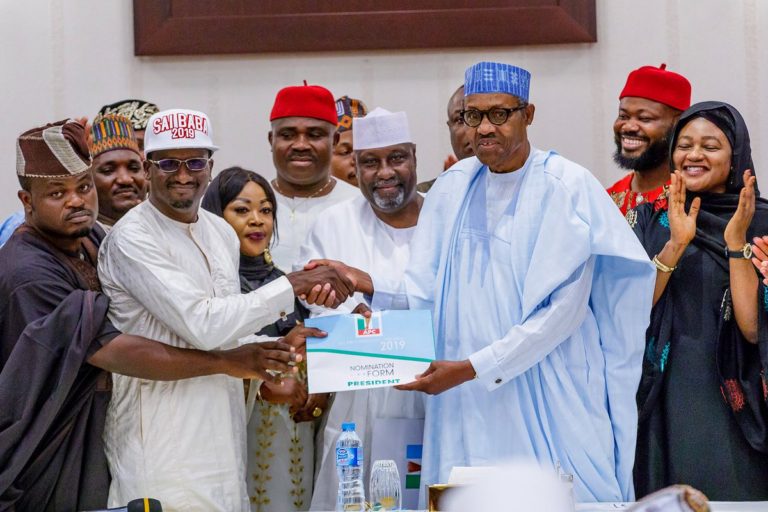
Buhari said this on Tuesday at the Presidential Villa after accepting the presidential nomination form and expression of interest form to contest in the 2019 presidential election. A group known as Nigeria Consolidation Ambassador Network (NCAN) purchased the form for President Buhari.
The All Progressive Party suffered mass defection of party members to other parties between July and August. Three governors and several lawmakers had defected from APC.
Samuel Ortom of Benue, Aminu Tambuwal of Sokoto and Abdulfatah Ahmed of Kwara are the three governors who defected from APC to the opposition party, Peoples Democratic Party.
Senate President Bukola Saraki is a prominent lawmaker who defected from APC to PDP in August.
“The weakest whose sense of expectation do not align with our vision have exited our party,” President Buhari commented on the issue.
He said: “we now have a party of strong and patriotic people who are ready to work for a strong Nigeria, secure, self-sufficient and corruption-free Nigeria.”
The President praised the group that comprises young people around the country for their belief in him and contributing N50 million to support his second term presidential ambition.
“I am honoured today to receive youth from all over the country contributing to buy the form for me,” Buhari said.
The APC Presidential Expression of Interest and Nomination Forms cost N45 million.
According to the coordinator of the group, Sanusi Musa, the sum was raised through contributions among members from several villages and local government areas.
He described the gesture as a demonstration of their belief in Buhari’s leadership and the foundation he is laying for a better Nigeria.
Buhari outlined his achievements during his tenure to include: the introduction of the Treasury Single Account (TSA), which he said has reduced stealing in public service, provisions of job, giving of cash to the poor and vulnerable Nigerians, rehabilitation of fertiliser plants, as well as completion of rail projects and construction of new ones.
Subsequently, in his tweet, Buhari said many Nigerian youths might not afford the nomination fees set by the party even so Nigeria is blessed with talented and visionary youth. “The contributions of willing individuals and groups will go a long way in supporting the next generation of leaders.”
The president later requested the remaining funds raised to buy his nomination form be used to support the future leaders.