Home Blog Page 2526

ADP chieftain, Doyin Okupe, becomes Saraki’s campaign spokesman

TWO-TIME presidential spokesman, Doyin Okupe, has been named as the head of the media department of Bukola Saraki’s presidential campaign, despite being a member of the Alliance for Democracy (AD).

This was announced on Tuesday by the Director-General of the Saraki campaign organisation, who added that Okupe’s major responsibility would be to “work with other top professionals in the team to effectively communicate the campaign messages of Dr. Saraki to the people of Nigeria and the international community”.

Okupe was spokesman to former Presidents Olusegun Obasanjo and Goodluck Jonathan. He was also the National Publicity Secretary of the defunct National Republican Convention (NRC) in the third republic.

In a statement announcing his departure from the Peoples Democratic Party (PDP) in 2017, Okupe said the party has been embroiled in a “fratricidal internal crisis brought upon it by itself”. He later announced that he was joining the AD.

“I want to belong to a political party that will be able to publicly state its position on troubling national issues… Any political party that does not have an openly stated position or stand on these issues is a mere association of elites coming together only to feather their own nests or at best a deceptive political contraption put together by a few to seize power for a few and for the benefit of a few,” Okupe wrote.

It is unclear whether Okupe has rejoined the PDP to qualify him to work for one of the party’s frontline presidential candidates.

However, it could be that Okupe is working with Saraki on the strength of the coalition between the PDP and several other political parties, including the AD, which gave birth to the Coalition of United Political Parties (CUPP). But the AD later said it was not part of any coalition with any political party.

“We strongly deny any pact with either the PDP or the R-APC or any other political party and we consider it very preposterous for our party to be associated with the pact,” AD’s National Publicity Secretary, Nola Olayinka, stated at the time.

You are yet to prove your integrity, ‘unjustly’ dismissed army officers tell Buhari

THIRTY-EIGHT senior officers of the Nigerian Army who were ‘unjustly’ dismissed from service have made another passionate appeal to President Muhammadu Buhari to intervene in their case.

The dismissed officers, in a letter written on their behalf by their lawyer, Abdul Mohammed, urged Buhari to prove his integrity to Nigerians by ensuring that justice is done to them.

The letter, which is dated September 3, 2018, and obtained by Premium Times, read in part: “Your Excellency, for over two years the Army 38 have repeatedly requested the Army leadership to state their offence(s).

“The Army leadership has not been able to state the specific offence(s) save to say the punishment to my client came ‘from above’, signifying that (the President) ordered for the punishment…”

“Mr President, you have put out a reputation of being a man of justice, dignity and integrity but you are yet to prove it to all Nigerians in the case of these 38 innocent Army officers.

“In the past two years, grave injustice has been meted out to (them), and in spite of repeated passionate letter(s) of redress to you as their Commander-in-Chief, you have been curiously silent.”

When contacted, Femi Adesina, spokesman to President Buhari, said any question with regards to the dismissed officers should be directed to the Army authorities.

A little background

In June 2016, the Nigerian Army said it sacked the affected officers for alleged partisanship in the 2015 general election.

“The Nigerian Army wishes to inform the general public that quite a number of senior officers of the Nigerian Army were retired from service yesterday,” read a statement issued on June 11, 2016, by then Army Director of Public Relations, Sani Usman.

“Their retirement was based on Service exigencies. It should be recalled that not too long ago some officers were investigated for being partisan during the 2015 General Elections.

“Some officers have already been arraigned in court by the Economic and Financial Crimes Commission (EFCC). People should therefore not read this out of context.”

But contrary to the Army statement, only one out of the 38 dismissed officers was being tried by the EFCC. Further investigation into the case revealed that majority of the affected officers, including Letam Wiwa, a Major General and brother to the late Ken Saro-Wiwa, were never even issued a query, much less made to face a panel, before they were dismissed.

In fact, some of the dismissed officers were serving in some of Nigeria’s foreign missions and were not even in the country during the 2015 election, yet they were all laid off. Others were dismissed for alleged loyalty to the Goodluck Jonathan administration.

But Usman, when contacted at the time, insisted that “those that were compulsorily retired had one problem or the other that warranted their compulsory retirement”.

Subsequent attempts by the dismissed officers to seek redress, including instituting a court case, have yielded no positive result so far.

At a hearing of one of such court cases, in April this year, the Army, through one of its lawyers, N. Okorie, a colonel, told the court that the soldiers were dismissed for failure to “renew their appointments“.

“He took an oath of allegiance to be employed for 18 years, after which he would renew his employment,” said of one of the dismissed officers.

“He failed to comply with the provisions. That is a serious offence. The disciplinary measure is to write the letter (of dismissal) which is what the Army has done.”

Amnesty International to FG: Publish findings on rights abuses by military personnel

AMNESTY International, a global human rights non-governmental organization, wants the Nigerian government to publish the report submitted by the Presidential Investigative Panel which probed the level of compliance of members of the Armed Forces with human rights obligations and their rules of engagement.

September 11, 2018 makes it a year after the panel commenced its work. It has since concluded its investigations and submitted its findings to the presidency in February this year, but since then, no word has been heard from the government, neither has any action been taken to address the plight of the victims whose rights were violated.

In a statement on Tuesday, Osai Ojigho, Director of Amnesty International in Nigeria, said government’s continued silence and inaction “is an appalling affront to victims who are still waiting for justice”.

“Nigerians have been waiting for the full report and fulfillment of the promise made by President (Muhammadu) Buhari in June 2015 to end impunity and ensure justice for the victims of crimes under international law committed by the armed forces,” the statement, signed by Isa Sanusi, AI’s Media Manager, read in part.

“When the (investigative) panel finally commenced a year ago, many Nigerians took the brave step to testify, driven by their yearning for the truth to come out. Their efforts must not be in vain.”

Ojigho stressed that it is important that the government should publish the report of the probe panel, as well as tell Nigerians how it intends to ensure the victims get justice, as this would be a concrete proof of its commitment to transparency and accountability.

“Far too many previous investigative panels and inquiries set up by the government in the past ended nowhere, with no reports published to the public and little evidence of action taken by the government,” she stated.

Recall that the investigative panel was set up in August 2017, by Vice President Yemi Osinbajo, who, at the time, was acting on behalf of President Buhari. This was following several reports of human rights violations by personnel of the Nigerian military.

The panel conducted sittings in various cities across the country, including Abuja, Maiduguri, Port Harcourt, Enugu, Kaduna and Lagos, during which victims and witnesses narrated several acts of rights violations by security operatives, ranging from illegal detentions, torture and rape, to enforced disappearances and extra-judicial executions.

Amnesty International said it also appeared before the panel in October 2017 and submitted a memorandum outlining the findings of years of research relevant to the investigations.

The group, therefore, wants the government to set up impartial and independent investigations into the allegations, and that all findings be made public.

Between saying too little and asking too much: Question marks over Nigeria’s budgeting figures

Budgets have not always been part of man’s politics or even his vocabulary. They emerged first in the early eighteenth century, necessitated by centuries of monarchs making a mess of public wealth. In other words, budgets can be said to have been spawned by corruption.

Ironically, however, budgets have today also become a fertile ground for the growth of that same menace. They are not just documents enabling a nation to plan ahead; they have become a sprinkler used by public officials to water their garden of greed.

This basic truth deserves credit for the massive poverty suffered by countless Nigerians and the stagnancy of the nation’s economy. A lot is wrong with us. Despite our human resources and material wealth, despite our towering gross domestic product (GDP), our annual budgeting benchmarks are still nowhere compared to those of South Africa, Egypt, Algeria, and even Angola. But not only are we not generating enough to keep up with global trends in advancement, year in year out, the little we make is mostly sacrificed for the utmost comfort of those who already have more than enough.

A glance at the typical Nigerian budget is enough to expose the government’s lack of sincerity in its fight against corruption and concern for the people. There is, to begin with, a thick quilt of secrecy deliberately pulled over various budget items in order to dissuade prying eyes. One will discover more than enough examples, alongside contract amounts, in the Budeshi database of nearly 7000 procurement projects.

For instance, from this document, we find that the Federal Road Safety Corps (FRSC) recently gave out a contract of N588 million to a company called MS Durberry Nigeria Limited for the purchase of “patrolites” (i.e. electroshock torches). According to EBay, one unit of this torch should go for about N7500 ($24). But we can’t say exactly how many of these are covered under the contract — except further Freedom of Information (FoI) requests are made.

If we go with these figures, we can estimate that the procurement should be for at least 70,000 units of patrolite. It should, however, be noted that, according to the New Agency of Nigeria (NAN), FRSC has a staff strength of only 20,320. Even if they have no such torches presently, a legitimate question would be why on earth would the agency want to buy three of these items per officer?

The same corps contracted Skylight Engineering Services Ltd in 2016 for the “supply of motor vehicle tyres”. The contract amount is a whopping N674 million. Not only do we not know how many tyres precisely are covered under this arrangement, it is difficult to understand why so many are needed in the first place. Likewise, in 2016, the Pension Transitional Arrangement Directorate (PTAD, Abuja office) requested to pay Ebuvik Oil N242 million for the “supply of diesel for June 2016”. How many litres? Nobody knows.

Though brevity is the soul of wit, when it comes to budgeting in Nigeria, it also doubles as the soul of fraud. It is an open secret that, in the ‘giant of Africa’, procurement items are hardly contracted at their actual price. They have to be gigantic to make sense. They are thus inflated that everyone may benefit — except the masses who truly own the money. Asides this, it is also ensured that substandard work is done. As a result, the people are fed an illusion of development, while their leaders continue to feast on their collective sustenance.

For instances where specificity is not slaughtered on the altars of negligence and dishonesty, it takes little time to notice a wide gap between the figures stated and market realities. FRSC, in 2015, said it needed to be supplied eight units of operational vehicles; but not just any operational vehicles — the Double Cabin Pick-up IVM Carrier. The budgeted figure for that fiscal year was N1.8 billion, while the entire contract amount is N9.5 billion. There is, however, one problem. The most expensive of such Innoson vehicles is the four-wheel drive carrier which, according to an automobile blog, costs N13.8 million. Multiply that by eight units, and we have is just N110.4 million. Since they are made in Nigeria, it additionally means customs duty is out of the question.

A second striking example is the 2015 budget of the Revenue Mobilization Allocation and Fiscal Commission (RMAFC). The commission apparently asked IBH-Njaku Petroleum Ltd to supply 27,000 litres of diesel. While the budgeted amount was N20 million, the contract sum was stated as N497 million. Given that the figures are not round, one would have been led to believe they have a foundation of genuine mathematics. But that is very unlikely.

According to a 2018 report, diesel is most expensive in Taraba state where it is sold at a price of N250 per litre. That figure multiplied by 27,000 litres equals only N6.8 million — less than half of even the budgeted amount.

There is also the National Agency for the Control of Aids (NACA) requesting for N310 million to procure 17,000 packs of Fluconazole 200mg tablets. There is the National Emergency Management Agency (NEMA) asking for N239 million to produce 1000 copies of its 2015 scorecard — which is, by the way, more than the N212 million demanded by the Universal Basic Education Commission (UBEC) to construct a 25-classroom storey building with ICT centre in Osun state. The list is endless.

A recent case which exemplifies the dangers of having vague budget items is the scandal involving Chief of Staff Abba Kyari. In response to an allegation of fraud respecting a contract for the supply of 15 Toyota Hilux trucks to the State House, presidential spokesman Garba Shehu said no such contract existed in the 2016 and 2017 budgets. And when he was confronted by The ICIR with facts to the contrary, he simply and unashamedly replied that, though the budgets did mention Hilux vehicles, none of them specifically gave their number as fifteen.

One need not consult the oracle to know that a nation is doomed without transparent budgeting and procurement processes. Such a nation is blessed with the irony of a high GDP per capita coupled with high poverty and unemployment rates. Such a nation is one whose budget is nothing but a racket and a leaking basket. It has boundless wealth but still finds itself running to the east and west for loans. Such a nation is Nigeria. And if the people there desire improved lifestyles, they must start by demanding accountability from those who lead them. They must begin by scrutinising the source of embezzlement. The annual budgets.

Many feared dead, several burnt after gas explosion in Nasarawa

0

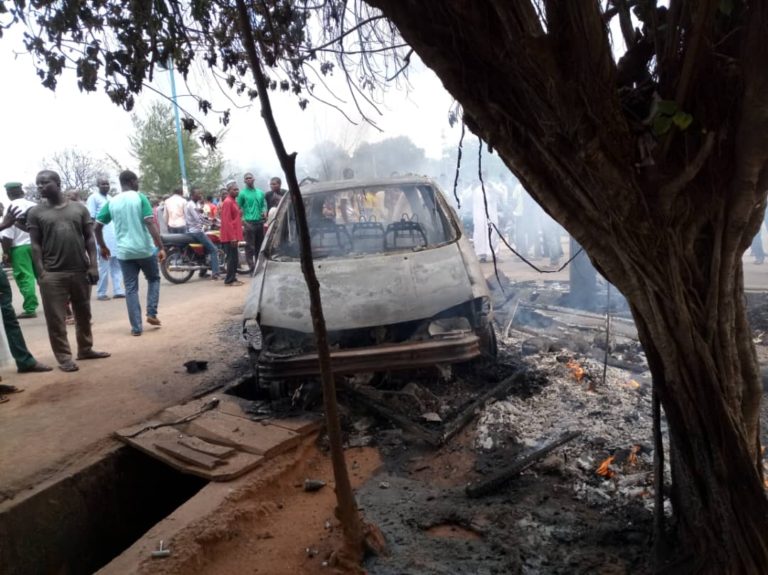
AN unconfirmed number of people have been feared dead in a gas explosion along Jos road in Lafia, Nasarawa state capital on Monday.

The incident occurred as workers were offloading gas at Monaco gas plant situated behind  Natson filling station in Lafia.

The Federal Road Safety Corp (FRSC) and the fire service confirmed the incident, stating it had been brought under control.

The fire, which was attributed to gas leakage, spread speedily attacking some passers-by as they sought for safety. Many people were burnt beyond recognition. Likewise, vehicles, shops and offices were touched by the explosion.


READ ALSO:

FRSC officials and the fire service evacuated victims from the scene of the incident. The number of casualties is yet to be known.

The Nasarawa government has ordered the evacuation of all affected persons to the Federal Medical Centre, Keffi, for treatment.

Senate President Bukola Saraki, who was in the state for his presidential campaign, visited victims of the explosion. He said that Nigeria is losing people who can add value to her development.

He also expressed on his twitter handle that there would be support for the state government to ensure the full recovery of all the victims.

Some survivors were conveyed to the hospitals on bikes without waiting for an ambulance.

MTN sues CBN, AGF over allegations of illegal repatriation of funds, tax evasion

TELECOMMUNICATIONS giant, MTN, has dragged the Central Bank of Nigeria, as well as the Attorney General of the Federation (AGF) to court following allegations of sharp practices against the company.

The CBN had asked MTN to refund the sum of $8 billion, being money the company allegedly paid to its foreign investors without obtaining valid Certificates of Capital Importation (CCIs) as required by law.

In like manner, the AGF, Abubakar Malami, accused MTN of evading tax to the tune of over $2 billion. In all, the Nigerian government wants MTN to refund a total sum of $10.134.

However, MTN, a South African company, has continued to insist that it has committed no malfeasance in the course of doing business in Nigeria. The company, therefore, is asking the Federal High Court in Lagos to grant an order restraining the CBN and the office of the AGF from taking further actions with regards to the case until all efforts at resolving the issue has been exhausted.

A statement issued by the company on Monday read in part: “MTN Nigeria Communications Limited (MTN Nigeria) continues to categorically and unequivocally deny all charges related to the Central Bank of Nigeria (CBN) and Attorney General of the Federation (AGF) investigations into the company’s CCIs and unpaid taxes respectively.

“In order to protect MTN Nigeria’s assets and shareholders’ rights within the confines of the law, we have applied today in the Federal High Court of Nigeria for injunctive relief restraining the CBN and the AGF from taking further action in respect of their orders, while we continue to engage with the relevant authorities on these matters.

“The allegations being made involve issues that appear to be complex and so are easily misunderstood and misinterpreted. They are made even more confusing when the relevant authorities send conflicting messages and instructions and act in a way that appears un-coordinated and at cross purposes.

“The simple reality is that MTN Nigeria has never repatriated dividends on the CCIs referenced by the CBN, and that MTN is fully compliant with Nigerian tax law.

“With situations like this, it is vital for both the government, regulators and the company to have absolute clarity on the nature of both the allegations being made and the processes that are being followed. In the absence of this clarity, our only option is to seek judicial intervention and to ask the courts to act as adjudicator. This has been done today.”

Tobe Okigbo, MTN’s spokesman, stressed that the company “remains fully committed to Nigeria”, adding, however, that it would continue to “vigorously” defend its position, that it has not committed any offence.

There’s a process ongoing, give it time… Garba Shehu on Adeosun’s forgery scandal

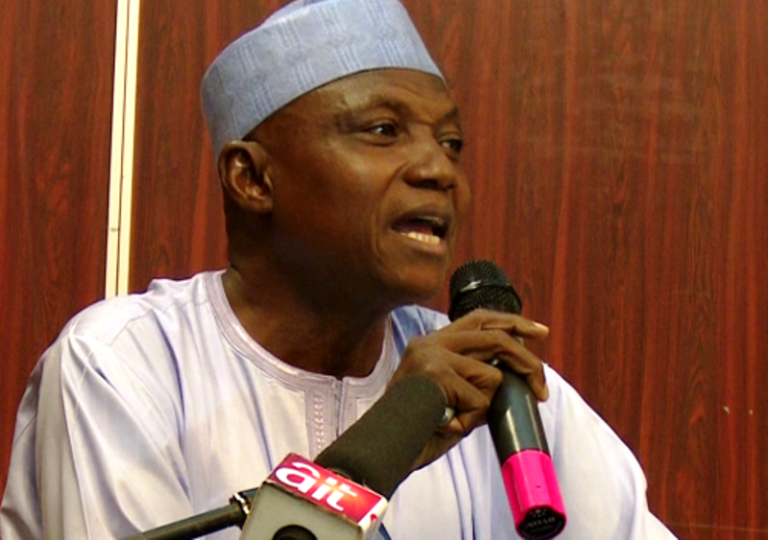
SPECIAL Assistant to President Muhammadu Buhari on Media and Publicity, Garba Shehu, says investigations are ongoing into allegations of certificate forgery against the Minister of Finance, Kemi Adeosun.

Shehu said this on Monday while appearing as a guest on Kakaaki, a breakfast programme of African Independent Television (AIT), 65 days after the allegation was first made by Premium Times in early July.

“The minister of information has spoken on the matter. And a process is ongoing to address the allegations,” Shehu said.

“When that process is complete, Nigerians will know the outcome. Some people want a particular outcome and because they are yet to see this outcome, they are not happy.

“Give it (investigation) time. There is a process ongoing. It’s an allegation. If it is proven, you will see what will happen. The minister and the NYSC have spoken on the matter.”

On why the investigation appears to be taking too long, Shehu said it was not his job to determine how long the investigation takes.

“I don’t have the full facts of the matter, so why the investigation is not out, I don’t know. I hope there will be an early outcome. “Don’t forget, these people whose names are being dragged in the mud have families and relatives. We hope their innocence will be established.”

Adeosun was accused of parading a fake National Youth Service Corps (NYSC) certificate, having failed to participate in the one-year national service that is mandatory for all Nigerians who graduated from the University before the age of 30.

The Finance Minister had her tertiary education in the United Kingdom and graduated at the age of 22.  She worked in the UK for some time before relocating to Nigeria. According to the NYSC Act she ought to have registered and be mobilised for the mandatory national service, but instead, she procured a fake NYSC exemption certificate, using same to get employment in several organisations in Nigeria.

Only Nigerians who graduated at or above the age of 30, or who belong to any of the country’s security agencies, are eligible for an exemption from national service. Also, non-participation in the NYSC programme automatically makes one ineligible to get employment in Nigeria either by in the government or private sector.

Authorities of the NYSC had said that Adeosun actually applied for an exemption certificate, but Adeyemi Adenike, who spoke on behalf of the corps, did not say when Adeosun made the application or whether it was granted.

Similarly, the Minister of Information and Culture, Lai Mohammed, refused to comment on the matter, insisting that the government had already made a statement through the leadership of the NYSC.

However, Chairman of the Presidential Advisory Committee on Anti-Corruption, Itse Sagay, a professor of law, said it does not matter whether Adeosun did her youth service or not. He insists that she is one of the best ministers in Buhari’s cabinet and therefore should not be removed from office.

While Adeosun’s forgery case remains uninvestigated and apparently abandoned, a civil servant, Lebi Ayodele-James, has been sentenced to years imprisonment for a similar offence.

Ayodele-James, a former staff of the Office of the Auditor-General of the Federation, was found guilty of forging an ICAN (Institute of Chartered Accountants of Nigeria) certificate which he presented as a requirement for promotion.

Why Atiku’s presidential ambition doesn’t tickle

0

By ‘Fisayo Soyombo

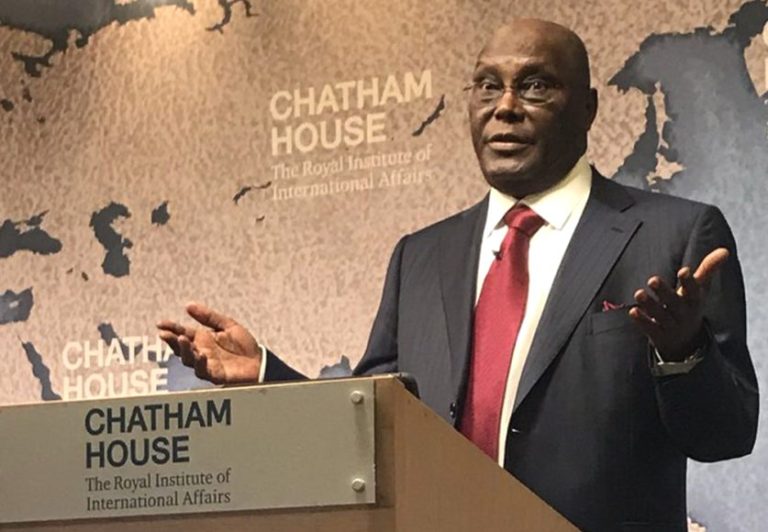
THERE are very few presidential aspirants who can articulate their plans for Nigeria like Atiku Abubakar. In the lead-up to the 2015 presidential election, Atiku’s media interviews offered plenty food for thought and some interesting propositions, including the country’s potentials to solve its everlasting electricity problem with its coal deposits. By contrast, the interviews of Muhammadu Buhari, the man who would go on to win the election, were notoriously drab and worryingly uninspiring. If anyone talked to the editors of the papers who interviewed Buhari, they could confirm the extent of cleaning up and refining that went into rendering those interviews consumable to the public. Atiku’s, meanwhile, offered little stress. The man was always at ease discussing Nigeria.

If anyone had any doubts about Atiku’s power to articulate his thoughts, last week offered another reminder. Although tempered with some subtle uppercuts on both sides, his see-saw restructuring debate with Vice President Yemi Osinbajo on the pages of Premium Times was a refreshing turn from the usual PDP-represents-greed-APC-deceived-us-with-change press statements that have come to define the engagements between the country’s two leading political parties. You may not agree with his arguments on restructuring — I do but with strong reservations — but you won’t fault the conviction with which he pushed his idea of shrinking power at the centre and expanding it at state level.

One look at how Atiku has managed to harmlessly smuggle himself into national conversations in the last year — and this is commendation, not condemnation — and it is easy to award him more than a pass mark for his organisational abilities. In 2013, Garba Shehu, his longtime spokesman who now works for Buhari, told Premium Times how Atiku’s media office operated like a newspaper house, holding daily editorial meetings to spot the opportunities for proactive interventions rather than sit back in wait for crises. Atiku’s understanding of the power of the media, when juxtaposed with Buhari’s aloofness from the media and the public, is a major temptation to consider going ‘Atikulate’ in 2019; who needs a President who only speaks his mind when in Germany talking to Deutsche Welle or when in the UK speaking to BBC?

Atiku is no novice to governance; eight years as Vice President must count for something. Electing him in 2019 would seem a vote for experience — not for experimentation, but for avoidance of tried-and-failed policies and consolidation of already-successful ones. For those whose only obsession with the 2019 election is ejecting Buhari from office, Atiku is potentially the man. The last time he won a presidential ticket, he was third while Buhari was second. Yes, that was 11 long years ago and there was a vote gap of 4million, but Buhari’s popularity has since dimmed, and if any northerner could challenge him it certainly would be Atiku. So, President Atiku Abubakar on May 29, 2019? Don’t try it!

Normally, in politics, the failings of an incumbent often hand some advantage to his probable successor. Not so for Atiku. In early 2017, Buhari spent 104 days on medical vacation in the UK, prompting renewed debates about the wisdom of voting a septuagenarian into office. His supporters continue to argue that unlike Umaru Yar’Adua, he transmitted power to his deputy. No power vacuum, they would say, but there is a reason the constitution provided for two executive helmsmen. Asides the unfairness of leaving just a man to run a country as complex as ours, we saw, for instance, how sacked DSS DG Lawal Daura authorised the raid on the National Assembly without informing the Acting President — because he insisted he would only report to Buhari and not to Osinbajo. In Nigeria, an Acting President is never really the President. Buhari has helped more Nigerians to see why a younger President is needed in 2019. But even at that, Buhari was 72 when he became President in 2015. Should Atiku win in 2019, he would have been 72 by swearing-in date. Therefore, to elect Atiku in 2019 means we haven’t learnt from 2015.

With each passing election cycle, there is a growing conviction about the need to crumble the old order. A country whose population is estimated to be just under 200million cannot continue recycling old leaders dating four decades back. Buhari’s emergence as President in 2015 came 32 years after he was Head of State and 40 years after he was Governor of the Northeastern State. Atiku wants to be President in 2019; that’s 28 years after he first ran for Governor of the defunct Gongola State!

I agree wholeheartedly with Atiku that a chunk of the power at the centre needs to be shed off to states and LGs. I side with him over the Vice President in his arguments that “we have all too often lied to ourselves that the politicians sitting in Abuja can effectively respond to the needs of a population in far remote locations as Kaura Namoda, Iseyin, Arochukwu or Bama”. Unfortunately, Atiku is himself one of the reasons this structure has persisted. If truly he had “been in the forefront of the discourse on restructuring since the 1995 Abacha Constitutional Conference”, as he claimed, why, in eight years as VP, couldn’t he get the nation pulling in this direction? The argument that the VP isn’t as powerful as the President is trite; in his first four years at least, Atiku was so powerful that he would have ended Obasanjo’s Presidency had Obasanjo not begged profusely. If he invoked that same popularity and power to push the restructuring agenda, it would likely have been successful.

But that is where my agreement with Atiku ends. I’m still struggling to understand his belief that the structure is more important than the people in solving our problems as a nation. I, for instance, have always considered the two-term governorship/presidential provision a monumental waste of time and money. First year after electoral victories, governors are busy embezzling in a desperate attempt to reclaim their ‘investments’. Maybe they work the second year, but third year they’re busy embezzling to build a war chest to seek re-election, and fourth year they’re campaigning. The ones who earn a second term spend all of it having a ball. It’s looting galore since they would no longer need the electorate. In those eight years, real, full-scale governance takes place in no more than two years; the other six are a waste. But were we to switch to the six-year single term, it’s win once and loot for six years. Hard to tell, therefore, which one is worse — which is where I agree with Osinbajo: restructuring is useless without the stamping out of grand corruption. Of what use is wrestling financial power from federal to state if the funds end up nestling in private pickets?

And this is where Atiku — and he himself knows — can still not be trusted. Once asked what wrong impression people have about him that he would love to correct if he could, he answered: “It would definitely be the perception that I corruptly enriched myself during my tenure as Vice President.” In that interview, as he has done in many others, Atiku talked about how US congressman Williams Jefferson claimed part of the $100,000 cash found in his refrigerator was intended as bribe for him for his role in helping American firm iGate secure a contract to expand broadband in Nigeria, and how the court found no evidence backing up the claim. However, the report of a probe by a US Senate Permanent Subcommittee on Investigations, chaired by Senator Carl Levin, detailed how, between 2000 and 2008, Atiku “used offshore companies to siphon millions of dollars to his fourth wife in the United States, Jennifer Douglas”. Specifically, the report said Douglas, being a US citizen, helped him bring over $40m in suspect funds into the US through wire transfers sent by offshore corporations to US bank accounts. Atiku may not yet have been convicted by a court, but an investigation by the US Senate cannot be dismissed with a wave of the hand. Maximum points deducted!

And so, despite all he has going for him, Atiku comes with more baggage than his self-professed willpower to fix this country can withstand. No matter how hard he and his media team try, it appears his best shot at the presidency was in 2003. For now, the search for a young vibrant candidate who combines competence with moral presence must continue. The Atiku option simply doesn’t tickle.

Soyombo, former Editor of the TheCable and the International Centre for Investigative Reporting (ICIR), tweets @fisayosoyombo


FACT CHECK: Presidency’s claim about no- allocation for Hilux vehicles in the 2016/2017 budget is false

THE Presidency has denied there was any allocation for the purchase of Hilux vehicles in 2016 and 2017 appropriated budgets, but The  ICIR’s check has shown that the claim is false. 

Responding to the allegations that Abba Kyari,  the chief of staff to President Muhammadu Buhari collected a 29 million Naira bribe for awarding a contract, the Senior Special Assistant to the President on Media and Publicity, Garba Shehu on Saturday, declared the allegation was fiction.

Recall that Bako Waziri Kyari, a  man who identified himself as a nephew of Kyari has alleged that Buhari’s CoS  with the aid of Sani Ado, whom he claimed worked with the Bureau of Public Procurement, collected N29.9m from him in order to help him get a contract for the supply of Hilux vehicles.

But in a statement released on Saturday by the presidency, Shehu said there was no request for the supply of Hilux vehicles in the 2016 and 2017 budget, insisting there was no way Kyari could have taken bribe to assist anyone get a contract that did not exist.

He stated instead that political detractors and the media are at work to scandalise the president ahead of 2019 general election.

“With a slew of crucial elections ahead, some politicians and their media agents appear to be working together to build pressure on the Buhari administration by wielding non-existent scandals against it.

“We equally note that the supply of 15 Hilux vehicles for the Presidency was an unlikely contract to have been awarded, as it did not exist anywhere in the 2016 and 2017 budgets

“Checking the appropriation for 2016 and 2017, that request is not even there. How could Abba Kyari have asked for money to award a contract that did not exist anywhere at all?”

However, the ICIR’s check shows that Mr. Shehu’s claim is untrue.

Indeed, the presidency has allocation for Hilux in the 2016 and 2017 Appropriation Act, and expenditure on Hilux vehicles appeared twice in the 2016 and 2017 budgets.

According to the 2016 budget, N189, 175,000 was allocated to the State House for the “purchase  of tyres for Mercedes Benz, bulletproof/plain, Toyota cars, CCU, Platforms trucks, land cruiser jeep, Hilux, Peugeot 607, Peugeot 607, BMW trucks, ambulances, utility, operational vehicles etc.” The expenditure, coded as “SH06015193″ in the budget is labelled as on-going.

A screenshot of the 2016 appropriated budget

Also in 2017, a sum of N53,500,000 was allocated to the National Institute for Policy and Strategic Studies(NIPSS), Kuru for the provision of utility vehicle (Hilux pickup). The National institute is a parastatal under the Presidency and supervised directly by the Office of the Vice President.

There is another allocation of N94,575,000 to the State House which also included the purchase of Hilux vehicles and other vehicles.  The list include “tyres for bullet prof vehicles, plain Toyota cars, CCU vehicles, Platform trucks, Land Cruiser, Prado jeeps, Hillux, Peugeot 607, ambulances and other utility and operational vehicles. In the budget table, each expenditure is coded “NKXRN14734419” and “SHIUF71730037” respectfully.

A screenshot of the 2017 appropriated budget

It rather though curious that the allocation for Hilux and other vehicles are lumped together in the budgets.

The ICIR called Mr Shehu on Sunday for clarification. He maintained there is no place “15 Hilux” was stated exactly in the budget. “It is understandable if they don’t quote a figure. But to say 15 Hilux…that is incorrect.”

We know our friends, our friends know themselves

0

By Owei LAKEMFA

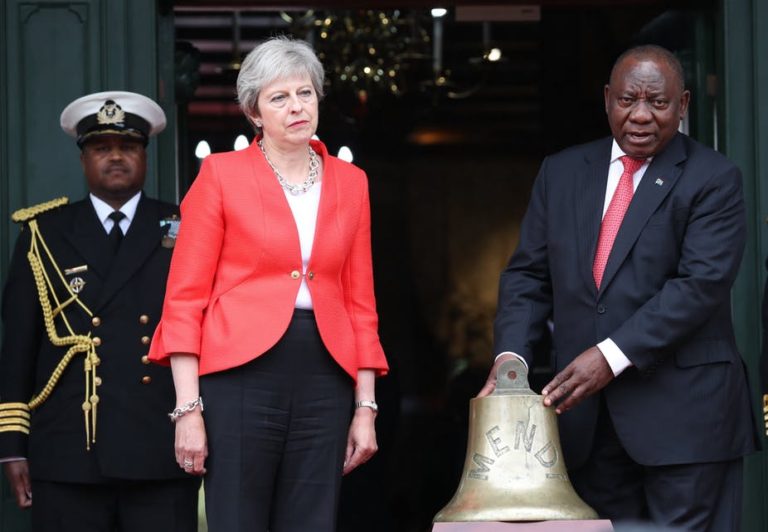
IN Africa, we welcome any visitor even if he is not a friend. We offer our visitors water and a seat.  That is why the United Kingdom (UK)  Prime Minister, Theresa May was welcome when she came out visiting South Africa, Kenya and Nigeria.

Also, for those who are our friends, we go looking for them even if their homes are at the other end of the world. An African proverb says it is someone you do not love, you make excuses that you are unable to visit his home because it is far away. That is why it did not surprise me that, all but one African country, were this week in China for the for the Forum on China-Africa Cooperation (FOCAC).

In South Africa, the Robben Island has become the symbol of the resistance against Apartheid. It was on Robben, the Apostles of Apartheid thought they could break the liberation fighters and bury the African dream of liberation. That was where brave Africans like Walter Sisulu, Govan Mbeki, Nelson Mandela, Ahmed Kathrada and Jacob Zuma spent part of their youth pinning away in prison with hard labour. So it was not unexpected that Ms. May would visit that sacred place. But she might not have bargained for probing questions on her role either in consolidating or destroying Apartheid.

When the anti-Apartheid Soweto Uprising by Primary and High School children  occurred in 1976 during  which the Apartheid regime massacred 176-700children, injured over

2,000,  detained and tortured thousands, Theresa May was a 20-year old third year undergraduate in Oxford.  In the mid-1980s when Apartheid was tottering, and Britain remained its backer,  Theresa May was the Councilor for Durnsford  ( 1986-1994) under the conservative Party led by Mrs. Margaret Thatcher. So, she was active in British politics.

Last week,  August 28, as May prepared to visit Robben Island including the cell Nelson Mandela spent 18 of his 27-year incarceration, British Broadcaster and Political Correspondent, Michael Lawrence Crick asked the British Prime Minister whether she played any role agitating for the release of Nelson Mandela. Whether she participated in any form in the campaign to boycott South African goods as directed by the United Nations. Whether she protested in any way against the Apartheid system or government.  A visibly embarrassed May responded: “I think you know well that I did n’t go on protests. But what is important is the work that the United Kingdom government did to ensure that it did give support where that support was needed.”

The part that she did nothing to protest the evil system even when she held political office, is true. But her subsequent claim about the UK giving support “where that support was needed” is false. If anything, theUnited Kingdom and its politicians including Thatcher and Theresa May by their actions and inaction, helped to preserve Apartheid and elongate its lifespan.

Contrary to May’s claims,  the truth is that Britain and the United States, especially under President Ronald Reagan, propped up Apartheid South Africa, and refused to allow the rest of the world impose crippling sanctions.

At the 1985 Commonwealth Heads of State Summit held in Nassau, Bahamas, the normally pliant countries rose against Britain their former colonial master. They demanded all-round sanctions against Apartheid South Africa. But the UK stood against them. Thatcher insisted that the only resolution Britain  would support is  a nebulous ‘constructive engagement’ To save the Commonwealth from breaking up,  then Australian Prime Minister, Bob Hawke,  moved a compromise solution; the establishment  of an Eminent Persons Group (EPG) on South Africa   charged with putting  in place: “a process of dialogue across  lines of colour, politics and religion  with a view to establishing a non-racial and representative government”

When this was accepted, Hawke called up his predecessor, John Malcolm Fraser, (Prime Minister 1975-83) to co-chair the EPG with former Nigerian Head of State, Olusegun Aremu Obasanjo.

The EPG which met all sides including then imprisoned Mandela, published its report in June 1986 in which it recommended full economic and financial sanctions against Apartheid South Africa.  Again, the UK refused.

In October 1987, at a press conference following the Commonwealth Heads of Government Conference in Vancouver, Mrs.Thatcher claimed: “The ANC (The African National Congress to which Mandela belonged)is a typical terrorist organisation… Anyone who thinks it is going to run the government in South Africa is living in cloud-cuckoo land.”

Voicing the views of the ruling Conservative Party which Teresa May belonged,  the Daily Mail on the day of the concert to mark Mandela’s 70th birthday in July 1988 published an opinion which declared that: “The ANC and its leader Nelson Mandela have no more claim to be saints or heroes than do the Provisional IRA with their Lynch mobs and car bombers.” Nineteen months later, Apartheid gave way with February 2, 1990, unbanning of the ANC after a 30-year clamp down.

So how, where and when did the UK give the needed support to topple apartheid when all along it was in bed with it?  Not unexpectedly, May’s visit to South Africa achieved little or nothing beyond her repackaging the EU pact with South Africa, promising to encourage job creation in exchange for a clampdown on Africans migration to Europe,  and a bland promise to back South Africa’s land reform.  Before leaving South Africa, for Kenya and Nigeria, she threw a punch: “87million Nigerians live below $1 and 90 cents a day, making it home to more very poor people than any other nation in the world.”

Kenyan  President Uhuru Kenyatta noted that May was the first UK Prime Minister to visit in nearly four decades.  Indeed, Kenya holds similar haunting memories for Britain as does South Africa. Britain wanted to make Kenya a settler colony like

South Africa, Zimbabwe and Namibia. But the Kenyans resisted in what became known as the Mau Mau Uprising. In the eight-year uprising which began in 1952, officially,  the UK murdered 11, 000 Kenyan civilians including 1,090 who were hanged. Thirty-two whites were killed in the uprising. However, the Kenyan Human Rights Council presented different statistics that showed that the British executed, tortured and maimed 90,000 Kenyan civilians and detained over160,000 others without trial for between 3-7 years.  

The news from Beijing is that China is offering Africa another $60 Billion investment fund, and all we hear from Europe and America is that we have to be wary of China as some of these loans would not be repaid and will go for ‘vanity projects’ while China will use Africa as destination for its products. The West assumes we are not matured for such investment, and that they can still tell us who our friends should be.
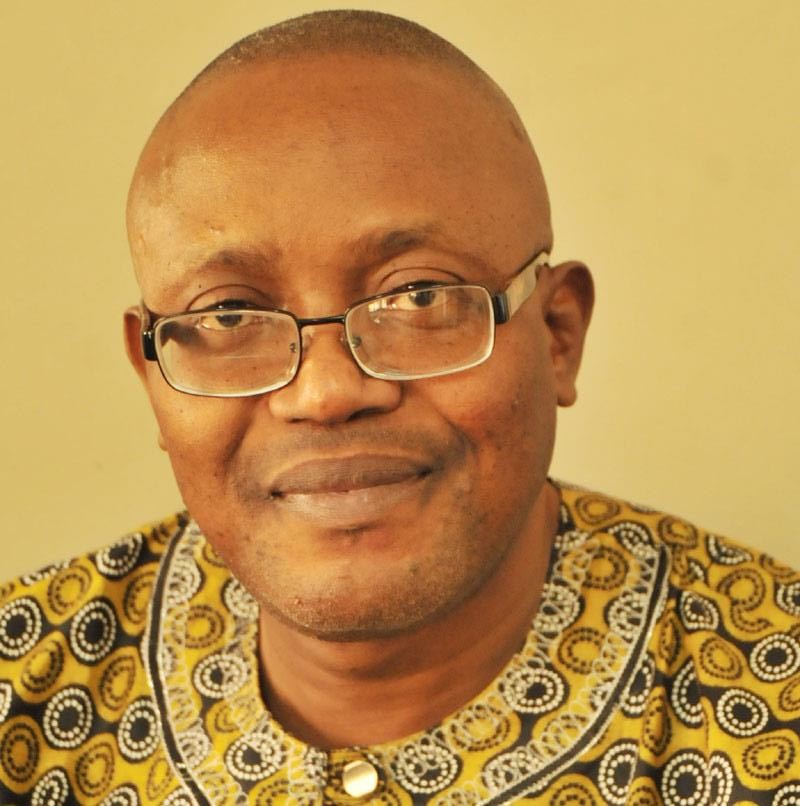
Owei Lakemfa, former secretary general of African workers is a human rights activist, journalist and author.