Home Blog Page 2646

Impunity rides again

0

By Wole Soyinka

It is happening all over again. History is repeating itself and, alas, within such an agonizingly short span of time. How often must we warn against the enervating lure of appeasement in face of aggression and will to dominate!

I do not hesitate to draw attention to Volume III of my INTERVENTION Series, and to the chapter on The Unappeasable Price of Appeasement. There is little to add, but it does appear that even the tragically fulfilled warnings of the past leave no impression on leadership, not even when identical signs of impending cardiac arrest loom over the nation.

Boko Haram was still at that stage of putative probes when cries of alarm emerged. Then the fashion ideologues of society deployed their distancing turns of phrase to rationalize what were so obviously discernable as an agenda of ruthless fundamentalism and internal domination. Boko Haram was a product of social inequities, they preached – one even chortled: We stand for justice, so we are all Boko Haram!

We warned that – yes indeed – the inequities of society were indeed part of the story, but why do you close your eyes against other, and more critical malfunctions of the human mind, such as theocratic lunacy? Now it is happening again. The nation is being smothered in Vaseline when the diagnosis is so clearly – cancer!

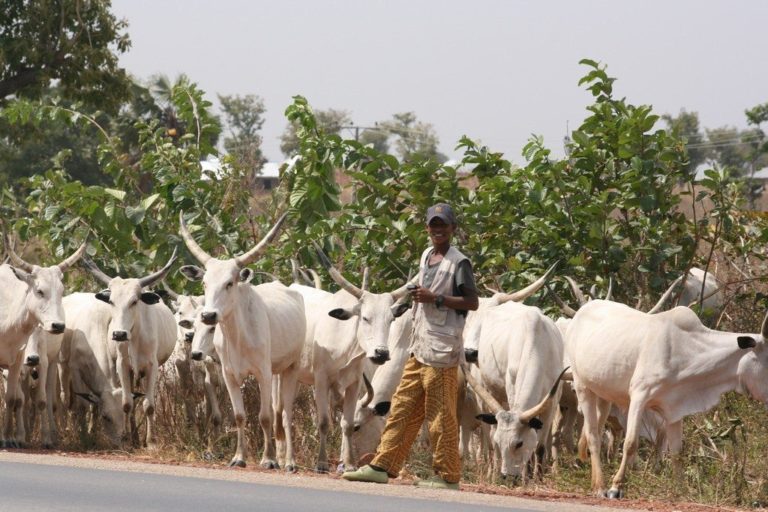
We have been here before – now, ‘before’ is back with a vengeance. President Goodluck Jonathan refused to accept that marauders had carried off the nation’s daughters; President Muhammed Buhari and his government – including his Inspector-General of Police – in near identical denial, appear to believe that killer herdsmen who strike again and again at will from one corner of the nation to the other, are merely hot-tempered citizens whose scraps occasionally degenerate into “communal clashes” – I believe I have summarized him accurately. The marauders are naughty children who can be admonished, paternalistically, into good neighbourly conduct. Sometimes of course, the killers were also said be non-Nigerians after all. The contradictions are mind-boggling.

First, the active policy of appeasement, then the language of endorsement. El-Rufai, governor of Kaduna state, proudly announced that, on assuming office, he had raised a peace committee and successfully traced the herdsmen to locations outside Nigerian borders. He then made payments to them from state coffers to cure them of their homicidal urge which, according to these herdsmen, were reprisals for some ancient history and the loss of cattle through rustling.

The public was up in arms against this astonishing revelation. I could only call to mind a statement by the same El Rufai after a prior election which led to a rampage in parts of the nation, and cost even the lives of National Youth Service corpers. They were hunted down by aggrieved mobs and even states had to organize rescue missions for their  citizens.

Countering protests that the nation owed a special duty of protection to her youth, especially those who are co-opted to serve the nation in any capacity, El Rufai’s comment then was: No life is more important than another. Today, that statement needs to be adjusted, to read perhaps – apologies to George Orwell: “All lives are equal, but a cow’s is more equal than others.”

This seems to be the government view, one that, overtly or by implication, is being amplified through act and pronouncement, through clamorous absence, by this administration. It appears to have infected even my good friend and highly capable Minister, Audu Ogbeh, however insidiously. What else does one make of his statements in an interview where he generously lays the blame for ongoing killings everywhere but at the feet of the actual perpetrators!  His words, as carried by The Nation Newspapers:

“The inability of the government to pay attention to herdsmen and cow farming, unlike other developed countries, contributed to the killings.”  The Minister continued:


READ ALSO:


“Over the years, we have not done much to look seriously into the issue of livestock development in the country….we may have done enough for the rice farmer, the cassava farmer, the maize farmer, the cocoa farmer, but we haven’t done enough for herdsmen, and that inability and omission on our part is resulting in the crisis we are witnessing today”

No, no, not so, Audu! It is true that I called upon the government a week ago to stop passing the buck over the petroleum situation. I assure you however that I never intended that a reverse policy should lead to exonerating – or appearing to exonerate – mass killers, rapists and economic saboteurs – saboteurs, since their conduct subverts the efforts of others to economically secure their own existence, drives other producers off their land in fear and terror.

This promises the same plague of starvation that afflicts zones of conflict all over this continent where liberally sown landmines prevent farmers from venturing near their prime source, the farm, often their only source of livelihood, and has created a whole population of amputees.

At least, those victims in Angola, Mozambique and other former war theatres, mostly lived to tell the tale. These herdsmen, arrogant and unconscionable, have adopted a scorched-earth policy, so that those other producers – the cassava, cocoa, sorghum, rice etc farmers are brutally expelled from farm and dwelling.

Government neglect? You may not have intended it, but you made it sound like the full story. I applaud the plans of your ministry, I am in a position to know that much thought – and practical steps – have gone into long term plans for bringing about the creation of ‘ranches’, ‘colonies’ – whatever the name – including the special cultivation of fodder for animal feed and so on and on. However, the present national outrage is over impunity.

It rejects the right of any set of people, for whatever reason, to take arms against their fellow men and women, to acknowledge their exploits in boastful and justifying accents and, in effect, promise more of the same as long as their terms and demands are not met. In plain language, they have declared war against the nation, and their weapon is undiluted terror. Why have they been permitted to become a menace to the rest of us? That is the issue!

Permit me to remind you that, early in 2016, an even more hideous massacre was perpetrated by this same Murder Incorporated – that is, a numerical climax to what had been a series across a number of Middle Belt and neighbouring states, with Benue taking the brunt of the butchery.

A peace meeting was called, attended by the state government and security agencies of the nation, including the Inspector General of Police. This group attended – according to reports – with AK47s and other weapons of mass intimidation visible under their garments. They were neither disarmed nor turned back. They freely admitted the killings but justified them by claims that they had lost their cattle to the host community.

It is important to emphasize that none of their spokesmen referred to any government neglect, such as refusal to pay subsidy for their cows or failure to accord them the same facilities that had been extended to cassava or millet farmers. Such are the monstrous beginnings of the culture of impunity. We are reaping, yet again, the consequences of such tolerance of the intolerable. Yes, there indeed the government is culpable, definitely guilty of “looking the other way”. Indeed, it must be held complicit.

This question is now current, and justified:  just when is terror? I am not aware that IPOB came anywhere close to this homicidal propensity and will to dominance before it was declared a terrorist organization. The international community rightly refused to go along with such an absurdity.

For the avoidance of doubt, let me state right here, and yet again, that IPOB leadership is its own worst enemy. It repels public empathy, indeed, I suspect that it deliberately cultivates an obnoxious image, especially among its internet mouthers who make rational discourse impossible. However, as we pointed out at the time, the conduct of that movement, even at its most extreme, could by no means be reckoned as terrorism.

By contrast, how do we categorize Miyeti? How do we assess a mental state that cannot distinguish between a stolen cow – which is always recoverable – and human life, which is not?

Villages have been depopulated far wider than those outside their operational zones can conceive. They swoop on sleeping settlements, kill and strut. They glory in their seeming supremacy. Cocoa farmers do not kill when there is a cocoa blight. Rice farmers, cassava and tomato farmers do not burn. The herdsmen cynically dredge up decades-old affronts – they did at the 2016  Benue “peace meeting” to justify the killings of innocents in the present – These crimes are treated like the norm.

Once again, the nation is being massaged by specious rationalisations while the rampage intensifies and the spread spirals out of control. When we open the dailies tomorrow morning, there is certain to have been a new body count, to be followed by the arrogant justification of the Miyeti Allah.

The warnings pile up, the distress signals have turned into a prolonged howl of despair and rage. The answer is not to be found in pietistic appeals to victims to avoid ‘hate language’ and divisive attributions. The sustained, killing monologue of the herdsmen is what is at issue. It must be curbed, decisively and without further evasiveness.

Yes, Jonathan only saw ‘ghosts’ when Boko Haram was already excising swathes of territory from the nation space and abducting school pupils. The ghosts of Jonathan seem poised to haunt the tenure of Mohammed Buhari.
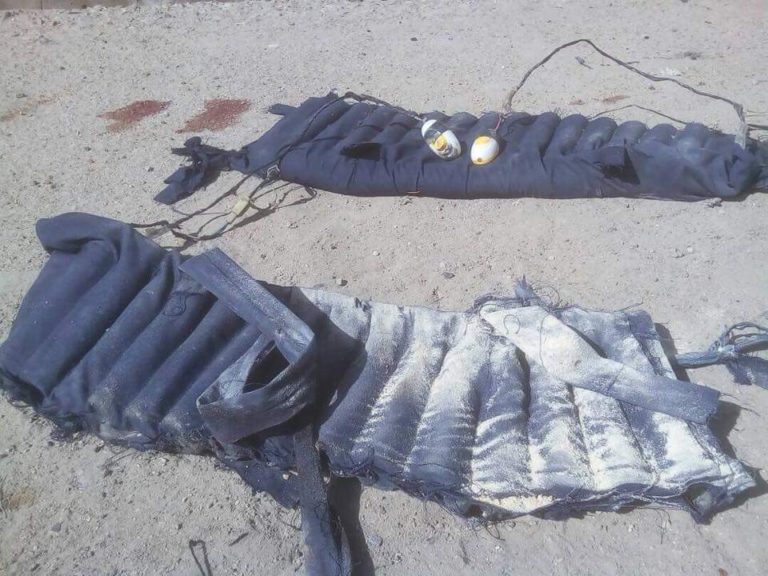
Army saves female suicide bomber from killing herself in Borno


Soldiers of the Operation Lafiya Dole have foiled a suicide attempt by three teenage girls, saving one of the would-be bombers in the process.

The incident took place at Gamboru, a town located in Ngala Local Government Area of Borno State.

According to Onyema Nwachukwu, Deputy Director, Army Public Relations, Operation Lafiya Dole, two of the attackers were “neutralized” at about 6. 45 a.m. on Tuesday.

“A third female suicide bomber was intercepted within the same general area,” Nwachukwu said, adding that “she confessed that they were deployed at about 3.30 a.m. on Tuesday to unleash mayhem on Gamboru town”.

“The suicide bomber also revealed the location where she hid her IED vest and led the troops to recover it,” added.

“The recovered vests and the surviving suicide bomber have been taken into custody for further interrogations,” he said.

The surviving ‘suicide bomber’

Nwachukwu urged citizens of Borno State to be vigilant and “report suspicious persons to security agencies”.

Sagay urges Buhari to investigate Malami over Maina

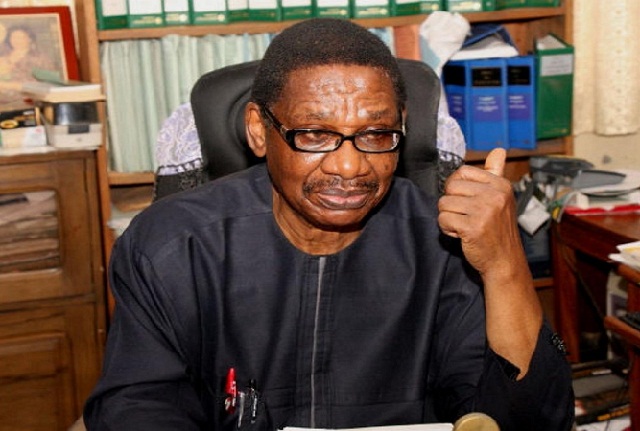
Itse Sagay, Chairman of the Presidential Advisory Committee on Anti-Corruption (PACAC), has urged President Muhammadu Buhari to investigate Abubakar Malami, Attorney General of the Federation (AGF), over his role in the reinstatement of Abdulrasheed Maina.

Speaking with journalists on Tuesday, Sagay, who has never hidden his disaffection for the upper legislative chamber, also said the Senate spends too much time “setting up sub-committees to investigate everything”.

Although Sagay agreed that Malami should be probed, he expressed belief that Buhari, not the National Assembly, should order such.

The professor of law said Malami has no business holding meetings and discussions with Maina, when the latter is still a fugitive, having fled the country after he was declared wanted for pension fraud.

“As the Attorney General, you met a fugitive who is wanted for a very heinous crime of depriving thousands of elderly people of their rights. You don’t, for any reason, go to hold discussions with such a person,” Sagay said.

“Your job should be to extradite and try him. He (Malami) compromised himself by meeting with him (Maina).

“He says he didn’t write any letter regarding the reinstatement of Maina but the letter emanated from his ministry. So, let the President investigate the attorney general.

“I think the Senate is overzealous in its approach. It investigates everything and in the end, we hardly see anything. I think it is spending too much time setting up sub-committees to investigate everything.”

Meanwhile, the Senate has expressed surprise at Malami’s “desperate” quest to stop ongoing investigations into the ‘Mainagate’ saga.

Aliyu Sabi-Abdullahi, Chairman of the Senate Committee on Media and Publicity, made this known in a statement on Tuesday.

“We are wondering what the AGF is afraid of. When he appeared before our committee, he was well-received and fairly treated,” Sabi-Abdullahi stated.

“He indeed expressed his happiness with the protection given to him by the committee handling the Maina case.

“Why then is it very important and urgent for him to stop the investigative hearing? What is the AGF trying to hide?”

Both chambers of the National Assembly had constituted ad hoc panels to look into the circumstances that led to the surreptitious recall and reinstatement of Maina, former Chairman of the Pension Reforms Task Team (PRTT) under the Goodluck Jonathan administration.

Maina’s committee said it recovered over N1 trillion in cash and assets from pension thieves, but he was later accused of helping himself to some of the loots he purportedly recovered.

In 2013, Maina was sacked from the Civil Service for absconding from duty. He was later declared wanted by the EFCC and the police on allegations of pension fraud, but he fled the country.

He was secretly reinstated into the Service in October, but his reinstatement was short-lived, as Buhari ordered that the move be reversed.

So far, the ministries of justice and interior, as well as the Office of the Head of Service of the Federation, have been traded blames over the reinstatement.

401 days to go… INEC begins countdown to 2019 general election

The Independent National Electoral Commission (INEC) has released the timetable for the 2019 general election, stating, among other things, that the Presidential and National Assembly elections will hold on the same day, February 12, 2019.

Here are other highlights of the timetable, which was announced on Tuesday by Mahmood Yakubu, INEC’s National Chairman, during a press conference.

  • Publication of Notice for National and State Elections to take place on August 17;  that of the FCT Area Council Elections will be on September 3, 2018.
  • Collection of nomination forms by political parties for national and state elections begins August 11 to 24; while that of the FCT Area Council elections takes place from November 3 to 10, 2018.
  • Commencement of campaign for Presidential and National Assembly Elections fixed for November 18;  that of Governorship and State Assembly elections begins December 1 while that of FCT Area Council elections starts December 2, 2018.
  • Deadline for submission of nomination forms to INEC is December 3 for Presidential and National Assembly Elections; December 17 for Governorship and State Assembly and December 14 for FCT Area Council Elections.
  • Last day for campaigns for Presidential and National Assembly Elections is Valentine’s Day – February 14, 2019, while that of Governorship, State Assembly and FCT Area Council Elections stops on February 28.
  •  Presidential and National Assembly elections will hold same day, February 16, 2019.
  • Governorship, State Assembly and FCT Area Council elections will also hold on the same day, March 2, 2019, two weeks after the presidential election.

Going forward, Yakubu said INEC had decided “that henceforth our Presidential and National Assembly elections will hold on the 3rd Saturday of the month of February of each election year, while Governorship and State Assembly elections will hold two weeks later”.

“When the end of tenure of the FCT Area Councils coincide with the general election, the FCT Council elections are to be combined with the Governorship and State Assembly elections,” Yakubu said.

“Today [Tuesday], it is exactly 402 days to the opening of polling units nationwide at 8am on Saturday 16th February 2019.

“As political parties and candidates canvass the support of the electorate, the Commission wishes to appeal to all and sundry to eschew bitterness and conduct their activities with decorum.

“The 2015 General Election was a watershed in the history of our democracy. The Commission is determined to build on this legacy by ensuring that our elections keep getting better.

“The Commission is moving away from the culture of quick-fix, fire brigade approach to the management of elections in Nigeria. As our democracy matures, the planning and implementation of electoral activities should be predictable and systematic.”

A further breakdown shows that INEC will conduct election for “1,558 Constituencies made up of one Presidential Constituency, 29 Governorship constituencies out of 36 (7 Governorship elections are staggered and conducted off-cycle), 109 Senatorial Districts, 360 Federal Constituencies, 991 State Assembly Constituencies, 6 Area Council Chairmen as well as 62 Councillorship positions for the FCT”.

Also, INEC issued certificates to 21 new political parties that registered in December 2017.

Kebbi first lady unveils team of consultants treating Buhari’s son


Zainab Bagudu, wife of Atiku Bagudu, Governor of Kebbi State, has unveiled the team of over 10 top medical consultants that took care of Yusuf, President Muhammau Buhari’s only son, who was involved in a crash while riding on a power bike in December.

Bagudu, herself a medical doctor, shared a picture on Twitter where the team posed with Aisha Buhari, Yusuf’s mother, and wrote: “The wonderful team of doctors that cared for Yusuf. Thank you. #Madeinnigeria”

Members of the team include Isaac Adewole, Minister of Health; Osagie Ehanire, Minister of State for Health; Bello Bala Shehu, globally acclaimed Neurosurgeon and Vice Chancellor of the Federal University, Birnin Kebbi.

Bagudu’s tweet seems an indication that Yusuf is doing well, after initial reports of original plans to fly him to Germany for treatment.

Many Nigerians who reacted to the tweet expressed happiness that the President’s son was doing well, but majority reminded the first family that good healthcare should not be an exclusive preserve of the few elites.

Some other tweets had a tone of sarcasm to them.

Time for Nigeria to scrap polytechnics and colleges of education, says Adeyeye


Sola Adeyeye, senator representing Osun Central Senatorial District in the National Assembly, says the nation should consider scrapping its polytechnics and colleges of education if it must develop.

“Honestly, give me a chance, I would have an education system where, in less than 10 years, we will phase out all the polytechnics and colleges of education and we strengthen our universities,” Adeyeye said on Tuesday at a stakeholders’ meeting on the 2108 Unified Tertiary Matriculation Examination (UTME), organised by the Joint Admission and Matriculation Board (JAMB).

Adeyeye, who also said he does not believe God will solve Nigeria’s problems, argued that the weakest brains are those who are pushed to the other two tiers of tertiary education after the best have been admitted into universities.

“My own greatest sorrow, and I have said it to the Registrar of JAMB before, is that the best students want to study maybe Medicine, Engineering, and Law. The next set wants to study science and by the time you finish, your worst students are pushed to education,” he said.

“There cannot be a serious future for a society that makes its weakest students to be their teachers. What we need is a reward system where teachers are paid so well that a brilliant boy will know that there is no higher reward for an engineer than being a teacher. When we begin to pay our teachers well, this apartheid system that we have now will be demolished.”

Describing the system as ‘apartheid’, he stressed that the countries that introduced the system of education with polytechnics and colleges of education have since phased them out.

“I’m an eternal optimist. There are problems. I was on television preaching nationhood before Adeboye. I don’t believe God will solve Nigeria’s problems. If Nigerians problems will be solved because they were created by Nigerians, they will be solved by Nigerians.

“And I thank you, Professor Oloyede, for showing us that it doesn’t matter how big a problem is if we are determined; we can’t solve it alone but together. We can summon the courage and the wisdom to solve them. He would succeed so well in JAMB.

“If you want to see the future of a nation or of any society, what you ought to do is to go to their schools. If you want to see the future of your universities, go to your secondary and primary schools.

“As you drive through much of Nigeria, when you see the public schools, it should not allow that given the saying ‘rubbish in, rubbish out’ that our universities are having the products that they have.

“My primary school in 1955, my teacher was a Standard 6 graduate; eventually, Standard 6 could not teach again. You have to go to Grade III, eventually Grade III couldn’t teach again; you have to have Grade II, and eventually Grade II could not teach again; you have to have Grade I.

“The ‘ogas’ at the Colleges of Education claim they are the best teachers; they forgot that they were first taught by universities graduates. And across the world, this apartheid system of three tiers of tertiary education is being phased out.”

Ortom reveals how herdsmen ‘slaughtered two mobile policemen like goats’


Samuel Ortom, Governor of Benue state, has revealed how herdsmen caught two mobile policemen and “slaughtered them like goats”.

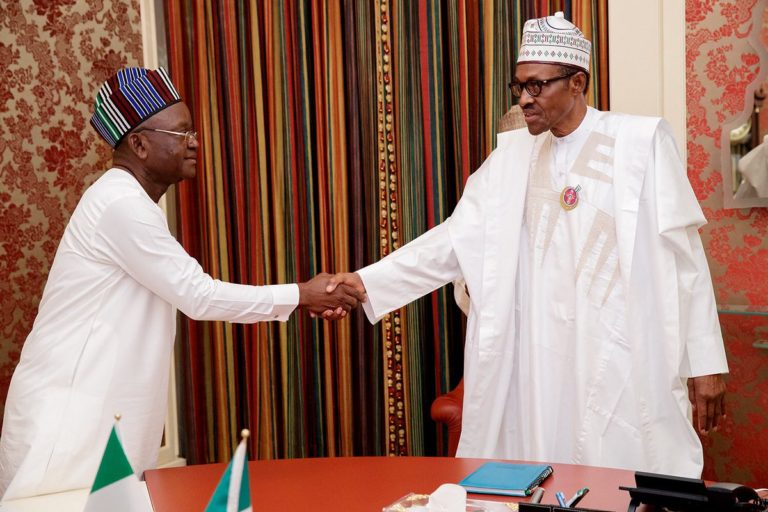
Ortom said this on Tuesday after meeting with President Muhammadu Buhari at the State House to brief him on the action so far taken with regards to the New Year’s Day attack by herdsmen on five communities in the state.

He said the President had ordered the deployment of adequate security forces to the state to protect the citizens from further attacks by rampaging herdsmen, and is currently considering his next line of action.

I briefed Mr President when this incident took place on January 1. After staying back on the ground to do the needful to ensure that we restore normalcy, I said it was important for me to come personally and brief him and that has been done,” he said.

“Already, because of the communications we have been having when these incidents started, actions have been taken as directed by him.

“The movement of the DIG, the movement of the IG now to relocate to Benue state to ensure that this challenge is surmounted was at the instance of Mr President.

“Of course, additional personnel of DSS and Police have been deployed and even the army. We have additional personnel on ground now. We have adequately and fully given them the logistics support to ensure that our people are protected.

“I had to brief him, he is also doing further investigation to know the next line of action. I have been writing to the leadership of security agencies, that these people are a threat to our collective interest and they must be dealt with.

“They must be arrested and prosecuted because we cannot allow impunity to continue to thrive. And of course, threat and no action has resulted in this killing and I think that Mr President will also do the needful to ensure something is done.”

Ortom said two of the mobile policemen deployed to the state were killed by the herdsmen on Monday, while one was lucky to have survived the attack.

“Just yesterday in Logo local government, mobile policemen that were deployed to Logo to keep vigil to protect the people and the land; these militia came, exchanged fire with them, caught two of them and slaughtered them like goats — mobile policemen!,” he said.

“They shot another one, ‘machete’ him and left him in the pool of his blood but luckily he did not die. We have taken him to the hospital, we are treating him, the other one that was declared missing was found today.”

More than 60 persons lost their lives in attacks by herdsmen on five Benue communities between January 1 and 6.

The state government subsequently announced that a funeral service would be organised for 59 of the deceased victims on Thursday, after which they would be buried.

Oloyode: UTME is a ‘one-chance exam’… its validity cannot be extended


Ishaq Oloyede, Registrar, Joint Admission and Matriculation Board (JAMB), says the board cannot extend the validity of Unified Tertiary Matriculation Examination (UTME) results, as it is “a one-chance examination”.

Oloyede said the validity of the examination cannot be extended as wanted by candidates and their parents, noting that the examination is just a screening exercise, which is different from a certification examination.

He was speaking in Abuja on Tuesday at a stakeholders’ meeting on the 2018 UTME organized by JAMB.

“It is a screening examination and not a certification examination. Adis Ababa Convention, which Nigeria is a signatory to, stipulates qualifications for admission, which are O’ level exams; UTME is not part of them.

“It is a screening examination – a one-chance examination. Whereas achievement examination is not a one-chance examination, universities do not have enough space; candidates have to be screened and that is why we have JAMB.

“All over the world, such examinations cannot be extended; they cannot be used for any other purpose.”

He stressed that extension of validity of the examination would only complicate issues for the candidates.

Speaking on the conduct of Post-UTME by universities, Oloyede said there was nothing wrong in conducting such examinations, noting that the University Senate has the responsibility to admit candidates and screen them before admission.

He said what is only frowned at is using the examination to exploit the candidates.

Oloyede disclosed that 42 universities who were found to have charged more than the N2,000 stipulated as fee for Post-UTME have already been sanctioned by Adamu Adamu, Minister of Education.

He did not mention the affected universities and the amount they were to refund.


Security expert: ISIS loyalists may have mixed with returning migrants


Ona Ekhomu, President of the Association of Industrial Security and Safety Operators of Nigeria, says the Islamic State (IS) could infiltrate Nigeria through returning Libyan Migrants if care is not taken.

Ekhomu said that given the threat of terrorism in the West African sub-region, proper documentation and thorough vetting of the returnees is necessary before they are reintegrated into the society.

“Some of these people may have pledged loyalty to ISIS.  They should be separated from those who migrated for economic reasons,” Ekhomu said.

“There is no way of knowing a Nigerian by face.  It is presumed that most of the returnees do not have travel documents.  So, it is merely assumed that they are Nigerians.

“A questionnaire must be quickly drawn up to enable the returnees to prove their national identities.

“These should include questions about their dates of birth, places of birth, LGAs, names of traditional rulers, primary and secondary schools, ethnicity and native languages.”

Ekhomu further suggested that the returnees should be asked to provide information on how they were able to fund their trip to Libya in the first place. This will enable the authorities ascertain whether they left Nigeria for economic reasons.

“All information provided must be quickly investigated (verified) and each individual cleared to enter society,” he stated.

“Nigeria has too many active killing fields right now and does not need the threat of ISIS infiltration.

“There is a high probability that a few of them may be ISIS fighters escaping from Libya, or coming to Nigeria to execute a possible terrorist plot.”

‘It’s based on wrong advice’ — herdsmen kick against anti-grazing law


The Miyetti Allah Cattle Breeders Association of Nigeria (MACBAN) says the Benue State government must revisit its anti-grazing law for peace to reign.

Usman Ngelzerma, Secretary-General of the association, said this during a chat with journalists, stressing that the way of life of a people should not be toiled with.

“I like the Benue State governor (Samuel Ortom). He is a peace-loving person, but [he] is working on wrong advice,” Ngelzerma said.

“The approach he took is wrong. You cannot change the way of life of a people like the way you turn off a light switch.

“We don’t wish for the crisis to continue but let us give it (the anti-grazing law) another look. We don’t like the killings; we will never condone the killing of people. Give the farmers their rights but consider the pastoralists too.”

Ngelzerma also said that the livestock guards that were employed by the state government to enforce the anti-open grazing law were also to blame for the January 1 crisis.

“The livestock guards have constituted themselves to the police and the court at the same time. They impose penalties on herdsmen, fine them huge sums of money before releasing them. That was the situation before this crisis erupted,” he said.

In an interview with BBC Pidgin, Garos Gololo, Chairman of the Benue State chapter of MACBAN, said the recent killings were in retaliation for the theft of 1,000 cows by some people in the state.

“After the Benue government banned grazing, we were relocating to Taraba State through Nengere border town of Nasarawa State. They came and stole one thousand cows from us, so we retaliated,” Gololo was quoted as saying.

Meanwhile, the Nigeria Police Force said it was making progress with investigations into the crisis.

Joshak Habila, Deputy Inspector-General of Police, Operations, said detectives had been sent all over the state and leaders of the herdsmen association invited and questioned.

“They (Miyetti Allah) have given their statements and we are verifying,” Habila said.

“We have been able to gather a lot of intelligence from the communities that were affected and also picked some traces of evidence.

“I’m sure we are going to get a window, we are going to get a lead; it is never too late. But I can assure you that those who would be connected to the killings would not be spared.”