Home Blog Page 2679

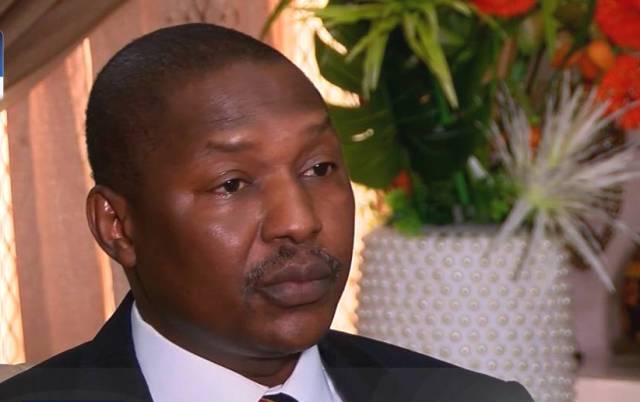
Ayo Salami: Where was the judiciary when I was being harassed?

Ayo Salami, former President of the Court of Appeal, says he rejected the appointment offered him as Chairman of the Corruption and Financial Crime Cases Trial Monitoring Committee because the Judiciary abandoned him when he was “being harassed”.

Salami debunked reports that he refused to collect the job because he was uncomfortable with some members of the committee.

He made this known during a phone interview with The Punch on Thursday.

According to Salami, when Walter Onnoghen, the Chief Justice of Nigeria, announced the constitution of the committee, he was not in the country.

“I rejected the appointment because it is not in my interest,” Salami simply said.

When probed further, he said: “What I mean is that it is not in my interest; that was why I rejected it. It is because I don’t need it.”

The interviewer reminded Salami that it appears the judiciary needs his help now, to which he replied: “To do what in the judiciary? Where was the judiciary when they were harassing me? Where was the court when they were harassing me? So, let them continue to do it in their own way.”

Salami also said there was no truth in the reports that he rejected the appointment because of some persons in the committee.

“It is not; I don’t just feel like doing it. it is not because of anybody,” he replied curtly.

He also maintained that he had forwarded his rejection letter to the office of the Chief Justice, and wondered why the CJN and the NJC would say they had not received it.

“Let them look for it, I have sent it. If I have not sent it, how did they know?” he queried.

Salami was removed as President of the Appeal Court in 2011 under controversial circumstances.

He had alleged that Aloysius Katsina-Alu, the then Chief Justice of Nigeria, attempted to influence the decision of the Appeal Court in a Sokoto governorship election matter pending before the court at the time.

Salami was subsequently suspended, and a panel, headed by Justice Ibrahim Auta, was set up to investigate the matter.

The panel found Salami guilty of lying on oath against Katsina-Alu and among the recommendations of the committee, he was asked to apologise to the CJN within seven days.

Salami then approached the Federal High Court to challenge the recommendations of the panel, but while the matter was still pending in court, the NJC held an emergency meeting where Salami was suspended and immediately replaced with Justice Dalhatu Adamu.

However, Salami was later cleared in 2012 during the tenure of Dahiru Musdapher as the Chief Justice of Nigeria. However, then President Goodluck Jonathan refused to act on the recommendations of the NJC until Salami retired in 2013.
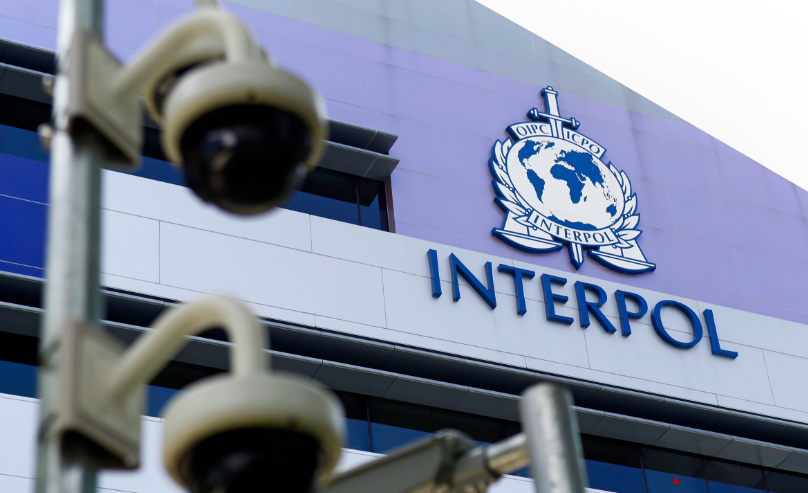
INTERPOL has just issued a warrant for Maina’s arrest, says Garba Shehu

Garba Shehu, Senior Special Assistant to the President on Media and Publicity, says the International Police Organisation (INTERPOL) has issued a warrant of arrest for Abdulrasheed Maina, the former pension reform boss who is also wanted by the EFCC and the Nigerian Police.

This is following reports that Maina may have fled to Niger Republic as a result of the manhunt launched against him by Nigerian law enforcement agencies.

Shehu told journalists that the investigation into Maina’s case has been extended to some foreign countries.

“Maina’s investigation has been expanded. This is beyond reinstatement. It has gone beyond that,” Shehu said.

“You know that the INTERPOL has just issued an international warrant on him. A Nigerian court has also issued yet another warrant of arrest.

“All those cases involving Steve Oronsaye (former Head of the Civil Service of the Federation) that are ongoing, you know Maina is also involved. Law enforcement agencies are looking at that too.

“You are also aware that the Senate is also carrying out its own investigation on the matter.

“The matter is being investigated from all fronts. The EFCC, for example, is discovering more and more properties and its officials are sealing them. They are also looking at banks and all that.

“In fact, this investigation will also touch some foreign countries.”

Meanwhile, Winifred Oyo-Ita has confirmed that she responded to the query issued to her by President Muhammadu Buhari, demanding explanation on the circumstances of Maina’s reinstatement.

She said that she forward her response to Abba Kyari, the President’s Chief of Staff, together with the response from the Permanent Secretary of the Ministry of Interior.

Oyo-Ita added that a third response was also sent to Kyari by the Acting Chairman of the Federal Civil Service Commission, whom, she insisted, issued the letter reinstating Maina into the civil service.

“The Chief of Staff to the President wrote directly to the Acting chairman of the Federal Civil Service Commission because it was the commission that sent out the letter,” Oyo-Ita told a State House correspondent.

“That letter people are saying was from the Office of the Head of Service did not come from me; it came from the Federal Civil Service Commission.

“The only persons that responded directly to me is the Permanent Secretary of the Ministry of Interior.

“I have sent my submission and the response from the Permanent Secretary of the Ministry of Interior to the Chief of Staff.”

On whether there has been an update on the matter, Oyo-Ita said: “I am not the right person to ask if there is any update on it. It is the presidential spokesmen that will know if there is any update.”

SHOCKER: The model school in Kebbi State where pupils learn in the sun


By all standards, Tarasa Model Primary School, Tarasa Village in Birnin-Kebbi Local Government, Kebbi State, does not qualify to be called a model school.

Although primary school enrollment in Nigeria has increased in recent years, net attendance is only about 70 per cent, says UNICEF. And 60 percent of 10.5million out-of-school children in Nigeria are in the North.

Nigeria’s 10.5 million out-of-school children are the world’s highest number.

As a model school, Tarasa Primary School is littered with classrooms with no roofs, or those overgrown with grasses. It is a good example of a school begging for government attention, especially in a village where perception about formal education is negative.

A resident of the village, who simply gave his name as Abubakar, told the ICIR that many children, especially, girls, prefer “tala” — that is hawking — to going to school. He blamed this on parents, saying they don’t force their children to attend school.

This explains why there are many school-age children roaming the village during the school hours while there are only few in the classrooms, yet under threatening condition.

In a state that has 70 percent of its children out of school, has spent N250million on provision of furniture in different schools, and has spent N3.6 billion on rehabilitating various primary and secondary schools in the state, a heartbreak like that of Tarasa Model Primary School is not expected.

Kebbi State has N1.04billion unaccessed intervention fund with the Universal Basic Education Commission (UBEC) out of the unaccessed N59.7billion by states of the federation between 2012 and 2016.

In March 2017, Muhammadu Magawata Aliero, Kebbi State Commissioner of Education, said the state had 398,000 children out of school.

According to Aliero, the state government had spent about N250 million on the provision of furniture in different schools across the state, while N3.6 billion was used to rehabilitate various primary and secondary schools in the state.

In late 2015, the United Nations for Children Fund (UNICEF) disclosed that 70 percent of children in the state were out of school.

But the condition of the supposed Model Primary School, Tarasa, doesn’t in any way make education an attractive prospect. The few children in schools are learning in a dilapidated building, sitting on benches and desks marked MDGs, which suggests that the state government’s rehabilitation exercise did not reach the agrarian village.

Nobody in the school was willing to talk, as a journalist was said to have been arrested and detained on the order of Seidu Dakingari, the immediate former Governor of the state, when he “reported what was considered an offensive report” about the same school.

“He was arrested and detained and later posted out the state because the state government said his report was meant to embarrass the government,” said a villager who declined to give his name.

No good learning and teaching can take place under these classrooms, whose roofs have been blown away since 2015. For two years, the innocent children have had to cope with rainfall and sun to acquire education, as no one has taken responsibility to repair the damaged roofs.

A security guard working in the school, who did not want to be mentioned, said a strong storm that accompanied a downpour wreaked havoc on the village and consequently left the roofs of a block of classrooms shattered.

He said nobody took action since the roofs were blown off, noting that other classrooms in the school had collapsed more than 10 years ago and nothing was done to repair them or construct new ones.

It was gathered that a former Chairman of Birnin Kebbi visited the school after the incident with a promise to fix the damaged roofs in 2016, but nothing was done.


READ ALSO:


Salami ‘rejects’ appointment as chairman of corruption cases monitoring committee

Ayo Salami, former President of the Court of Appeal, turned down the offer to be Chairman of the Corruption and Financial Crime Cases Trial Monitoring Committee on Thursday, barely a month after he was appointed to the position by Walter Onnoghen, Chief Justice of Nigeria.

Onnoghen had announced that special courts would be designated across the country to specifically try corruption and financial crime cases, as part of efforts at expediting such cases and giving more impetus to the anti-corruption campaign of the federal government.

He subsequently appointed Salami, who was controversially removed as President of the Court Appeal in August 2011, to head the committee.

However, Vanguard reports that Salami may have rejected the appointment because he was uncomfortable with some members of the committee.

The report quoted sources at the National Judicial Council as saying that out of the 15 members of the committee, Salami pointed out of three who had vested interests in some of the corruption cases that the committee was expected to monitor.

“Salami had, in his meeting with the CJN, pinpointed three members of the committee he said he would not be comfortable to work with,” Vanguard quoted the source as saying.

“He was said to have drawn attention of the CJN to the fact that the trio, who are senior lawyers, have vested interest in some of the corruption cases the committee would monitor in the exercise of its mandate.

“He further drew attention of the CJN to the fact that composition of the committee was already being queried by the public.”

Awassam Bassey, media aide to Onnoghen, confirmed to newsmen that Salami had resigned but he refrained from discussing the triggers of the resignation.

“I can confirm that it is true; I mean the resignation of Hon. Mr. Justice Ayo Salami (Retired) as the chairman of the Corruption and Financial Crime Cases Trial Monitoring Committee (COTRIMCO),” he said.

“However, besides what we see in the media, we cannot exactly say what the reasons are for Justice Salami’s decision not to undertake this all-important national assignment that he was called upon to perform.

“Hon. Salami (retired) says he has sent in a resignation letter to His Lordship the Hon Chief Justice of Nigeria but that letter has yet to get to the CJN.

“That’s all I can say at this moment. A more detailed explanation, if it becomes necessary, will be communicated to you when His Lordship receives Hon. Mr. Justice Salami’s letter.”

Indeed, the formation of the corruption trial monitoring committee was questioned by some civil society groups, most notably the Socio-Economic Right and Accountability Project (SERAP).

The group claimed that the composition of the committee was not in consonance with the advisory of the United Nations Special Rapporteur on the independence of judges and lawyers.

“SERAP urges your Lordship to urgently revisit, review, and reconsider the membership of the Salami committee to ensure that members currently handling high-profile corruption cases involving PEPs (Politically Exposed Persons) are removed,” the group had written in a letter to Onnoghen.

“This proposal aims solely to remove the risk of apparent and potential conflicts between the work of the committee and the private practice of some of its members who are handling high-profile cases of corruption involving PEPs and to ensure the independence, impartiality, integrity and accountability of the judiciary.”

Misau: I made allegations against the IGP, not against the ‘highly revered’ Aisha Buhari

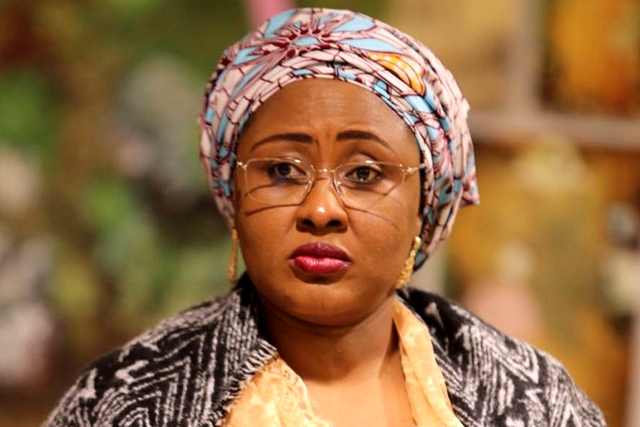
Isah Misau has denied making any allegation against Aisha Buhari, wife of President Muhammadu Buhari, as was widely reported on Thursday.

Misau made the denial via his Twitter handle, saying his allegation was strictly against Ibrahim Idris, the Inspector General of Police.

The controversial senator had made several allegations of corruption and abuse of office against the Idris, but on Wednesday, while appearing before a senate committee investigating the allegations, Misau claimed to be in possession of documents detailing how Idris procured two Sports Utility Vehicles (SUVs) for Aisha Buhari’s personal use.

However, no sooner had the report broken than Aisha took to Twitter to deny the claims, saying that she still uses her personal cars.

Later on Thursday, Misau tweeted that he “did not make any allegations against the person of the highly revered Wife of the President”.

He said that it was rather the IGP who, in his quest to paint him black, “leaked” correspondence he had with the President in some “secret documents” he filed in court.

See Misau’s tweets below:

However, in a swift response, Jimoh Moshood, Force Public Relations Officer, issued a statement describing Misau’s claims as “outright falsehood” and “misleading”.

“It is pertinent to state that at no time did the Wife of the President and Commander in Chief of the Federal Republic of Nigeria, Mrs Aishat Buhari requested directly or indirectly for vehicles for her use from the Inspector General of Police and no vehicle whether Jeep or SUV has ever been given for her personal use,” the statement read.

“It is within the powers of the Inspector General of Police as stated above that when on the 17th January, 2017, SP Sani M Baba –Inna, the ADC ‘Wife of the President’ Federal Republic of Nigeria requested for Two (2) vehicles for Police Personnel in the convoy of Wife of the President for convoy movement and security purposes.

“Two (2) Police Vehicles (i) A Toyota Sienna Bus with Reg. No. NPF 2406D (ii) A Toyota Hiace Bus with Reg. No. NPF 3363D were approved by the Inspector General of Police to the ADC ‘Wife of the President’ SP Sani M Baba –Inna for the purposes requested and not to the person of the Wife of the President or for her personal use as alleged by Misau.


FG has recovered $85m from Malabu Oil deal, says Malami

0

The Federal Government says it has recovered $85 million so far as part of the stolen funds from the Malabu Oil deal.

Abubakar Malami, Attorney General of the Federation and Minister of Justice, made this known at a consultative meeting on assets recovery in Abuja on Thursday.

Malami said the sum was recovered from the government of the United Kingdom, adding that the Nigerian government was intensifying its efforts to recover more funds.

He however said that some of the countries, where these funds had been stashed, were not cooperating with the Nigerian government.

He said several treaties had been signed between the Nigerian government and the governments of foreign nations to facilitate the return of stolen assets.

Already, Mohammed Adoke, former Attorney General of the Federation; Dan Etete, former Petroleum Minister; and Aliyu Abubakar, a businessman, are facing charges for alleged foul play in the Malabu oil deal, which involved the sale of oil block OPL 245 to two oil giants: Shell and AGIP.

But Adoke had denied any wrongdoing, claiming that all the actions he took with regard to the deal were directed by Goodluck Jonathan, who was President at the time.

The House of Representatives Committee on Justice has invited Jonathan to appear before it and explain what he knows about the Malabu oil deal.

SPOTLIGHT: Underage girls who refused to detonate bombs strapped to them by Boko Haram

0


Photograph by Adam Ferguson

After the capture of the Sambisa Forest on Christmas Day 2016, the rate of suicide bomb attacks in Borno State dramatically increased — often carried out by teenage girls, most of whom were too young to even know what the insurgency is all about.

The New York Times tracked and caught up with 18 of such girls who were deployed as suicide bombers but, for one reason or another, they survived.

All of them narrated how they were captured by the insurgents and forced, or sometimes brainwashed, into strapping a suicide belt around their waists and detonating it in crowded areas.

“The girls didn’t want to kill anyone,” the NYT reported. “They walked in silence for a while, the weight of the explosives around their waists pulling down on them as they fingered the detonators and tried to think of a way out.”

Photograph by Adam Ferguson

“I don’t know how to get this thing off me,” Hadiza, 16, recalled saying as she headed out on her mission.

“What are you going to do with yours?” she asked the 12-year-old girl next to her, who was also wearing a bomb.

“I’m going to go off by myself and blow myself up,” the girl responded hopelessly.

Hadiza had been kidnapped by Boko Haram earlier this year, and while in the camp where they were being held hostage, a fighter approached her, asking for her hand in marriage. She rejected him.

“You’ll regret this,” the fighter told her.

A few days later, she was brought before a Boko Haram leader. He told her she would be going to the happiest place she could imagine. Hadiza thought she was going home. He was talking about heaven.

They came for her at night, she said, grabbing a suicide belt and attaching it to her waist. The fighters then sent her and the 12-year-old girl out on foot, alone, telling them to detonate the bombs at a camp for Nigerian civilians who have fled the violence Boko Haram has inflicted on the region.

“I knew I would die and kill other people, too,” Hadiza recalled. “I didn’t want that.”

According to the report, Boko Haram militants have carried out more than twice as many suicide bombings so far in 2017 than they did in all of 2016.

Photograph by Adam Ferguson

All of the girls that were interviewed recounted how armed militants forcibly tied suicide belts to their waists, or thrust bombs into their hands, before pushing them toward crowds of people.

Most were told that their religion compelled them to carry out the orders. And all of them resisted, preventing the attacks by begging ordinary citizens or the authorities to help them.

Aisha, 15, fled her home with her father and 10-year-old brother, but Boko Haram caught them. The fighters killed her father and, soon after, she watched them strap a bomb to her brother, squeeze him between two militants on a motorbike and speed away.

The two militants returned without him, cheering. Her little brother had blown up soldiers at a barracks, she learned. The militants told her not to cry for him. “He killed wicked people,” they told her.

Later, they tied a bomb on her, too, instructing her to head toward the same barracks.

Photograph by Adam Ferguson

Like some of the other girls, Aisha said she had considered walking off to an isolated spot and pressing the detonator, far from other people, to avoid hurting anyone else. Instead, she approached the soldiers and persuaded them to remove the explosives from her body, delicately.

“I told them, ‘My brother was here and killed some of your men,’” she said. “My brother wasn’t sensible enough to know he didn’t have to do it. He was only a small child.”

Other girls, whose full names are also being withheld out of concern for their security, had similar stories of terror and defiance.

So far this year, Boko Haram militants have carried out more than twice as many suicide bombings than they did in all of 2016.

You can read the full story here.

Misau: IGP bought two SUVs for Aisha Buhari without appropriation

Isah Misau, senator representing Bauchi Central at the National Assembly, says Ibrahim Idris, the Inspector General of Police, approved the procurement of two Sport Utility Vehicles (SUVs) for Aisha Buhari, wife of President Muhammadu Buhari.

Misau made the new allegations on Wednesday when he reappeared before the Senate Committee on Ethics and Privileges, which is investigating his earlier allegation against the IGP.

He had claimed that Idris makes N10 billion monthly (N120 billion annually) in illegal payments to provide police security to top businesses and wealthy personalities in the country.

Misau also claimed that the IGP broke the police rules by impregnating a serving officer before getting married to her in a hurriedly arranged secret wedding.

The case has since been taken to the FCT High Court by the office of the Attorney General of the Federation.

Appearing before the Senate committee on Wednesday, Misau claimed to be in possession of documents showing details of how Aisha, through her Aide-De-Camp (ADC), had requested Idris to provide her with two vehicles, a Toyota Hiace and one Toyota Sienna.

“I still have some of those papers that the IG himself submitted to the court where the first lady (Mrs Buhari), through her ADC, requested for a Toyota Hiace and one Siena,” Misau said.

“The same day that the ADC wrote, the IGP minuted that she should be given two jeeps and it is not part of the appropriation.

“If you look at the appropriation, there is nowhere they said the first lady should be given two jeeps.”

Misau further accused Idris of “diverting the funds provided under the 2016 Appropriation Act for the acquisition of Armored Personnel Carrier (APC) to purchase of luxury cars”.

According to Misau, Idris “runs the police like a personal property by applying police resources and valuable assets to personal use by his children and close associates”.

Last week, Misau was arraigned before the FCT High Court on a five-count charge bordering on dissemination of falsehood against the police, the IGP, and the Police Service Commission.

He pleaded not guilty to all the charges and was granted bail in the sum of N5million and two sureties.

The case was adjourned to November 28 and 29 for continuation of trial.

Meanwhile, Aisha Buhari took to twitter on Thursday to deny the allegation, saying that she still makes use of her personal cars.

FLASHBACK: How four teenagers hijacked a Nigeria Airways plane ‘for MKO Abiola’

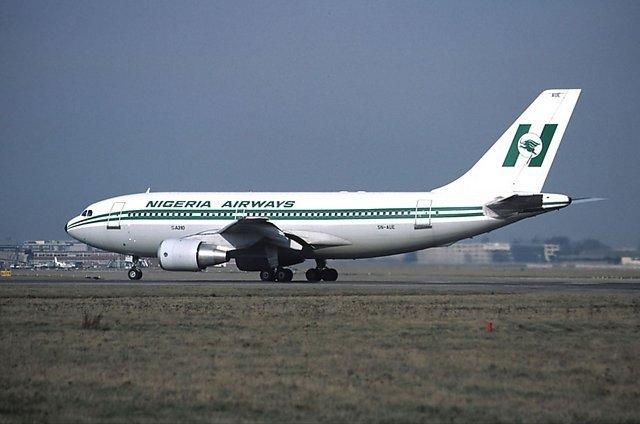
It was on this day 24 years ago that four Nigerian teenagers, irked by the illegal and unjust annulment of the June 12, 1993 general election by the Ibrahim Babangida administration, hijacked a Nigeria Airways aircraft flying from Lagos to Abuja and diverted it to Niamey, Niger Republic.

The incident took place on a Monday, October 25, 1993, at a time Ernest Shonekan, then Interim President, was struggling to hold a chaotic country together.

HOW IT HAPPENED

The young men — Richard Ogunderu, Kabir Adenuga, Benneth Oluwadaisi and Kenny Rasaq-Lawal — boarded the flight quite gently and waited till the pilot announced that passengers could unfasten their seat belts.

According to an account of the incident, as was later relayed by Ogunderu himself, the boys signaled to one another and seized the plane.

Passengers aboard the aircraft, including top businessmen and senior government officials, were bewildered to hear a voice, different from that of the pilot, addressing them in the moments that followed.

“Ladies and gentlemen, this plane has been taken over by the Movement for the Advancement of Democracy,” the rather tiny voice said. “Remain calm, we will not harm you. You will be told where the plane will land you.”

Ogunderu recalled that “the air hostesses were almost stone-dead, gripped by fear. They must not move else they would ‘be dead.'”

A passenger who was in the toilet was said to have remained indoors until one of the hijackers came to pull him out.

“We wanted change. Our action confirmed that when a system is inhumane, it could produce the extreme in all of us,” Ogunderu said in an interview in  2009.

“A system that cares not, a system that does not listen to our cries and our woes, a system that wants to exterminate us does not deserve a day of existence.”

Ogunderu was the leader of the pack and he narrated how he kick-started the hijack.

“I walked into the cockpit and seized the process, and then the others followed me. Two of us stood in the plane to intimidate the passengers. We took over the plane and asked the pilot to head for another country.”

DIVERSION TO NIAMEY

Independent sources said the initial plan was to divert the plane to Germany, but when it became obvious that they were running out of fuel, they decided to land in Niamey.

On landing, the hijackers found hundreds of armed gendarmes at the airport, but before then they had distributed their demands among the passengers, calling on the Nigerian government to overturn the annulment of the June 12 election and swear in MKO Abiola, the acclaimed winner of the election.

They gave the government 72 hours to meet their demands or else they would set the plane ablaze. However, they allowed 34 passengers to go and held onto the remaining 159 among whom were top Nigerian government officials.

The Nigerien police could not attack the plane by force, as they were unaware whether the attackers had military training or possessed explosives that could blow up the plane.

GAME UP!

The four held on to the plane for some days, trailed by bait negotiations until the gendarmes stormed the plane to rescue the passengers.

Ogunderu said: “They thought we were asleep, so they came under the cover of the night and fired several shots. They bombarded the plane. I think one person died.”

And so the four ‘musketeers’ were apprehended, their arms cramped on their back as they were handcuffed and taken to a prison in a community with day temperature in the range of 55 degree centigrade.

“We were poorly fed. We could neither speak Hausa nor French and nobody spoke English to us,” Ogunderu said.

“We were fired by the need to actualize June 12 through any means possible. We wanted to demonstrate rare courage that we could save Nigeria from the shackles of repression by giving a sense of courage to Nigerians.”

But he admitted that though they were motivated by the quest for freedom — freedom to choose our leaders — they “reacted in an extreme manner”.

As punishment, Ogunderu and his colleagues spent nine years and four months in prison in Niamey.

They had no contact with relatives and loved ones, from morning till night, for nine years.

But it was not all doom and gloom for the boys while in prison in Ndjamena, as among other things, they learnt how to speak French fluently.

Kabir improved his skill for drawing on canvass, sketching personalities and painting; Kenny kept his fashion design prowess alive throughout the gruesome nine years. Both returned to Niger Republic where their knowledge of French and their professions now earn them a fair living.

Ogunderu and Lawal returned to Nigeria, with the former attending the Alliance Francaise in Lagos where he brushed up his French language with a diploma degree.

Their only regrets, according to one of them, is that the “evil that Nigerians fought against several years back continues to luck around the country’s image”.

“Its unfortunate that our leaders continue to oppress us, the worst being that we cannot even choose our representatives in the face of fraudulent elections and the daring posture of the perpetrators of crime,” Ogunderu said.

ALERT: Only 30 percent of 1.7m UTME candidates are eligible for admission

The National Universities Commission (NUC) says only 30 per cent of the 1.7 million candidates who wrote the 2017 Unified Tertiary Matriculation Examination (UTME) are eligible admission.

Abubakar Rasheed, NUC Executive Secretary, disclosed this at a one-day public hearing on the regulatory conflict between Joint Admissions and Matriculation Board (JAMB) and universities in offering admission in Nigeria.

The hearing was organised by Senate committee on Tertiary Institutions and TETFund on Tuesday.

He said the limited spaces in tertiary institutions had made admission crisis inevitable in the country.

“The crisis of admission in this country is inevitable. Unless we expand spaces, we shall continue to have admission crisis in this country,” he said.

“Every exam has its own problem. We believe JAMB exam is credible and all of us operating in the system respect the results of JAMB exam.”

Speaking at the hearing, Ishaq Oloyede, JAMB Registrar, said there was no conflict between JAMB and universities in respect of admission.

Oloyede explained that most of the candidates who sit for JAMB examination annually do not have the required qualifications to gain admission.

He said: “It is not true that we have 1.7 million candidates that are ready to go into the Nigerian university system.

“Of the 1.7 million that took the exam I can say conveniently that not more than 30 per cent of them are prepared for admission; they are just trying. They do not have the five O-level required to go into the university.

“Secondly, let me also let us realize that 10 per cent of the 1.7 million that we see or 1.9 as the case may be they are not what can be categorized as belonging to the net enrolment ratio for entering tertiary education. They belong to the gross enrolment ratio.

“Eighty per cent of candidates sitting at the point of sitting do not have the O-level at all. They are awaiting results. So when we are building our theories and analysis, we need to be very cautious.

“If you score 400 over 400, and you do not have the five O-level, you cannot come into the university. The basic qualification is the five O-level.”