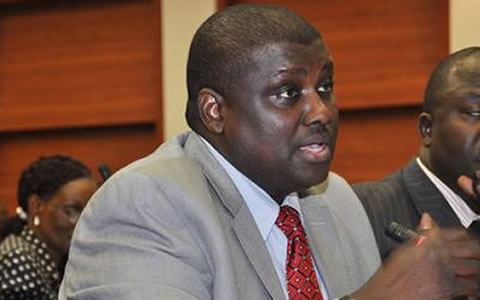
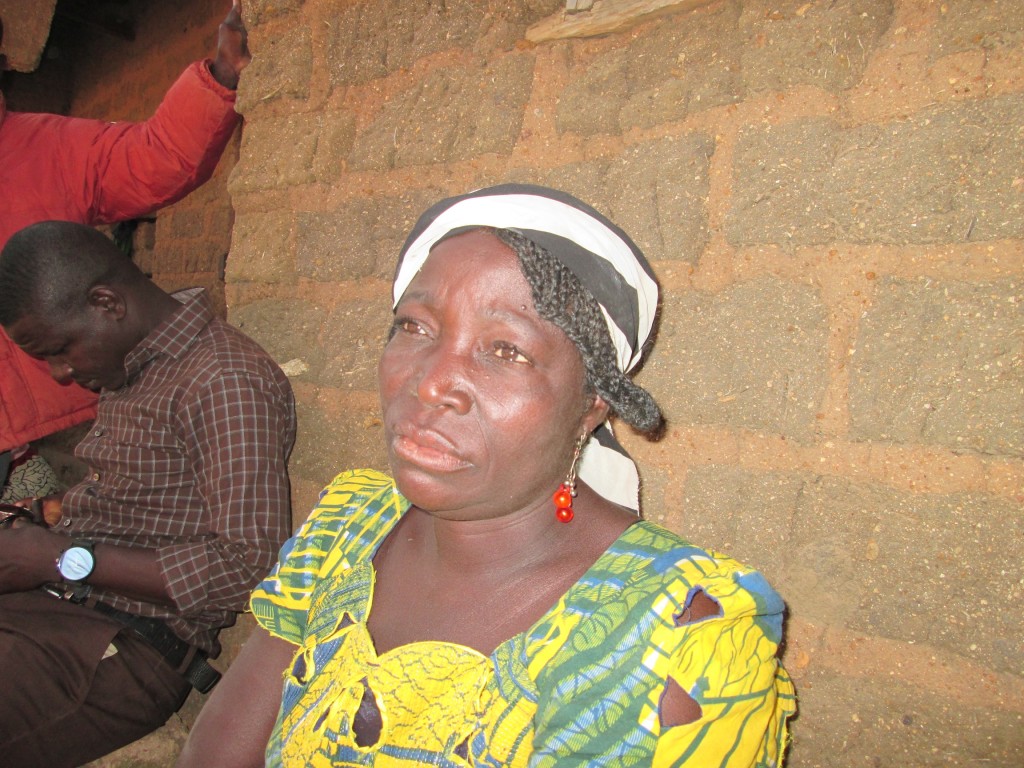
Family members of Abdulrasheed Maina say their son is not a criminal, rather he was begged by the Muhammadu Buhari administration to key into the change agenda.
Aliyu Maina, spokesperson of the family, said this at a press conference in Kaduna on Wednesday.
He was joined by Salihu Maina and Ladan Abdullahi, who are also members of the family.
He wondered why the government was denying Maina all of a sudden when it had assigned operatives of the Department of State Services to provide him security
“It is on record that Abdulrasheed Maina’s reform put to a stop the fraudulent withdrawal of huge sums from both the Nigerian Pension Board, the Nigerian Police Pension Board, etc,” Aliyu was quoted as saying by Daily Trust.
“Perhaps it is his noble efforts that made him enviable to the present administration when they came into power to convince him to come back and assist in its ‘CHANGE’ agenda.
“Abdulrasheed was in fact invited by this administration and he was promised security to come and clean up the mess and generate more revenue to government by blocking leakages.
“He succumbed to the present administration and came back to Nigeria. He has been working with the DSS for quite some time and he was given necessary security.
“There is a letter from the attorney-general of the federation where he gave his own legal opinion regarding the court verdict which was submitted to the Civil Service Commission and the head of service respectively.
“So, one wonders why all the agencies and various individuals responsible for his return are now denying.”
Aliyu said he was convinced his brother was being blackmailed by some cabal in the presidency, adding that the family would soon expose them.
“The cabals have gone to the extent of marking our house in red paints with an inscription of E.F.C.C under investigation,” he said.
“The EFCC is wrong in their action because Abdulrasheed inherited so many properties from his late father in Kaduna and Abuja; some of them were built before he was born, so how could he have acquired them fraudulently?
“The entire family of Abdullahi Maina is categorically stating that our son is not in any way a fraudster, rather he is a messiah who brought reforms into Nigerian Pension Scheme, whose effort saw the disappearance of pensioners roaming the streets of Abuja and other state capital in Nigeria.
“We are aware that all this act of calumny is not targeted against Abdulrasheed Maina alone but against the President of Federal Republic of Nigeria and the office of the Attorney General.
“We have contacted our lawyers, Messr Mamma Nasir & Co, and instructed them to act appropriately.
“We equally know that Abdulrasheed Maina is in possession of many facts against the cabal and interesting to the Nigerian populace, which he will disclose very soon.”
Abubakar Malami, Attorney General of the Federation and Minister of Justice, says he is ready to reveal all he knows about the reinstatement of Abdulrasheed Maina when he appears before the Senate.
However, he added a caveat: he won’t talk until he receives clearance from his “principal” — President Muhammadu Buhari.
Malami was reacting to reports that his office was fully involved in the recall of Maina, former Chairman of the Pension Reform Task Team (PRTT), who is currently on the wanted list of both the EFCC and the Police.
“I am a legal practitioner, who is always guided by law and public interest and will therefore not do anything that deviates from the law or breaches public interest,” Malami told journalists when asked to comment on his involvement in the Maina saga.
“I believe that Nigerians are entitled to know the truth in the entire saga and I am ready to speak directly to them when I appear before the Senate since I have been summoned by the legislature, which is investigating the matter.
“I will not however talk until I get clearance from my principal on the matter and I look forward to addressing anxious Nigerians on the matter when I appear before the senators.”
The Senate formed a committee on Tuesday to investigate Maina’s return to the country and subsequent promotion to the post of Director in the Ministry of Interior.
Main fled Nigeria to Dubai in 2013 after he was indicted and sacked from the civil service for spearheading massive fraud running into several billions of naira at PRTT.
However, he was secretly reinstated into the service — until Monday when public outcry forced Buhari to order his immediate disengagement.
The short-lived recall of Abdulrasheed Maina, former Chairman of the Pension Reform Task Team (PRTT), to the civil service has earned Goodluck Jonathan, former President, some public praise as someone who fought corruption better than Muhammadu Buhari. But the events of that period do not support this conclusion.
Actually, Jonathan literally allowed Maina walk free in 2013 in spite of a senate resolution urging him to prosecute the former pension reform boss.
Maina was a Director at the Customs, Immigrations, and Prisons Pension Office (CIPPO) in the Ministry of Interior before he was appointed PRTT Chairman by Steve Oronsaye, then Head of Service of the Federation, in 2010.
But Maina and Oronsaye also got enmeshed in the pension fraud they ought to be fighting, mindlessly looting the pension coffers of billions of naira.
MAINA’S SACK… FORCED BY THE SENATE
A Senate committee that was set up to probe the fraud almost got frustrated, as Maina refused to cooperate with its members.
The committee concluded its sitting and directed Mohammed Abubakar, Inspector-General of Police at the time, to arrest and prosecute Maina. The Senate committee also urged President Jonathan to disengage Maina from the civil service.
In fact, on February 14, 2013, David Mark, then Senate President, gave Jonathan a two-day ultimatum to sack Maina or face dire consequences.
“The executive has to choose between the Senate and Maina. He has crucified himself. If Maina remains, then the Senate would react appropriately,” Mark was reported as saying at the time.
“The Senate is not lacking in ideas on what to do. Nobody in this country is bigger than our democracy. I have been extremely patient with Maina, so that when we react, they will know that we have been fair.
“Whether the Police are serious about [arresting] Maina is something we are going to find out. This Senate is not going to allow this to linger on, if in two days they have not done anything, we can come here and convene and take a decision.
“This Senate has teeth to bite, the Senate will bite when it needs to bite; and when we decide to bite, there will be no room for escape.
“We have been pushed to the wall. The reaction is the correct reaction; no matter the depth of the Maina situation, nobody in this country will be left to go free if he is associated with Maina. No matter who is behind Maina, we are not going to accept it.”
The Senate then went ahead to adopt three motions moved by Victor Ndoma-Egba, the Senate Majority Leader, as follows:
“That Mr. Abdulrasheed Maina be dismissed from the Public Service of the Federal Republic of Nigeria immediately and be disengaged from all acts relating to public duty.
“That the Inspector General of Police appears before the Senate Committee on Police Affairs to give reasons why he did not act on the warrant issued by the President of the Senate.
“That Mr. Abdulrasheed Maina be investigated and prosecuted.”
However, reacting to the Senate resolution, Hassan Salihu, then spokesperson of the PRTT, said Maina was being persecuted despite having served the country with honesty and sincerity.
“Maina has never committed any offence to deserve this high level of persecution, even if he is an Assistant Director,” Salihu stated.
“We have done this assignment in the best interest of this country with all sincerity and honesty. It is only God that will save Nigeria.”
But in spite of the strong-worded resolutions by the Senate, Jonathan refused to act on the recommendations against Maina.
TECHNICALLY, MAINA SACKED HIMSELF
It was not until March 1, 2013, that rumuors started spreading that Maina may have been quietly removed at CIPPO.
In fact, Vanguard Newspaper quoted a civil servant as saying that it was only right for Maina to be replaced as he had already sacked himself by “running away from his job without any explanation”.
Maina’s replacement was eventually made official a week later on March 8, 2013. Olabisi Jaji, was posted from the Ministry of Environment to replace him, while Elizabeth Zenetini, from the Ministry of Agriculture, was appointed as her deputy.
JONATHAN SILENT ON PROSECUTION
Curiously, nothing was heard from Jonathan with regards to Maina’s prosecution in keeping with the recommendations of the Senate. On the contrary, Maina enjoyed executive protection, but was only eased out of service to avoid a looming head-to-head clash between the Presidency and the National Assembly.
In fact, anti-corruption sources say that in the early days of Maina’s disappearance, Jonathan was “fully aware” of his location.
Until he left office in 2015, there was no single time Jonathan showed interest in prosecuting Maina. Had the National Assembly not been recalcitrant in its demand for Maina’s sack, the ex-pension boss would still have remained in service — bar his arrest by law enforcement agents.
Certain categories of prison inmates whose crimes did not disenfranchise them will be allowed to vote in the 2019 general election, the Independent National Electoral Commission (INEC) has said.
Mahmood Yakubu, INEC Chairman, disclosed this in Abuja on Tuesday during a session tagged ‘Nigeria Civil Society Situation Room Dialogue’.
He said the Commission was already considering creating polling units in Nigerian prisons to give some categories of prisoners the opportunity to vote.
This followed ruling three years ago by a Federal High Court in Benin, Edo State, that prisoners have the right to vote in all elections conducted in the country.
Yakubu explained that only “certain categories of prisoners” would be given such an opportunity, depending on the nature of the crimes committed.
“We have already engaged the Comptroller-General of Prisons and we have statistics on the number of prisoners nationwide and the number of inmates registered,” he said.
“We are looking at the possibility of creating polling units in the prisons and to enable some categories of prisoners to vote.
“Ghana does it but there are some categories of prisoners who by the nature of crimes committed lose the right to vote. Whatever we can do to open up the process to ensure that as much as possible Nigerians are given the opportunity to vote, will be done.”
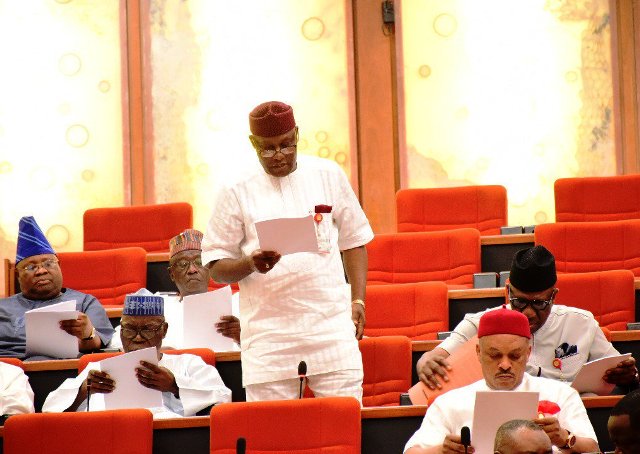
The Senate has set up a committee to investigate the circumstances that led to the reinstatement of Abdulrasheed Maina, ex-chairman of the Presidential Task Force on Pension Reforms, who is wanted for corruption.
This was following a motion that was moved by Isah Misau, the controversial Bauchi Senator who himself is currently undergoing forgery and libel charges at the FCT high court.
All the lawmakers who contributed to the motion described Maina’s reinstatement as an unfortunate development and a sign that some persons within the executive were working against the government.
However, Tayo Alasoadura said the Senate should not form a probe panel committee since Buhari had already ordered an investigation into the Maina saga.
“We should not always duplicate the Executive; if the Executive has ordered an investigation we shouldn’t order another,” Alasoadura said.
But after deliberations, the lawmakers mandated its committee on Public Service and Establishment to investigate the issue.
Senate resolves that the Committee on Public Service and Establishment investigate, 1. The circumstances of how Mr. Maina got into the…
Olusola Adeyeye suggested that the Committee should include Chairman and Vice Chairman of the Committees on Interior, Judiciary and Anti Corruption.
He also said that the Chairman of the Committee on Public Service and Establishment should head the probe panel. The suggestions were adopted.
On Monday, President Muhammadu Buhari ordered Maina’s disengagement immediately after news broke that the fugitive had been secretly recalled into the federal civil service and promoted as a Director in the Ministry of Interior.
Buhari also queried the Head of Service of the Federation, demanding explanation as to what led to Maina’s recall. The report was submitted to Abba Kyari, Buhari’s Chief of Staff, on Monday evening. But its contents remain unknown.
Since the news of Maina’s reinstatement broke, the Ministry of Interior has been trading blames with the office of the Head of Service and the Civil Service Commission over who authorised the move.
However, documents seen by journalists point to the fact that not only were the three agencies expressly aware and approved the recall of Maina, who is wanted by the EFCC and Police, the Office of the Attorney General of the Federation and Minister of Justice also knew and approved of it.
In 2013, prior to his fleeing to the United Arab Emirates (UAE), Maina refused to attend series of hearings by a Senate Committee set up to probe the allegations of corruption against him.
A Senate Ad-hoc Committee says Ngozi Okonjo-Iweala, former Minister of Finance and Coordinating Minister of the Economy, is to blame for the loss of about N1.7 trillion to the treasury between 2012 and 2016.
The Committee on Alleged Misuse, Under-Remittance and Other Fraudulent Activities made this known in an interim report presented before the Senate plenary on Tuesday by Olamilekan Adeola, Chairman of the committee.
According to the report, the amount of money that was not remitted to the coffers of the Federal Government by several revenue-generating agencies in those years amounted to approximately N1.7 trillion.
The panel said the development was as a result of a memo allegedly written by Okonjo-Iweala, which permitted the agencies to spend 75 percent of the revenue on internal expenditures and remit only 25 percent to the government.
The committee stated that the directive by Okonjo-Iweala “is a clear violation of Section 120 of the 1999 Constitution of the Federal Republic of Nigeria (as amended) and the Fiscal Responsibility Act 2007 as well as the establishment acts of some of these institutions”.
A total amount of N21.5 trillion was supposed to have been remitted by 93 government agencies within the period in review, but 25 out of the 93 agencies defrauded the federal government of a total of N1,695,585,887,406, the report states.
According to the panel, the Nigerian National Petroleum Corporation (NNPC), which is Nigeria’s highest revenue earner, generated N15.541 trillion during the period in review, but it claimed that its expenditure was N18.657 trillion. This amounts to a total deficit of N3.1 trillion.
The Nigeria Customs Service generated N335.855 billion but withheld N83.963 billion; while the Federal Inland Revenue Service (FIRS) generated N455.5 billion but allegedly failed to remit N33.83 billion.
Similarly, the Nigerian Ports Authority (NPA) reportedly remitted only N86.636 billion to the federal government out of the N789.104 billion it generated.
The Central Bank of Nigeria (CBN) allegedly generated N3.098 trillion but remitted only N13.716 billion; NIMASA generated N301.160 billion but remitted only N184.489 billion, and the Nigerian Television Authority (NTA) remitted only N5.567 billion out of the N56.817 billion it generated.
The senate committee alleged that the affected agencies “deny the Auditor General of the Federation access to their financial books and records”, contrary to Section 125, subsections 3 and 4 of the Constitution.
The committee recommended that the Senate should “amend the laws where necessary to make it mandatory for all revenue generating agencies to accommodate resident auditors to be posted by the Auditor General of the Federation”.
These auditors will have access to all financial records and books to ensure compliance with relevant sections of the Constitution.
“The Senate should also amend the laws where necessary to make it mandatory for all revenue generating agencies to accommodate resident treasury officers to be posted by the Accountant General of the Federation that will have access to all financial records and books,” the report read further.
“The Fiscal Responsibility Act should be amended in a way to compel all agencies and institutions of government on compliance with financial regulations regarding income generation, accounting and remittances.”
EDITOR’S NOTE: This piece was first published in 2013 by Flair Nigeria. The ICIR is reproducing the five-part series in the light of the resurgence of killings in Plateau State, to help readers understand the genesis, depth, brutality and possible solutions to violence in the state.
In the finale of this series on the brutal killings in Plateau State, ‘FISAYO SOYOMBO highlights the high points of an 11-day expedition to many of the state’s most interiorly-located villages, headlined by a touch-and-go 134-minute motorcycle trip that nearly turned awry. He also shares an eyewitness’s approach to bailing the north-central state out of the pointless waste of lives.
Arriving Jos for the first time ever, I had certain stereotypes that were set in stone. I was expecting to be welcomed by ruin, by a precipiced city so risky to navigate, either during the day or at night. I was not to blame. I had naively become accustomed to several variants of the newspaper headline, “Jos Boils Again”. The Internet is replete with them.
Well, I was disappointed. Jos, it turned out, was as peaceful as any other Nigerian city. Many of the villages where these killings occur are actually several hundred kilometres from Jos city itself. And as I discovered in a matter of days, the ascription of the violence in the villages to “Jos” has been the greatest disservice of go-between media reportage of the killings to unsuspecting readers. Perhaps the confusion is explainable: the villages are dangerous; reporters are scared of death; so rather than reports from journalists who have physically accessed the danger zones, what we have are third-party-sourced news reports.
THE IRONY THAT IS PLATEAU
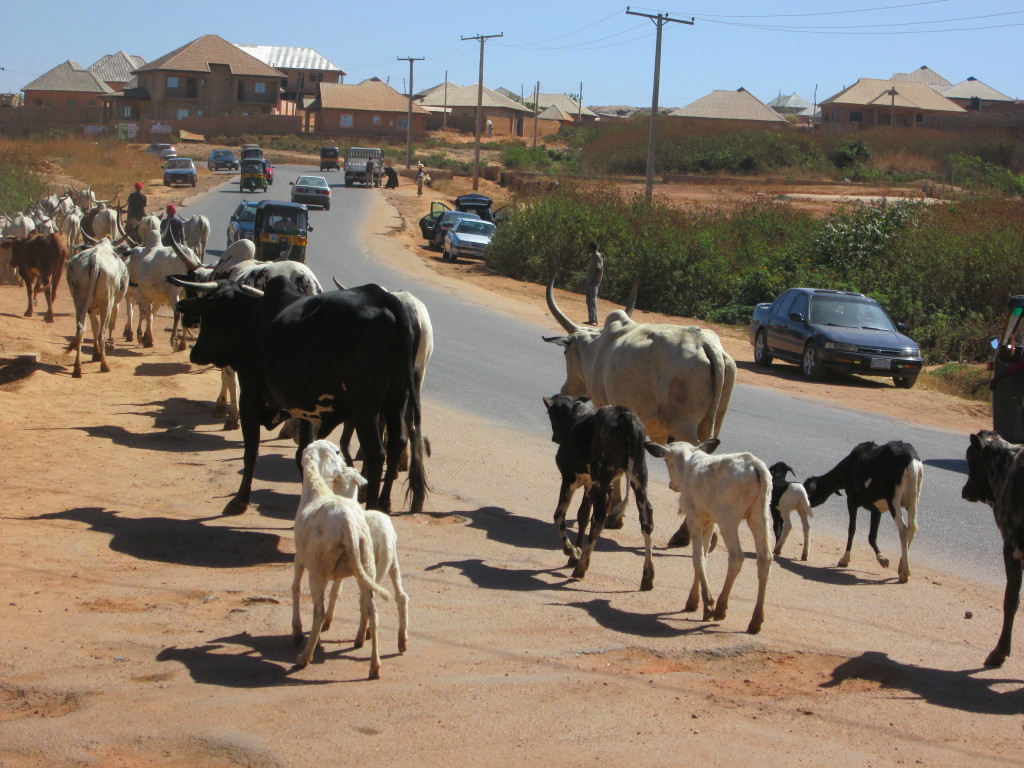
Jos… so peaceful cattle and vehicles have equal access to road!
Beginning from my first journey out of Jos on December 11, 2013, I was stunned by the kindness and friendliness of the average Plateau man. From Wase Junction where we disembarked from a car to mount a motorcycle for the 25-minute ride to Nyapkai Village in Langtang North Local Government, I counted nine villagers who raised their arm in a surprising show of camaraderie to two strangers speeding past. During the 59-minute motorcycle ride from Bokkos to Mile-Bakwai Village days later, I counted 16 villagers who did the same.
All over the towns and villages I either visited or navigated, this practice was commonplace. And residents willingly and cheerfully offered sincere directions to strangers. Any stranger who has been misled in a city like Lagos, for example, will appreciate the value of this virtue. A young man (whose family of eight was murdered) enthusiastically climbed an orange tree in the compound to pluck the fruits for my guide and me. The peasant that he is, he compulsorily wanted to entertain us with something — anything. So, I was grappling with a riddle all through: how is a state brimming with such endearing levels of friendliness simultaneously engulfed in decades of inter-ethnic resentment?
WASE IS GATEWAY TO HEAVEN — OR HELL!
Magnanimity: Danladi (L) conveys reporter and guide round Kukah Village pro bono
After Daniel Zitta rued his displacement (alongside hundreds of villagers) from Kadarko Village in Wase Local Government, I became curious about Wase. I was told that in Wasetofa Village, the Fulani killed many Taroh and razed their houses. All Taroh in the area had fled. Well, if all that happened, if hundreds were driven out of their natural abode, then I had to see Wase. I wanted evidence. I wanted to photograph rubbles of the destroyed houses; I wanted to talk with anyone left in the village.
“Who will take me to Wasetofa Village?” I asked curtly, glancing in the direction of Pa Geofrey, the Head of Nyapkai Village. He shook his head in discord. My glance shifted to the motorcycle rider who had doubled as interpreter of the village head’s response to my questions. “Not me,” he replied without awaiting my question. Then I turned to Samson Zwalnan, my guide, an exceptionally courteous young man who would later exhibit courage too impressive for a non-journalist by accompanying me on some other dangerous trips without uttering a word of complaint. He cowered.
Samson it was, who gave me an explanation. “You want to enter Hausa-Fulani territory?” he retorted rhetorically. “I am not the one to take you there. Those guys are not friendly one bit.”
Being one who rarely accepts the meaning — or even existence — of the word “no” when I am convinced about a cause, I pressed further. “If you won’t take me there, Samson, please give me the directions,” I said, grabbing him by the arm. “Give me the directions and wait for me here while I go.”
But Samson would not budge. “I won’t take you there. And if you insist you want directions to Wase, I am not the one who will give you,” he responded, his mind clearly made up. “You want to enter Fulani Territory wearing a shirt and pair of jeans? I can promise you that you won’t survive up to a minute in that village before you are gunned down.”
Silence reigned for the next minute or thereabouts. There had to be a way out, I soliloquised. “Okay, then; we go elsewhere,” I blurted with a cheer. “I can always get a Fulani in Jos to take me to Wasetofa tomorrow. With one of their own, I should be safe, you know.”
Samson handed me a chilling warning. “Don’t try it. Wase is shortcut to heaven!” It was the only time he raised his voice in the 11 days of our togetherness. Reluctantly, I let “no” have the victory. I didn’t “try it”.
A WEIGHTY REGRET
Samson (L) will not near Wase for anything
Every day for 11 days, I explored the possibility of speaking with a Hausa-Fulani. Now, that is because every single village I trod, families and neighbours of slain villagers accused the “Fulani” of masterminding the murders. On December 19, 2013, one day before my scheduled departure from Jos, I received the telephone number of a representative of the Fulani at one of the dialogue fora. By the schedule of the prospective interviewee, a physical appointment was impracticable. That was understandable. In the next few days, a makeshift telephone interview never quite materialised — despite a string of trials. On the deadline for going to press, the Hausa-Fulni man in question lost it. He made it clear he didn’t want to be “disturbed” — in a raised voice, directed at a stranger.
The regret is the failure, in a total of 21 days, to get a Fulani response to accusations that the ethnic group is to blame for the killings. It was some sort of lifeline, too, for a representative of the Fulani to contradict all the blame that had been piled on them; and it was fluffed. The blames aside, an important statistic indict the Fulanis: none of the villages where deaths were recorded is a Fulani zone. Certainly, the death of people from all ethnic groups save the Fulani is a big statement on the identities of the victims as well as the terrorists.
On the heartening side, it was maybe testament to Samson’s repeated claims on the “unfriendliness of the Hausa-Fulani”, on why I should avoid their territories altogether, on why treading Wase in the company of a Hausa-Fulani made no guarantee that my life was secure.
RAWURUM IS ON THE WAY TO HEAVEN
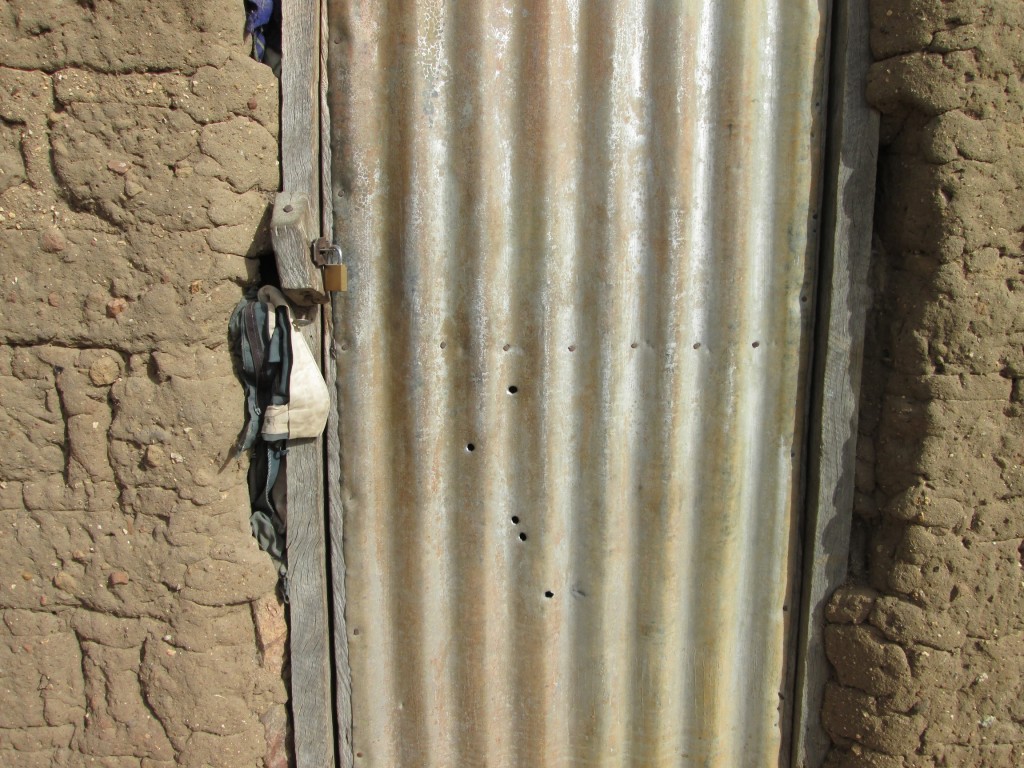
Bullet-riddled entrance of house where Tsok Gwom and family were murdered
Monday November 16, 2013, was the one day I wondered if I overstretched my luck by coming to Plateau. Since October when I read media reports of the murder of Pa “Tsok Gwom and eight members of his family in Kukek Community in Bakin Fogi District of Barkin Ladi local Government”, I swore I would not return to Lagos if I didn’t locate Gwom’s house and the solitary grave where all “nine” were interred. Two corrections. First, Gwom’s son, Solomon Pagyang, confirmed that eight — not nine as reported by the media — members of the family were murdered. Next, the residents said the name is actually Ket Village — not Kuke — as widely reported.
My guide, a motorcycle rider, and I arrived at Ket Village at about 1pm, first securing clearance from the village head, Mr. Luka Pam, before going on to seek out the victims. Solomon was summoned while we interviewed other victims. But it was only after the interview with him that it became clear that the house of the victims was sequestered on the outskirts of the village.
Time was nearing 3pm, and we still needed to see Rawurum Village. From the moment Rwang Dantong confirmed a five-month old baby was shot in the mouth in Rawurum, I knew I would sacrifice anything to get to Rawurum. It was time to go. But then, what evidence had I that Tsok Gwom and the seven others were truly murdered? I mounted Solomon’s bike, and my guide mounted the rider’s. We arrived at the house after about 15 minutes. I photographed the bullet-riddled house where they were murdered; I snapped the mass grave where all eight were hurriedly buried.
Grave where all eight were mass-buried
Proof complete, we zoomed to Rawurum, ignoring the protestations of our motorcycle rider and clinging to a neighbour’s assurance that Rawurum was “just 15 minutes” away. How wrong we were! That was exactly 3:12pm.
One hour later, we were still on that motorcycle — on the way to Rawurum. It was a particularly horrible journey to undergo. For most of it, the footpaths were bumpy, rocky and encroached by shrubs. On so many occasions, we had our hands over our faces to prevent the shrubs from slashing at us. And twice, we all disembarked from the cycle to push it through streams coursing through undulating, rocky land paths. Both were gruelling exercises.
One and a half hours into the journey, the bike rider — who had been busy raining cusswords on the fellow who inexplicably told us we would arrive at Rawurum in 15 minutes — slowed to a halt. He had had enough and would go no further. Of course, he had a valid argument. It was 4:47pm; we hadn’t arrived at Rawurum; we were unsure if we were close to it. The cloud was beginning to darken, which meant danger was lurking. In darkness, these villages are pretty unsafe.
But there was no way I would sit on a motorcycle for a draining one-and-a-half-hours only to return with naught. “We will not turn back unless we have found Rawurum,” I said sternly. “We are men. We have to be strong. We cannot give up.”
Speaking through Samson, my guide-cum-interpreter, the rider made it clear he would move no further. He switched off the engine and disembarked. And he wanted his money. That, to me, was blackmail. I responded, blackmail for blackmail: “You were contracted to convey us to Ket and Rawurum, before returning us to Bakin Foron Junction. No Rawurum, no money.” I added, though, that I was prepared to up his pay by 50 per cent.
Samson passed on my message. The raise, I suppose, worked like magic. In two minutes, we were back on the road, the rider cooperatively speeding faster to beat time. After travelling a total of 2hours and 14 minutes on motorcycle, we finally found Rawurum, and headed for the house of the seven-man Ladi Bula family (including five-month-old Julius) that was exterminated. That was 5:26pm.
The road to Mile-Bakwai Village
By the time we were exiting at exactly 5:55pm, the rasping December harmattan of Jos was out to haunt us. If I committed any pre-travel goof, it was to underestimate the weather gulf between Lagos and Plateau States. Samson, whom I thought would have been accustomed to such harsh conditions, was himself shivering profusely in front of me, despite wearing a sweater. The cold worsened some half-an-hour later, as darkness finally enveloped us. By the time we had travelled an hour, my body was stony and my fingers stiff.
Worried, like me, by the danger of a night travel, the rider hurtled anxiously once we hit the highway. At that point, a part of me wondered if I would survive the trip. With my head suddenly assuming a bloated weight, I feared I would fall off the bike any moment. To stay active, I reached for my phone and blared music into my ears through the headphones. It kept me pseudo-conscious. After travelling on motorcycle a total of 1 hour and 49 minutes, we arrived at Barkin Kogi, where Samson and I slipped into a waiting taxi. We uttered no word until we reached Jos, each one patently ruminating over what might have been.
A VALEDICTORY KILLING
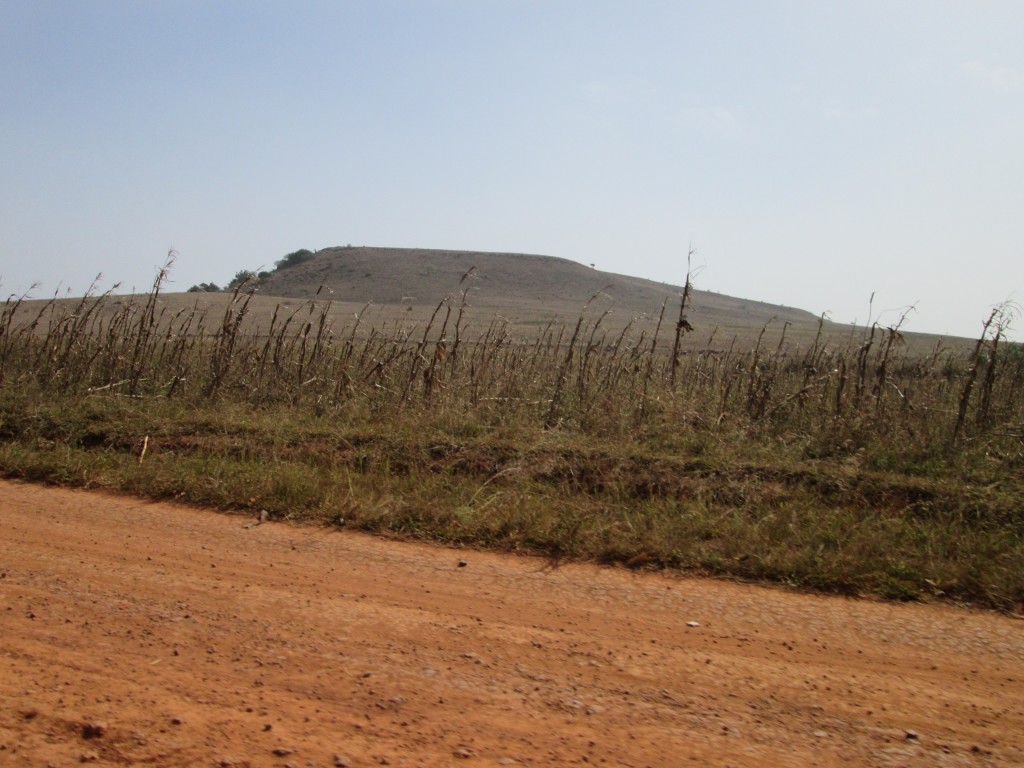
The road to ket Village
Three days before I left Plateau, gunmen struck again, this time in Larwin Village, Heipang. Five people died instantly; one more person died at the hospital the following morning; three sustained injuries. In error, the media reported that all six were members of a family. They were not.
Of the six, only one, Pam David, was an adult — a 25-year-old. All others were kids: Jerry Dalyop, 5; Miracle Ishaya, 3; Deborah Ishaya, 5; Judith Emeka, 3; and Promise M. C., 3. This latest attack somewhat validated Daniel Choji’s allegation of a grand extermination plan against the Beroms. Why, I have continued to wonder, will anyone kill innocent children?
CHUNDUNG: VENGEANCE IS GOD’S
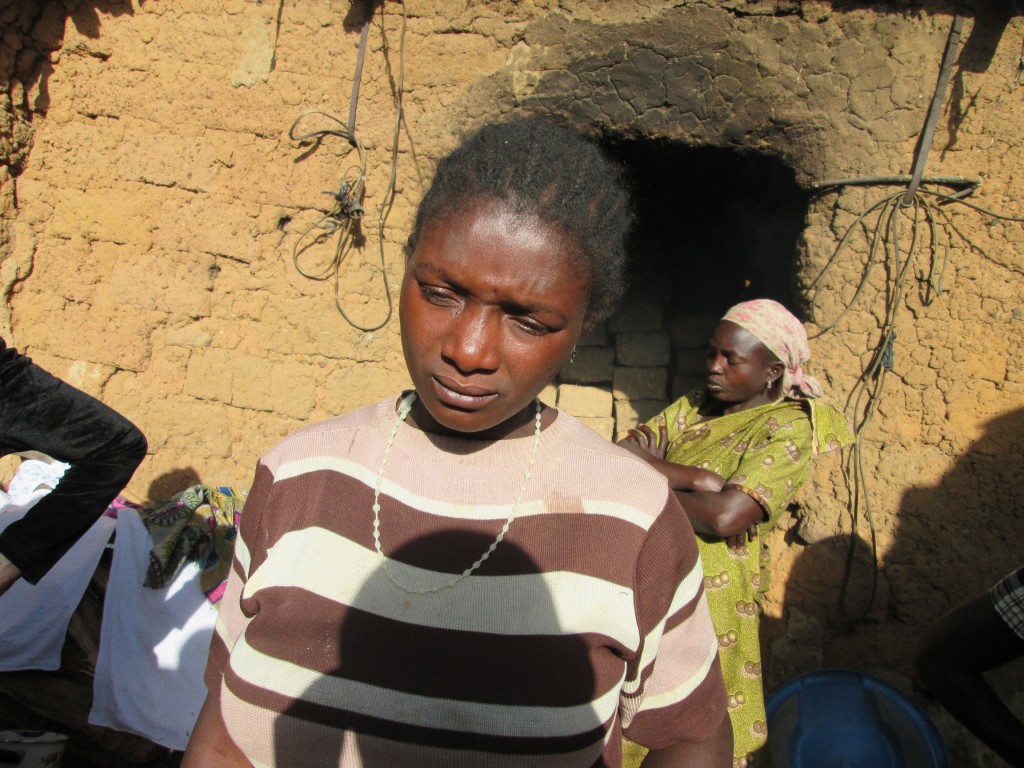
Chundung Dalyop, the mother of Miracle and Deborah, was so disconsolate her reaction was laconic. “I feel highly aggrieved with what happened,” she said through an interpreter. “Only God can comfort me; and God alone can avenge the killing of my children. I leave all that has happened into the hands of God. But truly, emotionally, I feel the pains so greatly.”
‘IF YOU DIE…’
The road to Dipbong Village
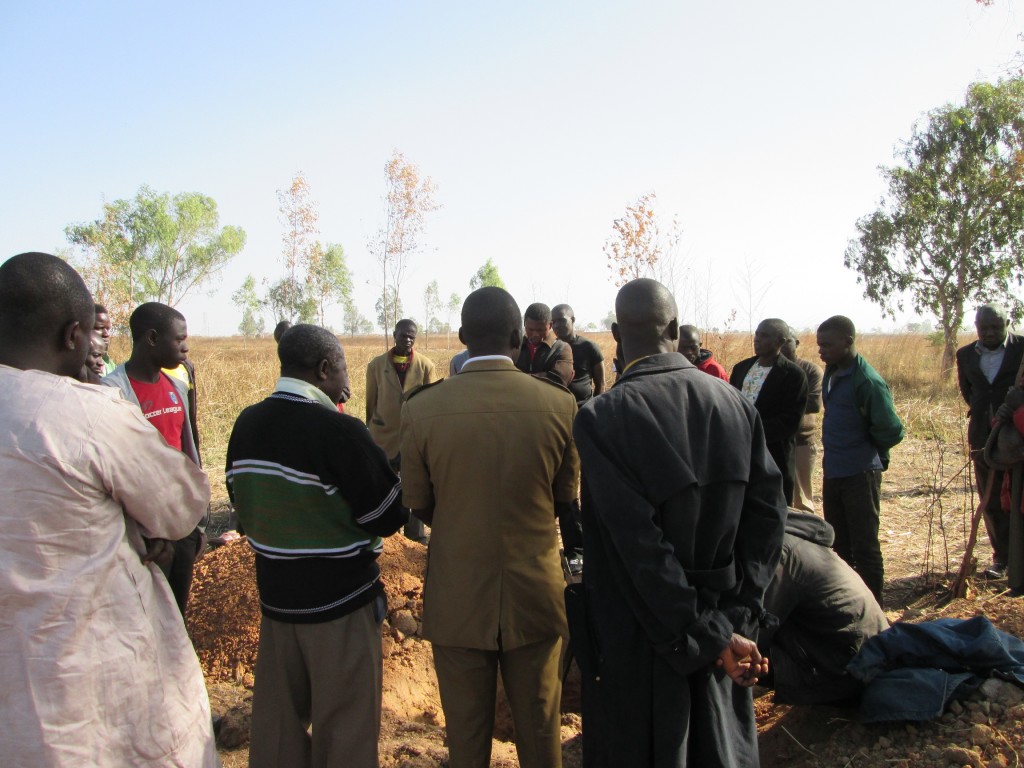
The following day, I showed up at the mass burial for the slain six! I arrived just as the curtain was brought down on the burial of the five who died instantly. All five went into a single grave. The corpse of Choji’s nephew, who died much later, arrived just as I was disembarking from the car. I saw him being lowered into an adjoining, small grave, as prayers were offered for the repose of his soul. It was a crushing sight that brought the reality of the killings down hard on me.
Attending that mass burial was one of the riskiest decisions of the trip. As Rwang Dantong said, if a senator and a state lawmaker could be killed (in July 2012) while attending a mass burial, the common man, such as me, has no hope. My heart raced as Dantong collected me at my lodge and we made off for Heipang. This was one of the perils that a number of friends had warned me to avoid. Joan Omionawele, a journalist with a national daily, was the one who had laced her message with the scariest choice of words.
“I don’t like that type of journalism o. Not in a country like this,” Joan had chided me on learning of my trip. “I won’t cry over you if you die. Instead, I will be very angry — not at the killers but at you.” Her argument was that she had seen journalists “go down the drain” without even been remembered. She was right.
Since Channels Television reporter, Eneche Akogwu, 32, was shot on January 20, 2011 while reporting the pandemonium at Farm Centre Police Station in Kano State following multiple bombings by Boko Haram, no one has done anything to immortalise him. Few even know that Zakariyya Isa, a reporter with the Maiduguri Network Centre of the Nigerian Television Authority (NTA), was murdered by the same sect for being “an informant to security agencies”. Isa, like Enenche, has been forgotten.
“I don’t like to live in fear,” she went on. “But if anything happens, just know that you were unfair to your family and friends, Fisayo Rolihlahla Soyombo Madiba. Mind you, I’m not trying to be funny.”
Although I felt pangs of fear on an occasion or two, the prospect of death never quite crossed my mind — for one important reason. The people (mostly children) dying in Plateau needed someone to unearth and tell their unknown stories; their endangered friends and families needed help. If I travelled that far and risked that much to get hold of their stories, then there was no chance I would die. I had to live, if only because I had to tell their story!
One day before my departure from Plateau, I implicitly responded to Joan’s words with a status update on social networking site, Facebook. “If you’ve found a cause for which you can die,” I wrote, “you have found a cause for which you should — and you will — live!”
ENDING THE KILLINGS: EVERYONE KNOWS!
Friends and families at the mass burial for the six killed at Larwin Village, Heipang
Truly, I did not witness the birth of the crisis that has, in recent years, metamorphosed into spasms of organised killings. But having traversed a number of villages that many of my Plateau-born friends and acquaintances have admitted never setting foot on, I can say with a measure of certainty that restoring peace to Plateau is not as difficult as the continuity of the killings suggests. And as a matter of fact, the ultimate solution was recommended a massive 20 years ago.
Aribiton Fiberesima’s commission of inquiry laid the foundation for the solution back in 1994: Government must apply sanctions to all individuals, groups of persons and organisations… culpable in the killings.
The ongoing dialogue initiatives are massive. They are commendable. Credit to the Plateau State Government, non-governmental organisations, and the various ethnic groups! But all the progress will be pointless if anyone can break into a compound unchallenged, and wipe out all its inhabitants. To prosecute the perpetrators, they must be apprehended. To apprehend them, security in the state must be watertight. Sadly, at the moment, security in the villages is as porous as a basket.
The Special Task Force (STF) soldiers deployed to Plateau, I could not find them. They were absent in the villages where they were most needed! Of the total 11 villages I visited, I found soldiers in only two: Mile-Bakwai and Kukah. The ones at Mile-Bakwai seemed domiciled there, ready to confront any impending threat. The ones at Kukah, all I saw them do was frog-march the driver of a private car for driving too close to their roadblock before slowing. In all the other nine villages — Nyapkai, Dipbong, Zamchang, Locost, Ket, Rawurum, Kungte, Tatu, Larwin — I did not run into a single soldier.
So those villagers are all vulnerable. To worsen this vulnerability, all these villages — save Larwin and Kukah — are inaccessible with a car. The villages in question can only be accessed via footpaths — after several minutes (or sometimes hours, as with Rawurum) of travel on motorcycle. Their location way off civilisation leaves little room for response policing or soldiery. At the moment, these villages lack security; and until it is put in place, the killings will continue, notwithstanding the intensity of dialoguing.
ACT, PRESIDENT JONATHAN; ACT!
On Sunday December 29, 2013 at a church in Abuja, Nigeria’s Federal Capital territory, President Goodluck Jonathan delivered a charge reminiscent of his famous I-had-no-shoes-no-bags presidential election campaign speech of September 18, 2010.
“Any child of Nigeria can be where I am,” he said this time. “I come from the smallest state in this country — even within the state, one of the smallest communities in Bayelsa State; even within the community, one of the smallest families. But I am here today by the grace of God.”
The President must know — if he didn’t — that many children in Plateau who have no shoes like him are perpetually at risk of death; they stand no chance to, like the President, fulfill their dreams. On December 17, 2013, five children aged five, five, three, three, and two were callously murdered by attackers. A dozen others have died already in 2013. Will the President, as Commander-in-Chief of the Federal Republic, continue looking the other way? Mr. President, you have to “give a damn” this time!
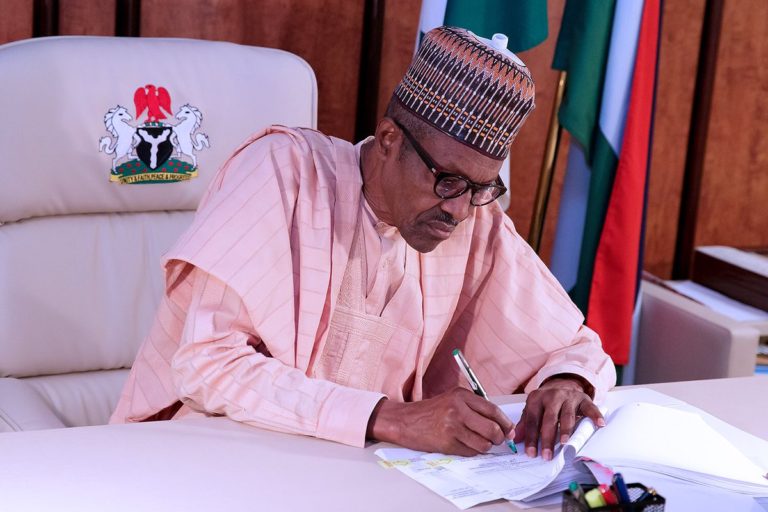
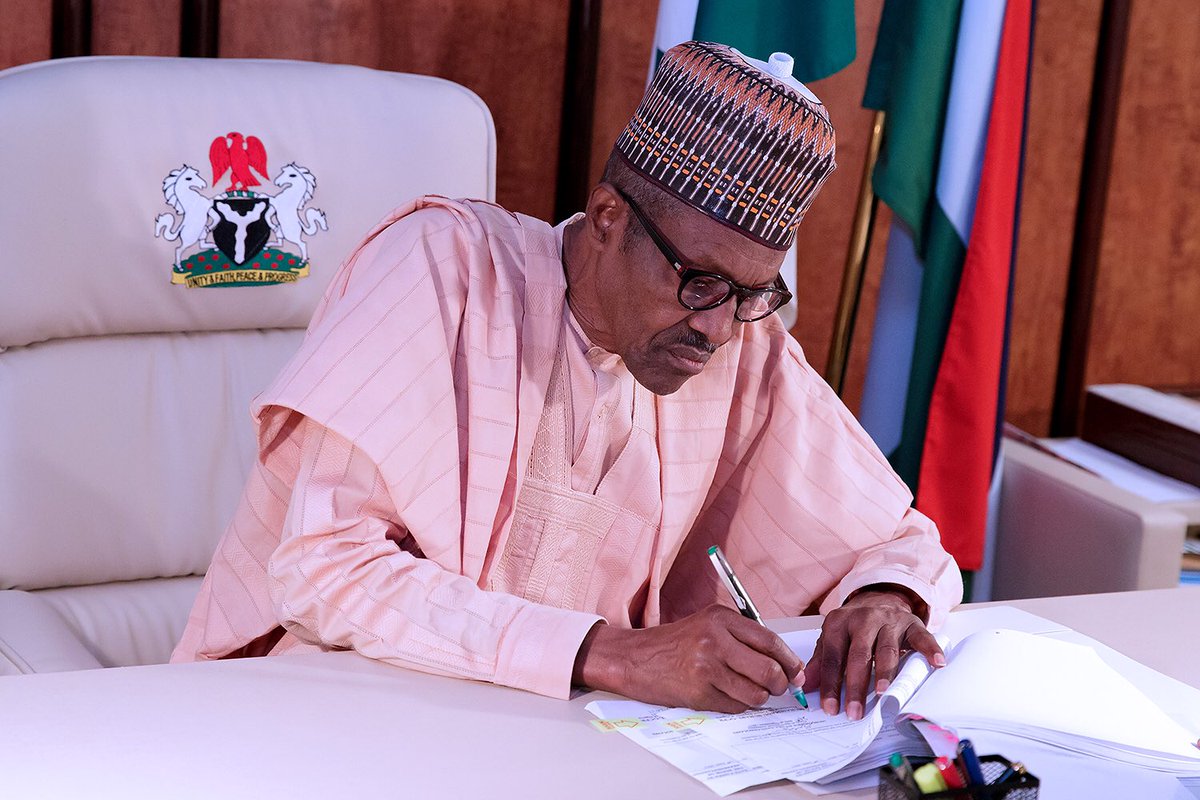
President Muhammadu Buhari acted swiftly on Monday by ordering the immediate disengagement of Abdulrasheed Maina from the nation’s civil service.
Maina, former Chairman of the Pension Reforms Task Team, is wanted by the EFCC for allegedly spearheading a massive fraud in the pension sector that he was drafted in to sanitize.
He has been in the United Arab Emirates since 2013, refusing to come back to Nigeria to face his trial.
At the weekend, it became public knowledge that Maina had clandestinely returned to the country, having been appointed a Director at the Ministry of Interior.
However, Buhari, who was away in Turkey, issued a directive on Monday ordering Maina’s immediate disengagement, while also requesting an explanation from the Head of Service.
WONDERFUL, ISN’T IT?
Buhari’s swift action on the matter drew different reactions from many Nigerians. While many described it as a welcome development, others say the harm had already been done, as Maina ought not to have been reinstated in the first place.
Yet another group of Nigerians feels that Buhari may have breached the civil service rules by unilaterally ordering Maina’s sack.
WHAT DOES THE RULE SAY?
According to the Public Service Rules, “the power to dismiss and to exercise disciplinary control over officers in the Federal Public Service is vested in the Federal Civil Service Commission. This power may be delegated to any member of the Commission or any officer in the Federal Civil Service.”
The rule book explained that an officer’s appointment could be terminated on the basis of acts of “misconduct” which include among other things; “Failure to keep records; Unauthorized removal of public records; Dishonesty; Negligence; Refusal to take/carry out lawful instruction from superior officers; Malingering; Insubordination,” etc.
“Where a Tribunal of Inquiry set up by the Government makes recommendations of a disciplinary nature on an officer, the Federal Civil Service Commission shall not act on such recommendations until it has called upon the affected officer to reply to the allegations made against him/her by the Tribunal of Inquiry,” the rule book states.
“If the officer refuses or neglects to reply to the allegations within a reasonable time or at all, the Federal Civil Service Commission or its agent shall proceed to accept and enforce the recommendations of the Tribunal of Inquiry and take such disciplinary action against the officer as it shall deem appropriate.
“…If as a result the Commission decides that the allegation is proved, it may inflict any other punishment upon the officer such as reduction in rank, withholding or deferment of increment or otherwise.
“In serious cases which are likely to result in dismissal, the officer should be given access to any such document(s) or reports) used against him/her and he/she should be asked to state in his/her defence that he/she has been given access to documents.
“The officer shall be called upon to state in writing, within the period specified in the query any grounds upon which he/she relies to exculpate himself/herself;
“If the officer submits his/her representations and the Federal Civil Service Commission is not satisfied that he/she has exculpated himself/herself, and considers that the officer should be dismissed, it shall take such action accordingly. Should the officer however fail to furnish any representations within the time fixed, the Commission may take such action against the officer as it deems appropriate:
“If upon considering the report of the board the Commission is of the opinion that the officer does not deserve to be dismissed but that the proceedings disclosed grounds for requiring him/her to retire, the Commission shall, without further proceedings, direct accordingly.
“All disciplinary procedures must commence and be completed within a period of 60 days except where it involves criminal cases.”
HOWEVER…
What Buhari did in this case was more like ordering the maintenance of the status quo; and the status quo is that before now, several probe panels, including one inaugurated by the Civil Service Commission, had already indicted Maina of corruption and recommended his sack.
A senate joint committee investigated the case in early 2013, albeit with little cooperation from Maina, who missed many sittings of the probe panel.
The committee, at some point, had to order Mohammed Abubakar, then Inspector General of Police, to compel Maina to attend the sittings but he was nowhere to found.
The committee concluded its investigation and made recommendations to President Goodluck Jonathan to the effect that Maina should be sacked and prosecuted.
Before then, Jonathan had already instructed Isa Sali, then Head of Civil Service of the Federation, to commence disciplinary actions against Maina.
This culminated in Jonathan’s approval of Maina’s removal as Director of the Customs, Immigration and Prison Pension Office (CIPPO).
CONCLUSION
It is very difficult to say Buhari was wrong or right to have swiftly ordered Maina’s disengagement while still expecting an explanation from the Head of Service. On the surface, it looks easy to say he breached service rules.
But the other side of the coin is that Maina’s reinstatement itself was illegitimate. The last legally acceptable action on Maina was his dismissal during the Jonathan regime. On that basis, it could be said that Buhari only restored the status quo, in which case it would be hard to fault the President.
If anyone has a case to answer here, it has to be the offices of the Interior Ministry, Head of Service, the Department of States Service and the Civil Service Commission, for alleged complicity in Maina’s illegal reinstatement.
The Kogi State government says the salary of Edward Soje, the civil servant who committed suicide after his wife delivered triplets, was withheld after it was discovered that he falsified his age.
Deborah Ogunmola, Head of Service of the state, made this known in a statement on Sunday. She said that although Soje’s death was regrettable and unfortunate, the state should not be blamed for it.
Fifty-four-year old Soje was a director at Kogi State Teaching Service Commission before his demise.
Family sources said the deceased had been facing a series of financial challenges as a result of his unpaid salaries. His death came 10 days after his wife gave birth to a set of triplets. NAN said the couple had been childless since they got married 17 years ago.
But in the statement on Sunday, Ogunmola said the just concluded workers’ verification exercise in Kogi State revealed that Soje engaged in false age declaration.
“His pay was stopped after proof emerged that he falsified his age records. His confession to the offence is on video,” Ogunmola said.
“Following engagements with Labour, which spanned several months, the Kogi State Governor magnanimously commuted the disciplinary action due against certain categories of offenders by grant of pardon. Mr. Soje fell into one of the categories.
“Pardoned staff were processed for reinstatement and payment in batches. Mr. Soje was in the September 2017 batch and he was aware of this fact.
“The Kogi State Teaching Service Commission, where he works, has forwarded a template for payment to Government and Mr. Soje was aware that he was listed to receive six months back pay, leaving only two months (August and September) outstanding.”
The Kogi State government has been roundly criticised over its inability to pay its workers several months of Salary arrears.
Ayodele Fayose, Governor of Ekiti State, says the anti-corruption war of President Muhammadu Buhari is “like Satan calling Judas Iscariot a sinner”.
Fayose was reacting to the secret recall and reinstatement of Abdulrasheed Maina, former Chairman of the Pensions Reform Task Force, who had fled the country after he was declared wanted by the Police and the EFCC following allegations of fraud.
According to the Governor, events in the country have lent credence to his prediction that the level corruption under Buhari would be unprecedented.
The Ministry of Interior confirmed that Maina was recently posted to the ministry, as the new Director in charge of its human resources department.
Reacting to the development via his Twitter handle, Fayose said he was not surprised as he had consistently maintained that the so-called anti-corruption campaign of the Buhari administration is targeted at perceived political opponents.
“Fellow Nigerians, are you now convinced that Buhari’s anti-corruption fight is like Satan calling Judas Iscariot a sinner?” he wrote.
“Didn’t I tell Nigerians that Buhari was not fighting any corruption? Didn’t I say that Buhari was only after his political opponents?
“I said it then that the kind of corruption that will be witnessed in this government of Buhari will be unprecedented, am I not being vindicated?”
Maina’s recall is believed to have been orchestrated by Abdulrahman Dambazzau, Minister of Interior, and Abubakar Malami, Attorney General of the Federation and Minister of Justice.
He is also believed to be enjoying some sort of protection by the Department of State Services (DSS) who have provided a safe house for him in Abuja.
Meanwhile, the EFCC has expressed readiness to re-arrest Maina if he shows up to assume his new appointment at the Interior Ministry.