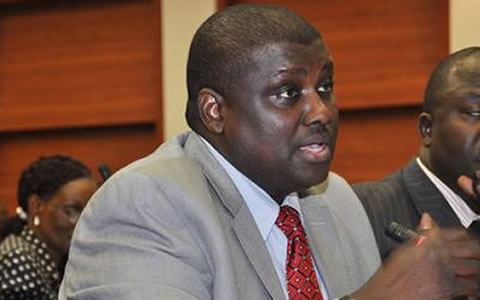
President Muhammadu Buhari has directed the immediate disengagement of Abdulrasheed Maina from the Federal Civil Service.
This was contained in a brief statement issued by Femi Adesina, Special Assistant to the President on Media and Publicity.
According to the statement, Buhari also directed Winifred Oyo-Eta, Head of Service of the Federation, to submit a full report of the circumstances that led to Maina’s recall and posting to the Ministry of Interior.
“The report is to be submitted to the office of the Chief of Staff to the President before the close of work today, Monday, Oct 23, 2017,” the statement added.
President @MBuhari has directed the immediate disengagement of Mr. Abdulrasheed Maina from the Federal Civil Service.
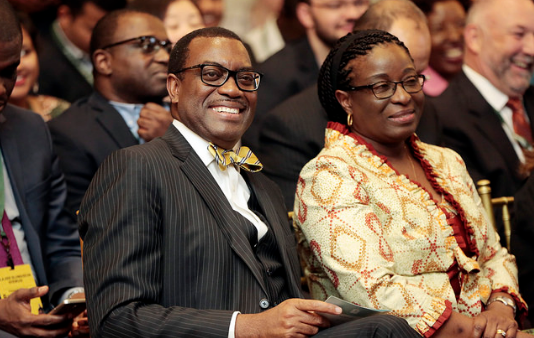
Akinwumi Adesina, former Minister of Agriculture and Rural Development, says he is determined to help young Africans farmers become billionaires unlike his father and grandfather who “became so poor farming”.
Adesina, currently President of the African Development Bank (AfDB), said this at a luncheon during the World Food Prize-Borlaug Dialogue Symposium on Friday.
According to a statement signed by Jennifer Patterson, Principal Communication Officer at AfDB, the luncheon follows the award of the 2017 World Food Prize to Adesina in Iowa, USA, where he announced his dedication of the $250,000 prize money to set up a fund fully dedicated to providing financing for African youth in agriculture to feed the continent.
“The World Food Prize-Africa Institute will support young agripreneurs, whom we will call Borlaug-Adesina Fellows,” Adesina announced while delivering his laureate address at the luncheon.
“This will allow us to strategically continue Dr. Norman Borlaug’s legacy of taking agricultural technologies to the farmers, and my philosophy of promoting and engaging agriculture as a business.
“The Youth of Africa are the future of the continent and to them I pledge my support.
“They will take agriculture as a business. They will make agriculture ‘cool’. I fully expect the future millionaires and billionaires of Africa to come from agriculture.”
Adesina narrated how his father and grandfather had to work as labourers on other people’s farm because they could not raise enough from their own farms to be able to cater to their families.
“This is my story. My father and grandfather were farmers, and became so poor farming they had to work as part-time labourers on other people’s farms,” Adesina said.
“My father told me that farming did not pay. It was through a benefactor that he made it out of the village to get the benefit of education.
“It was that golden opportunity, with a lot of sacrifices that gave me the benefit of an education and today, by God’s grace, has given me an incredible opportunity to stand on the global stage to receive the World Food Prize.
“I also hear the voices rising out of rural Africa, saying, ‘Come here and help us get out of poverty’.
“This ‘agriculture gospel’ was first preached by Dr. Norman Borlaug, the Nobel Peace Prize-winner, who created the World Food Prize, for he heard the voices of a billion people and, through his dedicated work, delivered a green revolution across Asia that fed a billion people.”
Motivated by Adesina’s gesture, other donors made additional contributions to the fund, raising the initial $250,000 to $600,000.
John M. Harrington III of Sheffield Corporation matched Adesina’s prize money with an additional $250,000, while John Ruan III, Chairman of the World Food Prize Foundation, pledged to contribute $100,000.
This brings to US $600,000 the amount now available for Adesina’s proposed fund to grow youth in agriculture and agricultural business.
Adesina praised John M. Harrington III and John Ruan III for their donations, and for supporting his desire for a new deal for young African farmers.
The African Development Bank, under Adesina’s leadershi,p is focused on accelerating investments to get younger commercial farmers and agribusiness entrepreneurs into agriculture through a youth in agriculture initiative termed ‘ENABLE Youth’ (Empowering Novel Agri-Business-Led Employment for Youth).
The bank will also empower women and push for greater access to finance for women.
Adesina is optimistic that these initiatives will help to lift millions out of poverty in Africa and into wealth.
“Psalm 121:3 says God will not suffer your foot to be moved. He that keepeth you will not slumber. Amen. You and the three boys, God Almighty will keep you prosperous. Amen. I love you.”
That was the suicide note Edward Soje, a senior civil servant in Kogi State, left for his wife who just put to bed a set of male triplets, before going to hang himself on Saturday.
The body of Soje, a 54-year-old, Level 16 Officer in the Kogi State Teaching Service Commission, was found dangling on a tree on Saturday, a week after he was declared missing.
According to Punch, Soje allegedly took his own life 10 days after his wife put to bed in a private hospital in Abuja after 17 years of childlessness.
The deceased hailed from the Ogori/Magongo Local Government Area of Kogi State and was owed 11 months’ salary arrears as of the time he took his life. His wife also works with one of the federal ministries in the state.
William Aya, spokesman of the Kogi State Police command, confirmed the incident, saying that Soje’s body was found dangling on a tree behind a military barracks at about 5.55 pm on October 16.
Aya said the Divisional Police Officer in charge of Area ‘D’ division received the information about the incident from the military intelligence office in the barracks.
“Policemen moved to the scene, removed the corpse and took it to the morgue of the Federal Medical Centre in Lokoja (and) investigation is ongoing,” Aya added.
It was not until October 20 that relations and friends of the deceased discovered his corpse at the mortuary where the police had deposited it.
Family sources told newsmen that Soje had been going through a series of financial challenges due to the non-payment of his salary by the Kogi State Government.
He was said to have sold his only car and a three-bedroom bungalow he was building at the Otokiti area of Lokoja in order to meet his financial obligations to his family. Sources said Soje sold the uncompleted building for N1.5 million in April.
After his wife was delivered of the set of triplets on October 7, Soje was said to have remained in the hospital looking after them until October 13 when he travelled to Lokoja.
In Lokoja, he went to his bank and requested to close his account after withdrawing the N30,000 remaining therein.
He returned to Abuja and handed the money to his wife, and joined by two clergymen and a few relatives, a little naming ceremony was performed for the triplets right there in the hospital.
Soje left the hospital saying he wanted to get some things from his wife’s apartment in Abuja, but that was the last that was heard of him.
Hours later, after many calls made to his phone were not answered, his wife sent emissaries to the house to find out what was wrong. After knocking for several minutes, the door was forced open and Soje’s phone was found on top of the table in the sitting room alongside a suicide note.
A search began immediately for him in Abuja and Lokoja, which culminated in the discovery of his body at the Mortuary of the Federal Medical Centre, Lokoja.
A family member described him as a “very quiet and lovable human being”.
Civil servants in Kogi State are currently being owed between two and 23 months salary arrears, but Yahaya Bello, the State Governor, claims he has cleared all the arrears and workers are being owed only August and September salaries.
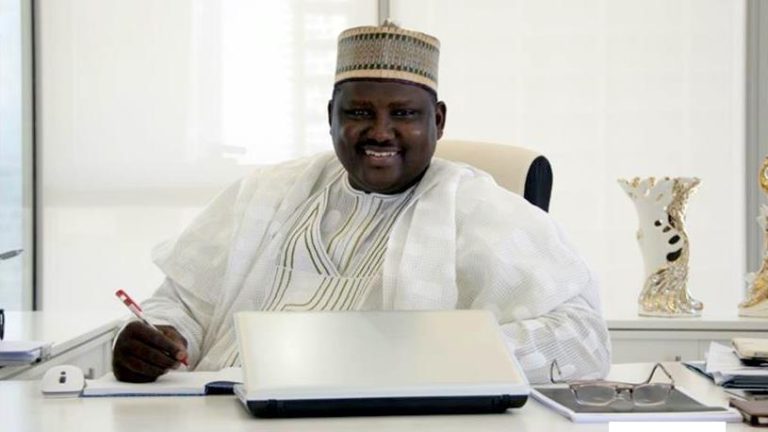
Abdulrasheed Maina, the former chairman of the Pension Reform Task Force
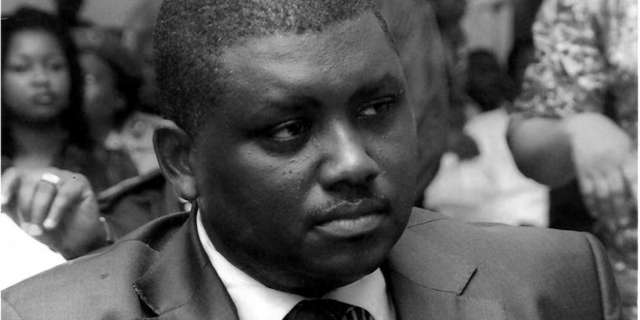
Abdulrasheed Maina cannot hide forever. Neither he nor the people who helped him circumvent justice in 2013 gave this a thought when he escaped to Dubai. But as he must have found out already, retreating from justice is big damage to self rather than the law; and no matter the wealth of cash, power, connection and legal arsenal at anyone’s disposal, clean hands remain the only guarantee of freedom.
MAINA — ONCE THE MANNA FROM HEAVEN
Although he was already Director of the Customs, Immigration, Prisons Pension Office (CIPPO), Maina was in obscurity until he was plucked in 2010 by Steve Oronsaye, then Head of Service of the Federation, to chair the Pension Reform Task Team (PRTT) after a verification exercise in June of the same year revealed the biggest fraud, till date, in the federal civil service. In that position, he helped uncover the looting of more than N100billion pension funds at the pension offices of the Head of Service and the Police. From then on, Maina has gone against everything he seemed to have stood for.
Sani Teidi Shuaibu, former Director, Pension Unit, Head of Service of the Federation (HOSF); Phina Ukamaka Chidi, his deputy; Aliyu Bello, Personal Assistant to Shuaibu; Abdul Mohammed, Assistant Cash Pay Officer, HOSF Pension Unit; and some 30 other civil servants worked in cahoots to loot more than N100billion. To do this, they paid millions of naira to ghost pensioners by recalling the names of dead workers and opening fictitious accounts; recruited their friends, and friends of their friends as pensioners; conducted fictitious verification exercises for which N400m was spent monthly; awarded multibillion-naira fictitious contracts to companies and individuals who took a cut and returned the rest; and registered fake companies of their own to which they paid billions for doing nothing.
In that moment, Maina was just like the Biblical manna from heaven. His team found the looters and handed them over to anti-corruption agents and government prosecutors. The success of the team, many people agree, was due largely to Maina’s brilliance. But brilliance was soon tinged with greed, and Maina became obsessed with enriching himself. For starters, he duplicated the thieving model of the looters he helped government to apprehend. It is still hard to imagine how he exposed others yet thought he would never be.
GUILTY IN THE EYES OF THE PUBLIC
Till date, Maina is innocent in the eyes of the law. But that’s where it ends. In the court of the public, his guilt is a long-established fact — because of his public conduct in the aftermath of the allegations against him.
On numerous occasions at the peak of his probe by the legislature in 2012, Maina concocted all manners of excuses, including ill-health and tight schedule, to avoid appearing before the Senate Joint Committee on Establishment, Public Service and Local Government Administration, mandated by the upper chamber to investigate pension administration dating back to 1999. After reaching its wits end, the committee mandated Mohammed Abubakar, the then Inspector-General of Police (IGP), to compel him to attend its next sitting. Not even the IGP could bring Maina to the Senate, leaving the Senate with no other option but to issue a warrant of arrest against him. Rather than defend himself, Maina travelled to Dubai the following year, never to make a return (although he has sneaked in and out of the country a few times). Since becoming the fugitive that he now is, Maina has been declared wanted by the EFCC and INTERPOL.
A SHOCKING REHABILITATION
Despite spending almost all of the last four years in Dubai, Maina, formerly an Assistant Director in the civil service, has managed to earn himself a recall — and unbelievably — a promotion — to the post of Director at the Ministry of Interior. It was supposed to be a secret affair until Premium Times found out. There is a plan to rehabilitate Maina; and those who should know have named Abdulrahman Dambazau, Minister for Interior; Mamman Daura, President Muhammadu Buhari’s cousin and Abubakar Malami, Attorney-General of the Federation, as the protagonists. It is a shame that this is happening in an administration that sold the anti-corruption project to the electorate in 2015. How, then, is Buhari better than Goodluck Jonathan, who granted state pardon to convicted looter Diepreye Alamieyeseigha?
Buhari’s hard-line supporters have argued that the appointment must have happened without his knowledge, but even that is big indictment. If such controversial figure is made Director and the President is unaware, then he is a spectator in his own government! Dambazau, the HoS and the Federal Civil Service Commission could only have colluded to sneak Maina into the Interior Ministry because they knew they could get away with it. And, if, two days after Maina’s promotion became a media item, the President is still unaware, or is aware but hasn’t taken action, Nigerians can count themselves victims of political fraud by President Buhari and the APC.
FROM GRACE TO GRASS
Most corruption cases in public offices are black-and-white affairs. The culprits are usually people who deliberately set out to amass wealth for themselves at the expense of the people. If they enjoy some public goodwill, it is because of the extent to which they have used their ill-gotten wealth in ingratiating themselves with the people. It is usually the case of darkness embarking on an inordinate search for light. Rarely does it happen, as it has with Maina, that light drowns its own luminousness with darkness.
That Maina began so well as an anti-corruption crusader only to end up the way he has, should worry anyone genuinely interested in this country’s progress. If policemen are found engaging in armed robbery, it would be hard to sell the argument that we aren’t all thieves. The Maina example makes it more difficult for the few conscientious individuals in power to earn public trust. In fact, the incorruptible among us could start wondering if they would someday be consumed by the very ill they’re fighting. The peculiarity of this case to the mental setup of this government’s anti-corruption war is one reason the President must invalidate this promotion. Buhari cannot afford to handle Maina in the same manner he did Babachir Lawal. Nigerians are watching, and counting.
EDITOR’S NOTE: This piece was first published in 2013 by Flair Nigeria. The ICIR is reproducing the five-part series in the light of the resurgence of killings in Plateau State, to help readers understand the genesis, depth, brutality and possible solutions to violence in the state.
In the penultimate part of this series, ‘FISAYO SOYOMBO examines all possible alternatives for terminating years of gruesome killings in Nigeria’s volatile ‘Home of Peace and Tourism’, now wistfully dubbed by some as the ‘Home of Pieces and Terrorism’.
The first known government response to violence in Plateau State was taken on April 22,1994. Ten days earlier, a clash between indigenes and Hausa-Fulani had resulted in five deaths and destruction of property, prompting Mohammed Mana, a Lieutenant Colonel and Military Administrator of the state, to inaugurate a Commission of Inquiry chaired by Hon. Justice Aribiton Fiberesima (Rtd). In the weeks that followed, the committee physically assessed the affected places, interviewed victims and witnesses, examined memoranda, and submitted its recommendations.
The committee’s report was the best-kept secret of the next 15 years. Not until 2009, after two other high-casualty clashes, did the government publish the report and issue a white paper on it. This set the template for a lacklustre culture of inaugurating committees and panels of inquiry. In the last 12 years alone, there have been five committees: three by the Federal Government (Justice Suleiman Galadima Commission, 2001; Emmanuel Abisoye Presidential Panel, 2009; and Chief Solomon D. Lar and Amb Yahaya Kwande, 2010) and two by the state (Justice Niki Tobi Commission, 2001; and Justice Bola Ajibola Commission, 2009). So, as expected, there is an abundance of committee recommendations — all unimplemented.
“For some reason, which is not altogether clear to us or for no reason at all, the government neither issued a white paper on the Fiberesima report nor implemented any of the commission’s recommendations,” Justice Niki Tobi and co wrote after seeing through a committee of their own in 2001. “The crisis [of 2001] would have been averted if the recommendations of the Fiberesima Commission had been implemented.”
In all, the Fiberesima Commission made eight recommendations, one of which — being the only one underscored for emphasis — could be considered the most vital: Government must apply sanctions to all individuals, groups of persons and organisations indicted by the inquiry in order to avoid future occurrence of such incidence [sic]). Till date, no one has been prosecuted for involvement in that killing — or any other.
With the proliferation of committees and the accompanying avalanche of recommendations still unable to halt the killings, the victims and their families offered their voices to the crucial conversation on the most guaranteed way of returning peace to the plateau.
‘WE HAVE TO BEG GOD’
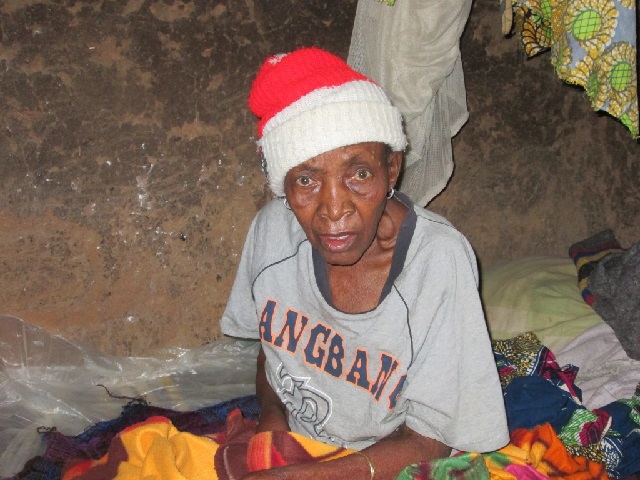
Uttawal: the only solution is Jesus
Partially-paralysed 105-year-old Uttawal Marene does not see the place of further committee recommendations (or anything else) in peace-building. Rather, she thinks the solution is spiritual.
“The only solution is Jesus,” Uttawal says from her sickbed. “We have to beg God to bring peace back to the land; because without God, there is nothing we can do. We have to beg God. If not, nothing can bring peace.”
It is an opinion shared by Jumai Adamu, still oblivious of any wrong by the villagers to the Fulani. “They just don’t want peace,” Jumai, whose husband and son were murdered in an attack, says. “The only solution is Jesus; the only way out is to pray.”
According to Yakubu Maki of the same Mile-Bakwai Village in Bokkos Local Government, whose son was murdered in an attack, prayer is the only solution. “We have to pray to God to bring peace to this community, to the plateau, and to all other parts of the country,” says the Mile-Bakwai-born 95-year-old who has lived nowhere else all his life.
GOVERNMENT AND SECURITY; NOT JESUS!
Yakubu Dung, Head of Kungte Village in Jos South LGA, does not consider “prayer” or “Jesus” priority in quelling “Fulani attacks fuelled only by wickedness”, though he concedes the killings are in line with the Bible’s prediction of violence in the end time.
“If it is not wickedness, how will anyone willingly kill an entire family?” Dung wonders, stupefaction etched on his face. “I know that the killers are Fulani because they seized the phone of a passer-by, called his brother, and threatened to return for more deaths. Both the person who received the call and security agents who apprehended the caller confirmed him to be Fulani.”
So, he reasons that the solution is for the government to empower security agents, who should in turn work hard to apprehend perpetrators of the killings. “They should just do a sincere work and this thing will be over,” the 55-year-old says. “The Bible predicted this; but with the help of the security agents and the government, the situation can be a lot better.”
NOT A CRISIS BUT A WAR — A JIHAD
At Tatu Village, Pam Adamu Jugu is candid enough to admit lacking knowledge of the magic wand for the Plateau debacle. However, he wants all misconceptions about inter-ethnic/inter-religious clashes and cattle rustling cleared. He insists that there is no crisis. And as far as Tatu is concerned, cattle rustling is an imaginary phenomenon.
“The question we have continued asking ourselves is why anyone would attack us. And we have no answer yet,” Adamu, 58, says. “We want to tell the world that we are not in crisis. When there is crisis, it means two or more people or groups have disagreed on something. In our case here, we have not disagreed with anybody or any tribe anywhere.”
Even though he cannot “precisely ascertain” who their attackers are, he knows “from all indications” that they are Muslim Fulani desperately looking to capture Berom land for themselves, their cattle, and their religion.
“This war is a religious war. I look at it as a Jihad,” he says assertively. “Some say the Fulani are nursing grudges against the Berom for stealing their cattle. But in Tatu Village here, no one has ever stolen cattle. Our people used to have cows, but they have all been stolen away by the Fulani. In fact, as we speak, there is no one in this village who has a single cow.”
Ponchang Miner and Nandir Vongchak, two relatives of victims of an attack in Wase Local Government, believe that killings in that region will end with the division of the local government into two, one for the Taroh and the other for the Hausa-Fulani.
“At the moment, the Hausa are the ones securing the few job openings in Wase LG,” alleges Ponchang. “The solution is for Wase to be divided into two. If it is done, the killings will stop, because each ethnic group will have had its interests served. And there will be more job opportunities for the Tarohs.”
GOVERNMENT’S BURDEN
Grace Nansoh of Locost Village believes the burden of ending the killings rests with the government. It is government, the 23-year-old declares, that must ensure sure-fire security in the state, and prosecute violators of the sanctity of human life.
“To stop the killings, government needs to take serious actions,” says Nansoh, whose father was shot, butchered and set ablaze in Wase. “They have to take a look. People are losing their loved ones; children are losing their parents. So, government must take serious measures. Government must identify the troublemakers and deal with them.”
DIALOGUE, GOVERNMENT INTERVENTION
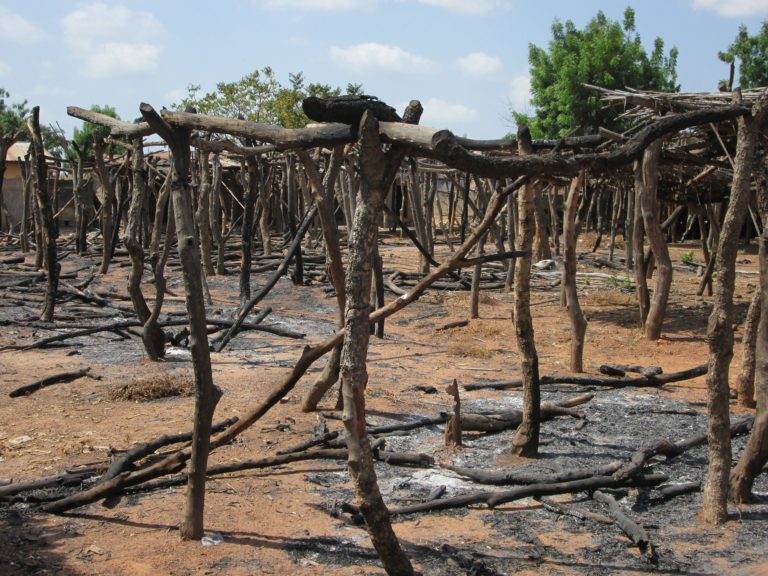
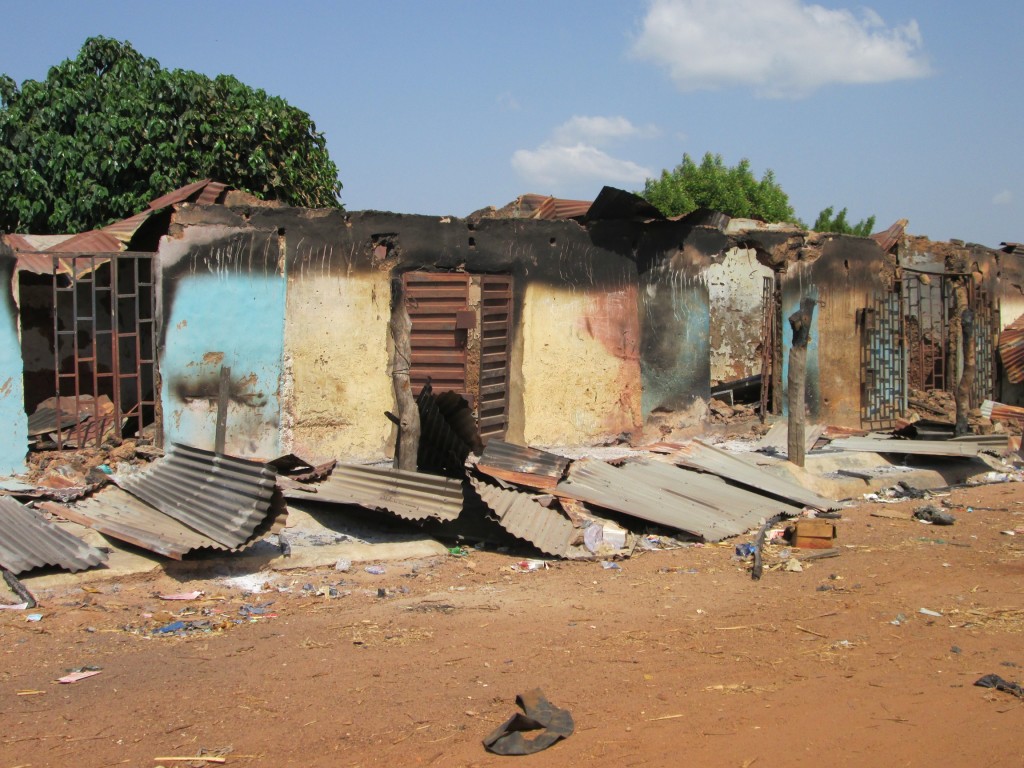
Cross section of brunt houses in Kukah Village
Like Adamu, Obadiah Bolka of Kukah Village believes the whole talk of committing murder as reprisal for rustling of cattle is drivel. He knows that cattle sometimes trample on crops, and admits it is possible that a farmer or two will want to hold on to the animals. But to take human lives in vengeance for alleged cattle theft, he argues, is inexcusable.
“We have to be honest. In a village like this, we have several kinds of people: young and old,” he says. “It might be possible for the young ones to steal cows trespassing on crops, but I think the response should be how to resolve the issue — and that is not by killing. Taking revenge on human life is unacceptable.”
Obadiah admonishes government to implement the Land use Act in a way that will settle land disputes between indigenes and settlers.
“Based on the 1978 government policy on land, all land in Nigeria belongs to government. But if there is any way of lending land to people, it should be done in a way that is clear to everyone,” he says. “By the time someone is occupying a land and another person is saying it is his own, it would bring misunderstanding. So, we are crying that government should come into this situation and solve it once and for all — by making it clear that every individual has the right to live on land. And once you occupy a land, it doesn’t mean that you are above every other person.”
In respect to land not in urban areas, Section 6, Subsection 1, Paragraph 1 of the 1978 Land Use Act grants local governments the right to grant customary rights of occupancy to any person or organisation for the use of land in the local government area for agricultural, residential and other purposes; or — as Paragraph 2 states — grant customary rights of occupancy to any person or organisation for the use of land for grazing purposes and such other purposes ancillary to agricultural purposes as may be customary in the local government area concerned. Regrettably, efforts to speak with relevant local government and land officers on the applicability of this section of the Act to the killings did not materialise.
A SPURNED SACRIFICE; THE FLEEING SOLDIERS
For many reasons, Rwang Dalyop Dantong cannot believe or explain the volatility that has come to define his darling Plateau State. It is a puzzle this reporter shares. In all the correspondences that culminated in the half-an-hour interview at the Solomon Lar Amusement Park — from the civility with which he responded to a journalist’s interview request, to his timely early-morning appearance at the park — Rwang cuts the picture of a man too soft-hearted and affectionate to hurt a fly. This palpable good-naturedness, he maintains, is the hallmark of the average Plateau man.
“The Plateau man, especially the Berom man, is hospitable, accommodating; and almost every ethnic group in Nigeria lives peacefully with us,” he says, bolstering the declarations with his trademark soothing mien. “We give land very freely to people. We have never had any problem with anybody.”
From 1994 till date, the clashes-turned-attacks were ccompanied by some landmark tragedies that should ordinarily have restored peace to the troubled state. One of them is the killing of Rwang’s immediate elder brother and senator representing Plateau North at the National Assembly, Gyang Dalyop Dantong, while attending the mass burial for hundreds slain in Riyom and Barkin Ladi local governments in July 2012. Rwang is stunned that the senator’s death has had little influence on Plateau’s acute need for peace.
“You see, we should — out of that death alone — allow peace to return to the state. That was what I expected,” he says in his characteristic measured tone. “Peace should return to Berom land, because if a whole senator went to a place to settle issues, and he was attacked and killed, that is quite unfortunate. I felt that that tragedy alone would touch the hearts of people to resolve their differences, to turn from evil and return to reality.”
The nadir of the death itself is the failure of soldiers at the mass burial ground to mount any form of resistance against the attackers. More than a year on, his disappointment is still evident.
“I was disappointed in the military, highly disappointed that a whole senator and a majority leader of the House of Assembly were with the military, and all the soldiers could do was tell them to run for their dear lives,” he laments. “Then what is the hope of the common man — the common man who has no security around him? The soldiers told everybody to run; and they themselves ran rather than face the attackers.”
A FLICKER OF HOPE
His disappointments notwithstanding, Rwang knows a number of attitudinal and religious changes over the years offer a glimmer of hope for the eventual arrival at a solution. The Berom, he reveals, are no longer ritualistic.
“Most of us are born-again Christians. Therefore, our people have embraced God as the final solution to this thing,” he says. “We have groups in the Berom nation, such as the Berom Ministers Forum (BEMFO) and the Berom Outreach Ministries, which engage in fervent prayers for God’s intervention.”
In addition, various ethnic groups have welcomed peace-focused non-governmental organisations (NGOs) to the plateau, such as the Centre for Humanitarian Dialogue that has engaged the Berom, Afizere, Anaguta, Fulani and Hausa in a six-month dialogue.
“We are highly committed to this dialogue, but the unfortunate thing is that each time we enter the dialogue, we come up with a roadmap towards actualising resolutions of the dialogue,” he says. “Each time we go into it, every ethnic group comes with its own problems, so that we can table and solve them. But unfortunately, for the Fulani man, it ends up at that forum. He doesn’t go down to the grassroots to explain to others what we are really doing at the dialogue.”
Leaders of all the ethnic groups, he continues, must be sincere; and if they can, there is nothing so difficult to handle. “If a Fulani man, for instance, is talking of cow rustling — and this is the major concern they always raise — then they should come up with names of the suspects, if they have.
“There are ways to deal with suspects — and those ways are always better than engaging in violence. Most times, the Fulanis confess that they launch reprisals for theft of their cows. But in the end, they will kill innocent children. For instance, during a recent attack … a father who saw the assailants was protecting his child of two years. They shot the man; they shot the child. The most worrisome is the case where a gun was put into the mouth of a five-month-old baby, and he was shot. For God’s sake, is that a reprisal? Is that how a solution can be worked out?”
DIALOGUES, DIALOGUE, AND MORE DIALOGUE
His appeal is that existing fora for dialogue should be fully explored by all the concerned groups. “We should come to a roundtable,” he insists. “Let the Fulani tell us what the problem is; after all, we have been living together and socially interacting with them for decades.”
He transfers the pain in his heart to his eyes when he recalls the good days prior to 1994, when there was no problem at all — when a Berom man could sleep in a Fulani man’s house and the Fulani man could do same in a Berom’s.
“We gave them all the lands free; and it is not as if we restricted them from grazing. There are the grazing routes; there are vast lands we made available for them to graze,” he says. “But now, the world has changed. There are many ways by which animals can be fed. It must not always be by going around in search of grass.”
As far as he knows, the Berom would remain relentless in their commitment to peace-building because, as he says, they are highly hospitable and reputable peacemakers. “On our own part, the Fulani have been allowing their cattle to destroy our farms,” he says. “But we have never at one point said because they destroy our farms, we will attack them. We have always taken the issues according to the laws of the land by reporting them to the police or other appropriate authorities. Compensation has always been paid, and it ends there. But in their case, they would just complain that cows are missing; and the next thing is that they would attack, sometimes wiping out an entire family.”
A TRIBE UNDER THREAT
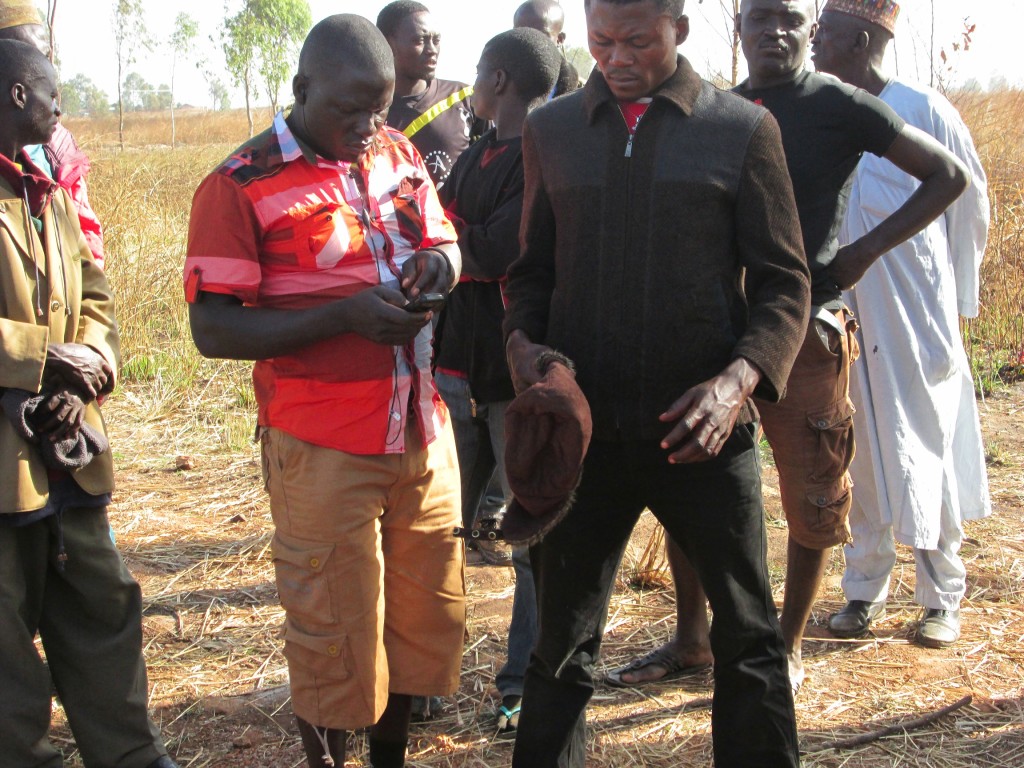
Mourners at the burial of Jerry Dalyop
Daniel Choji has one conviction: there is a grand plan to drive the Berom into extinction. And at the heart of this devious plan are a complicit trio: the Federal Government, the Army, and the Fulanis. While the Federal Government, in his estimation, has been negligent about security in Plateau, the Fulani hinge their killings on false accusations of cattle rustling by the Berom, as proven by the killing of six people at a compound in Heipang on December 17, 2013, none of whom has ever owned or stolen a cow. Finally, he accuses soldiers of siding with the Fulani — for ethnic and pecuniary interests.
“People were just having their dinner, and unknown gunmen arrived to attack them,” he says of the assault that resulted in the death of his cousin, Jerry Dalyop, aged five, and five others. “Soldiers drove in shortly after the attack. They rushed into the bush in the direction of the attackers; and we believe that they went in there to drive away the attackers. One, they didn’t come to interact with the victims. Two, they were not after the aggressors.”
Considering that the soldiers moved towards the direction of the aggressors and subsequently drove out, Choji believes it is spot-on to assume that the soldiers re-emerged from the bush in company of the aggressors. And to have kept mum on their findings, to have ignored people whose families have just been murdered, to have uttered no word to anyone on the whereabouts of the assailants or on the plight of victims, according to Choji, is testament to the soldiers’ grave complicity — a line of action that has now become routine.
“This has always been the issue in most of the attacks. The situation is very pathetic,” he laments. “The soldiers did not even say anything to the victims, because they came on a mission. If they had come with the mission of safeguarding the community, they would have driven straight to the compound of the victims to ask for the direction that the aggressors followed. But that they didn’t do. They came in, passed by the compound, and drove inside. Only God knows what they went in there to do.”
Choji believes soldiers are siding with Fulanis
These soldiers are complicit in these attacks, he reiterates, “without mincing words”, which is why he will continue imploring the Federal Government to reconsider the composition of soldiers on the plateau, “because they have not come as neutral umpires, but are doing certain people’s bidding”. This, he insists, is the basic recipe for forestalling what could eventually degenerate to full-scale inter-ethnic clash reminiscent of the Rwandan genocide.
In Choji’s view, the ongoing attacks are devoid of religious colouration. There are Muslims among the Berom; the Christians among them have interacted with Muslims; all of them, their parents interacted and lived with Muslims. So, he is sure the killings are nothing religious. Simply put, they are ethnic.
“The killers are just a set of aggressors that does not want to see the Berom people on the face of the earth,” he says. “These people want to extinct the Berom people; and the Federal Government is aware, because the government normally has information of most of these attacks. The soldiers and mobile policemen who have come on the pretext of protecting us know who the aggressors are. Attackers come in the military uniforms; and by the time you mention it, the Army makes a defence. But in a short while, the world will know who these people are.”
He wants President Goodluck Jonathan, as Commander-in-Chief of the Armed Forces of the Federal Republic of Nigeria, to be more involved in the military affairs of Plateau or vest state governors with autonomy over the Police in their respective states. For all Choji cares, non-military alternatives to resolving the killings are on the table of the government and security chiefs.
“There are so many options, he says. “If the government really wants these attacks to end, I am assuring you that this terrible trend will end. The Military should work by the rules of engagement. They are here on an assignment to protect both the victims and the aggressors. A soldier — whether Fulani, Muslim or Christian — should be unbiased.”
Building on that, he begs the Army to shed itself of money-grubbing soldiers, as corruption has been the bane of these attacks. “You send a soldier on an assignment; and after six months, he wants to ride a flashy car, build a skyscraper or build a house that he hasn’t built in 20 to 30 years of his military career,” he fumes. “Soldiers who are ready to work are the ones who should be posted to Plateau, while those who want to enjoy these luxuries and make quick money should leave the Army and maybe join politics.”
He reckons the solution will be anything but easy to come by, considering that the attacks are only part of a complex web of sinister plots oiled by private individuals with vested interests.
“The aggressors have money. They hire the soldiers; they give them money,” he alleges. “Verify the [bank] account of most of these soldiers: both the officers and the men on ground. You will see the influx of cash into their accounts each time there is an attack.”
He emphasises for the umpteenth time that government and security agencies can ill-afford to dawdle on addressing the litany of unresolved killings in the villages of Plateau, especially as all concerned parties — even if the ringleaders cannot be personally identified — know exactly what they are up against.
“The soldiers know the aggressors. We know the aggressors, and they are the Fulani, because the soldiers have accompanied the Fulani, not once or twice, into our villages in search of cows,” he says emphatically. “That is only when the soldiers react. They react when cows are missing, but when people die, soldiers don’t react. They are the aggressors, the soldiers and the Fulani. The Berom, meanwhile, are the victims.”
EDITOR’S NOTE: This piece was originally published in November 2015.
After months of evading summons by the Economic and Financial Crimes Commission, EFCC, Abdulrasheed Maina, whistle-blower and pension reform advocate, has been declared wanted for allegedly stealing over N1billion of pension funds.
The irony of the situation could not have been lost on anyone who had followed the saga of the monumental plundering of pension funds in Nigeria by corrupt civil servants.
On Tuesday, but for a last-minute adjournment, Maina, former Chairman of the Pension Reform Task Team, PRTT, who blew the lid on the looting of more than N100billion pension funds at the pension offices of the Head of Service and Police Pension Office, along with his front companies, would have been arraigned before the Federal High Court, Abuja.
The EFCC had earlier on Monday declared Maina wanted after he repeatedly refused to appear before it to respond to allegations of stealing and money laundering.
Recall that on March 8, 2012, in the same court building where Maina is likely to face trial, another trial took place involving top civil servants that Maina and his task team had accused of stealing about N60 billion of pension funds from the Office of the Head of Civil Service of the Federation, HOSF
Arraigned for trial were Teidi Shuaibu, former Director (Pensions) in the office of the Head of Service, Phina Ukamaka Chidi, Deputy Director in the same office and 30 others on a 134 count charge of conspiracy, fraud, stealing and misappropriation of public funds.
Months later, on May 28, 2012, at the Federal Capital Territory (FCT) High Court in Gudu, another set of senior civil servants, including two former directors at the Police Pension Office, Esias Dangaba and Abubakar Kigo, (later Permanent Secretary) along with others, was arraigned for stealing more than N32 billion police officers pension funds.
However, today, the table has turned as Maina himself has been slammed with a 35-count charge bothering on stealing, Advance Fee Fraud (419) and money laundering, along with Steve Oronsaye, former HOSF, Osarenkhoe Afe, a consultant to the PRTT, and four companies.
Earlier, on July 10, 2015, Oronsaye, Maina, Afe and a company, Fredrick Hamilton Global Services, were arraigned before the Federal High Court, Abuja, on a 24-count charge bordering on stealing, fraud and misappropriation of public funds.
However, on Tuesday, the companies allegedly used by Maina to launder the money he is accused of stealing were added to the charges. The companies are Cluster Logistics Limited, Kangolo Dynamic Cleaning Limited and Drew Investment & Construction Company.
An earlier report by the ICIR, N1 Billion Pension Fraud: The Case Against Oronsaye, Abdulrasheed Maina, detailed how Oronsaye and Maina allegedly masterminded the stealing of over N1 billion from pension funds at the office of the Head of Service using bogus biometric enrollment contracts given to companies controlled by their friends, cronies and associates.
However, after the initial arraignment, amendments made to the charges showed in detail how Maina allegedly laundered his loot to foreign jurisdictions, mostly to Dubai, where he has been resident for nearly two years, using companies and accounts controlled by him but opened and run by his family members, including his brother and sister.
The alleged coordinator of Maina’s laundering activities was his junior brother, Khalid Aliyu Biu, who worked in Fidelity Bank until the last quarter of 2012. Khalid facilitated the opening of several company and personal accounts for Maina with a total turnover of nearly over N1 billion between 2009 and 2015.
Apart from the above mentioned companies, Khalid opened two other personal accounts in the name of Nafisatu Aliyu, believed to be his sister, and Abdullahi Faisal. (Maina’s son is named Faisal).
Khalid opened an account in Fidelity Bank in the name of Cluster Logistics while he worked there. A search at the Corporate Affairs Commission, CAC, shows that the company had three directors – Khalid Aliyi Biu, Hassan Dahiru and Sani Musa. The company registration papers also had Maina’s Kado Estate residence as office address. The sole signatory to the company was Abubakar Mustapha who is believed to be Maina.
Khalid was the account officer to the Cluster Logistics account until he left Fidelity Bank when he handed over to Toyin Meseke who has since managed the account. Meseke and his bosses confirmed to EFCC investigators that Maina operated the Cluster Logistics account.
The account officer said he usually got instructions from Maina through the phone or e-mails to authorize transactions on the account and that such “debit note” transactions were regularized later by Maina providing a cheque. He said he had had to go to Maina’s home in Abuja to collect such cheques. He provided investigators with the phone number and email address with which Maina passed instructions to him.
Investigators found out that funds were later systematically moved out from the Cluster Logistics exaccount and transferred to Bureau de Change operators who converted the money into dollars and wired to Maina in Dubai.
EFCC’s examination of the account’s statements showed several huge withdrawals which ended up wired to Maina in such a manner. For instance, on May 2, 2014, the account officer said that Maina sent an instruction through e-mail authorising a withdrawal and transfer of N33.8 million to a Bureau de Change, which converted the money into dollars and delivered to the former pension task team boss.
A few days later, on May 6, he allegedly authorized another transfer of N42.5 million to the same Bureau de Change, which delivered the equivalent to him in dollars. Other withdrawals authorized by him include N16.1 million on October 3, 2014 and another N15.8 million on the same day.
Perhaps, the most curious transaction in the Cluster Logistics account was an inflow of N61,8555,858 on March 16, 2011 from the Department of State Services, DSS. It could not be determined what the money is meant for but Maina actually also helped the security agency to reform its pension administration system.
Meseko said he was told by Maina many times to withdraw money from the Cluster Logistics account and hand over to specific persons. In one instance, he said that Maina authorized the withdrawal of N6.5 million and asked him to bring it to Oronsaye’s home. However, according to Meseke, the cash unit of the bank had closed so he could not withdraw the money until the next day. When he took the cash to Maina’s house the next day, he was told that it was meant to pay for a car he had bought from Oronsaye.
Meseke also told investigators that Khalid handed over the two other accounts, which he had opened in the name of Nafisatu Aliyu and Abdullahi Faisal to him. He said that Khalid told him that the two accounts were also controlled by Maina, although his name does not appear in the account documentation. The account officer said he was told to honour all instructions on the accounts from Maina; and he did exactly that.
The Drew Investment and Kangolo Dynamic Cleaning Limited accounts too were operated in the same manner by the former pension task force boss. A CAC search indicated that the Kangolo Dynamic Cleaning Limited was registered by Hajiya Fatima Abunakar, believed to be Maina’s sister, while Drew Investment was registered by one Maimuna Idris.
Apart from the company and personal accounts that Maina is accused of using to launder money, he is also alleged to have a safe deposit box (no 489) with Fidelity Bank in Abuja, which he opened in the name of Nafisatu Aliyu.
There were speculations last week that Maina might have sneaked into the country before he was declared wanted by the EFCC on Monday, but he did not appear at the Federal High Court, Abuja on Tuesday where the case against him was supposed to be heard.
In the new charges brought against the accused persons, Maina alone is accused of laundering over N700 million using his front companies.
That you Cluster Logistics Limited, Kangolo Dynamic Cleaning Limited and Abdulrasheed Maina, (alias Abdullahi Faizal now at large) between 3rd March, 2012 and 31st May 2012 in Abuja within the jurisdiction of this honourable court did collaborate in concealing the genuine nature of the sum of N219,000,000.00 (Two hundred and nineteen million naira) by depositing the said amount in cash into the account of Abdullahi Faizal, maintained by Abdulrasheed Maina (alias Abdullhi Faizal, and when you knew that the said sum form part of the proceed of an unlawful act, to wit; corrupt acts of Abdulrasheed Maina and you thereby committed an offence punishable under Section15 (1) (b) of the Money Laundering (Prohibition) Act, 2011.
Count 26 of the charges reads: That you Cluster Logistics Limited, Kangolo Dynamic Cleaning Limited and Abdulrasheed Maina (alias Abdullahi Faizal now at large) on or about 4th of June, 2012 in Abuja within the jurisdiction ofthis honourable court, did collaborate in concealing the genuine nature of the sum of N210,000,000.00 (Two hundred and ten million naira~) by placing on a fixed deposit the said amount into the account of Abdullahi A.Faizal maintained by Abdulrasheed Maina (alias Abdullahi Faizal) and when you knew that the said sum form part of the proceed of an unlawful act, to wit; corrupt acts of Abdulrasheed Maina and you thereby committed an offence punishable under Section 15 (1) (b) of the Money Laundering (Prohibition) Act, 2011.
Abdulrahman Dambazau, Minister of Interior, has confirmed the recall of Abdulrasheed Maina, former Chairman of the Pension Reform Task Force, who is wanted by the EFCC for corruption.
However, he said the offices of the Head of Service of the Federation and the Federal Civil Service Commission are the bodies to answer questions over the recall of Abdurasheed Maina.
Maina fled Nigeria to the United Arab Emirates in 2013, after he was accused of fraud running into several billions of naira.
After the conspiracy was reported in the media, Ehisienmen Osaigbovo, Press Secretary to Dambazzau, released a statement confirming the development but absolving the ministry of any blame.
The statement explained that Maina “was posted few days ago to the Ministry of Interior by the Office of the Head of Service on an Acting capacity to fill a vacancy created following the retirement of the Director heading the Human Resources Department in the Ministry”.
According to Osaigbovo, the office of the Head of Service and the Federal Civil Service Commission are the two bodies responsible for “issues relating to discipline, employment, re-engagement, posting, promotion and retirements of Federal Civil Servants”.
“It is understood that Maina’s last posting was with the Ministry of Interior, and that is probably why he was re-posted to the ministry,” the statement added.
Maina, who was appointed by former President Goodluck Jonathan in 2010 to help sanitize the pension sector, is accused of spearheading a massive fraud scheme amounting to more than N100 billion.
He was invited by a Senate Joint Committee on Public Service and Establishment and State and Local Government Administration, and an arrest warrant was issued against him later.
Maina then sued the Senate and Mohammed Abubakar, the then Inspector-General of Police, and went into hiding when he was declared wanted by the police.
In July 2015, Maina was mentioned by the EFCC as a major accomplice in a 24-count charge filed against Stephen Oronsaye and two others.
The other accused appeared in court and pleaded not guilty to the charge, but Maina remained at large.
Amina Mohammed, UN Deputy Secretary-General and former Minister of Environment, has urged older Nigerians to stop competing with younger Nigerians for UN jobs.
NAN reports that Mohammed spoke at a cultural night organised by Nigerians working at the United Nations Systems in New York.
She said Nigerian employees in the UN system are getting older, pointing out the need to groom younger people by allowing them to fill available job openings.
“Whenever there are opportunities, try and pave the way for the young ones; you are getting old and we want to see the young ones in the system,” Mohammed said.
“We need to give the youth the opportunity because if we don’t give them the opportunities, they can easily fall victims of crimes.”
She said the older Nigerians in the UN system should think of bringing their expertise home rather than competing with young Nigerians for jobs in the UN.
“Home really does need us; there are leaders and we are trying with the professionals that we see in the United Nations.
“The work we need to do is not just to the world but also to remember that at the root of all that, you are only as good as where you come from.
“And it’s really important that we remember, with what we do here, what we can get back home, that we can encourage those at home and inspire them.
“It’s not just what we do for the world. Can’t we take those expertise back home?”
She said Nigeria has not been taking advantage of sponsoring its young people to gain experience under the Junior Professional Officers’ (JPO) Programme, which has 37 openings for Nigerians.
The JPO programme provides young professionals with hands-on experience in multilateral technical co-operation, and is one of the best ways to gain entry-level positions within the UN system.
JPOs are sponsored by their own government, which fund their placement in one of a range of UN organisations.
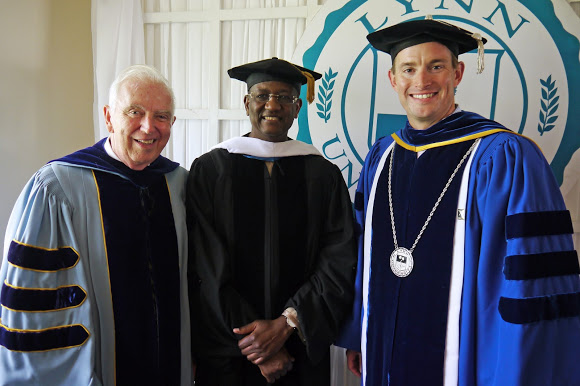
Muhammdu Indimi, the businessman from Borno State who admitted donating $900,000 to Lynn University, US, last year, says he never had any formal education but he now supervises those with masters and Ph.D.
“Thank God today, as an unlettered person by western standards I still supervise people with master’s and Ph.D.s who are working in my organisation,” Indimi told the Premium Times.
“As a matter of fact, if any of my employees wants to approach me with any project proposal or some kind of memo or presentation, they have to be well-prepared and make sure they did their home work well because they know I will definitely point out any error therein. So, Alhamdullillahi, I thank God for his kindness upon me.”
He said he learnt how to speak English by listening and associating with people who spoke the language, as he never attended any Western education school.
“It may interest you to know that I have never been to any formal school all my life,” Indimi said. “No teacher of western education can say he or she had taught me how to pronounce the alphabet ‘A’ in my life.
“I simply learnt by listening and associating with people. I am a very committed person when it comes to learning and adapting.”
Indimi said the money he donated to Lynn University was to build a bigger lecture hall in the university, where 10 of his children graduated from.
He said he was moved to make the donation after students of the university invited him to deliver a lecture on how he became an accomplished businessman without formal education, only to get there and discover that the venue of the lecture was small.
“The students approached me and asked if I could be available to give them an insight as to how I was able to accomplish such business successes without any form of formal education,” Indimi said.
“What they wanted was some kind of talk or lecture. And when I went to share my experience with them, I found out that the venue was too small for the crowd that attended the programme, and it was from there I pledged to help them build a better and befitting lecture for the faculty.”
He expressed surprised at the controversy that trailed the donation in Nigeria, pointing out that those that castigated him were ignorant of his company’s corporate social responsibility in the country and his philanthropic gestures.
“I did that in my kind gesture as a father to many children that graduated from that school, and also in appreciation of the recognition and regard they gave me.
“But what will I hear back home? All kinds of insinuation. Sadly, some persons, especially those from a south south of the country, felt it is their money I took to go build a lecture hall for an American university.”
Indimi is the chairman of Oriental Energy Resources and his wealth was alleged to have come from the oil blocks he was allocated to during the military rule of Ibrahim Babaginda.
He is also an in-law to President Muhammadu Buhari.
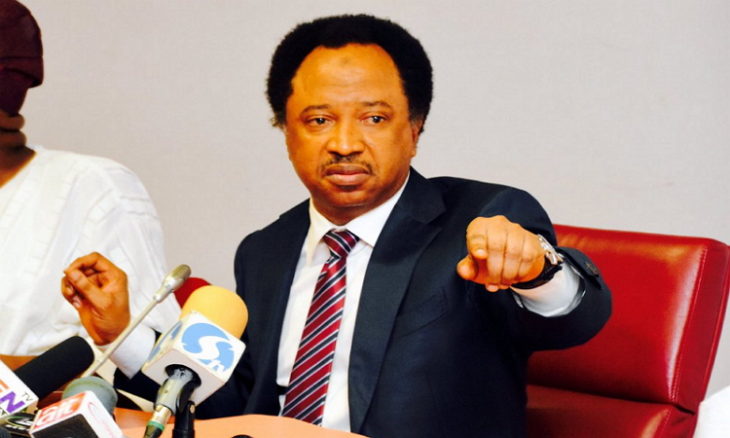
Shehu Sani, the senator representing Kaduna Central Senatorial District at the National Assembly, says FG must include corrupt people in the ruling All Progressives Congress (APC) in its list of treasury looters to be published soon.
Sani said this, albeit figuratively, via a Facebok post on Friday, noting that the list should not be limited to members of the opposition Peoples Democratic Party (PDP).
“The Federal Government’s decision to publish the names of looters is commendable,” Sani wrote.
“Hope the ‘call-up’ list will not be limited to the ageing ‘Umbrella United’ players, but will include those in the ‘Broomers FC’ and ‘Paris Saint Germain’ and ‘Dynamo Cabal FC’ players.”
The PDP logo is an umbrella while that of the APC is a broom, and by “Dynamo Cabals FC”, Sani was referring to the alleged ‘cabal’ in the presidency that many believe is running the country’s affairs.
Sani has always insisted that there is a cabal in President Muhammadu Buhari’s government.
In a recent interviewon Channels Television, Sani said the allegations of insubordination raised by Ibe Kachikwu, Minister of State for Petroleum Resources, against Maikanti Baru, Group Managing Director of the NNPC, is a sign that there exists “a government within Buhari’s government”.
His latest post is a reaction to the reports that Buhari has directed ministries, departments and agencies to compile names of people from whom funds has been recovered so far in the anti-corruption campaign.