As part of its objective to groom a safety-conscious generation, the Safety Chic Project has concluded its nationwide safety tour, which began on September 28 and ended on October 12.
The Safety Chic Project is the brainchild of Ulomka Multi Solutions Limited, an organisation focused on raising safety consciousness among young people as part of its Corporate Social Responsibility (CSR).
The project entails school visitation to teach young people about health and safety, with the aim of boosting Health Safety Environment (HSE) advocacy and increase awareness.
A book titled ‘The Adventures of Muna’ was also launched as part of the project. Authored by Ugochi Obidiegw, the book is designed to introduce and teach kids safety tips through stories and relatable characters.
The training kicked off in the south-west, at Topflight College, Ifako, Lagos State, and continued at the Pro Labore Dei, Ibadan.
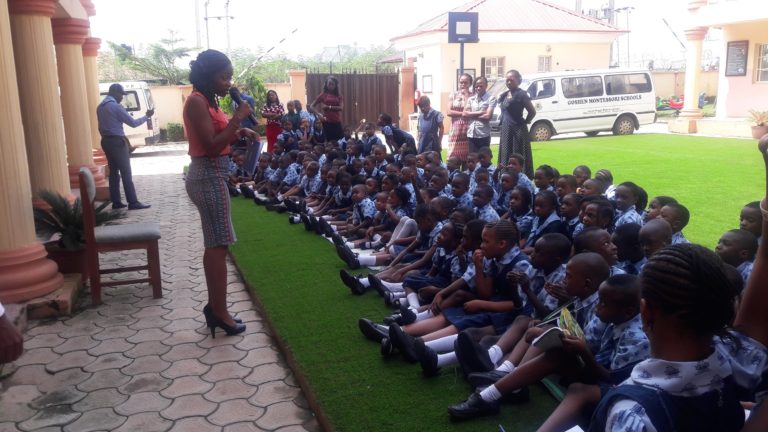
Similar training exercises held in Abuja, with a book reading session held at Christ Chosen Group of schools and Beth Zatha Academy, both in the Gwarinpa area of the FCT, and another at Goshen Montessori School, Kubwa.
Book reading for pupils of Immaculate Conception primary School, Abakpa Nike
In the south-east, three Local Government Areas were visited in Enugu State. Book reading sessions held at Immaculate Conception Primary School, Abakpa-Nike and New Haven Primary School 2, while the safety training took place at St Luke’s College and St Cyprian’s Girls Secondary School, both in Nsukka.
Training sessions were held at Government Secondary School, Abakaliki road, and Abakpa Girls Secondary School, respectively.
A special session was also held for street kids in Enugu, in collaboration with the Straight Street Initiative.
“I have been teaching children safety skills mostly in Lagos,” said Ugochi Obidiegwu, Managing Partner of Ulomka Multi Solutions Ltd.
“I wanted other children in other states to benefit because this knowledge is necessary for all kids irrespective of their locations, hence the plan to visit a few states representing different zones. There’s still so much work to be done but this is a start.”
Members of the Senate Committee on Ethics, Privileges and Public Petitions have criticised the Economic and Financial Crimes Commission (EFCC) for refusing to unfreeze two bank accounts belonging to Patience Jonathan, wife of former President Goodluck Jonathan.
The committee said EFCC has no right to still deny Patience access to the accounts since the court order directing the freezing of the accounts had long been vacated.
The lawmakers said it was wrong for the EFCC to notify the banks of the court judgments freezing the accounts but refuse to write the banks when the freezing order was lifted
“The EFCC cannot take someone to court, and then be the one to serve the bank,” said Obinna Ogba, a member of the senate committee.
“The EFCC is not the judiciary, the judiciary is separate. That is why there are people engaged as court bailiffs.
“Mr. Chairman, I think you need to give a definite instruction for them to open that account now because this bank has no business freezing that account.”
Ogba also accused the banks of taking advantage of such orders to trade with customers’ frozen funds.
Similarly, Mao Ohuabunwa, another member of the committee, wondered why the banks were still refusing Patience access to her accounts.
“Why you responded to that instruction [to freeze the accounts] was because there was a court order,” he said.
“And now you have an evidence to show that the order has been vacated. Then, somebody [EFCC] is now writing you a letter (notice of appeal). On what basis are you basing your actions?”
Sam Anyanwu, Chairman of the Committee, faulted the process whereby the EFCC, rather than the court bailiff, serves the bank copies of court judgements.
“The court bailiff should be the one to serve the court order and the bank should sign for it,” he said.
“It looks as if they [banks] are taking the advantage. The money is available to you [banks] and you are trading with it.”
Anyanwu specifically condemned the decision by Stanbic IBTC Bank to freeze an account linked to Finchley Top Homes Limited, one of the firms affected by the court order, while the account itself was not listed among those to be frozen.
Officials of the bank explained that though the two accounts had been linked, the second account was only frozen because it had not fully complied with the ‘Know Your Customer’ requirements of the Central Bank of Nigeria, and not by any court order obtained by the EFCC.
Anyanwu replied: “We will like to have the statement of the accounts and the mandate cards of the accounts. Then, of course, you said there was a KYC issue on it; the committee will decide on what to do about that.
“If you can implement the EFCC directive, I think you should implement the directive of the Senate. The EFCC is coming on their own but this one (second account) has no impediments; it must be opened. That account must be opened because there is no encumbrance. There is no court order on it.”
The Delta State police command says it has arrested four people in connection with the kidnapping of four British nationals in the state.
However, Andrew Animaka, the state Police Public Relations Officer, said the whereabouts of the kidnapped victims are still unknown.
The Britons, including a husband and wife, were abducted on Friday in Delta State, where they had been providing free medical treatment to locals.
“We are following up on a lead with the arrest of four persons in connection with the incident,” Animaka said. “The suspects are currently in the custody of the state police command in Asaba and are rendering useful information. I can assure you that we are on the heels of the abductors.”
The Police suspect that armed militants, who have attacked oil and gas pipelines in recent times, are behind the kidnapping.
Intelligence sources said the Britons are believed to have been taken to militant camps in the creeks and swamps of the delta.
British diplomats in Nigeria have refused to comment on the abduction.
EDITOR’S NOTE: This piece was first published in 2013 by Flair Nigeria. The ICIR is reproducing the five-part series in the light of the resurgence of killings in Plateau State, to help readers understand the genesis, depth, brutality and possible solutions to violence in the state.
In the second of this five-part series, ‘’FISAYO SOYOMBO details the pains of families of victims, how they have carried on without their loved ones, and how the killings have altered their perception of life.
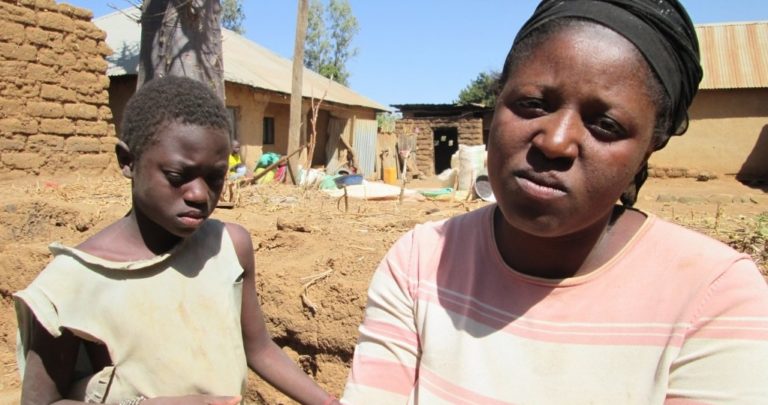
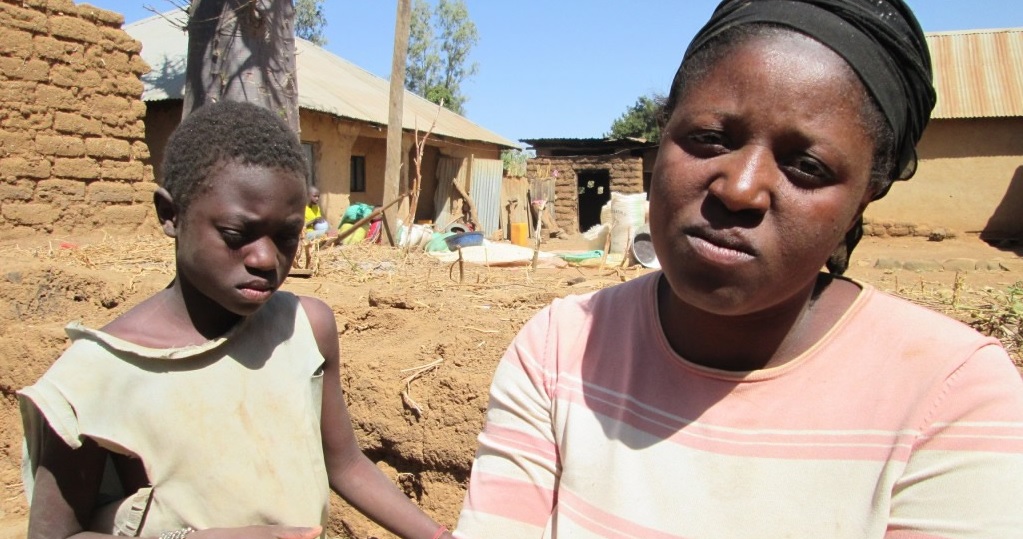
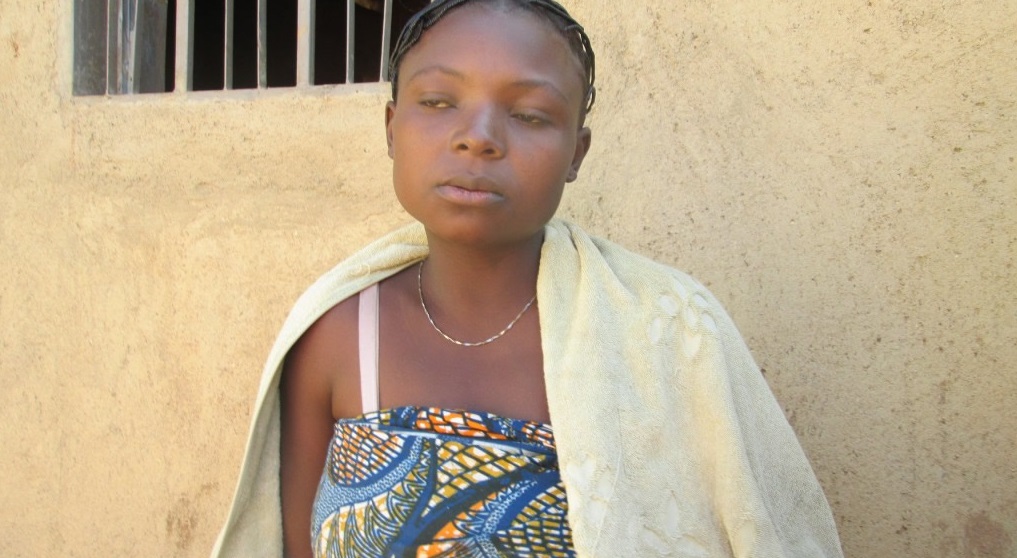
This is the first — and only time — in 11 days that the recorders roll for minutes and everyone is mum. It’s in Tatu Village, in Jos South Local Government (9°48′00″N 8°52′00″E), where little Blessing, the interviewee, is the only survivor of a near-successful extermination of a family of six.
The 10-year-old might as well have been killed alongside her father, mother and three siblings, but on the night of the attack, November 26, 2013, she slept in a relative’s house inside the same compound. While Blessing escaped unhurt, Yob Eliha her host and a widow, survived with burns around her shoulder. Meanwhile, Yop Yakubu, 49, a second widow in the compound, was murdered.
“We don’t know where the killers came from,” Blessing’s aunt, 26-year-old Hanatu, who now looks after her, says of the attack. “All we know is that they forced their way into the compound some minutes after 11pm, and began firing gunshots indiscriminately at the house.”
SHOT IN THE CROTCH
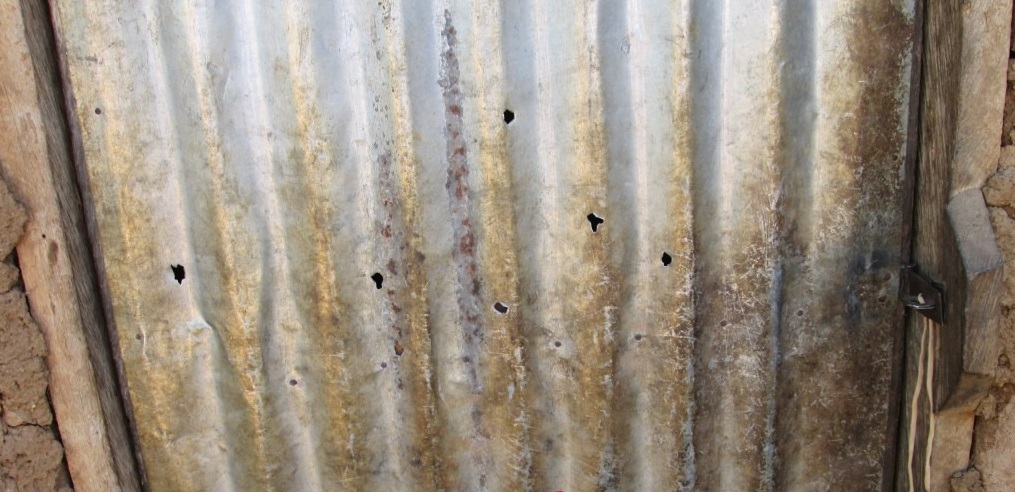
The bullet-riddled house where Blessing’s siblings and parents were killed
Clad in a mangy, loose-fitting robe, Blessing looks away from the camera for the most of the interview, her face contorted by anguish too weighty for her infantile shoulders. She still covets the return of her family. She hopes to have them back with her someday — a day she occasionally asks her aunt to reveal.
“Sometimes, Blessing asks me if her parents and siblings are still coming,” Hanatu says, intently locking eyes with the girl as though picking the words from her nondescript eyes. Hanatu herself buckles while the words slip bit by bit, her voice quivering beyond concealment.
“When she does, I tell her they won’t come again,” she continues, as her voice relapses into a second spell of tremble, this time thinning out like a lit candle running out of wax. Then she stares blankly into space, absentmindedly fiddling with her fingers. Everyone watching understands: her despair knows no bound.
She knows there is no chance any member of Blessing’s family would return. They are all dead and buried. And they never quite had a chance: her father, Davou Yakubu; mother, Yop Davou; sister, Serah Davou (14); and brother, Timothy Davou (12) all suffered multiple gun wounds. The last, Felix Davou, who was only four months, was shot in the crotch. So, really, the possibility for survival never quite existed for them; and Blessing, now in Class Five, will have to accept the austerity of life without the people in whose trusted hands her life began.
‘THE QUEEN OF SORROW’
Vongchak: A life of sorrow
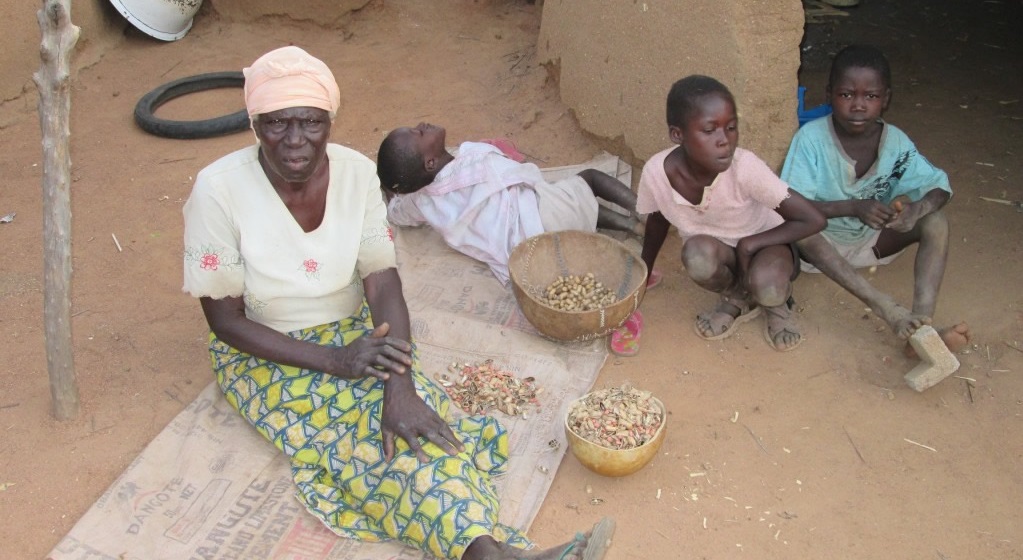
“Since my son died, I have been unhappy,” Nandir Vongchak, 80, says. “My life has been filled with sorrow, and this has brought perpetual illness upon me.”
With that, Vongchak synopsises her misery since the killing of her son in June 2013. Nothing about her demeanour suggests otherwise. No smile. No giggle. No semblance of hope. Face stony and carriage emotionless, Vongchak unhurriedly de-husks groundnut borne by two calabashes on the floor. That is how she keeps company every day, waiting till the hour when mortality will terminate memories of her slain son.
“On that day, my son came in from his theology school to greet me,” she recalls, for once paying heed to something other than the two calabashes. Clearly, the groundnuts are her most valuable possession, the source of livelihood for her and the three fatherless grandchildren whose upkeep has now become her responsibility.
After mother and son exchanged pleasantries, son made for his groundnut-and-maize farm in Zamchang, a village in Wase Local Government. On his second day on the farm, he was hacked to death. According to Vongchak, it was a maliciously-intended killing.
“They killed him purposely,” she says, “not that the killers were robbers or that they wanted anything from him. His life was all they hungered after.” This, she is convinced is the intention, because “Wase people do not want to see Taroh people around them. That is why they are hunting and killing Taroh people.”
Vongchak considers it a shame that having been racing away from “Wase people” for much of the last decade, she has finally stumbled. After sacrificing her land in Wase, she was unwilling to sacrifice anything else — especially not her son. Now resident in Dipbong Village in Langtang Local Government, she laments the consequence of her son’s death on the survival and education of his children. Pro tem, she puts up with proceeds from the family’s groundnut-and-bambara nut farm. But she reckons the farm’s support for livelihood will be ephemeral, given its size.
“Land available for farming over here in Langtang is inadequate,” she says, raising her head to let slip a luxuriant patch of white hair on her skin. “So we are just managing. We need help to guarantee the survival of my grandchildren and their education.”
BECOMING A MOTHER WITHOUT COPULATION OR CONCEPTION
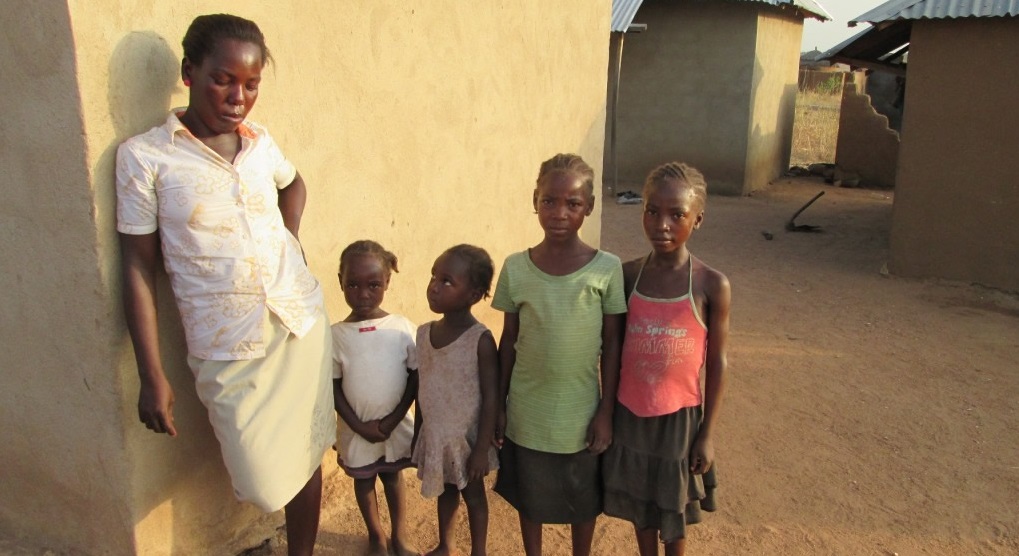
Grace: Missing our dad is not funny
Grace Nansoh hates to remember her father who was slain at 50. Of course, she has fond memories of him. But when she remembers him, she misses him sorely — a “punishing” activity she refrains from engaging in. She also knows that missing him will not restore his snuffed life; she understands it offers nothing more than temporary escapism: it won’t ease her pains; it won’t lessen her burdens.
“We don’t want to miss our dad; but actually, we miss him,” she says in a low, mournful tone, tenderly whirling the length of her arms round her four siblings positioned two aside.
These four children — aged 15, 10, 8 and 7 — are her latest encumbrance. As their mother is unemployed, Grace it is who must now feed and clothe them. It is her worry how the quartet will continue their education, how they will survive. Overnight, Grace has become a mother — without copulation, conception, or childbirth.
All four must continue schooling. One who was already tottering on the brink of expulsion recently regained his place in class after his mum ran far and wide for help, and returned with just enough to clear his mounting school-fee debt. To help her siblings out, Grace’s education has been stunted.
“I wrote my SSCE [Senior Secondary School Certificate Examination] last year and I am seeking to further my studies,” she enthuses. “But I am bereft of help.”
And after her mother’s frenzied and frantic struggle to pay her younger brother’s fees, she won’t compound her woes by talking about her own school. She says her mother has her sights on a trading business but she is hampered by finance. While her mother may “not have the means,” Grace believes “God will provide for her.” If only her dad was still alive…
“It is painful that I lost my dad, who left six children and two wives behind,” she laments. “My dad was very helpful to us. Since he died, we have been managing. We seriously miss our dad.”
A speck of tear appears on her right eye. She dabs it and then lifts her head with sudden equanimity and confidence, saying, “We take it that God has said that this will be the end of his life.”
Now, Grace is subjecting herself to the very circumstances that forced “God” to declare the end of her father’s life. That is the stark interpretation of still cultivating the family’s farm in Wase, that same farm where her father was shot, butchered and roasted to death. It is a danger she concedes, but she does not know the worse danger: death by hunger or death by the bullet/machete.
“My dad planted maize and rice on his farm in Wase, so we still go there to harvest it,” she says startlingly. “We are afraid for our lives but we have to do it for our own good. If we leave the crops there to rot, who will feed us? We have to surrender our lives to do it so that we will not die of hunger.”
FROM MARRIAGE TO WRECKAGE
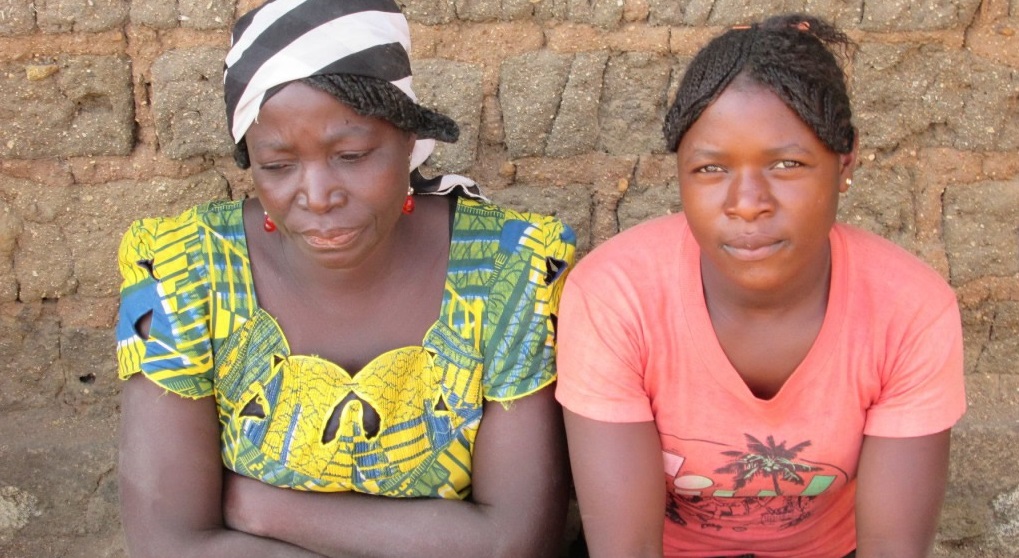
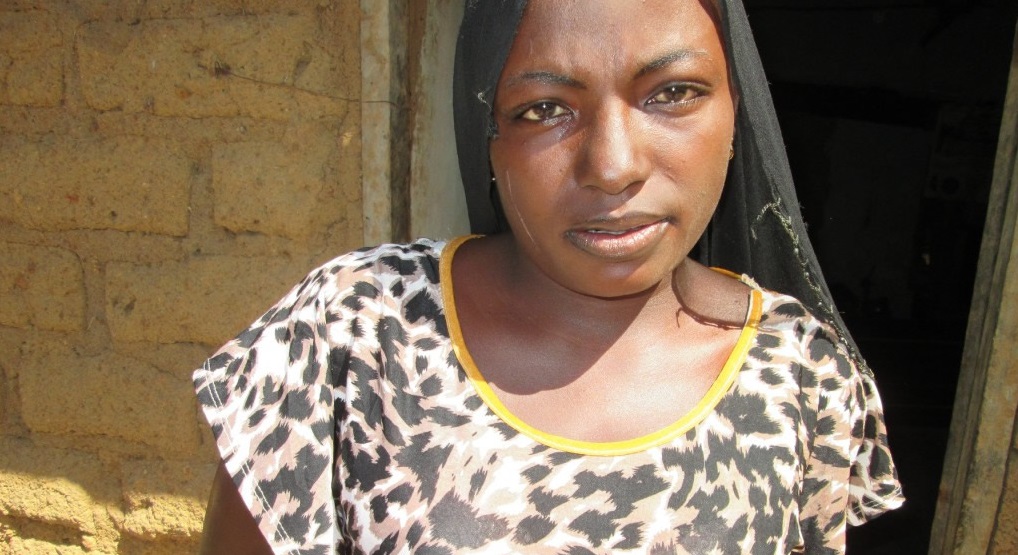
Widowed and lovelorn: Laruba (L) and Rebecca (R)
Saturday October 5, 2013, is a blissful day for Istifanus Sati. The day begins with frenzied merrymaking inside the sprawling family compound in Ket Village, Barkin Ladi. A speaker blares varied genres of Hausa music to an animated audience, many of who down bottle after bottle of beer, smoulder and inhale stacks of cigarettes, and gobble local dishes. It is generally a joie-de-vivre atmosphere. Sati, 26, has just taken a wife — a tender, impressionable 19-year-old whose beauty is just unfurling.
Fast-forward another five days, and Istifanus’s life is turned on its head. In the wee hours of Thursday October 10, 2013, unknown gunmen invade their compound and begin to shoot indiscriminately. Everyone scampers but not everyone escapes. Istifanus, one of the unlucky two, is felled by two bullets, one in his right thigh, and the other in his left leg. It is a grating interruption to his five-day-old marriage; and his wife, Rebecca, has all too soon been tested with the for-better-for-worse marriage axiom.
“My husband was shot five days after we married,” Rebecca says with a wry grin. “I am just feeling bad, because they did not allow me to enjoy my husband. The bonesetters have said he will walk again but when, they themselves do not know.”
After a little over a week at the Plateau State Hospital, Istifanus relocates to Rawhol Kasa, where traditional bonesetters have been working on his legs. “I have spent about N55,000 on treatments,” he moans, “and I have only seen my wife a few times since the shooting.”
Istifanus’s father, 55-year-old Sati Yaroh, was even unluckier, giving up the ghost after suffering gunshots in the neck and the waist. His mum, Laruba Sati, is inconsolable: her husband is dead, her son is down-and-out, her daughter-in-law is forlorn, and the education of five of her seven children is in jeopardy. Life, she says, is now cheerless.
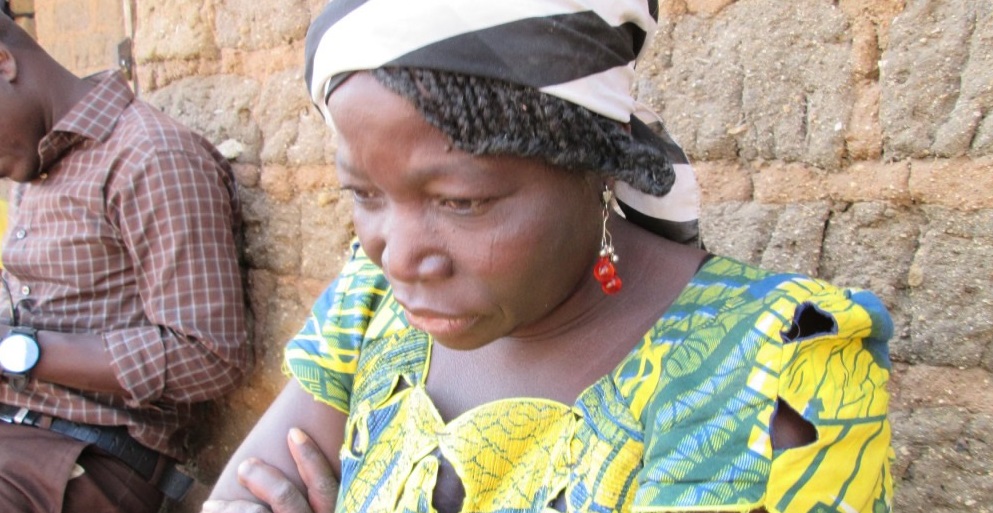
Laruba: Idle, helpless, hopeless…
“Since I lost my husband, I have been sick,” Sati laments. “I am idle, helpless and hopeless now.” Her hopelessness, she says, stems from the arduous task of funding the education of five of her eight children who are in school. She doesn’t see herself making a success of this challenge.
“There is no other means by which I can support their education now that my husband is gone,” she adds, tears of regret welling up in her eyes. “When my husband was alive, he trained the children; he paid their school fees; he took care of me whenever I fell ill; he did everything. But now, everything has been thrown into disarray.”
The only child who would have been assuaging her worries is the same one languishing at the bonesetters’. “The only boy who was supporting me is the one whose legs have now been broken. Isn’t it clear that I am finished?” she yelled into the air, querying no one in particular.
MADNESS AND DEATH BETTER THAN LIVING
Serah: Ready to surrender her life to have her slain family back
“When I think about it, I feel like it is better for me to die than to live without my parents and my siblings.”
On word count to interview time ratio, Serah Dung scores least of all victims of Plateau killings who agreed to voice their feelings. But this is a record that will be immaterial to her, considering that life, itself, has lost its importance. Whenever she remembers her slain family, death is the only elixir that crosses her mind.
Serah had left Kungte Village in Jos South Local Government in the morning of Saturday August 31, 2013, only to be welcomed home in the evening by the corpse of five of the six people she left behind. She did see and examine the corpse of his late father, but that was just the farthest she went. All five corpses had been assembled at the “front of the house” but she was too distraught to look.
“They shot my father in both legs, in the chest and in the forehead,” she recalls, her breath multiplying in intensity. She averts the camera, patently at the return of mental footage of the blood-soaked bodies. “I didn’t really look at the corpses of my mother and my younger ones.”
Serah continues to miss her father, Peter Dung; mother, Rose Dung; and siblings Sati (20), Teiyei (17) and Samson (7), even though his father has three more children from a second wife. “I feel bad … like it is better for me to die because…,” she says and then stops momentarily. A tenuous attempt to complete the sentence ends in tears, a gush of tears that bring the interview to an abrupt close.
Of Serah’s preference for death and Solomon’s battle with madness, it is hard to separate the worse. But what is easy to decipher is the similitude of their pains: both have lost dear relatives, and both are inclined to think there has to be an insane or immortal remedy for their agony.
Like Serah, whose only surviving nuclear kinfolk is her sister, Solomon Pagyang Gwom of ket Village in Barkin Ladi is left with a solitary brother. All others, as well as his parents and his nephews, have been eliminated in an attempted annihilation of his family.
On Thursday October 10, 2013, his septuagenarian father, Pa Tsok Gwom, was killed in the company of his wife, son, daughter in-law, two children and two grandchildren. In all, eight members of the family were wasted in one night. Losing them all in one fell swoop could truly be maddening, so Solomon must be helped before he runs mad.
Solomon… teetering on the brink of madness
“All of them were in their rooms when they were killed,” he recollects through an interpreter, his face tightening in a stirring revelation of anguish. “They shot my father in the knee and in the ribs. They shot his wife in the rear of the head. They shot my brother in the ribs, while his own wife was shot in the head. All others were shot in the head.”
Solomon’s methods of conveying his sorrow are mannish. No tear. No abrupt end to the interview. No shying away from the camera. But it is clear he is not less bereaved than the many others who have lost their kinsmen. He stares stonily — almost blankly — face stationary, hands immobile.
“It really pains me,” the 30-year-old says, his entire body still motionless. “I am in pains up till now. I am still mourning.” These people who were murdered, he emphasises, are the people who were supporting him. And to lose them is cruel.
“I feel so lonely,” he adds, gnashing his teeth and squashing his lips against each other as though to say he has said everything in his mind. But he adds rather scarily: “Anytime I think about it, I fear I might run mad.”
AGONY EVERYWHERE
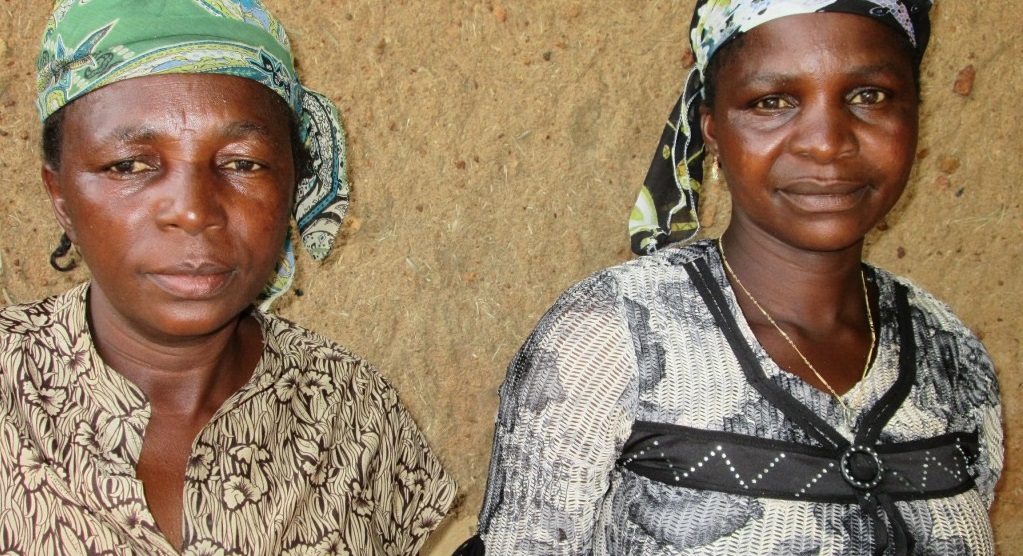
Lami (L) and Jumai (R)
“No! No!! No!!! You cannot leave yet,” a voice yells from deep inside the hut. “This woman in here says she is very hurt; she desperately wants to speak with you.”
Jumai Adamu, the woman in question, is the daughter-in-law of Marene Uttawal, the 105-year-old woman who was active on the farm but has been plagued by partial paralysis of her lower limbs since learning of her son’s and grandson’s murder. Uttawal’s losses are Jumai’s as well: her son and grandson are Jumai’s husband and son, respectively. No sooner had the interview commenced than her insistence on speaking became perceptible. Her husband, the only person she was accustomed to “talking with”, is gone. Now, the 40-year-old needs to talk to someone else, even if it’s a reporter — a stranger.
“Whenever I think about it, I lose my consciousness,” she says. “I no longer understand what I am doing. He was the one who helped us in the house. He took care of us.”
By “us”, Jumai intended herself and her husband’s first wife, Lami Adamu, 45, who — more Uttawal-like in orientation — was laconic. “I hate to remember that my husband is dead,” Lami lamented. “I feel sad every time I do. He was the one person I could talk with, so I feel so lonely.”
In addition to sharing in Lami’s loneliness, Jumai has yet to overcome the loss of her son. “To lose my son in the same attack is heartbreaking,” she adds, her effort to restrain onrushing tears futile. “It is difficult to forget it just like that.”
Although Jumai can take solace in mothering two other sons — Magit Adamu, 22, and Marion Adamu, 19 — beneath that blessing is another sting: successfully bankrolling Magit’s education at Government Secondary School (GSS), Gawarza, is an improbable prospect without her husband. “To pay his school bills, I take up menial jobs in the market, in addition to farming. But what problem will this solve?”
Hanatu: Back to the farm
Someone else with an identical plight in that same compound is 67-year-old Hanatu Sunday, whose son was put down few weeks before his longed-for commencement of fatherhood. This is a boy who, months earlier, promised Hanatu that her days of suffering on the farm were numbered. He had just finished building his house, and his mother’s welfare was next on the cards. So, for Hanatu, not only has her son’s life been ended, the then forthcoming end to her sufferings on the farm has been disrupted.
“The pain of his death is still jarring in my heart. I think about him all the time,” says the farmer of Irish potato, tomato, guinea corn and maize. “He just finished building his house and had not moved in when he was killed. He had assured me that very soon, I would stop farming. He promised to take good care of me.”
Hanatu further discusses the piercing pain of burying his son just before the birth of his baby. “His wife was pregnant at the time he was killed,” she says curtly, disseminating annoyance rather than sadness. “His killers didn’t allow him meet his baby.”
Nevertheless, she is grateful to now have a grandson, the reincarnation of his slain son. “My misery has been halved since his wife put to bed.” A glimmer of smile perks up her face, but it soon evaporates.
“I miss him very much,” she continues. “He used to advise me a lot. He was very strong on the farm. He often worked hard. And that is why since his death, we have made very little from the farm, so little that we barely survive.”
Elsewhere in the same village, Yakubu Maki — only a decade younger than Uttawal — lost his 20-year-old son, “his helper,” to the killers. So selfless was boy to father that a day hardly passes without the father remembering the tragedy.
“He was my helper, my messenger,” says Pa Maki. “He was the one who ran my errands anywhere, even outside the village. There is no single day that I do not miss him.”
WHEN A MAN CRIES
It is three months since Rotji Nanan has not known what he is doing. Since his father, Abednego Nanan Jilang, 90, and brother, Chorbis Nanan, were murdered in Kukah Village in Shendam, Rotji has yet to come to terms with returning from farm without anyone to banter with. This, he says, is the hardest-to-take upshot of their slaying.
“Since the death of my grandfather and brother, I have not been myself,” Rotji cries, making no attempt to impede the tears streaming down his cheeks. Why would he barricade the tears, anyway, when crying is what he does every day?
“I cry every day,” the 21-year-old resumes weepily, wiping the tears off his face, this time. “I am a very sad man. I am used to greeting my father and my brother every day when I return from the farm, but they killed both of them; that is really bad.”
A NARROW ESCAPE
Rose: God is in control
After Rose Iliya heard a boom, she blacked out. In a pool of her own blood, she regained consciousness at the Plateau Hospital. Only then did the images reconvene in her memory: an armed gang had invaded her house; one of them shot her in the pelvis; they thought they “got” her but they were wrong; she made a lucky, narrow escape. Only that all three children in the house on the night did not benefit from that luck; they were felled by the unknown men’s bullets.
Narrating the attack, Rose, 27, recalls that the killers broke into the compound, raining bullets on the first door. Seeing that no one cried, they knew they had drawn a blank. So, they moved to the next door, the parlour, where two innocently-snoring children were fired off.
“After that, they came into my apartment where one of my children was sleeping with me,” Rose says, her voice weak and her face bleak. “They shot my baby and shot me too, thinking they had killed me.”
In the four days that followed, she would spend more than N20,000 at the hospital. Afterwards, she has stuck with the doctor’s advice of dressing the wound regularly at a nearby clinic if it must heal fast.
“The leg is healing,” she says without the positive demeanour that should ordinarily accompany such news. In truth, there is little to be grateful for. Not only is her walk still wobbly, she is haunted still by the loss of three of her five children: Gideon (7), Jack (5) and Elia (10). However, she understands that she will have to move on sooner than later.
“To be sure, it is not easy to lose three of my children in one night,” she says. “I am just taking courage because I know [that] God is aware of what happened. Anytime I recall this incident, I lose my sanity momentarily. But the fact is that God is in control.”
BLOOD ON THE WALL
Inside the house of the Bulas in Rawan Neighbourhood, the walls tell a story. It is already six weeks that the walls have been visited with the most irreverent desecration possible, yet the blood patches refuse to fade, clinging on tenaciously as some sordid memento of the extermination of the entire Luka Bula family.
It happened on November 9, 2013. At a little over midnight on the day, some gunmen arrived to overrun the neighbourhood, located in Rawurum Village, Barkin Ladi — beginning from the Bula family.
“I started hearing gun shots at exactly 12:14am,” begins Dayak Solomon, 27, a neighbour who is himself lucky to still be talking. “But I could not come out because gunshots were fired at my door and at my window.”
Although he remained indoors, he monitored the siege on his neighbours, all ears. At the end, Luka Bula; his wife, Ladi Luka Bula; and five children were put down. A second neighbour lost two children, aged 11 and 8.
“After they broke into Bula’s house, I heard a baby scream ‘Mummy, mummy’,” Dayak adds with unimpeachable precision. “Subsequently, gunshots were indiscriminately fired all over the house.”
He expressed disgust that the crying child did not receive the sympathy of the killers, who continued shooting nonetheless. “They shot all of them. They finished their operation at exactly 1:05am,” he says, nodding assuredly as the words flew out. “Then they started calling one another. I heard someone say, ‘Milei, Milei, Mutari’. Then they went.”
Dayak admits that he does not know the killers. But having heard their voices. he “believes” they are Fulani. He laments that the attacks have become normal but wonders how long government would continue to watch as they die like “bush meat”.
“They killed Julius, who was five months old, placing a gun his mouth and shooting him,” he says almost casually, confirming his earlier statement that frequency of the attacks had grown to confer an element of normalcy on the deaths. “His intestine tore out. They shot the woman in the forehead. They scattered the penis of the husband, and destroyed him everywhere with bullets. This place was full of bullets; I’m sure they expended more than two magazines.”
But what ill have the people of Rawurum committed against the Fulani? “Nothing,” he exclaims. “Nothing, because we have never gone to attack them. Never! We are innocent people. We have wronged no one. The Fulani just come to attack us in the night. They have just taken us as bush meat that must be hunted to death.”
THE RICH ALSO CRIED
There are very few late Nigerian public office holders whose deaths can be remembered to have occurred during their service to fatherland. Gyang Dalyop Dantong is one.
More than 300 people in Riyom and Barkin Ladi Local Governments had been murdered by suspected Fulani herdsmen. On Sunday July 8, 2012 when 63 of those were to be mass-buried at Matse Village, Gyang turned up. It turned out to be his valedictory public appearance. Gunmen believed to be Fulani invaded the burial, and everyone scuttled. Even the soldiers fled. In all, more than a hundred mass-burial sympathisers were killed. Among them was Gyang, the senator representing Plateau North at the National Assembly.
His immediate younger brother, Rwang Dantong, thinks it is a death that could have been averted. “If there was peace, nothing like that would have happened,” says Rwang, a soft-spoken man who generally comes across as too calm to support the ongoing belligerence. “But I saw my brother as a sacrificial lamb to the Berom Land, a person who can die — and he ended up dying — for a cause to help his people.”
Rwang is happy with the equanimity with which his parents have dealt with the death. His 87-year-old father being a retired pastor, all members of the family have taken the calamity in their stride.
“All the way, we have been walking along God’s path. We have been relying on God’s biblical teachings to leave vengeance to him,” he says solemnly. “We completely accept my brother’s death as the will of God, because nobody can take the glory of God.”
If God didn’t allow it, he concludes, Gyang would never have fallen. “And since He allowed it to happen, He knows how to take care of us.”
to be continued…
Blood on the Plateau is a five-part series. This is the second in the series. You may read the first here.
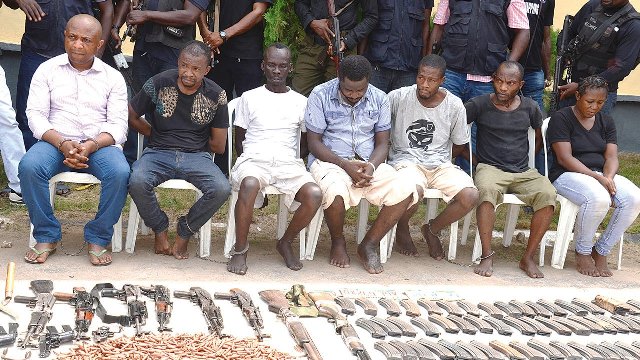
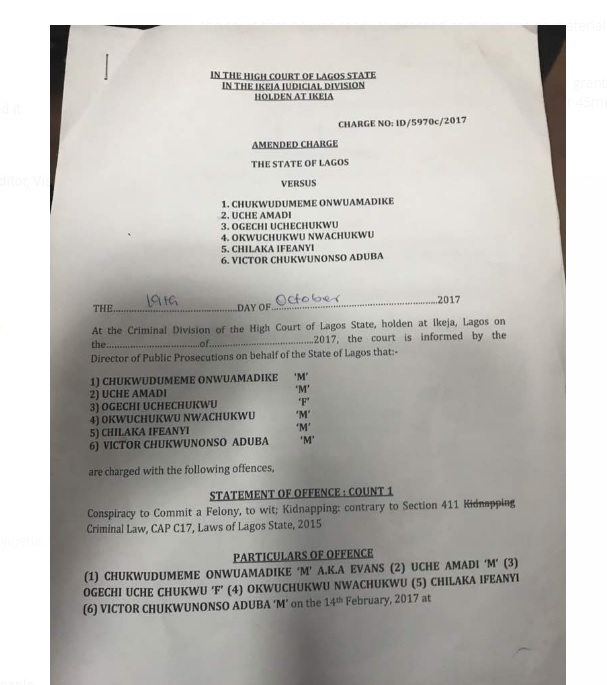
Chukwudumeme Onwuamadike, suspected kidnap kingpin also known as Evans, has changed his plea in the two-count charge of conspiracy and kidnapping brought against him, from guilty to not guilty.
Evans was accused of kidnapping one Donatus Dunu, who later escaped from captivity and made statements that led to Evans’ arrest.
Five other persons believed to be members of Evans’ gang were also arraigned in August.
When the charge was read to the defendants during their arraignment, Evans and the second and fourth defendants pleaded guilty to the two-count charges, while the third defendant, a female, and the fifth and sixth defendants pleaded not guilty.
However, at the resumption of hearing on Thursday, Titilayo Shitta-Bey, Director of Public Prosecution, Lagos State, informed Justice Hakeem Oshodi that the charges against the accused persons had been amended.
Shitta-Bey said the charge still remained that of conspiracy and the kidnap of one Dunu Donatus, but that the amendment related only to the punishment section for the second charge.
She urged the court to allow the defendants take fresh pleas to the amended two-count charge.
But Olukoya Ogungbeje, counsel to Evans, opposed the move for fresh pleas, saying that he had only just been served the amended charge in court and needed time to confer with his client.
He then asked the court to grant him a short adjournment so he could get a proper brief from his clients on how to proceed.
Justice Oshodi then stood down the case for 45 minutes to enable the lawyers confer with their clients.
When the hearing reconvened, the amended charges were read to the accused persons and all of them pleaded “not guilty”.
Following the plea, the prosecution counsel told the Judge that he was ready to proceed with the trial as three witnesses were in court to testify.
In August, after the arraignment of Evans, his lawyer had told newsmen that his client would change his plea to “not guilty” at the next court sitting.
Ogungbeje insisted that it was the police that coerced Evans to plead guilty to the kidnapping charges.
He said that since June when Evans was arrested and remanded, the police did not allow his family members and lawyers have access to him.
“It is settled law that plea of guilty must be made voluntary and direct devoid of any influence, coercion and manipulation,” Ogungbeje said.
“In the meantime, after our brief conferring with our client in open court, he made it known to us that he would change his Police motivated guilty plea to ‘not guilty’ at the next adjourned date.”
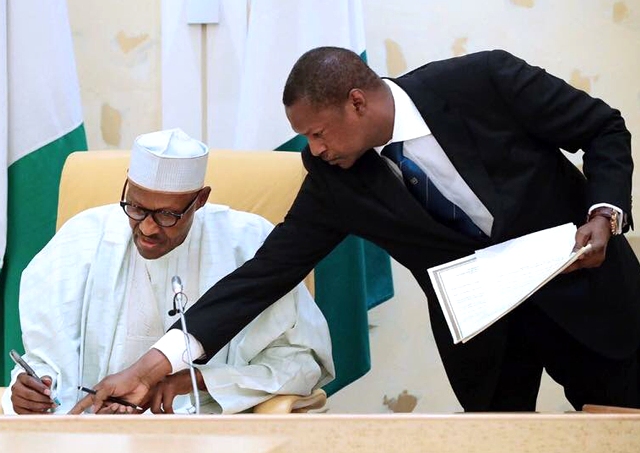
President Muhammadu Buhari has directed relevant ministries, departments and agencies to compile documents on names of public officials from whom funds has been recovered so far.
According to the Socio-Economic Rights and Accountability Project (SERAP), Abubakar Malami, Attorney General of the Federation and Minister of Justice, said this on Wednesday when he met with its representatives.
Adetokunbo Mumuni, Executive Director of SERAP, said the directive by Buhari was in response to a court order by the Federal High Court, Lagos, directing the Federal Government to publish the names of persons from whom funds had been recovered, as well as how much that was recovered from each person.
“We had a very productive meeting with Mr Malami, discussing, among other critical issues, the need for the government to obey the judgment delivered in July by Hon Justice Hadiza Rabiu Shagari,” Mumuni wrote in a statement issued on Thursday.
“Mr Malami informed us that President Buhari has directed the Ministry of Justice, Ministry of Finance, Economic and Financial Crimes Commission (EFCC), Independent Corrupt Practices and Other Related Offences Commission (ICPC) and other relevant agencies involved in the recovery of looted funds to promptly put the documents together with a view to fully and promptly enforcing the judgment by Justice Shagari.
“We hope that the implementation of the judgment will now happen sooner rather than later.
“We believe that effectively implementing the judgment will be a victory for the rule of law, show the way forward in the fight against corruption and impunity of perpetrators in the country, as well as demonstrate Buhari’s oft-repeated commitment to tackling the problem of grand corruption.”
Last year, the ministry of information published details of assets that had been recovered so far in the anti-corruption campaign.
According to the publication, total cash recovery between May 29, 2015 and May 25, 2016 amounts to N78,325,354,631.82, $185,119,584.61, £3,508,355.46 and €11, 250.
Monies that were under interim forfeiture at the time totalled: N126,563,481,095.43, $9,090,243,920.15, £2,484,447.55 and €303,399.17.
Anticipated repatriation from foreign countries totalled: $321,316,726.1, £6,900,000 and €11,826.11.
A total of 239 non-cash recoveries were made during the period, comprising farmlands, plots of land, uncompleted buildings, completed buildings, vehicles and maritime vessels.
Following the publication, SERAP made a freedom-of-information request to the ministry requesting a list of the alleged looters and how much was recovered from each person.
But when the information was not provided, SERAP proceeded to court to compel the Federal Government to publish the list of supposed looters.
Muhammau Buhari is not the first President to name himself Petroleum Minister. That record belongs to Olusegun Obasanjo, who for six out of his eight-year tenure, did not appoint a minister to oversee the petroleum ministry.
FIRST TENURE
For six of his eight years in office, from 1999 to 2005, Obasanjo was President, Petroleum Minister and Minister of State for Petroleum.
He only appointed Edmund Daukoru, the current traditional ruler of Nembe Kingdom, in Bayelsa State, as Special Adviser on Petroleum and Energy in 2003, which was the last year of his first term.
SECOND TENURE
Later, in July 2005, perhaps following a lawsuit filed by a group called the Niger Delta Democratic Union (NDDU), Obasanjo named Daukoru Minister of State.
In the suit filed by Austin Ayowe and Dafe Chuks, on behalf of the NDDU, the court was asked among other things to issue “an order directing President Obasanjo to appoint a Minister of Petroleum Resources in accordance with the mandatory provisions of the Petroleum Act Cap 350 Laws of the Federation of Nigeria, 1990 as amended”.
The plaintiffs also sought “an order restraining President Obasanjo and the Petroleum Products Pricing Regulatory Authority (PPRA) from further exercising any function or powers of a Minister of Petroleum Resources”.
But the suit was struck out by Stephen Adah, the presiding judge, who held that the applicants had no locus standi to file the suit.
According to Adah, the plaintiffs “woefully failed to show how the refusal of the President to appoint a Petroleum Minister had affected their personal interests over and above the public interest”.
“Their claim that they are from Delta state, which is an oil-producing state, is not enough to confer locus on them. They have not shown any special interest over and above others that has been affected or likely to be affected. The issue being raised is not personal to them,” Justice Adah ruled.
“For them to have locus, they must duly show that their personal interests over and above the public interest have been affected.
“Since that has not been shown, this court will not be able to assume jurisdiction and the matter is hereby struck out.”
SECRECY — HOW THE OIL SECTOR WAS MANAGED
According to reports, Obasanjo’s leadership at the Petroleum Ministry was characterised by lots of opacity and breach of due process. In fact, the genesis of the controversial Malabu oil deal can be traced to the Obasanjo regime.
In December 2007, months after he handed over power to Umar Yar’Adua, the Conference of Nigerian Political Parties (CNPP) petitioned the EFCC demanding that Obasanjo be probed as he no longer enjoyed constitutional immunity.
“Let us start by stating that Chief Olusegun Obasanjo, during his tenure, illegally appointed himself the Minister of Petroleum Resources, contrary to section 147 of the 1999 Constitution of the Federal Republic of Nigeria,” the petition read in part.
“Secondly, his activities in the oil industry were shrouded in secrecy, as he never rendered proper accounts of the oil revenue to relevant agencies like the Revenue Mobilization, Allocation and Fiscal Commission (RMAFC).
“Thirdly, it is also on record that neither Federal Executive Council nor National Assembly was ever presented memoranda or budget of the oil industry.”
Similarly, when the news broke in 2015 that Buhari was going to announce himself Petroleum Minister, Vanguard newspaper published an editorial advising against such a move.
“The nation is still at sea over the way in which former President Olusegun Obasanjo handled the same job for six years from 1999 when he assumed power,” the article read.
“A number of turnaround maintenance projects were undertaken and billions of naira sunk and yet the refineries remained comatose…
“We do not want a repeat of the nation being put in the dark about proceedings in the industry.”
Also, Ifeanyi Izeze, a columnist cum oil and gas communications expert, asked two questions in an article in March: “Who was Nigeria’s President and Petroleum Minister in 2001 when the prospecting license of oil bloc OPL 245 was revoked and ownership reverted to the federal government?
“Who was Nigeria’s President and Petroleum Minister in 2006 when, after series of negotiations, the licence was restored and ownership of the oil bloc reverted to Malabu Oil and Gas Limited?”
Perhaps the not-very-good precedent set by Obasanjo is the major reason the likes of Olisa Agbakoba want Buhari to relinquish his position as Minister of Petroleum Resources and appoint a substantive minister.
The Nigerian army has admitted abandoning 22 people killed inside a primary school by suspected Fulani herdsmen at Bassa Local Government Area of Plateau State.
Daily Trust reports that Anthony Atolagbe, Commander of Operations Save Haven (OPSH), said the soldiers asked the people to take refuge in the school when the attack started but the soldiers deserted the school to chase after the gunmen.
“We asked the people to go to the school and when the shooting started, some people were shouting, the soldiers said let them go and drive them away; 12 of our men were guarding the school, they went after the attackers to drive them away. But before my men come back, some attackers came and killed them in the school,” Atolagbe said.
Most of the people killed in the school were children and women.
Atolagbe denied the accusations that the soldiers invited the Fulani herdsmen to kill the people in the school.
“We can’t take sides,” he said. “Since I have been in this operation, we have started doing a lot of things. We have stakeholders meeting at OPSH headquarters and at the sectors level in order to promote peace and avoid crisis. There is a compulsory two times stakeholders meeting every week.”
He said the army had deployed motorcycle squads trained outside the country to patrol the areas and prevent future attacks.
Atolagbe confirmed that no arrest had been made, but he said the task force was working round the clock to arrest the perpetrators.
Joseph Boakai has served faithfully as deputy to Liberia’s president, Ellen Johnson Sirleaf, for about 11 years. But now they barely speak, and he has subjected her to blistering public attacks. Why?
She has said to him, according to reports, that she is not going to hand him the presidency, and he will have to work for it.
“We’re asking her – the Unity Party is her party, it’s the party that would bear her legacy and she ought to be supporting it,” he said in an interview in February.
Where he sees a personal betrayal however, the rest of the world finds moral courage. Sirleaf is after all single-handedly responsible for keeping Liberia stable and unified for the past 12 years.
It is a role she has taken seriously enough that, at the beginning of the campaigns, she was forced to issue a stern warning to the 20 candidates jostling to replace her: “We hold them as political leaders who seek the highest office of our land to act with dignity and responsibility that befits that office — to live up to their commitments to ensure violence-free elections,” she said.
It is of course a necessary ritual to note that Sirleaf, who is stepping down after two six-year terms in office and who has won the Nobel Peace Prize, is far from perfect.
Corruption remains a major problem – the country ranks 90 out of 176 countries in the 2016 corruption perception index by Transparency International. Even Sirleaf had to admit this in an address to the Liberian congress this year.
Added to this are accusations of nepotism after the president appointed her three sons to major posts in the government, albeit they were qualified for those positions.
Many of its youth are unhappy and express hopelessness as to present and future economic opportunities.
According to the United Nations, young people constitute more than 60 percent of the population, and youth unemployment is nearly 90 percent.
Again, even Sirleaf has been forced to admit this, calling it a major threat to peace and security in a 2013 address.
A majority of the population also has no access to electricity, power cuts remaining frequent across the country and those with access have to pay either a premium or get a private diesel generator.
This is also a country that had only 50 doctors for its population of 4.3 million at the outset of the Ebola outbreak in 2014.
But then her government has substantially improved infrastructure, including a hydro-electricity dam, and she has been lauded globally for pushing investment into the economy.
Sirleaf negotiated a $4.7 billion debt relief and gained the trust of an international coalition including the World Health Organisation, the Food and Agriculture Organisation and UNICEF to fight Ebola.
However, there are two major achievements that stand taller than the developmental growth and challenges she has had to deal.
First is peace. Sirleaf – sometimes called The Iron Lady – has overseen a reign of uninterrupted peace in a country that has been ravaged by two civil wars.
Sirleaf has also consolidated democracy. This is the first time since 1944 that a democratically elected leader will hand over to another in Liberia.
She has allowed a boisterous democracy to take shape that has attracted 20 candidates vying for 2.2 million votes, and guaranteed a run-off in a race with no clear favorite.
Ultimately, she has made it very easy for Liberia to be seen as a serious democratic, developing nation; with a country in far better shape than when she took it over in 2005.
And the woman sometimes called Iron Lady, who has survived an abusive husband, “imprisonment, multiple brushes with death, and the vagaries of working with and against Liberia’s various strongmen” has done all of this without an iron fist, a disrespect for rights or the assault on liberties that has been the hallmark of successive African ‘liberators’.
Sirleaf leaves Liberia with a reputation intact, a nation on a path to growth, institutions set to thrive without her and an example that screams to the world that African leaders can say no to power, and yes to legacy. She leaves with her head held high.
One can only hope that Rwanda’s Paul Kagame is paying attention.
Chude Jideonwo is a World Fellow at Yale University. This opinion was written specially for CNN. He tweets @Chude
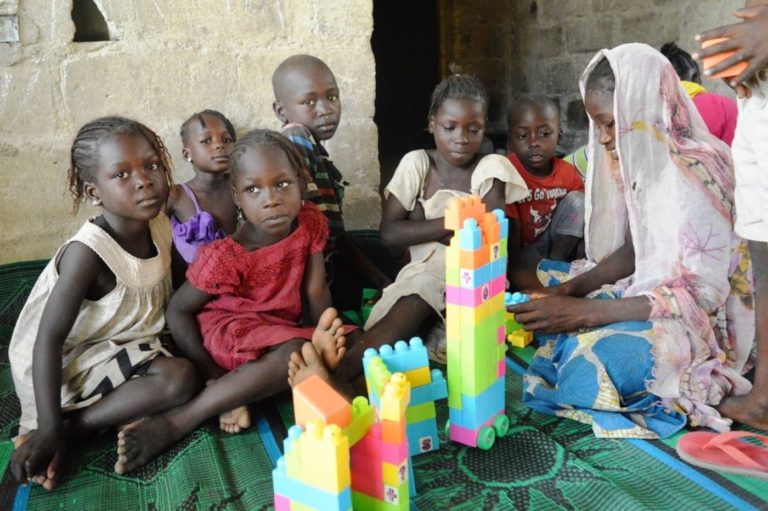
Children in rural communities in Adamawa and Ebonyi states will gain from a new programme by UNESCO to build their resilience over hardship through play.
A statement by UNESCO says the programme will help disadvantaged children to cope with adversity and become resilient.
The project, titled ‘Play and Resilience: China-Africa collaboration project for Building a Peaceful and Sustainable Future’,is funded by Victoria Charitable Foundation and the Chinese government.
UNESCO will implement the programme in collaboration with the Federal Ministry of Education, National Commission for Colleges of Education and Universal Basic Education.
It will be working with states ministries of education, state universal basic education boards, colleges of education, rural communities, teachers/caregivers, parents and families to implement the project, which is expected to run from 2017 to 2019
UNESCO noted that the project would contribute to strengthening the delivery of Early Childhood Care and Education (ECCE) programme in Nigeria by targeting disadvantaged children in rural communities in Adamawa and Ebonyi states.
It explained that ECCE has the possibility to nurture caring, capable and responsible future citizens.
“In Nigeria as in the rest of the world, more children are faced with misfortunes inflicted by poverty, conflicts, displacements, loss of or separation from family members and friends, and deterioration of living conditions among others,” said the statement.
“Thus, the need to provide them with psychological and physical supports to let them cope with the situations by building resilience through play. The support helps them to demonstrate personal strengths needed to cope with adversity and become resilient.”
According to UNESCO, the project will complement existing efforts by government and non-state actors to help select communities underserved with quality early childhood care and education services by building their human resource capacity and materials production.