Home Blog Page 2698

We must listen to cries for separation, says Tinubu

0

Bola Ahmed Tinubu, former governor of Lagos State and National Leader of All Progressives Congress (APC), has urged the federal government to listen to — not condemn — the cries for Nigeria’s separation.

Speaking in an address at the 2017 Annual Dinner of the King’s College Old  Boys’ Association (KCOBA) in Lagos, which was presented on his behalf by Wale Edun, former Lagos State Commissioner for Finance, Tinubu attributed the ongoing agitation for the separation of the country to what he described as chronic failure of government to meet basic aspirations.

He expressed strong belief in a united and better Nigeria than a broken federation, saying: “We argue over matters that long ago should have been settled. The longer such fundamental questions fester, the more extreme become the proposed answers.

“Thus, we have people clamouring for secession and the murmur of such a course grows stronger in other sections.

“These other areas resent that some have advocated secession. Blame and recrimination become the political currency. Statesmanship falls in short supply. The dominant urge is to confront instead of reconcile.

“It would be wrong to mistake this for a tempest in a teapot. If not careful, we may be tossed about like a teapot in a tempest.

“We must listen to what is being said so that we can determine what is really meant… Yet the cry for separation has gained traction among average people; this is due to the chronic failure of government to meet basic aspirations.

“If over the years, government had delivered on the promise of growth, prosperity, and justice, those calling for such extreme remedies would be but a small fringe of little consequence.

“Our task is not to condemn but to listen and understand. I care not at all for this proposed solution. But I dare not discount the concerns and problems that have led many people into advocating such a thing.

“Here, I want to plainly state my position. I am a firm believer in Nigeria. I believe this land will become a great nation and a leader among other African nations. We can resolve our dysfunctions in a manner that will make this nation rise as a standard of decency, justice and prosperity for all Nigerians.”

According to him, “when we unite and not untie, we build on an existing maxim of one Nigeria by describing that oneness as the fabric of a larger society S.E.W.N. (South East West North) together”.

Tinubu said Nigeria needs a national industrial policy to foster the development of strategic industries that create jobs as well as spur further economic growth.

“Whether we decide to focus attention on steel, textiles, cars, machinery components, or other items, we must focus on manufacturing things that Nigerians and the rest of the world value and want to buy,” he said.

He urged the federal government to institute a policy of tax credits, subsidies and insulate critical sectors from the negative impact of imports.

“We need a national infrastructure plan. Roads, ports, bridges and railways need enhancing and new ones need to be built, the goal must be a coherently-planned and integrated infrastructural grid,” he said.

“A national economy cannot grow beyond the capacity of the infrastructure that serves it. Good infrastructure yields a prospering economy. Weak infrastructure relegates the economy to the poorhouse. Government must take the lead…

“The long-term economic strength of the nation is dependent on how we deploy now idle men, material and machines into productive endeavour. And this is highly dependent on the interest rate.

“The Central Bank of Nigeria (CBN) must cure its affection for high interest rates. Lower rates are required so our industrialists may borrow without fear that excessive costs of borrowing will consign them to irredeemable debt. The normal profit rates in most business sectors cannot support the burden imposed by current interest rates.”



IPOB not a terrorist group, says US

The United States of America says it does not view the Indigenous People of Biafra (IPOB) as a terrorist organisation.

Speaking with Punch, Russell Brooks, spokesman for the US embassy in Nigeria, said: “The United States Government is strongly committed to Nigeria’s unity.

“Important political and economic issues affecting the Nigerian people, such as the allocation of resources, are worthwhile topics for respectful debate in a democracy .

“Within the context of unity, we encourage all Nigerians to support a de-escalation of tensions and peaceful resolution of grievances.

“The Indigenous People of Biafra is not a terrorist organisation under US law.”

Brooks, however, did not comment on whether the Federal Government had asked the US to treat IPOB as a terrorist organisation and to block money sent to IPOB from the US .

He also did not state the US’ position on the agitation for a Biafran state .

Last week, the defence headquarters designated the IPOB as a terrorist group and an executive order to that effect was signed by President Muhammadu Buhari before he left for the United States.

On Tuesday, the office of the Attorney General of the Federation went a step further by obtaining a court order to officially declare the group an unlawful organisation.

The court order also stated that anybody that engages in the group’s activities risks a prison sentence of up to 20 years in accordance with the Terrorism (Prevention) Act 2013 as amended.

Similarly, Lai Mohammed, the Minister of Information and Culture, criticised France and the United Kingdom for subtly supporting IPOB’s activities. Both countries have denied the allegations.

Abiara: Corruption won’t end in Nigeria until Jesus comes

Samuel Abiara, immediate past General Evangelist of the Christ Apostolic Church in Nigeria, says corruption will never be totally eliminated from the country until Jesus comes.

He made the comments during an interview with Punch, adding that the issue of corruption in the country is indescribable.

Abiara urged people in positions of authority to think more about the people and about leaving lasting legacies.

“There is no way corruption will end in Nigeria before Jesus Christ comes. There is corruption everywhere. It is just that the way each country does theirs is different,” he said.

“But it seems the issue of graft in Nigeria is indescribable. It is disheartening the amount of money people steal in Nigeria.

“They steal so much and keep them in bizarre places. Why do they do this, knowing that one cannot live forever?

“I have come to realise that looters are only rich compared to wealthy people. The difference between the two is that those who steal public funds are only rich. They steal for their greed and self alone.

“But wealthy people work hard for their money. They work so hard to empower people by establishing firms where many work. They are conscious that they have to leave legacies long after their death.

“For example , Alhaji Aliko Dangote belongs to the group of the wealthy. He empowers many and establishes companies so many can earn a living.

“My advice to the greedy ones among us is that they should strive to do work that will speak well for them after death.”

Abiara said he does not believe that the country is worse than it was before the coming of the Muhammadu Buhari administration.

“No, I don’t share in that view. One cannot satisfy the world. Even if God gives rain, some people will say it is too much, likewise if He makes the weather sunny,” he said.

“God appointed the people in power. We should know that Rome was not built in a day. Before they got into power, things weren’t too good and they were expected to correct them in a hurry; in a day.

“I appeal to Nigerians to be patient with them.”

But he urged Buhari to focus on creating jobs for the vast unemployed youths, saying: “There should be massive jobs to engage the youth massively because idle hands are the devil’s workshop.”

One week after Wike’s allegation, court convicts five SARS policemen of extrajudicial killing

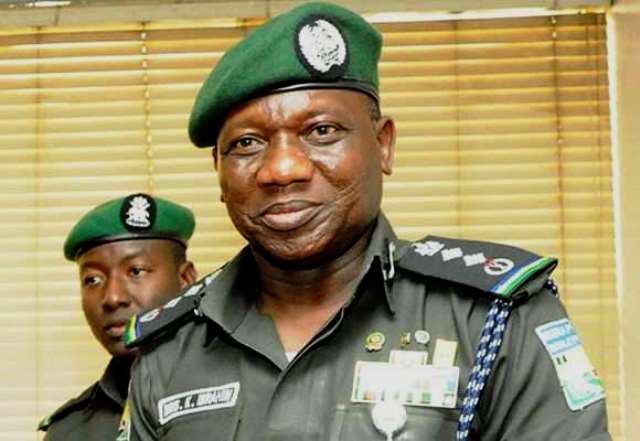
Inspector General of Police, Ibrahim Idris

Few weeks after Nyesom Wike, Governor of Rivers State, alleged that personnel of the Special Anti-Robbery Squad (SARS) of the Nigerian Police were responsible for the armed robbery and kidnappings in the State, five members of the squad have been found guilty of extrajudicial killing.

A High Court sitting in Port Harcourt, the Rivers State capital, on Friday held that the SARS officials, led by one Samuel Chigbu, arrested 28-year-old Michael Akor and his friend, Michael Igwe, in Oyigbo Local Government Area of the state on June 22, 2009, only for their bodies to be found in a nearby bush the next day.

Adolphus Enebeli, the presiding judge, also ordered the Nigeria Police to pay a N50 million compensation to the families of the victims.

He noted that no investigation or trial was carried out by the security agents before killing the two young graduates contrary to the laws of the land.

The policemen had argued that the two Michaels were members of a group of hoodlums who had engaged the police in a gun battle and were hit by bullets during the crossfire, but the judge dismissed their explanation, insisting that it was no coincidence that the two victims were hit at the same part of their bodies.

Chigbu and the four other SARS operatives had since been dismissed from the Police Force after the incident. They are also facing murder charges before Justice Margaret Opara of the State High Court in Port Harcourt.

Johnson Ejekwu, counsel to the late victims, told journalists after the judgement that he would have preferred a death sentence for the convicted ex-SARS operatives to the N50 million compensation.

Ejekwu, however, urged relevant authorities to intervene in the extrajudicial killings which are still being carried out by SARS in the state.

Catherine Akor, mother of one of the deceased, lamented that no amount of compensation would be enough to make up for the loss of her son. She said her husband’s health had deteriorated since the death of their son and that he has suffered severe memory loss.

Last week, Wike told a gathering in Port-Harcourt that the Nigerian Police were sabotaging all his efforts at improving security in the state. He specifically accused the SARS of perpetrating the robberies and kidnappings in the state.

But, Ibrahim Idris, the Inspector-General of Police, described the allegations as “nonsense”.

Boko Haram does not control a single LG in the north-east, says army

The Nigerian Army says its men killed a total of 82 Boko Haram insurgents in combat and cleared 630 remote settlements in Borno State in August alone.

Onyema Nwachukwu, Deputy Director Public Relations, Theatre Command Operation Lafiya Dole, made this known via a statement on Friday, stressing that no local government anywhere in Nigeria is under the control of the Boko Haram terrorists.

Nwachukwu was reacting to comments by Buba Galadima, who told TheGuardian in an that Boko Haram currently controls seven local governments in Borno but that the Nigerian military was not being honest with the general public.

He described Galadima’s comments as “only an attempt to propagate falsehood, (and) a futile effort to misinform members of the public on the true security situation in the North East”.

“It is very crucial to set the records straight by making it crystal clear that contrary to his opinions, the Boko Haram terrorists group does not hold or control any Local Government Area in Borno state or in the North-East as claimed in the interview,” Nwachukwu stated.

“These Local Government Areas have been liberated by troops of operation Lafiya Dole and the troops have continued to ensure security in these areas after routing out the insurgents.

“As a matter of fact, locals have been encouraged to return to their communities to resume their vocations and normal life.

“Boko Haram lacks the capability to hold any territory in the North East, hence its mindless attack on innocent and vulnerable civilians with suicide bombings, most of which were made unsuccessful by our vigilant troops,”

“Our troops are, therefore, not waiting only to repel Boko Haram terrorists attacks as erroneously painted in the article, but are rather tactically deployed to deny the adversary freedom of action and access to logistics.”

“One of such major operations was the Operation RESCUE FINALE, which routed the insurgents out of its tactical headquarters in Camp Zero in Sambisa forest and out of its so-called spiritual headquarters in Alargarno.

“Ever since, Operation Lafiya Dole has continued to relentlessly conduct several other operations such as Operation DEEP PUNCH, CHIKIN GUDU Operation and Operation RAWAN KADA alongside the Multinational Joint Task Force.

“These and many other operations have culminated in the degradation and incapacitation of the insurgent group.

“Apparently, this is the reason the terrorist group is striving to remain relevant by resorting to callously use women and children to carry out suicide bomb attacks on soft and vulnerable targets.

“Suffice to mention that in the month of August alone, a total of 82 Boko Haram insurgents have been killed in combat and 630 remote settlements were cleared by our troops.

“Our troops are tirelessly on the trail of the fleeing insurgents as devastating coordinated aerial and artillery bombardments are being unleashed on the terrorist group.”

Nwachukwu, however, acknowledged the fact that some of the fleeing faceless insurgents occasionally mix up with unsuspecting locals and attack them, but “this definitely cannot be described as holding territory”.

“It only simply underscores the need for other relevant agencies to do more to ensure progressive reintegration of the locals into their various communities,” he said.

“Without sounding immodest, it is worthy to note that the counter-terrorism and counter-insurgency operations of Operation Lafiya Dole in the North East, have been commended within Nigeria and in the international community, resulting in several high-level official visits to the North East by national and international bodies.”

Nnamdi Kanu challenges IPOB’s proscription in court

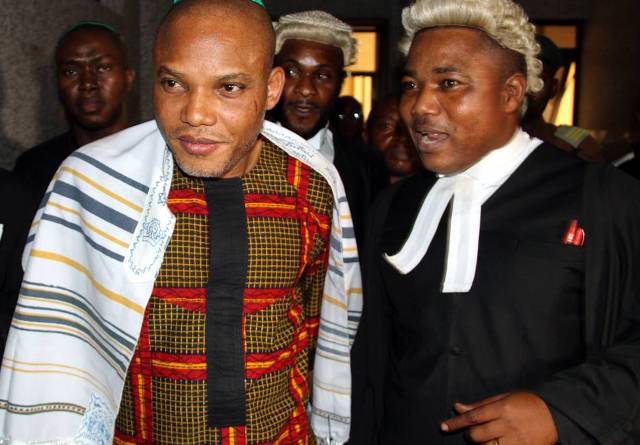
Nnamdi Kanu, leader of the Indigenous People of Biafra (IPOB), has instituted a legal suit challenging the declaration of the group as a terrorist organisation.

Ifeanyi Ejiofor, Kanu’s lawyer, made this known in a statement on Friday, saying the motion was filed on Thursday.

Ejiofor stated that the IPOB is a non-violent organisation; therefore, it was illegal for the Federal High Court, Abuja, to issue an order against it based on an ex-parte motion.

An ex-parte motion can be heard by a court without the presence of the defendant.

Ejiofor argued that his client’s right to fair hearing was breached and that the court in Abuja lacks the jurisdiction to issue such an order.

It was the Defence Headquarters that first declared the IPOB a “militant terrorist organization” in contravention of the Terrorism (Prevention) Act, 2013 (as amended), alleging that the group had set up a parallel Secret Service and was in possession of weapons.

However, following public outcry, the office of the Attorney General of the Federation hurriedly kick-started a formal process, which was signed by approved by President Muhammadu Buhari before he left for the United States on Sunday.

On Monday evening, the court issued an order declaring IPOB a terrorist group and rendering anyone who participates in the group’s activities liable to a jail term of 20 years.

Meanwhile, Kanu’s whereabouts has remained unknown since soldiers besieged his hometown, Afaraukwu, in Umuahia, the capital of Abia State.

VIDEO: For threatening nations with extinction, Mugabe calls Trump ‘Biblical Goliath’

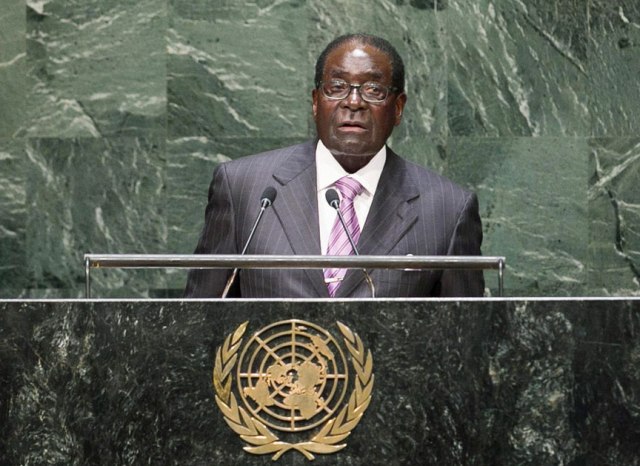
Robert Mugabe, President of Zimbabwe, says Donald Trump, the US President, is behaving like the biblical “Goliath” by threatening sovereign nations with extinction.

He made the comments during his speech at the 72nd Unitd Nations General Assembly in New York, an event which was also attended by President Muhammadu Buhari.

In his speech, Donald Trump had very harsh words for the governments of Venezuela, Iran and North Korea, accusing them of running rogue regimes.

Of North Korea, Trump said: “No nation on earth has an interest in seeing this band of criminals arm itself with nuclear weapons and missiles. If (the U.S.) is forced to defend itself or its allies, we will have no choice but to totally destroy North Korea.”

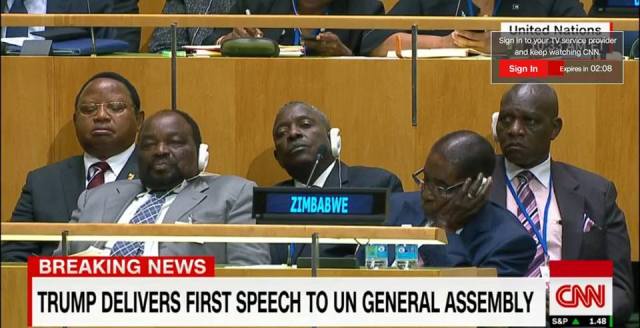
But Mugabe, who was pictured appearing to be dozing during Trump’s speech, said Trump should not behave like a “Goliath”, but should rather “blow his trumpet” to the tunes of “unity, peace, cooperation, togetherness and dialogue”.

Watch Mugabe’s speech here:

Meanwhile, Ri Yong Ho, North Korea’s Foreign Minister, who also attended the assembly, likened Trump’s comments to the barking of a dog.

“If he was thinking he could scare us with the sound of a dog barking, that’s really a dog dream,” Ho said.

Okorocha asks: What did Igbo ministers, senate presidents do for their people?

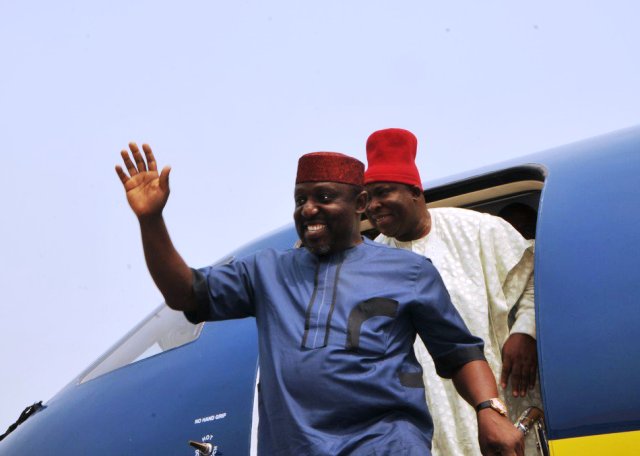
Rochas Okorocha, the Governor of Imo State says he has never supported the Indigenous People of Biafra (IPOB) or its leader, Nnamdi Kanu, whom he accused of plotting to drag the Igbo people into another war?

In an interview with Vanguard Newspaper, Okorocha acknowledged that the Igbo ethnic group is disadvantaged politically and economically, because of unwise and sentimental decisions the group had taken over the years. However, he questioned the commitment of Igbo ex-public office holders to the cause of the south-east.

“The Igbo feeling of abandonment is also the same way the northerners feel… that this (the renewed Biafran agitation) is an attack on their government,” he said.

“Politically, we are not at an advantage; economically, Igbo are still disadvantaged. People should do things wisely and advise the Igbo. Sometimes, some people complain about the non-inclusion of Igbo in appointments. What of when Igbo were Minister of Finance, Senate Presidents, SGF? What did they do for themselves?

“The hard truth is that Igbo play the worst politics; they play this politics because of sentiments, protecting one of their own from the South-South, and now, the northerners have understood that they can become presidents with or without the Igbo.

“Before there was a feat about that. That is why we must change our style and condemn it. We must condemn what is happening and find a way to re-engineer ourselves to the system.

“I have never supported IPOB. Who is Nnamdi Kanu to tell Rochas to follow him to war? Whether we want to believe it or not, IPOB is not good for the South East, and it is not the best way for us to complain about marginalisation to the Federal Republic of Nigeria.

“There are better ways; the IPOB way is too primitive. If IPOB must do a thing like that it should have changed the name and fought the way Ijaw youth fought, Arewa youth fought, and they would have made more impact.”

Okorocha pointed out that if a civil unrest broke out as a result of the activities of the IPOB, the Igbo will be the greatest losers.

He advised leaders from the South East to be more broadminded and to advise the youth to change their mindset.

“For everything that comes from the Igbo man, we love to go to the extreme. Now you want to separate yourself from Nigeria; meanwhile, South-South will not go with you; Edo, Rivers will not go with you.

“If you cut us off here now as South east, if I need to go to Rivers State, I will go and ask for passport and visa, and we are keeping quiet to say this.

“If there is a crisis now, there is no Hausa man in Igbo land who has a duplex, there is no Yoruba man who has a room and parlour or a N20 million investment in Igbo land, but Igbo have trillions of naira virtually everywhere.

“The same people are asking for secession. If Igbo are asked to go, what happens? They would lose their property, and all of us are keeping quiet, supporting IPOB! It was very childish, and those behind this should stop, that is my advice.”

After meeting with Saraki, SERAP still confused about legislators’ earnings

0

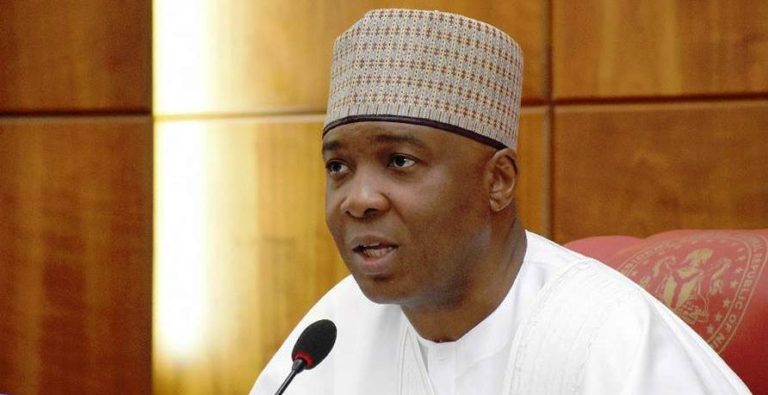
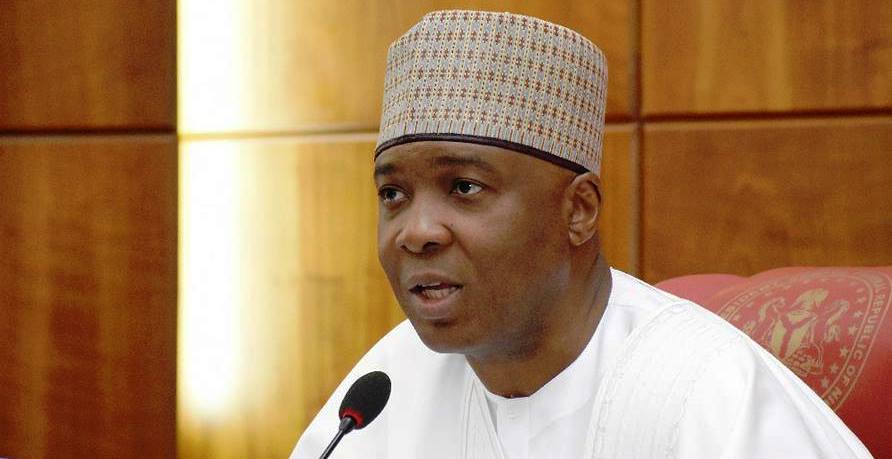
The Socio-Economic Rights and Accountability Project (SERAP) commended Bukola Saraki, the Senate President, for granting audience to its representatives on Thursday to discuss issues relating to details of annual salaries and allowances of lawmakers.

But the organisation said Saraki did not satisfactorily address the damaging allegations by Itse Sagay, Chairman Presidential Advisory Committee against Corruption (PACAC), that a Nigerian Senator gets N29 million in monthly pay, and over N3 billion a year.

In a statement today by Timothy Adewale, its Deputy Director, SERAP said it appreciates “the expressed commitment by Saraki to transparency and accountability of the National Assembly, and the rare opportunity to dialogue with him”.

However, it expressed worry that the leadership of the Senate did not provide satisfactory answers to the allegations by Sagay.

“There is an apparent discrepancy in some areas between what Saraki said at the meeting and what the Senate is doing in practice to improve transparency of its operations and accountability of members,” read the statement.

“For example, the Senate President’s response to Sagay’s allegations was simply to refer SERAP to the National Assembly budget for 2017, which is available on its website. However, a careful study of the document shows that it contains only some general information and not specific details that respond directly to allegations raised by Sagay.”

According to the organization, “the meeting with Saraki raises more questions than it answers”, because while the “Senate budget on its website is incomplete”.

“The absence of specific details on salaries and allowances of each senator not only makes analysis difficult, it also points to underlying weaknesses in monitoring and transparency mechanisms,” it said.

“Without including some level of details, Nigerians may see the published National Assembly budget as nothing more than window-dressing. SERAP hopes that the leadership of the Senate doesn’t want this to be the case…and we certainly see no reason why it should be the case. As we have noted, improved transparency on the exact salaries and allowances of senators and indeed members of the House of Representatives is in the interests of all.”

It said rather than referring the organisation to the seemingly incomplete National Assembly budget, the Senate President should have provided a line-by-line response to Sagay’s allegations.

“It is important that the leadership of the Senate provides additional information that is lacking from the published budget if it is ever going to satisfactorily clear the air on the issues,” SERAP said.

“Continuing failure and or refusal to provide a line-by-line response to Sagay’s allegations is counter-productive. Although the issues of transparency in the salaries and allowances of members of the National Assembly may seem like sensitive issues, they are exactly the kind of issues the Senate and House Representatives need to urgently address and clarify if Nigerians are ever to trust their lawmakers.

“As the 2017 National Assembly budget does not appear to record all allowances received by senators, it’s in the best interest of the Senate to now publish a line-by-line response to Sagay’s allegations rather than simply providing a blanket denial. If the Senate is disputing Sagay’s figures on the salaries and allowances of its members it should at least provide what it considers to be the current amounts, including on ‘hardship allowance’.

“One way the Senate can do this is by moving swiftly to publish details of senators’ payslips and other relevant documents on the salaries and allowances of members for Nigerians to compare and judge.

“In addition, we agree with the Senate President that there are corruption issues within the executive that need to be fully and effectively addressed. But the reality of corruption in the executive branch of government doesn’t mean that allegations of corruption in the National Assembly especially as they relate to budget padding and constituency projects should be minimized or ignored.

“The leadership of the Senate should have provided examples of how the Senate is preventing corruption in the budget process and initiatives like constituency projects rather than shifting the blame as to why corruption is so pervasive in the implementation of such projects.”

“Further, the Senate President’s call on Nigerians to report to the Senate allegations of corruption that directly affect them or which they witness is warmly welcomed. We hope the Senate will keep to its promise on this, and that reports of corruption cases that Nigerians bring to it will be objectively, fairly and effectively addressed and that any such process is completely transparent.

“However, citizens may not have the trust and confidence to embrace the Senate Anti-Corruption Reporting Mechanism until the leadership satisfactorily addresses the lingering doubts on the exact salaries and allowances of its members.”

“The National Assembly is in a uniquely strong position to act as a catalyst in the fight against corruption. But the rhetoric of the leadership of the Senate on transparency and accountability needs to be matched by reality.”


Read also:


QUESTION: Did Fayose violate the electoral act by openly campaigning for his deputy?

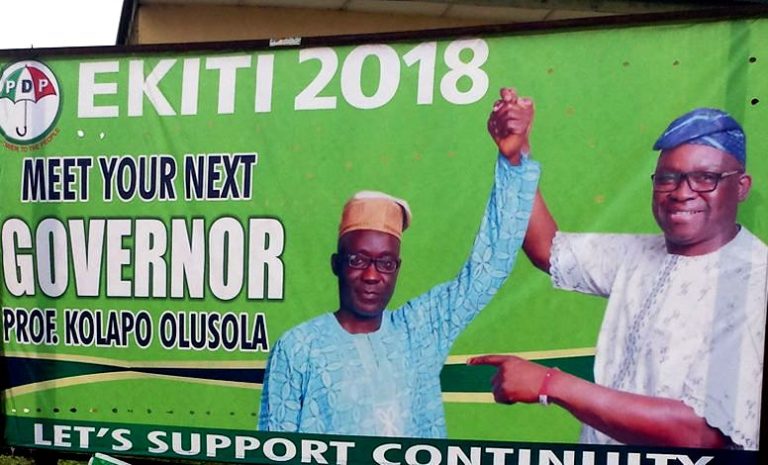
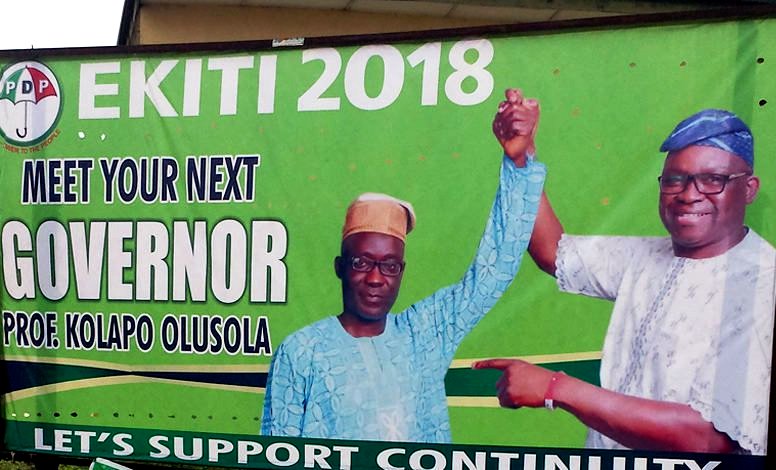
Ayodele Fayose, Governor of Ekiti State, recently endorsed Kolapo Olusola, his current deputy, as the person to fly the flag of the Peoples Democratic Party (PDP) in the state’s 2018 governorship election.

This has caused some stir among the party members in the state, who likened the development as a show of godfatherism which should have no place in modern politics.

The governor, or at least his supporters, may have ‘crossed the red line’ by erecting bill boards showing Fayose raising Olusola’s hand with the inscription: “Meet your next Governor”.

According to Section 99 of the electoral act, campaigns by political parties should commence 90 days, and end 24 hours before the polls.

The act states: “99 (1) For the purpose of this act, the period of campaigning in public by every political party shall commence 90 days before polling day and end 24 hours prior to that day.

(2) A registered political party which through any person acting on its behalf during the 24 hours before polling day  –

(a) advertises on the facilities of any broadcasting undertaking; or

(b) procures for publication or acquiesces in the publication of an advertisement in a Newspaper, for the purpose of promoting or opposing a particular candidate, commits an offence under this act and upon conviction  is liable to a maximum fine of N500,000.00.”

AbdulGaniy Olayinka Raji, the new Ekiti State Resident Electoral Commissioner, raised the issue during a press conference on Wednesday in Ado-Ekiti.

Raji stressed that the Independent National Electoral Commission (INEC, has the powers to prosecute politicians who engaged in any form of “early campaign” before the time allowed by law.

“All these acts are not in line with the Constitution of the Federal Republic of Nigeria 1999 and the Electoral Act 2010 (as amended),” he said.

“Activities that look like campaign are against the Constitution and people should desist from them.

“Any offender convicted is liable to a maximum fine of N500,000 and a jail term at the discretion of the judge. The law also permits INEC to remove such billboards.”

It is left to be seen whether any legal action will be taken against the PDP and the other political parties who have already kick-started campaigns for elections that has still more than 90 days away.