The Academic Staff Union of Universities (ASUU) says it is unhappy with the level of poverty, hunger and general suffering in the country.
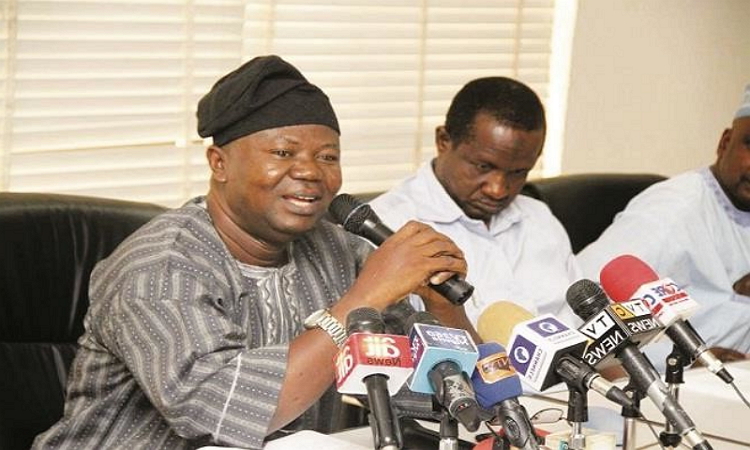
Biodun Ogunyemi stated while addressing a press conference to announce the suspension of the union’s industrial action.
Ogunyemi said that aside ASUU’s demand for the federal government to address the decadence in the education sector, the union also wants government to improve the welfare of the citizens.
“Having addressed the matter of the strike action, it is crucial that we address even a more fundamental issue; the state of the Nigerian nation,” Ogunyemi stated.
“Whatever happens to the nation ultimately impacts the university system. The current sorry situation of the country, therefore, is a matter of grave concern for ASUU.
“From education to the economy, from the society to national security, and to the livelihood opportunities, the situation is worrisome.
“The government has announced with glee the movement away from recession, but to the ordinary Nigerian citizen the reality is different. Neither poverty nor hunger nor general suffering has reduced in level or intensity in our country.
“The general unrest among the labour unions is a reflection of the deplorable condition under which the Nigerian worker operates, just as the growing incidents of suicide are an indication of the level of frustration and hopelessness of the average Nigerian citizen.
“There are no advances in policies that can substantially provide the welfare needs – employment, health, education, etc – of Nigerians outside the ruling class.”
Ogunyemi lamented the increase in the level of insecurity in Nigeria, saying that instead of addressing the situation adequately, the elites surround themselves with “massive security personnel … leaving the masses unprotected, at the mercy of the violent hoodlums who have overrun the country”.
“The plague of armed robbery, kidnapping, and other forms of criminality are enough threat to the peace of any polity,” he said.
“However, these violent acts are treated as minor problems in Nigeria, even when they are compounded by the rising tide of ethnic and religious conflicts.
“The crux of the problem, in all these, however, is the inconsistent responses of the government, and its use of double standards in addressing the various issues, persons and groups that tug at the fabric of the country.
“ASUU is firmly convinced that the solution to the underdevelopment of our people is re-orienting Nigeria’s economy from neo-liberalism to a peoples-oriented model.
“The starting point is to exit the envelop-style budgeting and accord education its pride of place in the scheme of things.”
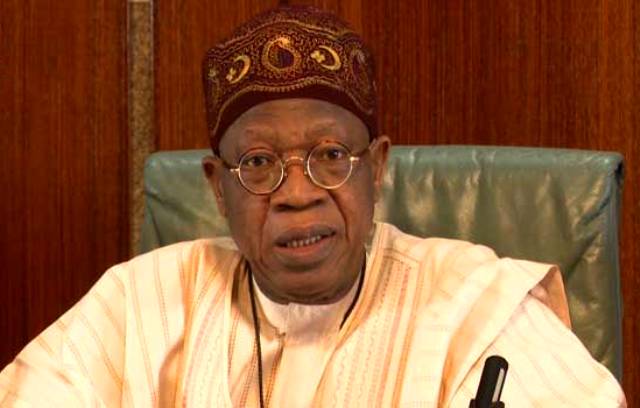
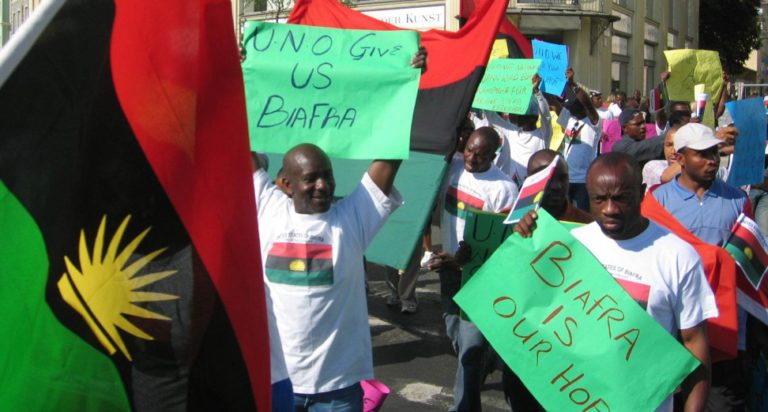
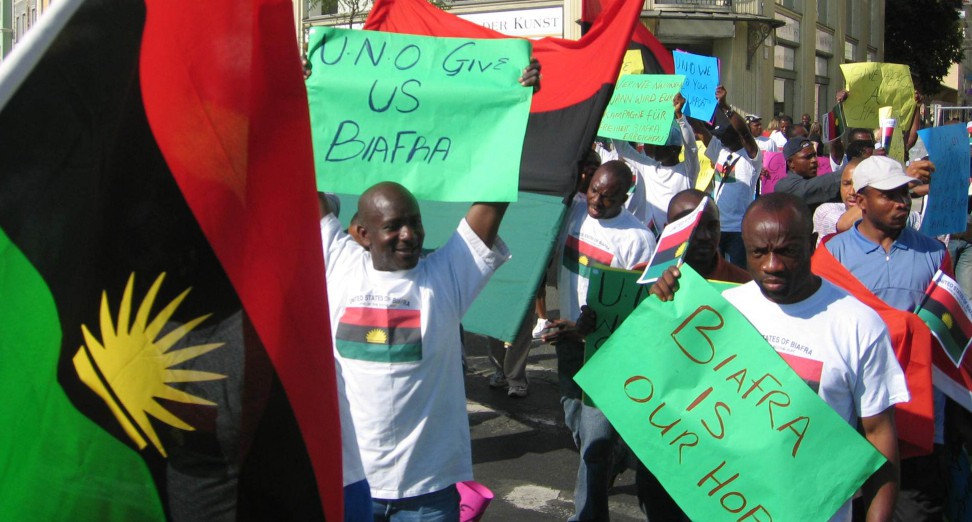
Lai Mohammed, Minister of Information, says the federal government tolerated Nnamdi Kanu’s excesses and hate speeches for too long, hence the decision to clamp down on him and his Indigenous People of Biafra (IPOB).
Mohammed, who spoke at a press conference on Monday, said Kanu is the master of hate speech and leader of a “band of lawless people”, adding that there was no way such acts should go unpunished.
“The self-imposed IPOB leader, Nnamdi Kanu, is the master of hate speech. His supporters should listen closely to his inciting remarks and cruel statements. If such does not constitute hate speech, then tell me what hate speech is,” Mohammed said.
“We have tolerated the excesses of Kanu for too long. Mention one country in the world where an organisation has set up a military organisation, confronted the national army and engaged in exploiting of people without consequences.
“There is nothing like genocide anywhere in our country today. What we have in the south-east is a clampdown on a band of lawless people who have no regard for the laws of the land.”
Mohammed said the IPOB’s next line of action will be to begin disseminating false pictures and videos as a tool for cheap propaganda.
“Now they are writing to the government and the national parliaments of some Western nations to give the impression that they are victims of violence orchestrated by the government, hence they need protection,” Mohamed said.
“Some of the tools that have been employed by IPOB include blatant lies and cheap propaganda, and the medium of choice for the organisation is the social media.
“IPOB has harvested gory videos and pictures from other lands and the distant past, which they are now circulating via the social media, to deceive the international community.”
This is the first public statement by Lai Mohammed since the defence headquarters designated the IPOB as a terrorist organisation on Friday, September 15.
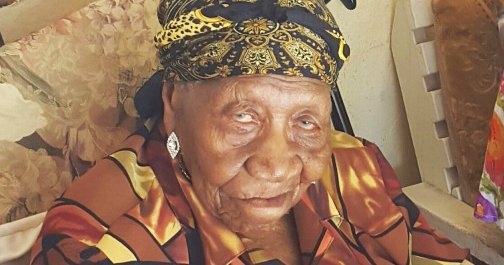
Violet Brown, a Jamaican who until Friday was the world’s oldest person, lived for 117 years and 189 days. Want to know why she lived that long? Hard work and Christian faith.
Brown, who lived through three centuries, was born on March 10, 1900. She also made history for being the oldest living person with the oldest living, who eventually died at 97 n April, few days after she was named the world’s oldest person.
She took over the title of the oldest living person in the world in April from Emma Morano from Italy, who died at the age of 117 years and 137 days.
SECRET OF HER LONGEVITY
Anytime Brown was asked about the secret of her longevity, she would say: “My faith in serving God, and believing strongly in the teaching of the bible,” according to a foundationinstituted in her honour by one of her grandchildren.
“She is especially fond of the part of the scripture in the Bible that says honour your parents that your days on this earth may be long.”
“I have been baptised since I was 13 years old and I have over 50 years of staunch contribution to the Church.”
Apart from crediting her longevity to her devout Christian life, she said hard work kept her going, as she remembered the days she used to walk three miles barefooted to fetch water and be home in time to go to school by 9 a.m.
“I tell you, these young people these days have it easy — piped water, taxis and buses to bring them where they want to go.
“Everything to their convenience. When I was younger, and even as an adult, I had to work so hard that sometimes when I look back, I cry at how hard I had to work to make a living for my family.”
SHE AVOIDED PORK AND CHICKEN
Longevity is often attributed to good eating habit bust Brown said she ate everything, except pork and chicken.
“Really and truly, when people ask me what I eat and drink to live so long, I say to them that I eat everything, except pork and chicken, and I don’t drink rum and dem tings,” she told the Gleaner.
“You know, sometimes I ask myself, ‘Am I really 110 years old?’ Because I don’t feel like 110.”
LIFE AND WORK
Brown was born in the small town of Duanvale, located in Trelawny Parish, Jamaica. She lived in the house that she was born until she died.
She married Augustus Gaynor Brown and they had six children she told the Gleaner four sons and two daughters.
She worked as a domestic helper, farmer and a dressmaker. She became a widow in 1978.
Brown was strong throughout her lifetime and did not suffer any major illness apart from mild deafness. She said she did not feel her age, attributing her long life to “serving God and working hard”.
OLD AGE IS FOR WOMEN, NOT MEN
The Gerontology Research Group (GRG) keeps a validated list of supercentenarians, persons that have lived more than 110.
Most supercentenarians, according to the GRG, are women. In this elite club, it is 42 women to one man.
The GRG is the official consultant on supercentenarians by Guinness World Records.
Guinness told the News that while they work with the GRG to verify the oldest living person, they will conduct additional research before awarding the next person in line with the official title of World’s Oldest Person.
“There are a number of candidates we are researching at the present time, therefore there is no confirmation of the new title holder, nor will there be until our thorough processes are complete,” said Jakki Lewis, a Guinness World Records spokesperson.
Following the demise of Brown, the next on the list of oldest persons is Japan’s Nabi Tajima, who is 116 years and 256 days old.
The longest confirmed human lifespan in history is that of Jeanne Calment who died on August 4, 1997 at the age of 122 years and 164 days.
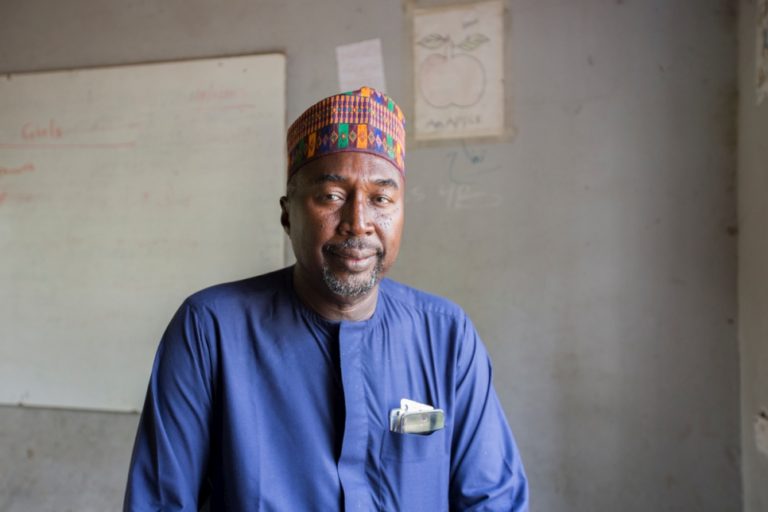
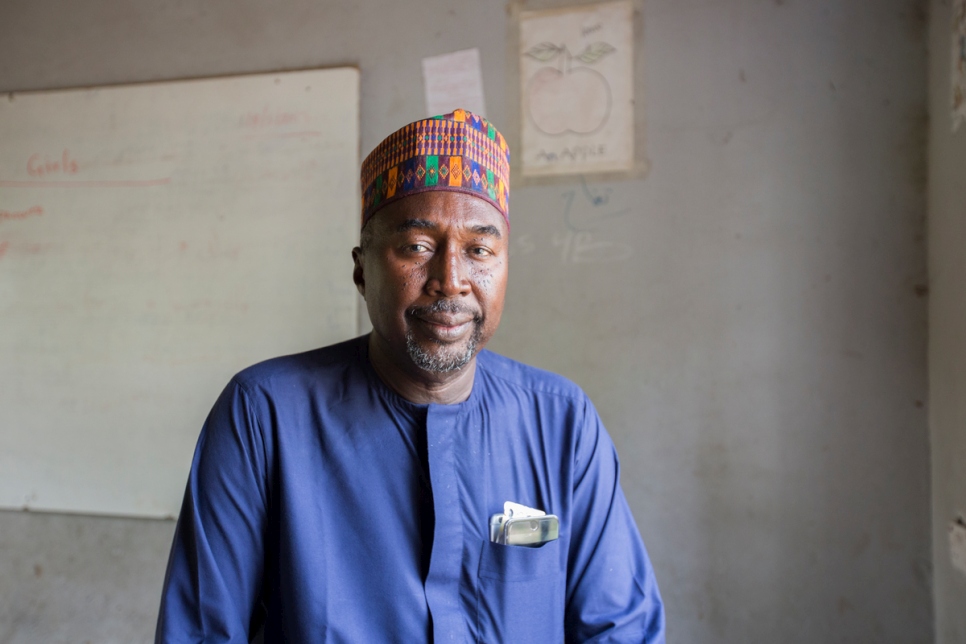
Zannah Mustapha, a lawyer in Borno State who negotiated the release of Chibok girls from Boko Haram captivity, has won $150, 000 UN prize for providing an education to children caught up in conflict in the northeast part of the country.
The Nansen Refugee Award, which is bestowed by the UN refugee agency (UNHCR), has been won in the past by Eleanor Roosevelt and Luciano Pavarotti, and the winner receives $150,000 to fund a project complementing their existing work.
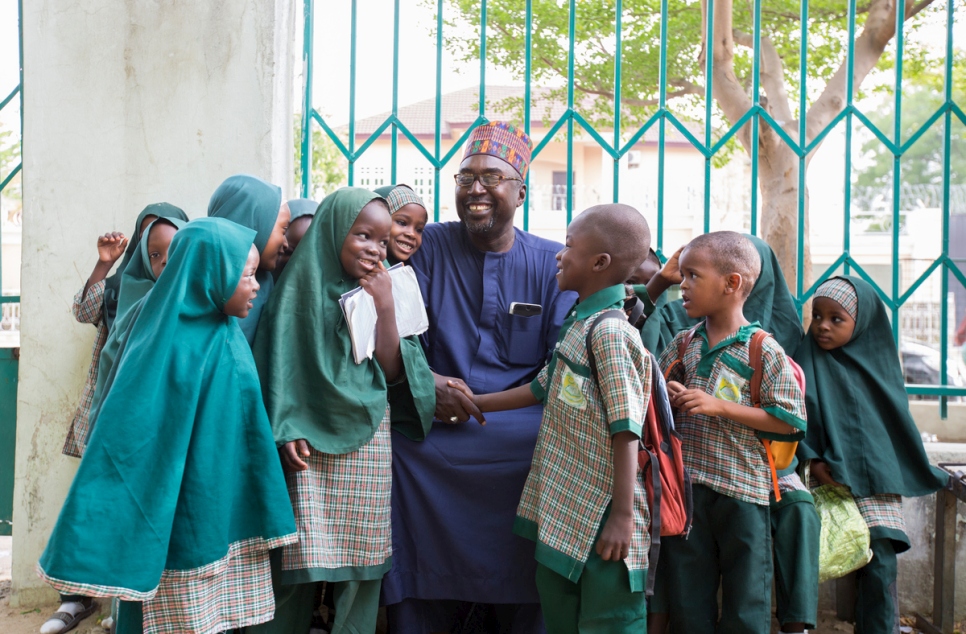
Mustapha is the founder of two schools offering free education, meals and healthcare to its pupils, and even enrol children born to Boko Haram fighters to learn alongside those orphaned by the Islamist group’s eight-year insurgency.
“I am exceedingly happy and motivated to do more … I will scale up my efforts,” Mustapha told the Thomson Reuters Foundation by phone from Maiduguri, the capital of Borno State.
“Some of the students that started in my school have graduated, and they are now going into university — I can use this money to help them complete the cycle,” Mustapha added.
Speaking with the UNHCR about the school, he said: “This is the place where every child matters, no matter what religion, background or culture… Our aim is make positive changes on their lives.”
A former barrister turned property developer, Mustapha set up the school for orphans and vulnerable children in 2007.
He was concerned by the growing numbers of children on the streets of Maiduguri – the heart of an insurgency that has killed an estimated 20,000 people and displaced some 2.3 million others.
He feared growing insecurity and the ensuing military crackdown was producing a generation of children with no education, and that this would in turn create even more problems for one of the poorest regions of the country.
“There were children everywhere, on the streets all alone… If they have no education what will happen to them… I kept wondering what would happen to my daughter if I died, who would pay for her education? I realized I had to act,” he added.
“When I was a young man growing up you did not see this sort of thing. The family looked after orphans, but this has become more and more difficult.”
Mustapha pictured with some of his pupils
His first venture, Future Prowess, opened a decade ago and was the only school in Borno State to remain open when Boko Haram began its brutal campaign to carve out an Islamic state in 2009.
UNHCR chief Filippo Grandi hailed Mustapha for helping to foster peace and rebuild communities devastated by violence.
“Education is one of the most powerful tools for helping refugee children overcome the horrors of violence and forced displacement,” Grandi said in a statement.
“It empowers young people, equips them with skills and works to counter exploitation and recruitment by armed groups.”
Mustapha’s work also includes helping to negotiate the release of more than 100 of the 220-odd girls snatched from their school in Chibok in April 2014.
The return of 82 of the girls in May marked the second group release of the Chibok girls by the militants — with both deals brokered by Switzerland and the Red Cross and mediated by Mustapha — after a group of 21 were freed in October last year.
A few others have escaped or been rescued but it is believed that about 113 of the girls are still held captive by Boko Haram.
Mustapha will be presented with his award in Geneva early next month.
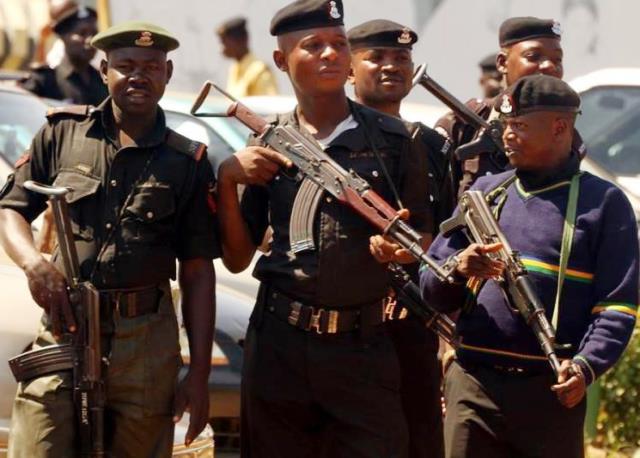
There is ample evidence to suggest that the Nigerian military may not live up to its promise that the video clip of Indigenous People of Biafra (IPOB) members being brutalised by soldiers in Abia State will be investigated and the culprits punished.
This is because similar human rights violations by soldiers have gone unpunished, even after the authorities had promised to punish the offenders.
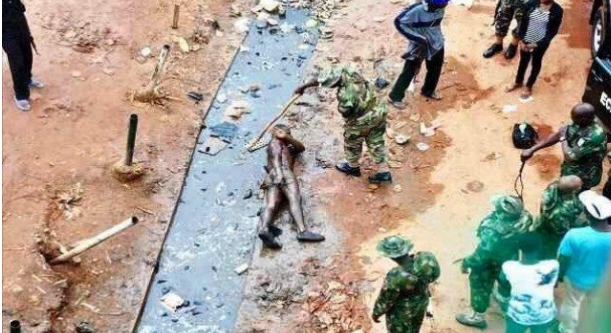
A video that surfaced online on September 13 showed alleged IPOB members being beaten with sticks and forced to lie face down in a muddy pool along the road.
The video, apparently filmed by a soldier who was unhappy with the incident, showed one of the boys lying in a pool of his blood and the person behind the camera saying “this one don die o.”
But a day later, the army released a statement saying that the video was being investigated with a view to ascertaining its authenticity.
“The attention of the Headquarters 82 Division Nigerian Army has been drawn to a video clip trending on social media and other platforms purportedly showing troops humiliating some people at a check point in Abia State, Nigeria,” Sagir Musa, Deputy Director of Army Public Relations of the 82 Division of the army, said.
“The issue is being investigated with the view to ascertaining the source and the actors in the clip.
“Our Code of Conduct and Rules of Engagement are quite clear and any officer or soldier that infringed on any of such directive if found guilty, will face full wrath of the military justice system.
“We do not condone any act of indiscipline in the conduct of our operations and training exercises. Any claim of rights violation would be investigated and when confirmed, appropriate disciplinary action would be taken against the erring personnel.”
But this is not the first time such statements had been issued yet nothing was done about it.
ONE BAD PRECEDENT — MARARABA 2015
On August 8, 2015, some soldiers were caught on camera brutalising a civilian whom they claimed was a robber, in Mararaba, Nasarawa State, very close to the Federal Capital Territory.
The incident was published on the front page of Daily Trust Newspaper the next day, and it caught the attention of the army hierarchy.
Sani Usman, Director of Army Public Relations issued a statement, first condemning the newspaper for going public with such report and as a result doing “incalculable damage to the image of the service”.
“The army has also reached out to the management of the newspaper over this poor and worrisome editorial judgement by giving this misdemeanour prominence in their paper,” Usman said. “Alerting appropriate Nigerian army authorities would have been a better option that will be met with prompt response.”
He further stated: “The Nigerian army wishes to inform the public that the perpetrators of the offence have been identified, summoned and would face disciplinary action.
“We wish to assure the public that the Nigerian army would continue to protect and respect human rights and that this regrettable incident should not be used as a yardstick to judge the entire army.
“The Nigerian army is aware of the demand by the National Human Rights Commission (NHRC) requesting for the release of soldiers involved in the unfortunate incidence of ill treatment of robbery suspected as shown on the front page of today’s Daily Trust.
“I wish to inform the commission and the public that all those involved would be released to the NHRC after carrying out our investigation in accordance with our regulations.”
Months later, when The Cable got in touch with the National Human Rights Commission, they found that the issue had more or less been forgotten.
“They told us they had identified the perpetrators, and that they would hand them over to us when they finish investigation,” an official of the NHRC said.
When Usman was asked, he said the incident had been “overtaken by events” and that the media should stop “over-flogging the issue.”
“The whole issue was blown out of proportion,” he said. “Yes, the soldiers have been charged and given appropriate punishment. We should not be over-flogging an issue that has been overtaken by time and event.”
Two years on, the soldiers who carried out the assault are walking free. On the strength of this case, there is little hope that the soldiers behind last week’s assault on IPOB members in Aba would be punished.
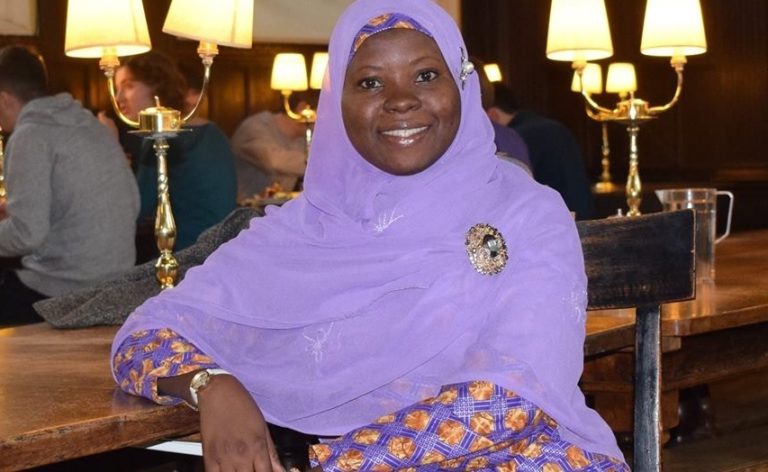
Breast cancer alone kills at least 40 women in one day, including one at the moment, Saidat Abisola Akanbi, a public health professional and Founder of Cancer CareLink, has said.
Speaking with the ICIR on Monday, Akanbi identified late diagnosis as the main reason for the deaths, saying treatment is no longer effective at the late stage of the disease.
“Breast and cervical cancers are the commonest reasons why women die from cancer in Nigeria,” she says.
“Did you know that breast cancer alone kills at least 40 women in one day and as we speak, one woman is dying from breast cancer? Our women are dying because they present themselves to hospitals at late stages of the disease, when the cancer has spread and the treatment is not very effective.
“But then, why do they present late? There are three major reasons. They lack access to correct information — information about what cancer is, about prevention, about early signs and methods of detection.
“They lack access to healthcare and that is probably linked to the third reason, which is that they lack access to funds, access to financial power to procure healthcare.
“Our women are not on National Health Insurance Scheme (NHIS), and anyway, the NHIS does not cover cancer care. So women are left to fight the disease alone; in other words, the woman who has cancer and her family are left to raise the funds; they are left to battle a diagnosis of cancer.”
For these reasons, Akanbi, whose several years of professional experience in the healthcare sector includes operational, clinical and research activities spanning Ghana, Nigeria, Kenya and United Kingdom, decided to establish Cancer CareLink.
Dr. Akanbi (middle, with soldiers)
“Cancer CareLink is acting as a link between these under-insured women in under-served communities and we are trying to put them in contact with those three things that are lacking in our communities,” she says.
“Those three things that are lacking in our community — correct information, healthcare and funds — are what we did with the 2,000Breasts Initiative, our mobile breast cancer clinic.”
One Saturday in July, the nongovernmental organisation had close to 50 health professionals in Ibadan attend to 200 women from General Gas, Alegongo, Akobo-Ojurin and Olorunda axis.
The activities at the session included routine checkups, such as blood pressure and blood glucose checks, followed by a health education session on breast cancer, plus a training session on early detection of breast cancer early.
“There was a spotlight, that is, there was a survivor who shared the emotional story of what she had gone through on her journey,” Akanbi says.
“This survivor is a 30-year-old lady whom Cancer CareLink had helped identify, diagnose and support through treatment. After this survivor talked, there was then hands-on treatment of the women in attendance, and provision of investigations.
“The investigations included breast ultrasound and biopsies, and we offered all these services free of charge. We were able to identify a couple of women; one of them obviously had a breast cancer, and for us, our work has just begun, as we will be working to support and ensure that these women that were picked would get prompt quality treatment.”
Before taking up the cancer challenge, Akanbi earned her medical degree from the University of Ibadan in 2010, after which she received a Master’s in Public Health from the same university.
She proceeded for another Master’s (MSc in International Health and Tropical Medicine) from the University of Oxford, where she graduated with Distinction.
An ExxonMobil Global Health Scholar and a President Bill Clinton Global Initiative fellow, Akanbi has worked with the University College Hospital, Nigerian Army, President’s Emergency Plan for HIV/AIDS Relief (PEPFAR), Oxford Health Systems Collaboration (OHSCAR), Kenya Medical Research Institute (KEMRI)-Wellcome Trust, and currently a Health Systems Consultant with LoftyInc Allied Health Partners.
She is a member of the American Society of Tropical Medicine and Hygiene (ASTMH), Nigerian Medical Association (NMA), and a licenced Practitioner of the Medical and Dental Council of Nigeria (MDCN), Saidat is a UK STEM Ambassador, and co-founder of HealthySTEM initiative, which leverages a network of female STEM role models to equip schoolgirls in Nigeria’s under-served communities with tips to stay healthy and pursue STEM careers.
Akanbi dreams of a Nigeria where every woman — even the poorest and in the most remote areas — has access to all the resources and care required to prevent or combat cancer.
“CCL’s mission is to connect under-insured women in Nigeria’s under-served communities with the resources needed for preventing and combating breast and cervical cancers, and provides grassroots leadership through advocacy and awareness,” she says.
“Our reasoning/justification is that breast and cervical cancers are the commonest cancers in Nigeria and a major killer of Nigerian women. In developed countries, fewer and fewer women are dying from this disease, but in Nigeria, more women continue to die. This cannot continue.”
Akanbi’s 2,000Breasts Initiative, a mobile breast clinic, convenes 50 healthcare professionals to a selected community in Nigeria to create awareness, educate and train women on breast self-examination and early symptoms of breast cancer, and offers them clinical breast examinations, breast ultrasound and biopsy.
“There was one woman with a conclusive diagnosis of breast cancer, the other four had lumps and other signs and are awaiting results of investigations to establish if they are benign (non-cancer) or cancerous,” she says of the initiative’s last activity.
“We would be taking the walk with them, counselling and reassuring them as they await investigation results. Once these are out, we facilitate treatment for each of them, connecting them to leading health centres where they will receive definitive treatment.
“For those who cannot afford care, CCL hopes to support them by linking them to willing sponsors. Our role is to be a link between these women and healthcare professionals, diagnostic investigations, funds and healthcare.”
Peace cannot be kept by force; it can only be achieved by understanding. — Albert Einstein
Whoever he is, the military officer who coined the code name ‘Python Dance’ is a genius. Although an original version of the military operation, the Python Dance I, held between November 27 and December 27, 2016, no one should have looked any further than the code name to deduce the possible outcome of the army’s latest incursion into the south-east. As a rebel scientist, I’ll break this down.
‘PYTHON DANCE’ MORE THAN MERE NOMENCLATURE
Although they are a family of nonvenomous snakes, pythons, scientifically Pythonidae, can be extremely dangerous. They are some of the largest snakes in the world, and are notorious ambush predators in that they typically lay motionless to evade the notice of a passing prey but then suddenly strike when danger is least expected. Ordinarily, no one should tease the python — that is where Nnamdi Kanu and the Indigenous People of Biafra (IPOB) got it wrong. Even though it looks innocuous when motionless, a python cannot be active without inflicting harm — that’s the misjudgement of the army, the thought that the operation would run without tension.
Prior to the take-off of the operation, the Nigerian Army acted like a python, listing a raft of harmless activities to cover up its one controversial aim of the operation. David Dawandi, a Major-General and Chief of Training and Operations of the army, said in a statement on September 8, that “during the exercise, emphasis will be placed on raids, cordon-and-search operations, anti-kidnapping drills, road blocks, check points, patrols, and humanitarian relief activities such as medical outreach”. That’s the motionless python. The statement also made it clear that there would be a “show of force to curb the rising threat to national security in the south-eastern part of the country”. A “show of force”? That’s a python in ambush mode. The summary is that it was an unnecessary operation. For many reasons.
NEEDLESS DANCE
Nnamdi Kanu’s court trial is ongoing. When he returns to court on October 17, the court will hear the federal government’s application for the revocation of his bail. There is no chance Kanu will win that argument — unless Justice Binta Nyako, who granted him bail in April, wants to make a mockery of herself and the judiciary. Kanu has repeatedly violated his bail conditions, the most obvious being his prohibition from hanging out with a company of more than 10 or granting interviews. The violation of the latter Kanu has already tried to defend, bizarrely claiming that he doesn’t “grant interviews” but he only “answers the questions” of journalists because it would be “rude and arrogant” of him to keep quiet when asked a question! But no such ingenious explanation exists for the former; there are numerous footages of him among scores and hordes of people, including videos of him preaching raw hate. Kanu’s return to prison will be permanent in October, so first question to the army; why roll out the pythons against a drowning adversary?
While the pythons were still dancing, the defence headquarters rushed to designate IPOB a terrorist group without even taking a moment to find out the procedures, as laid down by the same law they claim to be enforcing. The army erred by failing to follow the provisions of the Terrorism (Prevention) Act 2011, amended in 2013, that “setting up or pursuing acts of terrorism, the judge in Chambers may on an application made by the Attorney General, National Security Adviser or Inspector General of Police on the approval of the President; declare any entity to be a proscribed organization and the notice should be published in official gazette”.
Even that move itself is an overkill. Of course, Nnamdi Kanu is very annoying — I can imagine the Chief of Army Staff watching him in one of his numerous hate videos and itching to grab his throat and strangle him. There can be no arguments that he is unstable: how can a man who so passionately preached Nigeria’s unity under Goodluck Jonathan now so vehemently champion secession? But a more careful look at him will reveal his true nature: a mere radio/internet noisemaker elevated to the status of Biafra champion by a zealous and unlawful Muhammadu Buhari government. Kanu would never enjoy half his current popularity if he wasn’t repeatedly denied bail. Kanu talks too much; die-hard rebels talk less and act more. His Biafra Security Service (BSS) is toothless; not one of the so-called trainees carried any sort of weapon. They, in fact, looked too confused to be able to withstand confrontation by a private, the lowest-ranked officer of the Nigerian army. Little wonder Kanu himself is now in hiding.
LESSONS AND QUESTIONS
The deployment of soldiers to the south-east has caused needless tension. The death of a hard-to-ascertain number of people, the assault on suspected IPOB members (which, by the way, will go unpunished despite the army’s claim to be investigating it), the combing of buses by IPOB members in Aba for Hausa to harm, the Igbo-Hausa tension in Jos and Port Harcourt are all worrying scenarios that would have been avoided without military action. The seething inter-ethnic tension is worrisome; this is how wars start. In the past week, whether we admit it or not, Nigeria took one giant step towards a second Civil War. The good thing, though, is that the situation is still reasonably under control. To avert a total breakdown of law and order, our leaders must learn from our history and ask themselves the hard questions.
Speaking of lessons, it is hard to imagine how quickly our leaders have forgotten the role of military action in the escalation of Boko Haram from a nonviolent ideological group under Yusuf Mohammed to a ruthlessly violent one under Abubakar Shekau. The 2009 police crackdown on Boko Haram in Bauchi led to violence in Kano, Yobe and Borno states; and after Mohammed’s capture by the military and extrajudicial execution by the police, the reins of Boko Haram fell on the bellicose, blood-thirsty Shekau. The rest, as they say, is history. It will take decades for the north to recover from the ruin of this insurgency — the deaths of hundreds of thousands, displacement of at least 3million people, the humanitarian crisis, the sheer destruction of flora and fauna, the physical and socioeconomic regression. So, even if the military succeeds in taking out Kanu, the Biafra mantle will naturally be transferred to someone else, who may even be more dangerous than kanu. Tact, not force, is what President Muhammadu Buhari needs to handle Kanu and the Biafra agitation.
There are two questions the government must answer if Nigeria must remain peaceful. Why, despite his apparent weakness of character, lack of purpose, unruly choice of words, does Kanu continue commanding huge youth following? And, why, after almost four decades post-Civil War, are we still discussing Biafra? I do not have all the answers, but I’ll supply some.
First question: as I said earlier, Kanu is the number-one beneficiary of government’s misuse of power. But more importantly, Kanu’s followers are mostly made up of unemployed or unprofitably employed, disillusioned youth who have finally found someone to identify with their struggles. For the second, it must mean that the Biafra question was never addressed after the war. Buhari must think long and hard about what the Igbo want, why they feel sidelined, and what he can do to make them feel part of Nigeria.
Otherwise, a legitimate Biafra question will be left in the hands of an opportunistic Kanu, and we will lose a golden opportunity to once and for all resolve our differences and strengthen the bond of our nationhood. Buhari should let the courts decide Kanu’s fate. He must jettison the use of force and embrace dialogue — because whether we like it or not, a million pythons cannot dance away the Biafra question!
Bolaji Akinyemi, a professor of political science and former Minister of External Affairs, says an average person on the northern streets believes in Buhari in the way that they don’t believe in Atiku Abubakar, former Vice President or Ibrahim Babangida, former military ruler.
In an interview with the Punch, Akinyemi said the present political system in Nigeria is skewed in favour of the North and it should be restructured to save the country from disintegration.
Akinyemi said Nigeria is driving down the road to becoming a failed state but there is still a window of opportunity to rescue it from reaching the point of a failed state through proactive restructuring of the federation to meet the desires and yearnings of different ethnic groups in the country.
He suggested that President Muhammadu Buhari is holding the key to ending the current agitations and restructuring the country.
“Apart from being the president, he [Buhari] probably right now, is the only Nigerian that can ensure that we don’t end up in a ditch; in spite of what he says at times, he is the only Nigerian. Not that he stands the chance; he is the only person. Whether he will do it or not, is a different kettle of fish,” he said.
He said Buhari has a critical role to play in averting the oncoming tragedy in the country by leading the way in arriving at the kind of federalism that will be acceptable to all.
Akinyemi said the north is foot dragging on restructuring because the current system is in its favour, but he urged Buhari to use his influence to sell the idea of restructuring to northerners who oppose it.
“The present system that we have is skewed in favour of the north and the way forward will have to be the surrender of issues from the 1999 Constitution controlled by the Federal Government to the states,” he said.
“Some issues on the exclusive list should be moved to the concurrent list and possibly, there should be a creation of the reserved list. So, it is the North that needs to make the concession.
“But if you’re going to be rational in your approach, the north has to be persuaded that it is not being asked to commit political or economic suicide and the only person right now that the north truly trusts and believes will not play politics with their interests is Muhammadu Buhari. He stands now in the kind of position that the [late] Sardauna stood in the sixties.
“An average person on the northern streets believes in Buhari in the way that they don’t believe in (former Vice President) Atiku (Abubakar) or my former boss, IBB, because those are the people who have spoken out forcefully calling for restructuring. The northern streets will conclude that these persons are playing with their interests.
“But Buhari stands in that position of trust in the estimation of the northern streets that ‘if he should say that we need to give up these issues, he’s not selling us.’”
Akinyemi declared full support for Nigeria to return to the 1963 Constitutions, which is line with the position of the south-west as recently articulated in the Ibadan conference for the Yoruba to take a stand on the restructuring of Nigeria.”
Speaking on the current agitation by the Indigenous People of Biafra (IPOB), he said there had been few cases where separation was achieved through peaceful means but in most cases, it is through war.
“I believe that we can still peacefully resolve the issue of the Nigerian question at this stage, provided we address the twin issue of fears of domination and marginalisation,” he said.
“We must address that. We must admit that there is something wrong with the Nigerian federal system as it is. We must look at the system that we operated, using the 1960 and 1963 constitutions with the necessary amendments.
“There has to be less arrogance and intolerance shown towards constituent elements of the Nigerian nation. You cannot use the temporary acquisition of power to impose a system on others, thinking everybody will be happy about it.
“Most of the problems in the world have come about through miscalculations – not deliberate [actions]. Many wars fought in the world were as a result of miscalculations with various parties, underestimating how far-reaching their actions would be.”
Akinyemi warned that there would be dire consequences if war breaks out in Nigeria as a result of the Biafra agitation.
“All I’m saying is that, I hope those who are in control of the Federal Government will not become complacent by ignoring the fact that other people are feeling hurt and are dissatisfied with the system that we have now,” he added.
“We shouldn’t, because doing so will be a calamitous mistake. Who will win the confrontation, I don’t know. But what I know is that all parties will pay a heavy price – it will not be like the 1966/1967 [coup] all over again.
“It will not be like the 1967 to 1970 Civil War all over again. Right now, there is a proliferation of weapons all over the country and the diffusion of grievances will create war fronts. The Nigerian military is stretched thin with all the challenges it’s currently coping with internally.
“I don’t think you want to put more pressure on it. We must seek a non-violent way. We must engage in dialogue. There must be, on the part of the Federal Government, the readiness to adopt a more sophisticated approach in promoting the dialogue and a preparedness to change the country.”
The Enugu State Police Command says it has arrested nine suspected rapists who usually attack women during night vigils in churches in various areas of the state.
NAN quoted Ebere Amaraizu, the police Public Relations Officer in the State, as making this known in a statement released on Sunday.
Amaraizu said that the suspects were arrested during a night vigil in a church located at Akpasha community in Nkanu West Local Government Area, following a “well-coordinated intelligence information”.
According to Amaraizu, the suspects usually pretended to be worshippers in the church only to be monitoring any female worshipper going out to ease herself, and then attack her.
“This nefarious act is done while service in the church is going on, and after the rape, they run away,” he said.
He said the suspects are currently helping the police, as further investigations continue on the matter.