Home Blog Page 2702

17 NGOs sue FG over ‘illegal’ permits for GM cotton and maize

0

A group of 17 non-governmental organisations has filed a suit against the federal government before the Abuja Federal High Court over permits issued by the National Biosafety Management Agency (NBMA) for Genetic Modified (GM) cotton and maize in the country.

The group led, by the Health of Mother Earth Foundation (HOMEF), is asking the court to revoke the permits issued to Monsanto Agricultural Nigeria Limited for the commercial release of BT Cotton (MON 15985).

They are also asking for the revocation of the permit granted the National Biotechnology Development Agency (NABDA) for the confined field trial of NK603 and MON89034X NK 603 maize in Nigeria.

A statement signed by Joyce Ebebeinwe, a biosafety project officer in HOMEF, noted that the federal government issued Monsanto the permits on May 1, 2016, which was a public holiday being Sunday and Workers Day.

For the reason that the permits were issued on public, non-working day, the NGOs asked that they should be declared illegal, null and void.

They also argued that the permit issued to NBDA violated the fundamental human rights of Nigerians.

They are therefore asking the court for a perpetual injunction to restrain both Monsanto and NBDA from carrying out any activity in respect to the permits.

Defendants in the suit (FHC/ABJ/CS/846/201) are: NBMA, the Minister of Environment, MOSANTO, NABDA, Minister of Agriculture, the Attorney General of the Federation and the National Agency for Foods Drugs and Administration (NAFDAC).

The group maintained that the issuance of the permits to both Monsanto and NBDA constitutes threat to the fundamental human rights of the general public and a breach of the 1999 constitution as amended in 2011.

In the Originating Summons deposed to by Nnimmo Bassey, HOMEF Executive Director, asked the the court to determine: “Whether with regard to section 15 of the interpretation Act 2004, the grant of the approval by the agency on a Sunday is a valid Act.

“Having regards to sections 2 and 3(B) of Biosafety Act, 2015 as well as Article 1 of Cartagena protocol, principle 15 of the RIO declaration on environment and development codifying the customary international law on precautionary principle, whether the grant of the permits has satisfied the letters and spirit of the biosafety Act 2015

“Whether given the nature of the subject matter and the provisions of the enabling laws, the agency has exercised its discretion to grant the approval legally and fairly.

“Whether the whole process of granting the permits is not in breach of and a threat to the fundamental human rights of the plaintiffs as well as the general public as per sections 14 (1) and (2), 20, 33, 34, 36 and 39 of the 1999 constitution of Nigeria as amended 2011.

“Whether the membership of the 2nd and 4th defendants on the board of the 1st defendants does not violate the provisions of section 32 of biosafety Act and the rules of natural justice, so as to render the process of the grant of the said permits invalid.

“Whether the decision taken by the 1st defendant is consistent with section 28 (A), (C) of the national biosafety management Act 2015.”

Based on the foregoing, the group asked the court for: “A declaration that the 1st defendant did not comply with the provisions of the National Biosafety management agency act in granting the permits to the 3rd and 4th defendants for the purpose of commercial release of BT cotton (MON 15985) and confined field trial with (1) NK603 and (2) MON89034 X NK603 maize in Nigeria

“A declaration that the issuance of the said permits on the 1st of May 2016 which happens to be a public holiday being Sunday and Worker’s day is illegal, null and void.

“A declaration that the procedure and issuance of the permits to the 3rd for the purpose of commercial release of BT cotton (MON 15985) and to the 3rd and 4th defendants for confined field trial with (1) NK603 and (2) MON89034 X NK603 maize in Nigeria constitutes a breach of and a threat to the fundamental human rights of the general public as enshrined in section 33, 34 36 and 39 of the 1999 constitution of Nigerian as amended 2011.

“An order of perpetual injunction restraining the 3rd defendant and 4th defendant by themselves, their agents, servants, workmen or otherwise whatsoever from carrying out any activity or further activities pursuant to the permits granted by the 1st defendant.

“An order revoking the permits granted by the 1st defendant to the 3rd and 4th defendant/respondents.”


Hembe loses supreme court appeal, gets N1m fine


The Supreme Court has upheld its initial judgement ordering Herman Hembe, who represented Vandeikiya/Konshisha Federal constituency of Benue State at the House of Representatives, to vacate his seat at the National Assembly.

Hembe had approached the Supreme Court again asking it to refer his case to a lower court for retrial, after he was ordered to return all the salaries he earned during his time as an illegal House member.

The Apex Court also awarded the sum of N1million against him in favour of Dorathy Mato, whom the court had ordered to replace him.

Hembe had written to the Supreme Court begging it to change its directive on the refund of salaries, saying he had no savings from his salaries as he had used the monies to cater for his family needs.

In June, Hembe was sacked as a lawmaker by the Supreme Court, which held that he was not the valid candidate of All Progressives Congress (APC) during the 2015 National Assembly election.

The judgement also ordered the Independent National Electoral Commission (INEC) to immediately issue a certificate of return to Dorothy Mato, a former fashion designer and member of the Benue State House of Assembly, as the authentic winner of the election.

Saraki bows to pressure, agrees to clarify lawmakers’ ‘N3bn annual pay’

Bukola Saraki, the Senate President, has made a move to meet with civil society organisations to clear the air over the alleged humongous allowances of legislators.

Saraki’s meeting with CSOs, scheduled to hold by 1pm on Thursday, at the National Assembly complex, is in response to a request by the Socio-Economic Rights and Accountability Project (SERAP).

SERAP’s request followed the allegation by Itse Sagay, Chairman of the Presidential Advisory Committee Against Corruption (PACAC), that senators receive N24 million each every month, which amounts to over N3 billion annually.

The allegation prompted the ICIR to do a fact-check, which showed that although the legal earnings of Nigerian lawmakers are not as high as claimed, there was no clear-cut way of ascertaining what they actually earn, due to lack of transparency.

In response, the Senate, through its spokesman, Aliyu Sabi Abdullahi, said Sagay was speaking like he was under the influence of some substance.

However, SERAP wrote Saraki, insisting that the “sky will not fall” if details of legislators’ salaries and allowances are made public.

“It is by making transparency a guiding principle of the National Assembly that the Senate can regain the support of their constituents and public trust, and contribute to ending the country’s damaging reputation for corruption,” SERAP said.

“If the Senate under your leadership is committed to serving the public interest, it should reaffirm its commitment to openness by urgently publishing details of salaries and allowances of members.

“The continuing refusal by the Senate to reveal concrete information about the salaries and allowances of their leadership and members could ultimately endanger the healthy development of a rule-of-law state.”

On Sunday, Bamikole Omisore, Saraki’s Special Assistant on Media and Publicity, confirmed that the Senate President was willing to shed more light on the controversial issue of lawmakers’ earnings.

“The Senate President has agreed to a round-table with SERAP and other CSOs to enlighten them and answer genuine questions regarding the matter. I will make contact with SERAP and other CSOs for a date convenient for all parties in the next few days,” Omishore had stated.


READ ALSO:

HATE SPEECH? Shehu Sani calls el-Rufai ‘bottled fart, toxic waste, poisonous viper’


Shehu Sani, the senator representing Kaduna Central Senatorial District, had very choice words to describe Nasir el-rufai, Governor of Kaduna State, who was endorsed for a second term in office by the Kaduna State chapter of the All Progressives Congress (APC) on Tuesday.

Reacting to the endorsement, Sani said it was an exercise in futility as el-Rufai merely gathered his aides, employees and hangers-on to endorse him.

“The so-called endorsement of Governor el-Rufai by the Kaduna APC amounts to endorsement of toxic waste,” Shehu said.

“El-Rufai simply gathered his employees, aides and hangers-on to endorse him. He is a poisonous viper corrosive to the integrity and moral standing of the party in the state and the nation.

“Those who endorsed el-Rufai are marketing a bottled fart.”

Sani said President Muhammadu Buhari should be wary of el-Rufai whof had referred to himself in an authorised biography as “the accidental public servant”.

“A man who boasts of sending (the late former President Umaru) Yar’Adua to his grave should not be trusted by Buhari,” he said.

“El-Rufai’s namedropping and mobilisation for Buhari 2019 is self-serving. His loyalty to Buhari is for political relevance and his allegiance to Buhari is for self-protection and preservation.

“Now that President Buhari is back from medical vacation and the chances of becoming a Vice-President is zero, el-Rufai has taken up a new project for Buhari 2019.

“El-Rufai’s obsession with Buhari is not about Buhari but about himself. Buhari should protect his testicles from a man who always bends close to his knees. The snake that killed the hunter can kill the charmer.”

El-Rufai and Sani have always been at daggers-drawn even though they are supposed to be leaders of the APC in Kaduna State. There will be questions on whether the comments of the former can be categorised as hate speech, which President Muhammadu Buhari recently said the country would not tolerate.

In November 2015, the executives of the APC in Tudun Wada ward, where Sani hails from, slammed an 11-month suspension on him, even though some people who purportedly signed the suspension letter later claimed their signatures were forged.

The suspension was later renewed in 2016 by the state executive of the APC, and upgraded to an indefinite one.

However, Sani insists that he remains an APC senator and that the so-called suspension was the handiwork of “desperadoes”.

He further noted that there was still room for reconciliation, warning that “if things are not done properly, the turn out will be different in 2019”.

UNVEILED: Four finalists but only one will win MacArthur’s $100m grant

0


From almost 2,000 proposals, four finalists have emerged in the MacArthur Foundation’s 100&Change, a global competition to win single $100 million grant to implement a project that will make the world a better place.

The finalists are Catholic Relief Services, HarvestPlus, Rice 360° Institute for Global Health (Rice University), and Sesame Workshop and International Rescue Committee.

According to the foundation, 7,069 competition registrants submitted 1,904 proposals for the 100&Change, a distinctive competition that invited proposals promising real progress toward solving a critical problem in any field or any location in the world.

Initially, 801 proposals passed an administrative review and were evaluated by a panel of judges.

MacArthur’s Board of Directors then selected eight semi-finalists and eventually the four finalists that were announced on Tuesday.

“The proposals are creative, ambitious, and driven by a passion to make the world a better place for millions of people,” Julia Stasch, President of MacArthur, said.

“These solutions address diverse and pressing challenges. They include changing how society cares for children in orphanages, eliminating hidden hunger, improving newborn survival in Africa, and educating young children displaced by conflict.”

The proposal by the Catholic Relief Services is meant to promote the deinstitutionalization of orphaned children and transition to a family-based system of care in Guatemala, Haiti, India, Indonesia, Kenya, Lebanon, and Moldova.

The HarvestPlus’ project promises to increase farmer’s incomes in addition to improving intake of nutrition to eliminate hidden hunger by fortifying staple crops in Africa. By 2022, the project will reach 100 million people in 17 African countries with seven bio-fortified crops.

The project by the Rice 360° Institute for Global Health (Rice University) will improve newborn survival in Africa through life-saving neonatal-care technologies for low-resource settings with the goal of saving the lives of 500,000 African newborns annually.

The fourth finalist is Sesame Workshop and International Rescue Committee, whose project will educate children displaced by conflict and persecution in the Middle East. Sesame Seeds is an evidence-based early childhood development intervention designed to address the “toxic stress” experienced by children in the Syrian refugee region — Jordan, Lebanon, Iraq, and Syria.

The next stage in the competition will see the finalists answer public questions in a weekly online series to be hosted by MacArthur starting September 29.

They will then present their proposals during a live-streamed event on December 11, before the MacArthur Board of Directors names a single recipient to receive $100 million over up to six years.

“These teams were selected based on the strength of their partnerships, the viability and credibility of their solution, and their ability to sustain the project’s benefit over time,” Cecilia Conrad, MacArthur’s Managing Director who leads 100&Change, said.

“They are all worthy of funding, and we will help all of them attract the support their critical work requires, even if they do not receive our award.”

Femi Adesina not sure of when Buhari will return to Nigeria

Femi Adesina, Special Assistant to President Muhammadu Buhari on Media and Publicity, says he is not sure when Buhari will return to Nigeria from New York.

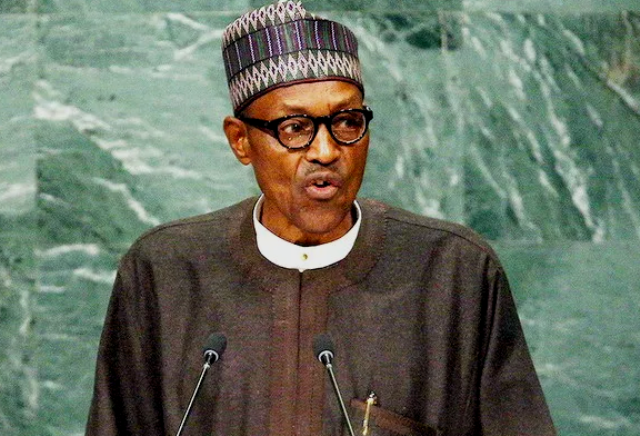
Buhari is currently in the US attending the ongoing 72nd session of the United Nations General Assembly, where he addressed the session on Tuesday.

According to Adesina, Buhari is scheduled to hold a lunch meeting with Donald Trump, US President, on Wednesday, together with leaders of eight other African nations.

Asked when Buhari is expected back home, Adesina replied: “Well, I don’t have a definite word on that but I know that tomorrow, he is going to have lunch with the American President; he’s going to meet with the Secretary-General of the United Nations.

“Tomorrow is Wednesday and maybe on Thursday, in the early hours, he has some things to do after that, I believe that he may be thinking of flying out.

“But one thing is sure, the trip was to last between last Sunday and next Sunday, Monday. Though he’s going to the UK, everything will still be done within the time-frame of the trip.”

Adesina also said that the issue of repatriation of looted funds, which did not feature in Buhari’s address, was raised in a smaller bilateral meeting with some world leaders on Monday, and will be raised again during Buhari’s meeting with Antonio Guterres the UN Secretary General on Wednesday.

On whether Buhari actually signed the document by the Nigerian Defence Headquarters proscribing the Indigenous People of Biafra, IPOB, Adesina said he was not aware of the development.

“I read the report also online today but it’s not something I have discussed with him. So I can’t confirm or deny whether that actually came up before he left the country.”

‘ISIS is on the verge of infiltrating Nigeria’ and 4 other things we learnt from Buhari’s UNGA address

President Muhammadu Buhari addressed the 72nd United Nations General Assembly on Tuesday in New York, United States of America.

Here are the highlights of Buhari’s 12-minute speech.

ISIS IS ON THE VERGE OF INFILTRATING NIGERIA

Buhari started his speech by expressing his appreciation for the role being played by the UN in combating terrorism in Africa.

“In an exemplary show of solidarity, the international community came together within my own region to assist the countries and communities in the Sahel and the Lake Chad regions to contain the threats posed by Al Qaida and Boko Haram,” he said

“We thank the Security Council for visiting the countries of the Lake Chad Basin to assess the security situation and humanitarian needs, and for pledging assistance to rebuild lives and livelihoods.

“Indeed, in Nigeria, we are providing relief and humanitarian assistance to millions in internally displaced camps and those afflicted by terrorism, drought, floods and other natural disasters.”

However, Buhari warned that more collaborative effort is needed in order “to stop fleeing ISIS fighters from mutating and infiltrating into the Sahel and the Lake Chad Basin, where there are insufficient resources and response capacity is weak”.

The Lake Chad basin spans parts of seven countries, namely: Nigeria, Algeria, Cameroon, Central African Republic, Chad, Niger and Sudan.

“This will require strong UN cooperation with regional organisations, such as the African Union, in conflict prevention and management.

“The UN should continue to take primary leadership of the maintenance of international peace and security by providing, in a predictable and sustainable manner, adequate funding and other enablers to regional initiatives and peacekeeping operations authorized by the Security Council.”

WEST AFRICA SOLIDLY FOR DEMOCRACY

Buhari assured the world that the West African sub-region would always work in harmony to promote the values of good governance and transparency, which are the pillars of true democracy.

He said: “The frontiers of good governance, democracy, including holding free and fair elections, and enthronement of the rule of law are expanding everywhere, especially in Africa.

“Our faith in democracy remains firm and unshaken. Our regional organisation ECOWAS came together to uphold democratic principles in The Gambia – as we had done previously in Cote D’Ivoire.

“Through our individual national efforts, state institutions are being strengthened to promote accountability, and to combat corruption and asset recovery.

“These can only be achieved through the international community cooperating and providing critical assistance and material support.

“We shall also cooperate in addressing the growing transnational crimes such as forced labour, modern day slavery, human trafficking and cybercrime.”

INTERNATIONAL COMMUNITY CAN’T BE SILENT ON ROHINGYA

Speaking in unequivocal terms, Buhari referred to the ongoing crisis in Myanmar as a “state-backed ethnic cleansing” that cannot be tolerated.

He urged the world to not only condemn the development but order the government of Myanmar to stop the unnecessary killing of innocent people.

“The Myanmar crisis is very reminiscent of what happened in Bosnia in 1995 and in Rwanda in 1994,” Buhari said.

“The international community cannot remain silent and not condemn the horrendous suffering caused by what, from all indications, is a state-backed programme of brutal depopulation of the Rohingya inhabited areas in Myanmar on the bases of ethnicity and religion.

“We fully endorse the call by the Secretary-General on the Government of Myanmar to order a halt to the ongoing ethnic cleansing and ensure the safe return of the displaced Rohingya to their homes in safety and dignity.”

THE RICH ARE GETTING RICHER — AND THE POOR, POORER

Buhari noted that the gap between the poor and the rich seems to be widening on a daily basis. Therefore, he called for urgent steps to be taken, as inequality breeds frustration and anger.

“While the international community grapples to resolve these conflicts, we must be mindful and focus on the widening inequalities within societies, and the gap between the rich and the poor nations.

“These inequalities and gaps are part of the underlining root causes of competition for resources, frustration and anger leading to spiralling instability.”

EVERYTHING MUST BE DONE TO STOP NORTH KOREA

“The most pressing threat to international peace and security today is the accelerated nuclear weapons development programme by North Korea,” Buhari said.

“Since the Cuban missile crisis of 1962, we have never come so close to the threat of nuclear war as we have now.

“All necessary pressure and diplomatic efforts must be brought to bear on North Korea to accept a peaceful resolution of the crisis.

“As Hiroshima and Nagasaki painfully remind us, if we fail, the catastrophic and devastating human loss and environmental degradation cannot be imagined.

“Mr President, Nigeria proposes a strong UN delegation to urgently engage the North Korean Leader. The delegation, led by the Security Council, should include members from all the regions.

“The crisis in the Korean peninsula underscores the urgency for all member states, guided by the spirit of enthroning a safer and more peaceful world, to ratify without delay the Treaty prohibiting nuclear weapons, which will be open for signature here tomorrow.”

Benue, Kogi, Bayelsa… 12 states still owing teachers’ salaries despite Paris Club refunds

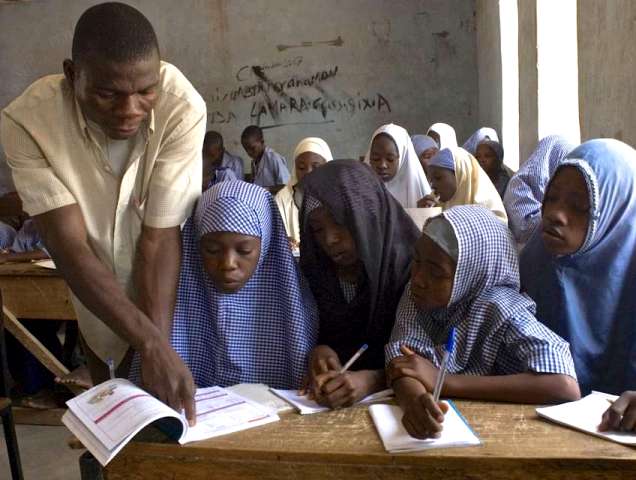
The Nigeria Union of Teachers (NU) says a total of 12 state governors are yet to completely pay the salaries of primary and secondary school teachers.

This is in spite of the directive by President Muhammadu Buhari that governors should prioritise payment of salary arrears, especially with the release of the second tranche of the Paris Club refunds.

Mike Ike-Ene, Acting Secretary-General of the NUT, said this during an interview with NAN in Abuja on Tuesday.

The states are Ogun, Imo, Oyo, Abia, Kogi, Benue, Zamfara, Taraba, Plateau, Osun, Benue and Bayelsa. According to Ike-Ene, Benue State is the worst indebted.

“It may interest you to know that few weeks back at Ibadan, we re-appraised the way our teachers are being owed; about 19 states visibly owed our teachers various forms of money ranging from salaries to gratuity for many months, some two months to one year; about 28 states are paying salaries in percentages.

“We requested government to use the window of the long vacation to pay these teachers.

“But it might surprise you to know that states like Akwa-Ibom, Bayelsa, Delta, Kano and Rivers collected N10 billion Paris Club fund each, yet some of the states could not use this money to offset the teachers’ outstanding salary arrears.”

In spite of this, Ike-Ene urged the teachers to remain steadfast in the discharge of their responsibilities.

“I just want to use this medium to thank all our teachers in primary and secondary schools throughout the period and further encourage them to do continue to do their best,” he said.

He however added that if all efforts to get the various state governments to pay the outstanding salary arrears fail, the union may be forced to embark on a strike since it is the only language that the government understands.

During his meeting with traditional rulers at the State House on Monday September 11, President Muhammadu Buhari again urged state governors to lessen the suffering of the citizens by paying salaries.

“There are Nigerians who haven’t be paid for six months. There are Nigerians who haven’t been paid their retirement benefits for years. I appeal to the governors; that is why we voted money, we borrowed money,” Buhari said.

“Please, make sure [you pay] anybody under you. If he is working, he depends on the salary to pay rent, to hold his family, for education, healthcare.”

How 28 govt initiatives in 10 years failed to end preventable newborn deaths

0

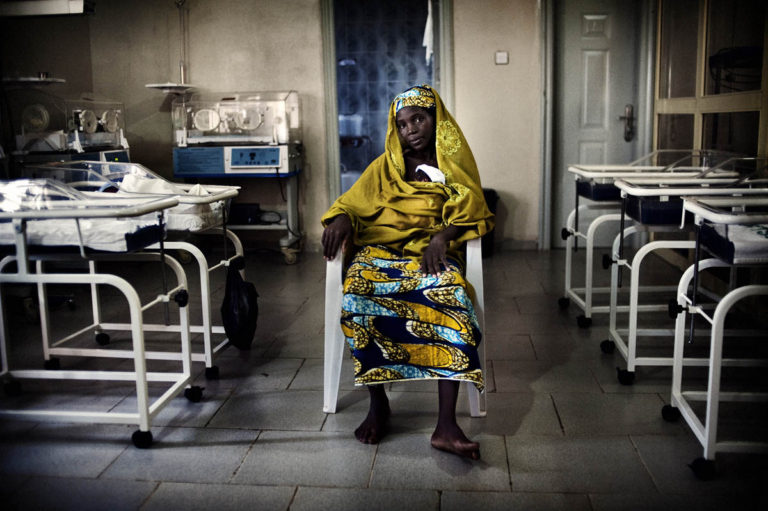
An estimated 7.4 million babies are born in Nigeria every year but 94,000 of them die on the first day of birth while 240,000 others die before they are one month old, according to the Federal Ministry of Health.

Policymakers in Abuja have launched over 28 policies, plans, strategies, guidelines in the past 10 years to end the preventable deaths of Nigeria’s youngest citizens who do not live beyond one month. But these documents that are generated yearly in Abuja are just like pouring water in a basket; they are rarely implemented.

While the policymakers are busy with generating and launching policies, the fundamental causes of these avoidable deaths are never addressed.

The quality of healthcare services has been mainly responsible for newborn deaths, as less than 35 per cent of the babies are delivered by skilled birth attendants. Only about 20 per cent of over 30,000 primary health centres meet the minimum standard, according to the 2016 national health facility survey.

Despite the policies and strategies, Nigeria has made a very slow progress in reducing neonatal mortality in the past 25 years. Neonatal mortality in Nigeria was 50 per 1,000 live births in 1990 but still remained at 34 per 1,000 live births by 2015, according to estimates by the UN Inter-Agency Group for Child Mortality.

Nigeria’s effort to reduce newborn deaths is an abysmal failure when compared to other countries’. The country’s neighbour, Niger, had a neonatal mortality rate of 55 per 1,000 live births in 1990 but reduced it to 27 per 1,000 live births by 2015.

The neonatal mortality rate in Nigeria is above the African average, which stands at 29 per 1,000 live births as well as 27 per live births in low-income countries.

Nigeria currently has the second highest number of neonatal mortality in the world after India.

Last year, the Ministry of Health launched every newborn action plan to end preventable newborn deaths in the country. This plan was adopted from the every newborn action plan endorsed by the World Health Assembly in 2014.

However, this was not the first initiative that Nigeria had taken to end preventable newborn deaths. Within the past decade, the ICIR identified 28 policies, strategies, guidelines and plans that the federal government had launched to preserve the lives of this extremely vulnerable group but the deaths keep occurring.

Since 2006 when the child health policy was launched, the country has launched other 26 policies, strategies, guidelines, and plans.

Timeline Initiatives
2006 ·         Child Health policy

·         Essential Equipment List

2007 ·         Integrated Maternal, Newborn and Child Health (IMNCH) Strategy

·         Ward Minimum Health Care Package

2008 ·         Essential Newborn Care Course
2009 ·         Newborn health in the context of IMNCH (Situation Analysis Report)

·         Communication for Behaviour and Social Change on MNCH

·         Midwives Services Scheme

2010 ·         National Strategic Health Development Plan 1 (2010-2015)

·         National Essential Medicine List

·         Maternal, Newborn and Child Health Week

2011 ·         Newborn health in the context of IMNCH  2nd revision (Situation Analysis Report)

·         Community-Based Newborn Care

2012 ·         Saving One Million Lives
2013 ·         Newborn Bottleneck analysis

·         UN Commission on Live Saving Commodities: Country Implementation Plan

·         Integrated Community Case Management

·         Subsidy Reinvestment and Empowerment Programme

2014 ·         National Task Shifting and Task Sharing Policy

·         Minimum Standard for Primary Health Centres in Nigeria

·         National Newborn Health Conference

·         National Health Act

·         Helping 100k Babies Survive and Thrive Initiative

2015 ·         National Guideline  for the Maternal and Perinatal Death Surveillance and Response

·         UN Commission on Live Saving Commodities

2016 ·         National Strategy for Scale up of Chlorhexidine in Nigeria

·         Nigeria Every Newborn Action Plan


‘EVERY DAY, THERE IS A WORKSHOP’

In 2006 when the child health policy was launched, neonatal mortality was 41 per 1,000 live births but after a decade of initiatives by different administrations, neonatal mortality only reduced to 34 per 1,000 live births.

Ben Anyene, Chairman of Health Sector Reform Coalition, told the ICIR that the major problem in neonatal health is the failure of the government to plan.

“There is no system. We are a short-term people,” Anyene said.

“We don’t do long-term planning. It boils down to the fact that everybody wants to cut corners and make money. Every day there is a workshop. Every day, there is one meeting or training. Training to achieve what result?

“There are things that are not being done and they need to be done. In this modern world, nothing will happen by wish. It will happen not by miracle but by thinking through it, designing it, costing it, finding the money and implementing it to the latter without leakage, and then you see the result.”

The usual case is that each new government or administration will rather waste resources on putting new programmes than sustain what has been in place.

Aminu Magashi, Project Director of Community Health Research Initiative, noted that frequent change of policies and programmes makes it difficult to achieve meaningful results.

“A programme can take you two years to create and start implementation. After the long process to establish structure, another government comes but does not use the existing structure, and then creates another one. It takes the new government another series of meetings and resources to put another one,” Magashi said.

POOR COORDINATION

The policies and strategies are generated by the Federal Ministry of Health but the implementation is hardly carried out by the state and local governments.

Nigeria operates three tiers of government: the federal structure, the 36 states and the 774 local government areas.

Often times, the Ministry of Health generates the policies and plans without realistic means of implementation in the states and local governments.

Michel Arrion, Head of European Union (EU) delegation to Nigeria, told the ICIR earlier this year that neonatal mortality rate is very high in Nigeria because of poor governance, weak and complex democratic institutions.

In February, EU supported five states in the country with N40 billion to improve maternal, newborn, child health, but Arrion said the solution to preventable deaths is not about having policies but the policies must be translated into concrete actions and deliverables.

Nigeria has received hundreds of billions of naira in foreign aid to end preventable newborn deaths but there is a situation where implementing partners carry out their activities without proper coordination by the Federal Government.

“If you really want an efficient development of the country, first, you need the country in the driving seat with full ownership,” Arrion said.

“So the Ministry of Budget and Planning is the right body to do so. It is not for the World Bank or the UN or the EU to coordinate others. It is for the country. It has to have a plan in place.”

IMPLEMENTATION ALWAYS THE PROBLEM

After decades of chaotic policies in the health sector, the National Health Act was signed into law on December 9, 2014.

However, the law, expected to change the healthcare system, has not been implemented after more than two years.

One of the key provisions of the Act is that within two years of enacting the law, all health facilities, both public and private, must obtain a certificate of standard. The penalty for operating without this certificate of standard is a shutdown.

Another key provision of the Act is the establishment of a Basic Health Care Provision Fund (BHCPF) to provide a basic package of care for all Nigerians.

The Act provides that BHCPF will be financed through yearly release from the federal government of not less than one per cent of the Consolidated Revenue Fund. Other means of funding will come from international donors. States and local governments are also expected to contribute 25 per cent counterpart funding for primary healthcare projects.

“The mindset is that it should not be implemented,” Ben Anyene, Chairman of Health Sector Reform Coalition said.

Anyene played an active role in drafting the Act that is meant to correct the anomalies in the healthcare system but the implementation has been frustrated by the government.

“It hurts people like us because I know how much productive energy and productive life we spent on this,” Anyene said.

“Right now, they have corrupted the whole thing. They don’t want to implement the Act. It is wrong for a country to make a law and refuse to implement it. They go into all kinds of conventions and refuse to implement.”

For the second year in a row, a Nigerian wins BBC Komla Dumor Award

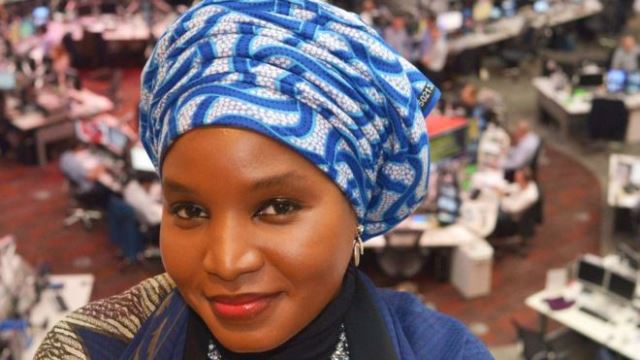
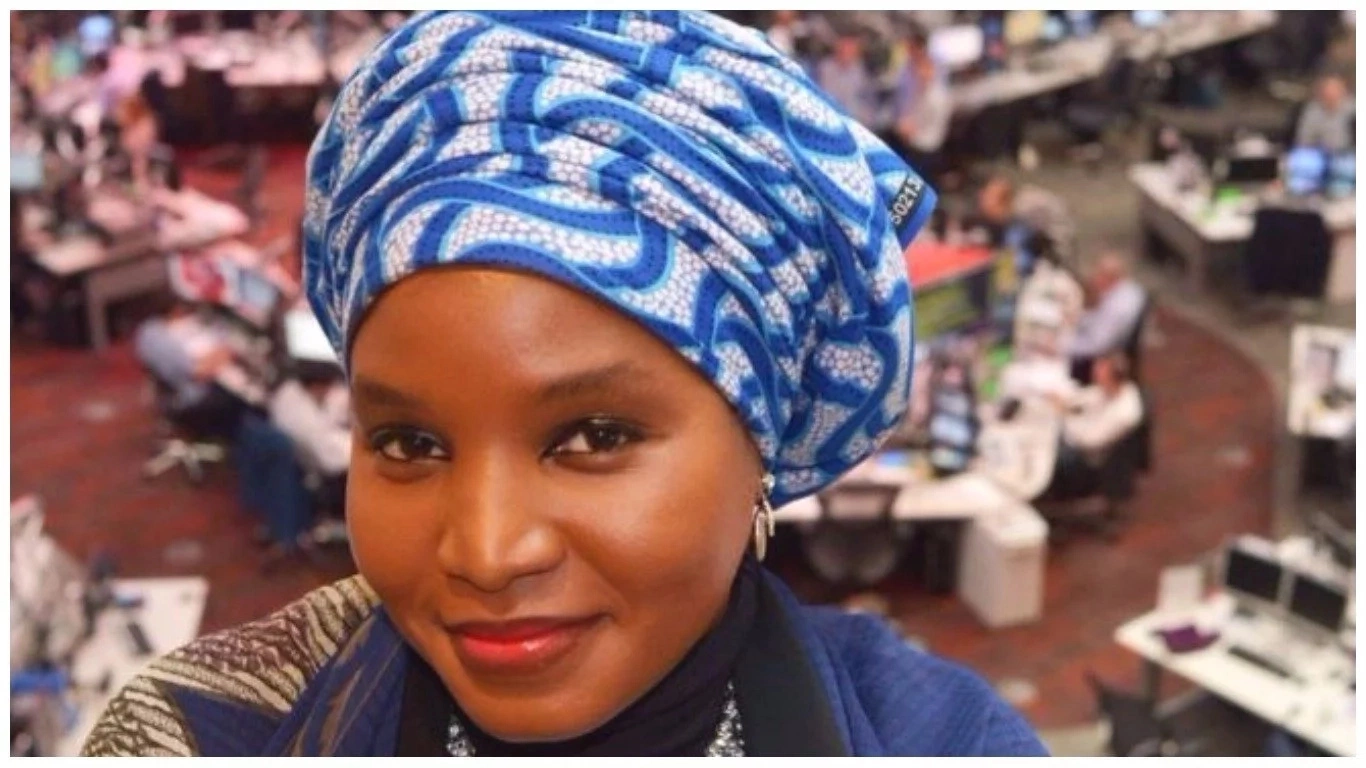
Amina Yuguda, a journalist from Adamawa State, has won the third BBC World News Komla Dumor Award.

She is now the second Nigerian to win the award in a row after Didi Akinyelure, a business journalist who won it last year.

The first winner of the Komla Dumor Award was a Ugandan news anchor Nancy Kacungira.

Yuguda, who grew up in Lagos, is a news presenter on Gotel Television in Yola, the Adamawa State capital, where she has reported on high-profile news stories, including the Boko Haram insurgency.

She will start a three-month placement at the BBC in London in September.

According to the BBC, the award was created to honour Komla Dumor, a presenter for BBC World News, who died suddenly aged 41 in 2014.

Yuguda described her win as a “huge honour”.

“I was overwhelmed with joy,” she told the BBC. “Storytellers have always had an important role in Africa… this is what defines us. Today, journalists are taking on that responsibility.”

She impressed the panel with her story-telling and her ability to convey complex ideas in a way that resonates with a wide audience.

“I want to tell stories from an African perspective,” she said.

Yuguda is excited to work at the BBC, given her understanding of the corporation’s impact among pastoralists in her hometown.

“With little or no formal education, my countrymen can hold their own in a variety of topics, including the Trump presidency in America, North Korea’s defiance, Russia’s foreign relations under Putin, and more,” the BBC quoted her as saying.

Francesca Unsworth, Director of the BBC World Service Group, described her as a worthy winner.

“To find someone who possesses many of Komla’s qualities is something for us to celebrate, and we are very excited about working with Amina,” Unsworth said.