Home Blog Page 2719

I don’t know who’s paying for Buhari’s treatment, says Adesina

Buhari 4

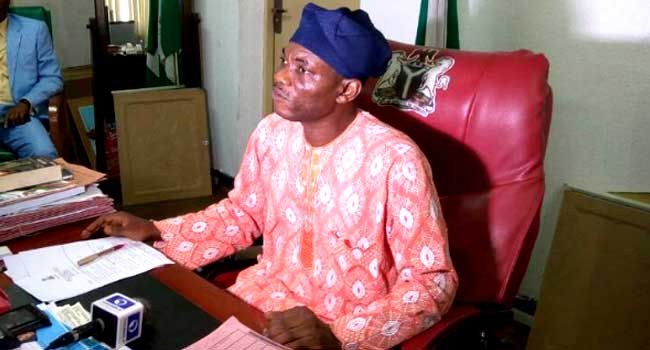
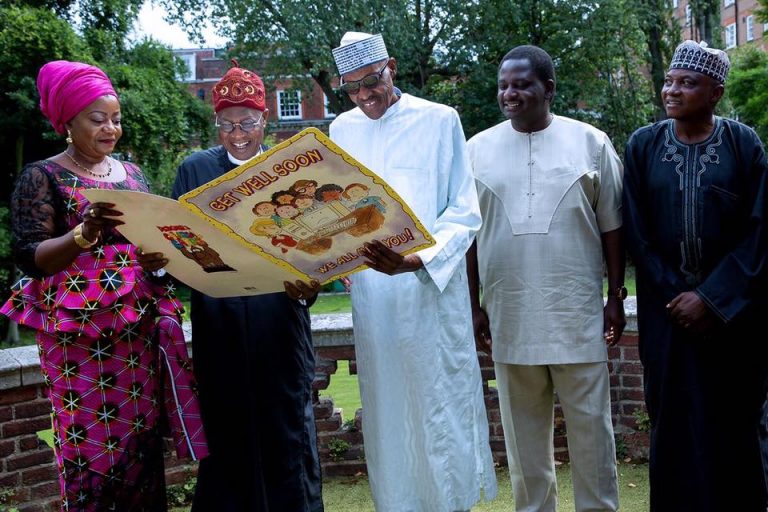
Femi Adesina, Special Assistant to President Muhammadu Buhari on Media and Publicity, says he does not know who is paying for the President’s medical expense in London, where he has been for 100 days.

Adesina, who was part of the delegation that visited Buhari in London on Sunday, said this while appearing as a guest on Channel Television’s Politics Tonight.

Buhari has been roundly criticised concealing the nature of the President’s ailment despite treating him with public funds.

When asked who was paying for Buhari’s medical treatment, Adesai replied: “Does it matter at this point? If he [Buhari] is our President, it also means he has access to some things.

“Let me say I do not know who is paying but as a President, he has a right to be treated by the country. He has the right.”

When the presenter insisted on knowing whether Nigeria was paying for the treatment, Adesina said: “Most likely. I do not know for sure but most likely.”

On the presidential jet that was packed at the London airport and the accruing demurage, Adesina said: “It has to be there; it has to be there. I don’t think that’s a problem, is it?

“We should pay if we should pay but don’t forget that an explanation had come earlier that we were not paying the official rate and that’s still the position. When the President of a country is somewhere, his plane should be there.”

Asked how much is being paid for the President’s jet on a daily basis, he said: “I don’t know. If you reach out to the commander of the presidential fleet, he will tell you.”

Adesina maintained that Buhari was “sharp, smart and lucid” when they visited him on Sunday.

“The President is almost completely mended, but then… he will come back when his doctors say it is time to go,” he added.

Impeached Edo speaker ‘literally made his wife a member of the assembly’

New Edo Assembly Speaker
Kabiru Adjoto, the new Edo Assembly Speaker

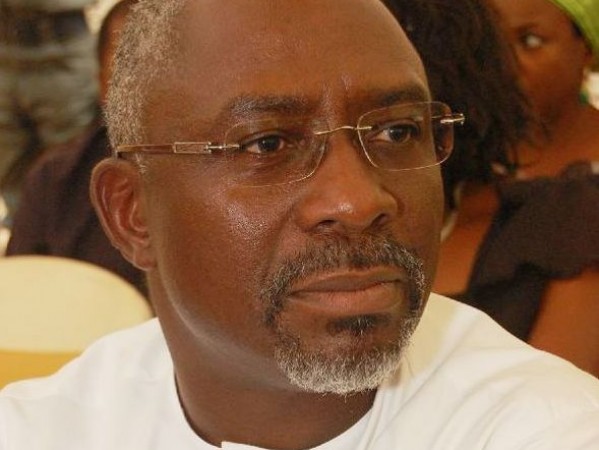
Kabiru Adjoto, the newly-elected Speaker of the Edo State House of Assembly, says Justin Okonoboh, his predecessor, was impeached because he “desecrated” the assembly by making his wife the “25th member” of the assembly.

Adjoto told journalists shortly after he was sworn in that Okonboh ran the assembly like a private business and usually adjourned sittings for some personal family issues.

“We discovered that for selfish reasons, the ex-Speaker would adjourn the House, possibly, because the wife is doing a birthday or the son is having a graduation at Covenant University or the son is going to an NYSC camp [and] he [Okonoboh] wants to do a party for him,” he said.

“Between June and July, we have worked for just three weeks; he adjourned the House for more than six weeks.

“Today is August 14 [but] we are just resuming. Then, the House is expected to adjourn again next week for another four weeks for the normal holiday. Is that a normal parliament? All of us came together and said, ‘Enough is enough’.

“The institution is more deserving to be protected than the interest of an individual.

“The ex-Speaker’s wife, like I said earlier, has turned herself into the 25th member of the House of Assembly to the extent that anything we discussed in the executive session, the wife will hear and start calling our wives to tell them what was discussed.

“The wife uses the [Speaker’s] convoy as if she is Mr. Speaker and at random. The other day, the wife and the son used the convoy to the NYSC camp. When the soldiers and policemen there saw that it was coming, they all stood, hoping that they would see Mr. Speaker, only to see the wife and the son to come out of the vehicle. That is a desecration of the Parliament.”

Okonoboh became Speaker in June 2016 after Victor Edoror, his predecessor, was impeached under similar circumstances.

ASUU cries out: We are frustrated, distracted and disenchanted


Biodun Ogunyemi 2

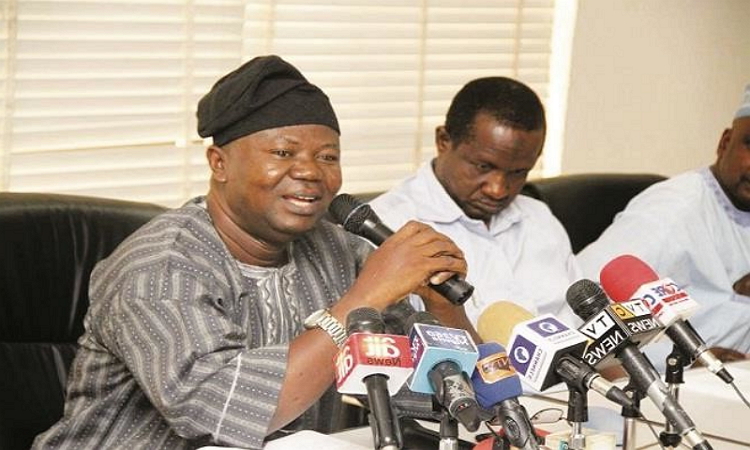
Biodun Ogunyemi, President of the Academic Staff Union of Universities (ASUU), says lecturers are “frustrated, distracted and disenchanted” with the federal government’s “lukewarm attitude” to the funding of university education.

According to Ogunyemi, who declared an indefinite strike by the union in all public universities, the government is out to kill the ivory tower as it did primary and secondary education.

He accused government of failing to honour its agreements with ASUU in 2009 and 2013, saying has been insensitive to what is happening in the university system.

He lamented that the federal government has been hidding under the poor state of the nation’s economy to starve the university education the needed fund when it pays attentions to other sectors of the economy.

While noting that government has not accorded university education the importance it deserves, he said the same government has been awarding contracts and attending to other issues despite the state of the economy and leaving the education sector to suffer.

Ogunyemi said all these had left lecturers “frustrated, distracted and disenchanted”.

His words: “They have always been there when the country was buoyant. I know the issue we have been talking about is the state of the economy. They are awarding contracts every day, are you aware of that?

“Other issues are going on, they are buying vehicles and doing other things. You see, it depends on importance we place on universities. We have conceptualised universities as centres of development and if we should allow university system to collapse — like the primary school system has collapsed, secondary school system has also collapsed — the future of this country is in jeopardy.

“That is why it is time for us to rescue the system. The ruling class in Nigeria, the political class, does not give any due consideration to the university system because now they have shifted their attention to private universities and sending their children to schools abroad.

“If all of us here should encourage them to destroy the university system, then the future of our children is in jeopardy because certainly not all of us can afford to send our children to private schools or to universities abroad. So this is why we are coming out to call on Nigerians that we should give the university system that attention it deserves.”

Speaking also, Isa Faggae, immediate former President of ASUU, bemoaned the percentage of the national budget being allocated to education, which he noted is a far cry compared to what other serious-minded countries allocated to theirs.

“Countries that are serious invest huge percentage of their money on education,” he said.

“In the case of Nigeria; yes, there are issues; insurgency and they are trying to address that, the economy that is down but that does not stop them from sharing money in the name of Paris club debt.

“What we are saying is that if you are interested in addressing the problems of development in the country you must pay adequate attention. The allocation to education in 2015 and 2016 for instance is not more than seven percent of the total budget of the country.

“For countries that are really serious about development, they allocate at least more than 20 percent of their total budget to education. If you want to see Nigeria, the giant of Africa, playing its role as a country to reckon with in the international comity of nations, we must place high premium on education.

“Apart from that, we have an agreement, even if you cannot meet up with the agreement; it is your responsibility to call the other party to come back to the negotiation table. We have not seen that from the government.”

Adenuga, Lukman, Diezani… Olojede lists the powerful Nigerians who killed NEXT

Olojede

Pervasive corruption and the attitude of Nigerians who are not shocked by scandals make it difficult for investigative journalism to thrive in the country, Dele Olojede, Pulitzer Prize-winning journalist, has said.

Speaking in an interview with Feyi Fawehinmi, translated by the Premium Times, Olojede, a former Foreign Editor of New York Newsday who started moribund investigative newspaper, NEXT, said the corrupt elites conspired to kill the newspaper for embarking on high-profile investigations into the shady deals of Nigerian businessmen and politicians.

Unfortunately, Nigerians who were supposed to take up agitation following the revelations did nothing.

The endemic corruption and stifling political climate led to the death of NEXT in 2011, a paper founded in 2008 with a grand vision to beam the searchlight for cleaning up and straightening Nigeria through investigative journalism.

Olojede wanted to replicate, in Nigeria, the standard of  investigative journalism he practised in the US, but a wide range of peculiar socioeconomic issues prevented his vision from materialising in Nigeria.

Investigations into the tax evasion of Mike Adenuga, Chairman of telecommunication giants Globacom; and other investigations of corruptions in the oil industry led to the death of NEXT.

Olojede said Adenuga sent intermediaries to pressure him into killing a story that involved the wealthy man’s companies unpaid taxes totalling N100 billion.

“We said we were not in the business of killing stories and that the best we could do for him was to give him a chance to state his own side. He refused and we refused, so we had a stalemate,” Olojede said.

“By Monday morning, he had pulled all the ads of Glo and everything from NEXT! And of course anyone who does business with Glo or with any part of his empire who advertised with NEXT was now in trouble. So these were the ways they were able to put pressure on us.”

After the incident, the paper went on to do other big investigations involving the then minsters of petroleum, Rilwan Lukman and Diezani Alison-Madueke, which finally led to its death due to political and business pressures.

Of some of the papers works, including the famous revelation that then President Umaru Musa Yar’Adua was brain-dead, Olojede said: “Yeah. I remember very clearly when this thing came out, even some of my directors, these were guys who were all very excited, very proud about the work NEXT was doing.

“But even this one shook everybody, so they called me, ‘Are you sure about this?’ Because everybody knew if this wasn’t true this was trouble. So I just said to them, I said: ‘Guys, let us agree when it comes to making money and so on, you guys are better than me. When it comes to this journalism business, I think you have to take my lead; that we know what we are doing. And all’.

“I would say is this, ‘if somebody tells what we have done was false, tell them to produce the President. The people would like to see him’. I said in fact, nobody would be happier than us if they produced him hale and hearty. And of course, we knew they couldn’t! We had researched this to a till so we knew the guy was gone and wasn’t coming back. And of course, that was exactly what happened.

“In hindsight, that was the peak of NEXT. After that, even though we began to do a series of truly extraordinary investigations into Diezani Alison-Madueke’s Ministry of Petroleum and all the fraud they were committing, we had video, we had audio, we had source documents. we published the whole thing; that was the final death knell to NEXT!

“Because they realized then, after sending intermediaries to offer me an ungodly amount of bribe and we’d laughed them out of the room, they then decided these guys were not reasonable. So they pulled the plug!
They blackmailed First Bank and so on. First Bank reneged on our agreement for us to repay the loan. They pulled the loan, advertisers fled and we were basically isolated and the writing was on the wall that we could no longer sustain the enterprise. So that’s how we slowly now bled to death over the course of 2011.”

UPDATED: The five sins of FG that drove ASUU to nationwide industrial action

ASUU

The Academic Staff Union of Universities (ASUU) has formally directed all its members in public and private universities in the country to commence an indefinite strike.

Biodun Ogunyemi, President of ASUU, who declared the strike at a press conference in Abuja on Monday, said the federal government had failed to meet up with five issues that have formed the basis of negotiations between the two parties.

He said there shall be no teaching, examination and attendance of statutory meetings of any kind during the strike in any of the union’s branches.

Ogunyemi said ASUU was out to make the federal and state governments implement the provision of the 2009 Agreement, the MoU of 2013 and the understanding reached in November 2016.

“To have public universities that will be pride of all, to secure the future of our children and their own children’s future, and to lay the foundation for a university system capable of producing a country of our dream, we must make the Federal and State governments implement the provision of the 2009 Agreement, the MoU of 2013 and the understanding reached in November 2016,” he said.

Accordingly, he listed five issues in the current dispute, noting that substantial aspects of the 2009 Agreement and 2013 MoU remained unimplemented.

FUNDING FOR REVITALISATION OF PUBLIC UNIVERSITIES

He lamented that the federal government promised to release N200billion as revitalisationn fund for public universities in 2013 and a yearly release of N220billion subsequently from 2014 to 2018. To date, he said, government is in the arrears of N825billion as the outstanding total of releases in respect of this fund.

EARNED ACADEMIC ALLOWANCES

Ogunyemi said the problem of EAA has become a sore thumb adversely affecting morale and productivity on the campuses. He said EAA was a major aspect of the 2009 FGN/ASUU Agreement and a key issue in the strike action and consequent upon MoU 2013, but nothing had been done by the government concerning the payment of the EAA despite series of meetings between the union and the government team.

PENSION

He highlighted the third issue as the registration of Nigerian Universities Pension Management Company (NUPEMCO) and pension matters. He lamented the non-release of the operational licence of NUPEMCO and retired professors’ pensions.

UNIVERSITY STAFF SCHOOLS

In the 2009 FGN/ASUU Agreement, it is stated that the federal government shall bear the full capital and recurrent cost of the university staff primary schools. But Ogunyemi said the federal government had failed to direct vice chancellors to carry out this agreement despite a court ruling that declared as illegal the sudden abrogation of that aspect of the agreement by the government.

UNPAID SALARIES

He said the new form of enslavement being perfected by the federal and state governments is evident in the unjust and condemnable practice of payment of fractions or outright non-payment of staff salaries.

“Our members have continued to experience financial embarrassment arising from unpredictable monthly salary cuts,” he said.

“We have brought up these areas in a number of interactions with the media and, more recently, in our two-page advertisement in some Nigerian dailies on June 9, 2017.”

He lamented that efforts to address these issues fizzled out when the union suspended the warning strike it commenced on November 16, 2016 when the strike was suspended on November 22, 2016.

ASUU, he explained, did its best afterwards to get the federal government to fulfill its promises through series of letters and consultation meetings, but “all was to no avail”.

“Meanwhile, our members across the country were getting increasingly frustrated, distracted and disenchanted. It became evident that their patience had been tasked beyond reasonable limits and government’s insensitivity imposed severe burden on the leadership of the union,” he said.

“Consequently, based on a nationwide consultation with our members, an emergency meeting of the National Executive Council (NEC) of ASUU rose on Saturday, August 12, 2017 with a resolution to embark on an indefinite strike action starting from Sunday, August 13, 2017.

“The nationwide action is total and comprehensive.”

Kenyan youths are winning elections, the ones in Nigeria are daydreaming

2

Kenya

This is a story of two popular but dissimilar Cynthias. One recently earned her fame, the other has been around for a while. One is a politician, the other a musician. One symbolizes intellect and strength of character, the other is unmistakably a sex symbol. One is Kenyan, the other Nigerian. One is Cynthia Muge, the other Cynthia Morgan. Each name could possibly be mistaken for the other, but surely not their stories.

Cynthia Morgan, 25, burst onto the Nigerian musical scene in 2010, aged just 19, after featuring in Jhybo’s Ejo le fe ro. The daughter of an Edo-based gospel artiste, Morgan’s music is anything but gospel. Her musical videos are x-rated, replete with raunchy acts, salacious dancing and nude bathtub scenes, and offering very little for moral, intellectual or societal regeneration. A vain mind like the majority of her music-industry peers, Morgan once boasted of owning a N12million wristwatch.

Unlike Morgan, Cynthia Muge does not have N12million in her bank account much less own a N12million item. But she shot to limelight last week all the same.  The 24-year-old, running as an independent candidate because she lacked the funds to obtain the Jubilee Party’s nomination form, defeated five men to secure the Member of Country Assembly (MCA) seat in Kilibwoni Ward, Nandi County.

Muge’s chances looked so slim that even her own mother advised her against running. Without the funds, the University of Nairobi graduate devised a social media and house-to-house campaign strategy. She polled 8,760 votes, while her closest competitor, Wilson Kiptanui of Jubilee Party, garnered 8,354 votes. She joins five other women in taking six of the 30 assembly seats available in Nandi.

FROM GRANARY TO PARLIAMENT

If Muge’s story is enthralling, another’s is simply intriguing. John John Paul Mwirigi, 23, ‘broke’, jobless and an orphan, ran without a party against veteran politicians boasting membership of established political parties. He emerged victor, polling 18, 867 against Jubilee Party’s Rufus Miriti, who had 15, 411 votes. Three other seasoned politicians — Mwenda Mzalendo (7,695 votes), Kubai Mutuma (6,331 votes) and Raphael Muriungi, a Deputy Governor, two-tome ex-MP and former Assistant Minister (2,278 votes) — placed nowhere near him.

The sixth child of eight children from his parents, Mwirigi still lives in his family home — a local granary in the community! He printed no campaign posters, and prosecuted his door-to-door campaign on foot until his former colleagues bought him a motorcycle.

FALSE HOPES IN NIGERIA

Considering the recent passage of the ‘not too young to run bill’ by the National Assembly, Mwirigi and Morgan have raised hopes, particularly on the social media, that twenty-year-olds could soon be winning elections in Nigeria. Not only is that impossible, even the older youth can only dream of elective public office. For the youth, there is at least one more secondary obstacle and many primary ones.

The ‘not too young to run’ bill seeks to give the Nigerian youth the kind of opportunity available to Kenyans; it wants the Constitution to lower the age requirement for occupying the office of the President to 30 years from 40 years, Governor to 30 from 35, Senate to 30 from 35, House of Representatives to 25 from 30 and State House of Assembly to 25 from 30. The bill also seeks to allow independent candidature in the country’s electoral process. For the amendment to become final, 24 state houses of assembly must approve the bill and the President must assent to it.

Although the green chamber favoured the bill from scratch, the red chamber despised it and indeed threw it out after in November 2016, following opposition from majority of its constitution review committee. Last month’s positive about-turn was triggered only by agitation from a coalition of youth groups, most prominent of which was Samson Itodo’s Youth Initiative for Advocacy Growth and Advancement (YIAGA). That initial resistance of 2016 is likely to be the true position of the legislature and possible indication that the state houses of assembly could pass up the bill. Should this happen, YIAGA and co have a real battle on their hands. One-stop protests at the National Assembly is hard enough, but travelling round a minimum of 24 states on a lobbying/protest mission is surely not the simplest of tasks.

NIGERIA ISN’T KENYA

Mwirigi and Muge didn’t win in Kenya simply because the young could run or because the poor did not necessarily need to join a political party. As confirmed by Fatu Ogwuche, an elections technology consultant who observed the Kenyan polls, both of them had integrated themselves into their communities. They had a deep connection to the grassroots. Mwirigi had particularly been dreaming of a legislative position since Form 3, the Nigerian equivalent of Primary 3. Gradually, for well over a decade, he crept into the minds of Igembe South people by sitting and dining with them, and “helping them whenever” he could. When he rose to contest, they saw him as the product of their struggles, an aggregation of their individual parts. His campaign was as good as theirs; if he won, they did. That’s why they all keyed in.

Here in Nigeria, politically conscious youth cannot lay claim to physical connection to the grassroots. The leading lights are all Twitter superstars and “social-media influencers”. Unfortunately, Twitter superstardom won’t deliver votes. Kenya proved that already with the defeat of its Twitter god, Boniface Mwangi, at the polls. Mwangi, a popular activist, currently has 738,000 followers on Twitter but he had only secured 11,714 votes as of the time he conceded defeat, while a candidate had double his votes and another had almost quadruple. This is not to say Mwangi is not loved both home and abroad. For example, his recent book, Mwangi UnBounded, was endorsed by the biggest names in literature and international politics, from Ngugi wa Thiong’o to Hillary Clinton and Barack Obama. Still, he lost.

If we managed to find a Nigerian youth with the grassroots appeal who could contest as a stand-alone candidate to circumvent the huge financial burden of party politicking, he may not be alive to witness the end of his door-to-door campaign. That’s a hyperbole, but Nigeria’s population is nearly four times that of Kenya; any candidate who springs up a door-to-door campaign on foot or with an Mwirigi-like motorcycle is on a suicide mission and will be bogged down in exhaustion.

In all, money will continue to dominate Nigerian politics for the foreseeable future. Youth who are without godfathers, and are not moneybags, may run but will predictably lose. If Nigerian youth do not get off the social media and properly set about the process of connecting with the grassroots, the ‘not too young to run’ bill will yield not-too-young-to-lose and still-too-young-to-win results. It would be fantastic for the bill to become law; opening up the political space to youth is great progress but securing victories is distant prospect still.


Soyombo, Editor of the International Centre for Investigative Reporting (ICIR), tweets @fisayosoyombo

An eye for an eye will leave Nigeria blind, says Atiku

0


Atiku Abubakar

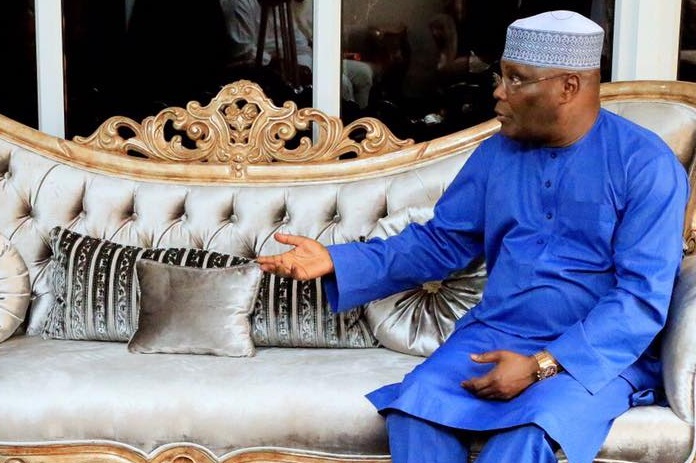
Atiku Abubakar, former Vice President, has warned those issuing quit notices and counter quit notices that “an eye for an eye will leave Nigeria blind”.

In a statement issued by his media office, Atiku urged Nigerians not to see themselves as from the north or south but from Nigeria.

“Just as I strongly condemned the quit notice on people of the Igbo ethnic stock living in Northern Nigeria and the counter quit notices that ensued, I also vehemently condemn the retaliatory quit notice given by certain elements in other parts of Nigeria to persons of other origins be they Northern, Yoruba or any other ethnic grouping within our nation,” he said.

“First and foremost, it is a fallacy to believe that there are people of Northern or Southern origin. Nigeria only has people of one origin. We are all of Nigerian origin.

“As Nigerians, we must be pragmatic enough to realise the obvious truth that an eye for an eye will leave Nigeria blind.”

He reminded those issuing the quit notices that when brothers fight to the death over a domestic dispute, it is their neighbours who eventually inherit their father’s property.

“It is also for this reason, amongst others, that I have urged and still urge that Nigeria should be restructured and that state of origin ought to be removed from our constitution and other relevant laws and policies, to be replaced by state of residency.

“If we as Nigerians are tied to our residency, rather than the state where our ancestors originated from, this whole idea of quit notice would not have arisen in the first place.

“Let us remember that though we have many ethnic nationalities in Nigeria, we are all largely of one race. In the United Arab Emirates, foreigners exceed the native Emiratis in number, yet the UAE is one of the most peaceful nations on earth. If people of different races can live in peace in South Africa and the United States, why can’t we do the same here? In fact, I posit that we can and should do the same.

“Finally, let me use this opportunity to commend the National Broadcasting Commission and the National Orientation Agency for taking steps to sanction radio stations that were guilty of playing the Igbo hate song and for embarking on an anti-hate speech drive.

“Nigeria is our only country and our value as human beings is tied to the value of Nigeria. So if we must give ourselves value, we must first give Nigeria value”.

Over 1,500 migrants have died in Mediterranean in 2017 — and many are Nigerians

Migrants

More than 1500 African migrants who were seeking better opportunities in Europe through illegal routes have died in the Mediterranean Sea alone in 2017, the Nigerian in Diaspora Organisation (NIDO) has revealed.

The organisation said many more are believed to have died travelling across the Sahara desert or in the transit countries.

Kenneth Gbandi, President of NIDO for Europe, said the information was obtained from the United Nations’, International Organisation for Migration (IOM).

Speaking ahead of NIDO’s planned Migration Enlightenment Project Nigeria Information Campaign slated for September 2017 in Lagos, he said a substantial number of these irregular migrants are Nigerians.

The campaign, he explained, is to promote Safe Migration by raising awareness about the dangers and risks of irregular migration.

“We receive daily news of the suffering of young African migrants seeking better opportunities in Europe through illegal routes,” Gbandi said in a statement made available to ICIR.

“The ordeal that many go through either in the transit countries such as Niger and Libya or during the perilous journeys on rickety boats across the Mediterranean is heart-wrenching.

“This year alone, more than 1,500 migrants have perished in the Mediterranean, according to the International Organisation for Migration. Many more are believed to have died travelling across the Sahara desert or in the transit countries.”

On the forthcoming campaign, titled ‘look before you leave’, he revealed that there are up to one million migrants who are trapped in transit in Libya and are exposed to harsh living conditions and human right abuses.

“In Libya, for example, there are up to 1 million migrants trapped in transit where they are exposed to hash living conditions and widespread human rights abuses,” he said.

“Some are traded as slaves for ransom, labour or sex by gangs of people-smugglers and many die in the appalling conditions of detention facilities run by both the Libyan authorities and militia forces.

“A substantial number of these irregular migrants are Nigerians. In fact, Nigerians constitute the single largest group of sub-Saharans in Libya.”

He lamented that many of the migrants left Nigeria lured by the false promise of people-smugglers “who deceive their victims into paying sometimes thousands of dollars for a passage to Europe”.

While noting that “there is no easy passage to Europe through irregular migration”, he stressed that illegal route to Europe is littered with hardship and death.

“The Nigerian Diaspora in Europe is deeply disturbed by this situation hence its decision to do something about it,” he said.

“This is why The African-German Information Center (AGIC), and The African Courier Verlag – both owned by Nigerians living in Germany – in collaboration with Germany’s Federal Ministry of Foreign Affairs, is launching the information campaign “Migration Enlightenment Project in Nigeria.

“The objective of the “Know the Facts” campaign is to raise public awareness about the dangers and risks of irregular migration to Europe and explain the legal requirements for regular migration with the overall objective of promoting Safe Migration.

“The project will highlight the opportunities for legal migration to Europe and give a realistic picture of the situation of irregular migrants in the transit countries and Europe.

“The campaign entitled  “Look before you leave” is to make young Nigerians aware of the consequences of illegal migration and its hardships while also encouraging youths to look at positive alternatives to emigration available in Nigeria.”

SPOTTED: The ‘silly’ tweet Aregbesola should never have made

Rauf Aregbesola

Governor Rauf Aregbesola — or the handlers of his official Twitter handle — must, by now, be regretting a tweet that was meant to boost his goodwill but has only fetched him scorn.

On Saturday, the handle tweeted a photo of the Governor in his car, making the peace sign to a shoeless boy standing in front of a mud house, who was also making the same sign.

It was accompanied by Fyodor Dostoyevsky’s saying: “The soul is healed by being with children.”

However, Twitter users didn’t think Aregbesola did a thing to heal the boy’s soul or that of many children like him, nether did he do a thing to heal his own soul.

While a user told him to “delete” the tweet, another simply branded it “silly”.

Other reactions ranged from asking the governor to delete the tweet, to wondering why he didn’t disembark from his car to personally greet the boy.

See some of them below:

I will like to go to heaven, says Obasanjo


God can fix Nigeria but we have to invite him into our lives first - Obasanjo

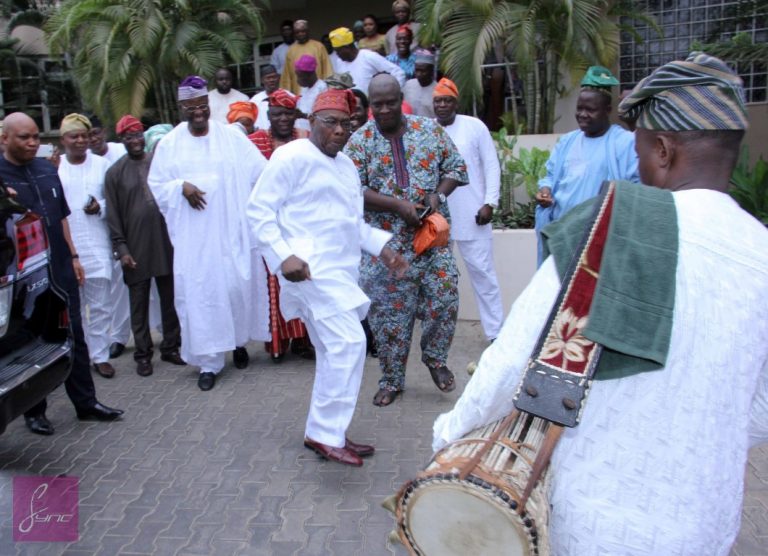
Olusegun Obasanjo, former President, says he will like to go to heaven so that he can join the hosts to sing.

Speaking on Staurday at the 2017 Camp Meeting Concert of the Apostolic Faith Church Choir and Orchestral in Ogun State, Obasanjo also said the only way God can fix Nigeria’s problems is for the citizens to invite him into their lives, collectively and individually.

He noted that lots of things are wrong with Nigeria even though many people claim to be religious.

“We have a lot of things wrong with this country, if all Nigerians are sincere,” he said.

“Nigeria can be fixed by God but we have to invite Him into our lives. What we have to do about this country is in our hands. God’s grace abounds when we do not abuse it.”

Obasanjo, who recently kicked against being addressed by the name ‘Mathew’, said everyone must “be fully prepared for the second coming of our Lord, there is no compromise”.

He commended the choir for their performance and added that he would also like to go to heaven to join the choirs of angels in singing and praising God.

“With what I have seen by the choir this afternoon, I will want to go to heaven and join the hosts to sing,” he enthused.

“If this is an example of what praising God in heaven will be like, then I want to be part of it. If what I have seen here is an indication of how heaven will be, I will like to go to heaven.

“Jesus Christ came to the world to show us the way to salvation and eternal life. We have a good heritage and we have everything to be proud of.”

Also speaking at the event, Adebayo Adediran, the District Superintendent of the Apostolic Faith church in West Africa, said that only tolerance, peaceful coexistence and harmonious living could lead to meaningful development in Nigeria irrespective of the various religious and political differences of the citizens.