Home Blog Page 2731

Buhari could return in two weeks, says Okorocha


Rochas Okorocha, Governor of Imo State and Chairman of the All Progressives Congress Governors’ Forum, says President Muhammadu Buhari could return to the country within two weeks.

Okorocha, who was in the APC delegation that met the President  in London on Sunday, told the BBC that Buhari was in high spirits and fully engaged in discussions about happenings back home.

Seventy-four-year-old Buhari left Nigeria 78 days ago to receive medical treatment in London for an undisclosed ailment. He has visited London on medical grounds three times since his assumption of office in May 29, 2015.

Speculations remain high on the President’s true state of health, but few weeks ago, Acting President Yemi Osinbajo visited him, telling Nigerians that Buhari was “recuperating fast” and was expected back home “soonest.”

‘Buhari can’t be this fresh’ and other reactions to APC’s UK visit


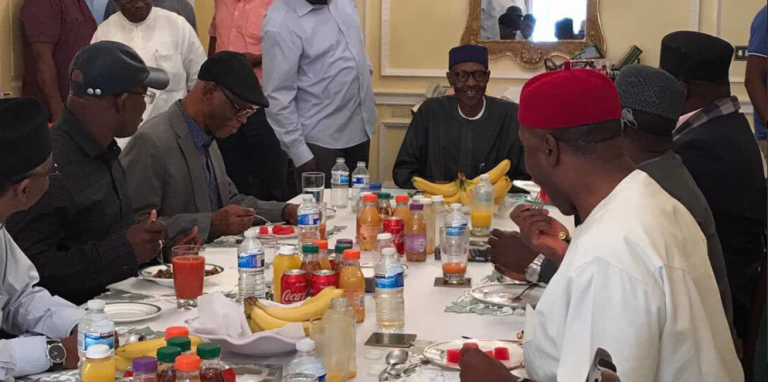
Nigerians are still reacting to the picture of President Muhammadu Buhari’s meeting with John Oyegun, Chairman of the All Progressives Congress (APC), and some governors in the UK on Sunday.

While a number of the reactions were of happiness and gratitude, others were of cynicism and outright disbelief.

Here are a few of them

We need short video not Photoshop

Meanwhile, Femi Adesina, Special Assistant to President Buhari on Media and Publicity,has said there will be “another visit” to the President “in the coming days”.

Governors in London
The APC delegation that visited President Buhari in London on Sunday

Adesina admitted that the information about the President’s meeting with the APC chieftains came via a “third party” — Rochas Okorocha, Governor of Imo State and Chairman of the APC Governors’ Forum — but he said it was better than no information at all.

“Imagine if there was no information at all,” he said.

“This is third party information quite all right (but) it is information that Nigerians are glad at, there has been lots of rejoicing in the country since yesterday. So it’s something we appreciate.

“I am sure that in a couple of days, there is still going to be another visit, which may be more than this, but this is the first one and it was made mainly of APC governors and the national chairman of the party.”

We’re drinking our oil and eating our children’s future


In 2007, the late President Umaru Musa Yar’Adua was desperate to solve a conundrum that was nearly as old as Nigeria’s independence. It was an especially recalcitrant problem. Ibrahim Babangida, former Military President, also attempted to solve it in the late 80s but he failed.

Upon return to democracy, Olusegun Obasanjo, then President, gave it a shot too, in the early 2000s; and although he made significant progress, there were constitutional loopholes that the hawks were always going to exploit. It seemed to defy logic that Nigeria had near-empty savings to show for decades of crude oil exportation, and it’s even more baffling that no president found a solution, however hard they tried.

THE IRONY: WE HAVE OIL YET THE PEOPLE TOIL IN LACK

Nigeria’s petroleum reserves are enormous, bettered only by those of nine countries, all outside Africa. We are the continent’s undisputed oil giant. The United States Energy Information Administration (EIA) rates our reserves at between 16 and 22 billion barrels (2.5×10⁹ and 3.5×10⁹ m3); other sources have quoted nearly double that figure.

In the past, we were blessed with a favourable mix of production output and market prices too. Sometime in 2016, we recorded an all-time-high crude oil production of 2.7million bpd. Sometime eight years earlier, oil prices managed to rise to one of its highest ever in recent history: $147/barrel. There certainly have been many low moments for both production and pricing, but we have lived all our national existence in the knowledge of our endowment with a natural resource that we, at the very worst, simply need to sell in return for revenue.

Nigeria is a country surviving on luck. We’re living off a resource we’re simply lucky to possess; we didn’t earn it. Then we’re grinning and greying in mediocrity: all we do is export and sell, and it’s hard to imagine a cheaper survival strategy. The simplest help we could render ourselves is to be able to refine crude oil for our own use, but we’ve failed woefully in achieving that. Slightly better than that is to at least secure the means to process some percentage of that resource, so that we can export products rather than just the raw material; we’ve so far managed to bungle that too.

Having failed to make solid secondary commercial use of oil, it’s a no-brainer, then, that we should have been making good use of oil revenue. That chance we have squandered as well. We are impoverished; the people are poor. We haven’t instituted the structures to deliver first-class education to youths; we haven’t built the roads smooth enough to encourage inter-state travel, trade and agriculture; in short, we haven’t used oil revenue to empower other sectors, particularly the ones that steadied the economy in the pre-oil era. And the worst of all: we have no savings; our crude oil savings are empty — just not starkly so. So we’ve failed in everything we could have done with oil: we can’t get the best deals out of the resource, we can’t use it to improve our lives, we can’t use it to secure our future.

Of these three failures, the last is the worst. We’re getting away with our failure to maximise crude oil simply because we manage to make some money nonetheless. Despite the economic recession, we’re still having a jolly good time, relatively, because oil is still there in our reserves even if the prices are low. But with our shortcoming with savings, we will never get away. Soon, when our oil reserves are drained, there will be nothing to fall back on, and life will be tough for those alive then.

WHAT IS THIS WE HAVE DONE?

In the 0.5% Stabilisation Fund that became operational in 1989 during the Babangida regime, there is a paltry balance of $29m. In the Excess Crude Account (ECA) instituted by Obasanjo in 2004 is a balance of $2.3bn. Finally, in the Yar-Adua-initiated Sovereign Wealth Fund (SWF) is another paltry $1.5bn. That is a total $3.9bn, saved from approximately $1.09 trillion earned from 35 years of crude-oil exportation between 1980 and 2015. The mathematics of it all is that we’ve only ever saved 0.4% of all we earned from oil in 35 years. Tragic!

The absurdity of these figures was put into perspective last week by the Nigeria Extractive Industries Transparency Initiative (NEITI) at the launch of an occasional paper titled, ‘The case for a Robust Oil Savings Fund for Nigeria’. Thanks to the good work of Waziri Adio’s NEITI, we now know that the $1.5bn currently in the SWF is one of the world’s worst ratios to annual budget (10%), and one of the lowest SWF per capital ($8) globally.

To simplify the latter, were all of the country’s crude oil savings (since the commencement of exportation in the 60s) be evenly distributed to Nigerians, each citizen would get $8. That, even if you went to the black market, would fetch you only N2,904. It couldn’t even take you to the airport much less Hajj — in case you’re a pilgrim already dreaming of the N200/$ pilgrimage exchange rate being proposed by the legislature; it’d only fetch you N1,800. Nigeria’s SWF record is only slightly better than Iraq’s and Venezuela’s — but the former is war-torn while the latter is crisis-hit.

Data from other resource-rich countries help us to analyse our abysmal savings record. Norway, a country of 5.2 million people, has a SWF worth $922bn, Chile $24.1bn, Angola $4.6bn and Botswana $5.7bn. Russia’s is $89.9bn and Kuwait’s $592bn. The best summation of our profligacy was captured in 2015 by the National Economic Council: between 2005 and 2015, the federal government saved $201.2bn in ECA but withdrew $204.7bn; we withdrew $3.5bn more than we had saved! Clearly, we were not saving for a rainy day; we were merely saving for a ‘cloudy day’. We were saving to spend.

GLUTTONOUS RULING CLASS

Nigeria’s ruling class, including the presidents who initiated savings funds, has always abhorred the concept of saving. Between 1989 and 1994, $13bn accrued to the 0.5% Stabilisation Fund, according to IMF. A 2013 audit report by NEITI revealed that N109.7bn was transferred to the account between 2007 and 2011, but N152.4bn was withdrawn in the same period. By May 2017, only N29.02bn was left in it. The crass mismanagement of the political class is as old as the idea of saving. As confirmed by a 2016 report by Premium Times, three former Presidents frittered away N247bn oil savings.

Withdrawals from ECA peaked in 2011 during the presidency of Godluck Jonathan, but how does one explain that this was the same year when the country made its biggest excess crude earnings (in terms of oil price relative to budget benchmark)? For the following five years, only $500m was deposited into the account — just half of the seed with which it was opened. This wasteful saving is one of at least two reasons state governors sued the federal government to challenge the constitutionality of ECA; the other is the share-it-all mentality of governors, many of whom cannot fund their states without federal handouts.

WE’RE RUNNING OUT OF OIL AND BUYERS — AND TIME!

Our delusion with our oil wealth is monumental; we often forget that oil is a finite resource, and that our buyers are either discovering oil themselves or finding alternatives to the resource. Until 2010, Nigeria provided roughly 10% of overall US oil imports, and was its fifth-largest source of oil imports. But the impact of shale production in the US ended Nigeria’s oil exports to the country, in 2014.

Our oil reserves have the shortest lifespan of any OPEC nation. In 2008, the Petroleum Products Pricing Regulatory Agency (PPRA) said Nigeria’s oil reserves would be depleted in 43 years. That’s 2051, just 34 years away. If majority of states can’t pay workers’ salaries in a period of low oil prices, then unimaginable doom awaits us in a little over three decades when we run out of oil.

Governors have no reason to oppose saving, even if past savings were mismanaged. Adams Oshiomhole, former Edo State Governor, has been the most vociferous critic of suspicious withdrawals from ECA under the Jonathan government. But mismanagement of savings is no reason to antagonise ECA or transfer of funds from ECA to the SWF. Most governors steal public funds anyway, and long-suffering Nigerians aren’t pushing for political offices to be scrapped.

Section 162(1) of the 1999 Constitution (as amended, which states that “the Federation shall maintain a special account to be called ‘the Federation Account’ into which shall be paid all revenues collected by government of the federation” is due for amendment. Governors should be pointing this out to the legislators; they should be working to legalise a culture of saving, not antagonising it.

Ideally, this is the kind of constitutional work that should preoccupy our legislators. But we know better. If they’re not busy inventing bills to shield looters of public funds, the’re pressing for pilgrims to access FX at N200/$1 while genuine businessmen are forex-strapped, or trying the masses’ patience by attempting to install Bukola Saraki as Acting President when Yemi Osinbajo is out of the country. Without the political and legislative will to save, we’re setting up doom for the unborn generation. We’re drinking our oil and eating our children’s future. Unfortunately, we will not be alive to partake of the suffering we would have foisted on them.

Adesina: Let’s take Buhari the way he is… we elected him willingly


Femi Adesina, Special Assistant to President Muhammadu Buhari on Media and Publicity, has urged Nigerians to “accept the President the way it is” having elected him willingly.

Adesina also said Sunday’s visit of the All Progressives Congress (APC) and some governors to the President in London has proven that he was not on life support machine as being rumored.

Asked on Monday on Channels Television’s Sunrise Daily why a video of the visit was not made to convince Nigerians that the President was fast recuperating, Adesina urged Nigerians to accept Buhari the way he is.

“It is a matter of personal style; there is no style that you can call his style, style is idiosyncrasy, it changes from person to person,” he said.

“The style of our President is what you are seeing on display and by now, few years he came, we should understand him, the kind of person he is and we should know how he differs to do things. So that is the way the President is.

“That just tells you that is the way our President is and we are the ones who elected him willingly and we have seen that this is the way he is. So let’s take him the way he is. It is already in our statement.”

While describing the visit as a goodwill move, Adesina disclosed that there would be another one very soon which, according to him, will be more broad-based.

He said: “I would say it is a goodwill visit and I’m sure in a couple of days there is going to be another one which may more broad based, but this is the first one of such visits and it was made up mainly of APC governors and the National Chairman of the party.”

Pressed further on when the President would return, he said: “We are not doctors and even if we are doctors we are not on this particular medical team, so it is those who are on this medical team that would know and once they give clean bill of health, [he will return].”

Oyegun, Amaechi, APC governors dine with Buhari in London


John Oyegun, Chairman of the All Progressives Congress (APC), on Sunday led select officials of the party and some APC governors to a meeting with President Muhammadu Buhari in London.

The meeting was confirmed by the official twitter handle of the presidency, and by Femi Adesina, Special Adviser to the President on Media and Publicity.

Present at the meeting were Rotimi Amaechi, Minister of Transportation; Rochas Okorocha, Governor of Imo State; and Governors Umaru Tanko Al-Makura (Nasarawa), Nasir El-Rufai (Kaduna) and Yahaya Bello (Kogi).

Releasing statement on the meeting, Adesina said: “In a telephone conversation following the meeting of All Progressives Congress (APC) governors and leaders with President Muhammadu Buhari in London Sunday, Governor Rochas Okorocha of Imo State, said the President was very cheerful and has not lost any bit of his sense of humour.

“The governor said the party delegation spent more than an hour with President Buhari over lunch, and it was very clear from the discussions that he followed developments at home very closely.

“He said the President was delighted to receive the delegation and asked each governor about affairs in his state. He also asked the Minister of Transportation, Rotimi Amaechi, about the state of the railways.

“When asked to react to all the negative things being said about him, the President just laughed, describing such negative reports as lies. Governor Okorocha said President Buhari was completely unperturbed by the cocktail of lies. He, instead, sent his best wishes to Nigerians.

“According to the governor, Nigerians don’t have to worry at all, adding that President Buhari will be back as soon as the doctors give him the green light.

“By our visit to London today, the merchants of lies have been put out of business and Nigerians will not buy the garbage they have been selling. All those who look up to fake news can find better use for their time.”

Buhari has been in the UK on medical vacation since May 7.

A cat with nine lives? Four times the army has killed Shekau — yet he is alive

Abubakar Shekau, the leader of the Boko Haram terrorist group, has been made to look invincible — like a cat that has nine lives.

On several occasions, he has been declared wanted by the Nigerian Military; once, a supposed picture of his body was circulated on the Internet.

But on each occasion when he was supposedly killed or injured, Shekau resurfaced either in a video or audio message, mocking the Nigerian government and threatening fiercer attacks.

For the umpteenth time, Shekau’s capture has been ordered. At the weekend, Tukur Buratai, Chief of Army Staff, gave a 40-day ultimatum to his men in Maiduguri to provide Shekau dead or alive.

How many times has Shekau been killed already?

AUGUST 2013

On August 19, 2013, the Joint Task Force, said that Shekau “may have been killed” in an attack on the Boko Haram Terrorist in June of the same year.

A press statement signed by Sagir Musa, a Lieutenant-Colonel and Spokesman of the Joint Task Force (JTF), said that Intelligence report “revealed that Abubakar Shekau, the most dreaded and wanted Boko Haram terrorist leader, may have died”.

shekau-dead
Picture shared on the Internet purporting that Shekau has been killed

“He died of gunshot wound received in an encounter with the JTF troops in one of their camps at Sambisa Forest on 30 June 2013. Shekau was mortally wounded in the encounter and was sneaked into Amitchide – a border community in Cameroun for treatment which he never recovered from,” the task force’s statement claimed.

Musa said further that “It is greatly believed that Shekau might have died between 25 July to 3 August, 2013”.

SEPTEMBER 2014

Chris Olukolade, Brigadier General
Chris Olukolade

Chris Olukolade, former Director of Defence Information, issued a statement on September 25, 2014 reiterating that Shekau had been killed.

Olukolade explained that the man who was at the time pretending to be Shekau was one Mohammed Bashir, who had been posing in videos as Abubakar Shekau.

“Since the name Shekau has become a brand name for the terrorists’ leader, the Nigerian military remains resolute to serve justice to anyone who assumes that designation or title as well as all terrorists that seek to violate the freedom and territory of Nigeria,” Olukolade said.

AUGUST 2016, ‘FATAL’ INJURY

Sani Usman
Sani Usman

Also on August 18, 2016, Sani Usman, the Nigerian Army Spokesman, said that several Boko Haram leaders, including the presumed leader of the group, Abubakar Shekau, were killed in a raid on Sambisa Forest by the Nigerian Air Force.

“The air interdiction took place last week Friday 19th August 2016, while the terrorists were performing Friday rituals at Taye village, Gombale general area within Sambisa forest, Borno State,” the statement read.

“Those Boko Haram terrorists commanders confirmed dead include Abubakar Mubi, Malam Nuhu and Malam Hamman, amongst others, while their leader, so called “Abubakar Shekau”, is believed to be fatally wounded on his shoulders. Several other terrorists were also wounded.”

SEPTEMBER 2016

Leo Irabor
Leo Irabor

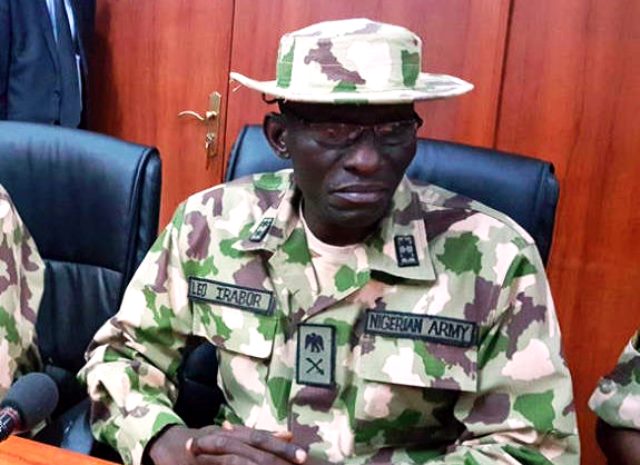
A month later, Leo Irabor, the then Theatre Commander of Operation Lafiya Dole, reiterated that Shekau had long been killed.

He maintained that the term Shekau does not refer to one particular individual but rather is a title for the leader of the Boko Haram.

Irabo noted that both the original and subsequent Shekaus had been killed by the Army.

“I can confirm to you that the original Shekau was killed, the second Shekau was killed, and the man presenting himself as Shekau, I can also confirm to you that few days ago, he was wounded,

“We are yet to confirm whether he is dead or not,” he said, adding that the Army does not make statements that are not based on facts.

“They released videos to prove that they are still active, but that’s just a façade,” he said.

But in a video released few weeks later, Shekau, flanked by two gun-wielding Boko Haram fighters on either side, and speaking in Arabic, Hausa, Kanuri and English, made fun of the Nigerian government and swore to keep fighting.

As of the time Shekau was first declared wanted in 2012, Boko Haram had killed more than 2,500 persons in several attacks. That figure has since increased between by more than 100% to around 25,000 people.

The Nigerian military placed a N50 million bounty on him, while the government of the United States of America promised to give $7 million on anyone with information that could lead to his arrest.

But having killed him four times yet remain in the hunt for his life, maybe Lai Mohammed’s view of the militant leader may be correct after all. “You know my understanding of Shekau?” Mohammed once said. “Shekau may not be a real name. If you kill one Shekau today, there are hundreds that come to that place.”

And they killed the Nigerian airways along with others

1


By Eric Teniola

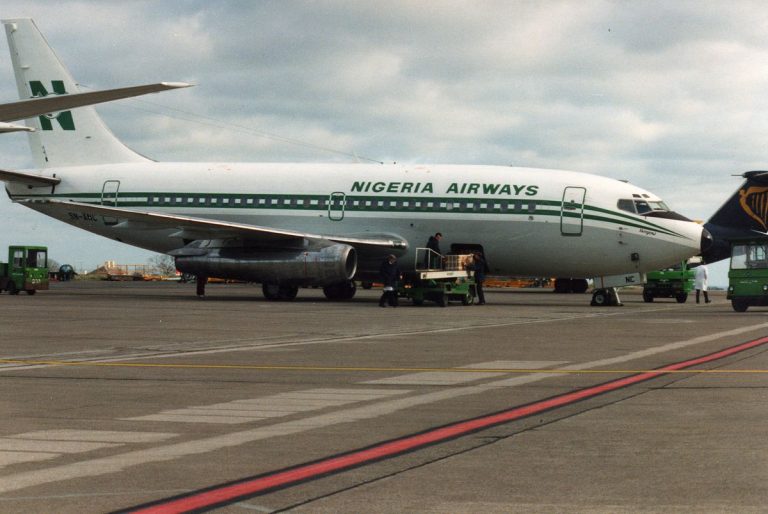
On May 1, 1959, the Nigerian Airways Limited was inaugurated during the tenure of Chief Samuel Ladoke Akintola (1910-1966) as Minister of Aviation, giving Nigeria its fledging national airline.

Chief Raymond Amanze. A. Njoku (1915-1977) succeeded Chief Ladoke Akintola as the first supervisory Minister to midwife the new airline. The first board appointed by the government provided policy guideline for the new Nigeria Airways was headed by Chief T.T. Solaru, while the first General Manager of the airline was an expatriate, Captain L.V. Messenger.

Although the basic objective of the new airline was to carry on the business of air transportation, it was established to serve as national flag carrier and promote the image of Nigeria, and provide a backup service for security and defence during the periods of national emergency.

At the time the airline was firmed, there were 28 airports being maintained by the Ministry of Transport and Aviation. Two of the airports, Lagos and Kano, were designated as international airports while 12 others, including Port Harcourt, Calabar, Tiko(Southern Cameroon), Ibadan, Benin,Enugu, Makurdi, Jos, Yola,Maiduguri,Kaduna, Zaria,Gusau and Sokoto, were opened up for domestic scheduled flight services.

By April of 1977, Nigeria Airways was operating a total of 202 flights every week between Lagos, Accra, Abidjan, Robertsfield, Freetown, Banjul and Dakar in West Africa; Lagos, Kano,Rome and London on the Europe route and Lagos,Abidjan,Robertsfield and New York on the American route, inclusive of all domestic airports.

In October 1977, for instance, the airline inaugurated a commercial flight to Kenya, connecting Libreville(Gabon) and Kinshasa(Congo). The following year, May 5 and August 10, 1978, precisely, it inaugurated flight services from Lagos to New York via Accra and Robertsfield and from Lagos through Kano to Karachi via Jeddah in Saudi Arabia respectively. At the end of 1978, the airline had made 27,518 flight departures, carrying on its entire network, a total 1,444,436 passengers, representing a passenger load factor of over 73 percent, the highest traffic for the airline since 1959. The airline’s fleet at this period was made of eight F.27, seven F.28, two B.727, three B.737, two B.707 and two DC10.

In 1982, the airline carried a total of 2,138,378 passengers on its entire network with the domestic services taking the lion share of 1,713,455 passengers. It had a reasonably good share of the international market by taking 264,132 passengers. The traffic figures improved considerably in the following year with 1,704,803 passengers on domestic route and 299,325 on intercontinental. Traffic in the Africa region was 218,994 as against 160,791 of the previous year. The airline took delivery of six additional B.737 aircraft to augment its fleet during this period.

In 1984 domestic traffic rose from 1,568,152 to 2,089,510 (about 80% increase). Africa service also provided an increase of 46,475 passengers over the previous year’s figures. Intercontinental service in 1985 was 236,277 passengers as against 196,692 of the previous year. The Airbus were deployed to share international services with the DC 10. The aircraft also had some share of services on the West Africa routes.

During its operation, outstanding pilots, including the likes of Bob Hayes, Rufus Orimoloye, Samuel Obioma, Paul Thahal, Bara Alwell-Brown, Akintaju, late Olubunmi Oke, Nnachi, Osakwe, Dele Ore, Joe Ibrahim, Ado Dahiru,Tunde Amusa,Olu Olumogba,Fola Akinkuotu,Bayo Sanyaolu,Tanko Afegbua,Kazeem Braimoh,Akin Odewunmi,Ade Ajibola,Bob Adegbulugbe, Don Chukwura and others worked for the airline.

Outstanding Chief executives including Alhaji M.T. Bature, General Olu Bajowa, Air Vice Marshal Anthony Okpere,Group Captain Bernard Banfa, Alhaji Jamiu Ibrahim, Captain Wilson Atabo,Mr. J. Smit, Captain Usman Muazu,Captain Paul Thahal,Mr Andrew Agom,Group Captain Peter Gana, Captain Joe Ibrahim and Mr. Yomi Jones all presided over the affairs of the airline at one point or the other.

All these revelations are contained in a 217-page book titled WT 040 NIGERIA AIRWAYS’ flight of Problems by Femi Ogunleye who was the spokesman for the airline for 25 years.

Ogunleye, who is now Kabiyesi Femi Ogunleye, the traditional ruler as Towulade of  Akinale in Abeokuta Local Government, joined the airline in 1976 after working as Daily Times correspondent at Ikeja Airport with the likes of Kola Adesina, Francis Emelefoun/Mike Edemereyo, Andrew Diojemaou/James Bello/Richard Amayo, Sehinde Dagunduro, Demola Osinubi, Tayo Falade, Lanre Adebo, Biodun Soremekun, Babson Adeyemi, Toye Akiyode, Kunle Egbeyemi,Tunde Lisboa, Jimi Aderinokun, Dapo Aderinola and Alhaji Adio Saka. Tragically, the airline stopped operation in 2003.

According to News Agency report “Plagued by mis-management,corruption and overstaffing, at the time of closure the airline had debts of more than US$60,000,000(equivalent to $78,115,051 in 2016), a poor safety record, and its operative fleet comprised a single aircraft flying domestic routes as well as two leased aircraft operating the international network. It was succeeded by virgin Nigeria.”

Kabiyesi Ogunleye, a golf addict, lamented the death of the Nigerian Airways on page 193 of his book with an eulogy, I love my country I no go lie, Na inside am I go live and die, When e push me so, I push am so, E push me, I push am, I no go die(originally sung by a group of pro-democracy in Nigeria)”. No doubt the book is a good read.

For most of us who flew within and outside Nigeria till 2000, Nigeria Airways was our first choice. The hospitality of the airline was second to none.

The story of the Nigerian airways is a sad one. Yet those who killed the airline are smiling to the banks today while the workers of the airline are roaming the streets in perpetual penury. Till today they have not been paid their entitlements including pensions. Thousands of them are affected and some I hear cannot afford to buy drugs for their health.

Kenya Airways was inaugurated in 1977. It is still operating. Likewise the Ethiopian airline founded in December 21 1945 is still operating. The South African airways founded in 1934 is still in operation.

After the Nigerian Airways ceased to operate in 2003, President Olusegun Obasanjo (80) set up a committee to probe those who killed the Nigeria airways and ensure that the culprits were brought to book.

The committee was headed by the then Minister of Defence, General Theophilus Yakubu Danjuma (79) while the office of the Secretary to the government of the federation served as the secretariat of the committee.

After the resignation of General Danjuma as Minister of Defence, his successor, Alhaji Muhammed Rabiu Musa Kwankwaso (60) took over the leadership of the committee. The committee submitted its report to President Obasanjo who directed full implementation of the committee’s report. The names of the culprits and their companies were then handed over to the Nigeria police, then headed by Alhaji Mustapha Adebayo Balogun(69) because at that time the EFCC which was inaugurated that year did not fully take off until 2004. That was the last we heard about that issue. Today the culprits are as free as the air.

The fate of the Nigeria Airways is not different from the fate of the Nigeria shipping line established by the Federal Government in 1959. In 1988 for example the company had twenty four ships but by September 1995 the company was liquidated and all its ships were either sold or seized.

Very sad indeed.

Teniola, a former Director at the presidency, lives in Lagos

Okey Ndibe: Buhari can arrest all the corrupt people but it won’t stop corruption


Okey Ndibe, a US-based Nigerian professor, novelist and columnist, wants President Muhammadu Buhari to create strong institutions and systems that can effectively fight corruption rather than personally tackle the challenge.

Ndibe, who is in Nigeria on a tour to promote his two books — ‘Never Look an American in the Eye (a memoir)’ and ‘Foreign Gods Inc.’ (fiction) – said this during an interview with Guardian Newspaper where he worked briefly as a journalist before leaving for the US.

Citing an instance with the US, where he has lived and taught for the past 28 years, Ndibe said corruption cannot be fought individually if there are no strong systems in place.

“We have to have systems, rather than depend on the whims of individuals. No individual can singularly fight corruption, but systems do,” he said.

“We have to have a system where people know that there are consequences for their actions, irrespective of who they are.

“In Nigeria, state governors have millions in their homes, whereas in America, Trump does not have right to one dollar of America’s money, except his salary.

“Buhari can arrest all the corrupt people, but is it not the same people that will go and prosecute? Buhari should create a system that will take care of pathologies.”

Ndibe also criticised the country’s “mediocre” education system, saying Nigeria only produced the likes of Chinua Achebe and Wole Soyinka because they were products of “an education system that was sound”.

“The fact that we have many novels coming out of Nigeria is almost a miracle because we have systematically wrecked our institutions,” he said.

“Achebe, Soyinka and the rest of them went through an educational system that was sound; libraries were stocked with books. There were sound professors; there was investment in the educational sector and the environment for learning was well established.

“Today despite the odds, students passing through the system are able to produce short stories; it is actually something we ought to be amazed at because this is a society that is now conditioned to producing mediocrity, because our institutions have become mediocre.”

However, he expressed satisfaction at “the quality of writing coming out of Africa by young men and women and the way they have taken to educating themselves” in spite of all the odds.

“I believe in the human capacity for surpassing achievement, so I believe it is still possible for us to produce another Nobel Laureate in Literature, but not in the sciences.”

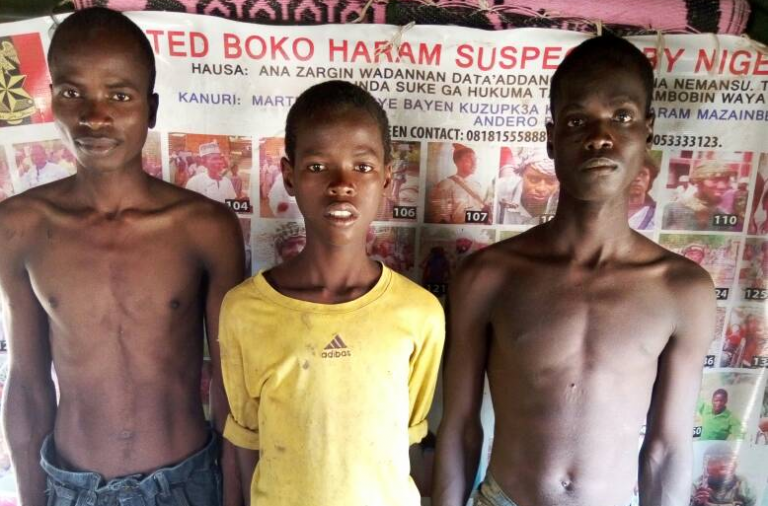
‘We’ve realised our folly’… nine Boko Haram members beg army after surrender

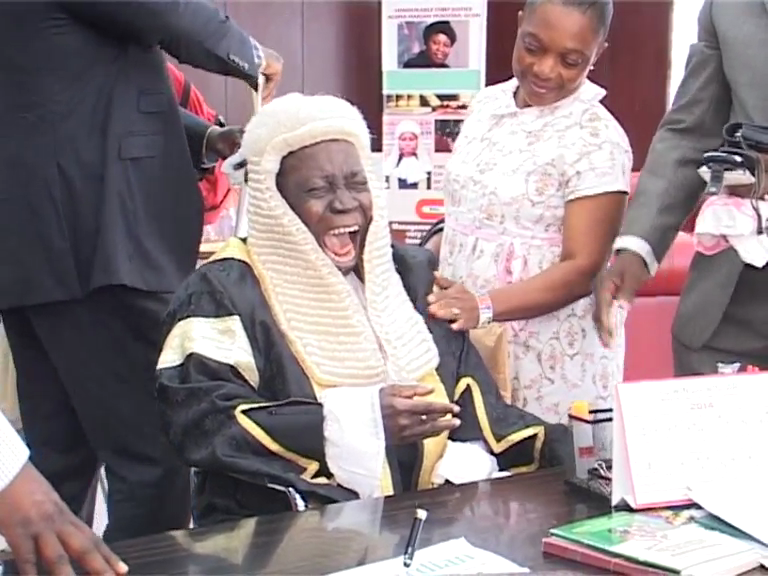
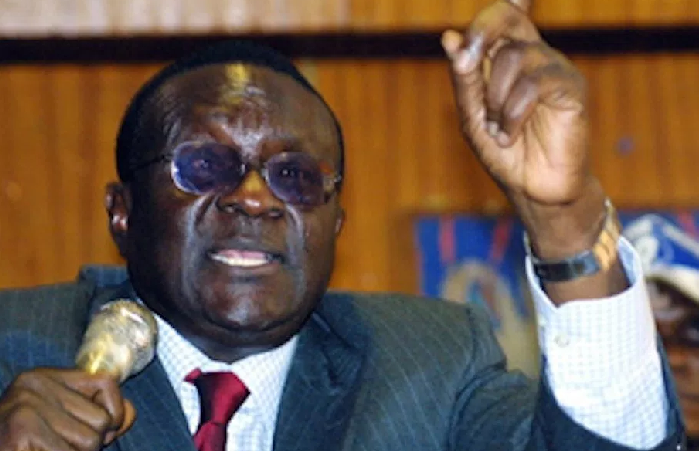
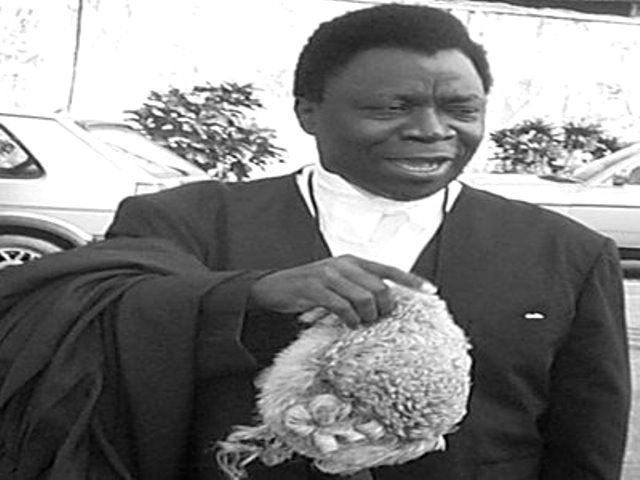
OBITUARY: Onagoruwa, Abacha’s ‘victim’, Fawehinmi’s friend-turned-foe who became SAN at 77


Olu Onagoruwa, former Attorney-General of the Federation, whose death was announced on Friday, meant different things to different people, but there is a consensus that he was a man who never shied away from taking up daunting challenges. Only that when nature comes calling, even the bravest of men cannot but answer.

LONDON TRAINED


Onagoruwa hails from Odogbolu in Ogun State and obtained his LL.B; LL.M and PhD degrees in law at the University of London. Upon his return to the country, he attended the Nigerian Law School and was called to the Nigerian Bar in 1971. He is also a member of the Inner Temple of the English bar, and the International Bar Associations.

He combined legal practice with regular commentary on socio-legal affairs. His core practice areas include constitutional law, legislative matters, banking and insolvency, oil and gas, telecommunication law and litigation. He wrote several books and has to his credit over 250 published articles.

FALLOUT WITH GANI FAWEHINMI

Gani Fawehinmi

Onagoruwa and Gani Fawehinmi, another deceased legal luminary, used to be very good friends. Both were very outspoken lawyers and were popular for taking up cases that many would not dare approach.

Their friendship and outspoken nature even made them enemies within the hierarchy of the legal practitioners in the country.

“Notwithstanding their enormous contributions to legal development, the Legal Practitioners Privileges Committee (LPPC) resolved never to confer the title of SAN on Chief Fawehinmi and Dr. Onagoruwa.  Hence, their applications for the rank were consistently rejected on the spurious ground that they were not “fit and proper persons” to be admitted to the inner bar,” wrote Femi Falana in 2014.

But that friendship turned sour after Onagoruwa accepted the appointment of Attorney-General of the Federation and Minister of Justice from Sani Abacha, the then Military head of State.

Gani was unhappy that Onagoruwa accepted to serve in the “very corrupt and repressive government of Abacha”, and that was the beginning of a breakdown in their relationship.

DARING ACTIVIST

Here are two stories told by Ebenezer Babatope, a journalist and politician, to mark Onagoruwa’s 80th birthday earlier this year:

“Minere Amakiri had published a story in the Observer adjudged by the then Rivers State Governor, Commander Alfred Diete-Spiff, to have been rude to him… The military governor immediately ordered the arrest of Minere Amakiri. The governor ordered that the head of the journalist be shaved clean and detained.

“The Newspaper Proprietors’ Association … immediately sent Dr. Olu Onagoruwa to follow the case and advise appropriately what should be done. Onagoruwa did follow the case and called for a large-scale condemnation of the retaliatory actions of Governor Diette Spiff on the Amakiri matter.

“He eventually ended up writing a book titled “PRESS FREEDOM IN CHAINS (which) contained details of the events of the Minere/Amakiri affair.”

The second story is ‘the Turner Ogboru case’.

“Turner Ogboru had been arrested, tried and imprisoned by the General Ibrahim Babangida regime after the abortive coup attempt of April 22, 1990.

“(But) a High Court Judge granted the application for freedom of Turner, which was filed by his lawyer, Femi Falana.

“Olu Onagoruwa, the (then) Attorney-General sent letters out to the late Alex Ibru, the then Minister for Internal Affairs, and Alhaji Ibrahim Coomasie, the Inspector General of Police, directing the immediate release of Turner Ogboru as directed by the Court. Alex Ibru complied immediately with the Attorney-General’s instructions by ordering the release of Turner Ogboru from prison custody.

“The late Head of State, General Sani Abacha was said to have been so enraged to learn of the subsequent release of Turner Ogboru that he was said to have told Olu Onagoruwa and the late Alex Ibru that what they had done by releasing Ogboru was worse than treasonable felony.

“Turner Ogboru was immediately rearrested after the PRC meeting and returned to prison.”

Onagoruwa was subsequently dismissed by Abacha and reports had it that his son, also a lawyer, was later murdered by the Abacha’s “hit men”.

Onagaruwa never recovered from that loss.

APPOINTED SAN AT 77


Olu Onagoruwa2

Onagoruwa made history by becoming the only non-SAN to be appointed Attorney-General of the Federation.

Here’s how Falana put it: “Pursuant to the guidelines which had been drawn up by the Legal Practitioners Privileges Committee since 1985, Dr. Onagoruwa ought to have been conferred with the rank by virtue of his new appointment.

“But the Committee of senior judges and lawyers headed by the then Chief Justice of the country, the late Justice Mohammed Bello, decided to breach the law and refused to confer the rank on the Justice Minister.

“In a bid to justify its unjust decision the Committee instigated the Lagos State Ministry of Justice to approach the Supreme Court to set aside the verdict of the Court of Appeal which had dismissed the charge of stealing brought against Dr. Onagoruwa.

“In a short ruling the court indicted the applicant and dismissed the matter with substantial costs. Notwithstanding that the application was dismissed, Dr. Onagoruwa was denied the rank.

“In a move which smacks of institutionalized injustice lawyers who had been short-listed for the award in 1994 had their hope dashed as the entire exercise was cancelled. Thus, they were collectively punished along with Dr. Onagoruwa!

“Like Chief Fawehinmi who was conferred with the rank of SAN towards the end of his life, Dr. Onagoruwa is being admitted, rather belatedly, when he can no longer take advantage of the title.

“All the same, the members of the LPPC led by the outgoing Chief Justice of Nigeria, the Honourable Justice Maryam Aloma Muktar deserve commendation for ensuring that justice was done, at long last, with respect to the treatment meted out to Dr. Onagoruwa who is now over 77 years old.”

STRUCK BY STROKE

“The murder of his son by unknown policemen till this day did have an effect on his health. Eventually, Dr. Olu Onagoruwa suffered a devastating stroke attack some few months after the murder. He has not fully recovered from the stroke attack,” Babatope wrote.

Onagoruwa, however, managed to appear before the famous Oputa Panel, where he narrated a graphic story of how Abacha’s men killed his son.

Testifying for over 45 minutes before the commission, Onagoruwa, partially paralysed, said the assassins that murdered his son included Baranabas Mshelia aka Rogers, a Sergeant, and Frank Omenka, a Lieutenant Colonel, both of the Directorate of Military Intelligence (DMI).

To make matters worse for Onagoruwa, his loyal wife of many years also died. Despite all the problems, Onagoruwa lived up to a ripe age of 80.

Now, having lived a long live, though not devoid of pain and sorrow, the octogenarian has finally found lasting peace.