Home Blog Page 2741

World Population Day: Is Nigeria’s population a blessing or a curse?

2


Today, July 11, 2017, is being observed by the international community as the World Population Day. In 1989, the Governing Council of the United Nations Development Programme (UNDP) recommended that the date should be observed as the World Population Day to focus attention on the urgency and importance of population issues such as, family planning, gender equality, poverty, maternal health, sexually transmitted infections (STIs) and human rights.

The theme for this year’s celebration is ‘Family Planning: Empowering People, Developing Nations’.

Family planning is a medical and social activity, which allows people to attain their desired number of children and determine the spacing of pregnancies. It is said to be achieved through the use of contraceptive methods and treatment of infertility.

Access to safe, voluntary family planning is a human right. It is also central to gender equality and women’s empowerment, and is a key factor in reducing poverty.

Family planning has been described as one of the best approaches to global development. It is said that when women and girls have access to family planning, they will be able to complete their education, create or seek better economic opportunities and the nation at large will benefit from it.

In an interview she granted to Channels TV on the daily morning programme, Sunrise Daily, Nike Adedeji, National Programme Specialist, UNFPA, explained how family planning could help bring about economic growth and national building.

“In 2012, it was observed that about 225 million women globally, have a desire to access family planning services  but for one reason or the other, they were not able to achieve this,” Adedeji said.

What progress has Nigeria made so far?

The Nigerian government has made contraceptive free through a policy that was formulated in 2011 which made contraceptive free in public health facilities across the 36 states of the country. With donations from international bodies,(United Kingdom, Canada, UNFPA, etc.) raised $12 million annually with a counterpart funding of $3 million from the Nigerian government  to purchase contraceptive. Before 2012, Nigeria was only procuring about $2 million worth of contraceptive.

Due to improvement by the government in funding the purchase of contraceptive, a survey, which was conducted by UNFPA last year, indicated that the contraceptive prevalence rate has risen from 9.8% as at NDHS 2013 to about 17% (modern contraceptive prevalence) which shows a significant progress. In addition, the new users of family planning have increased from about 500,000 in 2012 to about 5 million as at 2016 bringing the current users to about 10 million in all states of the country.

Family planning and economic development

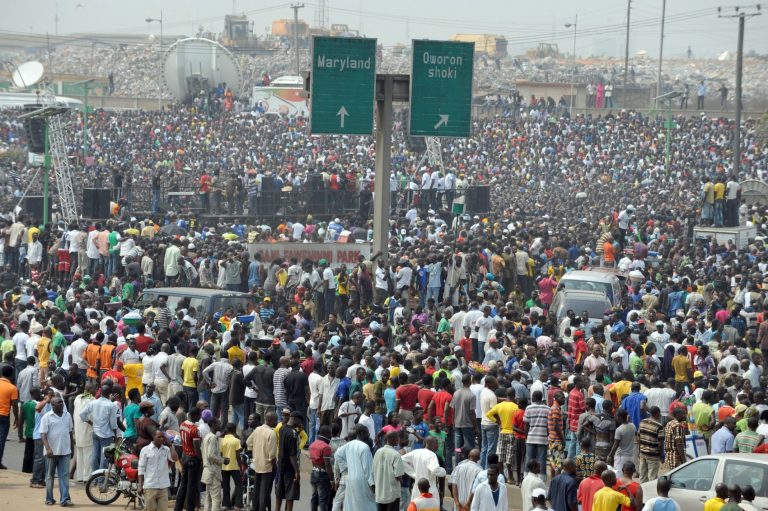
The NDHS 2013 indicated that the total fertility rate in Nigeria is 5.5 per woman (total fertility rate is the average number of children a woman can have in her lifetime). This figure varies across geo-political zones. It means that in the northern part of the country, women could have about 7-10 children in their lifetime. The implication is this, Nigeria with a population figure of about 192 million based on the estimates of the National Population Commission (NPC). If we continue to grow at the present rate, which is about 3.2 annual growth rate, by 2050, Nigeria will have a population of about 400 million. Now currently, the United States is about a population of 326 million (based on the latest United Nations estimates) and the United States has a land mass, which is about ten times the size of Nigeria. Therefore, if we keep increasing unabated to 2050 and our land resources are not going to grow because it is static, we will have four times our population on the same land mass. So the reality is, there is need to help the country manage it population so that there can be significant economic growth.

There are data that can help us manage our population, even data from other countries too. For instance, the Asian Tigers were able to manage their population. Our population to us is the best resources we have as a country, most importantly the young people. Right now, Nigeria’s population pyramid shows we have a large population of young people who are between age 15-25 constitute about 30% of the population and all young people (age 15-45) constitute about 44% of the population of Nigeria.

These young people needs to understand that they cannot continue to have average birth rate of 5.5 because the implication of that is that the population will continue to grow. Using a shift, The Demographic Shift, which was encountered by the Asian Tigers, Nigeria as a country can take advantage of the young population we have now and make it productive by giving them good health, good education, livelihood skills and ensure that the population who are below (who are dependent) are not growing at the rate we have now. There is a misconception among youth, a youth might say we don’t have family and by so, we don’t have family to plan. Young people should learn how to plan their family even before they have the family.

Considering the society we find ourselves, some cultures and religions don’t see the use of family planning which is a dilemma we face as a country now,in ensuring large prevalence of contraceptive use in the country. There is the need to get the support of the traditional and religious leaders to give the right information to the people because people have been given all sorts of wrong information about family planning.

For people who have fear of side effects of using family planning, from NDHS 2013, about 37% of people who initiated family planning discontinue, and this is linked to the quality of counselling of service they receive at the first time. One of the solutions is build capacity of health workers on how to give quality counselling to women and men who want to use a family planning method.

There are number of choices that can be made using any family planning method.  Different methods range from pills, injectable, intrauterine device (IUD) which can be inserted, implant which can be put on the arm. If there is a method that is not working, one can switch to another. However, the most important thing to do is for women to know the method that is best suitable for them to use.

Patience Jonathan: In three months, EFCC tried to assassinate me twice

0


Patience Jonathan, wife of Goodluck Jonathan, former President, has accused the Economic and Financial Crimes Commission (EFCC) of attempting to assassinate her twice between February and April 2017.

Patience, who made accusation in a petition to the House of Representatives against security agencies, alleged that the EFCC “repeatedly” bugged the telephone lines of Patience and her relatives.

“There have been assassination attempts, at least twice, between February and April, 2017, against our client ostensibly by the operatives of the EFCC along the Yenagoa-Mbaima road, Bayelsa state, in furtherance of its unlawful actions against the former first family,” read the petition prepared by Granville Abibo, her lawyer.

“The EFCC and its agents have repeatedly bugged the personal telephones of our client and her relations through its many operatives and has inundated her with numerous threatening calls and text messages.”

She accused the commission of seizing her bank accounts, and those of her relatives and NGOs, also claiming that officials of the Federal Inland Revenue Service (FIRS) vandalised property in her hotel in Bayelsa State.

“On May 3, 2017, officials of the FIRS, in a convoy of about 20 trucks and over 70 personnel, raided our client’s NGO – Aridolf Jo Resort Wellness and Spa Limited – situated at Kpansia expressway, Bayelsa state, and orchestrated a massive destruction of personal properties belonging to our client without any lawful court order or search warrant and caused mayhem there under the guise of trying to collect unpaid taxes without following any due process provided by law to do so,” the petition further read.

Patience implored the lower chamber to save her from the EFCC assassination attempts.

The ex-First Lady has recently been under investigation by the anti-corruption agency over possession of monies believed to have been proceeds of corruption.

In April, the federal high court in Lagos granted a fresh ex parte application ordering the forfeiture of $5.9 million belonging to her.

The following month, the same court refused her request for the unfreezing her accounts containing $15.5 million.

VIDEO: Like Lagos, like Tibet… Flood washes away five-storeyed building in Chinese region


Lagos State was in the news at the weekend after the highbrow Lekki, Victoria island and Ajao areas were flooded — an incident that has literally become an annual ritual.

But the flood that occurred on Saturday in Tibet, an autonomous region of the People’s Republic of China, has made Lekki’s look like child’s play.

In a video shared on Twitter by CNN, a four-storeyed building was seen falling like a pack of children’s toys as a result of the flood, while a heavy-duty truck was swept away like ordinary paper.

Watch:

Environmentalists have warned that the impact of global warming and climate change could be disastrous on the earth if nothing is done to check it.

Despite all the warnings, leaders of some developed economies , including the United States of America, still think climate change is a hoax.

Private schools dump ‘outdated, irrelevant’ Nigerian curriculum for UK, US versions


Following the failure of the Nigerian Educational Research and Development Council (NERDC) to develop appropriate curriculum for pre-primary education, and that of the Ministry of Education to enforce standard, elitist private schools in Abuja have jettisoned Nigerian curriculum for American and British curriculums.

Investigations revealed that the rich children’s schools in Abuja are either using the American or the British curriculum, with few of them combining Nigerian with foreign ones.

If NERDC and Ministry of Education were doing their jobs, all the public and private schools in the country would be using one curriculum, as done in other countries.

‘OUTDATED AND IRRELEVANT’

Pre-Primary 5

Private school proprietors told ICIR that the Nigerian curriculum is abstract and outdated, and cannot be used to teach their pupils.

“Nigerian curriculum has things that are not relevant and current to what we need to be teaching our children,” says Emem Opashi, Managing Director of School Resource Centre.

Opashi, a psychologist and early childhood education specialist who also runs a nursery school, says she prefers the British curriculum because it is well-structured for the teachers to be able to follow, and it is regularly updated.

Other proprietors say the Nigerian curriculum was developed by people with limited academic and technical understanding of the expected components of pre-primary school curriculum.

And for them to use the curriculum, it should be reviewed by stakeholders who understand the concept of early childhood education to bring it up to international standard.

Swadchet Sankey, an early childhood education specialist with the United Nations children’s Fund (UNICEF), agrees that there is a lot of room for improvement of the curriculum but cautions that it is not a bad document.

“It is not excellent,” says Sankey. “But it is better than having nothing. There is the notion of the American and British curriculum but there is a lot of learning that goes on when you teach concepts that are indigenous and familiar to the children.”

The curriculum was developed in 2013 by NERDC with support from the UNICEF but it covers only one year of pre-primary school for children who have attained the age of five.

However, pre-primary school ideally should cater for children between the ages of three to five until they reach the official school age of six to start primary education.

PATCHING THE ROOF WHILE THE FOUNDATION IS LEAKY

While the merging of Christian Religious Studies, Islamic Religious Studies, Civic Education, Social Studies, and Security Education under a new subject called Religion and National Values for secondary school students have generated heated national debate and protest from religious leaders in the past few weeks, the pre-primary school curriculum is rarely mentioned.

Pre-primary education in Nigeria, which comprises day-care and nursery, is believed by early childhood development experts to be a crucial first learning experience that every child deserves to have.

Research has shown that children who have access to pre-primary education do better in primary school and they are less likely to drop out of school. Evidence also shows that people that had the chance to pass through quality pre-primary school earn more as adults than those who did not have the chance to attend quality pre-primary school.

Sankey says the whole idea of pre-primary education is to build in children concepts and skills that will make them ready for school.

Pre-primary education focuses on the physical, cognitive, emotional and social development of children.

Early childhood development experts, however, say that the quality of pre-primary education in Nigeria is very poor to prepare children for the primary school. This also denies them the life-long benefit of such early learning.

WHAT EXACTLY IS MISSING IN THE CURRICULUM?

Essienanwan Bangwell

Private school proprietors and early childhood development experts say the curriculum should be reviewed to incorporate concepts that enhance critical thinking and problem-solving skills in children.

Stella Uzochukwu, who is running science, technology, engineering, arts, and mathematics after-school, says the curriculum should have “the 21st-century skills”, which include, critical thinking, collaborative learning and problem-solving.

She says these skills should be inculcated in children in the early stage of their lives when their brains are developing at a faster rate than any other time in their lives.

“There is a shift in teaching,” she says. “We can’t continue to do things in the old ways. We have moved from chalk and board to allowing the children to even teach themselves.”

Uzochukwu is quick to point out that bureaucracy in government is making it hard to introduce the innovative concepts in the curriculum, and this is why she opted to start with the after-school facility when she came back from a post-graduate study in India.

Essienanwan Bangwell, who is children and teens coach and the team lead of Handz and Mindz, says both the curriculum and lack of educational tools are disappointing Nigerian children in learning.

“They are sitting in the classroom. The learning is redundant,” says Bangwell.

She notes that a curriculum for pre-primary school should focus on creativity, critical thinking and problem-solving, adding that Nigeria should make this adjustment in the curriculum and teaching to give children the finest education possible.

“Nigerian children can do a lot better,” she says. “They are more intelligent than the academic reflects but they are shaking of boredom. We have a doing generation and we need to make this kind of adjustment.”

It is the responsibility of NERDC and the Ministry of Education to come up with curriculum for a pre-primary education that is solid and regulates the private schools to ensure that they are using it.

Experts say that using the American and British curriculums by private schools is not in the best interest of the children because they are exposed to strange concepts that deprive them of indigenous and familiar concepts.

Lagos court slams N76m bail on American who ‘defrauded’ three Nigerians


An Ikeja High Court has granted bail in the sum of N76 million ($250,000) to Marco Ramirez, an American accused of defrauding three Nigerians of $565,000 in an American Green Card scam.

He is accused of fraudulently receiving $545,000 from one Godson Echejue to invest in his company, when the plan was to procure an American green card (permanent residence card) for the Nigerian.

Ramirez also allegedly received $10,000 from one Abubakar Umar through a non-existent investment programme in the U.S. which would make Umar eligible to obtain an American passport

He was accused of receiving $10,000 from one Olukayode Sodimu on the pretext that the funds were facilitation fees with the American Immigration Services for an American Green Card.

The suspect was first arraigned in court on June 22 by the Economic and Financial Crimes Commission (EFCC) on a 16-count charge of obtaining $565,000 under false presences from the three Nigerians to get them American green card.

Ramirez was remanded at the Kirikiri Prisons after his arraignment before Justice Josephine Oyefeso.

“The defendant is hereby granted $250,000 bail or its naira equivalent with two sureties in like sum. The current exchange rate should be put into consideration,” NAN quoted the judge as saying on Monday.

“One of the sureties should be resident in Lagos, be a director of a reputable company and have landed property in Lagos State.

“The sureties must show evidence of source of livelihood and swear to an affidavit to show same. A copy of the ruling should be sent to all immigration agencies both land and air.

“The defendant must report to the Lagos or Abuja offices of the Economic and Financial Crimes Commission once a week.”

Ramirez, who committed the offences between February 2013 and August 2013, is the Managing Director of three companies – USA Now Plc., Eagleford Instalodge Group and USA Now Capital Group

The judge adjourned the case until November 15 and 16 for continuation of trial.

Aisha Buhari: The hyenas and the jackals will soon be sent out of the kingdom


Aisha Buhari, wife of President Muhammadu Buhari, has raised the hope of Nigerians that the President may soon return from his medical trip to the United Kingdom.

Writing on her Facebook handle, Aisha used the symbolism of the popular comic movie, ‘The Lion King’, to describe the situation in Nigeria at the moment.

Rumours are rife that a group of politicians, always referred to as ‘The Cabal’, is plotting to scheme out Acting President Yemi Osinbajo, hoping that the President may not recover in time.

Aisha Buhari

But Aisha on Monday wrote: “God has answered the prayers of the weaker Animals, The Hyena’s and the Jackals will soon be sent out of the kingdom. We strongly believe in the prayers and support of the weaker animals. Long live the weaker animals, Long live Nigeria.”

She made the comments while sharing a post made by Shehu Sani, a Kaduna State senator, on July 6.

Sani’s post had read: “Prayer for the absent Lion King has waned; until he’s back then they will fall over each other to be on the front row of the palace temple. Now the hyenas and the jackals are scheming and talking to each other in whispers; still doubting whether the Lion King will be back or not. Now the Lion king is asleep and no other dare to confirm if he will wake up or not. It’s the wish of the Hyenas that the Lion King never wakes or come back so that they can be kings. It’s the Prayers of the weaker animals that the Lion King comes back to save the Kingdom from the Hyenas, the wolves and other predators.”

The first lady is currently in London visiting her husband who has been away since May 7.

Saraki’s farcical coup of July 4th


By Chido Onumah & Godwin Onyeacholem

In reviewing the farcical coup — orchestrated by the president of the Nigerian senate, Bukola Saraki — that took place on Tuesday, July 4, 2017, we were reminded of the French coup of 1851 by Louis-Napoleon Bonaparte and the analysis by Karl Marx.

Since the French constitution prohibited an incumbent president from seeking re-election, Louis Bonaparte (Napoleon Bonaparte’s nephew) who was elected president in 1848 was due to leave office in 1852. On December 2, 1851, President Louis Bonaparte staged a self-coup as his followers broke up the French Legislative Assembly and established a dictatorship. A year later, he proclaimed himself Emperor Napoleon III.

In The Eighteenth Brumaire of Louis Napoleon, Marx, referencing the coup of 18 Brumaire, November 9, 1799, that brought General Napoleon Bonaparte, the uncle, to power, described how the class struggle (political crisis) in France “created circumstances and relationships that made it possible for a grotesque mediocrity (Louis-Napoleon, the nephew) to play a hero’s part.”

The political crisis in Nigeria is creating circumstances in which swindlers in the corridors of power and scoundrels posing as lawmakers are playing the part of heroes. And so, it came to pass that Nigeria’s senate president, Bukola Saraki, whose rap sheet is long enough to sew prison uniforms for every member of our notorious National Assembly, prevented himself from being sworn in as acting president of the country on July 4, 2017, and thus saving our fledgling democracy.

In the Preface to the Third German Edition of The Eighteenth Brumaire of Louis Napoleon in 1885, Engels concluded that “Marx came out with a concise, epigrammatic exposition that laid bare the whole course of French history…and in so doing did not even need to treat the hero of the coup d‘état otherwise than with the contempt he so well deserved.” The “hero” of the parliamentary coup of July 4 in Nigeria deserves all the contempt we can muster!

On a day that will perpetually live in infamy, Bukola Saraki, using his sidekicks, Eyinnaya Abaribe and Kabiru Marafa, and much to the approval of other senators toadying to their emperor, otherwise known as senate president, sought to undermine the constitution and illegally overthrow the government of the Federal Republic of Nigeria of which he is a highly placed member — the third in the hierarchy. The details of that coup, orchestrated by anti-democratic forces, would have been laughable if not that they are tragic.

After two weeks of vacation, Saraki and his colleagues resumed in their severely desecrated chamber and the main order of business, amid the political tension and excruciating economic conditions, was a scheme to overthrow the acting president, Prof Yemi Osinbajo.

Saraki had hardly finished reading a letter from the acting president requesting the senate’s confirmation of the appointment of Lanre Gbajabiamila as the Director General, National Lottery Regulatory Commission, when the senate’s unrepentant paedophile, Ahmed Sani Yerima, raised a point of order to initiate discussion on the acting president’s position on the confirmation of nominees.

In a voyage of crass mischief and pathetic misunderstanding of the acting president’s stance on the power of the senate to confirm nominees from the executive branch, Yerima guided his colleagues to adopt the erroneous position that since the acting president believes the senate lacks the power of confirmation, there was no point entertaining letters from the executive branch asking for confirmation of nominees.

But Nigerians know that this mischief was aimed at undermining the acting president by twisting his position on the senate’s power to confirm executive nominees. His position was strictly in respect of the Chairman of the Economic and Financial Crimes Commission (EFCC) and others in that category. What he said after the senate’s refusal to confirm Ibrahim Magu as Chairman of EFCC following two appearances, was that the presidency ought not to have sent Magu’s name for confirmation because the nominee did not belong in the category of appointments that the constitution empowers the senate to confirm.

This position was what these malefactors pretending to be lawmakers twisted to suit the grand plot they have long nurtured to subvert democracy. With Prof Osinbajo now head of government, in acting capacity, they must have reasoned that it would be much easier to finally undo the presidency and launch a process of floating an ultra-ambitious Saraki—a man who already sees himself as the putative leader of Nigeria — as the acting president and ultimately the president. Saraki knows there is no other way to the presidency for him except through this despicable and farcical route.

In acting out the plot, our senators, whose mendacity knows no bounds, took the first step by discussing Yerima’s point of order and resolving not to take any more requests for confirmation of nominees from the presidency until Ibrahim Magu is removed from office. Enter Dino Melaye, Saraki’s lapdog, who is battling furiously to stave off an imminent recall from the senate by his constituents.

Not to be outdone on this occasion, this minion of a senator tried to impugn Magu’s qualification for the job of EFCC chair. For an unabashed liar and a man with the putrid air of certificate forgeries — including claims of degrees from Harvard University and London School of Economics that have been refuted by both institutions — still hanging thickly around him, Melaye must have balls the size of a football to question anybody about his or her qualification for public office. Saraki and his dissolute co-travellers made it clear that if Ibrahim Magu is not sacked there would be severe consequences, including impeachment, even if not expressly stated. But as far as most Nigerians can tell, impeachment is what these senators have in mind.

Bent on undermining the laws of the land, our idle senators veered from Ibrahim Magu to the Independent National Electoral Commission (INEC). Ike Ekweremadu, a lawyer, and the deputy senate president, took the floor and told the world that the issue of the recall of Dino Melaye was “dead on arrival” and that INEC had to seek the senate’s ratification before it could conclude the recall process. To impress his team of approving nitwits, the addle-headed senator emphasized with overt disdain and arrogance that the electoral body, even by doing their job as stipulated in the constitution, was “wasting their time” with respect to the matter.

When a man of the status of Ekweremadu, touted to be specialized in the workings of the constitution as a lawyer, pronounces in so scandalously expedient manner that an agency of government performing its duties as mandated by the constitution is engaging in a futile exercise, one can conveniently say there is no hope for Nigeria.

Such lawlessness and disregard for due process is the hallmark of the 8th senate, constituted by the worst group of senators since the return of democracy in 1999. When one of their own, Ali Ndume, called on Saraki and Melaye to clear themselves on the issue of non-payment of the requisite import duty for a bulletproof Range Rover SUV imported by the senate president and allegations of certificate forgery respectively, like the pack of debauched gangsters that they are, they descended on him and suspended him for six months.

So desperate has this senate become in their subversive agenda that it would make nothing of frustrating the executive — and grounding the country in the process — in virtually all matters, including the national budget which they have turned into a cash cow. They have ingloriously padded the national budget, arrogated to themselves the power to alter the budget, illegally removed planned national projects and shamelessly and criminally inserted so-called community projects, a euphemism for grand theft.

Now, to their ultimate goal. They can deny it as much as they like and their leader can feign disinterest, but the very irresponsible and disgraceful contribution of Eyinnaya Abaribe, pointing sinisterly to a non-existent vacuum in the leadership of the country and calling on Bukola Saraki, the senate president, to assume the position of acting president because in Abaribe’s warped logic, and contrary to the provisions of the constitution, the president and acting president were out of the country, has all the elements of a coup d’état.

For the record, the acting president went to Ethiopia to represent Nigeria at the 29th Ordinary Session of the Assembly of the African Union on Monday, July 3, 2017, and returned to Nigeria the same day. Not that it really mattered because, whether in or out of the country, the leader of any nation remains so, unless, in the case of Nigeria, he or she notifies the National Assembly of their inability to perform that role. The fact that our senators knew that no letter was transmitted by the acting president to the National Assembly did not stop Abaribe’s odious submission from receiving a raucous applause by our law-making cheerleaders.

It stands to reason that if the acting president was not in the country when Abaribe moved his criminally audacious and absurd motion, the Nigerian military would have been justified in taking over to “save the country”. We think Saraki and his cohorts have fired the first salvo. Despite their failed coup, they are not giving up and they will stop at nothing until they achieve their aim or drag the whole country down with them.

The masses who bear the brunt of the evil machinations of the Nigerian senate would have to find a way to get rid of these lawless lawmakers who have weighted down the country’s democratic process by their inordinate ambition, greed and corruption. Our senators have repeatedly trampled on the constitution, so looking toward the constitution for guidance is not an option. Recall is clearly not an option.

By their coup of July 4th, Saraki and his gang of pseudo-democrats are inviting a coup. Except that this time, the coup will be by the mass of our people, a popular revolutionary uprising, and the consequences are better imagined!
Chido Onumah can be reached on Twitter through @conumah while Godwin Onyeacholem tweets at @GOnyeacholem


Flood in Lekki? ‘This is just a tip of the iceberg’

0


Environmental experts have warned that the flood witnessed in some parts of Lagos at the weekend will get worse if the right steps are not taken by the state government.

Peter Nwilo, former Surveyor-General of the Federation, told NAN on Monday that the recent incident is the worst flooding the state has ever witnessed, stressing that all sand-filling works around Lagoon and waterfronts must stop immediately.

“I do not think the water level of the Lagoon has risen like this before in the state,” he said.

“Look around you, Lagos Lagoon and all waterfronts in the state are being sand-filled for the development of estates. This is being done without proper Environmental Impact Assessment on consequences of such development on the environment.

“The natural canal is being blocked all around the state and when this happens, the water stays with us and that is the flooding we are experiencing.

“We will work on the other causes of the flooding later and that is when we can proffer sustainable solutions to what is happening now. But for now, sand-filing of Lagos Lagoon and waterfronts should stop.”

The flooding disaster in Lekki and environs dominated both the social and conventional media space during the weekend, sparking debates on the likely causes.

Some people think it is part of the effects of climate change that has led to the ocean overflowing its banks, while others believe the problem is largely a result of indiscriminate sand-filling of the waterfronts leading to blockage of several drainages.

However, Sylvester Egwu, an academic professor and environmentalist expert, said the recent flood in Lagos State has little to do with Climate Change.

“Besides being climate change situation, all drainage systems in the area are blocked, majority of them by illegal structures,” he said.

“The drainage systems are not flowing, so all the refuse that are not evacuated and dumped anywhere and anyhow are now in the drainage channels.

“We are only praying to God not to allow the ocean to swallow us up and (we) become food to our aquatic friends out there. We cannot even come out of our houses, that is those of us that water has not overtaken our entire houses.”

Egwu called for the removal of all the illegal structures on drainage right-of-way and the refuse obstructing the free flow of water.

Similarly, Victor Imvebore, Chairman of Nigerian Environmental Society, Lagos Island Chapter, said the recent disaster did not come as a surprise to environmentalists.

“Environment lovers have raised alarm several times, warned government and private individuals, especially estate developers and contractors, on the consequences of blocking and building on wetlands.

“Those areas are to serve as buffer zones for excess water from the Ocean, Lagoon, seas and rivers.

“Whenever nongovernmental organisations on environment, foundations and activists demand for EIAs on major projects, they become enemies of government.

“We have always known and warned that projects built indiscriminately in those areas prone to flooding are disasters waiting to happen. We build on flood plain areas and complain when our houses are flooded? This is just tip of the iceberg.”

Mugabe, Koroma, Buhari… sick African leaders who won’t seek treatment in their countries


Nothing is more self-condemning than captaining a ship yet sailing in another; in Nigeria, it exists in many forms, for example vice-chancellors whose children are studying abroad, or local manufacturers who rarely patronise industries in-country.

The worst possible form constantly finds expression in the broader African setting, where presidents and head of states cannot trust their lives in the care of their respective countries’ health system.

Robert Mugabe, President of Zimbabwe, left his country for Singapore at the weekend to seek medical treatment, swelling by one the number of African leaders currently on medical tourism.

Who are the other African leaders currently receiving (or have recently received) treatment in a country other than theirs?

SINGAPORE IS MUGABE’S SECOND HOME

Robert Mugabe, President of Zimbabwe

Since the turn of 2017, Mugabe,  Africa’s oldest head of government, has been to Singapore at least thrice to seek medical attention.

His latest trip was on Friday, July 7, to treat – wait for it – cataract. That is what the Zimbabwean government said is wrong with Mugabe!

However, the opposition claims he is afflicted by a cancer.

While Mugabe is gallivanting to and fro Singapore, which itself was a third world country until few decades ago, many hospitals in Zimbabwe are in crisis.

Some of them had begun away non-emergency cases and at a point doctors had to embark on industrial action. Some hospitals had to announce suspension of surgeries, citing the unavailability of medicines.

Meanwhile, Mugabe has announced that he will be standing for re-election next year. His ZANU-PF party has already picked the 93-year-old as its candidate.

Mugabe has been Zimbabwe President since 1987; that is 30 years – more than enough time for him to build a solid health structure in his homeland.

BUHARI’S THIRD TRIP TO LONDON IN TWO YEARS

Since assuming power on May 29, 2015, 74-year-old Muhammadu Buhari, President of Nigeria, has visited London three times on medical grounds. He is yet to return from his third visit.

The first was to treat an ear infection, but the ailment for which he made the second and third visits to the UK have so far been kept under wraps.

The last Nigerians heard from their President was a recorded voice message in Hausa wishing the Muslim faithful and the entire country a happy Eid-el-Fitri celebration.

Buhari left Nigeria on May 7, and nobody knows his return date. What we do know, courtesy of his travels, is that the best doctors are not here in Nigeria, neither are the best hospitals – never mind that Isha Sesay, a British journalist of Sierra Leonean descent, recently drew attention to Nigeria by publicly thanking “Nigerian doctors and nurses” for saving her mother’s life in December 2016.

BAI KOROMA’S YEARLY TRADITION

Ernest Bai Koroma, President of Sierra Leone

Ernest Bai-Koroma, President of Sierra Leone, has a tradition of undergoing annual medical checkup in Germany.

In 2015, Sylvia Blyden, a former staff at the Sierra Leonean State House, explained that Bai-Koroma’s annual German trip did not begin when he became President in 2007.

She clarified that it had been the President’s tradition “since the time he was a highly successful international business executive through his years as opposition leader to now he is doing his final term as Head of State”.

Koroma only recently returned from one of such Germany trips.

Bai-Koroma playing squash

One would have thought that Bai-Koroma would have fixed his country’s health sector and quit having to travel to Germany every single year. But that was not to be. When he was in Germany last month, he was even pictured enjoying a game of squash!

ANGOLA’S DOS SANTOS RUMOURED TO HAVE DIED IN SPAIN

Jose Eduardo Dos Santos

Jose Eduardo Dos Santos, President of Angola, left his country at about the same time as Nigeria’s President Buhari. But it was not until May 29 that the country’s foreign Minister told the public that the President was in Spain for medical treatment; and that was after enormous pressure from the opposition.

Also Dos Santos, 74 just like Buhari, has remained at the helm of affairs in Angola since 1979 – 38 years of ignoring his country’s decrepit health system.

Before the Minister’s clarification, rumours of the President’s death had taken over Angola’s social and online media. But Isabel, his daughter and one of Africa’s richest women, clarified that the President still lives.

Dos Santos has since returned to the country.

TALON… TAGGING ALONG TO FRANCE

Patrice Talon, President of Benin Republic

Patrice Talon, President of Benin Republic, recently opened up that he underwent two successful surgeries during his recent visit to Paris.

In a statement released on June 19, a day after he returned from his trip, Talon said one of the operations he underwent was due to doctors finding a lesion in his prostate while the second operation was in his digestive system.

But few weeks after Talon was said to have “completely recovered” and “fully exercising his constitutional duties”, he returned to Paris on June 30 for a “routine medical check.”

His return date is still uncertain.


Whistles now more expensive at Ikorodu markets — all because of Badoo

0


The spate of violence in Ikorodu, Lagos State, and the call by community leaders on residents to procure whistles have caused a surge in the demand and price of the device in the area.

According to NAN, the development has compelled many households in Ikorodu to own whistles, with one that cost N100 now rising to between N200 and N250.

Interviews with some traders in Ikorodu markets revealed that the call on residents to acquire whistles as a strategy against alleged cult killings has created a new source of livelihood for petty traders and hawkers in the locality.

Tifase Abiola, a caterer who usually prepares snacks, said she was making more sales from the whistle business than from her original catering business.

“I was initially selling snacks, but when I saw that some traders were making swift sales from hawking whistles, I decided to join them.

“I investigated where they sourced whistles wholesale and I swiftly joined them. I now hawk whistles in my neighbourhood,” she said.

Also speaking, Deji Onigunye, another trader, said he previously sold sports items such as football, boots and jerseys, but he has since switched to whistles.

“Whistles are not items we sell every day, but in the last two weeks, the demand for the item around here has compelled me to invest in the business,” he said.

Funke Oniroayo, a widow and trader who was known for selling brooms in the market, said she now makes better sales in her new line of business.

“This whistle business has helped me to settle most of my debts and to also feed my fatherless children,” she said.

“Many people buy as many as three or four at once, and almost everyone that comes around is interested in buying them.”

Muhammed Mutiu, a dealer in books who suddenly switched to the whistle business, said he has been making brisk sales.

“Initially, I was selling books on wholesale, but when I discovered that a lot of hawkers in the market were going to Tom Jones market in Lagos Island to buy whistles, I decided to join them,” he said.

“I went to the market, bought in wholesale and to my surprise it has been very rewarding, as people from the Ikorodu hinterlands also now come to the market to buy in bulk.”


READ ALSO: