Weak manufacturing and trade sectors have forced Africa’s most developed economy, South Africa, into recession, Statistics South Africa has said.
This is the second time that South Africa’s economy has fallen into a recession since 2009, after it contracted for a second straight quarter in the first three months of the year as all bars two industries shrank.
In the report, released on Tuesday in Pretoria, Statistics South Africa says the former Apartheid country slipped into a technical recession for the first time since 2009 after the economy contracted in the first quarter.
The country’s statistics body said that the economy contracted by 0.7 percent in the first quarter after shrinking by 0.3 percent in the fourth quarter of 2016.
According to the report, Gross Domestic Product (GDP) receded an annualised 0.7 percent in the first quarter from a contraction of 0.3 percent in the previous three months.
But the current recession is also occasioned by political uncertainty in the country, which analysts say has hampered implementing reforms aimed at boosting growth.
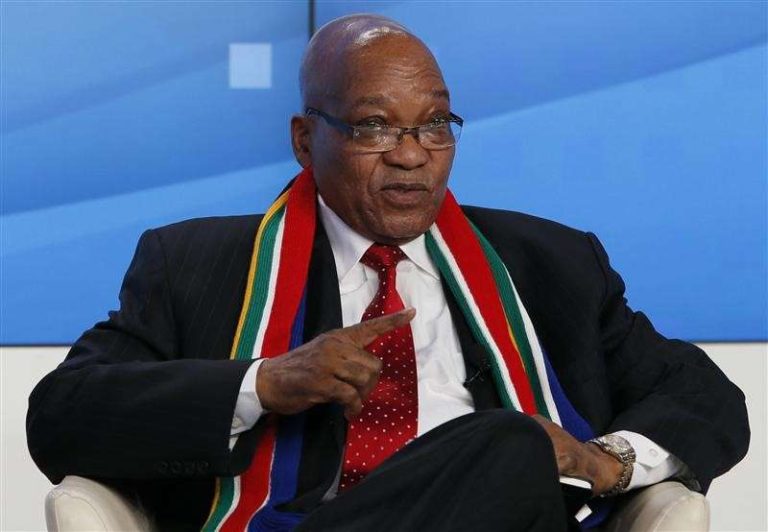
President Jacob Zuma changed his cabinet and fired Pravin Gordhan as finance minister in March, a move that saw the nation lose its investment-grade status with two ratings companies for the first time in 17 years.
South Africa finds itself in some good company, including Nigeria, which is in a recession that is the worst in the country’s history since 1987.
The International Monetary Fund (IMF) predicted that South Africa would enter recession in 2016 — a prediction that has now been fulfilled, albeit belatedly.
The rate of unemployment in Nigeria has risen from 13.9 per cent in the third quarter of 2016 to 14.2 per cent in the last quarter, according to recently-released figures from the Nigerian Bureau of Statistics (NBS).
In a series of tweets on Monday evening, Yemi Kale, Statistician General of the Federation and Head of the NBS, said the number of unemployed people stands at 11.55 million in 2016 fourth quarter, an increase of 0.36 million from 11.19 in the third quarter of 2016.
This is despite the successes so far claimed by the All Progressives Congress-led federal government, especially with regards to the N-Power programme, which is designed to reduce the unemployment rate.
Two hundred thousand Nigerians were engaged through the N-Power scheme in 2016 and the presidency said FG was targeting 350,000 more.
“While we were able to engage 200,000 unemployed graduates last year, we will do 350,000 more this year,” said Laolu Akande, media aide in the office of the vice president.
The NBS boss also revealed that the number of the working-age population in the country rose from 105.02 million in the last quarter of 2015 to 108.05 million in the third quarter of 2016, and then to 108.59 million in the fourth quarter.
Ironically, however, Nigeria’s labour force increased to 81.15 million as of 2016 fourth quarter from 76.96 in the last quarter of 2015 and 80.67 in the third quarter of 2016.
“Nigeria had the 40th highest unemployment rate in the world in q4 2016 and 21st highest in Africa,” Kale tweeted.
“Unemployment is higher in urban areas while underemployment is higher in rural areas in q4 2016. Both Unemployment and underemployment higher for women in q4 2016.”
Ayodele Fayose, Governor of Ekiti State, bought fuel from black marketers in Ado Ekiti, the Ekiti State capital, at the weekend.
Petroleum marketers in the state are on an industrial action to protest the demolition of some fueling stations by the governor, thereby creating artificial fuel scarcity in the state.
They later called off the strike on Sunday, following the intervention of Rauf Aregbesola, Governor of Osun State.
But while the strike lasted, Fayose helped himself by patronising roadside black marketers and did not make any effort to hide it.
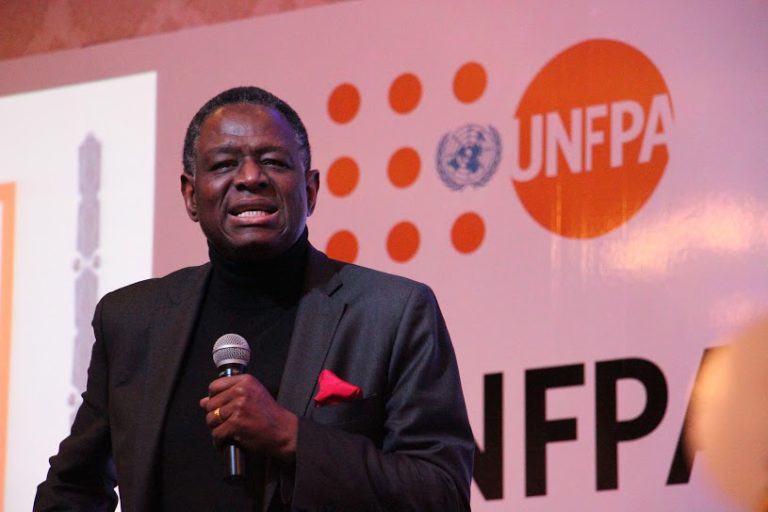
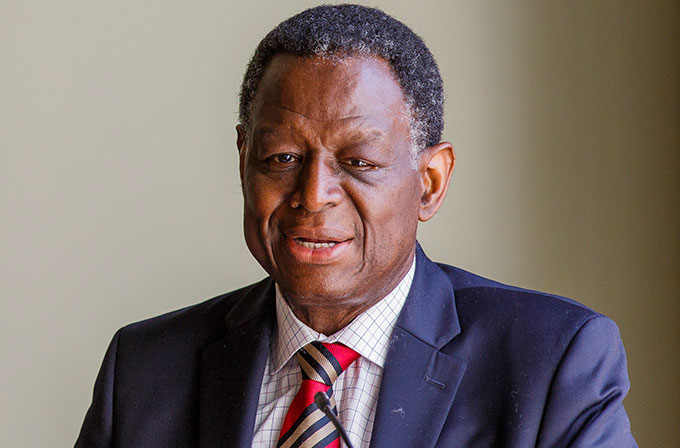
Either in death or in life, one great disservice that anyone could do to Babatunde Osotimehin, the revered late professor of medicine, is to reduce his life to a sentence or even a few.
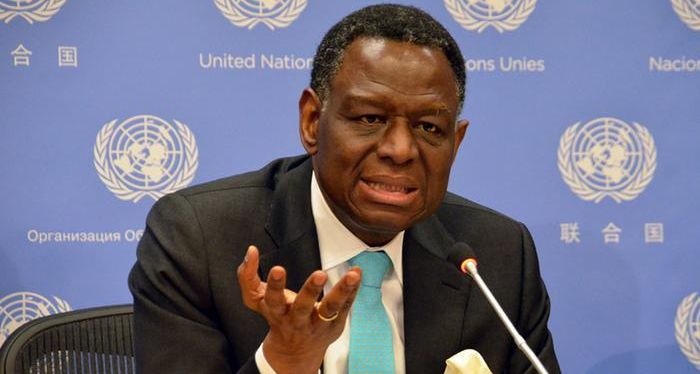
Such was Osotimehin’s greatness — and if anyone doubted it, until he breathed his last, he was Executive Director of the United Nations Population Fund (UNFPA). Whenever it is time to fill the topmost positions at the biggest intergovernmental organisations, the world’s super powers rarely look the way of Africans, much less Nigerians. Not only did Osotimehin get his chance, he performed creditably enough to earn a second term.
One statement that designed his latter life: “In the 21st century, no mother should die bringing new life into the world.” This was part of his ‘Letter to the Editor’ to New York Times in September 2013. And this, for sure, was the lead goal that Osotimehin chased for his last six years.
Ogun-born, Ibadan boy
Born on February 6, 1949, in Ogun State, Osotimehin had his medical studies at the University of Ibadan, and later received a doctorate in medicine from the University of Birmingham, United Kingdom, in 1979. In 2008, he was appointed by late President Umaru Yar’Adua as Minister of Health, after he had been Director-General of the Nigerian National Agency for the Control of AIDS and also Chairman of the National Action Committee on AIDS (NACA).
As a door closed, another opened
In March 2010, one month after the senate invested him with the powers of Acting President, Goodluck Jonathan sought to consolidate his grip on power. He reshuffled the cabinet he inherited, bringing in his own men in place of a few loyalists of his ailing boss, Umaru Yar’Adua, who had been out of the country for three months without official notice. Osotimehin was one of the casualties.
But no sooner had his removal been confirmed than his impending appointment as UNFPA Executive Director became known. By November, it was confirmed, Ban Ki-moon, UN Secretary-General, announcing that Osotimehin would succeed Thoraya Ahmed Obaid, the first Saudi Arabian woman to study in the US on scholarship, whose tenure was to end December 31, 2010.
The appointment was in recognition of his “crucial role in the advocacy efforts around the United Nations Secretary General’s Global Strategy for Women’s and Children’s Health, the African Union Summit and other regional and global efforts targeting improved maternal, newborn and child health”.
In welcoming the appointment, Timothy Wirth, UN Foundation President, said it was an opportunity for the UN to recommit itself to addressing the needs of women and children, globally.
“Osotimehin will join the UNFPA at a critical time for women and girls across the globe, who largely lack access to services that can help them determine the number, spacing, and timing of their children,” he said.
Ki-moon himself had then launched the Global Strategy for Women’s and Children’s Health — a plan of action which tied the health of the world’s women and girls to the achievement of major reductions in infant and maternal mortality, HIV infections and global poverty.
“Osotimehin, in his new position, will have the opportunity to significantly contribute to the success of this strategy,” he said.
Recognising this new challenge, he set about his work. On January 1, 2011, he assumed the reins of the agency.
The strides
Under his watch, UNFPA stepped up its efforts to improve family planning, and maternal and newborn health across 156 countries. By the end of his first year in office, donor contributions to UNFPA reached a record $934 million, up from $870 million the previous year. In 2012, it rose to $981 million (£630 million). The rise was steady, and by 2015 it had reached $979 million.
Statistics suggested that the funds were put to good use, as before the end of his second year in office, the number of women dying in pregnancy and childbirth had almost halved since 1990.
It was also under his watch that the UN launched its famed global campaign to end the practice of Female Genital Mutilation (FGM), as well as the groundbreaking 7 Billion Actions campaign in response to the birth, in 2011, of the 7 billionth person on earth.
‘No woman must die’
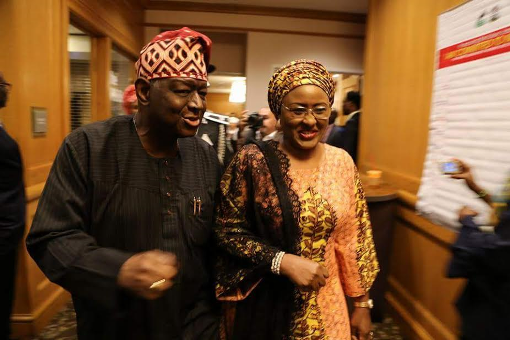
With Aisha Buhari, wife of the Nigerian president
Having assumed office shortly after the launch of the ‘Global Strategy for Women’s and Children’s Health’ and the ‘Every Woman, Every Child’ movement, Osotimehin began to talk more about the need to preserve the lives of women by increasing their access to education. This, he fondly argued, would help them delay their first pregnancy, from which hundreds of thousands of them were dying.
In 2011, he told Forbes journalist Rahim Kanani: “The number of maternal deaths is often inversely proportional to girls and women’s status in the family and society, and evidence shows that the poorer the household, the greater the risk of maternal death.
“Furthermore, there is also data that shows that the more education a woman gets, the lower the risk of dying while giving life, and the more likely that her newborn will reach his or her second birthday.
“Thus, it pays to invest in women’s reproductive health, rights and education, not just in order to lower maternal death and disability, but also for the ultimate general economic progress for families, communities, nations — and individual women themselves.
“Dying in pregnancy or childbirth is common among teenage girls in developing countries. However, when a girl gets an education, she has the power to delay her first pregnancy, and she is healthy and equipped with the right skills and opportunities; she holds the key to unlocking many of the opportunities the world has to offer and this ultimately leads to a reduction in maternal and child deaths, halting the spread of HIV, breaking the cycle of poverty, advancing gender equality and propelling countries’ social and economic development.”
Asked by Kanani what interventions he thought were the most promising to reduce maternal deaths from childbirth, he began by saying: “Every two minutes, a woman dies in pregnancy or childbirth. The good news is that we know exactly what to do to prevent it…”
It must therefore be one of the greatest ironies of life that when death came knocking on his doorstep on Sunday, June 5, Osotimehin didn’t “know exactly what to do”. But it may not matter in the end — so long women, for whom he lived his latter years, know exactly how to remember him!
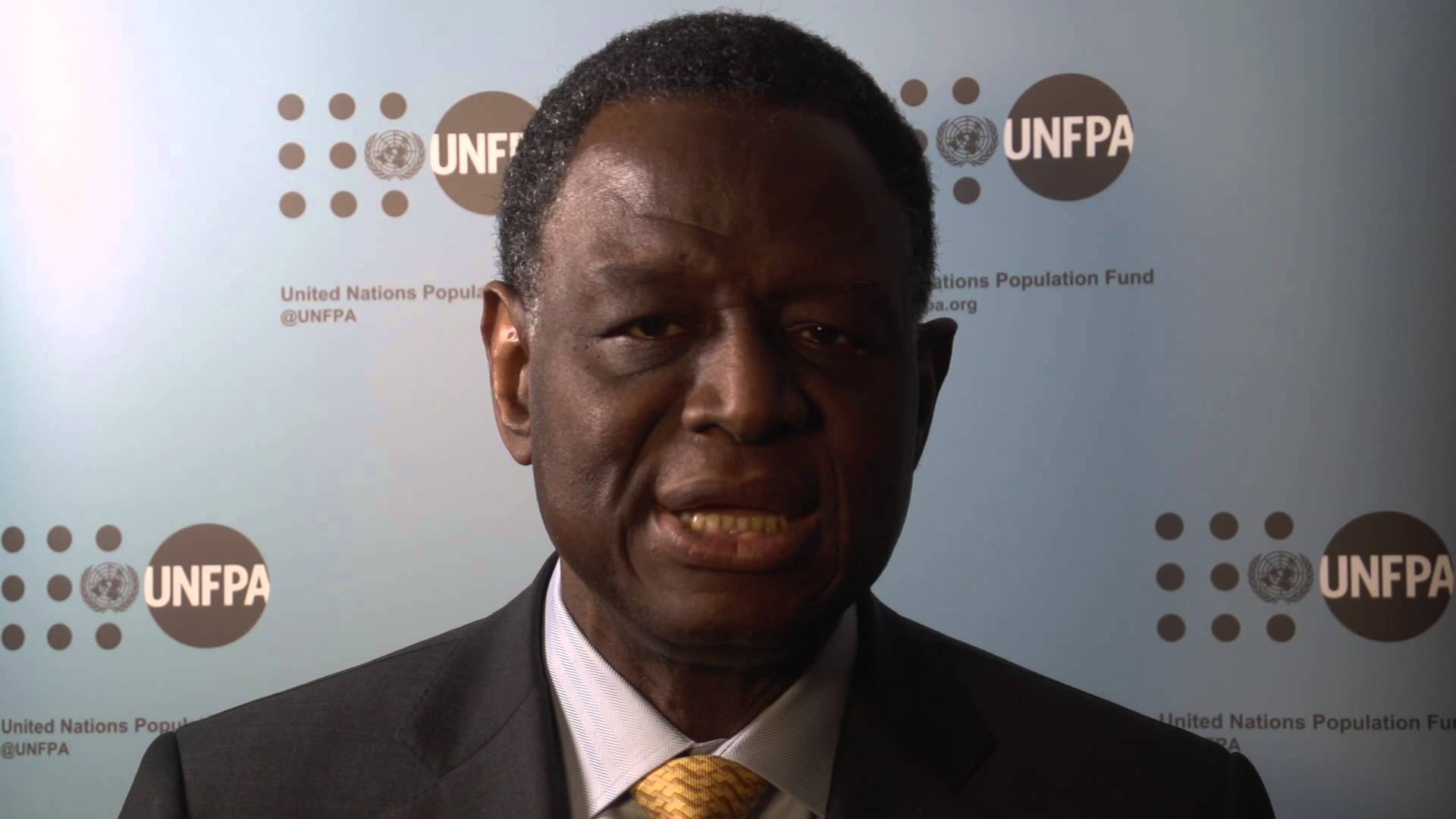
Babatunde Osotimehin, Executive Director of the United Nations Population Fund (UNFPA) and former Minister of Health, is dead.
A statement signed by Dr. Babajide Osotimehin said the 68-year-old died on Sunday.
“With gratitude to the Almighty God for a life well-spent in service to Humanity, the Babatunde Osotimehin Family of Ijebu-Igbo, Ogun State of Nigeria, hereby announces the transition of our Father and Grandfather, Professor Babatunde Osotimehin OON, the Executive Director of the United Nations Population Fund (UNFPA) on Sunday, 4th June, 2017 at the age of 68 years,” it read.
Osotimehin was also a former Provost of the College of Medicine at the University of Ibadan and former head of National Agency for the Control of Aids (NACA) before he was appointed Minister of Health by former President Umaru Musa Yar’Adua.
He was appointed the fourth Executive Director of UNFPA in November 2010 and was reappointed in August 2014.
For two weeks, investigative journalist ‘FISAYO SOYOMBO ‘travelled to the land of the dead’, spending extensive time at 12 government-owned mortuaries and cemeteries in Lagos, Ogun and Oyo states. His findings at the mortuaries include bribery and corruption among morgue attendants, indiscriminate stacking of corpses, decomposition of corpses, and unhealthy and substandard preservation of corpses. At the cemeteries, he discovered that remains are prone to exhumation soon after burial — although the super-rich, who can afford the multimillion naira cost of private cemeteries, are safe. For the poor, Nigeria is not one of the best countries to live in, yet it is also one of the worst places to die in, Soyombo writes.
“Can you touch it? Try. Touch it.”
“No, I can’t touch a corpse, sir.”
“Why?” the mortuary attendant, a middle-aged man — dark, bony and canny in his ways — asks the journalist, a young man who is supposedly morgue-hunting for a freshly-dead uncle.
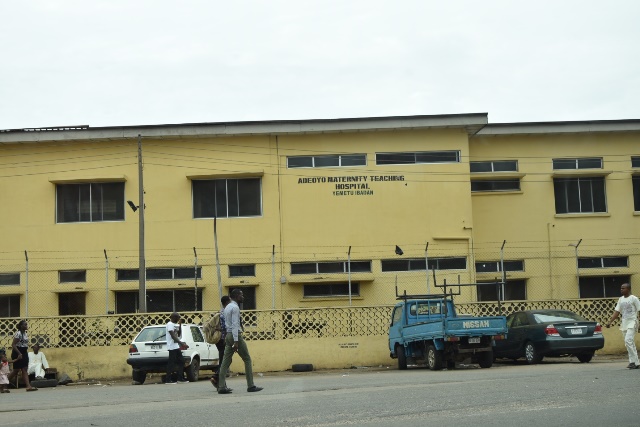
Adeoyo: sexy exterior, dirty interior
“Omode ni mi. Eyin agba ni e ma n so pe ko si bi omode se le ni aso to, ko le ni akisa to awon agba (I am only but a young man. It is you, the elders, who say that regardless of the number of clothes a young man possesses, he can’t have as many rags as the elders.). Not to say I am worthy of speaking in idioms in the presence of an elder.”
“God bless you,” he replies. “May you grow old!”
The man loosens up, and from that moment converses with the stranger-journalist with unexpected ease and freedom.
LIFELESS MEN REDUCED TO STENCH AND MAGGOTS
The entrance of the morgue at Adeoyo
Although he loosens up, the air inside the morgue of the Oyo State-owned Adeoyo Maternity Teaching Hospital, Yemetu, Ibadan, toughens up. The stench in the outer room thickens and all three men in the room wonder if it is emanating from the three fresh corpses in the outer room. Do we even call it an outer room? Not exactly. It’s just a passage, measuring no more than a few tens of metres in both length and breadth.
By that small entryway lie three corpses in three long, diagonally-positioned pans, two to the left and one to the right. The first, to the left, has a bullet wound in the head. A young man ostensibly in his thirties, he’s spotting a sky-blue pair of jeans with a white vest and brown short-sleeved shirt. His body is bloodied, and the origin can be traced to his head. Apparently, he died of gunshot wound in the head.
“They said he was an armed robber,” the man says of the lifeless fellow. “They said. That is what the police said.”
One close look at the dead young man, his neck is adorned by a Catholic rosary. A rosary-wearing robber? Riddle!
ACCIDENT VICTIMS NO BETTER THAN ARMED ROBBERS
Lumped together: Two accident victims and a robber
A little further to the right is another bloodied man, older this time and taller too. Slightly bow-legged as well. Unlike the first, he is naked — save for a stack of clothing placed over his groin. It is hard to say, first time, how exactly he died. The splatter of blood is visible around the right side of his torso, but lower down, his right leg is badly burnt.
Further up again but back to the left is the third corpse, again naked save for a groin-covering piece of clothing. He bears similarities with the second body: the splash of blood and the blemish of fire.
“These people were involved in an accident,” the attendant says in a tone lacking in either pity or empathy. “They were involved in an accident late yesterday night, and they didn’t have access to immediate medical help.”
One final three-way glance at the corpses and it is hard to tell who is who. Ungraciously lumped in that small hallway with the “armed robber” are two people whose only ‘offence’ was to have been involved in a road crash. The two, like the third, are stinking and maggots are starting to appear around them. The system that failed them while they were alive (they didn’t get quick help, post-accident) was re-failing them in their death. There, in that horribly smelling passage laid their lifeless bodies in a most undignified manner. Life in Nigeria is hard enough, yet death itself, when it ends in a government health facility, is in its starkest and unkindest state.
HARD LIFE IN NIGERIA
An open-air market in Ibadan Credit: Lagos City Photo Blogspot
Nigeria is currently 77th in the US News and World Report’s rankings of the best countries to live in. With a total of 80 countries ranked — 20 more than the 60 ranked in 2016 — Nigeria is the fourth worst country to live in of the lot, faring only better than Algeria, Iran and Serbia. It is not difficult to see why Nigeria had such dismal placing; it ranked very poorly in most of the judging indices: human rights value, gender equality, religious freedom, respect for property rights, trustworthiness and distribution of political power, access to business capital, skill of labour force, technological expertise, transparency in business practices, infrastructure, manufacturing costs, tax environment, transparent government practices, job market, public education and health systems.
Business, the basic building block of survival in any country, is extremely hard to start in Nigeria. In the 2017 Ease of Doing Business Index of the World Bank group, Nigeria ranked 169 of the 190 countries rated, bettering the placing of just 21, many of them war-torn. Even a number of African countries widely perceived as minnows — Lesotho, Botswana, Swaziland, Burundi, Sao Tome and Principe, Mozambique, Cape Verde and Comoros — fared markedly better than the self-acclaimed ‘Giant of Africa’.
For a nation experiencing its worst economic decline in 30 years dating back to 1987, life for the ordinary citizen is tougher than ever before. A January 2017 research by TheCable documents the complaints of both traders and buyers about the skyrocketing prices of food. Even staple foods — the likes of garri, rice and beans — had become unaffordable for the common man. As of December 2016, retailers bought a bag of garri for N6,000 but by January 12, 2017, it went for 10,000 — almost double the previous month’s price.
With the hardship in town, it would seem to suffering Nigerians that death (and suicide attempts have spiked in recent times) offers an eternal escape route. How wrong!
CORPSES DUMPED IN A ROOM — JUST LIKE A DUNGHILL
The dark room at Adeoyo where corpses of accident victims were stacked
Inside the Adeoyo morgue, bodies are positioned on wooden and cemented platforms that look more makeshift than assured. On the cemented platform in the middle of the room are three corpses, the one in the middle so awkwardly placed face down, his spirit can surely not be resting. To the left of the entryway is a three-layer boarding-school-type ramshackle bunk on which a wooden plank supports a corpse. While the corpse on the uppermost layer is covered with a cloth, the three on the middle layer and the three on the lower are naked. And these are all corpses that had been in the morgue for minimum of a week. With his bare hand (no glove or any other protective covering), the attendant viciously slaps the most recently-deposited corpse — a tall, chubby 40-year-old man brought in exactly a week before — to prove the body had been well-embalmed.
To the right of the room is a slab on which three corpses are gracelessly set, two lying on their sides against the wall and the last lying face down. A fourth corpse is in a standing position against the slab.
“That one is their policeman,” says the morgue attendant. In fact, he is a soldier whom we told to watch over all the bodies here. If anyone attempts to try any nonsense, he’ll shoot the person. There’s a gun in front of him even though you may not see it.”
In the centre of the room lay a slab that can contain only two-thirds of even the smallest of bodies, yet it is there all the same, meaning the three corpses on it are just short of dangling.
A peep through a hole gives view to an adjoining room — smaller, darkish and stinking — hosting a heap of charred corpses stacked against one another just like refuse is dumped on a dunghill. It is as though these corpses matter less than the others. First impression is that their deposition at the morgue must have been unpaid for. An attempt to have a closer look is truncated by the attendant, who barks: “Oya egbon, eyi ti e wo yen to. To ba teyin lorun, e lo gbe wan wa,” meaning “Bros, what you’ve seen is enough. If you’re satisfied, go and bring your corpse.”
He would say, minutes later, that the corpses dumped in that room were part of the 26 people who lost their lives three days earlier in a grisly road accident along the Lagos-Ibadan Expressway. The accident was caused by the collision of two 18-seater buses. Notable among the few survivors was a baby thrown out of the bus by his father at the start of the fire that followed the collision.
As if admitting that no sane human would want his deceased loved one in such debilitating environment as the Adeoyo morgue, the attendant says while offering his phone number: “You may not like this place; in that case, there is the alternative of a private morgue. Call me and I’ll come with an ambulance to meet you at your wherever you are.”
BREACHING THE RULES AT UCH MORGUE
Inside the UCH morgue
One of the mortuary attendants at the University College Hospital (UCH), Nigeria’s oldest teaching hospital, is unsure if he should let in the journalist posing as a potential client. By his explanation, no one enters the UCH morgue unless he/she is in possession of a death certificate — the clear evidence of intention to deposit a corpse at the facility. But this fellow is so lost in his inordinate lust for quick, unearned money that he breaches the laid-down rules.
“You want to bring the corpse today. How long is it likely to stay here?” he asks, apparently calculating the cost to decide if the length of stay will guarantee him the chance to make some cut.
“Two months,” he is told. “But we haven’t decided; we won’t until we’ve seen the place.”
“You cannot enter,” he insists. “Even if you have a corpse here, unless you present a death certificate, you won’t be allowed to enter.”
Seeing that the potential customer was prepared to walk away, the attendant looks left, then right to be sure no one is watching, and — after a split-second hesitation — whispers: “Come in.”
Both men walk through the backdoor to the morgue, where the attendant conducts the journalist on a tour of the facility, opening cabinet after cabinet and explaining how the system works.
The UCH mortuary is by far better than the human dump house that Adeoyo Hospital most charitably calls a morgue. But that’s exactly how it should be: in 1951, after the establishment of a Faculty of Medicine at the University of Ibadan, Adeoyo was proposed as the teaching hospital. But the visitation panel, led by T.F. Hunt of the University of London, rejected the enhanced facilities provided by the government. Two years later, the physical development of UCH began at its permanent site.
From scratch, UCH was meant to be superior to Adeoyo so it is no surprise to find its morgue nearly spick and span. There is some slightly offensive odour but that is to be expected — a morgue isn’t a restaurant, after all. The room is ice cold and the corpse cabinets are so spotless a novice would mistake them for refrigerators.
The attendant opens the first cabinet; it’s a 76-year-old male corpse brought in on April 17 but this is May already and the body is intact — ice cold. True to his words, the corpse is in near-perfect condition.
STRIPPING THE DEAD NAKED
The corpse at UCH that was stripped naked by the attendant
On our way out, we bypass a fresh, fully-covered (save her face) corpse waiting to be moved out of the morgue, and a bulge around the abdomen is easily noticeable. I ask what is responsible for the bulge. Rather than just answer verbally, the attendant surprisingly flips open both ends of the cover cloth to reveal the woman’s nakedness — an action that would have enraged her family had they witnessed it.
“That is its hands,” he replies, ascribing the status of an inanimate object to the woman. “Its hands are tied together but we will loosen them if we need to embalm the body.”
KICKBACKS: MORTUARY CORRUPTION AT UCH
The UCH mortuary… from a distance
We exit the morgue and it’s time to discuss the costs. It’s also time to discover why the attendant had been overzealous, ripping open the covering of corpses and sneaking in an unknown potential customer through the backdoor.
Depositing a corpse at the UCH morgue costs N1200/day throughout the first week, N1,800/day in the second week, N3,600/day from the third week onwards, and a one-off N18,000 payment at the point of collection. These are the confirmed official rates. The attendant, though, has an interesting bargaining proposition.
“There is a way we can assist you,” he says. “But I cannot do it alone; I must get the go-ahead of my boss. We will calculate the number of days your corpse will spend here, then we will find a way of reducing it for you.”
Does this then mean the corpse’s family will just give the attendant and his boss a token in appreciation, as led by the spirit?
“No,” he cuts in sharply. “There will be an agreement, but it is not something we can say in public. Just be sure that we will do it in such a way that you will not be hurt, and we too will not be hurt.”
The last line is a statement reminiscent of corruption at the Apapa port, when an official of the Nigeria Customs Service told the journalist in December 2015: “See that man? He is the deputy comptroller-general in charge of cars here in Lagos.
“So, if you’re bringing in cars and you are to pay N20, you may decide to pay me N15. I will then go to him to say, ‘Oga, this man here has paid me N15, how will we help him clear his goods so that he can survive, you can survive and I can also survive; because all of us must survive?’”
The morgue attendant suddenly gets jittery — suspicious, in fact.
“I don’t even know who you are; maybe you’re a policeman, I don’t know,” he says with a giggle, almost throwing the journalist off balance. This he follows up with a Yoruba adage roughly translated to mean: “Rather than watch the child of a Samaritan sink into a canal, the man of light will continue the work of light.”
“We once helped someone like that, and he went upstairs to report,” he adds. “It became a matter of query and panel; one of us was sacked as a result — just because of N1,000.”
The attendant claims to be helping people, but he is indeed helping his own pocket. Eager to get this deal tidied and move to the next, he says quickly: “Take my number; call me when you’re ready.”
UCH PRO GOOFS, SAYS ‘WE DON’T TAKE CORPSES FROM OUTSIDE’
Bobade… defending the indefensible Photo credit: Facebook
When the findings at the morgue were brought to his notice during a telephone conversation, Deji Bobade, the public relations officer of UCH gave a two-sentence reply before abruptly ending the call even though he was only the recipient, not the caller.
When told that mortuary attendants were demanding cuts from people wanting to deposit corpses at the UCH morgue, he said: “What money? We don’t take corpses from outside.”
What he didn’t know was that an attendant at the same morgue had expressed readiness to accept a corpse that supposedly died in Bodija, and was even planning to involve his “boss”.
AT IKORODU GENERAL HOSPITAL, CARE FOR CORPSES IS DETERMINED BY SIZE OF BRIBES
The morgue of Ikorodu General Hospital
The body-preserving facilities at the morgue of Ikorodu General Hospital must rank as highly as is obtainable in any part of the country, but the managers of the place are unmistakably cold-blooded.
Confronted by the mournful sight of a man who had presumably just lost his uncle that Sunday morning, the morgue attendant is in no mood to offer words of consolation. A stern, tough-looking man, his words are piercing and his eye contacts scorching. He is the type of man no one should bump into in the early moments of bereavement. He takes forever after the doorbell was pressed before showing up, refuses to let his ‘bereaved’ visitor in to at least have an idea of the state of the morgue, declines to discuss the official corpse deposition fees, and does little to hide his irritation with the visitor’s enquiries.
“Bring your corpse first, we will explain everything to you then,” he snaps at some point, attempting to bring the conversation to an abrupt end. “Even a private hospital can’t beat what we have here.”
But when reminded that it is important to have an idea of the expense so that the relatives of the corpse would not default, he suddenly finds his voice.
“When coming, bring something along for those who will help you take care of the corpse,” he says very coldly as he settles his bum on the three-stair pavement outside the morgue.
Is this “something” a part of the official fees?
“No,” he replies. “Whether you pay the official fees or you don’t, you will need to take care of those who will take care of your corpse.”
How much, then, is this unofficial payment? “It depends on how you want it,” he says, getting up and walking towards the door in a clear display of irritation. “The amount of money you will give to those taking care of the corpse will depend on how dear the deceased is to you.”
The ‘bereaved’ makes it clear he will try “one or two other mortuaries” unless he is allowed to see the state of this particular morgue. At this point, the attendant softens. He reluctantly opens the door of the morgue, allowing the visitor to peep in. “This is just the first room,” he says. “Can you see?”
Within five seconds, he slams the door. End of discussion.
EXTORTING THE BEREAVED
The entrance of Ikorodu General Hospital
Extortion of the bereaved at Ikorodu General Hospital is a long-running practice. So says Susaine Olabiyi (not real names) who lost her mother in 2012 and was stunned by the number of unofficial payments she was asked to make.
“There is a lot of extortion that goes with losing a loved one in Nigeria. You get to the morgue, you pay the normal fees. The people attending to you want you to pay extra; at every point you get to, someone is literally waiting to extort you,” she says.
In Dubai, where her sister died in 2015, the experience was different.
“We paid just the regular fees but here in Nigeria, they tell you, if you want something to be treated well or quick, you have to give something; if you want this, you have to give somebody that. It’s all about extortion, not about helping out anyone who is in grief.
“Of course, there is a business in burying people; it is legitimate and people will always die. But, you see, even just to dig the grave, there are people who collect this and that, even after paying the regular fees. All these don’t help the person that is grieving; it’s like heaping more burden on the bereaved.”
Beyond extortion, Olabiyi has been on the wrong end of grief-worsening handling of corpses.
“When my sister died in Dubai, there was some succour in seeing that even in death she was treated specially,” she says.
“You needed to see the way the wounds on her dead body were treated and padded. I’m talking about someone who was already dead. The way they went ahead to do everything gave me some succour. And we were not even citizens. Compare to Nigeria, your own country, where everything was shoddy.
“My sister died on the 14th day of September and we brought her into the country on the 21st, meaning she spent seven days at a Dubai morgue. She stayed at the LASUTH morgue for just two days and by the time we were burying her, her colour had changed. She had turned black. Chemicals!”
NO INSECTICIDE, AIR FRESHENER AT OGUN GENERAL HOSPITAL
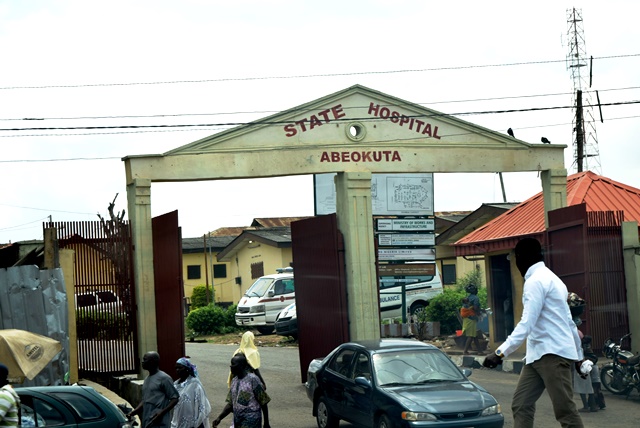
The entrance of State Hospital, Abeokuta
This world is not my home
I’m just a-passing through
My treasures are laid up
Somewhere beyond the blue.
The angels beckon me
From heaven’s open door
And I can’t feel at home
In this world anymore.
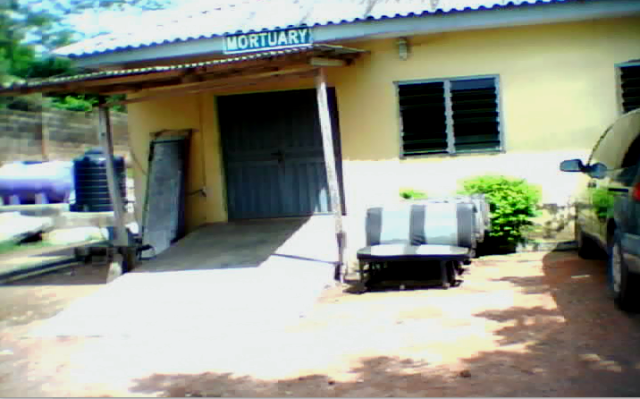
It’s not just the opening two stanzas of Jim Reeves’ This World Is Not My Own, it’s the ring tone of the lead mortuary attendant at the State Hospital on Sokenu Road, Ijaye Abeokuta, owned and run by the Ogun State government. A calm, measured, simply-dressed man, he wears the aura of a man who understands, by virtue of his work, that life is vanity. He is one who takes his work seriously, too: he picks up the phone, studies the screen, and silences it. Moments later, the phone rings again. Again, the attendant retrieves it — a black Tecno product — from the window and silences it. It’s not time to talk. Instead, he opts to attend to a visitor seeking to know the costs of depositing a fresh corpse at the morgue.
“You’ll obtain a card for N500, and pay N20,000 for the first seven days. After the first seven days, it’s N500/day,” he says.
Asked if that is all, he adds: “No. You will buy a bottle of insecticide and another of air freshener.”
The conversation is interrupted by the caller; and as he answers this time, his colleague fishes out a Raid Insecticide and a Wind air as proof of the practice.
Asked to see where the corpse would be deposited, he doesn’t hide his shock. “You mean you want to see our office?” he queries, before beckoning his colleague to open the morgue.
OGUN GENERAL HOSPITAL IS IN A SHAMBLES
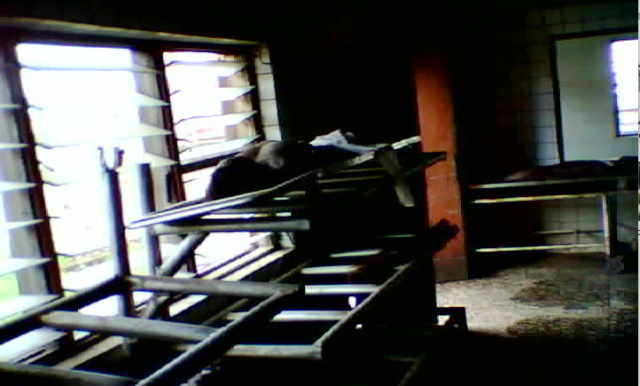
Inside the morgue of the State Hospital
His colleague opens a room. In it are four dead bodies — two apiece for both sexes — all in pans placed on a slab. This is where fresh corpses are received, and they are there for five days. The first corpse, a woman’s, is naked, her trunk bearing some whitish substance that went unexplained. It is a heart-wrenching sight the woman’s family would surely not want to behold.
“This one was brought here just yesterday,” the second attendant says. “As you can see, the formalin is still active.”
For the records, this is the 10th year since the European Union banned the use of formaldehyde (an organic compound from which formalin is derived) as a biocide, including in embalming, due to its carcinogenic properties.
The main room where the corpses are then transferred to after five days does not itself offer any form of relief to the grieving. The walls are paling, the floor bear spots of stagnant water, the air is thick with stench and the room is generally mangy. Some corpses lie bare on planks — clear evidence that the traditional corpse pans were in limited supply.
THE MORTUARY ATTENDANT WHO HATES HIS ‘OFFICE’
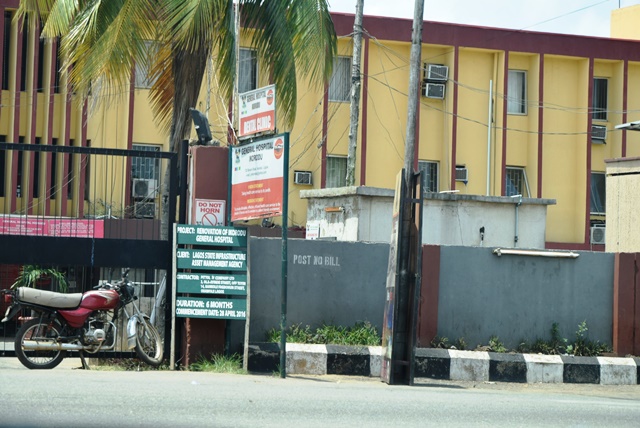
The exterior of the Federal Medical Centre, Idi-Aba, Abeokuta
At the Federal Medical Centre, Idi-Aba, Abeokuta, also in Ogun State, the mortuary attendant is averse to the idea of entering the morgue — same place his colleague at State Hospital, Ijaye, had proudly described as “our office”. Neither does he want the visitor to enter.
Instructed by his boss to open the morgue — after the visitor had hinted he would take his corpse elsewhere if he wasn’t allowed to have prior look at the morgue — he protested. “But you’re already in the mortuary,” he grumbled. “What else do you want to see?”
Reluctantly, he leads the visitor down a passage by the right, bypassing a few rooms before finally stopping by one on the far left. He unlocks the door and steps backwards, signaling the visitor to enter with a you-said-you-want-to-see-now-you’re-here look. Even he wants to go nowhere close.
The room is clean, frankly. The corpses are all dressed to the teeth, making it impossible to tell the males from the females. It appears, though, that there is an attempt to distinguish the old corpses from the fresh: the ones close to the door are robed in deep green while the ones further away are in light, leafy green. The bodies are all placed on planks, neatly so. As far as sight is concerned, there is nothing starkly offensive to behold.
Unlike other morgues, there is no stench to deal with — although the smell can’t entirely be said to be pleasant. But also unlike other morgues, there is a strange, fast-gathering peppering of the eyes. Without a smidgen of doubt, the room has been sprayed with a chemical so strong that it attacks the eyes. No human with naked eyes can survive five minutes inside that morgue without letting out involuntary tears. The journalist doesn’t last two minutes before he asks to leave. With the benefit of hindsight, this is the exact reason the attendant was hesitant to enter.
CLEANERS OF THE DEAD ARE FOOLING AROUND WITH DEATH
Entering the FMC mortuary
What must have happened in that room is that a derivative of formaldehyde — formalin the usual suspect — was generously applied to the air to retain the dryness of the corpses. As the corpses were not warehoused in a cold room, there was always the risk of decomposition. The generous use of formaldehyde was to counter this possibility, but it comes along with its own calamity.
Formaldehyde is not only toxic, it is volatile and poses significant danger to human health. In 2011, the US National Toxicology Program branded it a “human carcinogen”. In any case, that designation ought to have come four long years earlier, but for the fight- back of the manufacturing industry.
Also, a research published in the US in 2015 linked Amyotrophic Lateral Sclerosis (ALS), also called Lou Gehrig’s disease, with constant exposure of mortuary workers to the formaldehyde in embalming fluid. The research team estimated people’s on-the-job exposure to formaldehyde, using criteria developed by the US National Cancer Institute. They then used death records to track deaths caused by ALS. Their finding was that men with a high probability of formaldehyde exposure were about three times as likely to die of ALS as those who had never been exposed to the chemical.
As described by the US National Institutes of Health (NIH), ALS is a “progressive and ultimately fatal neurological disease that attacks the nerve cells responsible for controlling muscles”. It has no cure yet.
SANGO CEMETERY IS OVERCROWDED
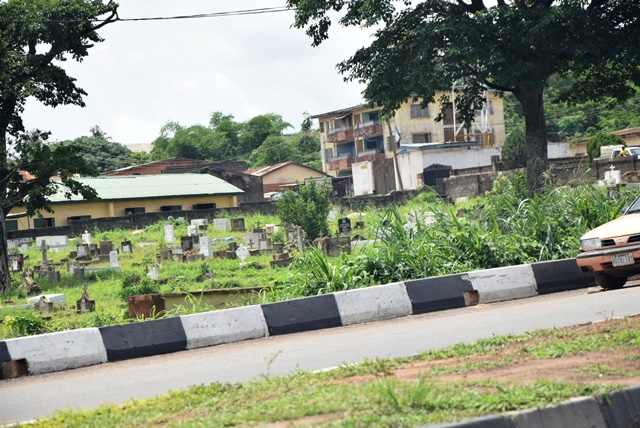
Sango Cemetery… just by the roadside
“If you really value your dead one, don’t try to bury him at Sango Cemetery,” goes the warning from Babatunde Akanji, who has lived all his life in Ibadan and has heard many tales of the uprooting of corpses and double burial of corpses in single vaults.
“That cemetery is filled up but their people will never tell you. You’ll just go back after five or 10 years and your corpse would be gone, either because it has been uprooted or because another corpse has been interred directly on top of it.”
Therefore, the visit to the government-owned Sango Cemetery, located in Ibadan, capital of Oyo State, is to verify the claims of a space constraint — although it is hard not to notice the appallingly weedy graveyard and the stagnant, potentially-hazardous water in the gutters. The cemetery “marketer on duty” — a bald, elderly man with wobbly legs and a slim frame — vehemently denies that there is a lack of space.
“Do you have time?” he says when told that other cemeteries will be considered for the impending interment unless the available space here is seen. “Let’s go!”
The cemetery marketer, journalist and a third party exit the cemetery gate to the roadside and walk in the Sango-UI direction. After some 500metres on foot, Baba Onigi, as he would later introduce himself, slides left to enter the cemetery through an unfenced pathway. Bizarrely, a woman is selling pepper and vegetables less than 100metres away from the first noticeable tombstone. There’s an uncompleted building in that territory, in fact, and people are cohabiting in it. A refuse dump is also in the zone.
Baba Onigi points vaguely at a spot where land is supposedly available. But there is nothing visible other than some irregularly-positioned tombs, a stretch of land covered by overgrown weeds, plus unmarked heaps of sand — clear evidence that some digging had previously taken place. It becomes clear that there is truly no space, and any corpse buried there would either be uprooted someday or find itself in some unsolicited company.
IN ABEOKUTA, THE DEAD ARE COHABITING WITH THE LIVING — LITERALLY
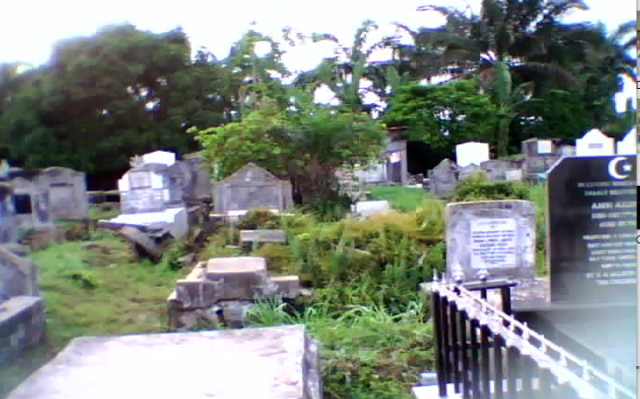
A view of the ‘Iyana Mortuary’ cemetery from neighbouring houses
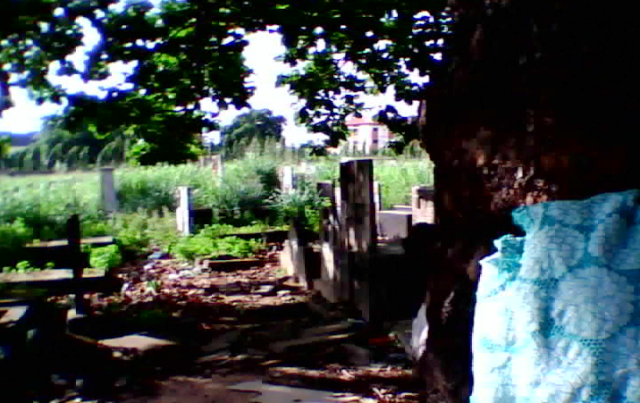
From the first floor of her house at Iyana Mortuary (meaning ‘the turning by mortuary’) in Abeokuta, Ogun State, Busola Orabiyi can see the nearby graveyard, owned and managed by the Cathedral of St. James African Church, Idi-Ape. The fencing is that low!
It is never a pleasant sight for her but she can cope in the daytime. At night, the National Youth Service Corps (NYSC) member never opens her doors or windows even in times of power outage — ever since she was rewarded with a nightmare for opening her windows to let in fresh air.
“When I moved in, I didn’t really like the idea of living by a mortuary but I was pressed for housing so I thought I was only going to be walking past it,” she says.
“But I was wrong! There was power outage one day and you couldn’t possibly imagine my shock when I opened my window only to be confronted by the sight of dozens of whitish tombstones. I could not sleep for all of that night. It was nightmarish.
“Since then, my windows are always locked even in periods of power cut. The good news is that I’m here for just one year — that is if I stay long enough to last that time.”
Although the tombs were markedly overgrown by weeds, subsequent visits to other states showed that this was one of the better-looking non-private cemeteries in Ogun, Lagos and Oyo States.
ATAN CEMETERY SHOULD BE RECHRISTENED ATAN FOREST
The overgrown Atan Cemetery
Atan Cemetery, situated in Yaba, an eastern suburb of Lagos, is one of Nigeria’s oldest cemeteries — so old that no one alive or their progenitors was around when it was sited. But Atan, founded in 1868 on a 25-hectare piece of land at Yaba Local Government Area, is the perfect example of how not to run a cemetery.
The welcome to Atan is unpleasant. The first few opening rows of graves on the left are piles of refuse that would surely sicken the spirits of the dead. Where there are no waste paper and dried leaves, there are overgrown graves. In fact, there is a certain grave that has been overtaken by shrubs. Without the tombstones, the cemetery would easily pass for a forest.
According to one of the casual workers at the site, the cemetery is in such state because the fees for general and personal maintenance are separate.
“What government does is general maintenance,” he says. “The government will then decide where to maintain, and you may be unlucky that the maintained portion is not yours. But when you pay for personal maintenance, N3,500 per month, only your portion will be maintained.”
Same thoughts were expressed by the local government official conducting prospective clients round the facility.
“We will soon start clearing the bush. Tomorrow, I will use my car to go fetch the labourers who will clear the grass,” says Samuel, as he would later identify himself.
Asked why the cemetery was bushy in the first place, with government pocketing 60 percent of all payments, he says: “If you want your personal space to be clean, you can employ the boys to do it for you. Just look for one boy, give him N2,000 every month and the place will be so neat you won’t find a single dirt there.”
Temporary — call it interrupted — rest
Another side of Atan Cemetery
Although the cheapest single-space vault costs N250,000, Samuel says a temporary space can be leased for N200,000. So what’s the difference between a permanent and temporary vaults?
“In temporary, no document, no anything!” Samuel explains. “You may come back to make it permanent but this has to be done within one month.”
What then happens if the deceased’s family does not return within a month? Samuel manages to evade the question. It didn’t matter in the end; a visitor to the cemetery first answered it 11 years ago before revalidating his answer last year.
After first visiting Atan in 2006, Waju Abraham wrote: In 2006, my friend, another only son lost his mother and I was his chief consoler… By the time we got to the burial spot, the grave had not been dug. Someone pulled ‘strings’ and things rolled into action. As they dug, I shuddered. The loose, soft earth was proof it was very fertile, but it revealed something else.
“Clumps of earth sprinkled with human bones hit the ground around us. Alas, it was someone else’s grave. Another tenant being evicted for not paying rent. My friend was disconsolate. I held him. Then after digging knee deep, they stopped and said ‘Oya, bring am!’ They were ready to bury and close up the earth’s mouth. WTF!
“This is not 6 feet!” my friend wailed.
“Oga, six feet Na length, no be depth!”
I remember getting home that night, and telling my diary (there was no Facebook then, or mobile internet) that when I retired to heaven, I’d like to be cremated. I’d like the ashes spread over places I’ve lived and loved. No! Don’t keep me in a sealed, airtight jar on the mantelpiece. Let me soar with the wind, and run with the rivulets that form when the rain falls on a typical summer’s day.
When he returned again to Atan in 2016, he was welcomed by further shock. Of the latter experience, he wrote: Atan must not be part of Lagos, because apparently Atan ti baje mehn. I saw at least three human skulls, one tibia, one badly chewed femur. Chai! I saw the Tommy boxer shorts that they buried somebody in. I saw what looked like the leathered torso of a corpse that was tired of stinking.
And to make things even worse, the guys who had to cover the grave demanded a tip -or else. The earth was still soft beneath my feet. Dark, languid, as if to say ‘Oga, I dey wait for you. To which I replied ‘Yo fada! No be now!’ I didn’t shed a single tear. I was too bone-jarred to care. Someone needs to do something about Atan cemetery.
BURIAL THROUGH THE BACKDOOR
One of the casual workers at the cemetery says no one needs to spend as much as N250,000 to bury a loved one. He leaves his phone number with the visitor, saying the finer details can be strung together on phone.
“Make everything N200,000,” he says to kick-start the haggling over a temporary space for the dead.
“No, no,” he is told. “If Samuel said I could get a temporary space for N200,000, why should I give you the same amount. Let’s have a deal for N80,000.”
After some more minutes of haggling on the phone, the two parties settle for N100,000. Nice deal it seems on the surface, but corpses buried in this manner end up like the “three human skulls, one tibia and one badly chewed femur” that assaulted Abraham’s sight.
BEAUTY AND THE BEAST
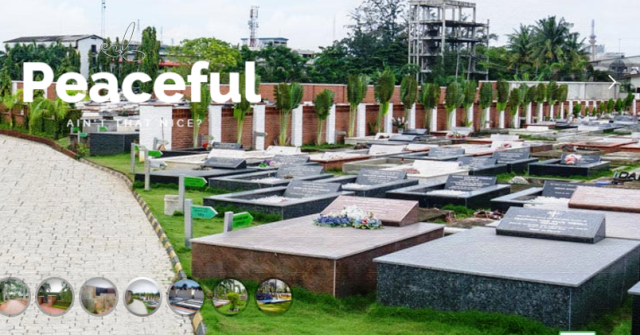
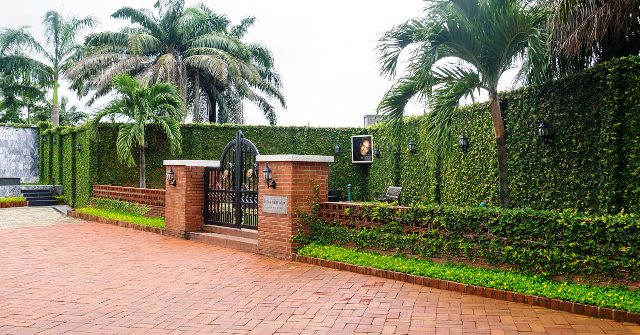
Vaults and Gardens… resplendent. Photo credit: vaultsandgardens.com
It is impossible for any living creature to visit Vaults and Gardens, Ikoyi, owned by Bola Tinubu, two-time former governor of Lagos, without entertaining a deferred longing to die. That is surely over the top, but it’s a place you visit and you go, “When I die, this is the kind of place I want to be buried in”.
The entryway is heavenly. On both sides are greenery so luxuriant that one wonders if they have the powers to breathe life into the dead. The clay bricks supporting the vegetation shine with an iridescent sheen. To the right is a well-trimmed garden with primly-arranged chairs — better to mourn in a cozy zone than in the scorching sun, the developers must have thought.
And to the left, once inside the gate, is the section for high-density vaults. The vaults are uniformly laid and thinly but evenly spaced for easy passage, some even intertwining with the garden. The planning is delicate — far more detailed than Nasir El-Rufai’s famed redesigning of the Federal Capital Territory. Simply put, the entire scenery is scintillating, able to lessen or even ridicule the ruthlessness of death.
Meanwhile, just over the fence of Vault and Gardens is the government-owned, run-down Ikoyi Cemetery. You are welcome by two disgusting sights: a cock crowing on someone’s grave, and a man — obviously no wiser than the cock — bathing on another. It’s about 5pm on a Sunday evening. The bathing man conceals his crotch in a hand, and with the other he motions at a colleague to answer the visitor’s enquiries.
As usual with all other public cemeteries visited, Ikoyi Cemetery is overgrown. The vaults are so closely dug in a manner reminiscent of sitting patterns in the obsolete Molue buses. There are a few tombstones that are no longer visible to the eyes because they have been overtaken by shrubs, and there are others being overshadowed by trees.
Ordinarily, Ikoyi Cemetery should be a national monument of sorts; in there lie the remains of some notable Nigerians: Herbert Macaulay, politician, engineer, architect, journalist, and musician, considered by many Nigerians as the founder of Nigerian nationalism; Henry Carr, educator and administrator, one of the most prominent West Africans in the late 19th and early 20th century, member of the legislative council in Lagos from 1918 to 1924; Candido Joao Da Rocha, businessman, landowner and creditor who owned Water House on Kakawa Street, Lagos Island, proprietor of the now defunct Bonanza Hotel in Lagos; Orlando Martins, pioneer film and stage actor, one of England’s most prominent and leading black actors of the 1940s.
SEGREGATION IN DEATH: THE RICH AND THE POOR SO CLOSE YET SO FAR
A N200m resting place at Vaults and Gardens
Aside from the country’s well-documented mean maintenance of public infrastructure, it is easy to see why Ikoyi Cemetery and Vaults and Gardens are miles apart although separated by just a fence: the least expensive single vault at Vaults and Gardens costs N3.2million — 10 times the cost of Ikoyi Cemetery’s most expensive single vault!
At the 11-year-old Vaults and Gardens, resting places are palatial in nature. The alleys are named after individuals, exactly as streets are named. Just as there is Ozumba Mbadiwe Avenue or Kofo Abayomi Street on Victoria island, there is also Modupe Christine Adepoju Alley or Olufunke Funmilayo Alley at the cemetery.
Eskor Mfon, first pastor of City of David, who died in 2007, is resting in a specially-made spacious garden now worth N200million. There is someone else — unnamed by the cemetery manager — who has custom-made the vault where he wants to be buried whenever he dies. It’s worth N150million; the fellow is still alive at the moment.
The remains of Tayo Aderinokun, who, until his death at 56 in 2011, was chief executive officer of Guaranty Trust Bank, are at a mansion-like space worth N170million.
Ade Adefuye — professor and ambassador extraordinaire — who died in 2015 aged 68, is resting in a medium-density, self-gated and fenced home in the cemetery. Molade Okoya Thomas, who sat on the board of many prominent companies in the 60s and 70s, and his wife Olivet Abosede, who died exactly a month after his first remembrance, also have customised eternal abodes. For all three, their graves cost close to N200m each. The Fasholas and Tinubus have their own family spaces as well.
THE UGLINESS OF DEATH IN NIGERIA
Ikoyi Cemetery… the beast
The Yoruba have an adage that there is honour in death. It is an agelong axiom that must have been formulated in an era that took no cognizance of the impact of public health facilities on the extent of honour available to the dead. For the rich, there is a chance: that honour exists in abundance at private cemeteries such as Vaults and Gardens. But such guarantees do not exist at the mortuary, particularly with reckless attendants like the one at UCH still around.
For the poor, there is no smidgen of honour in death. Just as it is with life, death is unkind to the poor man in this clime. At the mortuary and at the cemetery, the poor man’s suffering continues — unless governments, at all tiers, decide to surprise all of us by saying enough is enough.
Editor’s Note: The writer is in possession of videos containing EVERYTHING described in this story. However, we have decided against publishing the mortuary videos as a mark of respect to the dead and their families.
Nuhu Ribadu, former Chairman of the Economic and Financial Crimes Commission (EFCC), says the crooks, rather than Nigerians, are the ones winning the battle against corruption.
Ribadu was speaking in Abuja on Saturday while responding to questions from journalists at the end of the 12th annual public symposium of the Muslim Media Practitioners of Nigeria (MMPN).
“What is going on today is reinvigoration, a change that put corruption as number one priority of government. I want to salute those who are responsible for that. I totally agree,” said Ribadu, who chaired the symposium, themed ‘Anti-Corruption: The Role of Media as a Change Agent’.
“I appeal to all Nigerians to please, for God’s sake, think about our country, let’s make our own people the winner even if it means for once.
“The crooks have been winning. Those who are stealing our own money have been winning. Let’s turn it around and make Nigerians winners.”
He said the war against corruption had gone on well so far but it could be better.
“You also know and agree that things have changed,” he said.
“If you know the volume or the amount of money that we say today we have recovered, money stolen from individuals and groups, the money is with the Central Bank of Nigeria (CBN). That tells you the story of what is going on today but we can still do better.”
Femi Okurounmu, the senator who represented Ogun Central at the National Assembly between 1999 and 2003, says the government at the centre is one of the Hausa-Fulani for the Hausa-Fulani, with other Nigerians as their subjects.
Speaking in an interview with Punch, Okurounmu condemned the recent recruitment exercise into the Department of State Services (DSS), which favoured the north, saying from start, Buhari took off with his administration “on this same note, in which all security chiefs and heads of government parastatals were all northerners”.
“When President Buhari sacked officers from the military, they were all southerners,” he said.
“When herdsmen were marauding and killing people, Buhari did nothing. But let the people being killed rise to defend themselves, then there would be another form of offensive against them.
“So, the DSS recruitment is following the same pattern. It is not a new development. It has got to a crushing level. The government at the centre can be described as the government of the Hausa-Fulani for the Hausa-Fulani, with other Nigerians as their subjects.
Okurounmu also responded to the recent warning by Tukur Buratai, Chief of Army Staff, that officers found to be involved in reports of alleged coup plotting would be dealt with.
His opinion is that Buratai “is only flying a kite to see how people will react if there is a coup”.
“It is the Hausa-Fulani cabal,” he said.
“Each time they feel threatened that power might slip from their hands, they think of a coup. All other coups, save for the [Kaduna] Nzeogwu and [Gideon] Orkar coups, were all planned by the northerners.
“They did not want a repeat of what happened during the late President Umaru Yar’Adua when (Goodluck) Jonathan became president. So, they are already preparing to retain the presidency in case anything happens to President Buhari.”
He urged Vice President Yemi Osinbajo to act “as the president”, regardless of the cabal in the presidency that may be bent on frustrating him.
“There is nothing like ‘coordinating vice president’ in the constitution,” Okurounmu said.
“In the event that the president will not be around to govern, he is expected to hand over to the vice president who will then take over as acting president. I believe that the people who constituted themselves as a cabal in the presidency were being mischievous with that expression. The content of the letter might even not be known to the President. They might want to upstage Osinbajo, so that he would not be able to act as president in the absence of President Buhari.
I am glad that the National Assembly members discovered the anomaly, and did the needful. I want to charge Osinbajo to act as the president and he should not allow anyone to debar him. It is one thing to give a man a title, and it is another thing for him to perform the roles expected of him. Notwithstanding the contents of his letter of appointment, Osinbajo should act as the president and let his people know that they are not second-class citizens.”
Yahaya Bello, governor of Kogi state, has rubbished the threat of impeachment by Dino Melaye, senator representing Kogi West at the national assembly, and some members of the All Progressives Congress (APC) in the state.
Bello has been accused by the Independent National Electoral Commission (INEC) of engaging in double voter registration, but he denied it, saying he was out of the country when the story broke and he could not have registered from Dubai.
Responding to journalists after Friday’s Jumaat Prayers at the State House, Abuja, Bello said the threat by the APC faction in the state was not worth losing sleep over.
“I will respond when a human being is speaking,” he said when asked about Melaye’s threat that state legislators would be mobilised to impeach him the governor.
“I don’t think I have to waste my time responding to distractions. Honestly speaking, I’m too focused to be distracted.
“Kogi state suffered for over 25 years before I came on board and the good people of Kogi are really appreciative of the efforts we are putting forward to make sure that the state is well developed.
“Go to Kogi state website to see what we have done in the 15 months that we have been in the office. So, any side distraction is not something I should pay attention to, because the people are with me.”
He said it was perhaps his ghost that registered for the second time in the ongoing INEC continuous voter registration exercise.
“I travelled on 19th (of May) to Dubai for a brief break and I saw the press release and I was taken aback that I did double registration on 23rd,” he said.
“Probably it is my ghost that did double registration. I think INEC has earned itself a very high reputation and I think and I am very confident that the leadership of INEC will not allow some elements to drag the name of the commission into the mud.
“Surely, that’s a falsehood. I did not do double registration.”
An additional 250,000 people will die every year between 2030 and 2050 due to the effects of climate change, the World Health Organisation (WHO) has said.
It also stated that already, 12.6 million people die every year from diseases associated with environmental hazards, such as water, soil or air pollution and climate change.
The pronouncements come a day after Donald Trump, US president, withdrew from the climate change agreement that the US and 94 other countries, including Nigeria, signed in 2015.
Trump had described the agreement as a “massive redistribution of United States wealth to other countries”, saying he would try to renegotiate a better deal.
“In order to fulfil my solemn duty to protect America and its citizens, the United States will withdraw from the Paris climate accord but begin negotiations to re-enter either the Paris accord, or an entirely new transaction on terms that are fair to the United States, its businesses, its workers, its people, its tax-payers,” he said.
“So we’re getting out. But we will start to negotiate and we will see if we can make a deal that’s fair. And if we can, that’s great. And if we can’t, that’s fine.”
It would appear WHO’s statements were in response to Trump’s action, as it also tweeted: “Climate Change is a health problem. Let’s take action for a healthier environment! #ParisAgreement”