Home Blog Page 277

Over 11,000 projects worth nearly ₦7tn inserted in 2025 budget by NASS – BudgIT

A CIVIC organisation promoting transparency in Nigeria’s public finance, BudgIT, said it uncovered 11,122 projects valued at N6.93 trillion inserted by the National Assembly into the 2025 federal budget. 

The group alleged that these insertions, lacking clear justification, reflected a pattern of fiscal abuse driven by political interests rather than national development priorities.

The 2025 budget process began with President Bola Tinubu presenting a N49.7 trillion proposal to the National Assembly in December 2024.

Citing additional revenue from agencies such as the Federal Inland Revenue Service and the Nigeria Customs Service, Tinubu later requested an increase in the budget to N54.2 trillion in February, 2025.

The National Assembly approved N54.99 trillion as the reviewed budget, adding N700 billion to the president’s revised proposal.

The 2025 Appropriation Act represents a 99.96 per cent increase from the 2024 Budget of N27.5 trillion.

A breakdown of the budget showed N3.645 trillion for statutory transfers, N14.317 trillion for debt servicing, N13.64 trillion for recurrent expenditure, and N23.963 trillion capital expenditure (development fund), with fiscal deficit put at N13.08 trillion

Christened ‘Budget of Restoration: Securing Peace, Rebuilding Prosperity,’ Tinubu said the 2025 budget sought to consolidate the key policies his administration had instituted to restructure Nigeria’s economy.

The budget also sought to boost human capital development, increase the volume of trade and investments, bolster oil and gas production, get the manufacturing sector humming, and ultimately increase the competitiveness of the country’s economy, noted the president.

However, BudgIT’s analysis indicated that funding allocations for 238 projects out of the over 11,000 projects inserted by the NASS exceeded N5 billion and totalled N2.29 trillion without clear justification. 

It also added that 984 projects worth N1.71 trillion and another 1,119 projects ranging between N500 million and N1 billion (totalling N641.38 billion) were added by the NASS arbitrarily. 

The organisation argued that “these insertions, far from promoting development, appear tailored to satisfy narrow political interests and personal gains rather than the citizens’ interests.”

According to BudgIT findings, 3,573 projects valued at N653.19 billion were assigned to federal constituencies, while 1,972 projects worth N444.04 billion were allocated to senatorial districts.

“Categorically, some of the most glaring anomalies include: 1,477 streetlight projects worth N393.29 billion; 538 boreholes totalling N114.53 billion; 2, 122 ICT projects valued at N505.79 billion; and N6.74 billion earmarked for ‘empowerment of traditional rulers,’” the report noted.

It further said that the Ministry of Agriculture experienced significant budget inflation, with 4,371 projects worth N1.72 trillion, increasing its capital allocation from N242.5 billion to N1.95 trillion.

Other ministries, including Science and Technology and Budget and Economic Planning, also saw substantial increases due to these insertions.

BudgIT highlighted instances where agencies without the capacity to execute certain projects were assigned substantial funds. 

For instance, the Federal Cooperative College in Oji River State, primarily a training institution, was allocated N3 billion for utility vehicles, N1.5 billion for rural electrification in Rivers State, and N1 billion for solar street lights in Enugu State.

“Despite these findings, the Presidency has remained conspicuously silent. Recall that in the third and fourth quarters of 2024, BudgiT launched the ‘The Budget is a Mess’ campaign to bring these issues to light. We submitted formal letters outlining our findings to the Presidency, the Budget Office, and the National Assembly. While these letters were acknowledged, no response was received from any of the institutions, and not a single institution has taken responsibility for the anomalies.

“Even more concerning is the silence from the Presidency – silence which, in the face of overwhelming evidence, amounts to complicity,” BudgIT added.

While commenting on the findings, BudgIT’s Country Director, Gabriel Okeowo, emphasised the need for transparency and accountability in the budgeting process.

He urged Tinubu to enforce budget discipline, align allocations with the Medium-Term National Development Plan (2021–2025), and seek a Supreme Court interpretation of the National Assembly’s appropriation powers. 

Okeowo also called on anti-corruption agencies, including the Economic and Financial Crimes Commission (EFCC) and the Independent Corrupt Practices Commission (ICPC), to investigate these insertions to ensure value for money.

The organisation also appealed to citizens, civil society, and the media to demand reforms, arguing that the national budget should serve the public interest rather than political patronage.
Police confirm shooting student in Ibadan, blame boy’s father

1

THE Oyo State Police Command has confirmed that its officer shot dead a 14-year-old student, Kehinde Alade, in Ibadan, on Monday, May 20, during a joint traffic operation involving police officers and the Oyo State Traffic Management Authority (OYTMA). 

The command, however, blamed the boy’s father, who was driving a vehicle in which the boy was shot for failing to adhere to traffic rules and subsequent arrest by law enforcement officers.

A statement released by the command Monday evening by its spokesperson, Adewale Osifeso, said the incident occurred around 7:45 a.m. along the Airport Roundabout in the Alakia-Adelubi/Airport Road axis of Egbeda Local Government Area. 

The police noted that the enforcement team had attempted to stop a black Honda Accord with Lagos plate number FST 639 JJ, driven by Odunayo Alade (the deceased’s father), for allegedly driving against traffic.

The police alleged that rather than complying, Alade accelerated dangerously, ramming into two OYTMA vehicles and a police patrol truck in a bid to evade arrest. 

The police further claimed that the driver’s actions, which included breaking through barricades, prompted officers to suspect a case of abduction or criminal evasion.

The statement contained a video showing how the black Honda Accord was trying to escape the law enforcement officers after passing one way while also driving recklessly. The ICIR, however, could not confirm the reason behind the driver’s attempt to escape the security operatives.

“Given the nature of the driver’s conduct, officers suspected possible criminal activity or a case of abduction. A police chase ensued. In an attempt to immobilise the vehicle, a police corporal discharged a firearm aimed at the tyres.

“Tragically, the bullet missed and struck Kehinde Alade ‘m’, who was seated in the rear seat behind the driver. He was immediately rushed to the University College Hospital (UCH), where he was confirmed dead on arrival. The deceased’s body has been deposited at the Adeoyo State Hospital mortuary for autopsy and preservation,” the statement added.

The ICIR reported that the boy, who was reportedly on his way to sit for his West Africa Senior School Certificate Examination (WASSCE) was allegedly shot by the police in the early hours of Tuesday.

In a viral video seen by The ICIR, the student lay lifeless on a hospital stretcher, with injury around his waist, which sympathisers claimed was from the gunshot.

The ICIR also observed a hole in the father’s car, which could have been caused by gunshot. There were also blood stains on the car’s floor. 

Police detain officer

According to the command’s spokesperson, the police have since detained the officer who fired the shot.

He added that a full investigation into the incident had been launched, assuring that its findings would be made public.

“The officer responsible for the discharge of the firearm has been taken into custody and, along with other members of the team, is cooperating fully with the ongoing investigation. The command assures the public that the process will be transparent and the findings made public.

“The Oyo State Police Command extends its deepest condolences to the family of Kehinde Alade. The command remains resolute in its commitment to upholding justice and ensuring accountability. Further updates will be communicated as the investigation progresses,” the statement added.

The ICIR reports that the boy’s killing came barely 24 hours after the Lagos State Police Command arrested one of its officers, Obic Modestus, an inspector, for assaulting an Uber driver in a case that drew widespread condemnation after a video of the attack went viral.

The Lagos Command confirmed that Modestus had been summoned by its Complaint Response Unit and would face disciplinary action through the Provost Department.

However, despite the claims of reform in the Nigeria Police Force, the incident added to a series of reported cases of police misconduct in the country.

In spite of the disbandment of the Special Anti-Robbery Squad (SARS) in 2020 following the #EndSARS protests, reports of police brutality have persisted.

The latest incident came barely two weeks after The ICIR published a detailed investigation of police brutality in Kwara State. 

The report highlighted how the killings of Qoyum Ishola, allegedly by police officers in the state, added to a disturbing trend of young men in Kwara, particularly those perceived as successful or ‘flashy,’ increasingly targeted by law enforcement officers.

MPC meeting: CBN keeps interest rate at 27.5%

THE Central Bank of Nigeria (CBN) kept the benchmark interest rate unchanged at 27.5 per cent on Tuesday, May 20, along with other parameters, raising concerns over the impact of declining crude oil on the 2025 budget.

The benchmark interest rate is the official rate that guides deposit money banks, mortgage institutions, and financial contracts on the proper cost of funds in their financial transactions, which guides lending to macro, small, and medium enterprises.

The CBN governor, Olayemi Cardoso, announced this at the end of a two-day Monetary Policy Committee (MPC) meeting in Abuja.

The decision marks the second time in a row the apex bank has held rates unchanged.

He said the committee unanimously retained the benchmark interest rate at 27.5 per cent, asymmetric corridor around the MPR at + 500/-100 basis points, cash reserve ratio (CRR) of deposit money banks at 50 per cent, and merchant banks at 16 per cent.

Cardoso said the committee’s unanimous decision was driven by recent positive macroeconomic indicators, driven largely by food price moderation and exchange rate stability.

He said the committee noted the relative improvements in some key macroeconomic indicators, which are expected to support the overall moderation in prices in the near to medium term.

“These include the progressive narrowing of the gap between the Nigerian Autonomous Foreign Exchange Market (NAFEM) and Bureau de Change (BDC) windows,” Cardoso said.

He also noted there had been a moderation in energy (fuel and diesel) price stability, as he lauded government efforts at increasing food supply.

However, the committee urged the authorities to step up the fight against insecurity, especially in farming communities.

It also urged the government to provide necessary inputs to farmers to further boost food production.

“The committee, however, acknowledged underlying inflationary pressures, driven largely by high electricity prices, persistent foreign exchange demand pressure, and other legacy structural factors.

“The MPC noted new policies introduced to boost local production, reduce foreign currency demand pressures, and thus lessen the pass-through to domestic prices,” Cardoso said.

In its MPC meeting held in February, the committee retained the benchmark interest rate for the first time in over two years.

It had steadily raised the rate from 11.5 per cent in 2022, including six hikes in 2024 alone, amounting to a cumulative 875 basis points.

CBN worries over declining oil price

The MPC, however, expressed concerns about the recent decline in crude oil prices, attributable to increased production by non-OPEC members, as well as uncertainties associated with the United States’ trade policy, which the CBN said presented new challenges for fiscal receipts and budget implementation.

The committee further called on the fiscal authority to strengthen current efforts at enhancing foreign exchange earnings, especially from gas, oil, and non-oil exports.

Committee urges banks to sustain oversight functions

Cardoso reaffirmed the continued stability of the banking system, attributing it to notable improvements in key performance indicators, and observed the appreciable progress in the ongoing recapitalisation exercise.

He said, “The MPC also called on the bank to sustain its effective oversight of the industry to ensure compliance with regulatory and macro prudential guidelines.”

Stressing the relative stability observed in the foreign exchange market, Cardoso said the committee wanted banks to sustain the implementation of the ongoing reforms to further boost market confidence.

Workers protest at Finance Ministry over alleged poor welfare

MEMBERS of the Trade Union Congress (TUC) of Nigeria on Tuesday, May 20, staged a protest at the Federal Ministry of Finance in Abuja.

The union picketed the ministry over arrears and other emoluments allegedly owed to workers.

Dressed in red T-shirts, the workers were seen protesting in front of the ministry building, blocking vehicles from going in and out of the premises.

They displayed placards bearing inscriptions urging the ministry to pay their allowance arrears and other emoluments.

Addressing journalists, Industrial Relations Officer of the Nigerian Nuclear Regulatory Authority (NNRA) Abuja branch, Patrick Solomon, said at the protest venue that the management of the ministry was insensitive to the workers’ demands.

He said, “We are here to protest the insensitivity to our requests and demands as a union and as members.

“We had certain challenges, and we have used all avenues to resolve the issues, but there were no listening ears. Our Internally Generated Revenue (IGR) in the office has been withheld for nothing less than 15 months.”

According to Solomon, workers found it difficult to work in the ministry because of their withheld allowances and other benefits.

“We have been on this issue with the minister for a very long time now, and it’s obvious he is not ready to listen to us,” he said.

As of the time of filing this report, the ministry has yet to respond to the protest.

This is not the first time the Finance Ministry has witnessed such a protest. In November 2024, The ICIR reported the Federal Government’s plans to begin addressing the pension backlog for retired workers under the Contributory Pension Scheme (CPS) starting from November 17, after a similar protest.

The Finance Minister and Coordinating Minister of the Economy, Wale Edun, gave an assurance on the payment during a protest by the Nigeria Union of Pensioners Contributory Pension Scheme Sector (NUPCPS) at the Ministry in Abuja on Tuesday, November 12.

The pensioners cited poor remittances, the government’s neglect of CPS, and its abrupt stoppage, leading to delays in the release of the accrued rights portion of retirement benefits to retired workers between 2015 and 2019.

Trump says Russia agrees to ceasefire deal with Ukraine, Putin mum on timeline

UNITED States (US) President Donald Trump has said that Russia and Ukraine would begin immediate negotiations for a ceasefire on their three-year-old war.

Trump disclosed this in a social media post late Monday, May 19, following his call with President Vladimir Putin, during which he signalled that he was not prepared to join Europe in imposing new sanctions to pressure Moscow.

“Russia and Ukraine will immediately start negotiations toward a ceasefire and, more importantly, an end to the war,” Trump wrote, adding later at the White House that he thought “some progress is being made.”

Trump said that Pope Leo had expressed interest in hosting the negotiations at the Vatican, and he shared the plan with Ukrainian President Volodymyr Zelensky, along with the leaders of the European Union, France, Italy, Germany, and Finland during a group call held after his conversation with the Russian leader.

Putin expressed gratitude to Trump for backing the revival of direct talks between Moscow and Kyiv, following last week’s face-to-face negotiations between the two sides in Turkey.

“We have agreed with the president of the United States that Russia will propose and is ready to work with the Ukrainian side on a memorandum on a possible future peace accord,” Putin told reporters.

The ICIR reported that Trump was scheduled to speak with Putin on Monday on the need to end the war in Ukraine.

Trump had bragged that meaningful progress toward peace was unlikely without a direct meeting between him and Putin. This came as delegates from the warring nations gathered last week in Istanbul for their first talks since March 2022, following a proposal for immediate ceasefire negotiations put forward by Trump, European leaders, and Ukraine.

While signs that Ukraine and Russia will maintain direct contact suggest progress after more than three years of war, Monday’s flurry of talks once again fell short of expectations for a breakthrough.

European leaders choose to step up pressure on Russia with additional sanctions after Trump briefed them on his call with Putin, German Chancellor Friedrich Merz said late Monday.

However, Trump did not seem prepared to follow suit. When asked why he hadn’t imposed new sanctions on Moscow to push for a peace deal, as he had previously threatened, he told reporters:  “Well, because I think there’s a chance of getting something done, and if you do that, you can also make it much worse. But there could be a time when that’s going to happen.”

The ICIR reported that European leaders and Ukraine have called for Russia to agree to an immediate ceasefire, while Trump has emphasised getting Putin to commit to a 30-day truce. However, Putin has resisted, insisting that certain conditions must be met first.

Russian state news agencies quoted Kremlin spokesperson Dmitry Peskov, stating that Moscow and Kyiv were engaged in “complex contacts” to develop a unified text for a peace and ceasefire memorandum.

“There are no deadlines, and there cannot be any. It is clear that everyone wants to do this as quickly as possible, but, of course, the devil is in the details,” he said.

After speaking with Trump, Zelensky suggested that Kyiv and its partners might seek a high-level meeting involving Ukraine, Russia, the United States, European Union countries, and Britain as part of efforts to end the war.

“Ukraine is ready for direct negotiations with Russia in any format that brings results,” Zelenskiy said on X.

Police allegedly shoot boy writing WAEC dead in ibadan

1

A SECONDARY school student on his way to write the West African Senior School Certificate Examination (WASSCE) was allegedly shot dead by a stray police bullet in Ibadan, Oyo State, on Tuesday, May 20.

The student, whose name had yet to be confirmed as of press time, was reportedly in his father’s car when police officers opened fire on a fleeing vehicle around the Welfare Hospital area in Alakia, hitting the teenager instead.

According to a report by Splash FM Ibadan and eye witnesses on social media, the said officers were allegedly chasing a suspect and attempted to flatten the tyres of the suspect’s vehicle when one of the bullets hit the student inside his dad’s car.

The boy was rushed to Welfare Hospital in Ibadan but was declared dead by medical personnel.

In the viral videos seen by The ICIR, the student lay lifeless on a hospital stretcher, with injury around his waist, which sympathisers claimed was from the gunshot.

The ICIR also observed a hole in the father’s car, which could have been caused by gunshot.

There were also blood stains on the car’s floor. Many people were seen sympathising with the boy and expressing frustration over alleged persistent police brutality in the area.

Efforts to reach the Oyo State Police Public Relations Officer, Adewale Osifeso, on the incident were unsuccessful, as calls to his phone went unanswered and both SMS and WhatsApp messages were not replied.

This tragic incident came barely 24 hours after the Lagos State Police Command arrested a police officer, Obic Modestus, an inspector, for assaulting an Uber driver in a case that drew widespread condemnation after a video of the attack went viral.

The Lagos Command confirmed that Modestus had been summoned by its Complaint Response Unit and would face disciplinary action through the Provost Department. 

The police also restated their commitment to professional conduct under the leadership of the Commissioner of Police in the state, Olohundare Jimoh.

However, despite the continued reforms in the Nigeria Police Force, the incident added to a series of reported cases of police misconduct in the country.

In spite of the disbandment of the Special Anti-Robbery Squad (SARS) in 2020 following the #EndSARS protests, reports of police brutality have persisted.

The latest incident came barely two weeks after The ICIR published a detailed investigation of police brutality in Kwara State. The report highlighted how the killings of Qoyum Ishola, allegedly by police officers in the state, added to a disturbing trend of young men in Kwara, particularly those perceived as successful or ‘flashy,’ increasingly targeted by law enforcement officers.

The incident has further reignited fears around police brutality in Nigeria, with citizens expressing frustration over repeated cases of law enforcement officers using excessive force on them. 

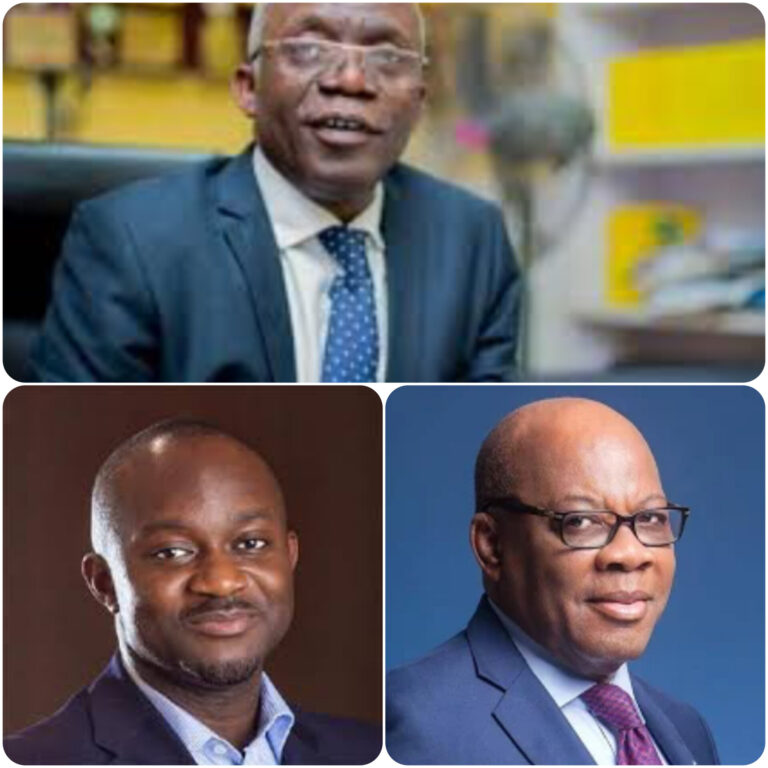
Falana, Agbakoba, Yiaga Africa reject bill making voting compulsory

PROMINENT human rights lawyers Femi Falana and Olisa Agbakoba have opposed the proposed bill to make voting compulsory Nigerians.

Similarly, Yiaga Africa, an election observation and civic advocacy organisation, disapproved of the bill.

They described the bill as unconstitutional.

The ICIR reported that during plenary on Thursday, May 15, the bill seeking to amend the Electoral Act 2022, and make voting compulsory for Nigerians of voting age passed second reading in the House of Representatives.

It is jointly sponsored by Speaker Tajudeen Abbas and Daniel Asama Ago, a lawmaker from Plateau State and member of the All Progressives Congress (APC).

According to the bill, the amendment seeks to address voter apathy and boost civic participation. It proposes a six-month jail term or a fine of N100,000 for eligible citizens who fail to vote.

However, in a statement issued on Monday, May 19, titled Compulsory Voting is Not Enough’, Falana criticised the proposed legislation on constitutional grounds, arguing that the bill contradicts several provisions of the 1999 Constitution, which protect citizens’ rights to privacy, freedom of thought, and freedom of conscience.

“The Speaker of the House of Representatives probably wants Nigeria to join Egypt – the only African country out of 23 globally with provisions for compulsory voting.

“The said constitutional provisions protect the fundamental rights of the Nigerian people to privacy, freedom of thought and conscience, as well as the freedom to register and vote in national and state elections conducted in Nigeria.

“However, it is doubtful whether the Speaker and his colleagues have paid sufficient attention to the relevant provisions of the Constitution. Otherwise, they would have realised that the compulsory voting is constitutionally invalid in every material particular on the ground that it is inconsistent with Sections 37, 38, 77(2), 135(5) and 178(5) of the Constitution.

“Compulsory voting cannot be legalised in vacuo. Apart from the possibility that it may be declared illegal under the current political dispensation, it is practically impossible to prosecute millions of Nigerians who may decide to boycott national and local elections that have been reduced to the periodic renewal of misgovernance, corruption, and abuse of power by pampered members of the political class,” Falana warned.

Similarly, speaking on Channels Television’s Politics Today on Monday, Agbakoba derided the lawmakers’ plan to mandate voting, stating that he would rather go to jail than comply with such a law.

He argued that forcing citizens to vote did not address the underlying reasons why many choose to abstain from elections.

“Look at the ridiculous one in the National Assembly about voting being compulsory. If that bill were to pass, I would say, ‘Agbakoba, we will not obey it.’ I’ll plead a conscientious objection. I’d rather go to prison for six months than to obey it,” he said.

He challenged the logic of the bill, questioning why the National Assembly is pushing to make voting compulsory.

“Why don’t they reverse the question and say, Why are Nigerians not interested? What is the apathy about?”, he asked.

In the same vein, The Executive Director of Yiaga Africa, Samson Itodo, rejected the bill in a statement, arguing that although the bill sought to address low voter turnout, the lawmakers’ approach represented a serious violation of the fundamental rights of Nigerians.

“The said bill is conceived as a legislative intervention to address the abysmally low voter turnout. While the rationale for the bill is plausible because it aims to address one of the biggest challenges in Nigeria’s electoral system, the strong-arm approach adopted by the bill is draconian and it constitutes a gross violation of constitutionally guaranteed fundamental rights.

“Indeed, the right to abstain from voting is itself a legitimate form of political expression protected under domestic and international human rights law,” he said.

The ICIR reported that despite over 93 million registered voters and 87 million who collected permanent voter cards (PVCs), only about 25 million Nigerians voted in the 2023 presidential election.

This translates to a turnout rate of approximately 29 per cent, marking the lowest in Nigeria’s recent electoral history.

The ICIR also gathered regional disparities, with the South-East recording the lowest turnout at 22.3 per cent and the North-Central the highest at 32.83 per cent.

However, Yiaga’s executive stressed that democracy thrives in a climate of freedom, including the freedom to choose whether or not to vote and warned that enforcing punitive measures for non-participation undermined the core principles of voluntary democratic participation.

Can any animal defeat a Silverback gorilla?

YOU have likely come across the viral debate: Who would win in a fight 100 men or one gorilla?  While the silverback gorilla is among the strongest primates on Earth, weighing around 380 pounds and built for power, it is not the undisputed champion of the animal kingdom.

Despite their strength and intimidating presence, gorillas are not invincible. In fact, several animals possess the size, strength, or predatory instincts to potentially overpower a gorilla in a hypothetical one-on-one encounter.

Silverback gorilla: strength and intelligence

Silverback gorillas are the dominant males in gorilla troops, leading through displays of strength and social behaviour. Their bite force is estimated to reach around 1,300 per square inch (PSI), though this figure is speculative due to limited direct measurement. As herbivores, gorillas are not natural combatants and rarely engage in lethal conflict.

Despite their strength and agility, they may struggle against certain animals with specialised adaptations for predation or defence

Contenders:

Elephant: Overwhelming size and power

Adult African elephants can weigh over 10,000 pounds, with tusks in large males weighing over 100 pounds. While elephants are herbivores and not predators, they are capable of defending themselves with considerable force, trampling, uprooting tree with thgeir trunks  or using their tusks when threatened.

Given the vast size difference and the elephant’s defensive capabilities, a silverback gorilla would stand little chance in a direct confrontation.

Crocodile: ambush specialist

Crocodiles are apex predators well-adapted to ambush hunting, particularly in aquatic environments. They are able to camouflage into the environment around them allowing them to sneak up on their prey. With bite forces reaching approximately 3,700 PSI and teeth around 4 inches long, they are capable of crushing bone and subduing large prey.

In or near water, a crocodile would have a clear advantage over a gorilla, whose strength and agility are limited in such an environment.

Both the gorilla and crocodile are tough and sizeable creatures that can inflict a lot of damage when they want. However, if the battle were to take place near water, the silverback gorilla would find itself at a serious disadvantage.

Unlike the gorilla, which might rely on brute force and physical strength, the crocodile uses patience and precision.

Rhinoceros: a heavy-hitter

Rhinos are large, heavily built animals, with some species weighing over 4,000 pounds. Their thick skin and keratin horn, combined with the ability to charge at speeds up to 30 miles per hour, make them formidable defenders.

Though not predators, rhinos react aggressively to perceived threats. A silverback gorilla, despite its strength, would likely be overpowered by a charging rhino.

Tiger: stealth, speed and precision

Tigers are solitary predators capable of taking down prey significantly larger than themselves. They rely on stealth, speed, and precision. A tiger’s agility and powerful bite and claws would be significant advantages in a confrontation.

Anthropologist Rebecca M. Stumpf noted that gorillas would be vulnerable to a tiger’s attack tactics, “Gorillas on their own would be pretty vulnerable to a big tiger and big cats are pretty adept at getting good attack angles and holds.”

Animal behaviourist Marisa Erasmus pointed out that gorillas may respond by fighting, fleeing, or freezing, each with varying outcomes. In a surprise attack, the tiger would likely prevail.

“If a gorilla was confronted by a tiger, the gorilla could fight, take flight, or freeze – these are the three types of anti-predator responses.

Grizzly bear: strength meets ferocity

Grizzly bears are powerful omnivores with strong limbs, large claws, and a bite force of about 1,250 PSI. In a direct confrontation, a grizzly’s size, speed, and brute force would likely overwhelm a silverback gorilla.

Although gorillas are agile and strong, they may not  be able to withstand sustained attacks from predators like bears.

Silverback gorillas are among the strongest primates and display remarkable physical capabilities. However, against much larger or predatory animals such as elephants, crocodiles, rhinos, tigers, or bears, the gorilla would be at a serious disadvantage. While rare in nature, such hypothetical matchups reveal the diversity of survival strategies in the animal kingdom from stealth and precision to overwhelming size and strength

FRSC confirms 3 injured in Karu Bridge accident

THE Federal Road Safety Corps’ (FRSC) Unit Commander in charge of Karu, Ofor Audu, has confirmed that three people were injured in an accident involving a trailer that rammed into a mini truck transporting sachet water at the popular Karu Bridge, along the expressway linking Nasarawa and the Federal Capital Territory, on Monday, May 19.

Audu said that there were no fatalities in the accident. He noted that the injured victims were taken to Nyanya hospital for treatment.

Audu explained that an articulated truck rear-ended the mini truck loaded with sachet water, causing severe damage to the vehicle. He added that the trailer’s driver attempted to flee the scene but was pursued and apprehended by police officers.

The ICIR reports that the accident occurred less than 24 hours after a deadly crash claimed lives at the same location on Sunday, May 18, causing serious gridlock on the road.

It is worth noting that so far this year, the Karu Bridge, along the Nyanya-Keffi road, which connects Benue and Plateau states, has recorded at least three fatal accidents.

In March, the police confirmed that six people lost their lives, and 14 vehicles were burnt in the explosion from a tanker accident within the area.

A heavily loaded Dangote truck lost control and crashed into vehicles in traffic, leading to the explosion. Emergency responders battled the raging flames and thick smoke to rescue people trapped in the inferno.

What does it mean to ‘accept’ or ‘reject’ all cookies, and which should I choose?

By Ahmed Ibrahim, Edith Cowan University and David Cook, Edith Cowan University

IT’S nearly impossible to use the internet without being asked about cookies. A typical pop-up will offer to either “accept all” or “reject all”. Sometimes, there may be a third option, or a link to further tweak your preferences.

These pop-ups and banners are distracting, and your first reaction is likely to get them out of the way as soon as possible – perhaps by hitting that “accept all” button.

But what are cookies, exactly? Why are we constantly asked about them, and what happens when we accept or reject them? As you will see, each choice comes with implications for your online privacy.

What are cookies?

Cookies are small files that web pages save to your device. They contain info meant to enhance the user experience, especially for frequently visited websites.

This can include remembering your login information and preferred news categories or text size. Or they can help shopping sites suggest items based on your browsing history. Advertisers can track your browsing behaviour through cookies to show targeted ads.

There are many types, but one way to categorise cookies is based on how long they stick around.

Session cookies are only created temporarily – to track items in your shopping cart, for example. Once a browser session is inactive for a period of time or closed, these cookies are automatically deleted.

Persistent cookies are stored for longer periods and can identify you – saving your login details so you can quickly access your email, for example. They have an expiry date ranging from days to years.

What do the various cookie options mean?

Pop-ups will usually inform you the website uses “essential cookies” necessary for it to function. You can’t opt out of these – and you wouldn’t want to. Otherwise, things like online shopping carts simply wouldn’t work.

However, somewhere in the settings you will be given the choice to opt out of “non-essential cookies”. There are three types of these:

  • functional cookies, related to personalising your browsing experience (such as language or region selection)
  • analytics cookies, which provide statistical information about how visitors use the website, and
  • advertising cookies, which track information to build a profile of you and help show targeted advertisements.

Advertising cookies are usually from third parties, which can then use them to track your browsing activities. A third party means the cookie can be accessed and shared across platforms and domains that are not the website you visited.

Google Ads, for example, can track your online behaviour not only across multiple websites, but also multiple devices. This is because you may use Google services such as Google Search or YouTube logged in with your Google account on these devices.

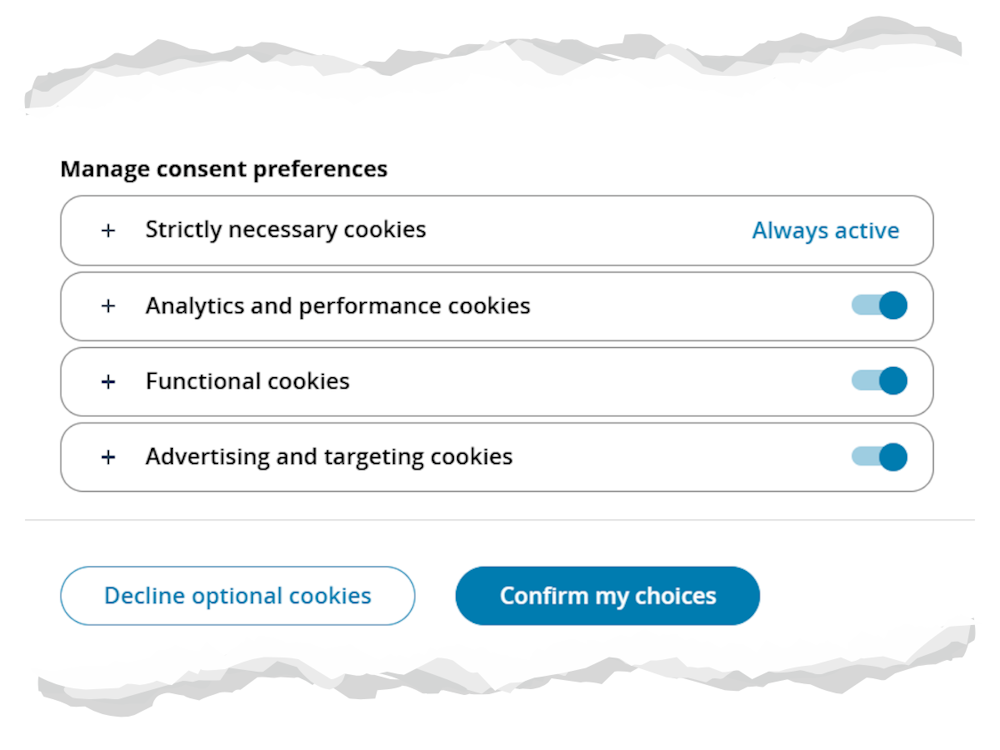
An example of cookie preferences offered by a website.
The Conversation

Should I accept or reject cookies?

Ultimately, the choice is up to you.

When you choose “accept all,” you consent to the website using and storing all types of cookies and trackers.

This provides a richer experience: all features of the website will be enabled, including ones awaiting your consent. For example, any ad slots on the website may be populated with personalised ads based on a profile the third-party cookies have been building of you.

By contrast, choosing “reject all” or ignoring the banner will decline all cookies except those essential for website functionality. You won’t lose access to basic features, but personalised features and third-party content will be missing.

The choice is recorded in a consent cookie, and you may be reminded in six to 12 months.

Also, you can change your mind at any time, and update your preferences in “cookie settings”, usually located at the footer of the website. Some sites may refer to it as the cookie policy or embed these options in their privacy policy.

How cookies relate to your privacy

The reason cookie consent pop-ups are seemingly everywhere is thanks to a European Union privacy law that came into effect in 2018. Known as GDPR (General Data Protection Regulation), it provides strict regulations for how people’s personal data is handled online.

These guidelines say that when cookies are used to identify users, they qualify as personal data and are therefore subject to the regulations. In practice, this means:

  • users must consent to cookies except the essential ones
  • users must be provided clear info about what data the cookie tracks
  • the consent must be stored and documented
  • users should still be able to use the service even if they don’t want to consent to certain cookies, and
  • users should be able to withdraw their consent easily.

Since a lot of website traffic is international, many sites even outside the EU choose to follow GDPR guidelines to avoid running afoul of this privacy law.

Better privacy controls

Cookie pop-ups are tiresome, leading to “consent fatigue” – you just accept everything without considering the implications.

This defeats the purpose of informed consent.

There is another way to address your online privacy more robustly – Global Privacy Control (GPC). It’s a tech specification developed by a broad alliance of stakeholders (from web developers to civil rights organisations) that allows the browser to signal privacy preferences to websites, rather than requiring explicit choices on every site.

GPC is not universally available, and it’s not a legal requirement – a number of browsers and plugins support it, but broader adoption may still take time.

Meanwhile, if you’re worried you may have accidentally consented to cookies you don’t want, you can find an option in your browser settings to delete cookies and get back to a clean slate (be warned, this will log you out of everywhere). If you want to learn even more, the non-profit Electronic Frontier Foundation has a project called Cover Your Tracks.The Conversation

Ahmed Ibrahim, Senior Lecturer, Computing and Security, Edith Cowan University and David Cook, Lecturer, Computer and Security Science, Edith Cowan University

This article is republished from The Conversation under a Creative Commons license. Read the original article.