Home Blog Page 276

Dangote releases new petrol pump price template

0

THE Dangote Petroleum Refinery has announced a new pump price template to be followed by its partners retail outlets.

The template was published on the Dangote Group’s official X handle on Thursday, May 22.

The notice showed the new pump prices to be sold to the retail outlets across the states.

“New Reduction in PMS (Petrol) Pump Price. Buy from our partners’ retail outlets nationwide at the following prices per litre,” the notice read.

It listed the retail outlet partners as MRS, AP (Ardova), Heyden, Optima Energy, Techno Oil, and Hyde.

According to the notice, the refinery fixed the petrol pump price at N875 per litre in Lagos and N885 in other southwest states.

In the northwest and north-central, the refinery also fixed the pump price of petrol at N895 per litre.

In the north-east, south-south and south-east states, the refinery fixed the pump price of petrol at N905 per litre.

It urged all petrol users to report non-compliance with any of its partners retail outlets.

The ICIR can report that the Dangote refinery has been initiating price reductions of petrol and other petroleum products at both its ex-depot and partners’ retail outlets’ pump prices since the refinery came on stream.

The refinery had lately, on April 16, slashed product prices, prompting all its key partners to reduce their pump prices.

At the time, it fixed the petrol pump price at N890 per litre in Lagos and N900 in other southwest states.

In the northwest and north-central, the refinery fixed the pump price of petrol at N910 per litre.

In the north-east, south-south and south-east states, it also fixed the pump price of petrol at N920 per litre.

The price adjustment came after the refinery announced a reduction in the gantry price of its product from N865 to N835.

The price drop, which took immediate effect, marked the second price reduction within that week of April, The ICIR reported.

Also in February, the refinery reduced prices twice by N125.

In addition, products such as diesel and Liquefied Petroleum Gas (LPG) have also experienced significant price reductions due to the refinery’s sustained efforts.

The consistent changes in petrol prices at its partners’ retail outlets, pump and ex-depot prices, oil marketers had said, were expected in a deregulated market.

“It also shows that we are moving in tandem with deregulation and price dynamics. In a competitive, deregulated petroleum market, this is expected,” a former chairman of the Major Oil Marketers Association of Nigeria (MOMAN), Adetunji Oyebanji, had told The ICIR.

U.S. Consulate, FIJ launch fellowship for Nigerian journalists

THE U.S. Consulate General in Lagos, in collaboration with the Foundation for Investigative Journalism (FIJ), has launched the Adejumobi Adegbite Fellowship to support young Nigerian journalists.

Named in honour of the late Adegbite, a former U.S. Consulate staff and journalist, the one-year fellowship will provide training, mentorship, and tools to 10 early-career reporters.

Applicants must have under five years of journalism experience and submit two published investigative stories alongside a personal statement and CV.

Interested applicants are to email the above to programmes@fij.ng on or before Monday, May 26, 2025:

The fellowship aims to promote excellence and integrity in investigative reporting in Nigeria.

Father of slain Ibadan boy demands justice, says he’s been raising his children alone

0

THE father of 14-year-old Kehinde Alade, who was shot and killed by a police officer in Ibadan on Monday, May 19, has demanded justice for his son.

He described the incident as a monumental abuse of power and a failure of Nigeria’s law enforcement system.

Kehinde, a secondary school student, was on his way to school, in his father’s car, when a stray bullet struck him while police and officials of the Oyo State Traffic Management Authority (OYTMA) were chasing his father along the Alakia-Adelubi/Airport Road, in Egbeda Local Government Area of Oyo State.

The boy’s father, Odunayo Alade, who was driving the vehicle, said trouble began after he stopped briefly to pump his tyres at a nearby junction. 

According to him, the police and OYTMA officials had attempted to stop his black Honda Accord, which drove against traffic, after he was done pumping his car.

He recounted the experience while speaking with newsmen in his house, according to a report  by Vanguard Newspaper.

“When I came out of the house, I needed to pump the tyre at a junction close by,” he was quoted to have said.

“As the vulcaniser finished, I entered the car to move and, as I moved, I saw a car moving towards me. I did not know it belonged to the Oyo State Traffic Management Authority.

“As soon as I saw them, I moved, but they tried stopping me, and, in the process, they hit my car. I, thereafter, put the car in reverse to bypass them, but I did not know four vehicles were chasing me,” he added.

He said that one of the officials’ towing vehicles hit his car, but he managed to manoeuvre away from the scene until his attention was called to the gunshot injury suffered by his child, after one of the police officers chasing him shot his son from behind.

He stressed that the boy was subsequently rushed to the hospital and later referred to the University College Hospital (UCH), where he was pronounced dead.

“As I parked to bring the boy out, the policemen and officials of the Oyo State Traffic Management Authority were running after me. In the process, I held onto one of them. People gathered and rushed the boy to the hospital, and, from there, he was taken to UCH. Unfortunately, when we got there, he gave up the ghost,” Alade narrated.

The bereaved father dismissed being involved in any criminal activity and stated that he was unaware of the true intentions of the officials pursuing him. 

He questioned whether the officials mistook him for a cybercrime suspect, stating that his only mission that morning was to drop his children off in their schools.

He said Kehinde was a bright and promising student. 

He clarified that it was Kehinde’s elder brother who was sitting for the West Africa Senior School Certificate Examination (WASSCE), and not the late boy as widely reported.

The slain boy was in SSS1 and would have turned 14 on November 26.

Speaking further, Alade stated that he had been raising his children alone for seven years after being ‘abandoned’ by their mother.

He said “I have turned down opportunities to remarry because I wanted to focus on raising my kids. I often wonder which woman would accept me and my situation without jeopardising their well-being.”

He further demanded justice for his son, noting that “This cannot go unpunished. I want those responsible to be held accountable. No parent should have to endure the pain of losing a child in such a senseless manner.”

 Police confirm detention of officer, blame father

Recall that hours after the incident, the Oyo State Police Command confirmed that the officer who shot the boy had been taken into custody. 

The police, however, blamed the boy’s father for driving against traffic.

In a statement, the police alleged that Alade accelerated dangerously, hit two OYTMA vehicles and a police patrol truck, and broke through barricades, prompting suspicions of abduction or criminal activity. 

“Given the nature of the driver’s conduct, officers suspected possible criminal activity or a case of abduction. A police chase ensued. In an attempt to immobilise the vehicle, a police corporal discharged a firearm aimed at the tyres.

“Tragically, the bullet missed and struck Kehinde Alade ‘m’, who was seated in the rear seat behind the driver,” the police said.

The ICIR reports that the boy’s killing came barely 24 hours after the Lagos State Police Command arrested one of its officers, Obic Modestus, an inspector, for assaulting an Uber driver in a case that drew widespread condemnation after a video of the attack went viral.

The Lagos Command confirmed that Modestus had been summoned by its Complaint Response Unit and would face disciplinary action through the Provost Department.

Despite the claims of reform in the Nigeria Police Force, the incident added to a series of reported cases of police misconduct in the country.

Similarly, in spite of the disbandment of the Special Anti-Robbery Squad (SARS) in 2020 following the #EndSARS protests, reports of police brutality have persisted.

The latest incident came barely two weeks after The ICIR published a detailed investigation of police brutality in Kwara State.

The report highlighted how the killings of Qoyum Ishola, allegedly by police officers in the state, added to a disturbing trend of young men in Kwara, particularly those perceived as successful or ‘flashy,’ are increasingly targeted by law enforcement officers.

Taraba Investment Summit: Atiku advocates private sector-led partnership models for states

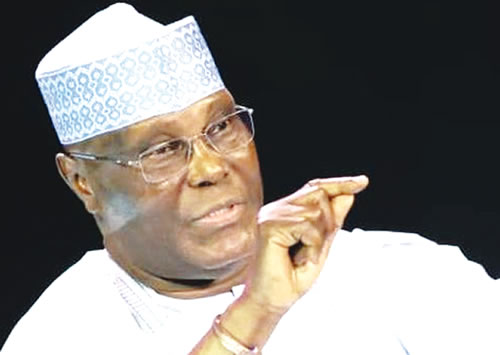
FORMER Vice President Atiku Abubakar said states would benefit more from investments and wealth creation if they partnered with the private sector in their developmental projects.

He said a private-sector-led partnership between states and investors would make states economic hubs and provide more resources for them in the fight against poverty.

Atiku stated this at the Taraba Investment Summit held on Wednesday, May 21, in Jalingo.

The summit was themed, “Unlocking Taraba’s Investment Potentials, Advancing Agriculture, Energy, Mining and Industrialisation for Sustainable Growth and Development.”

He lauded the state Governor Kefas Agbu’s  initiative to gather investors – both domestic and international – alongside development partners under one roof, adding that, “it aligns with a broader vision to build a prosperous and secure Taraba state.”

The former vice president noted that if Taraba desired to achieve its potential and grow its economy sustainably, it must endeavour to leverage private sector resources.

While stressing the importance of such partnership, he noted that no Nigerian state had the necessary financial strength to independently drive growth and achieve sustainable development.

“Building strategic partnerships between states and private investors in local businesses and communities is critical in addressing resource gaps and unlocking the potential of the states to facilitate investments,” he said.

He argued that private investments would help bridge resource gaps through additional external resource flows, and increase internally generated revenue.

Speaking further on the benefits of private-sector-led investments in the state, he said, “Private investments will assist the state in leveraging and maximising the economic potential of its agricultural, which is bountiful, as well as industrial and solid minerals, for which Taraba is well known.”

He said such a partnership was a foundation for a diversified economy and  inclusive growth, stressing that “through skills and technology transfers, private investments can lead to higher productivity and improved competitiveness in local enterprises.”

He added  that the partnership would give additional revenue inflow to Taraba and other states, with needed resources to support their social and economic infrastructure and human capital development.

“With investments in education and health, such a partnership will develop the capacities and competition for the state in human resources. It will also give Taraba and other states that embraced the model additional resources to  support the poor and the vulnerable by empowering them and ensuring equitable distribution of resources to minimise poverty.”

According to the Adamawa-born politician, Taraba’s economy can be optimised to reap these benefits to enhance its vision of a secure investment climate.

He urged the state government to eliminate bottlenecks and investment risks that could dissuade prospective investors access into the state.

The ICIR reports that Taraba State possesses an array of natural resources, including bauxite, limestone, and gemstones. Its land is very rich for agricultural activities. Similarly, the state has huge tourism potentials.

An earlier report by The ICIR noted that among the dignitaries at the summit are Vice President Kashim Shettima, former Vice President Atiku Abubakar, Sultan of Sokoto Muhammadu Sa’ad Abubakar, Ooni of Ife, Adeyeye Enitan Ogunwusi, Chairman of United Bank for Africa (UBA), Tony Elumelu, and the Catholic Archbishop of Abuja, His Grace, Ignatius Kaigama.

French media set to takeover MultiChoice, owner of DStv, GOtv

0

SOUTH Africa’s competition authority has approved a French media company, Canal+, for the buyout of one of Africa’s largest pay TV, MultiChoice, owner of DStv and GOtv.

The Canal+ announced this in a statement on Wednesday, May 21, affirming its plans to expand its footprint on the continent.

The merger, which has been in the works for nearly a year, needs the final go-ahead from the commission’s Competition Tribunal, the company stated.

Canal+ holds around 45 per cent of MultiChoice’s shares and offered last year to acquire the remainder for 125 rand per share.

The company is present in 25 African countries through 16 subsidiaries and has eight million subscribers, according to the French group.

MultiChoice operates in most countries across sub-Saharan Africa with millions of subscribers.

It includes Africa’s premier sports broadcaster, SuperSport, and the DStv satellite television service.

“This is a major step forward in our ambition to create a global media and entertainment company with Africa at its heart,” Canal+ CEO Maxime Saada said in the statement.

It noted that the approval of the merger was subject to public interest conditions worth about 26 billion rand over three years, including increasing the shareholding of people disadvantaged under South Africa’s white-minority apartheid regime.

It will also maintain the MultiChoice headquarters in South Africa.

A date for the Tribunal’s decision on the merger has not been announced, but Canal+ stated that it was aiming for the deal to be completed by early October.

‘FG makes 52 kobo from every N1 sale of Dangote cement’

THE chairman of Dangote Group, Aliko Dangote, has revealed that the Nigerian Government earned 52 kobo from every N1 sale of cement produced and sold by the Dangote Cement.

He disclosed this at the 2025 Taraba International Investment Summit on Wednesday, May 21.

The summit was themed, “Unlocking Taraba’s Investment Potentials, Advancing Agriculture, Energy, Mining, and Industrialisation for Sustainable Growth and Development.”

Dangote said the summit’s focus was apt, given the need to diversify the state’s economy and attract investors.

“I’m sure it might be shocking to you to know that the Federal Government of Nigeria, not even the state, makes more money from, for example, our cement business.

“For every one naira we turn around, 52 kobo goes to the Federal Government of Nigeria,” Dangote said.

He pointed out that government would benefit from investments, either private or public, when it creates an environment for them to operate and pay their taxes.

“We always say that the government has no business in business. If it’s true, they don’t have business in business. Though, how are they going to make money, educate people, you know, do the hospital, road, infrastructure? It’s through what? Taxes.

“Have you ever heard of the American government owning an oil block? No, the American government doesn’t own an oil block. And they are the biggest producers of oil today in the world. But they make their money through taxes,” the billionaire businessman said.

He maintained that if the government encouraged more investments, the businesses would create jobs.

“It’s true, you are our political leaders. Political leaders will give all sorts of promises. If they give a promise of creating jobs, they don’t have factories.

“They are not in business. They don’t have jobs. I mean, they are not in the business of either industry, banking, or whatever. So, the only way for them to create prosperity and wealth is through the private sector,” Dangote said.

He emphasised private sector as the engine of growth, while stressing the importance of cooperation between the government and the private sector.

He pointed out that the declaration of “Nigeria First” by President Bola Tinubu meant investors would look more inward to invest and create more jobs.

He further assured the Taraba State Governor Kefas Agbu that the Dangote Group would partner with the state to drive investment and wealth creation.

“We will not go anywhere and invest. We want to remain at home. We want to keep investing in Nigeria.

“We want to keep creating jobs. And nobody will take a dime to his grave. So, if nobody will take a dime to his grave, what will give us the satisfaction of even being human beings is to make sure that we impact the lives of other people,” Dangote said.

Adding that the Dangote Group believed in impacting people’s lives by massively creating jobs, he said, “We’ll keep creating jobs, jobs and jobs and jobs.”

Among the dignitaries at the summit are Vice President Kashim Shettima, former Vice President Atiku Abubakar, Sultan of Sokoto Muhammadu Sa’ad Abubakar, Ooni of Ife, Adeyeye Enitan Ogunwusi, Chairman of United Bank for Africa (UBA), Tony Elumelu, and the Catholic Archbishop of Abuja, His Grace, Ignatius Kaigama.

Some politicians, military officers work with Boko Haram – Zulum

BORNO State Governor, Babagana Zulum, has accused some Nigerian politicians and members of the armed forces of serving as informants and working with Boko Haram insurgents.

Zulum stated this on Wednesday during an interview on News Central’s Breakfast Central, where he outlined some of the challenges his state had encountered in its fight against insurgency.

The governor called on President Bola Tinubu to prioritise ground-level intelligence and heed professional advice from the military.

“The forest guard shall be provided immediately. The President of Nigeria needs to listen to those who can differentiate their left from their right.

“We should not politicise insecurity. The President needs to listen to the people who can tell him the right thing. The President should listen to the Army,” he stated.

While pledging to reinforce the state’s intelligence network and take firm action against saboteurs, the governor emphasised that the real challenge was not insurgents who had laid down their arms, but the saboteurs among politicians, the armed forces, and within local communities who fuel the insurgency.

“We have informants and collaborators within the Nigerian armed forces, within the politicians, and within the communities. Let’s remove contractocracy. In six months, we can put an end to this madness. We need not politicise insecurity,” Zulum pleaded.

Speaking on the impact of the insurgency in the state, Zulum said that before 2022, Borno lost around 5,000 classrooms and a 300-hectare facility to insurgency.

The conflict also produced over 100,000 widows and orphans, he said, adding that although efforts had been made to rebuild some of the damaged infrastructure, ongoing attacks continue to cause further destruction.

“Wether we like it or not, insurgency will cripple the socioeconomic activities in the state but we are coming back stronger” he said.

While stressing that the military alone would not end insurgency because they could not boast of good weapons like the insurgents, the governor reiterated the importance of adopting both kinetic and non-kinetic approaches to address the crisis.

“Insurgency will never be ended by kinetic measures alone. We must ensure that the non-kinetic measures are also properly put in place.

“What I mean by non-kinetic measures is social, political, and economic dimensions of the crisis. Our ongoing non-kinetic measures have yielded positive results with the support of the Nigerian military.

“I cannot completely say that 100 per cent of those people who have surrendered are doing the right thing, but I want to assure you that over 99 per cent are doing well and are not participating in the ongoing terrorism,” Zulum argued.

The ICIR reported last week that the governor banned the sale of petrol in filling stations across the Bama Local Government Area of the state, as part of efforts to address security challenges in the area.

Zulum reaffirmed his administration’s commitment to achieving lasting peace in the state and urged residents to cooperate in the fight against insurgency.

The ICIR reports that Borno State is among Nigerian states that have suffered from Boko Haram bombardments, abductions, killings and displacements of Nigerians for over a decade.

Tinubu has failed Nigerians, his supporters are deaf, dumb – Babachir Lawal

FORMER Secretary to the Government of the Federation, Babachir Lawal, has accused President Bola Tinubu of leading Nigeria into economic collapse and worsening insecurity.

Lawal, who spoke on Arise TV’s “The Morning Show” on Wednesday, May 21, said Tinubu’s Muslim-Muslim ticket had backfired, pushing the country into deeper hardship.

Lawal, who served under former President Muhammadu Buhari, has been a vocal Tinubu critic since the build-up to the 2023 elections.

He said on the TV show that those praising Tinubu’s government were dumb and blind to the realities the country faced.  

“I think they (his supporters) have cotton wool in their ears or they are blind. Because insecurity has increased. It has grown exponentially since the arrival of Bola Tinubu’s government,” he said.

While The ICIR has yet to independently verify the claim of insecurity rising exponentially under Tinubu compared with his predecessor, Buhari, this organisation earlier in May 2025 reported that insecurity remained a widespread and persistent challenge across many parts of Nigeria. 

According to data sourced from the Armed Conflict Location & Event Data (ACLED) and analysed by The ICIR, 18,079 people have been killed, while 8,043 have been reported missing in Nigeria during Tinubu’s two years in office, between May 29, 2023, and May 2, 2025.

The former SGF linked Nigeria’s current socio-economic crises to what he called an ‘evil’ decision to impose a Muslim-Muslim ticket, which he insisted violated equity and justice. 

According to him, the decision was a political misstep and a moral failure that alienated a large portion of the population.

He claimed that Tinubu’s recent presence at Pope Leo XIV’s inauguration mass in Rome proved his disdain for the Christian faith.

Tinubu attending the Pope’s inauguration “reinforces my earlier belief that the Muslim ticket is an insult to Christianity. Had there been a Christian as the vice president, it’s only expected that he would be the one to represent the government. But now in Nigeria, we have a so-called Muslim visiting the Pope, leading a delegation of Catholics, eminent Catholics, to the Vatican.

“So it proves the fact that a Muslim ticket is an unfair arrangement,” he said.

Speaking on the state of the nation’s economy under Tinubu, Lawal stated that the poverty level had multiplied exponentially.

The poverty has multiplied exponentially. Even those who were doing well feel now threatened that they are next to poverty because the economy has collapsed. Completely collapsed. 

“We are just surviving by the grace of God-on a hand-to-mouth basis. They are borrowing money that doesn’t arrive in Nigeria before it is spent,” he said.

He stressed that the administration’s strength could not be judged by its appraisal by the International Monetary Fund (IMF) and the World Bank, or “some northern politicians,” whom he said did not have good intentions for the country.

Speaking further on his relationship with Tinubu, Lawal said that he severed ties with Tinubu and the ruling APC after the Muslim-Muslim ticket was adopted during the 2023 elections.

He revealed that he and other political actors, including former Vice President Atiku Abubakar, were in talks to form a credible opposition ahead of the 2027 general elections.

The ICIR reports that since the commencement of Tinubu’s administration, Nigeria has been battling high inflation, which rose for the third straight month in November 2024, soaring to a 34.80 per cent in December 2024,  up from 34.6 per cent. 

Although, the National Bureau of Statistics (NBS) recently reported that Nigeria’s inflation eased to 23.71 per cent in April, 2025, from 24.23 per cent in March, this does not necessarily mean that the prices of commodities have dropped sharply as a recent interview published by The ICIR spotlighted that the cost of living remained high.

Applications open for Sir Harry Evans Global Fellowship

DURHAM University and Reuters have opened applications for the 2026 Sir Harry Evans Global Fellowship in Investigative Journalism. 

The nine-month programme offers early-career journalists a chance to work on a major investigative project while embedded in a Reuters newsroom in London, New York, Toronto, or Sydney.

Selected fellows will receive a monthly salary of £4,444, a £1,250 monthly living stipend, and £1,800 in travel support. They will also engage with Durham University’s Institute of Advanced Studies and present a seminar on their work.

The fellowship is open to journalists with two to five years of experience, with consideration given to applicants from related fields.

Applications close on June 18, 2025.

Interested applicants can apply here.

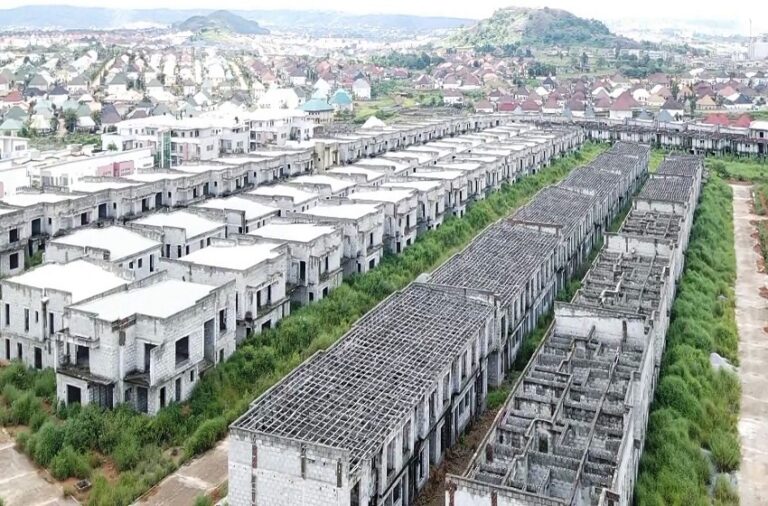
Nigerian government to auction Emefiele’s forfeited 753 duplexes

The Federal Government has announced plans to sell 753 housing units recovered from former Central Bank of Nigeria (CBN) Governor Godwin Emefiele, as part of ongoing efforts to recover and repurpose the proceeds of crime.

The development was confirmed on Tuesday in a statement by the Director of Press and Public Relations at the Ministry of Housing and Urban Development, Salisu Haiba, Tuesday evening.

According to the statement, the Economic and Financial Crimes Commission (EFCC) handed over the estate containing the mansions to the Minister of Housing and Urban Development, Ahmed Dangiwa.

They are located on a 150,462.86 square metre at Plot 109, Cadastral Zone C09, Lokogoma District, Abuja.

The EFCC Chairman, Olanipekun Olukoyede, said President Bola Tinubu ordered the transfer of the mansions as part of a broader effort to ensure recovered assets are used productively.

He emphasised the importance of transparency and accountability in the management of forfeited properties.

Olukoyede also pledged that the EFCC would monitor the completion of the project and provide regular updates to the Presidency.

The minister (Dangiwa) commended the EFCC’s leadership for its continued commitment to combating corruption and recovering public assets.

He revealed that the Ministry would conduct a joint assessment of the estate with the EFCC to evaluate the buildings’ structural integrity and the status of supporting infrastructure.

The Minister added that the housing units would be made available for both public sale and special government needs.

The public sale will be managed through a transparent, competitive process involving nationwide advertisements and applications via the Renewed Hope Portal.

Backstory

The EFCC had obtained a court injunction to permanently forfeit the property to the Federal Government.

The EFCC on Monday, December 2, 2024, announced the recovery of what it described as the “largest ever” seized assets but withheld the name of the person linked to the property.

Emefiele, through his lawyer, A.M. Kotoye, a senior advocate, later filed a motion as an interested party.

Emefiele, who served the majority of his ten-year term under former President Muhammadu Buhari, has been involved in multiple corruption cases.

In November 2023, Emefiele was sent to Kuje Correctional Centre over an alleged N1.6 billion procurement fraud after he was arraigned on a six-count charge before an FCT High Court on Friday, November 17.

In another case involving the former CBN governor in April 2024, a Lagos State High Court granted N50 million bail to him for abuse of office and other infractions.

The EFCC also claimed that Emefiele made an arbitrary decision in Lagos between 2020 and 2021 by allocating foreign exchange of $291,945,785.59 without calling for bids, which the prosecutor said was an abuse of his office as the CBN governor.

Among other accusations, Emefiele was also said to have arbitrarily taken another decision in 2021 by allocating foreign exchange worth $1,769,254,793.16, which the EFCC said made him violate and abuse his position as the CBN governor.