THE Federal Capital Territory Administration (FCTA) has announced that from Monday, May 26, it would begin taking possession of revoked 4,794 land titles in high-brow areas of the nation’s capital due to their owners failure to pay ground rent, which has been outstanding for periods ranging from 10 to 43 years.
The FCTA disclosed this on Friday, May 23, while briefing journalists in Abuja.
Present at the briefing were the FCT Minister’s Senior Special Assistant on Public Communications and New Media, Lere Olayinka, the Director, Land Administration, Chijioke Nwankwoeze and the Director, Department of Development Control, Mukhtar Galadima.
“Ownership of the revoked 4,794 properties in the Central Area, Garki I and II, Wuse I and II, Asokoro, Maitama and Guzape districts, had already reverted to the FCTA, and as from Monday, next week, the government will begin to exercise its rights of ownership on the affected landed properties.
“As usual, this will be done without consideration as to ownership of the affected landed properties. It will be purely in line with extant laws and regulations guiding the process.” Olayinka said.
The ICIR reported in March that the FCT Minister, Nyesom Wike, approved the revocation of 4,794 land titles in the nation’s capital due to alleged non-payment of ground rent for over 40 years, which included the Peoples Democratic Party (PDP) national secretariat, Central Bank of Nigeria, and other Federal government agencies.
The FCTA emphasised that despite numerous public notices issued since 2023, some property owners continued to default on their ground rent obligations, even though such payments are mandated by existing laws.
Olayinka explained that a 21-day grace period was granted to those who did not pay from one to ten years, to pay up or have their land titles revoked.
Speaking at the briefing, the Director of Development Control explained that refusal to pay the ground rent violated the terms and conditions of the Rights of Occupancy granted, in accordance with Section 28, Subsections 5(a) and (b) of the Land Use Act. As a result, the titles of the properties in default were revoked in March 2025.
“We did say then that consequent upon the revocation of these titles, ownership of the affected properties has reverted to the Federal Capital Territory Administration (FCTA). Therefore, from Monday, May 26, 2025, the FCTA will begin to exercise its lawful rights of taking possession of these revoked properties”.
He said effective from Monday, affected properties would be sealed off and access to them would be restricted, stressing that the FCTA would determine the future of the properties.
He said the FCTA had not been stopped by any court ruling from carrying out the decision, debunking claims that some property owners had taken the matter to court.
“It is important to state that payment of ground rent on landed properties in the FCT is founded on extant legislation. It is clearly stipulated in the terms and conditions of grant of right of occupancy, and it is due for payment on the first day of January, each year, without demand”.
The ICIR reported that a PDP chieftain, Bode George, accused the FCT Minister of crossing the red line by superintending over the decision to revoke the land in March.
Reacting, Olayinka had said his principal should not be blamed for the decision.
Olayinka argued that the party’s leadership, not Wike, should be blamed for failing to pay ground rent for 28 years, which ultimately led to the revocation.
He further claimed that the PDP was required to pay N26.9 million to obtain ministerial consent for the property’s purchase but failed to make the payment. Instead, the party sought a waiver from the former FCT Minister, Nasir El-Rufai, citing financial constraints, but the request was denied.
In December 2024, The ICIRreported that Wike revoked ownership of 762 plots of land in Abuja’s upscale Maitama district due to non-payment of statutory fees which affected notable figures like former President Muhammadu Buhari and former Chief Justice of Nigeria (CJN) Walter Onnoghen.
THE Federal Government stated that it has recovered a $200 million bond paid in arbitration related to its successful case against Process & Industrial Development (P&ID) concerning an $11 billion judgment debt.
The Attorney General of the Federation (AGF), Lateef Fagbemi, revealed this during a press briefing held late Thursday, May 22.
He disclosed similarly that the Nigerian government expects to recover its legal costs incurred during litigation, which are worth “tens of millions” of pounds.
According to the AGF, the favourable outcome of the case resulted in the release of Nigeria’s $200 million bond.
“For completeness, I want to say that before we went into this arbitration, there was a demand for a deposit or bond of $200 million, which Nigeria paid. After our success, this bond was released,” Fagbemi reportedly said.
He stressed that the legal team’s ability to navigate the complexities of international arbitration exposed the fraudulent foundations of the initial award.
The ICIR had reported that the judgment debt was given in favour of Nigeria in a London Court on Monday, October 23, 2023.
The ruling came after five years of legal fireworks, awarded to the advantage of Nigeria, as the court quashed the $11 billion arbitration award in favour of P&ID.
Nigeria was embroiled in a fight with P&ID over a failed 2010 deal to develop a gas processing plant, which the company inflicted a $9 billion judgment that rose to $11 billion.
P&ID claimed Nigeria violated the terms of its agreement by failing to provide gas for the power plant it wanted to build for the country.
This was claimed to have frustrated the construction of the gas project agreed to by the government of former President Umaru Yar’Adua and deprived P&ID of the potential benefits expected from 20 years’ worth of gas supplies with “anticipated profits of $5 to $6 billion.”
During his time in office, former President Goodluck Jonathan reached an out-of-court agreement for the payment of $850 million and passed on disbursement to the administration of the immediate past President Muhammadu Buhari.
Buhari frustrated the idea of paying the negotiated sum, set aside the settlement agreement, and challenged the enforcement of the award before the English Commercial Court.
HARVARD University has condemned President Donald Trump-led United States (US) Government’s abrupt move to strip it of the ability to enrol international students.
The university described the decision as a retaliatory act that threatens academic freedom and the futures of thousands of scholars.
In a statement Thursday, May 22, the institution described the revocation of its Student and Exchange Visitor Program (SEVP) certification as ‘unlawful’ and ‘retaliatory.’
“This retaliatory action threatens serious harm to the Harvard community and our country, and undermines Harvard’s academic and research mission,” the statement read in part.
The US government through the Department of Homeland Security (DHS), had on Thursday, revoked Harvard rights to enrol foreign students effective immediately.
The DHS Secretary, Kristi Noem, in a statement, accused Harvard of refusing to comply with requests for records involving nonimmigrant students, ranging from disciplinary records to protest-related footage spanning the past five years.
Noem alleged that Harvard had created an unsafe campus environment that was hostile to Jewish students, promoted pro-Hamas sympathies, and enforced racist diversity, equity, and inclusion policies.
She stressed that as a result, the university had forfeited the privilege of enrolling international students.
“The revocation of your Student and Exchange Visitor Program certification means that Harvard is prohibited from having any aliens on F- or J – non-immigrant status for the 2025-2026 academic school year. This decertification also means that existing aliens on F- or J- nonimmigrant status must transfer to another university in order to maintain their nonimmigrant status.
“This action should not surprise you and is the unfortunate result of Harvard’s failure to comply with simple reporting requirements,” the statement added.
The DHS secretary in a post accompanying the statement on X, threatened other institutions into complying with the DHS request.
“Let this serve as a warning to all universities and academic institutions across the country,” she wrote.
What Harvard must do – DHS
However, the Department outlined specific conditions Harvard must meet before the SEVP certification could be reconsidered.
The organisation said it was expecting response on “any and all records, whether official or informal, in the possession of Harvard University, including electronic records and audio or video footage, regarding illegal activity whether on or off campus, by a nonimmigrant student enrolled in Harvard University in the last five years.”
It als requested for the documentation of any “violent or dangerous activity” involving nonimmigrant students.
The government further demanded records of threats made against students or staff, including evidence in any form, attributed to foreign students.
“Any and all disciplinary records of all nonimmigrant students enrolled in Harvard University in the last five years.
“Any and all audio or video footage, in the possession of Harvard University, of any protest activity involving a nonimmigrant student on a Harvard University campus in the last five years,” the statement added.
THE United Kingdom Office for National Statistics has said that approximately 52,000 Nigerians migrated to the United Kingdom in 2024, placing Nigeria among the leading sources of non-EU+ migration to the UK during the year.
The UK Office revealed this in its 2024 migrants journey report released late Thursday, estimating a net migration at “431,000, down from 860,000 in the previous year.”
It revealed that Nigeria joined India, Pakistan, and China as one of the leading contributors to non-EU+ migration to the UK.
The ICIR reports that the latest influx occurred despite a sharp drop in overall net migration to the UK, which fell by nearly 50 percent in the year ending December 2024.
The ONS noted that 27,000 Nigerian migrants arrived in the UK on work-related visas, 22,000 on study visas, and the remaining 3,000 under other immigration categories.
“Work and study-related immigration were the primary reasons for migration among Indian, Pakistani, and Nigerian nationals,” the ONS report stated.
The report also revealed that 83 percent of non-EU+ migrants were of working age (16–64 years), with males making up 52 per cent and females 48 per cent. Children under 16 made up 16 per cent of migrants, while only one per cent migrants were over the age of 65.
It said that many people who arrived during or after the COVID-19 pandemic had since returned to their home countries, especially those who came on study visas.
Work-related immigration among primary applicants experienced the largest numerical decline, dropping by 108,000, a 49 per cent decrease compared to the previous year.
While study-related immigration declined by 17 per cent, the number of study dependents fell by 86 per cent, the most significant drop recorded.
The report shows that although immigration from countries like Nigeria remained significant, the overall drop in migration was largely due to a decrease in work and study visa arrivals, particularly from non-EU+ countries and a rise in emigration.
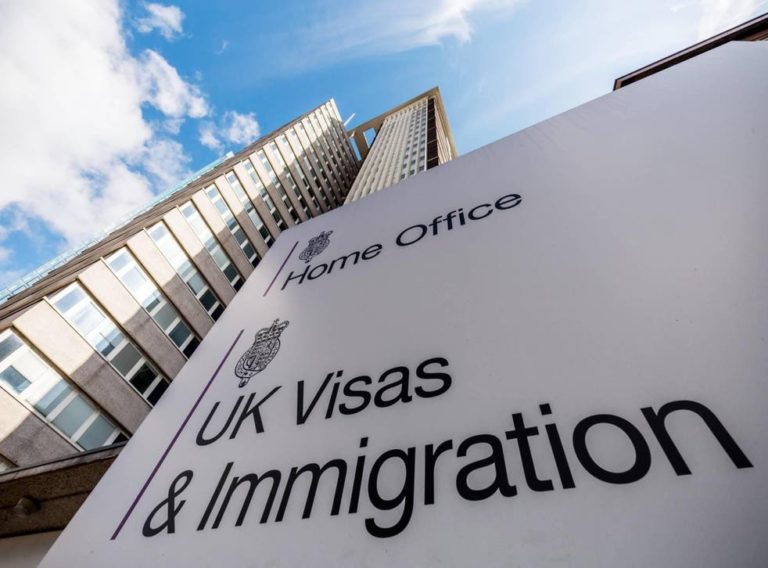
The ICIRreported that the United Kingdom was set to introduce new and tighter visa access for citizens of Nigeria, Pakistan, and Sri Lanka, citing concerns over high rates of visa overstays and a surge in asylum applications from these countries.
The Home Office said it was preparing to introduce stricter immigration policies targeting nationalities identified as having a greater likelihood of remaining in the country beyond the terms of their visas.
The UK authorities said that the proposed restrictions were prompted by a trend of individuals entering the country on work or study visas and subsequently applying for asylum.
The Home Office announced in April that 43 failed asylum seekers and foreign offenders were returned on a charter flight to Nigeria and Ghana, as the government stepped up international collaboration to secure borders.
The ICIR reported that data from 2024 revealed a sharp rise in UK visa rejections for Nigerians, with the rejection rate increasing from one in 31 applications in 2022 to one in eight by late 2023.
The UK government announced a rise in visa fees for students, tourists, and other travellers.
The Home Office also said that the student visa fee had increased from £363 to £490, reflecting a 35 per cent rise.
Entrepreneurship and international business researcher Tolu Olarewaju and professor of entrepreneurship Jagannadha Pawan Tamvada explain the implications of the fines.
What are the violations for which Meta got fined?
The trouble began on 4 January 2021 when WhatsApp updated its privacy policy to introduce mandatory data-sharing with Facebook (now Meta) and its subsidiaries. The main change allowed WhatsApp to share user business interaction data with Facebook for marketing and advertising purposes.
The updated policy did not include an opt-out provision. It was a “take it or leave it” policy. In other words, if users did not consent to the updated terms, they would no longer be able to use WhatsApp. This triggered a Federal Competition and Consumer Protection Commission investigation into Meta, conducted jointly with the Nigeria Data Protection Commission. The probe was conducted from May 2021 to December 2023.
Meta has allegedly not complied with the Nigeria Data Protection Commission, and failed to appoint a Data Protection Compliance Organisation. That’s an entity licenced to assist data controllers and processors in achieving compliance with Nigeria’s data protection regulations. And it has not submitted its mandatory Nigeria Data Protection Regulation reports for two consecutive years.
Nigeria is the most populous country on the continent, with about 236 million people. It has about 107 million active internet users. The most used social media platforms at the end of 2024 were WhatsApp, Facebook, TikTok, Instagram and Telegram.
Meta owns WhatsApp, Facebook and Instagram and has threatened to pull Facebook and Instagram services from the country.
The Federal Competition and Consumer Protection Commission has said quitting Nigeria won’t absolve Meta of its liability.
Unauthorised data sharing: Meta was found to have shared Nigerian users’ personal data without their consent. This included cross-border transfers and storage, violating the Nigeria Data Protection Commission and the Federal Competition and Consumer Protection Act.
Discriminatory practices: Meta allegedly treated Nigerian users differently from those in other jurisdictions with similar regulations. Meta currently offers stronger privacy protections in the European Union due to the General Data Protection Regulation. Nigerian regulators have highlighted this double standard.
Denial of data self-determination: The company was accused of denying Nigerian users the right to control how their data is used, compelling them to accept exploitative privacy policies.
Abuse of market dominance: The Federal Competition and Consumer Protection Commission said the company abused its dominant market position to enforce unfair privacy policies.
Tying and bundling: Meta was found to have engaged in tying and bundling practices, which are considered anti-competitive. Tying occurs when a company requires customers to buy a secondary product or service as a condition of buying a primary product or service. For example, if Meta required users to accept Facebook’s terms and automatically enrol in WhatsApp or Instagram services (or allow data sharing across them) to use Facebook, then that could be considered tying. This is because it can limit consumer choice, stifle competition, and force people to accept products or terms they don’t want.
Bundling occurs when a company sells multiple products or services together as a package, or makes it difficult to buy them separately. For example, Meta might bundle multiple services like Facebook, Instagram and Messenger in such a way that users must accept a single privacy policy that covers all, even if they only use one service. This can shut out smaller competitors and prevent users from choosing alternatives.
After remediation efforts failed, the Federal Competition and Consumer Protection Commission issued its final order in July 2024. It imposed a US$220 million fine along with penalties from other agencies, bringing the total to US$290 million.
In addition to the fine, the commission has ordered Meta to comply with Nigerian laws and cease practices it described as the “exploitation” of Nigerian consumers.
After completing its inquiry, the agency shared its findings with Meta. The company proposed a “remedy package”. But the commission rejected this as inadequate.
What made Meta vulnerable to such fines?
Meta has failed to localise its data practices. It appears dismissive of Nigerian sovereignty and regulatory authority. For example, Meta has been transferring Nigerian users’ data overseas without protecting them as required by Nigeria.
Meta’s estimated annual revenue in Nigeria is between US$200 million and US$300 million. However, many Nigerians in the diaspora use Facebook and Instagram to communicate with people inside the country. Revenue from those users is likely to raise the figure considerably.
Meta now faces heightened scrutiny from Nigerian regulators. It will have to adhere more strictly to local data protection and consumer rights laws. This includes appointing a Data Protection Compliance Organisation and submitting mandatory audit reports as stipulated by the Nigerian Data Protection Regulation.
The three fines and regulatory measures may also compel Meta to reassess its operations in Nigeria. It might adjust its services to align with local laws.
Meta has also been ordered, by the courts, to reimburse the Federal Competition and Consumer Protection Commission US$35,000 for the cost of the investigation. And it has been told to take the following measures:
reinstate the rights of Nigerian users to determine the control and use of their data without losing functionality or deleting the application
set its privacy policy to comply with data protection laws in Nigeria
stop sharing WhatsApp users’ information with other Facebook companies and third parties until users have actively consented
revert to the data sharing practices adopted in 2016, including establishing an opt-in screen
terminate the tying and transfer of data without consent
add a visible link on its platforms for Nigerian users, leading to educational content about the risks of manipulative and unfair data practices. These videos will be developed in collaboration with approved NGOs and academic institutions.
Other social media entities operating in Nigeria will be watching closely to see what’s required.
How dependent is Nigeria on these social media platforms?
Many Nigerian businesses and entrepreneurs use Facebook and Instagram for marketing, customer engagement and sales. The platforms offer cost-effective advertising and direct communication channels with customers.
These platforms also provide valuable analytics on customer behaviour, content performance and demographics. Businesses use these services to refine their marketing strategies and make data-driven decisions.
Content creators in Nigeria use Facebook and Instagram to build audiences, monetise content and collaborate with brands. The African creator industry, valued at £2.4 billion in 2024, is expected to grow significantly.
Afrobeats has also gained popularity across Nigeria and globally with the assistance of these platforms.
Nigeria’s ecosystem of homegrown and African social media platforms is growing, offering local alternatives to global giants like Facebook and Instagram. While none match their scale, platforms like Crowwe, ChatAfrik and Nairaland are making strides in content sharing, chat, forums and business promotion.
The information and communications technology sector contributed about 20 per cent to Nigeria’s real gross domestic product in the second quarter of 2024. The rapid expansion of the digital technology industry in recent years highlights its strong potential to stimulate economic growth.
Nigeria’s digital economy has also seen significant growth due to increased internet access and mobile usage.
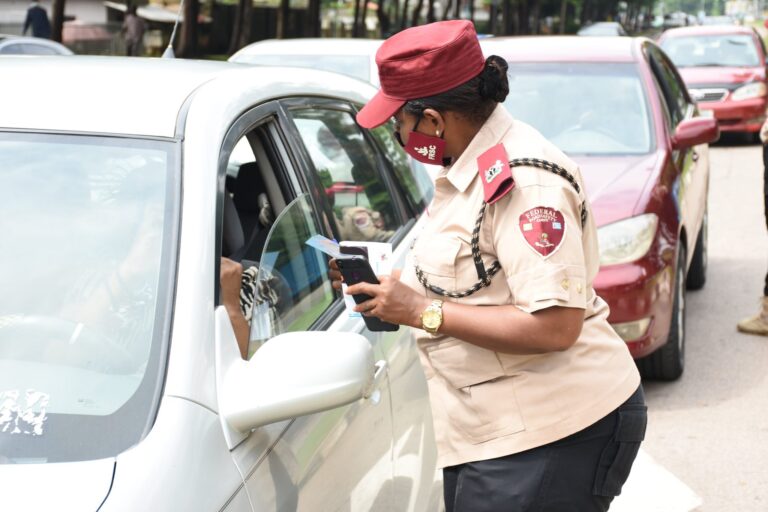
What should have been a routine drivers licence renewal has turned into a two-year ordeal for Bayo (not his real name), a Bolt driver in Lagos. His case highlights the entrenched inefficiencies and bureaucratic lapses within Nigeria’s road safety administration system.
On a mild November morning in 2023, Bayo walked into the Federal Road Safety Corps (FRSC) office at the Iponri Zone in Surulere, expecting a quick process. He carried with him expired licence documents and anticipated completing his renewal within the hour.
Instead, he became ensnared in a web of cash transactions, repeated delays, and inconsistent communication, a situation that remains unresolved nearly two years later.
“The man who attended to me told me to pay N30,000 for 5-years, and when I asked if I could make a transfer, he said no. So I went outside, withdrew the money, and paid him in cash. He then filled out the form, gave me a copy, and asked me to come back the following week for capturing,” Bayo recalled.
That was the beginning of a cycle. When Bayo returned, he was told the system was down. What began as a week-long wait has spiralled into over 18 months without a valid or even temporary licence.
Instead of a valid licence, Bayo was given a stamped document unofficial and unrecognised, with eight separate date extensions. The ICIR sighted the document.
“Since then, I’ve been going there repeatedly. Eventually, the first man who attended to me was no longer there, and a different colleague of his who has asked me to apply for another reissue which would warrant me to pay another N25,000. Till date, they haven’t called me for capturing,” he said.
The delay has left him without a temporary or valid license, a risky situation for any driver in Lagos, where police and road safety officers frequently demand up-to-date papers.
A pattern of delay and frustration
Bayo’s experience is echoed across the country and reflects a broader issue with the FRSC’s licence renewal process, which several Nigerians have described as inefficient, inconsistent, and vulnerable to informal practices, including cash-only transactions.
In Abia, IK Carasko, said he paid N40,000 in October 2024 but had been repeatedly asked to keep coming back.
“I paid N40,000 since October 24, 2024. I’ve not been issued the licence till today. I’ve been calling and texting. It’s been one story to another. I can’t be coming to their office from Ikwuano every week,” he said.
Similarly, In Abuja, John Dennis, said he paid N48,000 in December 2024 but has yet to receive his valid licence.
Haruna (not his real name), who visited the FRSC/VIO joint office at Police Signboard, Lugbe in March 2025, was initially issued a temporary licence but has been unable to collect a permanent one.
“I received my temporary drivers licence that same day, but what concerns me is the inconsistency in the renewal cost. The notice on the wall says that a 3-year licence costs N13,500, yet I ended up paying a total of N16,000.”
Haruna said that when he offered to make a bank transfer, the official instead called a Point of Sale (POS) agent to provide him with cash for the payment.
Haruna, who was instructed to return in three months, said that despite paying that amount, officials still demanded additional money for capturing and other processes. However, he told them he had no more money on him, which he believes was what saved him from paying more.
Haruna observed that many people at the office were complaining that their temporary licences had expired weeks earlier, yet they had not been issued valid ones. The driver lamented that, despite using the temporary licence, officials still harass him on the road.
“The most recent incident was around Jabi. They stopped me and complained that the writing on my document was faint. I told them it was their office that issued it, so if there’s any issue, they should contact their office for clarification,” he said.
Haruna barely legible temporary licence with the ‘Temporary mark’ not legible.
He added that the licence he was initially given expired last week, but when he went to collect the valid one a few days ago, he was informed that it was not yet ready for pickup.
Innocent (not his real name) also recounted how individuals outside the gate of the Wuse branch offered to help him process the licence for N15,000. He declined their offers and instead paid N13,000 in cash inside the office.
Cash payments
Despite the FRSC’s official stance that all payments must be made via the government’s Remita platform and that licence renewals should take no more than 60 days, multiple applicants have reported being asked to pay cash, often without receipts.
A December 2024 broadcast by Naija Info revealed ongoing cash-for-service practices, and a 2021 audit by the Bureau of Public Service Reforms highlighted systemic inefficiencies across FRSC centres. Also an ICIRinvestigation revealed similar issues, including unaccounted budget disbursement.
While a June 2024 A publication from the FRSC claimed its NDL Print Farm produced 73,740 licences in two weeks as part of a strategic backlog-clearing initiative, drivers like Bayo, who began the renewal process in 2023 remain in limbo.
In 2023, the FRSC received a budget of N52.7 billion. This was increased to N70.7 billion in 2024 and again to N98.7 billion in 2025. While these funds are intended to improve road safety infrastructure and service delivery, the persistent delays and inefficiencies tell a different story.
For businessman Shehu Garba, the issue has affected his ability to open a business account. According to Garba, he tried to open an account for a new company he and others had set up, with the hope of receiving some investments. However, the bank rejected his international passport and national identity card as they bear his third name Abubakar, which he does not use for his banking transactions and is therefore not linked to his BVN.
“I gave them my driver’s licence, which has the two names on my BVN but the problem is that it was a temporary one issued to me over two months ago and had expired. But road safety has refused to issue me a permanent one for several months. I explained to the bank but they said no and refused to open the account. So, we have not been able to open the account and cannot receive the money from the investor we hope to start operations with. Now, we are trying another bank,” Garba lamented.
FRSC response
When contacted by The ICIR, FRSC Public Relations Officer Segun Ogungbemide acknowledged that the Corps Marshal, Shehu Mohammed, met a backlog of unprinted licences and number plates, upon assuming office in May 2024.
“The Corps Marshal while briefing the media told the public that there were actually both technical and administrative challenges. He hit the ground running by fixing all the necessary gaps including technical issues and administrative bottlenecks,” he said.
He stated the official licence rates as “N10,350 for three years, and 15,450 for five years.” He noted that a new price list has been announced and will take effect in June 2025.
The ICIR spoke with personnel at the FRSC office in Lugbe, Abuja, on May 22, who stated that a three-year drivers licence costs N13,000, while the five-year option costs N18,000. This contradicts the official rates stated by the PRO.
Innocent’s temporary licence
When The ICIR asked why many applicants report being asked to pay cash without receipts or a higher fee Ogungbamide said, “Anything outside what l told you is not part of our process. I already told you the official rate. Meanwhile FRSC does not deal with Members of the public directly but the States, through their Motor Vehicle Administration Dept”.
He did not provide details on how the FRSC investigates or disciplines officials involved in unofficial transactions. Although he said, “The Corps has zero tolerance to any form of infractions and sanctions are rendered accordingly”.
Ogungbemide claimed that the agency is taking all necessary steps to address the situation, noting that 257,038 driver’s licences were still lying unclaimed at various centres, despite applicants being duly informed.
“The Corps is working assiduously to clear the backlog in due time. In order to support this, a new print firm with capacity to print 1,700 licences per hour has been commissioned in Lagos,” he said.
Not satisfied with Ogungbamide’s response, The ICIR reached out to the FRSC Corps Marshal, Mohammed Shehu, through a WhatsApp message requesting that he answers questions regarding delays in issuing drivers licences. He did not respond to the message as at press time.
However, a senior FRSC official, who requested anonymity, confirmed to The ICIR that there is indeed a system failure which is why the renewal and capturing process had not been effective.
Another senior official of the commission, said that the Shehu’s predecessor, Dauda Biu, in March 2024, shortly before he was replaced told the management staff of the commission that the delay in the issuance of licences was being dealt with and would be over within a matter of weeks.
The official who does not want to be named said that the situation continued under Shehu, who was advised to suspend the enforcement of drivers licence for drivers but he refused.
“Because of the embarrassment this was causing the commission, the Corps Marshall was advised that the enforcement of drivers licences should be suspended for six months while we tried to fixed the problem. The thinking is that we cannot be asking drivers for their drivers licence when we have not been issuing them. some cases are two years old. But the Corps Marshall refused”, the source said.
The PRO did not respond to why officials opt for cash payments instead of the bank payment stipulated on the agency website, what measure is FRSC taking to ensure transparency and efficiency in the licence production process, to confirm if there is a system failure that is why applicants are yet to get valid license since 2023, and other questions as at the time of filing this report.
Back in Lagos, Bayo is still waiting.
“They claim it’s fast and digital, but you still have to pay cash to someone who disappears the next time you return,” Bayo the Bolt driver said.
Despite repeated attempts, he said no official had offered a clear solution or even an apology. “They keep telling me that it was network issues and to pay another money for reissue.”
The driver said he hasn’t secured a stable job since 2023 because organisations consistently demand his original drivers licence.
“I stayed at home until someone recently gave me a car to use for bolt. I had to reactivate my old bolt account, which already had my previous drivers licence on file otherwise, I’d still be out of work,” he said.
Bayo appeals to the FRSC to kindly upload his details for capturing and expedite the processing of his valid licence so he can secure a stable job.
“The date on the most recent extension will expire on May 30. If the government and FRSC could find a way to address this and spare me the stress of paying again, it would be greatly appreciated,” he appealed.
Lawmakers swing to action
In a move that underscores growing national concern, the House of Representatives has resolved to establish an ad hoc committee to investigate the operational challenges surrounding the issuance of drivers licences, as well as the generation and utilisation of related revenues over the past three years.
The resolution followed the adoption of a motion presented by Victor Ogene (APC–Bayelsa) during Wednesday’s plenary session.
In his motion, Ogene highlighted the complex tripartite structure involving the Federal Road Safety Corps (FRSC), State Boards of Internal Revenue, and the Vehicle Inspection Office (VIO), which is responsible for the digital issuance and renewal of drivers licences.
He also noted that FRSC owes its system consultants who are the network providers and maintainers of the biometrics data capturing system and are responsible for the system slowdown and the resultant long delay in the issuance of drivers licences.
In his ruling, the Speaker of the House, Abbas Tajudeen, said that once the committee is constituted, it will be expected to submit its findings within four weeks to enable further legislative action.
NIGERIAN Health Watch has opened applications for the 2025 West Africa Solutions Journalism Fellowship, a four-month hybrid programme aimed at strengthening solutions-focused health reporting across the region.
Running from July to October 2025, the fellowship offers training, mentorship, and editorial support to help journalists tell impactful stories of effective health interventions.
The programme is open to English-speaking journalists living in West African countries with at least three years of experience. Freelancers must submit a letter of support from a recognised media outlet.
Fellows must commit fully to the programme’s workshops, mentorship, and deadlines.
Applications, including a completed form and a letter of commitment from a media organisation, are due by May 30, 2025.
THE Federal Government has filed a criminal suit against the senator representing Kogi Central, Natasha Akpoti-Uduaghan, over comments she made on national television that were allegedly deemed defamatory.
The case, marked CR/297/25, was filed on May 16, 2025, before the Federal Capital Territory (FCT) High Court, with Akpoti-Uduaghan listed as the sole defendant.
According to court documents, the government is charging the senator under Section 391 of the Penal Code (Cap 89, Laws of the Federation, 1990) for allegedly “making imputation knowing or having reason to believe that such imputation will harm the reputation of a person.”
The said comments were allegedly made during a live broadcast of Channels Television’s ‘Politics Today’ on April 3, 2025, where Akpoti-Uduaghan was said to have criticised unnamed individuals in a manner the government claimed was defamatory.
Count two of the charges accused Akpoti-Uduaghan of “making an imputation knowing or having reason to believe that such imputation will harm the reputation of a person, contrary to Section 391 of the Penal Code Law, Cap. 89, Laws of the Federation, 1990, and punishable under Section 392 of the same Law.
“That you, Senator Natasha Akpoti-Uduaghan, on or about the 3rd day of April 2025, during the same Politics Today programme on Channels Television in Abuja, Federal Capital Territory, made the following imputation concerning Yahaya Adoza Bello, former Governor of Kogi State.
“It was part of the meeting, the discussions that Akpabio had with Yahaya Bello that night to eliminate me. When he met with him, he then emphasised that I should be killed, but I should be killed in Kogi.
“You knew or had reason to believe that such imputations would harm the reputation of Yahaya Adoza Bello, former Governor of Kogi State”, the charge added.
Among the witnesses lined up to testify include Senate President Godswill Akpabio and former Kogi State governor Yahaya Bello, who are identified in court filings as the nominal complainants.
Other witnesses listed include Senator Asuquo Ekpenyong, Sandra Duru, and police investigators Maya Iliya and Abdulhafiz Garba, who were involved in probing the matter.
The former Kogi governor had in April,petitioned the Inspector-General of Police (IGP), accusing Akpoti-Uduaghan, of making defamatory statements against him.
Bello, through a petition signed by his lawyer, N.A. Abubakar, submitted to the IGP on Wednesday, April 16, called on the police to invite Akpoti-Uduaghan to present credible evidence backing her allegations against him.
The former Kogi governor alleged that during a homecoming event on April 1, 2025, in Okehi Local Government Area, the female lawmaker ‘maliciously’ defamed him and accused him of being involved in an assassination plot.
The case comes amid ongoing political tensions surrounding Akpoti-Uduaghan, who was suspended from the Senate earlier this year. Her suspension sparked widespread criticism and allegations of political persecution.
Akpoti-Uduaghan had accused Akpabio of targeting her after she rejected his alleged sexual advances, claiming that her suspension was orchestrated to silence her.
She made the allegations following the altercation over sitting arrangement in the Senate Chamber that led to Akpabio ordering the sergeant-at-arms to eject her from the chamber when she rejected the seat offered to her.
She is challenging her suspension at the Federal High Court, where the hearing has been scheduled for June 27.
THE Chairman of First HoldCo Plc, Femi Otedola, said he planned to raise his stake in the bank to N320 billion by 2026.
The billionaire businessman said this at the First HoldCo 13th Annual General Meeting(AGM) on Thursday, May 22.
He said by the time the First Holdco’s capital-raising exercise is concluded, he would have invested over N320 billion in cash, without any borrowing.
“We will raise the capital required well ahead of the Central Bank’s deadline – that, I can assure you,” he told investors.
He believes his emergence as the chairman was not a gamble but a calculated strategy to rebuild the bank into a modern, well-governed, and highly profitable institution.
“And this doesn’t stop here. I am willing to invest even more as we prepare for our next round of capital raise, following the resounding success and oversubscription of our recent offer,” Otedola said.
He noted that he was more confident than at any other period that Nigeria’s oldest financial lending institution headed in the right direction.
“I am more optimistic than ever that we are on the right path to repositioning Nigeria’s oldest and most iconic bank as the number one financial institution in Africa,” he said.
The ICIR reports that Otedola is the largest individual shareholder of First Holdco with 11.8 per cent shareholding as of December 31, 2024.
He holds 1,689,811,721 direct units of shares, representing 4.71 per cent.
He also holds 2,543,981,608 indirect units of shares, using Calvados Global Services Limited, which represents 7.09 per cent.
With the bank’s share price closing at N24.75 as of Thursday, May 22, it means that Otedola’s share investment at First Holdco stood at N104.79 billion.
He was appointed the chairman of First Holdco after a meeting by its board of directors on January 31, 2024.
He pointed out that Holdco and First Bank’s rich heritage was entwined in its national history as the first and oldest bank in Nigeria, since its establishment in 1894.
“While the institution has more recently been plagued with non-performing loans and several corporate governance and confidence issues, it remains resilient, with a huge potential that is yet to be unlocked,” Otedola maintained.
He said the First Holdco’s journey aligned with President Bola Tinubu’s vision and that of he Central Bank Governor Olayemi Cardoso.
He also commended Cardoso for the impact of the apex bank’s policy reforms, adding that, “his actions are restoring credibility to the financial system and giving investors like me the confidence to commit long-term capital to this country.”
PRESIDENT Bola Tinubu is seeking the Senate approval for the 2025 Appropriation Bill for Rivers State, two months after he suspended the state House of Assembly and the Governor, Siminalayi Fubara.T
The president submitted the request to the Senate President Senator Goodwill Akpabio, requesting that the Senate expeditiously consider a budget proposal totalling N1.481 trillion, with significant allocations focused on revitalising key sectors.
Tinubu also addressed a letter to the House of Representatives seeking approval for the Rivers State budget.
He reminded them that the Supreme Court had nullified the 2025 budget presented by the suspended Fubara.
It is worthy to recall that the President Tinubu in a nationwide broadcast on Tuesday, March 18,declared a state of emergency in Rivers State following the political turbulence in the state.
The president suspended Fubara, his deputy, Ngozi Odu, and all members of the State House of Assembly for six months.
The president also appointed retired Vice-Admiral Ibok-Ete Ekwe Ibas as the sole administrator to oversee the state’s affairs.
The state’s budget currently before the National Assembly emphasises strategic investments in infrastructure, healthcare, education, and agriculture, seeking to create around 6,000 new jobs
Infrastructure takes the a large chunk of the budget with a proposed allocation of N324 billion. The health sector follows with N106 billion, which includes N5 billion designated for free malaria medication.
The education sector will receive N75.6 billion, while N31.4 billion is earmarked for agricultural development.
The Senate has referred the bill to its Ad-hoc Committee on Emergency Rule and directed it to review the proposal and report back to the Chamber as soon as possible..
The ICIR reported that the Speaker of the House of Representatives, Tajudeen Abbas, inaugurated an ad-hoc committee in April to take over legislative functions in the State.
To fill the legislative vacuum, the Speaker constituted the emergency 21-man panel with representatives drawn from Nigeria’s six geopolitical zones.
In his bid to return to office, Fubara reportedly met with President Bola Tinubu in London in April.
Two senior aides to the president reportedly confirmed that the two leaders met and discussed issues concerning the state’s politics.
Fubara and his predecessor, Nyesom Wike, have been at loggerheads over who controls the PDP structure in the state since 2023, with President Tinubu’s efforts to resolve the stalemate yielding no result.
The impasse led to Fubara’s suspension by the president, following months of stalemate in efforts by stakeholders to resolve the conflict.