Home Blog Page 281

Trump condemns starvation in Gaza after Israeli air strikes killed over 250

United States (US) President Donald Trump has backed aid for the Palestinians, saying people in Gaza are starving.

Trump said he expected “a lot of good things” for the Palestinians in the coming month.

The ICIR reports that Israeli strikes on Gaza have killed over 250 people since Thursday morning, according to local health authorities. This marks one of the deadliest rounds of bombardment since a truce broke down in March, with a new ground offensive anticipated soon.    

Trump’s brief remarks on Gaza came on Friday, May 16, as he concluded his first foreign tour since he returned to office for a second term in January.

“I think a lot of good things are going to happen over the next month, and we’re going to see. We have to help out the Palestinians. You know, a lot of people are starving in Gaza, so we have to look at both sides,” Trump told reporters when asked if he supported Israeli plans to expand the war in Gaza.

Recall that Trump issued what he described as a “final warning” to Hamas in March, demanding the immediate release of all hostages in Gaza.

Trump vowed that he would provide Israel with “everything it needs to finish the job,” warning that “Not a single Hamas member will be safe if you don’t do as I say.”

The ICIR reported that a two-month ceasefire between Israel and Hamas ended in March, shortly after Israel reinstated a full blockade on Gaza, which aid agencies said had caused severe food shortages.

On March 2, Israel halted aid to Gaza, a move it described as a strategy to pressure Hamas, which continues to hold dozens of Israeli hostages captured in October 2023.

Prime Minister Benjamin Netanyahu announced that Israel was preparing for an expanded and intensified offensive against Hamas, following his security cabinet’s approval of plans that could include taking full control of the Gaza Strip and overseeing the distribution of aid.

Hamas insisted on Thursday that the resumption of humanitarian aid to the war-torn territory was “the minimum requirement” for any negotiations to proceed.

Israel has stated that its objective in Gaza was to eliminate Hamas, the group responsible for attacking Israeli communities on October 7, 2023, killing approximately 1,200 people and taking around 250 hostages.

Gaza’s health ministry reported that 2,876 people have been killed since Israel resumed airstrikes on March 18, bringing the total death toll from the war to 53,010.

The military stated that its operations were ongoing, and that in the past 24 hours, it had “targeted over 150 terror sites across the Gaza Strip, including anti-tank missile launchers, militant groups, military facilities, and operational centres.

The United Nations estimates that 70 per cent of Gaza is currently either designated as a no-go zone by Israel or under an evacuation order.

Russia, Ukraine meet in Turkey for first peace talks in 3 years

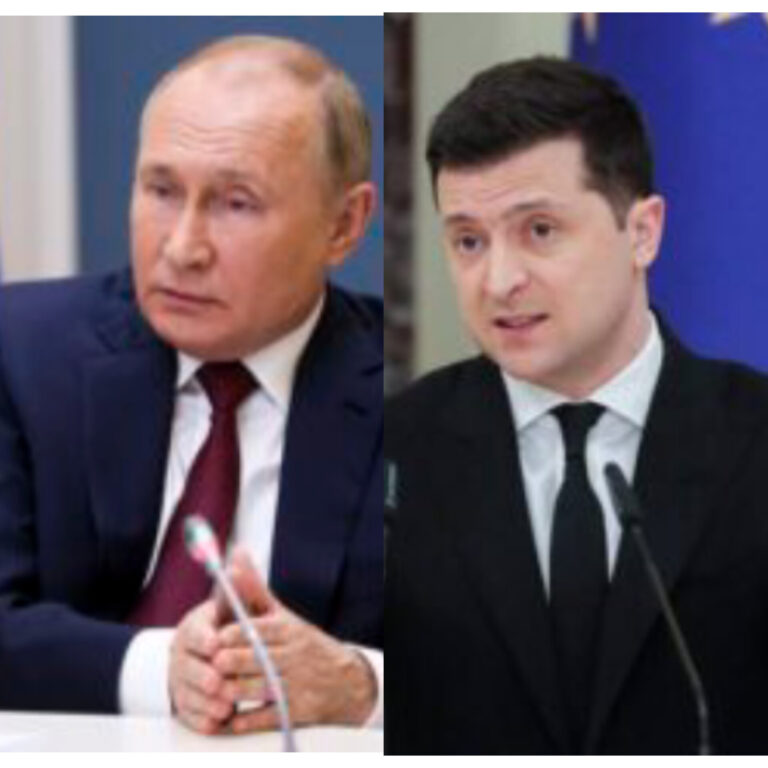
RUSSIAN and Ukrainian negotiators met today, May 16, in Istanbul for their first face-to-face peace talks in over three years, amid mounting pressure from United States (US) President Donald Trump to bring an end to Europe’s deadliest conflict since World War Two.

This was revealed in a Turkish television live footage announcing the negotiation, as Turkish Foreign Minister Hakan Fidan delivered an opening speech to commence the meeting.

The ICIR reports that the meeting marks a rare sign of diplomatic progress between the warring parties, who had not held face-to-face talks since March 2022, just a month after Russia invaded Ukraine.

Last weekend, major leaders in Europe, with Trump’s support, endorsed an unconditional 30-day ceasefire in Ukraine and warned President Vladimir Putin of ‘massive’ new sanctions if he failed to comply within days.

At a meeting in Kyiv on Saturday, May 10, the leaders of Britain, France, Germany, Poland, and Ukraine agreed to begin the ceasefire on May 12, following a phone call with Trump.

However, expectations for a major breakthrough in this ongoing meeting diminished further on Thursday, May 15, after Trump stated that no progress would occur without a direct meeting between him and the Russian President.

Wrapping up his Middle East tour and returning to Washington, Trump said on Friday that he would meet with the Russian leader  “as soon as we can set it up”. 

Outlining Kyiv’s key demands, the head of Ukraine’s delegation stated that peace could only be achieved if Russia agreed to a 30-day ceasefire, the return of abducted Ukrainian children, and a full exchange of prisoners of war.

Meanwhile, Russia has expressed its desire to end the war through diplomatic means and signalled its readiness to discuss a ceasefire. However, it has also voiced several concerns, warning that Ukraine might use the pause to regroup its forces, mobilise additional troops, and secure more Western weapons.

Ukraine and its allies accused Putin of delaying the process, arguing that he was not genuinely committed to achieving peace.

Although Putin proposed the direct talks in Turkey, he declined Zelensky’s challenge for a face-to-face meeting. Instead, he dispatched a team of mid-level officials, prompting Ukraine to appoint negotiators of a similar rank in response.

The ICIR reports that both nations have continued to trade blame over the ceasefire negotiations.

The US Secretary of State, Marco Rubio, and Trump’s Ukraine envoy, Keith Kellogg, were also in Istanbul, where a series of separate meetings occurred earlier on Friday.

On Thursday night, Rubio told reporters that given the level of the negotiating teams, a major breakthrough was unlikely.

“I hope I’m wrong. I hope I’m 100 per cent wrong. I hope tomorrow the news says they’ve agreed to a ceasefire; they’ve agreed to enter serious negotiations. But I’m just giving you my assessment, honestly,” he said.

Russia announced on Friday it had seized another village in Ukraine amid its slow, grinding advance in eastern Ukraine. Just minutes before the Istanbul talks began, Ukrainian media reported an air raid alert and explosions in the city of Dnipro.

Estimated billing: DisCos exploit consumers ignorance of NERC capping order, expert says

ELECTRICITY Distribution Companies (DisCos) are exploiting consumers on estimated billing with poor knowledge of the ‘capping methodology order’ by the Nigerian Electricity Regulatory Commission (NERC), a consumer rights advocacy expert in the power sector has said.

The Director-General of Anambra Electricity Consumer Rights Initiative, Okechukwu Ferdinand Cyril-Nwuche, told The ICIR in an exclusive interview on Friday, May 16, that power consumers were not only battling irregular power supply but were forced to ‘extra payment’ of power costs beyond what the NERC capping order stipulated.

“Before I started my advocacy work, I had a firsthand experience of the Enugu Electricity Distribution Company’s Official disconnecting my power and still bringing electricity bills despite my lights being disconnected. I had to raise the issue with the relevant authorities,” he said.

Continuing, he said, “In my advocacy, I have informed power consumers on how to calculate and know what cost they should pay once they’re on estimated billing, looking at the feeder that supplies each transformer, and from the NERC download of the monthly energy cap, and what each DisCo is expected to charge.

“Our research after engagement with NERC showed that most of these DisCos never obeyed NERC’s ‘capping methodology’ for once despite sanctions and fines by NERC for violations,” Okechukwu added.

He stressed the need of transparent business dealings between DisCos and the electricity consumers without passing the burden of commercial losses to unsuspecting consumers.

Director-General,Anambra Electricity Consumers Rights Initiative,Okechukwu Ferdinand Cyril-Nwuche
Director-General, Anambra Electricity Consumers Rights Initiative, Okechukwu Ferdinand Cyril-Nwuche

On February 24, 2020, NERC issued an Order on the Capping of Estimated Bills in the Nigerian Electricity Supply Industry (the Order). The order specifically focuses on customers in the residential and commercial categories.

The Nigerian Electricity Regulatory Commission Order No../NERC/197/2020 issued on February 20, 2020,  caps estimated billing for unmetered customers.

This order aims to prevent arbitrary billing by ensuring that unmetered customers are not charged more than metered customers with similar consumption patterns on the same electricity feeder.

The objective is to protect unmetered customers from being arbitrarily billed by ensuring that they are charged at rates comparable to metered customers on the same feeder.

The order also focuses on addressing issues of DisCos charging unmetered customers excessive amounts based on estimated consumption.

Specifically, the order sets maximum energy consumption limits for unmetered customers in specific tariff classes (R2 and C1) based on the average consumption of metered customers on the same feeder.

Despite the capping order, NERC had sanctioned some DisCos exploiting consumers through overbilling.

The NERC has imposed a substantial fine of N1. 69 billion on the Abuja Electricity Distribution Company (AEDC) for overbilling its customers.

This penalty was detailed in Order NERC/2024/114 and published on NERC’s website, and is part of the Commission’s September 2024 Supplementary Order.

To further caution erring DisCos, NERC had also, on April 10, sanctioned eight power distribution companies (DisCos) for noncompliance with the capping of estimated bills for unmetered customers.

According to a statement in April 2025, the affected DisCos are Abuja, Eko, Enugu, Ikeja, Jos, Kaduna, Kano, and Yola.

The electricity regulator said the affected companies overbilled customers in violation of energy caps set by the regulator for the third quarter of 2024(July to September).

As Tinubu marks two years: Dangote, NNPCL lock horns in fuel price battle

MAJOR Petroleum oil marketers are currently in a pricing row with Dangote over market dominance, as they are no longer comfortable with Dangote’s petroleum pricing dominance.

President Bola Tinubu has made ‘no more subsidy’ a major policy thrust of his administration, which saw total deregulation of the petroleum downstream sector with the enforcement of the Petroleum Industry Act (PIA) 2021, effective from May 29, 2023.

Although it left more money in the hands of the federal and state governments, the deregulation has not had a meaningful impact on the lives of Nigerians, as promises of social safety nets made before the subsidy removal remain largely unmet.

The opaque nature of the subsidy removal puts the Nigerian National Petroleum Company Limited (NNPCL) on the spot with the latest revelation from the World Bank that the national oil company remits only 50 per cent of the subsidy earnings to the government.

The global lending institution berated the national oil company on poor remittance of subsidy savings, stating that it started transferring the revenue gains to the Federation Account in January this year.

“It has been remitting only 50 per cent of these gains, using the rest to offset past arrears,” the global financial lender stated in its latest report,” Nigerian Development Update’ released on May 12.

Apart from the opacity that characterised the management of the subsidy proceeds, a major concern is the long-drawn battle between the marketers and the Dangote Refinery regarding market dominance and price influence.

Why NNPCL maintained sole importation status post-subsidy era

Before the deregulation of the petroleum downstream sector, the NNPCL was the sole importer with a few select major marketers. The NNPCL did the large chunk of the  importation enabled by the defunct Petroleum Act of 1960, before the enactment of the Petroleum Industry Act in 2021.

With the enforcement of the deregulation under Tinubu’s administration, Dangote Petroleum’s 650,000 barrels per day refinery showed market dominance and capacity with its huge influence on pricing in the downstream sector.

Not just pricing influence, the Refinery, as reported by The ICIR on February 6, showed market dominance and exported two cargoes of aviation fuel to Saudi Aramco, the national oil company of Saudi Arabia.

“We are reaching the ambitious goals we set for ourselves, and I’m pleased to announce that we’ve just sold two cargoes of jet fuel to Saudi Aramco,” Dangote, said when he visited the Nigerian Economic Group (NESG) on February 5, 2025.

While Nigeria’s state-owned refineries remain largely inactive despite substantial investments in turnaround maintenance, the privately-owned Dangote Refinery has begun to reduce the country’s reliance on European fuel imports.

A report by the Organisation of Oil Petroleum Exporting Countries (OPEC) confirmed this development on January 15, 2025.

“The ongoing operational ramp-up efforts at Nigeria’s new Dangote Refinery and its gasoline(petrol)exports to the international market will likely weigh further on the European gasoline market.

“Continued gasoline production in Nigeria, a country that has relied heavily on imports to meet its domestic fuel needs in the past, will most likely continue to free up gasoline volumes in international markets, which will call for new destinations and flow adjustments for the extra volumes going forward,” the report said.

Commenting on the market dominance, the Chief Executive Officer (CEO)of Financial Derivatives Company, Bismarck Rewane, said the Nigerian government must continue to support Dangote as a market leader in the petroleum downstream sector.

According to him, the 650,000 barrels per day Refinery is a necessary tools to solve some of the challenges in the oil sector.

“Before now, people spent half of their time trying to queue up for petrol and queue up for everything because of bottlenecks in the sector. If one project can de-bottleneck a particular sector, we would have increased the probability of having higher productivity human, labour, and capital stock significantly,” he said.

Marketers lament Dangote’s overbearing influence on pricing

Last week, Depot and Petroleum Products Marketers Association of Nigeria (DAPMAN) raised an alarm over Dangote Refinery’s pricing influence and emerging market control in the petroleum downstream industry.

The association disclosed via its Executive Secretary, Olufemi Adewole, that the refinery’s size(650,000 barrels per day) gives it an edge over other players in the market.

Adewole, who disclosed this in a monitored interview on Friday, May 9, said Dangote’s market dominance could disrupt the petroleum downstream industry.

He warned that control of the Dangote Refinery could disrupt the market if not properly managed.

Adewole, however, said there are vested interests among private depot owners who have invested billions in the sector.

He said the depot owners stood by Nigerians in times of dire need before the emergence of the Dangote Refinery.

According to the DAPMAN scribe, the Dangote Refinery has not met the petrol consumption demands of Nigeria, which has reduced recently.

He advised the government that ending fuel imports for now would create chaos, stating that a phased strategy is more agreeable once domestic refineries begin production.

He further expressed worry, saying the scale of Dangote Refinery gives it an excessive edge over pricing and supply channels.

What does the petroleum regulatory authority’s data say about PMS imports?

Farouk Ahmed, the Chief Executive Officer (CEO) of Nigeria Midstream and Downstream Petroleum Regulatory Auhtority (NMPDRA),  on April 14, 2025, said petroleum imports decreased from 44.6 million litres per day in August 2024 to 14.7 million litres as of April 13, 2025.

This, he said, represents a reduction of approximately 30 million litres, or 67 per cent, in the eight months, noting that local production increased by 670 per cent during the same period.

He attributed the increase to the Port Harcourt Refining Company’s gradual reactivation in November 2024 and increased production from modular refineries located throughout the nation.

The ICIR reports that NMDPRA’s data indicates a substantial reduction in petrol imports, likely due to increased local production and/or decreased consumption.

“After contributing virtually nothing in August 2024, local plants delivered 26.2 million litres per day in early April, a jump from the 3.4 million litres recorded in September 2025, which was the first month with measurable output,” Ahmed said.

Why marketers are unable to compete with Dangote on the same level

The National Publicity Secretary of the Independent Petroleum Marketers Association of Nigeria (IPMAN), Chinedu Ukadike, told The ICIR that Dangote prepared ahead to dominate the marketers because of Nigeria’s moribund refineries, as it appears NNPCL were more comfortable with large-scale importation in the subsidy era.

He noted that the NNPCL, before the subsidy removal era, was the sole importer of petroleum products and distributed them through its channels to marketers and major retail outlets.

According to the IPMAN’s secretary, before the coming of Dangote, the NNPCL dictated the price with fuel importation of almost 75 per cent of Nigeria’s consumption. However, the new era of deregulation saw Dangote’s huge influence and pricing.

“Now, most of the NNPCL refineries are docile and moribund, with the Petroleum Industry Act (PIA) implementation giving Dangote the leverage for the domestic market. You cannot take it away from him as a businessman,” he said.

He stressed that most major marketers are getting products from him because of his over 600 million litres in reserves, with importation logistics and exchange rate a major factor impeding some marketers’ importation choice.

While noting some concerns of pricing by marketers, Ukadike said ‘Price disparity’ in a free market is a major determinant of who dominates a deregulated market.

“DAPPMAN members whose tank farms are mostly in the coastal areas have raised issues with the pricing of Dangote, noting that the importer price is slightly higher than what they sell at the gantry. We are currently at what we call the “Price disparity stage”. Some of us have to get fuel from him to stay in business. Price disparity is inherent in a free market economy,” Ukadike stressed.

The ICIR findings have shown that Dangote sells to every marketer at the refinery gantry for the same price, without preference to ‘bulk purchasers’, a development that doesn’t sit so well with some marketers.

“In most cases, some marketers who loaded from the gantry at N900 per litre, would still be discharging to their various petroleum retail outlets, and all of a sudden a price change announcement would be heard from Dangote, putting most of them on deficit,” a major Oil marketer who who doesn’t want his name mentioned in print told The ICIR.

Ukadike suggested to the petroleum regulatory authorities to continue monitoring the market to ensure fair play for all the industry players, devoid of anti-competition laws.

WATCH: Tinubu’s two years in office: Who is the best performing minister?

1

AS President Bola Tinubu clocks two years in office, Nigerians are weighing in on the performance of his ministers, praising some for tangible progress, and faulting others for falling short of expectations.

So, who stands out and who is underwhelming?

Pope Leo XIV invites Tinubu for inauguration in Vatican

PRESIDENT Bola Tinubu will depart Abuja on Saturday, May 17, for Rome to attend the inauguration of Pope Leo XIV, the newly elected head of the Roman Catholic Church.

The trip follows an official invitation by the Pope to the Nigerian leader through Cardinal Pietro Parolin requesting the president to be present at the ceremony, according to a statement by the Special Adviser to the President on Information and Strategy, Bayo Onanuga Thursday evening.

The statement described the inauguration as “a moment of particular importance for the Catholic Church and the world afflicted by many tensions and conflicts.”

The solemn mass marking the beginning of Pope Leo’s pontificate is scheduled to take place on Sunday, May 18, at St. Peter’s Square in the Vatican.

The ICIR reported that Pope Leo XIV, formerly Cardinal Robert Francis Prevost, was elected by the Conclave of Cardinals 27 days after the passing of Pope Francis on April 21. He becomes the 267th Bishop of Rome.

Pope Leo, who once served in the Apostolic Nunciature in Lagos during the 1980s, described Nigeria as “particularly dear” to him.

Tinubu will be accompanied by a high-level delegation comprising the Minister of State for Foreign Affairs, Bianca Odumegwu-Ojukwu; Archbishop Lucius Ugorji, President of the Catholic Bishops’ Conference of Nigeria; Archbishop Ignatius Kaigama of Abuja; Archbishop Alfred Martins of Lagos; and Bishop Matthew Hassan Kukah of Sokoto Diocese.

The ICIR reports that some of the people accompanying Tinubu to the inauguration were part of Nigerian delegation to the funeral of the late Pope Francis.

Tinubu and his team is expected to return to Abuja on Tuesday, May 20.

Nigeria inflation drops to 23.71% in April, says NBS

NIGERIA’s inflation eased to 23.71 per cent in April, from 24.23 per cent in March.

The National Bureau of Statistics (NBS) reported this in its monthly Consumer Price Index (CPI) report released on Thursday, May 15.

It shows that inflationary pressure decreased by 0.52 per cent in the review month relative to the figure it reported in March.

On a year-on-year basis, the inflation rate was 9.99 per cent lower than the 33.69 per cent recorded in April 2024.

On a month-on-month basis, the headline inflation dropped to 1.86 per cent in April, from 3.90 per cent in March.

The NBS further reported that the urban inflation rate eased to 24.29 per cent in April 2025 compared to 36.00 per cent in April 2024, while it also dropped on a month-on-month basis to 1.18 per cent in April from 3.96 in March.

Rural inflation also dropped in April to 22.83 per cent on a year-on-year basis compared to 31.64 per cent in April 2024. It also dropped to 3.56 per cent from 3.73 per cent on a month-on-month basis.

A further look at the report shows that food inflation eased to 21.26 per cent compared to 40.53 per cent on a year-on-year basis.

The food inflation rate also dropped to 2.06 per cent relative to 2.18 per cent on a month-on-month basis.

The statistics office attributed the drop to the rate of decrease in the average prices of maize flour, wheat grain, okro dried, yam flour, soya beans, rice, bambara beans, and brown beans.

The latest figure marks a modest decline of 0.52 percentage points, offering a glimmer of hope amid persistent economic challenges and rising cost-of-living pressures across the country.

The ICIR can report that the moderate inflation figure witnessed since January this year followed the rebasing exercise from the NBS.

In January, the statistics office went into a rebasing of the CPI in which the items in its reference basket were reweighted and updated with a comparison period from 2009 to 2024.

The Statistician General and Chief Executive Officer of NBS, Adeyemi Adeniran, had said, “It’s done to absorb the new ministries that the new government just created, upgrade the Consumer Price Index (CPI) basket, and change the methodology of CPI and gross domestic product (GDP).”

Reps move to compel Nigerians to vote during elections

THE National Assembly may soon make voting compulsory for eligible Nigerians, as the House of Representatives seeks an amendment to the Electoral Act 2022 to this effect. 

The bill on the amendment, which has passed second reading, is jointly sponsored by Speaker Tajudeen Abbas and Daniel Asama Ago, a lawmaker from Nasarawa and a member of the All Progressives Congress (APC)

The ICIR reports that there are, however, exceptions, including the decision not to vote based on one’s religious belief, illness, living outside Nigeria, among others.

According to the bill, the amendment seeks to address voter apathy and boost civic participation.

Speaking during Thursday’s plenary, Ago said the bill intended to redefine voting as a legal obligation rather than a voluntary act.

He referenced the 2023 general elections, where voter turnout was below 30 per cent, warning that such low participation threatened the legitimacy of elected governments.

The ICIR reported that despite over 93 million registered voters and 87 million who collected permanent voter cards (PVCs), only about 25 million Nigerians voted in the 2023 presidential election.

This translates to a turnout rate of approximately 29 per cent, marking the lowest in Nigeria’s recent electoral history. The ICIR also gathered regional disparities, with the South-East recording the lowest turnout at 22.3 per cent and the North-Central the highest at 32.83 per cent.

Deputy Speaker Benjamin Kalu (APC, Bende Federal Constituency, Abia State) expressed strong support for the bill. He cited countries like Australia, where mandatory voting laws have helped raise public involvement in governance and contributed to political stability.

Kalu believes a similar approach in Nigeria would instil a greater sense of civic duty and reinforce democratic accountability.

However, the proposal drew criticism from several lawmakers. Mark Esset (PDP, Eket Federal Constituency, Akwa Ibom State) voiced concern about mandating citizens to vote in the absence of significant reforms to improve the credibility of elections. “If citizens have lost faith in the electoral system, mandating them to vote won’t solve the problem,” he said.

Awaji-Inombek Abiante (PDP, Andoni-Opobo/Nkoro Federal Constituency, Rivers State) also raised issues regarding the feasibility of enforcing such a law. He questioned how it would affect Nigerians living abroad or in conflict-prone areas, and what form the penalties or enforcement mechanisms would take.

Responding to these concerns, Abbas assured the House that the bill included provisions for exemptions based on illness, religious beliefs, or residence outside the country. He said the Independent National Electoral Commission (INEC) would be empowered to develop systems to manage compliance and process exemption requests while respecting individual rights.

The bill has been forwarded to the appropriate committee for further legislative scrutiny. If passed, Nigeria would join a small number of countries around the world that enforce compulsory voting, marking a significant shift in the nation’s approach to democratic participation.

Major scandals surrounding JAMB in recent years

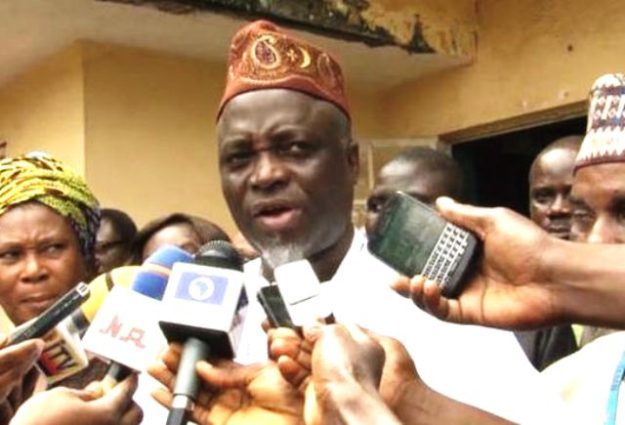
WITH the recent examination error by the Joint Admissions and Matriculation Board (JAMB) in the conduct and release of the 2025 Unified Tertiary Matriculation Examination (UTME), The ICIR looks at some of the major controversies that have rocked the examination body in recent years.

The Board is responsible for conducting entrance examinations into Nigerian tertiary institutions, but despite its significant strides in revenue generation under its current leadership, its reputation has been repeatedly marred by scandals involving corruption and technical failures, which often led to public outcry. 

Many Nigerians, including the chieftain of the Peoples Democratic Party (PDP), Sunny Onuesoke, had called on the Federal Government to either scrap or reform JAMB as they said it had become a money-making venture for the government.

The former Delta PDP governorship aspirant said the billions of naira generated by JAMB yearly were at the expense of poor parents and prospective students, most of whom failed to pass above a 200 grade used by most universities as the benchmark for admission.

He also argued that it could hardly be justified that out of 1.9 million candidates who sat for the UTME, only 8,400 candidates scored 300 and above.

JAMB remittances to FG

The ICIR reports that since he assumed office in 2016, the JAMB Registrar, Ishaq Oloyede’s administration has contributed over N50 billion to Nigeria’s treasury.

In January 2025, JAMB said it generated N22.9 billion in 2024, of which it remitted N6 billion as operating surplus to the government. 

The Board noted that the N1,500 reduction in the cost of the UTME form fees for candidates, multiplied by the number of beneficiaries, raised the total remittance value to N9 billion.

The Board also remitted N2 billion as its interim surplus for the 2023 operating year to the Federal Government, with the Board’s spokesperson, Fabian Benjamin, promising that more would be remitted when the JAMB’s operations for the year are completed. 

In 2021, the JAMB said it remitted N3.51 billion to the Federal Government as its operating surplus. The examination body also said it made an interim remittance of N3.5 billion to the Federal Government’s purse after the conduct of its 2020 UTME.

ASUU chieftain accuses JAMB of exploitation

In response to the 2021 remittance by the exam body, the zonal coordinator of the Academic Staff Union of Universities (ASUU), Laja Odukoya, criticised JAMB’s actions, alleging that the Board was exploiting poor Nigerians.

Odu questioned the source and destination of the funds, expressing concern that the money generated by JAMB was not being redirected to institutions that urgently need infrastructural upgrades to enhance global competitiveness or to alleviate the financial burden on Nigerian students. 

Instead, he argued, the funds were funneled back to the government to support what he described as the recklessness and profligacy of public officials.

He lamented that many Nigerians view JAMB’s actions as a sign of efficiency, describing such perceptions as misguided. 

2018 ‘Snake swallowed ₦36 million’ incident

In 2018, JAMB became the subject of national discuss when Philomina Chieshe, a JAMB official in Benue State, claimed that a snake had swallowed N36 million from the Board’s vault. 

According to her, the money, collected from the sale of scratch cards, mysteriously disappeared after being swallowed by the snake.

“A sales clerk, Philomina Chieshe, told JAMB registrar and his team that she could not account for N36 million she made in previous years before the abolition of scratch cards. In the course of interrogation, Chieshe denied the allegations that she stole the money but confessed that her housemaid connived with another JAMB staff, Joan Asen, to ‘spiritually’ (through a snake) steal the money from the vault in the account office.”

In response, JAMB suspended the staff member while the Economic and Financial Crimes Commission also probed the incident. 

She was later granted a N20 million bail.

Corruption allegations against former registrar Dibu Ojerinde in 2021

In March 2021, former JAMB Registrar Dibu Ojerinde, a professor, was arrested by the Independent Corrupt Practices and Other Related Offences Commission (ICPC) over allegations of misappropriating  over N900 million during his tenure as the head of JAMB and the National Examinations Council (NECO).

Ojerinde faced charges of money laundering, using shell companies to divert funds and awarding fraudulent contracts, including a N450 million deal for pencils and erasers that were never supplied. 

In January 2023, the Commission rearrested Ojerinde over new evidence uncovered in relation to his trial for diversion of funds while he was a public officer. His re-arrest followed a warrant issued by the Federal High Court, Abuja.

The ICPC said its operatives uncovered two accounts opened in the names of Trillium Learning Centre Ltd and Sapati International Schools Ltd into which funds were diverted using fictitious names of students.

Mmesoma Ejikeme’s forged UTME result saga in 2023

In 2023, Mmesoma Ejikeme, a secondary school student from Anambra State, was celebrated for having the highest result in the 2023 UTME.

Anambra State’s Commissioner for Education, Ngozi Chuma-Udeh, described the feat as a source of joy to every Anambra indigene, adding that the state would subsequently monitor her academic progress.

However, JAMB, in a statement, disputed Mmesoma’s result a few days later, describing it as inflated. While she claimed to have scored 362 in the examinations, the JAMB Head of Public Affairs Fabian Benjamin said her actual score was 249.

Following the Board’s statement, Ejikeme released a video, insisting that the result was printed from JAMB’s portal. But she later admitted to falsifying it.

A panel of inquiry set up by the Anambra State Government also confirmed that the result was manipulated.

The Board placed a three-year ban on Mmesoma after announcing that the UTME result she paraded was forged.

CCB probes alleged abuse of office by JAMB Registrar Oloyede

In February 2024, The ICIR reported that the Code of Conduct Bureau (CCB) investigated claims of corruption and abuse of office, among other infractions, levelled against Oloyede.

The allegations were contained in a petition sent to the Bureau by a former JAMB staff member, Yisa Usman, in July 2023.

Responding to the allegations, the Bureau invited Usman to adopt the petition through a document dated January 9, 2024 and signed by the CCB Director of Investigation, Intelligence and Monitoring, Gwimi S.P.

In his petition, Usman had alleged that Oloyede approved the transfer of funds from the Treasury Single Account (TSA) into private accounts, including those belonging to principal officers in JAMB, such as Head, Public Affairs and Protocol Fabian Benjamin and Director of Finance and Account (DFA) Mufutau Bello.

2025 UTME glitch that affects nearly 400,000 candidate

In the latest controversies that have rocked the examination body, JAMB registrar apologised to parents and candidates for errors that he said led to the failure of nearly 400,000 candidates in the 2025 Unified Tertiary Matriculation Examination (UTME).

During a press conference in Abuja on Wednesday, May 14, Oloyede expressed regret for the trauma and frustration the errors caused affected candidates and their families.

He acknowledged that what should have been a moment of joy for many had turned into disappointments due to ‘one or two errors’ made during the examination process.

He also disclosed that the Board identified 65 centres in Lagos and 92 centres in the Owerri zone (comprising the five states of the South East) where the glitches occurred, affecting 379,997 candidates in total.

The ICIR reported that the mass failure sparked nationwide protests after it was revealed that 78.5 per cent of candidates scored below 200, a common benchmark for gaining admission into competitive programmes at Nigerian federal universities.

According to JAMB, of the 1,955,069 registered candidates, 1,534,654 scored below 200, while the results of 39,834 candidates were withheld for various reasons.

Peter Obi, VDM, UNILORIN react to UTME glitch

THE glitch in the 2025 Unified Tertiary Matriculation Examination (UTME), which affected over 379,000 candidates, has raised concerns among Nigerians.

While the Joint Admissions and Matriculation Board (JAMB) acknowledged the challenge and has rescheduled the exam for nearly 400,000 affected candidates, leading Nigerian educators, social media influencers, politicians and other Nigerians said the glitch highlighted deeper systemic rots threatening the nation’s education.

Labour Party (LP) presidential candidate in the 2023 election, Peter Obi, expressed sadness over the crisis.

He described the challenge as a disturbing sign of systemic institutional fragility.

In a statement titled “Let’s Not Make Glitches Become a National Crisis,” Obi acknowledged JAMB’s prompt response to the glitch and public apology tendered by its Registrar, Ishaq Oloyede, a professor.

The former Anambra State governor warned that the recurring nature of such failures in critical sectors posed a serious threat to national stability.

“The emotional and psychological toll on students and their parents, some of whom have reportedly suffered trauma, and in heartbreaking cases, even death, is a reminder of what is truly at stake,” Obi said.

He stressed that credibility in public institutions, particularly those involved in education and youth development, was essential to national progress.

Similarly, Nigerian activist and social media influencer, Very Dark Man (VDM), reacted to the glitch in a video,  VDM expressed concerns over the incident.

He said JAMB’s failure to properly conduct UTME had taken emotional and psychological toll on candidates and their families.

He criticised JAMB for what he described as its lack of accountability and transparency in managing its affairs.

Meanwhile, the Vice Chancellor of the University of Illorin, Wahab Egbewole, in a statement commended JAMB for being honest and admitting its failure.

“This approach demonstrated courage, honesty of purpose, integrity, strength of character and on a whole a call to the younger generation to emulate these positive values,” he said.

The ICIR reports that the JAMB registrar was a former vice chancellor of the University of Ilorin.