Home Blog Page 284

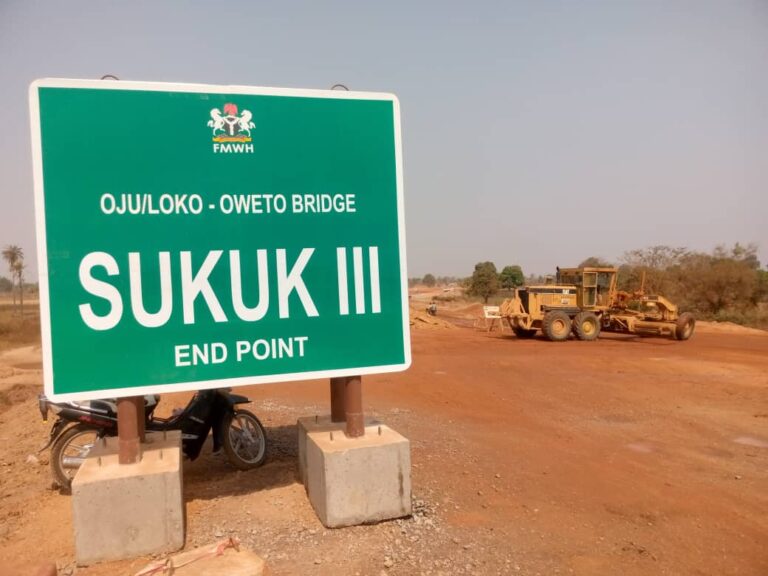
FG offers N300 billion Sukuk to fund road projects

THE Federal Government has launched a fresh N300 billion Sukuk bond to finance the construction and rehabilitation of roads and bridges across the six geopolitical zones, in a move that will further swell the country’s public debt, now nearing N145 trillion.

The Debt Management Office (DMO) announced this on Monday, May 12, in the 2024 FGN Sukuk Offer for subscription.

In Nigeria, a Sukuk fund, or Sukuk bond, is a type of Islamic investment certificate that represents an ownership interest in a specific asset or a pool of assets, rather than a debt obligation like a conventional bond.

It’s a hybrid instrument that combines equity and debt features, where investors receive income from the use of the underlying asset. The Federal Government of Nigeria, for example, uses Sukuk to fund infrastructure projects like roads.

According to the debt office, the offer opens on May 12, 2025, and will close on May 20, 2025, while the settlement date will be May 23, 2025.

Known as a 7-year Ijarah Sukuk, the instrument would be due by May 2032.

The DMO explained that the offer was being issued by FGN Roads Sukuk Company Plc on behalf of the federal government of Nigeria.

“The Sukuk is structured as a Forward Ijarah (Lease) and offers a rental rate of 19.75 per cent per annum, payable half-yearly, with full repayment at maturity through a bullet redemption,” the debt office stated.

It is noted in the offer document that the proceeds would be used solely for the construction and rehabilitation of key road and bridge projects across the country..

The Sukuk will be listed on the Nigerian Exchange Limited and the FMDQ Securities Exchange Limited, providing liquidity for investors wishing to trade in the secondary market.

A unit of the Sukuk offer is priced at N1,000, with a minimum subscription of N10,000 and subsequent investments in multiples of N1,000, the DMO stated.

It listed the issuing houses for the offer to include Greenwich Merchant Bank Limited, Vetiva Capital Management Limited, and Stanbic IBTC Capital Limited, while the technical advisers are CardinalStone Partners Limited, Lotus Financial Services Limited, and Buraq Capital Limited.

It further listed the receiving banks to include Jaiz Bank, Lotus Bank, Zenith Bank, Stanbic IBTC Bank, and Greenwich Merchant Bank.

The offer is also being marketed by several placement agents, including Access Bank, FBNQuest Merchant Bank, United Bank for Africa, GTBank, Citibank, Standard Chartered, Coronation Merchant Bank, and others.

The federal government has raised about N1.09 trillion through Sovereign Sukuk since the instrument was first introduced in 2017, The ICIR reported recently.

In Nigeria, a Sovereign Sukuk, issued by the DMO, is a financial tool that complies with Islamic law (Sharia). It represents shared ownership in specific assets, mainly used to fund infrastructure projects like roads.

Several important roads across the country have been financed using Sovereign Sukuk bonds, with the DMO and the Federal Ministry of Finance overseeing the process.

The Director-General of the DMO, Patience Oniha, had on March 26, while speaking at an event in Lagos State, hinted at the N300 billion Sukuk offer to finance capital projects.

With the N300 billion Sukuk offer for subscription, Nigeria’s total public debt will further surge from N144.67 trillion reported by the DMO as of December 31, 2024.
NED offers grant to support democracy

THE National Endowment for Democracy (NED) has announced a call for proposals for its latest grant cycle, offering up to $50,000 in funding for initiatives that promote democracy, human rights, and civic participation across the globe.

The NED said in a statement on its website that it’s inviting civil society organisations, media groups, and democratic activists to submit innovative project ideas that align with its mission of fostering democratic institutions and values.

The grant is open to both local and international organisations, with a focus on supporting efforts in challenging political environments.

Projects may include advocacy campaigns, capacity-building programmes, independent media development, and initiatives that promote accountability and transparency.

Interested applicants are encouraged to submit their proposals here by May 20.

FG to overhaul underperforming power DisCos

0

THE Federal Government has launched a pilot reform to address major problems in Nigeria’s electricity distribution sector, starting with two underperforming Distribution Companies (DisCos), one in the North and another in the South.

This move comes in response to long-standing issues such as poor governance, outdated infrastructure, and inefficiencies that have plagued the DisCos for years.

The Minister of Power, Adebayo Adelabu, outlined the Electricity Distribution Companies reforms after a meeting with the Japanese International Cooperation Agency (JICA), which presented a roadmap titled ‘Revamping of the Distribution Sector in Nigeria’.

A statement signed by the Special Adviser on Strategic Communications and Media Relations to the Minister, Bolaji Tunji, on Monday, May 12, said the pilot scheme, slated to commence between May and August 2025, will target one DisCo in the north and another in the south.

The aim is to demonstrate a replicable model for operational turnaround, combining internal restructuring, external expertise, and federal oversight to achieve rapid improvements in service delivery.

The JICA’s proposal emphasises reforming DisCos “from within” by integrating outside experts, strengthening leadership, and aligning government support with short-term results in pilot zones to lay the groundwork for long-term sector-wide transformation.

Adelabu stressed the urgency of the intervention when he said, “We can no longer fold our hands and watch the inadequacies of DisCos, whose performances fall short of expectations. This pilot is not optional. We will use regulatory authority to restructure underperforming DisCos and compel compliance if necessary.”

The Minister, who acknowledged persistent resistance to past reforms, pledged to address both universal challenges, such as vandalism and governance, as well as region-specific issues, including cultural barriers hindering operations.

He emphasised that the key to the initiative is resolving the DisCos’ inability to invest in infrastructure upgrades.

“Their lack of investment is not solely due to unwillingness but also a lack of incentives. Returns on infrastructure spending are not commensurate, so we must attract investors and franchise viable and the not-so-viable areas to capable operators, so we can have a mix,” Adelabu added.

He directed the Nigeria Electricity Regulatory Commission (NERC) to enforce franchising opportunities and ensure DisCos cooperation, stating, “NERC must secure their buy-in. Past efforts failed due to resistance, but this time, we will be intentional and decisive.”

The JICA’s Power Sector Policy Advisor to Nigeria, Takeshi Kikukawa, during the presentation, said, “The goal is to deliver immediate results in pilot areas while creating a sustainable foundation for nationwide improvement.”

The ICIR  reports that the Federal Ministry of Power and NERC will finalise pilot details in the coming months, prioritising DisCos with acute operational deficits. The initiative marks the most robust effort to date to resolve the power distribution crisis, signalling a renewed push for accountability, investor confidence, and reliable electricity access.

An earlier report by The ICIR noted that due to persistent liquidity in the power sector and poor performance of the distribution companies in the power sector value-chain, the  Ministry of Finance Incorporated (MOFI) has restructured and taken control of the government’s 40 per cent equity holding in the 11 privatised successor electricity distribution companies (DISCos).

The MOFI is the investment vehicle of the Nigerian government, domiciled with the Federal Ministry of Finance.

Before now, the Bureau of Public Enterprise (BPE) has maintained such control of the government’s 40 per cent.

ICIR investigation on trash-choked Abuja communities spurs action from FCT Satellite Development Department

Following The ICIR Investigation, Satellite Town Development Department (STDD), has responded with an actionable measure to the waste mismanagement within the Nyanya and Karshi communities, even though they failed to provide a lasting solution.

Recall that the department was called out in an Investigation by The ICIR that revealed how poor waste management jeopardises public health, affects businesses, and pollutes the environment through indiscriminate waste disposal caused by their irregularities.

The Satellite Town Development Department (STDD) is responsible for the planning, development, and maintenance of satellite towns, urban areas designed to ease congestion in major cities. It oversees infrastructure projects, including road construction, waste management, drainage systems, and public utilities, to ensure sustainable urban growth.

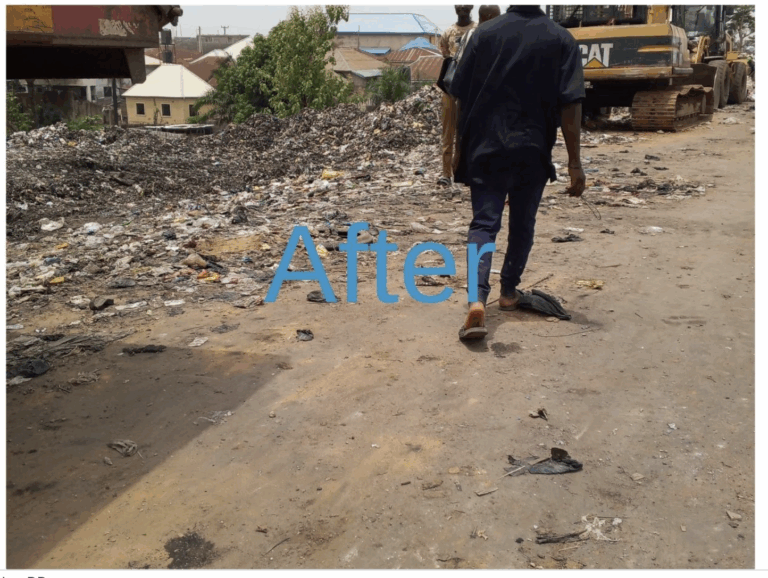
The before and after condition at Kurudu after STDD swung into action following ICIR investigation.
The before and after condition at Kurudu after STDD swung into action following ICIR investigation. Photo Credit: Abdullahi Muritala/TheICIR

Response

The agency has responded by evacuating some of the dump sites in environments like Kurudu and Karu areas of Abuja Municipal Area Council (AMAC). However, they have failed to provide commercial waste bins in the affected areas as the community residents have returned to dumping the refuse indiscriminately.

Recall that the investigation also revealed that some of the locations do not have a waste collection bin, which exacerbates indiscriminate waste disposal in those areas.

On May 4 2025, The ICIR visited the locations and discovered the presence of the department’s heavy trucks and payloader which signifies that while it has been actively evacuating the waste there was no placement of the waste bins to change the practice of indiscriminate waste disposal, especially at the bank of the road.

The ICIR sought to know from the PRO of the STDD, Meeme Felicia, if their actionable measure would include providing waste bins in these locations. She responded that the only measure she was aware of is the sole evacuation that was ongoing.

She said it would be good if The ICIR could contact the FCT Minister, Nyseom Wike, to obtain information if the provision of commercial waste bins was being planned.

This shows that the department is yet to provide a lasting solution on waste management in the areas, despite being allocated ₦116 billion from the FCT 1.15 trillion 2024 budget for infrastructure and waste management projects. It is, however, not clear how much was disbursed.

Evacuation ongoing at Karu village before and after STDD swung into action following ICIR’s investigation. Photo Credit: Abdullahi Muritala/ICIR
Evacuation ongoing at Karu village before and after STDD swung into action following ICIR’s investigation. Photo Credit: Abdullahi Muritala/TheICIR

The ICIR investigation had proffered how strategic placement of waste collection bins can eradicate improper waste disposal and eliminate indiscriminate waste disposal which poses health hazards in these areas.

While there have been some responsive actions by the STDD, the lack of comprehensive and sustainable waste management solutions continues to pose environmental and public health risks in Abuja’s satellite towns.

Read the investigation HERE

UK to end overseas social care recruitment

0

THE United Kingdom (UK) has announced plans to end overseas recruitments for social care workers as part of a strategy to overhaul its immigration system.

The new policy, outlined in the recently released white paper titled “Restoring Control over the Immigration System”, showed that the UK aimed to curb the increasing number of migrant workers in the social care sector and address long-term demographic challenges.

According to the white paper, net migration in the UK reached an unprecedented 906,000 by June 2023, a significant rise from 224,000 in June 2019. 

While the latest figures from June 2024 show a decrease to 728,000, the numbers remain considerably higher than anticipated, prompting the government to reconsider its immigration policies.

The publication noted that one of the key contributors to the surge had been the health and care visa route, introduced in 2022 to address workforce shortages. 

The number of overseas social care workers rose from 37,000 in 2022 to 108,000 in 2023, which it said highlighted the increasing reliance on foreign labour to fill essential care roles.

“A big increase in overseas recruitment, including a shift towards lower-skilled migration, with a substantial increase in worker visas issued below degree level. In 2022, only 16,200 visas were issued to people taking up lower-skilled jobs. By 2023, this had increased to 27,900 following increases in people coming to work in food preparation and hospitality occupations.

“The expansion of the health & care visa route in February 2022 to include the social care workforce also triggered a sharp increase in the number of people arriving via this route to work in below degree-level jobs, from 37,000 in 2022 to 108,000 in 2023. 

“A rapid increase in sponsored study visas at lower-ranked education institutions, driven by a rapid increase in international students applying for master’s degrees in the UK. UK visas for universities globally ranked between 601 and 1,200 increased by 49 per cent between 2021 and 2023; whilst visas for top 100 universities fell by seven per cent over the same period,” the publication added.

The policy change, according to the UK government,  will mean that no new applications for social care visas from overseas will be accepted. 

However, to minimise disruption in the sector, the government said it would allow those currently in the UK on such visas to extend their stay or switch to other roles within the care sector until 2028. 

It noted that after this transition period, the visa route would be permanently closed to new international recruits.

The UK government added that the length of the graduate visa, which allows international students to remain in the UK after their studies, will be reduced from two years to 18 months.

It stressed that English language proficiency requirements would be raised across various immigration routes, adding that adult dependents of skilled workers and students would need to demonstrate basic English (A1 level). 

This will progress to higher levels for visa extensions and settlement, and the standard required level for settlement will also increase from B1 to B2.

Relief for Nigerians as Dangote slashes fuel price again to N825/ltr

DANGOTE Petroleum Refinery has again announced a reduction in the ex-depot price of its petrol, from N835 to N825 per litre.

The new pricing, effective from Monday, May 12, comes as a relief amid Nigeria’s ongoing efforts to stabilise fuel supply and reduce dependence on imported petroleum products.

The price reduction, energy analysts said, was connected to the global oil price, with oilprice.com affirming the current Brent crude price at $65.21 per barrel.

They suggested that the reduction could lead to lower pump prices and benefit most consumers who rely on fuel for their economic activities. They also argued that energy costs, which impact food prices, could lessen, leading to a drop in the prices of goods.

“What the Federal Government is losing through the drop in global oil price, with a sharp drop from the budget benchmark of $75/barrel, is a gain to the domestic market which must inadvertently see price drop for Nigerian consumers,” an oil sector governance expert, Oft Henry Ademola Adigun told The ICIR.

Sources confirmed on Monday that the refinery had reduced its price to N825 per litre for its customers, through a rebate of N10 after successful loading of products at the refinery.

The sources said marketers were still paying N835 per litre for products but received a N10 refund after loading and evacuating them from the refinery.

The covert price adjustment has allowed customers and marketers to retail the product at a lower band of N830 to N835, outpricing importing marketers and private depot owners.

The slash in price, some analysts said, was not unconnected with the recent visit by the Chief Executive Officer (CEO) of Dangote Petrochemical Refinery, Aliko Dangote, to the Nigerian National Petroleum Company Limited (NNPCL) to strengthen and promote beneficial partnerships and foster healthy competition.

“We expect further price slashes and healthier competition, especially now the sector has been fully deregulated,” a development economist, Kingsley Obiakor, said.

The NNPCL confirmed the meeting in a statement and noted that the commitment was to ensure healthy competition geared towards national prosperity.

During the visit, Dangote pledged to collaborate with the new NNPCL management to ensure energy security for Nigeria.

He said, “There is no competition between us; we are not here to compete with NNPC Ltd. NNPC is part and parcel of our business, and we are also part of NNPC. This is an era of co-operation between the two organisations.”

NNPCL to resume crude oil drilling in northern Nigeria

0

THE Nigerian National Petroleum Company Limited (NNPCL) has hinted at its plans to resume the drilling of crude oil in the northern part of Nigeria.

The Group Chief Executive Officer (GCEO) of NNPCL, Bayo Ojulari, reportedly said in an interview with BBC Hausa on Monday, May 12.

The drilling activities are to resume at the Kolmani oil field, located on the border between Bauchi and Gombe States, nearly after two years of inactivity at the site.

According to Ojulari, preparations were underway to relaunch the project, which initially began during the administration of former President Muhammadu Buhari.

“We will continue to work with the government in Kolmani and other areas. Besides the oil drilling work, we will also ensure that we complete the gas pipeline project from Ajaokuta to Kano.

“The projects would allow the previously closed businesses to be reopened so that they could continue to operate and open new ones,” he was quoted to have said.

The ICIR reports that former President Muhammadu Buhari had in November 2022 flagged off the Kolmani Integrated Development Project (KIPRO) situated in the boundary of Bauchi and Gombe states.

In his chat with BBC, however, Ojulari emphasised that NNPCL is now ready to revive the project.

He believes the project if revived, is expected to contribute significantly to the nation’s oil production and offer new economic opportunities for the region.

NNPCL’s plans to resume drilling in the North come at a critical time when the country faces economic challenges.

The ICIR has, in a recent report, spotlighted that Nigeria has not been meeting its crude oil production benchmark, and this has been negatively impacting its revenue from oil and frustration the execution of national projects.

Expressing concern over the revenue being generated from the sale of oil and gas, he said the proceeds would be used to continue the projects.

He stressed that with global oil prices dropping, Nigeria would not receive the anticipated revenue from such initiatives.

The NNPCL boss, during the interview, also hinted at the company’s plan to continue with the Ajaokuta–Kaduna–Kano (AKK) gas pipeline project.

“After completing the projects, companies that were closed will surely reopen and new companies will spring up too.

“We will continue from next month and people will start witnessing the commencement of the project by God’s will,”  Ojulari said.

Commenting on the issues between the NNPCL and Dangote Refinery, Ojulari said both companies have resolved to collaborate.

He assured that the pump price of petrol would reduce once new supplies are procured at lower costs, explaining that oil marketers purchased the current stock at high prices, hence the high cost of the product.

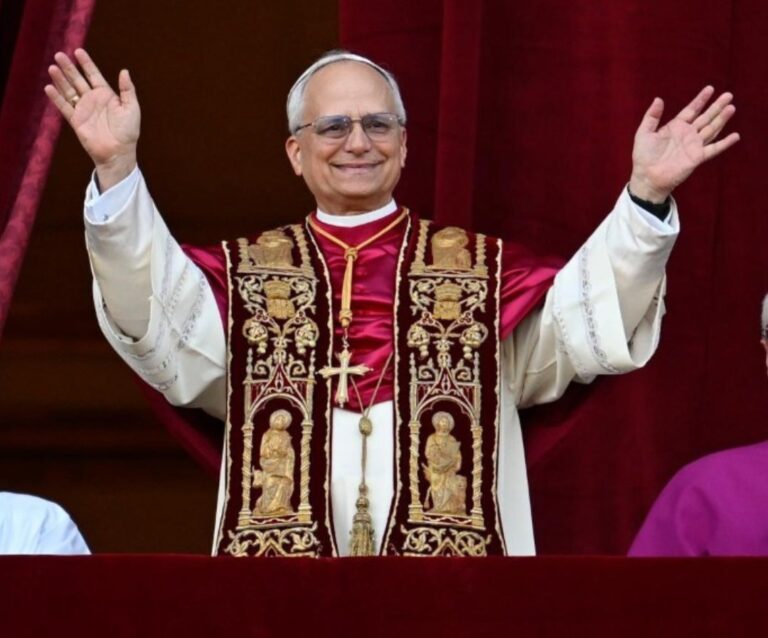
Pope Leo seeks immediate release of detained journalists worldwide

0

POPE Leo has called for the unconditional release of all journalists currently in detention worldwide, describing their arrests as a violation of press freedom and human dignity.

The Pope made the call during his first media address at St. Peter’s Square on Sunday, as part of activities marking the 2025 World Press Freedom Day.

He expressed deep concern over the growing repression of the media in many countries, including the imprisonment of journalists for doing their jobs.

“Journalists should not be punished for seeking the truth,” the Pope said, adding that “Their detention is a threat to justice and an attack on the collective right to know.”

Pope Leo XIV, who was elected as the new leader of the Catholic Church on Thursday, May 8, urged world leaders to guarantee freedom of expression and ensure that journalists operate without fear of persecution.

He said silencing the media would threaten democracy and peace.

The Pope also prayed for the safety of all journalists, especially those reporting under hostile conditions.

The Pope’s call came at a time when press freedom continues to face serious threats globally. According to the Committee to Protect Journalists (CPJ), at least 320 journalists were detained in 2024, many of them without trial or access to legal representation.

In Nigeria, several cases of journalist harassment and unlawful detention have been reported in recent years, with media rights advocates consistently condemning the use of state security agencies to intimidate or silence media practitioners.

Nigeria ranked 120th on the World Press Freedom Index in 2021 and has been described as one of the most dangerous and difficult countries for journalists in West Africa.

In 2023, The ICIR tracked 39 journalists who were harassed during the year in the line of duty, though the list was not exhaustive.

The ICIR reported that journalists continue to face threats to their lives in Nigeria despite large-scale corruption, insecurity and injustice pervading the nation. Crimes are alarmingly high, and many citizens have lived in unprecedented hardship since the post-civil-war era. These are some of the enormous tasks the Nigerian media are constitutionally bound to report on.

Most recently, a Nigerian veteran journalist, Lanre Arogundade, was removed from the State Security Services (SSS) watchlist after four decades.

Reacting to the decision, Arogundade challenged the nation’s security agencies to focus on fighting terrorists and other criminals beleaguering the nation.

Meanwhile, Nigerian journalists and press freedom groups have lauded the Vatican for drawing international attention to attacks on the media by governments.
They called on the Nigerian government to address persistent media suppression in the country.


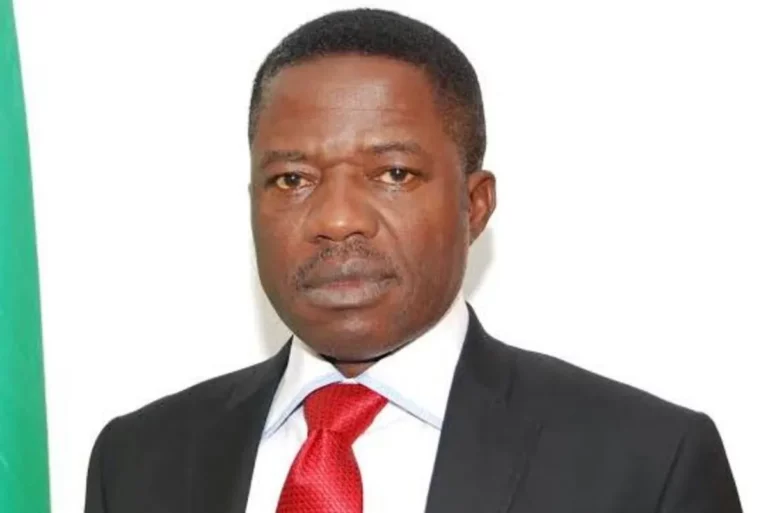
Former minister Omoniyi Olubolade dies at 70

FORMER military administrator of Bayelsa State, Omoniyi Caleb Olubolade, is dead.

Olubolade, who turned 70 on November 30, 2024, died on Sunday, May 11, after collapsing while playing lawn tennis in Apapa, Lagos State.

His death was confirmed in a statement jointly signed by his first daughter, Oluwayemisi Akinadewo, and first son, Dayo Olubolade.

According to his family, he had driven himself to a sports facility to play tennis when he suddenly slumped on the court.

Despite efforts by medical personnel to resuscitate him, he was later pronounced dead at the Obisesan Naval Medical Hospital in Apapa.

The ICIR reports that Olubolade was a former Minister of Special Duties, Police Affairs, and Minister of State for FCT.

Background

Olubolade was a retired Nigerian naval officer and politician. He hailed from Ekiti State.

He served as the Military Administrator of Bayelsa State from 1997 to 1998, where he helped set the foundation for the state’s development.

After retiring from the Navy in 1999, Olubolade transitioned into politics. He was appointed Minister of Special Duties and later Minister of Police Affairs during President Goodluck Jonathan’s administration.

Throughout his career, he was recognised for his leadership, public service, and contributions to national development.

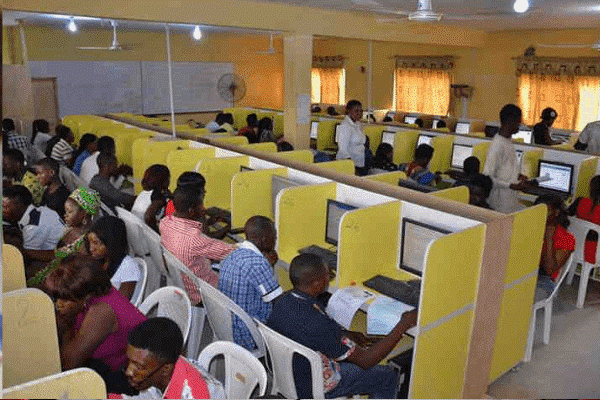
JAMB probes complaints over 2025 UTME results

THE Joint Admissions and Matriculation Board (JAMB) said it had launched an investigation into numerous complaints regarding the recently released 2025 Unified Tertiary Matriculation Examination (UTME) results.

The results, announced last Friday, May 9, have sparked reactions, with many candidates and Nigerians expressing dissatisfaction with the conduct of the examination on social media. 

They also alleged that there were irregularities in the results released by the examination body.

On May 9, a Nigerian with the account @Timmieexx on X publicly challenged JAMB. She claimed that her brother’s exam result appeared inconsistent and urged the examination body to review it.

“Dear @JAMBHQ, my brother’s JAMB result just came out, and it’s not adding up. This is someone with a consistent record of academic excellence. We can’t accept this result. Too much effort and sleepless nights went into the preparation. This is so unfair. Please REVIEW IT!!!!!” her post read.

@Chukumapius, who identified as a retired teacher, tagged JAMB to express his concern that the result his daughter obtained didn’t reflect her hard work or match the score she achieved last year.

The reactions also followed the earlier development that showed that 78.5 per cent of the candidates who sat for the 2025 UTME scored below 200, a benchmark commonly used for admission into competitive programmes in Nigerian federal universities. 

According to JAMB, of the 1,955,069 registered candidates, 1,534,654 scored below 200, while the results of 39,834 candidates were withheld for various reasons. 

Reacting to this, JAMB spokesperson, Fabian Benjamin, stated that the board conducted an annual review encompassing three critical stages: registration, examination, and result release. 

During the examination phase, he noted that JAMB ensured that every candidate had the opportunity to sit for the test. 

He also noted that JAMB had engaged experts, including members from the Computer Professionals Association of Nigeria, chief external examiners from tertiary institutions, the Educational Assessment and Research Network in Africa, measurement experts, and vice chancellors from various universities, to assist in the investigation.

“The review will scrutinise the registration, examination, and result release stages to identify potential technical issues.

“The Board’s annual review encompasses three key stages: registration, examination, and result release. During the examination phase, JAMB ensures that every candidate is afforded the opportunity to sit for the test. Should any technical issues arise, the Board reschedules the examination for affected candidates without hesitation,” Benjamin said.

“We are currently scrutinising these complaints in detail to identify and rectify any potential technical issues,” he stated.

He assured that if the investigation confirmed any technical glitches, JAMB would take immediate corrective measures, which might include the rescheduling of exams for affected candidates.