Home Blog Page 287

Kogi JSC retires judge, suspends magistrate over misconduct

0

THE Kogi State Judicial Service Commission (JSC) has ordered the compulsory retirement of the Area Court’s judge, Alemeru Adekunle Bamidele, over misconduct.

A magistrate, Tanimu U. Muhammed, was also suspended for two years and issued a warning letter by the commission.

According to the Secretary to the Commission, Tanko Muhammed, the decisions were made at the JSC’s 136th meeting in Lokoja, the Kogi state capital.

The commission acquitted four others: Magistrate Abdul Musa Mopah, Yunusa Medugu, Deborah O. Ebiloma, and Anuhi Safiya Oiza, who were accused of various alleged offences.

The JSC Secretary, Muhammed, who spoke on Thursday, May 8, announced the formation of a six-man committee to explore ways to improve the welfare of magistrates and area court judges in the state.

Muhammed said the allegations against the officers were first investigated by the commission’s disciplinary committee, which recommended the JSC.

“The sacked judge was found to have bought a building that was the subject matter of litigation before him after ordering the sale of the same and refused to make full payment for the property. He was found to have issued a court order without hearing both parties,Muhammed explained.

Muhammed said the committee that investigated the officers was headed by the Attorney-General and Commissioner for Justice of the state, Muizudeen Abdullah.

The issue came up a few days after the National Judicial Council (NJC) suspended three serving judicial officers for one year without pay, including a justice of the Court of Appeal, for myriad acts of judicial misconduct.

The disciplinary actions were part of key decisions made at the NJC’s 108th meeting, chaired by the Chief Justice of Nigeria, Kudirat Kekere-Ekun.

This was disclosed in a statement released by the NJC’s Deputy Director of Information, Kemi Ogedengbe.

According to the council, Jane E. Inyang of the Court of Appeal, Uyo Division, was found guilty of breaching Rule 3(5) of the Revised Code of Conduct for Judicial Officers.

The NJC stated that Inyang was found to have abused his office by issuing inappropriate ex- parte orders for the sale of Udeme Esset’s petrol station and other businesses at the interlocutory stage of the case.

According to the NJC, Justice Inyang Ekwo of the Federal High Court, Abuja Division, ignored an application to set aside court proceedings conducted without the parties present and went on to dismiss the charge against the defendants. 

This action was deemed a violation of Rules 3.1 and 3.3 of the 2016 Revised Code of Conduct for Judicial Officers.

The third judge slammed with punishment by the NJC, Aminu Baffa Aliyu of the Federal High Court, Zamfara Division, was suspended for one year without pay for judicial wrongdoing.

In another development, the Council directed the governor of Imo State, Hope Uzodimma, to reverse the appointment of Theophilus Nzeukwu as acting chief judge of the state.

The NJC directed the Imo State Governor to appoint the most senior judicial officer in the High Court as acting chief judge, as mandated by Section 271(4) of the Constitution, leaving no room for discretion.
Pope Leo XIV: Why the College of Cardinals chose the Chicago native and Augustinian to lead the church after Francis

By Joanne M. Pierce, College of the Holy Cross

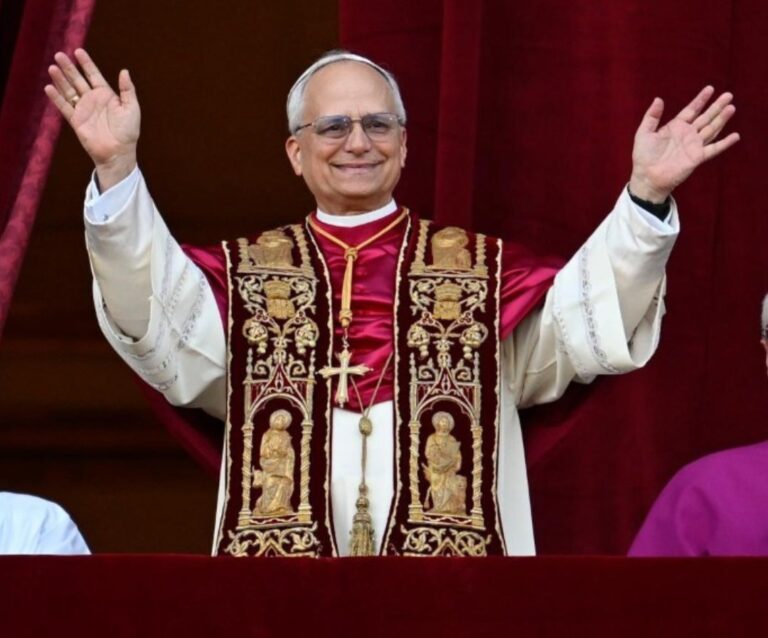
WHEN the 69-year-old Cardinal Robert Francis Prevost on May 8, 2025, appeared on the main balcony of St. Peter’s Basilica for the first time as Pope Leo XIV, he was cheered loudly by the huge crowd of pilgrims, tourists, local Catholics and other onlookers, who had waited hours for the first sign of white smoke and the official announcement.

As a specialist in Catholic history and ritual, I know how important this moment was for Catholics and others all over the world. A new pope brings with him a sense of excitement often mixed with uncertainty.

But the choice of the College of Cardinals came as a surprise to some. Prevost is the first pope from the United States, and, traditionally, the European-dominated College of Cardinals has had reservations about choosing a cardinal from the U.S. for fear of too much American influence in the church.

So, who is Prevost and what might have influenced the cardinals’ vote?

Early experiences

Born in Chicago, Illinois, Prevost joined a Catholic religious order at the age of 20: the Order of St. Augustine, called Augustinians, founded in the 13th century. Instead of withdrawing from the world in isolated monasteries, members of this order traveled as mendicants to aid the poor as well as serve as missionaries and teachers.

Prevost studied theology both in the U.S. and in Rome and, as a newly ordained priest, spent a year in Peru. After a short return to the U.S. as an official of the Augustinian order in Illinois, he returned to Peru as a seminary professor to teach canon law, the legal structure of the Catholic Church. He would stay in Peru for the next 10 years.

In 1999, he became the prior – that is, the head – of the local Augustinian province in Chicago, and was later elected prior of the worldwide Augustinian order. This gave him a truly global experience, since the Augustinians had some 50 communities spread across every continent.

In 2015, Pope Francis appointed him bishop for the diocese of Chiclayo in Peru. In 2019, Francis appointed him a member of several important Vatican dicasteries, or departments, where he became very familiar with the central church administration. Most importantly, he served as prefect – or chairman – on the Dicastery for Bishops.

A woman holds a photograph of a man wearing a black clerical coat, while two others stand beside her and wave.
Catholics hold a photo of newly elected Pope Leo XIV, in front of the Cathedral of Chiclayo, Peru, on May 8, 2025, where he served as bishop for several years.
AP Photo/Manuel Medina

In fact, because of his lengthy pastoral experience in Peru and service at the Vatican, some commentators had noted before Prevost was chosen that, if the cardinals were to elect an American pope, it would be him. His service on the Dicastery for Bishops was considered especially important, since members play a key role in selecting new bishops.

Global church

During the 20th century, especially after the Second Vatican Council – a series of meetings of the world’s bishops to modernize the church, ending in 1965 – the popes began to name cardinals from other parts of the world that were previously considered to be on the periphery of the Catholic Church.

And this led to popes being chosen from outside of Italy for the first time in centuries. Pope St. John Paul II was Polish and the first non-Italian pope since the 16th century. Pope Benedict XVI was another non-Italian, born in Germany, who had served as a Vatican official. Pope Francis was born in South America to parents who were Italian-born immigrants to Argentina.

The College of Cardinals, which had few representatives from other continents until recently, is now much more international. Some 80% of the cardinal-electors were named by Francis, many from countries that had never before had a cardinal.

In reviewing his record, the cardinal-electors might have taken a number of factors into account. Prevost would be an effective administrator as head of the church, and was an expert in church canon law. He had decades of experience doing pastoral work in South America, as well as in North America. And as prior general of the entire Augustinian Order, he would likely have traveled widely to visit many of the communities he supervised.

Papacy under Leo

The moment when the new pope emerged on the Vatican balcony.

The new pope appeared on the Vatican balcony wearing the traditional papal garments: white cassock, short red cape, decorated red and gold stole, and golden cross hanging around his neck. Francis, on the other hand, had appeared dressed in the plain white cassock of a pope.

Certainly, he had not chosen the simplicity of Francis. Was this a sign that he would be more of a traditionalist?

His choice of a papal name, I believe, could indicate a different point of view. Pope Leo XIII wrote a groundbreaking encyclical in 1891, “Rerum Novarum,” subtitled “On Dignity and Labor.” In this he stressed the rights of workers to unionize and criticized the conditions in which they worked and lived. He also championed other rights the ordinary worker deserved from their bosses and from their government.

A half-length portrait of a man in white priestly robe and a crucifix around his neck. Pope Leo XIII.Francesco De Federicis via Wikimedia Commons
A half-length portrait of a man in white priestly robe and a crucifix around his neck. Pope Leo XIII. Francesco De Federicis via Wikimedia Commons

In his first remarks from the balcony, offering a glimpse into the direction of his papacy, Leo XIV stressed the role of Catholics and the church as peacemakers and bridge-builders, in dialogue with other religious traditions and cultures. His first words were “Peace be with you all,” describing this peace as “a disarmed peace, a disarming peace.” He further urged Catholics to act together “without fear … united with one another … to build bridges” through dialogue and outreach – to bring peace to the world.

He may not follow exactly in Francis’ footsteps, but he will likely continue walking in the same direction.The Conversation

Joanne M. Pierce, Professor Emerita of Religious Studies, College of the Holy Cross

This article is republished from The Conversation under a Creative Commons license. Read the original article.

Nigeria paying off IMF debt will raise investors’ confidence – Expert

NIGERIA’s exit from the International Monetary Fund (IMF) debtors is expected to serve as a strong signal to foreign investors’ confidence and strengthened future engagements with foreign partners, a financial expert, Ayokunle Olubunmi, has said.

The IMF confirmed the exit in a report titled: ‘Total IMF Credit Outstanding – Movement from May 01, 2025, to May 06, 2025,’ published on its website on Wednesday, May 7.

A cursory look at the list revealed Nigeria was not listed among the 91 developing and least developed countries with outstanding credit obligations to the IMF, which collectively owed $117.8 billion as of May 6, 2025.

“This data is subject to regular formal reviews and may be subject to change or adjustment due to pending transactions which may not have yet been confirmed,” the IMF noted.

Giving an insight into what the repayment obligation would mean for Nigeria’s economy, the head of Financial Institutions Rating at Agusto & Co, Ayokunle Olubunmi, said the action could attract increased investor interest and potentially lead to more foreign investment.

“Nigeria fully paying down its overnight loan is a strong signal to foreign investors. This repayment demonstrates Nigeria’s ability to meet its financial obligations, even amidst global economic challenges. It assures investors that they can expect to receive their funds back when investments mature,” Olubunmi said.

He explained further that the repayment could lead to a “crowding in” effect, where more investors become interested in Nigeria, stressing that it would complement positive rating outlooks for the country.

He, however, expressed that while the repayment is a positive sign, it is not a complete solution.

He said Nigeria should address its fundamental economic challenges and improve its investment climate to attract significant foreign investment.

“Even with positive developments, Nigeria needs to effectively communicate its progress and investment opportunities to foreign investors,” Olubunmi said.

He added that effective communication and “selling the story” of Nigeria’s progress are crucial for attracting substantial foreign investment.

Meanwhile, the Senior Special Assistant to the President on Digital Engagement, Strategy, and New Media, O’tega Ogra, noted that Nigeria’s exit from the IMF debtor list did not mean the country would no longer engage with the Fund or other international lenders.

He believes rather that future engagements would be on a more strategic and partnership-oriented basis.

“This is not a door slammed shut. Global partnerships, like the IMF, remain valuable allies, especially in a world defined by volatility and uncertainty. The difference now is that any future engagement will be proactive, not reactive, and based on partnership, not dependence,” Ogra said.

The ICIR can report that in its recent assessment, the Fitch Ratings agency upgraded Nigeria’s outlook to Stable from Negative.

Stop attacking journalists, go after terrorists, others, Arogundade challenges security agencies

0

A VETERAN journalist, Lanre Arogundade, recently removed from the State Security Service (SSS) watchlist after 40 years, has challenged Nigerian security agencies to focus on tackling insecurity in the country rather than harassing journalists and activists.

The executive director of the International Press Centre (IPC), in a chat with The ICIR on Thursday, May 8, advised security agencies to prioritise tackling issues of insecurity, namely terrorism, banditry, and kidnapping, rather than targeting journalists and activists.

“We have enough problems of insecurity in Nigeria. We have so many acts of terrorism, banditry, and kidnapping taking place across the country. They should ensure that there’s security of lives and property in the country,he said.

He emphasised that journalists like him could not pose a threat to national security, saying,It is those who carry out acts of terrorism that are a threat to the country, not those of us who fight for the rights of the people within a democratic space.”

Arogundade expressed mixed feelings about his removal from the watchlist, saying he was relieved but also felt a sense of injustice.

It’s a kind of mixed feeling; hopefully, it is all over… One is relieved. The other feeling is also the injustice of it all, or, if you like, “Why should this happen?”

According to him, his troubles with the Nigerian government began in 1984 during the military regime of former Head of State Muhammadu Buhari. At the time, he was the president of the National Association of Nigerian Students (NANS). He led a nationwide protest against the commercialisation of education in the country.

He was subsequently detained and interrogated several times, after which his name was put on the watchlist.

“We had a nationwide protest against the increase in school fees or commercialisation of education by the Buhari government. That was 1984. In November 1985, earlier in that year, I had been detained by the Nigerian Security Organisation (NSO).

“I was abducted at the post office in Ile Ife in April 1985 and detained for days, Arogundade stated.

He added that in November 1985, he travelled to the UK to feature in some activities of the National Union of Students of the UK and was interrogated on his way out. When he returned, he was detained at the airport for an hour before he was allowed to go.

Arogundade believes that his activism as a journalist, including his role as chairman of the Nigerian Union of Journalists (NUJ) Lagos State Council, may have contributed to his continued inclusion on the watchlist.

He noted that many journalists and activists who fought against military rule might have had their names on the watchlist, including journalists such as  Abdul Oroh and Edeatan Ojo.

The IPC executive director said he would seek legal advice on whether to press charges against the SSS, noting that his lawyers had earlier written to the agency demanding reasons for his harassment and requesting his removal from the watchlist.

SSS removes Arogundade’s name from watchlist after 40 years

News emerged on Tuesday, May 6, that the SSS had removed Arogundade’s name from its watchlist after four decades.

According to a statement issued on Tuesday by Tobi Adeniyi, legal adviser and chairman of the advocacy committee at IPI Nigeria, IPI president, Muskiliu Mojeed, provided an update on Arogundade’s watchlist status during the 3rd Nigerian Media Leaders’ Summit.

The summit was organised by Journalism Clinic, led by veteran journalist Taiwo Obe, and attended by media owners and top editors.

Mojeed revealed Arogundade’s status on the watchlist while relaying the outcome of IPI Nigeria’s recent engagement with the Director-General of the SSS, Adeola Ajayi.

The IPI leader said Arogundade faced nearly 40 years of persistent harassment and embarrassment, including brief detention by security operatives at the Murtala Muhammed International Airport in Lagos.

“IPI Nigeria says it welcomes the decision and commends the SSS for finally removing  Arogundade’s name from the watchlist,” Mojeed stated.

He said the SSS’ decision “followed a sustained and intensive campaign by IPI Nigeria to get Arogundade’s name removed from the watchlist.

“The renewed campaign became necessary when Arogundade’s name was not removed despite previous assurance,” Mojeed added.

Putting Arogundade on the watch list for 40 years, a travesty – MRA

Speaking with The ICIR on the development, the Executive Director of Media Rights Agenda (MRA), Edetaen Ojo, described the SSS’ action as a travesty.

According to the media rights advocate, there is no justification whatsoever for him to have been on such a watch list.

He said time would tell if Arogundade had truly been removed from the watchlist because sometime in the past, the SSS said they had removed him from the watch list, only to find out later that he was still there.

“The widespread abuse and lack of transparency that routinely accompany the violation of citizens’ rights have enabled such a possibility. But the greater concern for us as a country is the fact that such measures, which exist ostensibly to ensure national security and combat crime, have been so abused that they are no longer effective tools to address the principal reasons for which they exist,” Ojo stated.


It’s official: Conclave chooses American Robert Francis as new Pope 

THE Roman Catholic Church has announced a new Pope on Thursday, May 8, 2025. This came after two days of praying and voting, with white smoke rising from the Sistine Chapel chimney signifying that the 133 cardinal electors had chosen a new leader for the 1.4 billion-member Catholic Church worldwide.

Cardinal Protodeacon Dominique Mamberti announced that the Cardinals have elected Cardinal Robert Francis Prevost as the new Pope, making him the first pontiff of United States origin in history.

Mamberti announced with the Latin phrase “Habemus Papam” (We have a Pope) to tens of thousands of people gathered in St. Peter’s Square, eagerly awaiting the announcement.

The ICIR reports that Robert Francis will be known as Pope Leo XIV, and is the first pontiff to have been born in the United States to succeed late Pope Francis, who died on April 21, after a 12-year papacy.

At 69 years old and originally from Chicago, Prevost has spent most of his career serving as a missionary in Peru from 2015 to 2023.

Prevost has become the 267th Pope of the Catholic Church and was known for his efforts to modernise the traditionally conservative institution.

He has drawn attention from fellow clergy for his quiet demeanor and strong support of Pope Francis, particularly his dedication to social justice causes.

Francis brought him to Rome to lead the Vatican office responsible for selecting Catholic bishops worldwide, giving him significant influence in the appointment of many bishops around the globe.

CPC bloc renews allegiance to Tinubu ahead 2027

0

SOME chieftains of the defunct Congress for Progressive Change (CPC) have renewed their allegiance to the President Bola Tinubu-led All Progressives Congress (APC) administration ahead of the 2027 poll.

The group led by the former governor of Nasarawa State, Tanko Al-Makura, stated that their position is fuelled by speculations and misinformation that their group has abandoned the APC.

Al-Makura, who spoke at a press conference held in Abuja on Thursday, May 8, spoke against the backdrop of trending issue of the resolution by a fragment of the CPC block led by the former governor of Kaduna state, Nasir Ahmad El-Rufai, to join a coalition of opposition politicians led by the former vice president, Atiku Abubakar.

Al-Makura recalled the formation of the APC, which brought together the CPC, ACN, ANPP, APGA, DPP, and nPDP to defeat President Goodluck Jonathan in 2015 and ushered in President Muhammadu Buhari. He emphasised that as founding members, they remain committed to supporting President Tinubu’s administration.

Al-Makura, flanked by top members of the CPC bloc, stated that they were there to reaffirm their commitment to the ideals that brought them together in 2013.

He added that they aimed to set the records straight and send a clear message to Nigerians that the former CPC majority stakeholders remained strong, united, and deeply loyal to the APC and President Tinubu’s Renewed Hope Agenda.

“We are very much here, standing tall, proud, and standing firm within the party that we helped to found through sweat, sacrifice, and patriotic commitment. We remain part and parcel of the APC family,the group stated.

The former governor of Nasarawa State urged aggrieved bloc members to seek redress within the APC through dialogue, patience, and perseverance.

Also speaking, Farouk Adamu Aliyu, a former House of Representatives minority leader, assured that former President Buhari fully supports President Tinubu, contrary to the impressions created by El-Rufai.

The briefing was attended by notable figures including Katsina State Governor Umar Dikko Radda, former Governor and ex-House Speaker Aminu Bello Masari, and former Lagos State military Governor Buba Marwa, now NDLEA chairman.

Other attendees included APC North West National Vice Chairman Garba Datti Muhammed, Babale Ila, Lanre Tejiosho, Okono Obla, Osita Okechukwu, Abu Ibrahim, and Umaru Kurfi.

The ICIR reported recently that the presidency had responded to the defection of Delta State Governor Sheriff Oborevwori and his predecessor, Ifeanyi Okowa, from the People’s Democratic Party (PDP) to the APC by mocking former Vice President Atiku Abubakar, former Kaduna State Governor El-Rufai, and other opposition leaders over their planned coalition to unseat President Tinubu in 2027. 

The ICIR reported that the Delta State governor, his predecessor and PDP members in the state defected from to the APC on Wednesday, April 23. 

Oborevwori announced the defection through his Commissioner for Information, Charles Aniagwu.

Responding to the defection on X, the Special Adviser on Information and Strategy to the President, Bayo Onanuga, wrote that the coalition, which also has a former Secretary to the Government of the Federation, Babachir Lawal, and Tinubu’s former Special Adviser on Political Matters, Hakeem Baba-Ahmed, who has resigned, was bound to collapse. 

Also, in his reaction on X, a presidential aide, Tunde Rahman said the future looked so bleak for Abubakar’s coalition.

Price hike: Court dismisses Multichoice suit against FCCPC

0

A FEDERAL High Court (FHC) in Abuja has dismissed the suit filed by Multichoice against the Federal Competition and Consumer Protection Commission (FCCPC) for preventing it from implementing a price increase.

The judge, James Omotosho, in a ruling on Thursday, May 8, maintained that the suit constituted an abuse of the process of the court, having been filed after a similar suit was filed on the issue by one Festus Onifade, with Multichoice and FCCPC as parties in the suit.

The judge held that an earlier suit filed by Onifade before the same court in Abuja, in which Multichoice is a party, was still pending before Multichoice decided to file another separate suit.

Omotosho said MultiChoice could escalate the issues in the suit filed by Onifade by simply filing a counterclaim rather than filing a separate suit.

The judge went ahead to deny jurisdiction and dismissed the suit.

However, the judge proceeded to determine the case on merit and held that since Nigeria runs a free market economy, the FCCPC lacked the power to meddle in the decisions of private companies to fix their prices.

Omotosho stated that under Section 88 of the FCCPC Act, it is only the president of Nigeria who can regulate prices in a regulated industry and for essential goods, not the kind of services being offered by Multichoice, where consumers have choices.

Omotosho maintained that the FCCPC has no business questioning how companies fix their prices in a free market economy.

The judge further dismissed the FCCPC’s claim that MultiChoice held a dominant market position, calling the argument untenable.

The ICIR reported in February 2025 that the FCCPC directed MultiChoice Nigeria to maintain the current prices of its subscription packages until the ongoing investigation into its proposed price hike is concluded.

The commission said in a statement on Thursday, February 27, by its director of corporate affairs, Ondaje Ijagwu.

“Maintaining the status quo on pricing is essential to prevent any potential consumer harm during this period,” Ijagwu stated.

The directive followed MultiChoice Nigeria’s request for an extension concerning its scheduled appearance before the commission, which it granted.

Multichoice Nigeria, the parent company of DStv and GOtv, has revealed plans to increase the prices of its packages effective March 1, 2025.  The ICIR also reported.

It made the known in a message to its customers on Monday, February 24, titled ‘Price Adjustment on DStv and GOtv packages.’

The pay television blamed the price increase on the Nigerian macroeconomic conditions.

It said this includes increasing operating costs, currency depreciation, and high inflation.


Senate passes two tax reform bills

THE Nigerian Senate passed two of the four tax reform bills sent to it by President Bola Tinubu on Wednesday, May 7.

It passed the two bills following a clause-by-clause consideration during the Committee of the Whole and their subsequent third reading on the Senate floor.

The bills are the Nigeria Revenue Service Establishment Bill, and the Joint Revenue Board Establishment Bill.

The bills mark a significant milestone in the ongoing overhaul of Nigeria’s tax administration framework.

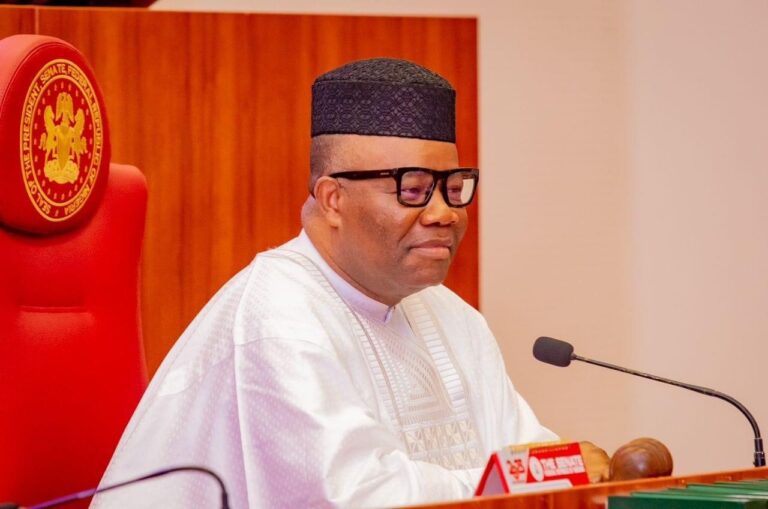
Commending the bills, the Senate President, Godswill Akpabio, said they would add immense value to governance and transform how taxes are collected and shared in Nigeria.

He expressed optimism that the reform bills would not only enhance governance but also revolutionise tax collection and distribution across the country.

“These bills will add immense value to governance and transform how taxes are collected and shared in Nigeria,” Akpabio said.

He assured that the remaining two bills would be finalised on Thursday, May 8, even if it required extended sitting hours.

“We are committed to concluding the outstanding bills tomorrow, even if we have to stay here until 10 p.m.,” Akpabio said.

The ICIR reports that the two remaining tax bills are the Nigeria Tax Bill 2024, which is expected to provide the fiscal framework for taxation in the country, and the Tax Administration Bill, which will provide a clear and concise legal framework for all taxes in the country and reduce disputes.

On his part, the House of Representatives had on Tuesday, March 18, passed the four tax reform bills.

The passage of the bills by the lower chamber followed the consideration and approval of its Committee on Finance’s report on the bills submitted on Thursday, March 13.

Tinubu had in October 2024 transmitted the four tax reform bills to both chambers for consideration and passage.

Tongues wag as Sokoto Varsity expels students publicly but keeps lecturer dismissals under wraps

0

A wave of discontent is brewing within the student community of Usmanu Danfodiyo University, Sokoto (UDUS), following what many have described as a clear double standard in the university’s disciplinary procedures.

The ICIR reported that the recent dismissal of three lecturers for various forms of misconduct including result tampering, sexual harassment, and absenteeism has sparked widespread discussion, not because of the offences, but because of how the university handled the announcement.

Unlike previous cases involving students, where information like matriculation number were publicly disclosed, the lecturers’ identities were withheld.

This disparity in treatment has sparked mixed feelings even as students are questioning why the university is quick to publicise student infractions yet chooses to cloak staff misconduct in anonymity.

The outrage has spilled onto social media platforms and the university community with many calling for transparency across all levels.

Back in 2018, UDUS made headlines when it expelled 12 students from the department of Medical Laboratory Science. Their matriculation numbers as well as the reasons were published in the department. The justification was academic failure, and some were identified for overstaying the allowed years of study or falling short of minimum performance benchmarks. 

Nigerian universities have, in recent years, adopted a notably public approach to student disciplinary actions, often releasing detailed information including names and offences through official channels or media reports.

For instance, the Federal University Oye Ekiti (FUOYE) expelled five students and suspended 152 others in August 2024, with the announcement identifying those affected and circulating widely in the media. 

Similarly, the Federal University Gusau (FUGUS) in July 2023 published the names of seven students it expelled, and six others rusticated for misconduct, sparking a mix of reactions.

At Nnamdi Azikiwe University (UNIZIK), the expulsion of a 300-level student, Goddy-Mbakwe Chimamaka Precious, in February 2025 made headlines after she allegedly attacked a lecturer while recording a TikTok video with her identity openly revealed in multiple reports. 

Double standard?

In contrast, during its 171st regular meeting on March 12, 2025, the university’s Governing Council confirmed the dismissal of three staff members for gross misconduct. While the offences were disclosed, no names or departments were revealed. The announcement was carefully worded, offering just enough detail to inform but not enough to hold anyone publicly accountable.

The ICIR gathered that also, in June 2017, Usmanu Danfodiyo University, Sokoto (UDUS) dismissed a lecturer for altering students’ results, but the institution declined to name the individual, only noting the action as a deterrent.

This inconsistency has fuelled claims of preferential treatment and a lack of institutional fairness. Critics argue that if students can be publicly sanctioned, staff particularly those whose actions could directly affect students should be held to the same standard.

A representative of the university, the PRO Mallam Ismail Muhammed Yauri, was contacted for comment, and promised he would get back in a week’s time.

However, he did not, and this reporter tried contacting him several times afterwards but failed. As at the time of filing this report, he was yet to respond to our inquiries on the matter.

As the backlash grows, the institution faces renewed calls to apply its transparency policies evenly not just to students, but to all members of the academic community.

VDM released from EFCC custody after days in detention

1

POPULAR rights activist Martins Vincent Otse, also known as VeryDarkMan (VDM), has been released from the custody of the Economic and Financial Crimes Commission (EFCC) after spending days in detention.

His lawyer, Deji Adeyanju, confirmed the release of the activist in a post on X on Wednesday, May 7.

“VDM released to us on bail. Special thanks to @DAPLawFirm, especially the head of our firm, @Marvin_Omorogbe. Thank you, Nigerians, for speaking up for him. Thank you, Egbon @YeleSowore. Thank you, HE Peter Obi, Atiku Abubakar, Davido, opposition lawmakers, etc.

“I must also thank the chairman of the EFCC for indulging and listening to all my concerns since Friday last week, and his team. The struggle continues,Adeyanju posted on X.

An activist and former presidential candidate, Omoyele Sowore, also confirmed VDM’s release in an update on his official Facebook page on Wednesday evening. “VDM Released!” he posted.

VDM has been in the custody of the anti-graft agency since he was arrested in Abuja on Friday, May 2.

His arrest led to an uproar across the nation, with youths demanding his immediate and unconditional release.

Protesters gathered near the EFCC headquarters in the Jabi district of Abuja, carrying placards and chanting slogans such asHe’s not a thief!andRelease VDM!

The protest caused significant traffic disruptions, drawing the attention of motorists and bystanders.

“We are here because VDM speaks truth to power. He shouldn’t be punished for using his voice,said one protester who declined to be named. Others accused the authorities of attempting to silence Otse over his outspokenness on social and political issues.

“This is not just about Martins. It’s about freedom of expression,said another demonstrator.Arresting someone without clear charges sends a dangerous message,the protester added.

The ICIR reported on Tuesday, May 6, that his arrest followed a series of petitions against the activist. The EFCC claimed that several invitations were sent to him, but he failed to honour them.

“We arrested him (VDM) to respond to a series of allegations raised against him by some petitioners. We will release him once he meets the bail conditions, and we will take the case to court as soon as possible,the EFCC spokesperson, Dele Oyewale, stated.