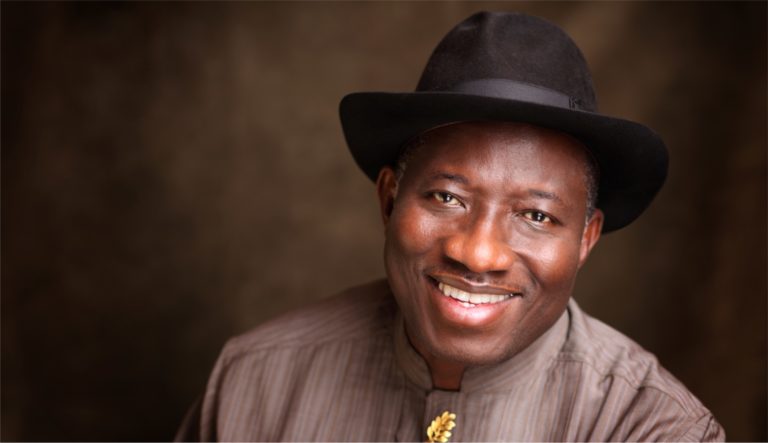
FORMER President Goodluck Jonathan has warned against the consequences of Nigeria dovetailing into a one-party state.
He said any nation practising it must do so carefully and with a well-planned process and projected outcome.
He stated this in Abuja on Wednesday, May 7, while paying tribute to the late elder statesman, Edwin Clark, at a memorial lecture and day of tribute.
Jonathan warned that any attempt to create a one-party state through political machinations to soothe only personal aspirations would be detrimental to the country.
The former president also called on the family of the late former federal commissioner to, among other things, set up a yearly memorial lecture in his honour to continue to push his ideas and what he stood for, which is a united, equitable, and prosperous Nigeria.
On his part, the Labour Party presidential candidate in the 2023 general elections, Peter Obi, lamented that the labour of Nigeria heroes past, which he said was already in vain.
The former Anambra State governor highlighted the endemic poverty in rural areas, the state of insecurity, and the rising cost of living.
He maintained that the labour of people like Pa Edwin Clark had not paid off, and the sacrifices they made were in vain.
The chairman on the occasion and former Head of State, General Yakubu Gowon, said that the task of ensuring that Nigeria remained united and indivisible must be ensured by all, as the nation could only make progress if national interest was put before any personal interest.
This is not the first time former President Jonathan has lent his voice to the state of the nation.
In March 2025, The ICIR reported that Jonathan criticised the suspension of elected officials in Rivers state, following the emergency rule declared by Tinubu on Tuesday, March 18.
The suspended officials include the state governor, Siminalayi Fubara, his deputy, Ngozi Odu, and all House of Assembly members in the state.
Recall, Edwin Clark died aged 97 on the night of Monday, February 17, according to a statement signed by C. C. Clark, for the family.
THE National Coordinator of the National Mental Health Programme at the Federal Ministry of Health and Social Welfare, Tunde Massey Ojo, said up to 30 per cent of Nigerians suffer from one form of mental health condition during their lifetime.
Ojo disclosed this at the annual Secure The Future (SDF) Counselling Summit in Abuja on Wednesday, May 7, with the theme “From Policy to Practice: Counseling as a Framework for Addressing Nigeria’s Mental Health Gap and Challenges.”
According to Ojo, who was represented at the occasion by an assistant director in the Ministry of Health, Grace Ogunleye, mental health conditions have emerged as one of the greatest health and development challenges of our time.
He stressed that in Nigeria, the treatment gap exceeds 80 per cent, meaning that the vast majority of affected individuals do not receive any form of professional support.
He pointed out that mental health services are often inaccessible, especially in rural and underserved communities, as mental health professionals are in short supply.
He listed stigmatisation and discrimination as significant barriers, discouraging help-seeking behaviour and reinforcing myths and human rights abuses.
The Signing of a working agreement between SDF and CPCN on the occasion
“The economic, social, and developmental costs of untreated mental health conditions are enormous, affecting not just individuals but families, communities, and the nation at large.
Until recently, mental health in Nigeria received limited institutional attention. The Mental Health, Alcohol, and Substance Use desk, located within the Non-Communicable Diseases Division of the Department of Public Health, was led by a desk officer and operated without a robust structure,” he stated.
According to him, Nigeria relied on the Lunacy Act of 1958, a colonial-era law that did not reflect current human rights standards or global mental health priorities.
He said that while the 2013 National Policy for Mental Health Service Delivery existed, it primarily emphasised treatment in specialised institutions, neglecting prevention, psychosocial support, and community-based approaches.
According to Ojo, more than 970 million people are living with mental health conditions globally.
Ojo stated that depression and anxiety alone cost the global economy over $1 trillion each year in lost productivity.
He quoted the World Health Organisation (WHO) reports that say one in every eight people in the world lives with a mental disorder, and suicide remains one of the leading causes of death among young people aged 15–29 years.
He added that despite the statistic, mental health continues to receive less than 2 per cent of health budgets globally and even less in low- and middle-income countries like Nigeria.
In her opening remark, the founder of SDF, a non-governmental organisation (NGO), Saadatu Adamu, said her organisation has reached thousands of young people with interventions through the Mental Health School Club, providing a safe space for students to explore and strengthen their mental well-being.
She said the annual mental health conferences bring together professional practitioners and experienced people to share knowledge, expertise, and coping mechanisms around mental health issues.
“We remain committed to our vision of having a country where mental health issues are normal conversations to highlight and be comfortable to discuss,” she said.
She added that the establishment of the SDF Support Home has transformed so many lives and has been impactful.
In her speech at the occasion, the president of the National Council of Women Societies (NCWS), Edna Azura, said mental health is the foundation of a thriving community, but for too long it has been shrouded in stigma, silence, and ignorance, particularly from men, young people, and minority groups.
She said the unveiling of the SDF Guide to Effective Mental Health Counselling will empower professionals with culturally sensitive strategies to address trauma, anxiety, depression, and the unique physiological challenges faced by Nigerians today.
She added that the guide will serve as a beacon of hope for many who are silently struggling.
“Women and girls often bear the brunt of emotional and psychological stress due to societal expectations, economic pressures, and systemic inequalities,” Azura stated.
She said NWCS is committed to advocating for policies and programs that address challenges historically and recognise mental wellness, which is inseparable from national development.
There was an unveiling of the SDF Guide to Effective Mental Health, which is a publication of the Counselling Practitioners Council of Nigeria (CPCN) and the SDF, at the event.
The publication aims to bridge the mental health gap in Nigeria.
THE Corporate Accountability and Public Participation Africa (CAPPA) has revealed how some companies in the food and beverage industry use a sophisticated web of marketing strategies to get Nigerians, especially children and young adults, hooked on ultra-processed foods.
CAPPA said the practice by these companies harmed Nigerians’ health, undermined public health policies, and cost the Nigerian healthcare system billions of naira.
The pan-African non-governmental organisation (NGO) said this in a report, ‘Junk on Our Plates: Exposing Deceptive Marketing of Unhealthy Foods Across Seven States in Nigeria’, unveiled on Wednesday, May 7, in Lagos.
Presenting this to the media and other stakeholders on Wednesday, CAPPA said the report detailed a systematic, profit-driven assault on public health by the food and beverage industry.
According to the NGO, the findings showed that through “aggressive marketing, cultural co-optation, celebrity endorsements, and deceptive labelling, the corporations had entrenched ultra-processed, high-sugar, and high-sodium products in Nigeria’s food environment—targeting children, youth, low-income communities, and cultural identities to drive sales.
It accused the industry of leveraging extensive advertising, cultural trends, pricing strategies, and distribution networks to influence food culture and dietary habits, often prioritising highly processed, calorie-dense, and nutrient-poor foods due to their profitability and long shelf life.
This, it said, was the cause of the slow disappearance of healthy, natural, indigenous foods from Nigerians’ menus.
CAPPA acknowledged the Nigerian government’s “bold steps” to confront the challenge by, for example, introducing the Sugar-Sweetened Beverage (SSB) Tax of N10 per litre on SSBs aimed at discouraging their excessive consumption and reducing the risk of diet-related diseases.
It noted that in 2023, the National Agency for Food and Drug Administration Control (NAFDAC) followed up with regulations on transfats and pre-packaged food labelling, while in March 2025, the government launched the National Guideline for Sodium Reduction, a strategic policy meant to tackle the excessive salt content in packaged foods, a major driver of high blood pressure and heart disease in the country.
“All of these are good steps,” CAPPA’s Executive Director, Akinbode Oluwafemi, said.
He, however, noted that the food and beverage industry continues to exploit loopholes.
“They use covert marketing, target children, and take advantage of weak enforcement of existing regulations to flood the market with unhealthy products — tactics reminiscent of the deadly strategies long used by the tobacco industry. In some cases, they also take advantage of weak border controls and ignore product standards altogether,” Oluwafemi maintained.
The NGO warned that the widespread promotion of these foods, high in saturated fats, salt, and sugar (HFSS), is increasingly redefining global dietary patterns and impacting public health.
As HFSS foods become dominant in markets worldwide, non-communicable diseases (NCDs) such as obesity, diabetes, and cardiovascular conditions linked to their excessive consumption have also risen, highlighting the need for stronger public health interventions to balance the food industry’s influence with consumer well-being, the NGO said.
R-L: Zikora Ibeh, Assistant Executive Director Corporate Accountability and Public Participation Africa (CAPPA); Akinbode Oluwafemi, Executive Director CAPPA; Humphrey Ukeaja, Industry Monitoring Officer CAPPA; Adebayo Adenike, member Healthy Food Policy Youth Vanguard (HFPYV); and Opeyemi Ibitoye, Programme Officer Sugar-Sweetened Beverages Tax Campaign CAPPA, during the Media Presentation and Launch of “Junk on Our Plates: Exposing Deceptive Marketing of Unhealthy Foods Across Seven States in Nigeria” at CAPPA’s office in Lagos on Wednesday.
Stressing what its NGO has described as deceptive marketing strategies by companies in the food industry, Oluwafemi said, “These tactics undermine existing public health policies,” adding that the industry takes advantage of policy gaps to create an illusion of choice, while denying people the right to accurate information and healthier options.”
A look at the report made several recommendations, including a call for stronger rules on marketing, particularly for children.
“We need clear and readable front-of-pack warning labels on processed foods. We need limits on salt and sugar content. And we need public awareness campaigns and food policymaking that are state-led, free from corporate sponsorship or influence,” Oluwafemi said.
Other recommendations include strengthening regulations on the marketing of unhealthy foods, particularly to children; increasing Nigeria’s SSB tax from N10 to N130 to make sugary beverages less cost-attractive; and implementing national sodium reduction programs.
“Nigeria can take impactful steps toward promoting healthier dietary habits, reducing the crippling burden of non-communicable diseases and safeguarding the well-being of its population,” he added.
The CAPPA’s Assistant Executive Director, Zikora Ibeh, corroborated, “We have discovered that the food environment in Nigeria these days is changing, but for the worse. Increasingly, we are consuming items that are unhealthy. We are taking too much salt, sugar, fat, and too many processed items that are harmful.
“Nobody is saying these corporations should be shut down. We’re saying that the government needs to step up enforcement and regulations on these products so that people can look at products and clearly understand immediately what is bad for eating and how much they are not supposed to consume.”
She urged the country to also invest in food systems that prioritise the health of its people over the profit margins of multinationals.
“This means direct public investment in local food production, expansion of agroecological farming systems, and a reversal of trade policies that allow unhealthy foreign products to flood the market,” Ibeh added.
On his part, an industry monitoring officer at CAPPA, Humphrey Ukeaja, said the report established the ongoing trend of false narratives and the tactics of intentional misinformation deployed by the food and beverage industry in Nigeria to promote unhealthy diets.
“These strategies, including extensive advertising, exploitation of cultural trends, and strategic pricing, contribute to the increased consumption of calorie-dense, nutrient-poor foods, driving a rise in non-communicable diseases (NCDs).
“In Nigeria, the prevalence of NCDs has risen sharply over the past decades, with these diseases accounting for at least 30 per cent of all deaths annually, and the urgency for effective policy interventions has never been greater,” Ukeaja said.
The CAPPA’s Programme Officer SSB Tax Campaign, Opeyemi Ibitoye, further harped on the need to protect children from the industry.
She added, “If there’s a restriction on how these SSB products are marketed, especially to kids around school, within their schools, this will curb how children request most of these drinks and products. It will also promote public health, which is our target for this advocacy.”
Appraising the efforts of its young advocates under the umbrella of the Healthy Food Policy Youth Vanguard (HFPYV) and the CAPPA Digital Media Volunteers (CAPPA DMV), who conducted this offline survey, CAPPA further commended the technical support and guidance provided by the Global Health Advocacy Incubator (GHAI) team, which birthed the report.
The ICIR had, in an investigation published on April 7, 2023, beamed a searchlight on why NAFDAC’s weak regulations and the opacity in implementing the 10 per cent SSB tax meant to discourage Nigerians from excessive consumption of the products pose a threat to consumers.
THE Labour Party has suspended Abia State Governor Alex Otti and Senator Ireti Kingibe indefinitely over alleged anti-party activities.
The suspension also extended to Senator Darlington Nwokocha, Victor Afam Ogene, Amobi Ogah, and Seyi Sowumi.
A statement signed by the National Secretary, Umar Farouk Ibrahim, on Wednesday, May 7, stated that the party’s National Executive Council made the decision after reviewing recommendations from a five-man Disciplinary Committee set up on May 2, 2025, to investigate allegations of anti-party conduct.
It noted that the suspension takes immediate effect, barring the affected members from participating in any Labour Party activities.
“Recall that last Friday, 2nd of May 2025, the National Executive Committee (NEC) of the Labour Party set up a Five man Disciplinary Committee headed by the Deputy National Chairman, Dr.Ayo Olorunfemi, Alhaji Umar Farouk Ibrahim, the National Secretary and three others to investigate Abia State Governor, Dr. Alex Otti and any other party members over allegations of anti party activities,” the statement read.
According to the statement, the committee completed its investigation and presented its findings to the party leadership, which the NEC accepted the committee’s recommendations.
“The Disciplinary Committee has concluded their assignment and has submitted their report to the party leadership. The National Executive of the party met today May 7th, 2025 and after exhaustive deliberation in line with powers donated to it by the Party Constitution has ratified the recommendation as submitted by the Disciplinary Committee.
“Consequent upon that, the following members of the party have been suspended from the party and all its activities, indefinitely and with immediate effect. 1. Dr. Alex Otti; 2. Senator Ireti Kingibe; 3. Senator Darlington Nwokocha; 4. Hon. Victor Afam Ogene; 5. Hon. Amobi Ogah; 6. Hon. Seyi Sowunmi,” the statement added.
The Labour Party clarified that Nenadi Usman was not included in the suspension list because she is not a registered member, but rather a supporter of the party’s 2023 presidential candidate.
The party also questioned Usman’s moral standing to speak on corruption, citing her alleged plea bargain with the Economic and Financial Crimes Commission and reported asset forfeitures.
“She should also tell Nigerians how she acquired her radio station in Kaduna, all her properties all over Nigeria and abroad, her companies in Cameroon, including her plantations. Nenadi Usman lacks the moral capacity to commence any probe or even talk about corruption,” the statement added.
The party reiterated its stance on political alliances, stating that it would not enter any coalition or merger ahead of the 2027 general elections.
The suspension followed a series of recent events within the party, which have sparked divisions in the party.
On April 9, 2025, Labour Party stalwarts, including Peter Obi and Governor Otti, endorsed a new National Caretaker Committee led by Nenadi Usman.
This move came after the Supreme Court ruling that invalidated the leadership of Julius Abure, setting the stage for the caretaker committee’s formation.
However, the National Publicity Secretary of the Abure-led faction, Obiora Ifoh, has disputed the interpretation of the Supreme Court verdict, claiming it didn’t state that Abure’s leadership had lapsed or that the Usman-led committee should take over.
Ifoh insists the Supreme Court respected the party’s autonomy and right to appoint leaders, upholding the precedence of lower court decisions recognising Abure’s leadership.
This was as Lamidi Apapa declared himself the party’s leader following the Supreme Court’s judgment sacking Abure as National Chairman.
Apapa cited the apex court’s ruling as his reason for taking over, stating that all court pronouncements have nullified Abure’s actions and decisions since April 2023.
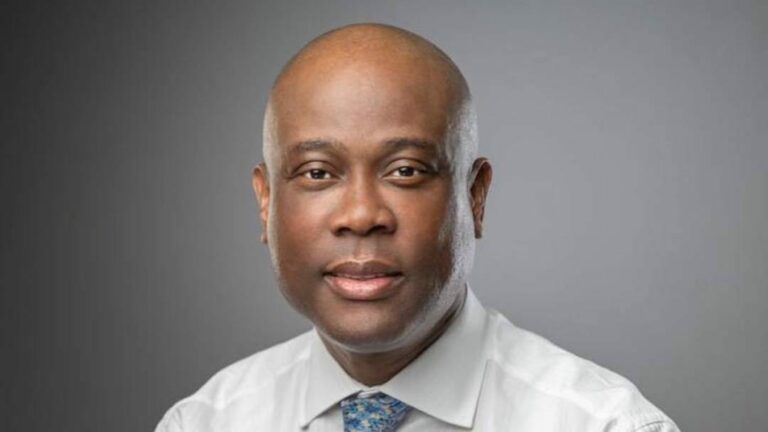
THE National Transportation Safety Board (NTSB), has attributed the cause of Herbert Wigwe’s helicopter crash to “pilot disorientation” and deficiencies in safety protocols by the operating company.
It disclosed this in its final aviation investigation report published on Tuesday, May 6.
It revealed that the probable cause of the crash was the pilot’s decision to continue the flight under visual flight rules into instrument meteorological conditions (IMC).
“We determined the probable cause(s) of this accident to be: the pilot’s decision to continue the visual flight rules flight into instrument meteorological conditions, which resulted in the pilot’s spatial disorientation and loss of control,” NTSB stated.
The ICIRreported that the former group chief executive officer of Access Holdings Plc, Herbert Wigwe, along with his wife, son, and other crew members, died in an ill-fated helicopter crash on February 9, 2024.
An Airbus helicopter with registration number EC 130B4 crashed near Halloran Springs, California, killing Wigwe, three other passengers, and two pilots on board.
The helicopter was operated by Orbic Air, LLC, as a Title 14 Code of Federal Regulations (CFR) Part 135 on-demand flight.
It explained that contributing to the accident was the “company’s inadequate oversight of its safety management processes,” including ensuring the pilots were accurately completing and updating the flight risk analysis, logging maintenance discrepancies, and ensuring the helicopter met Part 135 regulations before departure.
NTSB is an independent agency charged by the US Congress to investigate every civil aviation accident and significant accidents in other modes of transportation across the United States of America.
Commenting further on its findings, the NTSB said that in the days preceding the helicopter accident last year, the helicopter had been undergoing routine maintenance that involved work on the radar altimeter, which was a required instrument for Part 135 flight operations.
“About 1727 on the day of the accident, the accident pilot and a company mechanic/pilot repositioned the helicopter from the maintenance facility to the company’s flight operations base, and during the flight, the accident pilot noted the radar altimeter was not functioning,” it said.
According to the investigative bureau, during the return flight, the pilot texted the director of maintenance (DOM) about the issue, and after arriving at the company’s flight operations base, the pilot discussed the issue with the company flight follower (who was also the company’s president).
“According to the flight follower, who also held operational control of the charter flight, during the discussions, he told the pilot that the flight could not depart if the radar altimeter was not functioning.
“A company mechanic performed some troubleshooting on the radar altimeter; however, he was unable to rectify the issue, and the radar altimeter remained non-functional,” the investigators’ report partly read.
It asserted that the mechanic reported that the pilots and the DOM were aware that the radar altimeter was not functioning, yet they departed at 18:22 on the positioning flight to pick up the passengers.
NTSB findings further revealed that about two minutes before the accident, the helicopter’s airspeed and altitude increased, with a slight deviation to the south of the freeway.
“It is unclear if the pilot was attempting an inadvertent instrument meteorological conditions (IMC) recovery manoeuvre. The helicopter continued the right turn for about 10 seconds when the helicopter began a rapid descent into terrain while maintaining the right turn,” it also stated.
It noted that witnesses who were travelling in their vehicles reported observing a fireball to the south of the freeway, and that the witnesses reported that the weather conditions in the area were not good, as it was raining with a snow mix.
The report established that the search and rescue efforts at the time were difficult due to weather conditions that included low visibility, rain, snow, and high winds.
“The helicopter wreckage, which was highly fragmented and not survivable, was located about 1 hour and 40 minutes after the accident,” NTSB stated.
The report also included that post-accident examination of the airframe, engine, rotor blades, flight controls, rotor drive, main rotor, and fenestron components identified no evidence of pre-impact malfunction or failure that would have precluded normal operation.
The engine displayed rotational damage signatures and resolidified metal deposits consistent with powered operation at impact, the report said, stressing that all recovered instruments, avionics, and portable/personal electronic devices sustained damage that prevented data extraction.
The NTSB maintained that the helicopter wreckage was consistent with a high-energy, right-side-low attitude impact with terrain.
Although the two pilots, aged 25 and 22, with “commercial flight instructor certification”, were properly trained, the NTSB said the pilot might have been susceptible to the Coriolis illusion when maintaining a constant turn if he moved his head, for example, to look from inside the cockpit to outside the cockpit.
The report added that the helicopter began to accelerate as it descended, which could have resulted in a somatogenic (false climb) illusion that led the pilot to believe the helicopter was climbing.
“The pilot likely experienced spatial disorientation while manoeuvring the helicopter in IMC, which led to his loss of helicopter control and the resulting collision with terrain,” it added.
ROMAN Catholic Cardinal Electors(under the age of 80) have isolated themselves on Wednesday, May 7, inside the Sistine Chapel until they select a successor to Pope Francis to lead the global Catholic Church.
The ICIR reported that the Vatican announced in April that cardinals would begin the election of a new Pope on May 7.
Cardinals under 80 are considered canonically qualified according to ‘conclave law’ and have already gathered in the Sistine Chapel to elect a new Pope, the spiritual leader of Catholics worldwide, with 135 eligible voting cardinals among the 252 who gathered in Rome.
The ICIR reports that in a tradition that dates back to the medieval era, the cardinals will enter the Vatican’s fresco-adorned Sistine Chapel following a public Mass at St. Peter’s Basilica, beginning their secret conclave to choose a successor to Pope Francis, who passed away last month.
For centuries, no pope has been elected on the first day of a conclave, so voting may stretch over several days before one of the red-robed Church cardinals secures the required two-thirds majority to become the 267th pontiff.
The past 10 conclaves lasted an average of just over three days, with none extending beyond five. The 2013 conclave, for example, concluded in just two days.
Only one round of voting will take place on Wednesday. After that, the cardinals may cast up to four ballots per day.
After each round, the ballots will be burned, black smoke rising from the chapel’s chimney will indicate no decision, while white smoke accompanied by ringing bells will announce that the 1.4 billion-member Church has a new pope.
During a Mass at St. Peter’s Basilica on Wednesday morning, just before entering the conclave, the cardinals prayed for divine guidance in choosing a pope who would provide “watchful care” for the world.
In his sermon, Italian Cardinal Giovanni Battista urged his fellow cardinals to put aside “every personal consideration” and focus solely on “the good of the Church and humanity” in selecting the next pope.
In recent days, cardinals have expressed varying views on the qualities they seek in the next pope.
No clear frontrunner has emerged, though Italian Cardinal Pietro Parolin and Filipino Cardinal Luis Antonio Tagle are widely regarded as the leading contenders.
Other possible candidates include Jean-Marc Aveline of France, Peter Erdo of Hungary, Robert Prevost of the United States, and Pierbattista Pizzaballa of Italy.
As in medieval times, the cardinals will be prohibited from communicating with outsiders during the conclave, and the Vatican has implemented advanced technology, including jamming devices, to ensure complete secrecy and prevent any eavesdropping.
The ICIR reported that Pope Francis died at the age of 88 on Monday, April 21, Easter Monday. He had suffered various ailments in his 13-year reign, with severe complications in recent weeks before his death.
World leaders and thousands of mourners gathered on Saturday, April 26, to lay him to rest at the Vatican.
INDIA has launched strikes on Pakistan and Pakistani-administered Kashmir beginning in the wee hours of Wednesday, May 7, morning, an action which could lead to war between both nations.
India’s army says it struck nine locations in Pakistan in response to a deadly militant attack on tourists in the Indian-administered part of Kashmir just over two weeks ago.
“Operation Sindoor was a reaction to seek justice for the Pahalgam attack. The operation destroyed nine terror camps, recruitment centres, terror launch pads, indoctrination and training camps. Niche tech weapons used to avoid collateral damage,” Indian Colonel Sophia Qureshi said in a press briefing this morning.
India’s Foreign Secretary Vikram Misri explained that India’s intelligence has proof of Pakistan’s role in the Pahalgam attack, noting that Pakistan is a haven for ‘terrorists’.
Today morning, India responded to cross-border terror. The attack has been aimed at destroying terror infrastructure across the border,” he said.
Pakistan reported that the attack killed 26 civilians, wounded 46 others.
The Pakistan army spokesperson said its forces shot down five Indian aircraft.
“Pakistan will respond to India at a time, place, and means of our own choice,” the spokesperson said.
Meanwhile, Indian police said that 10 civilians were killed, and 48 were injured by Pakistan.
The ICIR reports that in the April 22 Pahalgam attack that claimed 26 lives in India’s Kashmir region, militants separated the men from the women and children, asked the men their names, and then shot them at close range, security officials and survivors reported.
Around 1,000 tourists and 300 local service providers were in Baisaran Valley, often called “mini Switzerland” for its lush hilltop meadows and dense pine forests, when three gunmen carried out the attack, marking the worst in India in nearly 20 years.
A little-known militant group called the “Kashmir Resistance” initially claimed responsibility for the attack in a social media post, expressing anger over the settlement of more than 85,000 “outsiders” in the region.
THE Nigeria Police Force (NPF) said it has apprehended two suspected internationally wanted criminals involved in transnational crime operations.
The suspects, Felix Omoregie, alias ‘Eghosa Johnson Omoregie,’ and Okwudili Sabastine Ezeje, were arrested in separate operations across Nigeria in connection with human trafficking and armed robbery, respectively.
A statement by the NPF spokesman, Olumuyiwa Adejobi, on Wednesday, May 7, stated that Omoregie, who is a suspected ringleader of a human trafficking syndicate, was arrested in Benin City, Edo State, following a concerted intelligence operation.
It also noted that Omoregie had been on the run since 2021, after being convicted in absentia by Belgian authorities for multiple counts of aggravated human trafficking and organized crime.
According to the statement, the Belgian authorities issued an INTERPOL Red Notice for his arrest in December 2023.
The 47-year-old Omoregie is accused of trafficking Nigerian women, including minors, to Italy and other European countries for sexual exploitation. His operation allegedly involved manipulating victims through fabricated debts ranging between €20,000 and €50,000, forcing them into voodoo-based oaths to ensure compliance.
The NPF said Omoregie’s network had handlers in Belgium and France, who managed the victims and remitted the proceeds to him, adding that it discovered incriminating evidence at his residence, including a passport for a planned relocation to Canada.
“His criminal network involved handlers in Brussels and France who managed the victims’ activities and remitted proceeds to him. Following a conviction in absentia in Belgium in 2021 for multiple counts of aggravated human trafficking and criminal organisation leadership, Omoregie fled to Nigeria. Upon his arrest, a search of his premises revealed incriminating materials, including a photocopy of a passport intended for a planned relocation to Canada,” the statement read.
It added that the suspect is scheduled to be arraigned at the Federal High Court in Benin City.
Dubai-based armed robber captured in Enugu
In a separate operation, Okwudili Sabastine Ezeje, 37, was arrested at a hideout in Nsukka, Enugu State.
According to the police, Ezeje is a key member of an armed robbery gang linked to several high-profile heists in Dubai, including a robbery at Dubai Mall and a targeted attack on Al Ansari Exchange in Jumeirah.
The Nigerian police noted that Ezeje has been wanted by authorities in the United Arab Emirates (UAE) for armed robbery, drug trafficking, and other organised crimes.
It also stressed that despite being in Nigeria, the suspect continued to coordinate criminal operations remotely.
“The arrest was the result of strategic intelligence sharing and operational collaboration between the Nigeria Police Force, the Office of the National Security Adviser (ONSA), and the Dubai Police. The arraignment of Okwudili Ezeje is expected to take place shortly.
“The Inspector-General of Police, IGP Kayode Adeolu Egbetokun, commends all operatives involved in these high-profile arrests for their professionalism, diligence, and dedication to upholding Nigeria’s international law enforcement obligations,” the statement added.
While calling on citizens to remain vigilant and cooperative in the fight against organised crime, the Force stressed that it remains committed to enhancing its global policing partnerships and ensuring that fugitives find no haven within our borders.
“IF any youth is declared missing in Ilorin nowadays, the probability that he’s being illegally arrested or killed by police is higher than him being kidnapped. Ilorin police men are crazy”, These stark words from a social media user with the handle @Adamthallith on November 7, 2024, summarises a terrifying reality for many in Kwara State. Citizen frustration, already growing, had reached a boiling point with the killing of Kwara State Polytechnic student Qoyum on September 4, and the death of Suleiman Olayinka in police hands in November last year.
Qoyum was shot dead by officers. While the police admitted wrongdoing and dismissed those responsible, the harassment and human rights violations persisted.
Circulating picture of Qosim who died in the hands of Kwara police.
The case of Qoyum: an engineer’s dream cut short
When The ICIR sat with Qoyum’s father, Muskilu Yakeen, in Ilorin, barely two months after the demise of his son, whom he said harboured the dream of becoming an electrical engineer, the sadness and feelings of despair still lingered.
Qoyum had gained admission into the state polytechnic in 2022 to pursue the career his father had set out for him. They were both electricians, but the son felt the need to continue his career by going to learn the theoretical part of the job.
However, on the day, Qoyum was preparing for his sign-out ceremony to mark his completion of ND-2 two he was stopped and bundled into a police van around Agric area of Ilorin on September 5, 2024.
The late Qoyyum’s father, narrating how his child was shot in the hand by the Kwara police
His father stated officers accused him of being a “yahoo boy” (internet fraudster) and was fatally shot attempting to escape the vehicle while officers were allegedly chasing other youths.
After he was brought down, the officers fled the area but unfortunately, an attempt to save his life by a passerby was not enough to do so.
Qoyum’s father was asleep when he received a call from his brother that his son had had a ‘serious accident’. But due to the loss of blood, Qoyum had been rushed to the hospital.
“When we got to the hospital the doctor was asking if we were sure that it was a car accident. I told him that I was only informed he had an accident. It was later that we learnt he was actually shot. My brother who rushed him to the hospital only knew about the incident about two hours after he was hit by bullet.
“They probably would have done it without claiming responsibility; but there was this student who was also coming from ShopRite and was stopped by the same ‘Dangote’ police (officers using a car donated by Dangote). So those guys met Qoyum inside the police car,” he said.
The father said it was when the police were negotiating settlement with the other victim that Qoyum felt he was safe and took to his heels. “He ran and I think it was when they couldn’t get hold of him that he was shot in the hand,” he said, adding that, “Despite being shot, he was able to drag himself to a corner far away from their eyes. If he probably had made it to the main road, he would probably have been saved by passersby.”
However, the Kwara police responded with ‘promises’ of an investigation, and eventually dismissed the three officers in connection with his death.
For many, this was not an isolated incident but another chapter in Kwara’s ongoing saga of police brutality, reminiscent of the abuses that led to the #EndSARS protests and the disbandment of Special Anti-Robbery Squad (SARS) in 2020.
Another killing linked to the Kwara police: Suleiman Olayinka
Two months after Qoyum’s incident, 27-year-old Suleiman Olayinka was brutally harassed and beaten by police in Tanke, Ilorin. Eyewitnesses and family who spoke to The ICIR said three officers jumping from a yellow tricycle, manhandling Olayinka for his reluctance to enter their vehicle. He collapsed and was declared dead upon arrival at the police clinic in Ganmo.
Picture showing injury sustained by Olayinka during his encounter with the Kwara police, as shared by a family member.
Olayinka collapsed during the encounter, but by the time officers conveyed him to the station, his body was unnervingly still. Olayinka was later declared dead upon reaching the police clinic in Ganmo, his cousin, Abdullahi Ajase said.
Ajase, explained the arrest stemmed from a N400,000 dispute in a business transaction where Olayinka had paid N2 million of N2.4 million, promising the rest later. The aggrieved friend reported him to Ganmo Police Station.
The police spokesperson while speaking with The ICIR claimed Olayinka resisted arrest, leading to a fatal struggle, family members, including Olayinka’s mother and eyewitness vehemently dispute this account. They stated that the officers’ actions were excessively brutal.
Another picture, shared with The ICIR, showing injuries sustained by Olayinka during his encounter with the Kwara police
The circumstances remain controversial, but his killing added to a disturbing trend of young men in Kwara, particularly those perceived as successful or “flashy,” increasingly targeted by law enforcement officers.
The ICIR gathered that the abuse can be abrupt and systemically. In the state capital, the police targeted school areas, such as Tanke, Oke Odo, Tippa Garage, Sanrab and many communities surrounding Kwara polytechnic Ilorin.
For Kwara polytechnic students, some of the students and sources who spoke with The ICIR listed Agric area, Oyun Bridge, Harmony and Tanke axis asare as where the police lurk around.
The Universal Declaration of Human Rights, (UDHR), set out fundamental human rights to be universally protected. Article 3 of the document states that, “Everyone has the right to life, liberty and security of person,” while article 5 safeguards everyone from being subjected to torture or to cruel, inhuman or degrading treatment or punishment.
Also, Article 7 submits that, “All are equal before the law and are entitled without discrimination to equal protection of the law.” The article makes it clear that, “No one shall be subjected to arbitrary arrest, detention or exile”, while Article 10 gives everyone an entitlement in full equality to a fair and public hearing by an independent and impartial tribunal, in the determination of his rights and obligations and of any criminal charge against him.
The Constitution of the Federal Republic of Nigeria, 1999 (as amended), outlines the fundamental human rights guaranteed to all citizens, including the right to life, dignity of the human person, personal liberty, fair hearing, private and family life, freedom of movement, and freedom from discrimination.
However, none of these laws have deterred violations of human rights abuses in Kwara as there have been many reported cases of abuse against the Nigerian police.
A change that never happened
After the #EndSARS protests rocked the country in 2020, there was widespread belief that police harassment of citizens would be curtailed. In 2021, the Kwara State government received panel report, recommended improved training and remuneration for officers. While the salary reportedly went up by 20 per cent in 2021 and 2024, The ICIR’s investigation confirms that these reforms have failed to curb their excesses.
Walking into a Police trap: the death of Jimoh Erubu Abdulqodir
On December 20, 2024, Jimoh Erubu Abdulqodir, an employee at Ola livestock, was home intending to settle a N220,000 debt he owed one of his bosses. He had gotten N350,000 from his family and planned to pay the debt from it when he returns to Offa from the new year break. That evening, a colleague called, asking him to meet at Balogun Fulani’s house a few blocks from his location, to collect a pair of pants and shoes he had said he would bring for him. Abdulqodir, who was preparing roasted yam, alongside his sister, hurriedly left unaware he was walking into a police trap.
Shortly after arriving, he was arrested by plainclothes officers along with the colleague who lured him out. The colleague was soon freed, but Abdulqodir never returned alive.
Jimoh Oladimeji, the deceased’s elder brother, explained they were taken on a motorcycle towards the police station, but before they got far, the other man was set free.
When his family received the first call about his arrest around 5:30 p.m. on the same day, his distraught mother, rushed to the police headquarters in Ilorin with a friend but was told that Abdulqodir could not be bailed that night as the complainant who had filed a petition against him had to be present.
Jimoh Oladimeji, the deceased’s brother, speaking with The ICIR
Around 10 p.m., police called Abdulqodir’s sister to bail him; she couldn’t make it that late. An hour later, they called again, saying he was at the general hospital.
“The officers who called my two sisters gave different accounts. One officer claimed he died in his cell, while another said it happened at the hospital. When we arrived at the station, they delayed us, telling us to return by 9 a.m. But before we got home, they called us back.
“At the SCID office, the Assistant Commissioner of Police fed us a vague story, saying he had left my brother sitting on a bench the previous night, only to return in the morning to hear that he had hanged himself. The room was barely six feet high but Abdulqodir himself was over six feet tall. The police told us he knelt down to hang himself, but we did not believe that,” the brother of the deceased said.
Oladimeji recounted finding a streak of bloodstains on both the wall and the tiles, right where his brother was made to sit. He was ‘tortured,’ he said.
Meanwhile, when The ICIR requested for the video of the bloodstain, the brother declined to share it, only allowing the reporter to watch on his video. In the footage seen by The ICIR, traces of bloodstain were sighted on the bench and the tiles of the supposed police corridor where he was first kept after his arrest.
“We were horrified when we got to the mortuary. My brother’s body had been operated on; his thighs had been cut open without any family member’s consent. His face and nose bore bruises, and when we asked what had happened, they gave weak excuses,” he added.
Other family members, including Oladimeji, explained that the deceased, who is a father of two daughters, did not have motive to commit suicide, as the money had been raised and did not show any sign of depression or weakness prior to the incident.
He further explained that although the Inspector General of Police, Kayode Egbetokun, visited them to sympathise and pledged to probe the controversies surrounding his death, they have no answers on if the erring officers have been fished and punished.
When The ICIR contacted the state police PRO for an update, she said the case had been transferred to Abuja.
A Pattern of abuse: extortion and harassment
Abdul (first name only), a University of Ilorin graduate, recounted multiple encounters.
On September 20, 2024, two men claiming to be officers from the Criminal Investigation Bureau (CIB) of A Division o forced entry into his apartment, ransacked it, and damaged his TV and lamp, using a blank paper as a “warrant.”
When they knocked he opened the door but resisted the initial attempt of the officers to enter his house.
“I asked them for a search warrant, but they produced a blank piece of paper. There was no name, no crime stated and nothing was on it. That was when I knew something was off. They had no real reason to be there,” he said.
The officers, however, forced their way inside. “They searched everything-my wardrobe, my soap, my bathing sponge. They even started writing down things like ‘soap’ on the empty search warrant they brought,” he explained.
Accused of cybercrime despite no evidence, he was coerced into transferring N51,000 to an account the provided for his freedom or risks arrest and detention.
Receipt of payment to withdraw money from POS to pay for Abdul’s freedom
A pattern of harrasment
This wasn’t Abdul’s first ordeal. In August 2021, four plainclothes officers scaled his fence, forced entry, and demanded N1 million. He spent a night in detention until an acquaintance intervened, securing his release for N100,000.
“I was inside my house, when my generator suddenly went off. I thought it was a power issue, so I stepped outside to check. As soon as I opened the door, four men in plainclothes forced their way in. They banged the door so hard that it hit my head. My mouth swelled instantly.
“They didn’t have a warrant, just ID cards,” he said.
“The officers couldn’t provide any evidence against me,” he explained. “But they still extorted N100,000 before letting me go.”
This incident is not peculiar to Abdul, a graduate of University of Ilorin, Olarewaju who only wants his first name published, stated that his experience with the Kwara police dated back to 2016 when he gained admission. He lived in Oke Odo, a school area where he said the police had tagged as a ‘red zone’ for internet fraudsters. He said in 2022, he had just come home from Katsina State where he did his NYSC when Police in a Camry hit the bike he and his friend were on carrying them to a mall around Tanke junction.
He, together with his friend and the bike man, fell into a deep gutter. He named the leader of the police squad who hit him as Asa, who he said is notorious for his violent behaviour against the students in that area.
He thought the officers would leave them after falling in the gutter but to his surprise they followed them with beating. His phone was collected and that of his friend for a quick search.
“I showed them my NYSC portal but my friend, who is still a student, tried to show them the school portal but because he was using iPhone 13, he was bundled inside the car.
“I had to call his sister and went to the station in front of the state sharia court where he was kept. We paid in cash to secure his bail,” he said.
Another resident Abdul Afeez showing how over N80,000 was extorted from him and his friend while on the road
Another resident, Abdul Afeez, showed stated that he had to pay N80,000 when him and his friend had an encounter with the police.
In 2024, Punch newspaper reported that 2,421 complaints of misconduct were filed against personnel of the Nigeria Police Force between 2021 and the first quarter of 2024. These misconducts includes harassment, extortion, unlawful arrests, unjust detentions, and even killings of citizens. However, the true number of complaints may be significantly higher, as many incidents go unreported.
Harassment cripples tricycle riders’ business
Students of Kwara polytechnic, being one of the most targeted groups, often lead to disruption of tricycle and motorcycle riders around Sango, Oyun, Agric and Polytechnic axis of Ilorin.
Although these riders are not the primary targets of the police, their businesses suffer significant disruptions whenever officers conduct their indiscriminate arrests.
The students, who are frequent passengers, have become wary of stepping out. This led to a decline in patronage for the transport operators.
Abu Muhammad, a tricycle rider touring Poly gate to Post office in Ilorin, narrating his experience to The ICIR.
“For instance, some of these students would always ask us before entering our tricycle if police were on the road, and once we told them they are doing ‘stop and search’ somewhere, they would back off because even during exams the officers would keep them waiting until they pay them,” one of the riders, Abu Muhammad said.
When students take Keke rides, the journey, according to sources, is often fraught with tension. They noted officers frequently stopped tricycles, causing panic among passengers, and some students, fearing arrest, abruptly abandoned the trip mid-way.
“Anytime some of these students see police officers or checkpoints, they will just jump out of the Keke.
“There was one student who was hit by a car last year when he jumped out of Keke because of the police. So, whenever this happens it affects our business as we won’t be able to collect money from them,” he added.
Tunde explained that the arbitrary police arrests and ‘stop and search’ have been affecting his business
Also, another rider, Tunde, explained that the extortion of students who patronised them have been affecting their business.
“What the students do now is to send people to market to get them what they need. They every send us too sometimes just to evade the police checkpoints on the road.
“From polytechnic to post office, you can meet like three police checkpoints waiting to stop us and extort those students. It’s now common, that affects our business a lot,” he added.
This is the same position of other tricycle drivers The ICIR spoke with.
More students at risk
Police harassment in school environments has reportedly led some students to transfer institutions.
Rosheedat, a University of Ilorin student, and her friend were stopped by police one evening in 2024 while on their way from their hostel in Tanke to grab a meal at Item 7 in Sanrab.
“They asked if we were students, and we said yes. We even opened our school portals to prove it,” Rosheedah recalled, adding that, “Then they were like we would follow them to the station, we literally begged them.”
Despite proving their student status, they were asked to step down from the bike and driven far from where they were picked up, their phones searched, and bank apps opened.
“You won’t believe they drove us from Sanrab to almost Sobi at night,” she stated, “They checked our phones, and they opened our bank apps. My friend had about N50,000 in his account, and they told him to send the whole amount. I had N27,000 in my account, they collected N25,000 from me.”
Rosheedat did not provide payment evidence, stating transactions were overridden and she will need to get a bank statement.
“Thank God one man offered us a ride. They even threatened to kill us that day. I was literally crying because I was scared and they were like if I kept crying they’ll kill us and there’s nothing anybody could do about it. I didn’t stop crying though my friend kept consoling me,” she stated.
For Rosheedah’s friend, this wasn’t the first time he had also been harassed and extorted by the police in Kwara state.
“They had extorted him so many times that he finally decided to leave. He transferred to Unilag because he couldn’t take it anymore,” she said.
Illegal detentions: the ordeal of Mukaila Habeebullah
Mukaila Habeebullah was arrested in a raid that happened around 8:40pm on December 5, 2024, in Oko-Olowo after using a public toilet.
Despite identifying himself as a law student and telling them his mother’s shop is nearby shop, he, alongside two others were handcuffed and thrown in the police van.
“Before the arrest, I asked the police politely the reason for the arrest and they were unable to give a reason, they were just trying to handcuff me. Thereafter, I shouted, calling my mom because the place was not far from her shop.
“When the pressure was too much, I angrily told them to tell me what exactly my offence was because I am a law student. On hearing that, one of them slapped me like twice from behind and the other one said he would blow a tear gas,” he said.
Despite his protest and that of his mother, he was taken to G-Division Oloje Police Station, where he spent the night in detention without food.
He explained that the following morning, an officer known as ‘Owo Eye’ taunted him further that he will be prosecuted but there was no real intention to take the case to court.
Habeebullah said his release came only after his brothers arrived and paid N15,500 for bail.
“I was assaulted, unlawfully detained from that night till they came for my bail at exactly 11:09 am next day. Of course, they collected N15,500 for the bail,” he said.
Although his money was subsequently returned after lodging a complaint with the Kwara police command, he noted that his experience in custody shouldn’t have happened.
“We were nine in the cell. Despite the fact that I barely spent 24 hours in the cell, the experience was unbearable, and I pray not to find myself in such situations again.
“First of all, I couldn’t sleep because we didn’t eat anything till dawn and we were urinating and defecating in the cell without water to flush or clean ourselves,” he narrated.
Legal expert bemoans police rights abuse, say it’s illegal
Human rights lawyer Mujeeb Abdulwasiu condemned the police’s unlawful targeting of individuals based on appearance (luxurious cars, tattoos, dreadlocks).
Human Rights Lawyer Abdulwasiu Mujeeb. SOURCE: LinkedIn.com
He noted that while the Administration of Criminal Justice Act (ACJA) and Police Act permit arrests on “reasonable suspicion,” officers misinterpret this subjectively.
He stressed that the law provides for a suspect’s right to silence and legal representation, which is often denied.
“This style of arrest receives no pat in the back from the law. But unfortunately, what the officers do is to give a subjective interpretation to the section 3 and 18 of the Administration of Criminal Justice Act (ACJA) and section 24 of the Police Act which permits them to arrest when there is reasonable suspicion that an individual has committed or is about to commit a crime.
Speaking the law that empowers the police to carry out search, he stressed that “where a search is to be conducted on a person or thing, the Police officer may do so with or without a search warrant by virtue of section 29 of the Police Act.
“However the power doesn’t extend search of phones or bags to gain access to their emails, chat applications, text applications, call history, contacts, accessories.”
Abdulwasiu highlighted that many police officers violate constitutional rights by failing to uphold the right to silence and access to legal representation after an arrest. These practices, he explained, not only undermine individual freedoms but also open the door to unlawful searches and detentions.
Kwara Police responds to concerns over human rights abuses
The Kwara State Police command spokesperson Ejire-Adeyemi Toun, stated that officers are consistently reminded to conduct themselves in a professional manner at all times, particularly when engaging with the masses.
“We contact and emphasise civility and professionalism at all times, and we hold our officers to these standards,” Adetoun said, assuring the public that any officer found to be acting unprofessionally would face internal disciplinary actions.
Kwara police spokesperson Ejire-Adeyemi Toun
Regarding specific cases, including those of Suleiman and Jimoh Abdulqodir, Adetoun confirmed that both have been transferred to the Force Criminal Investigation Department. She assured that the police force is committed to addressing such incidents thoroughly and that appropriate steps are being taken.
When questioned about “stop and search” activities, Adetoun insisted that police officers are strategically positioned in various locations to maintain overall security, not targeting any specific group or area.
“There is police presence everywhere, and officers conduct operations such as stop and search at specific points or locations based on the need for security. This is not intended to target any particular area but to ensure the general security of all citizens.”
Also commenting on cases of extortion within the force, Adetoun reiterated that any officer found engaging in such practices would be investigated. “I always encourage people to report extortion. If such information reaches me, it will be acted upon accordingly,” she stated.
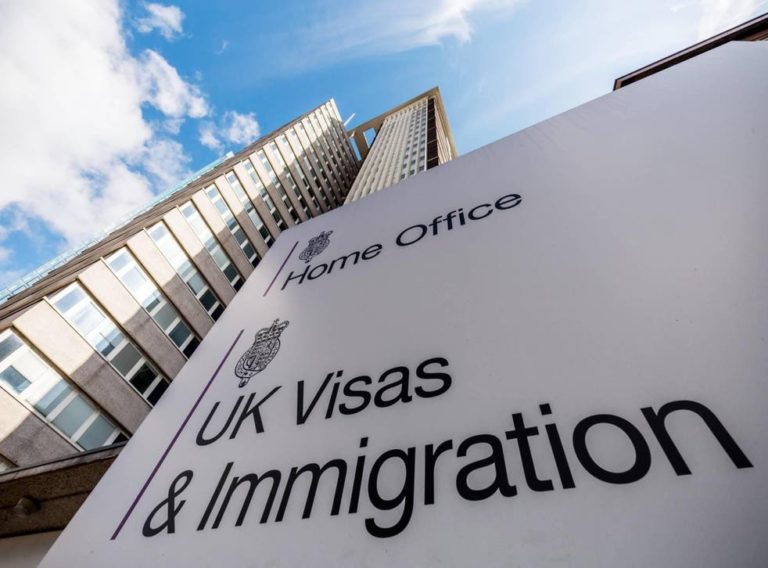
THE United Kingdom (UK) is set to introduce new and tighter visa access for citizens of Nigeria, Pakistan, and Sri Lanka, citing concerns over high rates of visa overstays and a surge in asylum applications from these countries.
This was revealed on Tuesday, May 6, by the Home Office spokesperson, who said that the UK Home Office is preparing to introduce stricter immigration policies targeting nationalities identified as having a greater likelihood of remaining in the country beyond the terms of their visas.
“Our upcoming Immigration White Paper will set out a comprehensive plan to restore order to our broken immigration system,” the spokesperson said.
The UK authorities said that the proposed restrictions were prompted by a trend of individuals entering the country on work or study visas and subsequently applying for asylum.
“To tackle abuse by foreign nationals who arrive on work and study visas and go on to claim asylum, we are building intelligence on the profile of these individuals to identify them earlier and faster.
“We keep the visa system under constant review and where we detect trends, which may undermine our immigration rules, we will not hesitate to take action,” the spokesperson added.
The paper, due later this month, will also present a wider strategy to restore order to what the government describes as a “broken” immigration system.
The ICIR reports that the Home Office announced last month that 43 failed asylum seekers and foreign offenders were returned on a charter flight to Nigeria and Ghana, as the government steps up international collaboration to secure our borders.
Nigerian applicants have recently encountered stricter visa regulations, such as limitations on bringing dependents and fewer opportunities for post-study employment.
Data from 2024 revealed a sharp rise in UK visa rejections for Nigerians, with the rejection rate increasing from one in 31 applications in 2022 to one in eight by late 2023.
It is worth recalling that just last month, the UK government announced a rise in visa fees for students, tourists, and other travelers.
The Home Office said that the student visa fee has increased from £363 to £490, reflecting a 35 per cent rise.