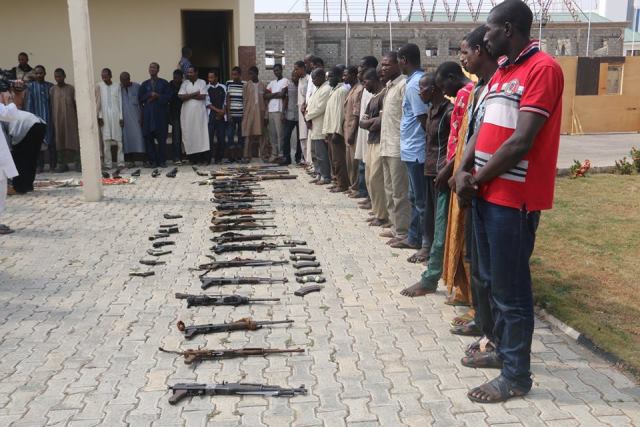
The Nigerian Police Force has paraded fourteen of its former personnel who were discharged for collaborating with criminals in carrying out their activities.
According to the Force Public Relations Officer, FPRO, Don Awunah, the sting operation that resulted in the arrests of the policemen was in line with the resolve of the Inspector General, Ibrahim Idris, to ensure that the conduct of officers and men of the Force conform to international best practices.
Among the suspects paraded on Tuesday at the Police Headquarters were nine ex-policemen who were arrested for unprofessional conduct, aiding and abetting of serious crimes such as cattle rustling, armed robbery and kidnapping in the North East.
They are: Yuguda Abbah, Habila Sarki, Diphen Nimmyel, Yasan Danda, Abbas Mailalle, Bwanason Tanko, Donan James, Idris Salisu, Zakari Kofi.
According to the FPRO: “In the month of October, 2016, one Alhaji Hodi Adamu, a notorious armed robbery suspect, was arrested by the Police in Adamawa State. The suspect’s confession led to the arrest of two other suspects namely: Rabo Bello ‘M’ and Oliver Honiol ‘M’ whose voluntary confessions led to the arrest of the nine (9) Police personnel mentioned above for various roles they played through their actions and inactions which are considered as disciplinary infractions. The principal suspects and the dismissed police officers will soon be charged to court.”
Awunah added that confessional statements from the arrested police personnel led to the arrest of 19 other suspects from whom assorted weapons were recovered, including: “14 AK 47 rifles with numbers intact; 3 other AK 47 rifles with numbers etched out; 1 Pump Action; 1 locally made pistol; 42 empty magazines; 363 rounds of AK 47 live ammunition; 71 K2 live ammunition and 25 live cartridges.”
Awunah further stated that four police personnel were arrested for “compromising and conspiring with one Zakari Ya’uIsiaka, a notorious armed robber, kidnapper and murderer who has been on the wanted list of the Police in Kogi State.”
They include Musbahu Yahaya; Ugenlo Sylvester; Musa Umar and Omale Edicha.
“5 assorted rifles and different calibers of ammunition were recovered from the suspect and other members of his gang,” the police spokesman said.
Similarly, another Police personnel was arrested for conspiracy to supply explosives to militants in Lagos and Ogun states.
The suspect, “Laibi Opakegba, was intercepted discussing with one Abiodun Amos “alias” SENTI on how to source and supply red dynamite to militants.”
Awunah stated that “the said Abiodun Amos, a 43 year old militant who is a native of Ese-Odo L.G.A of Ondo state was arrested at the bank of Majidun River in Ikorodu area of Lagos State while in possession of two (2) AK-47 rifles.
The FPRO said that the police authority would continue to make sure that its personnel “carry out Police duties and other responsibilities professionally in line with regulations guiding our operations without compromising our integrity and allegiance to the Nation and the Force.”
He assured Nigerians on behalf of the IGP that the Force was working “assiduously to further reduce the rate of crime and criminality across the country, especially kidnap for ransom and other violent crimes.”
Awuna urged Nigerians to always be law abiding and see themselves as stakeholders in making the country safer and secured.
Eyitayo Jegede, Factional Ondo State Governorship Candidate of the PDP
The Supreme Court has given the go ahead for the Appeal Court to deliver Judgement on the cases involving the two warring factions of the Peoples Democratic Party, PDP, in Ondo State-a decision which may change the course of the election should the appeal court rule in favour of the Ahmed Makarfi-led faction of the party.
Acting Chief Justice of Nigeria, Walter Onnoghen, who presided over the matter also struck out ten other motions for stay of execution filed against the Appeal Court after counsel to Biyi Poroye, informed the court that his client wishes to withdraw all the motions.
Taking into consideration the urgency of the case, Justice Onnoghen tasked the Appeal Court panel to expedite action on the case.
Also on the Supreme Court Panel were Justices Tanko Mohammed, Kudirat Kekere-Ekun, Ejembi Eko and Kumai Akaahas.
The Supreme Court also awarded a cost of N250,000 against the initiator of the suit, Poroye, who is also the factional chairman of the PDP in Ondo State.
The Appeal Court is expected to rule on all the fourteen appeals relating to the PDP and the ondo governorship crisis.
A Senior Advocate of Nigeria, Wole Olanipekun led the team for Eyitayo Jegede, while Emmanuel Ukala and James Onoja, both Senior Advocates, represented the Ahmed Markarfi and the Ali Modu-Sheriff factions of PDP respectively; the Independent National Electoral Commission, INEC, was represented by Nelson Anih.
Eyitayo Jegede had approached the Appeal Court to reverse the Judgement of a federal high court which directed INEC to remove his name from the list of Candidates contesting for the Ondo State Governorship position in the election scheduled for November 26.
But Biyi Poroye, Ondo State chairman of the Ali Modu-Sheriff faction of the PDP, filed an interlocutory injunction at the Supreme Court, arguing that the Appeal court had no power to hear the case.
Consequently, the Panel adjourned judgement of the case indefinitely, pending the determination of the injunction filed at the apex court.
The PDP has since called on INEC to postpone the election as a result of the adjournment; a call rejected by both the electoral umpire and the ruling All Progressives Congress, APC.
The decision of the appeal court would ultimately determine who will fly the flag of the PDP in the forthcoming election, which is only four days away.
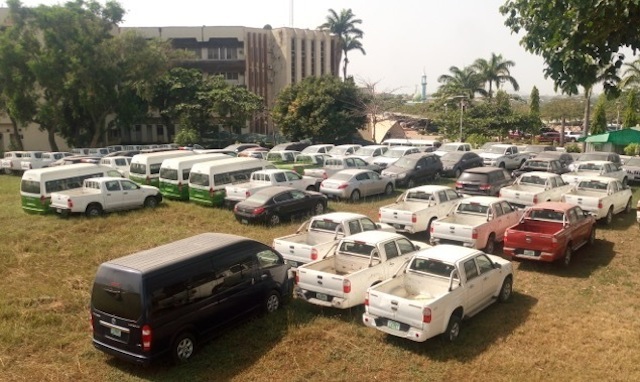
Over 100 vehicles worth about 450 million have been recovered in the last six months from government officials who made away with them after the present administration wound down the Subsidy Reinvestment and empowerment Programme, SURE – P.
In all, 103 vehicles, including luxury Sports Utility Vehicles, SUVs, were recovered by the Independent Corrupt and other related offences Commission, ICPC, from senior government officials in ministries, departments and agencies, MDAs, which received billions from the SURE – P scheme for infrastructure development and provision of services.
The MDAs include the Federal Ministry of Environment; Federal Ministry of Labour and Productivity, Federal Ministry of Information, the Water Quality Control and Irrigation and Drainage units of the Federal Ministry of Water Resources; Federal Road Maintenance Agency, FERMA, and the Child/Maternal Health department of the Federal Ministry of Health.
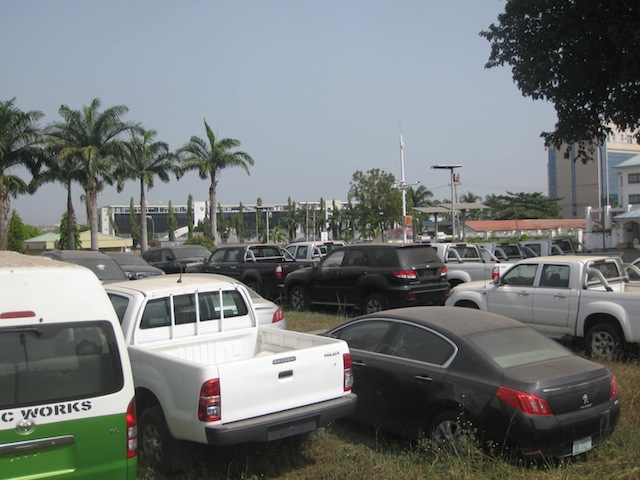
The www.icirnigeria.org learnt that most of the vehicles, which included luxury brands like an armoured Land Cruiser, Nissan Armada, Peugeot 508, Audi Q7, Audi A6 and several Prado jeeps, were not registered in government name but in the name of the directors who eventually took them away.
Investigations reveal that when many MDAs received funds from SURE – P during the Goodluck Jonathan administration, they all bought project vehicles, ostensibly to facilitate implementation of projects.
However, because the funds did not come from the MDAs’ allocations, assets such as project vehicles bought with SURE – P resources were never recorded in the MDAs’ Assets Register.
Rather, in most cases, senior officials who coordinated or supervised SURE – P funded projects connived with contractors to purchase such vehicles in their names.
Thus, the vehicles were used as project vehicles for a while, while many of the officials appropriated many of the vehicles to themselves even before the intervention fund was wound down.
When the Buhari administration took over in May 2015 and announced that it would wind down the programme, the remaining vehicles quickly disappeared, taken away by the government officials.
For instance, the former Secretary, SURE – P, Nze Akachukwu Nwankpo, took away a white bulletproof Toyota Land Cruiser jeep worth N36 million which was recovered from him in March 2016.
The amoured Land cruiser SUV recovered from Nze Akachukwu
Curiously, the vehicle was not registered in anybody’s name – not SURE – P or even his own – and carried no plate number. It was also not registered in the assets register of SURE – P, which provided the funds for its purchase.
In another outrageous case, a senior official of the Water Quality Control department of the Federal ministry of Water Resources, Samuel Ome. 0. made away with 13 vehicles including two Prado jeeps, three Toyota Avensis cars, two Rav 4 jeeps and three Toyota Hilux vans. He alone made away with vehicles worth N51.5 million.
But it was not only Ome who benefitted from the bazaar as the SURE P funds were evidently turned into a carnival for ministry officials. In the same water resources ministry, the former director, Irrigation and Drainage, (now retired), Joe Kwanachi, took for himself four vehicles, including a Toyota Land Cruiser, an Audi A6, Nissan Armada and Ford Edge, all SUVs worth N28 million.
The former director of Dams in the department, now retired, Emmanuel Adamu, took home an Audi Q7 and a Hilux van.
Yet another retired director in the Water Quality and Control department, Agada Obioha, took home three vehicles – a Prado jeep, Hilux van and Corolla car.
In all, officials of the Federal Ministry of Water Resources made away with about 40 vehicles, property of the federal government.
A cross section of recovered luxury vehicles
A breakdown shows that 14 vehicles were recovered from officials of FERMA, 13 from officials of the federal health ministry, 15 from the federal labour ministry, a Lincoln Navigator jeep from the National Progressive Movement Party, three vehicles from the federal information ministry and an unspecified number from officials of the defunct SURE – P.
Forty of the vehicles were recovered from officials who had retired from service.
Of the 103 vehicles so far recovered, 95 are parked at the headquarters of the Independent Corrupt Practices and other related offences Commission, ICPC, while eight are in the commission’s offices in Adamawa, Akwa Ibom, Kogi and Rivers states.
It was gathered that there are still many more SURE – P vehicles in the hands of government officials, many of them retired, and the ICPC is still working to recover them.
A source at the ICPC said that apart from vehicles, the commission is also trying to recover other assets and SURE P funds illegally appropriated by government officials and agencies.
The source said so far this effort has led to the recovery of about N108 million from an agency in the health sector.
The SURE P initiative was started in February 2012 by the Jonathan government as an intervention fund following the partial removal of subsidy on petroleum products.
The SURE P committee, headed by Christopher Kolade, was inaugurated on February 13, 2012 to manage and reinvest the federal government’s 41% share of the savings from the removal of the subsidy on petroleum products.
In the three years between 2012 and 2014, SURE P got budgetary provisions of about N628 billion (N180 billion in 2012, N180 billion in 2013 and N268 in 2014).
Another view of the recovered vehicles
Last week, the House of Representatives Committee on Anti – Corruption on a visit to the ICPC headquarters in Abuja inspected 95 of the recovered vehicles parked at the commission’s office.
Chairman of the committee, Akinloye Azeez Babajide, commended the ICPC for its efforts at fighting corruption and for fostering a good image for Nigeria through its preventive initiatives against corruption.
Babajide who expressed satisfaction with the activities of ICPC said that it was important for the achievements of the commission to be made public as a lot of people had the mindset that it was not doing much.
Jide Omokore being escorted to the courtroom by EFCC operatives
Jide Omokore, a billionaire oil magnate and ally of former Minister of Petroleum Resources, Diezani Alison-Madueke, has been re-arraigned by the Economic and Financial Crimes Commission, EFCC, on a nine-count charge of criminal diversion of about $1.6 billion reportedly from the proceeds of petroleum products belonging to the Nigerian government.
Omokore was re-arraigned alongside Victor Briggs, Abiye Membere, and David Mbanefo. before Justice Nnamdi Dimgba of the federal high court, Abuja.
Two of Omokore’s companies, Atlantic Energy Brass Development Limited and Atlantic Energy Drilling Concepts Limited, were also part of the accused persons.
They had been initially arraigned before Justice Binta Nyako on July 4, 2016 but the matter was transferred to Justice Dimgba and so had to begin afresh.
All the accused persons pleaded not guilty when the charges were read to them again on Monday.
The prosecuting counsel, Rotimi Jacobs, SAN, asked the court to allow the defendants to keep enjoying the bail earlier granted them by Justice Nyako, while a date should be fixed for trial to commence
The application was not opposed by the defence team and Justice Dimgba adjourned the case to December 8 for hearing.
Earlier in August, one of Omokore’s counsels, Rabani Lawal, SAN, rejected the claims that his client was an associate of the former petroleum minister, Allison-Madueke.
Lawal said in an interview granted a national daily and published on August 27: “The general impression created every time, all day, is that Jide Omokore is Diezani’s associate but he’s not!
“Jide Omokore is a businessman that has his own companies, bidded for jobs, entered into contracts with NDPC and NNPC to provide some services under the strategic alliance agreement and which has being ongoing, and that has nothing to do with his relationship with Diezani.
And, therefore, it is very worrisome that any time anything about Diezani comes up the next thing is that they will fly Jide Omokore’s name.
So, the EFCC should draw the distinction; if you are investigating Diezani, investigate her and limit your investigation to what has been traced to her either by her conduct, or by her diversion or by her abuse of office, and that is if it has been established. But this should not be extended to independent and third parties whose only offence is that they had a business transaction with the organisation she headed.
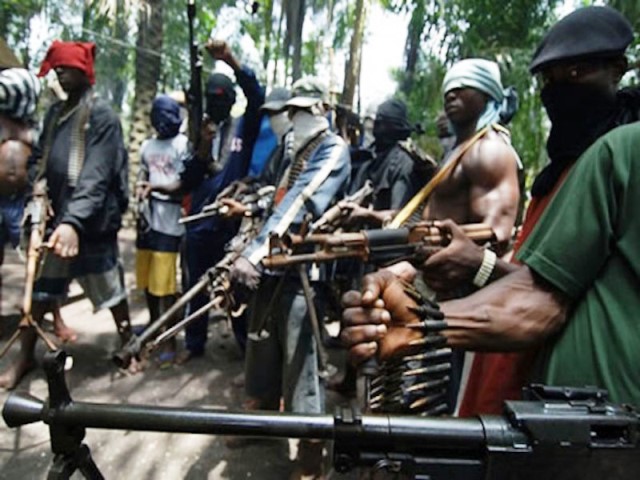
The federal government has blamed the incessant destruction of oil facilities by militants in the Niger Delta as being directly responsible for the persistence recession in the Nigerian economy in the third quarter of 2016.
This was made known by the National Economic Management Team, NEMT, headed by Vice President Yemi Osinbajo, in a statement by the Special Adviser to the President on Economic Matters, Adeyemi Dipeolu.
Also identified as a remote cause of the economic crunch is what the economic team referred to as the continued out-sized influence of the oil and gas sector on the rest of the economy.
The statement, however, sounded optimistic that the Niger Delta crisis would soon come to an end as the government had opened several channels of communication with all relevant groups in the region.
It also expressed optimism that other measures being put in place by the government, including those targeted at the manufacturing sector, would spur the economy “back to overall positive territory.”
The team assured that urgent fiscal and monetary measures were “certainly in the offing” in lieu of the persistence of the recession in the third quarter.
Though the overall economy of the country was still in recession, the statement pointed out that the third quarter GDP figures released by the National Bureau of Statistics revealed a consistent growth in agriculture and solid mineral sectors.
The statement read: “There are however some green shoots of economic recovery beginning to emerge. To start with, ongoing consultations to bring lasting peace to the Niger Delta have enabled an increase in oil and gas production which, if sustained at current prices, will bring a measure of relief to the economy. Other key sectors of the economy showed encouraging signs of improvement.
“Similarly, while inflation is still high at 18.3% on a year-on-year basis it has begun to level out on a month-on-month basis and should enable the deployment of more policy tools to support growth and employment. Indeed, growth of headline inflation slowed down appreciably from 13.8% in May to as low as 1.70% in September.
“The ratio of investment to GDP also showed a notable improvement rising by 7.6% in the third quarter of 2016 as compared to a contraction of -7.4% in the fourth quarter of 2015.
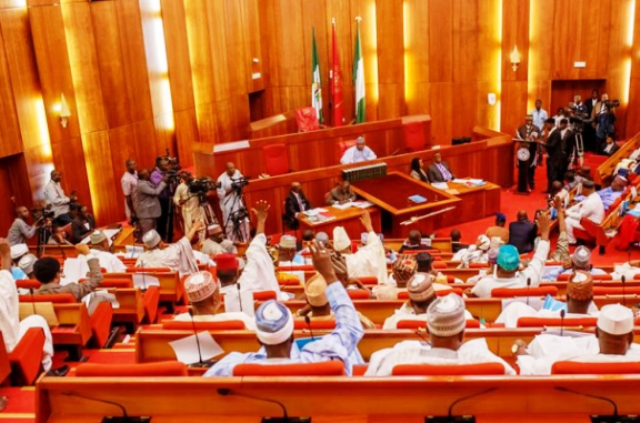
The Nigerian Senate has said that it will not support the moves by some government agencies to introduce a controversial bill banning people from owning foreign exchange.
A recommendation by the Nigerian Law Reform Commission is seeking for a review of the Nigerian Foreign Exchange Act in order to empower the Central Bank of Nigeria, CBN, to jail people for up to two years or fine them for 20 percent of the amount of the foreign currency held in their possession for more than 30 days.
But in a statement issued on Monday, Senate’s spokesman, Aliyu Sabi, expressed surprise at the recommendation which he said could further erode investor’s confidence in the Nigerian economy.
He said in the statement that “such move as proposed by the Commission that will prevent investors from making free entry and free exit from the market will be outrightly rejected by its members.”
The statement read in part: “The measure is disruptive and counter-productive, threatening to undermine many of the reform efforts already underway in the legislature and by government ministries intended to boost investor confidence.
“The Senate would never pass such a punitive and regressive proposal. Overall, some of the Commission’s recommendation have many sound attributes and could help Nigeria’s investment climate.
“We believe the CBN should have the authority to regulate the forex market and determine the exchange rate policy as already enshrined in its enabling Act.”
Sabi further stated that “a market-oriented exchange rate policy is the best recipe for guiding the operations of the foreign exchange market” adding that it will “ensure the supremacy of market mechanisms in efficiently allocating the scarce forex resources.”
The Senate added that it will continue to work with the Executive in order to bring the recession to an end and return the country to economic growth.”
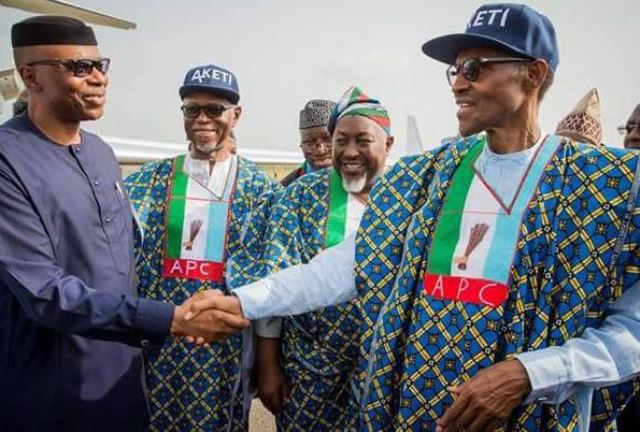
Governor Mimiko Personally welcomed President Buhari to the Obdo state APC rally over the weekend, sparking off speculations that he is about to dump the PDP
Governor Olusegun Mimiko of Ondo State has again met with President Muhammadu Buhari behind closed doors with reports suggesting that the forthcoming governorship election in the state was the agenda for the meeting.
The election will hold on Saturday, November 26, only five days away.
Mimiko, after holding talks with the president for about 30 minutes, also went to the office of the Chief of Staff to the President, with whom he met for another 30 minutes.
After the meetings, the Ondo State governor, who is also the chairman of the Peoples Democratic Party, PDP, governors forum said he had come to brief the president as he feared there might be a security situation in the state
“As the chief security officer of my state, if there is any credible threat to security, I owe the responsibility to Nigerians to inform Mr. President of what is going on in the state,” he said.
Mimiko also denied the claims that he was nursing the idea of dumping the PDP for the ruling All Progressives Congress, APC.
Recall that the governor went in person to receive the president on Saturday when he visited Ondo state to attend APC’s campaign rally, but Mimiko said he was only paying the president the courtesies due to him.
He said: “Mr. President was in my state to campaign for his party. I extended to him the courtesies of receiving him at the airport and seeing him off as President of the Federal Republic of Nigeria, not as APC.
“I understand that people have speculated that this means I am going to APC. There is nothing of such. I only extended him normal courtesies that protocols demand.
“And I have also come to brief him about the security situation in my state.”
Asked whether his faction of PDP was planning to form another party in the face of the current leadership crisis, he said: “I am just concentrating on the case of my party in court.”
Recall that Mimiko’s preferred candidate, Eyitayo Jegede, is facing an uphill task in his quest to be part of Saturday’s election, following the replacement of his name with that of Jimoh Ibrahim.
The Independent National Electoral Commission, INEC, had said that its decision to include Ibrahim’s name in place of Jegede was based on a court judgment, delivered by Okon Abang of the federal High Court Abuja.
An appeal to that judgement is still awaiting ruling at the Appeal Court. Judgement was suspended last Friday by the Appeal court panel handling the case, pending the determination of some injunctions filed by the defendants before the Supreme Court.
The PDP has since called for a postponement of the election, pending the determination of the case, but INEC and the APC would have none of it.
Minister of Information and Culture, Lao Mohammed, Receiving the MOPICON report from chairperson of the review committee, Peace Anyiam-Osigwe
Minister of Information and Culture, Lai Mohammed, has promised that his ministry will do its best to ensure the establishment of the Motion Picture Council of Nigeria, MOPICON, in order to effectively regulate Nigeria’s budding Movie industry commonly referred to as Nollywood.
He made the commitment on Monday after receiving the report of the Review Committee of MOPICON, headed by Peace Anyiam-Osigwe.
The minister commended the committee members for their selfless service, adding that he will do his best to see that their sacrifice and hard work yields the desired result.
Mohammed promised that the ministry “will critically look at the reviewed draft document, which you have handed over to us, and we will immediately kick-start the process of making MOPICON a reality for the benefit of the movie industry,”
He also reiterated that contrary to speculations from certain quarters, government has no hidden agenda in making moves to establish a regulatory body for Nollywood, as it will not be part of anything that will stifle the growth of the growing movie industry.
He said: “I have followed the debate that ensued among the stakeholders in the aftermath of the inauguration of the Review Committee.
“Some argued that the government has no business in helping Nollywood to set up a self-regulatory structure, while others are of the contrary opinion.
“Let me re-state what I said at the inauguration of this committee on April 12th 2016, that in line with our overall responsibility for the nation’s information, culture and tourism policies, our role in helping to set up MOPICON is simply to enable Nollywood to play meaningful role in national development.
“Again, one of the ways we think we can tackle frontally the many challenges militating against professional and career fulfillment in the movie industry is to have a central body we can always refer to in decisions aimed at improving and modernizing the motion picture industry.”
The minister further stated that government’s interest in the setting up of MOPICON is driven by the fact that there should be a “formidable representative group that is empanelled to lobby for the growth, development and welfare of the film industry and its practitioners as well as make for a better organized and more visible and vibrant Nollywood industry.
Chairperson of the committee, in her remarks said that members of the committee were unanimous in their decision to support the establishment of MOPICON
She noted that they had taken different opinions from stakeholders in the industry into consideration while working on the report.
“What we come to understand and appreciate is that a council of some sorts is required in order to make this industry work. How this council will operate, we have advised,” she said.
“In this document, we have taken cognizance of all the guilds and associations and we have also taken into cognizance all the uproar in the media about the MOPICON and what it stands for and the misconception of what it is,” She added.
Whatever meaning is given to the idiomatic or philosophical expression “life begins at 40’, it is a consensus that a journey or a period of forty years is considered long enough to near a destination or attain maturity.
Many people consider turning 40 years as a milestone that heralds the beginning of middle age in one’s life. French poet, novelist, playwright and human rights activist, Victor-Marie Hugo (1802 to 1885) was of the opinion that “40 years is the old age of youth”.
This reminds me of one of the matters of the moment in Nigeria as the Legal Aid Council of Nigeria celebrates 40 years of existence this week with activities that include Paralegal Train the Trainers Workshop, Commissioning of the Council’s new Head Office, Launching of a National Legal Aid Strategy and Presentation of Awards to Individuals and Organisations who contributed to the birth and growth of the Council.
But the story of the Council will not be complete without mentioning the efforts of some private Lawyers, notably, Chief Timothy Chimizie Ikeazor, SAN, Chief Adebowale Durosaiye Akande, SAN, and Chief Dr Solomon Daushep Lar, SAN., CON., who formed the Association of Public Defenders (later the Legal Aid Association of Nigeria) in the early 1970s. Their objective was to provide pro bono legal services to indigent, economically deficient and less privileged Nigerians.
The struggle of the “Comrades” continued until the association was recognized and given formal and legal status by the Federal Military Government with the promulgation of Decree No. 56 of 1976 on 10th November, 1976, which established the Legal Aid Council to render legal aid and access to justice to indigent persons as widely as possible within its financial resources.
Over the years, the decree had been amended and later codified (except the 1994 amendment) into what is now known as Legal Aid Act. Cap 205, Laws of the Federation 1990. The Legal Aid (Amendment) Decree No. 22 of 1994 was symbolic in that it expanded the jurisdiction of the scheme to include damages for breach of Fundamental Human Rights as guaranteed by the Constitution.
The Decree was amended by the Legal Aid Act Cap L9, Law of the Federation, 2004 and to conform to the current democratic dispensation, the law was repealed in 2011 by the Legal Aid Act 2011.
This new law is also meant to comply with international standards of providing legal aid and access to justice fund into which financial assistance would be made available to the council on behalf of indigent citizens to prosecute their claims in accordance with the constitution.
The act also empowers the Legal Aid Council to be responsible for the operation of a scheme for the grant of legal aid and access to justice in certain matters or proceedings to persons with inadequate resources in accordance with the provision of the act.
The Council with headquarters in Abuja, conducts its operations through offices in 36 states, 6 zonal offices, Legal Aid Centres (14 for now) in Local Government Area Councils in some States and the Federal Capital Territory as part of the drive to establish legal aid offices in all the 774 Local Government Areas of the Federation.
The vision of the founding fathers of the Legal Aid Council was to see “a new Nigerian nation where there is equal access to justice for all irrespective of means and where all Constitutional rights are respected, protected and defended to ensure justice for all.”
Its motto is “Giving Voice to the Voiceless” while the Mission Statement is “To remain the leading and pro-active provider of free, qualitative and timely legal aid services in Nigeria, ensuring social justice and the emancipation of the oppressed, reprieve to the weak and vulnerable thereby giving voice to the voiceless.”
The Objectives and Mandates of the Council are excellent but the extent to which they are achieved and carried out in the 40 years of its existence leaves much to be desired.
It is only now that the Council is having its own building as headquarters while a visit to some of its State Offices will show that it needs one aid or the other. The staff are either being moved randomly from one building to another by their host state governments or are provided with office accommodation at remote areas while in some cases, tables, chairs and other office furniture at these state offices are better imagined than seen.
Ordinary stationeries are sometimes provided by indigent litigants. Official Vehicle of the Council is a novelty in some of the State Offices and where available, it is as good as none because of its condition as maintenance and regular servicing are not routine due to lack of funds.
The monthly financial grant to cover recurring costs of maintenance and utilities among others from the headquarters was no longer regular even before current economic recession.
The immediate past Chairman of the Governing Board of the Council, Chief Bolaji Ayorinde, SAN, confessed that the Council was “grappling with challenges of poor funding and logistics.”
He told the Lagos based Newswatch Times Newspaper that “logistical challenges are in fact dogging even the best efforts of the council’s staff members.”
“Although some people have expressed disappointments, you must also appreciate that logistical challenges are there to be grappled with by the lawyers. For example, you have to transport these lawyers to the prisons, to the courts, back to their offices, and that is huge,” he argued.
The much talked-about congestion at Nigerian Prisons remains a nightmare and majority of the inmates are indigent Nigerians awaiting trial who cannot afford to pay for legal services to be represented in courts while others are minor offenders who couldn’t pay the option of fine given by the courts that tried them. This is where the services of the Legal Aid Council are needed most. But alas, lack of funds and inadequate manpower.
I can recall that the Senate at a plenary on Wednesday 4th July, 2012, advised the Executive to hand over the Prison Decongestion Programme to the Legal Aid Council. This followed the adoption of the report of the Senate Joint Committee on Judiciary, Human Rights and Legal Matters, Interior and Police Affairs on the plight of persons awaiting trial in Nigerian prisons.
The now five-year old motion by the distinguished Senators remain an advise as nothing was done in that regard by the executive despite the billions of naira appropriated every year for the programme.
With all these problems and no solution at sight, yet the Legal Aid Council is celebrating 40 years of existence. Yes, but being “indigent” itself the council is partnering an NGO – Prisoners Rehabilitation and Welfare Action, PRAWA, to organize the events under the “Support to the Justice Sector in Nigeria” project funded by the European Union and implemented by the United Nations Office on Drugs and Crime, UNODC.
However, despite the constant decline in financial appropriation (both recurrent and capital) for the council, the present management under the Director General, Mrs Joy Bob-Manuel, remained focused on its mandate of representation of indigent citizens and is witnessing a steady increase in the number of cases handled annually. Averagely, Legal Aid Council handles not less than 25,000 criminal and civil cases annually for poor citizens across the country.
Legal Aid Council has also bought a building at a strategic location in Abuja to serve as a befitting headquarters while private legal practitioners are enrolled in the Private Legal Practitioners Directory as mandated by the enabling law. The purpose was to expand, coordinate and supervise legal aid delivery with the assistance of members of the Nigerian Bar Association to provide pro bono legal services.
While we say happy birthday, we need to remember that the services of Legal Aid Council are geared towards reducing, to the barest minimum, incidents of Human Rights abuses perpetrated against the citizenry by either the law enforcement agents or the affluent in the society. By extension, the Council is in the vanguard for social Justice and emancipation of the oppressed, the weak and the vulnerable groups, thus, “Giving Voice to the Voiceless”. All and Sundry should partner with the Council to achieve the desired objectives.
Abdulkadir Ahmed Ibrahim, FNGE., a former member of the Governing Board of Legal Aid Council, wrote from Kano. He can be reached on teeceexpee@yahoo.com
Sylvester Ngwuta, a Justice of the Supreme Court, has been granted bail in the sum of N100 million, after he was arraigned by the federal government on charges bothering on bribery and corruption.
Ngwuta was arraigned on Monday before Justice John Tsoho of the federal high court on a 16-count charge to which he pleaded not guilty.
Ngwuta was among the 7 senior judges whose residences were raided by operatives of the Department of State Services, DSS, in October on allegations that they collected bribes in order to deliver controversial judgements.
His lawyer, Kanu Agabi, asked the trial judge to grant his client bail on self-recognition; an application that was vehemently challenged by the prosecution counsel, Charles Adeogun who maintained that the accused person could tamper with or outrightly destroy evidence if granted bail.
Adeogun also said that the defendant could jump bail since he possessed four international passports.
He said: “Barely 20 minutes after he was granted administrative bail, one of the witnesses received a call from the defendant. During that call a number of instructions were given to the witness: ‘get rid of those cars. Go into my bathroom, in my residence where you will find three bags’.
“That same witness came back to the house, removed three luxury cars and concealed them. Days before his residence was raided on October 8, the defendant had four valid passports.
“We object to bail being granted because we are of the opinion that the defendant may conceal or destroy evidence,” Adeogun added.
In his response, the defence counsel maintained that the offence his client was alleged to have committed was bailable and as such, there was no need to remand him in custody.
Justice Tsoho, having listened to both parties, held that the offence allegedly committed by the accused person was bailable.
“I hold the offence is bailable,” he said. “I hereby rule that the defendant be granted bail in the sum of N100 million in self-recognizance.”
Ngwuta, who hails from Ebonyi State in South East Nigeria, had written to the then Chief Justice of Nigeria, Mahmud Mohammed, shortly after his arrest by the DSS, alleging that his ordeal was being orchestrated by two cabinet members of President Muhammadu Buhari.
He claimed that he was being persecuted for refusing at different times to do the biddings of Ogbonnaya Onu and Rotimi Amaechi, who are now Ministers of Science and Technology and Transportation respectively.