Home Blog Page 295

Nigeria Police resume issuance of tinted glass permits nationwide

0

THE Nigeria Police Force (NPF) has resumed the issuance of tinted glass permits across the country.

This followed a directive from the Inspector-General of Police (IGP), Kayode Egbetokun.

The decision was announced in a statement on Wednesday, April 30, by the Force Public Relations Officer, Olumuyiwa Adejobi.

According to the NPF, the development followed rising complaints from the public over the harassment of vehicle owners by law enforcement agents for using factory-fitted tinted windows.

The statement reads,The Nigeria Police Force, under the directive of the Inspector-General of Police, IGP Kayode Adeolu Egbetokun, Ph.D., NPM, has reactivated the issuance of Tinted Glass Permits (TGP) nationwide through a secure and user-friendly digital platform available at https://possap.gov.ng”.

The police said the initiative was in response to public complaints about motorists being harassed over tinted windows.

The Force added that a formal system was needed to regulate the use of tinted windows, which are common in modern vehicles for comfort and aesthetics, to ensure public safety.

“Tinted vehicles have often been exploited for criminal purposes, including kidnapping, armed robbery,one-chancescams, and other forms of banditry,” Adejobi added.

The police said the misuse of tinted windows by criminals posed challenges for law enforcement and threatened national security, the reason attributed to the reactivation of the permit system to identify legitimate users.

The police said the decision would help to enhance investigations and improve overall security architecture in Nigeria.

They also added that to ensure authenticity and ease of access, the new platform features digital permits equipped with QR codes and a rapid processing window.

The police said applicants could process their permits online with identity verification integrated through the National Identification Number (NIN) and Tax Identification Number (TIN), alongside biometric capture and background checks.

To ensure a smooth transition, the police said a 30-day grace period had been approved, effective from May 1, within which motorists are expected to comply.

In addition, the NPF explained that law enforcement would begin active implementation after the grace period, warning that officers who misused the enforcement process would be sanctioned.

The police warned that officers engaging in extortion or harassment would face disciplinary action.

They also assured the public of the police’s commitment to transparency, accountability, and modern policing, urging citizens to support the initiative for safer roads and a more secure Nigeria.

In June 2021, former IGP Usman Baba ordered the suspension of the issuance of permits for tinted glasses and SPY number plates.

The police announced in 2024 that they would restart issuing the tinted glass permits for vehicles.


Calls for sale of PH, Warri, Kaduna refineries intensify as NNPCL sacks MDs

CALLS are growing louder for the sale of Nigeria’s three major refineries in Port Harcourt, Warri, and Kaduna, following recent reforms at the Nigerian National Petroleum Company Limited (NNPCL), which included the dismissal of their managing directors.

These refineries have gulped billions of dollars over successive administrations, yet they remain largely unproductive. Oil marketers now rely heavily on the Dangote Refinery to meet fuel demand, highlighting the chronic underperformance of government-owned facilities.

The ICIR reports that the new NNPCL leadership appointed after President Bola Tinubu dissolved the board in April has removed the managing directors of the three refineries, along with other senior officials close to retirement.

Oil sector governance expert Henry Ademola Adigun told The ICIR the changes are aimed at increasing efficiency. He urged the government to go further by removing the refineries from NNPCL’s books, describing them as “dead assets.”

“When you have a new management in place, they look at where they can strengthen and in strengthening those areas, they bring in more efficiency. The officials who are retired are almost sixty years old. The reason is more likely about finding new heads and putting the sector on the track of development,” Adigun, told The ICIR.

Adigun believes they were retired for “operational reasons” with a core focus on increasing operational efficiency in the sector.

He also stressed the importance of the national oil company dealing with dead assets and selling off the nation’s three aforementioned refineries, adding that, “every past government in power who had attempted to manage those dead assets like our three refineries have failed. If we are ready for reform, we must take a step further in getting rid of dead assets off our books.”

“What I think they need to do is to look at dead assets primarily, get rid of them from NNPCL books and get someone to manage those assets, as it’s almost given that the national oil company cannot manage dead assets,” he emphasised.

It would be noted that the move by the new management team at the state-owned oil firm came following President Bola Tinubu’s removal and replacement of the NNPCL board.

Tinubu had, on Wednesday, April 2, sacked the former NNPC Group chief executive officer (GCEO), Mele Kyari, along with board chairman Pius Akinyelure and other board members.

He replaced Kyari with Bashir Ojulari and appointed Ahmadu Musa Kida as the non-executive chairman.

The President’s move saw the complete overhaul of the 11-member board of NNPCL, replaced with new members.

Tinubu, who invoked Section 59(2) of the Petroleum Industry Act (PIA) 2021, said the decision became necessary to enhance operational efficiency, restore investor confidence, boost local content, and advance gas commercialisation and diversification.

He directed the new board to conduct a strategic portfolio review of NNPCL-operated and joint venture assets to align them with value maximisation objectives.

The tales of Nigeria’s crude oil output have remained worrisome over the years as the country has not been meeting its operational quota prescribed by the Organisation of Petroleum Exporting Countries (OPEC) and has been far away from meeting its budgetary benchmark every year.

Informed sources said Tinubu wants the new board to elevate NNPC’s share of crude oil refining output to two million barrels per day by 2027 and to reach five million by 2030.

The latest shakeup swept the managers of the Port Harcourt Refining Company, Warri Refining and Petrochemical Company, and the Kaduna Refining and Petrochemical Company came following the cleanup at the NNPCL and its subsidiaries.

The ICIR gathered that the three MDs of the refineries and some other senior managers had been asked to leave.

The continued poor performance of the refineries is said to have contributed to the exit of the managing directors.

Although the Port Harcourt and Warri refineries were recently said to have been revamped, there are reports that the refineries have not been functioning effectively, having been moribund for decades.

A report on Tuesday, April 29, citing a document on the midstream and downstream sector from the Nigerian Midstream and Downstream Petroleum Regulatory Authority (NMDPRA) spotlighted the NNPCL to be under fire over the $897 million Warri refinery revamp.

It also revealed that the Port Harcourt refinery had been struggling at under 40 per cent production capacity.

Meanwhile, industry experts have been questioning the operational integrity of the NNPCL regarding its transparency, efficiency, and overall management of the nation’s refineries under its purview.

The ICIR also reported recently that the Federal Government has revealed plans to carry out a forensic audit of the NNPCL to promote operational efficiency and address misappropriation claims.

The Minister of Finance and Coordinating Minister of the Economy, Wale Edun, hinted at this at the Nigerian investor forum, held on the sidelines of the International Monetary Fund (IMF)/World Bank Spring Meetings in Washington, DC, last week.

Nigeria declares Thursday, May 1, public holiday for Workers’ Day

0

THE Nigerian Government has declared Thursday, May 1, a public holiday to celebrate Workers’ Day.

The Minister of Interior, Olubunmi Tunji-Ojo, made the announcement in Abuja on Tuesday, April 29.

He stressed the importance of peace in Nigeria’s industrialisation and economic growth.

In the statement signed on his behalf by the ministry’s Permanent Secretary, Magdalene Ajani, the minister lauded the dedication and sacrifices of workers, acknowledging their role in the nation’s progress.

Tunji-Ojo highlighted the dignity of labour and workers to embrace innovation and productivity in their respective fields.

The minister encouraged workers to elevate their standards to improve governance and ensure equitable distribution of the nation’s resources.

He reassured Nigerians of the President Bola Tinubu administration’s commitment to their safety and the security of all people in the country.

The minister wished all workers a joyful celebration and urged the public to remain hopeful. He also added that Tinubu’s administration would work towards fulfilling its Renewed Hope Agenda.

International Workers’ Day, also known as Labour Day or May Day, is a global holiday celebrated on May 1st.

It’s a day to recognise and honour the contributions, achievements, and rights of workers worldwide.

The day is often marked by parades, rallies, and events promoting workers’ rights, fair labour practices, and social justice.

It’s a significant occasion for the international labour movement, advocating for better working conditions, wages, and benefits for workers everywhere.

FG budget threatened as revenue falls 35.22% below benchmark – Report

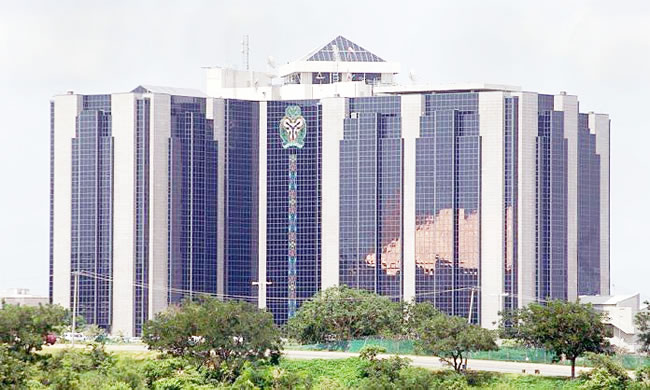
FEDERAL Government gross federation account earnings dropped by 35.22 per cent to N1.94 trillion below the 2025  budget benchmark of N3 trillion, the Central Bank of Nigeria (CBN) revealed in its latest report.

The shortfall in earnings is expected to affect the remittances of projected revenues targeted in the 2025 budget, as the apex bank report disclosed that the revenue dropped from N2.83 trillion in December 2024 to N1.94 trillion in January 2025.

The gross federation account in Nigeria is a central account into which all revenues collected by the Federal Government are deposited, excluding those classified as Federal Government independent revenue.

The apex bank revealed this in its Economic Report, released recently by the CBN.

It shows that the decline reflected lower receipts from oil and non-oil sources.

“The provisional gross federation account receipt was 31.35 per cent and 35.22 per cent below the level in the preceding month and the benchmark, respectively.

“The decline was largely due to a reduction in receipts from petroleum profit tax (PPT), royalties, company income tax, and customs & excise duties,” CBN said.

A cursory look at the report shows that the composition of gross federation revenue for non-oil revenue remained dominant, accounting for 68.67 per cent of the N1.94 trillion, while oil revenue constituted the balance.

“Non-oil revenue, at ₦1.33 trillion, was 22.18 per cent below the level in the preceding month, driven by low collections from federal government independent revenue, customs & excise duties and corporate tax,” CBN stated.

However, the non-oil revenue was 8.25 per cent above the monthly target of N1.23 trillion.

Oil revenue also declined by 45.45 per cent to N610 trillion from the level in December 2024, due to lower receipts from petroleum profit tax (PPT) and royalties.

It was 65.55 per cent short of the monthly target due largely to shut-ins arising from ageing oil pipelines and installations.

The apex bank explained that from the federally collected revenue of N1.94 trillion, a net balance of N1.42 trillion was distributed to the three tiers of government after accounting for additional revenue and statutory deductions, and transfers.

The federal, state, and local governments received N450 billion, N500 billion, and N360 billion, respectively, while the balance of N110 billion was allocated to the 13 per cent derivation fund for oil-producing states.

“Net disbursement was 17.52 per cent below the level in the preceding month and 38.30 per cent short of the monthly target,” CBN added.

The ICIR has, in a recent report, analysed why the federal government might face a setback in the implementation of its 2025 budget provisions with the consistent drop in crude oil price, hitting its lowest level at $65 per barrel in four years early this month.

This indicates worries as Nigeria relies largely on the proceeds from oil revenue to fund a large chunk of its national budget.

The government had set a $75 per barrel benchmark for the oil price; dropping below this figure could cause possible upset, while increasing the chances of further borrowing by the government.

This year, it projected a budget size of N54.99 trillion, setting its crude oil price benchmark at $75 per barrel, oil production at 2.06 million barrels per day (bpd), and exchange rate at N1,500 per dollar.

CAC issues 6-week ultimatum to unregistered business owners

THE Corporate Affairs Commission (CAC) has issued a six-week notice to business owners operating in Nigeria with unregistered names to comply with registration requirements or face possible imprisonment.

It gave the warning and deadline in a statement on Tuesday, April 29.

It cited that the criminal offence under Section 863 of the Companies and Allied Matters Act, 2020 forbids carrying on business in Nigeria as a company, limited liability partnership, limited partnership, or under a business name without registration.

It said it is also an offence to operate under a name or acronym other than the one registered under the Act.

The commission also noted that Section 729 of the Act requires every registered company to display its registered name and registration number at every business location.

“The Commission wishes to inform the General Public that it is a criminal offence under Section 863 of the Companies and Allied Matters Act, 2020 to carry on business in Nigeria as a Company, Limited Liability Partnership, Limited Partnership or under a Business Name without registration under the Act or by a name (or acronym) other than the name (or acronym) by which the business was registered under the Act.

“The General Public should note that Section 729 of the Act requires every Company registered under the Act to state its name as registered and its registration number outside every place where it carries on business. In addition, the Company is required to state its registered name and registration number on all its official publications, including its letterhead, signage(s), marketing and publicity materials,” it stated.

According to the CAC, non-compliance with business registration requirements may result in prosecution and a conviction that carries a penalty of up to two years’ imprisonment.

“In particular, the general public should note the provisions of Section 862 (1) of the Act, which state that any person who, in any document required under the Act (including the aforementioned official publications of a company), knowingly makes a false statement in any material respect commits an offence and is liable on conviction to imprisonment for a term of two years, in addition to a daily fine imposed on the company for every day the offence continues,” it said.

The commission continued that all companies, limited liability partnerships, limited partnerships, and business name proprietors must comply with the provisions of the Act within six weeks of this notice.

Failure to comply will result in enforcement actions, including prosecution, the CAC stressed.

“In view of the foregoing, every Company, Limited Liability Partnership, Limited Partnership and Business Name proprietor(s) is hereby required to ensure full compliance with the above requirements of the Act within six weeks of this notice failing which the Commission shall take all necessary steps (including prosecution) to enforce compliance,” it added.

The ICIR can report that the CAC public notice on businesses operating under an unregistered name or acronym came following the collapse of the fraudulent cryptocurrency investment scheme, CBEX, which reportedly defrauded Nigerians of approximately N1.3 trillion.

The matter which is before the Economic and Financial Crimes Commission (EFCC) and the Securities and Exchange Commission (SEC) has drawn public attention emphasised that

Although ST Technologies International Limited, the promoter of CBEX, was said to have registered with the CA, it was discovered that the company was not licensed by the SEC to operate as an investment platform.

Last year, the CAC embarked on a similar venture, mandating Point of Sales (PoS) agents to register with the commission or face sanctions.

It is unclear whether the commission achieved the purpose after extending the registration deadline for the PoS operators from April to September 2024.

Brain drain: Only 99 doctors are on Kwara government’s payroll – Official

0

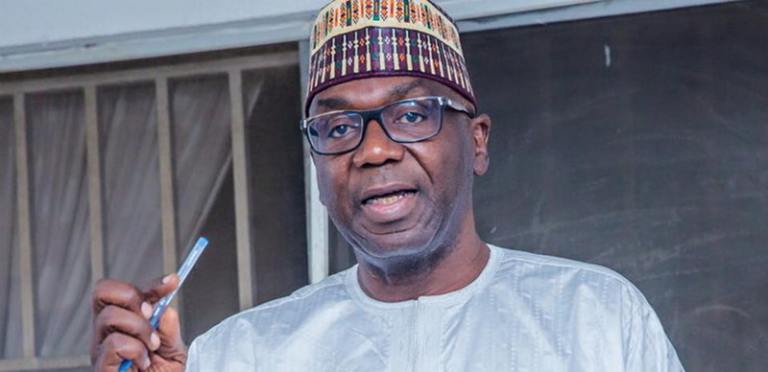
THE Kwara State government has revealed that only 99 medical doctors are currently employed by the state across all 16 local government areas.

The government disclosed this through the Executive Secretary of the State Hospital Management Board, Abdulraheem Abdulmalik, during the 2025 first-quarter inter-ministerial press briefing in Ilorin, on Tuesday, April 29, according to Daily Trust.

Abdulmalik attributed the critical shortfall to the ongoing exodus of medical professionals, commonly referred to as the ‘japa’ syndrome, which has seen doctors leave the country in search of better opportunities abroad. 

He noted that while the state Governor Abdulrahman Abdulrazaq had approved the recruitment of more doctors, the board had been unable to find qualified personnel to fill the gaps.

“We have approval from His Excellency to recruit doctors, but we can’t just find the doctors to recruit. Doctors are hot cakes now. If a doctor resigns in the morning, he will get another job in the afternoon”, he said.

He explained that the state previously had 96 doctors on its payroll, but the number increased slightly to 99 after three doctors who had resigned returned following a salary increase approved by the governor. 

However, he said the state needed between 180 and 200 doctors to meet current healthcare demands.

“The three medical doctors who left the service returned after the recent increase in doctors’ salaries by the Governor. We actually had 96, but after His Excellency increased the salary, three of them who ‘japa’ came back. So, we have 99 right now. We’re expecting more at the moment because we need about 180 to 200 medical doctors,” he said.

Abdulmalik said, in response to the shortage, the board was developing a software application that would enable patients to know the number of doctors available at the state’s 45 government-owned hospitals at any given time. 

He said the initiative aimed to reduce long waiting periods and prevent life-threatening delays in accessing care.

He further highlighted the difficulty of deploying doctors to rural areas, where he said the shortage was more severe. 

“The remuneration will be at par with what is obtainable in the Western world, where most of the doctors are leaving for greener pastures”, he stated.

“On recruitment, we have presented a prerequisite to the Governor on actually harvesting doctors from medical schools. So, the state government sponsors you as a student for maybe a year or two, and you pay back by working for the state for those two years in which the state has invested in you.

“That means we will continue to have a cycle of students. So, the state government sponsors you for two or three years and you work for the state government for those number of years before you ‘Japa’. That would mean there is a closing of the gap for medical doctors. This would kick off in about three to four years because we are starting from their Clinical Level, which is 400 Level,” he added.

The Nigeria’s brain drain

The ICIR reports that the migration of health workers, particularly doctors, nurses, and other essential healthcare professionals, has long been a significant challenge facing Nigeria’s healthcare system. Their exodus has left many healthcare facilities understaffed and struggling to meet the population’s healthcare needs.

The doctors and healthcare workers across the country have repeatedly cited poor remuneration, delays in salary adjustments, and unresolved welfare concerns as the contributory factors that have led to the mass exodus of professionals from the country.

In April 26, 2024,  The ICIR reported that only 45 per cent of registered doctors in Nigeria renewed their licence in 2023.

In September 2023, the former president of the Nigeria Medical Association (NMA) said Nigeria had fewer than 100,000 registered doctors, out of which 50,000 practised in Nigeria. He noted that for Nigeria to meet the World Health Organisation’s standard of doctors to patients ratio, the country must employ at least 250,000 medical doctors.

In January 2025, the Medical and Dental Consultants Association (MDCAN) raised the alarm over the exodus of medical consultants from Nigeria.

The group said over 1,300 medical consultants migrated from the nation in five years, leaving the country with only 6,000 consultants, serving nearly 220 million people.

King Sunny Ade refutes kidnap rumours, says he’s safe

LEGENDARY musician King Sunny Ade (KSA) has debunked widespread rumuors concerning his safety, stating that he is neither missing nor kidnapped.

He responded to the rumour in a live video shared on Tuesday, April 29, by his wife, Bose Olubo-Adegeye.

The rumours gained traction after KSA’s daughter, Damilola Adeniyi-Adegeye, raised an alarm on Monday, April 28, via a series of social media posts.

In her messages, Damilola accused her stepbrother, Dayo — whom she described as the singer’s manager — of allegedly holding the music icon hostage and mismanaging his funds.

“Where is he? Where are his phones? He has not been online or picking up his calls,” she wrote. In another post, she demanded Dayo’s arrest and accused him of financial impropriety.

Responding, King Sunny Ade appeared calm and composed in the video, reassuring his fans and the public that he remained in good health and was actively performing.

“Nobody kidnapped me. I pray, as I don’t want anybody to kidnap me. I believe that the whole world is in love with me,” he said.

He revealed that he had recently performed at a show in Lekki, Lagos, and was en route to another performance. “Music is my life; it is my business, and I will continue to do it,” he boasted.

Acknowledging the concern expressed by his children and fans, the music icon expressed gratitude for the outpouring of love and concern, while clarifying that the confusion might have arisen because some of his children had not seen him recently.

“I know my children are in love with me, and they want to see me. I didn’t go anywhere. This is me,” he added.

Background

King Sunny Ade, is one of Africa’s most influential and internationally acclaimed musicians. Widely regarded as the pioneer of modern juju music, KSA has played a pivotal role in popularising traditional Yoruba rhythms on a global stage.

Beginning his music career in the 1960s, he rose to prominence with his innovative fusion of juju, Afrobeat, and highlife, enriched by the use of electric guitars, synthesisers, and complex percussion.

Known for his elaborate live performances and rich discography, Sunny Ade was one of the first African musicians to gain international recognition, signing with major labels and touring extensively across Europe and North America.

His contributions to music earned him two Grammy nominations and numerous national honours. Beyond his artistic achievements, he is also respected as a cultural ambassador, businessman, and philanthropist, advocating for the preservation and evolution of African musical traditions.

Reps committee postpones hearing on PTI fraud probe

0

THE House of Representatives Public Accounts Committee has postponed its scheduled hearing into alleged financial irregularities at the Petroleum Training Institute (PTI)

The hearing, initially set for Tuesday, April 29, was expected to feature appearances by the Principal/Chief Executive Officer of PTI, Samuel Onoji, and the Director of Finance, Aliyu Mafindi. 

The officials were summoned in connection with findings by The International Centre for Investigative Reporting (ICIR), which exposed how over N200 million was allegedly siphoned from the institution between 2018 and 2024.

The committee said the PTI requested an extension of the appearance date to May 12, but did not state the reasons cited by the Institute. 

Chairman of the committee, Bamidele Salam, confirmed the postponement, saying the panel was reviewing its calendar to accommodate the new date. 

“They proposed May 12th, but we will check our calendar,” Salam told The ICIR.

He added that while the committee was open to ensuring a fair hearing, the gravity of the allegations necessitated thorough scrutiny. 

The ICIR reported that the PTI’s Director of Finance, Aliyu Mafindi, used fictitious oversight visits by National Assembly committees as justification to divert millions of naira into personal and proxy accounts. The lawmakers later confirmed that some of the visits never took place.

The ICIR reports that oversight visits by the National Assembly to government agencies are a routine. The visits often come with financial provisions for logistics, accommodation, and honoraria. The Petroleum Training Institute, like other agencies, regularly receives official letters from lawmakers planning oversight visits. 

Documents obtained by The ICIR revealed that large sums, including N21.85 million, N15.5 million, and N25.76 million between 2018 and 2024, were disbursed by the PTI for oversight visits that never took place. 

Payment vouchers showed that the funds were paid directly into Mafindi’s accounts in violation of Nigeria’s Public Sector Financial Regulation Act, which criminalises such actions.

Despite an internal probe by the PTI’s Anti-Corruption and Transparency Unit (ACTU) at the end of his initial tenure in 2021, Mafindi was reappointed in 2023. 

The fraudulent activities continued into 2024, with the reappointment of Mafindi and Onoji’s emergence as the principal of the Institute.

In March and April 2024, N25.8 million and N43.4 million, respectively, were disbursed through proxies for supposed visits by the House Public Accounts and Public Procurement Committees, visits which lawmakers later confirmed never took place.

When contacted, the Chairman, House of Representatives Public Accounts Committee, Bamidele Salam, denied any visits by the committee to the Institute since 2023.

JAMB promises prompt release of 2025 UTME results after public outcry

0

THE Joint Admissions and Matriculation Board (JAMB) has appealed to candidates who sat for the 2025 Unified Tertiary Matriculation Examination (UTME) to remain calm, pledging to release their results soon.

In a statement issued on Tuesday, April 29, JAMB said the 2025 UTME results would be released as soon as all post-examination analyses and other procedures are completed. 

The board did not provide a specific date but assured that the delay was due to standard post-examination processes, which include rigorous data checks, validation, and the screening of results to detect any irregularities.

“2025 UTME results to be released as soon as all post-examination analyses and other procedures are completed. Candidates are enjoined to be patient, please,” the exam body stated.

The 2025 UTME was conducted between April 24 and April 28, with over two million candidates who were registered participated in the nationwide exercise.

JAMB’s statement came on the heels of criticism and frustration expressed over widespread early morning schedules, long distance, late-night centre reassignments, long delays, technical problems and security risks faced by candidates across the country.

The ICIR reports that Nigerians faulted the exam body over the missing report of a candidate who was to write her exams at a centre far from her hometown. 

The candidate was reported to have gone missing on her way from the Epe area of Lagos to Ajah to write the 2025 Unified Tertiary Matriculation Examination (UTME).

Meanwhile, in a follow-up post on Saturday, an X user who had first raised an alert about her disappearance disclosed that the missing candidate had returned home.

The incident, including students scheduled for exams at 6:30 am, led to public outcry.

The 2023 Labour Party presidential candidate, Peter Obi, while reacting to the incidents, in a statement, highlighted the risks faced by candidates, mostly teenagers, who were forced to travel early in the morning to take the exam.

“This situation sadly exposes a deeper, systemic failure: Nigeria simply does not have enough universities and exam centres to cater to its youth.

“Today, Nigeria has just about 200 universities for a population of over 200 million people. That alone means one university for every one million citizens, a very disturbing and staggering ratio that shows the dilapidated level of the country’s access to education,” he said.

Similarly, a report by BusinessDay on April 26 detailed several cases where students were either forced to wait for hours without writing their exams or had to travel unexpectedly to distant locations due to last-minute centre changes. 

Other candidates reported system shutdowns mid-exam, missing questions, and CBT interface errors. 

Liberal Party wins big as Carney fails to secure majority in Canada’s tight election

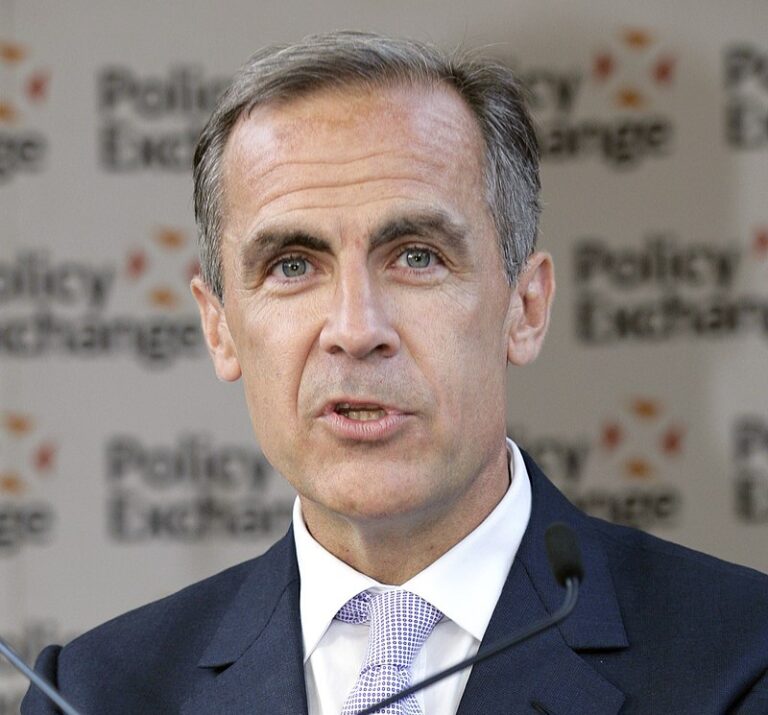
CANADA Prime Minister Mark Carney’s Liberal Party has won the country’s election held on Monday, April 28.

However, Carney did not get the majority vote he expected to aid in negotiations on tariffs with United States President Donald Trump.

The Liberals were ahead with 167 electoral districts, or seats, while the Conservatives followed with 145, as counting of votes was underway.

The Liberals needed to secure 172 out of the House of Commons’ 343 seats to achieve a majority, enabling its lawmakers to govern without relying on support from a smaller party.

The result marked a significant comeback for the Liberals, who had trailed by 20 percentage points in the polls back in January, before Trudeau announced his resignation and Trump began making threats of tariffs and annexation.

The ICIR reports that minority governments typically last no longer than two and a half years in Canada.

“Our old relationship with the United States, a relationship based on steadily increasing integration, is over,” Carney said in a victory speech in Ottawa.

 “The system of open global trade anchored by the United States, a system that Canada has relied on since the Second World War, a system that, while not perfect, has helped deliver prosperity for our country for decades, is over.”

“America wants our land, our resources, our water, our country,” Carney said, adding, “These are not idle threats. President Trump is trying to break us so America can own us. That will never ever happen. These are tragedies, but it’s also our new reality.”

Carney added that the coming months would be difficult and demand sacrifices. 

Trump’s threats sparked a surge of patriotism, boosting support for Carney, a political newcomer who had previously led two G7 central banks.

The ICIR reported that Trump announced he might impose a 25 per cent tariff on Canadian-made cars, claiming the United States had no interest in them. 

He also reiterated his call to use “economic force” to make Canada the 51st state on Monday, April 27.

Carney vowed to take a tough stance with Washington over its import tariffs and emphasised that Canada would need to invest billions to reduce its reliance on the US. However, the right-leaning Conservatives, who had called for change after more than nine years of Liberal governance, demonstrated surprising strength.

Carney has highlighted his experience handling economic issues, positioning himself as the best leader to handle Trump, while Pierre Poilievre focused on concerns over the cost of living, crime, and the housing crisis.

The conservative leader, Poilievre, acknowledged defeat to Carney’s Liberals and stated that his party would hold the government accountable.

“We didn’t quite get over the finish line yet,” Poilievre told his supporters in Ottawa. “We know that change is needed, but change is hard to come by. It takes time.”

The Liberals are the last party to win four consecutive elections in Canada.