THE National Drug Law Enforcement Agency (NDLEA) and a substance abuse expert have called for early intervention, family support and improved mental health services to address drug abuse in Nigeria.
They made the call in separate interviews with the News Agency of Nigeria (NAN) on Saturday in Lagos to mark the 2026 World Mental Health Day.Observed annually on October 10, this year’s commemoration is themed “Lived Experiences Heard: Real Voices, Real Change”, highlighting the importance of listening to people with lived experiences to improve mental health support and services.
The Assistant Commander General of Narcotics and Director of Seaports Operations at the NDLEA, Archie-Abia Ibinabo, described public sensitisation on mental health and drug abuse as timely, given the growing challenges confronting individuals and communities.
“Many factors contribute to drug abuse. Social media has also not helped matters because of the sensitisation and glamorisation of drugs on the platform, while easy availability increases the risk of abuse,” she said.
She stressed the need for increased awareness and preventive measures, particularly among young people, who she said were vulnerable to substance abuse.
Ibinabo identified peer pressure, family problems, academic failure, health conditions and the misuse of painkillers as factors that could contribute to drug abuse.
She explained that the NDLEA adopted a two-pronged approach to tackling the problem: demand reduction through education and sensitisation, and supply reduction through enforcement against illicit drug traffickers, manufacturers and sellers.
The NDLEA official urged families to avoid denial and stigmatisation, emphasising that young people struggling with substance abuse needed understanding, professional assistance and rehabilitation rather than condemnation.
“At the NDLEA, we have trained counsellors and experts who assist. Parents can bring their children to us for support and rehabilitation because we believe they can recover from addiction,” she said.
She added that the agency’s War Against Drug Abuse (WADA) programme focused on educating children from an early age, including primary school pupils, through scientific and evidence-based information on substance abuse prevention.
Ibinabo also called for stronger partnerships with state governments to expand rehabilitation services, noting that population growth and a shortage of professionals had made it increasingly difficult to meet the demand for treatment.
Similarly, the Founder and Executive Director of the Global Initiative on Substance Abuse (GISA), Martin Agwogie, identified social support and open communication as essential to addressing mental health challenges and preventing substance abuse.
He said having trusted people to talk to could help individuals manage emotional distress, while isolation and the absence of supportive relationships could worsen their challenges.
“Having someone to talk to can help reduce emotional pressure and restore a sense of balance. However, when people have nobody to talk to, including their parents, siblings or friends, their mental health challenges can become more complicated,” he said.
Agwogie noted that social media and technology had both positive and negative effects on substance abuse prevention and mental health care.
According to him, digital platforms can support prevention efforts and provide information about treatment, but they can also facilitate the marketing of harmful substances.
He said that although family and community support could help people manage some mental health concerns, inadequate treatment facilities and a shortage of mental health professionals remained major barriers to accessing quality care.
The expert urged individuals, families and communities to take collective responsibility for preventing substance abuse and addressing mental health challenges.
He also stressed the need for people experiencing mental health or substance-related difficulties to seek professional assistance, while families and communities should make appropriate referrals to specialists when necessary.
The ICIR reports that World Mental Health Day was first observed on October 10, 1992, at the initiative of the World Federation for Mental Health to raise global awareness of mental health issues and mobilise efforts to address them.
The annual observance seeks to break the stigma surrounding mental illness, promote access to mental health care and encourage governments, communities and individuals to prioritise psychological well-being.
It has since become a global platform for advocacy, education and calls for improved mental health services.
THE Nigerian Air Force (NAF) has further clarified reports concerning the people on board its ATR 42 aircraft, NAF 931, which crashed on Monday at Igbokoda, Ondo State.
The Director of Public Relations and Information, NAF, Ehimen Ejodame, an air commodore, made the clarification in an interview with the News Agency of Nigeria (NAN) on Saturday in Abuja.
Ejodame said official records confirmed that 25 persons were on board, comprising 20 passengers and five active crew members, with two non-active crew members included among the 20 passengers.
He said reports citing 32 persons might have arisen from a misunderstanding of standard aviation terminology, such as “25 souls on board, inclusive of seven crew”.
According to him, this means 25 persons in total, including the seven crew members, rather than 25 passengers in addition to seven crew.
On the civilians on board the aircraft, Ejodame said they were family members of officers going to the same destination. The ICIR reported that the NAF announced the list of 25 people on board the aircraft on Tuesday, October 6. The list included six civilians.
In his updated with NAN on Saturday, the NAF spokesperons said his organisation released the verified figures and names of those on board following search and recovery efforts and engagement with the affected families.
According to him, while continuing to mourn the tragic loss, the service sincerely appreciates the outpouring of sympathy, solidarity and support from Nigerians and well-wishers.
“These expressions of concern have been a source of comfort during this difficult period.
“Those lost were not merely casualty figures, but valued lives, cherished loved ones and individuals whose loss is deeply felt across the service and the nation,” he said.
Ejodame said the NAF remains actively engaged with the bereaved families, providing appropriate support as they navigate this painful period.
He said a thorough investigation into the air crash was ongoing, adding that further information would be communicated as appropriate, with conclusions on the circumstances and causes guided by the investigation’s findings.
He appealed to the media and the public to exercise restraint and sensitivity in reporting the tragedy, while respecting the grief and privacy of the affected families.
The NAF spokesman also said that in spite of the loss, personnel remained committed to ongoing operations across the various theatres of engagement, confronting significant risks in the service of national security and the protection of citizens.
He said the service honoured their dedication and sacrifice and reaffirmed its commitment to transparency, accountability and the welfare of its personnel and their families. (NAN)
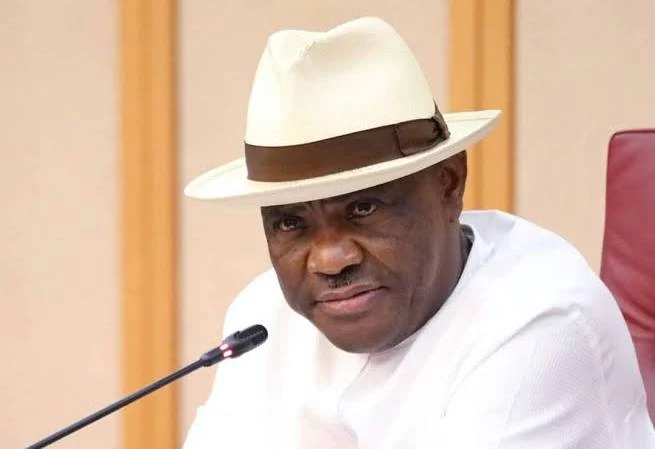
THE Minister of the Federal Capital Territory (FCT), Nyesom Wike, has described the ongoing strike declared by the FCT chapter of the Nigeria Labour Congress (NLC) as politically motivated, threatening to enforce “no work, no pay” policy against the workers.
Wike stated this on Friday, October 9, at a press briefing in Abuja after a closed-door meeting with security chiefs and chairmen of the six FCT area councils.
“We want to state categorically and let it be known to the public that this so-called strike declaration is political, and we will not accept it. We will not accept it because there is no basis for anybody to call for a strike. We don’t have any issue with anybody, either be it area council local education primary authority, or be it secondary schools; we have no issues,” Wike claimed.
The minister accused the labour leadership of failing to consult relevant authorities before declaring the strike, arguing that the action was an attempt to create a political crisis in the Territory.
“And you can see his interest trying to see that FCT is in crisis, and then wants to use it as a political tool that FCT teachers are at home, and nobody is teaching students; how can you now come and vote for a government when the pupils are at home? We cannot accept that blackmail. We won’t accept it. I’ve told everybody, and I’ve told Labour, look, if you want to involve yourself in politics, you are free to, but then excuse yourself from the leadership of the union, so you don’t politicise it,” he said.
The minister noted that the administration would immediately implement the “no work, no pay” policy across the area councils, warning that workers who stayed away from their duties during the strike would face the consequences.
Wike argued that the administration was already addressing the issues raised by the striking workers and questioned the need for industrial action while discussions and implementation of agreements were ongoing.
He also alleged that major education-related unions, including the Senior Secondary School Teachers and the Universal Basic Education Board (UBEB), had distanced themselves from the strike because agreements with the administration were being implemented.
Wike questioned the neutrality of the FCT NLC chairman, Stephen Knabayi, alleging that his political affiliations influenced the decision to call the strike.
The minister said Knabayi had contested an area council election on the platform of the African Democratic Congress (ADC), accusing him of attempting to use the strike to portray the FCT Administration negatively.
He further alleged that keeping pupils out of school could be used as a political argument against the government during future elections.
Wike urged labour leaders involved in partisan politics to relinquish their union leadership positions rather than allow political interests to influence industrial relations.
“If you want to involve yourself in politics, you are free to, but then excuse yourself from the leadership of the union, so you don’t politicise it,” he added.
The ICIRreported that the NLC, FCT Council, directed all workers in the FCT Administration, including those in the private sector, to commence an indefinite strike from Wednesday.
The directive followed the expiration of a seven-day ultimatum issued to Wike over unresolved labour disputes and policy grievances affecting teachers.
The congress explained that the industrial action became necessary after the FCT Administration failed to meet the workers’ demands, and identified one of the demands as the abolition of the vacancy precondition for teachers’ promotions, which he described as the primary cause of career stagnation and demoralisation.
Empowerment, at its root, is assumed to be the radical belief that ordinary people are not infants. It holds that the woman in Ajegunle, the roaming youth in Alimosho, the fisherman in Epe and the mechanic in Ikorodu are capable of self-determination, critical thinking, and problem-solving.
They do not need to be spoon-fed like babies or managed like slaves. They need tools, access, and opportunity, so that they can produce, earn, and stand tall. That is the philosophy. It is a philosophy of dignity, of productivity, of human beings treated as human beings.
But what do we see in Nigeria today? A complete contradiction. A daylight robbery of that capitalist idea.
In the hands of our politicians, empowerment has been hollowed out and refilled with poison. Today, empowerment is not a ladder out of poverty; it is a chain around the neck of the poor. It has become the instrument through which politicians mobilise party members for crumbs and use those crumbs as their own personal ATM.
Across the 20 local government areas of Lagos State, chairmen have turned linguistics into fraud. Every programme must carry a grand adjective: “Mega Empowerment,” “Renewed Hope Touch,” “Divine Lift Initiative.” Beautiful names for an ugly transaction, which is the distribution of money to card-carrying party loyalists, not to the poor, not to the needy, but to the party faithful.
And even those faithful are cheated. Here is how the arithmetic of betrayal works. A chairman announces ₦50,000 for each “beneficiary.” The cameras roll, the newspapers report, the social media influencers applaud. Then the beneficiary is quietly summoned.
“Return the money,” the godfather or godmother commands. The ₦50,000 goes back into the pocket of the political machine, and the poor party member is given ₦2,000 or ₦5,000 or nothing at all, except perhaps one miserable cup of garri or one derica of rice.
Multiply this by thousands of beneficiaries across Isolo, Oshodi, Mushin and Ojo, and you understand why poverty in Nigeria has refused to die, no matter how many billions we claim to spend on it.
The numbers themselves sit in judgement. In March 2025 alone, ₦409.26 billion was shared to local governments nationwide through FAAC. Lagos, the richest state, takes the lion’s share; its councils and state treasury received tens of billions monthly, with Alimosho alone collecting about ₦3.56 billion in July 2026, the highest of all 774 councils in Nigeria, roughly ₦1,822 per resident.
Ifelodun LCDA in Lagos State, led by Mr Femi Okeowo, home of Mosafejo-Amukoko residents, collected over ₦2.14 billion in a single month. But walk through those same councils, and what do you find? Overcrowded classrooms, roads that are rivers of mud, no primary healthcare worth the name, and open drains breeding disease. The money is “empowered” into private pockets, and the people are empowered with Garri.
And it is not only at the local level. At the state level, the theatre of the absurd continues. Okada motorcycles are distributed as empowerment, machines whose riders die daily on Lagos highways.
Grinding machines for pepper, deep freezers, and sewing machines are rolled out with fanfare as instruments of liberation, as if a freezer without constant electricity can lift a family out of poverty in a country where 43 per cent of the population lacks access to electricity and some 60 million Nigerians lack clean water.
These are not empowerment programmes; they are election mobilisation kits, rented and returned after every poll.
Now ascend to the national stage, where the contradiction becomes a national embarrassment. In late September 2026, after a three-day APC National Executive Council retreat in Maiduguri, Borno State, the party’s National Chairman, Professor Nentawe Yilwatda, addressed journalists on the federal government’s poverty alleviation efforts.
He declared that more than 10 million vulnerable Nigerians who benefited from the ₦75,000 Conditional Cash Transfer programme do not own mobile phones, television sets, or have access to social media.
Think deeply about what this confession means. In the 21st century, in an oil-rich country, over 10 million of our poorest citizens are so stripped of the basics of modern life that the ruling party can proudly count their destitution as evidence of its programme’s reach. This is not poverty alleviation; it is armed robbery without conscience, a national confession that we have kept tens of millions of our people in darkness while congratulating ourselves for tossing them cash that inflation swallows the very next morning. And because it is a ruling party affair, nobody calls it wrong.
The consequences of this organised deception are written all over our national life. According to the National Bureau of Statistics’ Multidimensional Poverty Index, about 133 million Nigerians, 63 per cent of the population, are multidimensionally poor. The World Bank now estimates that poverty has climbed further, with roughly 140 million Nigerians, again about 63 per cent, living below the poverty line in 2025.
Unemployment stands at around 33 per cent, with youth unemployment exceeding 40 per cent, and about 20 million children are out of school. Two-thirds of Nigerian children are multidimensionally poor. Yet every month, billions in FAAC allocations flow to councils where the chairman’s priority is photographing himself handing out cash to party members.
So, what would genuine empowerment for productivity look like? It would begin by respecting the philosophy it claims to profess. It would mean galvanising the low-income masses and the roaming youths of Ajegunle, Alimosho, Isolo, Epe and Ikorodu into organised, equipped production cooperatives with real capital. Not photo-ops; skill centres wired to markets, not sewing machines without thread; agro-processing hubs in Epe and Badagry that can take raw produce, add value, and pay living wages.
It would mean giving young people machines, land, power, and guaranteed off-takers, so that they produce at scale, earn steadily, and pay taxes back to the council. That is empowerment that creates productivity and productivity that creates prosperity.
Empowerment, in truth, is not the distribution of money. It is the distribution of capacity. Any chairman, governor, or president who gives a man fish every campaign season while starving him of the river, the net, and the boat is not empowering him; he is purchasing him.
Nigeria’s 774 councils receive hundreds of billions every year; Nigeria’s poor receive garri, rice, okada, and promises. Until we elect leaders who understand that the people are not votes to be bought but producers to be equipped, our empowerment programmes will remain what they are today: the loudest, most decorated instrument of looting ever invented, robbery in the name of kindness, and malfeasance in the name of hope. Genuine empowerment begins with dismantling this scam.
Moshood Oshunfurewa is a public affairs analyst. He writes from Lagos and can be reached at:
THE Federal Government’s 30-day petrol price intervention has sparked questions over its potential to ease the cost-of-living crisis, particularly for commuters, small businesses and households grappling with high transport fares, rising prices of food and other essential goods.
Announced by Finance Minister and Coordinating Minister of the Economy Taiwo Oyedele on Thursday, October 8, the intervention will see the Nigerian National Petroleum Company Limited (NNPC) temporarily forgo its retail profit margin and sell petrol less than other outlets.
The ICIRreported that the government also proposed a N1,350-per-litre ceiling on petrol’s landing or ex-gantry cost, alongside other measures intended to cushion the impact of rising global energy prices.
Oyedele maintained that the arrangement was not a return to the petrol subsidy abolished in May 2023.
However, many Nigerians have criticised the move, saying they were more concerned about the policy’s practical benefits than the terminology used to describe it.
Former Vice President Atiku Abubakar described the policy as “election-laced subsidy package” and “not an economic plan but a political bandage on a wound the government had helped create.”
In a statement signed by his Director of Strategic Communication, Phrank Shaibu, the African Democratic Congress (ADC) presidential candidate for the 2027 election said he “totally rejects this calendar-scheduled, election-laced subsidy package. Nigerians are not fools to be offered a month of discounted fuel after years of punishing prices and then expected to forget the hardship when the discount expires. This is shameless and heartless.
“What happens on Day 31? Nigerians wake up to the same brutal prices, the same punishing transport fares and the same rising cost of food. The government cannot manufacture relief for one month and expect Nigerians to applaud while the hardship remains.”
Abubakar said the Tinubu government’s decision was an admission of the biting hardship across the nation, noting that it was an acknowledgement of his earlier plan to restore subsidy if elected president.
“This volte-face proves that the production-support proposal I have advanced is workable, achievable and not complicated. The Tinubu government and its spin doctors have tried to make it sound impossible, yet they are now reaching for a temporary subsidy-style intervention because the pain has become impossible to ignore,” the Adamawa-born politician stated.
Similarly, Nigerians on social media, including X, shared their views on the development. A user, Samuel Omogor, questioned the scale of the savings motorists could make under the arrangement, citing his experience buying petrol for N1,400 per litre at an AA Rano filling station.
“If the poor local farmer is buying one litre a day for use, he/she would save N1,500 in 30 days,” he wrote, calculating the difference between the price he paid and the N1,350 price being proposed by the government.
Omogor also questioned the accessibility of participating NNPC stations, arguing that motorists in parts of Abuja, including Apo, Lokogoma, Gudu and Galadimawa, might have to travel considerable distances to access the discount.
Another user, Conztanz wrote “A N50 gap on one litre a day is N1,500 in the 30 days, and only at NNPC.”
Philip Osundume wrote “So you call #1350 price reduction? Fuel that you met at N350 per liter. You guys are jokers,”
The ICIR reports that NNPC outlets sold petrol at N1,355 per litre in Lagos and Rivers states, while Abuja was listed at N1,370 per litre on Thursday, October 8.
For a motorist buying 20 litres of petrol, a N50-per-litre reduction would translate to a saving of N1,000, while someone purchasing 40 litres would save N2,000, assuming the price reduction applies to every litre bought.
For households and businesses that consume substantial quantities of petrol, these savings may provide some immediate relief but may not amount to a significant reduction in transport, food and other essential costs that have already increased.
For many Nigerians who do not own vehicles, the most important measure of the intervention will not be the price displayed at a filling station but the amount they pay to travel to work, school, markets and other essential destinations.
Commercial transport operators may benefit from lower petrol costs, but whether passengers benefit depends on how operators adjust their fares.
In September, President Bola Tinubu renewed efforts to expand compressed natural gas (CNG) transport and called for cheaper energy costs to translate into lower fares.
However, findings by The ICIR show that the President’s pledge to reduce transport fares from October 1 has yet to be fulfilled in many parts of the country.
While some CNG-powered transport schemes are operating, their coverage remains limited.
Some Nigerians have questioned whether the N50-per-litre petrol price reduction translates into the cheaper transport fares the president promised would take effect from October 1.
They have also questioned why a temporary intervention is being presented as a response to persistent economic hardship, particularly with the 2027 general elections just a few months away.
Galaxyhubx wrote on X while protesting the latest decision. “Global petrol crisis started in February 2026, and your government is now realising in October 2026, eight months later, and very close to election.”
The disagreement reflects a broader debate about how the government should respond to fuel-price volatility without reversing its subsidy-removal policy.
The administration said its approach was designed to moderate sudden price increases rather than permanently suppress market prices.
The Presidency has also announced measures involving domestic crude sales, faster CNG deployment, support for vulnerable households and efforts to reduce costs along the energy and logistics chain.
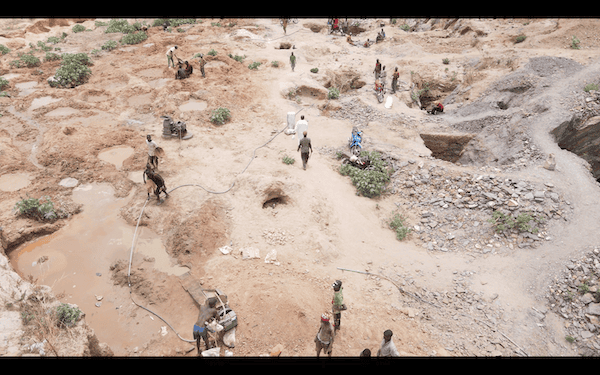
The ICIR has learnt new details of what led to Monday’s deadly attacks in Bindin community of Maru Local Government Area in Zamfara State, northwest Nigeria, where gunmen attacked a military base and a mining site, killing dozens.
Eyewitnesses, victims and a community leader told the ICIR that eight soldiers, one policeman and at least 23 miners were killed, highlighting growing security concerns ahead of the 2027 general elections.
There have been conflicting reports of what exactly happened and the casualty figures, with authorities failing to provide details beyond a confirmation of the attacks. Less than 24 hours after the attack, the state governor, Dauda Lawal, jetted off to Ethiopia, drawing criticism from opposition politicians in the state.
A victim who spoke to the ICIR said the attack was directly linked to the presence of the military in the town, as the bandits had previously threatened to attack if the military failed to withdraw. He said the military deployment to the community had deterred bandits from taking control of mining sites and exploiting miners.
Before the military deployment, he said, miners had been forced to work for bandits at gunpoint with little or no compensation. “We were excited when the military came because the bandits were forced to stop coming,” he said.
However, despite the presence of the security forces, bandits continued to extort miners, calling them on the phone to demand payment. According to insiders, some miners initially complied and paid the bandits, but as security improved, miners increasingly grew bolder and resisted the bandits’ demands.
“The miners felt the bandits were no longer a threat because of the presence of the soldiers. Some were afraid that if they continued sending money to the bandits and they were caught, they would be accused of collaborating with bandits,” a small-scale gold dealer in Bindin told the ICIR.
In late 2025, a local gold dealer was abducted from the town, and after three months in captivity, was released in early 2026 after N9 million was paid in cash in addition to a new motorcycle, mobile phone and power bank.
But residents said the bandits had relayed a chilling warning to the community through the gold dealer, threatening to attack if the soldiers were not withdrawn.
Providing insight into the latest attack, a miner who escaped with a gunshot wound to the leg said, “When we heard that the bandits were in our town, some people said we should turn off the stone-crushing machines because they were too noisy, but others said there was no need to stop working. We assumed that since the bandits were in the town, they would not come to the mine because we thought the military would overpower them.
“Before we knew it, they were already at the site, surrounded it and opened fire on people. They also chased after those who ran,” he said.
Another local official said 23 civilians were buried, but the injured miner said more bodies were later recovered after the situation had calmed down.
The ICIR reached out to the Police Public Relations Officer in Zamfara State, Abubakar Yazid, who confirmed the incident but referred the reporter to the military, saying Operation Fansan Yamma, the joint task force established to deal with insecurity in northwest Nigeria, is led by the military.
“The personnel involved in the incident are military, and they are under Operation Fansan Yamma. So, normally, whatever happens with the military in their operations, it is their spokesperson that confirms the incident because we don’t know how they want to confirm the incident,” Yazid stated.
Confirming the death of a policeman during the attack, he insisted that despite the operation being a joint operation, the military was the institution to talk to.
When contacted, the Army spokesperson in Zamfara State, Lt Col Aliyu Danja, said he did not want to give a ‘conflicting’ report from what the Deputy Director of Public Relations, 8 Division, Lt Col Olaniyi Osoba, had said.
While also confirming the incident, Lt Col Osoba told the ICIR that the military would not allow the bandits to have a safe place in Bindin.
According to him, “What happened was that there was an attack in Bindin and we are currently conducting an operation in the general area. So, in the course of conducting operations, we cannot release any details until we finish the operation because we don’t want to jeopardise our operational security.”
THE World Bank says revenues across Nigeria’s 36 states increased by 93 per cent between 2023 and 2025, while the share of expenditure allocated to education declined.
The bank disclosed this in its latest Nigeria Development Update, which examined how increased public revenues have influenced spending priorities across the federation.
The report was made available to the News Agency of Nigeria (NAN) by the World Bank in Washington D.C.
According to the report, states’ aggregate revenues rose by approximately 93 per cent in real terms, while expenditure increased by 92 per cent during the period.
The report attributed the improvement partly to exchange-rate reforms, petrol subsidy removal, stronger revenue administration and increased allocations from the federation account.
It said states also benefited from refunds, settlement of longstanding federal obligations, intervention funds, and stronger Value Added Tax collections.
However, education’s share of total state expenditure declined from 14.9 per cent in 2021 to 12.1 per cent in 2025, according to the report.
Health expenditure remained broadly stable at approximately seven per cent, while social protection’s share increased from 1.4 per cent to 4.4 per cent.
The bank said capital expenditure rose significantly, accounting for 61 per cent of state spending, compared with 46 per cent previously.
Transport infrastructure recorded the largest increase, alongside substantial spending on housing, agriculture and other economic investments.
The report quoted Mathew Verghis, the World Bank Country Director for Nigeria, as saying that increased revenues provided the opportunity to improve infrastructure, education, healthcare, and water services.
He said greater spending efficiency, accountability and improved service delivery were essential to ensuring that additional public resources benefited Nigerians.
The bank acknowledged improvements in states’ fiscal reporting, transparency and internally generated revenue.
It, however, stressed that stronger investment in human capital was necessary to translate economic reforms into sustainable employment and improved living standards.
The report also projected average economic growth of 4.4 per cent between 2026 and 2028, subject to sustained reforms and improved service delivery.
It urged federal and state authorities to ensure that increased public revenues translated into tangible improvements in Nigerians’ welfare. (NAN)
When government critic Chika Nwoba petitioned the Economic and Financial Crimes Commission (EFCC) in February 2024, he didn’t expect the complaint would trigger what he describes as a prolonged campaign of surveillance and arrest against him.
Nwoba’s petition had alleged diversion of funds meant to empower hawkers in Ebonyi State. Before that, the state Governor Francis Nwifuru approved N3 billion for the empowerment programme and released a first tranche of N1 billion to a seven-member committee to manage its disbursement.
Nwoba alleged that Oguzor Offia-Nwali, the Commissioner for Commerce and Industry, and three members of the seven-member committee diverted the money instead of disbursing it to beneficiaries. He said he contacted the governor, who acknowledged the allegation and promised to act, but Nwoba remained sceptical and petitioned the EFCC.
“When they learned that I wrote a petition against them, they petitioned the Ebonyi State Police Command in Abakaliki. They wanted to sweep the matter under the carpet,” Nwoba alleged.
Nwoba has previously criticised successive Ebonyi administrations, including former governor David Umahi, under whose administration he alleged that security operatives came to his home around 5 am looking for documents they believed he possessed. He said they searched the house, tried to handcuff him and assaulted him before leaving.
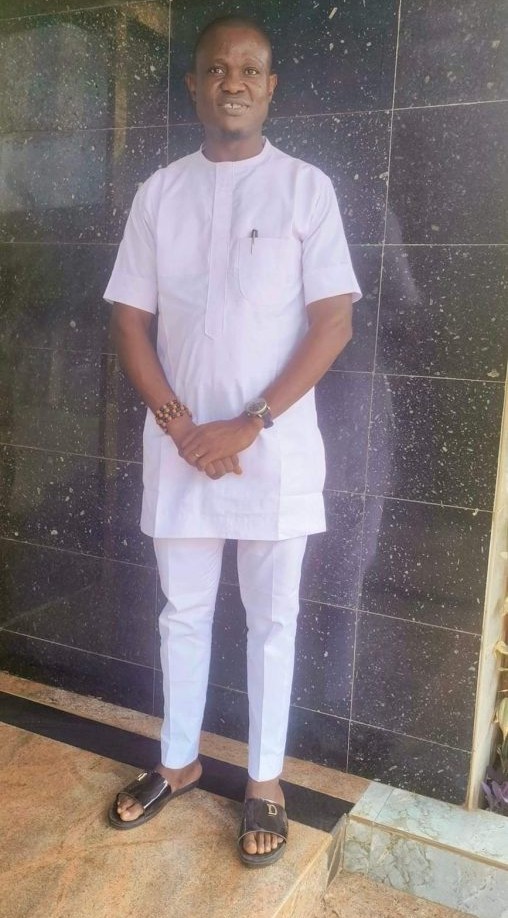
Chika Nwoba in Enugu to submit his petition to the EFCC
The soft-target approach
Nwoba said operatives of the police command’s Crack Team tracked his phone using metadata and obtained numbers from his communications, including those of his sister and one of his workers.
Rather than targeting Nwoba directly, the operation allegedly used people connected to him as entry points, turning his digital footprint into a tool for reaching him. His sister, Ebube Nwoba, who ran a bakery and was saved in his phone as “Ebube Cake,” was contacted by operatives who claimed they were organising a wedding and wanted her to come to Awka in Anambra State to discuss a cake design.
“When she got to the location, they arrested her and asked her to call me. She did not suspect any foul play. They wanted to use her as a ‘soft target’ to lure me into custody.”
Nwoba said he was in Onitsha when his sister called. He alleged that officers forced her to tell him she had been arrested after she fought with a female police officer. He assured his sister he would come the following day to secure her release.
“When I got there, they arrested me. About 10 of them had come from Ebonyi to arrest me. They released my sister and took me to the Ebonyi State Police Command in Abakaliki, where I was asked to write a statement. I was detained.”
Nwoba said a police officer later told him that his arrest was connected to the petition against Offia-Nwali and the other committee members.
“When I arrived at the command, the commissioner also came and was threatening me for destroying his image and that of others,” Nwoba recalled.
“He said this would be the last petition I would write and that he was going to deal with me. I told him I would come out as I did not steal or do anything wrong.”
But Offia-Nwali, the Commissioner for Commerce and Industry, denied the allegations, describing Nwoba’s claims as mischievous. He insisted that Nwoba had no evidence to support his allegations, adding that the empowerment programme was managed by a seven-member committee led by the serving Commissioner for Trade and Investment, with a secretary.
“I was neither the committee chairman nor the secretary; neither was the N1 billion mapped out for the programme paid into my ministry’s account or an account that I am signatory to,” he said.
When contacted, the Police Public Relations Officer in Ebonyi, SP Joshua Ukandu, said the police will do everything necessary, including using surveillance technology, to track individuals if they have petitions against them.
“After our investigation, we go ahead to take action, and that includes taking the individual to court, but if we see that there is nothing in it, then we let them go,” he said.
How security operatives tracked Nwoba
Security analyst and Managing Director of Beacon Security and Intelligence Limited, Kabiru Adamu, said that the tracking Nwoba described is technically possible through Call Data Records (CDRs), cell-site analysis and phone identifiers such as IMEI and IMSI numbers. He said CDRs can show the numbers regularly communicating with a target, potentially allowing investigators to identify associates or other people connected to the person being monitored.
The tactic has been documented in Nigeria before. A 2020 investigation by the Committee to Protect Journalists found that police in at least three cases used call records obtained from telecommunications providers to identify people connected to journalists they wanted to arrest and then used those contacts to facilitate the arrests. In one case, police told Samuel Ogundipe, a journalist with Premium Times at the time, that they had examined his call records to determine who was close enough to him to be used as bait.
Adamu said security agencies also use cell-site analysis, which combines call-detail records with cell-tower data from telecommunications providers to map communication patterns and estimate a person’s location. The data can include call times, durations and phone identifiers such as IMEI and IMSI numbers.
“Investigators can also forensically examine seized phones to recover call records, messages, deleted files and location history,” Adamu said, adding that other possible methods include analysis of social media and online activity, IP-address tracing, and requests for location data from technology companies.
Nwoba was arraigned at a magistrate court and remanded at Abakaliki Correctional Centre. On February 17, 2024, the Coalition of South-East Youth Leaders petitioned the Inspector-General of Police, the EFCC and Amnesty International, calling for an investigation into the alleged diversion of the empowerment fund and Nwoba’s release. Nwoba was granted bail by the Federal High Court in May 2024.
Both the information commissioner, Ikeuwa Omebeh, and the Chief Press Secretary to the governor, Monday Uzor, did not respond to questions on whether there was an investigation into the allegations of diversion. They ignored several calls, texts and WhatsApp messages. Nwoba, however, insists there was no investigation into the issue.
Tracking did not end with his arrest
Nwoba alleged that security operatives in Ebonyi continued to track him and monitor people around him after his bail in 2024. He said an unverified source in the state called him on the phone and informed him that security operatives were analysing his photographs and videos as part of efforts to locate and arrest him.
He alleged that the surveillance on him had continued because he continued to criticise the government of the state. “They just wanted to detain someone closest to me to force me into total submission,” he added.
On July 30, 2026, Nwoba said Department of State Services (DSS) officers tracked his wife’s phone and obtained about 10 contacts from it. According to him, the contacts subsequently reported receiving calls from the same number asking them to come to Awka to collect a waybill.
One of those contacted was Nwoba’s driver, who was asked to collect a parcel at Aroma Junction, Awka. The driver said he was no longer a commercial driver but referred another person. Nwoba said the operatives arrested the person, then used him to lure and arrest his driver.
“They forced him to take them to my house, thinking they would find me. When they got there, they beat my wife up and demanded to know where I was,” Nwoba said, adding that “They searched the flat and roof before taking my wife to the DSS state command in Awka, where she was detained.”
He later sent a lawyer to secure her release while his driver was moved to Abakaliki and detained for 17 days before being released.
Within the same period, Nwoba alleged that security officers hacked his phone and listened to his conversations. He said he noticed an unusual echo during calls and that his battery began draining rapidly.
Nwoba after he was released from prison
He subsequently paid a US-based company for a tool to protect his phone, adding that he has since stopped using a SIM card. Instead, he connects his phone to a router and uses his existing WhatsApp account for calls and messages.
“Without direct phone calls, it becomes difficult to use the soft target option to track me because they will not find any direct contact. My location service is always off, and I cannot attend events or move about anyhow,” he said.
A pattern of surveillance and arrest
Nwoba’s experience is not isolated. In May 2017, after the second anniversary celebration of Dave Umahi, then governor of Ebonyi State, Charles Otu, the publisher of The People’s Conscience newspaper, a local biweekly, wrote a 12-paragraph Facebook post where he observed that the former governor failed to keep his campaign promises two years after his inauguration. He titled it “This Government is absolutely unaccountable.”
“I was invited to cover the event and was seated at the Abakaliki Township Stadium and listened while he (Umahi) reeled out his achievements in two years, claiming to have fulfilled all his promises.”
After the event, Otu went back to fact-check Umahi. Comparing the governor’s speech with what was on the ground, Otu challenged Umahi’s pledge not to award contracts to family members and cronies, alleging that the governor had broken that promise with the alleged involvement of his brother in the renovation of the stadium where Umahi pledged.
The post went viral and unsettled Umahi’s government. What followed was a series of incidents that Otu interpreted as attempts to monitor and intimidate him. He told the ICIR that he began receiving calls and messages from hidden numbers. The callers allegedly warned him to stop opposing the government and that he was being watched. On some occasions, he said, the callers remained silent.
At 5:30 pm on Friday, June 2, 2017, three days after the publication, a lady using a number unknown to him called and said she wanted to publish a change of name in the Guardian newspaper, where he also contributed at the time.
“I asked her to meet me at the popular Vanco junction where we distribute newspapers to vendors in Abakaliki, the capital,” he recalled. “When she arrived, we went into an office so that I could get her details. We were also preparing to publish an edition of the Conscience Newspaper.”
The woman eventually left the office and allegedly signalled a group of armed men waiting nearby in a bus branded Akubaroha Youth Assembly. The group was in Ebonyi to promote Umahi’s achievements and campaign for his re-election. Otu alleged that two of the men rushed towards him and demanded his phone, and when he questioned why they wanted the phone, they began beating him.
He told the ICIR that he was dragged into the bus, ordered to lie face down and taken to the Old Government House in Abakaliki, where the men later read his Facebook post while allegedly torturing him.
The publisher said the leader of Akubaroha Youth Assembly, whom he identified as Mark Onu, told him he was a threat to Umahi and his government and that they would deal with him. He said his captors demanded that he sign a document promising to leave the state, stop criticising the government and only return after the governor left office, which he refused.
Otu said he eventually agreed to sign the document and was subsequently taken to Kpirikpiri Police Station, where he said he was instructed to write a statement claiming that he had been rescued from a mob attack.
According to him, members of the group became angry and demanded that police hand him back when he wrote that he had been abducted. By then, news of his arrest had spread on social media, and some of his friends had arrived at the station demanding his release. Otu said he later collapsed, vomiting blood and was taken to the Federal Teaching Hospital, Abakaliki, where he received treatment.
He told the ICIR that after his release, he discovered messages from the governor’s Chief Press Secretary, Emma Anya, on his phone warning him to be careful as he was being tracked. The ICIR tried to contact Anya to verify this claim via calls and text messages, but he was not reachable. The attack on Otu triggered condemnation from journalists and human-rights organisations, including the Nigerian Union of Journalists and Human Rights Defenders of Nigeria.
Shooters hit journalist
The attack on Otu came a day after another journalist he shared an office building with at 2 Awolowo Street, Abakaliki, was shot. Samuel Nweze, publisher of The People’s Leader, was shot in the back by unidentified assailants. Nweze told the News Agency of Nigeria that he narrowly escaped death.
“I was lucky that the assailants who came on a motorcycle missed the target,” Nweze said. “I heard a bang, and I felt sharp pains and blood gushing out from my back.”
But Otu claimed that Nweze was not the intended target. He said that the attackers had tracked him to the office and mistook Nweze for him. He said he later received a text message from an unknown sender reading, “lucky boi.” Because the incident happened in 2017, Otu told this reporter that he was no longer in possession of the text message.
Governor Umahi and his Technical Assistant on Media, Lawrence Egede, called for the arrest and prosecution of those responsible for the attack at the time. Titus Lamorde, who was Commissioner of Police in Ebonyi State at the time, told the Committee to Protect Journalists that police had opened an investigation into Otu’s beating.
But Otu said the threats continued even after he spoke publicly about his ordeal.
For his safety, he was moved to a private hospital, where he spent about two weeks recovering. He then travelled to Abuja and Enugu State, where he granted interviews on his ordeal before returning to Ebonyi State.
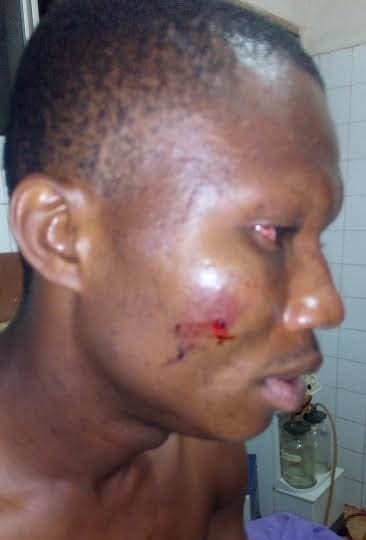
Charles Otu at the hospital receiving treatment after he was beaten
Ahead of the 2023 election that brought in the current governor, Francis Nwifuru, Otu noticed that his network always disappeared even at locations where others had network connection. At first, he thought it was a network glitch; he did not suspect that his phone could be tapped and his calls and movements monitored through telecommunications surveillance technology.
“If they suspected I was having too many conversations with any contact, they would limit my conversation by ceasing the network whenever I dialled the number,’ he said. “Each time I put my phone on tracker, it gives me a notification that my calls are being monitored.”
Other surveillance trails
In Owerri, Ifeanyichukwu Thomas’s family also described what they believed was tracking before his arrest in the early hours of November 7, 2021. Ozioma, his wife, told The ICIR that she was in the children’s room when Thomas walked in with two armed men holding him. Three others stood outside the compound.
Ozioma suspected that Thomas had been tracked because the officers went directly to his room, seized his phone and took him away. She recalled that in the days leading to the arrest, his phone sometimes became unusually hot, even when not in use. A police officer who lived in the same compound also told her that Thomas had been tracked, which explained how the officers located him that night.
Ozioma said she has not seen or heard from her husband since his arrest. She only learnt that the DSS was holding him in Abuja after seeing a 2022 document listing people accused of sponsoring IPOB. She said Thomas was never brought to court or tried.
The ICIR gathered that Thomas was taken to Wawa in Niger State in March 2022 and has not been returned to Abuja. Before his arrest, Ozioma said Thomas was a fish farmer while she sold roasted groundnuts in Owerri.
Several kilometres away in Lagos, Ngozi Dave says information obtained through surveillance helped security operatives locate and track her. Her ordeal began with calls from an unknown number. Each time she answered, the caller remained silent. At first, she thought little of it. But the calls became frequent, and she stopped answering, convinced that something was wrong.
Her fears were confirmed when four men showed up at her home in Ejigbo, Lagos, one morning in June 2021. Dave had just opened the gate to her compound to step outside when one of the men approached and grabbed her by the hand. When she asked who he was, another man kicked her, sending her to the ground. The men handcuffed her and took her away.
“They jacked me up and handcuffed me,” she recalled. “Residents started to shout and ask what had happened. They took me away, and I thought I had been kidnapped because there was nothing to show that they were security operatives.”
The men were not in uniform. One had earrings, and another had coloured hair, she recalled. They arrived in an unmarked Tundra Jeep and did not identify themselves as police officers or show any warrant of arrest. It was only after she was taken to the IRT facility in Ikeja GRA that Dave realised they were security operatives. She spent five days there, where officers accused her of sponsoring IPOB and recorded videos of her.
The trail that led to Dave
Dave believes she was targeted due to her involvement in raising and transferring money to victims of the 2020 #EndSARS protests in Anambra State. At the height of the protests, she said, hospitals were overwhelmed with injured victims struggling to get medical attention. After seeing videos of the situation, she and others began raising money to support their treatment.
“We raised N150,000. The money was paid into my account, and I got across to a woman who had volunteered to go to a hospital in Anambra where we wanted to pay for some patients,” she recalled.
Dave said the woman who received the money was later arrested and questioned about who had sent it. During the questioning, the woman allegedly provided Dave’s account and contact details to security operatives.
Dave said the financial transaction therefore became part of the trail that led security operatives to her.
Security analyst Kabiru Adamu told The ICIR that financial records can be used to trace the movement of money and identify links between people. He said investigators can also combine such information with telecommunications data, including call records and cell-site information, to identify contacts and estimate a person’s location.
While Dave’s account does not establish exactly which technology was used to locate her, the sequence she described- a financial transaction, the interrogation of its recipient, the disclosure of her details, repeated calls and the subsequent appearance of security operatives at her home- provides a traceable chain for investigating how information about her was obtained and how she was located.
From Lagos, Dave was taken to Abuja and detained at the “Abattoir” detention facility operated by the Nigeria Police Force’s IRT and previously the subject of human-rights allegations. She said she spent three months there and alleged that she was tortured. She was later transferred to Ikoyi Correctional Centre, where she spent several more days.
On the fifth day, her blood pressure rose, and a doctor ordered that she be given a room to rest. She was eventually released after her brother threatened to hold the police responsible if anything happened to her.
Before her arrest, Dave worked as an import’s logistics manager. By the time she returned, she had lost her job. A hospital examination later showed that her fractured wrists had not healed properly and that she needed surgery, but she could not afford to undergo it. She eventually moved away from the area where she was arrested and began rebuilding her life in an undisclosed location.
Nigeria’s growing surveillance and interception capacity
Around the time Dave and Thomas were arrested, Nigeria’s security agencies were investing heavily in surveillance, intelligence-gathering and communications- interception systems capable of tracking people through their phones and other digital data. Paradigm Initiative’s Londa 2025 Digital Rights and Inclusion report, alongside an analysis of the 2021 budget, shows that the Nigeria Police Force, the Department of State Services (DSS), the Office of the National Security Adviser (ONSA) and other security agencies received funding for these capabilities.
The DSS has used surveillance and digital forensic tools to track and arrest suspects, including telecommunications data such as Call Data Records (CDRs) and cell-tower information, as well as forensic tools to extract information from seized devices.
For instance, while testifying before the Federal High Court in Abuja, a DSS operative described how digital forensic tools were used to track suspects linked to the June 5, 2022, attack on St. Francis Catholic Church in Owo, Ondo State. He said investigators relied on call geospatial network filtering, cell-tower triangulation and International Mobile Equipment Identity (IMEI) analysis to trace the movement of the first defendant, Idris Abdulmalik Omeiza. The agency filtered thousands of phone numbers that connected to cell towers in Owaluwa, Elegbeka and Ifon shortly before and after the attack.
The scale of the surveillance infrastructure was reflected in government spending. In 2021, the Police budgeted N825 million for the Cobweb surveillance system and N639 million to maintain its intelligence-gathering platform. The Nigeria Police Trust Fund also allocated N46 million each for lawful interception, geolocation and call-record analysis.
The DSS budget included N140.8 million to expand lawful interception centres, N416.8 million for vehicle direction finders and N139.4 million for surveillance equipment, alongside funding for an integrated crisis management surveillance system, cybersecurity and intelligence-analysis technologies.
The ONSA budgeted N5.49 billion for the Counter Terrorism Centre’s All Eye Project and N12.1 billion for defence equipment and security infrastructure. Other 2021 procurements included N2.94 billion for a Thuraya Interception Solution, N1.93 billion for a WhatsApp Intercept Solution and N7.46 billion for an Independent Lawful Interception Platform for Voice and Advanced Data Monitoring. The DIA received a further N7.46 billion in the supplementary budget for the same interception platform.
UN Comtrade data analysed by the ICIR shows that Nigeria imported about $7.02 billion worth of equipment across selected communications and electronic-equipment classifications between 2021 and 2025. China accounted for $5.56 billion, roughly 79% of the total. The imports included communication apparatus, switching and routing equipment, and electrical machines with individual functions. Some products in these broad categories can be used for network monitoring, electronic surveillance, electronic countermeasures (ECM) and signal jamming.
The figures do not distinguish surveillance equipment from ordinary communications infrastructure, establish that the imports were surveillance equipment, or identify Nigerian security agencies as the purchasers. Nevertheless, they indicate the scale of communications and electronic technology entering Nigeria during a period when the government was expanding its investment in surveillance and intelligence-gathering capabilities.
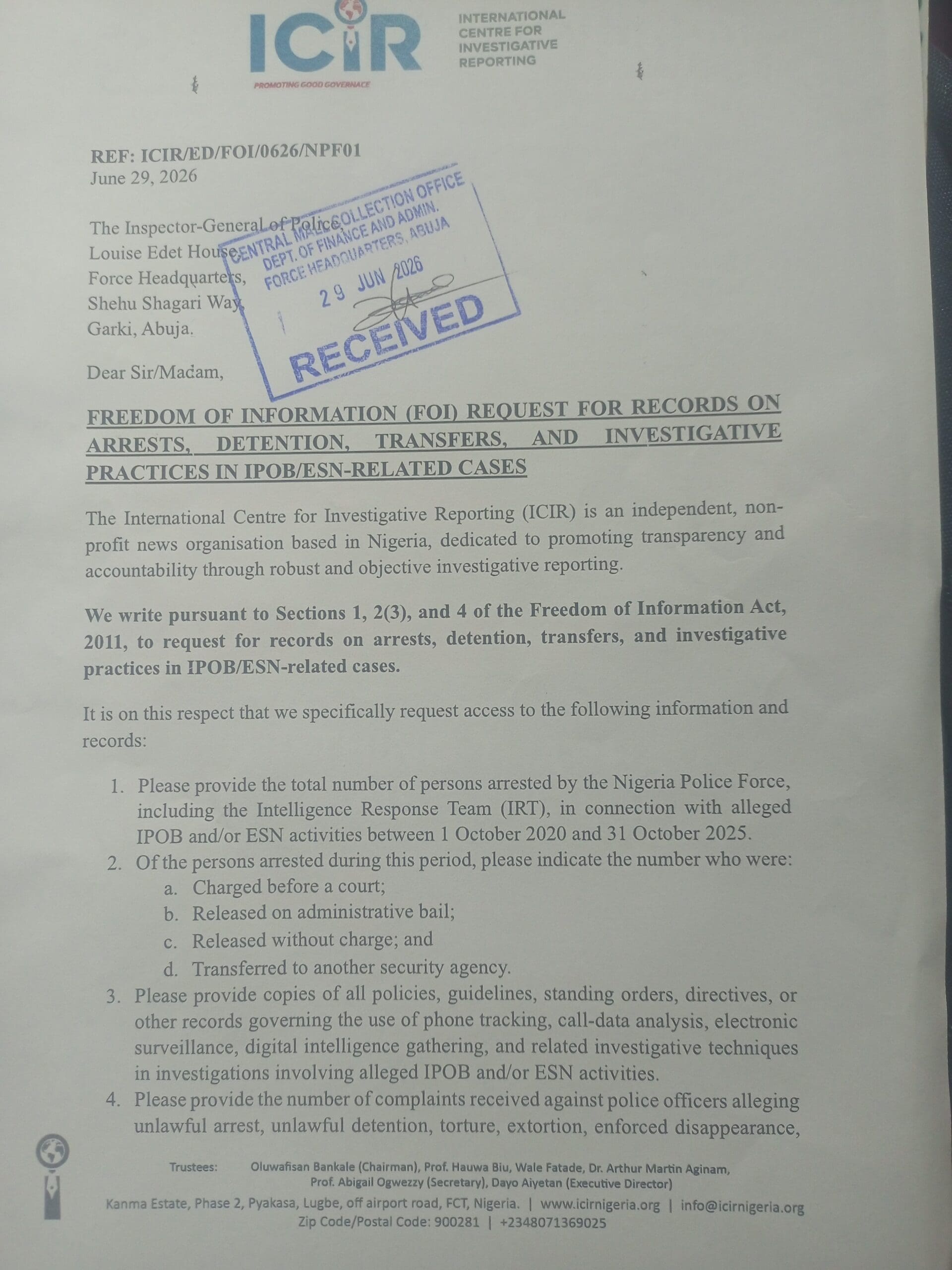
The ICIR sent Freedom of Information requests to the DSS and the Nigeria Police Force on June 25 and 29, 2026, respectively, seeking information about the legal basis for surveillance, tracking and detention of people suspected to be IPOB members like Thomas and Dave. The DSS was specifically asked to provide the legal frameworks governing the interception, monitoring, tracking and surveillance of telephone calls, and the legal basis for the continued detention of Thomas since his arrest in November 2021.
The police were asked the number of people arrested in connection with alleged IPOB and/or ESN activities, how many were charged in court, and the number of complaints against officers alleging unlawful arrest, detention, torture, extortion and enforced disappearance. The National Human Rights Commission was also asked about its role in addressing such violations. All these requests were acknowledged, but no response had been received at the time of publication.
Acknowledged copy of FOI request sent to the Nigerian Police Force.
Unlawful detention
Human rights lawyer Maxwell Opara said the DSS often relies on Section 27 of the Terrorism Prevention Act to apply to the Federal High Court for an ex parte order to detain suspects. He said the provision permits an initial period of detention for investigation, subject to further applications to the court and justification for why the investigation remains incomplete.
Opara said he has challenged the provision, arguing that prolonged administrative detention violates the right to personal liberty and the constitutional requirement for suspects to be brought before a court within the prescribed period. The lawyer said keeping suspects like Thomas for months without trial on the grounds of an ongoing investigation amounts to unlawful detention.
“Under Nigerian law, investigations must precede an arrest, not the other way around. If an agency does not have enough evidence to arraign a suspect within 24 to 48 hours, they are legally required to release them on administrative bail while completing their inquiry,” he said.
Contrary to the findings of this report, which documented instances of an apparent failure to investigate, unlawful arrest and torture, CSP Omaka Udodinma, an officer with the Nigeria Police Force’s National Cybercrime Centre and head of its Open-Source Intelligence (OSINT) Unit, said the police operate within the confines of the law when deploying digital surveillance and conduct proper investigations before taking action.
Speaking at an ICIR conversation on how spyware and digital surveillance threaten human rights, Udodinma said an investigation does not amount to a conclusion or indictment, adding that suspects are treated as such and not convicts.
He said the police are empowered under the Cybercrimes Act to obtain information from open sources and, where necessary, collect digital devices belonging to suspects or individuals believed to have violated the law.
“An individual has the right to release their phone or not release it. No digital device is obtained under duress,” he said. “But in the course of an investigation, if the device is required, the law empowers us to take away the device for forensic investigation, but that requires legal procedures.”
Udodinma said the police follow a chain of command when collecting devices for forensic examination and do not indiscriminately scan them for all available information. “They are not collected and completely scanned for every piece of information, but only what is relevant to the investigation. The essence is for evidential purposes and not to indict anybody,” he said.
Legal safeguards for electronic surveillance
The LONDA report found that while Nigeria continues to expand its surveillance capacity, public transparency, judicial oversight and accountability have not kept pace, raising concerns about the normalisation of intrusive monitoring.
Digital privacy and data protection lawyer, Dr Olumide Babalola, said phone tracking, communications interception and other forms of electronic surveillance must have a lawful basis and be necessary and proportionate to a legitimate objective.
“Surveillance activities must generally be authorised by law, pursue a legitimate objective such as the prevention or investigation of crime, and be necessary and proportionate,” he said.
He said surveillance should generally be authorised by a court order or warrant issued by an independent judge or magistrate. Such warrants, he explained, should specify the person, device or location to be monitored and the categories of data sought, rather than permit broad or exploratory searches. They must also comply with the constitutional right to privacy under Section 37 and applicable data-protection laws, said Babalola.
The data protection lawyer noted that the right to privacy is not absolute and stressed that laws such as the Cybercrimes Act and the Nigeria Data Protection Act allow limited circumstances for surveillance or processing of personal data without consent. But he said any interference with privacy must remain lawful, necessary and proportionate and comply with applicable judicial and statutory safeguards.
As a way out, Babalola said Nigeria should strengthen the legal framework governing surveillance through clearer statutory safeguards, independent judicial authorisation for intrusive monitoring, stronger oversight by independent institutions and greater transparency in the use of surveillance powers.
“Regular public reporting, effective audit mechanisms, robust data protection compliance, clear retention and deletion rules, and accessible remedies for individuals whose rights have been violated would enhance accountability,” he said. “These reforms must align with the Constitution [and] the Nigeria Data Protection Act 2023.”
He warned that security must not be used as a basis for unjust surveillance. “You cannot keep someone under surveillance or in detention for three years in the name of security. Surveillance should be a tool that respects human rights.”
Assistant Manager, Regulations Unit, National Data Protection Commission, Ibukunoluwa Owa, said people who believe they have been subjected to unlawful surveillance can seek redress through an action to enforce their constitutional right to privacy under the Nigeria Data Protection Act, including claims for damages.
Providing additional context, security expert Adamu reiterated that surveillance applications should be based on probable cause, a reasonable suspicion linked to a specific serious crime, and not simply alleged membership of an outlawed group.
He said operating without judicial authorisation, proper documentation or independent oversight creates opportunities for abuse, unlawful detention, evidence contamination and institutional misconduct. He said the difficulty security agencies face in meeting digital-forensics integrity requirements can undermine the reliability of evidence and accountability.
“Pervasive and unregulated surveillance stifles lawful association and free expression,” he said. “Evidence obtained without lawful authorisation or in violation of constitutional privacy protections should be inadmissible in court, while defendants should have access to surveillance records to challenge their legality and reliability.”
THE Federal Government has proposed a N1,350-per-litre ceiling on the ex-gantry or landing cost of petrol to stabilise fuel prices in Nigeria.
The Minister of Finance and Coordinating Minister of the Economy, Taiwo Oyedele, disclosed this on Thursday during a press briefing on petrol prices and subsidy-related measures in Abuja.
Oyedele said the proposed arrangement, which the government described as price modulation, would prevent sharp fluctuations in petrol prices without restoring the former blanket fuel subsidy regime.
“We are introducing price modulation. The government is negotiating a ceiling of N1,350 per litre on the ex-gantry or landing cost of petrol to keep the price stable. When costs rise above the ceiling, refineries and importers will carry the shortfall and recover it later. This is neither a subsidy nor price control,” he said.
Under the arrangement, refiners and petrol importers would absorb costs above the agreed ceiling and recover the difference when market conditions, including crude oil prices and the exchange rate, become more favourable.
Oyedele said the ceiling would be reviewed monthly, with the figures published to promote transparency.
The minister also announced a 30-day discount on petrol sold at Nigerian National Petroleum Company Limited filling stations, with public transport operators to receive priority.
He said the measure was a margin discount and should not be interpreted as a return to fuel subsidy.
“We are offering a discount on petrol dispensed by NNPC Limited for the next 30 days in the first instance with priority for public transporters nationwide. So, it’s not a subsidy; the government is just saying we sell to you at cost,” Oyedele said.
The announcement comes amid differences in petrol pump prices across the country.
The latest reported NNPC prices put petrol at N1,355 per litre in Lagos and Rivers states, while Abuja is listed at N1,370 per litre.
Oyedele also disclosed that the Federal Government was planning to introduce forward sales of crude oil to domestic refineries to reduce the impact of fluctuations in international crude prices on petrol costs.
Under the proposed arrangement, refiners could secure crude at an agreed price for a specified period, allowing them to plan production and maintain greater certainty over operating costs.
Oyedele gave an example of selling crude to refiners at $80 per barrel for six months.
“That preserves your budgets, provides certainty to the refiners and price stability to the consumer,” he said.
He said increased domestic crude production and the release of previously committed crude would also help shield pump prices from volatility in the international market.
The Federal Government said it was also implementing other measures to ease the impact of higher petrol prices.
These include increased cash transfers to vulnerable households, subsidised credit for small businesses and consumers, and an accelerated rollout of compressed natural gas vehicles.
Oyedele further disclosed that the government had granted a full waiver of taxes and duties on petrol, which he valued at more than N3.3 trillion between January and September 30, 2026.
He, however, maintained that the measures did not amount to a return to blanket petrol subsidy.
“To be perfectly clear, none of these measures restores a blanket subsidy. To do so would amount to creating longer-term harm for a short-term cure,” he said.
According to the minister, the government’s approach is to target assistance at vulnerable Nigerians while avoiding measures that could undermine the wider economy.
The proposed N1,350 ceiling and the 30-day NNPC discount are expected to provide short-term relief to consumers as the government seeks to manage the impact of volatile crude prices and exchange-rate movements on the domestic petrol market.
MOOVE, the mobility company founded in Lagos, has announced plans to end its operations in Nigeria after six years, with the company transferring vehicles worth about N35 billion to eligible customers, including drivers currently using them.
The company announced the decision on Thursday, October 8, 2026, saying the transfer was part of its “Thank You Nigeria” initiative to appreciate customers, employees, partners and communities that supported its growth.
Under the arrangement, eligible customers currently operating Moove-financed vehicles will take full ownership of the vehicles, with no further payment to Moove required for the vehicles.
The transfer is effective from October 1, 2026, according to the company.
Moove said it would work directly with affected customers and employees as it winds down its Nigerian operations and completes the transfer of the eligible vehicles.
From 76 vehicles in Lagos to global mobility company
Moove was founded in Lagos in 2020 by Ladi Delano and Jide Odunsi after they reportedly identified the difficulty faced by mobility entrepreneurs in accessing vehicle financing.
The company was said to have started with 76 vehicles in Lagos and developed a Rental and Drive-to-Own model through which drivers and other mobility entrepreneurs could access vehicles and work towards ownership.
According to Moove, more than 9,000 customers have used its Drive-to-Own and rental products in Nigeria since its launch.
The company said the customers generated approximately N57 billion in revenue through Moove-financed vehicles.
Moove has since expanded beyond Nigeria and now operates 42,000 vehicles across 29 cities globally, according to its latest announcement.
Staff to receive free cars
As part of its exit arrangements, Moove said all its Nigerian staff members would also receive a free car.
The company described the vehicle transfers as part of its effort to recognise the people who helped build its Nigerian business.
Ladi Delano, Moove’s co-founder, co-CEO and advisory board chairman, said Nigeria remained the starting point of the company’s global story.
He thanked customers, employees, partners, regulators and the wider community for supporting the company from its early days.
“Nigeria is where Moove began, and everything we have built since carries something of Lagos with it. Jide and I started the company because talented, hardworking mobility entrepreneurs wanted the opportunity to earn, but could not get access to the vehicles and finance they needed. Our first customers trusted us when Moove was still an idea, and that trust made everything that followed possible and for that we thank you”.
“More than 9,000 customers have used our Drive-to-Own and rental products in Nigeria. Their work generated approximately ₦57 billion in revenue through Moove-financed vehicles. Those numbers matter because they represent people earning, supporting their families and building their own futures,” Delano said, according to the company’s statement.
Why is Moove leaving Nigeria?
Moove’s October 8 announcement did not state a specific reason for ending its Nigerian operations.
The development comes about a month after Uber ended its operations in Nigeria. Moove had a long-standing relationship with Uber as a vehicle financing and fleet-management partner for drivers.
In September, it was reported that Moove was considering leaving Nigeria following Uber’s departure. The report, citing a person familiar with the plans, said Uber’s exit had made Moove’s business in Nigeria difficult to sustain.
However, Moove’s latest announcement does not identify Uber’s exit, profitability concerns or any other specific factor as the reason for its decision.
Instead, the company framed the move around the conclusion of its Nigerian operations and the transfer of eligible vehicles to customers.
What happens to the vehicles?
Moove said eligible vehicles currently operated by customers will be transferred into their full ownership without further payment to the company for the vehicles.
The vehicles are estimated by Moove to be worth approximately N35 billion.
The company did not state in its announcement how many vehicles are covered by the transfer or provide a breakdown of their individual values.
It said it would engage directly with affected customers to complete the ownership transfer as it concludes its Nigerian operations.
Moove’s exit means the Nigerian business it started with 76 vehicles in Lagos in 2020 will cease operations after six years, while the company continues its international expansion.
The company said it now operates across 29 cities globally.