Home Blog Page 3001

2016 Budget May Not Be Fully Implemented – SGF

0
SGF, Babachir Lawal
SGF, Babachir Lawal

The Secretary to the Government of the Federation, SGF, Babachir Lawal, has said that the federal government may not fully implement the 2016 budget due to a sharp drop in revenue by over 60%.

He stated this when he appeared before a joint senate committee on Ethics, Privileges and Public Petitions and that of Appropriation and Finance.

Lawal was summoned by the lawmakers to defend his comments in an interview that the 2016 constituency projects as captured in the budget would not be implemented.

He blamed the drop in revenue on the activities of militants in the Niger Delta region, saying that the oil benchmark of the federal government has been drastically affected as the country was only producing about 800,000 barrels of crude oil per day.

Lawal said, “The statement is correct. That is my statement (referring to the interview). We cannot guarantee the implementation of constituency projects in the 2016 budget. As a government, constituency projects are championed by members of the National Assembly. Like the legislature, members of the executive are politicians who canvassed for votes.

“Lawmakers are aware that oil barrels had dwindled to about 800,000 per day. This has led to the inability of government to finance the budget. It is the duty of government to prepare the minds of Nigerians ahead that there will be challenges in implementing the budget,” he said.

The SGF reminded the lawmakers that government based its principle on zero budgeting this year, and funds will be released to finance key projects in line with the implementation plans of the government.

He said the country was now earning about 50 percent or 60 percent of what was projected in the budget, adding that some ministries, department and agencies, MDAs, might find it impossible to implement projects appropriated in their budgets.

“We have to re-prioritize. I like us to understand that this is the background upon which I made that statement,” Lawal said.

Buhari Sends Troops To Zamfara

0

Buhari soldier

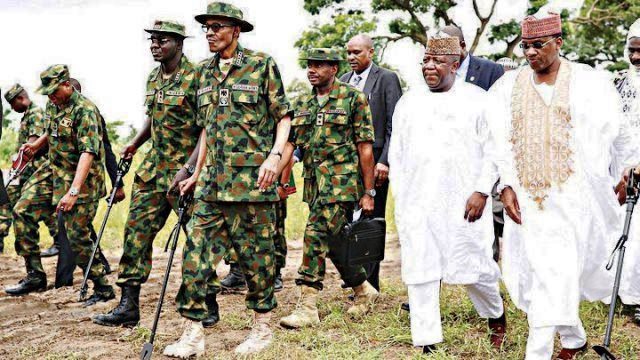
President Muhammadu Buhari has approved the deployment of 1,000 troops to tackle armed gangs that have reportedly taken over a forest in Zamfara State.

The President gave the directive when he visited Gusau, the Zamfara State capital, to flag off the 2016 Army Day Celebrations.

According to the Minister of Defence, Mansur Dan-Ali, about 1,000 troops would be deployed immediately, with more joining later to tackle the armed gangs who have been terrorizing villages in some local governments of the state.

Residents have been killed and others forced to flee their homes as a result of the violence and there are fears that fighters from Islamist militant group, Boko Haram, may have joined the gangs in Zamfara.

Nigerian troops are currently engaged in clearance operations against Boko Haram terrorists in the North east but other security challenges stare the country in the face, including the incessant cases of herdsmen/farmers clashes, cattle rustling, militancy in the Niger Delta as well as kidnappings.

It would be recalled that suspected herdsmen have killed hundreds of Nigerians in Benue, Enugu and Plateau states, and have continued to threaten lives of Nigerians in these areas.

President Buhari had ordered an investigation into the clashes between herdsmen and indigenes of communities in Benue and Enugu States, while also ordering security agencies to bring the carnage to an end.


Nigerian Army Injects New Life Into Counter-Insurgency Operations

0

Nigerian troops

By Samuel Malik

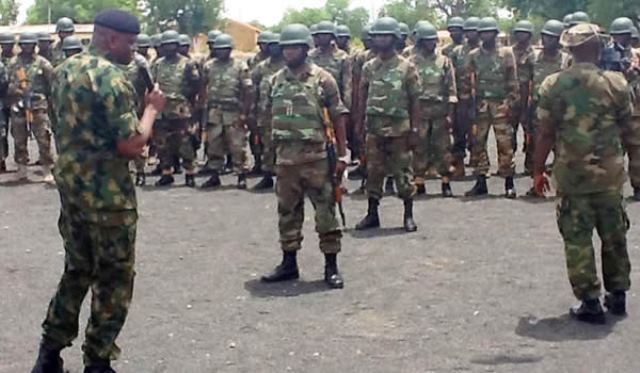
Despite successes recorded in the fight against insurgency in the North east, the Nigerian Army is leaving no stone unturned in its effort to rid the region of terrorists. The www.icirnigeria.org has learnt that five battalions involved in the fight against Boko Haram have been rotated, as the army seeks to inject fresh hands into the operation.

The rotated units include 192 Battalion, 103 Battalion, 72 Battalion, 311 Battalion, and Army Headquarters Task Force Battalion, AHQ TF Bn. This brings the total number of units changed from the North east so far to six.

Early this year, 243 Battalion, which had been in the operation since 2009 when the insurgency started, was replaced with 242 Battalion from Badagry in Lagos State. Also, in June this year, 113 Battalion was replaced by 145 Battalion from Ohafia in Abia State.

As part of efforts to quell the Boko Haram insurgency, the army concluded plans in January to replace troops who have spent more than two years in the operation.

“In order to rejuvenate and boost the morale of troops deployed for Operation Lafiya Dole, plans have been concluded to rotate troops that have spent upwards of two years in the theatre of operation in phases,” a document signed by YB Abubakar, a Major General, on behalf of the Chief of Army Staff, Tukur Buratai, a Lieutenant General, stated.

The document, dated January 20, 2016 and sighted by this website, added that due to the army’s desire to inject fresh troops into the operations, “all hands must be on deck to ensure a successful and hitch free exercise.” It also stated that the timetable for the rotation must be strictly followed.

Army spokesman, Sani Usman, a Colonel, explained that although rotation is important in troop deployment, it is equally vital that is it done strategically.

“Injecting fresh hands into the war is important and that is why it is not done abruptly, there is a gradual transiting. A lot of people will think it is slow but it is steady in the sense that it is just a matter of time before each and every unit is rotated. We have a tabulated timeline for the rotation, unless the security situation does not warrant it, and in that case it will be explained,” he said.

During his operational tour in June this year, the General Officer Commanding, GOC, 7 Division in Borno, Victor Ezugwu, a Brigadier General, had assured troops that the army was serious about the issue of rotation. He said four units would be rotated annually, one every quarter.

However, it seems the army is stepping up the exercise, with at least six units so far ushered out of the theatre in the last two quarters.

In more than ten locations Ezugwu visited, our reporter, who was given an exclusive access to troops, observed the strain of battle on the faces of soldiers. Most of them had given up hope of leaving the battlefield, with some spending more than four years in the frontlines.

Despite the excitement of seeing their commander, it was obvious they were desirous of going home to their loved ones. When some of the soldiers recounted their battle experiences to the reporter, it was not difficult to appreciate why rotation of troops is a morale booster for the army. They recounted incredible tales of what they had seen and gone through and it would not surprise anyone if some of them had lost their emotions or respect for human lives..

To shake off the strain of battle, some got married to locals, despite having families back home, and some took to drugs and alcohol.

Worst still, some lost control and took the lives of their colleagues and defenceless civilians and injured others. There were also others who deserted the army to be with their loved ones because they could no longer take the uncertainty surrounding their withdrawal from the operation.

“The fatigue of battle is beginning to reflect in the soldiers. So, they need to be relieved,” Emure T., a Captain and Operations Officer for 114 Task Force Battalion in Bita, a former Boko Haram stronghold, said.

“I am not too happy being away from my family. This is my four years here in this operation. We have to go to Pulka to get network and talk to our families,” Adedamola O., a Warrant Officer stationed at a strategic crossing point used by the insurgents to get to Pulka from Bama, said.

With Boko Haram largely decimated, it is obvious that the army is keen to prevent the loss of its troops to post-traumatic stress disorder. Thus, in addition to withdrawing them from the battlefield, the soldiers are made to go through a mandatory two weeks rehabilitation process at the Nigerian Army School of Infantry, Jaji in Kaduna State, before being allowed to reunite with their families.

“We keep them in Jaji for two weeks rehabilitation because of possible post-traumatic stress disorder, PTSD. You have been in the northeast and seen what these guys go through. Their psychological makeup is a bit antagonistic, so it is pertinent that we do not allow them to go to their respective units without providing counselling and psychological treatment,” Usman explained.

“The whole essence of the Jaji exercise is to recondition the troops so that they fit seamlessly back into the society,” he stated further.

Some of the soldiers who spoke to our reporter applaud the army’s decision to rehabilitate them.

“When you see some of us, you know they clearly need psychological treatment,” one the soldiers said from Jaji on condition of anonymity.

Rotation gives the troops a new lease of life, and many savour the “leave” from battle fronts. A soldier explained what it means to be out of the northeast: “I now believe we are in Nigeria because we are now among real people. There is no more ambush, sentry and sleepless nights due to red alerts. In fact, as I speak with you, we have all submitted our riffles. Almost three years in the bush, you can’t imagine how happy we are. We are 500 percent happy. There is celebration in my house back home and I can’t wait to get back to my family.”

It was gathered that some of the activities the soldiers will undergo during their rehabilitation include morning and evening sports, lectures and orientation.

“We hear they will teach us how to treat people differently from the way we treated Boko Haram members, and also how not to misbehave as we mingle with civilians,” one soldier said.

According to military sources, the troops deployed to the North east as replacement for those withdrawn were about 1,000 drawn from different units, many of them just returning from a United Nations Peacekeeping Mission in Liberia.

Despite their experience in UN peacekeeping, the army believes the Boko Haram insurgency presents a different challenge to whatever they faced outside the country. Thus, they had to undergo two weeks training at the Special Forces Training School in Buni Yadi, Yobe State. This, Usman said, was to get them to acclimatise to the peculiar nature of what they would be encountering back home.

“The essence of Buni Yadi is that it is within the theatre of operation, so the issue of realistic training comes into play because it is not enough to just train the soldiers in their respective units. They need to be trained in the environment where they will operate,” the army spokesperson pointed out.

While troops celebrate their departure from the North east, some of them spared some thoughts for their successors. According to them, the best thing for all soldiers is for the insurgency to end.

“We are praying for the insurgency to end so that every soldier will go back home. My brother, it has not been easy,” a soldier said. This is certainly the wish of Nigerians they are securing by risking their own lives.

Electricity Distributors Appeal Tariff Hike Reversal

0
Sunday Oduntan, Executive Director
Sunday Oduntan, Executive Director, ANED

The Association of Nigerian Electricity Distributors, ANED, which is the umbrella body of the 11 Electricity Distribution Companies, DISCOs, operating in Nigeria, has appealed the judgment of a Lagos Federal High Court which annulled the 45 percent increase in electricity tariff.

Sunday Oduntan, Executive Director of the association, said this on Thursday in a telephone interview with the News Agency of Nigeria, NAN.

A Federal High Court in Lagos had on July 13, annulled the increase in electricity tariff, which was announced by the Nigerian Electricity Regulatory Commission, NERC.

Delivering judgment in the suit filed by human rights lawyer, Toluwani Adebiyi, Justice Mohammed Idris described NERC’s action as irrational, irregular and illegal, having been taken without regards to a court order to the contrary.

But Oduntan said the association had appealed against the ruling and would pursue the judgment to the Supreme Court if the need be.

“We have appealed against the ruling and asked for a stay of execution now. I can assure you that as a legal luminary, we will not stop until we get justice. If the Appeal Court judgment is not favourable, we will pursue the case to the Supreme Court which is the highest court in the land, so there is no cause for alarm,’’ he said.

The increase in electricity tariff was announced on December 15, 2015, and despite a court order and a National Assembly resolution against the policy, the hike became effective on February 1, 2016.

May Takes Over From Cameron As British PM

0
Theresa May greets Queen Elizabeth

Theresa May has taken over from David Cameron as the new Prime Minister of the United Kingdom following the resignation of the latter in what has been quite an eventful few weeks in British politics.

May made her first speech as Prime Minister in front of 10 Downing Street, the official residence of the British PM.

The former PM, Cameron, who has been prime minister since 2010, announced he would resign after losing the EU referendum in June.

Cameron, while delivering his final speech, described the opportunity to serve as Prime Minister as “the greatest honour” of his life before leaving for Buckingham Palace where he officially tendered his resignation to the Queen.

Earlier Cameron was at the House of commons where he addressed parliamentarians and fielded questions from them for the final time.

Conservative lawmakers rose as one to applaud David Cameron at the end of his 182nd session with the parliament as prime minister.

Cameron told them that he intended to stay in public life and would be “willing them on”, saying “nothing is impossible”.

May, 59, becomes the oldest incoming prime minister since Jim Callaghan in 1976, and the country’s second female prime minister, following in the footsteps of Margaret Thatcher.

CCT Adjourns Saraki, Other Cases to September 2016

0
CCT Chairman, Danladi Yakubu Umar

The Code of Conduct Tribunal, CCT, has adjourned its sittings till after the 2016 annual recess.

Chairman of the tribunal, Danladi Umar, on Tuesday adjourned all sittings scheduled for this week and those to come within July and August till after the tribunal’s judges, who are set to embark upon a recess soon, resume.

The decision was taken due to the ongoing Roundtable Discussion involving CCT and other critical stakeholders within and outside the country, to develop the Code of Ethics and Practice Directions for the Code of Conduct Tribunal to ensure fair and speedy trials, sponsored by European Union, EU, and implemented by United Nations Office on Drugs and Crime, UNODC.

He however, assured litigants currently with cases before the court, that new dates would be communicated to them in September, 2016, after the tribunal resumes.

A statement signed by Ibraheem Al-hassan, Head, Press Relations of CCT, said “The Tribunal regrets the pains caused by the sudden change.”


Read also:

Senators Not Plotting Impeachment Of Buhari – Wamakko

0
Aliyu Wamakko
Aliyu Wamakko

Senator Representing Sokoto North, Aliyu Wamakko, has denied reports that senators held series of meetings on how to impeach President Muhammadu Buhari in his residence.

He made the made the denial in a statement on Wednesday.

He said: “My attention was drawn to a false and malicious story published by an online newspaper that series of meetings were held in my residence to strategize on the impeachment proceedings of President Muhammadu Buhari.

“To set the records straight, a meeting was only held in my residence towards finding amicable solution to the frosty relationship between the Executive and Legislature.

“We have observed the growing disharmony between the two arms, and we resolved that finding amicable solution to the impasse will move the nation forward and give the president focus to pursue his Change Agenda,

“As a principled politician, I have no cause to scheme against the president and the party I campaigned for or the cause I believe in.

Let me once again reiterate that we hold the president in high esteem, and we will do our best towards ensuring that there is cordial relationship and harmony between the two arms of government.”

Wamakko, a pro-Saraki senator, is the Chairman Senate Committee on Basic and Secondary Education.

Oby Ezekwesili Honoured In Uk

0
Oby Ezekwesili
Oby Ezekwesili

Former Vice President of the World Bank for Africa and leading voice on the global BringBackOurGirls campaign, Obiageli Ezekwesili was on Tuesday, July 12, conferred with an honorary degree from the University of Essex, England, United Kingdom.

The former Minister of Education was honoured for her work in promoting transparency and accountability in government and lending a voice to the importance of the office of the citizen in a country like Nigeria.

“This is a humbling experience, I consider this so inspiring of the work that have done so far in my career and the University of Essex being one of the top universities in the world, values match those of the university and my father inspired me to be diligent and continue to learn till I reach my goal in life,” said Oby Ezekwesili while addressing Essex Business School graduates at the ceremony.

Professor Neil Kellard, Head of the Finance Group at Essex Business School, paid tribute to Oby saying: “We celebrate today a woman who pushes political and ideological boundaries for education and equality. We celebrate today a woman who challenges corruption and encourages transparency.”

Ezekwesili is a staunch advocate for active citizenship and a leading voice in sensitizing the government on the plight of the abducted Chibok school girls.

She is currently a Senior Economic Advisor with the Africa Economic Development Policy
Initiative, AEDPI, where she advises Presidents of African countries and their cabinets on economic development strategy, policies and implementation.

Accountant General Conducts Forensic Audit Of Revenue Agencies

0
Accountant General of the Federation, Ahmed Idris

The Accountant-General of the Federation, Ahmed Idris says his office has commenced a forensic audit of federal government’s agencies to access true state of their revenue generation.

He made this known in a statement signed by Kenechukwu Offie, his Chief Press Secretary, on Wednesday in Abuja.

The statement said Idris had engaged 18 professional Audit companies to undertake the Process Audit of the federal parastatals and agencies.

He said the audit process would cover 2010 to 2015, and would be completed in 18 months.

Idris said that the audit would also cover capital, personnel and overhead expenditures across all federal Ministries, Departments and Agencies, in order to enable the federal government take better decisions in view of the dwindling inflow of revenue.

He said the first phase of the assignment was divided into two categories and will involve 33 Agencies.

“Category A, comprises of eight agencies with a turnover of above N100 billion while category B involves 25 agencies with a turnover of below N100 billion”.

Some of the terms of reference given to the Audit firms as contained in the statement include:

“To review the sources of revenues accruing to the organisations and the effectiveness of revenue generation and accounting.

“Undertake a critical review of the financial statements of the organisations over the last five years, confirm the sources and quantum of funding received from Government, whether loans, subventions or grants and reconcile with treasury records.

“Study in detail the enabling laws establishing the organisations with a view to identifying possible constraints and areas of improvement.

“Determine the amount of remittances made to the Consolidated Revenue Fund (CRF) over the last five years in the form of operating surplus and revenue dividends.

“Determine the extent of compliance with extant regulations regarding the adequacy and regularity of remittances to the CRF.

“Identify all income and interest thereon and make adequate recommendations on the future management of the organisations,” he said.

Ahmed said the consultants were to establish the cost of operations and make appropriate recommendations to understand real personnel cost and cost associated with revenue collection or revenue sharing arrangement, adding that their activities would be closely monitored by experienced staff of the OAGF to ensure that “government gets value for money”.

The audit exercise follows accusation by the Fiscal Responsibility Commission, FRC, that revenue generating agencies were short-changing the government.

According to Victor Muruako, acting Chairman of FRC, many agencies under-declare their revenue, thereby failing to remit 80 per cent of their operating surplus into FG’s Consolidated Revenue Funds.

Saraki, Ekweremadu Are Facing Criminal Charges, Not Senate – AGF 

0
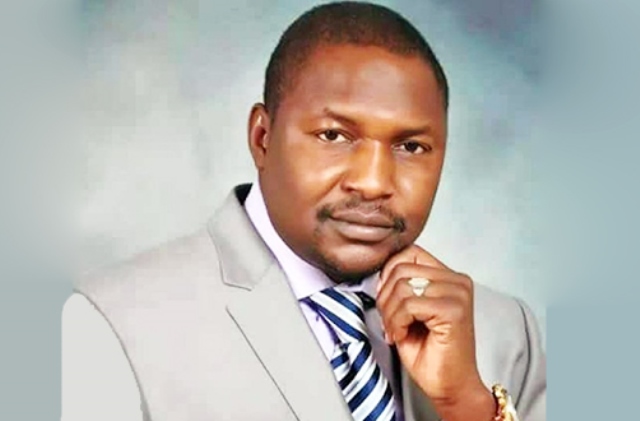
Attorney-General of the Federation and Minister of Justice, Abubakar Malami

The Attorney General of the Federation, AGF, Abubakar Malami has appeared before the Senate after the upper legislative chamber threatened to issue an arrest warrant to compel him to appear before the red chamber.

The AGF was at the venue of the meeting with the Senate Committee on Judiciary, Human Rights and Legal even before members of the Committee.

Malami, who was summoned by the lawmakers to explain why he had dragged the Senate’s principal officers to court for alleged forgery, said that the ‘issue before them is a criminal case against certain members of the Senate’ and not the entire senate, insisting that the police conducted investigation into the case on July 2015 while he was appointed in November 2015.

The AGF stated that the first case on the forgery was a Federal High Court case initiated by some Senators even before his appointment as AGF.

Malami maintained that as the AGF, he works for the sustenance of Nigeria’s democracy.

The Senate had in their first plenary session after the Eid-el-fitri break, threatened to issue an arrest warrant on the AGF after he failed to appear before its Committee on Judiciary and Human Rights.

Although he sent a representative, the Committee refused to grant the representative any audience.