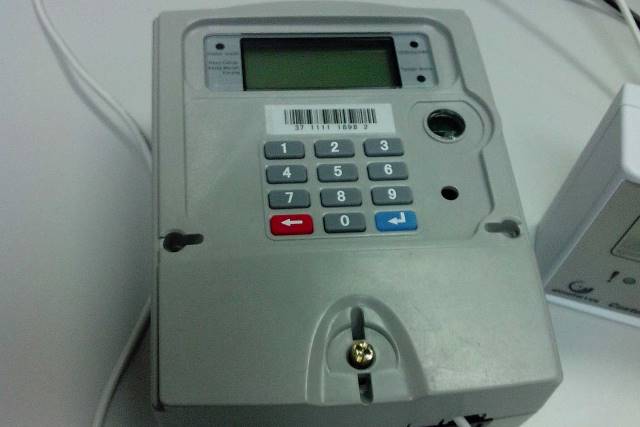
The Federal High Court Ikoyi has ruled that the 45 per cent tariff increase by the Nigeria Electricity Regulatory Commission, NERC, was illegal and should be reversed immediately.
The court said on Wednesday that the implementation of the huge increase constitutes a violation of its interim order.
It also awarded a N50, 000 cost against NERC.
The Nigeria Labour Congress, NLC, which has opposed the price hike, described the ruling as victory for the ordinary Nigerian whose life has been worsened by the exploitative electricity bills.
The NLC president, Ayuba Wabba, urged NERC and electricity distributing companies to obey the court judgment and immediately revert to the old rates.
The new electricity tariff took effect from February 2016 as sanctioned by the Minister of Power, Babatunde Fashola and Sam Amadi, Chairman of NERC; despite a resolution by the National Assembly and restraining court order against it.
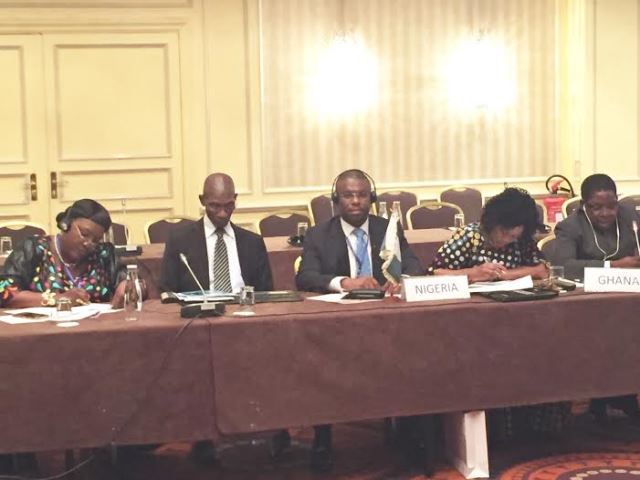
Dakuku Peterside, DG NIMASA (middle) with other delegates at the IMO/MOWCA Summit in Brussels, Belgium.
Nigeria has expressed its support for any regional initiative geared towards eliminating the scourge of piracy and maritime crimes especially in the Gulf of Guinea.
The Director General of the Nigerian Maritime Administration and Safety Agency, NIMASA, Dakuku Peterside, stated this at the on-going International Maritime Organisation, IMO, Maritime Organisation for West and Central Africa, MOWCA, sponsored integrated sub regional coast Guard function network in Brussels, Belgium.
Peterside who is the leader of the Nigeria delegation to the IMO/MOWCA meeting noted that Nigeria’s position is premised on the fact that crime at sea, especially in the Gulf of Guinea, is always transnational and therefore a regional integrated approach is most suited for checking the menace.
While addressing delegates at the conference, Peterside said “Nigeria with the longest coast line in the continent is mostly affected by the activities of these criminals. If the continent and maritime actors do not rise up to tackle piracy, it will affect commerce which is the driver of growth and by extension hamper development”.
He described as unfortunate the situation where the Gulf of Guinea has become notorious as one of the top three locations where piracy occur globally saying freight rates, insurance and ports of call for vessels are all a function of the perceived maritime security of the region.
According to the NIMASA DG, human capacity, infrastructure, legal and organisational framework were important in any regional initiative to fight piracy.
Peterside briefed delegates on Nigeria’s efforts in tackling and mitigating piracy saying “apart from military led patrols on our territorial waters to deter the criminals and high intelligence and surveillance network, Nigeria with the assistance of the IMO is pushing for early passage of a dedicated anti-piracy bill to provide the needed legal framework to tackle the crime”.
He said Nigeria’s fight against piracy enjoys total support from the government in Nigeria and called on all governments in the Gulf of Guinea to show greater interest in dealing with maritime crimes in the region which according to him “has adverse economic and reputational impact on member nations”.
The summit was declared open by the President of Maritime Organisation of West and Central Africa, MOWCA, and current Transport Minister of Ghana, Fifi Kwetey.
Addressing the summit, the Secretary General of MOWCA, Alain Michel Luvambo of Angola said the summit is a follow up to the MoU signed by 16 coastal member states of MOWCA at its 13th General Assembly of Ministers which was adopted by the African Union commission and United Nations Division for Ocean Affairs and the Law of the Sea.
He said the MoU approved the setting up of a sub-regional coast guard function.
The purpose of the meeting is to bring together partners, development agencies/donors, funders, financial institutions, shipping operators and maritime administrations across Africa and Europe to pull resources together to finance the regional coast guard function and National Maritime coast guard institutions.
The summit was attended by Ministers of Transport from different African countries and maritime administrations from Nigeria, Benin, Togo, Burkina Faso, Cameroun, Liberia, Côte d Ivoire, DR Congo, Guinea, Ghana, Angola as well representatives of African Development Bank, AfDB, Regional Maritime University Ghana, Regional Academy of Science and Technology of the Sea, Abidjan amongst others.
The summit continues today with presentations by AfDB, European Union, World Bank, AFRIEXIM Bank, Chinese Exim Bank, amongst others.
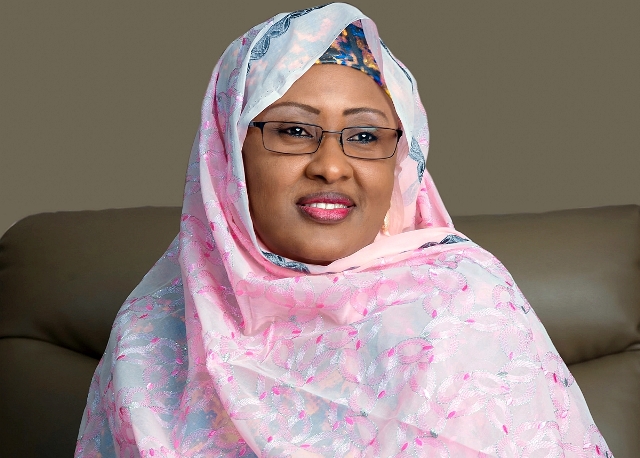
The United States government has clarified that it has no information on the alleged crimes committed by President Muhammadu Buhari’s wife, Aisha.
Acting Public Affairs Officer, US Consulate General in Lagos, Frank Sellin, gave the clarification in an email sent to a correspondent of the Punch Newspaper on Tuesday.
Sellin gave the reply in response to an enquiry made by the correspondent regarding allegations that the President’s wife was wanted in the US and was avoiding travelling to the country.
“Thank you for the inquiry. We have no information to provide on this matter,” Sellin was quoted as saying.
Governor Ayodele Fayose of Ekiti State had alleged that the wife of the President was involved in the $185m Halliburton scandal, claiming that she was a wanted person in the US.
“Her name was on page 25 of the sentencing of Jefferson. We can serialise the judgment for people to see and read.” Fayose said.
The governor was reacting to the freezing of his Zenith Bank accounts by the Economic and Financial Crimes Commission, EFCC.
The allegation was repeated in a statement by Idowu Adelusi, Fayose’s Chief Press Secretary, who said that the First Lady refused to travel with the President to the US because of her involvement in the scandal.
The Nigerian Army said 25 bodies of Boko Haram terrorists had been recovered after Troops of 119 Task Force Battalion stationed in Kangarwa northern Born repelled an attack on Tuesday night.
This was contained in a statement by Sani Usman, the Acting Director Army Public Relations, on Wednesday in Abuja.
The Army Spokesman had on Tuesday said the number of terrorists killed in the attack could not be ascertained due to poor visibility in the area.
He also clarified that one soldier lost his life in the operations and eleven others were injured as against Tuesday’s statement in which he said that two soldiers were killed and seven others sustained injuries.
Usman explained that the attack started at about 6.30pm but was successfully repelled after about 3 hours of exchange of heavy gunfire that inflicted tremendous casualties on the terrorists.
He stated: “As at this morning, the troops counted 25 bodies of the Boko Haram terrorists and recovered 2 Rocket Propelled Grenades 7 (RPG 7) tubes, a 60mm Mortar tube, 2 Machine Guns, 12 AK-47 rifles and one Light Machine Gun,
“The body of the gallant soldier and those wounded in action are being evacuated, while the unit is carrying out mop-up operation,’’ he stated.
He noted that the successful repelling of the attack was made possible by support from the Nigerian and Chadian Air Force fighter jets.
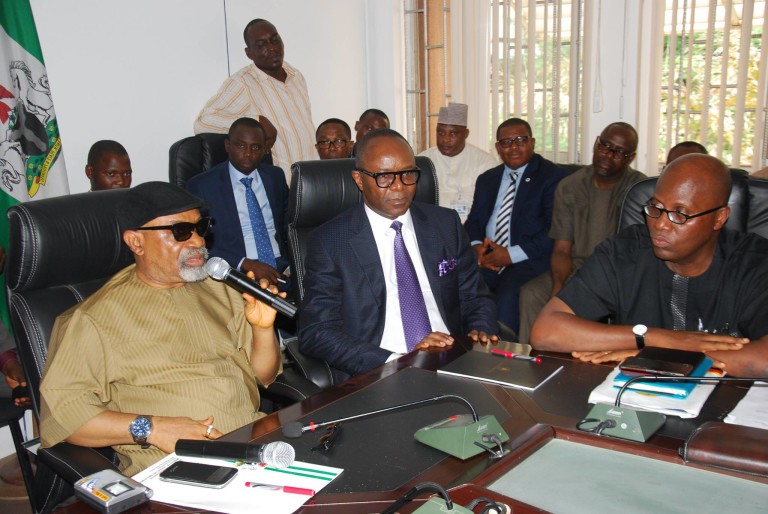
The Petroleum and Natural Gas Senior Staff Association of Nigeria, PENGASSAN, and the Nigeria Union of Petroleum and Natural Gas Workers, NUPENG, have suspended their strike after a meeting with the Federal Government on Wednesday.
The meeting which ended at 1am was attended by the Minister of Labour and Employment, Chris Ngige, the oil unions and International Oil Companies, IOCs.
The discussion bothered on issues of job security, causalisation of workers and improved welfare, and the minister appealed to the IOCs not to lay off workers as government is trying to make the environment more conducive for their businesses.
Other areas of discussion were the implementation of the 2015 Collective Bargaining Agreement between the federal government and the unions, the implementation of the Petroleum Industry Bill and the state under which the oil workers operate, especially the lack of power and bad roads.
In a communiqué issued at the end of the meeting by the Ministry of Labour and Employment, it was concluded that only one government agency had been affected by the non-implementation of 2015 Collective Bargaining Agreement.
It was agreed that the National Salaries, Incomes and Wages Commission and the Ministry of Budget and National Planning would make corrections to be effective from March 1, 2015.
The communiqué also stated that “Most of the IOCs and Indigenous Oil Companies that have laid-off workers without passing through the due process of the law all agreed to comply and in such cases where the workers had gone on strike or locked out by employers, the meeting directed them to unlock such premises while the actions of employers have also been put on hold to make for a free and unfettered atmosphere during the negotiations.”
Presumptive Democratic presidential nominee Hillary Clinton has received the much awaited endorsement from her former rival Bernie Sanders.
Sanders, a senator and former Democratic presidential candidate appeared alongside Clinton at a campaign event in New Hampshire.
Sanders hopes to have a large influence in the Democratic platform
“She will be the Democratic nominee for president and I intend to do everything I can to make certain she will be the next president of the United States,” he said.
“This campaign is about the needs of the American people and addressing the very serious crises that we face. And there is no doubt in my mind that, as we head into November, Hillary Clinton is far and away the best candidate to do that.”
Clinton thanked her supporters and credited Sanders for bringing new Americans into the political process, saying “I’m proud to be fighting behind you. It’s a time for all of us to stand together.”
Clinton spoke on a number of issues, including student debt, Wall Street, raising the minimum wage, the US tax code, reforming policing, strengthening the middle class, climate change, health care and reducing gun violence.
Sanders supporters have largely decided to support Clinton in an effort to stop presumptive Republican nominee Donald Trump from winning the White House.
Sanders has pressed Clinton to support his views on higher education, health care and the minimum wage.
“It is no secret that Hillary Clinton and I disagree on a number of issues. That’s what this campaign has been about. That’s what democracy is about,” said Mr Sanders.
“But I am happy to tell you that… there was a significant coming together between the two campaigns and we produced, by far, the most progressive platform in the history of the Democratic Party.”
Trump, who has been trying to court Sanders supporters, reacted to the development via tweeter, saying that Sanders has “totally sold out to Crooked Hillary Clinton. Fans angry!”
23 people have been killed and dozens more injured in a head-on collision involving two passenger trains in southern Italy.
Officials say the two trains were on a single-track line at the time of the crash, between the coastal towns of Bari and Barletta.
It was unclear what led to the collision, which happened in good weather at 11:30 local time in the southern region of Puglia.
A local prosecutor in nearby Trani said it was too early to speculate on the cause, although human error was likely to have been a factor.
Italian reports said one of the trains had come from Andria, and the other from Corato, a short distance to the south-east. Both were travelling at high speed.
Both trains had four carriages and images from the fire service showed wreckage strewn across a large area. Some of the carriages were so badly damaged there was little left but debris.
Corato Mayor, Massimo Mazzilli said the damage was so extensive it was as if a plane had crashed.
Rescuers set up a field hospital at the scene to help care for the large number of wounded passengers.
The local authorities have appealed for blood donors to come forward.
Prime Minister, Matteo Renzi interrupted a trip to Milan and returned to Rome, after ordering an investigation into the crash.
“I want to express my condolences to the families and I have ordered, with no holding-back, an inquiry to find who is responsible,” he said.
Italy’s Transport Minister, Graziano Delrio was also at the scene with ministry inspectors and local prosecutors to survey the wreckage.
The embattled National Chairman of the Peoples Democratic Party, PDP, Senator Ali Modu Sheriff on Tuesday said Buruji Kashamu, a senator, is not his political Godfather, stressing that he was nobody’s godson.
Sheriff stated this in a press statement by his spokesman, Inuwa Bwala.
In the statement, Sheriff called on all PDP loyalists across the country to desist from smear campaigns and address issues in their collective quest to find a lasting solution to the crisis that has beset the party.
The statement reads: “This call became necessary in the face of reports planted in some sections of the media, alluding that Senator Buruji Kashamu is a godfather to the National Chairman, Senator Ali Sheriff”.
It further states that: “While it remains obvious that the said report was part of the mischief and orchestrated smear campaigns embarked upon by some people, against the national chairman, it wish to state for avoidance of doubt that, he has no godfather in politics and Senator Buruji Kashamu could not have been one.
“It is becoming clear that, the PDP National Chairman’s critics have run out of ideas on how to achieve their selfish agenda, hence the resort to blackmail and blatant falsehood in order to distract Sheriff from manifesting his capacity to reposition the party.
“We must state that it was most uncharitable for anybody to imply that Senator Kashamu, who like every stakeholder in the PDP, is highly respected, and who makes inputs towards the progress of PDP, is Senator Sheriff’s godfather, as nothing could be further from the truth.
“As members of the same political party, and who believe in the progress of the PDP, there exists mutual understanding between the national chairman and all stakeholders who identify with his cause in this challenging period, including Senator Kashamu.
“With a very strong political history behind him, Senator Ali Modu Sheriff has an intimidating political credential and does not need a godfather to survive, as such, those bandying such mischief can neither succeed in distracting him from moving forward, nay pitch him against party members who identify with him,” the statement insisted.
The National Emergency Management Agency, NEMA, has delivered 13, 400 assorted bags of foods items to the Borno State Government for the feeding of Internally Displaced Persons, IDPs, in Maiduguri.
The items include 8000 bags (25kg) of rice, 1200 bags (50kg) of Maize Gritz, 1000 bags (25kg) of millet and 3200 bags (25kg) of Beans.
Mohammed Kanar, North East Zonal Coordinator of NEMA said the items were presented in line with the memorandum of understanding signed with Borno State Government on provision of food items for the feeding of internally Displaced persons residing in camps across Maiduguri for period of one month.
The items were received by the Deputy Governor, Usman Durkwa on behalf of the State Government and the IDPs.
He expressed gratitude at the continuous support by NEMA and assured that the items would be distributed to the intended beneficiaries.
Since the public presentation of the book We Are All Biafrans and the intervention of a former vice president of Nigeria, Atiku Abubakar, who chaired the event and delivered a speech titled “Restructuring for Nigeria’s national unity” – a speech I recommend to everyone interested in the unity and survival of Nigeria – the issue of restructuring Nigeria and negotiating its unity has once again taken the centre stage of national discourse.
No less a person than President Muhammadu Buhari has had to weigh in on the debate. During his Eid el-Fitr message to Nigerians on Wednesday, July 6, 2016, he was reported to have said: “I assure them (in reference to the Niger Delta ‘militants’) that when we were very junior officers, we were told by our leaders, by the Head of State, Gen. Gowon, that to keep Nigeria one is a task that must be done…we never thought of oil. What we were after is one Nigeria. Please, pass the message to the militants that one Nigeria is not negotiable. And I pray they better accept it. The constitution is very clear…I assure them there would be justice.”
Before President Buhari’s admonition, Nobel Laureate, Prof. Wole Soyinka, had noted during a parley with The Punch on Tuesday, June 28, 2016: “I am on the side of those who say we must do everything to avoid disintegration. That language I understand. I don’t understand (ex-President Olusegun) Obasanjo’s language. I don’t understand (President Muhammadu) Buhari’s language and all their predecessors, saying the sovereignty of this nation is non-negotiable. It’s bloody well negotiable and we had better negotiate it. We better negotiate it, not even at meetings, not at conferences, but every day in our conduct towards one another.”
The opinions of these two prominent Nigerians reflect the two divergent opinions on the issue of restructuring Nigeria or negotiating her unity. I had planned this article – that was before President Buhari’s remarks – as a cautionary note to the Left, progressives and genuine patriots in Nigeria. I believe they are the only ones predisposed and sincerely open to solving the current crisis. Regrettably, this is one issue that has divided the Left, progressives and patriots in Nigeria. This division has defined the kind of response – ranging from obfuscation and doublespeak to outright denial and combativeness – that has made it impossible to have a coherent national narrative and action plan. Since those who ought to speak out and act have maintained criminal silence and indifference, they have yielded the space to conservative analysts of every hue, hypocrites, blackmailers, anarchists, and fifth columnists.
So what are the issues in contention? There seems to be a general agreement, even among those who brought us to this near-tragic end, that Nigeria is not working for Nigerians. However, and this is where the divergence of opinions sets in, Nigeria is not working not because it is not workable, but because it has been rigged to fail. Take the issue of the civil war (1967-70) which President Buhari alluded to. That war was fought in part because of natural resources (oil specifically). That was the driving force of the so-called federal offensive and to some extent it also defined the geo-politics of what would become the secessionist Republic of Biafra. After 30 months of fighting and millions of lives lost, there was a “negotiated” settlement. A truce was declared with the catchphrase “No victor; No vanquished.”
Unfortunately, 46 years after the end of that internecine war, low-intensity conflicts by state and non-state actors are raging across the country, from Boko Haram in the North-east, Islamic Movement in Nigeria (IMN) and Arewa People’s Congress (APC) in the North-west, the Indigenous People of Biafra (IPOB) and other groups in the South-east, the Niger Delta Avengers and Bakassi Strike Force (BSF) in the South-south to the Oodua Peoples Congress (OPC) in the South-west and potential avengers in the North-central. What this tells us is that that war didn’t really end and hasn’t ended. What then do we do to fix Nigeria? The simple answer would be to return to the negotiation table.
To be clear, Nigeria has always been negotiated. The problem has been that the “victors” or those who control power at each round of negotiation have unilaterally defined the structure and politics of the country going forward. Again, I return to the issue of oil. Before independence in 1960, this was the “sharing” formula for crude oil revenues: Oil producing states (region) retained 67.4% of revenues, the federal government got 20%, non-oil states (regions) got 12.6%. After the civil war in 1970, the regime of Gen Yakubu Gowon through Decree No. 13 “negotiated” a new formula: Oil producing states retained 45% of revenues, the federal government got 55% while non-oil states got 0%. In 1975, the regime of Gen Murtala Muhammed in another round of negotiation through Decree 6, came up with this formula: Oil producing states would retain 20% of revenues, the federal government got 80% and non-oil states got 0%. In 1976, Gen Obasanjo, then military dictator, in his omniscience, gave oil producing states 0% of revenues while the federal government got 100% and the non-oil states got 0%.
President Shehu Shagari who came to power in 1979 brought a bizarre twist to the “sharing” formula. He retained the Obasanjo formula of 0% allocation to oil producing states and 100% to the federal government to be shared in this order: 50% shared equally among states, 40% shared based on population and 10% based on land mass. By 2000, during the reincarnation of Gen. Obasanjo as civilian president, a new revenue sharing formula was negotiated which gave oil producing states 13%.
As Prof. Yakubu Aboki Ochefu notes in the introduction to the book Nigeria is Negotiable, “Beginning from the Berlin West Africa Conference of 1884-85, the ‘negotiated’ existence of what eventually became Nigeria in 1914 (unfortunately, negotiated without the input of those who would eventually become Nigerians) has always been a part of its historical experience. Under British colonial rule, the economic and administrative structures of the country were continuously rejigged until independence in 1960.
“Between the official versions of the decolonisation history that gives a prominent role to our nationalist heroes for winning independence from the British, to others who believe in the ‘conspiracy theory’ of decolonisation, the process of how the region with the least democratic credentials ended up as the driver of a new democratic enterprise epitomizes aspects of the negotiated experience. As a country on its ‘third missionary’ journey to a truly democratic nation, the fundamental questions of nation building that began over 100 years ago have not been fully and or properly answered. We must collectively negotiate to ensure that we retain the map (of Nigeria) but change the way we exist under that map.”
On April 22, 1990, a group of young Nigerian army officers – mainly from a section of the country (the same army President Buhari told us last week fought to keep Nigeria one) – attempted to overthrow the military regime of Gen Ibrahim Babangida. While that abortive coup lasted, the rebellious soldiers excised five states of the federation – Sokoto, Borno, Katsina, Kano and Bauchi. That coup and the excision order were popular and well-received in many parts of the country. Clearly, if that coup had succeeded, the aftermath would have been another civil war. Gen. Babangida responded to that mutiny by dividing Nigeria into 30 states from 21 (just as Yakubu Gowon divided Nigeria into 12 states from four regions in 1967 to weaken the Biafra secession).
Having told ourselves a few historical home truths, let us quickly avail ourselves of one more opportunity to reclaim Nigeria. When people call for restructuring Nigeria, they make the call for a reason. And it should not be dismissed peremptorily. The rulers of the country use every opportunity to speak about the unity of Nigeria and hardly do anything to build or enhance that unity.
I don’t think the issue really is about the unity of Nigeria. Undoubtedly, many Nigerians want to live in a united Nigeria. It is important, therefore, that we do not conflate the issues. The call for restructuring Nigeria has nothing to do with the “dissolution” of Nigeria. You can believe that “Nigeria is non-negotiable” and still support the call for restructuring the country. That call is basically about building an inclusive and equitable nation; one in which your worth and position are determined not by where you come from or your religion; a nation founded on a popular constitution validated by “we the people”.
On a final note, let me emphasize that restructuring Nigeria has become a “categorical imperative” for the country. It is either we restructure or perish! Restructuring Nigeria is not an elitist concept (even if it is sometimes used by sections of the ruling elite to negotiate power) neither is it about splitting Nigeria. We can restructure (or negotiate) Nigeria without changing the internal map of the country; it is more about resource control rather than resource allocation; more about devolution of power and, therefore, responsibilities. It is about enhancing citizenship rights and the existential confidence in the country.
Of course, restructuring Nigeria is not a silver bullet or cure-all for our problems. But we can’t take on our problems as a nation without a generally acceptable and workable structure. In a sentence, we MUST “re-federalize”.
Onumah’s latest book is We Are All Biafrans. He can be reached through conumah@hotmail.com; Follow him on Twitter: @conumah