Home Blog Page 303

CPPE kicks against proposed raw material bill, calls for withdrawal

0

THE Centre for the Promotion of Private Enterprise (CPPE) has called for a withdrawal of the Raw Materials Research and Development Council (RMRDC) Bill currently before the National Assembly, warning that the bill has the prospect of creating significant adverse and unintended consequences for Nigerian exporters and manufacturers.

The CPPE Director and Chief Executive Officer, Muda Yusuf, raised concerns over the bill in a statement on Monday, April 21.

The bill proposes that no primary product exports should take place unless there is a minimum of 30 per cent local value addition.

It also proposes that manufacturers will not be allowed to import raw materials that are available in sufficient quantity in the country.

The ICIR reports that the bill passed its 2nd reading in the Senate on Tuesday, December 10, 2024.

Yusuf, a renowned economist, who believes the idea of promoting local value addition is good for the economy and potentially enhances the chances of better earnings from the nation’s exports, pointed out that the policy had to ensure a balance between the interests of exporters of primary products and the processors.

He suggested it would be imperative to undertake a robust study on domestic raw materials availability before legislating a ban on raw materials for manufacturers.

“What is needed is a win-win proposition, not a zero-sum game. The current proposal in the bill will penalise exporters in the country, most of whom export primary products.

“Thousands of jobs in the primary products export supply chain would be put at risk,” Yusuf argued.

He noted that the major non-oil exports include cocoa beans and cocoa butter, cashew nuts, gum Arabic, ginger, sesame seeds, and shea butter.

He said even crude oil was still a major component of Nigeria’s export, stressing that until recently, domestic refining capacity was nil.

Yusuf argued further that the proposed bill raised several questions which including what metrics would be used to determine the minimum 30 per cent value addition.

He asked who would determine and approve the export, and what study had been done to determine the local processing capacity for each category of primary products currently being exported.

Other pertinent questions he raised are: What metrics would be used to determine raw materials that manufacturers would be allowed to import into the country? What is the effective time frame for implementation? And whether it is within the mandate of the RMRDC to promote the ban on exports or imports.

According to the CPPE boss, the position of the CPPE is that the bill raises more questions than answers.

“It is a very simplistic proposition which has not taken into account the critical challenges of manufacturing, processing and value addition in the Nigerian economy.

“This contextual understanding is very critical to enrich the conversations around the raw materials bill,” he said.

Yusuf also pointed out that most agro-processors have collapsed not so much because of the raw materials but the challenges of productivity and competitiveness.

He lamented that production costs were prohibitive, including the cost of energy, funds, logistics, bureaucratic bottlenecks, exchange rate, and multiple taxation, among others.

He maintained that these variables were bigger issues that needed to be addressed to promote value addition.

“We should be causative in our approach to solving problems and focus less on the symptoms.

“If passed, the bill would create new corruption gateways in the bureaucracy as businesses will now be burdened with another chain of approvals,” Yusuf submitted.


Pope Francis funeral set for Saturday at St. Peter’s Square  

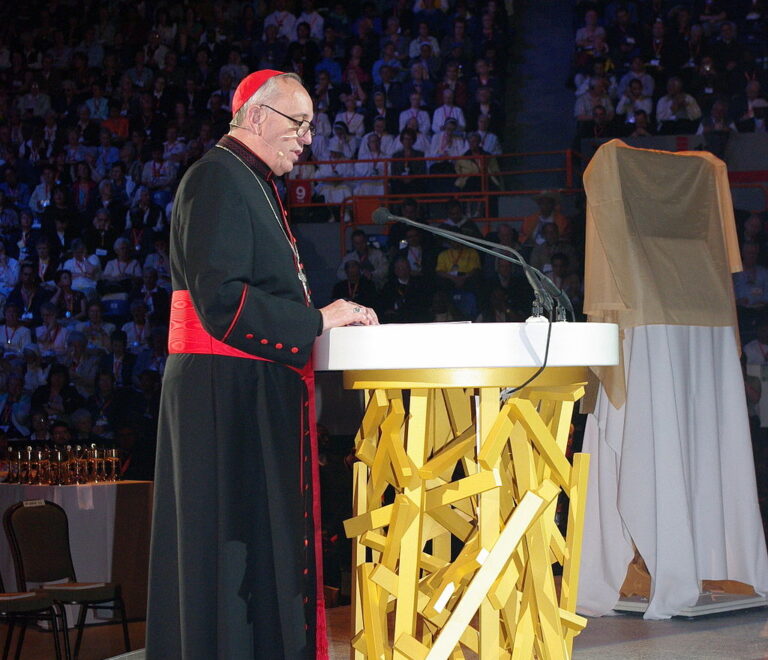
THE Roman Catholic cardinals have scheduled Pope Francis’ funeral for Saturday, April 26, at St. Peter’s Square, the Vatican announced on Tuesday.

The Vatican released photos of Pope Francis in his vestments, lying in a wooden coffin inside the chapel of the Santa Marta residence, where he had lived throughout his 12-year papacy.

His body will be transferred to the nearby St. Peter’s Basilica in a procession led by cardinals, allowing the faithful to pay their final respects to the first Latin American pope.

The ICIR reported that Pope Francis passed away at the age of 88 on Monday. His death marks the end of a turbulent papacy during which he frequently clashed with traditionalists and consistently advocated for the poor and marginalised.

Earlier this year, the Pope spent five weeks in the hospital battling double pneumonia. However, he returned to the Vatican nearly a month ago and appeared to be recovering, even making a public appearance at St. Peter’s Square on Easter Sunday.

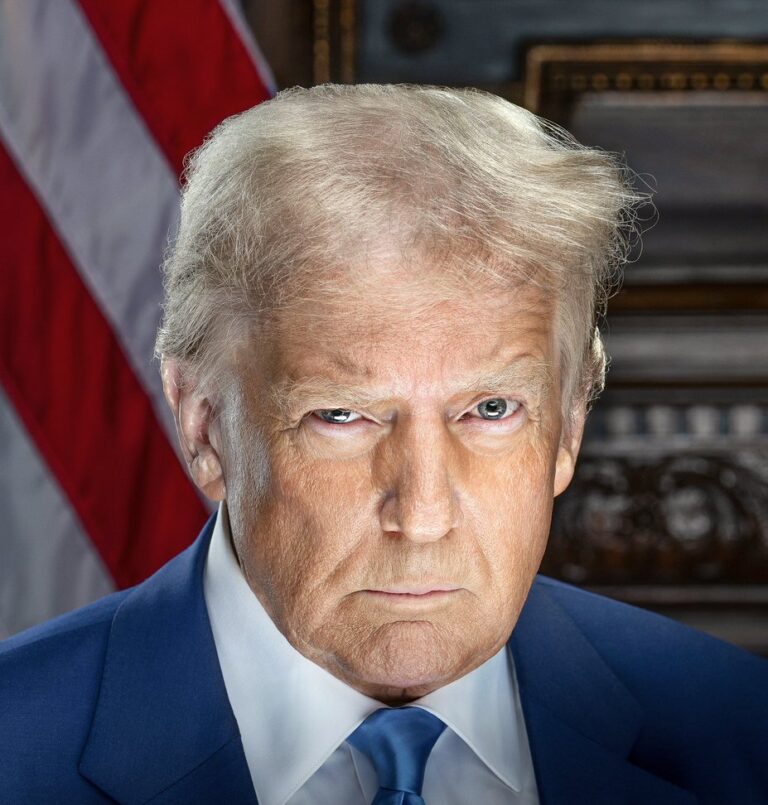
The United States President Donald Trump, who clashed with the pope over immigration issues, announced that he and his wife would travel to Rome to attend the funeral service.

Among other heads of state set to attend are Javier Milei, president of Francis’ native Argentina, Brazilian President Luiz Inacio Silva and Ukrainian President Volodymyr Zelenskiy, according to a source in his office.

Breaking from tradition, the late pope wrote in his final testament, released on Monday, that he wished to be buried in Rome’s Basilica of Saint Mary Major, rather than St. Peter’s Basilica, where many of his predecessors were interred.

The Vatican announced late on Monday that staff and officials within the Holy See could begin paying their respects before the pope’s body at the Santa Marta residence, where Francis had made his home since 2013, opting to forgo the grand apostolic palace where his predecessors had lived.

The ICIR reported that Francis’ death has triggered ancient rituals, as the 1.4-billion-member Church begins the transition from one pope to another. 

This includes the breaking of the pope’s “Fisherman’s Ring” and lead seal, which were used during his lifetime to seal documents, ensuring they cannot be used by anyone else.

All cardinals in Rome were called to a meeting on Tuesday to discuss the sequence of events in the coming days and to review the Church’s daily operations during the period before a new pope is elected.

A conclave to elect a new pope typically occurs 15 to 20 days after the death of a pontiff, meaning it is not expected to begin before May 6. 

Approximately 135 cardinals are eligible to take part in the secret ballot, which can last several days before white smoke rises from the chimney of the Sistine Chapel, signalling to the world that a new pope has been chosen. 

Currently, there is no clear frontrunner to succeed Pope Francis.

13 more bodies recovered as death toll from attacks on Benue hits 69

THE death toll from the recent string of attacks in Benue State has climbed to 69, following the recovery of 13 additional bodies in the wake of raids on rural communities in Ukum and Logo Local Government Areas.

Governor Hyacinth Alia had initially confirmed the discovery of 56 bodies on Sunday, April 20, after his visit to the affected areas of the state.

The ICIR reported that gunmen attacked Gbagir community, Ukum LGA of the state. The assault occurred on Thursday on the Sankera axis of the LGA and simultaneously on the neighbouring Logo LGA.

The renewed attacks in Sankera came barely 48 hours after suspected herders launched brutal attacks on three communities, Emichi, Odudaje, and Okpamaju, in Otukpo LGA, southern Benue.

However, the number surged on Monday after 13 more victims were found in surrounding bushes where the armed attackers had struck, according to Daily Trust.

The Principal Special Assistant to the Governor on Media and Content Creation, Isaac Uzaan, confirmed the updated figure on Monday, revealing that 12 bodies were recovered in Ukum and one in Logo.

This brings the total number of fatalities from the attacks to 69, when the latest figures are added to those released by the state governor.

While assessing the communities on Saturday, Governor Alia described the situation as “a real war.” He said no one could afford to sleep with both eyes closed.

His words, “There is no room for anyone to sleep with their two eyes closed. This is real war. We know our enemies. This is the only state that we have. I mourn with you at this very pathetic and sad moment in your lives.”

Alia appealed to the Federal Government for urgent support to halt the violence and prevent further displacement of residents, many of whom are now taking refuge in camps in Zaki-Biam and Ugba.

He also urged residents not to take the law into their hands, stressing the need for calm and lawful conduct even in the face of repeated attacks. 

“I have called on the Federal Government to urgently intervene and take decisive action to put an end to these attacks. Our people deserve to live in peace, farm in peace, and raise their families without fear.

“I met with local leaders, community members, and victims. I heard your pain. I saw your strength. And I assure you, you are not alone. We will not abandon you. We are already reinforcing security in the Sankera axis and other parts of Benue, and emergency relief is being extended to affected areas.

“I strongly urge our people to remain calm and not take the laws into their own hands. The path to peace is hard, but it is the only way forward,” the governor added.

Does Nigeria have low electricity tariff in the world?

0

A claim that Nigeria enjoys low energy tariff in the world has surfaced online.

The claim was made by the Minister of Power, Adebayo Adelabu (1:37:20 – 1:38:10), in response to questions from journalists about debts owed to power generation companies (Gencos) during a press briefing held on Thursday, April 17, 2025, at the National Press Centre in Abuja.

During the televised briefing, Adelabu announced a 35 per cent reduction in electricity subsidies following recent tariff hikes for high-use consumers. He said this adjustment generated ₦700 billion in revenue and helped reduce the government’s financial burden.

Adelabu acknowledged ongoing challenges in the power sector, including grid instability, gas shortages, and a ₦4 trillion debt owed to power firms, half of which the government plans to address through budgetary support.

He emphasised that the government prioritises the welfare of Nigerians over the interests of electricity companies, striving to ensure both reliable and affordable power supply, especially for the poor. While recognising the global rise in energy costs, Adelabu stated that Nigeria still enjoys one of the lowest electricity tariffs in the world.

The minister also highlighted progress under the Siemens Power Initiative, including improved transmission capacity and a push toward renewable energy. He reaffirmed the government’s commitment to delivering consistent and affordable electricity to all Nigerians.

A portion of his statement, as transcribed from the briefing, reads:

…We can never be on the side of the companies, we are on the side of Nigerians you must ensure that they not only enjoy reliable electricity they enjoy affordable electricity but all said and done we still need to keep looking at the appropriateness of tariffs I’m telling you it affects me too it’s not as if I just want to increase tariff but we need to look at we must protect the poor but energy is expensive all over the world we all know after food security is energy security that most countries of the world are battling with and we still enjoy the lowest tariff in Nigeria today I must tell you…

Given the nature of this claim, The FactCheckHub investigated its accuracy.

CLAIM

Nigeria enjoys low energy tariff.

THE FINDINGS

Findings by The FactCheckHub shows that the claim is MOSTLY TRUE!

A 2024 BusinessDay report noted that despite the increase in electricity tariffs from ₦66 to ₦225 per kilowatt-hour, Nigeria remains one of the countries with the lowest electricity rates in West Africa.

Citing data from GlobalPetrolPrices.com, the report confirmed that even with a 240 per cent hike, Nigeria’s electricity costs remain among the most affordable in the region.

Countries such as Mali, Togo, Senegal, Ghana, and Ivory Coast reportedly pay more for electricity than Nigeria.

Additionally, a recent Statista report on global electricity prices shows that Nigeria ranks among the countries with the lowest tariffs worldwide.

However, countries like Qatar, Iran, and Russia have even cheaper rates, primarily due to their vast reserves of crude oil and natural gas, which subsidise domestic energy costs.

This positions Nigeria in a relatively low-cost bracket globally, particularly when compared to countries without comparable energy resources.

THE VERDICT

The claim that Nigeria enjoys the lowest energy tariff in the world is Mostly True.
While Nigeria does not have the absolute lowest tariff, countries like Qatar, Iran, and Russia are cheaper, it remains among the most affordable both in West Africa and globally.

Republished from the Factcheckhub.

Trump backs Hegseth amid leaked Yemen attack details repeatedly shared on signal

PRESIDENT Donald Trump has expressed his support for United States Defence Secretary Pete Hegseth after reports that he repeatedly shared details of a March attack on Yemen’s Iran-aligned Houthis in a signal message group.

“Pete’s doing a great job. Everybody’s happy with him,” Trump said on Monday,  April 21. Asked if he remained confident in Hegseth, Trump said: “Oh, totally.”

Hegseth shared details of a March attack on Yemen’s Iran-aligned Houthis in a separate signal group chat that included his wife, brother and personal lawyer, Reuters reported on Sunday, April 20.

The ICIR reports that this revelation came at a critical time for both Hegseth and the Pentagon, following the recent dismissal of senior officials as part of an ongoing internal leak investigation.

Hegseth disclosed details of the attack in the second group chat that closely resembled those published last month by The Atlantic, after its editor-in-chief, Jeffrey Goldberg, was added to a separate Signal conversation involving all of Trump’s most senior national security officials.

The ICIR reports that this revelation also came just weeks after National Security Adviser Mike Waltz was reported to have shared highly sensitive security information in a Signal group chat.

Waltz shared war plans in a signal message group that included a journalist days before the US attacked Houthis in Yemen.

A person familiar with the matter, speaking on condition of anonymity, said the second chat included around a dozen participants and was initially created during Hegseth’s confirmation process to address administrative matters, not detailed military planning.

The person added that the chat contained information about the timing of the airstrikes.

Speaking with reporters at the White House on Monday, Hegseth criticised the media and former employees.

“I have spoken to the president, and we are going to continue fighting on the same page all the way,” Hegseth said.

However, the Trump administration has taken a hardline stance against leaks, a campaign that Hegseth has actively supported at the Pentagon.

The latest revelation emerged just days after Dan Caldwell, one of Hegseth’s top advisers, was escorted out of the Pentagon after being identified in an investigation into leaks at the Department of Defence.

After Caldwell’s departure, Darin Selnick, who recently became Hegseth’s deputy chief of staff, and Colin Carroll, former chief of staff to Deputy Defence Secretary Steve Feinberg, were placed on administrative leave and dismissed on Friday.

Similarly, Pentagon’s former top spokesperson, John Ullyot, who resigned last week, criticised the Pentagon leadership in a POLITICO Magazine opinion piece published on Sunday. 

Ullyot claimed that Hegseth’s team had spread unverified accusations about three senior officials fired last week, falsely alleging that they had leaked sensitive information to the media.


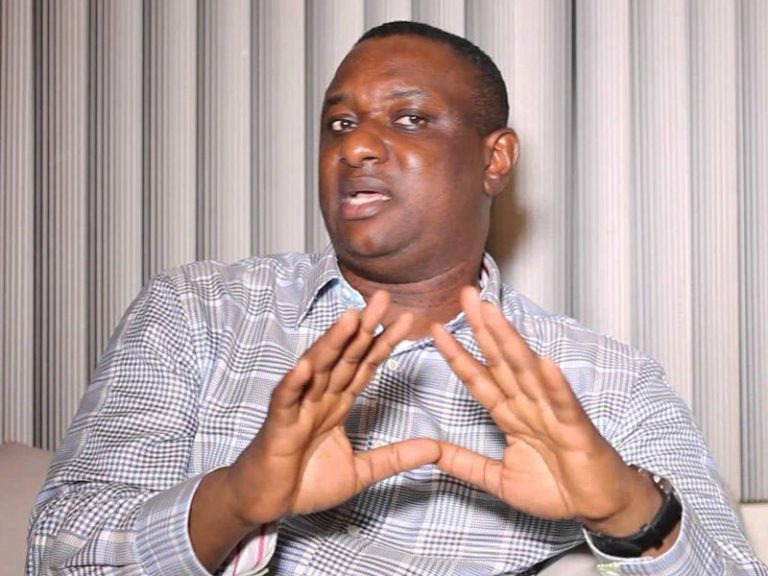
Keyamo faults reports on concession deal, lengthy closure of Enugu Airport

THE Minister of Aviation and Aerospace Development, Festus Keyamo, has described media reports that the Federal Government had agreed to a lengthy concession period for the Enugu International Airport as untrue.

The minister stated this in a statement on Monday, April 21, by his Special Adviser on Media and Communications, Tunde Moshood.

He said while it is true that the Federal Government was considering proposals for the concession of five major airports, the reports that it had agreed to a lengthy period of concession of the Enugu airport were “utterly baseless and untrue.”

“At this stage, prospective concessionaires have indeed submitted various proposals, including different durations for the concession. It is important to emphasise that the Ministry of Aviation and Aerospace Development has not established any fixed duration.

“All submitted proposals are currently undergoing thorough evaluation that will eventually be reviewed by the ICRC before it is presented to the Minister for conveyance to the FEC for approval,” Keyamo explained.

Stressing that the review process had yet to be concluded, the minister, however, said he had some months ago directed that the aviation labour unions be included as part of the negotiating teams.

“Therefore, we must state unequivocally that the information suggesting a predetermined concession duration is false, unfounded, and intended to cause unwarranted disaffection and mistrust in this process by those with entrenched interests,” Keyamo maintained.

The need to concession the Enugu and four other airports is a proactive measure to ensure the facilities meet and maintain international standards, given the increasing financial demands of their operations.

He added, “Many of our airports are presently running at a loss, so they have to be subsidised each month by the Federal Government. It is noteworthy that this initiative to concession started from previous administrations.”

He assured that the aviation ministry under his leadership would ensure that all decisions are made in the best interest of the nation and the aviation sector.

The ICIR reported on Saturday, April 19, that the Federal Government ordered the temporary closure of the Akanu Ibiam International Airport in Enugu State to allow emergency repairs on a critical section of the runway.

The directive conveyed by the Federal Airports Authority of Nigeria (FAAN) became necessary following the discovery of a sudden rupture in the asphalt surface of the runway, posing a significant safety concern.

The emergency repairs are to be conducted from April 22 to May 6, even as FAAN said the closure was in line with civil aviation regulations and part of efforts to ensure passenger safety and upgrade of airport infrastructure.

Appealing to travellers for the inconvenience this would cause them during the period of repairs and reopening of the airport, FAAN said all flights should be diverted to nearby airports, including the Asaba Airport in Delta State.

Tributes pour in as world leaders mourn Pope Francis

0

PRESIDENT Bola Tinubu and other world leaders are mourning the passing of Pope Francis, who died on Monday, April 20, at the age of 88.

Tinubu, in a statement by his spokesperson, Bayo Onanuga, described the late Pope as a tireless champion of the poor and a guiding light for millions.

Tinubu said the Pope’s passing, coming just after the celebration of Christ’s Resurrection, was an indication that the Christian leader returned to his Maker sacredly.

“His Holiness served the Church and the Master of the Church until the end. In 2013, he stepped onto the global stage with a message of mercy, urging us to see the face of Christ in the marginalised, the refugees, the migrants, and the forgotten.

“He challenged the powerful to act with justice, called nations to welcome the stranger, and reminded us that our common home – this Earth – is a gift we must protect for future generations.”

Tinubu said Pope Francis was an instrument of peace who deeply embodied the message of Christ: love for God and humanity.

He added that in a time of division, the deceased built bridges between faiths and the rich and the poor and was a steadfast advocate for the developing world, where he consistently spoke against economic injustice and ceaselessly prayed for peace and stability in troubled regions.

The Nigerian president extended his condolences to the Catholic Church and the Christian faithful worldwide.

Also commenting on the Pope’s passing, the US Vice President, JD Vance, who met with the late Pope a day before his death, said his heart went out to millions of Christians all over the world who loved the late faith leader.

He added that he was happy to see the Pope on Sunday, April 20. He also confirmed that the Pope was ‘obviously’ very ill when they met. He said he would always remember the Pope and the homily he gave in the early days of COVID.

In his message, the President of Kenya, William Ruto, described Pope Francis’s death as a big loss to the Catholic faithful and the Christian world.

He said he would be remembered for a life dedicated to serving the Lord, the Church, and humanity.

According to him, the Pope exemplified servant leadership through humility, unwavering commitment to inclusivity and justice, and deep compassion for the poor and the vulnerable.

Former vice president and presidential candidate of the Peoples Democratic Party (PDP) in the 2023 election, Atiku Abubakar, also joined the list of those mourning the pope’s demise.

In a message released on Monday, Atiku expressed deep sorrow over the passing of the Pope, describing it as the end of an era defined by humility, moral courage, and unwavering service to humanity.

Atiku extended his sympathies to the Holy See, the Catholic Church in Nigeria and across the globe, and the Christian faithful worldwide.

Atiku lauded Pope Francis and described him as a pontiff who led by example, often walking among the people, speaking for the marginalised, and offering kindness in a world filled with division.

The ICIR reported that the Vatican announced the Pope’s passing on Monday morning while the global Christian community continued the 2025 Easter celebration.

The Vatican’s Cardinal Kevin Farrell announced his death in a statement.

Pope Francis, whose real name is Jorge Mario Bergoglio, was born in Buenos Aires, Argentina, on December 17, 1936.

He hailed from a humble background and was renowned for his simple lifestyle.

He spent a large part of 2025 in the hospital, treating an infection that developed into pneumonia in both lungs.

Pope Francis was hospitalised with a complex respiratory tract infection and double pneumonia, which affects both lungs and can make breathing difficult.

He later recovered to the extent where he was able to appear in front of crowds in St. Peter’s Square for Easter Sunday, where he met with US Vice President Vance.

Meanwhile, in a report, The ICIR highlighted what happens when a Pope dies and how his successor is chosen.

Conclave: What happens when the Pope dies, how his successor is chosen

0

Pope Francis has died, the Vatican has announced in a video statement. He is the first Latin American leader of the Roman Catholic Church. He died at the age of 88 on Monday, April 21, Easter Monday. He had suffered various ailments in his 13-year reign, with severe complications in recent weeks. In this explainer, The ICIR looks at papal administration following the death of Pope Francis and how a new pope is elected in the Roman Catholic Church.


What happens when a Pope dies

When a Pope dies, the governance of the Catholic Church passes to the College of Cardinals.

Cardinals are bishops and Vatican officials from all over the world, personally chosen by the pope. They are recognisable by their distinctive red vestments.

Following a vacancy in the papacy, the Cardinals hold a series of meetings at the Vatican called general congregations. In the meeting, they discuss the needs and the challenges facing the Catholic Church globally.

They will also be prepared for the upcoming papal election, called a ‘conclave’. Decisions that only the pope can make, such as appointing a bishop or convening the Synod of Bishops, must wait till after the election.

Popes that govern the Vatican City since 1914
Popes that governed the Vatican City since 1914

In the past, they made arrangements for the funeral and burial of the deceased pope.

Although no specific date is fixed for the conclave after a Pope’s death, in the past, 15 to 20 days after a papal vacancy, the cardinals gathered in St. Peter’s Basilica for a Mass invoking the guidance of the Holy Spirit in electing a new pope.

Age limits of Cardinals who are qualified to vote in a conclave

For the conclave itself, the cardinals electors process to the Sistine Chapel and take an oath of absolute secrecy before sealing the doors.

The ICIR reports that ‘Cardinal electors’ are those under the age of 80 who are eligible to vote in a conclave.

Bergoglio at an Argentine seminary where he studied for the priesthood in the 1950s.

The Cardinals vote by secret ballot, processing one by one up to Michelangelo’s fresco of the Last judgement, saying a prayer and dropping the twice-folded ballot in a large chalice.

Four rounds of ballots are taken every day until a candidate receives two-thirds of the vote. The result of each ballot is counted aloud and recorded by three cardinals designated as recorders. If no one receives the necessary two-thirds of the vote, the ballots are burned in a stove near the chapel with a mixture of chemicals to produce black smoke.

When a cardinal receives the necessary two-thirds vote, the Dean of the College of Cardinals asks him if he accepts his election.  If he accepts, he chooses a papal name and is dressed in papal vestments before processing out to the balcony of St. Peter’s Basilica.

The ballots of the final round are burned with chemicals, producing white smoke to signal to the world the election of a new Pope.

Perfect of the Supreme Tribunal of the Apostolic Signature, announces from the balcony of St. Peter’s “Habemus Papam” which translates in Engilsh “We have a Pope” before the new pope processes out and imparts his blessing on the city of Rome and the entire world.

What happens now that Pope Francis has died?

The period of official mourning officially begins with the funeral set to be conducted within days.

With the World’s 1.3 billion Catholics now mourning the death of Pope Francis, here is what will happen in the coming days.

News of the 88-year-old’s passing was announced earlier today, two months after he was admitted to the hospital with an infection that developed into pneumonia in both lungs and then kidney failure.

There will now be nine days of official mourning, but the historic process of the conclave, where cardinals will gather in the Sistine Chapel at the Vatican to choose who will be the next pope-will not begin for at least 15 days from today.

The Vatican Chamberlain, currently Cardinal Kevin Farrell, will first certify officially that Francis is dead by calling his name three times at his bedside.

The Pope’s office and private apartments will be sealed, and the papal fisherman’s rings will be removed from his finger and broken with a hammer.

The body of the Pope will then be dressed in red robes with a white mitre on his head, and he will be taken to St. Peter’s Basilica, where he will lie in state for three days.

His funeral will take place within six days, and in contrast to most of his predecessors-Francis will be buried in the Basilica of Santa Maria Maggiore in Rome’s Esquilino neighbourhood, rather than in the grottoes beneath St.Peter’s.

Only Cardinals who are under the age of 80 at the time the papal seat becomes vacant are eligible to vote in a conclave.

The ICIR reports that Nigeria has four Cardinals; Francis Arinze, Anthony Olubunmi Okojie, Peter Ebere Okpaleke and John Cardinal Olorunfemi Onaiyekan. However only Okpaleke is eligible to vote in the conclave, others are over 80 and therefore ineligible to vote.

Ondo, Bauchi, Edo lead as Nigeria records 674 Lassa fever cases, 127 deaths in 14 weeks

0

ONDO, Bauchi, and Edo states have emerged as the epicentres of Nigeria’s ongoing Lassa fever outbreak, accounting for 71 per cent of the 674 confirmed cases recorded nationwide between January and April 6, 2025.

This is according to the latest situation report from the Nigeria Centre for Disease Control and Prevention (NCDC), which shows that Ondo State alone contributed 30 per cent of the confirmed cases, followed by Bauchi with 25 per cent and Edo with 16 per cent.

The update, covering epidemiological week 14 (March 31 – April 6), reveals that Nigeria reported 4,025 suspected cases during the first 14 weeks of the year. Of this number, 127 people have died.

The report further stressed that 18 states have recorded at least one confirmed case across 93 Local Government Areas so far in 2025.

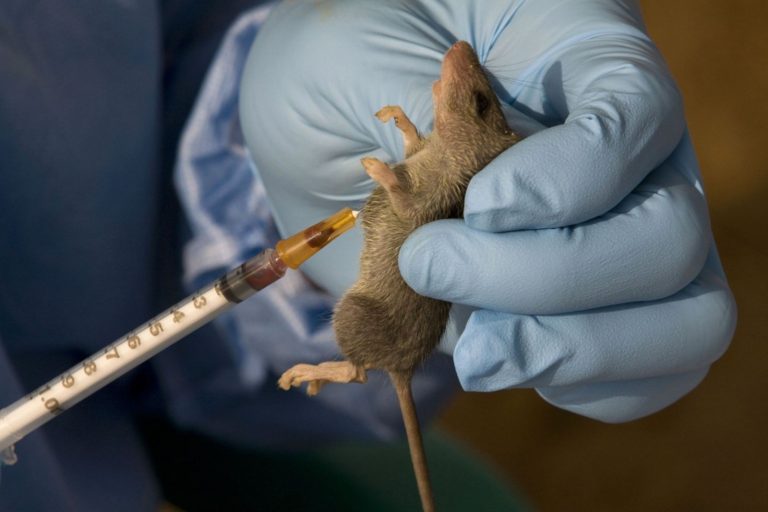
The NCDC described Lassa fever as an acute viral haemorrhagic fever caused by the Lassa virus,  mostly through the type of rodents known as the multimammate rat or the African rat.

The disease can be spread through direct contact with urine, faeces, saliva, or the blood of infected rats or contaminated objects, faeces, saliva, or the blood of infected rats.

Person-to-person transmission can also occur through direct contact with an infected person’s blood, urine, faeces, vomitus, and other body fluids.

Fatality rate raises concern

With the reported 127 deaths recorded from 674 confirmed cases in 2025 so far, the case fatality rate (CFR) stands at 18.8 per cent, according to the situation report.

This figure, it noted, is slightly higher than the 18.5 per cent recorded during the same period in 2024.

However, the NCDC highlighted that the number of suspected cases this year had been lower than what was recorded in the same period in 2024, possibly indicating improved public awareness and response measures.

The high case and fatality rates are linked to late presentation at health facilities, poor health-seeking behaviour, and limited access to early diagnosis in high-burden states.

Youths most affected

The most affected age group falls between 21 to 30 years, with a median age of 30. The sex distribution of the confirmed cases shows a near parity, with a male-to-female ratio of 1:0.8.

While no new healthcare worker infection was recorded in the latest week, the NCDC confirmed that 20 health workers have contracted the disease in 2025.

Latest report shows an increase in confirmed cases

The latest NCDC report for week 14 indicates a slight increase in new lassa fever cases, with 15 confirmed cases recorded compared to 14 in the previous week.

The cases were reported in Ondo, Bauchi, Edo, Taraba, Ebonyi, and Gombe states, bringing the total number of states with confirmed Lassa fever cases in 2025 to 18.

Both Ondo and Bauchi recorded five cases, Edo recorded two, while Taraba and Ebonyi recorded one each in week 14.

This also means that Ondo has 200 confirmed cases of the disease in 2025, followed by Bauchi with 171, Edo with 107, and Taraba with 106.

Ebonyi (21), Kogi (14), Plateau (13), Gombe (13), Benue (9), and Nasarawa (5) make the top 10 most affected states.

China to allies: Don’t trade us off for US

CHINA has warned its allies against entering wider economic agreements with Washington at its expense.    

Beijing’s Commerce Ministry issued the warning on Monday, April 21, as it accused the US of misusing tariffs, noting that Beijing would firmly oppose any party striking a deal at China’s expense and “will take countermeasures in a resolute and reciprocal manner.”

The ministry was reacting to a Bloomberg report which said the Trump administration was planning to pressure countries seeking tariff relief or exemptions from the US to scale back trade with China, potentially including monetary penalties.

“The United States has abused tariffs on all trading partners under the banner of so-called ‘equivalence’, while also forcing all parties to start so-called ‘reciprocal tariffs’ negotiations with them,” the ministry said.

The ministry vowed that China was resolute and capable of protecting its rights and interests, and expressed its willingness to strengthen solidarity and cooperation with all parties.

Taking a hardline approach, Beijing also announced plans to hold an informal United Nations Security Council meeting this week to accuse Washington of bullying and of “casting a shadow over global efforts for peace and development” through the weaponisation of tariffs.

The ICIR reported that US President Donald Trump suspended the broad tariffs he announced on over 50 countries on April 2, except those on China, singling out the world’s second-largest economy for the heaviest duties.

In a series of moves, Washington increased tariffs on Chinese imports to 145 per cent, prompting Beijing to impose retaliatory duties of 125 per cent on US goods. However, last week, China indicated that it would not further raise its overall tariff rates.

Earlier this month, US Trade Representative Jamieson Greer revealed that nearly 50 countries had reached out to him to discuss the significant additional tariffs imposed by Trump.

Several bilateral discussions on tariffs have taken place since Trump’s announcement, with Japan reportedly considering increasing its imports of soybeans and rice as part of its negotiations with the US, while Indonesia plans to boost imports of American food and commodities, potentially cutting back on purchases from other countries.

Trump’s tariff policies have unsettled financial markets. Investors are worried that major disruptions to global trade could push the world economy into a recession.

The Trump administration has also been working to hinder Beijing’s advancement in developing semiconductor chips, citing concerns that they could be used for military purposes. 

Last week, it further targeted China’s shipbuilding industry by imposing port fees on vessels built in China, aiming to curb the country’s dominance in the sector.

On Monday, Chinese stocks edged up slightly, showing a minimal response to the commerce ministry’s remarks. 

However, investors have largely remained wary of Chinese assets amid mounting concerns over slowing economic growth.

The ICIR reported that China suspended all liquefied natural gas (LNG) imports from the US for over 10 weeks in response to Trump’s tariffs.