AMID a surge in attacks that have claimed about 70 lives in Benue State in recent weeks, the state Governor Hyacinth Alia has rejected calls for a state of emergency in the state as part of measures to curb the menace.
Fielding questions from Arise TV’s ‘Morning Show’ hosts on Wednesday, April 23, the governor agreed that the state was under siege but maintained that declaring a state of emergency was not the solution.
The ICIRreported that nearly 70 bodies were recovered from bushes in the state as of Monday, April 21.
Alia had initially confirmed the discovery of 56 bodies on Sunday, April 20, after his visit to the affected areas in the state.
The ICIRreported that gunmen attacked Gbagir community, Ukum Local Government Area (LGA) of the state. The assault occurred on Thursday on the Sankera axis of the LGA and simultaneously on the neighbouring Logo LGA.
The renewed attacks in Sankera came barely 48 hours after suspected herders launched brutal attacks on three communities, Emichi, Odudaje, and Okpamaju, in Otukpo LGA, southern Benue.
Speaking on the killings, Alia said the state was under siege and rapidly losing ground to armed herdsmen.
He said that rather than the Federal Government consider imposing a state of emergency because of the crisis, it should do more to support his government.
“We’ve reduced the number of conflict-ridden local governments from 17 to six. This is not a failure of leadership, it’s a call for reinforcements,” he said.
Alia outlined his government’s efforts to stop the killings, noting that since assuming office nearly two years ago, his administration had reduced the number of frontline conflict zones from 17 to six through a combination of tactical responses, including the deployment of 100 Hilux trucks, 600 motorbikes, and joint task forces such as Operation Zenda and Operation Ayem Akpatuma.
Despite these efforts, he stressed that the state resources were not enough. “We need more hands. We need help,” Alia stated, calling for additional federal military support, especially along volatile border areas with Nasarawa, Taraba, and Cameroon.
The governor also highlighted a perceived disconnect with federal security authorities. While the National Security Adviser recently claimed that no part of Nigeria was under non-state actors’ control, Alia countered him. “This is an empirical fact. People are being killed and displaced. These attackers don’t even speak Nigerian languages.”
The governor emphasised the need for a sustainable strategy to restore peace in the state and allow farmers to return to their ancestral lands.
IN January this year, a video surfaced online showing a woman being arrested for allegedly killing her newborn. Although the exact cause had not been confirmed, many social media users speculated that she might have been suffering from postpartum depression or postpartum psychosis.
While motherhood is often celebrated with joy, it can also come with serious mental health challenges. Postpartum Depression (PPD) and Postpartum Psychosis (PPP) are conditions that, if unaddressed, can profoundly impact mothers, infants, and the wider community.
According to Mayo Clinic, PPD is a mood disorder that affects women after childbirth and sometimes their partners. It’s marked by extreme sadness, anxiety, and exhaustion that may interfere with daily life. PPP, though rare, is more severe, involving hallucinations, delusions, and cognitive disturbances.
Maternal mental health in Nigeria is a critical but often overlooked issue, affecting both mothers and their children. While many new mothers experience “baby blues”—mild, temporary mood changes after childbirth—a significant number face more severe conditions such as postpartum… pic.twitter.com/hZBG82cWwL
A systematic review published on National Institute of Health reported that postpartum psychosis incidence ranges between 1 and 2 per 1,000 births, with one study noting a prevalence of 5 per 1,000 births.
Findings indicates that 57 per cent of women with a history of postpartum affective psychosis had no prior psychiatric history. For mothers who have had PPP and choose to have more children, over half are at risk of experiencing another perinatal mood episode.
Symptoms and diagnosis
Speaking on mental state examination, Zuliah Abdulazeez, a medical officer at the University of Ilorin College of Health Sciences, said, “The Edinburgh Depression Scale is used to assess women and monitor response to treatment. Treatment involves the use of antidepressants such as fluoxetine, Cognitive Behavioural Therapy, and supportive care.”
Sa’adatu Adamu, a mental health counsellor and founder of Secure-D-Future International Initiative (SDF), identified early warning signs as persistent low mood, overwhelming anxiety, fatigue, sleep disturbances, and loss of interest in activities.
“From my experience counselling women, postpartum depression (PPD) does not happen overnight, there are early warning signs that can be recognised such as persistent low mood. Many mothers report feeling persistently sad or emotionally numb beyond the normal baby blues,” she explained.
She added, “Extreme worry about the baby’s health or irrational fears about being a bad mother. Also worries about the new body shape or size and societal expectations are not exempted.”
Mental health advocate and founder of Secure-D-Future International Initiative (SDF), Saadatu Adamu.
Adamu also noted that mothers might feel disconnected from their babies, suffer frequent mood swings, or struggle to sleep. “Statements like; ‘I am failing as a mother’ or ‘My baby would be better off without me’ are red flags.
“In severe cases, some mothers experience suicidal thoughts or intrusive thoughts about harming their baby. Recently on social media I read about a woman who threw away her child through the window but with the help of her neighbours the baby was rescued and she was immediately removed from that space to also receive treatments.”
Barriers to treatment
Stigma, poor healthcare infrastructure, financial hardship, and cultural misconceptions make it difficult to address maternal mental health in Nigeria. Many women suffer in silence, afraid of being seen as weak or “possessed.” Misconceptions often lead to isolation rather than support.
Even when services are available, the cost of therapy and medication is high. Few hospitals are equipped for maternal mental health, and a widespread lack of awareness causes delays in diagnosis. Many families mistake PPD or PPP symptoms for normal exhaustion.
Traditional beliefs further complicate the issue. Women with postpartum mental health challenges are sometimes taken to prayer centres instead of medical facilities, delaying critical care. Adamu emphasised community-based approaches to diagnosis and treatment.
“Training midwives and traditional birth attendants to recognise and refer cases early is essential, given their role in childbirth. Additionally, community health workers… can be equipped to detect PPD symptoms and provide basic mental health support.
“Providing safe spaces through psycho-education, counselling, and peer support groups helps struggling mothers express their emotions and find validation. Effective treatments like Cognitive Behavioural Therapy (CBT) and Interpersonal Therapy (IPT) can be delivered by trained non-specialists,” she said.
For mothers who have had PPP and choose to have more children, over half are at risk of experiencing another perinatal mood episode. Photo:Imtiyaz Quraishi from Pixabay
Despite mental health policies in Nigeria, implementation remains weak. There are few government-backed postpartum mental health initiatives. The National Mental Health Act, enacted in January 2023, mandates mental health integration into maternal and reproductive health programmes, yet little progress has followed.
Lack of support from families and societal pressure on new mothers to resume daily activities immediately after childbirth compounds the issue. Many women don’t receive the care they need, leading to feelings of isolation and despair.
Local research on PPD and PPP is also limited, making it difficult to create effective, data-driven policies. Solutions must include public awareness, better healthcare access, and stronger policy enforcement.
“The family and society play a critical role in providing supportive care, both to the mother and newborn. Care to previous suicide and newborn harm is important,” Abdulazeez said.
Adamu stressed that early intervention through family support and community awareness could prevent PPD from escalating into PPP.
“Husbands and family members should recognise that PPD is a medical condition, not a sign of weakness, so they should be part of the client’s journey. Many mothers experience burnout because they lack help with the baby. Shared caregiving responsibilities reduce stress.
“Religious and traditional leaders – Churches, Mosques, and traditional institutions – should normalise mental health discussions and refer affected mothers to professional help. In fact I will suggest that clergy should also undertake the professional counselling and mental health courses to aid their respective jobs,” she emphasised.
Interventions and shifting the narrative
Despite the barriers, some programmes are making a difference or at least attempted too. The Abiye (Safe Motherhood) Programme in Ondo State, launched in 2009, provides free healthcare for pregnant women and young children, and has received global recognition. The Aisha Buhari Foundation’s Future Assured initiative also targets maternal health, and the Women’s Health and Equal Rights Initiative (WHER) works to promote mental wellness through training and advocacy.
To break the silence on PPD and PPP, a multifaceted approach is needed antenatal education, public awareness campaigns, training for healthcare workers, and effective policies. Sharing stories from recovered mothers can normalise these discussions, and involving husbands fosters a supportive environment.
By challenging stigma, enforcing mental health laws, and providing care early, Nigeria can ensure better outcomes for mothers and their families.
NIGERIA continues to lead the world in malaria cases and deaths, despite decades of global and domestic investments, according to the latest World Malaria Report 2024 released by the World Health Organization (WHO).
The report draws on 2023 data from 83 malaria-endemic countries, including the territory of French Guiana, while also presenting trends in malaria morbidity and mortality globally and by region.
The report, which highlighted the 2023 global malaria incidence, shows that Nigeria accounted for 26 per cent of global malaria cases, again making it the most malaria-affected nation worldwide.
Out of the estimated 263 million malaria cases recorded globally in 2023, Nigeria accounted for 68 million (68,136,000). DRC Congo followed suit with 33 million cases. Uganda had over 12 million people affected by the disease in 2023, while Ethiopia logged 9.5 million of the global reported cases of the disease.
This shows that the four countries are among the 11 ‘High Burden to High Impact (HBHI)’ countries, a group responsible for 66 per cent of global malaria cases and 68 per cent of deaths in 2023.
Others are Mozambique (9.2 million), United Republic of Tanzania (8.5 million), Angola (8.2 million), Mali (8.2 million), Burkina Faso (8.1 million), Niger (7.9 million), and Côte dʼIvoire (7.8 million).
Nigeria also ranked highest in malaria-related deaths, contributing significantly to the 597,000 global fatalities. The WHO African Region, which includes Nigeria, accounted for 94 per cent of the total global malaria burden and 95 per cent of deaths.
Four African countries accounted for just over half of all malaria deaths globally, with Nigeria having 30.9 per cent, and the Democratic Republic of the Congo having 11.3 per cent. Niger (5.9 per cent) and the United Republic of Tanzania (4.3 per cent) are the two other nations that accounted for 10 per cent of the cases.
While mortality from malaria has declined slightly over the past three years globally, from 622,000 in 2020 to 597,000 in 2023, according to the latest WHO report, Nigeria’s data remain high, especially among children under five and pregnant women.
According to WHO estimates, the country also recorded the largest number of under-five malaria deaths.
11 million more global malaria cases between 2022 and 2023
Meanwhile, the 2023 data shows a global increase of 14 million malaria cases compared to 2022. In 2022, the world recorded 249 million cases of malaria, with Nigeria accounting for 26.8 per cent of the cases.
Although Nigeria’s share slightly declined to 25.9 per cent in 2023, the country still recorded 66.7 million cases, representing an increase of over 1.4 million compared to the previous year. WHO noted that this rise might be mainly attributed to population growth.
DRC Congo, Uganda, Mozambique and Angola joined Nigeria as the most hit nations.
“Between 2000 and 2019, the number of annual estimated malaria cases remained stable, varying between 227 million and 248 million across the 108 countries that were malaria endemic in 2000.
“Since 2020, the number of estimated malaria cases has steadily increased, and most of this increase occurred in countries in the WHO African Region (89.7 per cent) and the WHO Eastern Mediterranean Region (15.5 per cent),” the report added.
Nigeria’s health infrastructure, compounded by the impacts of climate change and ongoing internal displacement due to conflict, is said to worsen the malaria crisis.
A missed target
The Global Technical Strategy for Malaria 2016–2030 (GTS), introduced by WHO, seeks a 75 per cent reduction in both malaria case incidence and mortality by 2025. However, the country, among many other African countries, remains far from the target.
The report warned that the 2023 malaria incidence globally was nearly three times higher than what was required to meet the GTS benchmark.
In 2023, 12.4 million pregnant women in 33 moderate to high transmission countries in the WHO African Region were estimated to be infected with malaria.
Despite interventions such as the intermittent preventive treatment of malaria in pregnancy (IPTp), uptake remains critically low, with only 44 per cent of pregnant women in 34 African countries, including Nigeria, receiving the recommended three or more doses of IPTp.
Global investment, local shortfalls
In 2023, global funding for malaria control and elimination totalled US$4.0 billion, with 75 per cent of that directed to the African region.
However, the WHO warned that despite these inflows, a US$4.3 billion global funding gap still existed, with only 48 per cent of the required investment for 2023 being met.
This has translated to under-resourced primary healthcare, delayed or unavailable malaria treatments, and gaps in preventive tools like insecticide-treated nets (ITNS)
The WHO emphasised that an effective malaria response in Nigeria and other affected African countries must address systemic inequities, strengthen health systems, and improve access to prevention and treatment tools for vulnerable populations, including children, pregnant women, indigenous peoples, and people with disabilities.
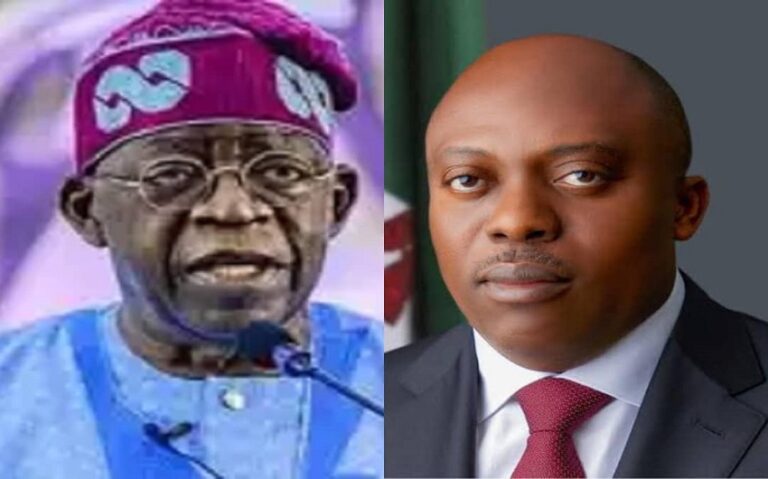
IN his bid to return to office, suspended Rivers State Governor Siminalayi Fubara reportedly met with President Bola Tinubu in London last week, according to Africa Report.
Two senior aides to the president reportedly confirmed that the two leaders met and discussed issues bothering on the Rivers State politics.
The ICIR reported that Tinubu suspended Fubara on March 18 following a political impasse in the oil-rich state.
Fubara and his predecessor, Nyesom Wike, have been at loggerheads over who controls the PDP structure in the state since 2023, with President Tinubu’s efforts to resolve the stalemate yielding no result.
The ICIR reported that the crisis deepened when 27 lawmakers loyal to the minister of the Federal Capital Territory (FCT) defected from the People’s Democratic Party (PDP) to the All Progressives Congress (APC), reigniting the power struggle between Governor Fubara and Wike.
The crisis further escalated after the suspended governor declared the seats of 27 lawmakers vacant and dismissed all 23 local government chairmen elected under Wike, stating that their tenures had ended.
He followed his action with the conduct of a local government election on October 5, affirming his authority on the state’s politics.
Amid the crisis, pro-Fubara thugs allegedly set the State House of Assembly on fire. The action was followed by an attempted impeachment of Fubara.
The suspended governor thereafter conducted the state affairs with a splinter group of four lawmakers loyal to him, including approval of appointments, lawmaking, and budget approval.
The crisis peaked with the Supreme Court’s ruling that ordered the recognition of the 27 lawmakers by the governor, including payments of all their withheld salaries and allowances, among others.
Wike, during a media chat on Wednesday, March 12, said Fubara should be impeached if he had committed an impeachable offence.
He insisted that for peace to return between the legislature and the state executive, Fubara must represent the 2025 budget to the State Assembly led by Martin Amaewhule, and also resubmit the names of his commissioners for clearance.
However, the drama escalated at the State House of Assembly complex on Wednesday, March 12, when Fubara arrived at the quarters for the presentation of the 2025 budget, only to find the entrance gate locked.
A few days after the unfolding drama, Tinubu declared a state of emergency, suspended Fubara for six months, and appointed a sole administrator to oversee the state.
Since then, the declaration of emergency rule has sparked protests and attracted condemnations from many Nigerians.
DESPITE the much touted economic reforms of the Bola Tinubu administration, International Monetary Fund (IMF) has downgraded Nigeria’s real gross domestic product (GDP) by 0.2 per cent from the 3.2 per cent it had forecast earlier.
The Bretton Woods institution says Nigeria’s economy will now grow by 3.0 per cent this year, citing lower oil prices as the reason for the downgrade.
It projected this in its April 2025 World Economic Outlook report released on Tuesday, April 22.
The latest projection is also below the 3.4 per cent growth estimated last year.
Nigeria’s revised economic growth projection reflects the impact of declining oil prices on Nigeria’s fiscal and external balances, the IMF stated.
Noting that energy exports remain Nigeria’s dominant source of foreign exchange earner and public revenue, the IMF further feared that the growth is expected to slow further to 2.7 per cent in 2026.
The International Financial institution also expects sub-Saharan Africa’s growth rate to decline to 3.8 per cent this year from four per cent last year.
It, however, sees a modest recovery in 2026, lifting to 4.2 per cent.
“Among the larger economies, the growth forecast in Nigeria is revised downward by 0.2 percentage points for 2025 and 0.3 percentage points for 2026, owing to lower oil prices, and that in South Africa is revised downward by 0.5 percentage point for 2025 and 0.3 percentage point for 2026, reflecting slowing momentum from a weaker-than-expected 2024 outturn, deteriorating sentiment due to heightened uncertainty, the intensification of protectionist policies, and a deeper slowdown in major economies,” it stated.
The IMF further stated that, even though Nigeria maintained a current account surplus, however, its external position is expected to weaken in the coming years.
It estimates its current account balance to shrink from 6.9 per cent in 2025 and further to 5.2 per cent in 2026, from 9.1 per cent of GDP in 2024.
The ICIR reports that the Central Bank of Nigeria (CBN) said Nigeria’s current balance of payments surplus stood at $6.83 billion for 2024, driven by a goods trade surplus of $13.17 billion. However, the IMF said the surplus might not be sustained.
This comes even as JP Morgan had also warned that Nigeria could slide into a current account deficit if oil prices remain below the country’s benchmark of $60 per barrel.
Nigeria’s inflation to hit 37% in 2026
In the same vein, the IMF expressed concern that Nigeria’s headline inflation will rise sharply to 37 per cent in 2026.
It stressed that the persistent price pressures and structural constraints would likely keep inflation elevated over the medium term.
It stated specifically that Nigeria’s inflation is expected to average 26.5 per cent this year before surging to 37.0 per cent in 2026.
The Nigerian inflation came down from an average of 33.2 per cent in 2024 after the National Bureau of Statistics (NBS) rebased the Consumer Price Index in January this year.
The NBS rebasing saw inflation ease to 24.48 per cent in January from 34.80 per cent in December 2024.
In February, it fell further to 23.18 per cent but rose to 24.23 per cent in March, signalling resumed upward pressure on consumer prices.
The IMF also flagged weak income growth among Nigerians.
It projects the country’s real output per capita to grow by just 0.6 per cent in 2025 and 0.3 per cent in 2026, reflecting limited gains in living standards.
NIGER State Governor, Umaru Mohammed Bago, has imposed a curfew on Minna, restricting movement from 6 pm to 6 am.
This decision followed a surge in violent attacks and killings in the city. Under the new rules, commercial motorcycle and tricycle operators are prohibited from operating during curfew hours, except for medical emergencies.
The governor made the announcement during a stakeholders’ security meeting with traditional rulers and heads of security agencies at the Government House on Tuesday, April 22.
The government said it aimed to curb the growing insecurity and protect people in the state.
Additionally, local leaders have been instructed to document visitors, and homes found harbouring criminals may face demolition.
Minna, like other major cities in the North-Central, has recently witnessed a resurgence of thuggery, attacks, and killings, raising concerns among residents.
Niger is one of several states in Nigeria currently facing insecurity. Scores of residents have been killed in Benue and Plateau states in recent days.
The ICIR reported that thedeath toll from the recent string of attacks in Benue climbed to 69 on Monday, following the recovery of 13 additional bodies in the wake of raids on rural communities in Ukum and Logo Local Government Areas.
Governor Hyacinth Alia had initially confirmed the discovery of 56 bodies on Sunday, April 20, after his visit to the affected areas of the state.
The ICIRreported that gunmen attacked the Gbagir community, Ukum LGA, of the state. The assault occurred last Thursday on the Sankera axis of the LGA and simultaneously on the neighbouring Logo LGA.
The renewed attacks in Sankera came barely 48 hours after suspected herders launched brutal attacks on three communities, Emichi, Odudaje, and Okpamaju, in Otukpo LGA, southern Benue.
The ICIR also reported that 40 peoplewere killed in another attack on the Zike community, Kimakpa, in the Kwali district of the Bassa Local Government Area of Plateau State.
The killings followed the death of 52 people in the Bokkos Local Government Area of the state after they were attacked by gunmen.
TO cushion the impact of global economic shocks particularly from recent U.S. trade tensions Nigeria must increase its oil production and avoid poor fiscal management. This advise comes from Bismarck Rewane, economist and CEO of Financial Derivatives Company.
Rewane made the remarks on Tuesday, April 22, on the sidelines of the IMF Spring Meetings in Washington, D.C. He was responding to the ongoing global tariff crisis triggered by U.S. policies under President Donald Trump, which continue to cause uncertainty in international trade.
“Our strength lies in oil production,” Rewane said. “We need to ramp up output to at least 1.7 million barrels per day. With oil prices dropping, the country might need a supplementary budget soon.”
He stressed the importance of economic stability at home, urging the government to focus on increasing crude output and avoiding fiscal deficits that could worsen Nigeria’s economic position.
Oil production lags as money supply grows
According to the Central Bank of Nigeria (CBN), Nigeria’s money supply rose to N114.2 trillion in March 2025, a 24 per cent increase year-on-year. Rewane warned that too much cash in circulation, combined h falling oil production, could put pressure on the naira and worsen inflation.
“There’s a lot of cash in the system now compared to last year. Money supply is growing and oil production is dropping, which means pressure on currency and gross reserve has dropped below $38 billion. We need to do more on oil production,” he said.
Despite a production quota of 1.5 million barrels per day (bpd) set by OPEC, Nigeria fell short in March, producing just 1.401 million bpd, a drop of 64,000 bpd from February. This marks the second straight month of decline after briefly surpassing the quota in January.
Budget under pressure as oil prices fall
Falling oil prices are also complicating Nigeria’s 2025 budget, which is based on a $75 per barrel benchmark. With Brent crude currently selling for $67.25, the government is reportedly considering a budget review to address the growing deficit.
The situation is raising concerns about Nigeria’s ability to fund its spending plans, especially as oil revenues remain a critical part of national income.
Limited impact from U.S. tariffs for now
OPEC’s latest report suggests that U.S. tariffs will have limited direct impact on Nigeria, thanks to exemptions for oil and gas. However, the broader economic ripple effects and continued global price volatility remain a concern.
“The latest US tariffs, particularly on Nigerian oil and gas exports, are expected to have a limited impact on Nigeria’s economy, considering the exemptions for oil and gas and the country’s limited exposure to US trading,”
The report also noted that although inflation in Nigeria is beginning to ease, a weakening naira could slow that progress.
Rewane concluded by reiterating the urgent need for the government to act: “To stay afloat in the face of global economic turbulence, Nigeria must focus on what it does best—produce oil efficiently and manage its economy responsibly.”
WHILE millions of Nigerians continue to endure blackouts and rising electricity bills, the Presidential Villa is switching to solar signalling a quiet vote of no confidence in the nation’s troubled power grid.
The federal government has approved a ₦10 billion budget for a solar mini-grid to power the Aso Rock Presidential Villa, according to the 2025 budget. The move, which comes amid increasing electricity tariffs and widespread power outages, has sparked fresh concerns about the government’s trust in its own electricity infrastructure and its priorities.
Listed under budget code ERGP202502463, the “Solarisation of the Villa with Solar Mini Grid” project accounts for more than 17 per cent of the Villa’s capital budget, which grew from an initial ₦47 billion to ₦57 billion. Originally, the state house was allocated ₦47 billion in the 2025 budget proposal, but the figure increased to ₦57 billion upon approval. While The ICIR can not confirm the proposed budget details, it might be due to the solar power project.
Despite this shift, the budget still allocates an additional ₦311 million for conventional power supply, raising questions about long-term energy strategy at the presidency.
Widespread struggles, rising costs
The decision comes at a time when the Nigerian Electricity Regulatory Commission (NERC) has approved a significant tariff hike under its new Band A classification.
These customer, expected to get at least 20 hours of daily power now pay ₦225/kWh, over three times the previous ₦68 rate. While the government insists that only 15 per cent of consumers fall under Band A, many Nigerians have raised concerns over forced or erroneous classifications without corresponding improvements in power supply.
The development elicited reactions from consumers and industry stakeholders who described distribution companies’ failure to meet with power supply as structured by supply-service reflective tariffs as unfair.
Institutions in darkness
On February 11, The ICIRreported that students of the College of Medicine at the University College Hospital (UCH), Ibadan, staged a protest in response to a persistent power outage that plagued the institution for over 100 days.
The demonstration, which began at 7:00 a.m. and was supported by the Students’ Union (SU) of the University of Ibadan (UI), saw the students express outrage over the adverse effects of the blackout on their study and healthcare services at the institution.
The power outage at UCH commenced in November 2024 when the Ibadan Electricity Distribution Company (IBEDC) disconnected the hospital from the national grid due to an outstanding debt of about ₦400 million.
The debt was part of ₦3.1 billion accumulated since 2019, according to a Premium Times report. But it was not limited to the UCH, it is one of the disturbing incidents of power disconnection in key public institutions in Nigeria.
In August 2024, the Eko Electricity Distribution Company (EKEDC) disconnected the University of Lagos (UNILAG) from the power grid over an outstanding debt of N472 million.
The university claimed that its monthly electricity bill, previously between N150 million and N180 million, surged to nearly ₦300 million. It noted that the surge followed EKEDC’s decision to upgrade its tariff band from Band B to Band A in June.
Ahmadu Bello University (ABU), Zaria, was also cut off from the national power grid by Kaduna Electric due to its inability to settle outstanding electricity bills in the same year.
The disconnection, which took effect on Thursday, November 28, plunged the institution into darkness.
According to a bulletin issued by the university’s management on Friday, November 29, the institution struggled to cope with rising electricity costs. It noted that despite paying over a billion naira in electricity bills to Kaduna Electric since January, the university was said to still owe a huge electricity debt.
‘FG lost faith in the National Grid’
The President of the Electricity Consumer Protection Advocacy Centre (ECPAC), Princewill Okorie, questioned the Presidency’s faith in the national grid power with the migration of Aso Villa from the national grid to solar-powered electricity.
He noted that the allocation for solar at the Villa reveals how the government’s priorities continue to ignore the structural energy challenges faced by ordinary Nigerians.
“It is clear that our power sector policy managers are confused. If the Aso Villa is migrating to solar-powered electricity, it means that they have lost faith in the national grid power supply. What can the ordinary Nigerian do in this case, with the cost of solar largely out of the reach of the common man?
“Also, if 36 state governments at the sub-national level decide to go through with solar with a weak local production, it means we’re exporting jobs, and it also shows how weak our power sector reform is despite the government’s assurances,” he said.
“The government has lots of questions to answer on this. The Federal Government, through the Nigerian Electricity Regulatory Commission (NERC), has promoted Bands A, B, C, and D to facilitate the efficient running of the power sector. How come the Presidency is now migrating to solar?” he queried.
Okorie also berated the power sector managers, whom he described as ‘confused’ in managing the power sector affairs, adding that Nigerians option to solar is largely because of failed power sector reforms.
“Emphasis is always on tariff hike without commensurate impact on electricity supply to electricity users,” he added.
THE Lagos State Police Command has initiated an internal review into the conduct of its officers involved in the alleged mistreatment of Quadri Alabi, following a meeting between human rights lawyer Inibehe Effiong and the state Commissioner of Police, Moshood Jimoh.
Effiong confirmed the development in a statement on Tuesday, April 22.
He said the meeting with the commissioner and other senior police officers led to the commissioner setting up a committee tasked to probe the actions of the officers and other individuals linked to the boy’s travails.
“We have concluded a meeting with the Lagos State Commissioner of Police, CP Moshood Jimoh and other high-ranking officers in the Command.
“The CP introduced us to the committee, which he has tasked with carrying out an internal review of the conduct of his officers and other persons involved in Quadri’s ordeal,” he wrote.
He emphasised the importance of the investigation, saying it was critical to preventing or reducing the recurrence of similar cases of abuse and misconduct.
“We are cooperating with this investigation because we believe that it is imperative to prevent or reduce the recurrence of cases like the one of Quadri Alabi,” he added.
Effiong, who has stood as Quadri’s lawyer, said his team would allow the Commissioner to take “appropriate actions” following the outcome of the committee’s findings.
This came against the backdrop of the police claims that Quadri was arrested for street fighting.
Recall that the 17-year-old who gained national attention during the 2023 elections by standing in front of Labour Party (LP) presidential candidate Peter Obi’s convoy was arrested by the police in January 2025, charged in court and detained at Kirikirki Correctional Centre.
However, a Lagos Magistrate Court on Thursday, April 17, discharged him following legal advice from the Directorate of Public Prosecutions (DPP), which confirmed there was no evidence to support the armed robbery charge levelled against him.
His lawyer, Effiong, had described the armed robbery charge as ‘baseless,’ stating that the case was another example of Nigeria’s flawed justice system.
The lawyer also stated the police misrepresented his age to be 18, “knowing that disclosing his actual age would likely raise eyebrows.”
Effiong stated that the young boy’s predicament began following his viral picture during the 2023 campaign event when he stood in front of Obi’s convoy and later received financial support from the public.
But shortly after his release, the Lagos State Police Command’s Public Relations Officer, Benjamin Hundeyin, in a statement, on Saturday, April 19, insisted that Quadri was arrested, charged to court and remanded in a correctional facility after the street fight that took place in the Amukoko area of the state.
The command added that the incident occurred on January 22 when a group of youths engaged in a fierce street fight that caused terror in the community.
According to the statement, several people were injured and public and private property were damaged, stressing that some passersby were also robbed during the alleged chaos.
The police further explained that the investigation led to the arrest of Quadri and four others, who were subsequently taken to court. The court then ordered their detention pending further legal proceedings.
Also, justifying his arrest on Channels Television, on Tuesday, April 22, the Lagos State Commissioner of Police, Moshood Jimoh, stated that Quadri stated that he was 18 years old.
He also stressed that the birth certificate that the lawyer is parading should be investigated.
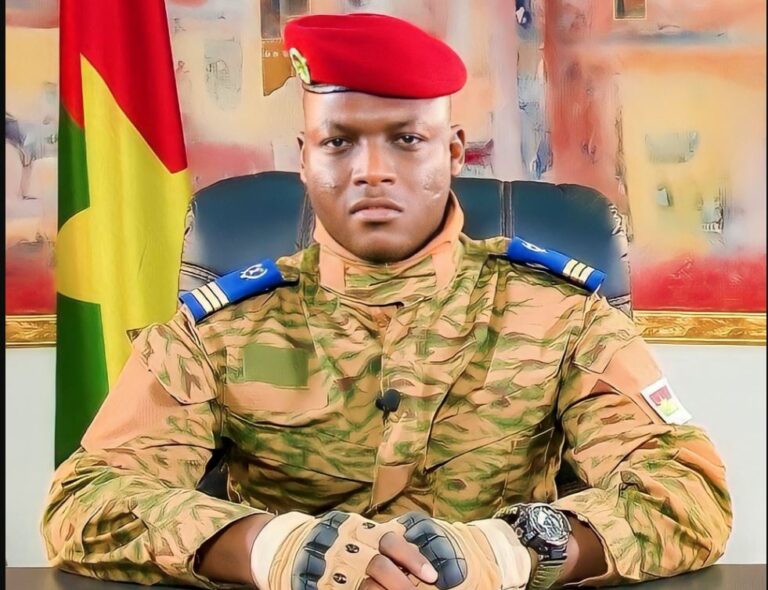
BUKINA Faso’s military government has announced that it foiled a “major plot” to overthrow junta leader Captain Ibrahim Traoré.
The junta alleged that the conspirators were operating from neighbouring Ivory Coast.
In a televised address on Monday, April 21, Burkina Faso’s Security Minister, Mahamadou Sana, revealed that both active and retired soldiers had allegedly conspired with terrorist groups to launch an attack last week on the presidential palace.
“The manoeuvre was to culminate, according to the terrorist plotters’ plan, on Wednesday 16 April, 2025, in an assault on the presidency of (Burkina) Faso by a group of soldiers recruited by the nation’s enemies,” he said.
Sana added that “sensitive information” was leaked to terrorists to escalate attacks on both the military and civilians, to spark a revolt against the authorities.
He alleged that the plot aimed to destabilise the country and establish a regime controlled by an international organisation. He added that the group tried to influence public opinion by enlisting religious and traditional leaders to persuade military officers to back the coup.
He further alleged that the masterminds of the plan were operating from Ivory Coast, identifying two former army officers believed to be behind the operation. So far, Ivorian authorities have yet to respond to the accusations.
The ICIR reports that this is the latest in a series of alleged attempts to remove the junta leader, who took power in 2022 amid a surge in militant attacks.
Security sources told the AFP news agency that several military personnel, including two officers, were arrested last week for allegedly plotting to “destabilise” the government.
The ICIR further reports that Traoré seized power in 2022 amid rising public frustration over widespread jihadist violence, as approximately 40 per cent of Burkina Faso was outside government control due to insurgent activities.
Although Burkina Faso has cut off its alliance with France and strengthened ties with Russia in hopes of improving security, jihadist attacks persist.
While Ivorian authorities have yet to respond to allegations that they hosted the putschists, the Burkinabe junta has frequently accused its southern neighbour of supporting exiled opponents.
The ICIR reported that Burkina Faso, Niger, and Mali, announced their exit from the Economic Community of West African States (ECOWAS) in January 2024 and accused the regional body of failing to safeguard member states and aligning too closely with foreign powers.
They also created a confederation called the Alliance of Sahel States and strengthened alliances with Russia, Turkey, and Iran to address internal security threats such as jihadists and armed gangs, as well as external pressures.