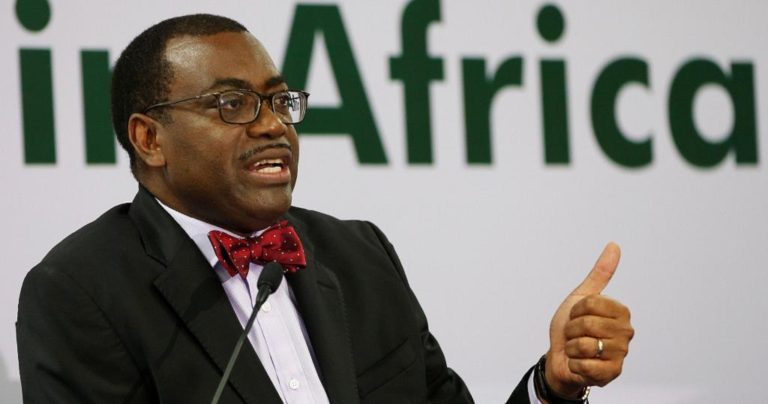
NIGERIAN youths and their counterparts in other African countries need funding to drive their ideas and not N5,000 or N10,000 empowerment, the president of the African Development Bank (AfDB), Akinwumi Adesina, has said.
He specifically noted that the migration phenomenon known as ‘Japa’ in Nigeria is a big loss for the country and the continent.
The former agriculture minister expressed his concern during an interview monitored by our correspondent on Channels Television’s Sunrise Daily on Thursday, April 10.
“You cannot turn your demographic asset into somebody else’s problem. We have to put our money behind our young people to create opportunities for them.
“They don’t need N5,000, N10,000. You want to create youth-based wealth. If you don’t, who are the people to pay the taxes in the future? Where are you going to get the capital mobilisation in the future? You have to, therefore, invest in the same demography so you can reap in the future,” Adesina said.
He stressed that youths in Nigeria and others in 51 African countries do not need freebies under the guise of empowerment schemes, but capital to fund their ideas and translate same into enduring wealth.
“In the case of young people and the japa syndrome, it’s a big loss for us. Young people don’t need freebies; they don’t need people saying ‘I just want to give you an empowerment programme’.
“They have skills, they know, they have entrepreneurship capacity, they want to turn their ideas into great businesses. What young people need is not those empowerment programmes; they need capital, they need you to put your money at risk on their behalf,” Adesina maintained.
He asserted that the African continent has over 465 million young people between the ages of 15 and 35, warning that these demographic assets should not be turned into “somebody else’s problem” due to the inability to believe in young people and invest in their ideas for continental prosperity.
“I do not believe that the future of our young people lies in Europe; it doesn’t lie in America, it doesn’t lie in Canada, Japan, or China; it should lie in Africa growing well, growing robustly and able to create quality jobs for our young people,” Adesina said.
The AfDB president defended that Africa’s youth population is not a problem for the continent because India’s and China’s populations have not been a problem for their countries.
“It is what you do with your population; how you skill them up,” he said, explaining that if young people in Africa are skilled with good jobs and social protection, it would lead to prosperity for the continent because the demography has high purchasing power.
He posited that in a world of rising tariffs, it is important for Africa to build consumption as part of its gross domestic product (GDP).
Adesina pointed out that the financial system in Africa is not designed to support young people on the continent, lamenting that the financial system has failed young people in Africa.
“We have over 465 million young people between the ages of 15 and 35. Where is the financial market for them? Why is it suddenly a surprise to us that they are leaving? It’s because you are not putting anything down for them.
“We must recognise that the young people are our biggest asset; the demographic asset has to become an economic asset, and to do that, you have to put down capital,” he said.
In a recent report by The ICIR, young Nigerian professionals interviewed bared their minds on why most of their colleagues are eager to leave the country once they acquire the requisite skills.
This concern has been fuelling Nigerians ‘ exodus to foreign lands and has been a subject of concern over the years.
Also, there are further worries over getting the right funding to finance entrepreneurship in Nigeria, which The ICIR spotlighted in a recent interview with a former top bank official, Anthony Chinwe, who revealed where the bottlenecks lay in small businesses getting funds for their enterprise.
DANGOTE Petroleum Refinery and Petrochemicals has again reviewed its ex-depot (gantry) loading cost of petrol to ₦865 per litre.
The ICIR confirmed that the refinery management informed its marketers and customers of the slash on Thursday, April 10.
The price reduction, energy analysts said, is connected to the global drop in oil price, with oilprice.com affirming the current Brent crude oil price at $ 63.86 per barrel.
“What the Federal Government is losing through the drop in global oil price, with a sharp drop from the budget benchmark of $75/barrel, is a gain to the domestic market which must inadvertently see price drop for Nigerian consumers,” an oil sector governance expert, Oft Henry Ademola Adigun told The ICIR.
Other economic watchers noted that the drop is also linked to a meeting between representatives of the Dangote Refinery and the Minister of Finance and the Coordinating Minister for the Economy, Wale Edun, on Tuesday, over the naira-for-crude policy.
“The policy will firm up the naira against the dollar and serve as a hedge to the volatility of the naira against the dollar. This policy will encourage local indigenous petroleum refiners,” an energy analyst, Kingsley Obiakor, said.
At the end of the meeting, the coordinating Minister of the Economy said that the naira-for-crude was still in effect and that the initiative was not a temporary measure but a “key policy directive designed to support sustainable local refining.”
The government also said the initiative is still in effect and will continue immediately, overruling the decision of the NNPCL under its former boss, Mele Kyari, who tenured the initiative.
Recall that as part of moves to reduce the strain on the US dollar and guarantee price stability of petroleum products, the Federal Executive Council (FEC) in July 2024 directed the NNPCL to sell crude oil to Dangote Refinery and other local refineries in naira and not in the United States greenback.
However, in March 2025, the Nigerian National Petroleum Company Limited (NNPCL) said its Naira-denominated crude sales agreement with the Dangote Refinery was structured for six months, with March 2025 as the expiration date. Subsequently, the $20 billion Dangote Refinery temporarily halted the sale of petroleum products in Naira.
“This decision is necessary to avoid a mismatch between our sales proceeds and our crude oil purchase obligations, which are currently denominated in US dollars,” the company had said in a statement reported earlier by The ICIR.
The pump price of petrol jumped from around ₦860 to about ₦1,000, making consumers pay at least ₦70 more than what it used to cost them to buy a litre of the premium commodity days earlier.
The refinery, however, said it would resume the sale of its product to the local market in Naira as soon as it received crude cargoes from the NNPCL in Naira.
Days later, President Bola Tinubu fired Kyari and the entire NNPCL board.
In their stead, the president appointed an 11-man board with Bashir Ojulari as the Group Chief Executive Officer and Ahmadu Kida as non-executive chairman.
The resumption of Naira-denominated crude sales, experts believe, would reduce the strain on the US dollar and guarantee the price stability of petroleum products.
The ICIR had reported that Wale Edun said the federal government is committed to full implementation of the naira-for-crude as a policy to maximise the benefits of supporting sustainable local refining in the country
THE European Union (EU) has urged Nigerian electorate to choose their leaders through ballot amidst concerns about ‘contradictory decisions of courts’.
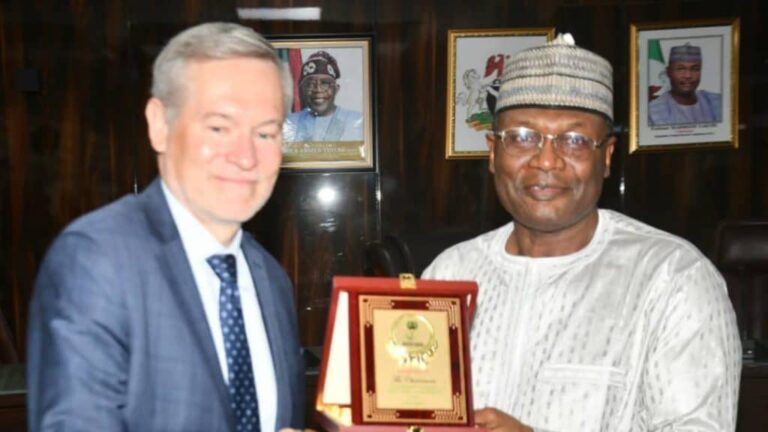
The EU made this known through its Ambassador to Nigeria and ECOWAS, Gautier Mignot, who spoke in Abuja on Wednesday April 9 during the launch of a report titled, “From Ballot to the Courts: Analysis of Election Petition Litigation from Nigeria’s 2023 General Elections” put together by the Policy and Legal Advocacy Centre (PLAC).
Mignot who was represented by the acting Head of Cooperation of the European Union Delegation to Nigeria and ECOWAS, Ruben Alba, stated that the protracted electoral issues undermined the independence of the Independent National Electoral Commission (INEC) to conduct well organised elections due to logistical challenges.
He further stressed that contradictory decisions of courts serve pose a threat to election administration, making the exercise of INEC regulatory responsibilities extremely tough.
He stressed that democracy largely depends on its judicial system, maintaining that the judiciary must maintain its constitutional responsibilities and enhance the protection of democratic values and the rule of law.
According to him, the important role of the judiciary in Nigeria’s democratic process has been confirmed by various judgments with great impact on the country’s democratic process. The courts have, through several groundbreaking decisions, strengthened and deepened democracy in Nigeria.
The EU ambassador stressed that the role played by the judiciary in the electoral process has given rise to positive and crucial transformation in the development process of Nigeria, but the country still has a lot to work on.
He added that it is also equally important to note that an effective judicial system is a collective responsibility, while the judiciary has a significant role to play in ensuring a timely, efficient, and transparent dispensation of justice.
“Citizens must also remain inform of their rights as enshrined by the Constitution, and this is also to hold the system accountable with electoral judiciary, there needs to be adequate information that forces compliance with the free spirit of the legislation so that cases are not just dismissed based only on technicalities, the conflicted decisions in respect of the same set of facts is also weighing heavily on the quality of the country’s democratic experience and the trust of voters, and as it was mentioned before, leaders should be elected through the ballot and not by the courts,” he stated.
Also speaking, the Executive Director of PLAC, Clement Nwankwo, stated that the report offered a wide analysis of the judgments delivered by the Election Petition Tribunals, the Court of Appeal, and the Supreme Court over petitions arising from the general elections held in February and March 2023.
The EU has been promoting credible elections in the country.
In January 2025, the EU Ambassador to Nigeria and ECOWAS, Mignot, met with the Chairman of INEC, Mahmood Yakubu, highlighting the EU’s interest in Nigeria’s electoral process.
NIGERIA’s Minister of Finance and the Coordinating Minister of the Economy, Wale Edun, said the federal government is committed to full implementation of the naira-for-crude as a policy to maximise the benefits of supporting sustainable local refining in the country.
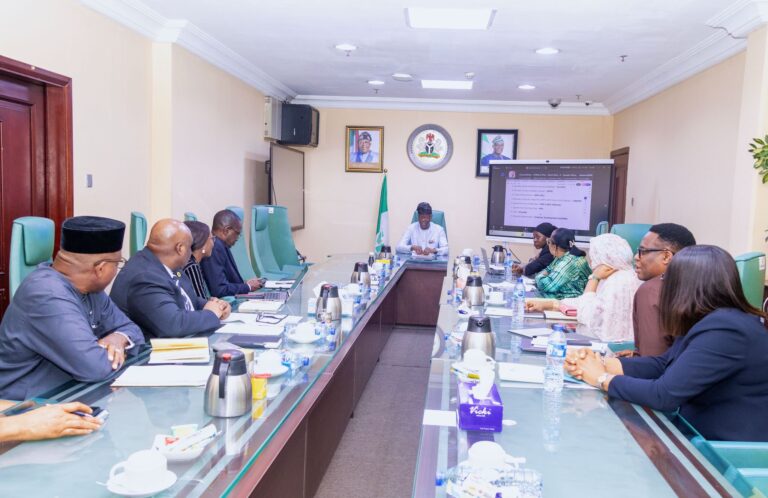
Edun assured of this at a meeting with representatives of the Dangote Refinery on Tuesday, April 8, according to a statement by the ministry on Wednesday, April 9.
He said the minister met with officials of the Dangote Refinery over the suspension of the naira-for-crude initiative by the Nigerian National Petroleum Company Limited (NNPCL).
Edun stressed that the deal with local refineries was not a temporary measure but a key policy directive designed to support sustainable local refining in the country.
He said the Technical Sub-Committee on the Crude and Refined Product Sales in Naira initiative met on Tuesday to review progress and address ongoing implementation matters.
The initiative is still in effect and will continue immediately, he said, overruling the decision of the NNPCL under its former boss, Mele Kyari, that suspended the initiative.
“The stakeholders reaffirmed the government’s continued commitment to the full implementation of this strategic initiative, as directed by the Federal Executive Council (FEC).
“Thus, the Crude and Refined Product Sales in Naira initiative is not a temporary or time-bound intervention, but a key policy directive designed to support sustainable local refining, bolster energy security, and reduce reliance on foreign exchange in the domestic petroleum market, Edun stated.
He stressed that, as with any major policy shift, the committee acknowledges that implementation challenges may arise from time to time.
He said, however, that such issues were being actively addressed through coordinated efforts among all parties.
“The initiative remains in effect and will continue for as long as it aligns with the public interest and supports national economic objectives,” the minister added.
The NNPCL suspended the naira-for-crude oil swap deal with domestic refiners, including Dangote Refinery, The ICIRreported.
The decision, which has immediate effect, has sparked discussions about its implications for Nigeria’s energy sector and the broader economy, triggering importation and higher fuel costs.
The ICIR reports that the naira-for-crude arrangement, introduced on October 1, 2024, ended on March 31, 2025.
The meeting Tuesday was attended by Edun, the chairman of the implementation committee; the chairman of the technical sub-committee and chairman of Federal Inland Revenue Service (FIRS), Zacch Adedeji; the chief financial officer of NNPCL, Dapo Segun; coordinator of NNPC refineries; management of NNPC Trading; and representatives of Dangote Petroleum Refinery and Petrochemicals.
Others were senior officials from the Nigerian Upstream Petroleum Regulatory Commission (NUPRC), the Nigerian Midstream and Downstream Petroleum Regulatory Authority (NMDPRA), the Central Bank of Nigeria (CBN), the Nigerian Ports Authority (NPA), representative of Afreximbank, as well as the Secretary of the Committee, Hauwa Ibrahim.
AMIDST the widespread economic challenges plaguing many African nations due to the recent global downturn, this report by The ICIR turns its attention to Ghana, where citizens are also voicing concerns over escalating living costs. This analysis compares the prices of essential goods in Ghana, a country rich in gold, with those in Nigeria, a country rich in oil.
Background
The economic hardship experienced by Ghanaians was one of the factors in the defeat of the ruling New Patriotic Party (NPP) by the National Democratic Congress (NDC) in the December 7, 2024, presidential and parliamentary elections. Simultaneously, Nigeria witnessed a series of protests against the policies of incumbent President Bola Tinubu throughout the same year.
The ICIR survey in both countries reveals that Ghanaians are paying more for food and other basic necessities compared to Nigerians. This is despite the Ghanaian cedi having a stronger value than the Nigerian naira. When the survey was conducted in December 2024, 16 Ghanaian cedis equated to one US dollar, while the Nigerian naira traded at N1,600 to the dollar, making one cedi equivalent to approximately N100.
To gather price data, The ICIR visited Nima Market, known locally as Kasoa Mamudu, in Accra and Old Garki Model International Market in Abuja. These markets are among the largest and busiest in the capitals of both nations.
A section of Nima Market in Accra, Ghana. Photo credit: Marcus Fatunmole
Ghana and Nigeria: Economic Indicators
As of November 2024, Ghana’s inflation rate stood at 23 per cent, while Nigeria’s was higher at 34.6 per cent. The daily minimum wage in Ghana is 18.15 cedis. This translates to roughly 490 cedis per 27 working days (per month as applicable in the country). In contrast, Nigeria operate a monthly minimum wage which is N70,000 per month.
Converting the Ghanaian minimum wage to naira gives 18.15×100 = 1,815 x 27 = N49,005. This means that the monthly minimum wage in Ghana is N49,005, while it is N70,000 in Nigeria due to a recent update, it was previously N30,000.
Ghana’s gross foreign reserve was $7.92 billion as of November 2024, while Nigeria’s exceeded $40 billion. Nigeria’s current population is approximately 236,386,904, about seven times the population of Ghana, which stands at nearly 34,914,969.
As of the end of the first half of 2024, Nigeria’s foreign debts stood at $42.9 billion. Ghana owed742 billion cedis, equivalent to approximately $50 million.
The entrance and parking lot of the Old Garki Model International Market, Abuja Photo credit: Marcus Fatunmole/The ICIR.
Ghanaians, Nigerians speak about hardship
Grace Addo said Ghanaians faced an acute economic crisis under the past administration headed by Akufo-Addo. She desired to witness better leadership under the new President John Mahama.
“Life has been hard. It hasn’t been this bad for Ghanaians. You can feel the hardship everywhere. Almost all prices have doubled in a few years. We aren’t the nation we used to be. Things are too tough for our people,” she said.
For Debra Joseph, the new government of Mahama has much to do to turn the economic tide around in the country.
He said, “We’re very surprised how the prices of goods, especially essential needs, are skyrocketing in Ghana. It was so bad that even two days before the presidential and parliamentary election, the government still increased the fuel price.”
Joseph noted that a government that wanted its party to retain power would not take such an decision. He said Ghanaians voted in anger, leading to the NPP’s overwhelming loss to the NDC in both presidential and parliamentary polls.
Another Ghanaian, Victoria Aboagye, told The ICIR that she anticipated the fall of Akufo-Addo’s party following growing hardship in the country.
“No country would endure the economic pains foisted on us by the NPP government. Instead of focusing on judicious use of our resources, the government kept taking loans and plunging our nation into further crisis. Feeding has been difficult. It’s been very hard for an average citizen to live a decent life.”
The story is not different in Nigeria. At the Garki International Market visited by the reporter, some residents of the country’s capital – Abuja – shared their views about the nation’s economy.
Auwal Ibrahim said, “Our pains worsened the day Tinubu took over power and announced subsidy removal. We didn’t expect that, and we have yet to recover from the shock. Life has been very tough for even the rich in the country.”
Bukola Abigail said seeing families who could not afford the basic needs of life, including shelter and food, was her headache.
“We thought we’d had it all under the former President Muhammadu Buhari. The emergence of Tinubu’s government has only worsened the pains we patiently endured for eight years under Buhari.
“Paying for healthcare, education, feeding, accommodation, water, electricity and other utilities has been difficult for the majority of citizens.”
Similarly, Yomi Faith said she hoped to see a change to the nation’s economic misfortunes, given some of the government policies. “I sincerely hope it won’t get to a point where Nigerians won’t be able to continue to cope with the current economic situation. The government should do all within its power to reverse the trend. I hope the government policies work.”
Table showing prices of some essential commodities in both countries – Nigeria and Ghana
A TEENERGER, Alabi Quadri, has been held at the Kirikiri Minimum Security Custodial Centre in Lagos since January over alleged armed robbery, a charge his lawyer says is baseless.
In a social media post, on Wednesday, April 9, his legal counsel, human rights lawyer Inibehe Effiong, stated that the arrest and detention of Quadri stems from a long-standing dispute with local area boys who allegedly abducted him and took him to the police.
Effiong claimed that Quadri was picked up near his home while returning from work and accused of participating in a street fight.
“We can confirm that Alabi has been in detention since January. He was abducted by ‘Area Boys’ close to his home while returning from work.
“According to Alabi and his mother, his painful walk to prison can be attributed to the prolonged malice nursed by some self-acclaimed area boys of his locality who felt entitled to a share of the unexpected fortune that came Alabi’s way when he halted and stood in front of the convoy of the 2023 presidential candidate of the Labour Party, Peter Obi, during the last electioneering campaign.
“Since he failed to properly “settle” some people, it has been one attack to another. After abducting Alabi, the same area boys who have been threatening to deal with him for not sharing the money he was gifted dragged him to the Amukoko Police Station (Pako Police Station) where he was detained,” Effiong wrote.
The area boys initially claimed that Alabi was one of the young men who had been involved in street fights.
But when the police arraigned him, he was charged with robbery involving four adults he does not know.
The police alleged that the group robbed two individuals of four mobile phones and cash, totaling N579,000, using cutlasses.
“I spent about two hours interviewing Alabi about the veracity of the charges brought by the police. Speaking objectively, we all left Kirikiri with a strong conviction that this gentleman is just another victim of Nigeria’s criminal justice system.
“The last point that we want to state on the record is that Alabi is a minor. He is less than 18 years.
According to Effiong, Quadri’s predicament began following his viral picture during the 2023 campaign event when he stood in front of Labour Party presidential candidate Peter Obi’s convoy and later received financial support from the public.
The lawyer said some area boys felt entitled to a share and have since harassed him for not “settling” them.
He further described the case as another example of Nigeria’s flawed justice system.
Effiong stated that Quadri has now appeared before the magistrate three times and is being held alongside adult suspects, pending legal advice from the Lagos State Directorate of Public Prosecutions (DPP).
He added that his legal team would pursue all lawful means to secure Quadri’s release and ensure justice is served.
The ICIR reports that Alabi Quadri’s detention in Kirikiri became public on Monday, April 7, when an X user, @Hausa_girl, posted his viral photo taken in front of Peter Obi’s convoy with the caption,“Do you guys remember this picture? Well the boy in front of this convoy is languishing in Kirikiri prison.”
She stressed that “The court is awaiting advice from DPP on how to proceed with the case.
“He was coming back from work the day some guys in the street apprehended him and took him to the police station. The guys told the police that he’s among the people stealing and fighting in the area which is not true. He’s being charged with stealing and fighting.”
Her post generated widespread reactions, including one from Obi, who said he had contacted Inibehe Effiong to take up the case.
Obi further appealed to the police and other agents of the government to always operate within the law and the rules.
The National Identity Management Commission (NIMC) has raised an alarm about National Identification Number (NIN)-related fraud. The commission issued a warning to Nigerians, cautioning them against sharing their NIN with unauthorised individuals and groups.
The Head of Corporate Communications for the NIMC, Kayode Adegoke, said the warning comes after security agencies arrested several individuals across various states for NIN-related fraud.
NIMC, in a statement posted on X on Wednesday, April 9, specifically raised concerns about individuals in Anambra State soliciting NINs from residents in exchange for money.
The commission said this practice is unauthorised and potentially fraudulent.
NIMC warns against such activities, emphasising that only official channels should be used for NIN-related matters.
The commission said the action violates the NIMC Act No. 23 of 2007, the Data Protection Act 2023, and the Cybercrime Act 2023.
The Identity management regulatory body further said that security agencies are arresting those involved in the unauthorised NIN solicitation and advised the public to be cautious and report any suspicious NIN-related requests to the authorities.
“Upon receiving the information on the activities of the unscrupulous individuals, NIMC, in conjunction with the Department of State Services (DSS) and the Nigeria Police Force (NPF), swiftly arrested the culprits behind the illegal collection of the NIN,” the statement reads.
NIMC added that those caught are currently being questioned and would be made to face the law.
It warned that sharing NINs for money is illegal and that those caught will face consequences.
According to the commission, NINs are only for accessing government and private services and must be verified. He added that the commission is taking action against those involved in this unauthorised activity.
The NIMC advised the general public to reach out to the commission whenever they notice the indiscriminate collection of NIN.
The National Identity Management Commission (NIMC) was established in 2007 to manage Nigeria’s national identity database and assign unique National Identification Numbers (NINs) to citizens and legal residents.
The NIN is designed to streamline the national identity database, discourage double identity, prevent identity fraud, and serve as a lifetime identifier for holders to establish or verify identity.
The NIN can be used for various purposes, including processing international passport applications, linking SIM cards, opening personal bank accounts, obtaining driver’s licenses, getting permanent voters’ cards, and participating in the National Health Insurance Scheme (NHIS).
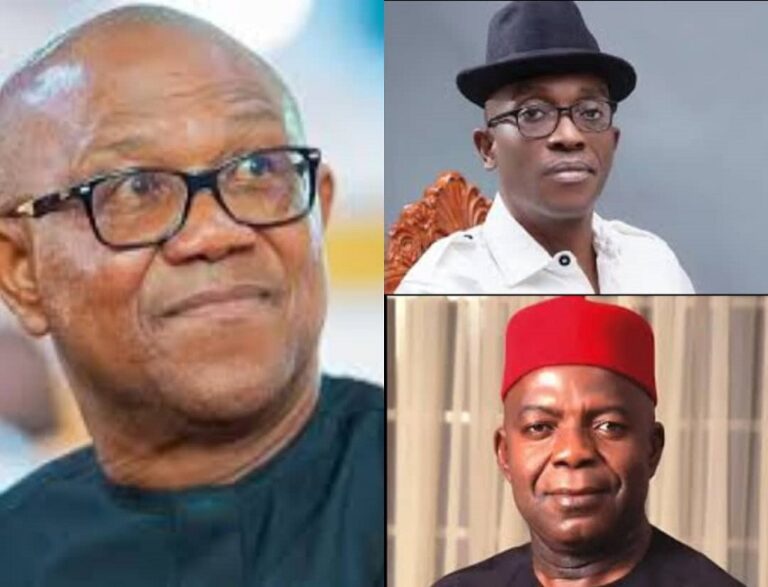
THE presidential candidate of the Labour Party (LP) in the 2023 presidential election, Peter Obi; Abia State Governor Alex Otti; and other stakeholders have endorsed the Nenadi Usman-led National Caretaker Committee.
They have mandated committee to manage the affairs of the party until a national convention is held.
The decision was reached during the LP National Executive Committee (NEC) meeting and Stakeholders’ Interactive town hall held in Abuja on Wednesday, April 9, 2025.
Otti said the Supreme Court’s recent judgment on the Labour Party’s leadership dispute has effectively settled the issue.
He referenced the Certified True Copy (CTC) of the judgment to support his claim.
According to him, the court’s decision removed the Julius Abure-led National Working Committee, paving the way for peace, unity, and order within the party.
Otti welcomed the ruling, stating it validates the creation of a new caretaker committee led by Usman.
“The decisions in favour of Abure were struck out, and his cross-appeal dismissed. The trial courts’ recognition of Abure was set aside,”
“Our Caretaker Committee is not here to hold power but to midwife the emergence of new leadership,” Otti stated.
He also revealed that he had previously offered Abure an opportunity to remain part of the party leadership, either as Deputy Chairman or by contesting again, but that Abure declined.
In his remarks at the meeting, Obi reassured the gathering of his loyalty to the party.
He also assured the party members that he had not left the LP.
Obi emphasised the need for a unified Labour Party driven by a clear ideology, urging stakeholders to work together from local to national levels to rebuild trust and strengthen the party’s structure.
He also highlighted Nigeria’s dire economic situation, expressing concern for ordinary citizens’ welfare and encouraging party members to promote justice and compassion.
“We must speak up when things are wrong. Even if we fail, we must fail doing the right thing,” Obi stressed.
Meanwhile, the National Publicity Secretary of the Abure-led faction, Obiora Ifoh, has disputed the interpretation of the Supreme Court verdict, claiming it didn’t state that Abure’s leadership had lapsed or that the Usman-led committee should take over.
Ifoh insists the Supreme Court respected the party’s autonomy and right to appoint leaders, upholding the precedence of lower court decisions recognisingAbure’s leadership.
Ifoh said the LP’s national convention in March 2024 elected new leaders in line with the constitution and the Electoral Act, and their tenure remains valid.
Apapa declares self leader
The leadership crisis took a new turn with Lamidi Apapa declaring himself the party’s leader following the Supreme Court’s judgment sacking Abure as National Chairman.
Apapa cited the apex court’s ruling as his reason for taking over, stating that all court pronouncements have nullified Abure’s actions and decisions since April 2023.
In a press conference on Wednesday, Apapa announced that the party’s National Working Committee as of 2022 will meet on April 14, 2025.
The ICIR reports that the Supreme Court sacked Abure as the national chairman of the LP on Friday, April 4.
The court set aside the judgment of the Court of Appeal in Abuja, which recognised Abure as chairman of LP.
The apex court, in a unanimous judgment, held that the Court of Appeal lacked the jurisdiction to declare Abure as the national chairman of the LP, having earlier decided that the case was about the party’s leadership.
The Supreme Court ruled in favour of Usman, a former senator who heads the caretaker committee of the LP.
INEC had earlier claimed that the LP’s national convention held in Nnewi violated the Nigerian Constitution and Electoral Act and failed to meet legal requirements.
The electoral body claimed Abure’s tenure as LP chairman expired in June 2024 and refused to recognise him as the party’s national chairman.
The commission stated this in response to a lawsuit filed by the LP challenging its exclusion from INEC’s refresher training for uploading party agents ahead of the Edo and Ondo governorship elections.
The INEC’s legal team, led by Tanko Inuwa, a senior advocate, said that the LP’s lawsuit seeking declaratory reliefs would not be granted.
THE military government of Niger Republic has announced that the country will adopt Hausa as its national language.
According to the junta its decision to adopt Hausa as the national language is a move to distance the country from France, with whom Niger had maintained a complicated diplomatic relationship since gaining independence in 1960.
The change was revealed in a new charter issued on March 31, which stated, “Hausa is the national language” and “English and French are the working languages.”
This decision follows a national conference held in February, which bolstered the junta led by Abdourahamane Tchiani, allowing them to remain in power for the next five years.
The ICIR reports that Tchiani who was Niger’s military ruler since 2023 after he deposed Niger’s elected President, Mohamed Bazoum, was officially sworn in on March 26 as the country’s president for a transitional period of five years.
Tchiani took the presidential office under a new charter that replaced the West African country’s constitution.
He was also promoted to the country’s highest military rank of army general, and signed a decree ordering that all political parties be dissolved.
The ICIR reported that Niger’s relationship with the Economic Community of West African States (ECOWAS) broke down when the junta proposed a three-year transition period to democratic rule straight after the coup.
ECOWAS called this plan a “provocation” and threatened to intervene with the use of force, before later backing down.
The recent conference also acknowledged nine other local languages as “the spoken languages of Niger,” among them Zarma-Songhay, Fula, Kanuri, Gourmanche, and Arabic.
Hausa is the most widely spoken language in Niger, with an estimated 26 million speakers, especially concentrated in the central-southern regions of Zinder and Maradi, as well as in the western region of Tahoua and only about 13 per cent of the population, just over three million people, speak French.
The ICIR reports that Niger has been actively distancing itself from France by expelling French troops, cutting diplomatic ties, and renaming streets and monuments that previously carried French names.
Niger is not alone in this effort, as other former French colonies in the region like Mali and Burkina Faso are also taking similar measures.
All three countries have withdrawn from the Organisation Internationale de la Francophonie (OIF), a post-colonial institution similar to the Commonwealth.
The ICIR reported that ECOWAS imposed economic sanctions on Niger Republic in 2023 after its presidential guards ousted President Mohamed Bazoum, as well as on Mali, Burkina Faso, and Guinea.
ECOWAS lifted the economic sanctions in February 2024, at its extraordinary summit after which Niger, Mali and Burkina Faso first announced their intent to withdraw in that month and have since rejected calls from ECOWAS to reverse their decision.
However, ECOWAS formally recognised the withdrawal of the three nations in January 2025 after more than a year of diplomatic tensions.
They also created a confederation called the Alliance of Sahel States and strengthened alliances with Russia, Turkey, and Iran to address internal security threats such as jihadists and armed gangs, as well as external pressures.
THE Federal Government has ordered all federal tertiary institutions granted waivers to recruit new staff to publicly advertise available vacancies in at least one national newspaper.
The directive by the Minister of Education, Maruf Tunji Alausa, was contained in a statement issued on April 9, 2025, by the Director of Press and Public Relations in the Federal Ministry of Education, Boriowo Folasade.
According to the statement, institutions are further directed to publish the job openings on their official websites and in relevant academic and professional journals.
This, the ministry noted, is aimed at ensuring transparency, openness, and fairness in the recruitment process within Nigeria’s higher education system.
The move followed waivers approved for federal universities, polytechnics, and colleges of education to fill critical manpower gaps in their institutions, according to the statement.
“In addition, all Federal Tertiary Institutions are reminded to submit their recruitment needs to the ministry for review by the committee on waiver and recruitment. The ministry has put in place adequate mechanisms to ensure compliance and will not hesitate to apply sanctions against any institution that fails to adhere to this directive.
“The Federal Ministry of Education remains firmly dedicated to promoting integrity and fairness in all matters related to the Nigerian higher education system,” the statement added.
The ICIR reports that this development builds on an earlier announcement made by President Bola Tinubu during the 39th convocation ceremony of the University of Ilorin in October 2024.
At the event, the president, represented by the Minister of State for Education, Yusuf Sununu, stated that the federal government had granted recruitment waivers to universities to tackle staff shortages and support uninterrupted academic calendars.
Tinubu reiterated the administration’s commitment to revitalising the education sector, while also calling for peaceful engagement between academic unions and the government to avoid industrial actions that disrupt learning.