Home Blog Page 3185

Court Refuses to Stop INEC’s Proposed Use of Card Readers

Opposition to the use of Permanent Voter Cards, PVCs, and card readers in the upcoming general elections suffered a setback as a Federal High Court in Abuja refused an application seeking to restrain the Independent National Electoral Commission,  INEC, from using the electronic card readers in the conduct of the polls.

The application was filed by Alex Iziyon, Bolaji Ayorinde, Ikechukwu Ezechukwu and Adekunle Oyesanya, all Senior Advocates of Nigeria, SANs, on behalf of four registered political parties – the United Democratic Party, UDP, Action Alliance, AA, Allied Congress Party of Nigeria, ACPN, and Alliance for Democracy, AD.

The suit sought to challenge the powers of the electoral body, to introduce a process not specifically provided for in the statutes as it prepares to conduct the polls.

Iziyon, who argued the ex parte application, told the court that the proposed use of the card readers was contrary to the provisions of the Constitution as well as the Electoral Act.

Iziyon further argued that the National Assembly had legislated on the Electoral Act to govern the conduct of elections in Nigeria and that the “head is the Electoral Act while INEC is the body”, contending that the body could not be more important than the head.

He consequently submitted that the Electoral Act, in Section 52(1), prohibits electronic voting but the electoral body had gone ahead to introduce electronic voters’ card readers.

“My Lord, this is what brought us to this court. INEC wants Nigerian voters to subject themselves to electronic voters’ card readers, an electronic component which is expressly prohibited,” the counsel told the court.

“Anything to do with electronic magnetic capturing properties cannot be allowed in the conduct of the election,” he stated.

Iziyon urged the court to temporarily restrain the electoral body from implementing, commencing or directing the use of the card reader machine for the forthcoming election, pending the determination of the suit and further urged the court to bridge the time within which the electoral body would be allowed to file a response in view of the nature of the case which, according to him, has a robust electoral jurisprudence.

Relying on a suit decided by a Federal High Court in Ebonyi State in 2003, where the open secret ballot system was adopted by the state Independent Election Commission in the conduct of local government elections contrary to the provisions of the Electoral Act, he insisted that the card readers could not be allowed to take the place of accreditation as prescribed by the Electoral Act.

The trial judge, Justice Adeniyi Ademola, ruling on the ex parte application, however, noted that though the political parties had shown that they have legal rights and that the case was triable, he held that the parties would not suffer any irreparable harm if the electoral body was given the opportunity to be heard before the interim orders being sought could be granted.

Consequently, the court declined to make any interim order against the electoral body on the proposed use of the electronic card readers.

However, it abridged the time for INEC to file its response to four days after receiving court papers on the matter.

Hearing on the substantive motion on notice was thereafter adjourned to Tuesday, March 10.

The parties are among the 16 parties that supported the People’s Democratic Party, PDP, in objecting to the conduct of the elections as earlier scheduled.

They also have adopted President Goodluck Jonathan, the presidential candidate of the PDP, as their candidate.

The political parties based their prayers to the grounds that the use of card reader machine for the forthcoming elections was not in conformity with the Electoral Act and that their members across the country who have been enlightened on the accreditation procedure as contained in the Electoral Act would be disenfranchised as they are not educated on the use of card readers.
 

NHRC Confirms 2,000 Human Right Abuse Cases In Borno

Musdapha Ilo, Maiduguri

The National Human Right Commission, NHRC, has said that about 2,000 human rights violation cases, including rape and torture, were recorded in Borno state in the last four years.

The NHRC co coordinator in Borno state, Babangida Labaran, made the disclosure on Wednesday while speaking to journalists in Maiduguri, the Borno State capital.

According to Labaran, other cases of human rights abuses are destruction of property, torture and brutality by security agencies and cases arising from domestic family dispute and violations against the rights of children by parents.

Confirming the increase in the incidence of human rights violations in the state, he said that the rise, especially in rape cases, is attributable to the reluctance of parents to report and seek prosecute perpetrators.

To reduce the rising incidence of rape, Labaran urged parents, especially mothers, women, to be more vigilant and show more concern about their children’s welfare, while advising them to report all cases of rape.

Otherwise, he said, the perpetrators would be emboldened and the incidence of rape would continue to increase.

“We have recorded about 50 rape cases in 2014 while so many of these cases we just hear them in town while the offenders go unpunished. Parents should know that they are not helping their children by accepting to settle rape cases out of court”, Labaran said.

Speaking further, he stated: “They are killing the future of such children. You cannot quantify the pains encountered by the victims with monetary settlement. My advice for women is that they should rise up to fight any form of abuse against women, particularly rape and defilement.”


INEC To Conduct Field Test on Card Readers

In preparation for the upcoming 2015 general elections, the Independent National Electoral Commission, INEC, will be conducting field tests on the functionality of the smart card readers to be deployed for the accreditation of voters on Election Day.

A release issued recently and signed by the director of the commission’s secretariat, Ishiaku A. Gali confirmed that the scheduled field tests would take place simultaneously in two states of each of the six geopolitical zones of the federation on Saturday, March 7, 2015.

According to the release, tthe states selected for the exercise are Ekiti and Lagos in the South west; Anambra and Ebonyi in the South east, Delta and Rivers in the South south, Kano and Kebbi in the North west, Bauchi and Taraba in the North east and Niger and Nasarawa in the North central zone.

The Resident Electoral Commissioners, RECs, of the selected states have been charged with the responsibilities of selecting registration areas with the full complement of Permanent Voter Card, PVCs, and with an appreciable distribution of such PVCs for undertaking the field test.

The RECs are also to ensure that the register of voters in respect of all polling units in the selected registration areas is printed for the conduct of the exercise.

The electoral body has also directed its national commissioners to supervise the conduct of the exercise in their zones, adding that RECs who are not selected for the exercise should observe the conduct of the exercise in their zones in conjunction with the national commissioners.

The RECs would be expected to carry out engagements with key stakeholders at the state level, and in particular, those in the selected registration areas where the exercise would be conducted to ensure massive participation by registered voters.

The commission’s director of voter education, Oluwole Uzzi, who gave more clarification on the issue on Tuesday said that the demonstration of the pilot scheme in two states in each of the six geopolitical zones is intended to show the public what the card reader technology is all about.

According to Uzzi who spoke at a youth enlightenment workshop in Abuja, over 700,000 ad hoc staff would also be engaged in the over 150,000 polling units across nation.

The director also used the occasion to debunk the misconception that the use of card readers would amount to electronic voting.

“It is also to authenticate the person who has the card. We are practically taking these cards around these 12 states. If you are not the owner of the card, your biometrics will not be verified,” he stated.

“All the details will be transmitted to the central server for all to see. It is a technological backbone that will nullify all illegal votes,” he said further..

Describing how the field tests would be conducted, Uzzi said that INEC would select a particular ward in a local government of the selected 12 states for the testing.

“If you have your card and you are registered in any particular area, you will go there and we will demonstrate how we are going to deploy the card readers,” he said.


READ ALSO:


Uzzi assured his audience that 99 per cent accuracy of the card reader could be guaranteed, while also stating that a negligible error could be experienced during the deployment of the card readers.

According to him, the deployment of the card reader is a positive development that would effectively nullify all irregularities in the voting process.


Britain Helps To Train Nigerian Soldiers

In a bid to re-position the Army for effectiveness in protecting the nation’s sovereignty, at least 600 army officers have so far been recipients of a range of specialist training courses at different military institutions abroad, the Chief of Army Staff, COAS, Kenneth Minimah has stated.

Speaking at a training seminar for army officers held at the Armed Forces Command and Staff College, Jaji, Kaduna State,  Minimah, a Lieutenant General, also announced that new military equipment have been acquired to boost the fighting capacity of security forces in line with current trend.

The training, which is collaboration with the British Military Advisory and Training Team, is calculated to equip army officers with specialist skills in the on-going military campaign against the Boko Haram terrorists in the North east.

Speaking at the event, Minimah who underscored the need for continuous training and re-training of army personnel for them to be able to tackle the current security challenges facing the nation, also disclosed that the Nigerian Army had in the last one year embarked on intensive individual and group training of personnel within and outside the country, adding that the initiative is already yielding positive result with the recent onslaught against the Boko Haram insurgents in the North east.

He also assured Nigerians that the military will soon recapture all territories in the region which were taken over by the Boko Haram sect.

The training which attracted over 100 officers, including commanding and brigade officers drawn from the various army divisions and unit, , is scheduled to last for five days.

Focusing on capacity building development in three areas: intelligence and analysis, operational capacity building and force sustainment, the training, according to the organizers of the seminar, is critical in the effort by the Nigerian Army to deal with the nation’s current security challenges.

The army chief commended the British Military Advisory and Training Team for being a strategic partner in the nation’s commitment to build the capacity of its military forces in the areas of tactics for over thirty five years.


Fuel Scarcity Due To Devaluation – PPRA

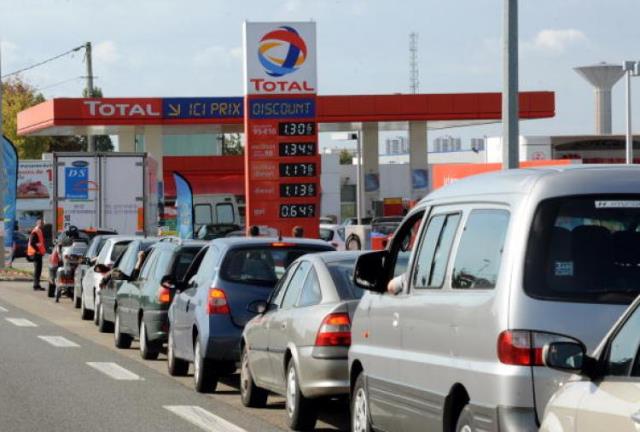
 The recent round of naira devaluation coupled with the inability of petroleum marketers to obtain letters of credit from commercial banks to enable them import fuel are the real reasons behind the scarcity of fuel being experienced across the nation, the executive secretary, Petroleum Product Pricing Regulatory Agency, PPPRA, Farouk Ahmed has said.

Responding to questions from lawmakers at a budget defence session, the PPRA boss stated that these were the reasons behind the delay in the arrival of cargoes.

“Non-arrival of cargoes made it difficult for Premium Motor Spirit, PMS, to be delivered. What actually complicated it was the devaluation of naira – two times. The first one that took place on November 28, 2014 when Naira was devalued from N155 to N168 to $1. The second one that took place on February 18 brought the exchange rate to N199 to $1.”

“These two developments brought a lot of confusion into the oil sector. Marketers were not sure of the actual delivery cost. We had to draw a new template as advised by the CBN. The delay we have now is caused by the November devaluation. But the reality is that the policy is clear now”, Ahmed stated further.

Assuring the public that the federal government would find ways to alleviate the hardship, Ahmed also promised that the agency would come down hard on petroleum marketers who sought to hike the price of petroleum unnecessarily.

“The Minister of Finance, PPPRA and other agencies are working closely to ensure that outstanding bills are paid. And that one had been done now. On Monday, we got an approval from the Budget Office for payment of all outstanding bills. We have adjusted the template now. We have to put the exchange rate at the interbank rate. Now, we have a direction,” he stated.

The executive secretary also announced that the total budget of the agency for 2015 is N7.798 billion with N63 million for capital expenditure, N48 million for overhead and N7.7 million for personnel.

The Nigeria National Petroleum Corporation, NNPC, was scheduled to defend its budget before the Senate committee on Downstream but the organization did not show up for the session.

The committee chairman, Magnus Abe, asked the Clerk of the Senate to issue another invitation to the NNPC, the heads of the three refineries and the Department of Petroleum Resources, DPR, to appear before the committee unfailingly on Thursday march 5.


INEC Discovers Over 500 PVCs Belonging To Dead Voters In Ogun State

The Independent National Electoral Commission, INEC, said it had discovered 555 Permanent Voter Cards, PVCs,  in Ogun State belonging to persons who had died.

Ogun State INEC Residential Electoral Commissioner, REC, Timothy Ibitoye, made the disclosure while giving details of PVC distribution in the state,.

‘We had gone to all the local government areas in the state and asked our officers to write out the names of those who were yet to collect their PVCs. We were able to get the number from this collation,’ Ibitoye said.

The REC stated further that community leaders also assisted the commission in identifying those who had died since the last registration exercise.

He also said the actual number of registered voters in the state is 1,795,794, not the 1,829,534 as previously quoted, adding that the state was still expecting a delivery of 425,454 PVCs from the commission’s headquarters in Abuja.

‘The PVCs that we have received from Abuja so far is 1,370,340 and as at today we have distributed 860,076.

‘If we base the percentage of PVCs distributed on the number of registered voters, we have achieved a 63% completion rate,’ the INEC chief said.

Ibitoye appealed to those who were yet to collect their voter cards to do so, saying there were more than 500,000 uncollected cards.

‘We still have 510,264 uncollected PVCs. We want to appeal to these people to come forward and collect their PVCs,’ he said.


Policemen Threaten Strike on Election Day


Policemen who are being owed promotion arrears have declared that they would embark on strike action on March 28, 2015, the day slated for the conduct of the 2015 presidential elections across the nation.

Believing that such a move would help press home their demands, the affected policemen stated that they are sure that their action would convince police authorities that they are serious.

The policemen said that over 100 of their colleagues retired in 2014 without being paid the promotion arrears and other benefits and that the payment had been pending for over two years.

They therefore expressed fears that their benefits may also not be paid as promised by the Inspector-General of Police, IGP, Suleiman Abba.

The IGP had remarked last week that the police could not pay duty tour allowances and other benefits because of the shortfall in allocation to the Force by the federal government.

A document on the 2015 budget defence presented to the senate committee on Police Affairs last week revealed that the 2014 police budget which suffered a shortfall of N6,464673,537 made it impossible to successfully conclude the payment of personnel emolument in 2014.

But the explanation has not convinced the men to shelve their planned strike.

“The only way we could make the IG pay us our salary arrears and other benefits is to embark on strike on Election Day when the nation would need us the most. Otherwise, the issue would be swept under the carpet, like others,” the men stated.

The men also asserted that over 100 policemen have retired without being paid the arrears, stating that some were due to retire in March or April.

“This means that we may not get the money before leaving service,” the men said.

The Force Public Relations Officer, Emmanuel Ojukwu, had earlier assured that the aggrieved policemen would be paid as soon as the Force received money from the government.

“We are working hard to pay the men and I can assure you that they would be paid once the government pays us; we are waiting for the government to pay us, so we can pay them. The welfare of officers and men of the Force is of paramount importance to the IG and he would do everything necessary to ensure their welfare,” Ojukwu stated.

It would be recalled that IGP had on February 19 warned the affected policemen to desist from any consideration of a strike action as a way to pressing for their dues, stating that any breach of discipline would be punished appropriately.

In a release signed by Ojukwu, the police force restated its commitment to the welfare of the workforce; part of which is promotion and recognition of hard work.


I Did Not Share In N7 Billion Largesse – Edo CAN Chairman

By Jefferson Ibiwale, Benin

The Edo State chairman of the Christian Association of Nigeria, CAN, Peter Imasuen, has dissociated himself from the controversial N7 billion allegedly collected by pastors to mobilise support for President Goodluck Jonathan in the forthcoming election.

According Imasuen, who is the Bishop of Benin Diocese of the Anglican Communion, he was not present at the meeting of the Christian body where the said money was allegedly shared.

“They didn’t give me any money and I was not even there when we had the last CAN meeting. At that time, we were having the standing committee at Ughelli (Delta State). So, how would they have given me money when I was not at the meeting?’ Imasuen wondered.

The clergyman said he would rather focus on his calling than dabble in politics and that he had no need for the money.

“Collect the money for what? What will I use the money for? We are men of God, we are to pray for the peace of the country. At the time you now take money, how will God answer your prayer? I don’t run after riches. I run after blessings; riches come and go but blessings remain,” he said.


READ ALSO:


Imasuen stated that rather than collect money from a politician, he would vote only for who he felt was credible and who would move the country forward.

“I don’t belong to any party; once I know that you are a credible person, I can vote (for) you; vote for those that can stand and defend this country. We are praying God to give us a leader‎ who will lead us and lead the youths,’ he said.


Tinubu Demands N20 Billion From AIT For Defamation

By Samuel Malik, Abuja

Former governor of Lagos State and leader of the All Progressive Congress, APC, Bola Tinubu, has demanded N20 billion from DAAR Communications, owners of Ray Power radio station and Africa Independent Television, AIT, for what he calls a “deliberate defamation of character.”

Counsel to Tinubu, Tunji Abayomi, in a letter addressed to DAAR, said the media company aired a one-hour documentary, Unmasking The Real Tinubu, for the sole purpose of injuring the former governor’s image.

“You aired an hour long documentary focussing on our client (Bola Tinubu). Clearly pre-occupied with political resentment and hatred neither warranted, necessary, proper, or justified, you published several false allegations against our client,’ the letter read.

It also queried the rationale behind airing the documentary, especially as Tinubu is not contesting for a political office.

“Considering that Asiwaju Bola Ahmed Tinubu is not running for any political office, we find the publication about his life utterly absurd, disrespectful of media responsibility, ethically abusive, malicious and unbecoming of a public institution raised into prominence by shareholders’ funds,’ it said.

While demanding  N20 billion damages and an apology from the media group, which is owned by businessman, Raymond Dokpesi, the APC leader is also calling for the discontinuation of the documentary, saying one cannot use the law as excuse to defame anybody.

“You cannot under law, hide under media freedom or freedom of expression to maliciously injure a citizen’s reputation,’ the letter said, adding that Tinubu would be left with no choice but to institute a legal action unless the demands were met.


Group Warns Against Attahiru Jega’s Removal

On the heels of unconfirmed reports of a high-level plot by the Presidency to remove the chairman of the Independent National Electoral Commission, INEC, Attahiru Jega, the Conference of Nigerian Political Parties, CNPP, has warned, in strong terms, against any attempt to remove him from office before the expiration of his tenure in June.

A statement signed by the spokesperson of the group, Osita Okechukwu, on Sunday, warned President Jonathan against any attempt to sack INEC chairman, saying that such a move would amount to illegality.

“For the avoidance of doubt, Jega as chairman of INEC is neither a civil servant nor has been indicted and therefore conditions applicable to civil servants are not applicable to his appointment as chairman of INEC,” the group said.

It said the ways by which the INEC chairman can be removed had been explicitly stated in Section 157 of the 1999 Constitution, which says “person holding any of the offices to which this section applies may only be removed from that office by the president acting on an address supported by two-third majority of the Senate praying that he be so removed for inability to discharge the functions of the office …”

“Mr President should beware of Ides of March, go ahead and allow Jega to conclude the elections, unless he wants to fan the embers of some doomsayers that had predicted the disintegration of Nigeria,” the parties said.

The group also recalled the unintended consequences of the endless transition programme initiated by former military ruler, Ibrahim Babangida, which saw him manipulating the presidential election in 1993, and eventually truncating the people’s mandate.

“Granted that General Babangida survived the annulment of the June 12 presidential elections, it tainted irretrievably his regime and cost our dear countrymen blood, sweat and tears, this is avoidable as it definitely will be more disastrous, and may lead to bloodshed.

Recalling also the era when the late President Umaru Yar’Adua was incapacitated in 2010, the group relived how in coalition with other patriots, civil society organizations and the Save Nigeria Group, it went out on Abuja streets and other major cities in the country to canvass the confirmation of Jonathan, who was vice president at the time, as acting president and eventually president.

The group noted that despite a promise made by Jonathan to the SNG delegation that he would implement fully the core ingredients of the Justice Mohammed Uwais Electoral Reform Committee recommendations, among which was an open and transparent process of recruitment of chairman and Resident Electoral Commissioners, RECs, the president eventually reneged on the promise and singlehandedly appointed Attahiru Jega as chairman.

“Jega returned him as president, with tons of praises by Chief Edwin Clark and co, same clan who are today calling for Jega’s head. The rest they say is history,” the group noted.

The INEC chairman has experienced much opposition from many politicians, with calls for his removal coming from the likes of Edwin Clark, a South-south leader, Femi Okoroumu a Fourth Republic senator from Ogun State, and Chukwuemeka Ezeife, a former governor of Anambra State during the Third Republic.

Reports were rife over the weekend that the presidency had already perfected plans for the INEC chairman’s ouster, and had already shortlisted four national commissioners of the commission, amongst whom one would be selected to take over from Jega who might be directed to proceed on pre-retirement leave this week.