Home Blog Page 3368

ASUU Strike: FG Rejects Lecturers New Demands

0

The supervising minister of education, Nyesom Wike, has condemned the new set of conditions given by the Academic Staff Union of Universities, ASUU, as a yardstick to call off its over five month old strike.

The minister stated that the union was demanding for its arrears of four month salaries to be paid including the implementation of the N1.2 trillion pledged by the federal government for the rehabilitation of public universities in Nigeria.

Wike said the union presented these new conditions to the federal government after its National Executive Committee meeting held in Kano state, North-western Nigeria.

He added that the federal government and the members of the National Assembly would engage the union further in finding a lasting solution to the issue.

Meanwhile, the committee of pro-chancellors of federal universities had on Tuesday called for the immediate re-opening of all universities currently shutdown across the nation.

This directive was handed down to the protesting lecturers in a communiqué signed by the committee’s chairman, Kimse Okoko.

The communique explained that the committee’s decision was based on the negative impact the strike has had on the university system, students and the parents and appealed for the understanding from the leadership and members of ASUU to ensure speedy restoration of academic activities on campuses.

It also expressed satisfaction with the outcome of the referendum conducted in all the branches of ASUU nationwide, which voted 60-40 in favour of the suspension of the ongoing strike.

The federal government had in October announced the suspension of salaries for members of the union, insisting that it will operate on the basis of “No Pork, No Pay”.

Trigger-Happy Police Corporal Kills Inspector

0

From Jefferson Ibiwale, Benin

A Police Inspector has allegedly been shot to death by a trigger-happy corporal identified as Oziegbe Omobude, from Uokhai community in Owan East local government area of Edo state for reasons that are still unclear.

The incident reportedly took place on Monday night at Iyoha road beside Guinness Nigeria Plc, Ikpoba Hill, Benin city when the victim was on his way for an official duty at the United Bank for Africa Plc, located at Agbor road.

Another corporal who accidentally boarded the same vehicle with the suspect also sustained gunshot wounds from his gun-wielding colleague who apparently suspected that he saw him kill the Police Inspector.

The second corporal simply identified as Ayinla had alighted from the bus and was demanding for his change from the bus driver when the suspect shot at him and ordered the driver to drive off.

The suspect police officer is presently on the run.

When contacted, the State Police Command spokesman, Moses Eguavoen, said he was yet to be briefed on the incident.

Meanwhile, the injured Ayinla is said to have been hospitalised in an undisclosed hospital at Ikpoba Hill area of Benin where the corpse of the late Inspector was also said to have been deposited.


Senator Denies Dumping PDP For APC

0

Chairman Senate committee on New Partnership for Africa’s Development, NEPAD, Simeon Ajibola, from Kwara state, has denied claims that he is a member of the Abubakar Baraje-led PDP splinter group that merged with the All Progressives Congress, APC, on Tuesday.

Ajibola’s told newsmen that at no time did he associate himself with the splinter group in Abuja on Tuesday and called on Nigerians to count him out of the merger since he and other senators alleged to be part of the group had never attended any of their meetings.

He said further that senators Zainab Kure (PDP- Niger), Awaisu Kuta (PDP-Niger), Bello Tukur (PDP- Adamawa), among several others were not part of the group.

“When they were branding the news about that 22 senators, including me, were in the PDP faction,10 out of the 22 were not with them and there is no way we can be said to be with them in the so called merger,” he said.

Ajibola added: “In Kwara, they even invited me, but I refused to attend and they reported me to the traditional council of my local government. By 2015 or thereabout, Nigerians will know those who are grassroots politicians and those that are tigers on the pages of newspapers.”

Meanwhile, the special adviser to the President on political affairs, Ahmed Gulak, has said that the Presidency welcomes the idea of the merger between the splinter faction of the PDP and the APC and does not feel threatened in any way.

“The presidency does not feel threatened and the PDP does not feel threatened. PDP is the party to beat. We have had it before even people who had occupied higher offices left the party and came back,” he boasted, adding that “outside there, there is nothing, it is empty. PDP is the only party.”

In addition, the PDP in a statement signed by its national publicity secretary, Olisa Metuh, said the meeting between President Goodluck Jonathan and the seven aggrieved governors would still hold at the Presidential Villa on Sunday.

The meeting was earlier billed for last Sunday but was cancelled as the President arrived Nigeria from a foreign trip and said he was too tired to attend.

The Cost Of Anambra Governorship Election

0

By Eze Onyekpere

In the run up to the Anambra State governorship election, the parties and candidates deployed a lot of human and material resources. Like the other aspects of electioneering, the Electoral Act governs, sets limitations and prescribes permissible human and financial conduct while declaring others illegal. In all the analyses so far, the overall concern has been about what happened on the day of the election and the issues so far raised include a voter register that seemed to be adulterated, logistic challenges related to supplies of materials, late commencement of accreditation and polls and outright sabotage by electoral officials. In all of these, the popular position seems to indicate that the performance of the Independent National Electoral Commission was sub-optimal.

But there is a missing link. The Electoral Act sets limitations on the resources a candidate in a governorship election can spend. It also places a limitation on the use of state resources to the advantage or disadvantage of any candidate. By Section 91 (3) of the Act, the maximum election expenses to be incurred by a candidate at a governorship election shall be N200m. A violation of the provision attracts a fine of N800,000 or imprisonment for nine months or both. The Act also prescribes that no individual or other entity shall donate more than N1m to any candidate and a violation also attracts a sanction. For incumbents, the Code of Conduct for Political Parties states that all political parties shall separate party business from government business. No political party shall use state vehicles, or other public resources for any campaign or any other party business. However, if what we saw in Anambra is anything to go by, it appears that these rules were more obeyed in breach than in compliance.

Available evidence indicates that the frontrunning candidates spent money above the permitted ceiling. A candidate claimed and indeed has an office in every ward in the state; the cost of running these offices alone is in tens of millions. These offices had paid personnel and equipment. Candidates even housed some workers and supporters in hotels.  A single carnival-like rally, many of which were held across the state by the frontrunners, with all its logistic costs relating to hire of venue, public address systems, podium, seating arrangements, security, transport, various dressing materials, food, drinks, and entertainers, live media coverage etc, requires a financial outlay of more than N15m. These frontrunning candidates held not less than 10 of such rallies. Of course, there were all manner of gifts to traditional rulers which are only known to the givers and the takers.

The advertisement in the print media was also very expensive with newspaper pages that cost over N500,000 each. For the electronic media, the massive jingles on radio and television cost hundreds of millions.  The billboards that were in all nooks of the state, posters that were pasted and torn the next minute; hire of campaign managers and other staff of the campaign team cost a lot of money. The sudden charitable disposition of some candidates who donated millions of naira to all kinds of “philanthropic” purposes and candidates who offered material benefits to persons attending rallies and events also added up to the cost of the election.

For state resources, the ruling party, the All Progressives Grand Alliance, had no business appointing public officers paid at the public expense to run its campaign. Official cars and properties had no business at the rallies of the ruling party whilst the state’s fiscal resources by law should not be deployed to the advantage of the incumbent. The idea is that if the incumbent party or candidate is allowed to use public resources for campaigning, it will amount to an undue advantage against the opposition considering that the resources belong to all.  It is within this context that reports of gift of vehicles to traditional rulers during electioneering fails the test of legality and legitimacy. Even the idea of dragging traditional rulers who are supposed to be fathers to all to endorse a candidate seems to be stretching politicking too far.

On the day of election, there were reports of money being shared to voters, being an attempt to induce them to vote or abstain from voting in a particular manner. Before the election, money exchanged hands and there were reports of fundraising events where huge sums of money were raised.  In all the foregoing, there was little or no regard for the Act which states that any person who directly or indirectly by himself or by any other person on his behalf, gives, lends or agrees to give or lend, or offers any money or valuable consideration for the purpose of influencing a voter commits an offence and shall be liable to a sanction. The reports indicated the law enforcement agents looked the other way while these offences were being committed. No arrests were made and of course, no one has been charged to court.

Although one may query the basis of the N200m limitation in a governorship election, it is still the law and needs to be enforced. But there appears to be no political will to enforce same. The INEC may have been overwhelmed by sheer logistic arrangements as to have time to monitor the expenses of candidates. But nothing stops it from demanding an official expenditure report from candidates and their parties. The truth is that the election may be inconclusive and the stakes too high because of the financial commitment of the candidates.


READ ALSO:


The INEC officials who sabotaged the election must have done so under the influence of monetary inducement. No candidate easily accepts defeat after investing billions of naira in a political enterprise. The full scale monetisation of campaigns has made it extremely difficult for reasonable men and women who do not belong to the millionaire club to emerge as candidates. Such reasonable men and women can only emerge with a godfather who if they succeed, will seek to control the state from the back door. It will be easier for elections to be free and fair if candidates stick to the legal expenditure ceilings.

If the 2015 elections will have the massive influence of money as happened in the Anambra election, then the elections will face a strong crisis of credibility. Even if INEC does not have the capacity to monitor the campaign finance provisions of the Act, it should seek a strong partnership with the civil society, anti-corruption agencies, and the academia, etc. This partnership will work out a framework to actively engage and monitor campaign finance and use of state and administrative resources in the run up to the elections in 2015. We should no longer tolerate a situation where votes are won and lost based on the quantum of money available to the candidate.

-Follow me on twitter @censoj

Russian Military Expert Shot Dead In Yemen

A Russian military expert was killed and another injured on Tuesday when gunmen driving a motorbike opened fire on them in the Yemeni capital, Sana’a, local media reported.

The two were advisers to the Yemeni armed forces, the Barakish news website said.

Drive-by shootings and abductions have increased since the 2011 uprising against long time leader, Ali Abdullah Saleh, who stepped down in 2012.

Last week, a lawmaker was assassinated by assailants on a motorbike in Sana’a.

Authorities have blamed the violence on militants linked to al-Qaeda.

On Monday evening, 12 suspected members of al-Qaeda were killed in an air raid on the restive southern province of Abyan, according to a website affiliated with the defence ministry.

Yemen is a stronghold of al-Qaeda in the Arabian Peninsula and US drone strikes aimed at Islamist militants in Yemen have increased in recent month.

Militants have repeatedly called for attacks on foreign diplomats and embassies.

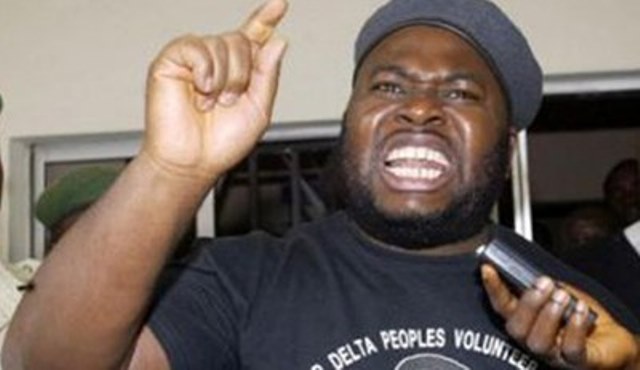
Asari Dokubo Arrested In Benin Republic

0

Human rights lawyer, Festus Keyamo, has raised an alarm over the arrest of Mujahid Dokubo-Asari, in neighbouring Cotonou, Benin Republic, by the country’s police.

Keyamo said in a statement on Tuesday that Dokubo was picked up around the Lubeleyi roundabout between the hours of 1:00pm and 2:00pm and was taken to an unknown destination.

“We want to emphasise that Alhaji Dokubo-Asari carries on legitimate business and has been living partly in Benin Republic for many years now. In fact, he owns houses, schools and an academy in that country. All these places have been searched as at this evening and nothing incriminating was found,” he said in the statementd.

He expressed worry that the arrest and detention may be part of a ploy by “certain forces in Nigeria in unholy alliance with the Beninoise government” to keep him away as 2015 approaches.

Keyamo therefore called on the Nigerian government to immediately intervene and ensure that Dokubo is released and returned back to Nigeria unharmed within the shortest time using all diplomatic means possible.

Asari, a ex militant and a strong supporter of President Goodluck Jonathan’s 2015 reelection bid, has in recent times issues several threats of Nigeria falling apart if his candidate is not returned for a second term.

Although the reason for his arrest is yet to be made public, some analysts believe it may be connected with his new soccer academy which he launched only two months ago in the West African country.

The university, which will be known as King Amachree African University, KAAU, has already been accredited to commence degree programmes beginning September 2014.

Senate Queries FCT Minister Over Mismanaged SURE-P Funds

0

The Senate ad-hoc committee on Subsidy Re-investment and Empowerment Programme, SURE-P, has asked the minister of the Federal Capital Territory, FCT, Bala Mohammed, to explain how SURE-P funds allocated to the territory from 2012 to date were spent.

The committee, which issued the query on Tuesday in Abuja at a meeting with the minister, urged him to explain the rationale behind his alleged payment of N1 billion SURE-P funds into the Abuja Investment Fund, saying that there was no justification for such payments.

The minister was asked to provide details of how and why the FCT Administration, FCTA, spent N140 million to rehabilitate the buses which it bought in 2012.

Members of the committee insisted that the buses ought not to have been due for repairs until at least one year after their purchase.

Besides, the committee queried the minister over the N500 million that was allegedly spent on the rehabilitation of the NYSC Orientation Camp in Kubwa.

“There is no evidence that the NYSC is lacking funds from the Federal Government,” the committee said.

Pension Scam: Court Denies Former Oyo Head of Service, Others Bail

0

An Oyo State High Court sitting in Ibadan on Tuesday refused to grant bail to Kudirat Adeleke, a former Oyo State head of service and eleven others dragged to court by the Economic and Financial Crimes Commission, EFCC, over a N5.6billion pension scam.

The accused were arraigned on November 7, 2013 on charges of conspiracy, stealing and criminal breach of trust.

Justice Bolaji Yusuf, in presiding over  their bail application which was opposed by the prosecuting counsel, Gbolahan Latona, ruled that the offence for which they were arraigned was very weighty even though it was bailable.

Latona prayed the court to turn down the requests for bail in view of the severity and enormity of charges preferred against the accused and the huge public interests generated by the case, as well as the pains and pangs of pensioners who would rather want the trial accelerated and concluded on time.

In granting the prayer of the prosecuting counsel, the judge instead ordered that their trial be accelerated.

“This is a serious offence which attracts 7 to 20 years imprisonment without option of fine,” she said.

While reacting to Adeleke’s claims that her health was failing and that she needed the bail to enable her seek medical care Justice Yusuf said that the applicant did not file anything to show that she had been denied treatment.

“The trial has started and will be accelerated,” she added with finality.

On claims made by some defence counsels that all the defendants had earlier been granted bail by a magistrate court, the judge said “that Mrs Adeleke and other accused persons had been granted bail by an Ibadan Magistrate court does not mean that they will be granted bail here. The situation before the court is different and there is proof of evidence before the court.”

Among the other eleven defendants in the case who are mostly senior officers of the Oyo State Pension Board are  Muili Hakeem Aderemi, (executive secretary);  Adedutan Johnson; Oguntayo Banji, (former internal auditor);  and Kareem Rasheed.

Others are:  Muili Adedamola; Adesina Jimoh Ayoade, (former cashier);  Adebiyi Olasumbo Musendia, (former Admin.Officer);  Johnson Bosede; Iyabo Giwa,(former cashier),  Adewale Kehinde and Olujinmi Adebayo.

Justice Yusuf adjourned the case to December 11 and ordered that the defendants be returned to Agodi prison, Ibadan.

I Have Not Dumped PDP – Gov Babangida Aliyu

1

Contrary to some media reports on Tuesday, Mu’azu Babangida Aliyu of Niger State has declared that he remains a member of the ruling Peoples Democratic Party, PDP, denying ever decamping to the All Progressives Congress, APC.

Aliyu, who spoke through his chief press secretary, Danladi Ndayebo, said that a decision had not been taken on the fate of governors who left the ruling party to form a faction known as the New PDP and that he was shocked by reports that he had joined the APC.

In a statement he issued, Ndayebo said that Aliyu was not present at the meeting in Abuja where the merger agreement was sealed and signed, an indication that he was not part of the deal.

Aliyu said that reconciliatory talks were still going on between the Abubakar Baraje – led PDP faction and President Goodluck Jonathan and that the wise thing to do was to allow that process to end before taking a decision on the next step for the new group.

Even then, the interim chairman APC in Niger State, Bako Shetima has said that governor Aliyu was welcome in the party as long as he does not expect any preferential treatment.

“We learnt of the development and our party will be ready to accept them into the party. The G7 governors have been talking with our leaders at the national level. They are welcome. Our doors are widely open,” Shetima told journalists in Minna on Tuesday

Five of the G7 governors who left the PDP for the New PDP were at the ceremony in the residence of Rabiu Kwankwaso, governor of Kano State, where a merger between the APC and breakaway group was formalised.

The five are the host, Rotimi Amaechi of Rivers State, Abdufatah Ahmed of Kwara State, Magatakarda Wamakko of Sokoto State and  Murtala Nyarko of Adamawa State.

Absent were Aliyu and Sule Lamido of Jigawa State.

Norway Partners Nigeria On Oil Management

0

From Jefferson Ibiwale, Benin

The Norwegian government has expressed readiness to partner with Nigeria for the development of the Niger Delta region through proper management of its oil resource.

Norwegian Ambassador to Nigeria, Rolf Ree, said on Tuesday in Benin that his government was interested in the development of the Niger Delta region and Nigeria because both countries are important players in the global oil market.

Ree who was giving a  keynote address at a workshop organized by the Africa Network for Environment and Economic Justice, ANEEJ, said his country has been able to develop using its oil wealth and that with proper management systems, Nigerian can overcome the challenge of underdevelopment.

“We believe that such a transformation is possible in Nigeria where the government and other interest groups work hard to support development initiatives and also where the resources are properly managed in the interest of majority of the people,” he said.

Speaking further, the ambassador said the proposed intervention will also help curb widespread poverty in Nigeria and the Niger-Delta region in particular.

His words: “The Strengthening Oil Revenue Management in Niger Delta Project is a direct response to the wide spread poverty in the Niger Delta through strengthening of institutions of identified stakeholders. We hope that such an intervention will contribute to the needed development in the region and the entire country.”

The, special assistant to the Edo state governor on Civil Society Organisations, CSOs, Efosa Kayode-Iyasere, commended the organisers of the workshop, saying that the promotion of Niger Delta region through unprecedented development was something long awaited.

Responding, the executive director of ANEEJ, David Ugolor, said the workshop which is the second phase of the organisation’s project, was aimed at responding to the widespread poverty in the region by strengthening of institutions of the six identified stakeholders which include Edo, Delta, Bayelsa, Rivers, Cross River and Akwa Ibom States.

“The project is also focused on enforcement of law’s aimed at promoting good governance where such law’s exist and advocacy for the enactment of such laws where they do not exist,” Ugolor said.

According to him, the first workshop held in 2009, was able to among other things, put institutions in place to strengthen the governance system of the region.

“We are happy that some of these states have responded. Edo State for instance have procurement law, Delta also has, and in Rivers we have fiscal base, so we can now point to some of these states having these laws in place. For me, it’s a huge success,” he said.

Ugolor, however, noted that it is one thing to enact laws but that the duty of compliance and enforcement rests of the people,  urging them to ensure the law works for them.

All states of the Niger Delta region, as well as civil society groups, government parastatals and media organizations were represented at the workshop.