Home Blog Page 3369

Five PDP Governors Decamp To APC

1

Five governors of the ruling Peoples Democratic Party, PDP, are believed to have joined the opposition All Progressive Congress, APC, in Abuja on Tuesday.

Of the seven governors (G7) in the breakaway faction of the party led by Abubakar Kawu Baraje, five including Rotimi Amaechi (Rivers State), Rabiu Kwankwaso (Kano), Murtala Nyako (Adamawa), Abdulfatah Ahmed (Kwara) and Magatakarda Wamakko (Sokoto) have all joined the APC.

Competent sources in the APC told our reporter this afternoon that all the seven governors would have publicly decamped from the PDP but that for strategic reasons governors Aliyu Babangida (Niger) who is the chairman of the G7 governors forum and Sule Lamido (Adamawa) would remain in the ruling party for the time being.

Nasir el Rufai, former minister of the Federal Capital Territory, FCT, and the deputy national secretary of the APC in a twit this afternoon gave indications that the New PDP formerly merged with the APC today.

According to his twit, the two parties signed a merger agreement in Kwankwaso’s residence and the interim national publicity secretary of the APC, Lai Mohammed, is expected to provide details of the union later today.

El Rufai’s twit read thus:  “At the residence of the Kano State Governor, Dr. Rabiu Musa Kwankwaso this morning, and after exhaustive deliberations, New PDP has merged with the APC. Merger agreement has been signed by the chairmen of the two parties. Await details from Lai Mohammed, the APC National Publicity Secretary.”

Our source said that members of the New PDP in the National Assembly are expected to publicly declare for the APC in the next few days although he disclosed that not all the members are ready to follow their governors.

“We have no problem in the House of Representatives. All the members of the New PDP are with their governors and are going to publicly move to the APC in the next few days. However, in the Senate, we face some problems as some senators in both the PDP and New PDP, even one or two in the APC are not fully with us,” the source said.

One of the senators who do not want to dump the PDP for the APC, it was gathered, is one of the three senators from Kano State whose governor is believed to have dumped the ruling party today.

Our source said the first test of the strength of the political realignment would manifest in the National Assembly in the coming days as the APC would now have a majority in both chambers of the legislature.

According to him, Aminu Tambuwal, who is expected to dump the PDP publicly in a matter of days, would remain as Speaker of the House while David Mark, the Senate President, would be given the choice of joining the APC to retain his seat or be forced to yield it to George Akume, the minority leader.

PDP Starts Drive To Regain Power In Nasarawa

0

Caption: PDP Nasarawa State Chairman, Yuhana Illiyah, and others

By Godwin Ojoshimite

In a bid to regain relevance and power in Nasarawa State, the Peoples Democratic Party, PDP, has commenced a meet – the – people tour that would take it to all 13 local governments in the state.

At the flag off of the tour in Toto local government which was attended by a mammoth crowd, the leadership of the party berated the Tanko Al – makura – led government for betraying the people by not fulfilling the electoral promises made to them.

Addressing party supporters at the Toto local government area secretariat of the party, venue of the inaugural tour which is expected to last for five days cutting across all local government areas, the state chairman of the party, Yunana  Illiyah, denounced the existence of any new PDP in the state.

He said that the party in the state did not recognize any breakaway faction and would work only with the Bamanga Tukur led PDP.

Iliya, who berated governor  Al – makura for not delivering on his campaign promises to the people of the area, also pointed accusing fingers on the APC led government for inciting inter-ethnic crisis as a divide and rule strategy for political gains.

Speaking earlier, Senator Abubakar Danso Sodangi, who expressed support for the Iliya – led state executive committee urged politicians to see attainment leadership position as an act of God.

Also, a, member representing Umuaisha/Ugya constituency in the Nasarawa state House of Assembly, Yahaya Usman, stressed that despite the party’s inability to return to Lafia Government House at the last general elections, the PDP is still the most entrenched party in the state, adding that it would do everything it can to reclaim power.

The lawmaker condemned the APC government for refusing to conduct local government elections and running council areas with administrators.


READ ALSO:


“The APC government has severally asked us to prepare for local council polls only to call it off at the final hour for fear of defeat by the PDP, ” he observed.

A party supporter, Mohammed Isah, who hails from Umaisha, said although the APC government provided them with some basic social amenities eclipsing that of the PDP, their support for the PDP is based on their credentials in human and economic empowerment.

Hamada Mohammed, who comes from the same area, aligned herself with the view saying she is more comfortable with the PDP because it has been with them for a long time.

Who Funds Civil Society Activism?

0

By Ayo Olukotun

Gbolahan Gbadamosi, a former judicial editor of The Guardian and currently Executive  Director, Centre for Media Law and Research, it was who provided the topic of this write-up  by raising a query on an aspect of my essay published on this column last week.

Entitled, Mbeki on Nigeria’s ‘comatose’ civil society (The PUNCH, November 15, 2013) the intervention examined former South African President, Thabo Mbeki’s comment that Nigeria’s civil society is currently comatose and by implication does not act as an effective check on impunity and corruption by government.

Gbadamosi, in a text message, took exception to my suggestion that the civil society should be mindful in seeking funds, of the subversive generosity of the political class on the one hand; and the often narrow agenda of international funding agencies, on the other. Gbadamosi’s query is: If non-governmental organisations and civil society activists cannot seek funds from the political class or from international donors, where then are they expected to get funds for their work?

Before addressing Gbadamosi’s pertinent question, let us recall the magnificent role which the civil society institutions have played and continue to play in our democratisation process.  Obviously, without the heroic struggles of this segment of our nation collaborating with the international community as well as reformist-minded military officers, the transition to democracy would have been impossible.  Who does not recall for examples, the epic confrontations between the military state and June 12 protesters, the anti-Abacha militants, the creators of “Radio Kudirat” and the underground press as well as a motley of human rights organisations that continuously laid siege to tyranny.

Looking back at the quality of democracy on offer in Nigeria today, one asks with more than a twinge of disappointment: Is this what we fought for? No doubt, it is against this back cloth of awesome civil society struggles in the pursuit of democracy that Thabo Mbeki observed ruefully that the Nigerian civil society has been demobilised or politically chloroformed. Let us recap that several of the leading lights of the anti-military struggle have taken up political appointments either by election or selection. Indeed, some of them occupy commanding positions in the current democratic dispensation; they have also brought around them several intellectuals in one form of consultancy or another. In this respect, the struggle between the civil society and authoritarian and corrupt civilian government at national and sub-national levels has become complicated.

I referred previously to the tenuous economic status of our civil society and its vulnerability to the co-optation strategies of the political class bearing in mind that we have a one-legged economy in which the productive sectors are marooned while windfall from government is the only game in town. What this slippery terrain produces is a rump of civil society that maintains some distance from the political class and a largely partisan civil society that has become a part of the political elite.

In order not to be misunderstood, let us make clear that a partisan public sphere as reflected in the advocacy strategies of political parties, the voluminous literature explaining party positions, the journalism of the party press all serve to enrich a nation’s conversation and policy debate.   In fact, some political scientists would classify political parties as belonging to civil society in view of the overlap in roles and mobilisation functions. In terms of deepening democracy for example, opposition political parties by putting the ruling party on its toes and insisting on a level playing field, exposing corruption within the ruling party while of course being silent about corruption in their own ranks extend the frontiers of democracy, lend substance to citizenship rights and play more or less the same role as a vibrant civil society.

As is well known, some international funding agencies provide resources and capacity building wherewithal not just for the civil society but also political parties.  For while the civil society can place issues on the national discourse agenda, they require the authoritative collaboration of political parties and the state to initiate or pass bills around them or turn them into policies. Therefore, the civil society and political parties need not be antagonistic to each other but should ideally play complimentary roles.

That said, the decidedly partisan nature of political parties whose main goal is to win the next election makes it important for civil society institutions to be wary of them. What I find problematic in the current Nigerian scenario is that too many political activists are masquerading as civil society activists.  This of course serves the politicians who are using these activists for celebrity endorsement well since they are also unlikely to be raising issues regarding their own performance or lack of it, corruption as well as the authoritarian tendencies which they share with the political parties they are seeking to displace.

It is against this backdrop that I warned last week that although civil society activists are in principle free to seek funds from politicians, they must be clear about the terms and the possibility that they might end up as the intellectual wing of the political parties extending those grants. This is another way of expressing the problem of donor-capture whereby a donor exercises leverage and increasing authority over the profiles and core mandates of the recipients.

We already have something of this nature in the relationship between international funders and NGOs leading in some cases to what scholars have described as international donors as an alternative state.

Another dimension of the problem manifests itself when we find that the vocabulary of our NGOs is almost totally borrowed from the donor community without local adaptations. Perhaps, for the same reason, the agenda of our civil society is confined regrettably to the procedural and neoliberal version of democracy obtainable in most parts of the West with emphasis on human rights, free market and a downplaying of social democracy and economic rights.

On those terms, democracy becomes no more than electoralism and is often carried on without the demos i.e. the people.

Civil society institutions are free to seek funds from the international community but they should be aware of the price tag of such funding.

Interestingly, because of the global recession, international funding has dwindled to a trickle in recent times and NGOs in other parts of the world are discussing creative ways of raising funds such as voluntary donations from members and citizens who buy into their agenda, membership dues while of course applying cost-saving mechanisms that reduce their overheads.

In sum and to return directly to Gbadamosi’s question, civil society organisations that wish to retain their foundational vision should seek funds from such sources that do not compromise them, subvert their independence or turn them into spokespersons or decoys for factions of the political class and for that matter into proxies of international donor agencies.

External funding always comes at a price but some prices are heavier than others; while some include the total loss of identity. It is important however that civil society activity continues to flourish and for activists to maintain a wary distance from “Greek” donations that can destroy their souls.

Butchers In Borno Deny Sponsoring Boko Haram Terrorists

0

Musdapha Ilo, Maiduguri

Butchers at the Maiduguri Central Abattoir, in Borno state, under the aegis of Butchers Union of Nigeria, BUN, have urged the public to disregard information that it is providing cover for members of the Boko Haram sect.

The union was reacting to a recent statement credited to the Gwoza Christian Community Association, GCCA, in which it referred to the abattoir as a breeding ground for Boko Haram.

The GCCA went on to accuse governor Kashim Shettima of donating N25 million to the butchers and by extension to members of the sect.

Spokesman for the Christian group, Ayuba J. Bassa, noted that the generosity of the governor was coming at a time when Christians in Gwoza were being killed by the Boko Haram insurgents whose breeding ground was the very abattoir in which the governor was making such investment.

The butchers, however, denied having any member of the dreaded sect in the fold and described the statement “as malicious and baseless”.

In a statement jointly signed by the union’s chairman, Abubakar Ngula, the secretary general, Stephen David and the Sarkin-Pawa (Chief butcher), Mala Modu, the union said butchers in the abattoir comprise of people from all background and religions and that such comments were capable of injuring the peace of the abattoir and the state in general.

David who spoke on behalf of the others said if his union had any sympathy for Boko Haram, he as a Christian would have been killed long ago.

“I hail from Gwoza, precisely from Bayan Dutse, Gava Nbuwan-mission, and I am Christian by faith. If the abattoir is a breeding ground for Boko Haram, then I wouldn’t have been alive today, talk more of me becoming the Secretary General of the Butchers’ Union. As such we call on the general public to disregard such assertion,” he said.

As for the donation, it explained that the N25 million given to the association recently by Borno state government was a loan.

“For the public not to be misled, the truth is that Borno State Governor has never given the sum of N25 million to butchers from Gwoza at the Abattoir.

However, the Borno state Government has out of its magnanimity granted a loan of N25 million to the National Butchers Union at the Maiduguri abattoir with the aim of promoting small scale entrepreneurship”, the union stated.

Rights Groups Condemn Egypt’s New Protest Restriction Law

Human rights groups in Egypt have condemned as repressive interim President Adly Mansour’s signing into law new rules on holding protests.

The final version of the law is yet to be issued but reports say it requires permission from the police in advance before protests can be held.

“The draft law seeks to criminalise all forms of peaceful assembly, including demonstrations and public meetings and gives the state free hand to disperse peaceful gatherings by use of force,” 19 Egyptian organisations said in a statement.

However, Prime Minister Hazem Beblawi said the new law was designed to protect “the right of protesters” and that it required them to give “notice” rather than seek permission.

Government sources said the legislation had been watered down to require three rather than seven days’ notice.

Mass protests have led to the toppling of two presidents in the past three years in Egypt.

Parliamentary and presidential elections are due to take place next year but human rights groups have accused the military-backed authorities of anti-democratic tendencies.

Thousands of Muslim Brotherhood members have been detained since Morsi’s overthrow, though the authorities say this is part of combating terrorism.

NSCDC Arrest Four Pipeline Vandals In Kwara

0

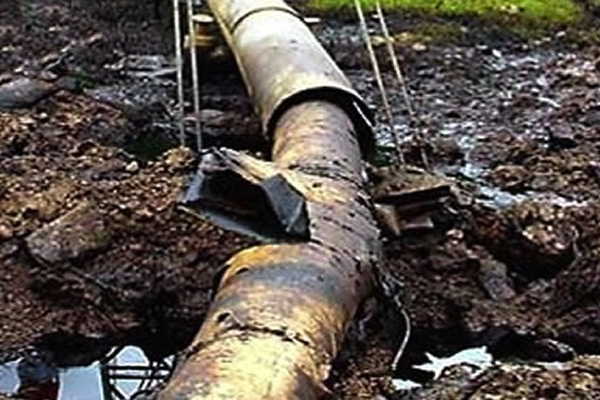
Four persons suspected to have damaged pipelines belonging to the Nigerian National Petroleum Corporation, NNPC, in Afon, Kwara state, have been arrested by the Nigeria Security and Civil Defence Corps, NSCDC.

The commandant of the agency in the state, Gana Yerima, confirmed the arrest of the suspects to journalist on Monday in Ilorin.

Yerima said the suspected vandals were about syphoning petroleum product into a waiting oil truck at about 1:30 a.m. when official of the command, who were on surveillance duty in the area, arrived at the scene following a tip-off.

He alleged that on sighting the NSCDC team, the suspects opened fire but were overpowered by the “superior firepower of my men” and subsequently arrested.

Yerima said that aside from the truck, with reg. no. OYO XA 773 WEL, an 18-seater bus with reg. no. XB 954 AME, and a Toyota Corolla, marked AR 351 KEY, were found at the scene.

He added that a generator, a pumping machine and three long hoses were also discovered at the scene.

Yerima said that the command has maintained a 24-hour surveillance of pipelines in the area since he assumed office in the state in 2012 and warned vandals still operating in Kwara to relocate, saying the state would no longer be conducive to their activities.

He also urged members of the public to continue to support the command by supplying useful information that would lead to the arrest people that destroy public facilities in the state.

Cross Rivers Goes Tough On Tax Evaders

0

The Cross River Internal Revenue Service has embarked on the closure of business premises in Calabar over tax evasion.

The head of informal sector in the Cross River Internal Revenue Service, Denis Usibe, said the exercise was due to failure by the owners of the businesses to pay their Personal Income Tax and PAYE, for 2012 and 2013.

He noted that the payment of tax is a civic responsibility but expressed disappointment that in spite of the government’s campaigns through the media on the need for people to pay their taxes, some people still chose to remain recalcitrant.

“We have tried to wear a human face in tax enforcement; we are in November 2013; yet, some people have not paid taxes for 2012. We have entered into dialogue with various traders’ associations; nevertheless, there is no improvement,” he said.

Mike Igbo, the head of communication of the agency, said that a task force had been set up to educate the people on their civic responsibilities and monitor tax payment across the state.


READ ALSO:


He said that the exercise would be carried out in all the major towns of the state, including Obudu, Ikom, Ugep and Ogoja.

“The exercise is to invigorate the process of tax collection and generation of revenue for the state. People have started complying by coming to the IRS office to pay,” he said.

Some of those affected lamented that the tax being imposed on them was too high and, hence the reason why they are unable to comply with the directive.


Senate Queries CBN Over Bureau De Change Licence Cancellation

0

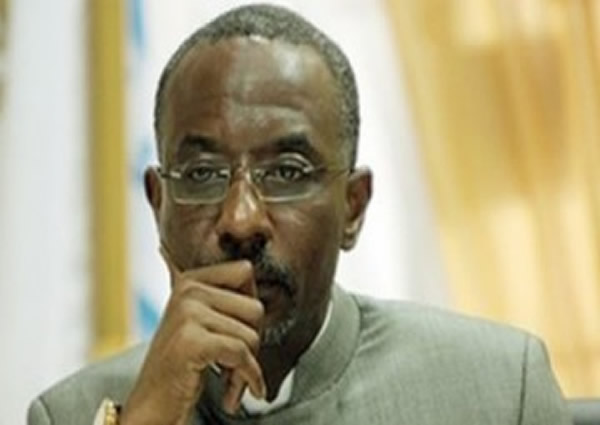
The Senate committee on banking, insurance and other financial institutions, has asked the Central Bank of Nigeria, CBN, governor, Sanusi Lamido Sanusi, to explain in a detailed report why the licences of 20 bureau de change operators were revoked.

This is contained in a letter titled ‘Revocation of Licences of Twenty Bureaux De Change (BDC),’ dated November 13, which was addressed to the governor.

Chairman of the committee, Bassey Edet Otu, expressed particular concern over the revocation of the licence owned by the First Bank of Nigeria, FBN.

The letter read: “You may recall that the Central Bank of Nigeria (CBN) recently revoked the operating licences of 20 Bureaux de Change in the country. The reason advanced for this measure include; (1) Failure to render returns on the utilisation of foreign exchange purchase and (2) Inability to provide documentary evidence that their purchases were utilised for eligible transactions in accordance with the relevant provisions of the Money Laundering (Prohibition) Act, 2011  and other guidelines.”

“However, it is very sad to note that the FBN BDC, owned by the First Bank of Nigeria Plc, one of the leading deposit banks that is expected to lead by example, is involved in this unethical and unprofessional conduct. As a result of this development, there has been persistent public outcry and call for an investigative hearing on the matter.”

It added: “In the interim, this distinguished committee saddled with the oversight responsibility in the banking and allied industry hereby requests you to forward a detailed report on the entire cancellation of the BDC licences and the involvement of the FBN BDC in the whole matter.”

On September 26, the CBN released the names of 20 bureau de change operators whose licences were revoked for alleged foreign exchange malpractices.

The names of those affected include: FBN BDC, Amity Global BDC Ltd., Haruna A. Rahaman BDC, Majia BDC, Ahali BDC Ltd, Lawabash BDC Ltd, Bin Dahuud BDC, Garin Gabas BDC, D&D BDC, Fatahul BDC Ltd, Global Payments BDC, Startime BDC, Plannet Ventures BDC Ltd, Fadima BDC Ltd, Optimum BDC Ltd, Secon BDC Ltd., Asabana BDC Ltd., Maiksal BDC Ltd and Alim BDC Ltd.

The Apex Bank governor said that the affected operators bought dollars from commercial banks without accounting for what the dollars were needed for, nor the purchasers of the money and that they would be prosecuted by the Economic and Financial Crimes Commission, EFCC, for money laundering.

Sanusi said independent investigations carried out by the CBN revealed that that commercial banks were importing billions of US dollars in the country for onward sale to the affected BDCs and that Nigeria had taken over from Russian as the highest importer of U.S. dollars in the world.

He said the effect of this is the fall of the nation’s local currency at the foreign exchange market.

Senate Queries CBN Over Bureau De Change Licence Cancellation

The Senate committee on banking, insurance and other financial institutions, has asked the Central Bank of Nigeria, CBN, governor, Sanusi Lamido Sanusi, to explain in a detailed report why the licences of 20 bureau de change operators were revoked.

 
This is contained in a letter titled ‘Revocation of Licences of Twenty Bureaux De Change (BDC),’ dated November 13, which was addressed to the governor.
 
Chairman of the committee, Bassey Edet Otu, expressed particular concern over the revocation of the licence owned by the First Bank of Nigeria, FBN.
 
The letter read: “You may recall that the Central Bank of Nigeria (CBN) recently revoked the operating licences of 20 Bureaux de Change in the country. The reason advanced for this measure include; (1) Failure to render returns on the utilisation of foreign exchange purchase and (2) Inability to provide documentary evidence that their purchases were utilised for eligible transactions in accordance with the relevant provisions of the Money Laundering (Prohibition) Act, 2011  and other guidelines.”
 
“However, it is very sad to note that the FBN BDC, owned by the First Bank of Nigeria Plc, one of the leading deposit banks that is expected to lead by example, is involved in this unethical and unprofessional conduct. As a result of this development, there has been persistent public outcry and call for an investigative hearing on the matter.”
 
It added: “In the interim, this distinguished committee saddled with the oversight responsibility in the banking and allied industry hereby requests you to forward a detailed report on the entire cancellation of the BDC licences and the involvement of the FBN BDC in the whole matter.”
 
On September 26, the CBN released the names of 20 bureau de change operators whose licences were revoked for alleged foreign exchange malpractices.
 
The names of those affected include: FBN BDC, Amity Global BDC Ltd., Haruna A. Rahaman BDC, Majia BDC, Ahali BDC Ltd, Lawabash BDC Ltd, Bin Dahuud BDC, Garin Gabas BDC, D&D BDC, Fatahul BDC Ltd, Global Payments BDC, Startime BDC, Plannet Ventures BDC Ltd, Fadima BDC Ltd, Optimum BDC Ltd, Secon BDC Ltd., Asabana BDC Ltd., Maiksal BDC Ltd and Alim BDC Ltd.
 
The Apex Bank governor said that the affected operators bought dollars from commercial banks without accounting for what the dollars were needed for, nor the purchasers of the money and that they would be prosecuted by the Economic and Financial Crimes Commission, EFCC, for money laundering.
 
Sanusi said independent investigations carried out by the CBN revealed that that commercial banks were importing billions of US dollars in the country for onward sale to the affected BDCs and that Nigeria had taken over from Russian as the highest importer of U.S. dollars in the world.
 
He said the effect of this is the fall of the nation’s local currency at the foreign exchange market.

Don’t Expect Al-Makura To Transform Nasarawa In One Night- Commissioner

0

By Godwin Ojoshimite

Indigenes and inhabitants of Nasarawa state has been urged to be patient, as the administration of Governor Umaru Tanko Al-Makura is on top gear to transform the state.

The appeal was made by the State Commissioner for Works, Transport and Housing, Mohammed Yahaya Wada when he spoke to newsmen during the weekend.

Wada was responding to criticisms that the Al-Makura-led administration is sideling a part of the state capital belonging to the Eggons.

“Let us be realistic, if Lafia has tens of kilometres, the governor is so fair to see that every place feel the impact of government. It’s a gradual process. We don’t expect the governor to transform the state over a night. So, for anybody to launch such complaint, I think he is unfair to the entire state not just the governor,” he said.

He said the governor was doing well in managing the “little” resource left after paying the mandatory minimum wage.

“I remember vividly, we inspected the road at Bukan-Sidi (Eggon settlement), we went with contractors and it is in drawing board. We cannot just start construction. We have to cost it, design it and look at the budgetary provision,” Wada explained.

On the issue of the delay in the distribution of tricycles procured by the state government, the commissioner said the delay was caused by non payment of people who collected in first batch, adding that the state government has fashioned out a new modus operandi, and will soon commence distribution.

He urged all and sundry to support the administration for optimum development.

ASUU Accuses Govt of Murdering Festus Iyayi

0

From Jefferson Ibiwale, Benin

The Academic Staff Union of Universities, ASUU, at the weekend accused  the government and “its agents of killing its former president, Festus Iyayi, who died in an auto crash weeks ago.

In a press statement issued at the weekend by the University of Benin chapter of ASUU, the union alleged that Iyayi  “did not just die in an accident but that he was wilfully murdered by the State and its agents,” adding that “at the appropriate time ASUU and Prof. Iyayi’s family shall demand concrete answers from the State for his murder.”

The statement which was signed by the Union’s chairman and secretary, Anthony Monye-Emina and Okeri Henry, respectively, said it was aware that there were deliberate steps being taken by the State and its agents to distort the facts of the ‘accident’ as it happened.

The union said it will call for an autopsy to be performed on the corpse of the late Festus Iyayi, in order to determine the actual cause of his death, just as it warned that Governor Idris Wada (of Kogi State) and those ancillary to the accident would be made to face trial for the murder Prof. Iyayi.”

ASUU said it will work together with the family to give Iyayi the befitting burial that he deserves, stressing that it did not want any state interference in his burial.

“His burial should not be an avenue for government officials to score cheap political points as we will resist any state involvement in the burial,” the union stated.

However, a spokesman for Iyayi family, Robert Ebewele, told newsmen that the issue of autopsy was ASUU’s affair and that the family would go on with burial plans for Iyayi earlier slated for the first week of December, even as the result of the post mortem examination was being awaited.

Meanwhile, civil society organisations in Edo State have issued a seven-day ultimatum to the federal government to set up a panel of inquiry to investigate Iyayi’s death or face unpleasant reactions from Nigerians.

The organisations, made up of legal practitioners, students, labour unions and lecturers, made their position known at the weekend at a symposium and street protests organised by the Africa Network for Environment and Economic Justice, ANEEJ, the National Human Rights Commission and  Citizens Wealth Platform to mark 2013 International Day to End Impunity.

Executive director of ANEEJ, David Ugolor, said that a society not driven by justice was unacceptable, hence the need for the federal government to set up a panel of inquiry into the killing of the former ASUU president.