Home Blog Page 3395

Pictures of Vandalized Vehicles at Kokori, Delta State

16

PDP candidate, monarch, armed policemen held hostage by irate youths, vandalised and burnt several vehicles parked inside and outside the palace located directly opposite the Kokori market during the campaign flag-off by candidate of the Peoples Democratic Party.

image


image (6)


image (5)


    image (4)


image (3)


Pictures of Vandalized Vehicles at Kokori


Pictures of Vandalized Vehicles at Kokori


Vandalized vehicle at Kokori

Delta By-election: PDP candidate, monarch, armed policemen held hostage

0

From Jessica Tamaradonye, Warri

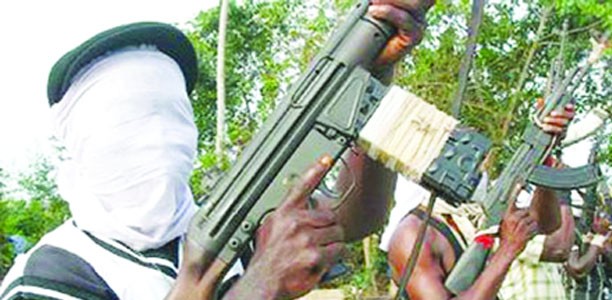
The campaign flag-off by candidate of the Peoples Democratic Party, PDP, in the October 12 by-election for Delta Central Senatorial District, Emmanuel Agwariavwodo, were Friday held hostage in the palace of the traditional ruler of Agbon Kingdom, HRH Mike Omeru by boys suspected to be in sympathy with the arrested kidnap kingpin, Kevin Oburuvbe.

Others also held hostage for several hours include the traditional ruler, some of his palace chiefs, Delta PDP leaders, mobile policemen and other party stalwarts in the entourage.

The campaign train of Agwariavwodo who flagged off his campaign on Thursday in Oghara, Ethiope West Local Government Area of Delta State, had moved to neighbouring local government, Kokori, on Friday, where they were held hostage for several hours by the irate youths.

Eye witness accounts have it that the hoodlums were protesting the arrest of Kelvin and militarisation of the community.

The irate yourths vandalised and burnt several vehicles parked inside and outside the palace located directly opposite the Kokori market.


READ ALSO:


Not even the armed mobile police officers in the entourage of the PDP campaign train could offer any help as they were also held up inside the palace which was fastened with locks by the mobs suspected to be foot-soldiers of notorious kidnapper, Kelvin who was arrested few weeks ago at his hotel room in Port Harcourt.

It is on note that Kokori town has been threatened by activities of Kelvin in the past few weeks after which a curfew was declared in the troubled community by the state governor, Dr Emmanuel Uduaghan.

As at the time of filling the report the hostages were still held up as there was no security presence to the rescue.


Hundreds of Nigerian students Slaughtered, Forced Out Of School – Amnesty International

0

Barely a week after more than 50 students were killed by gunmen  College of Agriculture in Yobe State, Amnesty International has published a new report assessing attacks on schools in northern Nigeria between 2012 and 2013.
Lucy Freeman, Amnesty International’s deputy Africa director said hundreds have been killed in several horrific attacks and thousands of children have been forced out of schools across communities in northern Nigeria, even as many teachers have been forced to flee for their safety.

“Attacks against schoolchildren, teachers and school buildings demonstrate an absolute disregard for the right to life and the right to education,” the international watchdog organisation said.

According to the report titled “Education under attack in Nigeria”, at least 70 teachers and scores of pupils have been slaughtered this year alone and many others wounded. Some 50 schools have been burned or seriously damaged and more than 60 others have been forced to close.

The report said since the beginning of 2013 attacks against schools have appeared to become more targeted and brutal, noting that between 2010 and 2011 attacks were mostly carried out when schools were empty.

In one of the cases detailed in the report, the principal of a government secondary school in Maiduguri describes an attack in February 2013: “The gunmen opened fire on everyone around. Two staff teachers were shot. One died on the spot and the other was seriously wounded. We were all devastated.”

The same school was attacked again the following month and three people were shot and killed in the exams office.

“We were forced to close the school immediately and asked the children to go home. We remained closed for that entire period,” the principal was quoted.

Amnesty International further expressed dismay that in spite of the tragic loss of life involved in these attacks, no one has been arrested and prosecuted by the authorities.

“The Nigerian authorities must provide better protection for schools and ensure that attacks are properly investigated and suspected perpetrators brought to justice,” it said.

The International watchdog also called on Boko Haram and other affiliate armed groups or individuals to “immediately” stop all attacks on schools, teachers and pupils.


PDP Crisis: Pro – Tukur Group Gives Gov Aliyi Headaches In Niger

0

The crack in the ruling Peoples Democratic Party, PDP, in Niger State yesterday worsened as a group loyal to the Bamanga Tukur faction is set to formally storm Abuja and declare support, a development that contradicts assurance by the state governor, Mu’azu Babangida Aliyu, that the party is united in the state.

The group which had serving and former members of the national and state assemblies and  leaders from the 25 local government areas of the state are set to formally present a letter to Bamanga Tukur in Abuja any moment from now.

A source within the group told our reporter that but for the directive that the two factions should hold their peace until the October 7th meeting the President will hold with the G7 governors, the group would have visited Abuja to solidarize with Tukur led PDP.

Meanwhile in a bid to secure home support for pitching tent with the Abubakar Kawu-Baraje faction of the PDP governor Aliyu yesterday commenced a fence-mending meeting with some selected elders and stakeholders of the party in the state.

The meeting earlier slated for Government House was moved to the Presidential Lodge and was called to enable the governor explained reasons for ditching the mainstream PDP to which most elders in the state belong.

It was gathered that the meeting appointed a committee headed by Aminu Kontagora, a colonel the chairman of state Elders Council of the party to meet with the leaders of the party believed to be the arrow heads of the Tukur led group.

The committee is to meet with former governor of the state, Abdulkadir Kure, former minister of information, Jerry Gana and Dahiru Awaisu Kuta.

It was gathered that the governor was not comfortable with the growing support the Bamanga Tukur led faction was enjoying, especially from some elders and leaders of the party at the grassroot level in the state.

Civilain JTF Invade Boko Haram Strronghold, Arrest 26 Members

0

A face-off between members of the banned Boko Haram sect and  the youth vigilante group, popularly called Civilian JTF, Thursday in Gwoza, Borno State, left many members of the insurgent group dead and 26 gravely wounded.

The injured members of the sect  were  arrested and handed over to the military authorities in Maiduguri.

Gwoza, a hilly town, has various outlets into Cameroon and is 135 kilometers from the state capital.

The youth volunteers left Maiduguri on Tuesday in search of the insurgents who were hold up in hideouts in Gwoza town where they had carried out several attacks, the latest in which they killed over thirty civilian casualties and burnt down three churches.

Speaking with newsmen, spokesman of the youth group, Adamu Isa, said they were motivated to go on the hunt which took the Boko Haram insurgents in Gwoza by surprise when they learnt of the series of attacks in the area.

“We killed several of them and arrested 26 who are wounded. We brought them and handed them over to the appropriate authorities. As at now some of them that are wounded are at the General Hospital for treatment hoping that after they recover they would be charged to court,” he said.

Members of the sect had attacked Kirawa town in Gwoza area and killed nine persons, including a senior police officer in charge of three divisional police stations.

The suspected Boko Haram members, who came to the area in Hilux Toyota Pick-up and Golf Volkswagen vehicles and motorcycles and foisted a reign of terror on residents for three hours in the afternoon, according to Ibrahim Wisso, a witness and a trader, used Improvised Explosive Devices, IEDs, and petrol-bombs to dislodge Kirawa market.

“We were caught unawares by attacks on traders, motorists and passengers in the afternoon, when gunmen in various vehicles and motorcycles started shooting at us sporadically. Those who attempted to flee for safety with their vehicles and bicycles, were however held up and tied to the attackers’ vehicles, and dragged along the road, before setting them ablaze,” a trader recounted.

According to the account, those shot dead were left at the market place, while those who were dragged and later died laid on the roadside for about six hours, before policemen could get to the scene.”

“By 6pm that fateful day, a team of policemen rushed to the scene in repelling the insurgents that invaded the town through Waza Forests in Cameroon. We were told that during the 30-minute clash with the insurgents, a senior police officer was killed along with two or three insurgents. But the casualties in the market place and roads reached eight people, with five injured traders that attempted to flee the market arena,” another witness told journalists.

Earlier in March, scores of inmates were freed after the terrorists used explosives to break open the a prison facility in Gwoza town, freeing all the prisoners and afterwards completely burnt down the place.

The insurgents were also said to have taken over most outskirts of Gwoza including Pulka and Kirawa Towns, forcing residents to flee into neighboring Cameroon villages of Mura and Marwa, some 75km away from Nigeria border.

Although Captain Aliyu Ibrahim Danja who is relieving the spokesman of the 7 Division of Nigerian Army, Sagir Musa, a lieutenant colonel, could not be reached for comment on the matter, it was learnt that some of the arrested Boko Haram were kept at sector 4 around post office area in Maiduguri as people were trooping to catch a glimpse of them.

Four Survive Associated Airline Crash – Official

0

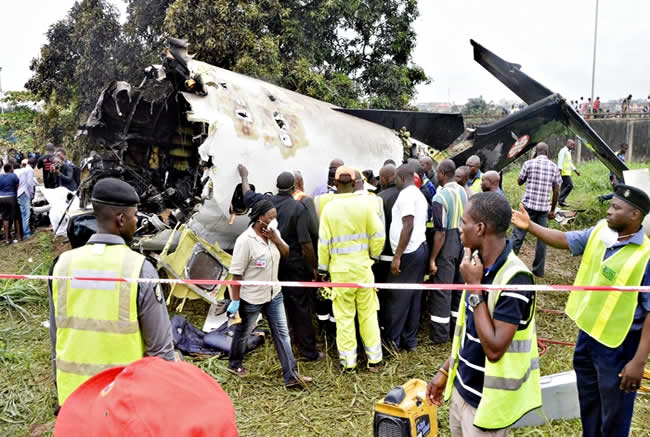
Chief executive officer of the Accident Investigation Bureau, AIB, Mukhtar Usman, has confirmed there are four survivors of the ill-fated Embraer 120 aircraft which crashed Thursday into the tank farm of Sahara Group,  one of the companies supplying aviation fuel to airlines at the Murtala Muhammed International Airport, Lagos.

Contrary to an earlier report that Feyi Agagu, first son of the late former governor of Ondo State died in the crash, along with all on board the aircraft, officials say four persons survived but declined giving their names.

Briefing the media about the incident, Usman said an emergency response centre had been set up to attend to the families of the victims, as efforts are been made to reach them.

“So far, we have four survivors from the accident. And they are currently receiving treatment at the hospital,” the accident bureau chief said.

Although he did not name the hospital, earlier reports said the survivors of the crash were taken to the Nigerian Air Force Hospital for treatment, while the dead were also taken to its morgue.

“For the time been, the search and rescue operation has been concluded. Accident investigation has been launched into this unfortunate incident by the Accident Investigation Bureau,” Usman said.

He declined releasing the names of those on board the aircraft citing protocol: “It is normal practice we have to reach the families before we release the names of victims of the unfortunate accident. Efforts are on to reach the families of the victims”.

However, the manifest released by the Associated Airlines revealed the following passengers were aboard the flight: Feyi Agagu, Femi Akinsanya, Akintunde Joseph, Akeem Akintunde, Tunji Okusanya, Chijioke Duru, Kingsley Amaechi, Deji Afolabi, E.O. Alabi (Mrs) Daji Bernard, Deji Falae, Samson Hassan and Olatunji Okusanya.

For the crew members: Captain Yakubu, Flight officer Oyinlola, Engineer, Saroh Elaiye, Flight dispatcher Ibrahim, Felix Tatoye, Cabin attendants Owolabi and Samson.

A list of survivors released by the management of the Lagos State University Teaching Hospital, LASUTH has the following names: Agagu Feyi , Akintunde Taiwo, Akintunde Akeem, Akinsanya Femi and an unknown male.

The chartered aircraft belonging to Associated Aviation Limited with registration mark 5N-BJY, had 20 persons and the remains of the late former governor of Ondo State, Olusegun Agagu

The accident which occurred at about 9:15am, few minutes after an unsteady take-off, left at least 16 passengers burnt beyond recognition.

However, the casket containing the remains of Agagu, kept in the luggage compartment, was intact as it was not burnt when it was finally removed from the wreckage.

The crash led to a heavy human and vehicular traffic along the roads leading to the airport as many people thronged the scene to catch glimpses of the incident.

Aviation Minister, Stella Oduah said the ministry has commenced investigations into the plane crash, adding that the Black Box of the Embraer 120 aircraft had been found.

According to her, efforts were on to contact the families of the victims before releasing the manifest containing their names.

“The authorities are contacting families of the victims of this unfortunate incident and upon completion will make information about the identities of the victims’ public,” she said.


READ ALSO:


The Ondo state government has described the crash as an unfortunate disaster, confirming that a commissioner, family members, associates and other top government officials were aboard the ill-fated plane, according to a statement signed by the chief press secretary to the governor, Eni Akinsola.

It urged residents of the state to be in a “sober and prayerful mood at these trying times as God is indeed the only person we should call upon in this period.”

Governors Ibikunle Amosun of Ogun State and Abdulfatah Ahmed of Kwara State, have commiserated with the affected families and entire people of Ondo State.


UN decries death of 82 Africans in boat mishap

The UN High Commissioner for Refugees, UNHCR, Antonio Guterres, has expressed shock over the death of 82 Africans in a boat mishap off the coast of the Italian Island of Lampedusa.

This is contained in a statement he issued on the disaster in New York on Thursday.

Guterres commended the swift action taken by the Italian Coast Guard to save lives and decried the rising global phenomenon of migrants and people fleeing conflict or persecution and perishing at sea.

He said of the estimated 500 passengers on the boat believed to be Eritreans only 147 had been rescued so far.

The boat, which originated from Libya, caught fire half a mile from the coast, on Thursday.

Media reports suggest that there are still some 200 passengers that are unaccounted for.

The UNHCR said it was actively engaging countries in the region to provide alternatives for people resorting to taking the dangerous journeys so they do not have to risk their lives.

“Today’s (Thursday) incident is the second boat disaster this week off Italy’s coast,” the UN chief said.

Thirteen men drowned off the southern coast of Italy on Monday when they attempted to swim ashore from a troubled vessel.


114 Dead, 235 Missing As Migrant Boat Sinks Off Italy

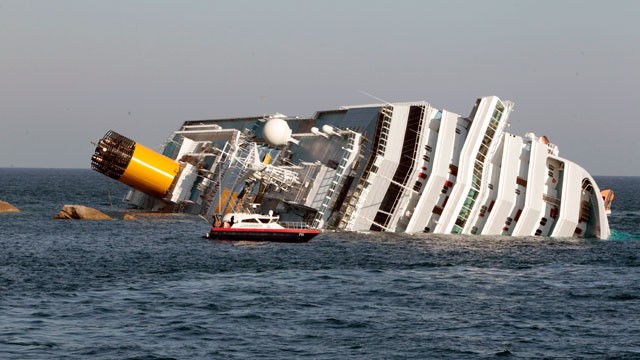
At least 114 people died and 235 were missing after a boat packed with African migrants sank off the southern Italian island of Lampedusa on Thursday.

Bodies fished from the water were laid out along the quayside as the death toll rose in what looked like one of the worst disasters to hit the perilous route for migrants seeking to reach Europe from Africa.

“It’s horrific, like a cemetery, they are still bringing them out,” Lampedusa Mayor Giusi Nicolini told reporters.

The coastguard said 151 survivors had been rescued after the 20-metre boat caught fire and sank about one kilometre off the island.

The UN refugee agency, UNHCR, said around 500 passengers, all Eritreans, had boarded the boat in Libya.

The disaster came four days after 13 migrants drowned off eastern Sicily and Italian President Giorgio Napolitano said action was needed by the EU to stem “a succession of massacres of innocent people”.

Last year, almost 500 people were reported dead or missing making the crossing from Tunisia to Italy, the UNHCR says. Numbers have been boosted by thousands of refugees from the civil war in Syria.


Associated Airline plane Crash

66

Scene of the crash (3)


Scene of the crash


Symphatisers at the morgue.


Symphatisers at the morgue.


Scene of the crash (2)


Scene of the crash


Scene of the crash (1)


Scene of the crash


Late Chief Olusegun Agagu’s casket being brought out of the crash.


Late Chief Olusegun Agagu’s casket being brought out of the crash.


A relative of MIC Casket  Director, Mr. Tunji Okusanya reacts on hearing of his death in the crash.


A relative of MIC Casket  Director, Mr. Tunji Okusanya reacts on hearing of his death in the crash.


A dead victim being brought out by the recovery team.


A dead victim being brought out by the recovery team.


‘We Believe Subsidised Fertiliser Reaches 80 Percent Of Farmers’- FG

Osho Akinbolawa, Director of the Growth Enhancement Support (GES) scheme in the Federal Ministry of Agriculture and Rural Development, Abuja, speaks on the fertiliser subsidy programme, which he admits is not without challenges. But he says 80 per cent of registered farmers receive their allocations under the present system as against 11 percent in the past.


How would you assess the implementation of the GES, especially regarding the distribution of subsidised fertiliser?

If we take it from 2012, which was the start year, from the total number of farmers that were enumerated which was about 4.2 million farmers, we were able to get about 1.2 million to 1.3 million farmers to redeem fertiliser under the program.

In 2013, we have been able to register about 5 million and if we add the figure from last year we are looking at 9 million plus. For 2013 we have been able to get about 3.6 million farmers that have redeemed. But the issue is that of the 3.6 million farmers, some were registered in 2012, some of them got input 2012 and this year they are still getting inputs.

Out of this 3.6 million no one single farmer has been reported to be included  from Yobe and Borno; they started very late because of the security challenges, so they would not even come into the data until maybe end of this month and early October.

By the time we finish up GES for 2013 we may be able to cross over 4 million farmers that would have redeemed physical inputs – seeds and fertiliser and, perhaps, some of the agro chemicals in some of these value chains.

So what is your assessment of the scheme?

Moving from 1.2 million in the first year to between 2 million and 3 million in the second year I think is a great achievement. Looking at the figures we are saying we have over 300 percent increase.

Why is it that there are people who registered this year but were not captured in the database and therefore not getting any fertiliser under the programme?

Part of the people who registered this year would not be able to participate in the redemption because most of them registered very late. Some of the farmers in the south that are now in our database of the registered which is 9.3 million to 9.4 million registered after the database had been closed. So there was no way they would have been part of the redemption process.

That is why one has to be careful in taking the total number. There were also some farmers who were given ID cards for registration during their introduction in 2013. With that ID card the farmer can redeem but unfortunately some of the farmers with ID cards, their names were not found on the list but they were allowed to redeem because the ID card with them shows that they have already been registered. Their name not being on the register is due to one issue or the other that existed between the consultant that we employed in getting the thing uploaded in Cellulant database. We take responsibility because they are working for us.

Tell us about the GES. How does it work?

The Growth Enhancement Support, GES, scheme is to bring into focus our small scale farmers, to ensure that the benefit of subsidy that government gets to them. As a farmer, once you are registered and your name is in our data base, or in the list that we have, that farmer is entitled to receive a text message in his or her phone. That text message is going to tell you that you have XY amount of money to buy fertiliser and that if you go to XY redemption centre, within your locality, you will get seeds free of charge, they will even tell you whether it is maize or rice. Under the generic scheme, it’s only those two seeds we are focusing on. And then you will get two bags of fertiliser, one NPK and one Urea. That text message will advise that farmer the quantum of money that farmer should take to that redemption centre.

What we are trying to do is promote marketing of fertiliser by private sector people. We are trying to facilitate development of fertiliser marketing because up till now, what government has seen is that it has become the only buyer of fertiliser, whether at state or federal level. And that had disadvantaged the private sector people from developing the fertiliser market because they are competing against government. Government became the only market which it’s not supposed to be. The farmers in the nooks and crannies of our country are supposed to be the major market to our merchants and companies. But over time that government has always been contracting for fertiliser and distributing through the government channels. It is either through the ADP (agricultural development programme) or through whatever state government program. That now made the private sector people never to develop the marketing channels for their products, which is very wrong.

So, part of the GES scheme really is to facilitate development of fertiliser marketing by the private sector. They have to take it over, just as you have cement and flour, being channeled via the private sector to all the villages in this country, why can’t fertiliser be like that.

Government now said for you private sector fertiliser merchant, we are going to help you to do this, there is money now being given in the cell phones although it is virtual; the real money is in the CBN. It’s there with the farmer, go and chase that money with the farmer, the farmer cannot use that money for any other thing; he cannot buy any other thing but fertiliser, so go and chase that money.

How much money have you budgeted for the fertiliser subsidy programme for 2013?

Our target on yearly basis is to get to 5 million farmers. Each year we say we are going to bring on board 5 million farmers and try and meet the needs of those farmers in terms of redemption of fertiliser and seed. The budget of government that we are going to use to support the subsidy component has its own limitation so we have to work within the budget that is available for us.

If we take it as budgeted, let’s talk about fertiliser, we are looking at a million metric tons of fertiliser to satisfy 10 million farmers, at two bags per farmer – and that is just for the generic. Now for the specialised value chain it is another ball game entirely because each value chain still has in its own component of inputs which is another budget line entirely.  That is only for fertiliser and it is a lot of money.

When you look at seeds, you know we are giving seeds free of charge. It has never been done in this country and it’s a lot of money. We are talking of billions of naira that is going to support farmers. Over N2 billion worth of seeds was used for just ten states when we did rice during the dry season. So you now can look at what it is going to be for all the 36 states and FCT. That will give you the kind of quantum of money needed for seeds alone; it’s a lot of money.

Could you please say specifically how much money has been budgeted for fertiliser subsidy this year?

Today is September 19. Of whatever was budgeted I tell you categorically you can go and check, I have received only 29 percent of that budget as we talk.  Invariably we have to work within the budget.

In monetary, terms for fertilizer, what we are looking at is having N2,750 multiplied by ten million farmers, that is the budget. That is for both federal and states. So if you talk about the federal, you have to divide that by two again, which now comes to N1,375 multiplied by ten million. That should be what should be given to us for fertiliser subsidy if we are to meet the ten million that we planned for but that is not the case.

What would you say are the key challenges to implementing the programme?

The major challenge is telecommunication network that has been very critical. What we envisaged is that each farmer that gets to a redemption centre can easily do his transaction, even if that farmer cannot do it the agro dealer will be able to help that farmer to be able to do an online transaction, so that as the farmer is getting his fertiliser he is giving his agro dealer the half part of the money because the other half is to be given by government.  The transaction is going to be logged in our system straight away and then you can easily verify it. And as it is happening we are getting it in real time, but that cannot be possible because of the network problem.

Secondly is the fact that our farmers too in some areas do not even have phones, that’s another kind of challenge we are facing.

Infrastructure is another major thing – road networks carrying fertiliser from one point to the next. There are so many huddles in terms of making sure that even seeds get to the farmers.

Political interference is another thing. Zamfara till today has not keyed into GES and it is not because of any other thing but politics. Zamfara is of the other party from the ruling party which initiated the scheme. We shouldn’t be playing politics because we are looking at how we can provide food for our country.

Added to that too, some states will get half way and say this is where the budget can take them. We have, say 200,000 farmers registered, they will say it’s only 100,000 that their budget can take. And you can’t force them. How about the other 100,000 farmers that are left? In fact, in some states what we had to do is to just say ok, states can you agree that the 100,000 farmers that your budget can not take, can they take our own 25 per cent subsidy? They will say ok go ahead. And then we give the farmers at 75 percent cost, we pay only 25 percent subsidy.

Are you aware of situations like farmers re-selling their subsidised fertiliser to marketers who in turn sell at higher cost to other farmers?

The only thing that we have heard is a societal thing. A farmer who somebody has seen those who do not have the capacity to pay, I come to you and say you are in the database, you are enlisted, I will provide the money go and pay but as you pay it I am going to collect that fertilizer from you. Yes we have heard about this happening in our villages.

But the fact is that that farmer is not going without nothing. Unlike before, for that farmer there is something (money) on top that the man who is buying it off is giving him. So that becomes his dividend.

By and by, like I said, we are trying to empower our farmers. That farmer that has sold his own two bags for maybe N1,000 or whatever, it is because he is not empowered to get those two bags. Ordinarily, any farmer that knows his onions will know that fertiliser is a key input to his farming to get his yield to be high.

Are you also aware of the corruption in the distribution system, like when farmers’ names would be ticked only for their allocations to be re-sold to merchants?

A farmer that did not even get there at all and they are now saying that that farmer has come and has redeemed? That is fraud. Such people that do that should be apprehended and the law should deal with them.

Official records available to us show that there are only about 1,400 redemption centres throughout the country. Because of this, farmers have to travel long distances to get fertiliser which frustrated many of them. Why don’t we have more centres?

For this year, we have close to 3,000 redemption centre, but we are not yet there. The distance covered by farmers is still rather too high for us. So we are increasing the number of agro dealers that we are going to have, vis a vis the number of redemption centers.

The fact is that you cannot have a redemption centre without having an agro-dealer. So, we must increase the two at the same time. But you see, you do not want to increase redemption centres just for increasing sake, we must increase the number of agro-dealers which is the most critical part of the whole scheme.

Agro dealers must be there in the nooks and crannies so much so that our farmers will just have to walk a short distance and get their input.

There have been complaints by farmers around the country that the inputs reached them very late in the season. What are you doing to check this?

What we are trying to do is that for southern states, seeds and fertiliser must reach each and every redemption centre by February or first week of March. Once it is not there forget it.

The same thing must be replicated even up north, from the middle belt to the north. We must have all these things put in place within a particular period of time. This is just to ensure that our farmers get this input at the best of time.

When we went round ten states we noticed that probably as many 80 percent of farmers have not heard of GES, especially those in remote villages. Are you aware of this?

80 percent? That must be exaggerated.

But that is what we found on the field

You know why I say it is exaggerated? I receive phone calls here in Abuja from farmers that I never knew…how they even got my number, I don’t know. They will just call me and be raining prayers, thanking me that this has never been done.

Well, if it is the remotest places, then it means that perhaps no radio, no town crier, because we have used every available means, even town criers in areas that that is available to announce to the locality. Because you see the process is not just bringing fertiliser to base, the process involves that enumeration exercise.

It’s a new program. Its one year plus, it’s not yet two years old. So it’s going to take a while before you can have a widespread dissemination of information.

Talking about enumeration, this programme targets registering five million farmers per year for four years, and that makes 20 million. Why do you have a roof of 20 million?

No, this is just based on an administration’s program. It’s a program for this administration, and of course you must live within your own bounds. The minister, when he came in, knew that he has only four years, and he cannot start thinking of the next ten years from now. If he does that you people in the press will say this man wants to perpetuate himself. So he is just saying that for these four years, this is my program.

Some farmers have four hectares and yet got only two bags, meaning such a famer still has to go and purchase the extra in the market at high cost. Does this situation not defeat the whole purpose of the government programme?

No, it does not defeat the purpose. Because looking at it from the fact that ok you need eight bags, you have gotten two bags as subsidy the remaining six bags are the one you are going to buy. So the subsidy you have gotten is a plus to you, it’s a profit so to say.

Like I said earlier, all we are targeting are our small-scale farmers, who ordinarily would have been just able to get a mudu and thank God for that. The people you are talking about with four hectares, ten hectares they are no more small-scale farmers, they are already moving on to medium scale. Somebody with a maximum of one hectare that is our target.

Some people, including some state agriculture commissioners, have observed that small-scale, subsistence farmers amount to only 30 percent of farmers in the country. If the purpose is to increase production, shouldn’t we target the bigger farmer who can increase yield faster?

We are targeting them also. I told you about the incentives we have created for them, they can now get loans guaranteed and without any problem they get loans at nine percent. That is a lot of incentive which they are taking advantage of today. And a lot of them today if you go to their farms you will see they are doing much better than three or four years before.

When the minister just came he said only about 11 per cent of farmers get subsidised fertilizer under the previous system. What is the situation now?

I am definitely sure that we have crossed even over 80 percent, in terms of reaching our target, in terms of saying X is meant to get this thing and X has gotten it, we have crossed over 80 percent.