


Iran and Russia have agreed to build a new nuclear power plant, Press TV reported on Monday.
The agreement was reached in a recent Iran-Russia Joint Economic Commission, the head of the Atomic Energy Organisation of Iran, Ali-Akbar Salehi, was quoted as saying.
Iran takes the control of the 1,000-megawatt Bushehr nuclear power plant for a temporary period of two years.
Salehi said on Sunday that Iranians will fully take over the plant after the temporary period, according to Press TV.
The power station became officially operational and was connected to Iran’s national grid in September 2011, generating electricity at 40 per cent capacity.
The plant reached its maximum power generation capacity in August 2012.
On Monday, Salehi expressed hope that the construction of the second unit of the Bushehr nuclear power plant would get underway in the near future.
Earlier in September, Russian Ambassador to Iran Levan Dzhagaryan said that Moscow was ready to increase its nuclear cooperation with Tehran even after the country takes full control of the Russian-built Bushehr nuclear power plant.
Also, Salehi had said earlier that Iran hoped Russia could participate in constructing the second unit of the Bushehr nuclear plant.
According to the Iranian official, the capacity of the second unit of the nuclear power plant will add another 4,000 megawatt to the current 1,000-megawatt capacity.
READ ALSO:
Russia’s state atomic agency Rosatom said that it was ready to help Iran build another unit at the Bushehr plant.
Construction of the Bushehr plant was started in 1975 by several German companies.
However, the work halted when the U.S. imposed an embargo on hi-tech supplies to Iran after the 1979 revolution.
Russia signed a contract with Iran to complete the construction in 1998.

Four large blasts rocked Kenya’s Westgate Mall on Monday, sending large plumes of smoke over an upscale suburb as Kenyan military forces sought to rescue an unknown number of hostages held by al-Qaida-linked militants.
The explosions were followed by volleys of gunfire, then a thick, dark column of smoke. Military and police helicopters and one plane circled over the Nairobi mall, giving the upscale Westlands neighborhood the feel of a war zone.
Security forces’ efforts the previous day to rescue the unknown number of hostages inside failed despite the military announcing that “most” hostages had been saved.
Kenyan officials have said preserving the hostages’ lives is a top priority, greatly complicating the rescue effort.
Kenyans and foreigners were among the 68 persons confirmed dead by the country’s Red Cross, including British, French, Canadians, Indians, a Ghanaian, a South African and a Chinese woman. The UK Foreign Office said Monday it has confirmed the deaths of four British nationals.
Two al-Shabab fighters have also been killed in the ongoing military raid to end the standoff and more than 175 people were injured, including many children, Kenyan officials said.
From neighboring Somalia, Sheik Ali Mohamud Rage, spokesman for al-Shabab, the militant group that claimed responsibility for the attack, said in an audio file posted on a website that the hostage takers had been ordered to “take punitive action against the hostages” if force was used to try to rescue them.
Military helicopters circled over the mall at daybreak Monday, when about five minutes of sustained gunfire broke out inside the mall, a clear indication that at least one of the estimated 10 to 15 gunmen who attacked the mall when it was filled with shoppers Saturday was still on the loose. A military ambulance then sped away from the scene.
A person with knowledge of the rescue operation told AP that no hostages had been released or rescued overnight Sunday. The person insisted on anonymity in order to talk about the rescue response.
At the Oshwal Centre next to the mall, the Red Cross was using a squat concrete structure that houses a Hindu temple as a triage center. Medical workers attended to at least two wounded Kenyan soldiers there on Monday.
Al-Shabab militants reacted angrily on Sunday to the helicopters hovering over the mall, and warned on Twitter that the Kenyan military action was endangering hostages.
A large military assault began on the mall shortly before sundown on Sunday, with one helicopter skimming very close to the roof of the shopping complex as a loud explosion rang out, far larger than any previous grenade blast or gunfire volley.
As the crisis surpassed the 48-hour mark, video taken by someone inside the mall’s main department store when the assault began emerged. The video showed frightened and unsure shoppers crouching and loud volleys of gunfire could be heard.
The terrorists stormed the mall on Saturday from two sides, throwing grenades and firing on civilians.
Kenya’s Cabinet Secretary for Interior, Ole Lenku, told a news conference on Monday:
“We don’t want to give you a definitive position on when we think the process will come to an end, but we are doing anything reasonably possible, cautiously though, to bring this process to an end”.
Al-Shabab said the attack, targeting non-Muslims, was in retribution for Kenyan forces’ 2011 push into neighboring Somalia.

Photographs of 57-year-old Olatunji Olaide, a victim of wrongful conviction who spent 24years of his life in torture and hard labour at the Kiri-Kiri maximum prison in Lagos, during which he lost his parents, wife, two children, an arm and eye for a crime hung on his neck when he merely visited the market to shop. Find heart-renting details of his ordeal here


The Oyo State governor, Abiola Ajimobi, has sacked his entire cabinet in an unforeseen reshuffle Monday morning.
A statement signed by the director of cabinet in the state’s civil service, Dotun Omokemi, confirmed that the sack was total as it includes the secretary to the state government, Akin Olajide; chief of staff, Adeolu Akande; all the commissioners as well as special advisers.
No reason was given for the move except that the governor wants to create space for the fresh blood which he intends to inject into governance in other further serve the people.
All the sacked commissioners have been directed to hand over to the permanent secretaries in their various ministries.
Governor Ajimobi in the statement, thanked all members of his dissolved cabinet for the service rendered and wished them well in their future endeavours.
As it stands the governor, the governor is left alone with his deputy, Moses Alake Adeyemo.
An aide of the governor who spoke to our reporter this evening on the condition of anonymity said that the shake up came as a surprise to many of those affected as there had been no indication of such a sweeping action.
Those involved in the shake up include:
Hon. Taiwo Otegbeye Hon. Commissioner for Information & Orientation
Hon. Dapo Lam-Adesina Hon. Commissioner for Youth & Sports
Hon. Adetokunbo Fayokun Hon. Commissioner for Education
Mrs. Atinuke Osunkoya Hon. Commissioner for Women Affairs, Community Development & Social Welfare
Alhaja Adetutu Adeyemi Hon. Commissioner for Culture & Tourism
Dr. Muyiwa Gbadegesin Hon. Commissioner for Health
Mr. Zacch Adelabu Adedeji Hon. Commissioner for Finance
Hon. Ajiboye Omodewu Hon. Commissioner for Local Government & Chieftaincy Matters
Miss Kafayat Adebisi Adeojo Hon. Commissioner for Physical Planning & Urban Development
Barr. Sunmbo Owolabi Hon. Commissioner for Water Resources
Hon. Peter O. Odetomi Hon. Commissioner for Agriculture, Natural Resources & Rural Development
Barr. Lowo Obisesan Hon. Commissioner for Environment & Habitat
Hon. Adebayo Olagbenro Hon. Commissioner for Trade, Investment & Cooperatives
Hon. Abimbola Kolade Hon. Commissioner for Lands, Housing & Survey
Dr. Olaniyi Nurudeen Olarinde Hon. Commissioner for Economic Planning and Budgeting
Alhaji Wasiu Dauda Hon. Commissioner for Establishments and Training
Barr. Bayo Ojo Hon. Commissioner for Justice
Hon. Commissioner for Works & Transport
Hon. Commissioner for Special Duties
Hon. Commissioner for Applied Science and Technology
Mr. Razaq Olubodun Special Adviser (Parastatals)
Dr. Adeyemi Fajingbesi Special Adviser (Development & Intervention Funds)
Alhaji W. A. Gbadamosi Special Adviser (Physical Planning & Urban Development)
Mr. Tayo Koleosho Special Adviser (ICT)
Oyefunke I. Oworu Special Adviser (Trade, Investment & Cooperatives)
Engr. Kayode Adepoju Special Adviser (Infrastructure)
Hon. Yemi Aderibigbe Special Adviser (Transport)
Mr. Gbolagade Busari Special Adviser (Information & Orientation)
Mr. Abayomi Oke Special Adviser (Environment)
Alhaji Fatai Ibikunle Special Adviser (Political Matters)
Tunde Aderounmu Special Adviser (Agriculture)
Hon. Olu Akintola Special Adviser (Culture & Tourism)
Ms. Oluwabunmi Amao Special Adviser (Establishments & Training)
Mrs. Aderonke Adedayo Special Adviser (Due Process)
Mr. Segun Abolarinwa Special Adviser (Special Duties
Dr. Festus Adedayo Special Adviser (Media)
Mr. Tope Fajana Special Adviser (MDGs)
Mr. Akinbiyi Oloko Special Adviser (Budget & Planning)
Hon. Matthew Oyedokun Special Adviser (Solid Minerals)
Engr. Ganiyu Taiwo Fawole Special Adviser (Project Monitoring)
Mr. Yanju Adegbite Special Adviser (BCOS)
Hon. Nurudeen Akinyo Special Adviser (Local Govt.)
Hon. Fatai Buhari Special Adviser (Water Resources)
Mr. Toye Arulogun Special Adviser (Public Affairs)

Godwin Onyeacholem
The power game currently going on in Nigeria is nothing but an embarrassment. If the contest as being carried out were truly driven by selflessness and an honest desire to serve the people as the jostlers often claim, the atmosphere would be reassuring. But this is not so. And they know it. The unbroken boisterous shout from one side to the effect that Jonathan must not go for a second term, and the sometimes over-the-top counteractive defiance from the other, is down to only one thing: elite self-interest.
It has to be emphasised that the enduring nonsense about the country’s presidency as an object of do-or-die tussle between the North and the South is an elite concept perpetuated by the privileged class in both sections of the country. For them the essence of grabbing power has never been for the purpose of development and improvement of the lives of the people. It is to preserve elitism by furthering class distinction to the absolute disadvantage of the lower class. This perception is informed by the experience of not-too-distant past.
It is germane to recap it. Of all the long years that one northern leader after another held the reins of government, years that would be more than enough for a focused, selfless leader to positively transform the region and the lives of its people – not to talk of the entire country – the only thing they had to show for it was absolute poverty and widespread misery for their own people. Measured with the same index of dispassion, similar horrendous fiasco is known to have defined the tenure of their southern counterparts. Meanwhile, in turn, these leaders, or rulers, come out stupendously richer than they were before they took office. Lest you are deceived, in practice, there is no difference yet between the northern leader and the southern leader.
Without doubt, a common thread that runs through the hideous tapestry of Nigeria’s arrogant leadership over the past decades is the shameless preoccupation with stealing public funds by both elected and unelected state officials. Barefaced treasury looting and crass corruption has long since been elevated to high art, to the detriment of the higher ideal of sacrifice and service delivery in the interest of the vast majority. Funds that are meant for servicing the needs of society often end up in the pockets of politicians and government officials and their cronies. In the end, no one benefits other than these few thieves in government and their immediate families and cronies.
In the face of a deliberately designed deficiency in the mechanism for accountability, and the glaring absence of consequence for impunity, the looting extravaganza goes on unhindered. Therefore, it is the determination to seize control of the juicy central government, the heartbeat of the gravy train, which fuels the perennial struggle for power between the north and the south. Nothing more. There is so much money available for stress-free stealing at the centre that the elite in either camp are ready to risk anything to succeed.
But fate has presented one man an once-in-a-lifetime opportunity to change all that for the sake of stability and progress of a country in serious need of all-round fine-tuning. There can be no better time for President Goodluck Jonathan to redeem his presidency by leaving a lasting legacy through the restructuring of a dysfunctional federal system that de-emphasises development and concentrates enormous power and financial resources at the centre, thus making it so attractive as to encourage unending bitter rivalry among tribes in the north and the south. This country has to be saved from its self-inflicted demons, and it can only be saved by re-inventing it. Therefore, Jonathan must, for once, prove to the Nigerian people that he is the leader they elected by seizing this moment to convoke a conference of Nigerian people to debate constitutional reforms.
The conference is of urgent necessity for no other reason than the fact that the 1999 constitution under which the country is currently governed is, as has been stated many times in the past by many astute analysts, a defective product resulting from a Decree enacted by the Federal Military Government headed by General Abdulsalami Abubakar. So flawed is this constitution that it decisively foists on the country an unbalanced and lop-sided federal structure that confers more benefits on the centre at the expense of the states which accommodate the ethnic nationalities. Unfortunately, as a result of the disproportionately powerful and extremely profitable office of the president of Nigeria, virtually all ethnic groups have been intensifying struggle for the control of the federal government.
Hopes of redressing the dangerous imbalance were raised in February 2005 by President Olusegun Obasanjo. Making a show of investing in efforts to produce for the country an acceptable constitution, Obasanjo convened the National Political Reform Conference which was made up of all sorts of persons chosen by him and the state governors. There was nothing democratic about the conference; not even a law establishing and backing it up. It turned out that the delegates were only at the conference to make recommendations which the presidency and the national assembly would sift through and see which ones would be incorporated in the constitution. At long last, with the conference in total disarray, it dawned on everybody that Obasanjo only convened it to deviously obtain tenure elongation for himself. Thanks to the national assembly, he was blocked. Meantime, yet unverified billions of naira (for conference and inducement of sundry legislators and state officials) had gone down the drain!
That is not the type of conference Nigerians expect this time. Surely Jonathan would be better off if he rises above selfish and clannish considerations to facilitate the process of fashioning a constitution the country truly deserves – one that will effectively sort out the many injustices that have clogged the path to a new, vibrant nation. Unlike the one in use now, the constitution the people are looking forward to will have no choice but to finally institute and preserve an authentic balance between the requirements and burdens of creating a nation and the sustenance of diversity in a multi-ethnic, multi-religious and multi-cultural society.
READ ALSO:
Coming from the Niger Delta, the oil-producing region with the confounding paradox of being Nigeria’s major source of revenue, as well as the poster child of cruel injustice and criminal neglect, Jonathan is better placed to appreciate the crucial need for Nigerians from every part of the country to sit down, talk and reach a decision on how to move on as a people of one country. But more specifically, he can use the window to negotiate terms and relationships that will ultimately improve the lot of his people in the region. That is something they have long been clamouring for anyway.
By all means, the constitution derived from such an exercise will not be a cure-all for the country’s multi-faceted problems. But it certainly will be an indispensable step in the onerous task of building a new, functional nation. If Jonathan makes this possible – there is no reason he shouldn’t – he will forever be remembered as the president who gave Nigeria a fresh beginning. Should he then allow this golden chance to elude him? No.
Godwin Onyeacholem is a journalist based in Abuja; can be reached on gonyeacholem@ yahoo.com





By Kevwe Ebireri
Olatunji Olaide’s story is a very pathetic one. It is the kind of sad tale that brings tears to the eyes. It is a story of injustice, cruelty, brutality and torture, pain, loss, waste and of a cruel fate meted out to an innocent man.
But he is also a very lucky man.He was released from prison last year after 24 years of wrongful detention, 17 of which he spent on the death-row awaiting the hangman’s noose.
Olaide left Lagos in 1988 for Birnin-Gwari in Kaduna State to buy cows, goats and rams.
His dream of returning quickly to Lagos with his purchase and making a good profit was cut short when he was arrested at the Gwari bush market between Niger and Kaduna states by some policemen who claimed that he and other suspects had abandoned a stolen vehicle on the road and had run into the bush.
He narrated that after series of interrogations in Niger State, and despite his claim of innocence and confirmation as a visiting trader by the interpreter who was with him when he was arrested; he was handed over to an anti-robbery squad from Lagos and transferred to Adeniji Adele Police Station where, according to him, he went to hell and back.
He said it was when he got to Lagos that he got to know that he had been arrested for murder because the owner of the car which was snatched had been killed.
“That was the day I knew they were accusing me of murder. They said somebody was killed in Lagos and his car was snatched and they later found the car around the village where I was in Gwari. The policemen said the people fled into the bush that was why they were looking for visitors around that area.”
“I was with N325, 000 cash which I wanted to use to buy cows. The money followed me up to Ilorin but when we got to Lagos, I didn’t hear anything about the money again. The Police men did not give me or my family members,” he said.
Olaide alleged that at the police station, the policemen wrote a confessional statement which they forced him to sign after beating and torturing him.
After a trial at a Lagos High Court where he was arraigned for murder, Justice A. O Silvia sentenced him to death.
While in prison, Olaide’s wife left to marry another man but he bears no grudge, reasoning philosophically that if she had told him, he would have consented to her new marriage, as there was little hope of his ever getting out a free man.
Apart from his wife, he also lost his two children. He last saw them before his arrest and since his release he has not tried to look for them. His reason is that he has no job for now and lives with his younger brother, who also has a family. So looking for his children might bring upon him a burden he is not in a position to bear.
He said despite his family’s best effort to free him, no respite came, as the lawyers hired for the purpose merely collected fees and failed to make any headway.
However, by divine providence, the Court of Appeal on June 6, 2012 discharged and acquitted him upon an appeal after spending 24 years behind bars.He went in as a 32 year-old looking to the future with hope. He came out as a disillusioned 56 year-old man with a wasted youth and an uncertain future.
Before his freedom, he was one of the longest serving prisoners at Maximum Security Prison, Kirikiri.
When www.icirnigeria.orgspoke to Olaide about a week ago, although he was calm and philosophical about his sorrowful experience, he bore the tell-tale signs of a rough deal in the hands of fate. He had lost his left eye, following what he claimed was negligence on the part of prison authorities.
For the same reason, he has also lost the use of his right arm. In fact, he alleged that his arm was damaged due to torture while he was still in police detention.
Olaide is one of many Nigerians who have been wrongfully convicted and punished for offences they never committed. But he is still one of the lucky ones as many were executed without their case getting an appeal.
In his case, as in many others, the Nigerian Police have received the most blame for this type of miscarriage of justice, using the instrument of the law.
Miscarriage of justice is primarily the conviction and punishment of a person for a crime they did not commit and can exist in two forms – the error of falsely identifying culpability arising from lack of painstaking investigationor the error of impunity which fails to find a culpable person guilty.
In the case of Laide, it was, perhaps, both as the police after failing in their investigation in a murder case found an innocent person to hang the crime on.
Whatever the case, the increasing incidence of upturning death sentences upon appeal in court is bothering many people, particularly lawyers and human rights activists. Such persons and opponents of capital punishment point at examples such as Olaide’s to justify the campaign against death sentence.
It is often said in law that it is better for ten criminals to go unpunished than for one innocent person to be punished and wrongful convictions are frequently cited by death penalty opponents as reason to eliminate death penalties to avoid executing innocent persons.
Even though most criminal justice systems have some means to overturn, or “quash” a wrongful conviction, it is often difficult to achieve and in some instances a wrongful conviction is not overturned for several years, or until after the innocent person has been executed or died after languishing for several years.
Where condemned persons are executed promptly after conviction, the most significant effect of a miscarriage of justice is irreversible.
In June this year, there was public outburst of criticism against capital punishment when the Edo State government hanged three out of four condemned criminals.
Amnesty International and other civil society organisations condemned the action and urged the federal government to exercise restraint in the use of death penalties in respect of the existing de facto moratorium on executions which has been in place in the country since 2006.
And there appears to be enough justification for those who take such a position. The Legal Defence and Assistance Project, LEDAP, quoted statistics from the Nigeria law reports on death penalty cases compiled between 2006 – 2011 as showing that 39 per cent of death sentences by trial courts were quashed on appeal within the period, indicating a high risk of wrongful convictions and sentences.
LEDAP’s coordinator, Chino Obiagwu, a legal practitioner, who was instrumental inOlaide’s release is one of those opposed to capital punishment and he described the execution of the Edo three, in spite of the pendency of their appeal and motion for stay of execution, as unlawful, adding that it amounts to “a total disregard for the rule of law and judicial process in any democratic system”.
Justifying his position, he said an analysis of the total number of death sentences passed by the various divisions of High Court of various states appealed between 2006 and 2011 shows that 69 out of the 113 appeal cases, 26 were quashed by the Supreme Court, while another 22 were upturned by various divisions of the Court of Appeal.
Many lawyers say that the foundation of wrongful conviction, especially in the case ofa criminal offence which is a crime against the state and carries capital punishment penalties, is often laid by the police which is empowered by law to carry out investigation and prosecution.
To Chike Okoroafor, a lawyer, the journey to a right or wrong conviction starts with an arrest.“Of course when you talk about wrongful conviction it starts from the police, it starts from the arrest because before anybody is arraigned in court, he must have been arrested. You and I know that we are in a country where a whole lot of persons have been convicted wrongly,” he said.
He also added that from time to time the police in a bid to carry out their responsibilities go beyond the limits of the law. “Sometimes you see police cook up evidence…the court would rely on the evidence provided to convict or acquit a suspect. When the evidence of the police is such that it has been so cooked, it has been so framed, so concocted asmuch to make the court believe it is genuine, the court would have no option.”
Okoroafor proposed that the laws dealing with power to prosecute should be fortified and handled by only people who have proven integrity, competence and are disciplined.
“I am suggesting that ICPC (the Independent Corrupt Practices and Other Related Offences Commission) should employ more lawyers, anamendment to the police act and making the issue of prosecution the responsibility of ICPC alone.”
John Ainetor, a human rights lawyer at the Festus Keyamo Chambers is of the opinion that poor handling of cases on thepart of defence lawyers is also a major factor responsible for miscarriage of justice and wrongful conviction, particularly the death sentence.
He said according to the principles of law, the judge is an impartial umpire that takes decisions based on the evidence adduced before him in the court -“it is not for him to go outside the court on a voyage of enquiry”.
“Its 50-50. You can have a case today where someone is convicted and a similar case tomorrow, someone is not convicted. This has a lot to do with the brilliance of the counsel. Persons who are hired to represent accused persons should be more diligent and thorough,” he said.
Ainetor stressed that evidence presented before the court play a crucial role in determining whether a person is convicted or acquitted, adding that sometimes too where inadequate evidence is presented to the court, a guilty person may be set free or, worse still, an innocent person sent to jail.
However wrongful convictions come, what is certain is that victims who are lucky to get their sentences overturned are usually scarred for life and abandoned by the system that stole their freedom.
Many who eventually regain their freedom after long years in prison suffer from post-traumatic stress disorder, depression, inferiority complex, anger, anti-social behaviours and, sometimes, a general disaffection with society.
Physically too, they have aged ahead of their peers, and often their health has suffered from years of sub-standard prison health care. They are released into a society that has changed dramatically from what they knew – family members have passed away, children have grown, spouses and partners have moved on.
Most worrying of all, perhaps, is that such persons are abandoned, left to suffer their injustice alone without any kind of compensation.
Although there have been corrections of wrongful convictions which has helped to build faith in the judicial system, what the public would like to see is a better compensation system that can let wrongly jailed people have a normal life and harsher punishments for those who wronged them, otherwise the wrongs will never be truly corrected.
For advocates of the abrogation of capital punishment, there are too many considerations that weigh against taking human life no matter the offence. Above every other reason, however, appears to be the possibility that by some twist of fate, a sleight of hand or a failing in investigative or prosecution processes, an innocent person might end up in the gallows.
But equally strident are the voices that insist that there must always be the deterrent of capital punishment for certain categories of crimes.
In defending his action of signing the death warrant of the three persons killed recently in his state, Edo State governor said that he would continue to sign the death warrant of armed robbers, kidnappers and other criminals who kill their victims if the law ever catches up with them.
Ainetoralso opposed the call for the abrogation of death sentences saying such an action would lead to anarchy.“The law is the law. The law says that if you are guilty of murder, you should also be killed,” he said.
Another lawyer, Chris Ebenebeopposes the removal of capital punishment because of the way people wilfully and easily take other people’s lives.
‘If you see the way people kill today. For 10 naira, some people can kill.When police demand N20, if you don’t pay they shoot you. Husbands kill their wives for the slightest provocation,” he observed, adding that there has to be a legal deterrent from killing others.
He said Nigeria has not yet come of age to warrant the repeal of death sentences, adding that “even some states in America that allow people to carry arms freely are now revisiting the law because many people are not as matured as we think”.
“Capital punishment must be there because the fear of paying with your own life would deter people from committing crimes,” Ebenebe reasoned.
However, that position does not help people like Olaide who committed no crime, killed nobody, but suffered not only imprisonment but also nearly three decades on death row. Even worse, for such unfortunate ones, not only has their youth been wasted, their future is equally bleak.
By Emmanuel Ogala
A Federal High Court sitting in Abuja will on Monday, September 30, hear an application seeking to join President Goodluck Jonathan, the People’s Democratic Party (PDP) and others in a contempt suit pending before the honourable court.
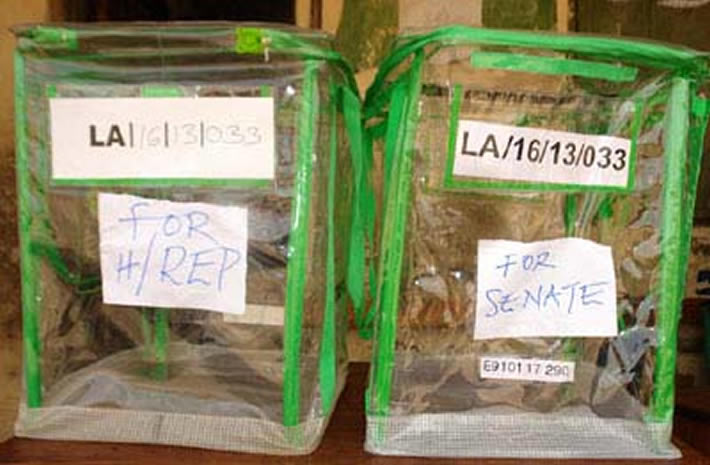
According to the hearing notice obtained from the court, President Jonathan and ten others, cited as alleged contemnors in an application filed by a firm, Bedding Holdings Limited (BHL), are accused of alleged unlawful use of patented ballot boxes for the PDP’s last special convention, without the consent of BHL, which is the original patent owner.
BHL’s Group Executive Chairman, Chief Sylvester Odigie had on September 9, 2013 through its lawyer, John Okoriko of Karina Tunyan (SAN) and Co. law firm, filed an application at the court challenging the action(s) of the defendants.
However, the applicant told ICIR that he withdrew the earlier application and later refilled it last week to include other major actors in the PDP’s special convention held in Abuja on August 31, 2013.
Specifically, the application seeks an order joining President Jonathan and ten others in “the contempt proceedings already commenced by plaintiff/applicant,” the court notice stated.
Those sought to be joined include the Vice President, Namadi Sambo, Senate President, David Mark, Speaker, House of Representatives, Aminu Tambuwal, the PDP and its Chairman, Bamanga Tukur.
Also to be joined include the Chairman, PDP’s Board of Trustees, Anthony Anenih, Governor Emmanuel Uduaghan of Delta State (who acted as Chairman, PDP Essential Electoral Materials Committee) and Chairman, Police Service Commission, Mike Okiro (who served as Chairman, PDP Special National Convention Sub-Committee on Security) and the party. Others are Professor Jerry Gana (who acted as the Chairman, PDP’ special convention committee) and Ken Nnamani (who was the Chairman, PDP’s electoral committee).
According to the plaintiff, the application was informed by its realisation that the 11 alleged contemnors were “necessary and desirable parties” to the contempt proceedings.
BHL stated that the ground for its application was that Jonathan and others “are serial contemnors, who contemptuously connived with sixth and seventh defendants/respondents (the Independent National Electoral Commission, INEC and its Chairman, Professor Attahiru Jega)” to use the applicant’s transparent ballot boxes for the PDP’s convention in violation of a subsisting judgment of the court delivered on June 5, 2012 by Justice Adamu Bello.
Odigie stated in a supporting affidavit that his company had initiated the contempt proceedings against INEC and Jega on July 18, 2012 via a motion on notice, seeking an order committing the two to prison, for their alleged contemptuous use of the ballot boxes for all the elections they have conducted since the June 5, 2012 judgment.
He cited some of the elections for which the ballot boxes were used, without his company’s consent, to include the last governorship elections in Edo and Ondo states, and other elections conducted subsequently by INEC.
He stated that those being sought to be joined in the contempt case, were seen casting their votes at the August 31 convention, using his company’s patented ballot boxes.
Odigie had through his lawyers queried the legality of the outcome of the convention in view of some reliefs granted by the court in the June 5, 2012 judgment in suit No: FHC/ABJ/CS/82/11.
“By virtue of reliefs 6 and 7 as contained in the enrolled judgment order, the elections of the PDP conducted at its special national convention held on August 31, 2013 in Abuja is unconstitutional, illegal, unlawful and therefore stands null and avoid,” Odigie said.
He argued that the outcome of the convention stands nullified because his company’s ballot boxes were used without its consent, in violation of the court’s judgment.
Justice Bello had in the June 5, 2012 judgment held that the plaintiff, BHL owns “valid and subsisting patent rights” over transparent ballot boxes and electronic collapsible transparent ballot boxes being used for elections in the country.
The judge upheld BHL’s claim to being the bona fide patentee and the exclusive owner of the invention named “Transparent Ballot Boxes” on which it was issued certificate of registration patent rights No. RP12994 and registration of industrial designs rights No. RD5946 by the Registrar of Patents on January 12, 1998.
Justice Bello also upheld the subsequent certification of an improvement on the invention named “Electronic Collapsible Transparent Ballot Boxes” (with certificate of registration of patent rights No. RP16642 and registration of industrial designs rights No. RD13841 issued on November 27, 2006 which are still valid.
The judge voided the rights over similar inventions purportedly issued later, to three firms – Emchai Limited, Tambco United Nigeria Ltd and Anowat Project and Resources Ltd – by the Registrar of Patent, for being illegal.
Justice Bello also granted an order of perpetual injunction restraining the defendants and any other person from utilising or dealing with the patented boxes of the plaintiff “except with the express and prior consent, license and authority of the plaintiff to that effect.”
According to the Court notice, defendants in the current suit are the Registrar of Patent, Federal Ministry of Commerce and Industry, Emchai Limited, Tambco United Nigeria Ltd and Anowat Project and Resources Ltd, Attorney General of the Federation, INEC and Jega.